Yellowstone
The world's first national park, a steaming volcanic plateau of geysers, hot springs, canyons and roaming bison, wolves and bears.
- Best time to go
- Late May to June and September to early October, when all roads are open and crowds are lighter
- Local time
- –
- Currency
- US Dollar (USD)
- Reading time
- 9 min
- Language
- English
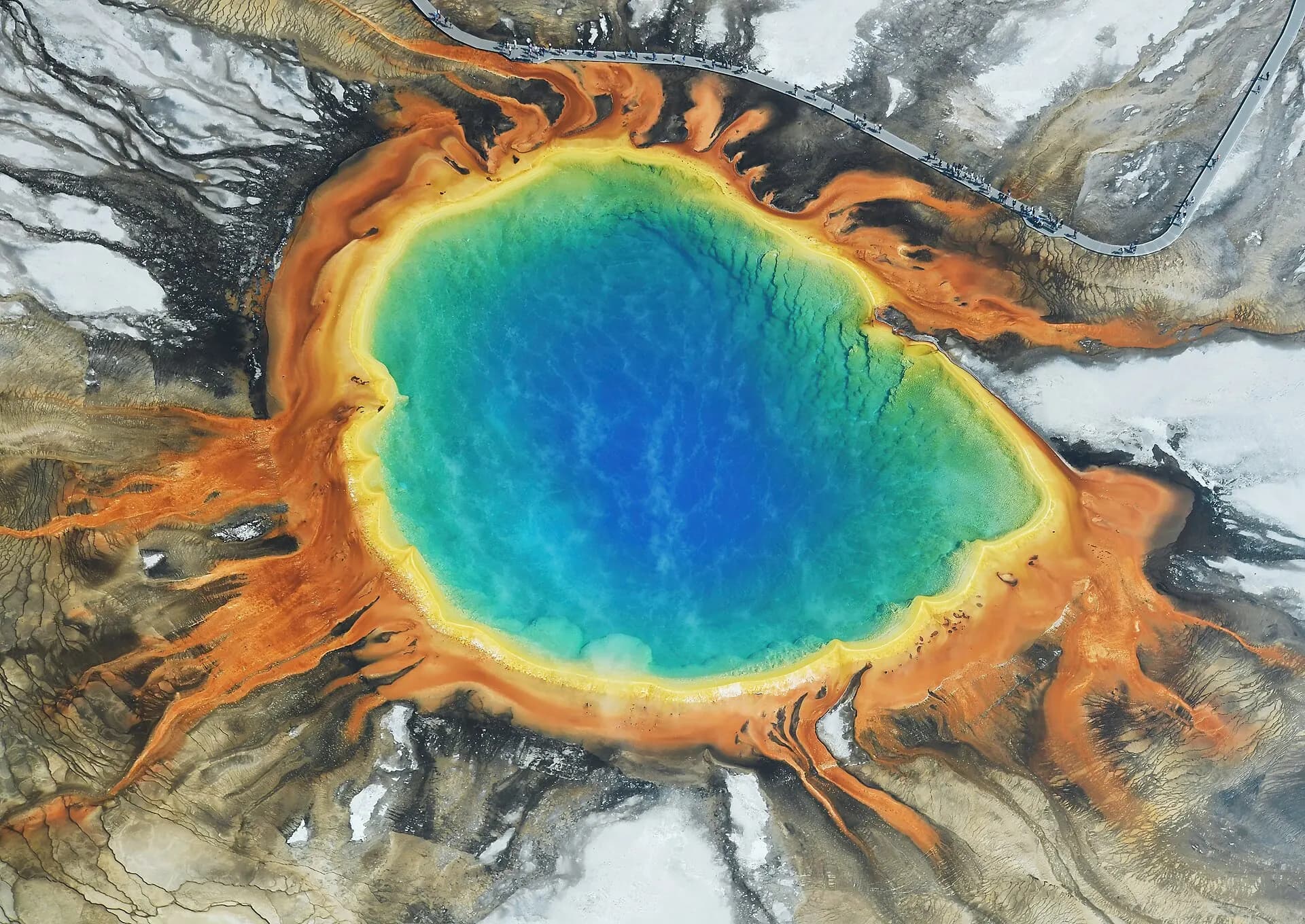
Yellowstone sits on top of one of the largest volcanic systems on earth, and you can feel it everywhere: steam drifting over the forest, boiling pools in improbable shades of blue and orange, mud pots that gurgle and spit, and more than half of the world's active geysers. Created in 1872, it was the first national park anywhere, and it's a World Heritage Site. Most of it lies in north-western Wyoming, with slivers in Montana and Idaho, and long before it was a park it was a homeland, hunting ground and travel route for more than two dozen Native American tribes.
The park is also one of the last places in the lower 48 states where large animals still roam much as they did centuries ago. Bison graze beside the roads, elk wander through Mammoth Hot Springs, and wolves and grizzlies can be watched, from a distance, in the open valleys of the north and centre. The main sights sit along the Grand Loop Road, a figure-of-eight of about 230 kilometres. Give it at least three days, and more if you want time for wildlife and hiking.
The top 13 in Yellowstone
- 1
Old Faithful and the Upper Geyser Basin
Photo: Dietmar Rabich, CC BY-SA 4.0, via Wikimedia Commons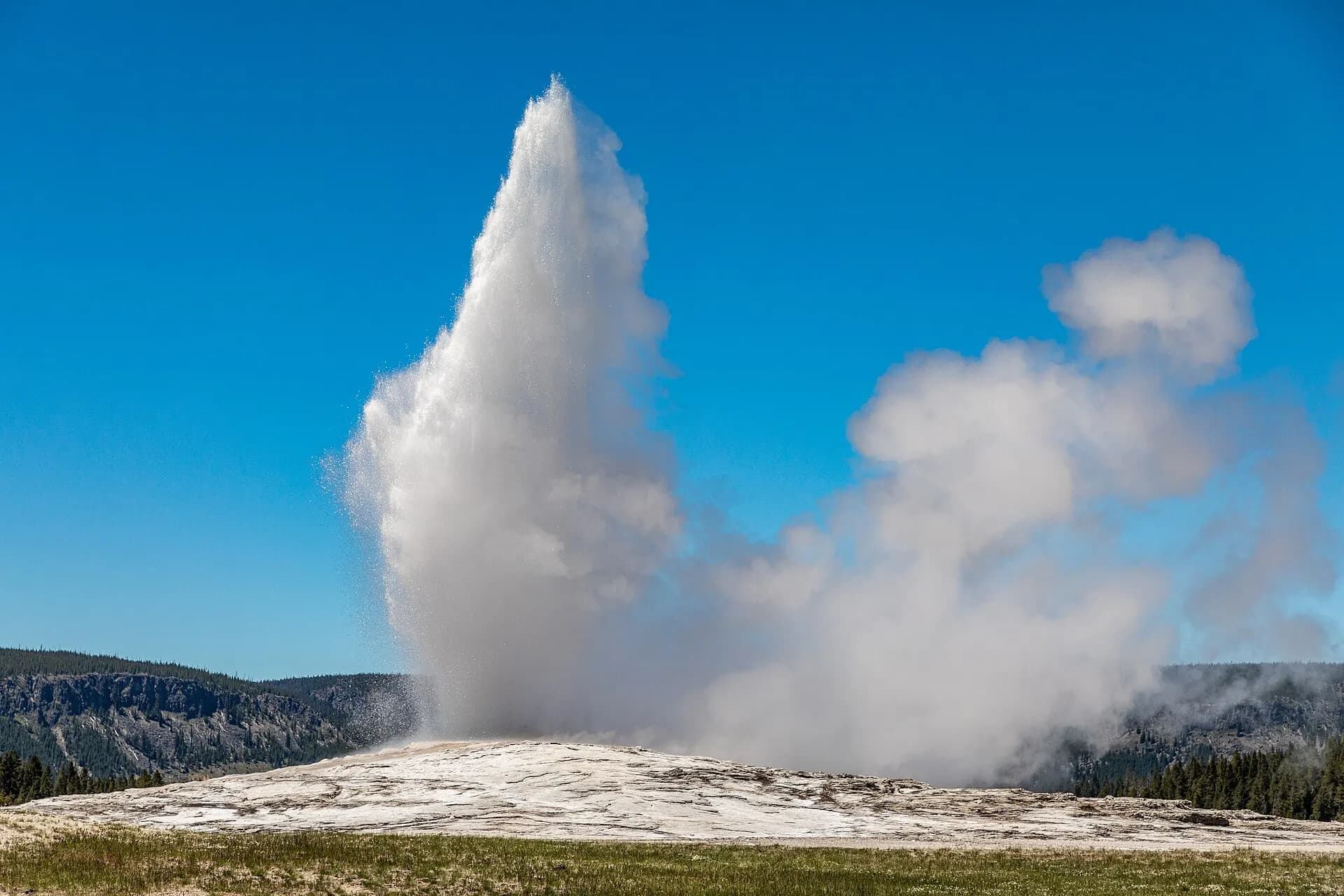
The most famous geyser in the world erupts roughly every hour and a half, sending a column of water and steam high into the air; rangers post predicted times at the visitor education centre. Around it, boardwalks wind through the greatest concentration of geysers on earth, past Castle, Grand and Riverside geysers to the deep colours of Morning Glory Pool.
TipWatch one eruption from the benches, then another from Observation Point on the hill above, away from the crowds.
- 2
Grand Prismatic Spring and Midway Geyser Basin
Photo: Dietmar Rabich, CC BY-SA 4.0, via Wikimedia Commons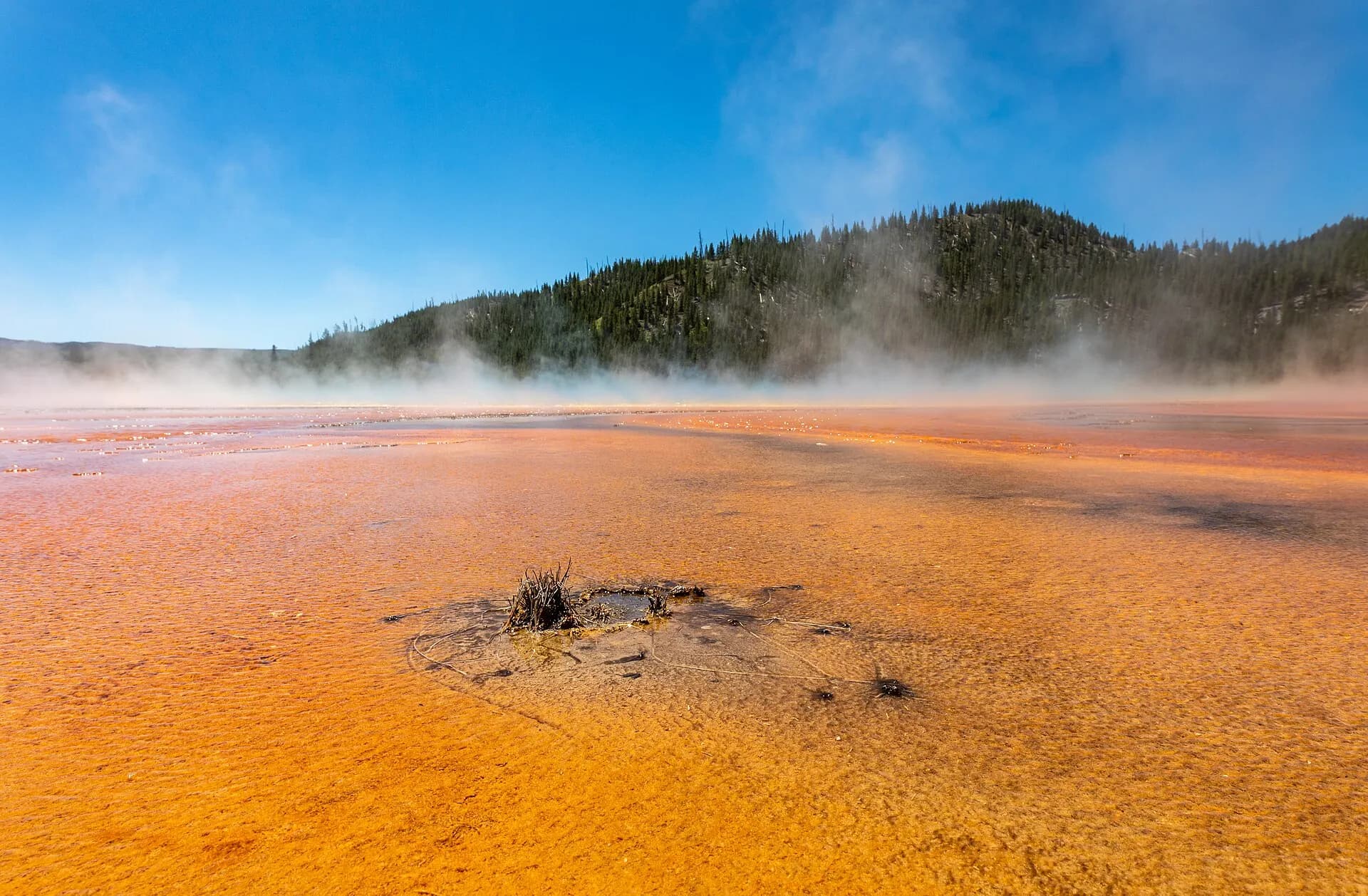
The largest hot spring in the United States, well over a hundred metres across, ringed by bands of orange, yellow and green created by heat-loving microbes. The boardwalk passes the huge steaming crater of Excelsior Geyser beside the Firehole River, but from close up the steam often hides the colours.
TipFor the view seen in photographs, walk the Fairy Falls Trail from the trailhead south of the basin to the overlook on the hillside.
- 3
Fountain Paint Pot
Photo: Dietmar Rabich, CC BY-SA 4.0, via Wikimedia Commons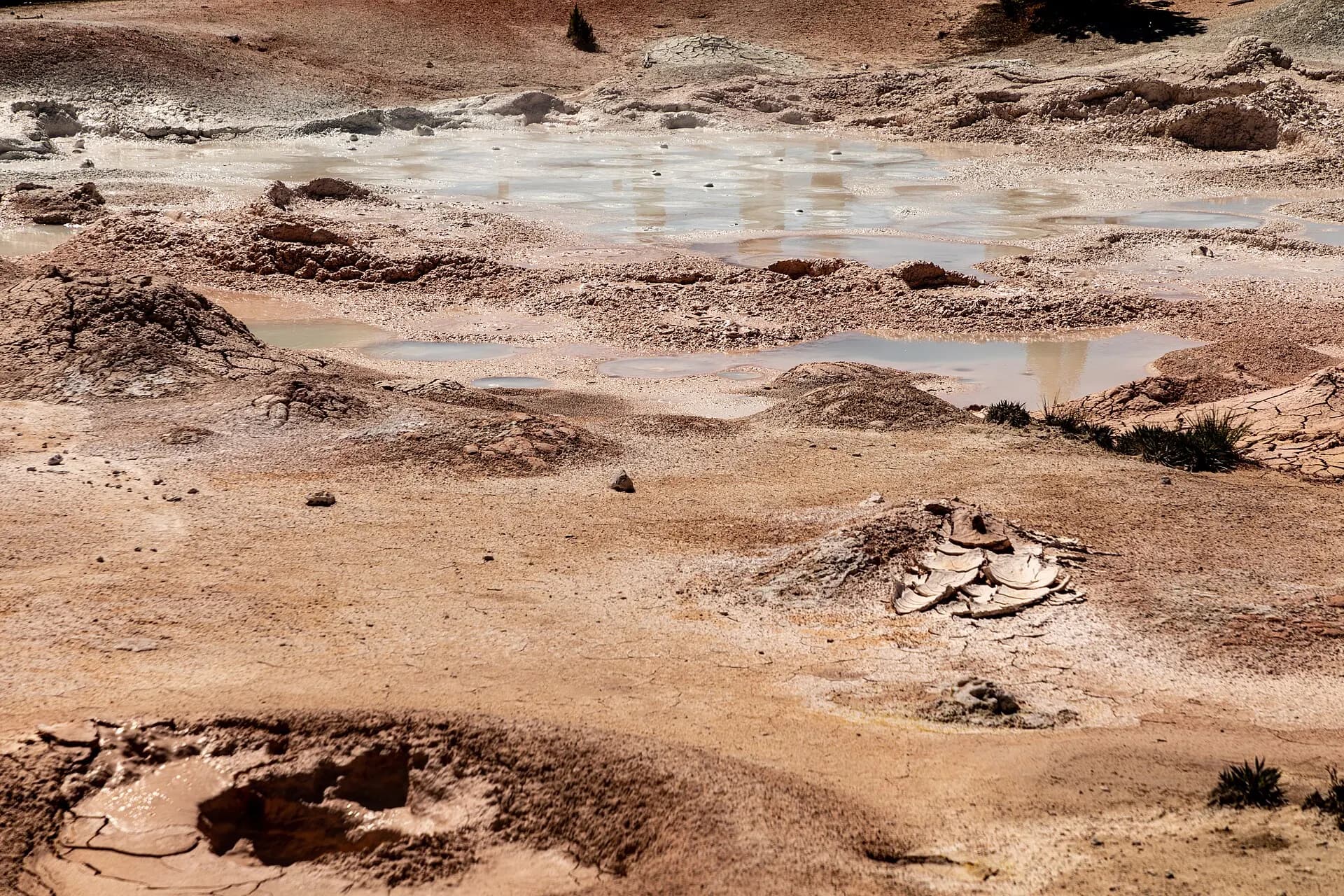
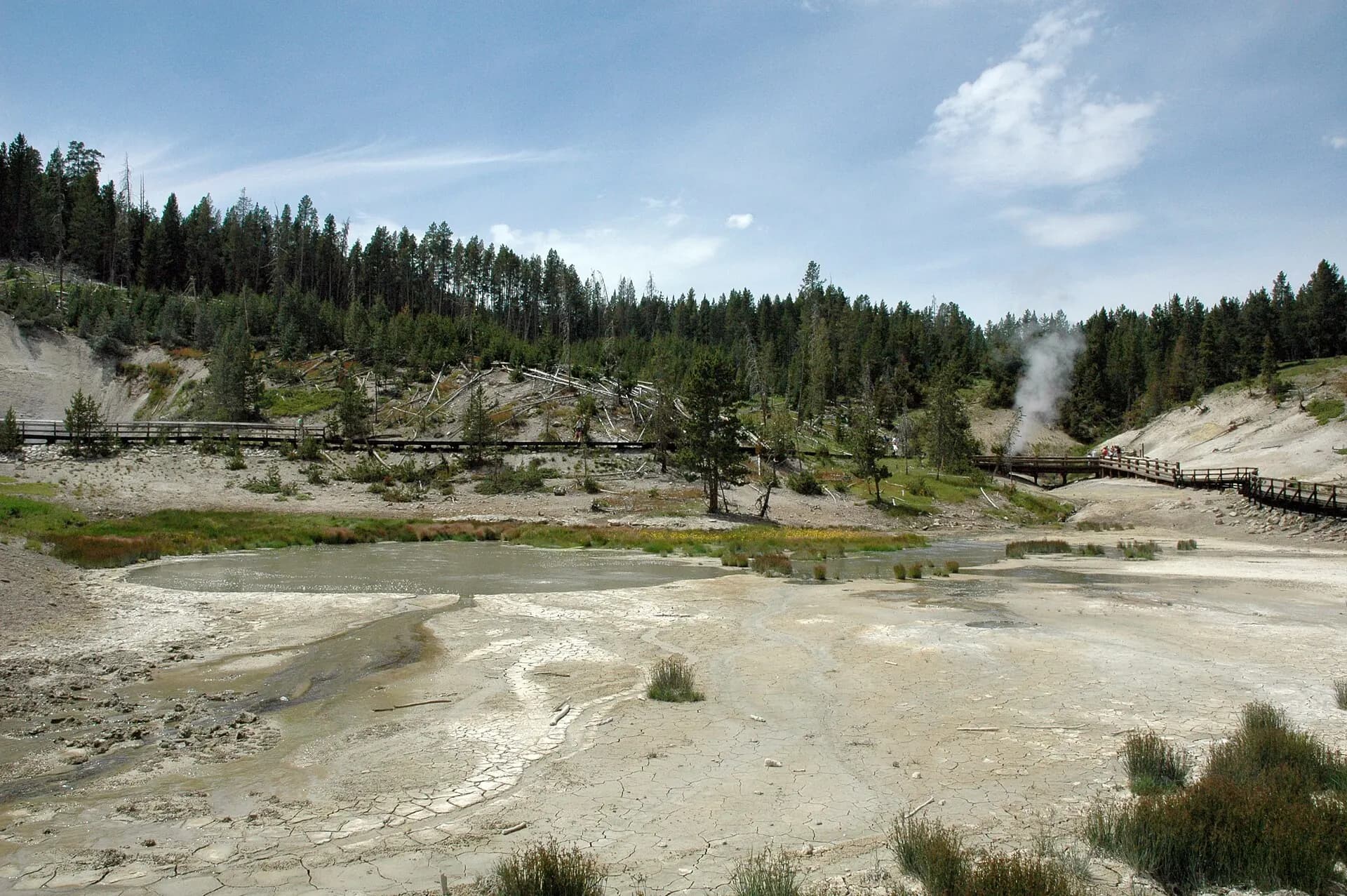
A short loop in the Lower Geyser Basin shows all four kinds of thermal feature in one place: hot springs, geysers, fumaroles and the bubbling, pastel-coloured mud of the paint pots themselves. Their consistency changes with the seasons, thick in late summer and soupy after snowmelt.
- 4
Norris Geyser Basin
Photo: Dietmar Rabich, CC BY-SA 4.0, via Wikimedia Commons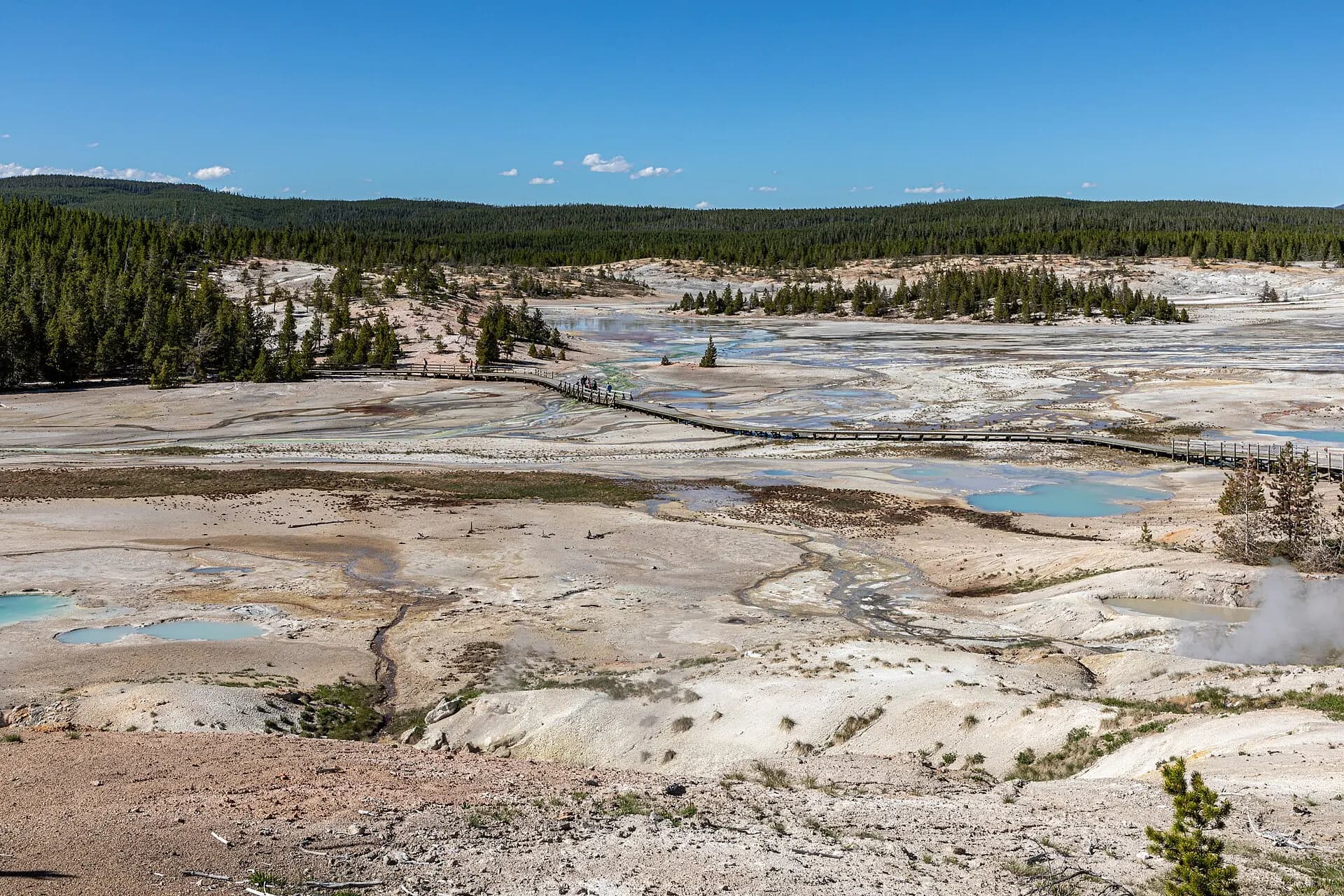
The hottest and most changeable thermal area in the park, a stark, milky landscape where new vents can open overnight. Porcelain Basin glows white and turquoise, and the Back Basin holds Steamboat Geyser, the tallest active geyser in the world, whose major eruptions are unpredictable and can come years apart.
- 5
Mammoth Hot Springs
Photo: Rhododendrites, CC BY-SA 4.0, via Wikimedia Commons
Hot water rising through limestone has built a staircase of travertine terraces, some bright white, others streaked orange and brown, with boardwalks over the Lower Terraces and a drive around the Upper Terraces. Next door, the stone buildings of Fort Yellowstone recall the decades when the US Army ran the park, and elk often graze on the lawns.
TipElk are especially unpredictable during the autumn rut and in spring calving season; give them a wide berth.
- 6
Lamar Valley
Photo: Acroterion, CC BY-SA 4.0, via Wikimedia Commons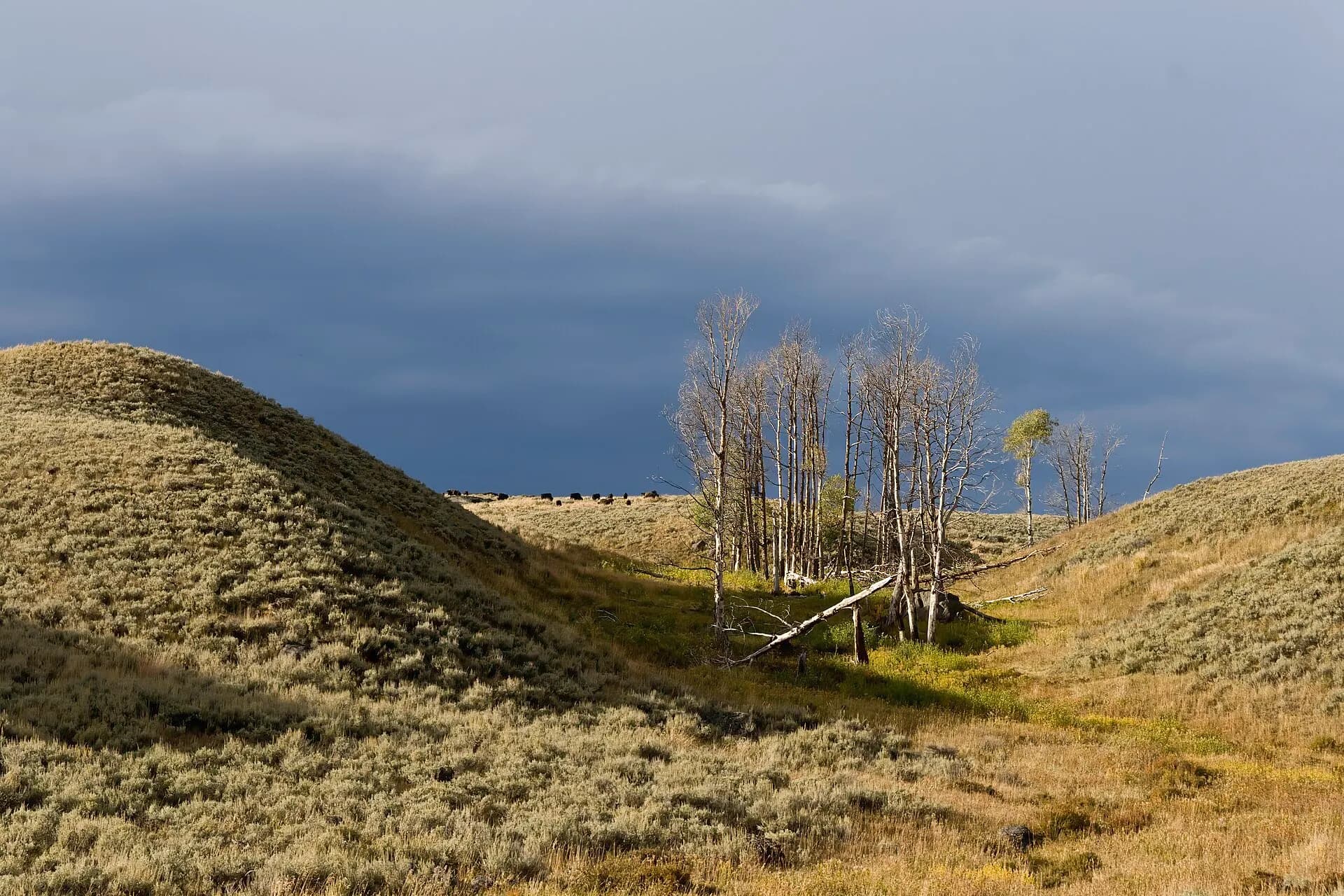
A broad, grassy valley in the north-east, often called America's Serengeti, where herds of bison, pronghorn and elk graze and wolf packs hunt. Dawn and dusk are the best times, when wildlife watchers line the pullouts with spotting scopes and are usually happy to share what they've found. The road through it stays open all year.
- 7
Tower Fall
Photo: DimiTalen, CC0, via Wikimedia Commons
Tower Creek drops about 40 metres between eroded volcanic pinnacles just before joining the Yellowstone River. The overlook is a few minutes' walk from the road, and the basalt columns lining the river canyon just to the north are worth a stop on the drive.
- 8
Lower Falls and the North Rim
Photo: Dirtsc, CC BY-SA 3.0, via Wikimedia Commons
The Grand Canyon of the Yellowstone is a deep gorge of yellow, pink and ochre rock, and its centrepiece is the Lower Falls, at over 90 metres the park's tallest waterfall. On the North Rim Drive, Lookout Point and Grand View face the falls, and a steep paved switchback trail leads down to the Brink of the Lower Falls, where the river thunders over the edge just below your feet.
- 9
Artist Point
Photo: Erik Whalen, CC BY-SA 4.0, via Wikimedia Commons
On the South Rim, this viewpoint looks straight up the canyon to the Lower Falls framed by its painted walls, the classic view of the canyon. It's a short walk from the car park and busiest in the middle of the day.
TipCome early in the morning, when the light is soft and a rainbow often hangs in the spray below the falls.
- 10
Hayden Valley
Photo: Dirtsc, CC BY-SA 3.0, via Wikimedia Commons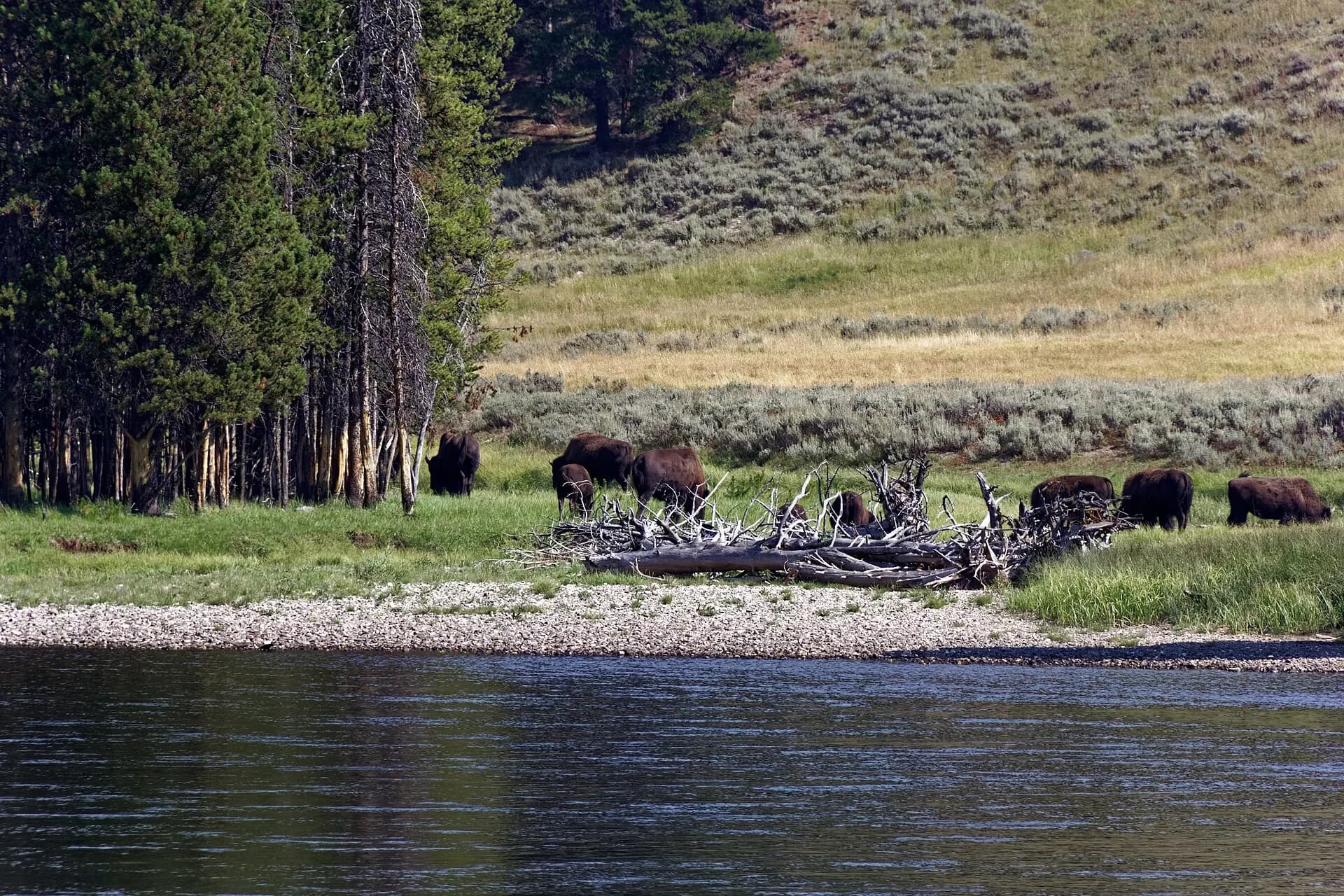
South of the canyon, the Yellowstone River meanders slowly through a wide, open valley that was once covered by a lake. It's one of the best places in the park to see bison herds, especially during the August rut, and grizzlies, wolves, elk and waterbirds are often spotted from the roadside pullouts.
- 11
- 12
Yellowstone Lake
Photo: CGP Grey, CC BY 2.0, via Wikimedia Commons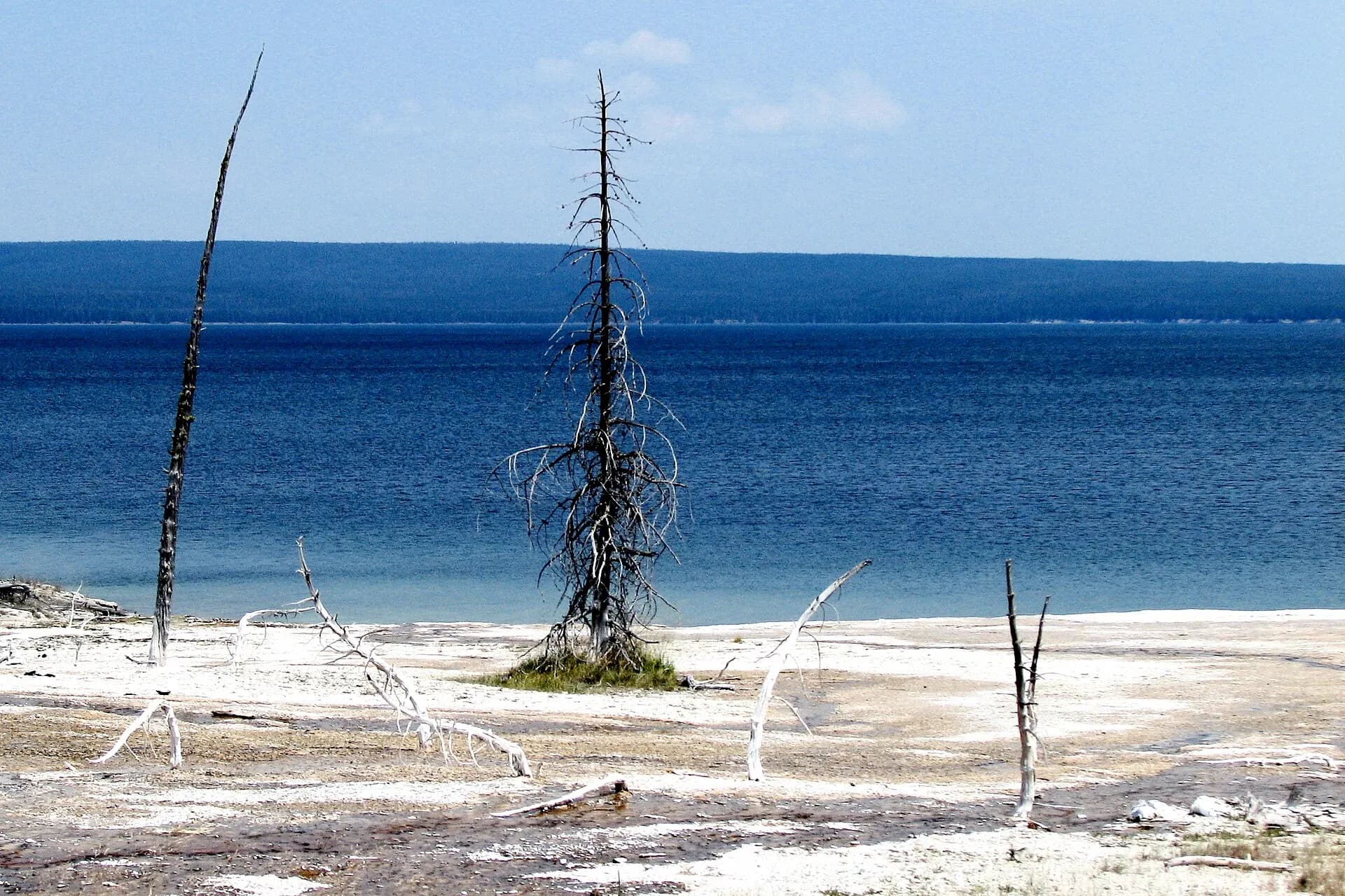
The largest high-elevation lake in North America, cold, deep and fringed by forest and mountains. Along the north shore, Fishing Bridge, Lake Village and the pale yellow Lake Yellowstone Hotel make a base for walks, boat trips from Bridge Bay and long sunsets over the water. The lake is far too cold for comfortable swimming.
- 13
West Thumb Geyser Basin
Photo: Dirtsc, CC BY-SA 3.0, via Wikimedia Commons
A thermal area on the shore of the lake, where hot springs and the old Fishing Cone sit right at the water's edge and some vents bubble up beneath the surface. The deep blue Abyss Pool is one of the most striking springs in the park. From here, the road crosses the Continental Divide back to Old Faithful.
When to go
Summer, from June to August, is warmest and busiest, with every road open, but it's also the season of traffic jams at wildlife sightings and full car parks at the geyser basins. Late May to June brings bison calves, green valleys and lingering snow on the passes; September to early October has golden aspens, the elk rut and noticeably fewer people, though nights are freezing. In 2026, NPS projected most roads opening between mid-April and late May, with Dunraven Pass, between Canyon and Tower, the last to open, and closing for the season to regular vehicles on 31 October (Dunraven sooner).
From early November to mid-December the park is mostly closed to cars. Only the road from the North Entrance at Gardiner through Mammoth and the Lamar Valley to Cooke City stays open to regular vehicles all year. From mid-December, the interior opens to guided snowcoach and snowmobile tours, and Old Faithful in winter, steaming in the snow, is unforgettable.
Getting around
You need a car, or a tour. There's no public transport inside the park, and distances are long: allow far more time than the map suggests, as speed limits are low and wildlife sightings stop traffic. The five entrances are the North (Gardiner, Montana), Northeast (Cooke City, Montana), West (West Yellowstone, Montana), East (towards Cody, Wyoming) and South (from Grand Teton National Park and Jackson, Wyoming). The closest airports are at Bozeman, Jackson, Cody and West Yellowstone (summer only), with Salt Lake City and Denver further afield.
Roadworks are a normal part of the summer. In 2026 the NPS listed delays of up to 15 minutes at the Gardner River High Bridge near Mammoth, which also limits oversized vehicles, along with bridge work at Bridge Bay and near Old Faithful, paving on the Northeast Entrance Road and chip sealing across the park. Check the park's road status page or call the road line before setting out.
Local tips
- The entrance fee for a private vehicle is $35 for seven days. From 2026, non-US residents aged 16 and over also pay a $100 nonresident fee per person, unless they hold an annual or America the Beautiful pass; the non-resident America the Beautiful pass costs $250. Check the NPS fees page before you go.
- Stay at least 100 yards (91 metres) from bears, wolves and cougars, and at least 25 yards (23 metres) from all other animals, including bison and elk. Bison injure more visitors than any other animal.
- Carry bear spray on trails, know how to use it, and hike in groups.
- Fill up with fuel when you can and carry food and water; services are spread out.
- Mobile signal is patchy across much of the park; download maps and the NPS app's offline content beforehand.
- Pull fully off the road to watch wildlife; never stop in a traffic lane.
- Arrive at Old Faithful, Grand Prismatic and Artist Point early or late to find parking.
- Pack warm layers even in summer: at over 2,000 metres, snow can fall in any month.
Eat and drink
Food in the park is practical rather than memorable, with cafeterias, grills and general stores at the main villages, and sit-down dining rooms at the historic hotels; the Old Faithful Inn and the Lake Yellowstone Hotel are the most atmospheric. Bison and elk burgers and Rocky Mountain trout appear on many menus. Picnics are the best option on long driving days, so stock up in a gateway town. Outside the park, Bozeman, Cody and Jackson have the widest choice, with good local breweries.
Where to stay
Nine lodges inside the park, all run by Yellowstone National Park Lodges, range from simple cabins to the grand log Old Faithful Inn. Most open between May and early June and close by October; only the Mammoth Hot Springs Hotel and the Old Faithful Snow Lodge open in winter, the latter reached only by snowcoach or snowmobile. The park has 11 campgrounds with more than 2,000 sites, booked either through Yellowstone National Park Lodges or Recreation.gov; Pebble Creek has been closed since the 2022 floods. Both lodges and campgrounds fill many months ahead.
Gateway towns add driving time but more choice. West Yellowstone is closest to the geyser basins, Gardiner to Mammoth and the Lamar Valley, and Cooke City sits at the foot of the spectacular Beartooth Highway. Cody, on the east side, is a proper Western town, and Jackson combines well with Grand Teton.
Staying safe around thermal areas
The ground in Yellowstone's geyser basins is often a thin crust over boiling, acidic water, and people have died after stepping off the boardwalks or falling into hot springs. Always stay on boardwalks and marked trails, keep children close, and remember that even runoff channels can scald. It's illegal to swim or bathe in any water that is entirely of thermal origin, and pets are not allowed on boardwalks or in thermal areas. Throwing coins or objects into springs damages them; some of the park's pools have lost their colour after being clogged with debris. If you begin to feel unwell in a geyser basin, where gases can collect, leave the area.
Watching wildlife
Yellowstone's wildlife is a big reason to come, and patience pays. The best hours are early morning and evening, and the best places are the Lamar and Hayden valleys, the stretch between Mammoth and Tower, and the meadows along the Madison and Firehole rivers. Binoculars or a spotting scope make all the difference, and staying the legal distance back is non-negotiable: 100 yards from bears and wolves, 25 yards from everything else. A long lens is the only way to get close. For deeper understanding, Yellowstone Forever, the park's official nonprofit partner, runs field seminars and naturalist-led day trips, and part of its income supports research such as the Yellowstone Wolf Project.
A park born of fire
Yellowstone's landscape is the product of three enormous volcanic eruptions over the past two million years, the most recent around 640,000 years ago, which left a vast caldera across the centre of the park. The magma still lying beneath it heats the water that feeds the geysers and hot springs, and the ground here rises and falls measurably over the years. The canyon's colours come from rock altered by hot water, and Yellowstone Lake partly fills the caldera. Understanding this makes a drive around the Grand Loop feel like a tour of a living volcano, which is exactly what it is.
Responsible travel
Stay on boardwalks and trails, keep the required distance from wildlife, and never feed animals: human food harms them and can lead to dangerous encounters. Store food securely at campsites and picnic areas. Don't collect rocks, plants, antlers or anything else, and don't fly drones, which are banned in national parks. Drive slowly, especially at dawn and dusk when animals cross the roads. Buying from Yellowstone Forever park stores or joining its programmes supports conservation and education in the park.