Oʻahu
Hawaiʻi's busy heart, where a royal palace, a war memorial and Waikīkī's surf sit an hour from the North Shore's giant winter waves.
- Best time to go
- April to May and September to October; November to March for big North Shore surf, December to April for whales
- Local time
- –
- Currency
- US Dollar (USD)
- Reading time
- 16 min
- Language
- English

Oʻahu is the third-largest of the Hawaiian Islands but home to about two-thirds of the state's people, which is why it's often called "the gathering place". Two worn-down volcanic ranges shape it: the knife-edged Koʻolau Mountains along the windward east, catching the trade-wind rain, and the drier Waiʻanae Range in the west. Between them lies a central plain of former pineapple and sugar land, and wrapped around it all is a coastline that swings from city beaches to empty, wave-battered points.
Most visitors land in Honolulu, a real American city of high-rises, traffic and good food, with Waikīkī's hotels lined up along its south shore. Yet within a short drive you can stand in the only royal palace on US soil, look down on the sunken USS Arizona, snorkel a protected volcanic bay and watch surfers ride the world's most famous reef break. Several of the best sights now need advance reservations, so a little planning goes a long way. Oʻahu works well on its own for a week, or as a first stop before quieter Maui or Hawaiʻi Island.
The top 23 in Oʻahu
- 1
Pearl Harbor National Memorial
Photo: NPS photo, Public domain, via Wikimedia Commons
On the morning of 7 December 1941, Japanese aircraft attacked the US Pacific Fleet here, drawing the United States into the Second World War. The free visitor centre has two museums that tell the story from both sides, but the heart of a visit is the short boat ride to the white USS Arizona Memorial, which spans the sunken battleship where more than 1,100 of her crew still lie. Oil still rises from the hull in small, shimmering drops. On Ford Island, reached by shuttle bus, the Battleship Missouri, where Japan's surrender was signed in 1945, and the Pearl Harbor Aviation Museum are run separately and charge admission; the USS Bowfin submarine sits beside the visitor centre.
TipUSS Arizona Memorial programmes are booked on Recreation.gov, with tickets released at 3pm Hawaiʻi time 8 weeks and again 24 hours ahead ($1 booking fee each). Arrive an hour early. Bags larger than a small wallet are not allowed, apart from clear plastic bags; there is paid bag storage by the entrance.
- 2
Bishop Museum
Photo: Daniel Ramirez from Honolulu, USA, CC BY 2.0, via Wikimedia Commons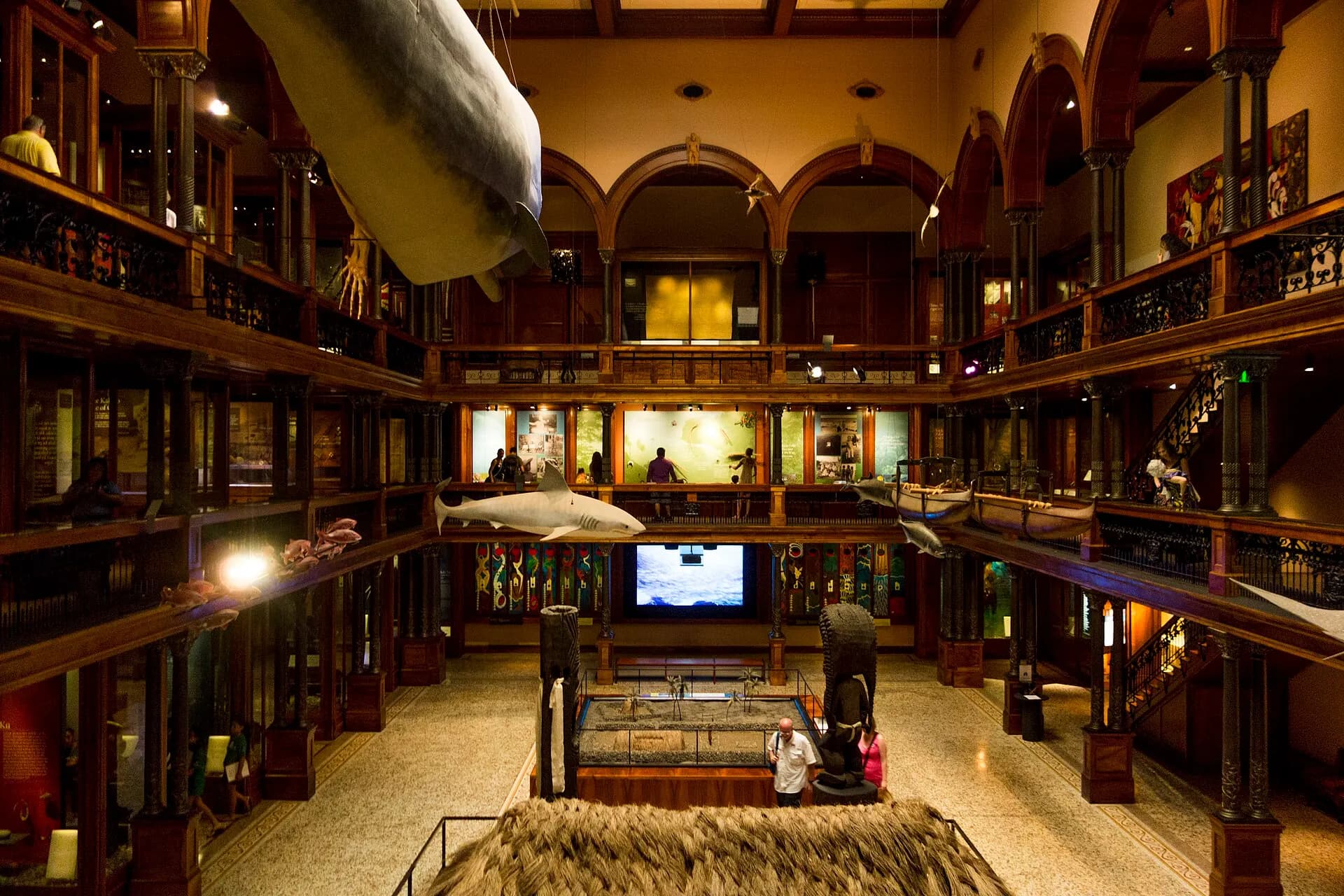
Founded in 1889 in memory of Princess Bernice Pauahi Bishop, the last royal heir of the Kamehameha line, the museum holds the world's largest collection of Hawaiian and Pacific cultural objects. The three-storey Hawaiian Hall, all dark koa wood galleries, traces Hawaiian life from the gods and the aliʻi (chiefs) to everyday fishing and farming, with feather cloaks of astonishing craft. There are also Pacific voyaging displays, natural history halls and a planetarium.
TipOpen daily from 9am to 5pm. Come here early in a trip; it gives meaning to much of what you'll see elsewhere on the island.
- 3
Chinatown
Photo: w_lemay, CC BY-SA 2.0, via Wikimedia Commons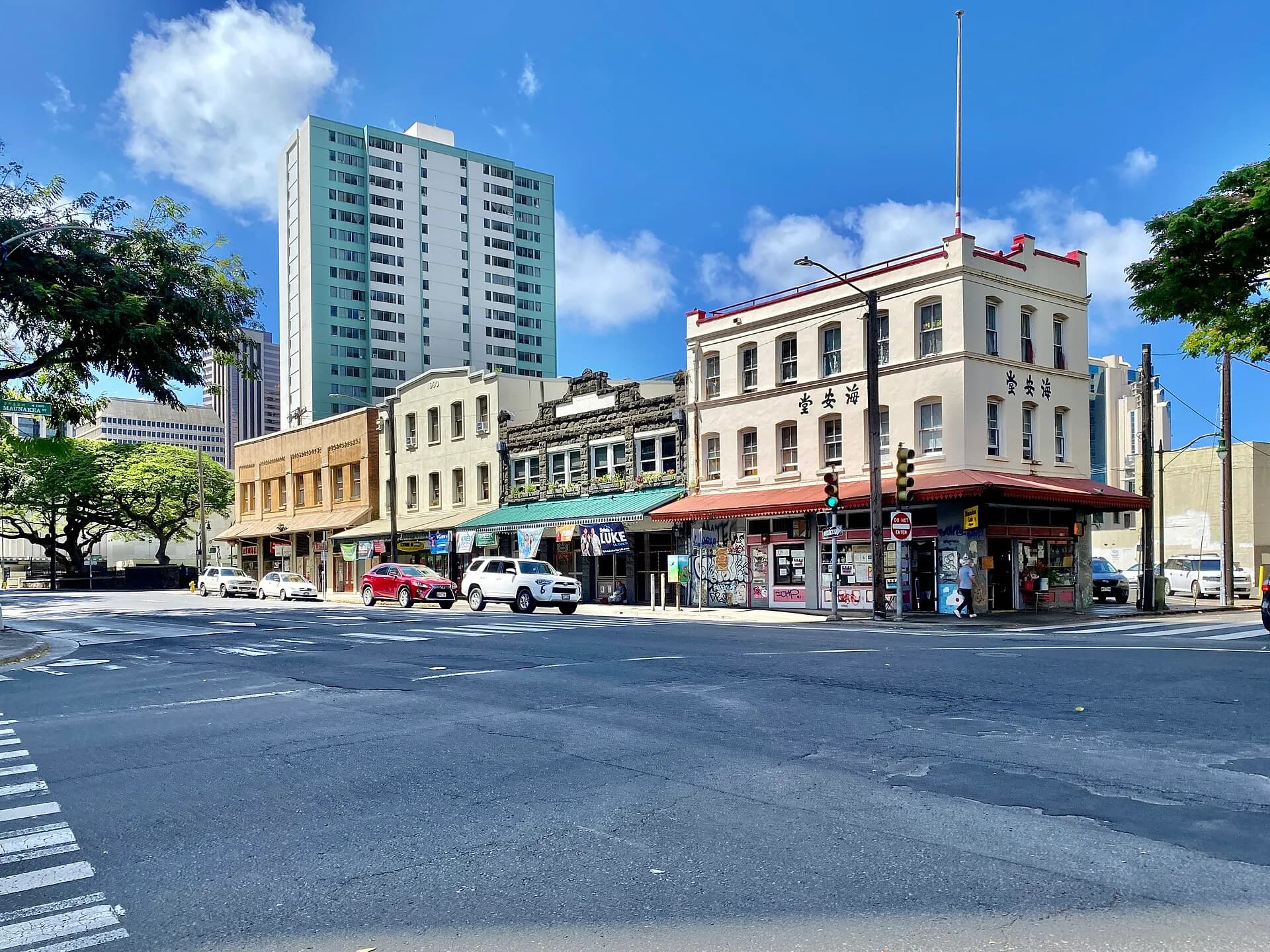
Just west of downtown, Honolulu's Chinatown grew from the labourers who came to work the sugar plantations in the nineteenth century, and was rebuilt in brick after fires in 1886 and 1900. Today, its blocks mix lei stands, herbalists, noodle shops and Vietnamese and Filipino bakeries with art galleries and some of the city's best cocktail bars. The Oʻahu Market and the open-fronted food halls are at their liveliest in the morning.
TipThe neighbourhood is busy by day but some streets feel rough after dark; stick to the main restaurant blocks at night.
- 4
ʻIolani Palace
Photo: billsoPHOTO from Honolulu, USA, CC BY-SA 2.0, via Wikimedia Commons
Completed in 1882 for King Kalākaua, ʻIolani Palace was the official residence of Hawaiʻi's last two monarchs and had electric lighting and telephones before the White House did. After the kingdom was overthrown in 1893, Queen Liliʻuokalani was imprisoned in an upstairs room for eight months, and the palace became a government building. Decades of restoration have since returned its throne room, koa staircase and royal suites to their former glory. Around it are Aliʻiōlani Hale with its gilded statue of Kamehameha I, the coral-block Kawaiahaʻo Church and the open-sided Hawaiʻi State Capitol.
TipThe palace is open Tuesday to Saturday from 9am to 4pm and closed on Sundays and Mondays. Book a docent-led or audio tour online, as numbers are limited.
- 5
National Memorial Cemetery of the Pacific (Punchbowl)
Photo: MPSharwood, CC BY-SA 4.0, via Wikimedia Commons
Inside Puowaina, an extinct volcanic crater above downtown, rows of flat headstones mark the graves of tens of thousands of US service members, many of them killed in the Pacific during the Second World War, Korea and Vietnam. Its memorial has huge mosaic maps of Pacific battles and the Courts of the Missing. It's a quiet, dignified place with a lookout over the city to Diamond Head.
TipThis is an active cemetery. Dress modestly, keep voices low and give way to funeral processions.
- 6
Mānoa Falls
Photo: Daniel Ramirez from Honolulu, USA, CC BY 2.0, via Wikimedia Commons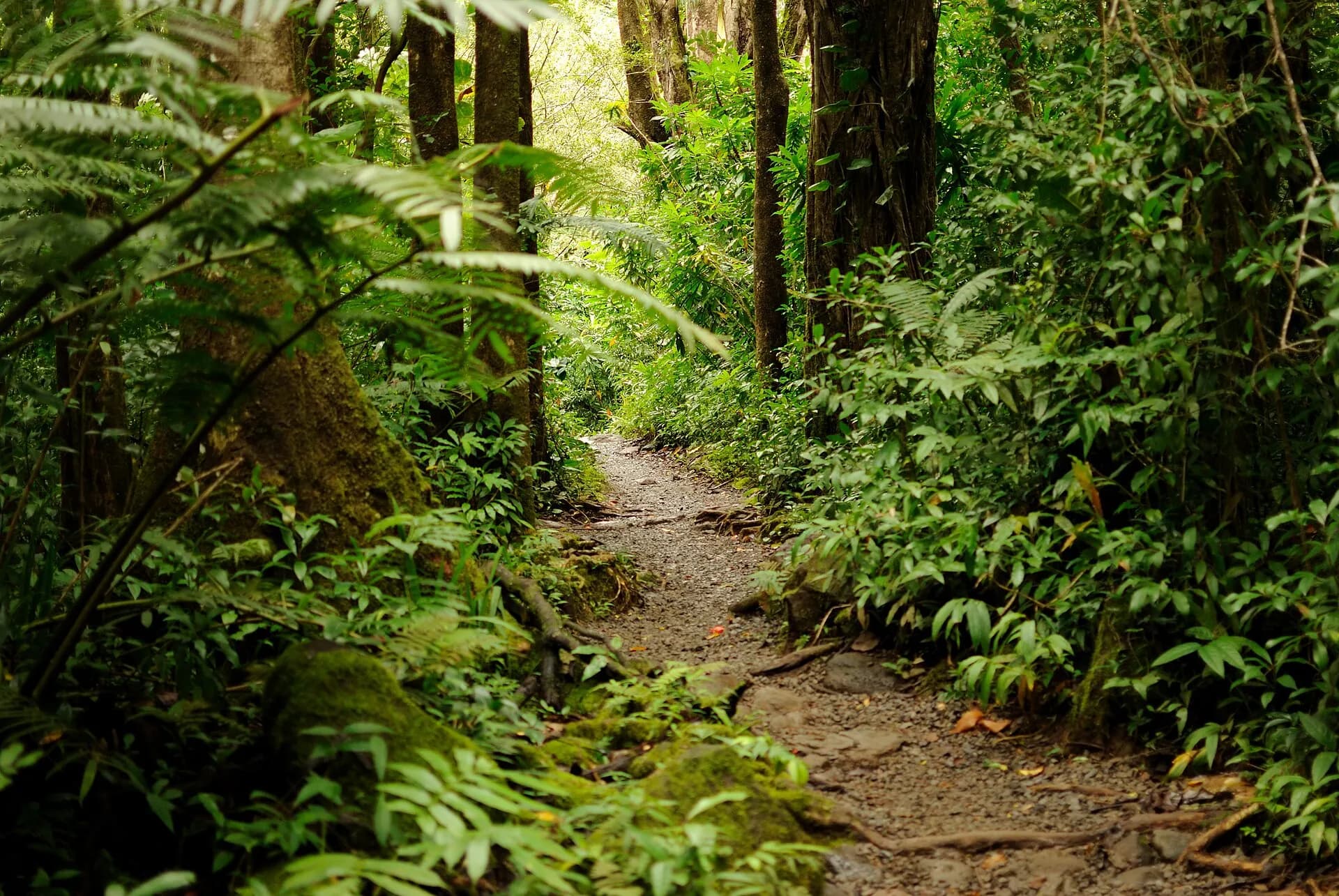
At the back of Mānoa Valley, a wet, green cleft behind the University of Hawaiʻi, a trail of roughly 1.3 kilometres each way climbs through bamboo, giant banyans and ginger to a slender waterfall about 45 metres high. The rainforest feels a world away from Waikīkī, which is only 15 minutes' drive away. Nearby, the University of Hawaiʻi's Lyon Arboretum has quieter trails through tropical plant collections.
TipThe path is often muddy and slippery; wear shoes with grip and bring insect repellent. Swimming under the falls is prohibited because of rockfall, and the trail closes now and then for maintenance, so check the DLNR's trail news before you go.
- 7
Waikīkī
Photo: Diego Delso, CC BY-SA 3.0, via Wikimedia Commons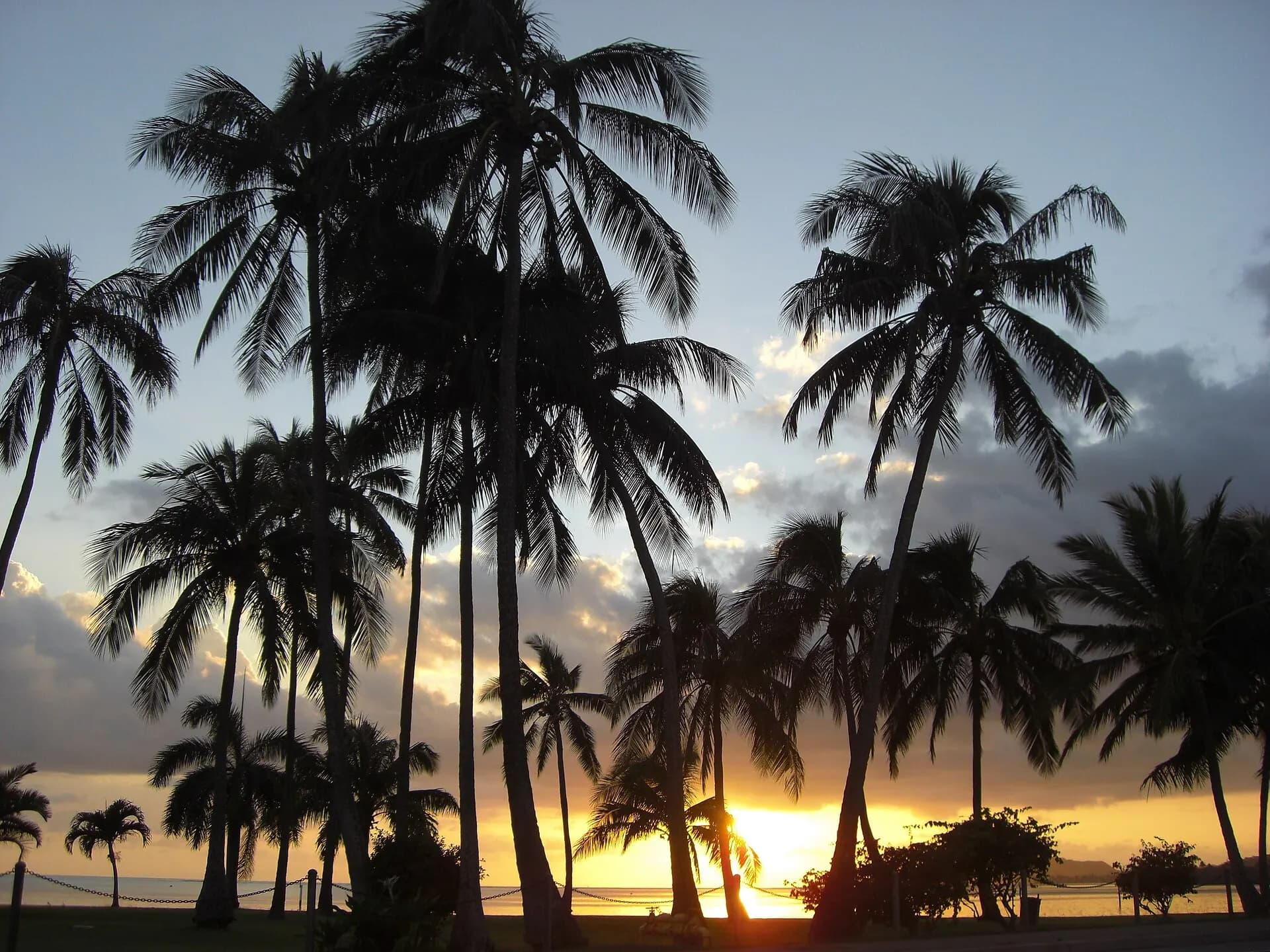
Once a marshland of fishponds and taro patches, and a retreat for Hawaiian royalty, Waikīkī is now the island's main resort strip, with a few kilometres of golden sand backed by towers, shops and restaurants along Kalākaua Avenue. It's still the best place to learn to surf on long, gentle waves, a tradition symbolised by the bronze statue of Duke Kahanamoku, the Olympic swimmer who popularised modern surfing. Look for the historic Moana Surfrider of 1901 and the pink Royal Hawaiian of 1927, and at the eastern end, Kapiʻolani Park, the aquarium and the calmer beaches below Diamond Head.
TipSunset is the time to be on the sand. Beach boys rent boards and give lessons near the Duke statue; lessons first thing in the morning have the lightest winds.
- 8
Diamond Head (Lēʻahi)
Photo: Matt Kieffer, CC BY-SA 2.0, via Wikimedia Commons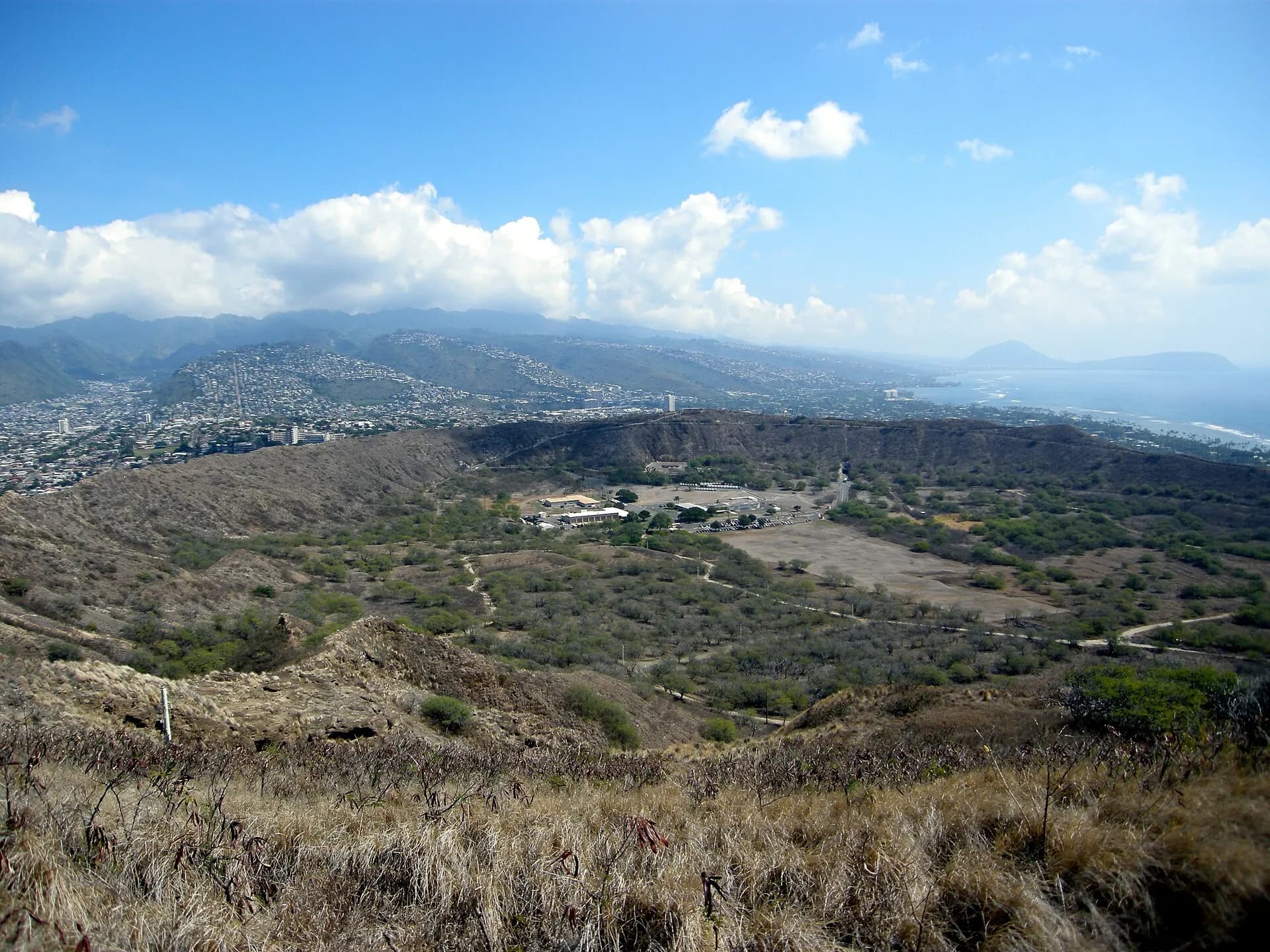
The broad tuff cone that closes the view east of Waikīkī is Oʻahu's best-known landmark. The summit trail, built in 1908 as part of the island's coastal defences, climbs about 1.3 kilometres from the crater floor with a 170-metre gain, through switchbacks, a tunnel and old bunkers to a lookout over the whole south shore, from Koko Head to the Waiʻanae Range. In winter, you may spot whales offshore.
TipOut-of-state visitors need an entry reservation, with a separate parking reservation if driving, booked up to 30 days ahead on the Hawaiʻi State Parks site. Entry costs $5 a person and parking $10 per car, by card only. The park is open 6am to 6pm, with the last entry slot at 4pm. Go early: there is little shade.
- 9
Hanauma Bay Nature Preserve
Photo: Diego Delso, CC BY-SA 3.0, via Wikimedia Commons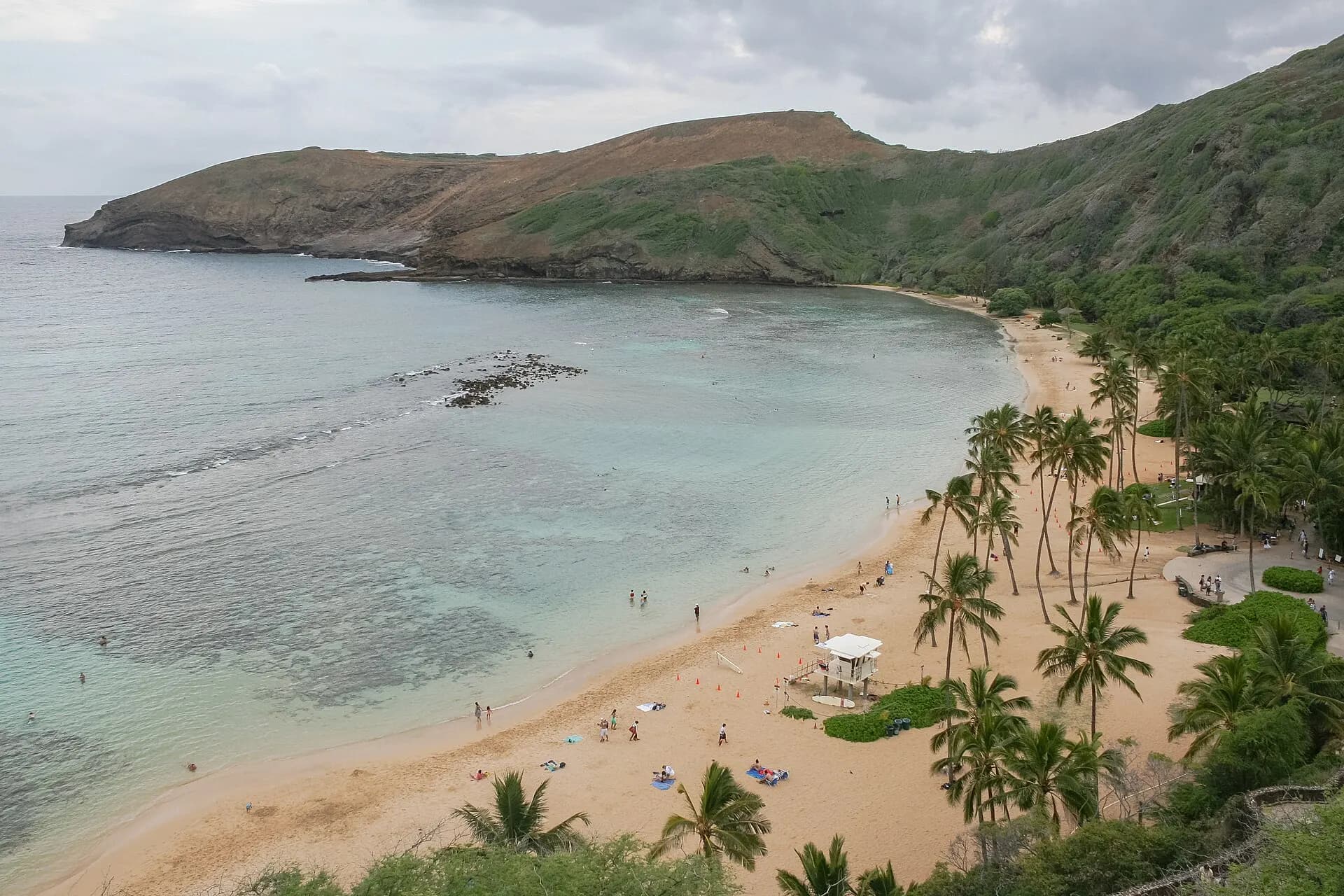
A volcanic crater breached by the sea forms this sheltered, reef-fringed bay, which in 1967 became Hawaiʻi's first Marine Life Conservation District. Its calm, shallow waters hold parrotfish, tangs and, often, green sea turtles, which makes it the island's most famous snorkelling spot. Visits are carefully limited to protect the reef, and everyone watches a short conservation video before going down to the beach.
TipThe bay is closed on Mondays and Tuesdays. From Wednesday to Sunday, entry runs from 6:45am to 1:30pm. Non-residents aged 13 and over pay $25 plus an online fee; reservations open at 7am Hawaiʻi time two days ahead and go within minutes. Packages with transport from Waikīkī can be booked a month ahead. Parking is $3, in cash.
- 10
Makapuʻu Point Lighthouse Trail
Photo: Aaron Zhu, CC BY-SA 3.0, via Wikimedia Commons
At the island's eastern tip, a paved former service road of about 3 kilometres round trip climbs steadily to lookouts above a red-roofed lighthouse of 1909. Below, the windward coast unrolls northwards past Mānana (Rabbit) Island. It's one of the best places on Oʻahu to watch for humpback whales between December and April.
TipThere's no shade at all. Walk in the early morning or late afternoon, bring water, and lock nothing of value in the car.
- 11
Waimānalo Bay Beach Park
Photo: Edmund Garman from Salem, Oregon, USA, CC BY 2.0, via Wikimedia Commons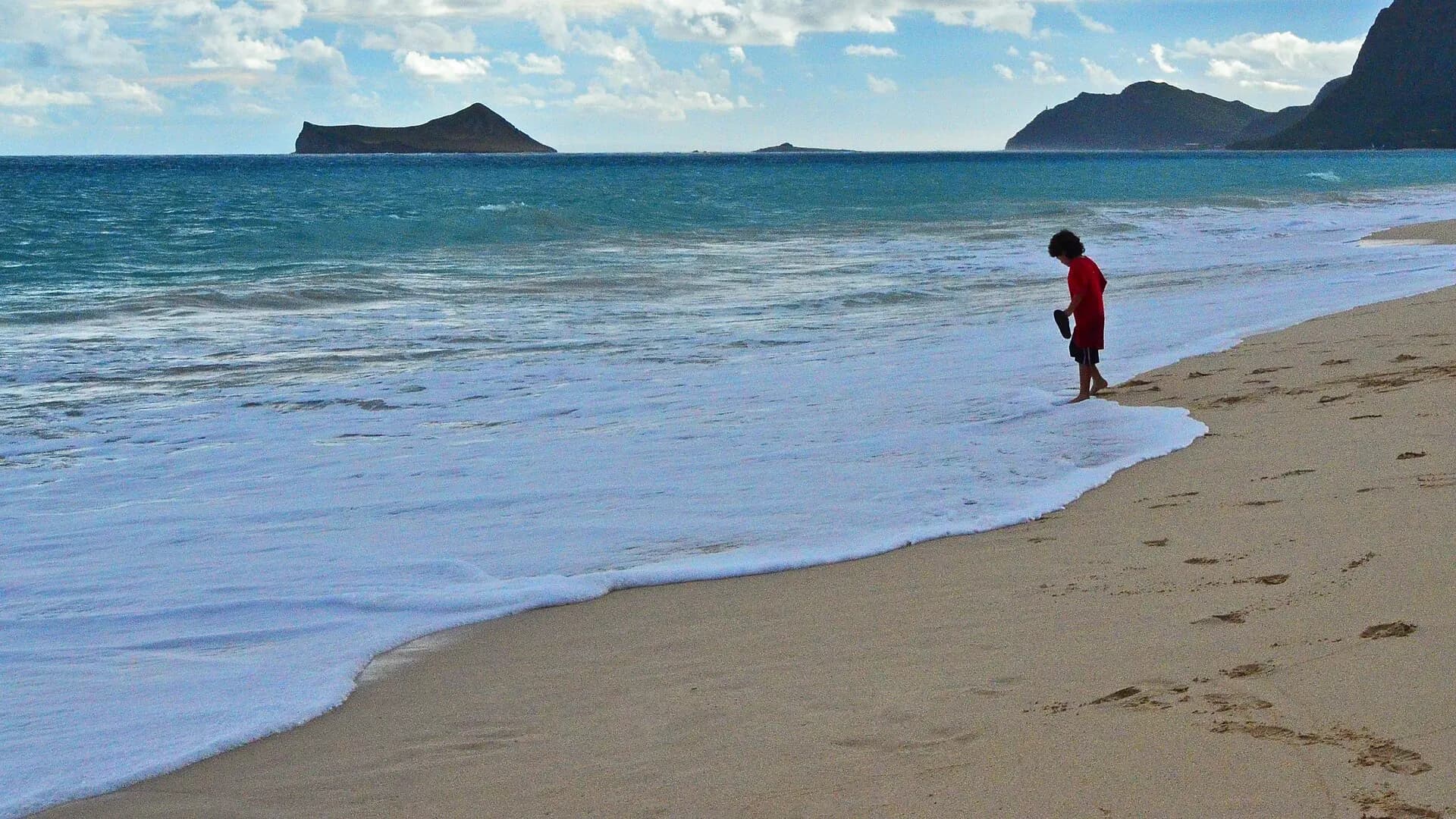
Waimānalo's beach is one of the longest on the island, a pale sweep of sand and turquoise water with the fluted cliffs of the Koʻolau rising behind. The town is a rural, strongly Hawaiian community of farms and nurseries, and the beach is a local place for family barbecues and camping more than a tourist resort.
TipPick up fruit and lunch at the roadside farm stands along Kalanianaʻole Highway.
- 12
Lanikai Beach
Photo: Sovxx, CC BY-SA 3.0, via Wikimedia Commons
Lanikai is a narrow strip of fine, white sand in a quiet residential neighbourhood, facing the twin islets of Nā Mokulua across a lagoon of clear water. Kayakers paddle out to the islets, which are a seabird sanctuary with strict rules on where you may land. Above the neighbourhood, the steep Kaʻiwa Ridge trail climbs to old Second World War pillboxes with a view along the coast at sunrise.
TipThere's no car park, and parking on the narrow streets is heavily restricted, especially at weekends and on public holidays. Stay in Kailua and walk or cycle over, and use the public beach paths between houses.
- 13
Kailua Beach Park
Photo: Tony Webster, CC BY 2.0, via Wikimedia Commons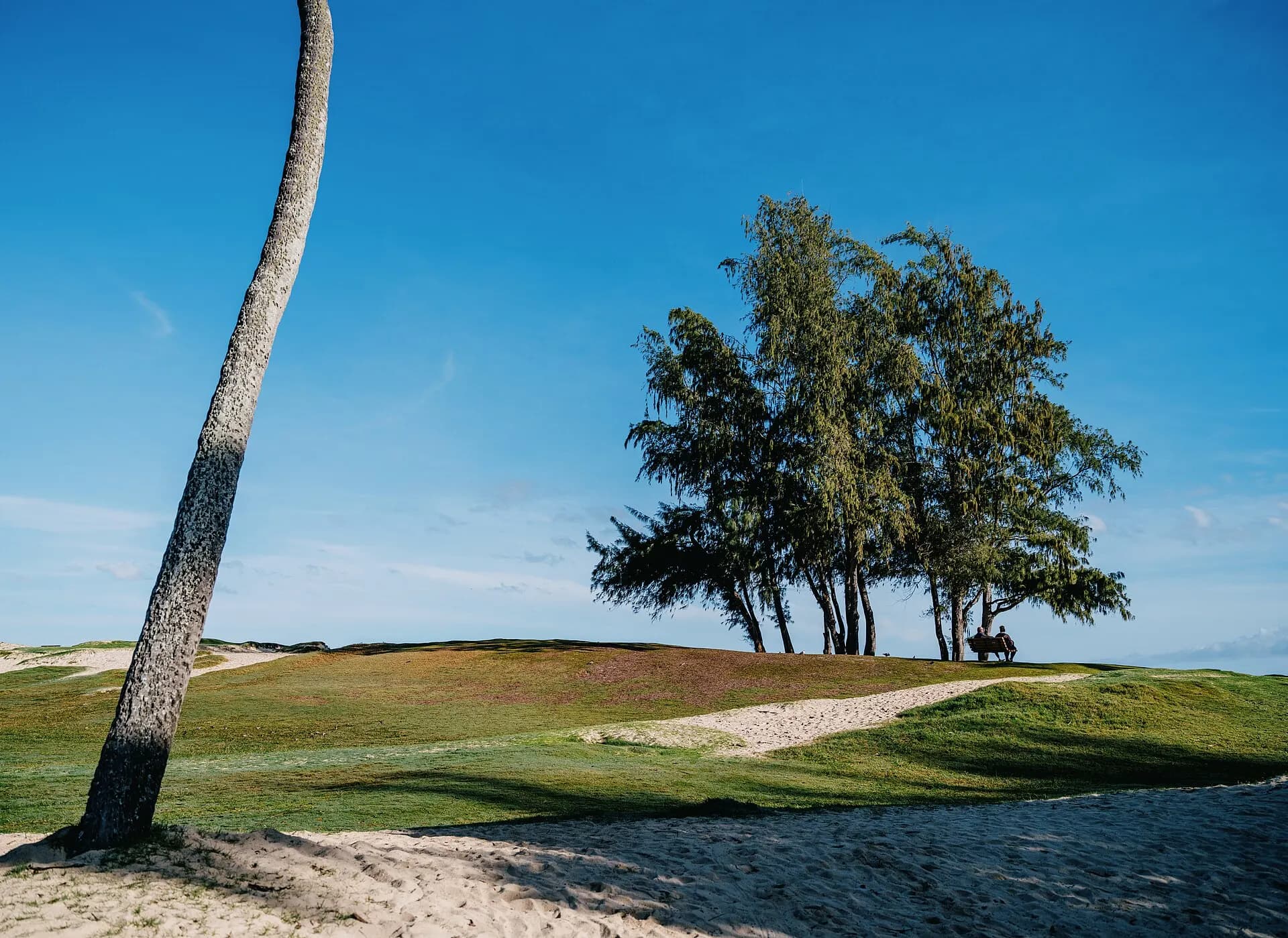
Kailua's long beach of soft sand curves around a broad bay that steady trade winds make ideal for kayaking, windsurfing and kitesurfing. The town behind it has a relaxed, small-town feel, with cafés, shave-ice stands and kayak rental shops, and it makes a calmer base than Waikīkī.
TipThe wind usually picks up by late morning, so swim or paddle out to the islets early.
- 14
Nuʻuanu Pali Lookout
Photo: Lukas from Tokyo, Japan, CC BY 2.0, via Wikimedia Commons
From Kailua, the Pali Highway climbs through tunnels to a gap in the Koʻolau cliffs, where a lookout gazes down sheer, fluted walls over Kāneʻohe and Kailua. In 1795, Kamehameha I's army drove the defenders of Oʻahu back to these cliffs, and many fell to their deaths in the decisive battle for the island. The trade winds funnel through the gap with startling force.
TipHold on to hats and phones, and bring a layer: it's often cool, windy and misty up here. Visitors pay a parking fee.
- 15
Byodo-In Temple
Photo: 663highland, CC BY 2.5, via Wikimedia Commons
In the Valley of the Temples Memorial Park, at the foot of the Koʻolau near Kāneʻohe, stands a red-and-white replica of the nine-hundred-year-old Byōdō-in temple in Uji, Japan, built in 1968 to mark a century since the first Japanese immigrants reached Hawaiʻi. A great golden Buddha sits inside, koi fill the pond, and visitors ring the large bronze bell before entering. The setting beneath the green cliffs is remarkable.
TipThere's a small admission charge. The temple stands within a working cemetery, so be quiet and respectful on the way in.
- 16
Kualoa
Photo: Famartin, CC BY-SA 4.0, via Wikimedia Commons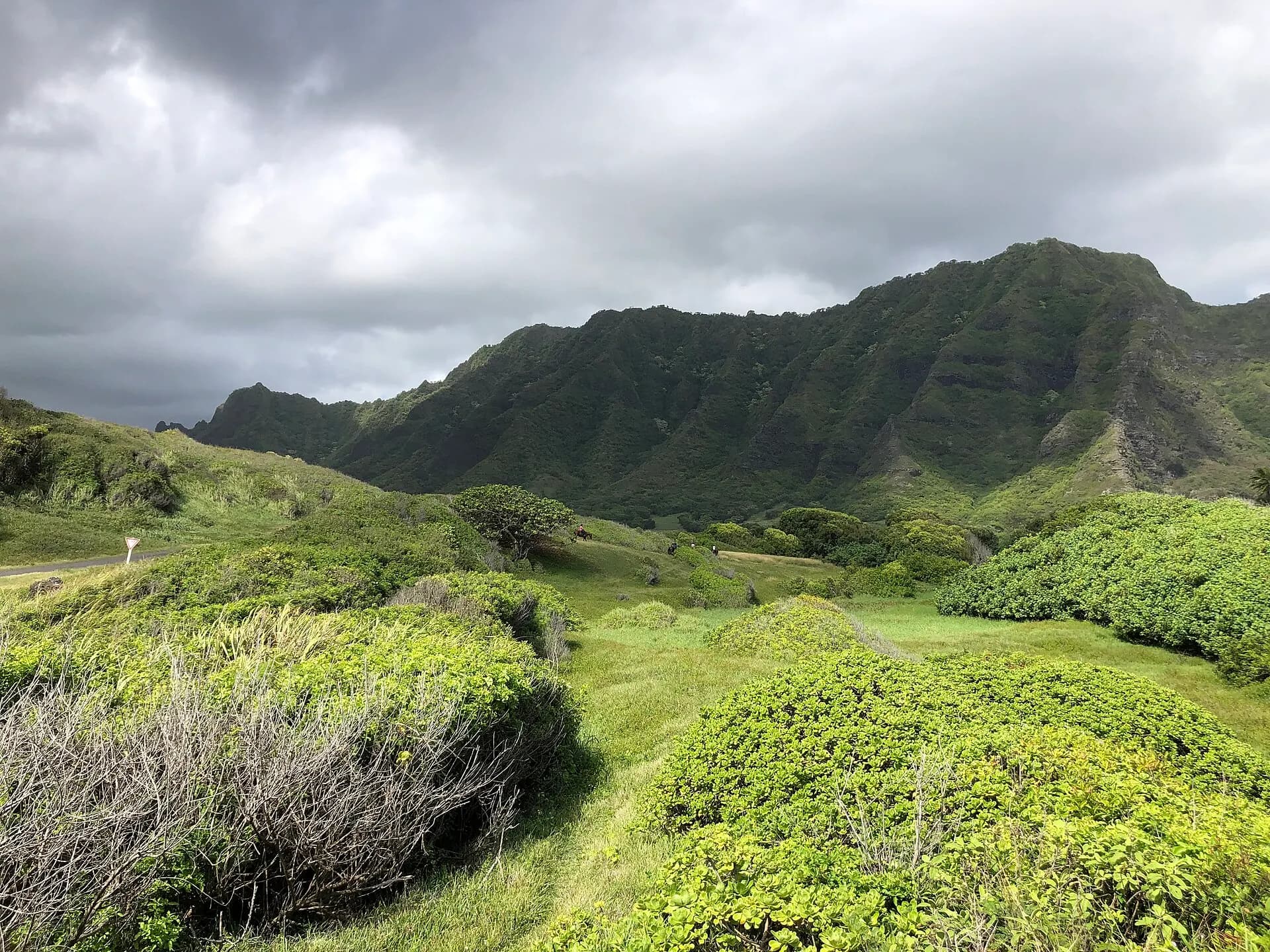
Where the Kamehameha Highway rounds the head of Kāneʻohe Bay, the jagged ridges of Kualoa rise over open pasture. In Hawaiian tradition, this was one of the most sacred places on Oʻahu. The beach park across the road faces the small conical islet of Mokoliʻi. Inland, Kualoa Ranch, a working cattle ranch, runs horseback, ATV and film-location tours of the valleys where dozens of films and TV series, including Jurassic Park, were shot.
TipRanch tours must be booked in advance and sell out on busy days; the beach park is free.
- 17
Polynesian Cultural Center
Photo: Steven Pavlov, CC BY-SA 4.0, via Wikimedia Commons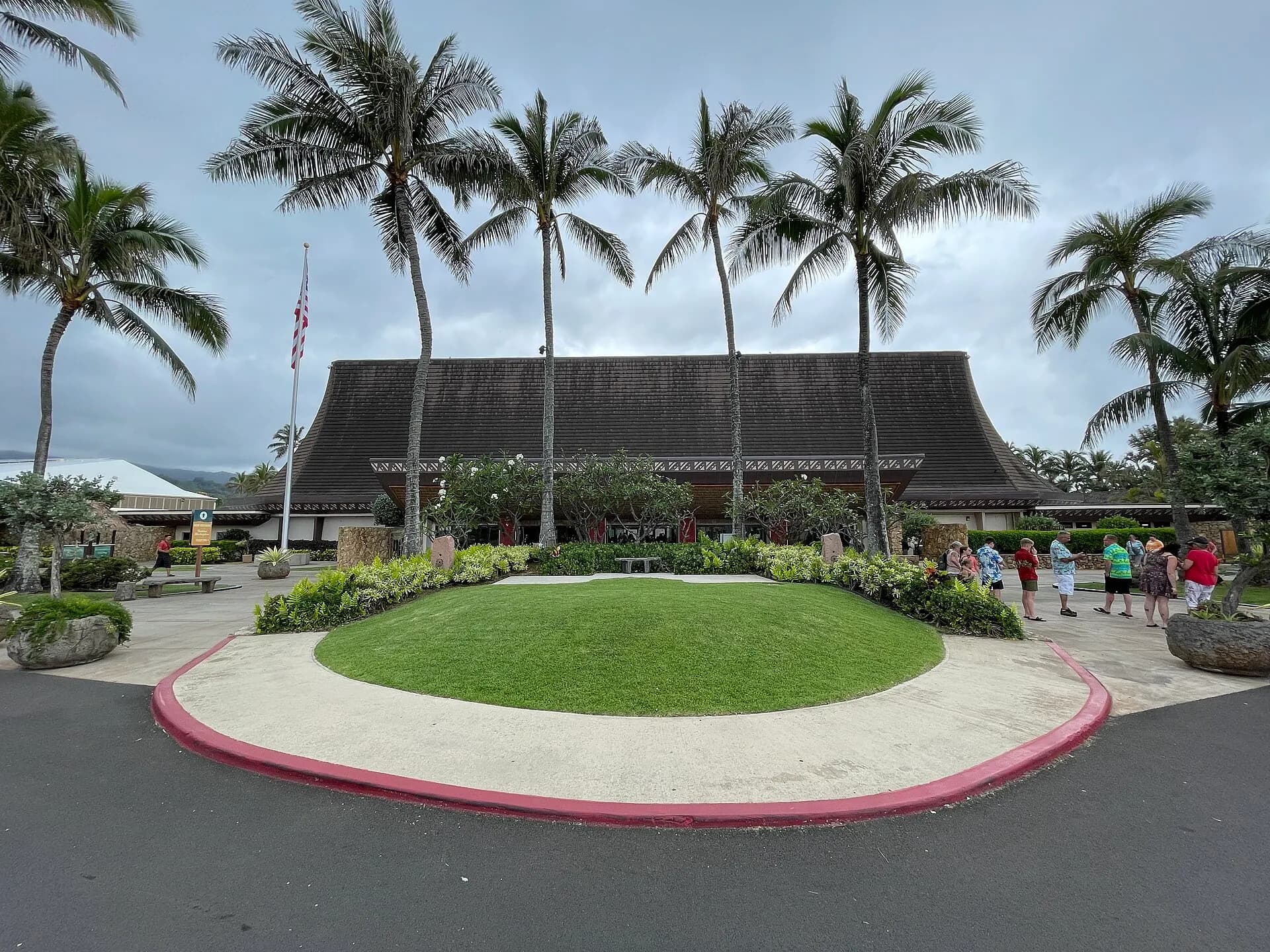
In Lāʻie, on the north-east coast, this large cultural park has re-created villages representing Hawaiʻi, Samoa, Tonga, Fiji, Aotearoa (New Zealand) and Tahiti, where many of the hosts are students from the neighbouring Brigham Young University–Hawaiʻi. Expect canoe pageants, fire-making, games and crafts by day, then an evening lūʻau and a large-scale show. It's popular with families and well run, though more theatrical than a village visit.
TipThe centre is closed on Sundays and Wednesdays. Book a ticket that matches how long you'll stay, as the drive back to Honolulu takes over an hour.
- 18
Sunset Beach
Photo: Daniel Ramirez from Honolulu, USA, CC BY 2.0, via Wikimedia Commons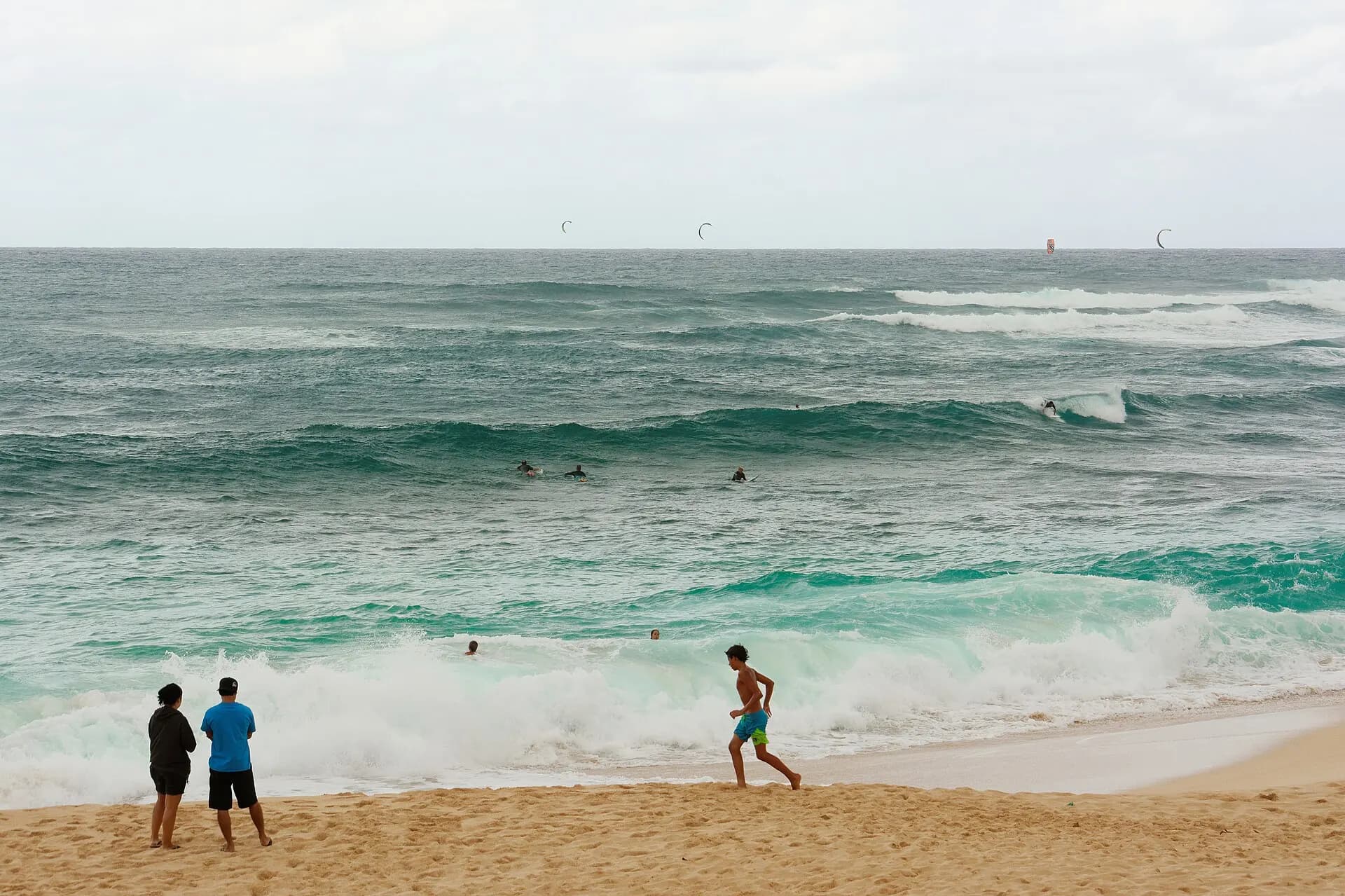
The North Shore's "seven-mile miracle" is a chain of reef breaks along an otherwise rural coast, and Sunset Beach, one of its most powerful, is the place to watch the big winter swells roll in. From about November to March, waves here and along the coast can be enormous, drawing professional surfers and contests. In summer, the sea often lies flat and blue, and the same beach is good for swimming.
TipThe sea here in winter is for spectators only unless you are a highly experienced surfer. Watch from the sand, well back from the shore break.
- 19
Banzai Pipeline
Photo: Fosterand sons, CC BY-SA 4.0, via Wikimedia Commons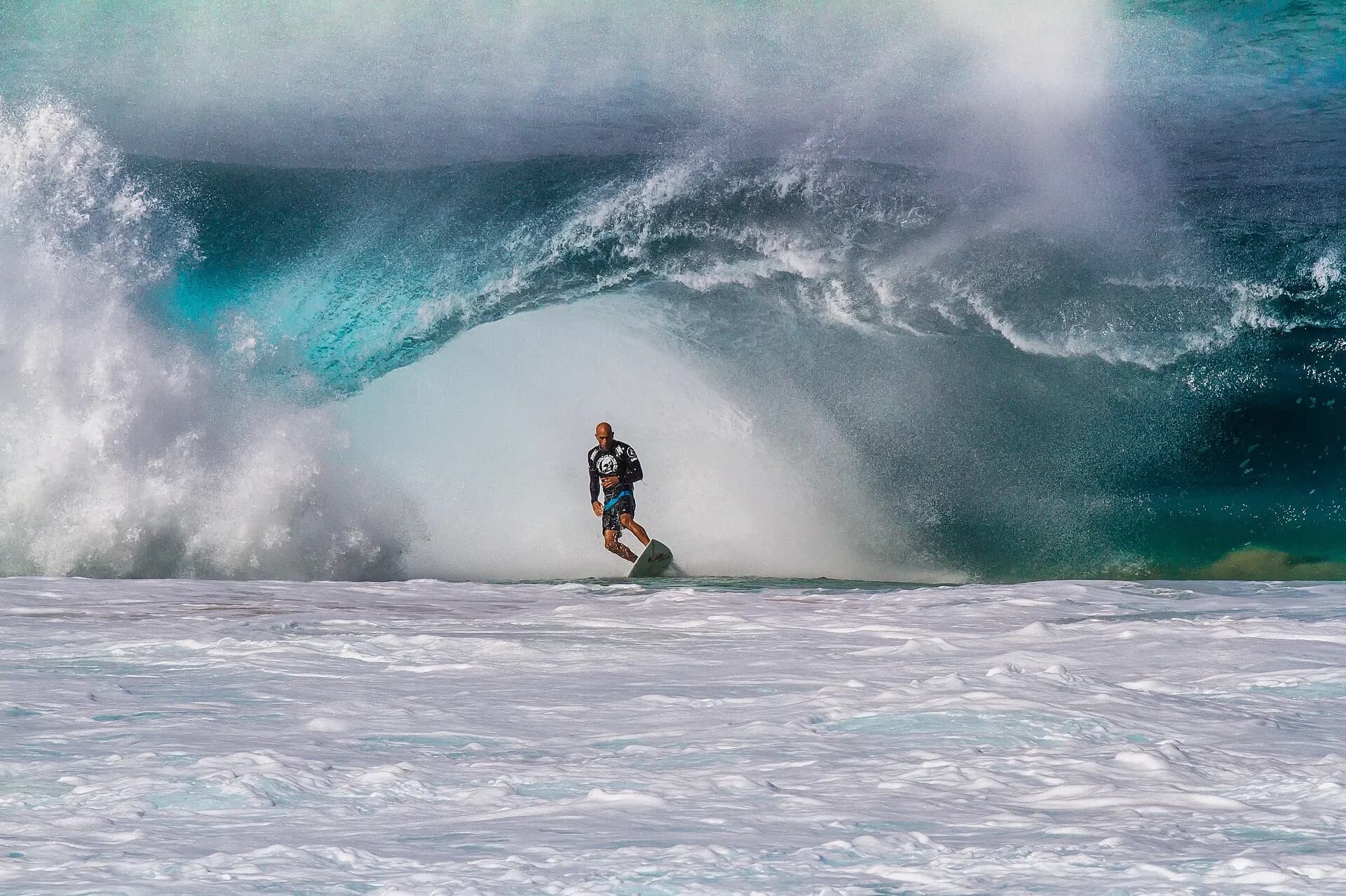
Off ʻEhukai Beach Park, the Banzai Pipeline is perhaps the most famous wave in the world, a heavy, hollow barrel that breaks over a shallow lava reef just offshore. On a good winter day, crowds gather on the sand to watch surfers ride inside the tube; on a bad one, wipeouts on the reef cause serious injuries. Major winter contests are held here when the swell allows.
TipParking at ʻEhukai is scarce during contests; take TheBus along the coast or arrive at dawn.
- 20
Waimea Bay
Photo: AK KAMEDA PHOTOS, CC BY 2.0, via Wikimedia Commons
This deep, sand-rimmed bay was where big-wave surfing was born in the 1950s. In winter, it can hold waves as tall as a house; the famous memorial contest in honour of the waterman Eddie Aikau runs only in the rare years when they're truly giant. In summer, Waimea turns calm and clear, and locals leap from the big rock at its southern end.
TipNever swim here when the surf is up or when the lifeguards say no. The car park fills early on calm summer weekends.
- 21
Waimea Valley
Photo: shanstap, CC BY-SA 4.0, via Wikimedia Commons
Behind the bay, the valley was home to Hawaiian priests and farmers for centuries and has restored sites of houses, terraces and a heiau (temple). Today it's managed as a cultural and botanical park, with a paved path of about 1.2 kilometres through gardens of native and Pacific plants to Waihī Falls.
TipSwimming under the falls is allowed only when conditions are safe, with a life jacket provided; check the board at the entrance.
- 22
Haleʻiwa
Photo: Melvin Vaniman, Public domain, via Wikimedia Commons
The North Shore's main town grew up around a sugar mill and a railway. Its wooden plantation-era buildings now house surf shops, galleries, food trucks and shave-ice stands, including Matsumoto, serving since the 1950s. The arched Anahulu bridge crosses the river where paddlers and paddleboarders train, and green sea turtles often haul out on beaches nearby.
TipKeep at least 3 metres from turtles on the sand, and never touch or feed them. The North Shore's single coastal road jams on winter weekends; come midweek.
- 23
Kaʻena Point
Photo: Aaron Zhu, CC BY-SA 3.0, via Wikimedia Commons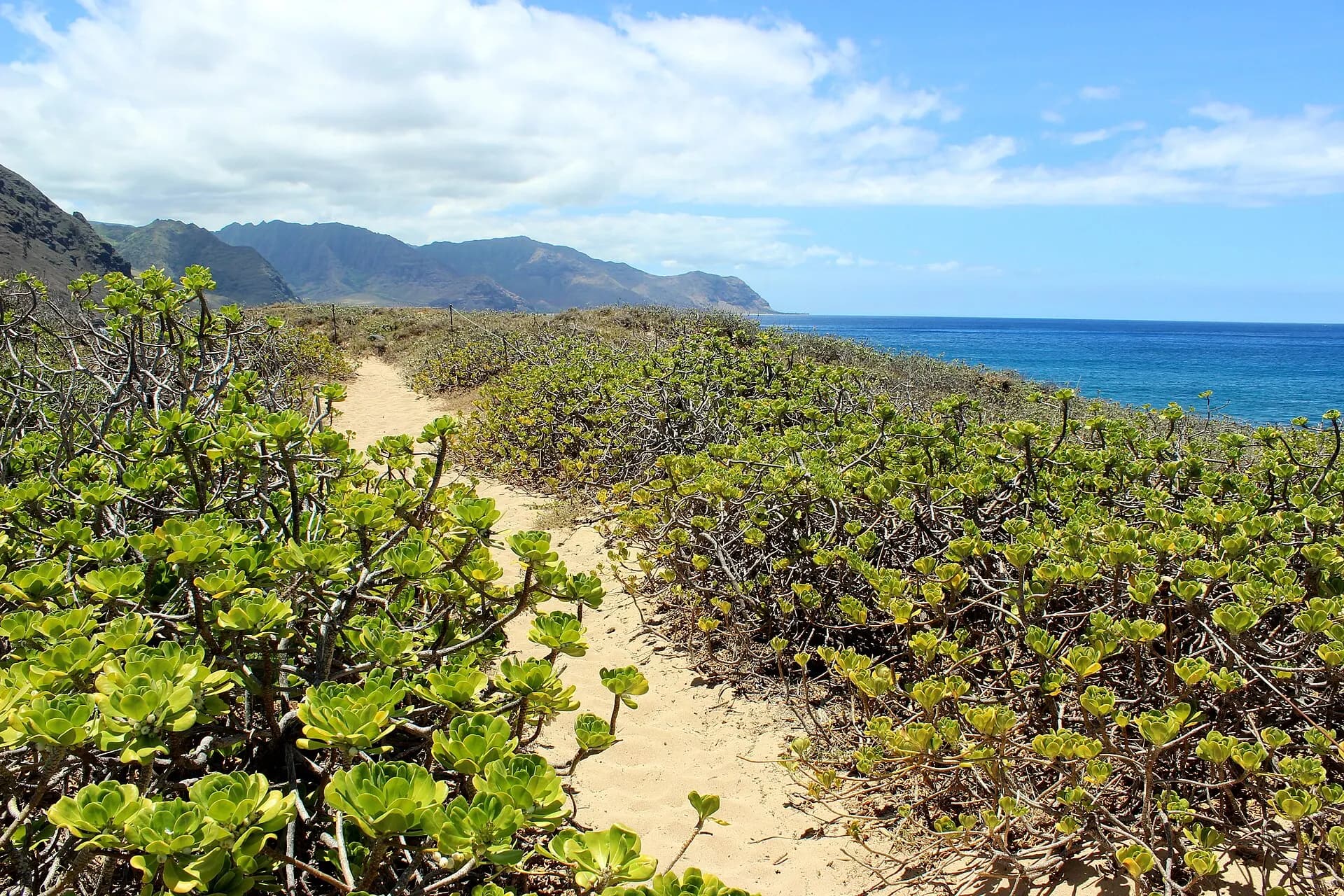
No road rounds Oʻahu's western tip: instead, an old railway bed, about 4 kilometres each way from the end of the road at Mokulēʻia, leads across dry, rocky coast to a fenced reserve of sand dunes. Laysan albatrosses nest here in winter and spring, and endangered Hawaiian monk seals sometimes rest on the shore. In Hawaiian belief, souls of the dead leapt from this point into the afterlife.
TipTake plenty of water, sun protection and sturdy shoes; there's no shade, water or facilities. Keep at least 45 metres from monk seals and stay on the paths in the dunes.
When to go
Oʻahu is warm all year, with daytime highs of about 27 to 31°C and sea temperatures that rarely dip below 24°C. The leeward south and west shores, Waikīkī included, are drier and sunnier than windward Kailua and Kāneʻohe, where passing showers and rainbows are part of daily life. The wetter season runs roughly from November to March, though rain usually comes in short bursts rather than all-day downpours.
April to May and September to October are the sweet spots, with good weather, more space and lower prices. Winter brings the big North Shore swells, the surf contests and, from about December to April, humpback whales offshore; it's also the busiest time, with Christmas, New Year and the cold-country escapees. Summer is hot and busy too, but the North Shore turns calm enough for swimming and snorkelling. September's Aloha Festivals and December's Honolulu Marathon fill the hotels.
Getting around
Daniel K. Inouye International Airport (HNL) lies west of downtown Honolulu, about 30 minutes' drive from Waikīkī without traffic. For a stay in Waikīkī and Honolulu, you can do without a car: TheBus serves almost the whole island, and Skyline, Honolulu's driverless elevated railway, now runs from East Kapolei past Pearl Harbor and the airport to Kalihi, with stations at Hālawa (for Pearl Harbor) and the airport. It does not reach downtown or Waikīkī yet; change to the frequent bus lines at the end of the line.
Fares are the same on TheBus and Skyline. Since 1 July 2026 a cash single ride costs $3.25 with no transfers, while a HOLO card gives you a two-hour pass for $3 and caps daily spending at $7.50. The city-run Biki bike share is useful around Waikīkī and downtown.
A hire car makes it far easier to reach the windward coast, the North Shore and the trailheads, especially if you want early starts. Expect heavy rush-hour traffic on the H-1 freeway and around Honolulu, and pay for hotel parking in Waikīkī, which is expensive. A good plan is to go car-free in town and rent a car for just two or three days of exploring.
Local tips
- Book ahead: the USS Arizona Memorial, Hanauma Bay and Diamond Head all have reservation systems, and Hanauma and Diamond Head sell out.
- Use card for Diamond Head and Hanauma entry fees, but keep cash for Hanauma parking and farm stands.
- Never leave anything visible in a parked car, especially at trailheads, lookouts and beach parks.
- Use mineral sunscreen; Hawaiʻi bans the sale of sunscreens containing oxybenzone and octinoxate, which damage coral.
- Respect "kapu" signs and closed or illegal trails. The Haʻikū Stairs (Stairway to Heaven) are off-limits and being removed.
- Tip about 18 to 20% in restaurants. Hotel bills carry high state and county room taxes, and many hotels add a resort fee.
- Learn a few words: aloha, mahalo (thank you), mauka (towards the mountains), makai (towards the sea) and ʻewa and Diamond Head, which locals use for west and east.
Eat and drink
Oʻahu's food mirrors its mix of cultures. The plate lunch, with two scoops of rice, macaroni salad and a main such as kalbi ribs, chicken katsu or kālua pork, is the island's everyday meal; poke, cubes of raw ʻahi tuna or octopus seasoned with soy, sesame or limu seaweed, is sold by the pound at supermarkets and fish markets. Try laulau (pork steamed in taro leaves), poi, loco moco, Spam musubi, malasadas (Portuguese doughnuts) and garlic shrimp from the trucks around Kahuku on the way to the North Shore.
Shave ice is the classic cooler, finer than a snow cone and drenched in syrup. Honolulu also has a lively dining scene in Kakaʻako, Kaimukī and Chinatown, with chefs cooking modern Hawaiian food from island fish, beef and produce. A lūʻau is the traditional feast; choose one with a genuine cultural programme.
Where to stay
Waikīkī has the most rooms by far, from budget hostels to grand beachfront hotels, and puts you within walking distance of beaches, restaurants and buses. Downtown and Kakaʻako suit travellers who prefer a local city feel. Kailua, on the windward side, offers a quieter, beachier base in licensed vacation rentals and small inns. On the North Shore, accommodation is sparse but there's a large resort at Turtle Bay and a few rentals around Haleʻiwa. Ko Olina, on the west coast, is a self-contained resort area with sheltered lagoons. Honolulu strictly limits short-term holiday rentals outside resort areas, so make sure any rental you book is legal.
A kingdom and a state
Polynesian voyagers settled the Hawaiian Islands perhaps a thousand years ago, and Oʻahu was ruled by its own chiefs until 1795, when Kamehameha I conquered it at the battle of Nuʻuanu on his way to uniting the islands. Honolulu's deep harbour made it the trading centre of the Pacific, and in 1845 it became the capital of the Kingdom of Hawaiʻi. Missionaries, whalers and then sugar planters arrived, and with them labourers from China, Japan, Portugal, Korea and the Philippines, whose descendants make up much of the island's population today.
In 1893, a group of American businessmen, supported by US marines, overthrew Queen Liliʻuokalani. The United States annexed Hawaiʻi in 1898, and military bases such as Pearl Harbor grew into the island's economic backbone. Hawaiʻi became the fiftieth state in 1959, the year jet travel brought mass tourism to Waikīkī. A revival of Hawaiian language, hula and voyaging from the 1970s onwards has brought the island's older story back into public life.
Ocean safety
Drowning is a leading cause of visitor deaths in Hawaiʻi, and many victims are confident swimmers caught out by conditions they didn't recognise. Swim at lifeguarded beaches and ask the guards about the day's conditions. In winter, north- and west-facing shores can have dangerous surf and currents; in summer, the south shore gets its bigger waves. Never turn your back on the sea, stay off wet rocks and ledges, and if a current catches you, swim parallel to the shore rather than against it. Box jellyfish sometimes drift on to the south and leeward shores about eight to ten days after a full moon; heed the warning signs.
Snorkel with a buddy and avoid the full-face masks that make it harder to breathe. Never step on or touch the coral. Streams and waterfalls can flood suddenly when rain falls in the mountains, even under blue skies on the coast.
Responsible travel
Oʻahu is many people's home, and housing, roads and favourite beaches are under pressure from visitors. Follow the reservation systems, park only where it's allowed and stay on marked, legal trails. Keep 3 metres from turtles and 45 metres from monk seals, don't feed fish, and pack out all your rubbish. Heiau and burial sites are sacred: don't climb on walls or move or stack stones. Spend money in family-run plate-lunch shops, farmers' markets and Hawaiian-led cultural tours, and treat the Waiʻanae coast and other quiet local communities as neighbourhoods, not attractions.