Nashville
Music City, where songwriters outnumber almost everyone, neon honky-tonks play from noon, and country, gospel, blues and soul share the same few blocks.
- Best time to go
- April to early June and September to early November, for warm days without the sticky heat of high summer
- Local time
- –
- Currency
- US Dollar (USD)
- Reading time
- 14 min
- Language
- English
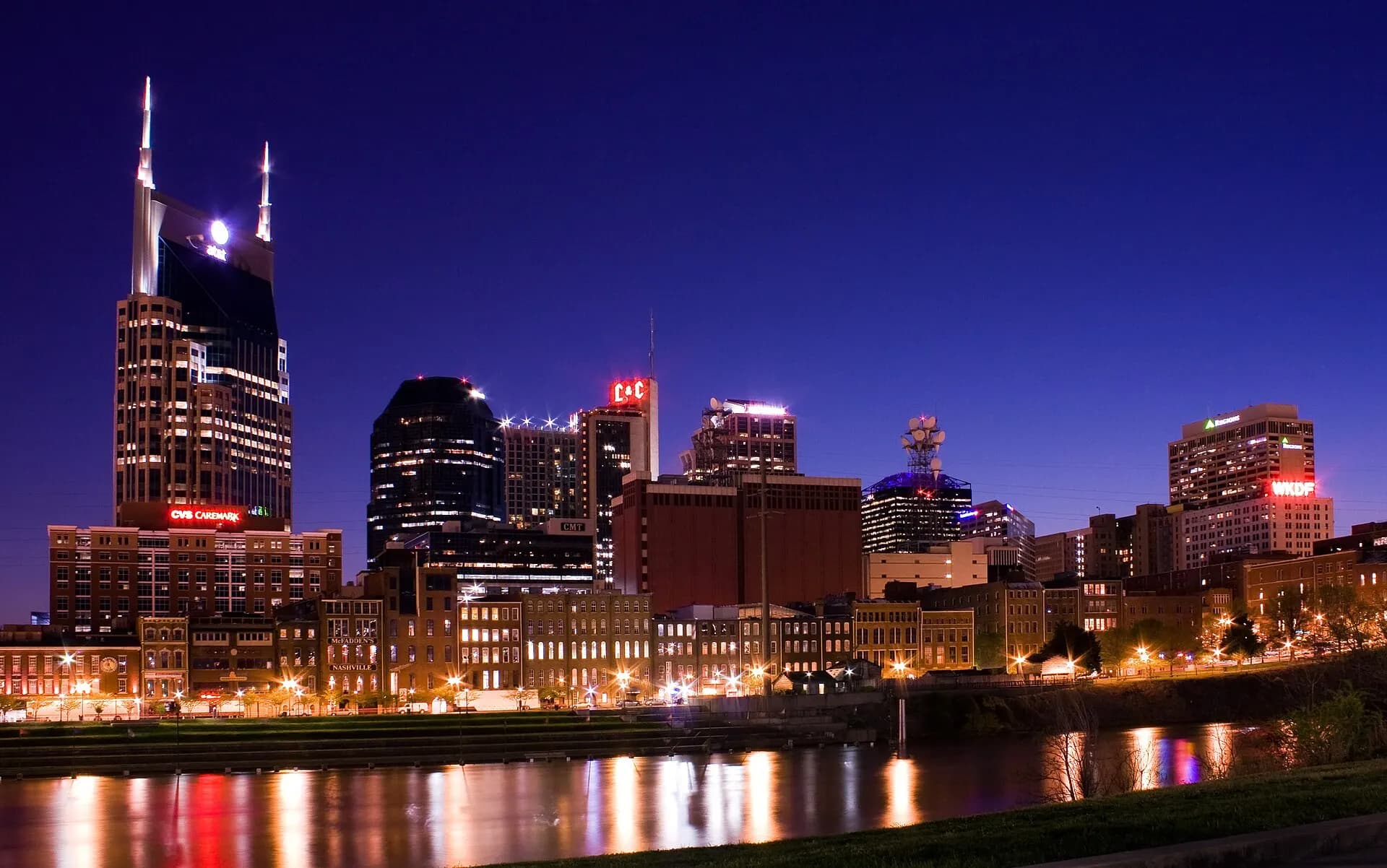
Nashville is the capital of Tennessee and the working headquarters of country music, but it is a far broader music town than its cowboy-boot image suggests. Thousands of professional songwriters, session players and engineers live here, and on any given night their work spills out of honky-tonks, listening rooms, gospel halls and rock clubs. The city also has a deep African American musical tradition, a grand neoclassical streak that once earned it the nickname "Athens of the South", and a fast-growing skyline of cranes and glass towers along the Cumberland River.
Most first-timers head straight for Lower Broadway, the neon strip of bars where live bands play from late morning to the small hours, and it is worth doing at least once. But the real pleasure lies in combining that spectacle with the quieter places: a hushed songwriter round at the Bluebird, a tour of the studio where Elvis recorded, an evening at the Ryman or the Opry, and the leafy neighbourhoods south and east of downtown. Three or four days is ideal, with one more for Franklin or the historic estates.
The top 18 in Nashville
- 1
Tennessee State Capitol
Photo: Thegreenj, CC BY-SA 3.0, via Wikimedia Commons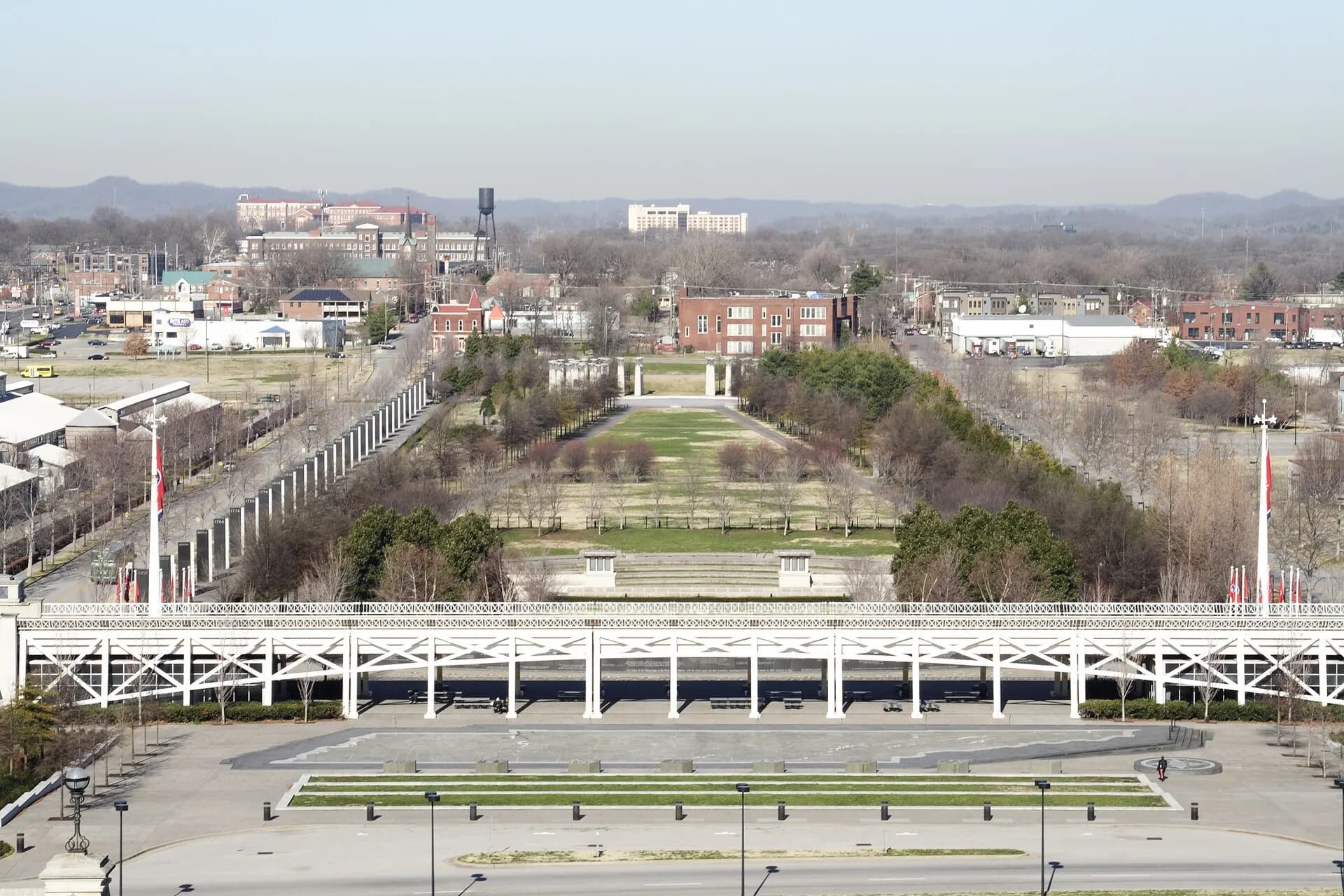
Crowning the highest hill downtown, the Greek Revival capitol was completed in 1859 and remains one of the oldest working state capitols in the country. Its architect, William Strickland, liked it so much that he asked to be buried in its walls, and he was. President James K. Polk and his wife lie in a tomb on the grounds. Below the hill to the north, Bicentennial Capitol Mall State Park lays out Tennessee's history in granite walls, fountains and a 200-foot map of the state, and the Tennessee State Museum and Nashville Farmers' Market sit along its edges.
TipThe Farmers' Market food hall beside the mall is a cheap, local lunch stop before walking down to Broadway.
- 2
Ryman Auditorium
Photo: Daniel Schwen, CC BY-SA 4.0, via Wikimedia Commons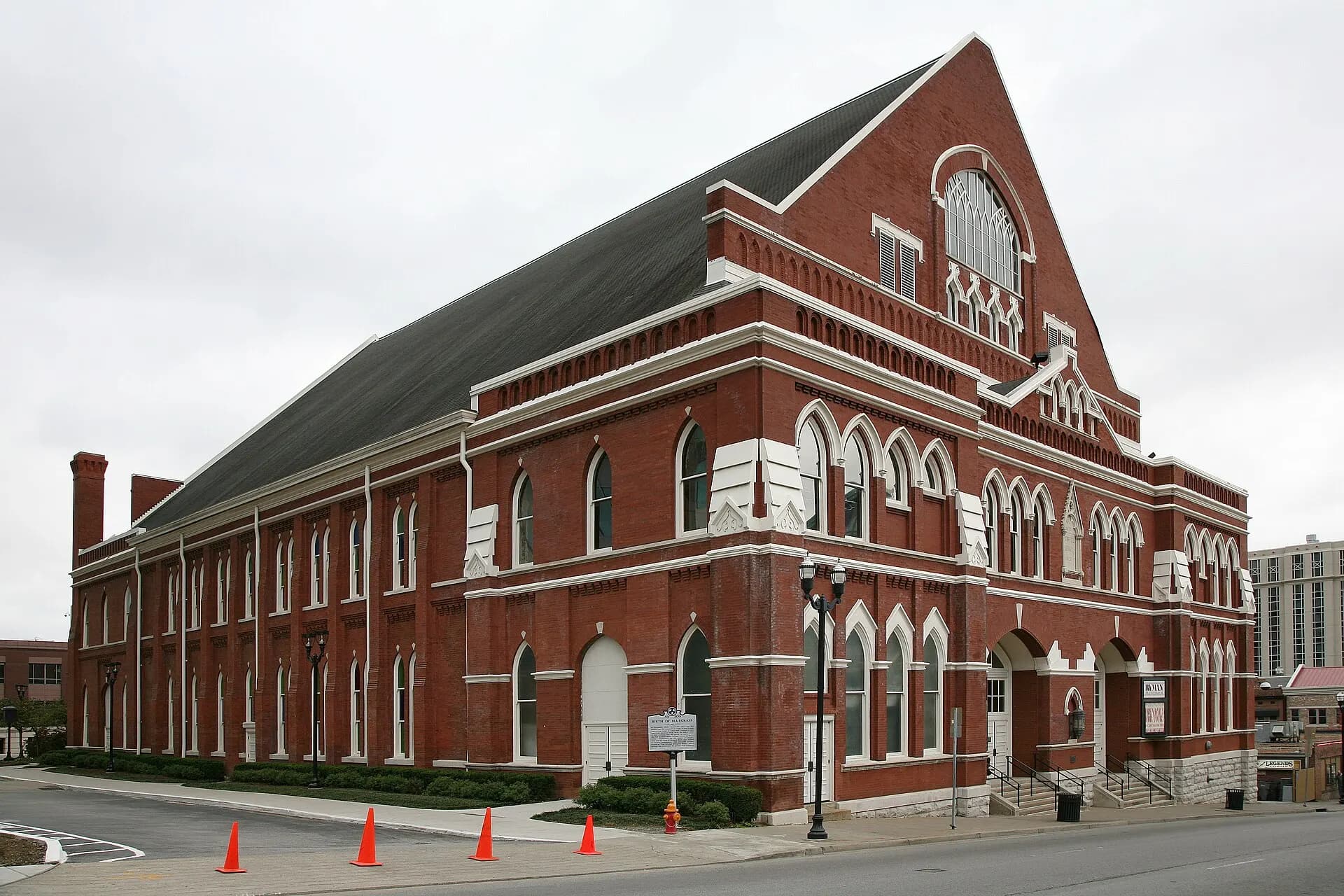
Built in 1892 by a riverboat captain, Thomas Ryman, as a gospel tabernacle, the red-brick Ryman became the home of the Grand Ole Opry from 1943 to 1974 and is still called the Mother Church of Country Music. Its curved wooden pews and near-perfect acoustics make it one of the most loved concert halls in America, and the line-up ranges well beyond country to rock, comedy and bluegrass. By day, a self-guided tour covers the building's history, with a short film, exhibits on its stranger guests and the chance to stand on stage for a photo; a guided backstage option adds the dressing rooms.
TipSeeing a show here beats any tour. The Opry itself returns to the Ryman for some winter runs, so check both calendars.
- 3
National Museum of African American Music
Opened in 2021 at the corner of Fifth and Broadway, this museum is the only one in the country devoted to the full sweep of music created or shaped by African Americans, from spirituals and the blues through jazz, gospel, R&B and hip-hop. Its galleries are strongly interactive: an RFID wristband lets you save songs to a playlist, and you can try producing a beat or singing with a virtual gospel choir. It is a vital counterweight to the country-music story told elsewhere downtown, and it explains how deeply the two traditions overlap.
TipAllow two to three hours. General admission is free on the first Wednesday of each month, except for the Jubilation gallery; last entry is at 4pm.
- 4
Lower Broadway honky-tonks
Photo: An Errant Knight, CC BY-SA 4.0, via Wikimedia Commons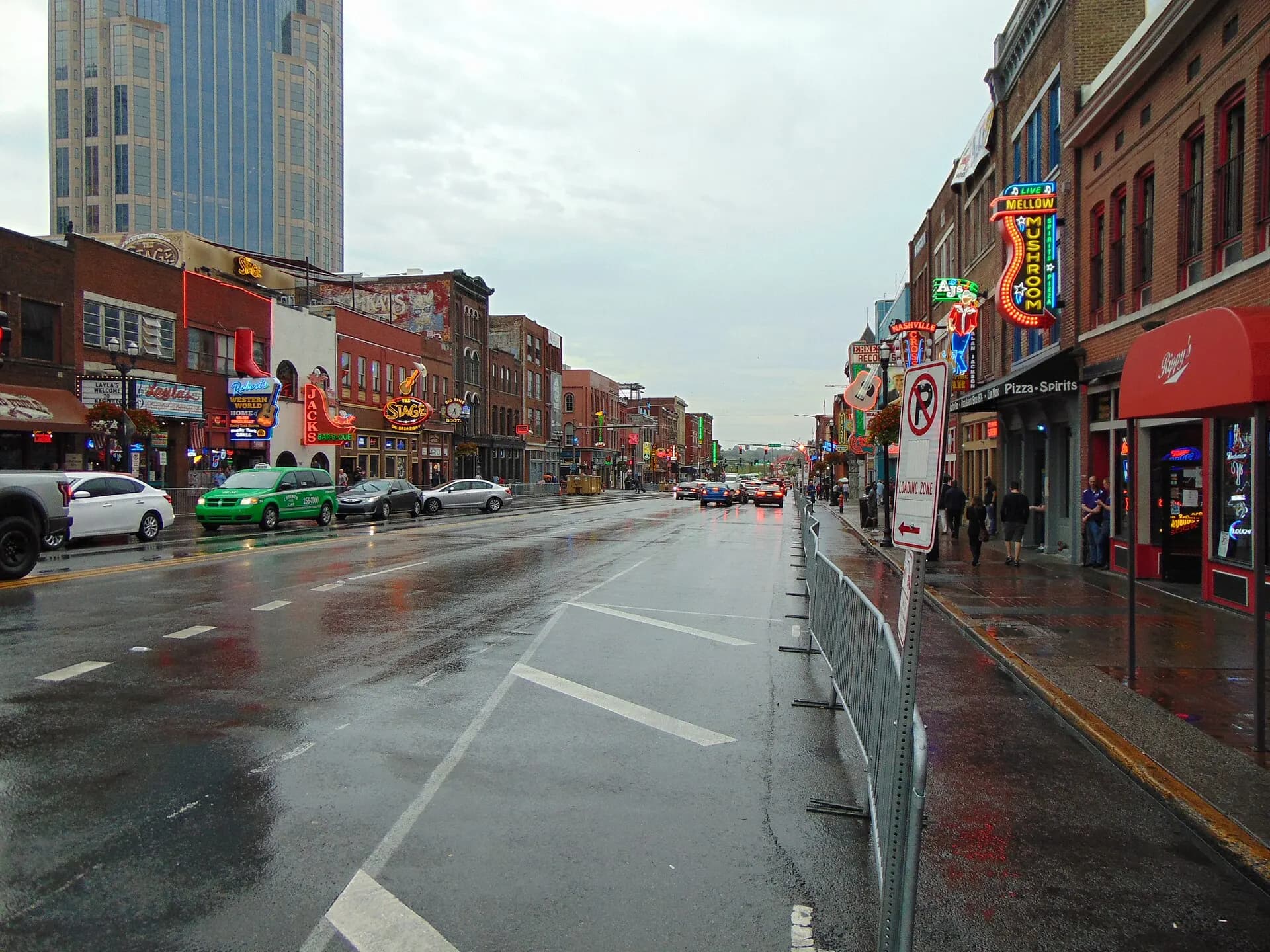
The five blocks of Broadway between Fifth Avenue and the river are wall-to-wall honky-tonks, many of them multi-storey bars backed by country stars, with bands playing on every floor and rooftop. Most have no cover charge; the musicians earn their living from the tip jar, so drop a few dollars in if you stay for a set. Tootsie's Orchid Lounge, with its purple façade and walls plastered with photos, is the most famous of the old guard, and Robert's Western World keeps a traditional repertoire of fiddle, steel guitar and fried bologna sandwiches.
TipGo in the afternoon for the best musicianship and fewest crowds. Weekend nights are dominated by bachelorette parties and party wagons, which is fun for some and overwhelming for others.
- 5
Johnny Cash Museum
Photo: Michael Rivera, CC BY-SA 4.0, via Wikimedia Commons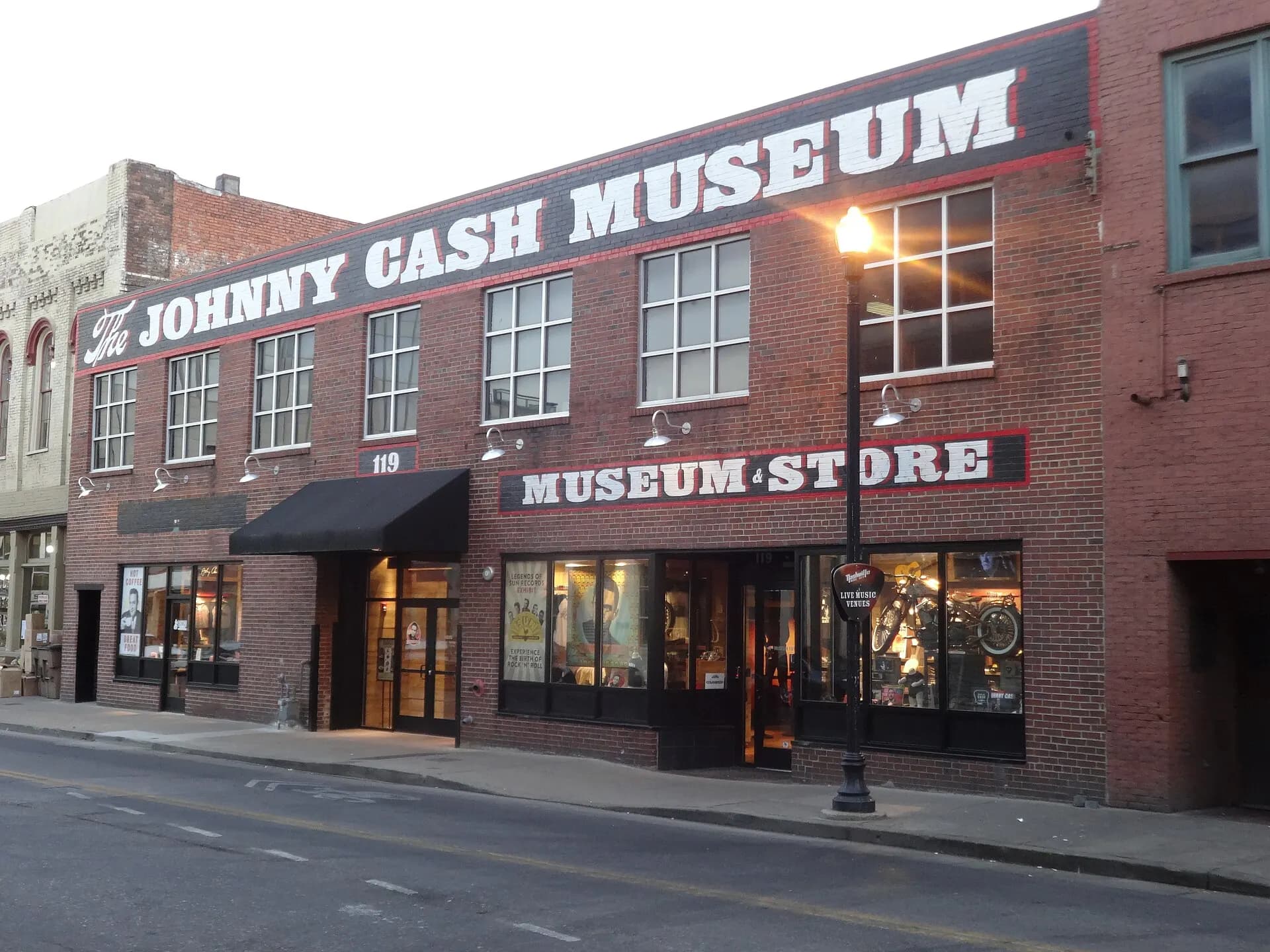
Just off Broadway on Third Avenue South, this compact museum holds what it describes as the largest collection of Johnny Cash artefacts anywhere: stage costumes, handwritten lyrics, gold records and a wall rebuilt from his lakeside home near Nashville. Listening stations trace his long career, from Sun Records rockabilly to the late recordings with Rick Rubin, and the story of his relationship with June Carter is told with care. It is easy to see in an hour.
- 6
John Seigenthaler Pedestrian Bridge
Photo: dconvertini, CC BY-SA 2.0, via Wikimedia Commons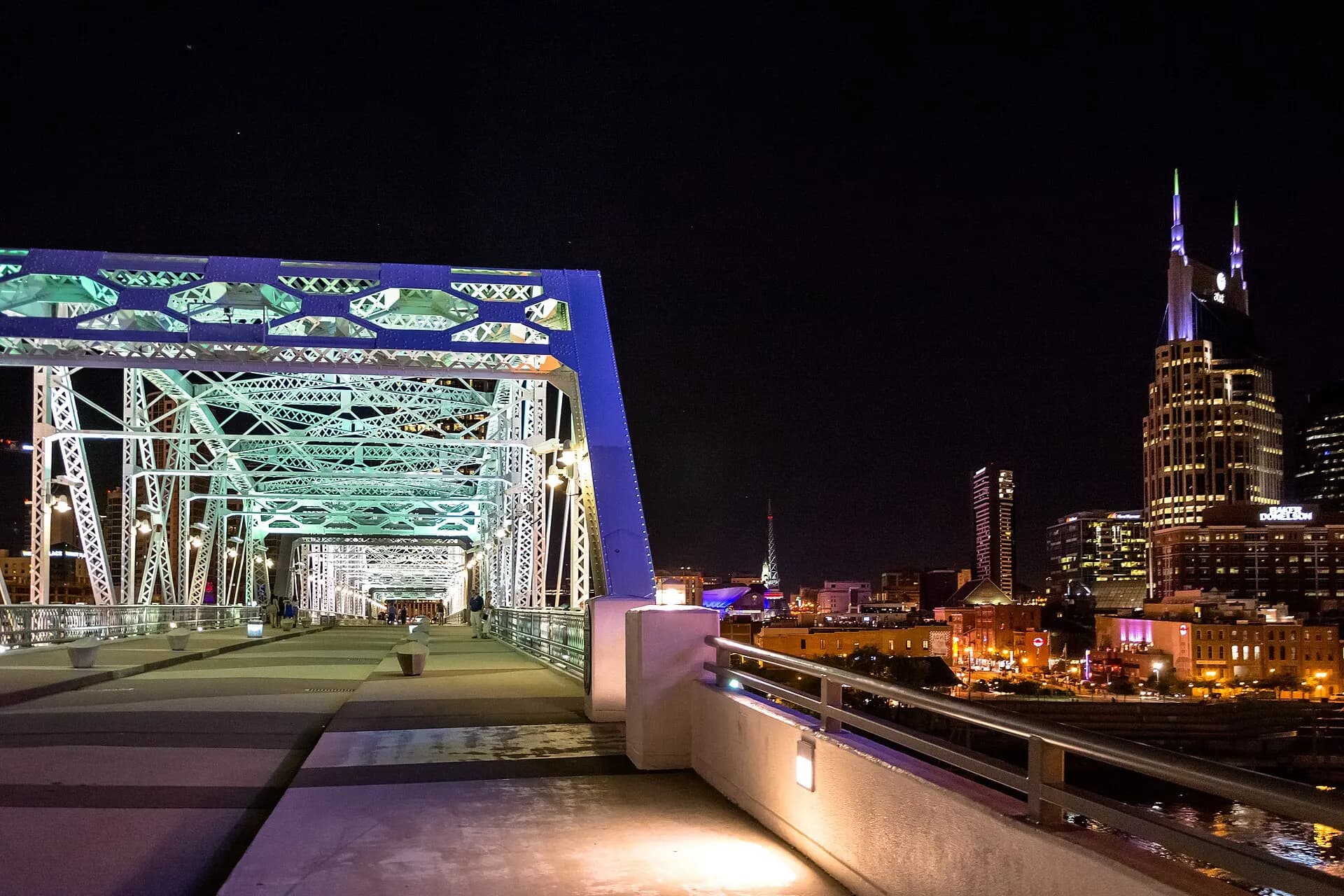
This 1909 steel truss bridge, closed to cars in the 1990s and restored for walkers and cyclists, crosses the Cumberland River from the foot of Broadway to the stadium on the east bank. Halfway across you get the classic view of the downtown skyline, with the pointed twin spires of the AT&T Building, which locals call the Batman Building, rising behind the honky-tonks. It is especially good at dusk, when the neon comes on.
- 7
Country Music Hall of Fame and Museum
Photo: OLE BENDIK KVISBERG, CC BY 2.0, via Wikimedia Commons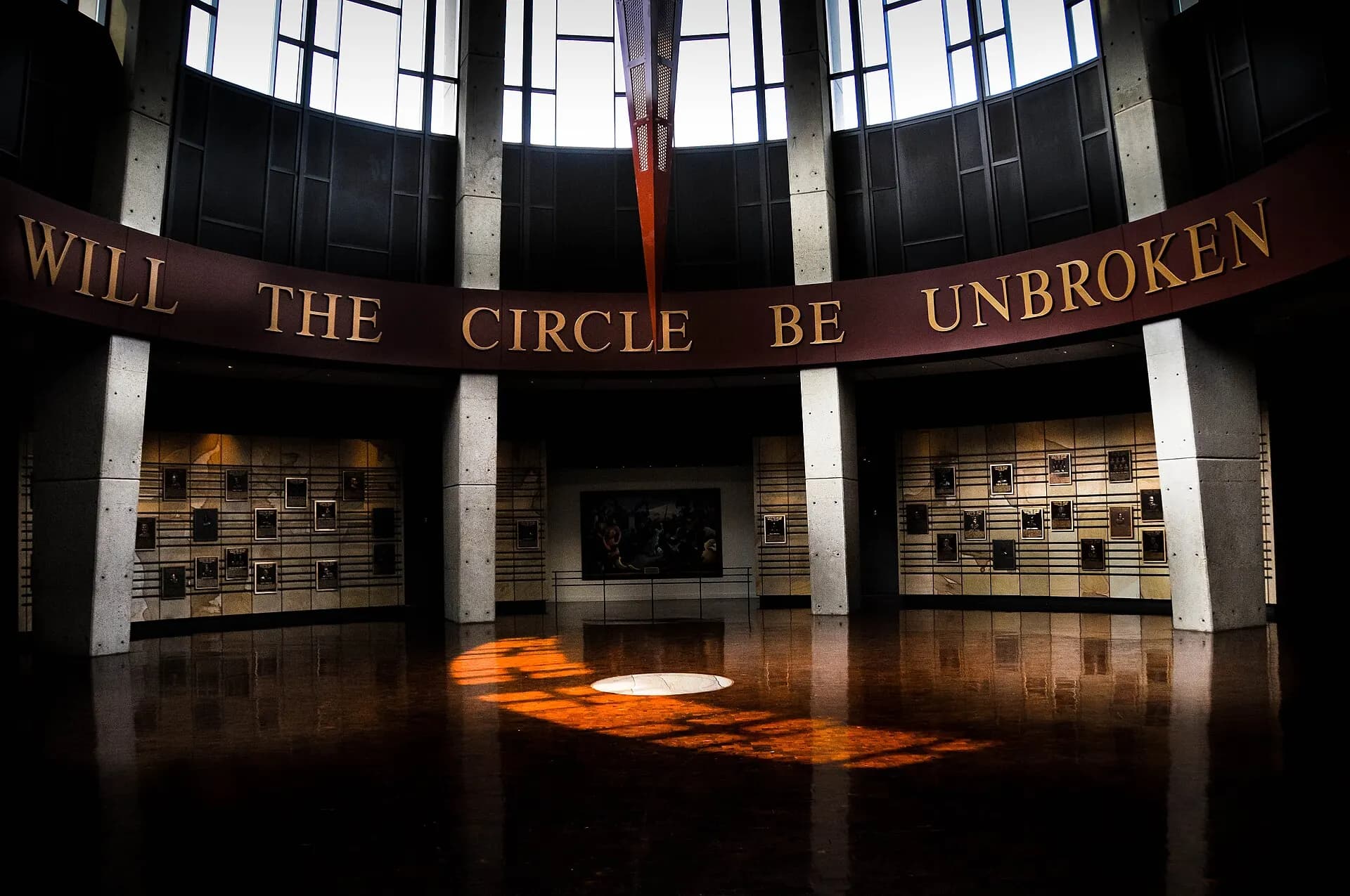
The city's most important museum occupies a striking building whose tall windows were designed to look like piano keys. The permanent exhibition runs from the folk and string-band roots of the music to the present, displaying Elvis Presley's gold Cadillac, Webb Pierce's silver-dollar convertible, Hank Williams' clothes and an endless parade of rhinestone suits. The rotunda holds the plaques of every Hall of Fame member, and temporary shows focus on individual artists. Hatch Show Print, the letterpress shop that has made concert posters since 1879, works inside the building.
TipThe museum is open daily from 9am to 5pm. Book the RCA Studio B add-on at the same time, as tours fill up and leave from here.
- 8
Frist Art Museum
Photo: Kathleen Conklin from Falls Church, USA, CC BY 2.0, via Wikimedia Commons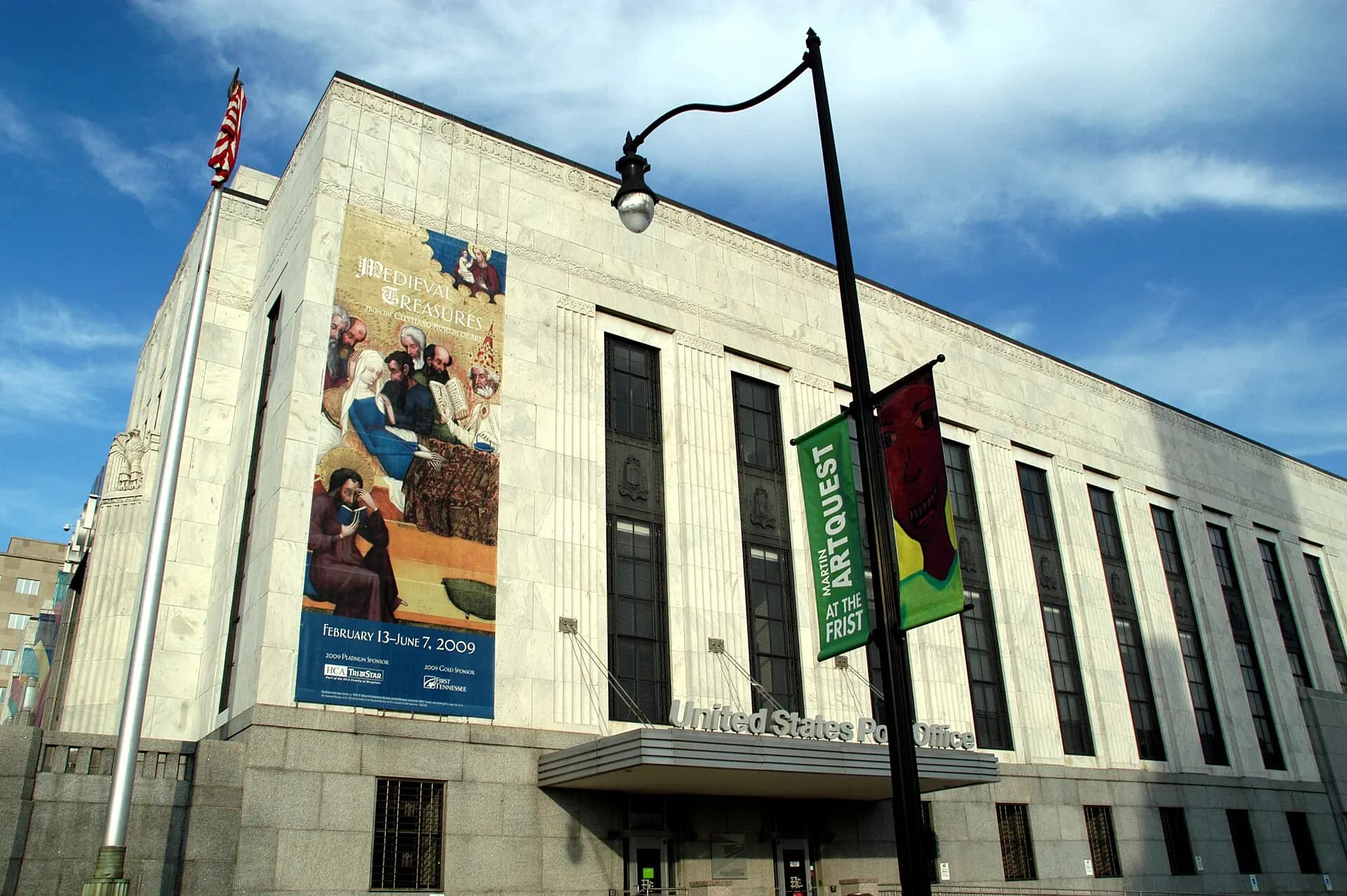
Housed in the former main post office, a gleaming Art Deco building of 1934 next to Union Station, the Frist has no permanent collection and instead hosts a changing programme of major touring exhibitions. Even if the current show does not appeal, the polished marble halls and aluminium grilles are worth a look, and the hands-on art studio is popular with children.
- 9
The Gulch
Photo: Nick Shields, CC BY 2.0, via Wikimedia Commons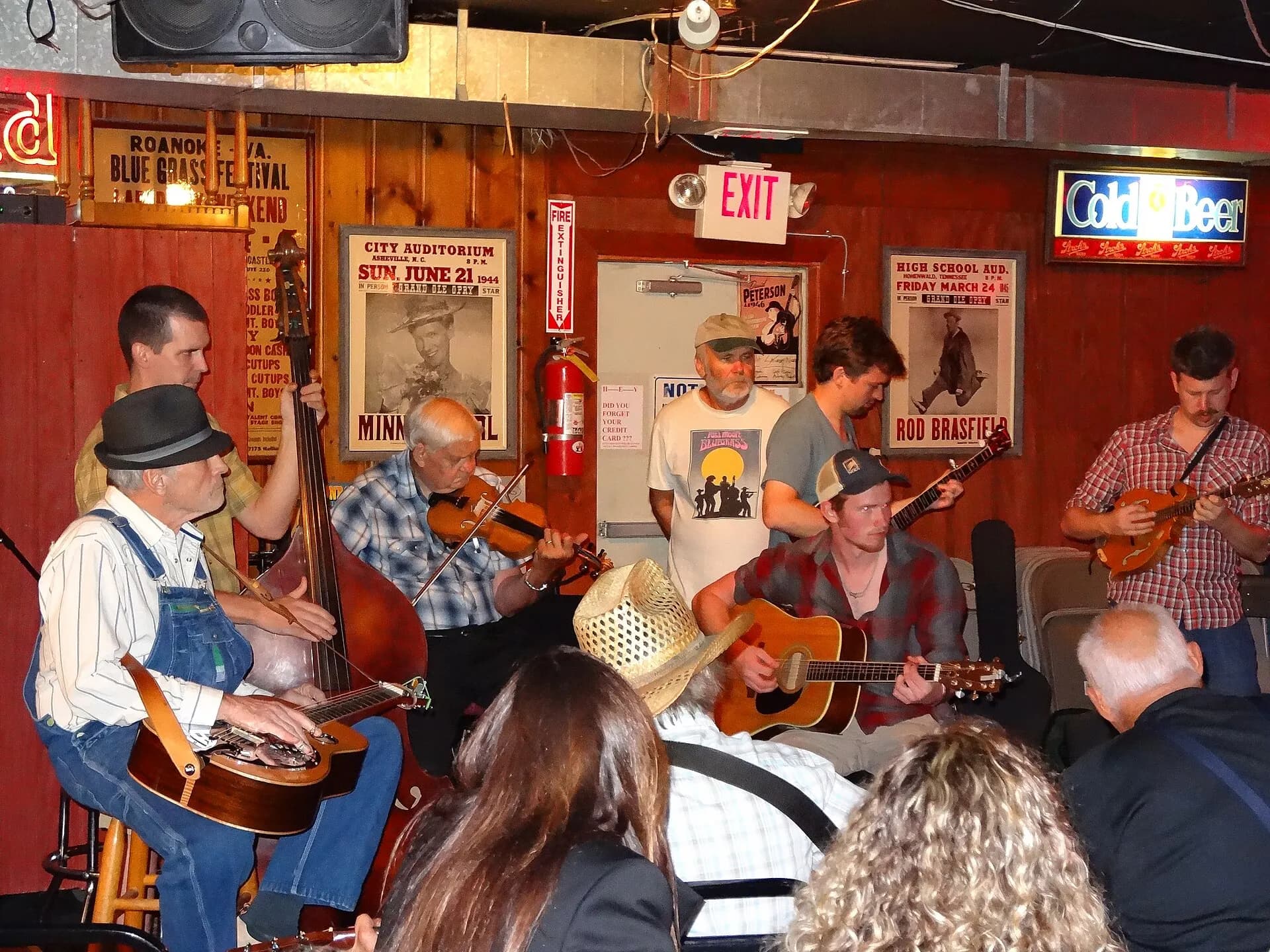
Squeezed between downtown and Music Row in an old railway hollow, the Gulch has been rebuilt over the last two decades with glassy apartment blocks, boutique hotels, rooftop bars and smart restaurants. It feels new and polished, and its many colourful wall murals draw long queues of selfie-takers. The neighbourhood's old soul survives at the Station Inn, a modest bluegrass club where some of the finest pickers in the genre play most nights.
TipThe Station Inn's Sunday-night bluegrass jam is free and open to anyone with an instrument.
- 10
RCA Studio B
Photo: Adinda Uneputty, CC BY-SA 2.0, via Wikimedia Commons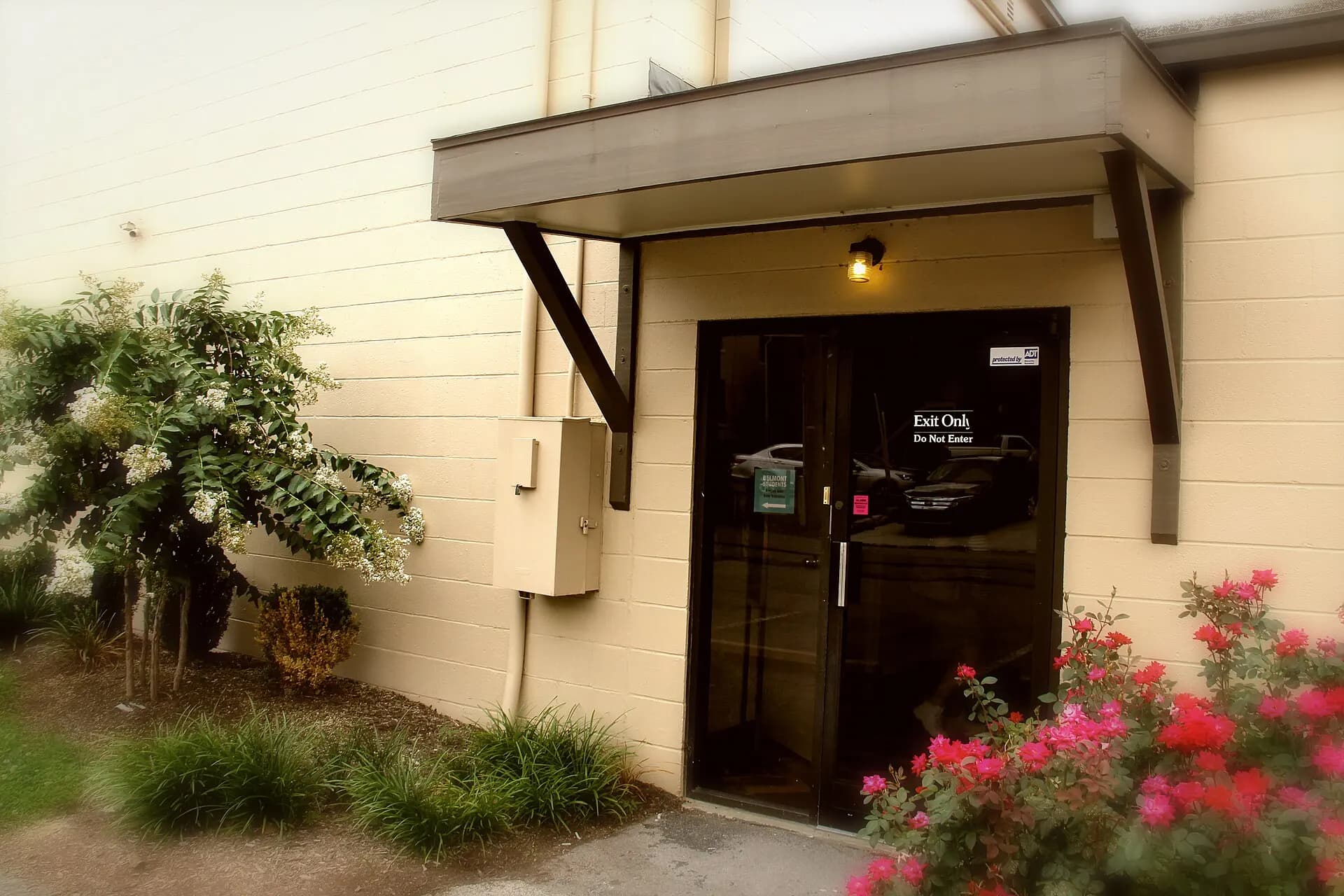
On Music Row, the leafy grid of converted houses that holds record labels, publishers and studios, this plain brick building was where the polished "Nashville Sound" was born. Opened in 1957, it saw recordings by Elvis Presley, the Everly Brothers, Roy Orbison, Dolly Parton and many others, earning the nickname "Home of 1,000 Hits". It can be visited only on a guided tour run by the Country Music Hall of Fame, which carries visitors by shuttle from the museum. Standing where Elvis recorded, with the lights dimmed to his preferred mood, is a genuine thrill for music fans.
- 11
12 South
This walkable strip of 12th Avenue South, a couple of miles south-west of downtown, is the city's most photogenic shopping street, lined with boutiques, cafés, ice-cream parlours and Southern clothing labels in restored cottages and low brick buildings. Its well-known murals, including a cheerful "I Believe in Nashville" design, are among the most photographed walls in town. Sevier Park, with its antebellum house and shady lawns, anchors the southern end.
TipParking is tight at weekends; it is easier to take a rideshare and wander on foot.
- 12
Parthenon in Centennial Park
Photo: Euthman, CC BY 4.0, via Wikimedia Commons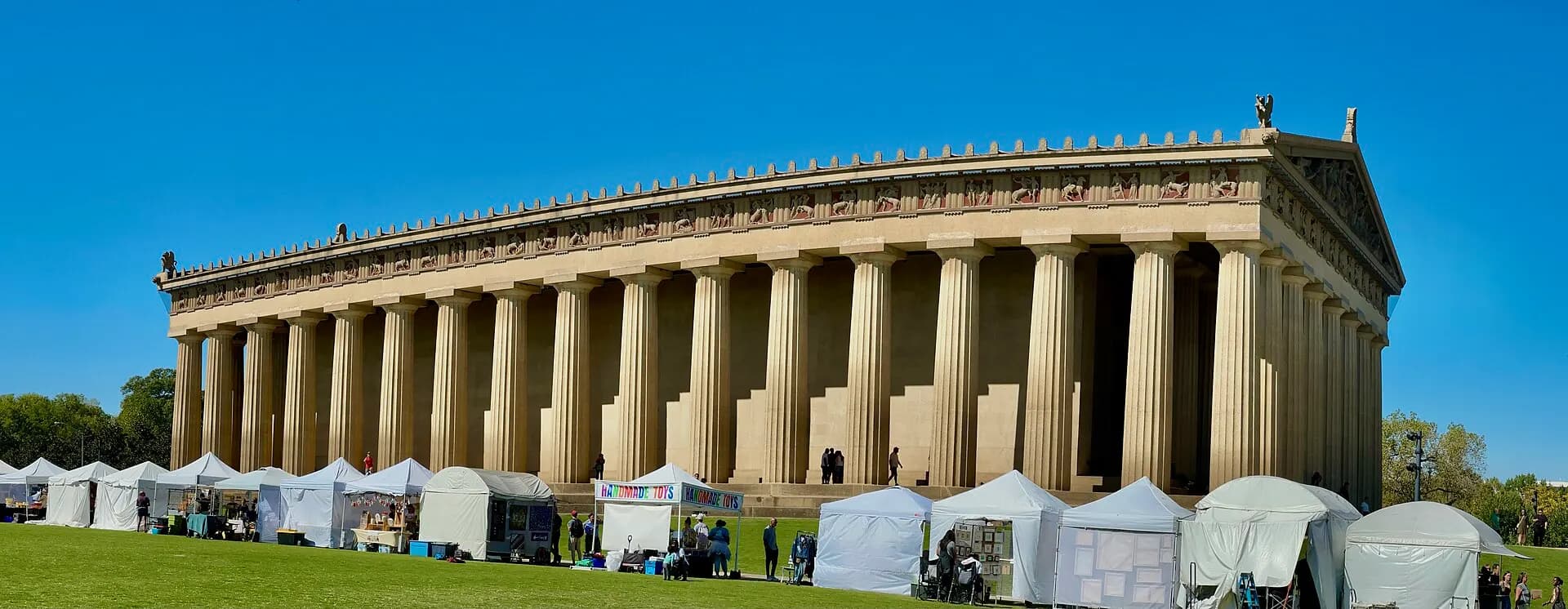
Built for the 1897 Tennessee Centennial Exposition and rebuilt in permanent concrete in the 1920s and 1930s, this is a full-scale replica of the Athenian original, complete with its pediment sculptures. Inside, the basement galleries hold an art collection, but the real astonishment is upstairs: a gilded statue of Athena standing 42 feet (almost 13 m) high, unveiled in 1990 and modelled on descriptions of the lost ancient statue by Phidias. Centennial Park around it has a lake, walking paths and summer concerts.
TipAdmission is $15 for adults and is sold only at the on-site ticket counter. The museum opens Monday to Saturday from 9am and Sunday from 12.30pm, and is closed on Metro Nashville holidays.
- 13
Belle Meade
Photo: Douglas Allan Dunn, CC BY-SA 4.0, via Wikimedia Commons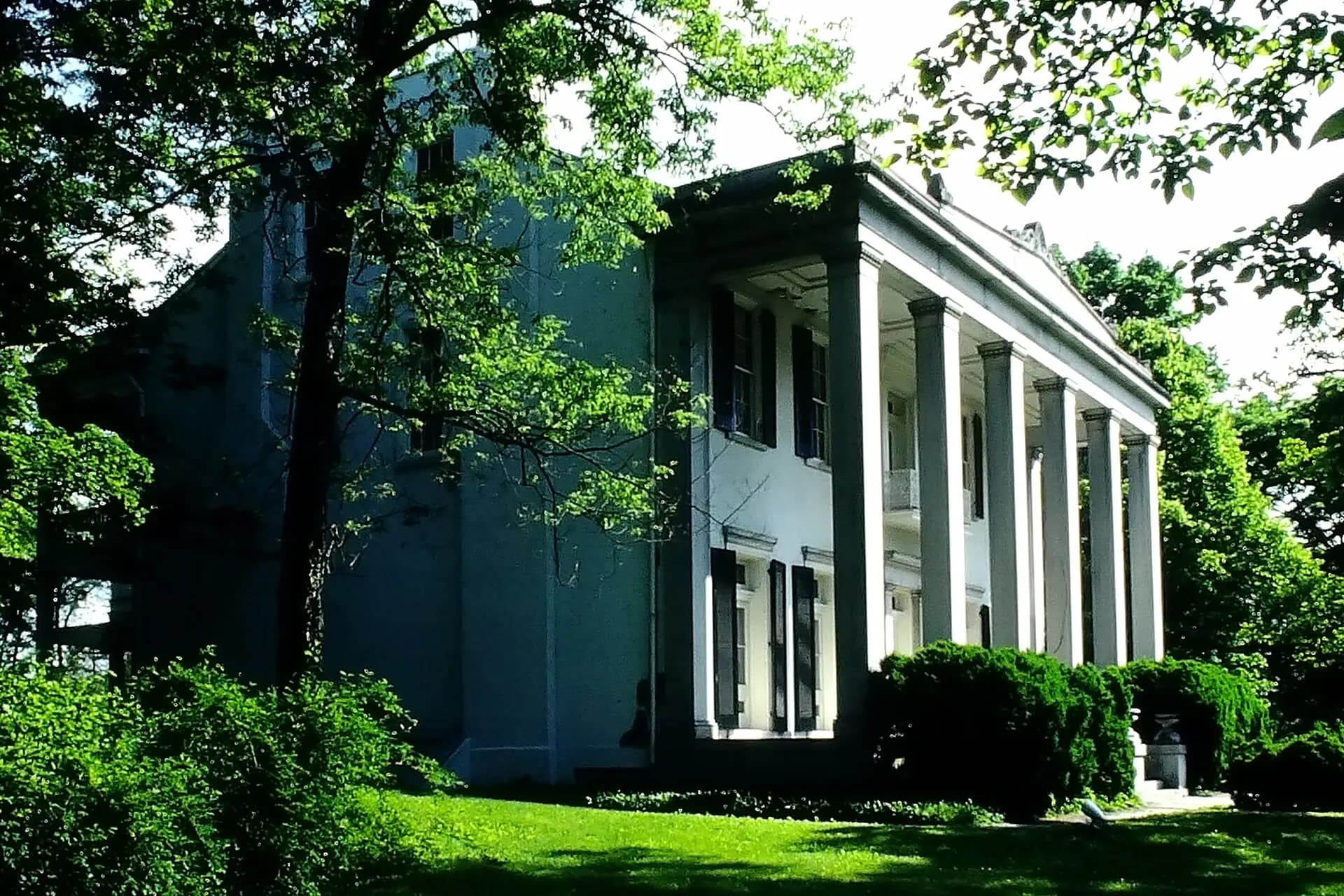
West of the city, Belle Meade was once one of the most famous thoroughbred stud farms in the United States, and the bloodlines of many modern racehorses trace back to its stallions. The 1853 Greek Revival mansion is shown on a guided tour, and a separate Journey to Jubilee tour focuses on the enslaved people and later contract labourers whose work built the estate. Today the site also runs a winery, so tours can end with a wine or bourbon tasting.
- 14
Bluebird Cafe
Photo: Missvain, CC0, via Wikimedia Commons
In a strip mall in the Green Hills suburb, this small listening room has launched more careers than almost any venue in town; Garth Brooks and Taylor Swift were both discovered here. Shows are usually "in the round", with three or four songwriters sitting together in the middle of the room, trading songs and stories. Many are the people who wrote the hits you know, and hearing a famous song played by the person who wrote it is the essence of Nashville. Talking during performances is firmly discouraged.
TipReservations are made only through the café's own website and sell out fast; avoid resale sites, which the Bluebird says sell fake seats. A handful of walk-up seats are kept for most shows, and the Monday open mic is entirely first-come, first-served. There is a $15 food and drink minimum per person.
- 15
East Nashville
Across the river, East Nashville is where many working musicians actually live. Its centre, Five Points, has dive bars, vintage shops, cocktail bars, hot-chicken counters and some of the city's most creative restaurants, all in a grid of Victorian and Craftsman houses that were partly rebuilt after tornadoes in 1998 and 2020. It has a more relaxed, local feel than downtown and a strong Americana and rock scene.
- 16
Grand Ole Opry
Photo: Daniel Schwen, CC BY-SA 4.0, via Wikimedia Commons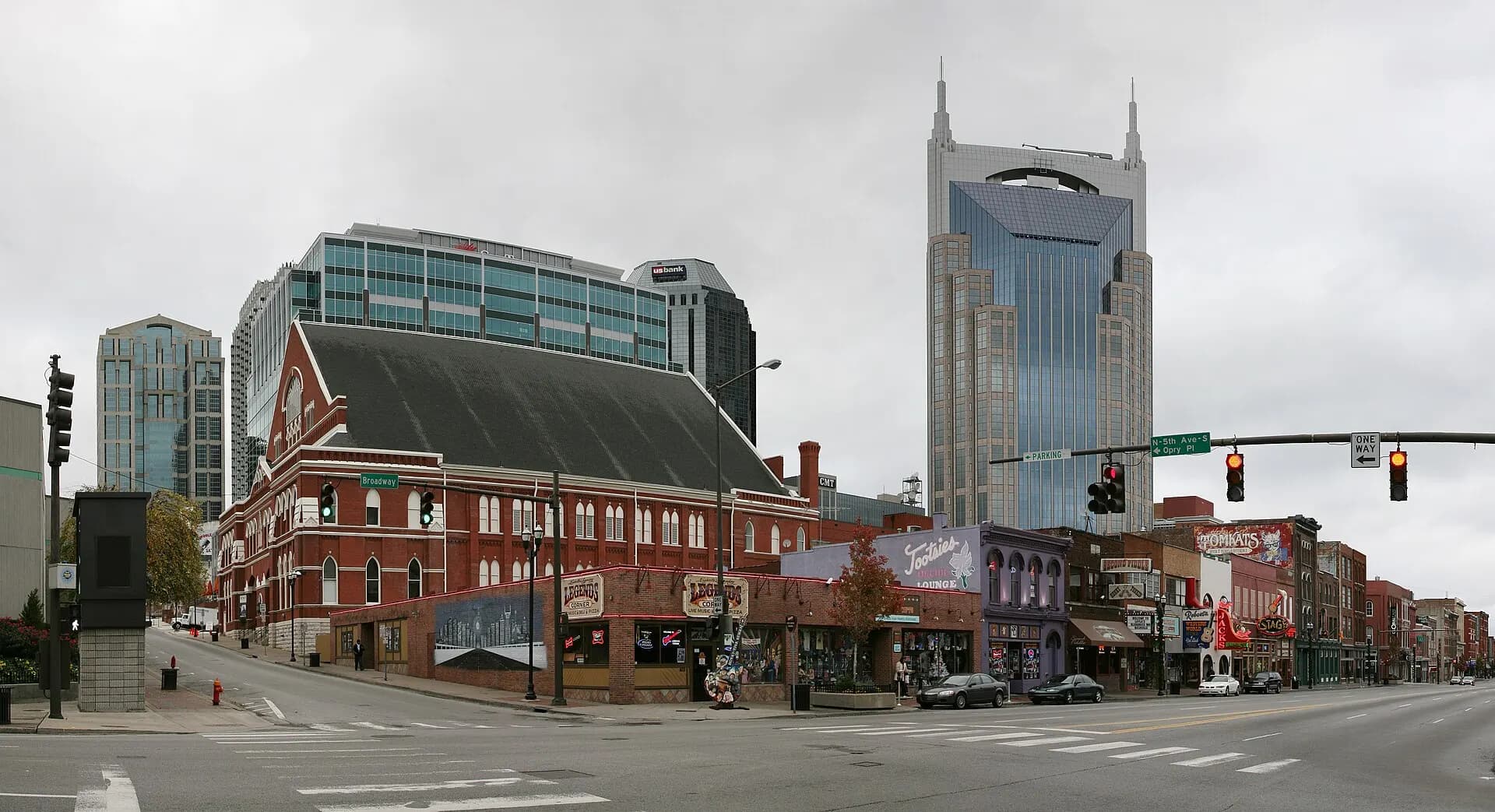
The Opry began as a radio barn dance in 1925 and is now the longest-running radio broadcast in American history, celebrating its centenary with the Opry 100 season. Each show is a fast-moving variety programme of eight or so acts, mixing veteran members, current stars and newcomers, all broadcast live on WSM. Since 1974 it has had its own hall in the Music Valley area north-east of downtown, with a circle of the Ryman's original stage set into the new one. Daytime backstage tours visit the dressing rooms and the stage itself.
TipShows run several nights a week, with Friday and Saturday shows all year and extra nights in busy months. The Opry Mills mall and the vast Gaylord Opryland Resort, with its indoor gardens under glass, are next door.
- 17
The Hermitage
The plantation home of Andrew Jackson, the seventh president, spreads across more than 1,100 acres about 12 miles east of downtown. The mansion is preserved with most of its original furnishings, and Jackson and his wife Rachel are buried in the garden. The site does not shy away from the darker side of his legacy: exhibits and tours cover the enslaved community who worked the land and Jackson's role in the forced removal of Native Americans. Allow half a day.
TipThe grounds open from 8.30am to 6pm, with last tickets at 5pm.
- 18
Franklin
Photo: Ichabod, CC BY-SA 3.0, via Wikimedia Commons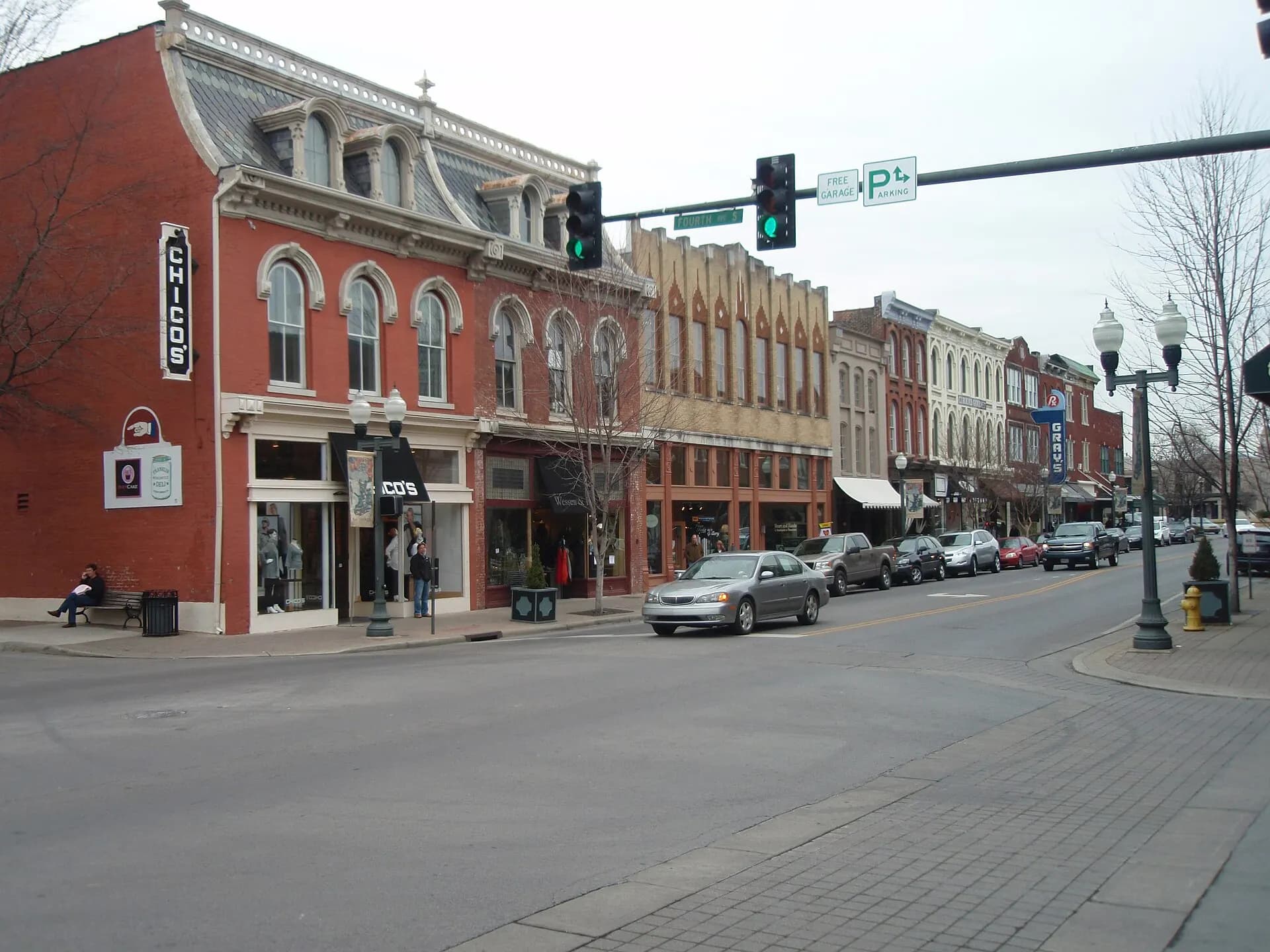
About 20 miles south of Nashville, Franklin is a handsome small town whose Victorian Main Street is lined with independent shops, restaurants and the restored 1937 Franklin Theatre. On 30 November 1864 it was the site of one of the bloodiest battles of the Civil War, and two historic houses tell the story vividly: the Carter House, still pocked with bullet holes, and Carnton, which became a field hospital and sits beside the largest private Confederate cemetery in the country. Both are run by the Battle of Franklin Trust, with guided tours daily.
TipDriving is the only practical way to get there. Combine the battlefield houses in the morning with lunch and a stroll on Main Street.
When to go
Spring and autumn are the best times to visit. From April to early June the city is green, warm and full of blossom, and from mid-September to early November the heat breaks, the trees turn and the outdoor patios are at their best. Summer is hot and humid, with July and August afternoons often in the low to mid 30s °C and frequent thunderstorms; it is also the busiest season. Early June brings CMA Fest, four days of concerts across downtown that fill every hotel, and the Fourth of July fireworks on the riverfront draw huge crowds.
Winters are short and usually mild, with occasional cold snaps and ice storms that can shut the city for a day or two. Hotel prices drop, and the Christmas lights at Opryland and holiday shows at the Ryman are a seasonal draw. Spring is also the main season for severe storms and tornadoes in Middle Tennessee, so keep an eye on weather alerts. Prices spike on any weekend with a big concert, football game or convention, and Friday and Saturday nights on Broadway are very busy all year.
Getting around
Downtown, the Gulch and SoBro (south of Broadway) are walkable, and the Pedestrian Bridge links them to the east bank. Beyond that Nashville is a spread-out, car-oriented city, and most visitors rely on rideshares for the Bluebird, 12 South, East Nashville and the Opry. Traffic is heavy at rush hour, and downtown hotel parking is expensive.
WeGo Public Transit runs the city buses from WeGo Central downtown, including a route to the airport. The adult fare is $2 for two hours of unlimited rides and is capped at $4 a day; tap a contactless bank card, phone or QuickTicket card on the validator, or pay exact cash. The WeGo Star commuter train runs east from Riverfront Station but is aimed at weekday commuters. For the Hermitage, Belle Meade and above all Franklin, a hire car is by far the easiest option. Nashville International Airport (BNA) is about 15 to 20 minutes' drive east of downtown outside rush hour.
Local tips
- Tip the bands. Broadway honky-tonks rarely charge a cover, and musicians rely on the tip jar; requests usually come with a tip.
- Tip 18 to 20% in restaurants and bars. Sales tax in Nashville is around 9.25% and is added at the till, and hotel taxes are steep.
- Bring photo ID to every bar, even if you are clearly over 21; most Broadway bars card at the door.
- Listening rooms like the Bluebird and the Station Inn expect quiet during songs. Save conversation for between sets.
- Buy concert and tour tickets directly from venues' own websites. Fake and inflated resale tickets are a known problem for the Bluebird and the Opry.
- Downtown gets packed with bachelorette and stag groups on weekends; if that is not your scene, visit Broadway on a weekday afternoon and spend evenings in East Nashville or at a listening room.
- Summer heat is fierce. Carry water, plan indoor museums for the middle of the day and save walking tours for mornings.
Eat and drink
Nashville's signature dish is hot chicken: fried chicken soaked in a cayenne-laced paste and served on white bread with pickles. The style is credited to the Prince family, whose restaurant has served it since the 1940s, and today it comes at heat levels from mild to painfully hot. Ask for medium the first time. The other local institution is the meat-and-three, a cafeteria-style lunch of one meat with three sides, typically fried chicken, catfish or roast beef with mac and cheese, greens, fried okra and cornbread. Finish with a Goo Goo Cluster, a chocolate, caramel, marshmallow and peanut sweet made in Nashville since 1912.
Barbecue here leans towards smoked pork shoulder and ribs, and biscuits are a breakfast obsession. The restaurant scene has grown rapidly, with ambitious kitchens in East Nashville, Germantown and the Gulch. Tennessee whiskey distilleries have tasting rooms in town, and the famous Jack Daniel's and George Dickel distilleries are a long day trip to the south-east.
Where to stay
Downtown and SoBro put you within walking distance of Broadway, the Ryman and the museums, but they are noisy late at night and the priciest areas, especially at weekends. The Gulch and Midtown, around West End and Music Row, are close enough to walk or take a short ride and have lively restaurant and bar scenes. East Nashville and Germantown offer boutique hotels and short-term rentals in quieter, more residential streets. The Opryland area near the Opry has large resort hotels with free parking, convenient if you are driving but far from the centre. Book early for CMA Fest, big concerts and football weekends.
From frontier fort to Music City
Nashville was founded in 1779 as Fort Nashborough on the bluffs of the Cumberland River, on land long used by Cherokee, Shawnee, Chickasaw and earlier peoples. It became the state capital in 1843 and a river and railway trade centre. During the Civil War it was the first Confederate state capital to fall to Union troops, in 1862, and in December 1864 the Battle of Nashville effectively ended the Confederacy's war in the West. After the war, Fisk University's Jubilee Singers toured the world singing spirituals to raise funds for their school, an early sign of the city's musical reach. The 1897 Centennial Exposition left the Parthenon and cemented the Athens of the South nickname.
Radio made Nashville famous. In 1925 station WSM launched the barn dance that became the Grand Ole Opry, and by the 1950s record labels and studios had clustered on Music Row. In 1960 students from Fisk and other colleges led some of the most disciplined lunch-counter sit-ins of the civil rights movement, desegregating downtown stores. The city has since weathered a devastating flood in 2010, a tornado and a Christmas Day bombing on Second Avenue in 2020, and has grown into one of the fastest-expanding cities in the American South.
Beyond country
For all the cowboy hats, Nashville's music scene covers almost every genre. Jefferson Street, in the historically Black north of the city, was a thriving rhythm-and-blues strip in the 1950s and 1960s, where a young Jimi Hendrix played the clubs. Today you can find jazz at downtown bars, rock and indie bands in East Nashville clubs, bluegrass at the Station Inn and classical music at the Schermerhorn Symphony Center, a concert hall with superb acoustics. Many of the country's top session musicians play on rock, pop and gospel records here, and Monday nights at small venues often feature them letting loose with their own projects. If you enjoy following music through a city, Nashville pairs naturally with the jazz and brass bands of New Orleans and the blues clubs of Chicago.
Responsible travel
Nashville's music economy depends on musicians who earn modest sums, so tip bands generously, buy merchandise directly from performers and pay for songwriter shows rather than seeking free alternatives. At plantation sites like the Hermitage and Belle Meade, take the tours that tell the stories of the enslaved people who lived and worked there; they are central to understanding the places. Rapid growth has pushed rents up in East Nashville, North Nashville and other historic neighbourhoods, so spend money at long-standing, locally owned restaurants and shops. Walk or use WeGo buses downtown rather than driving, and if you join a party wagon or pedal tavern, remember that people live in the neighbourhoods they roll through.