Denali National Park
Six million acres of tundra, rivers and mountains beneath Denali, North America's highest peak, with grizzlies, moose and caribou.
- Best time to go
- June to mid-September, when the park road and buses operate
- Local time
- –
- Currency
- US Dollar (USD)
- Reading time
- 4 min
- Language
- English

Denali National Park and Preserve, in the interior of Alaska, protects more than six million acres of wild land: braided rivers, spruce forests, tundra and the Alaska Range, crowned by Denali, at 6,190 metres the highest mountain in North America. Its Koyukon Athabascan name means "the high one". The park is home to grizzly bears, moose, caribou, Dall sheep and wolves, and most of it is roadless wilderness.
A single road runs into the park, and beyond the first few miles private vehicles aren't allowed, so most visitors explore by bus. The mountain is often hidden by its own weather, so seeing it on a clear day is a reward for patience.
The top 8 in Denali National Park
- 1
Denali, the mountain
Photo: Diego Delso, CC BY-SA 4.0, via Wikimedia Commons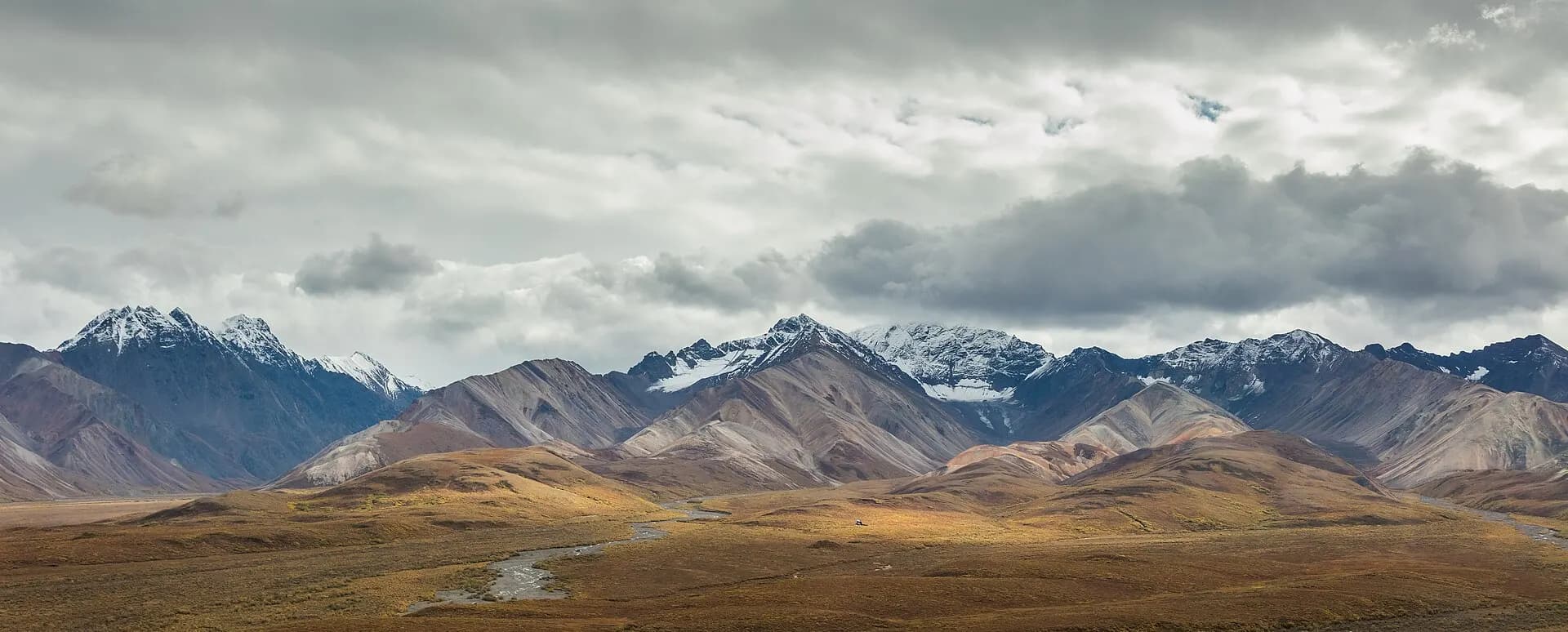
The mountain rises about 5,500 metres from its base, one of the greatest vertical reliefs of any mountain on land. It's frequently covered in cloud; on average it is fully visible on only around a third of summer days.
TipStay several days to give yourself the best chance of a clear view, and check the park's webcams.
- 2
The Denali Park Road
A gravel road of about 148 kilometres winding through the park, open to private vehicles only for the first 24 kilometres, to Savage River. Beyond, tour and transit buses carry visitors deeper into the park.
TipA landslide at the Pretty Rocks area has closed the road beyond about mile 43 in recent years; check the park service for current access.
- 3
Savage River
Photo: Diego Delso, CC BY-SA 4.0, via Wikimedia Commons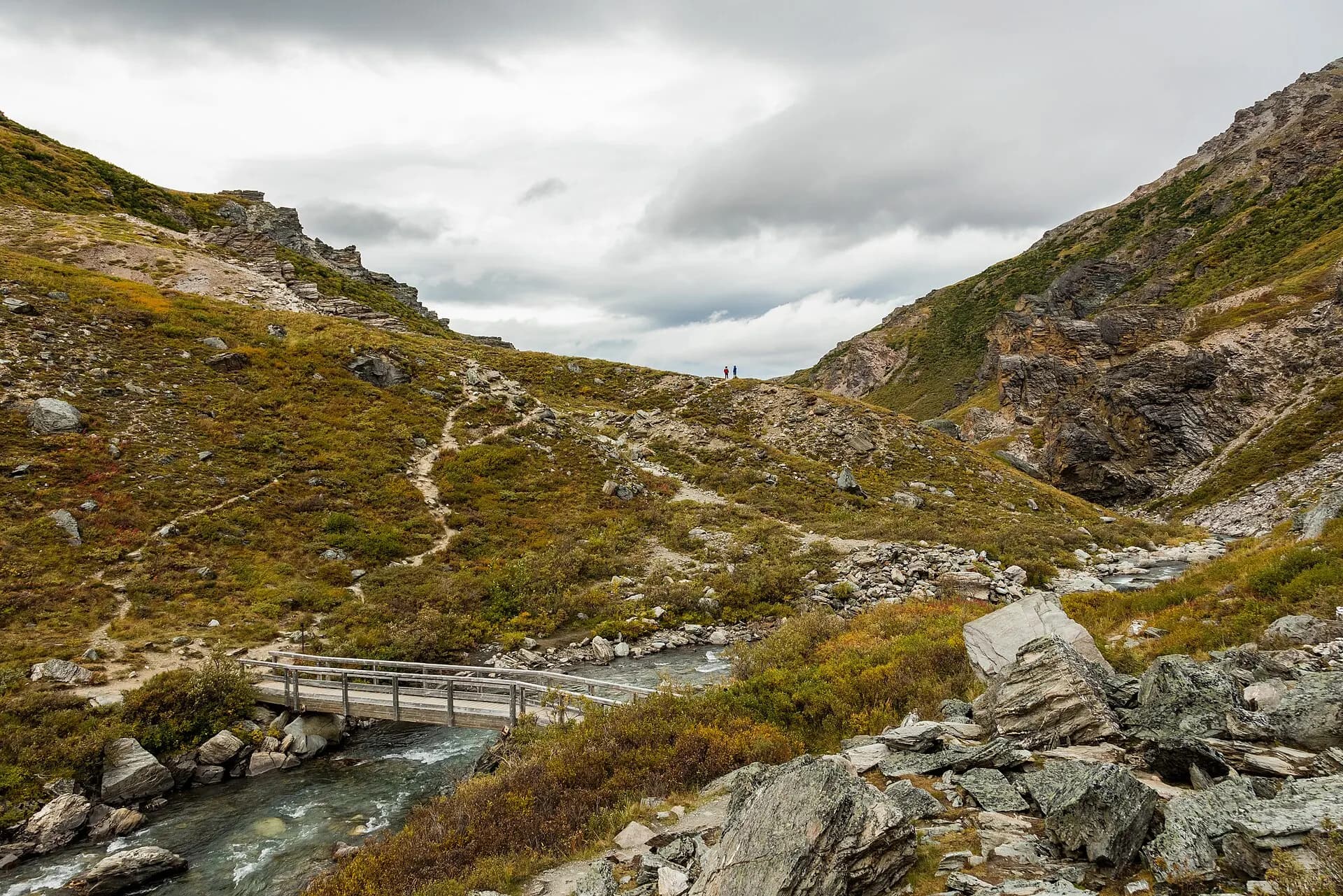
A river valley at the end of the public road section, with an easy loop trail along the river and a more challenging climb on the Savage Alpine Trail, with views of the Alaska Range.
- 4
Wildlife viewing from the buses
Photo: Mary Lewandowski, Public domain, via Wikimedia Commons
Bus drivers stop for sightings of grizzlies digging for roots, moose browsing in willow thickets, caribou crossing the tundra and Dall sheep on the slopes. Binoculars make a big difference.
- 5
The sled dog kennels
Photo: NPS Photo, Public domain, via Wikimedia Commons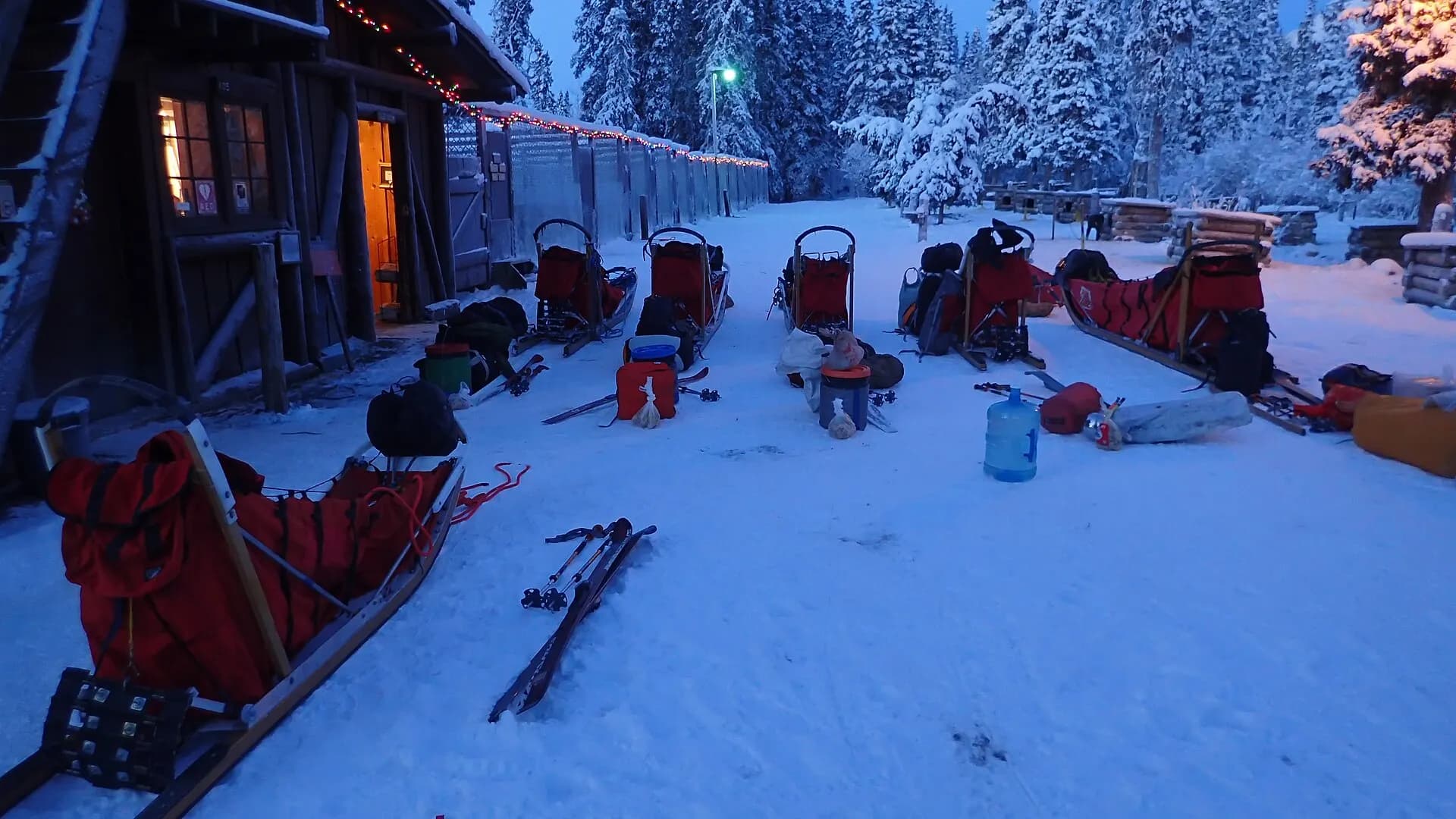
The park keeps a team of working sled dogs, used in winter to patrol the wilderness. Free demonstrations take place at the kennels near headquarters in summer.
- 6
Horseshoe Lake Trail
Photo: NPS Photo / Emily Mesner, Public domain, via Wikimedia Commons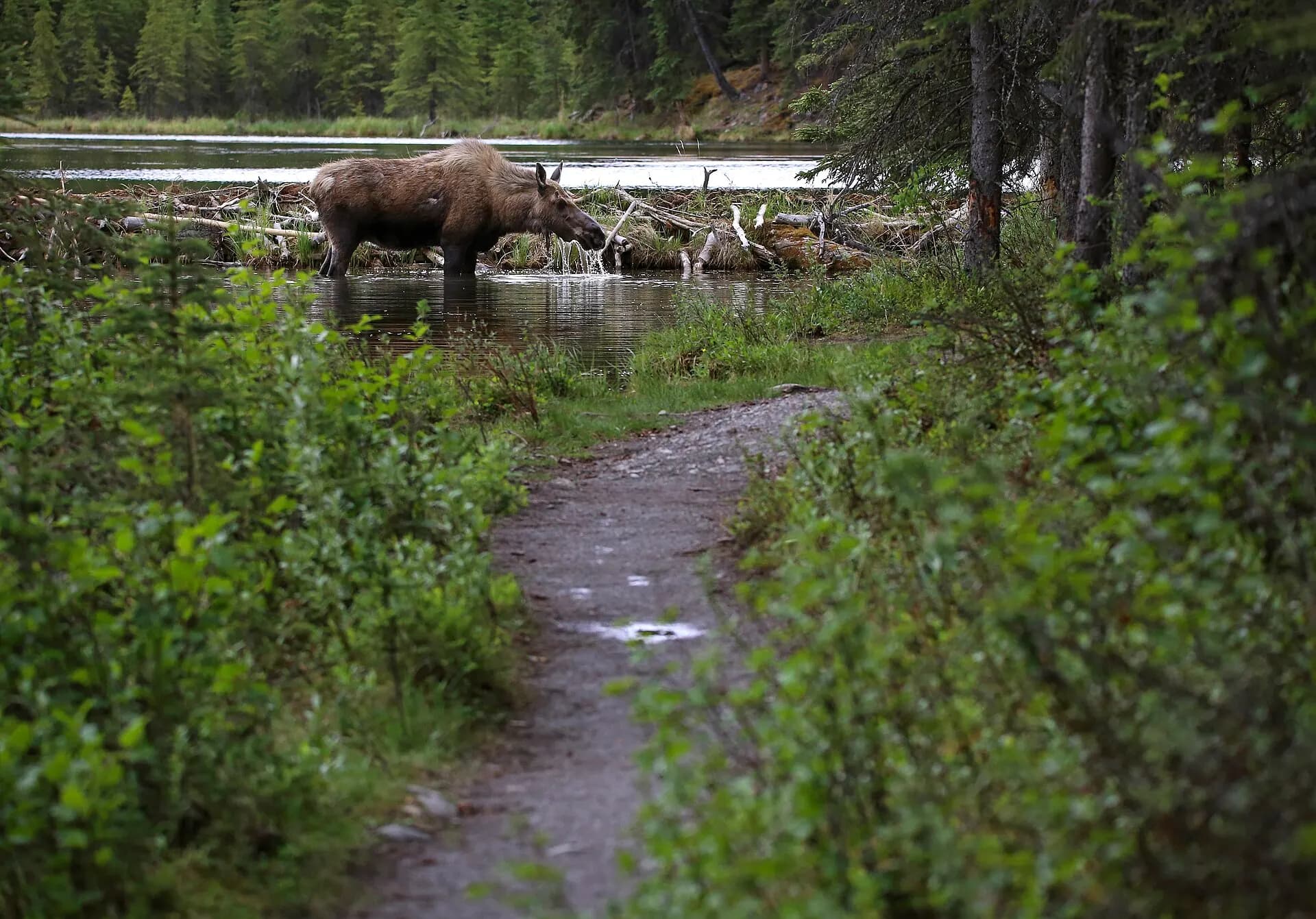
A short trail near the park entrance, descending through forest to a lake shaped like a horseshoe, where beavers have built dams and lodges.
- 7
Flightseeing around the mountain
Small planes from Talkeetna and the park entrance fly around Denali and over glaciers, some landing on a glacier on the mountain's flanks, weather permitting. It's the surest way to see the mountain up close.
- 8
Talkeetna
Photo: Kolmkolm, CC BY-SA 4.0, via Wikimedia Commons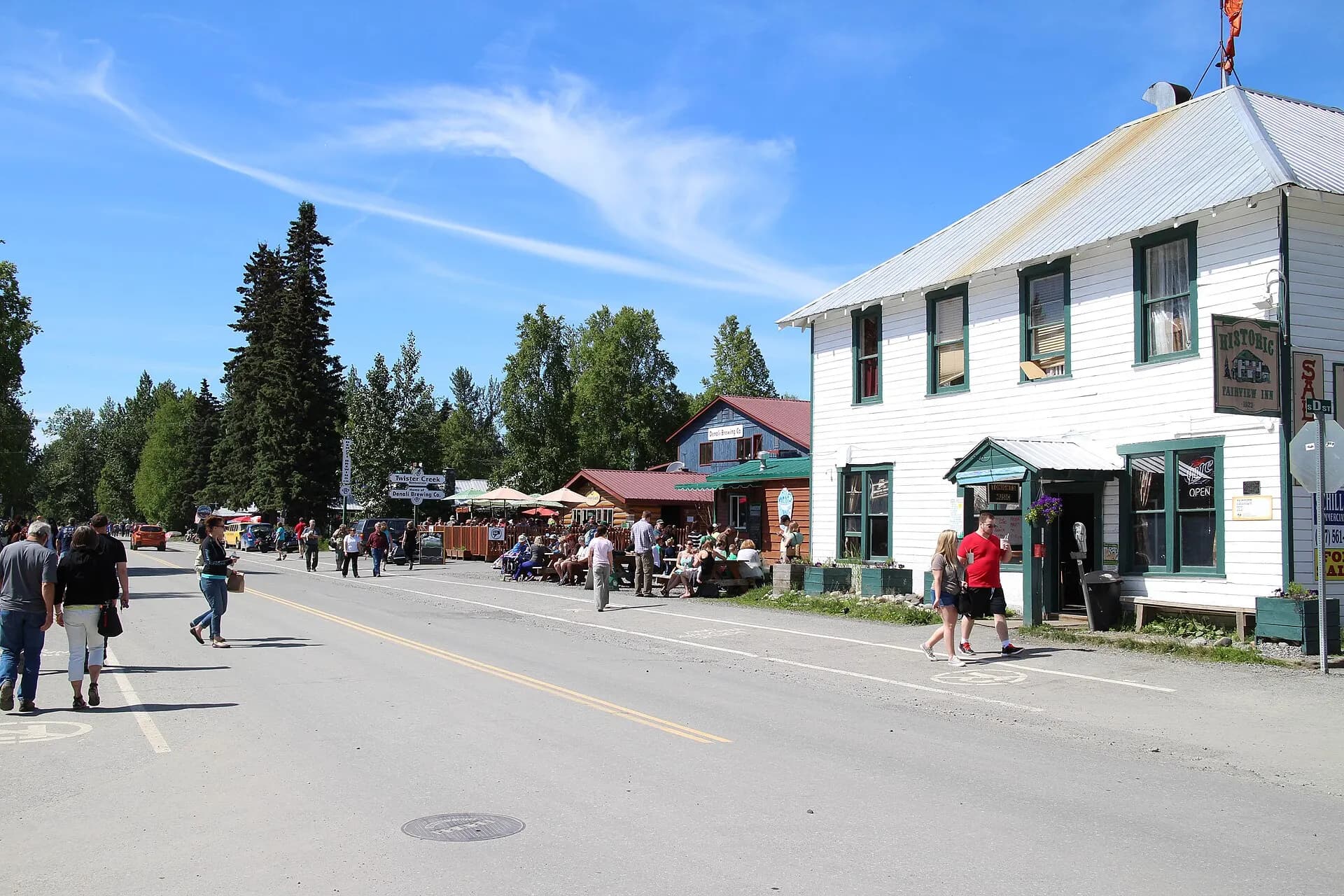
A small, quirky town south of the park, the base for climbing expeditions on Denali, with views of the mountain on clear days and a relaxed main street.
When to go
The main season runs from late May to mid-September, when buses run and lodges are open; June and July bring almost endless daylight and wildflowers, and late August and September bring autumn colours and fewer mosquitoes. The park is open in winter for skiing, snowshoeing and dog sledding, but services are very limited.
Getting around
Private vehicles can drive only to Savage River; beyond, use the tour and transit buses, which must be booked in advance in summer. A free shuttle serves the entrance area. The Alaska Railroad links Anchorage and Fairbanks with the park, a scenic journey of about seven to eight hours from Anchorage. Denali is about four and a half hours' drive from Anchorage and two hours from Fairbanks.
Local tips
- Book bus tickets, accommodation and campgrounds well ahead for summer.
- Carry bear spray, keep at least 300 metres from bears and 25 metres from other wildlife.
- Bring rain gear and warm layers: weather changes quickly, even in summer.
- Mosquitoes are fierce in early summer; bring repellent and a head net.
- Off-trail hiking is allowed in much of the park; learn about river crossings and safety first.
- Most visitors to the United States need a visa or ESTA authorisation.
Eat and drink
Dining options cluster at the park entrance, in the area known locally as Glitter Gulch, with restaurants, cafés and food trucks. Inside the park there's little food, so bring snacks and water for bus trips. Try Alaskan salmon and halibut, reindeer sausage and berry desserts in season.
Where to stay
Hotels and lodges line the highway near the park entrance, with more options in Healy and Talkeetna. Inside the park, campgrounds and a few remote wilderness lodges, reached by bus or plane, offer a deeper experience.
Hiking in a trailless park
Most of Denali has no trails at all. Beyond the short maintained trails near the entrance and at a few road stops, hikers simply set off across the tundra, choosing their own route along ridges and gravel riverbars. It's one of the great experiences of the park, but it requires skill: navigation by map and compass, crossing cold, braided glacial rivers, and knowing how to behave around bears. Rangers lead free "Discovery Hikes" in summer, off-trail walks for small groups that are a good introduction. Backcountry camping requires a free permit and a bear-resistant food container, issued at the Backcountry Information Center.
Wildlife and the "Big Five" of Denali
Visitors often talk of Denali's Big Five: grizzly bears, moose, caribou, Dall sheep and wolves. Grizzlies here eat mostly roots, berries and ground squirrels, and are often seen from the buses digging on the tundra. Moose are common in the forest near the entrance, caribou move across the open country, and the white Dall sheep cling to the high slopes. Wolves are the hardest to spot. The park is also home to golden eagles, willow ptarmigan, Alaska's state bird, and arctic ground squirrels.