Maui
A volcano above the clouds, a rainforest road to Hāna, golden beaches and winter whales.
- Best time to go
- April to May and September to November; December to April for whales
- Local time
- –
- Currency
- US Dollar (USD)
- Reading time
- 8 min
- Language
- English
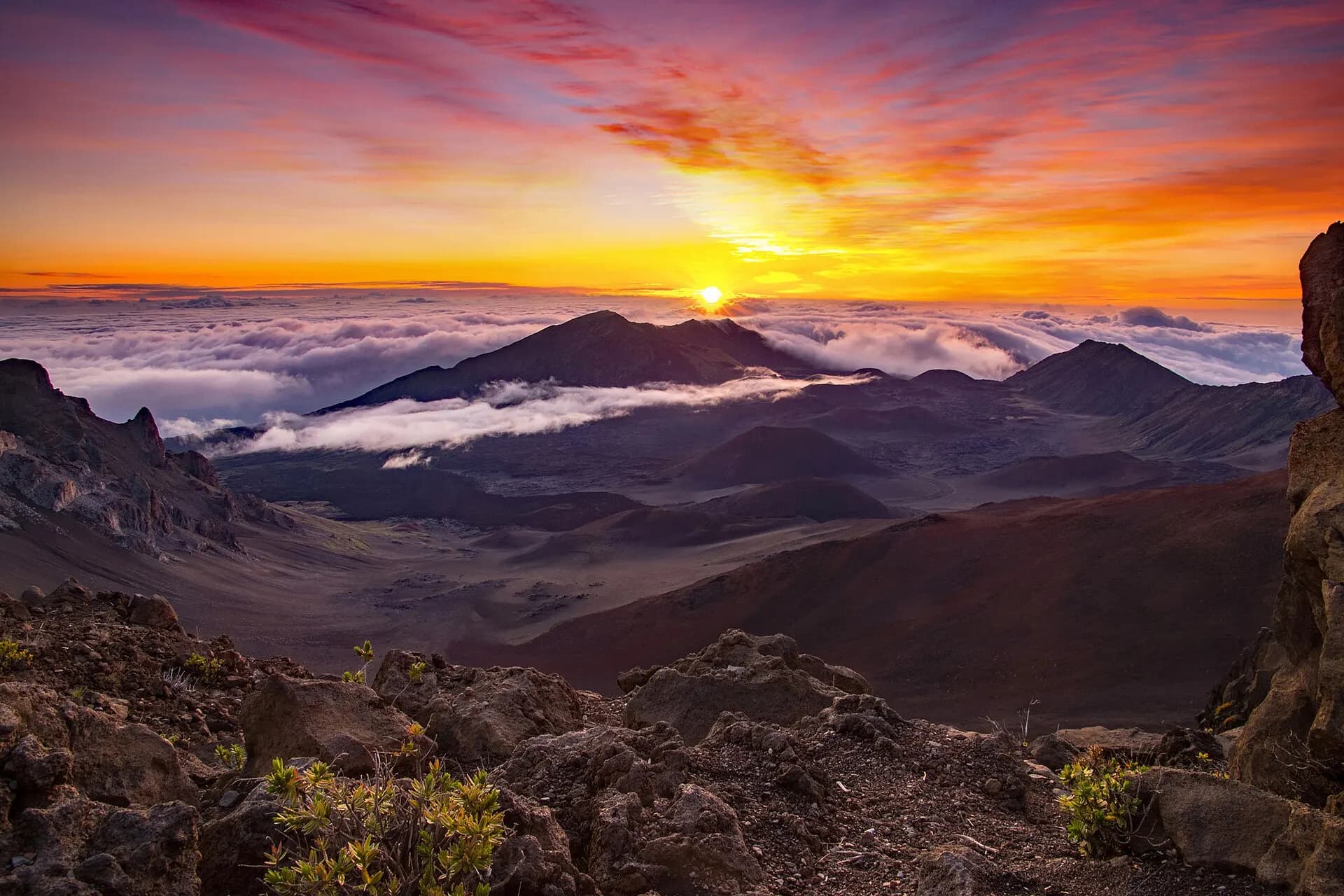
Maui, the second-largest of the Hawaiian Islands, is two volcanoes joined by a low, windy isthmus. To the east, the vast shield of Haleakalā rises more than 3,000 metres from the sea, its summit a cinder-strewn landscape that often sits above the clouds. To the west, the older, deeply eroded West Maui Mountains are cut by green valleys such as ʻĪao. Between and around them lie golden beaches on the dry leeward coast, a rain-soaked windward shore laced with waterfalls, and the cool farming country of Upcountry on the volcano's slopes.
It's an island that rewards early starts and unhurried days: sunrise on the summit, a slow drive along the Hāna Highway, snorkelling off Mākena, and, in winter, humpback whales breaching offshore. It's also a living Hawaiian place with its own history and a community still recovering from the August 2023 wildfires, so travel here asks for a little extra care and respect.
The top 15 in Maui
- 1
Haleakalā summit
Photo: Eric Tessmer, CC BY 3.0, via Wikimedia Commons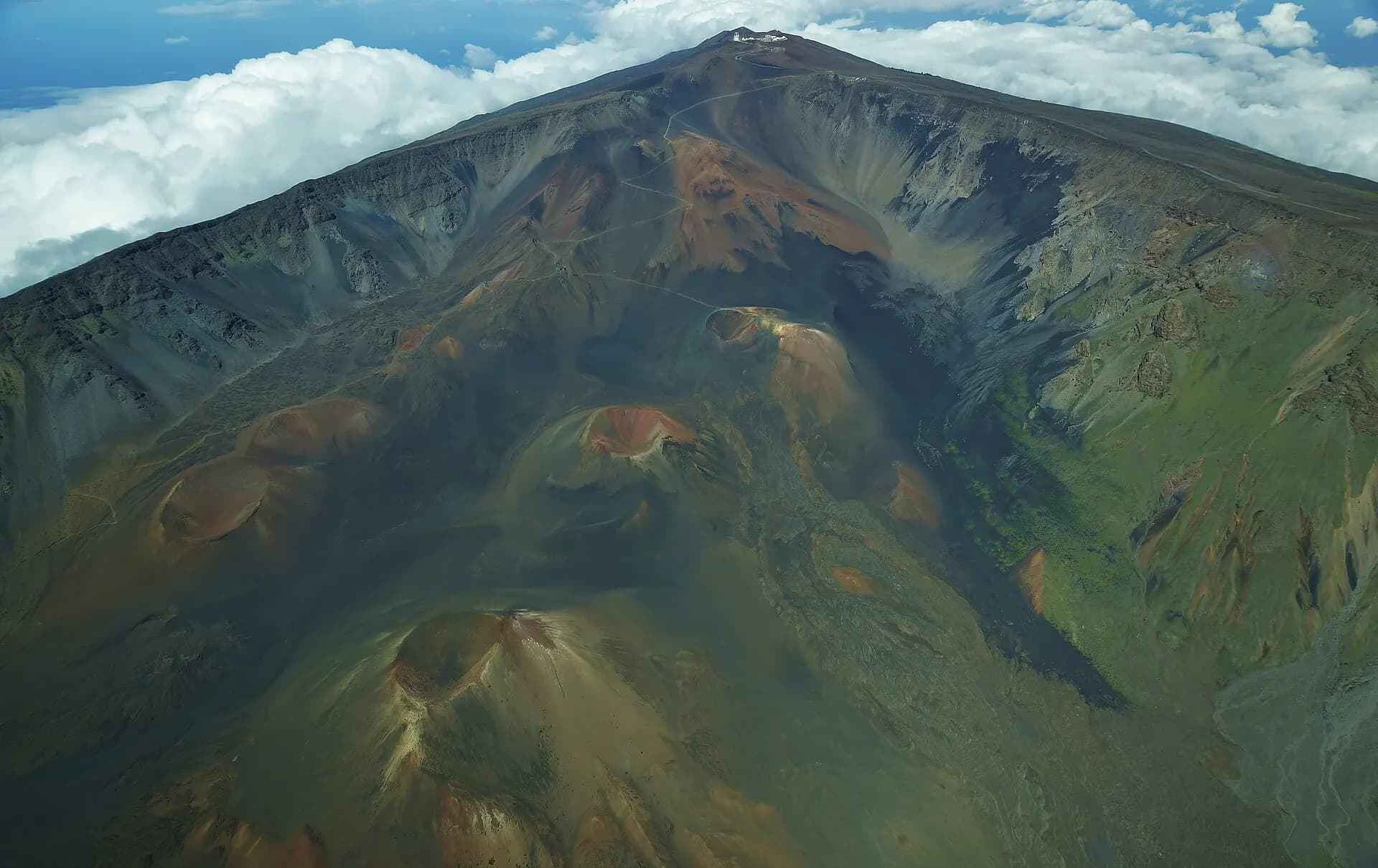
Haleakalā, "house of the sun", is the heart of Haleakalā National Park. From the summit area and the visitor centre, you look across a huge eroded crater of red, ochre and black cinder cones, and on clear days to the Big Island's peaks. Sunrise here is famous, but sunset and the night sky are just as striking and need no reservation. Trails such as Keonehēʻeheʻe (Sliding Sands) lead down into the crater; remember the climb back is at high altitude.
TipA sunrise reservation is required for vehicles entering the summit district between 3am and 7am. Book on Recreation.gov 60 days ahead or in the smaller release 2 days ahead; they sell out fast. Bring warm layers, as it's often near freezing before dawn.
- 2
Kula
Photo: Forest and Kim Starr, CC BY 3.0 us, via Wikimedia Commons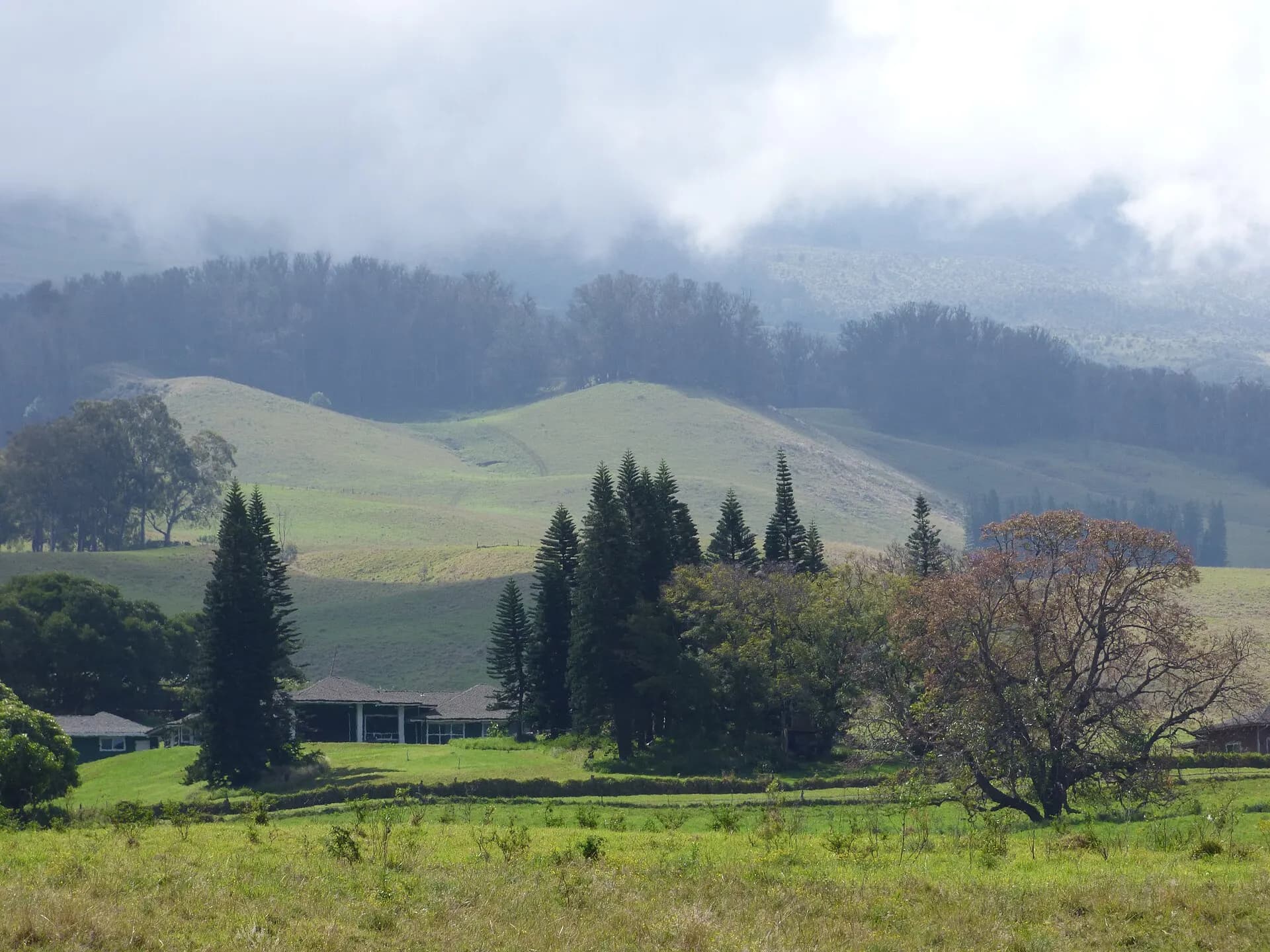
On Haleakalā's western slopes, Kula is Upcountry farmland of lavender, protea, onions and cattle pasture, with sweeping views down to the isthmus and the West Maui Mountains. It's a natural stop on the way up or down the mountain, with farm stands and a gentler, cooler climate.
- 3
Makawao
Photo: 293.xx.xxx.xx, CC BY-SA 3.0, via Wikimedia Commons
A paniolo (Hawaiian cowboy) town of wooden shopfronts with galleries, boutiques and a long-standing bakery. The paniolo tradition on Maui goes back to the nineteenth century, and the town's rodeo around the Fourth of July keeps it alive.
- 4
Hoʻokipa Beach Park
Photo: dronepicr, CC BY 2.0, via Wikimedia Commons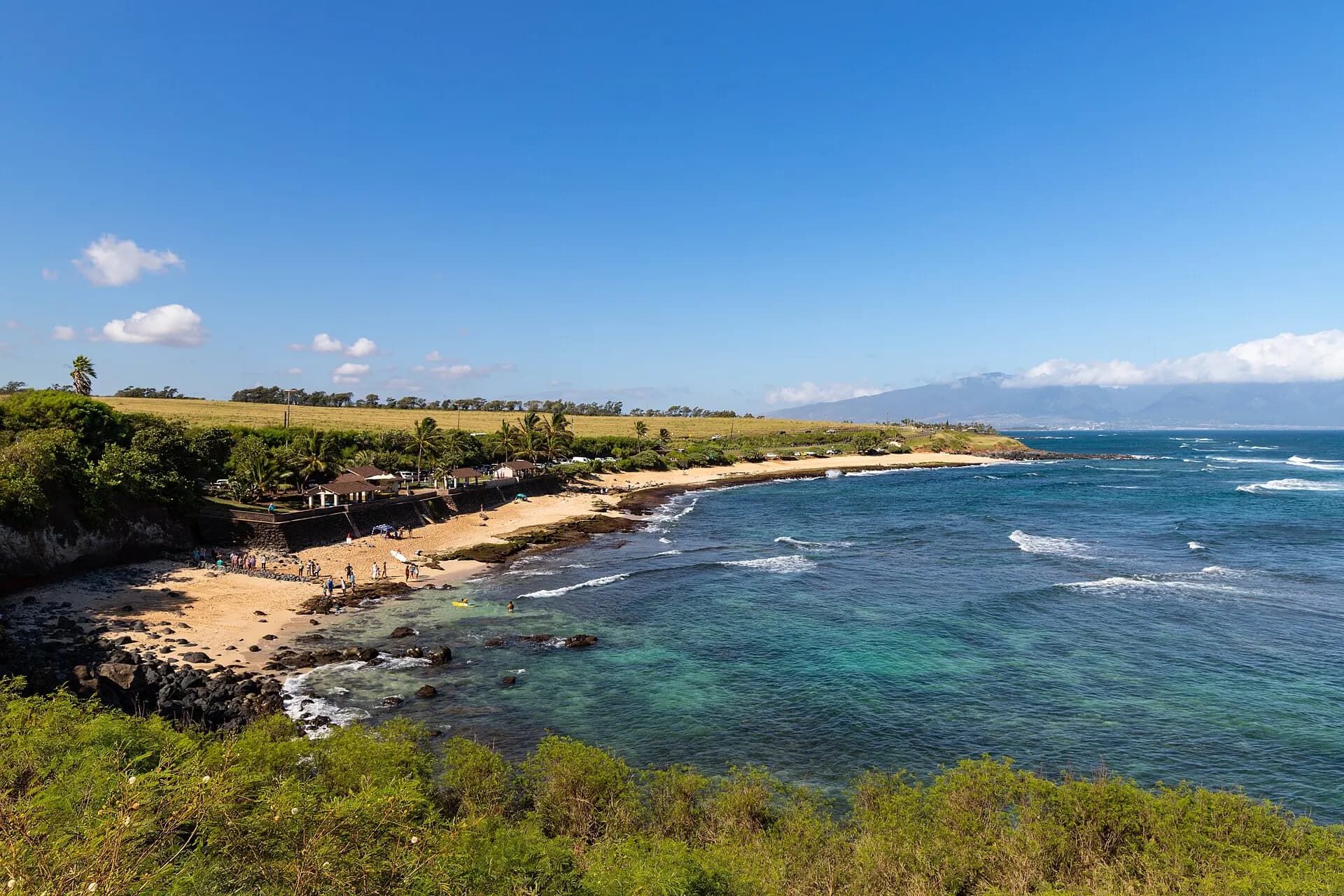
On the North Shore near Pāʻia, Hoʻokipa is one of the world's best-known windsurfing and big-wave spots. The lookout above the beach is the place to watch, and green sea turtles often rest on the sand in the afternoon.
TipStay well back from basking turtles; they are protected, and volunteers often rope off a viewing area.
- 5
Road to Hāna and Keʻanae
Photo: Bernard Spragg. NZ from Christchurch, New Zealand, CC0, via Wikimedia Commons
The Hāna Highway winds about 80 kilometres along the windward coast, with hundreds of bends and many one-lane bridges, past waterfalls, bamboo and rainforest. Keʻanae Peninsula, a flat tongue of black lava with taro patches and a stone church, is one of the loveliest stops; nearby Puaʻa Kaʻa and Wailua Valley state waysides are easy short halts.
TipStart early, fill up with fuel before Pāʻia, pull over to let locals pass, and park only in marked areas. Many roadside pools sit on private land; respect closed gates.
- 6
Waiʻānapanapa State Park
Photo: dronepicr, CC BY 2.0, via Wikimedia Commons
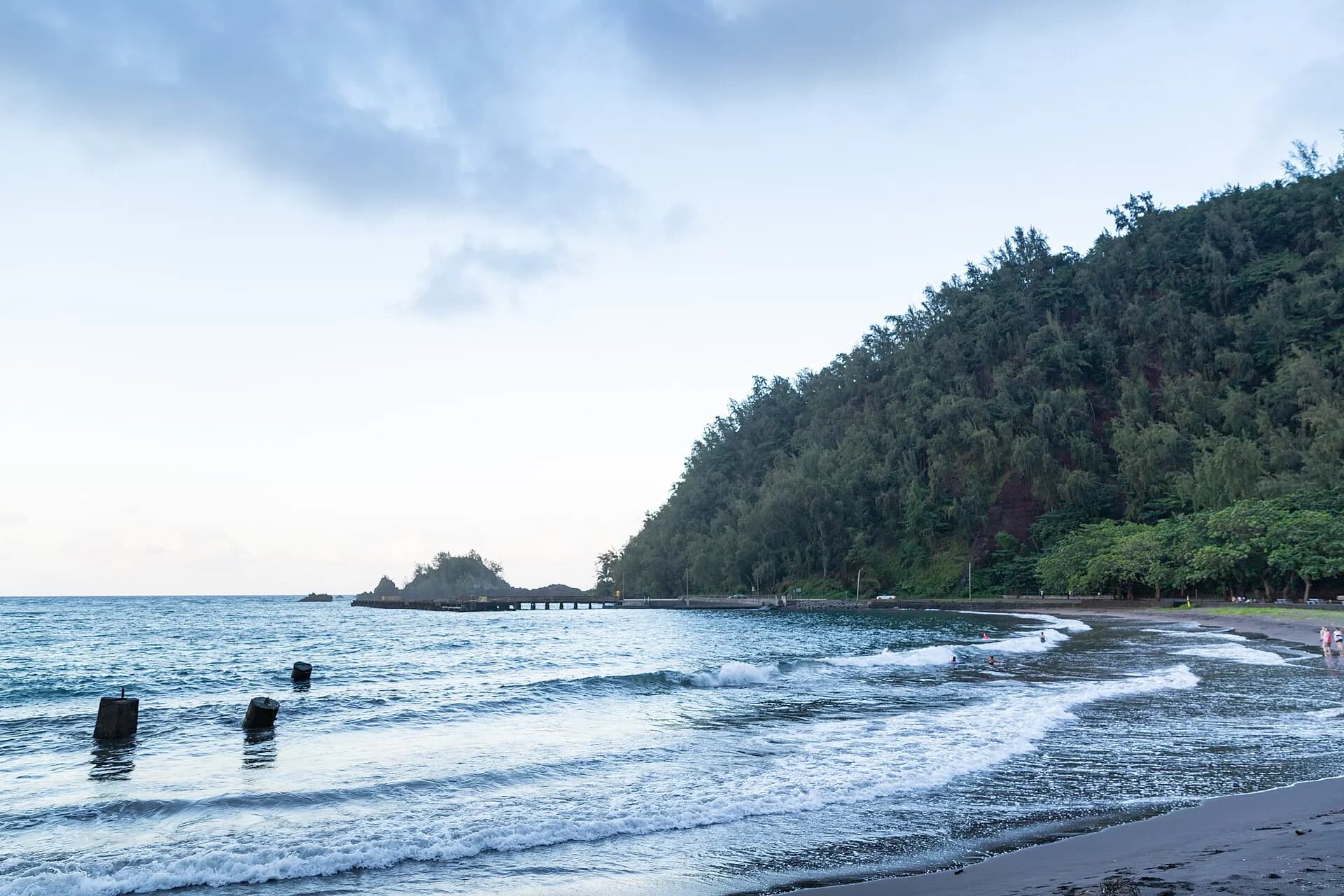
A small black-sand beach framed by lava sea arches, caves and native hala trees, with a coastal trail along the old King's Highway. It's one of the island's most photographed places, and visits are managed to protect it.
TipOut-of-state visitors need a timed reservation for entry and parking, booked in advance through gostateparks.hawaii.gov.
- 7
- 8
Kīpahulu and ʻOheʻo
Photo: Jackie Frost/ NPS Photo, Public domain, via Wikimedia Commons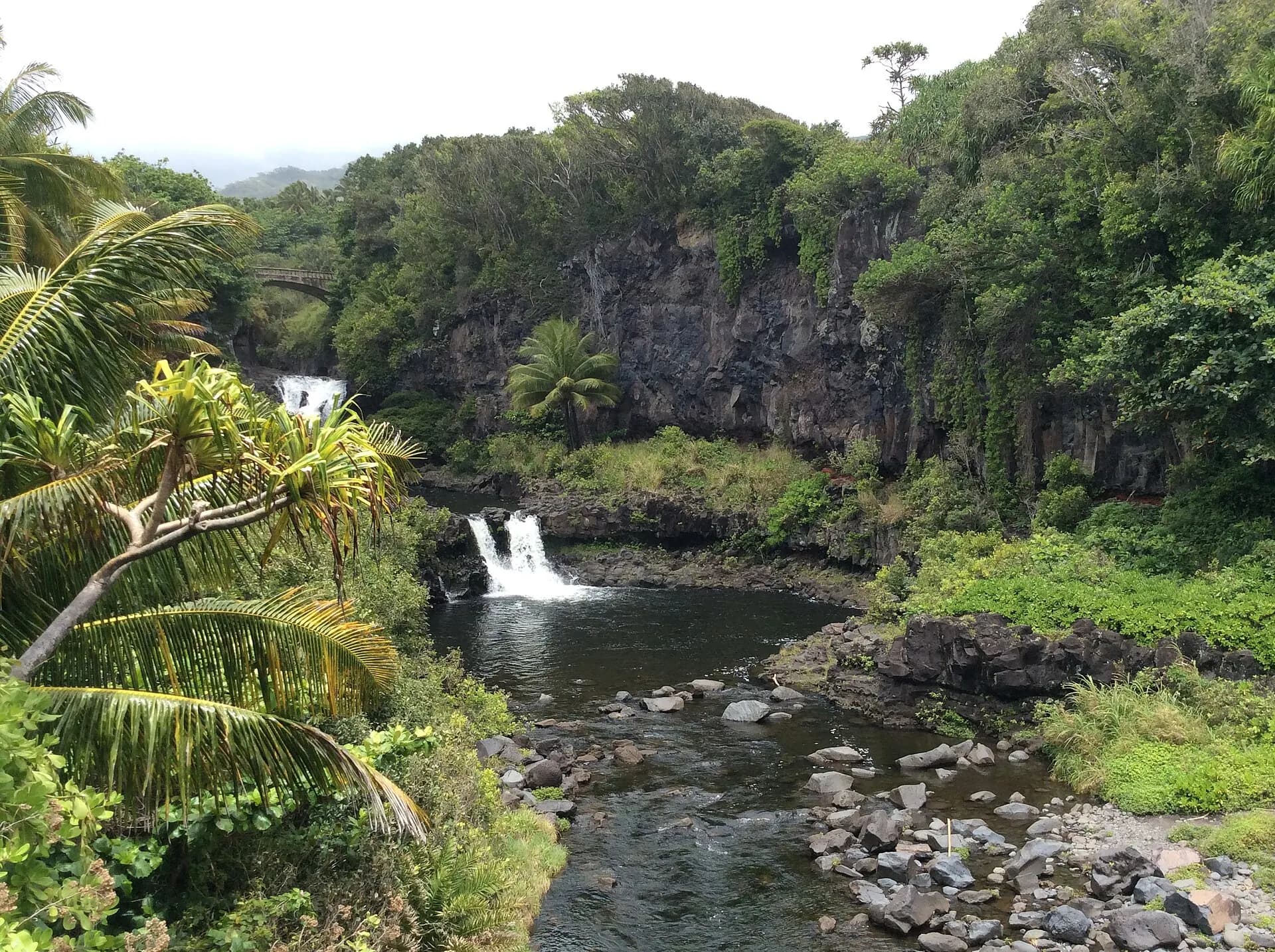
The coastal district of Haleakalā National Park, about 20 kilometres past Hāna. The short Kūloa Point Trail overlooks the pools of ʻOheʻo stepping down to the sea, and the Pīpīwai Trail climbs through a giant bamboo forest to the 120-metre Waimoku Falls. Your park entrance receipt covers both districts for three days.
TipThe ʻOheʻo pools are closed to swimming for safety; flash floods here can rise very quickly.
- 9
ʻĪao Valley State Monument
Photo: Shonebrooks, CC BY-SA 4.0, via Wikimedia Commons
A lush, steep-sided valley in the West Maui Mountains above Wailuku, with the green pinnacle of Kūkaemoku, the ʻĪao Needle. In 1790, the valley was the scene of a decisive battle in Kamehameha's campaign to unite the islands. A paved path leads to a lookout and a garden of plants brought by early Polynesian voyagers.
TipNon-residents need an advance entry and parking reservation; check for temporary maintenance closures before you go.
- 10
- 11
Mākena State Park
Photo: dronepicr, CC BY 2.0, via Wikimedia Commons
Big Beach (Oneloa) is a long, wide sweep of golden sand backed by the cinder cone of Puʻu Ōlaʻi, with Little Beach just over the rocks. It's undeveloped and beautiful, but the shore break is powerful and causes many serious injuries.
- 12
Molokini
Photo: Farid Askerov whereisfarid, CC0, via Wikimedia Commons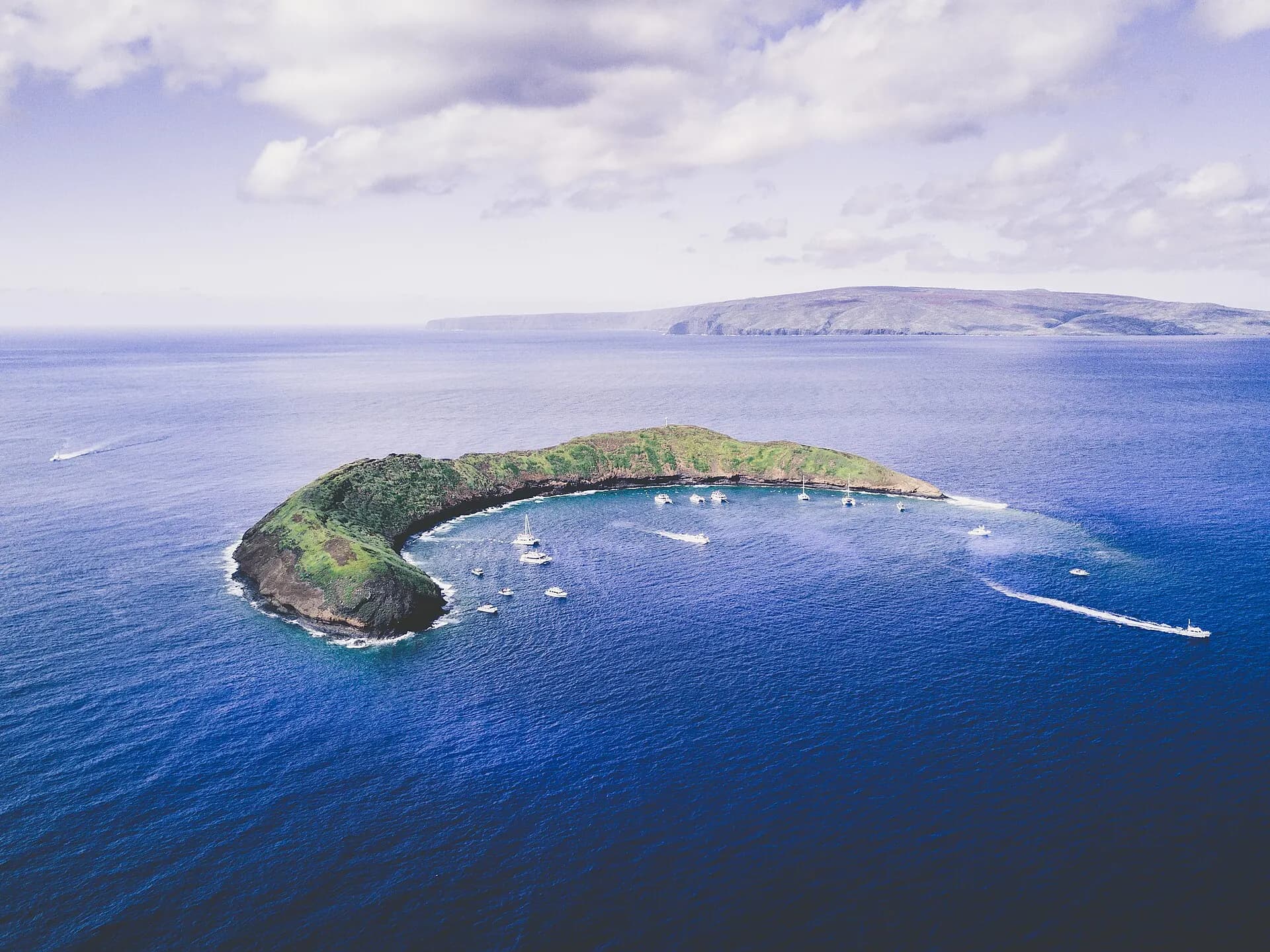
A partly sunken volcanic crater off the south coast, protected as a Marine Life Conservation District and seabird sanctuary. Its clear, sheltered water is home to abundant reef fish, and morning snorkel tours leave from Māʻalaea and Kīhei. Landing on the islet is not allowed.
- 13
Lahaina
Photo: Forest and Kim Starr, CC BY 2.0, via Wikimedia Commons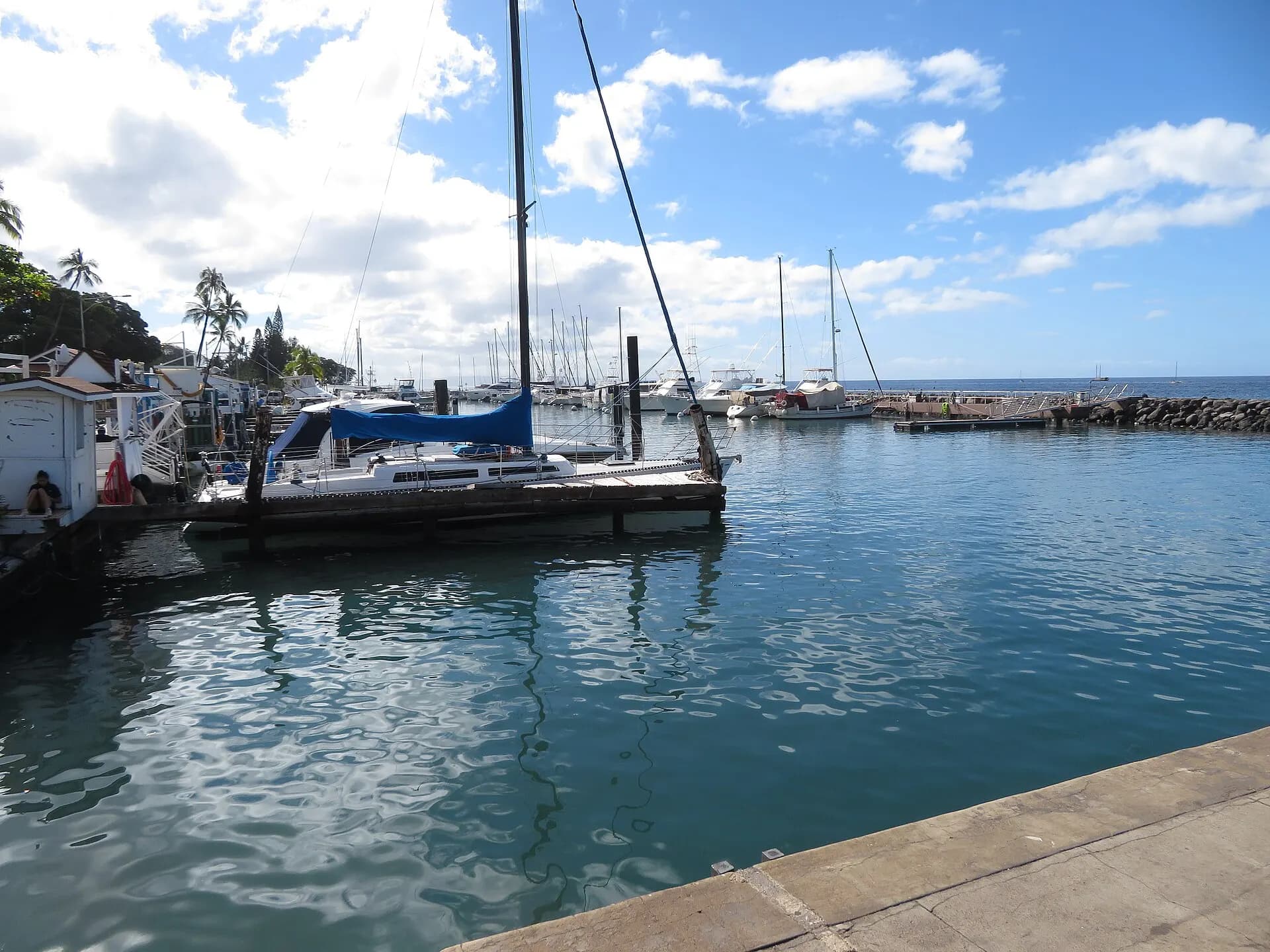
Lahaina was once the royal capital of the Kingdom of Hawaiʻi and later a whaling port. On 8 August 2023, a wind-driven wildfire destroyed most of the town and took more than a hundred lives. Recovery and rebuilding continue: the County of Maui reopened much of Front Street to vehicle traffic on 1 August 2026, with fencing around private property and off-limit areas, and some streets near the harbour still closed for work. A growing number of businesses have returned.
TipThis is a place of grief and remembrance. Stay out of fenced areas, don't photograph burned properties or residents, and check mauirecovers.org for current access before you go.
- 14
- 15
Nāpili and Kapalua
Photo: James Brennan Moloka…, CC BY 3.0, via Wikimedia Commons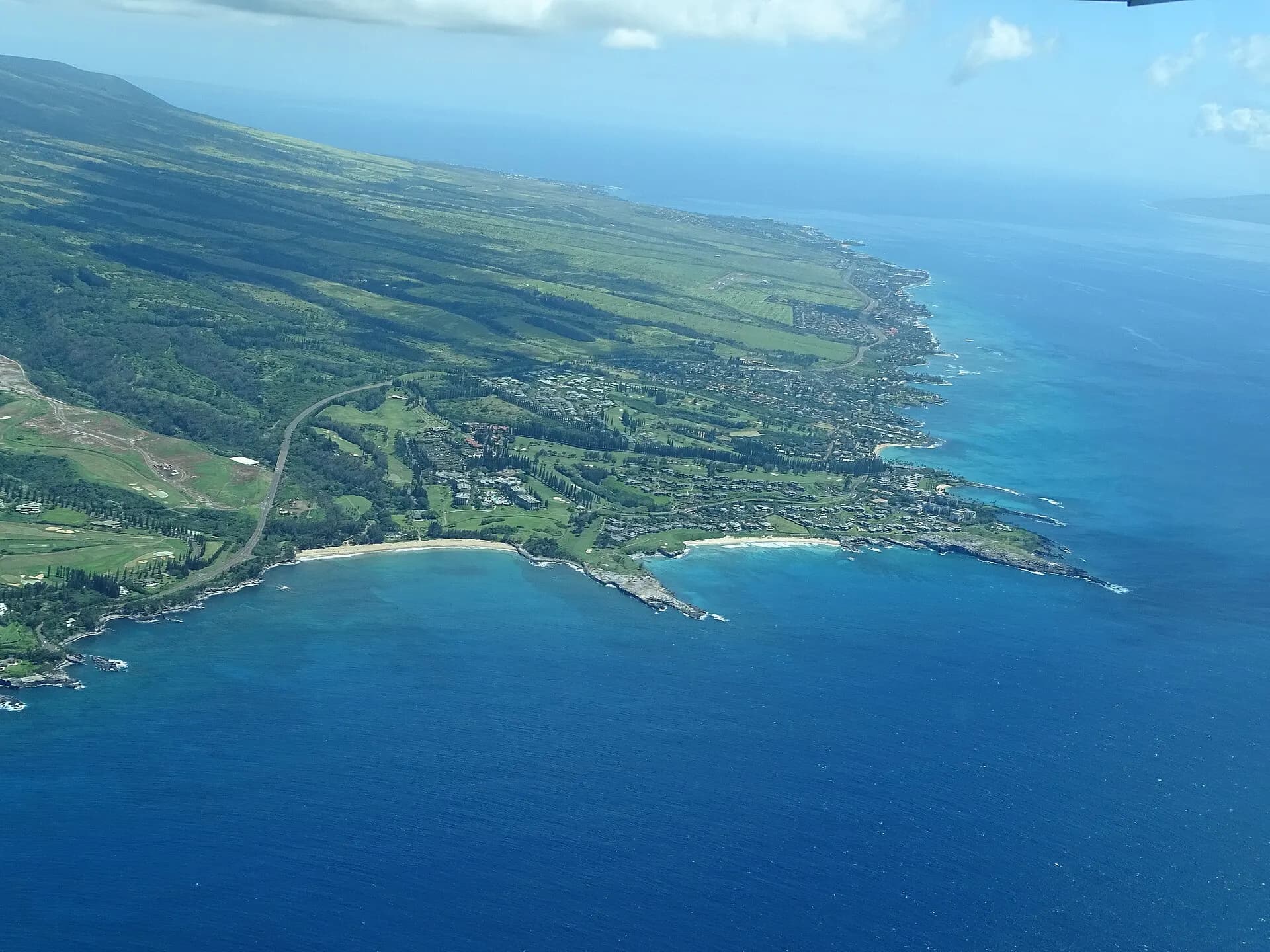
At the island's north-western tip, the sheltered bays of Nāpili and Kapalua are among Maui's best for gentle swimming and snorkelling on calm days. The coastal trail between them crosses old lava and has views of Molokaʻi across the channel.

When to go
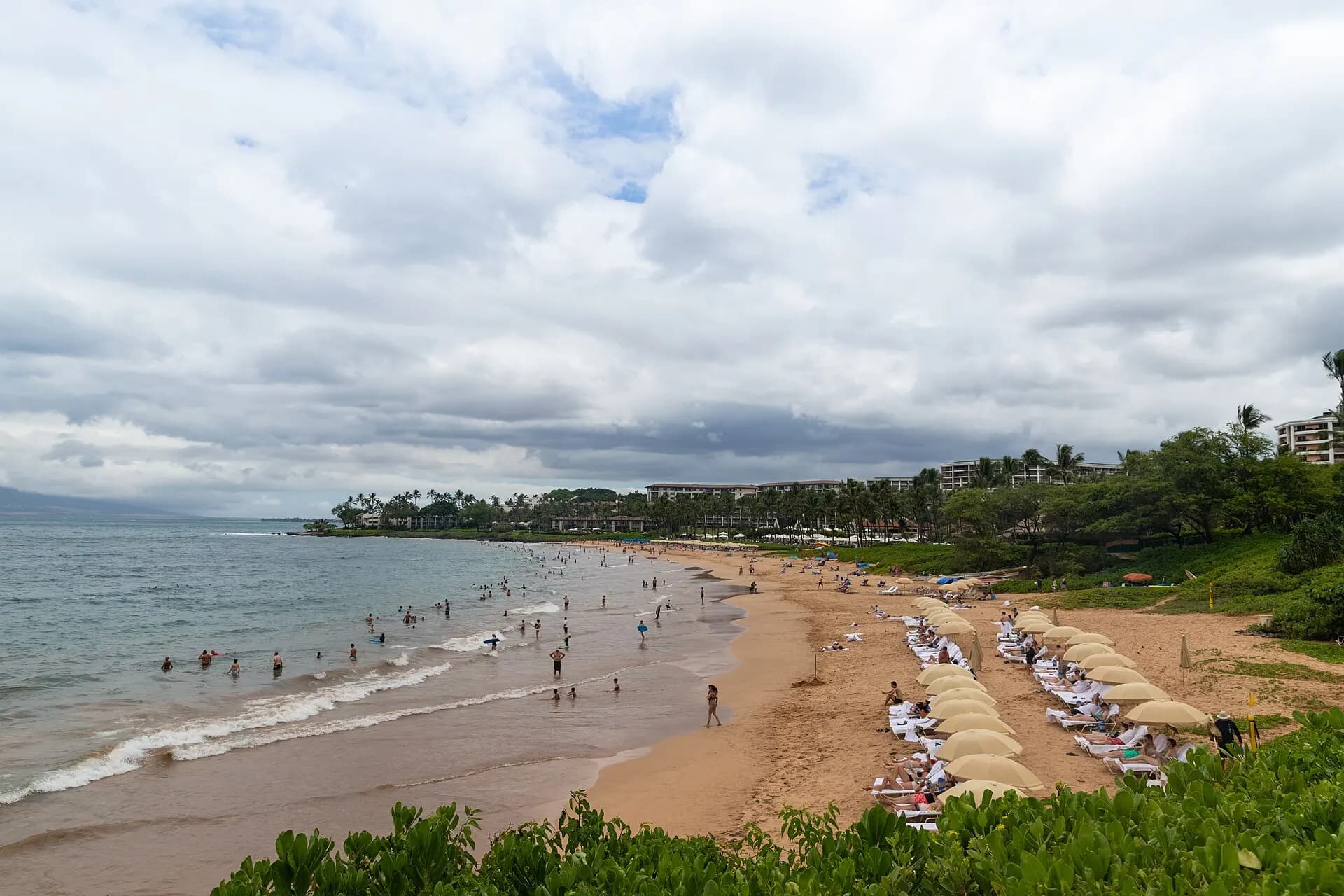
Maui is warm all year, with the leeward coast (Kīhei, Wailea, Lahaina and Kāʻanapali) much drier and sunnier than the windward side around Hāna. April to May and September to November are the sweet spots, with fewer crowds and pleasant weather. Winter, from about December to March, brings more rain, larger surf on north-facing shores and the humpback whales. Summer is hot, dry and busy, especially in July and August. Haleakalā's summit can be cold and windy at any time of year.
Getting around
Most visitors fly into Kahului Airport (OGG) in central Maui, and a few use the small Kapalua airport in the west. A hire car is close to essential: buses run between the main towns but don't reach Haleakalā, Hāna or many beaches. Book early, as cars and parking can be in short supply. Allow a full day for the Road to Hāna and return the same way rather than via the rough southern route, which some rental agreements don't allow. Tour companies offer Hāna, Haleakalā and snorkelling trips if you'd rather not drive.
Local tips
- Reserve ahead: Haleakalā sunrise, Waiʻānapanapa and ʻĪao Valley all need bookings for visitors.
- Only mineral sunscreen (zinc oxide or titanium dioxide) may be sold or used in Maui County.
- Bring a credit card for park entrance fees; the National Park Service asks visitors to pay by card.
- Never leave valuables in the car at trailheads or beaches.
- Fuel up before long drives; stations are scarce on the Hāna Highway.
- Respect "kapu" and "no trespassing" signs; they mark private or sacred land.
- Learn a few words: aloha, mahalo (thank you), mauka (towards the mountains) and makai (towards the sea).
Eat and drink
Look for plate lunches, poke, kālua pork, laulau and loco moco, as well as shave ice on a hot afternoon. Upcountry farms grow produce served across the island, and roadside stands on the way to Hāna sell banana bread and fresh fruit. Pāʻia and Makawao have relaxed cafés, while Wailea and Kāʻanapali have more formal dining. A lūʻau with a respectful cultural programme can be a good introduction to Hawaiian food and hula.
Where to stay
South Maui is the sunny, practical choice: Kīhei has condos and mid-range hotels, while Wailea is upmarket resorts. West Maui's Kāʻanapali, Nāpili and Kapalua have resorts and condos by the sea. Pāʻia and Upcountry suit travellers who want a quieter, more local feel, and a night or two in Hāna makes the eastern coast far more enjoyable. Check that short-term rentals are licensed, as housing is scarce for residents.
Whale watching
Every winter, thousands of humpback whales migrate from Alaska to the warm, shallow waters around Maui to mate, give birth and nurse their calves. The season runs from about November to May, peaking from January to March, when you can see them from shore at places such as Wailea and the coastal pullouts along the Honoapiʻilani Highway between Māʻalaea and Lahaina. Boat trips from Māʻalaea and Kīhei bring you closer, within the federal limit of about 90 metres (100 yards), and you may hear males singing through a hydrophone. Choose operators that follow responsible viewing guidelines.
Ocean safety
Maui's beaches are beautiful but can be dangerous. Swim at beaches with lifeguards when you can, and ask them about the day's conditions. Strong currents, high surf and shore breaks, especially at Big Beach and on north-facing shores in winter, cause serious injuries each year. Never turn your back on the ocean, snorkel with a buddy, and go out in the calm morning before the wind picks up. If caught in a current, swim parallel to shore rather than against it. Stay out of streams and pools when it's raining upstream, as flash floods can arrive with little warning.
Hawaiian culture and place names
Maui is named after the demigod who, in Hawaiian tradition, snared the sun from the summit of Haleakalā to slow its passage across the sky. Place names carry meaning and history, and the ʻokina (the glottal stop, written ʻ) and kahakō (the macron over a vowel) change how words are pronounced and what they mean, so it's worth noticing them on signs. Heiau (temples), burial sites and certain places like Puʻu Kekaʻa are sacred: don't climb on walls, move stones or leave offerings. Hawaiian is an official language of the state, and you'll hear it in greetings, music and place names across the island.
Responsible travel
Visitors are welcome, but Maui's water, housing and natural places are under pressure, especially since the 2023 fires. Follow reservation systems, stay on marked trails and park legally rather than along the roadside. Don't touch coral or stand on reefs, keep at least 3 metres from turtles and 45 metres from monk seals, and never feed fish. Use mineral sunscreen, take your rubbish with you, and support locally owned businesses, farms and Hawaiian-led cultural experiences. In Lahaina, travel quietly and with respect for the people who lost homes and loved ones.