Washington, DC
Marble memorials, free world-class museums and leafy rowhouse neighbourhoods along the Potomac, in a capital built to be walked.
- Best time to go
- Late March to May and September to early November, for mild weather; late March to early April for the cherry blossoms
- Local time
- –
- Currency
- US Dollar (USD)
- Reading time
- 12 min
- Language
- English

Washington, DC was built from scratch to be a capital, and it shows. Broad avenues radiate from the Capitol, white marble memorials line a long green lawn, and the seat of government sits a short walk from some of the finest museums in the world, most of them free. The National Mall, running for about three kilometres from the Capitol to the Lincoln Memorial, is the heart of any visit.
Beyond the monuments, DC is a lived-in city of brick rowhouses, embassies and lively neighbourhoods, from the cobbled streets of Georgetown to the music history of U Street and the restaurants of the revived waterfront. A strict height limit keeps the skyline low, so the Capitol dome and the Washington Monument still dominate the view. Many headline sights now need free timed-entry passes, so a little planning goes a long way.
The top 22 in Washington, DC
- 1
The U.S. Capitol
Photo: Architect of the Capitol, Public domain, via Wikimedia Commons
The domed home of Congress stands at the east end of the Mall. Free guided tours start in the underground Capitol Visitor Center on the east side and take in the Crypt, the Rotunda and National Statuary Hall; the House and Senate galleries are not part of the tour.
TipReserve a tour time online at visitthecapitol.gov. Walk-ups are placed on the next available tour, but arrive early in the day and allow time for airport-style security.
- 2
The Library of Congress
Photo: APK, CC BY 4.0, via Wikimedia Commons
The Thomas Jefferson Building, across the street from the Capitol, is one of the most lavishly decorated buildings in the country, with a Great Hall of marble, mosaics and murals. Look down into the domed Main Reading Room from the overlook, see a Gutenberg Bible, and browse the new Treasures gallery. Free timed-entry tickets are required; it opens Tuesday to Saturday, with late opening on Thursdays.
- 3
The Supreme Court
Photo: Photo by Mr. Kjetil Ree., CC BY-SA 3.0, via Wikimedia Commons
The marble temple of the nation's highest court is next to the Library. The building is open to visitors on weekdays, free of charge, with exhibits and lectures in the courtroom on days when the Court is not sitting. Seats for oral arguments are limited and first-come, first-served.
- 4
The National Gallery of Art
Photo: Gunnar Klack, CC BY-SA 2.0, via Wikimedia Commons
A free gallery in two very different buildings: the neoclassical West Building, with European and American art from the Middle Ages onwards, including the only painting by Leonardo da Vinci in the Americas, and I. M. Pei's angular East Building for modern and contemporary art. Between them, the Sculpture Garden has a fountain that becomes an ice rink in winter.
- 5
The National Air and Space Museum
Photo: DiscoA340, CC BY-SA 4.0, via Wikimedia Commons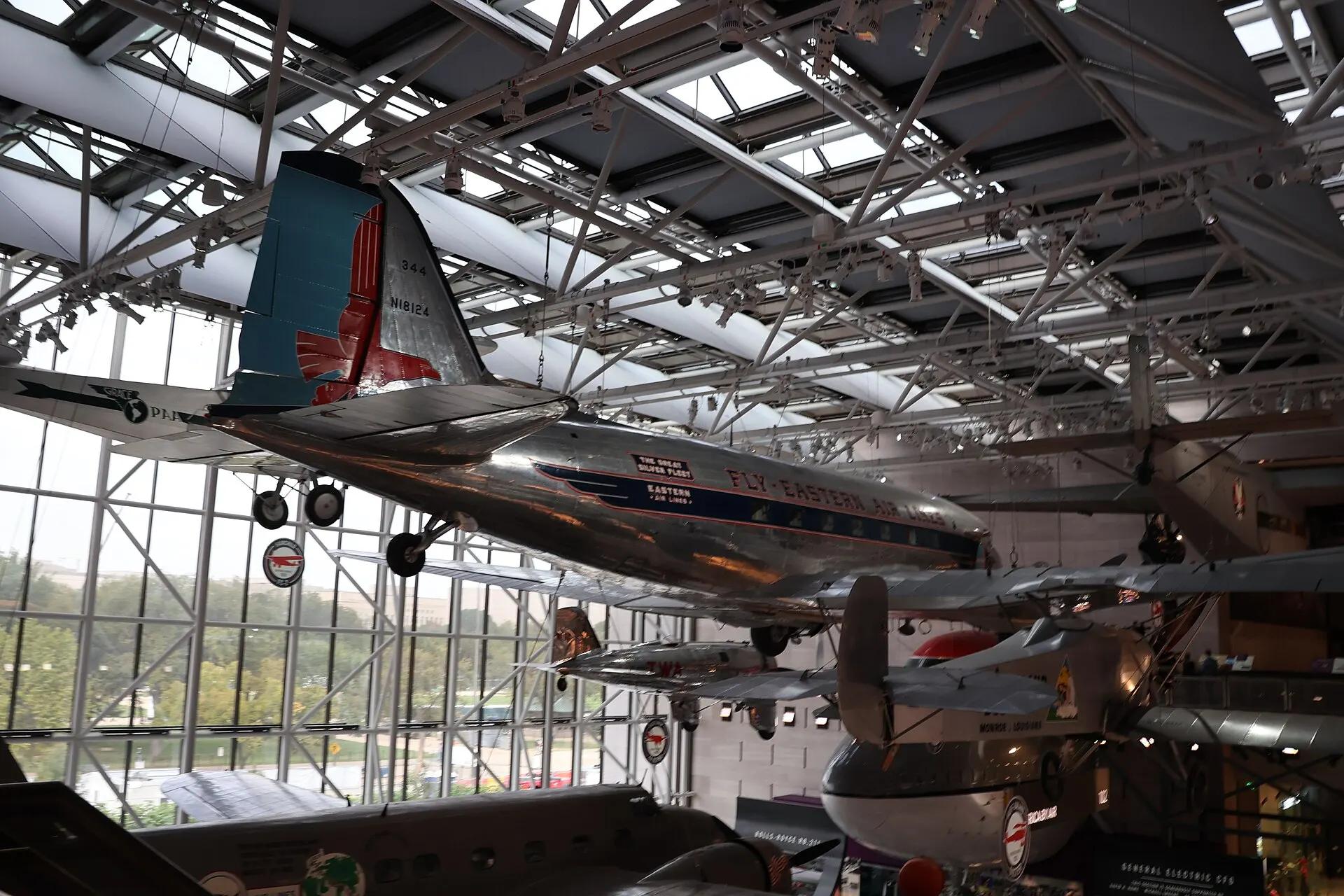
The Wright brothers' 1903 Flyer, Lindbergh's Spirit of St. Louis and the Apollo 11 command module are among the treasures of this hugely popular Smithsonian museum. A renovation lasting most of a decade is almost complete, with most galleries reopened by mid-2026 and the last ones due to follow by the end of the year. Free timed-entry passes are required.
TipThe museum's Steven F. Udvar-Hazy Center near Dulles Airport, with the Space Shuttle Discovery, needs no passes, though there is a parking fee.
- 6
The National Museum of Natural History
Photo: Syed07, CC BY 4.0, via Wikimedia Commons
Pass the elephant in the rotunda to find the Hope Diamond, the dinosaur skeletons of the fossil hall, the Ocean Hall and an insect zoo. It's free and needs no pass, which makes it one of the busiest museums in the world; come at opening time.
- 7
The National Museum of American History
Photo: G. Edward Johnson, CC BY 4.0, via Wikimedia Commons
The museum of the nation's story keeps the original Star-Spangled Banner, the flag that inspired the national anthem, alongside the Greensboro lunch counter from the civil rights sit-ins, the ruby slippers from The Wizard of Oz and Julia Child's kitchen.
- 8
The National Museum of African American History and Culture
Photo: Rhododendrites, CC BY-SA 4.0, via Wikimedia Commons
Wrapped in a bronze-coloured lattice, the Smithsonian's newest museum opened in 2016. Its history galleries start deep underground with the transatlantic slave trade and rise through emancipation, segregation and the civil rights movement, while the upper floors celebrate music, sport and culture. Plan at least half a day.
TipFree timed-entry passes are required. They are released online thirty days ahead, with a limited number of same-day passes released online each morning.
- 9
The Washington Monument
Photo: Rhododendrites, CC BY-SA 4.0, via Wikimedia Commons
The 169-metre marble obelisk to George Washington, completed in 1884, is visible from almost everywhere in the city. Look for the change in the colour of the stone about a third of the way up, where construction paused for more than twenty years. A lift takes visitors to the observation level for the best view of the city's plan.
TipTimed tickets are needed for the lift. Book on recreation.gov, where tickets are released thirty days ahead and sell out fast, with a small service charge; a limited number of free same-day tickets are handed out at the lodge on 15th Street from 8.45 am.
- 10
The White House
Photo: DJTechYT, CC BY-SA 4.0, via Wikimedia Commons
The president's home since 1800 can be seen from Lafayette Square to the north and from the Ellipse to the south. The National Park Service's White House Visitor Center nearby has exhibits on the building and its occupants. Public tours must be requested through a member of Congress, seven to ninety days ahead; international visitors should ask their embassy. Construction on the East Wing side has changed the tour route, and schedules can change at short notice.
- 11
The World War II Memorial
Photo: Syed07, CC BY-SA 4.0, via Wikimedia Commons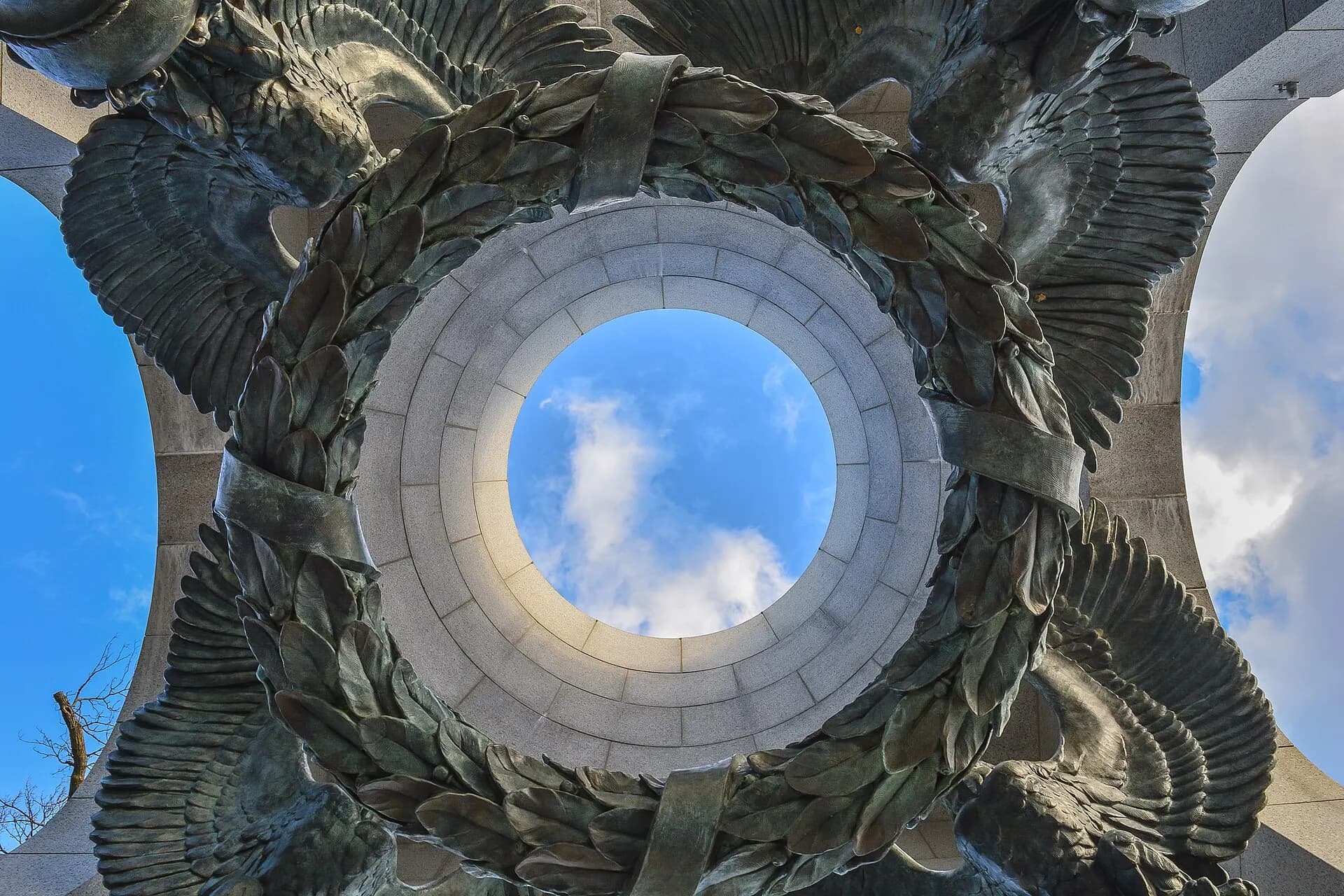
Opened in 2004 at the end of the Reflecting Pool, the memorial honours the sixteen million Americans who served in the war, with fifty-six granite pillars for the states and territories, two arches for the Atlantic and Pacific, and a wall of gold stars for those who died.
- 12
The Vietnam Veterans Memorial
Photo: Crisco 1492, CC BY-SA 4.0, via Wikimedia Commons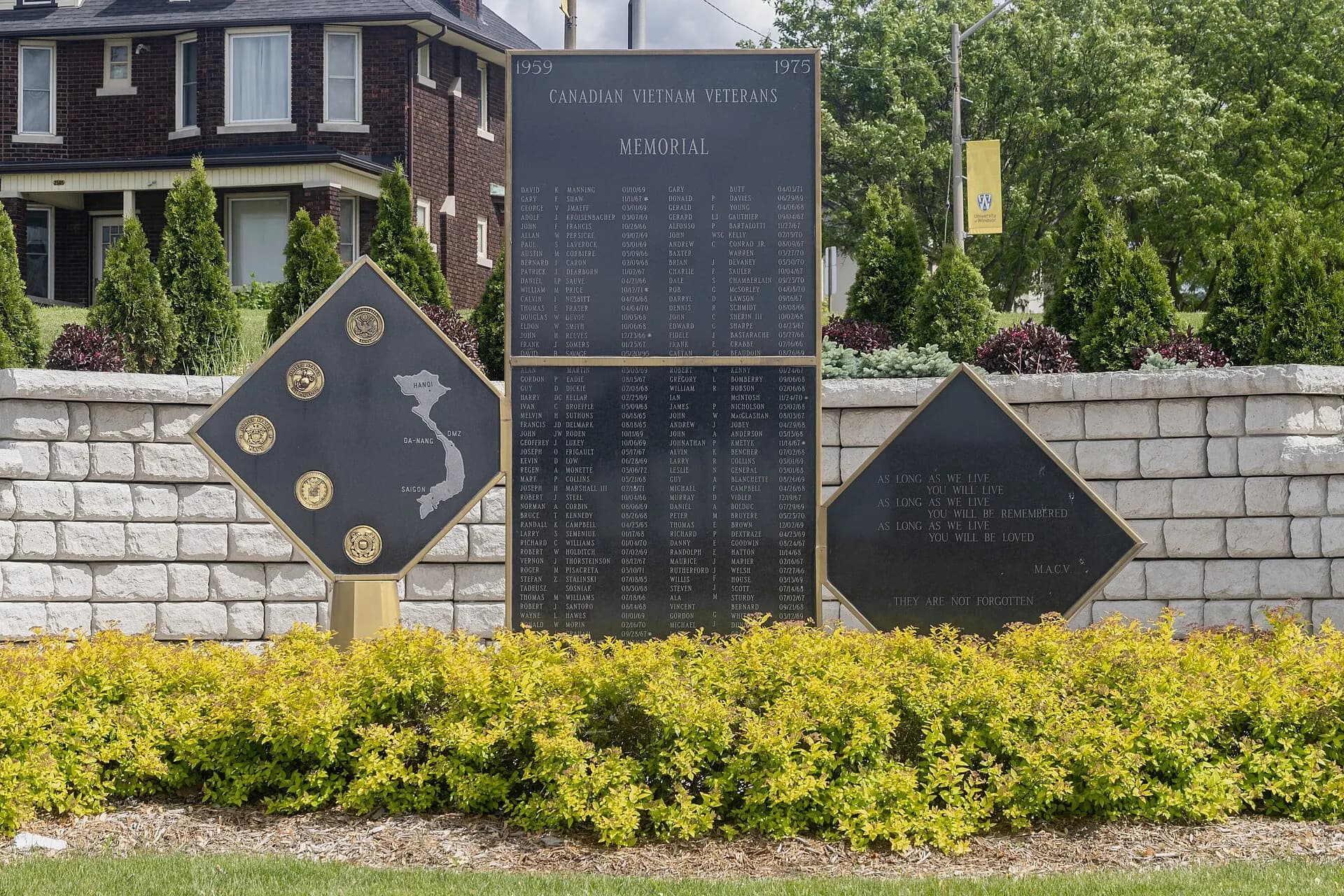
Maya Lin's black granite wall, dedicated in 1982, cuts into the ground and lists more than 58,000 names of those killed or missing, in the order they died. Its simplicity makes it one of the most moving places in the city. Visitors often leave flowers and letters, and make rubbings of names.
- 13
The Lincoln Memorial
Photo: Frank Schulenburg, CC BY-SA 4.0, via Wikimedia Commons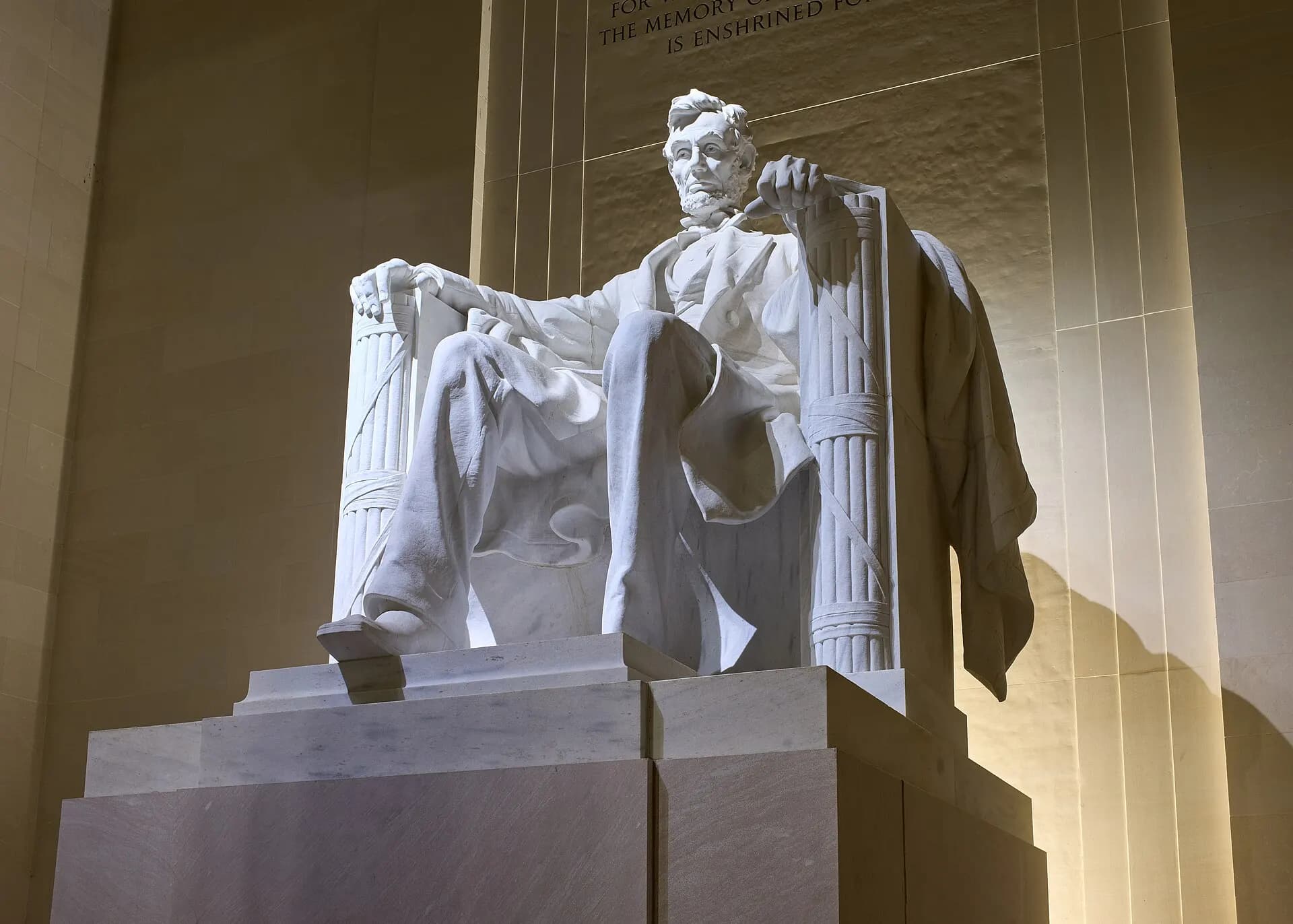
A Greek temple with a seated Abraham Lincoln, dedicated in 1922 and looking down the Reflecting Pool towards the Washington Monument. Martin Luther King Jr. delivered his "I Have a Dream" speech from its steps in 1963; an inscription marks the spot. A new museum in the undercroft beneath the memorial opened in June 2026, telling the story of its construction and the protests and gatherings held here; it needs a free timed ticket.
TipCome at sunrise or after dark, when the memorials are lit and much quieter. The Mall's memorials are open around the clock.
- 14
The Korean War Veterans Memorial
Photo: Waz8, CC0, via Wikimedia Commons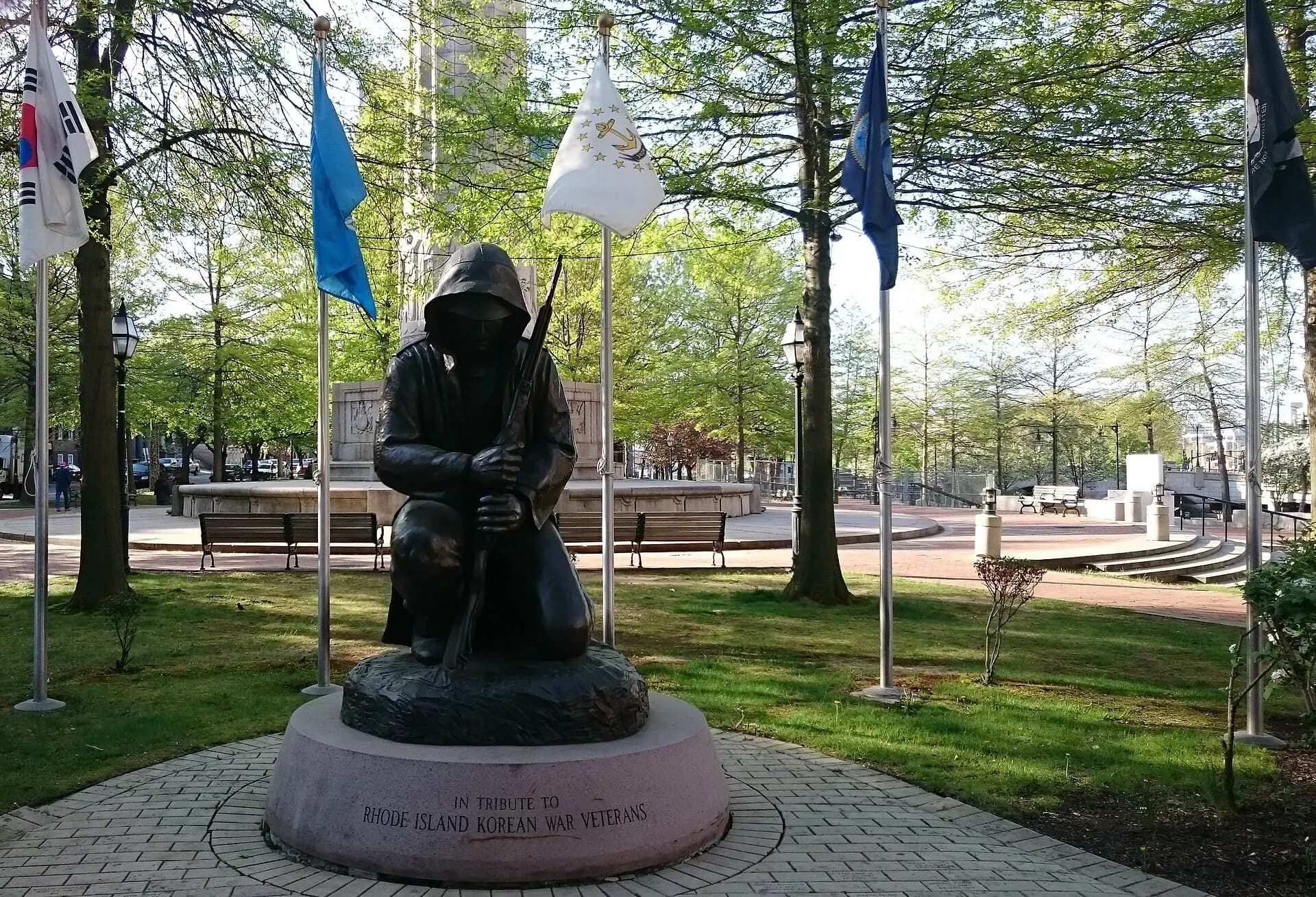
Nineteen stainless-steel soldiers on patrol advance through juniper bushes, reflected in a polished granite wall etched with faces. A Wall of Remembrance listing the names of the American and Korean soldiers who died was added in 2022.
- 15
The Martin Luther King Jr. Memorial
Photo: Tech. Sgt. Eric Miller, Public domain, via Wikimedia Commons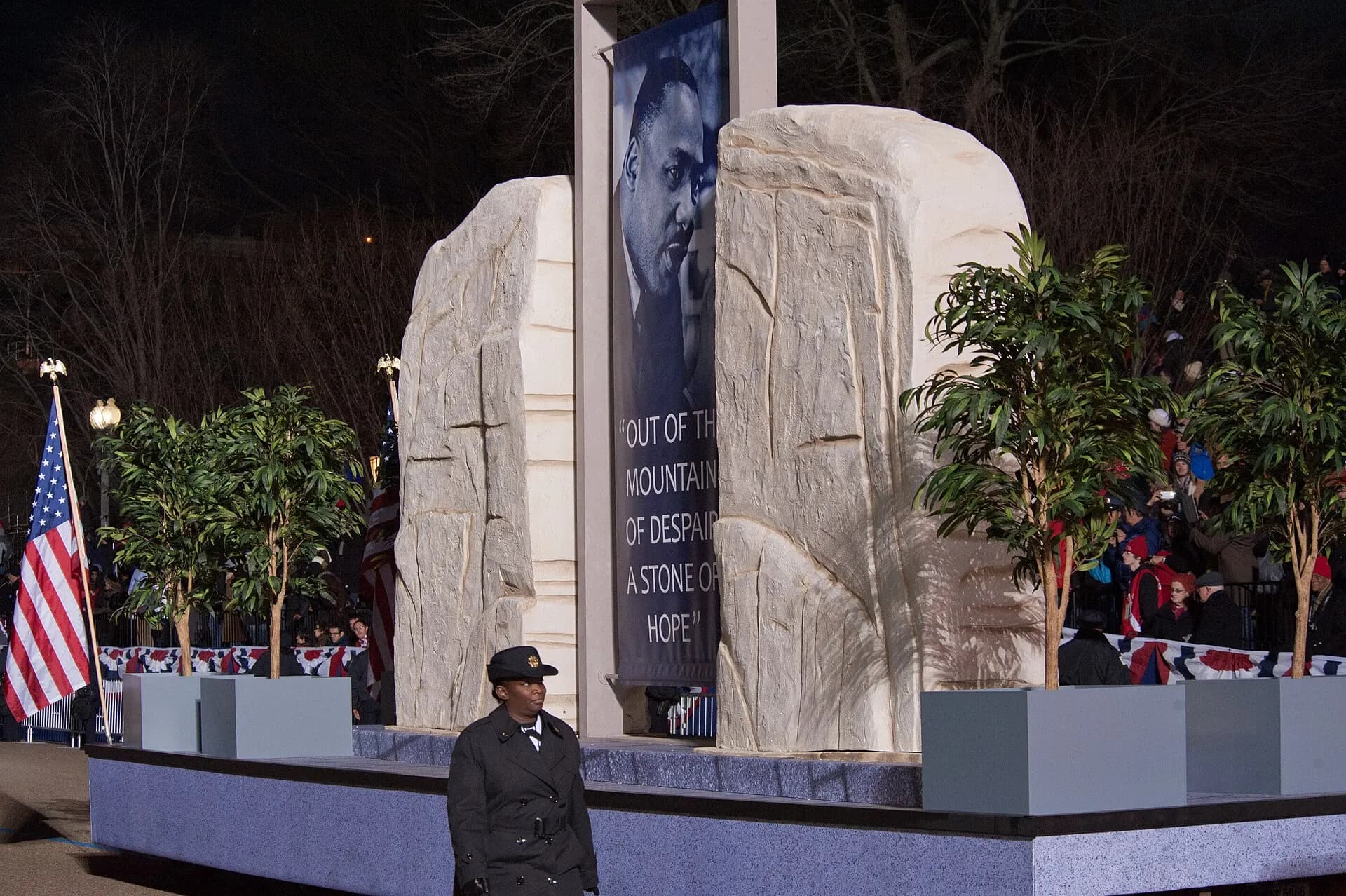
Dr King emerges from a "Stone of Hope" cut from a mountain of granite, beside a curved wall of his quotations, facing across the Tidal Basin towards the Jefferson Memorial. It opened in 2011, the first memorial on the Mall to honour an African American.
- 16
The Tidal Basin and the Jefferson Memorial
Photo: King of Hearts, CC BY-SA 4.0, via Wikimedia Commons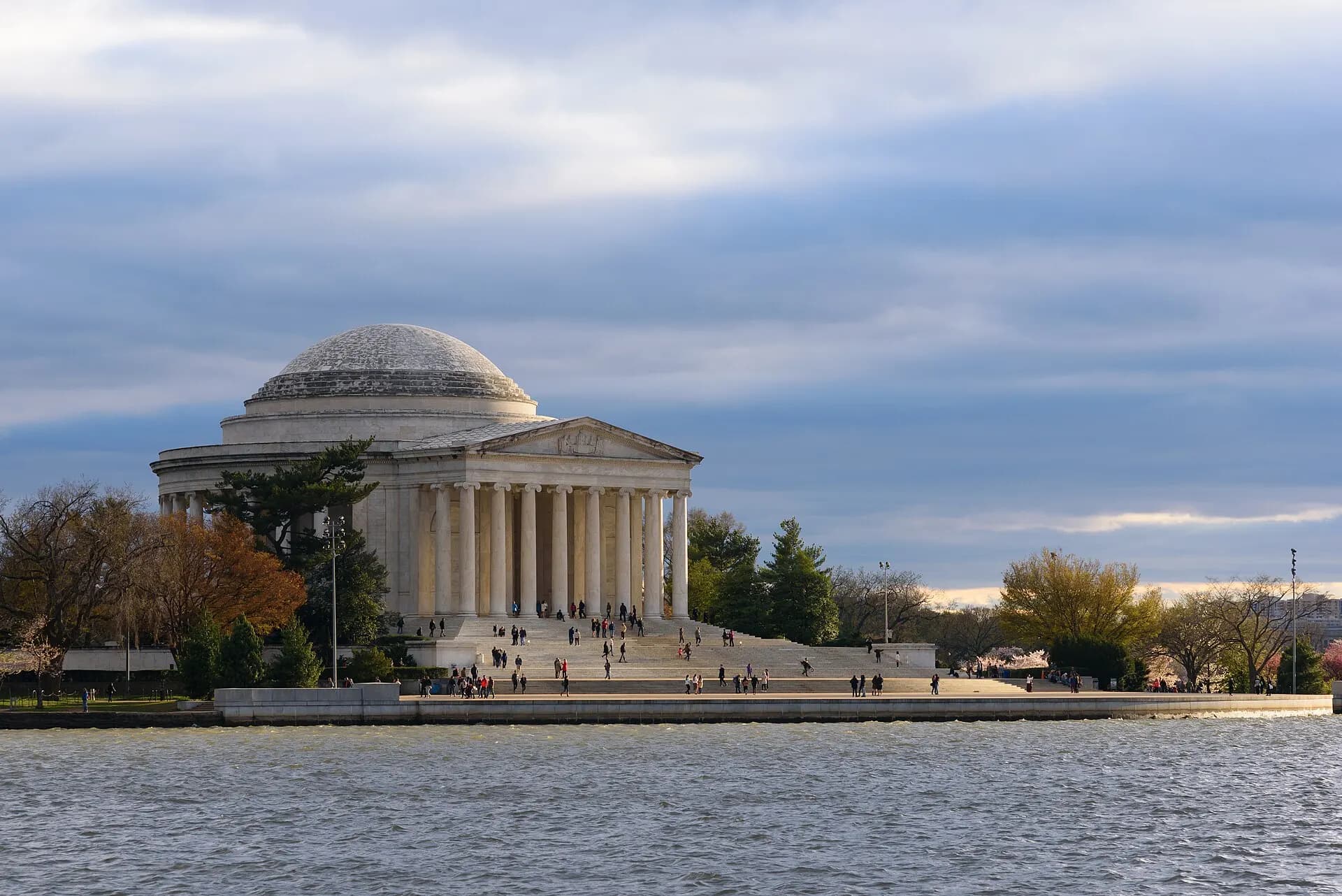
The round, domed memorial to Thomas Jefferson, dedicated in 1943, sits across the water from the White House, with his words on the walls around a bronze statue. The walk around the Tidal Basin, lined with Japanese cherry trees, is the city's classic spring stroll; its rebuilt seawall now has wider paths and newly planted trees. Paddle boats can be hired in season.
- 17
The Wharf
Photo: Farragutful, CC BY-SA 4.0, via Wikimedia Commons
A redeveloped stretch of the Washington Channel with restaurants, music venues, piers and water taxis. The Municipal Fish Market at its northern end is one of the oldest continuously operating open-air fish markets in the country, still selling steamed crabs and oysters.
- 18
Arlington National Cemetery
Photo: Protoant, Public domain, via Wikimedia Commons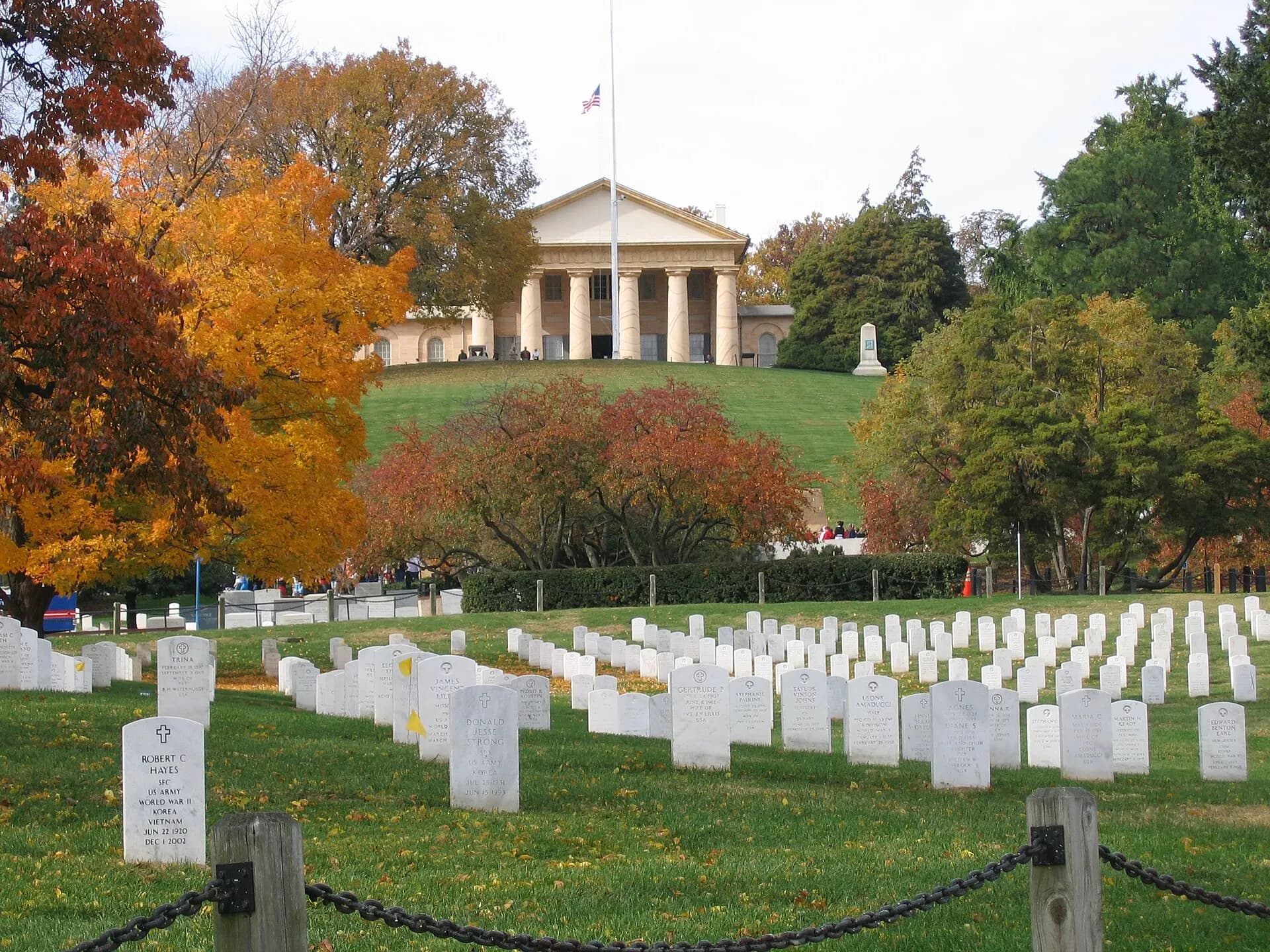
Across the Potomac in Virginia, rows of white headstones cover the hills of the nation's most famous military cemetery. Visit the eternal flame at the grave of President John F. Kennedy, Arlington House with its view across the river, and the Tomb of the Unknown Soldier, where sentinels keep watch around the clock and the Changing of the Guard is held through the day. It's open daily from 8 am to 5 pm, and the Arlington Cemetery Metro stop is a short walk from the entrance.
TipThis is an active cemetery with funerals most days. Keep your voice down, stay on paths, and give funeral processions room.
- 19
Georgetown
Photo: Daniel M Horowitz, CC BY-SA 4.0, via Wikimedia Commons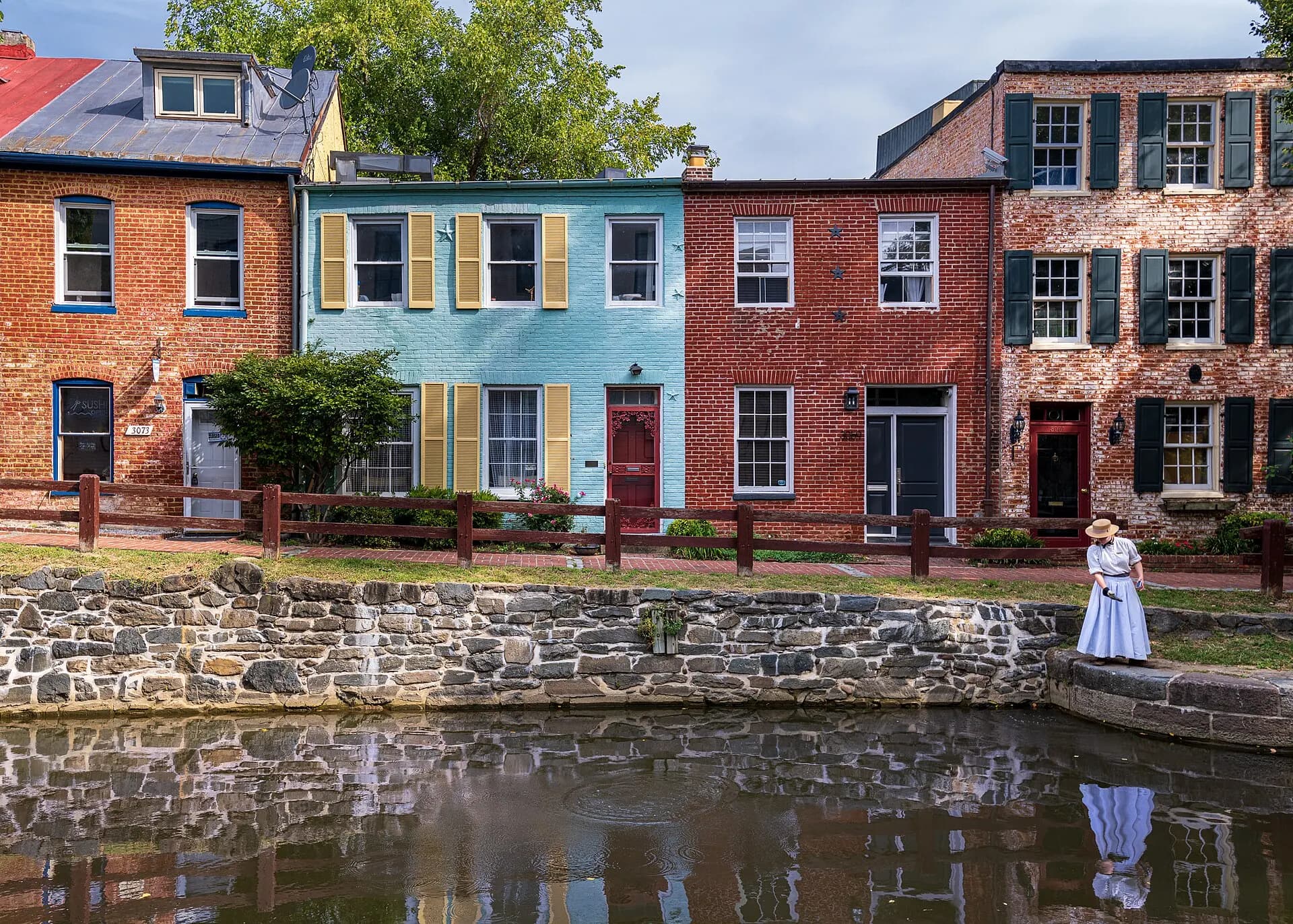
Older than the capital itself, Georgetown is a neighbourhood of Federal-style houses, brick pavements and shops along M Street and Wisconsin Avenue. Walk the towpath of the C&O Canal, climb the steep steps from M Street made famous by a horror film, and finish in the waterfront park by the Potomac.
- 20
Washington National Cathedral
Photo: Siubo11A, CC BY-SA 3.0, via Wikimedia Commons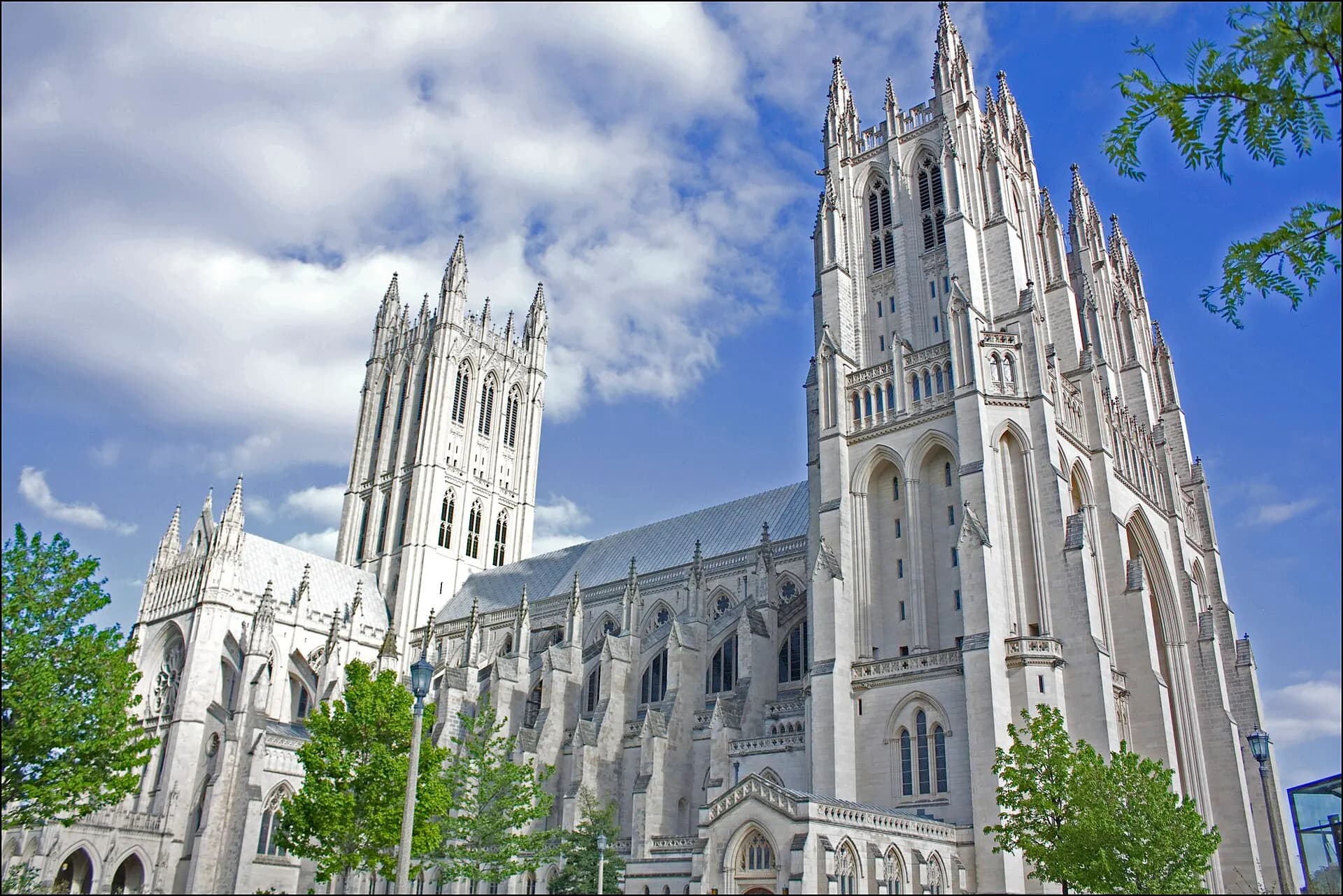
A Gothic cathedral of the twentieth century, begun in 1907 and finished in 1990, with flying buttresses, stained glass including a window holding a piece of moon rock, and gargoyles that include, high on the northwest tower, Darth Vader. There's an admission fee for sightseeing outside services; check the cathedral's website for opening days.
- 21
Dupont Circle and U Street
Photo: Another Believer, CC BY-SA 4.0, via Wikimedia Commons
Dupont Circle, with its fountain and grand mansions, leads onto Embassy Row and the Phillips Collection, an intimate museum of modern art. A short walk east, U Street was once known as "Black Broadway", where Duke Ellington grew up and jazz clubs thrived. Today it's one of DC's liveliest areas for music and nightlife, with the historic Lincoln Theatre and the African American Civil War Memorial nearby.
- 22
Union Market
Photo: Farragutful, CC BY-SA 4.0, via Wikimedia Commons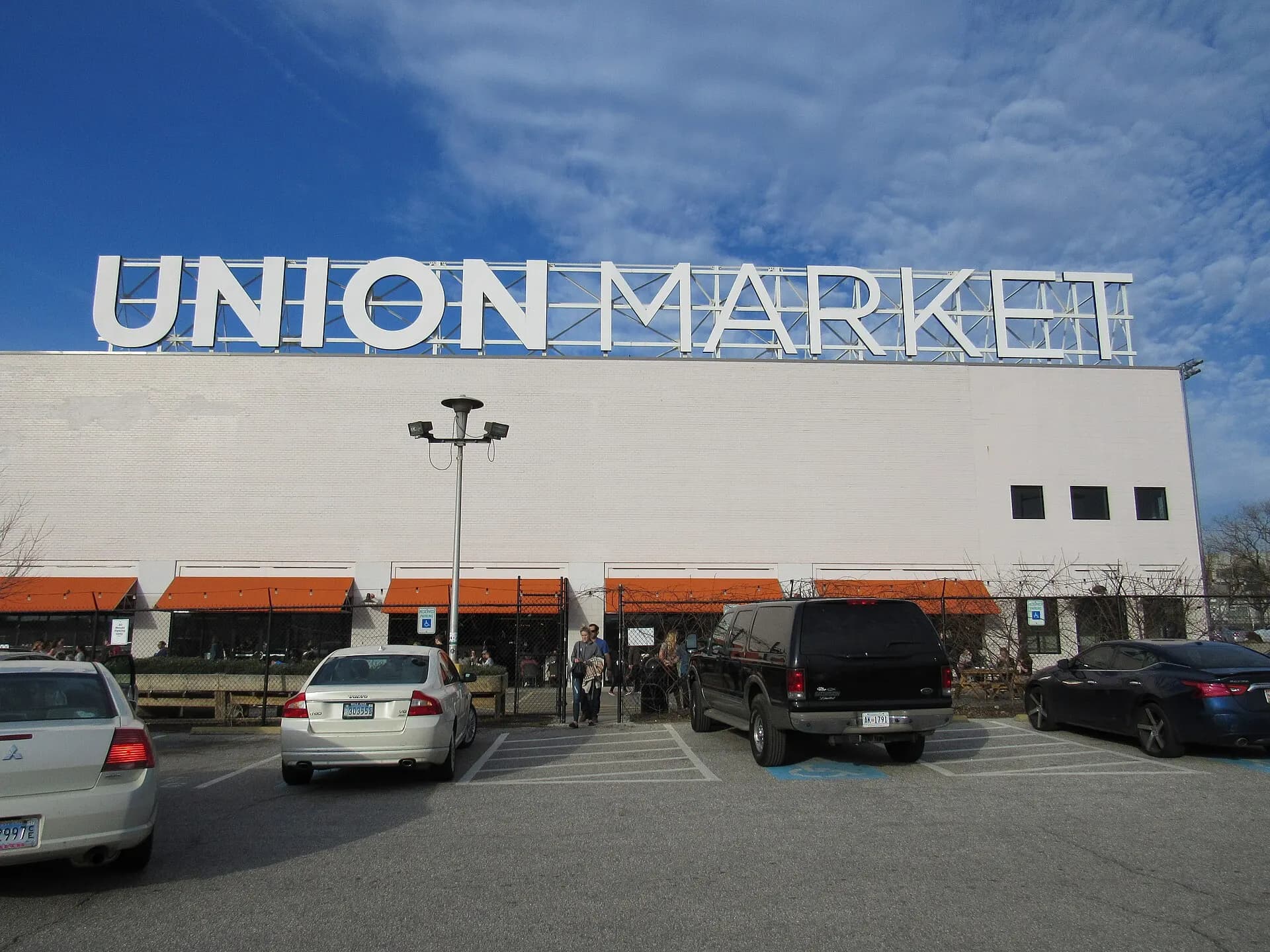
A former wholesale market district in Northeast DC, now home to a busy food hall with dozens of stalls and restaurants, especially good for weekend brunch and Korean, Ethiopian and Latin American food. Gallaudet University, the world's leading university for deaf students, is next door.
When to go
Spring is the most beautiful season, with the cherry blossoms around the Tidal Basin usually reaching peak bloom in late March or early April, celebrated by the National Cherry Blossom Festival. It's also the busiest time, along with the school-trip season in April and May. Autumn, from September to early November, brings warm days, golden trees and fewer crowds. Summer is hot and very humid, with afternoon thunderstorms; plan outdoor sightseeing for mornings and evenings, and spend the middle of the day in air-conditioned museums. Winter is chilly and sometimes snowy, but quiet, with lights and decorations in December.
Getting around
The Metro, the city's underground and overground rail network, links the Mall, the main neighbourhoods and the suburbs, with six colour-coded lines. Tap in and out with a SmarTrip card, the SmarTrip app on your phone or a contactless bank card, using the same method both times. Fares depend on distance and time of day, and are cheaper in the evenings and at weekends. Buses fill the gaps, and Capital Bikeshare docks are all over the city.
Reagan National Airport has its own Metro station, and the Silver Line runs to Dulles International Airport. From Baltimore/Washington International, take MARC or Amtrak trains to Union Station, which also has direct trains to New York, Philadelphia and Boston. Georgetown has no Metro station, so walk from Foggy Bottom or take a bus. The Mall is bigger than it looks; wear comfortable shoes.
Local tips
- Most visitors to the United States need a visa or ESTA authorisation.
- Book free timed-entry passes early for the Washington Monument, the Capitol, the Library of Congress, the Air and Space Museum and the African American History museum.
- Expect security screening at museums and federal buildings; travel light and check the list of prohibited items, as large bags and food are often not allowed.
- On Metro escalators, stand on the right and walk on the left.
- Tip 18 to 20% in restaurants; sales tax is added to menu prices.
- Carry water in summer, as there's little shade on the Mall.
- Check for road closures and demonstrations, which are common near the Capitol and the White House.
Eat and drink
DC's most famous dish is the half-smoke, a spicy, coarse sausage served with chili, most famously at Ben's Chili Bowl on U Street, open since 1958. The city has one of the largest Ethiopian communities outside Africa, and its restaurants around U Street and Shaw are excellent. Chesapeake Bay blue crabs, crab cakes and oysters are local favourites, best at the Wharf's fish market. Mumbo sauce, a sweet and tangy sauce served with fried chicken and wings, is a local institution. Food options on the Mall are limited, so pick up lunch nearby or eat in the museum cafés.
Where to stay
Downtown and Penn Quarter, north of the Mall, are central, close to the museums and well served by Metro. Capitol Hill has charming rowhouses and Eastern Market, a busy weekend market. Dupont Circle and Logan Circle have boutique hotels and good restaurants, while Georgetown is elegant but further from the Metro. Hotels across the river in Arlington, Virginia, can be cheaper and are a short Metro ride away. Prices rise sharply during the cherry blossom season.
The Smithsonian museums
The Smithsonian Institution was founded in 1846 with a bequest from James Smithson, an English scientist who never visited the United States. It has grown into the world's largest museum and research complex, with a group of museums around the Mall, the red-brick "Castle" that was its first home, and the National Zoo in Woodley Park. Admission is free to all of them, and most open daily except Christmas Day. Beyond the big names, look out for the National Museum of the American Indian, the Hirshhorn's ring-shaped modern art museum, whose sculpture garden is due to reopen in autumn 2026 after a long renovation, the Asian art of the National Museum of Asian Art, and the National Portrait Gallery and American Art Museum, which share a beautiful nineteenth-century building in Penn Quarter. Choose two museums a day at most, and use the cafés and benches for breaks.
A planned capital
The site for the capital was chosen by George Washington on the Potomac in 1790, and the French-born engineer Pierre L'Enfant laid out a plan of diagonal avenues cutting across a grid, with long views between the Capitol and the President's House. British troops burned the Capitol and the White House in 1814 during the War of 1812, and the city remained unfinished for decades. The Mall took its present shape in the early twentieth century, when a commission cleared the railway tracks and laid out the lawn and memorials. A 1910 law limits building heights, which is why there are no skyscrapers in the city centre. Residents of the District, which is not part of any state, have a non-voting delegate in Congress.
The cherry blossoms
In 1912, the city of Tokyo gave Washington more than three thousand cherry trees as a gift of friendship, and the first two were planted on the north bank of the Tidal Basin, near where a stone lantern stands today. The trees have been replaced and added to over the years, and the National Park Service predicts peak bloom each spring, when most of the Yoshino blossoms are open; it lasts only a few days, so stay flexible. The National Cherry Blossom Festival runs for several weeks around it, with a parade and events across the city. For fewer crowds, come at sunrise, or see the blossoms at the National Arboretum and in East Potomac Park.
America's 250th anniversary
2026 marks 250 years since the Declaration of Independence, and Washington was a focus of the commemorations, with festivals on the Mall in early summer and Fourth of July celebrations including a parade on Constitution Avenue and fireworks. Several new and improved attractions opened for the anniversary, among them the museum beneath the Lincoln Memorial and the renovated galleries of the Air and Space Museum, and many museums are running special exhibitions on American history into 2027. Check washington.org and the museums' websites for what's on during your visit.
Responsible travel
The memorials are places of remembrance; keep your voice down, don't climb on them, and don't wade in the fountains or the Reflecting Pool. Respect people taking part in demonstrations and gatherings, which are part of the Mall's purpose. Cherry trees are fragile: never pick blossoms, climb trees or pull on branches. Use Metro, bikes or your feet rather than driving, and take your rubbish with you, as bins on the Mall overflow on busy days.