Sicily
The Mediterranean's largest island, where Greek temples, Arab-Norman mosaics, baroque hill towns and a smoking volcano share one sunlit coastline.
- Best time to go
- April to June and September to October, for warm seas and walkable heat; July and August are hot and crowded
- Local time
- –
- Currency
- Euro (EUR)
- Reading time
- 17 min
- Language
- Italian

Sicily sits at the crossroads of the Mediterranean, a triangle of mountains, wheat fields and citrus groves just off the toe of Italy, and almost everyone who mattered in the ancient and medieval world passed through. Greek colonists built temples here that rival anything in Greece; Romans laid mosaic floors; Arab emirs brought irrigation, lemons and sugar; Norman kings commissioned golden mosaics from Byzantine craftsmen; and after a catastrophic earthquake in 1693, whole towns in the south-east were rebuilt in an exuberant late baroque. Over it all, on the east coast, Mount Etna, Europe's highest active volcano, keeps adding new land.
It's a big island, roughly the size of Wales, and it rewards slow travel. A loop of ten days to two weeks, starting in Palermo and heading west, along the south coast, round the baroque south-east and up the Ionian coast before returning along the north, takes in most of the highlights below. The stops are listed in that order. With less time, pick one half: Palermo and the west, or Syracuse, the baroque towns, Etna and Taormina in the east. Just across the water, our Valletta guide covers Malta, a short catamaran ride from Pozzallo.
The top 23 in Sicily
- 1
Palermo Cathedral
Photo: Berthold Werner, CC BY-SA 4.0, via Wikimedia Commons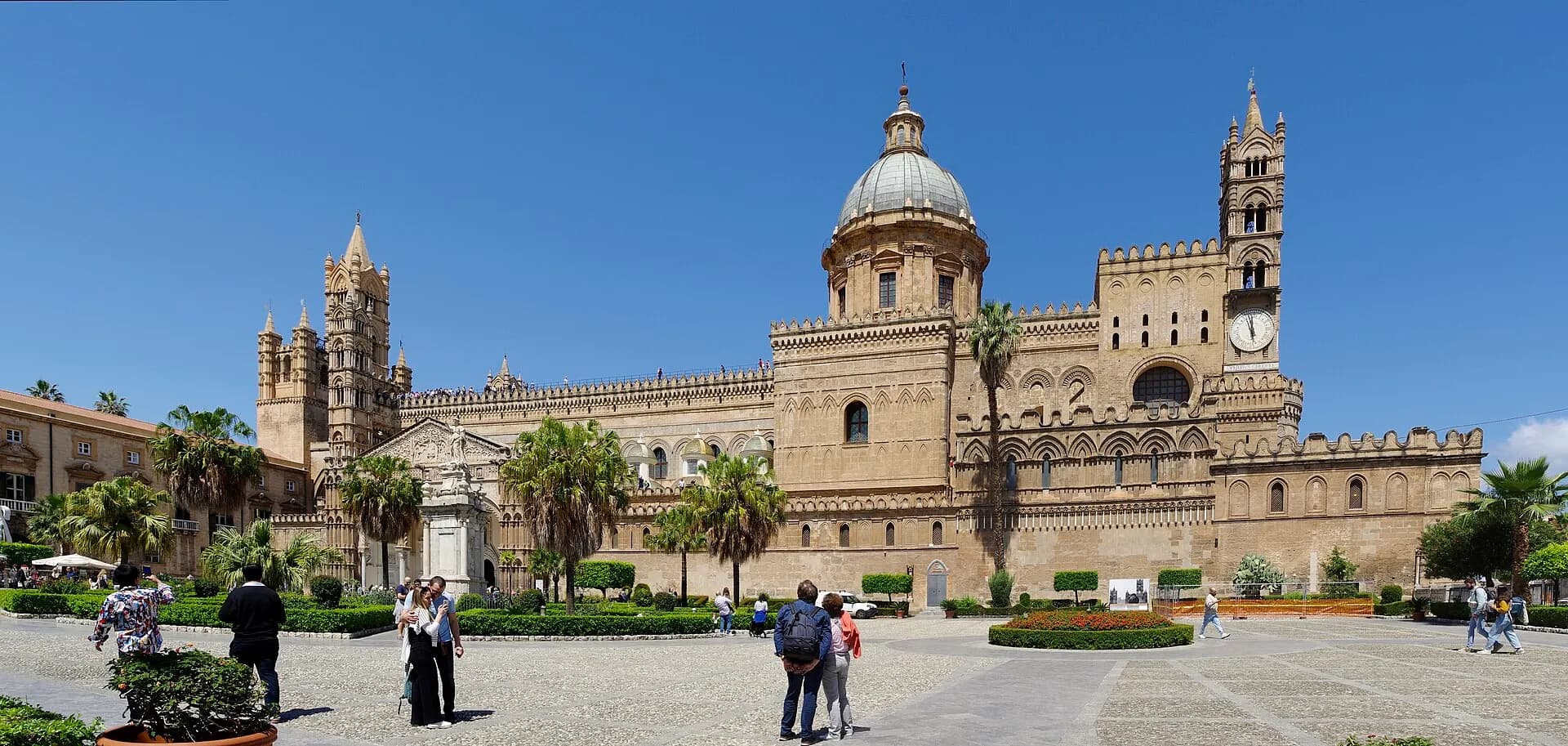
Palermo's cathedral is a building that has been rewritten many times: a Norman church of 1185 on the site of an earlier mosque, with a Gothic porch, crenellated walls, Catalan details and a neoclassical dome added in the eighteenth century. Inside, the royal tombs hold the Holy Roman Emperor Frederick II and the Norman king Roger II. The real highlight for many visitors is the rooftop walk, with views across the domes and terraces of the old city to the mountains that ring the Conca d'Oro, the "golden shell" of Palermo's plain.
TipThe roof, treasury and crypt need a separate ticket; go late in the afternoon for the best light over the city.
- 2
Palatine Chapel
Photo: Benjamin Smith, CC BY-SA 4.0, via Wikimedia Commons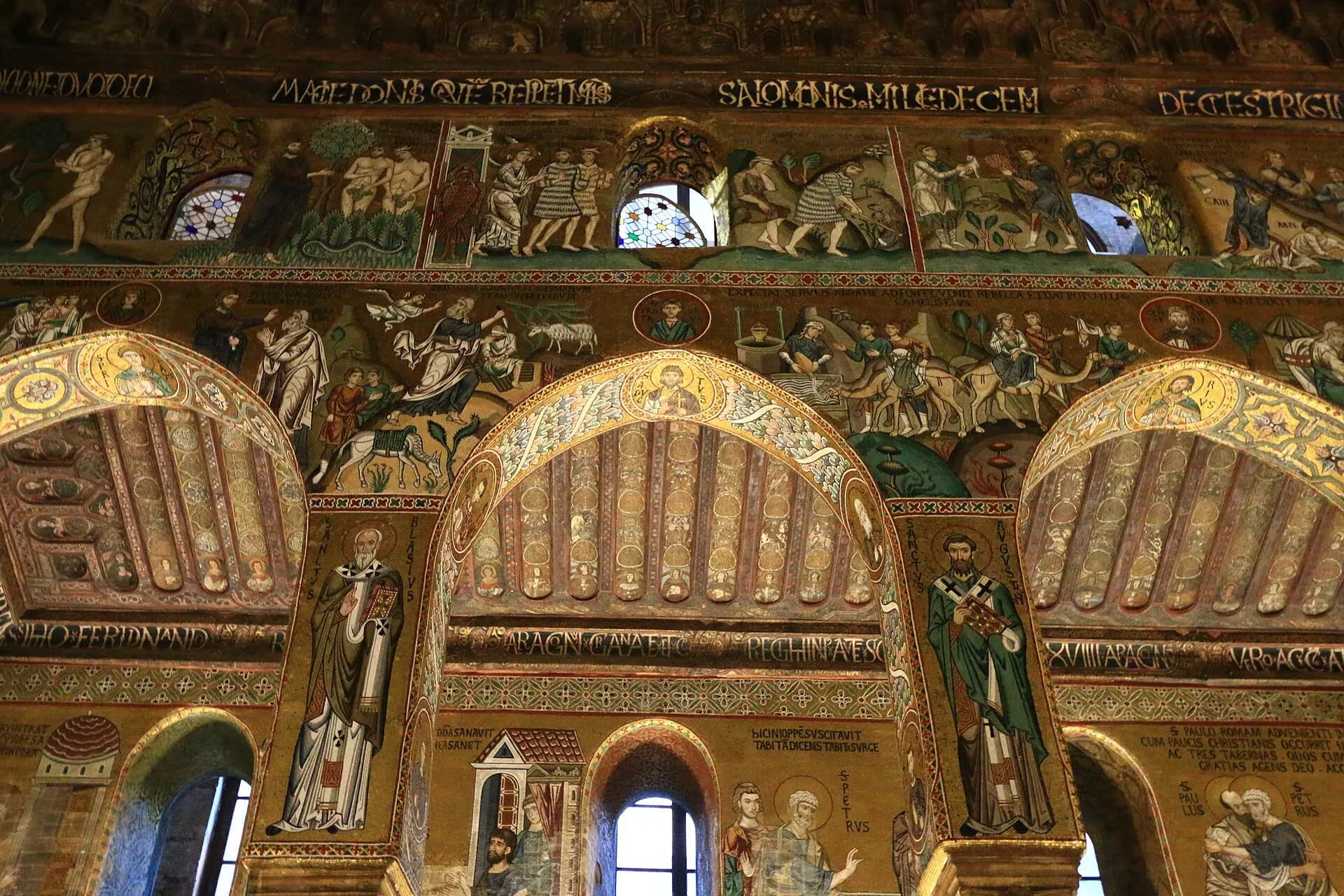
Inside the Palazzo dei Normanni, the royal palace that now houses the Sicilian regional parliament, Roger II's private chapel is one of the most extraordinary rooms in Europe. Its walls glitter with Byzantine gold mosaics of Christ and the Bible stories, while the wooden ceiling above is carved and painted in the Islamic muqarnas style, with scenes of courtly life, dancers and animals. It is the purest expression of the mixed Arab, Byzantine and Latin culture that UNESCO recognised in 2015 when it listed Arab-Norman Palermo, together with the cathedrals of Monreale and Cefalù.
TipThe chapel can close to visitors during services, particularly on Sunday mornings, and the parliament's sessions sometimes limit access to the royal apartments; check the opening times before you go.
- 3
Ballarò market
Photo: Archipenzolo, CC BY-SA 3.0, via Wikimedia Commons
The oldest and liveliest of Palermo's street markets fills the alleys of the Albergheria district, a short walk from the royal palace. Stallholders call out their prices in a loud sing-song known as the abbanniata, over heaps of swordfish, aubergines, wild fennel, lemons and spices. It's also one of the best places to try Palermo's street food: panelle, chickpea fritters, in a bun; crocchè, potato croquettes; sfincione, a thick, spongy pizza; and arancine fresh from the fryer. Nearby, the Quattro Canti crossroads, with its four baroque façades, and the grand Teatro Massimo opera house are worth the detour.
TipMornings are busiest and best. Keep an eye on bags in the crowded lanes.
- 4
Monreale Cathedral
Photo: Byzantine anonymous of 12th century, Public domain, via Wikimedia Commons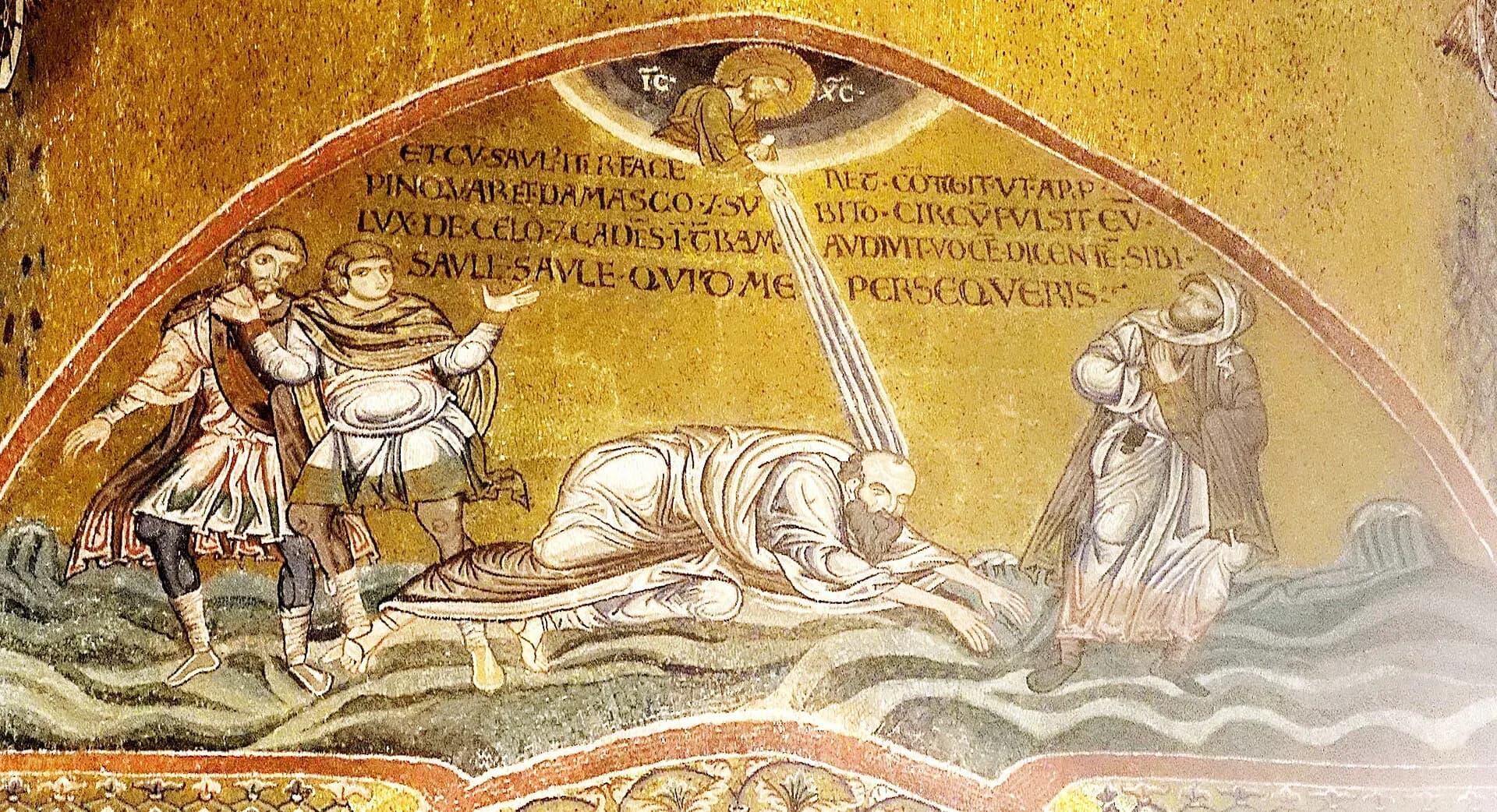
On a hillside above Palermo, the cathedral founded by the Norman king William II in 1174 holds one of the largest cycles of medieval mosaics anywhere, covering some 6,000 square metres of wall in gold. A huge Christ Pantocrator fills the apse, gazing down the nave over scenes from Genesis to the life of Christ. Next door, the Benedictine cloister has more than two hundred twin columns, each pair carved or inlaid differently, around a garden with an Arab-style fountain.
TipCity buses run up from Palermo in around half an hour. Climb to the cathedral terraces for a view back over the plain to the sea.
- 5
Segesta
Photo: Ludvig14, CC BY-SA 4.0, via Wikimedia Commons
A Doric temple from the late fifth century BC stands alone on a hill among fields and wild flowers, almost complete except for its roof and inner chamber; it may never have been finished. Segesta was a city of the Elymians, a people who lived in western Sicily before the Greeks, but they built in the Greek manner. A shuttle bus or a steep walk leads up Monte Barbaro to the theatre, cut into the hillside and looking out towards the Gulf of Castellammare.
TipGo early or late in the day in summer, as there's little shade on the climb.
- 6
Zingaro reserve and San Vito Lo Capo
Photo: 53cri021, CC BY-SA 4.0, via Wikimedia Commons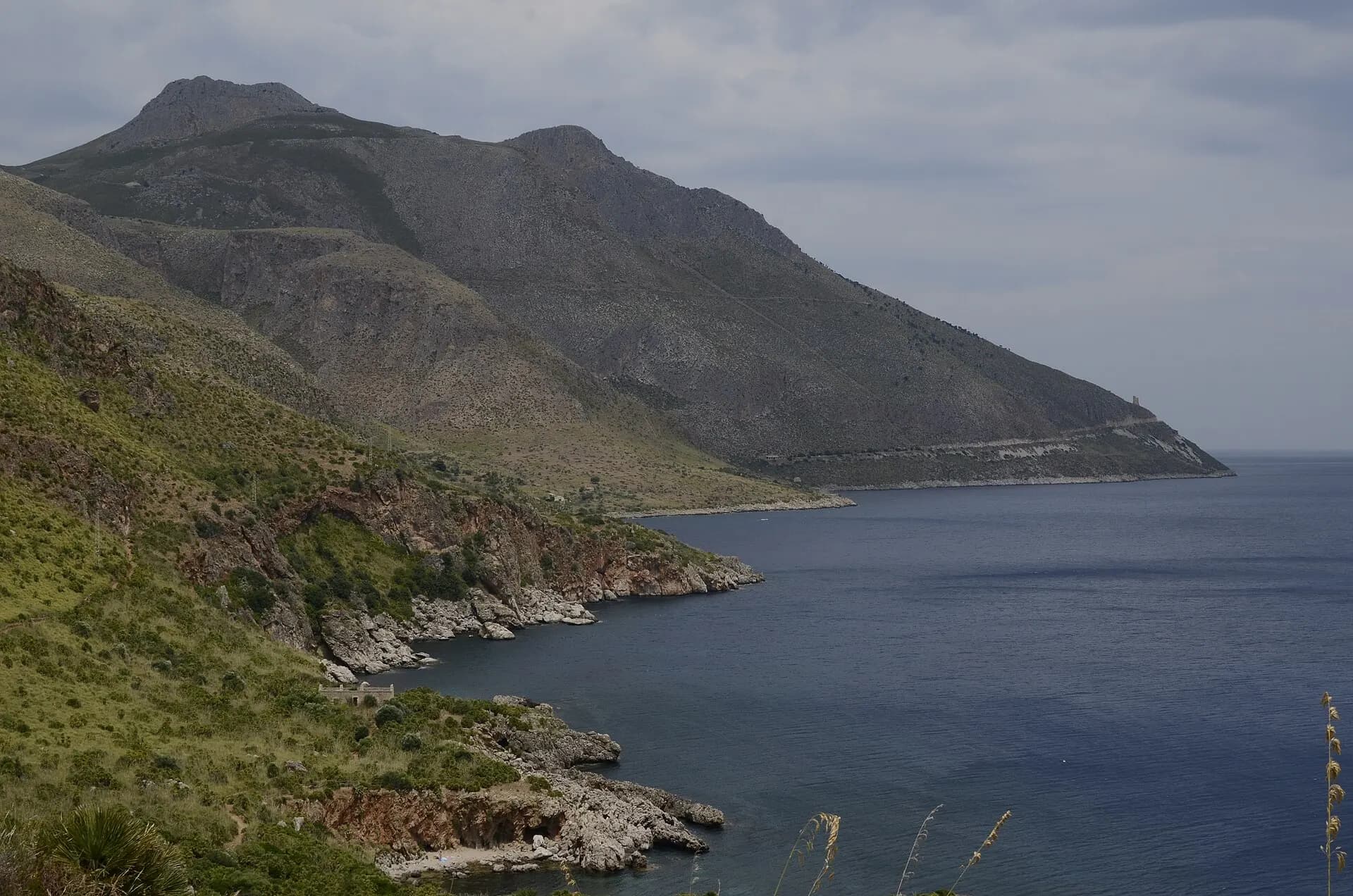
Set up in 1981 after protests stopped a coastal road, the Zingaro was Sicily's first nature reserve: seven kilometres of wild coast with no road at all, only footpaths dropping to pebble coves of startlingly clear water, beneath limestone cliffs and dwarf palms. There are entrances at the southern end, near the village of Scopello, with its old tuna fishery and sea stacks, and at the northern end, near San Vito Lo Capo, a resort known for its long, pale sandy beach and its couscous festival each September.
TipThere is an entry fee, and very little shade or water inside the reserve. Carry plenty to drink and wear proper shoes, and in summer start early.
- 7
Erice
Photo: Terry Kearney from liverpool, merseyside, CC0, via Wikimedia Commons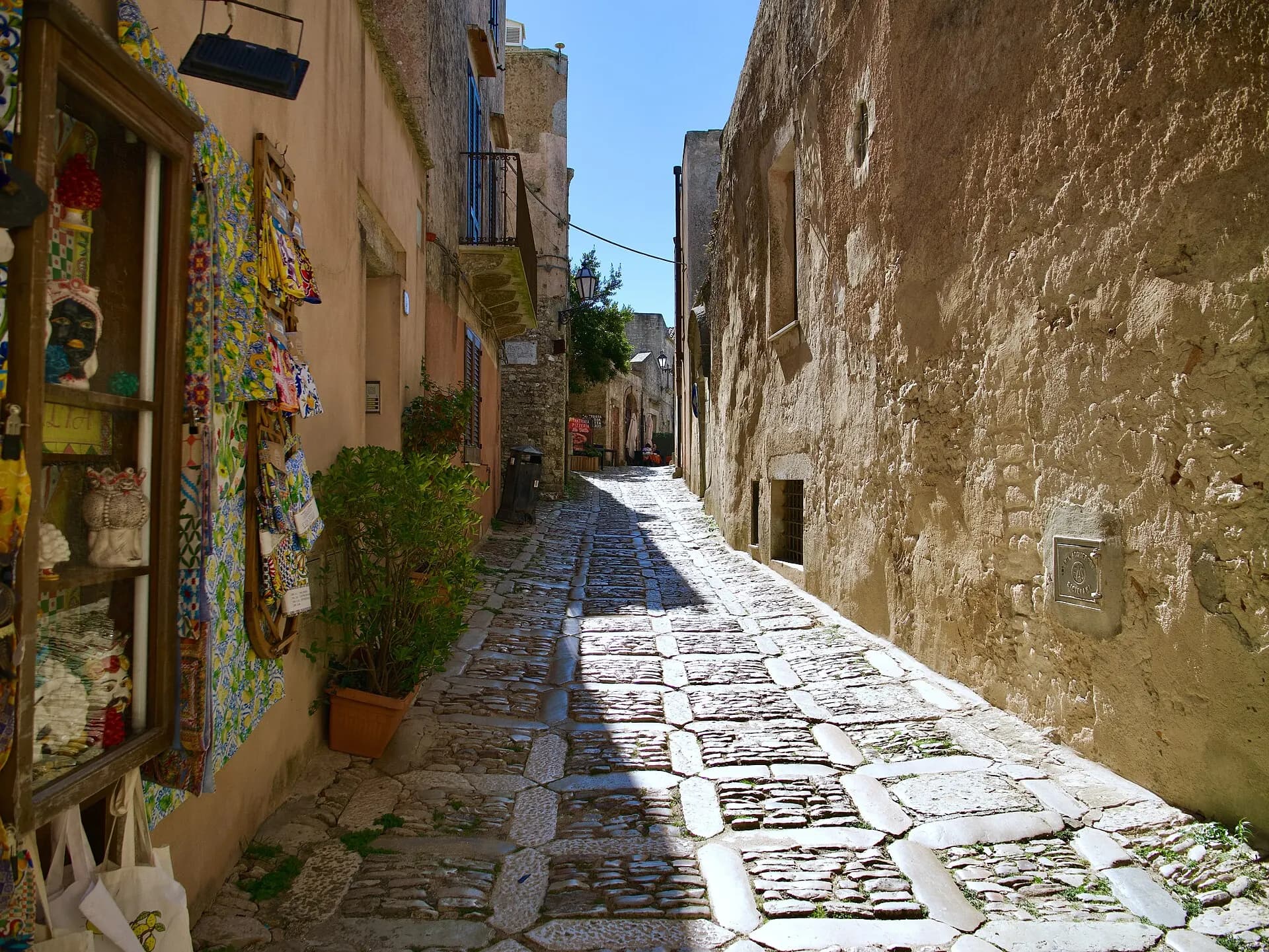
A medieval walled town of grey stone on top of Mount Erice, about 750 metres above Trapani, often wrapped in cloud while the coast below is in sunshine. In ancient times it was famous for its sanctuary of Venus, and the Norman Castle of Venus now stands on the site. Wander the cobbled lanes and quiet courtyards, then look out over the salt pans, the Egadi Islands and, on clear days, as far as Cape Bon in Tunisia. The town is known for its almond pastries and for the genovesi, warm custard-filled pastries.
TipA cable car runs up from the edge of Trapani in about ten minutes, but it closes in high wind; the road is the back-up.
- 8
Trapani salt pans
Photo: tato grasso, CC BY-SA 3.0, via Wikimedia Commons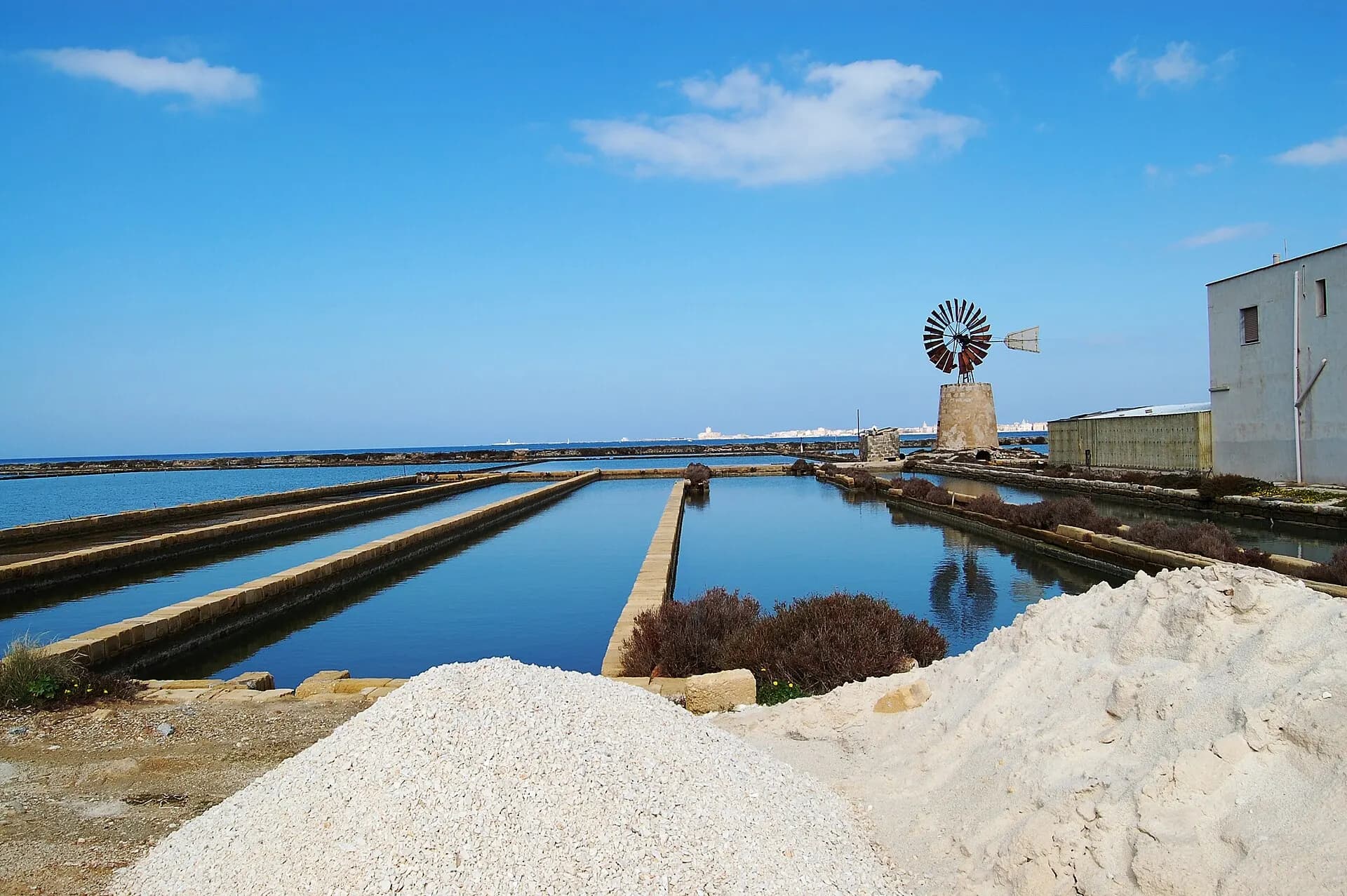
South of Trapani, a chequerboard of shallow pools stretches along the coast towards Marsala, where seawater has been evaporated for salt since at least medieval times. Old windmills once pumped the water and ground the salt, and the white heaps glow pink at sunset. The protected area of the Saline di Trapani e Paceco is a stop for flamingos and other wading birds, and there's a small salt museum in a restored mill at Nubia. Further south, the Stagnone lagoon holds the island of Mozia, once a Phoenician trading town, reached by a small ferry.
- 9
Selinunte
Photo: Moleskine, CC BY-SA 4.0, via Wikimedia Commons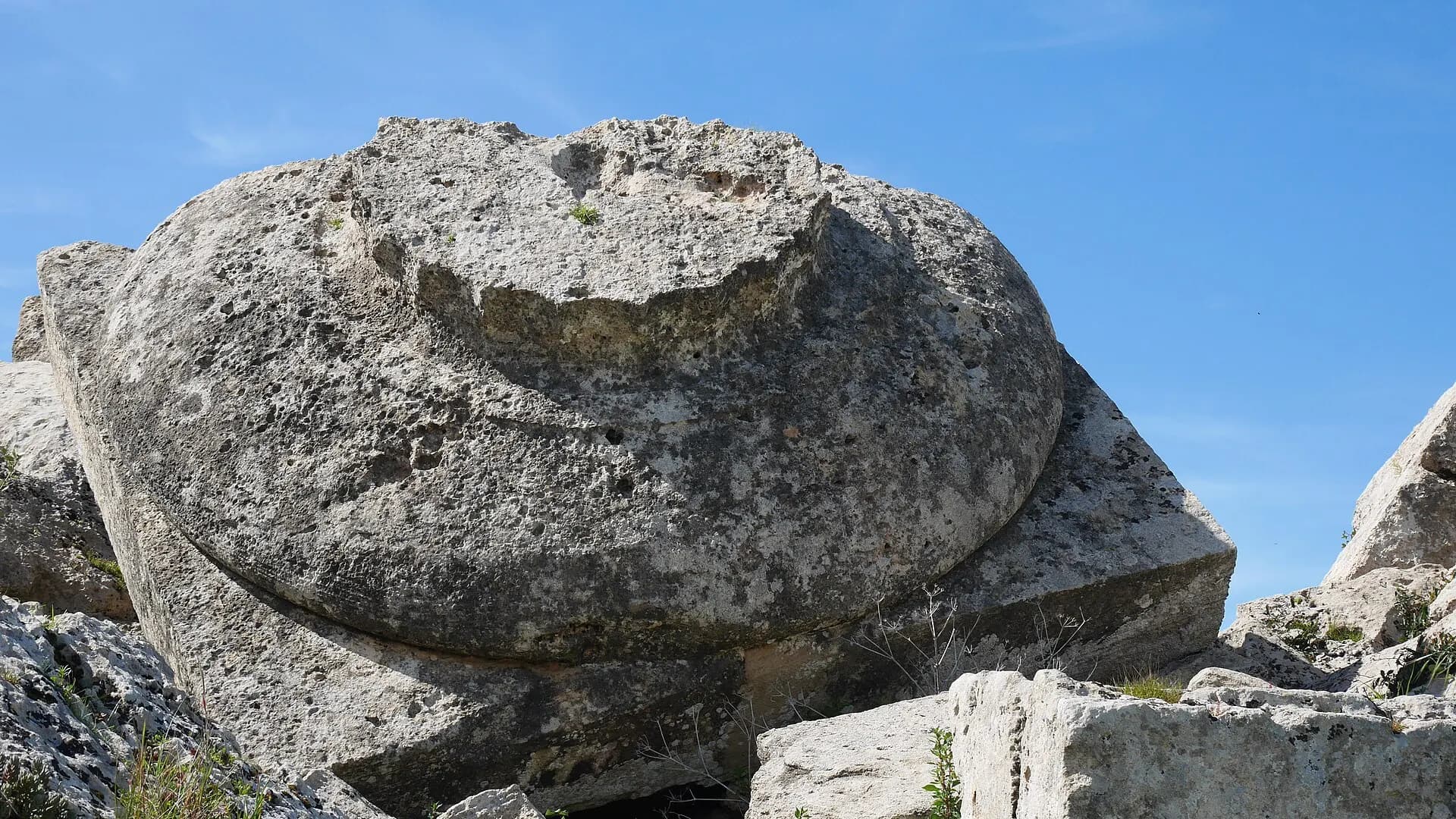
The westernmost of Sicily's great Greek cities, founded in the seventh century BC and destroyed by Carthage in 409 BC, has one of the largest archaeological parks in Europe, spread along a low coast of dunes and wild celery, the plant that gave the city its name. Temple E has been re-erected, while others lie as vast tumbles of fallen columns, and the acropolis looks over the sea. It's far quieter than Agrigento, and a good place to understand the scale of the Greek colonies.
TipDistances between the temples and the acropolis are long; electric carts run inside the park for a fee.
- 10
Scala dei Turchi
Photo: Diafane, CC BY-SA 4.0, via Wikimedia Commons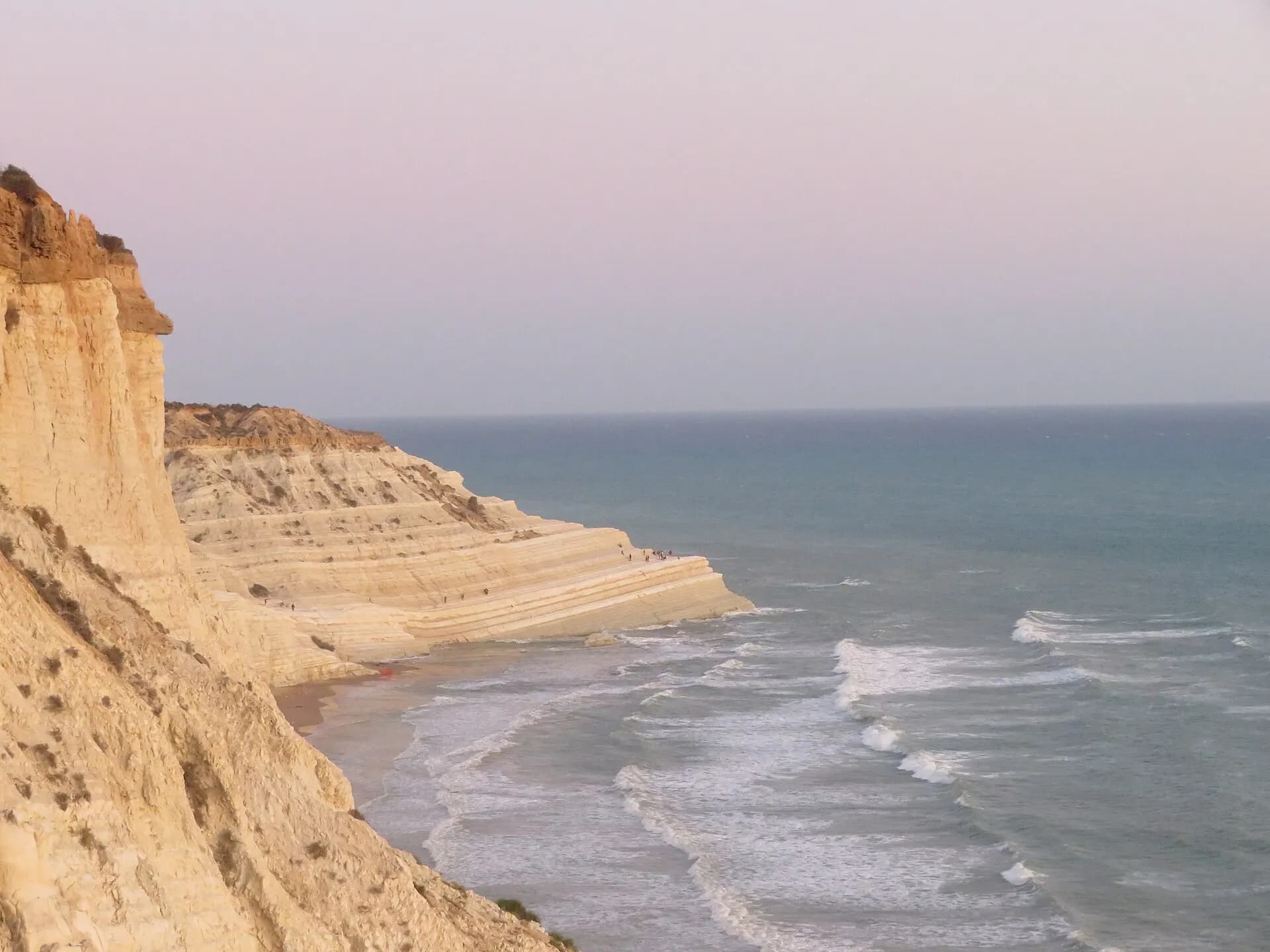
A brilliant white cliff of soft marl at Realmonte, west of Agrigento, worn by the sea and the wind into broad, curving steps that drop into turquoise water. The name, "the Turkish steps", recalls raids by North African pirates who are said to have sheltered here. It is one of the most photographed places in Sicily, but it is also fragile: the marl erodes easily, it has been vandalised, and parts have collapsed.
TipWalking on the cliff itself has been banned or tightly restricted for much of the time since 2020, with fences and, at times, limited ticketed access. Check the current rules with the Realmonte council or the tourist office, and otherwise enjoy the view from the beaches either side, which are free.
- 11
Valley of the Temples
Photo: Berthold Werner, CC BY-SA 3.0, via Wikimedia Commons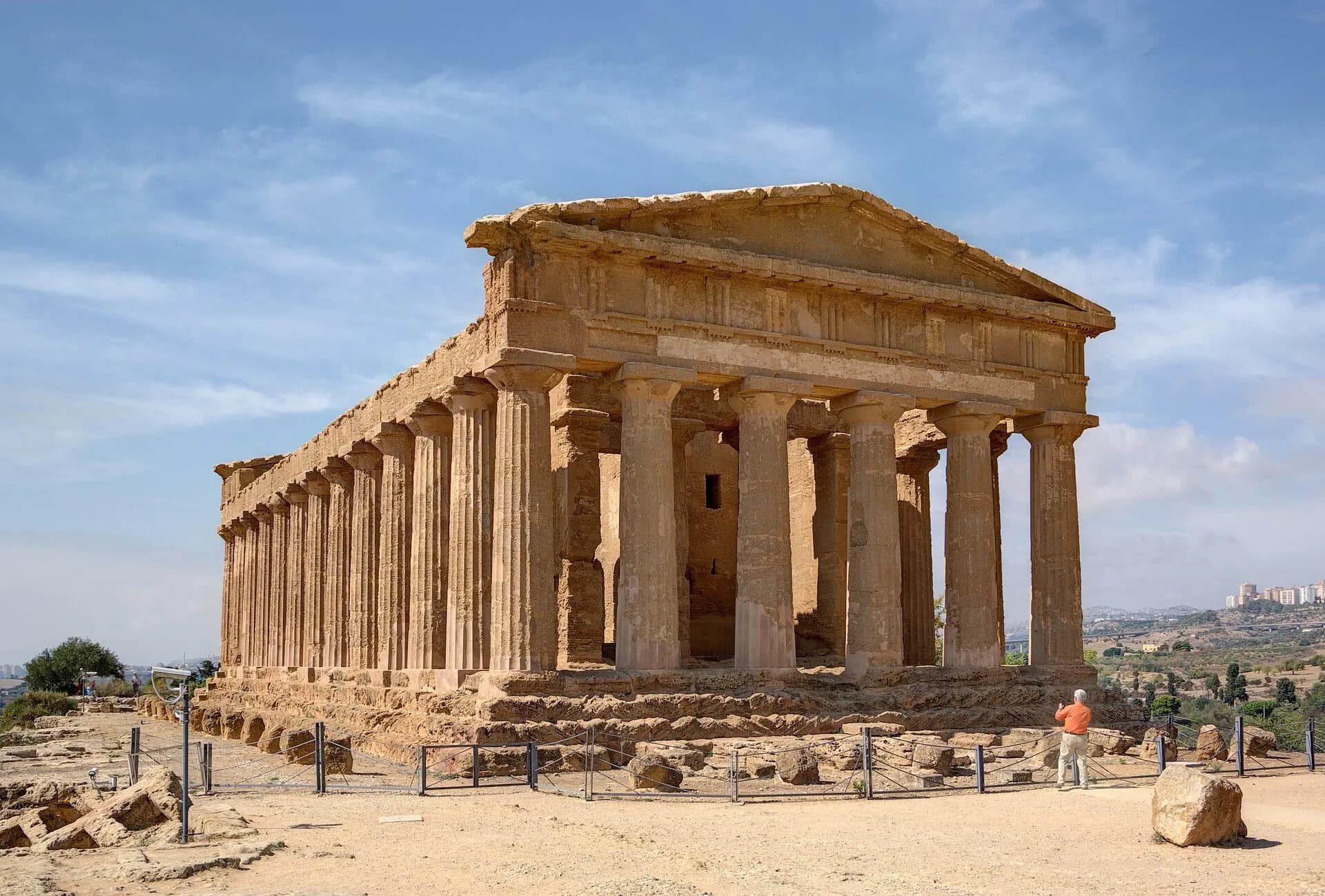
On a ridge below modern Agrigento lie the remains of Akragas, one of the richest cities of the Greek world. The Temple of Concordia, from the fifth century BC, is among the best-preserved Doric temples anywhere, saved because it was turned into a church. Along the same ridge stand the Temple of Juno, the columns of the Temple of Heracles and the toppled giant figures of the Temple of Olympian Zeus. The Kolymbethra Garden, in a valley of citrus and almond trees, and the regional archaeological museum add a good half day more.
TipThere are two main entrances, at either end of the ridge; walk downhill and get a taxi or bus back. Late afternoon and the evening openings in summer are cooler, and the temples are lit after dark. Entry is free on the first Sunday of the month.
- 12
Villa Romana del Casale
Photo: Moleskine, CC BY-SA 4.0, via Wikimedia Commons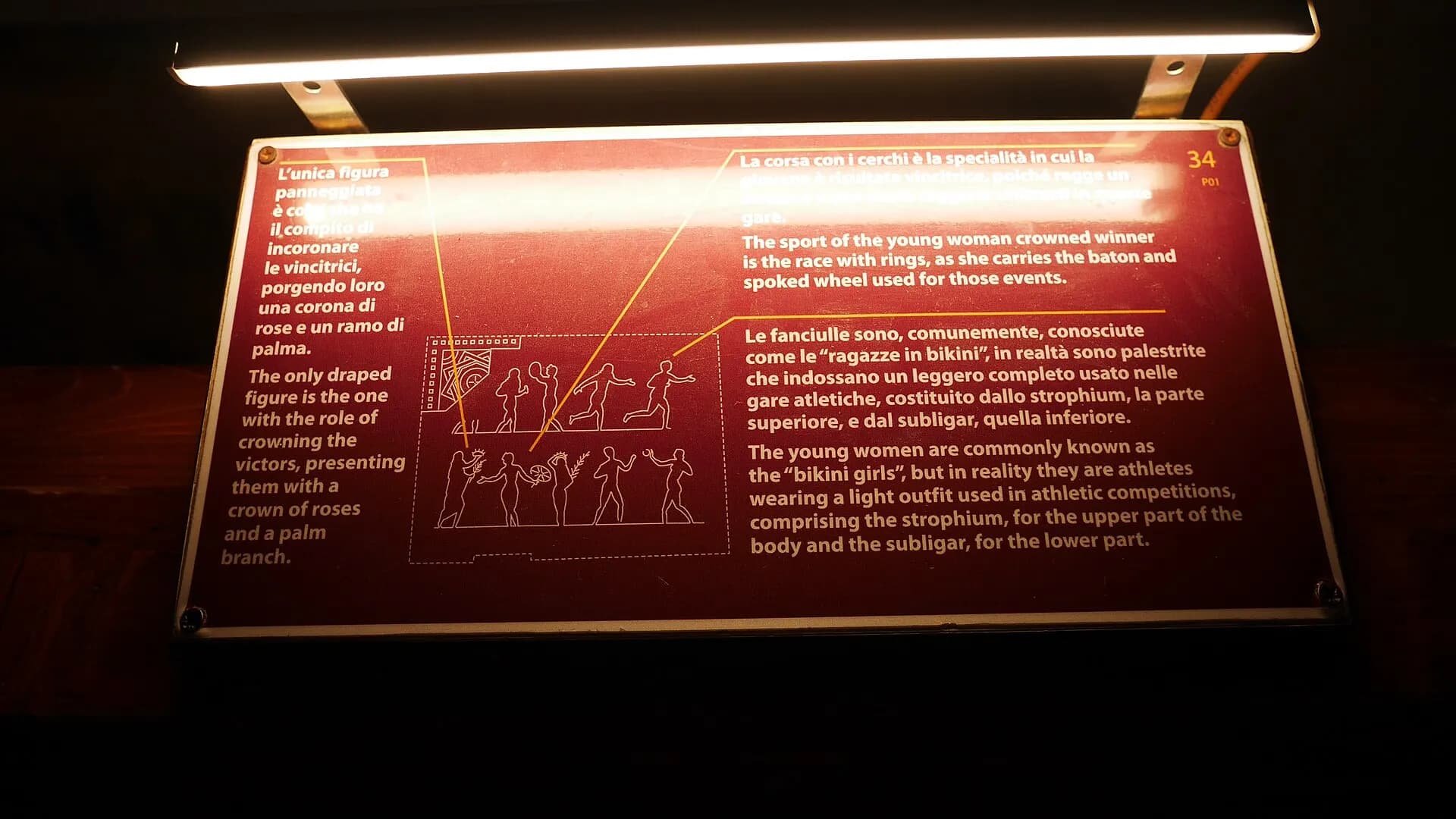
In the hills near Piazza Armerina, a grand country villa of the early fourth century AD preserves the finest Roman floor mosaics in the world in such quantity: around 3,500 square metres of them. Walkways lead above the rooms past a corridor of the Great Hunt, with exotic animals being captured and shipped to Rome, scenes from myth, and the famous young women exercising in what look like bikinis. A landslide buried the villa in the Middle Ages, which is why it survived. It has been a World Heritage Site since 1997.
TipPublic transport is limited, so a car or tour is easiest. Combine it with lunch in Piazza Armerina's old centre.
- 13
Ragusa Ibla
Photo: Hein56didden, CC BY-SA 3.0, via Wikimedia Commons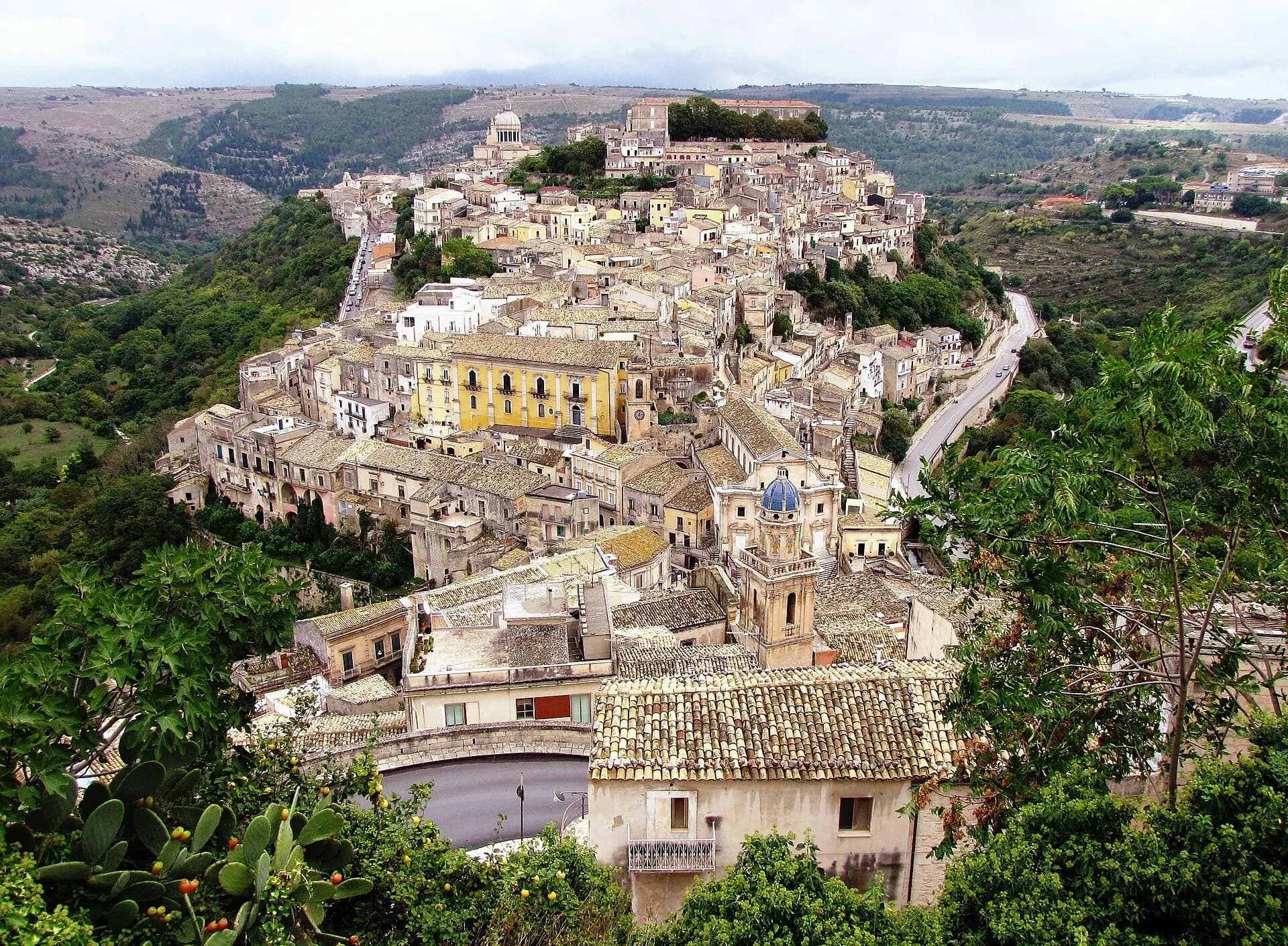
After the earthquake of 1693, Ragusa was rebuilt twice: a new town on the plateau above, and the old one, Ibla, on its original ridge. The result is one of the most theatrical sights in Sicily, a jumble of honey-coloured houses and domes tumbling down a hillside, best seen from the steps that link the two. Ibla's centrepiece is the Duomo di San Giorgio by the architect Rosario Gagliardi, its tiered façade rising at the top of a sloping square, with a quiet public garden at the far end of the ridge. With Modica, Noto and five other towns, Ragusa is part of the Late Baroque Towns of the Val di Noto World Heritage Site.
TipWalk down from upper Ragusa to Ibla by the long staircase beside the church of Santa Maria delle Scale, and take the bus back up.
- 14
Modica
Photo: Giorgio.petri65, CC BY-SA 4.0, via Wikimedia Commons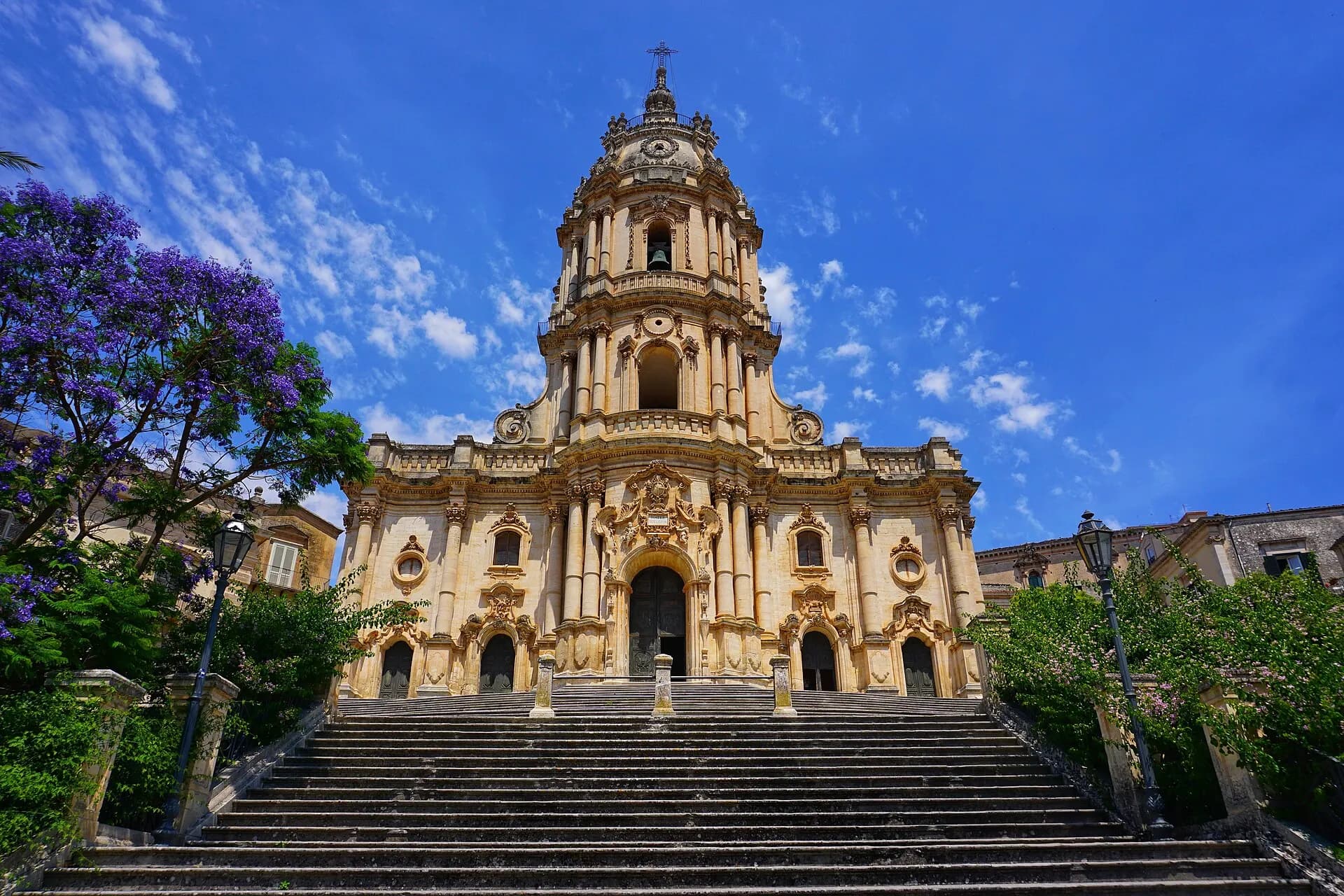
Modica fills a deep gorge and climbs both sides, with the great church of San Giorgio at the top of a monumental staircase of some 250 steps and San Pietro, lined with statues of the apostles, in the lower town. It's best known for its chocolate, made by an old cold-working method that keeps the sugar crystals whole, giving a grainy, crumbly bar often flavoured with chilli, cinnamon or citrus. The town's chocolate shops offer tastings.
- 15
Noto
Photo: VanSky Studio, CC BY-SA 4.0, via Wikimedia Commons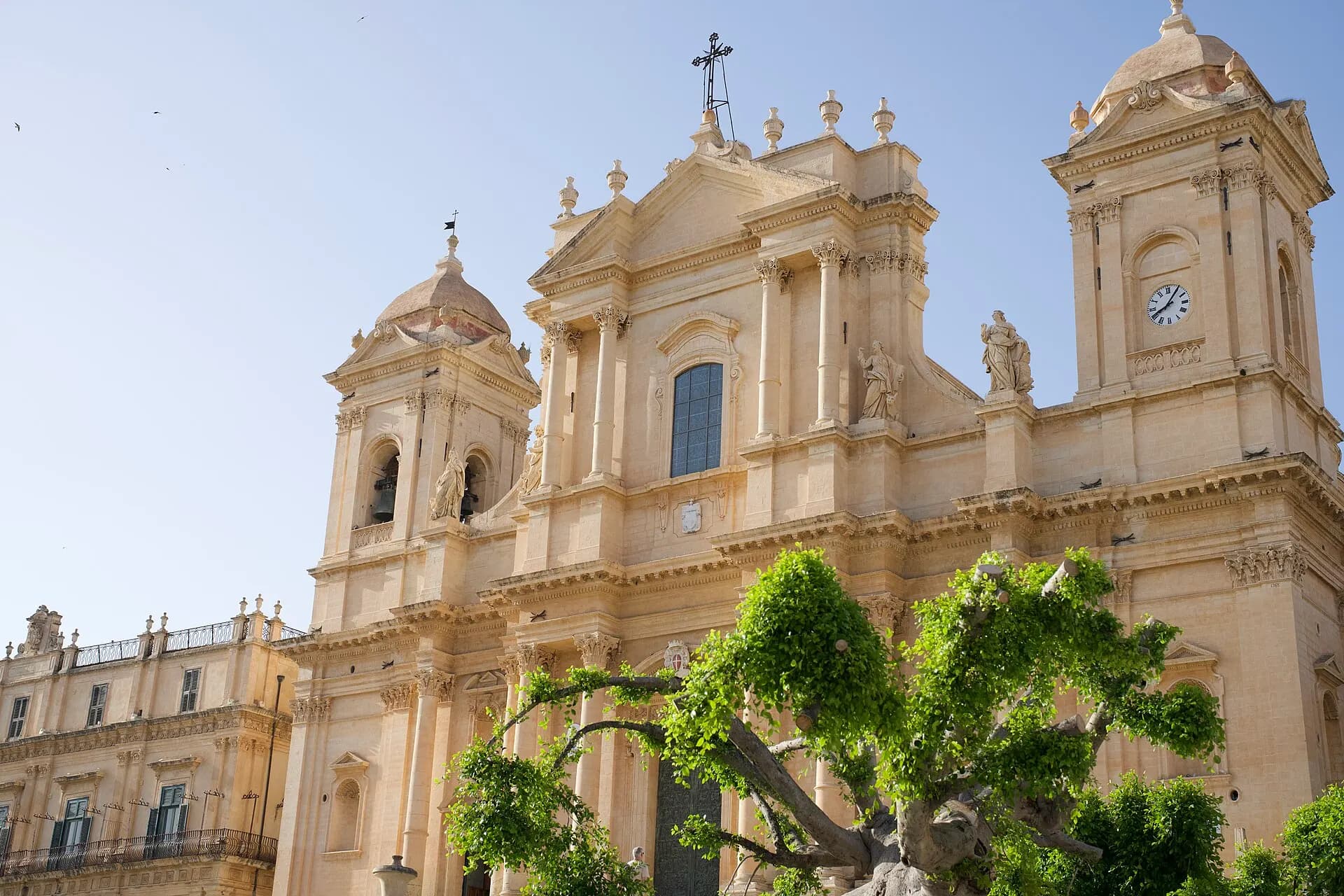
Noto was rebuilt from scratch on a new site after 1693, and its planners created a whole town of golden limestone, with churches, convents and palaces lining the main street, the Corso Vittorio Emanuele. The cathedral at its heart, at the top of a grand flight of steps, lost its dome when it collapsed in 1996; it was rebuilt and reopened in 2007. Look up at the balconies of Palazzo Nicolaci, held up by carved horses, lions, sirens and grotesque faces. In May the Infiorata covers a sloping street in pictures made from flower petals.
TipThe stone turns gold at sunset. The Vendicari nature reserve and the beaches of Marzamemi are a short drive south.
- 16
Neapolis Archaeological Park, Syracuse
Photo: Allie_Caulfield, CC BY 2.0, via Wikimedia Commons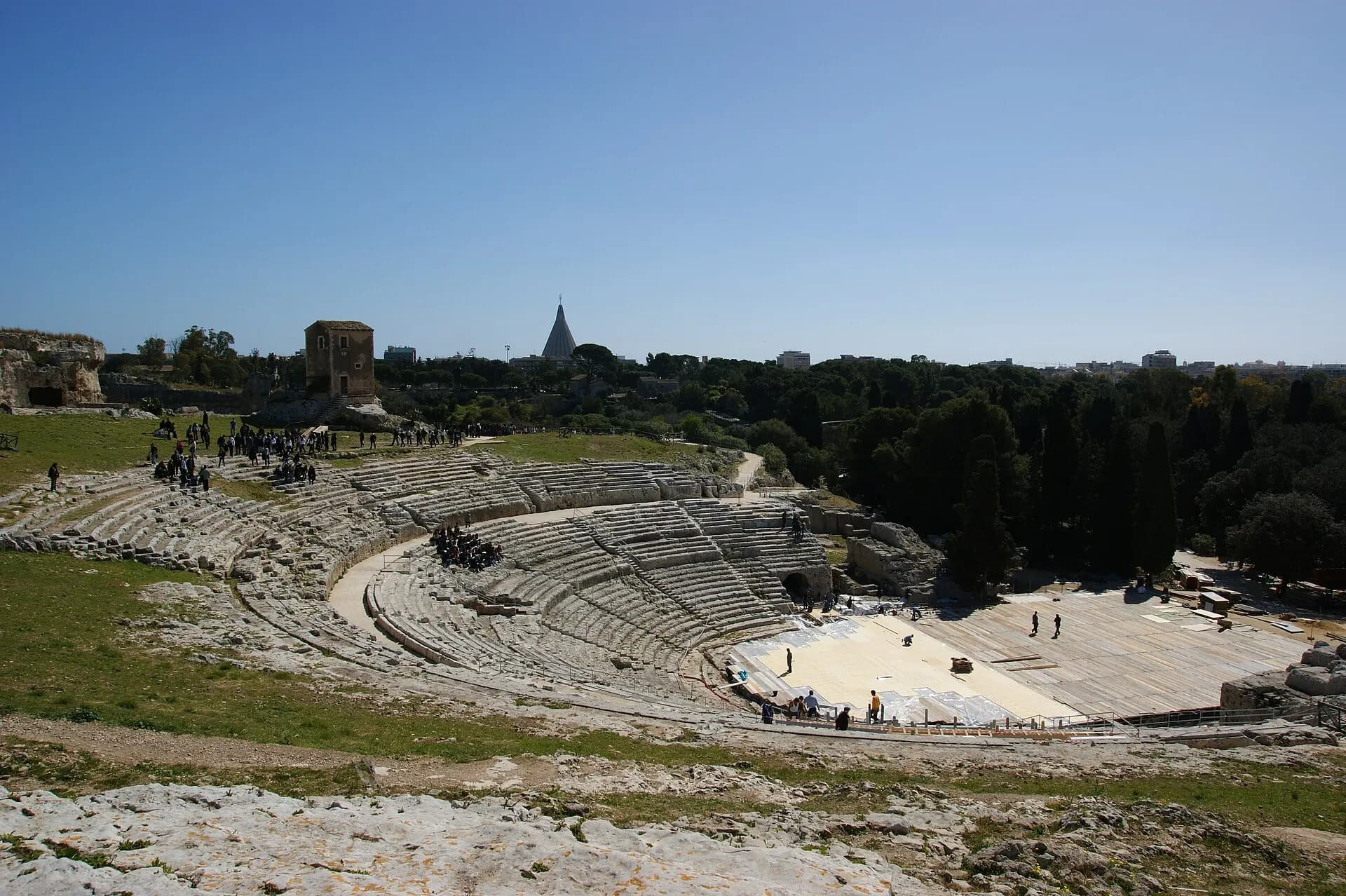
Syracuse was once the greatest city of the Greek west, the rival of Athens, and the home of Archimedes. The Neapolis park brings together its Greek theatre, carved from the rock and among the largest of the ancient world; the Ear of Dionysius, a tall, curving artificial cave in an old quarry with remarkable acoustics; the base of the huge altar of Hieron II; and a Roman amphitheatre. Each spring and early summer the theatre still hosts a season of ancient Greek drama.
TipThe Paolo Orsi archaeological museum, a short walk away, holds one of the best collections of Greek finds in Sicily and is worth an hour or two.
- 17
Ortigia
Photo: Rosaria Privitera Saggio, CC BY-SA 4.0, via Wikimedia Commons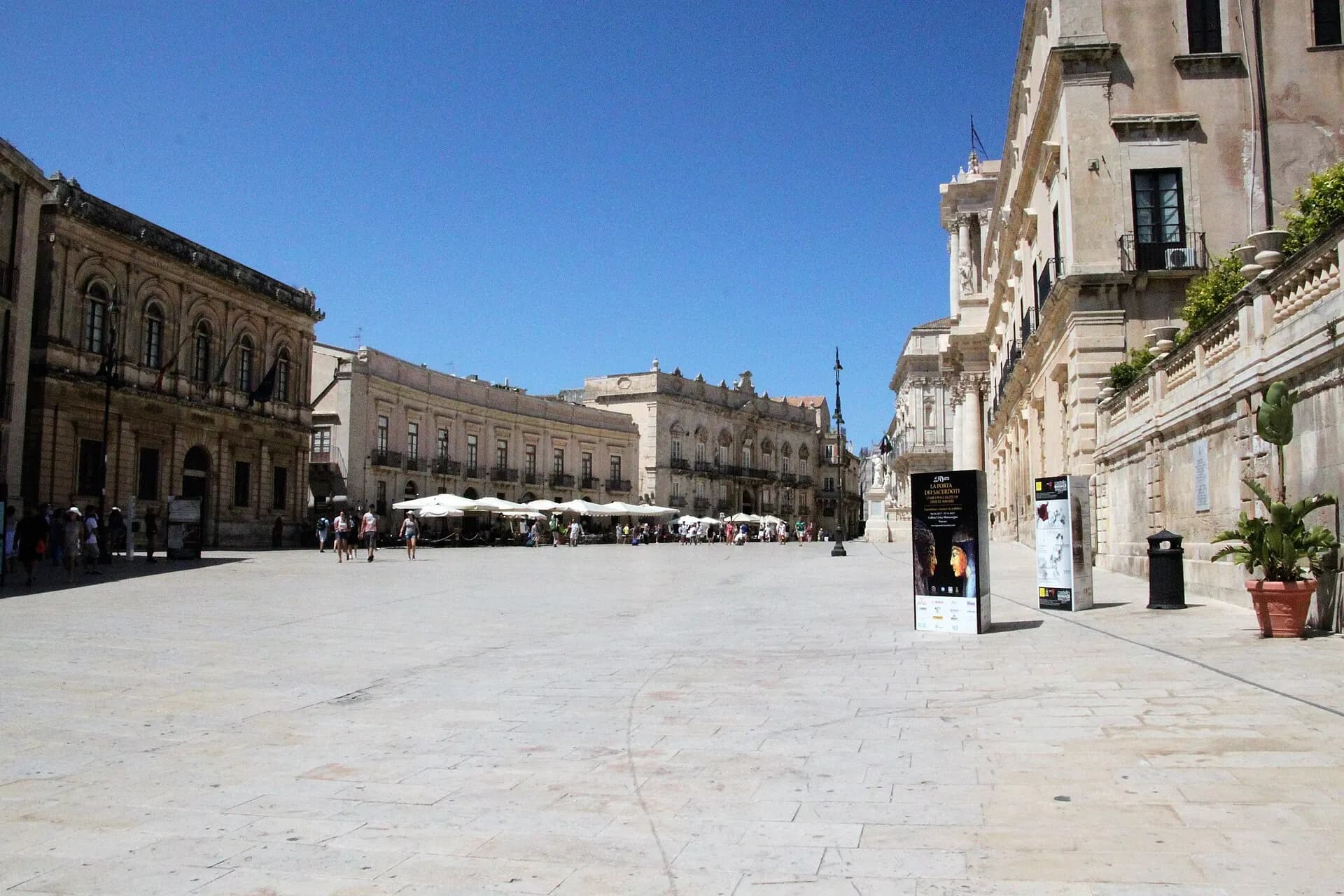
The island of Ortigia, joined to the mainland by bridges, is the old heart of Syracuse and one of the most beautiful small historic centres in Italy. The cathedral in Piazza Duomo is a building of many lives: the Doric columns of a fifth-century BC temple of Athena are still visible, built into its walls, behind a baroque façade. Nearby, the Fountain of Arethusa is a freshwater spring right beside the sea, where papyrus grows, linked by legend to a nymph who fled here from Greece. The morning market near the Temple of Apollo is full of fish, cheese and street food.
TipOrtigia makes an excellent base for the south-east, with good restaurants and a car-free feel in the evenings.
- 18
Catania
Photo: Bernard Gagnon, CC BY 4.0, via Wikimedia Commons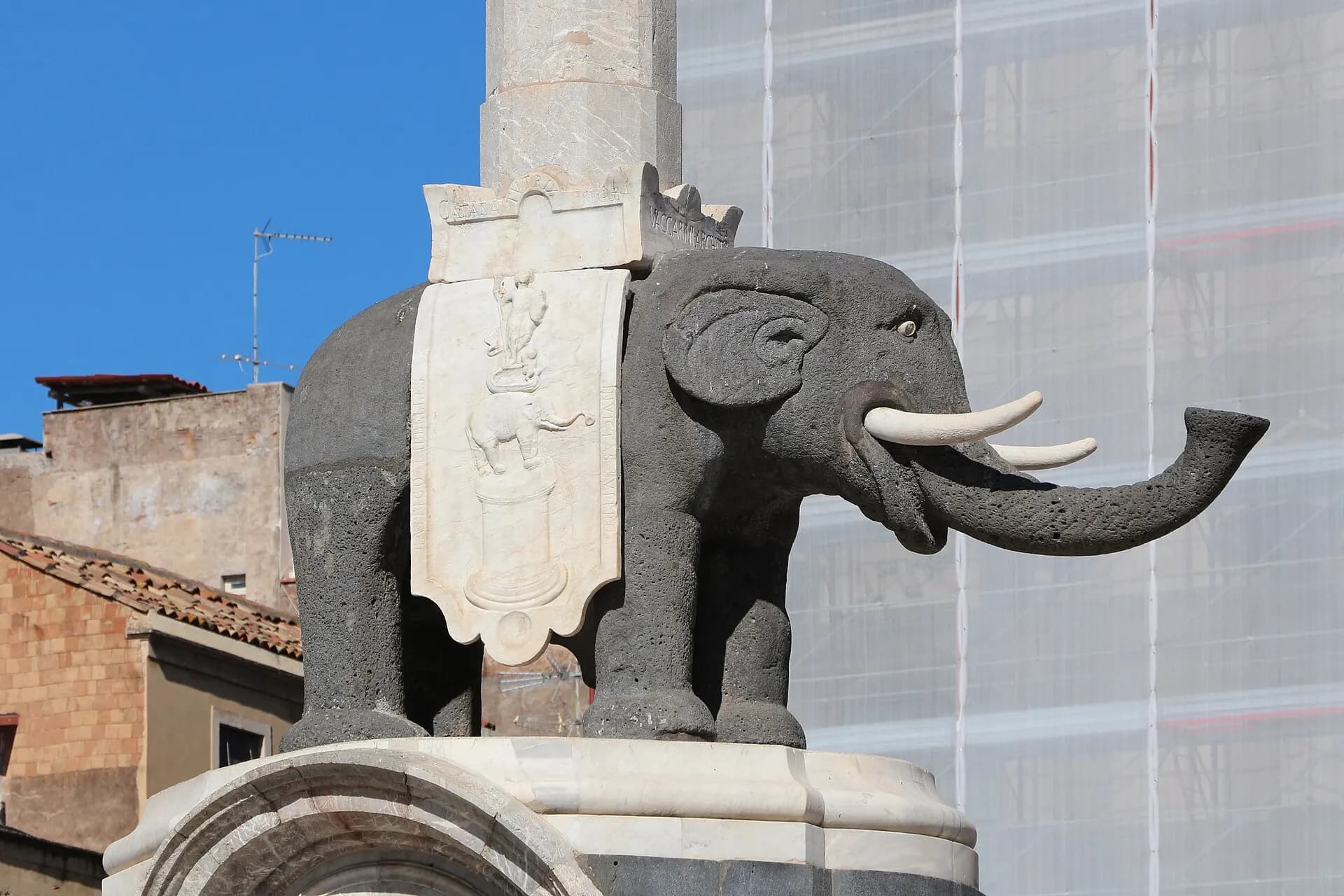
Sicily's second city has been flattened by eruptions and earthquakes and rebuilt each time, much of it in black lava stone, which gives its baroque centre a dramatic, monochrome look. In Piazza del Duomo, the elephant fountain, carved from lava, is the city's symbol, and just off the square the fish market, La Pescheria, is loud, wet and unmissable in the mornings. Via Etnea runs straight up towards the volcano, and the Roman theatre and amphitheatre lie half-buried among the houses.
TipCatania's airport is the busiest on the island and the city is the easiest base for Etna.
- 19
Mount Etna
Photo: The Cosmonaut, CC BY-SA 4.0, via Wikimedia Commons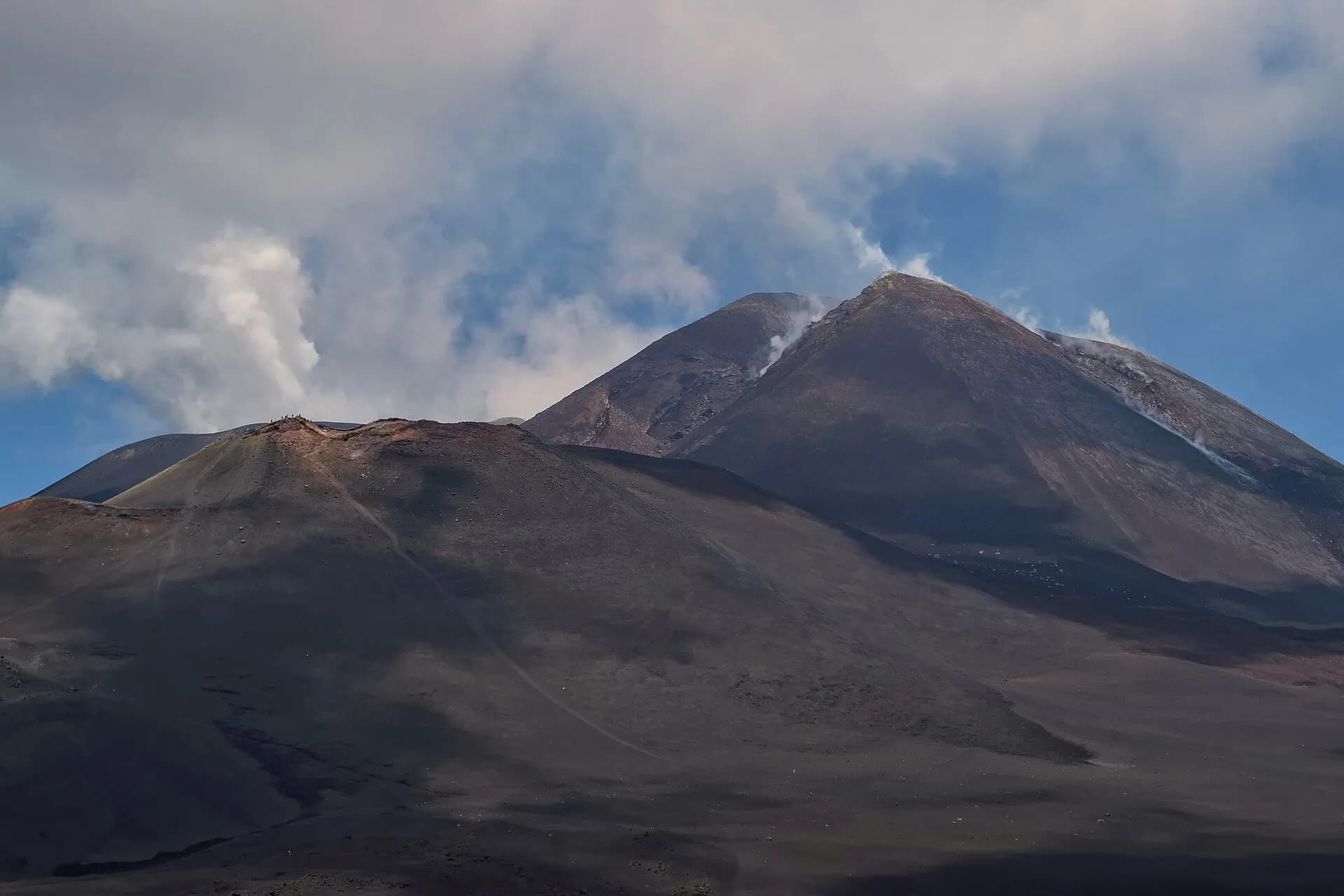
At around 3,300 metres, its exact height changing with each eruption, Etna is the tallest active volcano in Europe and one of the most active in the world. It became a World Heritage Site in 2013. On the south side, the road climbs to Rifugio Sapienza at about 1,900 metres, where you can walk around the old Silvestri craters for free. From there, a cable car rises to about 2,500 metres, and off-road minibuses continue higher up the slopes. The north side, reached from Piano Provenzana near Linguaglossa, is quieter, with pine and birch woods and lava flows from recent decades.
TipAccess to the summit craters is controlled by civil protection ordinances that change with the volcano's activity. Beyond a set altitude, walkers must be accompanied by authorised volcanological or alpine guides, and at times the upper slopes are closed altogether. Check INGV bulletins and the current rules before booking, and bring warm clothes even in summer.
- 20
Taormina
Photo: Pierowriter, CC BY-SA 4.0, via Wikimedia Commons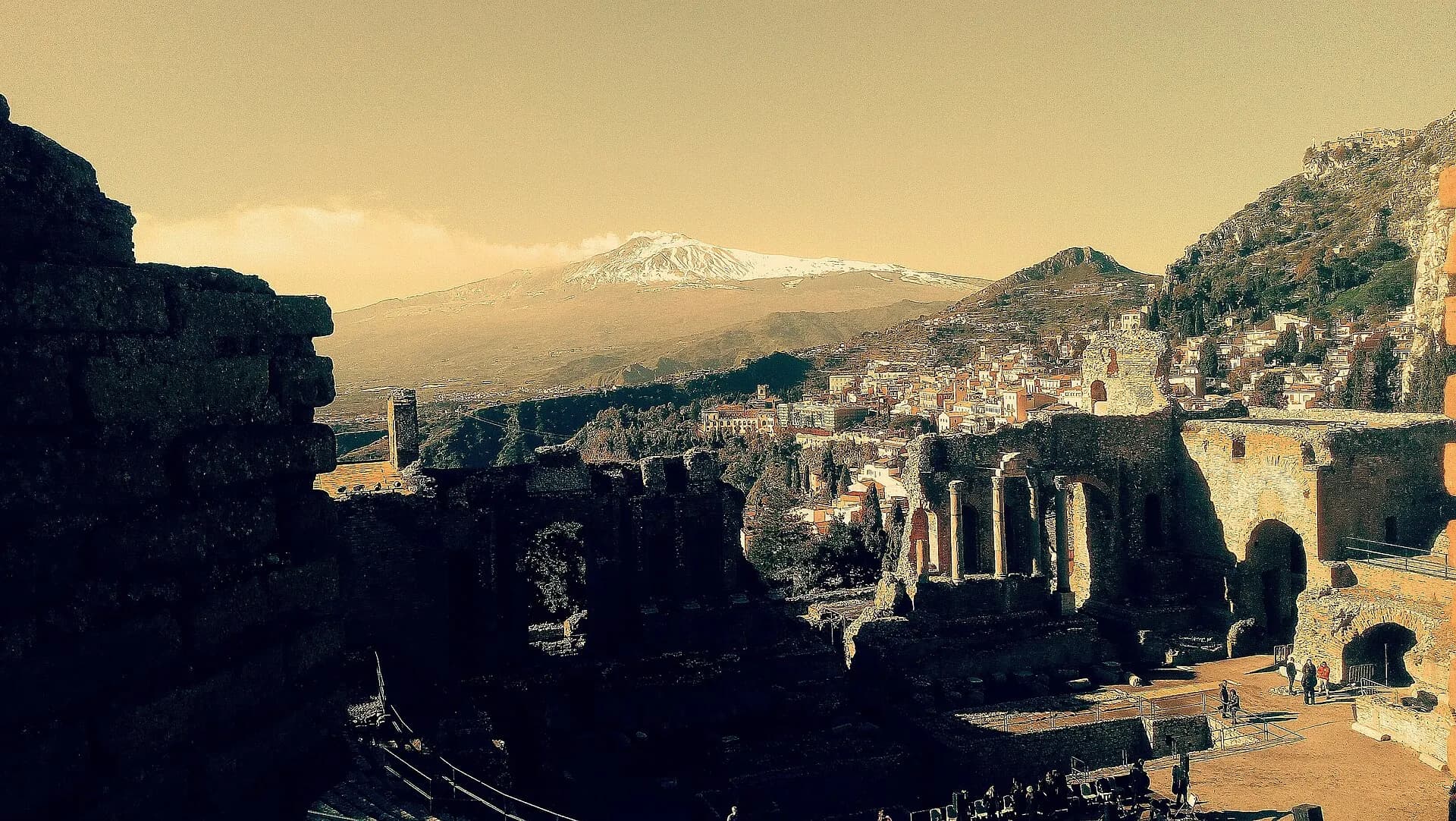
Taormina has drawn travellers since the days of the Grand Tour, perched on a terrace high above the Ionian Sea. Its Teatro Antico, Greek in origin and largely rebuilt by the Romans, frames one of the most famous views in Italy: the bay below and the white cone of Etna beyond the stage. It still hosts concerts and festivals in summer. The town's main street, Corso Umberto, is lined with palazzi, cafés and shops, and the public gardens look out over the sea.
TipTaormina is very busy from late spring to autumn. A cable car drops to the beach at Mazzarò and the tiny islet of Isola Bella; for a quieter view, walk or take a bus up to the village of Castelmola.
- 21
Aeolian Islands
Photo: Bernard Gagnon, CC BY 4.0, via Wikimedia Commons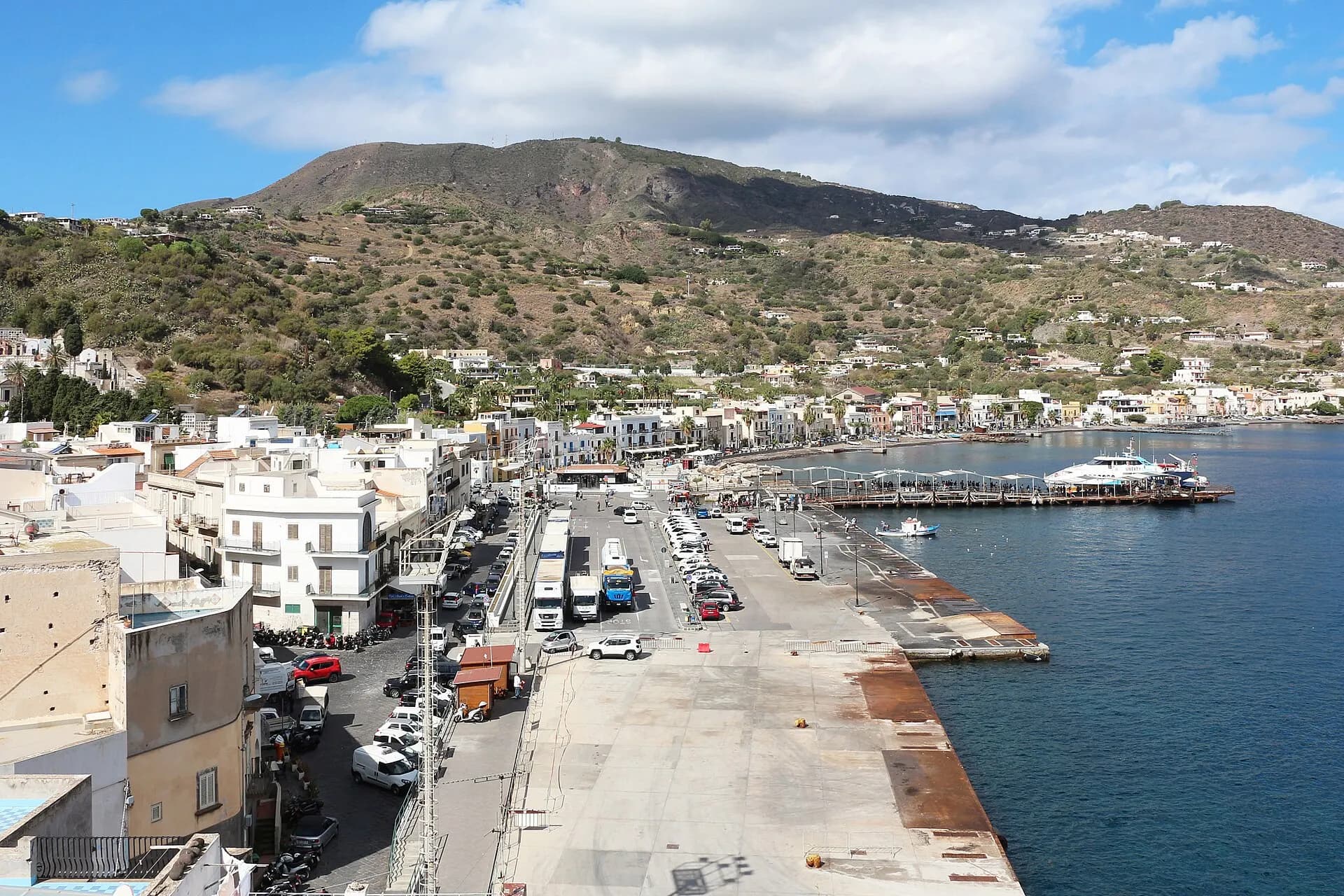
Seven volcanic islands off the north coast, listed by UNESCO for the way they have shaped the study of volcanoes. Lipari is the largest and liveliest, with an old citadel and a fine archaeological museum; Vulcano has black-sand beaches and warm mud pools; Salina is green, with vineyards producing sweet Malvasia wine and capers; Panarea is small and fashionable; and Alicudi and Filicudi are remote and car-free. Hydrofoils leave year-round from Milazzo, near Messina, with summer services from Palermo, Messina and the mainland.
TipThe path to Vulcano's Gran Cratere has been closed for long periods since 2021 because of raised volcanic gas levels; check locally before planning the climb. Sea crossings can be cancelled in rough weather, so leave slack in your plans.
- 22
Stromboli
Photo: Heinrich Stürzl, CC BY-SA 4.0, via Wikimedia Commons
The northernmost Aeolian island is a near-perfect volcanic cone that has been erupting almost constantly for thousands of years, throwing out glowing lava every few minutes in small explosions. From the white village on its shore, boat trips at dusk sail round to the Sciara del Fuoco, the scar down which lava and rock tumble into the sea, to watch the fireworks from the water.
TipSince major eruptions in 2019, hiking above a set height has been allowed only with authorised guides, and the summit has sometimes been closed completely. The rules change with the volcano's activity, so check before you go.
- 23
Cefalù
Photo: Berthold Werner, CC BY-SA 4.0, via Wikimedia Commons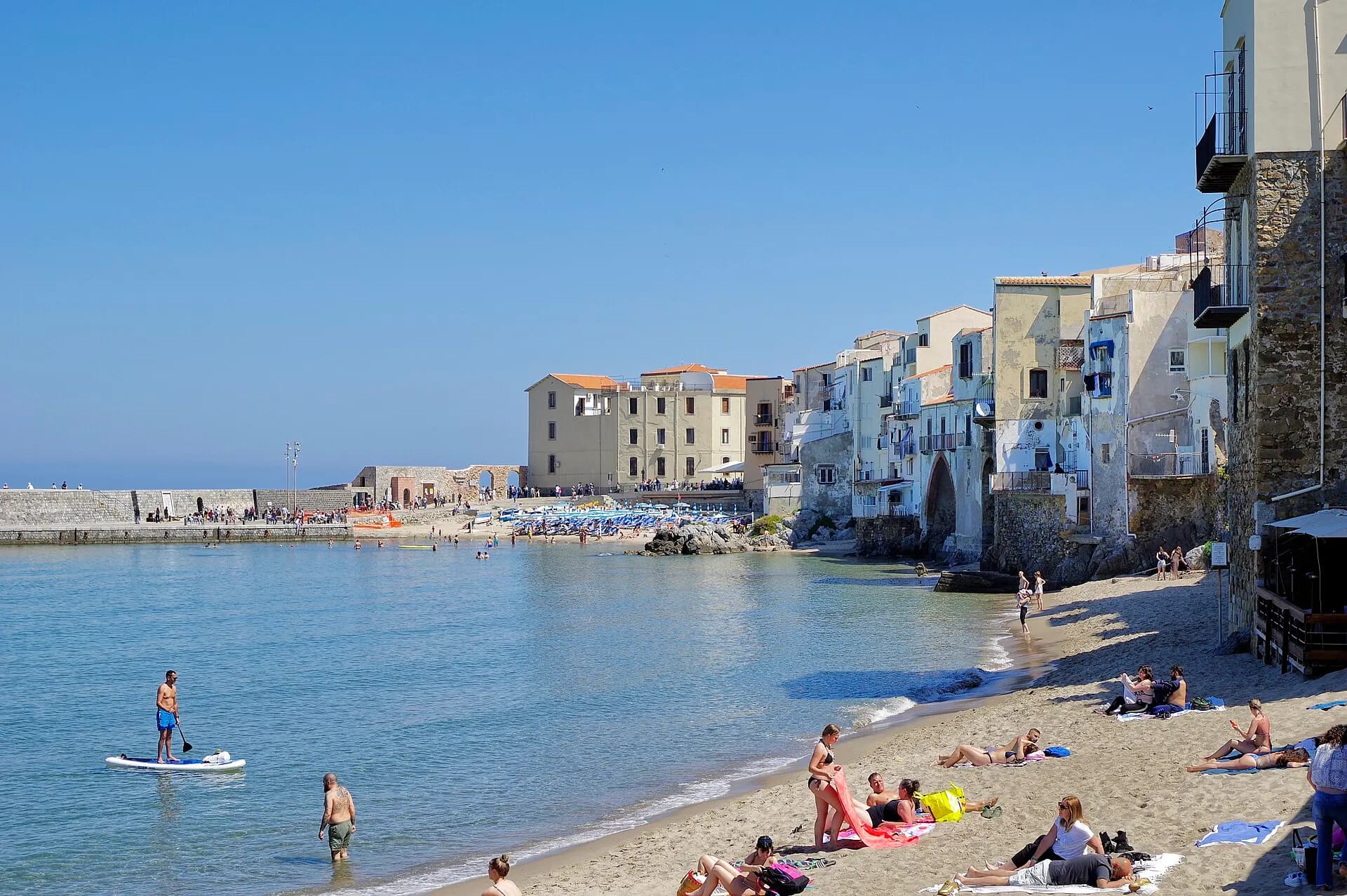
A seaside town of narrow streets and a sandy beach, sheltered beneath a great limestone crag, La Rocca. Its twin-towered cathedral, begun by Roger II in 1131, rises over the rooftops, and inside the apse a serene mosaic Christ Pantocrator, among the finest in Sicily, looks down. Climb La Rocca for ruins of a temple and castle and a view over the town, or walk the old lanes to the medieval washhouse, fed by a river that runs under the streets.
TipCefalù is an hour from Palermo on the train, making it an easy day trip or a relaxed final stop on the loop.
When to go
Spring is the loveliest time: from April to early June the countryside is green and full of wild flowers, temperatures are comfortable for walking around ruins, and Easter brings processions to towns across the island. September and October are also excellent, with the sea at its warmest and the crowds thinning. July and August are very hot, especially inland and on the south coast, when the sirocco wind can bring dust from Africa and the beaches are packed with Italian holidaymakers, above all around Ferragosto, 15 August. Winter is mild on the coasts, with short days, some rain and snow on Etna, and some island and beach businesses closed; it's a good time for the cities and the archaeological sites.
Getting around
A car is by far the easiest way to see Sicily, especially the baroque towns, the Valley of the Temples, the Villa Romana del Casale and the west coast. Motorways link Palermo, Catania, Messina and Syracuse, though some inland roads are slow and winding. Avoid driving into old town centres, which are often limited-traffic zones (ZTL) with camera fines, and park outside.
Trains, run by Trenitalia, are useful on a few routes: along the north coast from Palermo to Cefalù and Messina, and down the east coast from Messina to Taormina, Catania and Syracuse. Elsewhere they are slow or infrequent, and regional buses, run by several companies including AST, Interbus and SAIS, are often quicker, for example between Palermo and Catania or Agrigento. Hydrofoils run by Liberty Lines connect Milazzo with the Aeolian Islands and Trapani with the Egadi Islands. The main airports are Palermo and Catania, with smaller ones at Trapani and Comiso.
From the mainland, ferries cross the Strait of Messina from Villa San Giovanni every few minutes, and some long-distance trains from Rome still roll onto the ferry. Overnight ferries link Palermo with Naples and Genoa, and from Pozzallo, in the south-east, a fast catamaran reaches Malta in under two hours.
Local tips
- Archaeological sites and museums are run by the region, and opening hours can change at short notice; check the official site before setting out, and expect earlier closing in winter.
- Many smaller churches open only in the morning and early evening. Cover shoulders and knees.
- Lunch is the main meal for many Sicilians, and restaurants rarely serve dinner before 8pm.
- Carry cash for markets, small bars and village shops, though cards are widely accepted elsewhere.
- In summer, start sightseeing early and rest through the hottest part of the afternoon, as locals do.
- Petty theft happens in crowded markets and on city buses in Palermo and Catania. Don't leave anything visible in a parked car.
Eat and drink
Sicilian food carries the island's whole history: couscous from North Africa, sweet-and-sour agrodolce from the Arabs, and pastries from the convents. Start with arancini, fried rice balls filled with ragù or ham and cheese, called arancine, in the feminine, in Palermo. Pasta alla Norma, from Catania, comes with fried aubergine, tomato and salted ricotta; pasta con le sarde, from Palermo, combines sardines, wild fennel, raisins and pine nuts. Caponata, a sweet-sour aubergine stew, appears everywhere, and on the west coast couscous is made with fish broth.
For dessert, cannoli, crisp shells filled with sweet sheep's ricotta, should be filled to order; cassata is a colourful sponge cake with ricotta and marzipan. In summer, Sicilians breakfast on granita, a semi-frozen ice of lemon, almond, coffee or mulberry, with a soft brioche to dip in it. Pistachios come from Bronte on the slopes of Etna, and wines range from the volcanic reds and whites of Etna to Nero d'Avola and the fortified wine of Marsala.
Where to base yourself
Two or three bases cut down on packing. Palermo is the natural start, with Cefalù, Monreale, Segesta and the beaches of Mondello within easy reach; Trapani, or San Vito Lo Capo in summer, covers the far west, Erice and the Zingaro. Agrigento works for one night for the temples and Scala dei Turchi. In the south-east, Ortigia, Noto or Ragusa make excellent bases for the baroque towns, and in the east, Catania is practical and good value for Etna, while Taormina is more beautiful but busier and pricier. For the Aeolians, Lipari has the most ferry connections, while Salina is quieter. For the mainland coast across the strait and further north, see our Amalfi Coast guide.
Layers of history
Few places pack so many civilisations into one landscape. The Greeks founded Syracuse, Agrigento and Selinunte from the eighth century BC, fighting Carthage, which held the west from bases like Mozia. Rome took the island in the third century BC and farmed it as a granary, leaving villas like the one at Casale. Arab rule from the ninth century brought new crops and made Palermo one of the great cities of the Mediterranean, and the Normans who conquered it in the eleventh century kept many Arab and Greek officials and craftsmen, which explains the mixed art of their churches and palaces. Later came Swabian, French, Spanish and Bourbon rulers, before Garibaldi landed at Marsala in 1860 and Sicily joined a united Italy. A good loop lets you trace that story in order, from temple to mosaic to baroque façade.
Etna safety
Etna is generally a friendly volcano for visitors, but it should be taken seriously. Conditions near the summit change fast: explosions can throw out rocks, gas can be dangerous, and the weather can turn quickly, with fog, cold and strong winds at altitude. Follow the current ordinance on how high you may go without a guide, keep to marked paths, and hire an authorised guide for anything near the summit craters. Wear sturdy boots, layers and sun protection, and carry water. Ash eruptions sometimes close Catania airport for a few hours; INGV publishes activity updates, and airlines and the airport post flight status.
Responsible travel
Much of Sicily's beauty is fragile. At Scala dei Turchi, respect the fences and never take pieces of the marl; at archaeological sites, stay on the paths and don't climb on the stones. In the Zingaro and on the islands, take rubbish away with you and carry a refillable bottle. Water shortages have hit parts of the island in recent summers, so use it carefully. Wildfires are a serious risk in hot, dry months: never light fires or drop cigarettes. Spread your spending to small family restaurants, agriturismi and local producers, and consider the quieter inland towns and the shoulder seasons to ease pressure on Taormina and the coast in high summer.