The Dolomites
Pale limestone towers that glow pink at sunset, high meadows, mountain huts and some of Europe's finest hiking.
- Best time to go
- Late June to September for hiking; December to March for skiing
- Local time
- –
- Currency
- Euro (EUR)
- Reading time
- 4 min
- Language
- Italian

The Dolomites, in north-eastern Italy, are a range of jagged limestone peaks, towers and walls rising above green valleys and alpine meadows. At sunrise and sunset, the rock glows pink and orange in a phenomenon known as enrosadira. Their extraordinary beauty and geology, formed from ancient coral reefs, have made them a World Heritage Site.
The region straddles Italian- and German-speaking South Tyrol, the Ladin-speaking valleys and the Veneto, and its culture is a mix of Italian and Austrian traditions. In summer, a network of trails, cable cars and mountain huts (rifugi) makes it one of the best hiking regions in the world; in winter, it's a skiing paradise.
The top 8 in The Dolomites
- 1
Tre Cime di Lavaredo
Photo: Mirko Barsanti, CC BY-SA 4.0, via Wikimedia Commons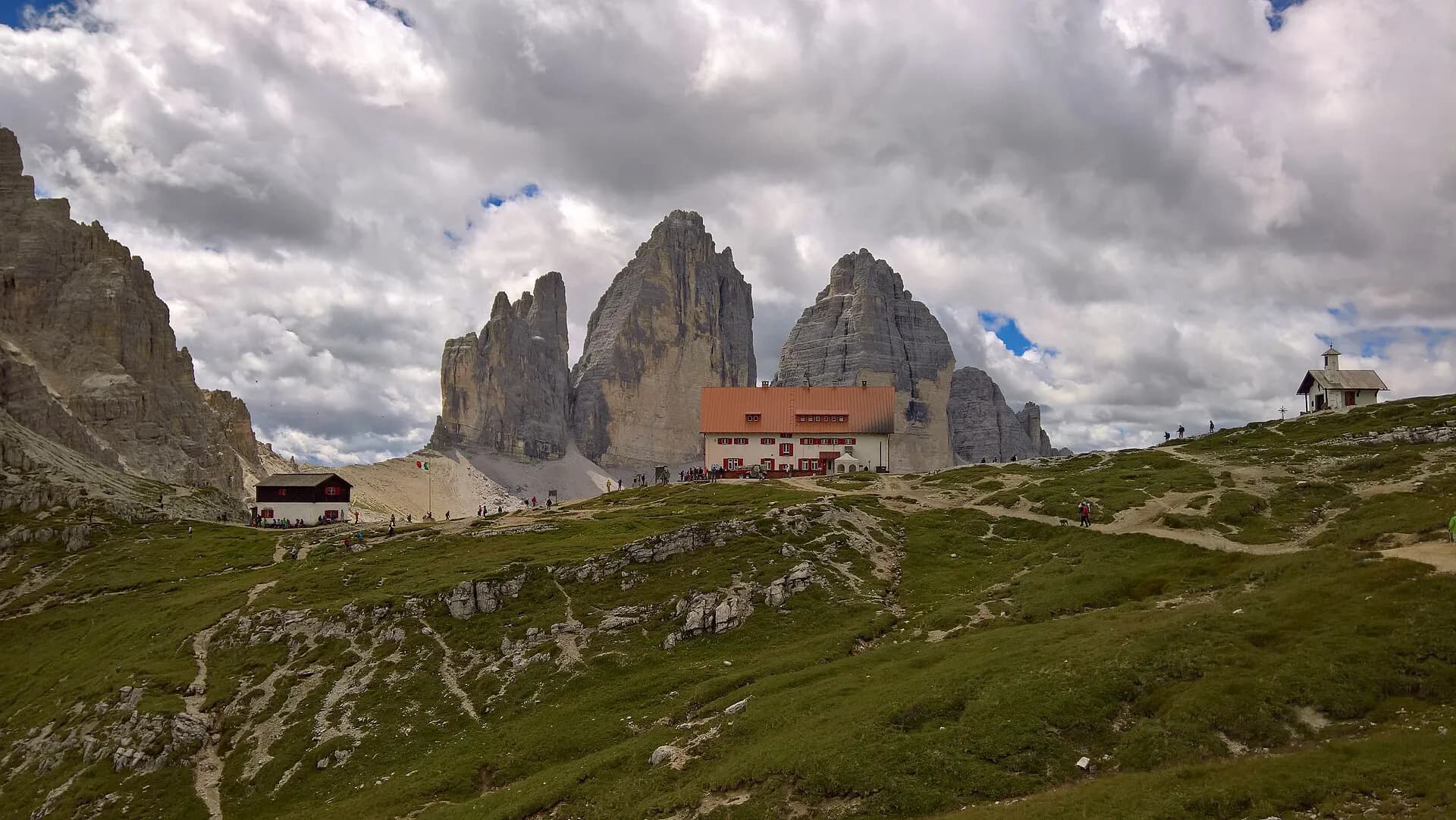
Three huge rock towers that are the symbol of the Dolomites. A loop trail of about ten kilometres circles them, past mountain huts with views of their sheer north faces, one of the most famous hikes in the Alps.
TipThe toll road to the Rifugio Auronzo trailhead is busy and can close when full; arrive very early or take the bus.
- 2
Seceda
Photo: Wolfgang Moroder, CC BY-SA 3.0, via Wikimedia Commons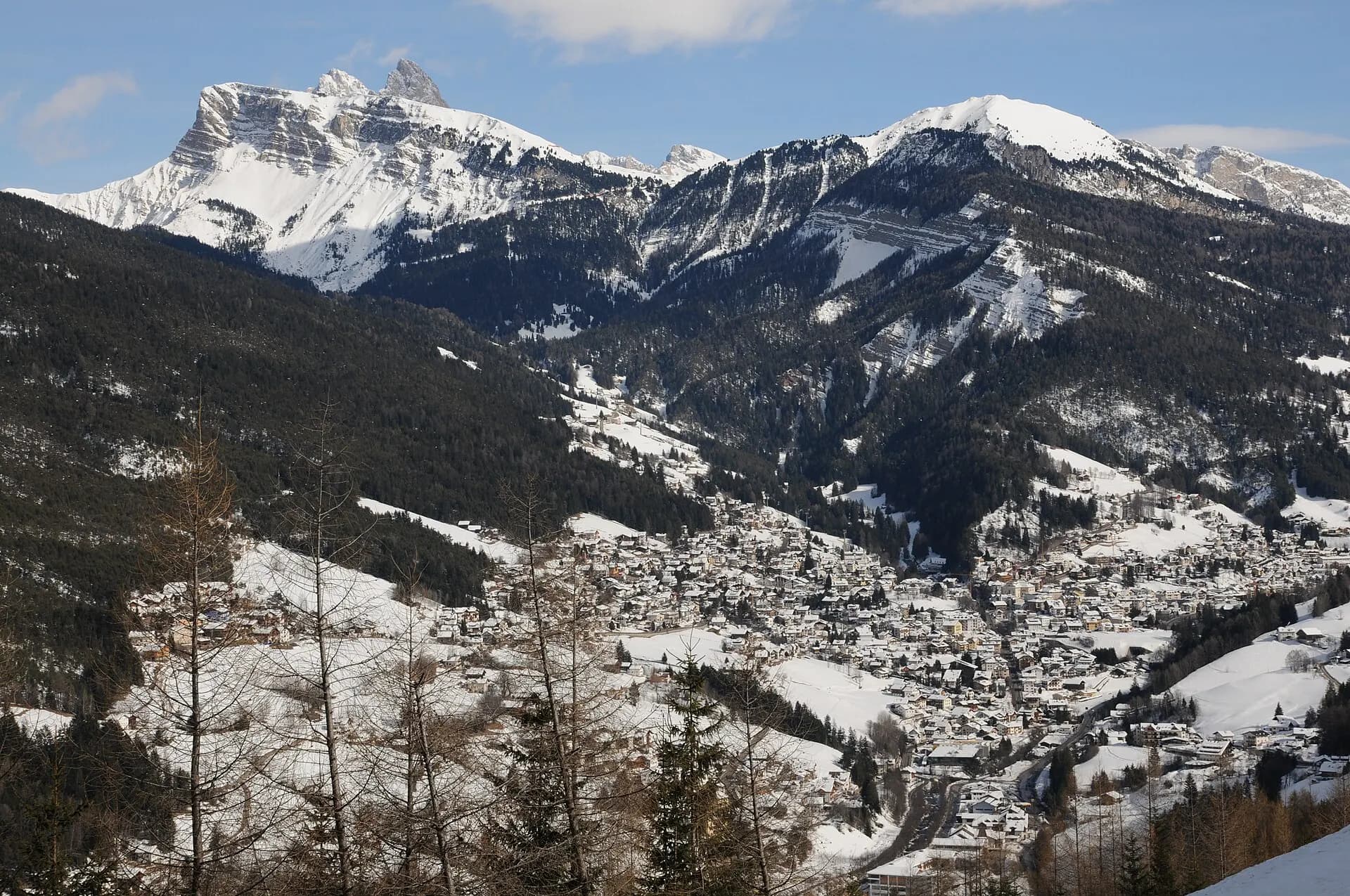
A mountain above Ortisei, in Val Gardena, reached by cable car, with a dramatic ridge of tilted grassy slopes ending in sharp pinnacles, the Odle peaks. Easy trails lead across the meadows to mountain huts.
- 3
Alpe di Siusi (Seiser Alm)
Photo: H. Zell, CC BY-SA 3.0, via Wikimedia Commons
Europe's largest high-altitude alpine meadow, a rolling plateau of pastures, wooden huts and wildflowers beneath the Sassolungo and Sciliar peaks, with gentle walks suitable for all.
TipThe road onto the plateau is closed to private cars during the day in season; use the cable car from Siusi or Ortisei.
- 4
Lago di Braies
Photo: kallerna, CC BY-SA 4.0, via Wikimedia Commons
A lake of turquoise water beneath the Croda del Becco mountain, with wooden rowing boats and a boathouse. A path circles the lake in about an hour.
TipIn high summer, access by car is restricted and parking must be booked in advance; arrive early or use public transport.
- 5
Cortina d'Ampezzo
Photo: kallerna, CC BY-SA 4.0, via Wikimedia Commons
An elegant mountain town surrounded by peaks, one of the most famous resorts in the Alps and a host of the 2026 Winter Olympics. Cable cars climb to viewpoints such as Cinque Torri, with its open-air First World War museum, and Tofana.
- 6
Lago di Sorapis
Photo: kallerna, CC BY-SA 4.0, via Wikimedia Commons
A milky-turquoise lake beneath the Sorapis peaks, reached by a popular trail of a couple of hours each way, with some narrow, exposed sections secured with cables.
- 7
Val di Funes and Santa Maddalena
Photo: Einaz80, CC BY-SA 4.0, via Wikimedia Commons
A quiet valley with the church of St Magdalena set against the jagged Odle peaks, one of the most photographed views in the Dolomites, and the little church of St John in Ranui.
- 8
The Marmolada
Photo: kallerna, CC BY-SA 4.0, via Wikimedia Commons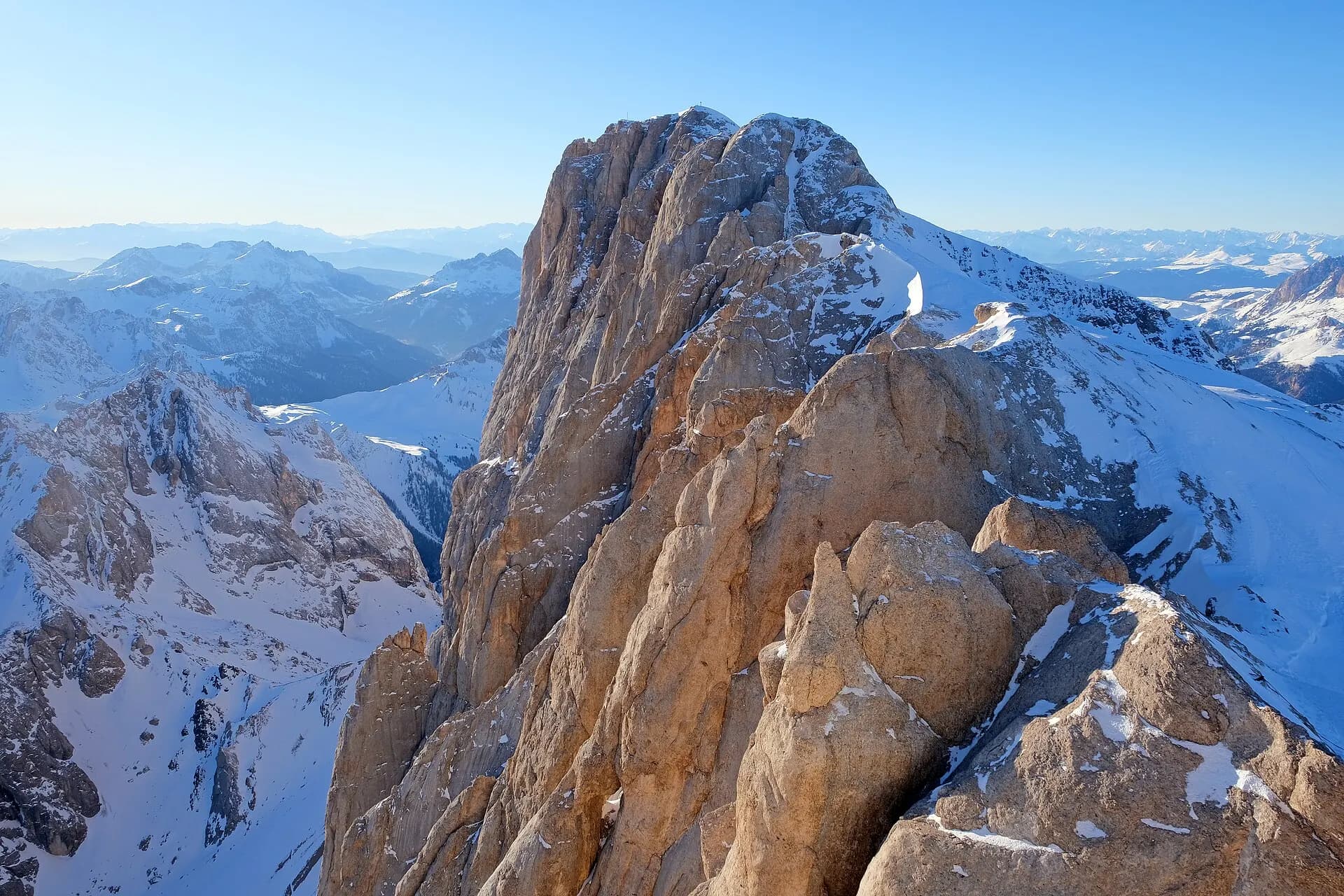
The highest mountain in the Dolomites, at 3,343 metres, with a glacier on its northern side. A cable car from Malga Ciapela climbs to Punta Rocca for panoramic views.
When to go
The hiking season runs from late June to September, when the cable cars and mountain huts are open; July and August are the busiest. September brings stable weather and fewer people. The ski season runs from December to March, with the Sella Ronda ski circuit and the huge Dolomiti Superski area. Many lifts and huts close in spring and late autumn.
Getting around
A car gives the most flexibility, though mountain passes are busy in summer and parking is limited and often charged. Buses connect the main valleys, and cable cars and chairlifts give access to the high trails. The nearest airports are Venice, Verona, Innsbruck and Bolzano; trains reach Bolzano and Brunico.
Local tips
- Start hikes early to avoid afternoon thunderstorms and crowds.
- Book mountain huts for overnight stays well ahead.
- Via ferratas, protected climbing routes with fixed cables, require proper equipment and experience; hire a guide if you're new to them.
- Carry cash for mountain huts; not all accept cards.
- Respect pastures and close gates behind you.
- Weather changes fast at altitude; pack layers and rain gear.
- Many lift passes and guest cards include free buses in the valleys.
- Drones are banned or restricted in many protected areas; check before flying.
- Keep dogs on a lead near grazing cattle.
Eat and drink
Dolomite cooking mixes Italian and Tyrolean influences. Try canederli, bread dumplings with speck or cheese; schlutzkrapfen, spinach-filled ravioli; polenta with mushrooms or venison; and apple strudel. Mountain huts serve hearty meals with views, and South Tyrol produces excellent wines, including Lagrein and Gewürztraminer.
Where to stay
Val Gardena, with Ortisei and Selva, is central for Seceda and the Alpe di Siusi. Alta Badia is known for its food and ski slopes, Cortina d'Ampezzo for its glamour and the eastern peaks, and Val di Fassa for the Marmolada. Staying a night in a mountain hut is an unforgettable experience.
Hiking and huts
The Dolomites have hundreds of marked trails, numbered and well maintained, connecting valleys, passes and mountain huts. Day hikes range from easy meadow walks on the Alpe di Siusi to classic routes such as the Tre Cime loop and the Seceda ridge. Long-distance trails, the Alte Vie, link huts across the range over a week or more; the Alta Via 1, from Lago di Braies to Belluno, is the most famous. Rifugi offer simple dormitory or private rooms, hot meals and breathtaking settings; book well ahead in summer.
History in the mountains
During the First World War, the front line between Italy and Austria-Hungary ran through the Dolomites, and soldiers fought for years among the peaks, digging tunnels and trenches into the rock. Open-air museums at Cinque Torri, on the Lagazuoi and on the Marmolada preserve these positions, and many of today's via ferratas follow routes first equipped by the armies.