Florence
The cradle of the Renaissance, with Brunelleschi's dome, Michelangelo's David and the river at sunset.
- Best time to go
- April to June and September to October, for mild weather and long light
- Local time
- –
- Currency
- Euro (EUR)
- Reading time
- 5 min
- Language
- Italian

In the fifteenth century, a small city on the River Arno changed the history of art. Florence, ruled by bankers such as the Medici, was where Brunelleschi raised his great dome, where Botticelli painted The Birth of Venus and where Michelangelo carved David. More masterpieces are concentrated in its compact centre than almost anywhere else on earth.
The historic centre is small and walkable, and some of its streets are very crowded in high season. Book the major museums ahead, go early, and balance them with the quieter pleasures of the city: the gardens, the Oltrarno's workshops, and a glass of Chianti as the sun sets over the river.
The top 11 in Florence
- 1
The Duomo and Brunelleschi's dome
Photo: Livioandronico2013, CC BY-SA 4.0, via Wikimedia Commons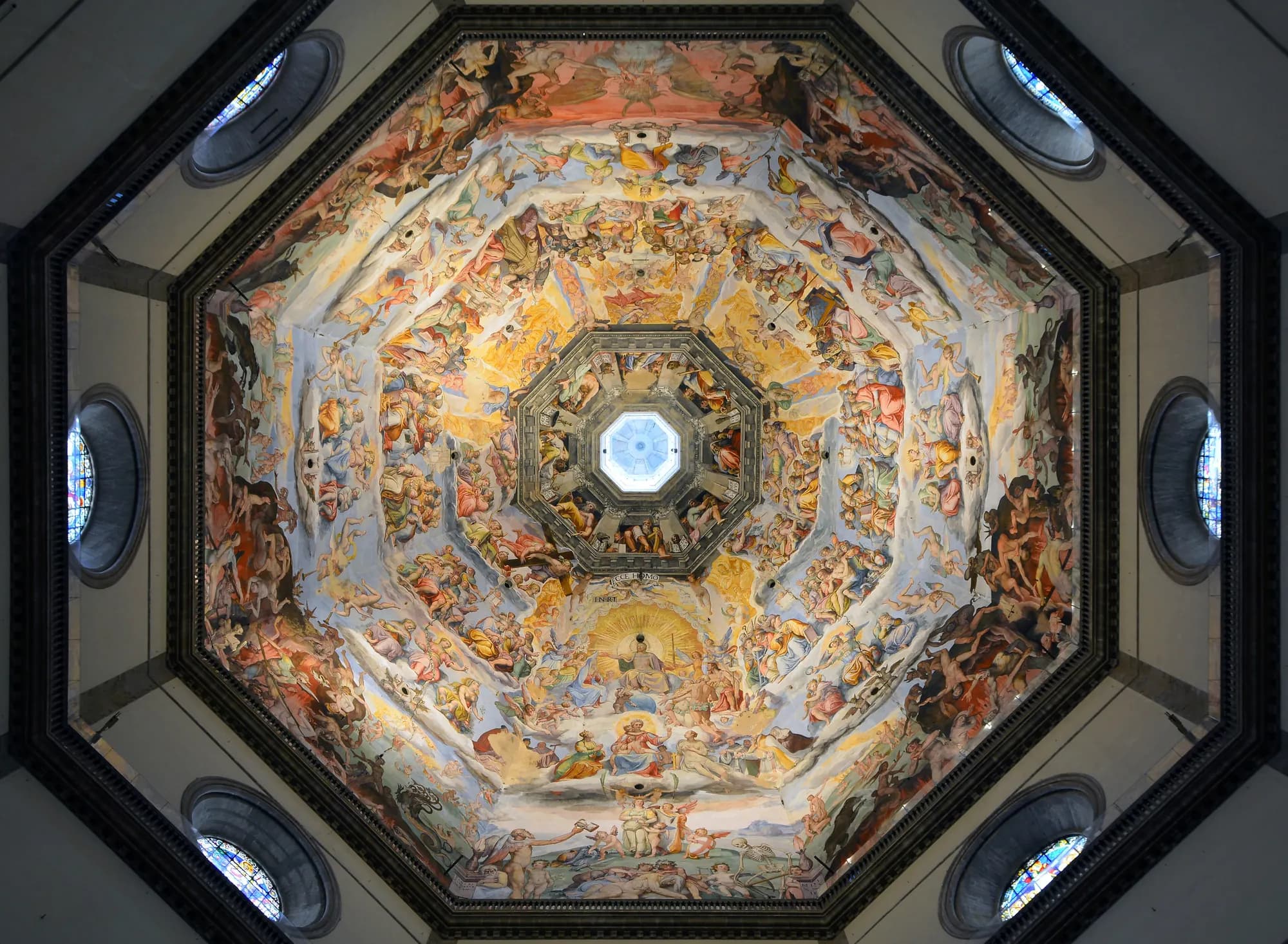
The Cathedral of Santa Maria del Fiore, with its facade of white, green and pink marble, is crowned by the dome Filippo Brunelleschi built without a supporting frame in the fifteenth century, still the largest brick dome in the world. The climb of more than four hundred steps passes between its two shells, with a view of the frescoed interior on the way up.
TipThe dome climb must be booked in advance for a specific time; the bell tower next door, Giotto's Campanile, is a good alternative with a view of the dome itself.
- 2
The Uffizi Gallery
Photo: Armin Kleiner, CC BY-SA 4.0, via Wikimedia Commons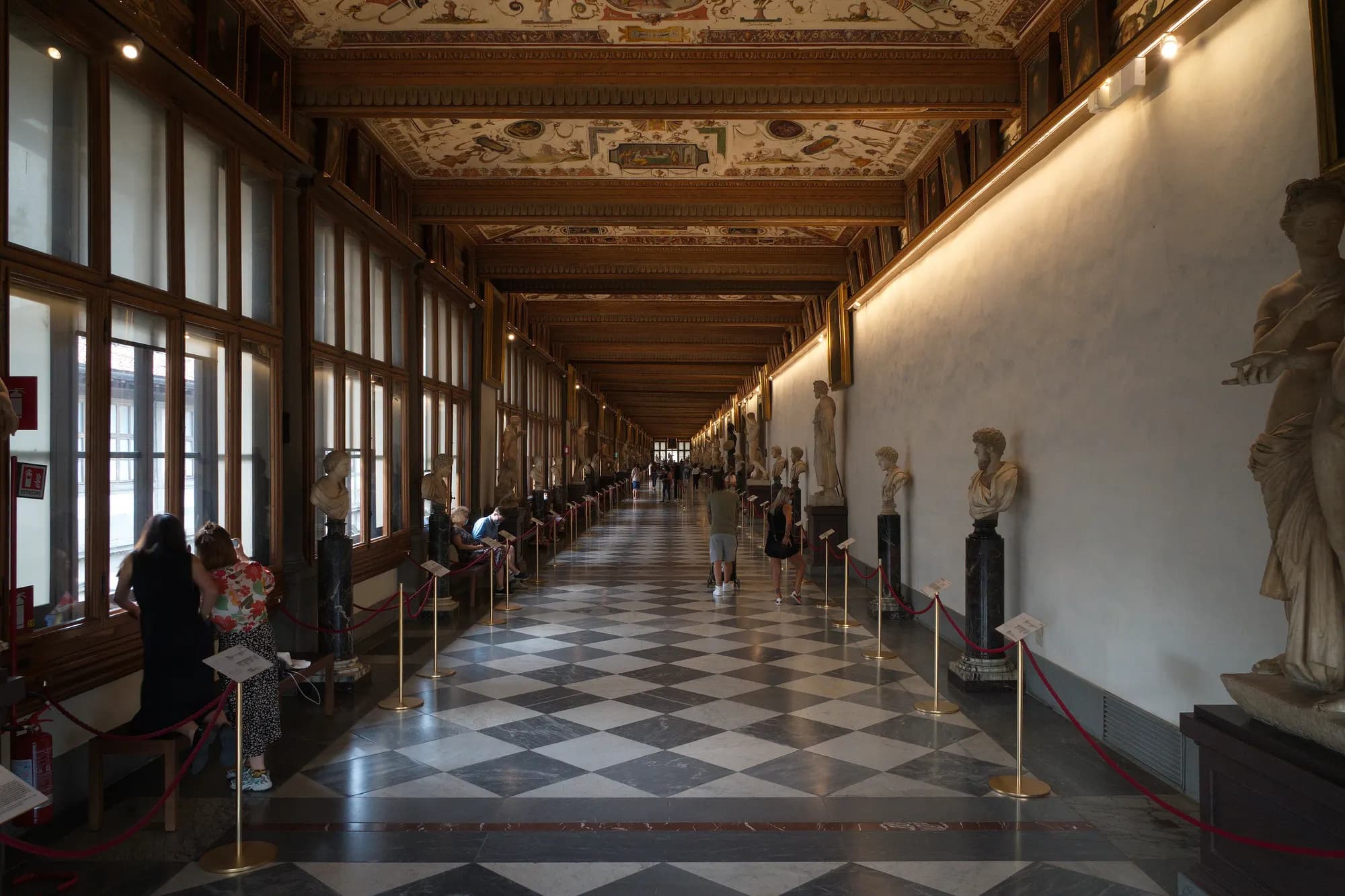
One of the world's great art museums, built as offices for the Medici, holds masterpieces of the Italian Renaissance: Botticelli's Birth of Venus and Primavera, Leonardo's Annunciation, works by Raphael, Michelangelo, Titian and Caravaggio.
TipBook a timed entry online and go early; allow at least three hours.
- 3
The Bargello
Photo: Chabe01, CC BY-SA 4.0, via Wikimedia Commons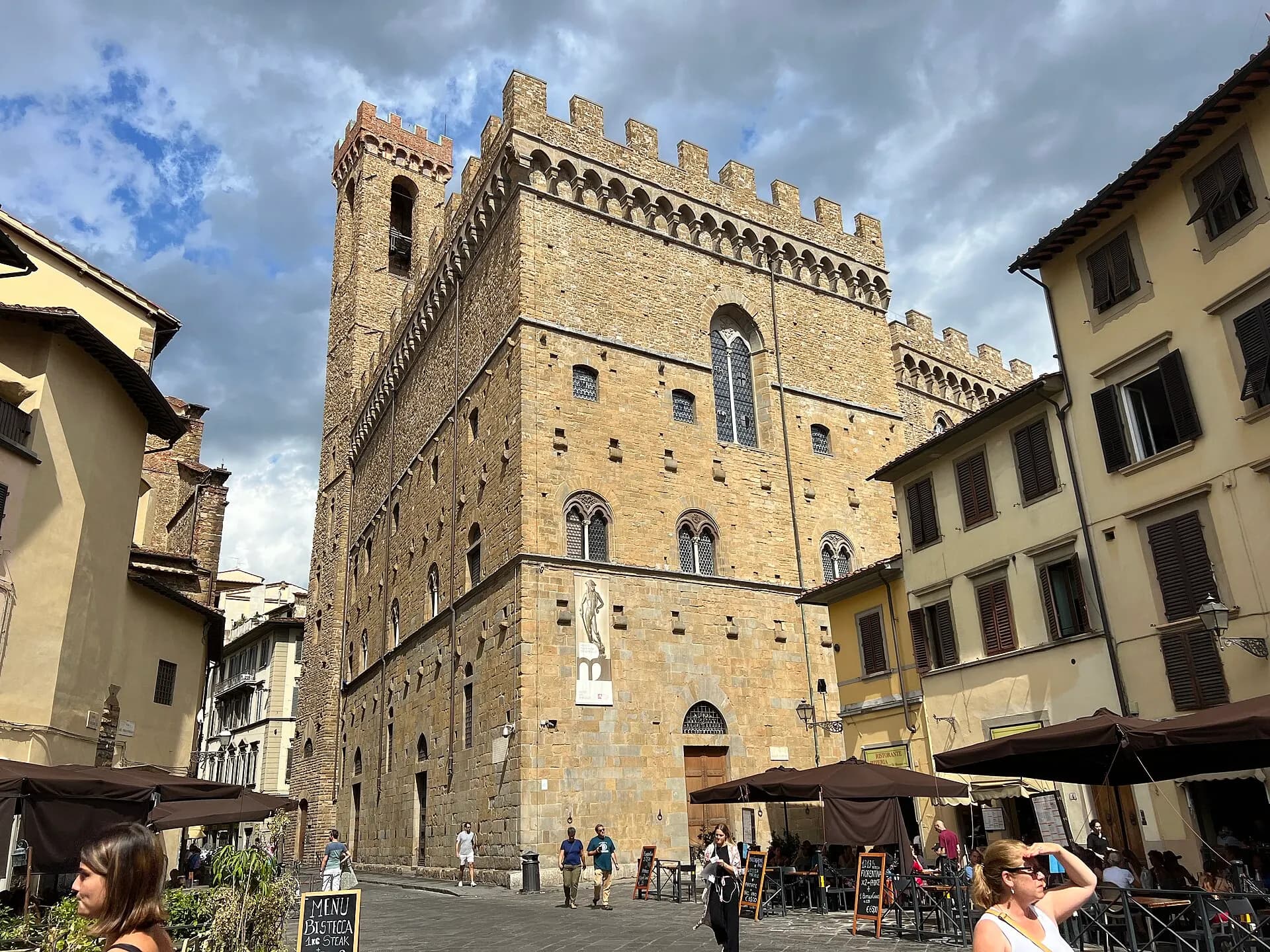
A medieval fortress and former prison that now holds Italy's finest collection of Renaissance sculpture, including Donatello's bronze David, works by Michelangelo and Cellini, and the competition panels for the Baptistery doors. It's usually far quieter than the Uffizi.
- 4
The Galleria dell'Accademia
Photo: Dimitris Kamaras from Athens, Greece, CC BY 2.0, via Wikimedia Commons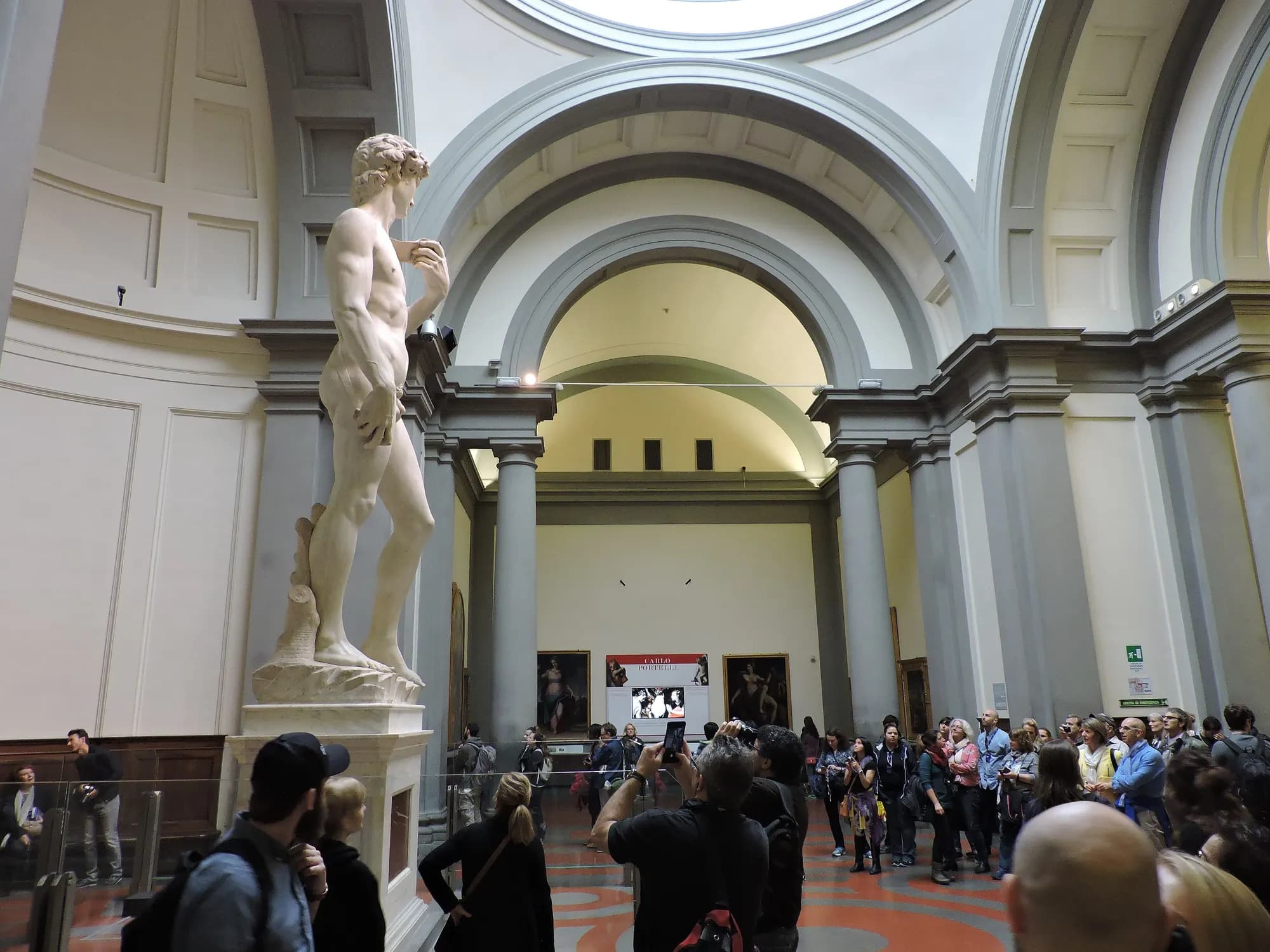
Michelangelo's David, more than five metres tall and carved from a single block of marble between 1501 and 1504, stands at the end of a hall lined with his unfinished Prisoners, figures that seem to struggle out of the stone. Seeing the original is a remarkable experience.
TipBook ahead: the queues without a reservation can be very long.
- 5
The Medici Chapels
Photo: Richard Mortel from Riyadh, Saudi Arabia, CC BY 2.0, via Wikimedia Commons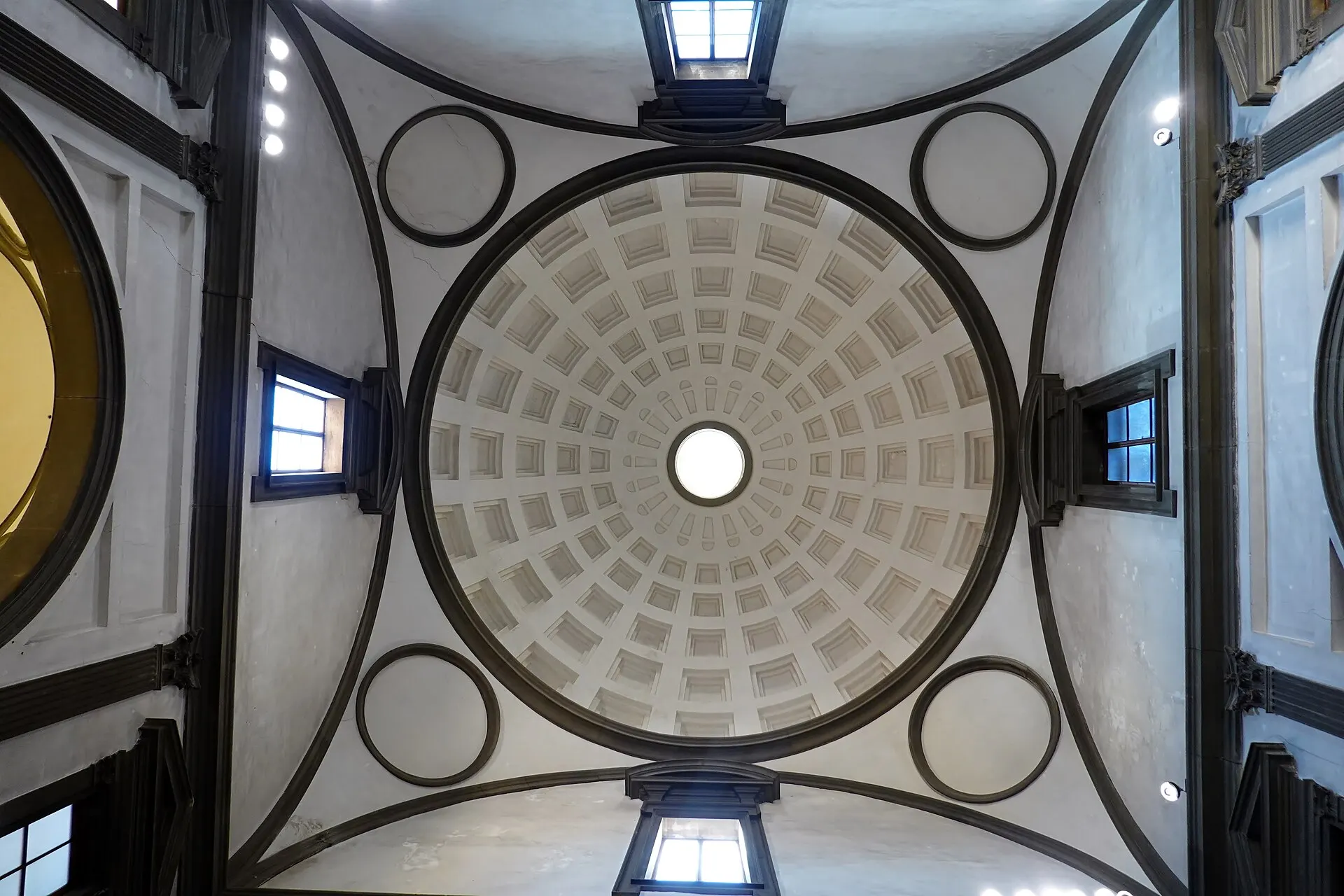
The mausoleum of the Medici family behind the basilica of San Lorenzo. The domed Chapel of the Princes is clad in coloured marble and semi-precious stone, and the New Sacristy, designed by Michelangelo, holds his sculptures of Night and Day, Dawn and Dusk on the Medici tombs.
- 6
The Ponte Vecchio
Photo: Martin Falbisoner, CC BY-SA 3.0, via Wikimedia Commons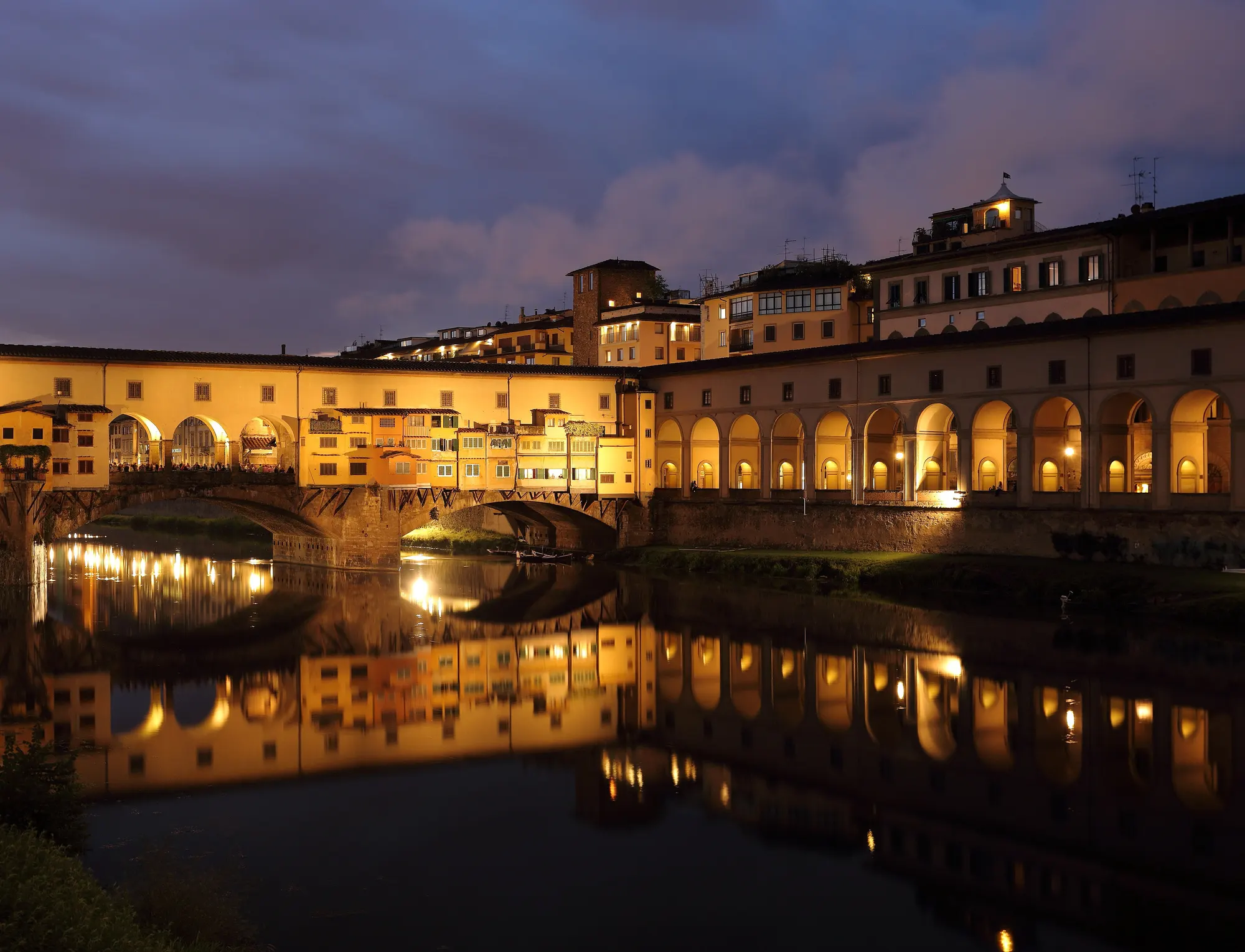
The only bridge in Florence not destroyed in the Second World War, lined with jewellers' shops that replaced the butchers in the sixteenth century. Above the shops runs the Vasari Corridor, a private passage built for the Medici to walk between their palaces.
- 7
Palazzo Pitti and the Boboli Gardens
Photo: Diego Delso, CC BY-SA 4.0, via Wikimedia Commons
The vast palace of the Medici across the river holds several museums, including a gallery of Renaissance and baroque paintings. Behind it, the Boboli Gardens climb the hillside with fountains, grottoes, statues and views over the city.
- 8
Piazzale Michelangelo and San Miniato al Monte
Photo: Diego Delso, CC BY-SA 4.0, via Wikimedia Commons
A terrace above the river with the classic panorama of Florence: the dome, the towers and the bridges. Climb a little further to the Romanesque church of San Miniato al Monte, one of the most beautiful in Tuscany, where the monks sing Gregorian chant at vespers.
TipWalk up at sunset, then back down through the old rose garden or the San Niccolò district.
- 9
Santa Croce
Photo: Rhododendrites, CC BY-SA 4.0, via Wikimedia Commons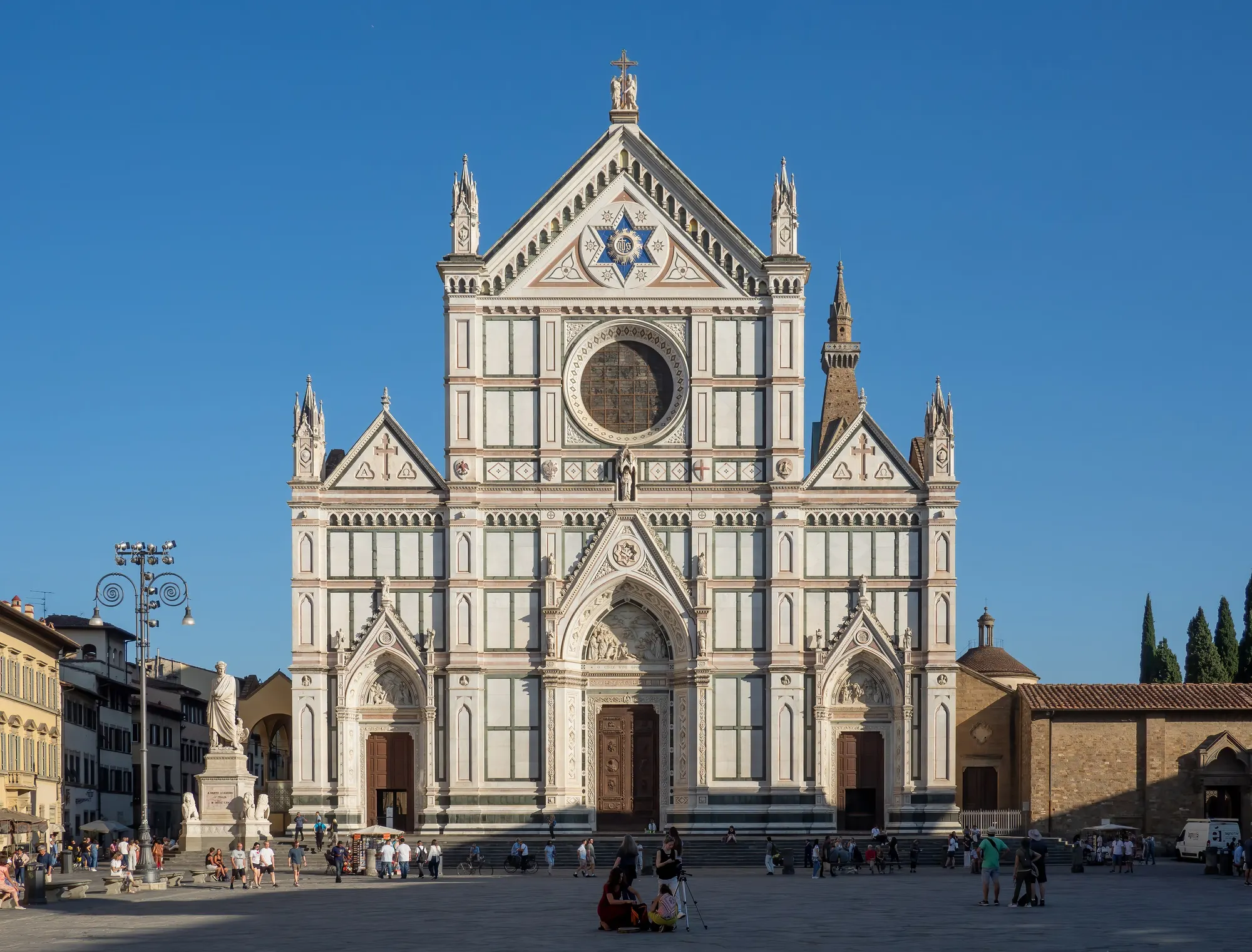
A Franciscan basilica holding the tombs of Michelangelo, Galileo and Machiavelli, with frescoes by Giotto. The square in front is one of the city's largest, and the surrounding streets are full of leatherworkers.
- 10
The Oltrarno
Photo: sailko, CC BY-SA 3.0, via Wikimedia Commons
The neighbourhood "beyond the Arno" is where Florence's artisans still work, restoring furniture, binding books and making jewellery and shoes. Its squares, especially Santo Spirito, fill with locals in the evening, and its restaurants are often better value than those in the centre.
- 11

When to go
Spring and autumn are the best times to visit, with pleasant temperatures and the hills around the city at their most beautiful. Summer is hot and crowded, especially in July and August. Winter is cool and quieter, and the museums are much easier to enjoy. Many state museums are free on the first Sunday of the month, which means they are also extremely busy.
Getting around
The centre is compact and mostly pedestrianised, so you'll walk almost everywhere. Buses and trams serve the outskirts, and a tram links the airport, Peretola, with the main station, Santa Maria Novella, in about twenty minutes. Driving in the centre is restricted to permit holders, and fines for entering the restricted zone are automatic, so leave a rental car outside.
High-speed trains reach Rome in about an hour and a half, and Venice and Milan in about two hours. Regional trains and buses link Florence with Pisa, Lucca and Siena.
Local tips
- Book the Uffizi, the Accademia and the dome climb before you travel.
- Many museums are closed on Mondays.
- Dress modestly to visit churches, covering shoulders and knees.
- Florence's tap water is safe, and public fountains dispense filtered water.
- Avoid eating in the busiest squares; prices are higher and quality is lower.
- Sitting or eating on church steps and monuments can lead to fines.
Eat and drink
Tuscan cooking is simple and seasonal. Florence is famous for bistecca alla fiorentina, a thick T-bone steak served rare, and for lampredotto, a tripe sandwich sold from street carts. Try ribollita, a hearty bread and vegetable soup, pappa al pomodoro and crostini with chicken-liver pâté. Wine bars serve Chianti and other Tuscan wines, often poured from the small "wine windows" set into palace walls.
Day trips
Florence is the gateway to Tuscany. Pisa, with its leaning tower, cathedral and baptistery on the Field of Miracles, is about an hour away by train, and the walled town of Lucca, where you can cycle along the top of the Renaissance ramparts, is a short ride further. Siena, Florence's old rival, has a magnificent shell-shaped square, the Piazza del Campo, and a striped marble cathedral, and is easily reached by bus. Closer to the city, the hill town of Fiesole, reached by local bus, has a Roman theatre and views down over Florence, and the vineyards of Chianti begin just to the south.