Naples
A loud, layered, magnificent port city under Vesuvius, with Baroque churches, buried Roman towns and the pizza that started it all.
- Best time to go
- April to June and September to October, for warm days without the summer heat
- Local time
- –
- Currency
- Euro (EUR)
- Reading time
- 10 min
- Language
- Italian

Naples has been lived in continuously for around two and a half thousand years, since Greek settlers founded Neapolis, the "new city", on the shore of one of the most beautiful bays in the Mediterranean. Romans, Normans, French and Spanish kings and the Bourbons all left their mark, and the result is a historic centre of narrow streets, crowded churches and noisy squares that is a World Heritage Site and still very much a working neighbourhood. Above it, the volcano of Vesuvius closes the view across the water.
It's a city that divides opinion at first: busy, scruffy in places, with scooters weaving through crowds and washing strung between balconies. Give it a few days and most travellers fall for it, for the street life, the coffee, the pizza, one of the world's great archaeological museums and the buried Roman towns of Pompeii and Herculaneum, both an easy train ride away. For the Sorrento peninsula, Positano and Amalfi, see our separate Amalfi Coast guide.
The top 16 in Naples
- 1
Spaccanapoli and the historic centre
Photo: DimiTalen, CC0, via Wikimedia Commons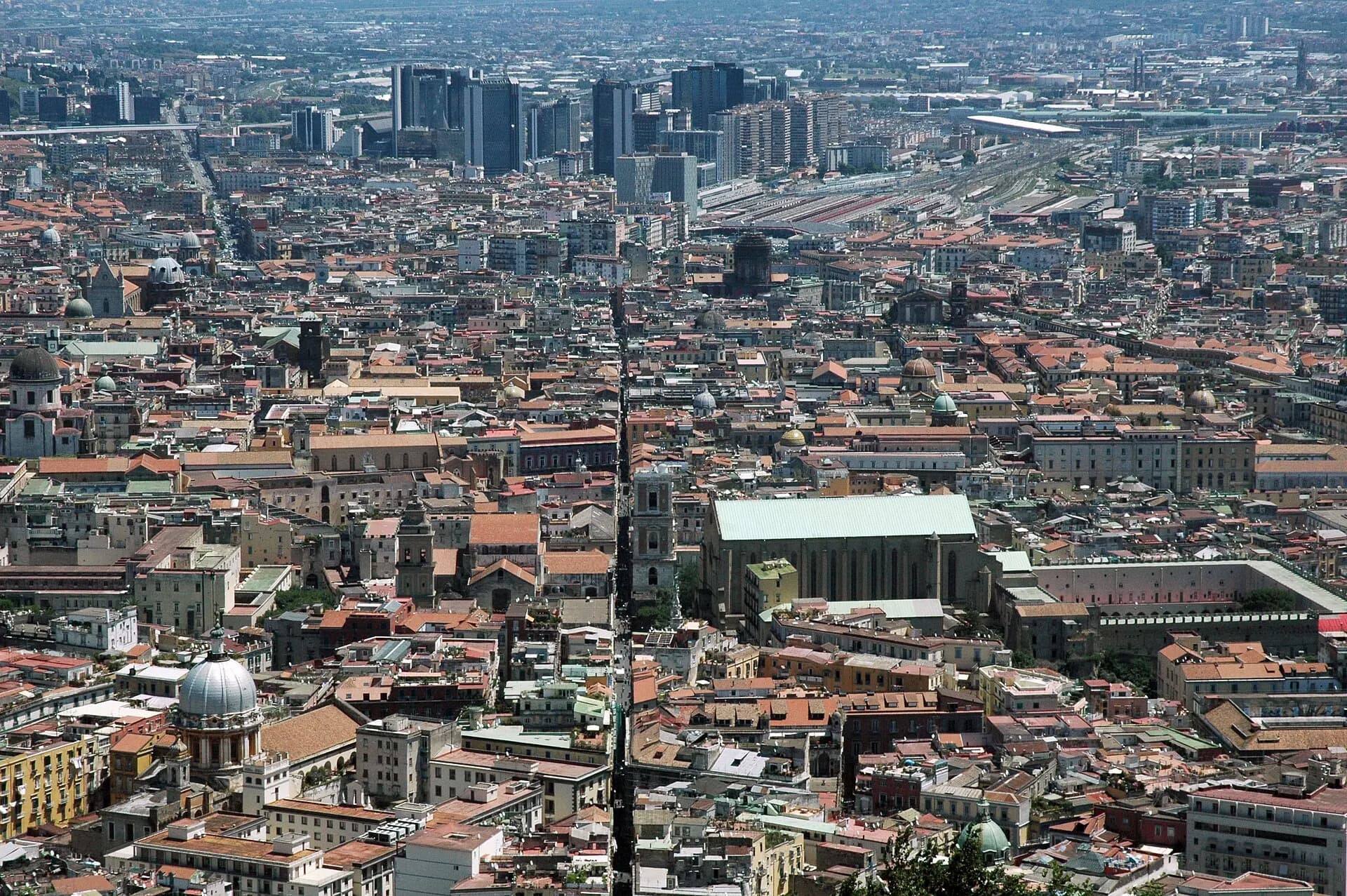
The long, straight street nicknamed Spaccanapoli, "the one that splits Naples", follows a road laid out by the Greeks and cuts through the heart of the old city. Walk it from Piazza del Gesù Nuovo, with the diamond-pointed façade of the Gesù Nuovo church, past the cloister of Santa Chiara, faced with painted majolica tiles, and on through little squares full of shrines, pastry shops and students.
TipWalk it twice, once in the morning when the shops open, and once in the early evening when the whole street comes out.
- 2
Cappella Sansevero and the Veiled Christ
Photo: David Sivyer from United Kingdom, CC BY-SA 2.0, via Wikimedia Commons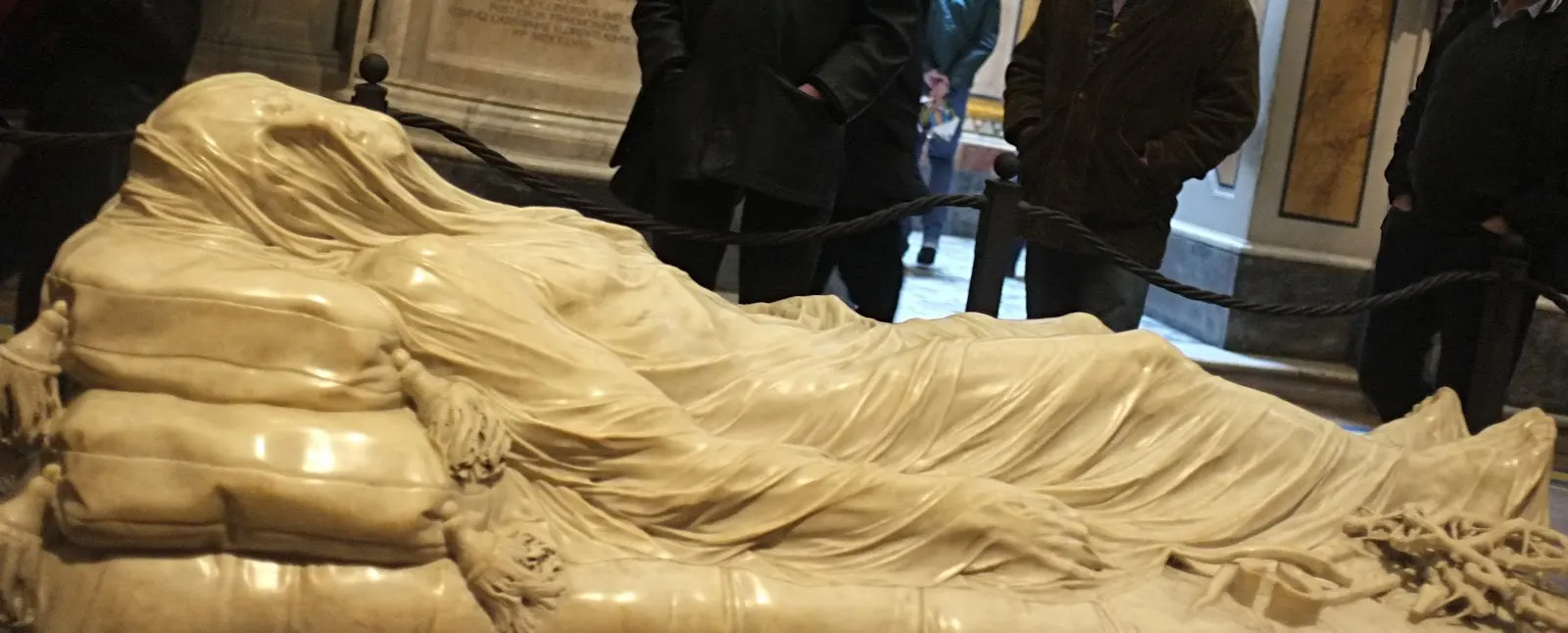
A small private chapel holding one of the most astonishing sculptures in Europe: Giuseppe Sanmartino's Veiled Christ of 1753, a dead Christ under a shroud so fine the marble seems transparent. The chapel's other sculptures and its eerie "anatomical machines" in the crypt are just as memorable.
TipBook a timed ticket online, as queues are long and slots sell out. The museum is closed on Tuesdays, and photography inside is not allowed.
- 3
Via San Gregorio Armeno
Photo: Palickap, CC BY-SA 4.0, via Wikimedia Commons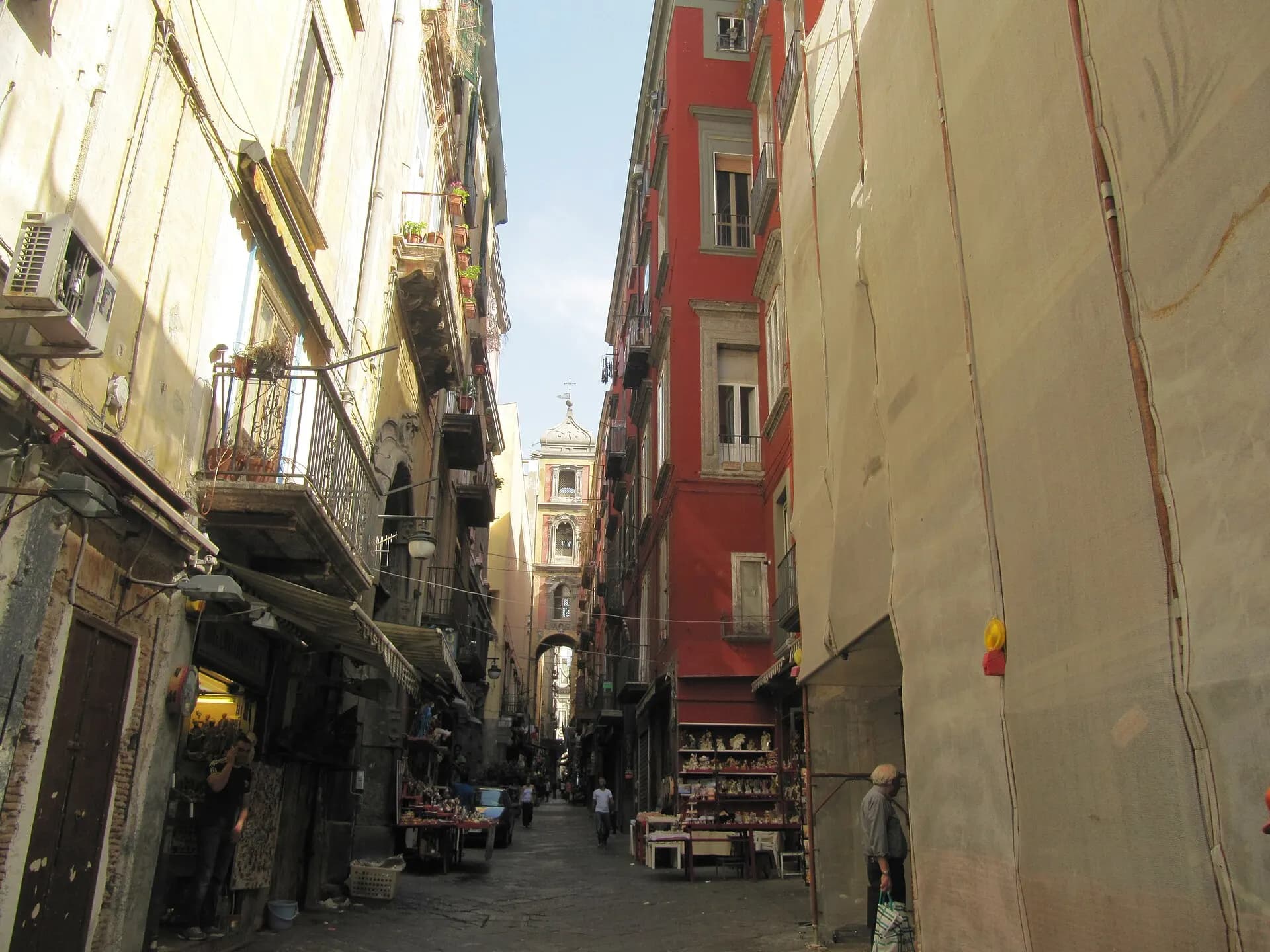
The street of the nativity-scene makers, lined with workshops selling hand-made shepherds, angels, market stalls and whole miniature villages, alongside figurines of footballers, politicians and celebrities. It's busy all year and packed in the weeks before Christmas.
- 4
Napoli Sotterranea
Photo: Photo2023, CC BY 4.0, via Wikimedia Commons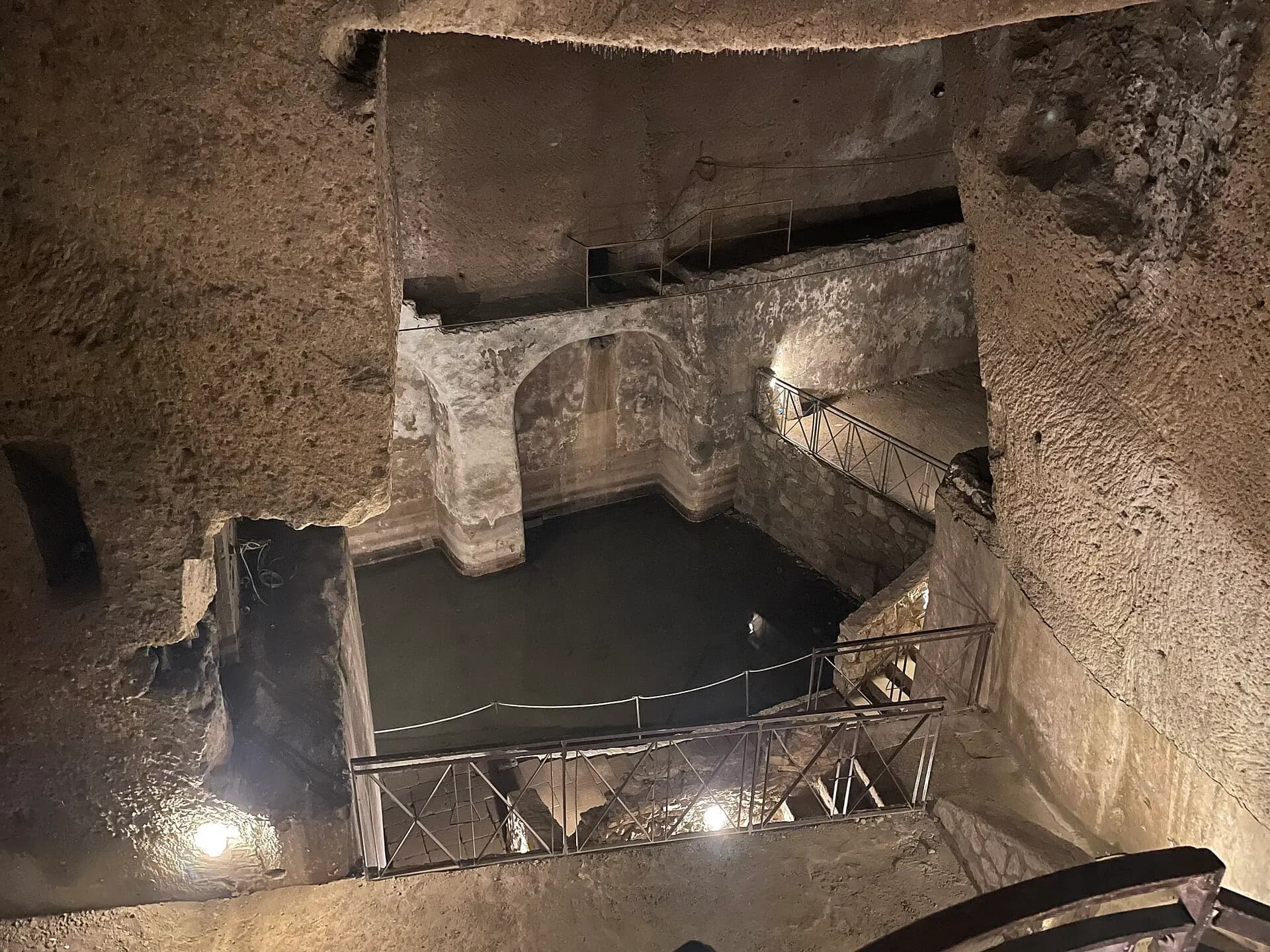
Forty metres beneath Piazza San Gaetano lies a maze of tunnels and cisterns quarried by the Greeks, used as Roman aqueducts and as air-raid shelters in the Second World War. Guided tours lead through narrow, candlelit passages and into the remains of a Roman theatre hidden among the houses above. The excavations under the church of San Lorenzo Maggiore, across the square, reveal a Roman market street.
TipSome passages are very narrow; tell the guide if you're claustrophobic and they'll show you a way round.
- 5
Naples Cathedral and the Treasure of San Gennaro
Photo: Giuseppe Pepe, CC BY 3.0, via Wikimedia Commons
The cathedral is the home of the cult of San Gennaro, the city's patron saint, whose dried blood is kept in a vial in his chapel. Three times a year, on the Saturday before the first Sunday in May, on 19 September and on 16 December, crowds gather to see whether it liquefies, a sign of good fortune for the city. The Museum of the Treasure of San Gennaro holds the jewels given to the saint over the centuries. Nearby, the Pio Monte della Misericordia displays Caravaggio's Seven Works of Mercy above its altar.
- 6
Naples National Archaeological Museum (MANN)
Photo: Phyrexian, CC BY-SA 4.0, via Wikimedia Commons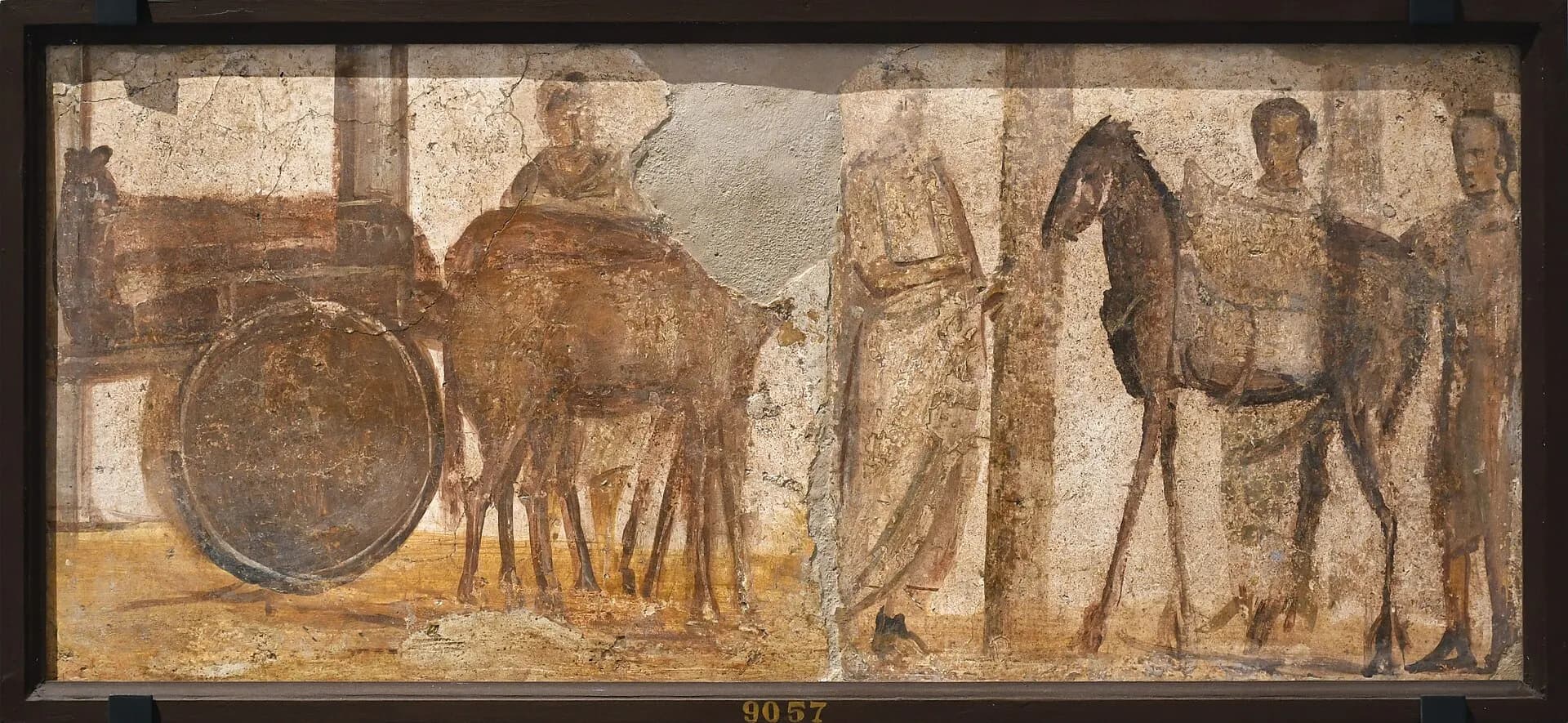
One of the world's great collections of ancient art, holding the finest finds from Pompeii and Herculaneum, the Farnese collection of classical sculpture, including the colossal Farnese Bull, bronzes from the Villa of the Papyri, frescoes, an Egyptian collection and a large scale model of Pompeii. Visiting before or after Pompeii brings the ruins to life.
TipThe museum is closed on Tuesdays. In 2026 the Mosaics section and the Secret Cabinet are closed for refurbishment until further notice, and the Alexander Mosaic is under restoration, though you can watch the restorers at work; check the museum's site before you go.
- 7
Catacombs of San Gennaro
Photo: Dominik Matus, CC BY-SA 4.0, via Wikimedia Commons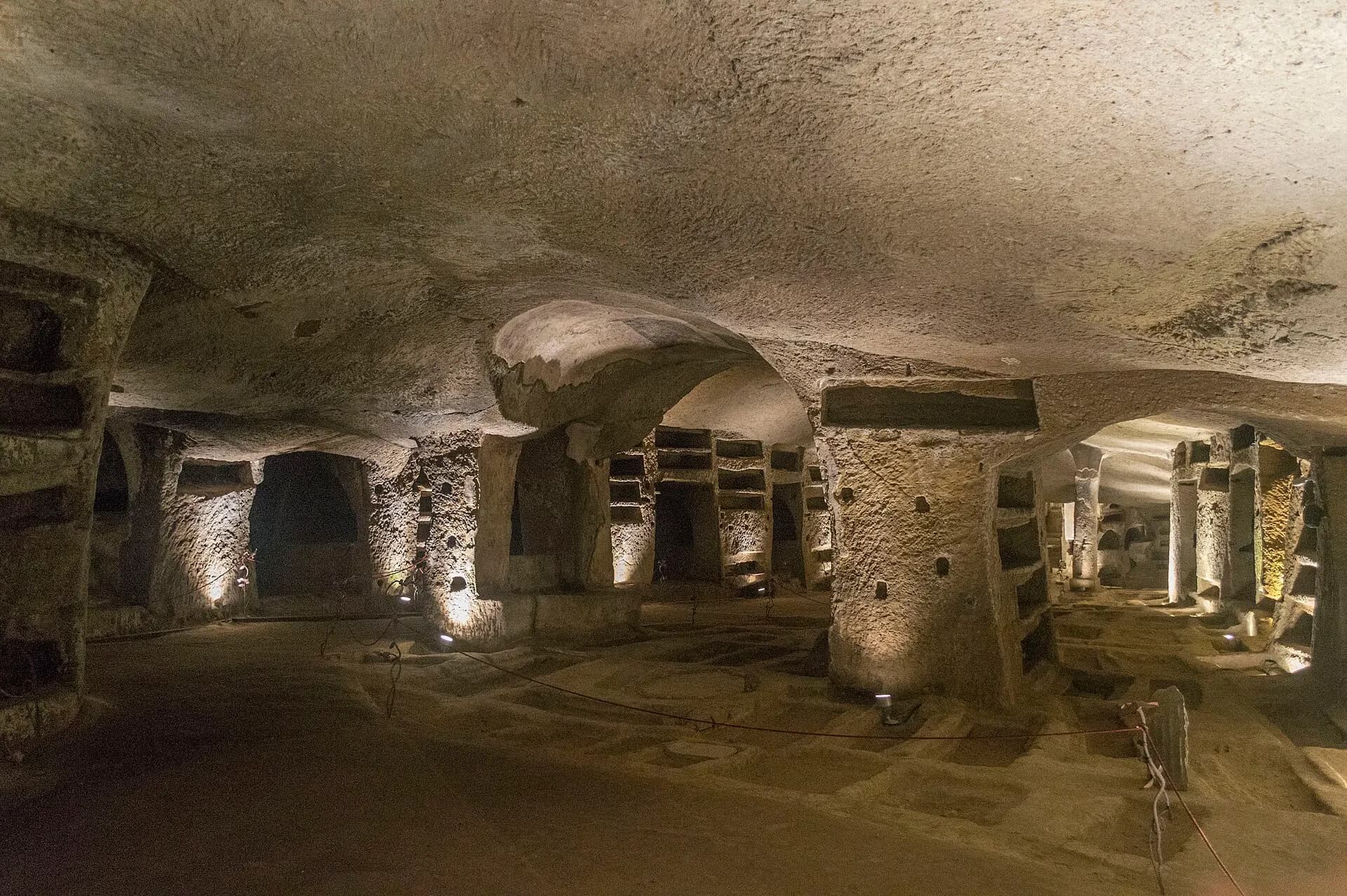
Early Christian catacombs carved into the hill of Capodimonte, with frescoes, burial niches and a basilica cut from the rock, run by a cooperative of young people from the Rione Sanità, a poor neighbourhood the project has helped to revive. Visits are by guided tour, and booking is required; the tour ticket usually also includes the Catacombs of San Gaudioso in the Sanità.
TipAfterwards, walk down into the Sanità for its markets, Baroque palaces and the Fontanelle Cemetery, an ossuary full of skulls, if it's open.
- 8
Capodimonte
Photo: Giuseppe Guida, CC BY-SA 4.0, via Wikimedia Commons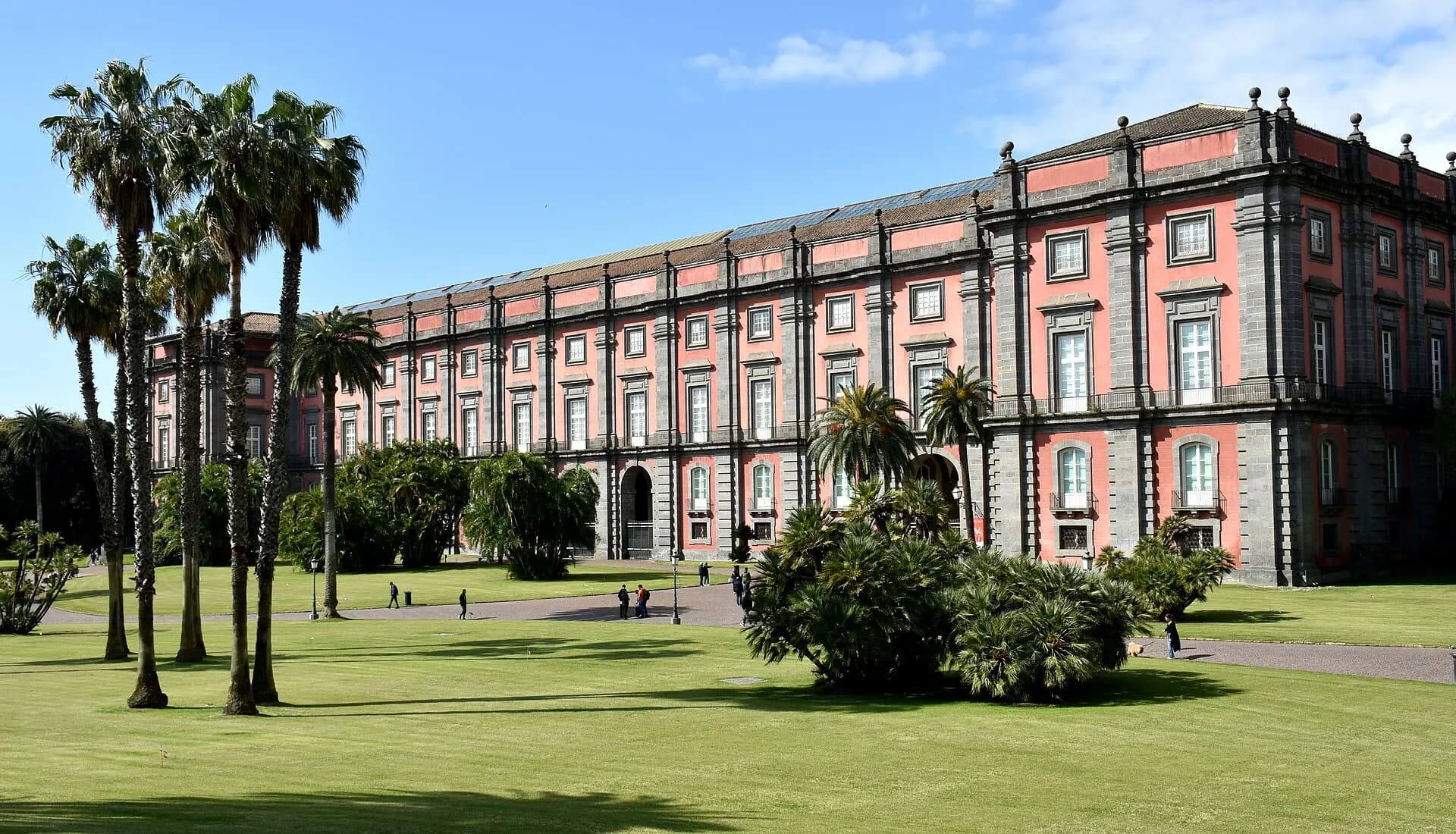
A Bourbon royal palace on a hilltop, now a superb art museum with works by Titian, Raphael, Botticelli, Bruegel and Caravaggio, whose Flagellation hangs here, plus porcelain from the royal factory once housed in the park. The Real Bosco, the large wooded park around the palace, is a peaceful escape from the city below.
- 9
Castel Sant'Elmo and the Certosa di San Martino
Photo: Argo Navis, CC BY-SA 4.0, via Wikimedia Commons
On the Vomero hill, the star-shaped Castel Sant'Elmo has the best panorama in Naples, over the rooftops of the old centre to the bay and Vesuvius. Just below, the Certosa di San Martino, a former Carthusian monastery, has a richly decorated church, cloisters, terraced gardens and a large collection of Neapolitan nativity scenes.
TipTake one of the funiculars up to the Vomero and walk back down by the Pedamentina, a long stairway with views all the way.
- 10
Quartieri Spagnoli and the Maradona mural
A grid of narrow, steep streets built for Spanish soldiers in the sixteenth century, crowded with scooters, shrines, street food and life. At Largo Maradona, a giant mural of Diego Maradona, the Argentine footballer who led Napoli to its first league titles in the 1980s, has become a shrine for fans from all over the world.
- 11
Galleria Umberto I
Photo: Marco Ober, CC BY-SA 4.0, via Wikimedia Commons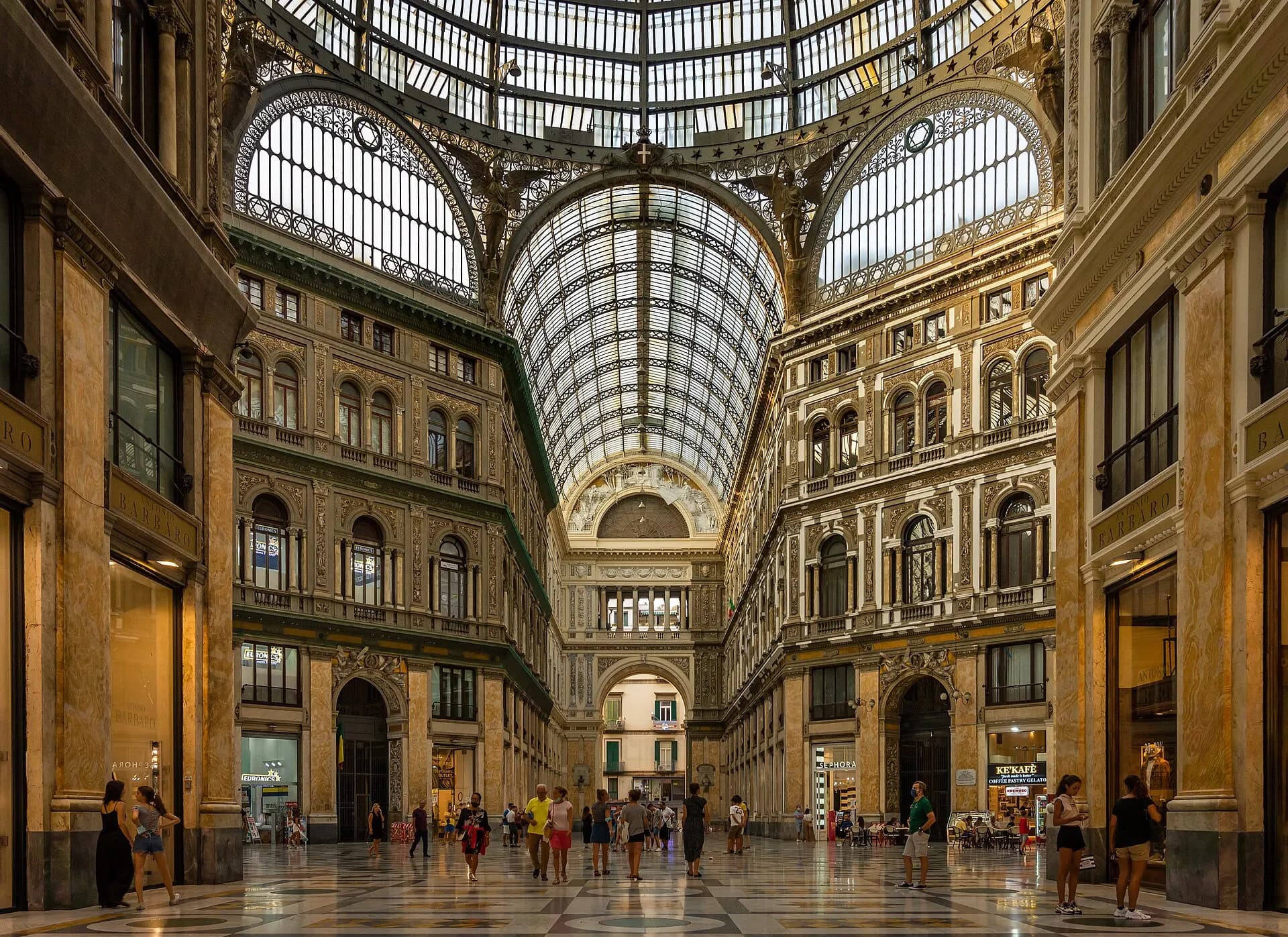
A grand shopping arcade completed in the 1890s, with a soaring glass and iron dome above a marble floor decorated with the signs of the zodiac. It opens onto Via Toledo, the city's main shopping street, and faces the Teatro di San Carlo, one of the oldest opera houses in the world, founded in 1737.
- 12
Piazza del Plebiscito and the Royal Palace
Photo: Lucia Montanaro, CC BY-SA 4.0, via Wikimedia Commons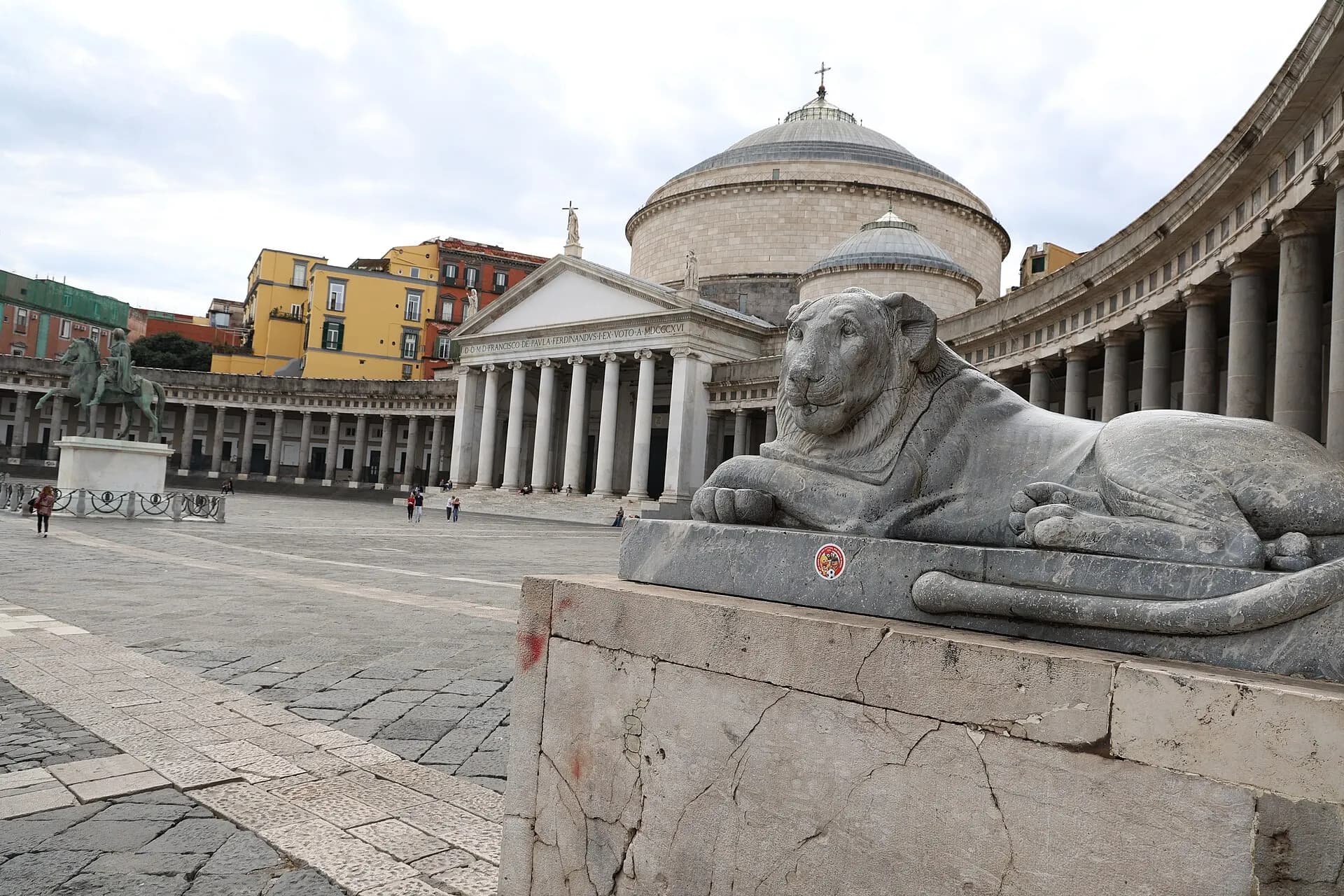
Naples' largest square, closed off by the curving colonnade and dome of the basilica of San Francesco di Paola, inspired by the Pantheon in Rome. Opposite stands the Royal Palace, home to the Spanish viceroys and the Bourbon kings, with a monumental staircase, royal apartments, a court theatre and a hanging garden overlooking the port.
- 13
Castel dell'Ovo and the lungomare
Photo: PaestumPaestum, CC BY-SA 4.0, via Wikimedia Commons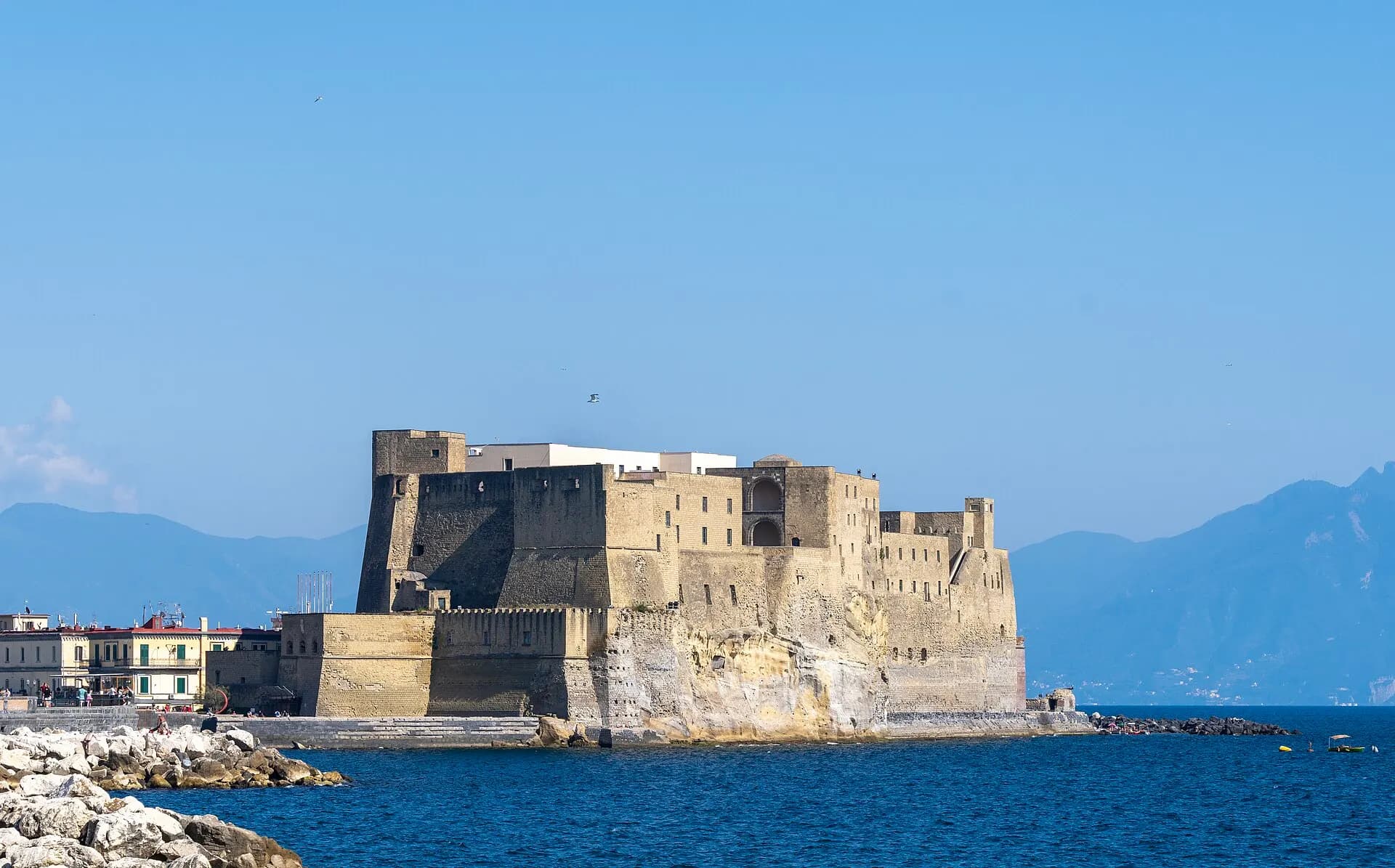
The oldest castle in Naples sits on a small island joined to the shore by a causeway. Legend says the poet Virgil hid a magic egg in its foundations, and that if it ever breaks, disaster will strike the city. Around it, the little harbour of Borgo Marinari is lined with restaurants, and the seafront promenade along Via Partenope and Via Caracciolo, largely closed to traffic, is where Neapolitans come to stroll, jog and watch the sunset.
- 14
Herculaneum
Photo: Rutger van der Maar, CC BY 2.0, via Wikimedia Commons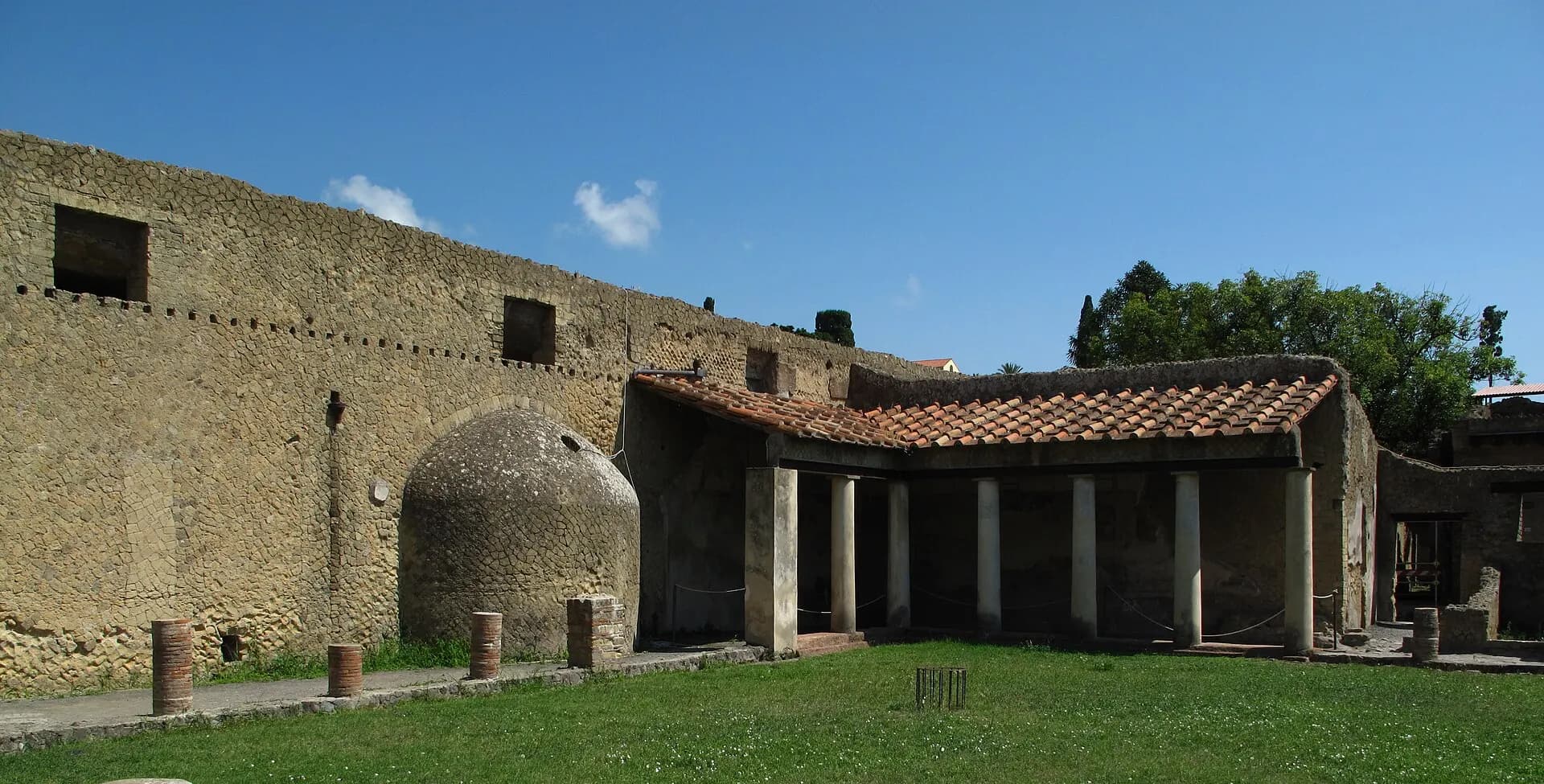
A Roman seaside town buried under deep volcanic deposits by the eruption of AD 79, which preserved it better than Pompeii: houses still have upper floors, wooden beams, mosaics and painted walls. In the old boathouses on the former shoreline, the skeletons of hundreds of people who fled there were found. It's smaller than Pompeii and can be seen well in a half day.
- 15
Mount Vesuvius
Photo: Angela M. V. Monda, CC BY-SA 4.0, via Wikimedia Commons
The only active volcano on mainland Europe, quiet since 1944. A trail climbs the Gran Cono from the end of the road at around a thousand metres to the rim of the crater, about half an hour's walk on loose gravel, with views over the whole bay. Buses run up from Ercolano and Pompeii.
TipTickets for the crater trail are sold online only, through the national park's official ticketing site, for a set date and time. The trail closes in high wind and weather alerts, so check the park's website on the morning of your visit.
- 16
Pompeii
Photo: Commonists, CC BY-SA 4.0, via Wikimedia Commons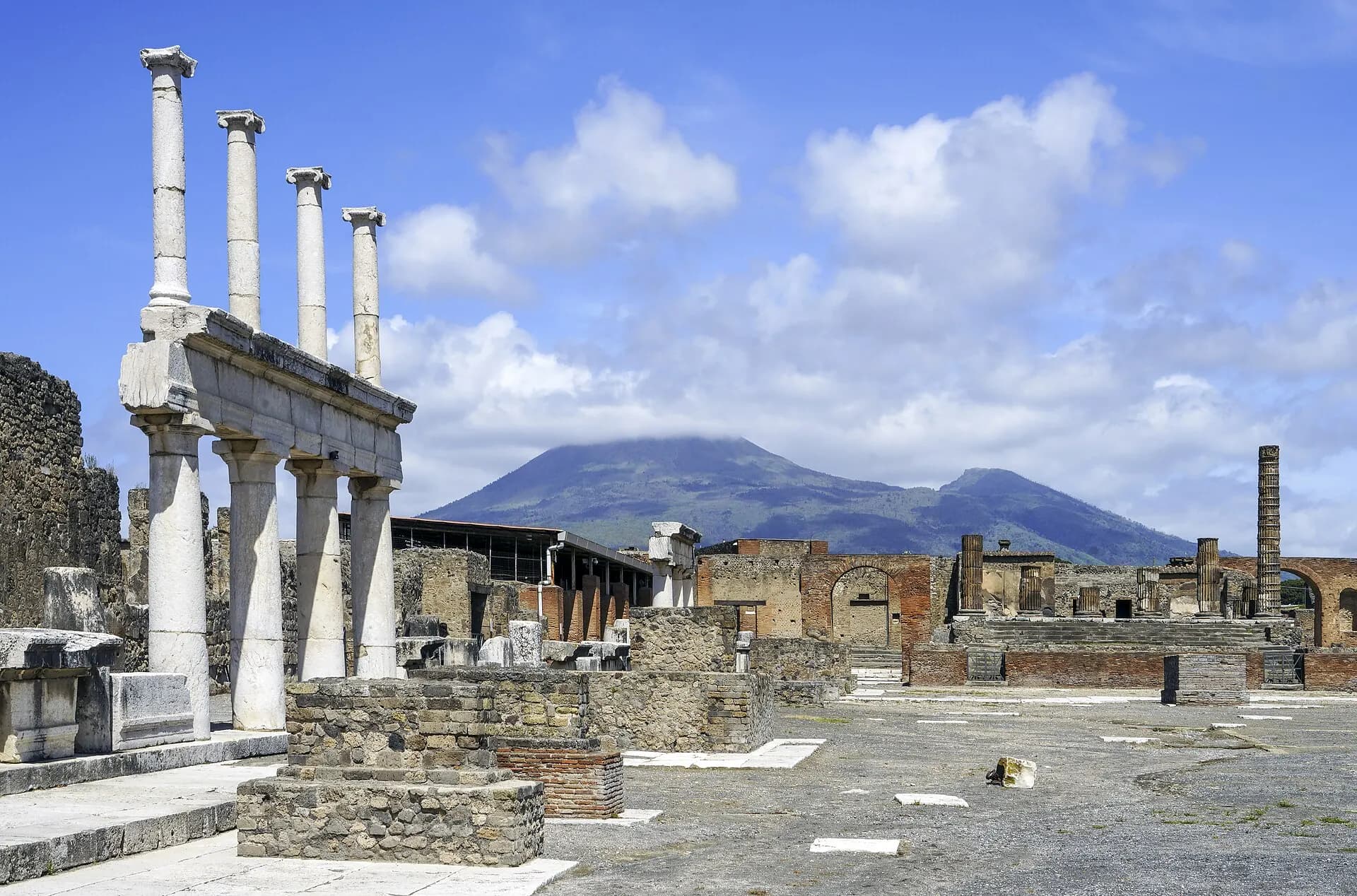
The Roman city buried by Vesuvius in AD 79, the most famous archaeological site in the world, with streets, bakeries, bars, temples, an amphitheatre, the plaster casts of victims and the frescoes of the Villa of the Mysteries. New areas keep opening as excavations continue. Allow most of a day, and wear sun protection: there is very little shade.
TipPompeii limits visitors to 20,000 a day. Tickets are nominative, carrying each visitor's name, and in the main season they're tied to a morning or afternoon entry slot; bring photo ID and book on the park's official site, pompeiisites.org. Only small bags are allowed in.
When to go
Spring and autumn are the best seasons, with warm days, comfortable walking and fewer crowds at Pompeii. July and August are hot and humid, and many Neapolitans leave for the coast around mid-August, when some restaurants close. Winter is mild and quieter, with short days; the archaeological sites close earlier. December is a festive time, with nativity scenes everywhere and crowds on Via San Gregorio Armeno, and the feast days of San Gennaro bring the city together.
Getting around
The historic centre is best explored on foot. Metro Line 1 links the central station at Piazza Garibaldi with the port, Via Toledo and the Vomero, and several of its stations, notably Toledo, are decorated by leading artists and architects. Four funiculars climb the hills, three of them to the Vomero. The Alibus shuttle connects Capodichino airport with the central station and the port.
The Circumvesuviana, the regional railway, runs from Porta Nolana and Garibaldi to Ercolano Scavi, for Herculaneum, and Pompei Scavi-Villa dei Misteri, for Pompeii, on its line to Sorrento. Trains are frequent but often crowded and sometimes late. High-speed trains reach Rome in around an hour and ten minutes. Driving in the city is stressful and not recommended.
Local tips
- Keep phones and wallets out of sight in crowds, on the metro and on the Circumvesuviana, and hold bags on the side away from the road.
- Take care crossing the road: scooters don't always stop, so cross with confidence or with locals.
- Use official white taxis and ask for a fixed fare or the meter before you set off.
- Coffee is drunk standing at the bar, quickly and cheaply; you'll often be given a glass of water first.
- Many churches close in the early afternoon; dress modestly, with shoulders and knees covered.
- The Campania Artecard gives free or reduced entry to many museums and sites, and covers local transport in some versions.
Eat and drink
Naples is the home of pizza, and the classic margherita and marinara are cheap, quick and best eaten at the source. Beyond pizza, try pizza fritta, a fried folded pizza; a cuoppo, a paper cone of fried seafood or vegetables; pasta alla genovese, slow-cooked with onions and beef; the rich Sunday ragù; and spaghetti alle vongole. For pastry, there's the shell-shaped sfogliatella, the rum-soaked babà and, at Easter, pastiera. Coffee is strong and short, and the tradition of the caffè sospeso, paying for a coffee for a stranger who can't afford one, began here.
Where to stay
The historic centre puts you in the thick of the sights and the street life, with many guesthouses and B&Bs in old palazzi, though it's noisy. Chiaia, along the waterfront west of the Royal Palace, is more elegant and calmer, with good restaurants and bars. The Vomero is residential and quieter, with views and easy funicular links. The area around Piazza Garibaldi is convenient for trains but less pleasant at night. Staying a few nights in Naples itself makes a good base for Pompeii, Herculaneum and Vesuvius.
Pizza in Naples
Neapolitan pizza has a soft, puffy rim, the cornicione, and a thin, slightly wet centre, cooked for around a minute in a wood-fired oven at a very high temperature. The margherita, with tomato, mozzarella and basil, is said to have been named after Queen Margherita of Savoy in 1889, while the marinara, with tomato, garlic and oregano, is older still. In 2017 UNESCO added the Art of Neapolitan "Pizzaiuolo" to its list of the Intangible Cultural Heritage of Humanity, recognising the skills of the pizza makers, passed down through generations, and the social life that surrounds them. The famous old pizzerias around Via dei Tribunali and the station have long queues; put your name down and wait, or try a neighbourhood pizzeria, where the standard is usually just as high.
The buried cities of Vesuvius
On 24 August of AD 79, according to the traditional date, though some evidence suggests the autumn, Vesuvius erupted with enormous force. Pompeii was buried under metres of ash and pumice, and Herculaneum, closer to the volcano, under a deep flow of hot volcanic material that hardened to rock. Rediscovered in the eighteenth century under the Bourbons, the two towns offer an unrivalled picture of everyday Roman life. A good plan is to visit the archaeological museum in Naples, then Herculaneum and Pompeii on separate days, perhaps combining Herculaneum with the climb up Vesuvius. Smaller sites nearby, such as the villas of Oplontis and Stabiae, are much quieter.
Islands of the bay
Ferries and fast hydrofoils leave the port of Naples, from Molo Beverello and Calata Porta di Massa, for the islands of the bay. Procida, the smallest, is a fishing island of pastel houses and harbours, and it was Italy's Capital of Culture in 2022; it's an easy, relaxed day trip. Ischia is larger, with thermal springs and beaches, best for a few nights. Capri, famous for the Faraglioni rocks and the Blue Grotto, is about fifty minutes away by fast boat and is very busy in summer; go early. Services are reduced in winter and can be cancelled in rough seas.
Responsible travel
Naples' historic centre is a living neighbourhood, not a museum, and short-term rentals have pushed many residents out. Choose licensed accommodation, eat and shop in family-run places, and keep noise down in residential streets at night. At Pompeii and Herculaneum, stay on the paths, don't touch frescoes or take stones, and carry a refillable water bottle; the sites have drinking fountains. On Vesuvius, stay on the marked trail.