Cinque Terre
Five colourful fishing villages clinging to cliffs above the Ligurian Sea, linked by trails, trains and terraced vineyards.
- Best time to go
- April to June and September to October, avoiding the summer crowds
- Local time
- –
- Currency
- Euro (EUR)
- Reading time
- 4 min
- Language
- Italian
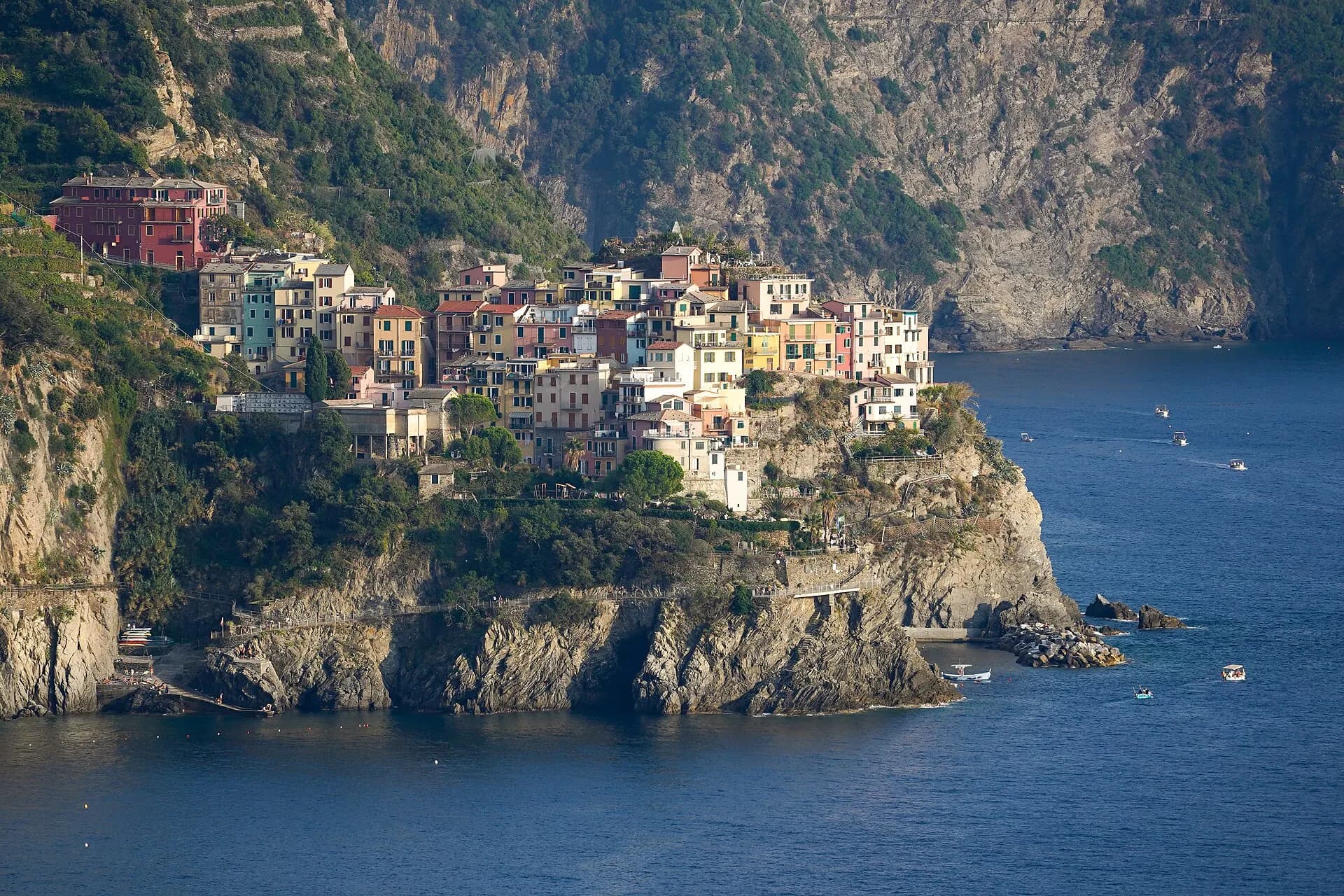
The Cinque Terre, "five lands", are five small villages strung along a steep, rugged stretch of the Italian Riviera in Liguria: Monterosso al Mare, Vernazza, Corniglia, Manarola and Riomaggiore. For centuries, their people carved terraces into the cliffs to grow grapes and olives, held up by thousands of kilometres of dry-stone walls, creating one of the most remarkable cultural landscapes in Europe. The area is a national park and, with nearby Portovenere, a World Heritage Site.
The villages were largely isolated until the railway arrived in the late nineteenth century, and cars are still kept out of their centres. Today, their colourful houses, tiny harbours and cliffside paths draw visitors from around the world, and they can be very crowded in summer. Come in spring or autumn, stay overnight, and explore early and late in the day.
The top 9 in Cinque Terre
- 1
Riomaggiore
Photo: Federica Cidale, CC BY-SA 4.0, via Wikimedia Commons
The southernmost village, with tall pastel houses stacked on either side of a ravine running down to a small harbour of fishing boats. Climb up through the narrow lanes to the castle and church for views over the rooftops.
- 2
- 3
Corniglia
Photo: Carlo Pelagalli, CC BY-SA 3.0, via Wikimedia Commons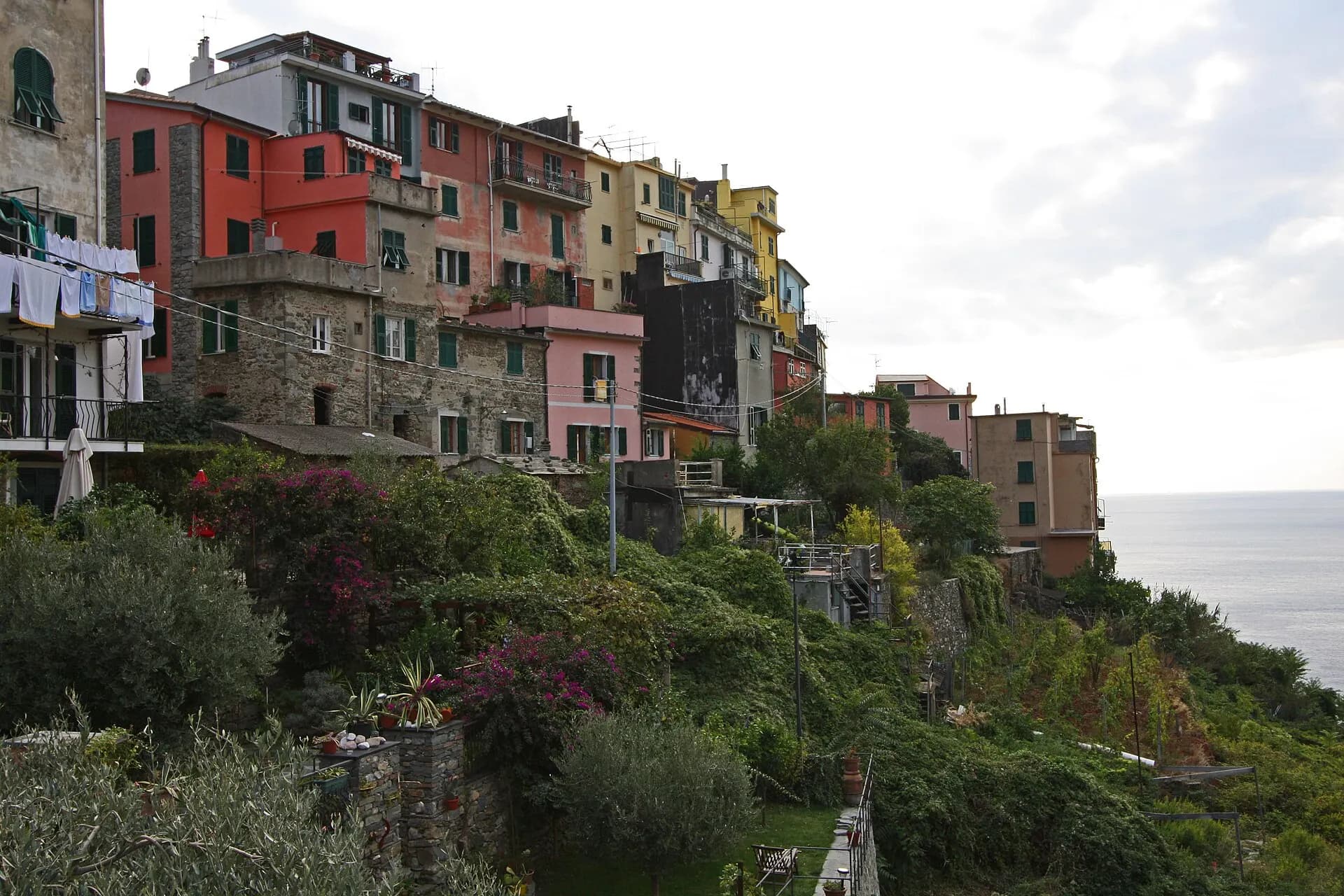
The only village not directly on the sea, set on a promontory a hundred metres up, reached from the station by a flight of 382 steps or a shuttle bus. It's quieter than the others, with views along the coast from its lookout terrace.
- 4
Vernazza
Photo: СССР, CC BY-SA 2.5 ca, via Wikimedia Commons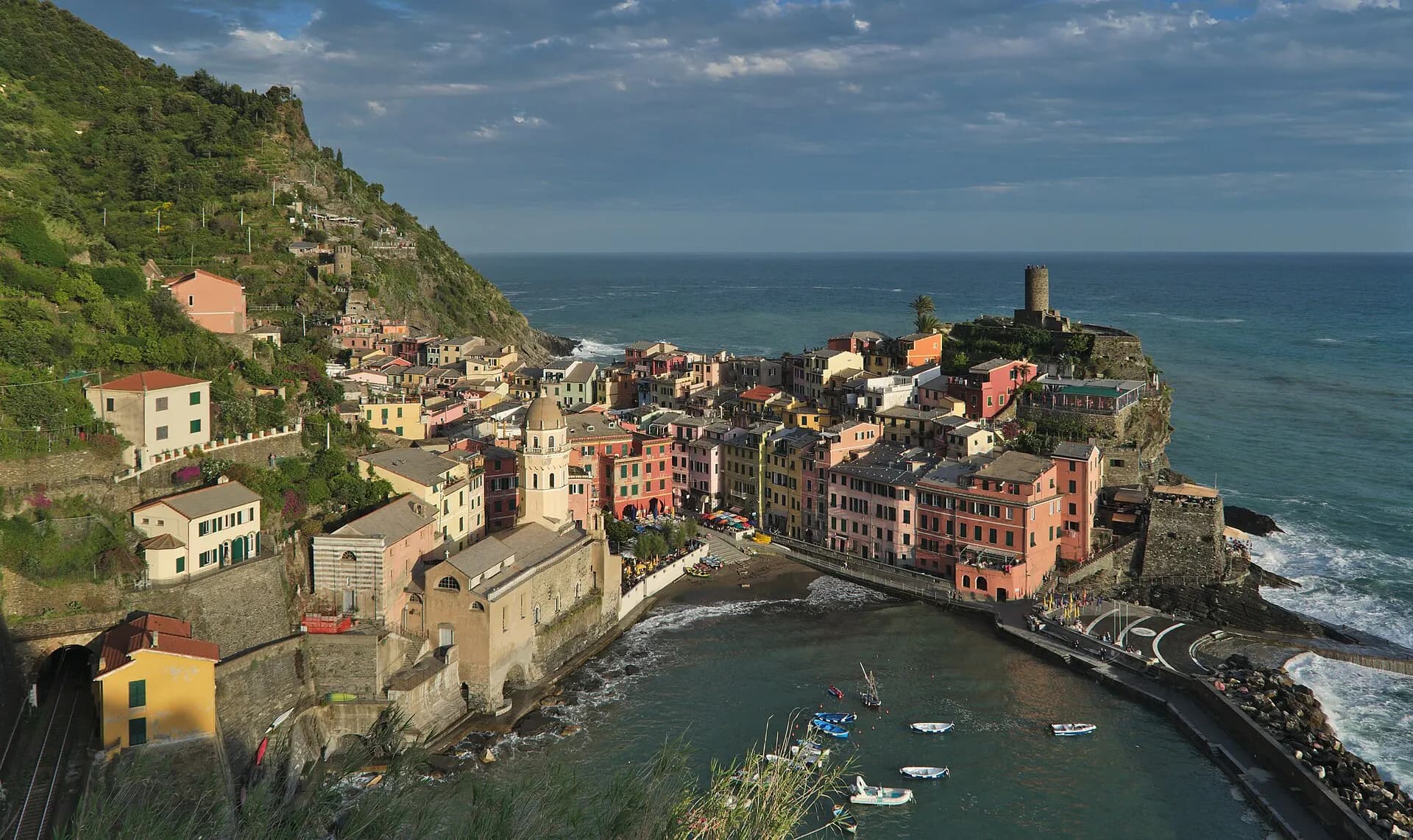
Often considered the most beautiful village, with a natural harbour, a small beach, a church on the water and the tower of the Doria castle above. It was badly damaged by a flood in 2011 and carefully restored.
TipFor the classic view, walk a short way up the trail towards Corniglia or Monterosso.
- 5
Monterosso al Mare
Photo: The Cosmonaut, CC BY-SA 2.5 ca, via Wikimedia Commons
The largest village, with the area's longest sandy beach, an old town and a newer quarter, Fegina, linked by a tunnel. A giant statue of Neptune is carved into the rocks at the end of the beach.
- 6
The Sentiero Azzurro (Blue Trail)
Photo: СССР, CC BY-SA 2.5 ca, via Wikimedia Commons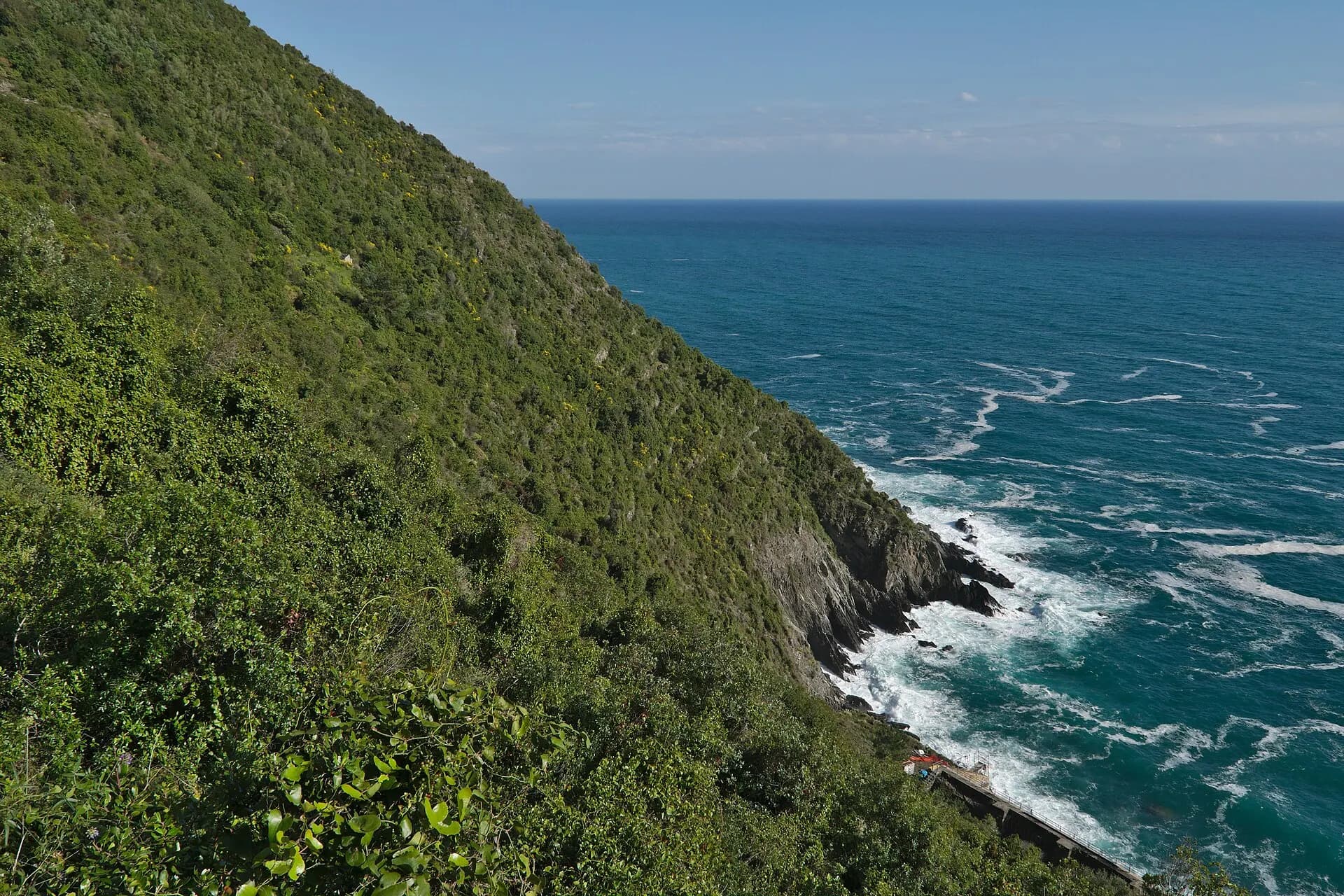
The coastal path linking the five villages, with spectacular views over the sea and terraces. Sections are often closed for repairs after landslides, and a park card is required to walk the open sections.
TipCheck which sections are open on the park's website before setting out, and wear proper shoes.
- 7
The Via dell'Amore
Photo: Twice25 & Rinina25, CC BY 2.5, via Wikimedia Commons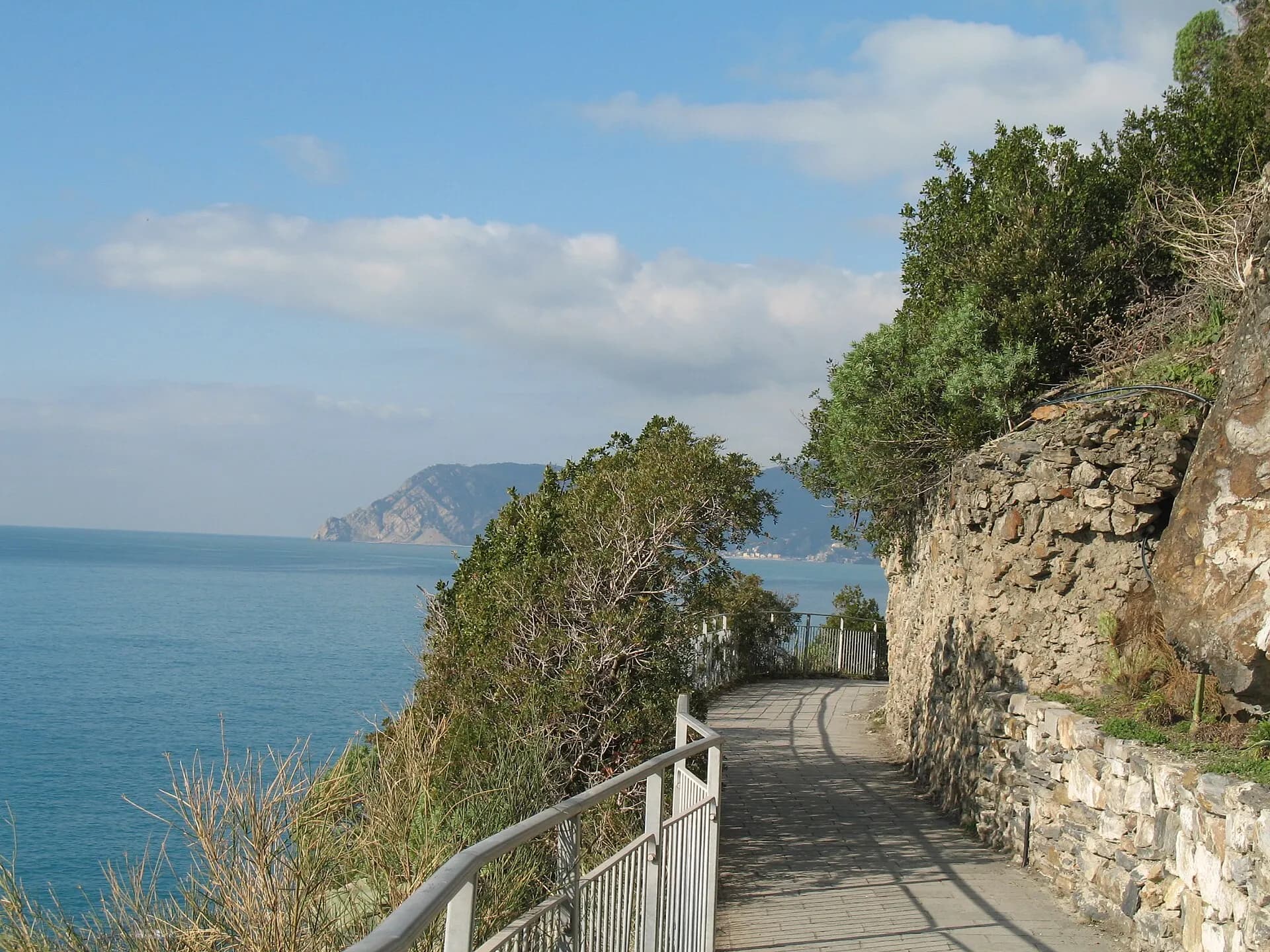
A short paved path along the cliffs between Riomaggiore and Manarola, reopened after more than a decade of repairs, with limited access and timed entry at busy times.
- 8
The sanctuaries and high trails
Higher trails climb through vineyards and woods to hilltop sanctuaries, such as Nostra Signora di Montenero above Riomaggiore and the Madonna di Soviore above Monterosso, with fewer people and wide views.
- 9
Portovenere
Photo: Misaochan2, CC BY-SA 4.0, via Wikimedia Commons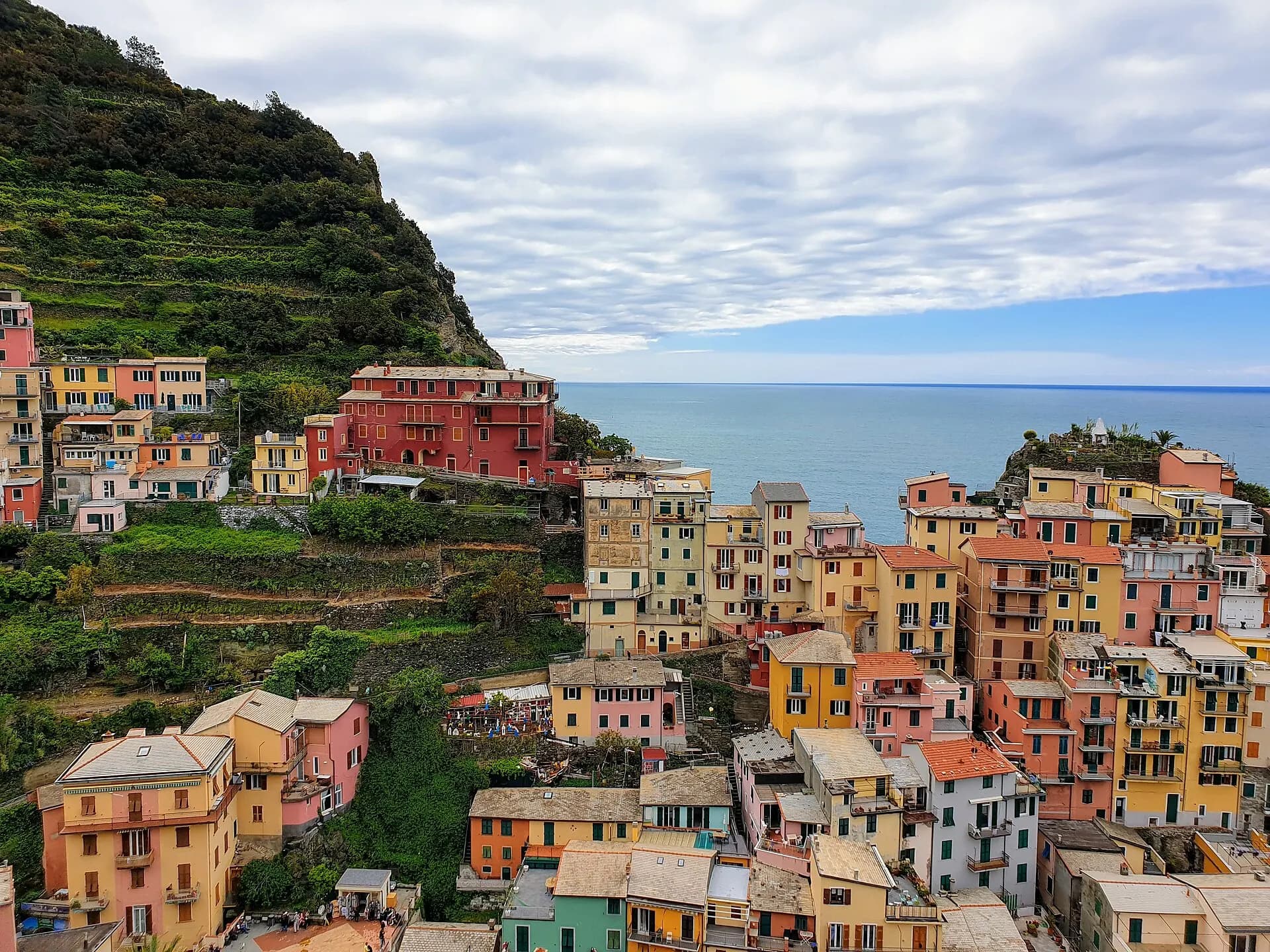
A fortified village at the tip of a peninsula south of the Cinque Terre, with tall colourful houses, a Genoese castle and the striking church of San Pietro on a rock above the sea, reached by boat or bus from La Spezia.

When to go
Spring and early autumn are ideal, with warm weather and fewer crowds, though Easter and weekends can still be busy. Summer is hot and very crowded, especially when cruise ships dock at La Spezia. The grape harvest takes place in September and October. Winter is quiet and mild, but some trails, boats and businesses close.
Getting around
The Cinque Terre Express train runs between La Spezia, the five villages and Levanto, taking just a few minutes between villages. The Cinque Terre Card covers unlimited regional trains in the area and access to the trails. Boats run between the villages, Portovenere and La Spezia from spring to autumn, weather permitting. Driving is not recommended: parking is very limited.
The nearest airports are Pisa and Genoa, both about one and a half hours away by train.
Local tips
- Stay overnight in a village, or in La Spezia or Levanto, to enjoy the area early and late.
- Wear sturdy shoes on the trails; sandals and flip-flops can lead to fines on some paths.
- Carry water: the trails are steep and exposed.
- Respect residents: keep noise down and don't block narrow lanes.
- Book accommodation well ahead in spring and summer.
- Check the park's website for trail closures.
- Swim from the rocks at Manarola, Riomaggiore and Vernazza, or the beach at Monterosso, but take care when the sea is rough.
- Pack light: many stays are up long flights of steps.
Eat and drink
Liguria is the home of pesto, made with basil, pine nuts, garlic, olive oil and cheese, often served with trofie, a short twisted pasta. Try focaccia, fresh anchovies from Monterosso, fried seafood in a paper cone, and farinata, a thin chickpea pancake. The area's terraced vineyards produce white wines and Sciacchetrà, a rare sweet dessert wine made from dried grapes.
Where to stay
The villages have small hotels, guesthouses and apartments, many reached by stairs. Monterosso has the most choice and a beach. La Spezia and Levanto, at either end of the train line, offer more space and better value.
A landscape built by hand
The terraces of the Cinque Terre were built over about a thousand years, as villagers cut the steep slopes into narrow steps of land and held them in place with dry-stone walls. Grapes, olives and lemons grew on them, carried up and down on people's backs. As young people left for the cities in the twentieth century, many terraces were abandoned and began to collapse, which makes the coast more vulnerable to landslides and floods. The national park and local cooperatives now work to restore them, and small monorail tracks carry harvests up the slopes. Buying local wine, oil and lemons helps keep the landscape alive.