Venice
A city built on water, where the streets are canals, the buses are boats and every corner looks like a painting.
- Best time to go
- April to June and September to November, avoiding the peak summer crowds
- Local time
- –
- Currency
- Euro (EUR)
- Reading time
- 4 min
- Language
- Italian

There is nowhere else like Venice. Built on more than a hundred small islands in a lagoon, it was for centuries the capital of a maritime republic that grew rich on trade with the East, and its palaces, churches and canals still reflect that wealth and that connection to Byzantium and the Islamic world. There are no cars: you walk, or you take a boat.
Venice is also a living city under pressure from mass tourism, with a shrinking population and fragile buildings. The busiest areas can be overwhelming in the middle of the day. Stay overnight if you can, explore early and late, wander into the quieter districts, and you'll find the Venice that has enchanted visitors for centuries.
The top 7 in Venice
- 1
St Mark's Basilica
Photo: Prof. Mortel, CC BY 2.0, via Wikimedia Commons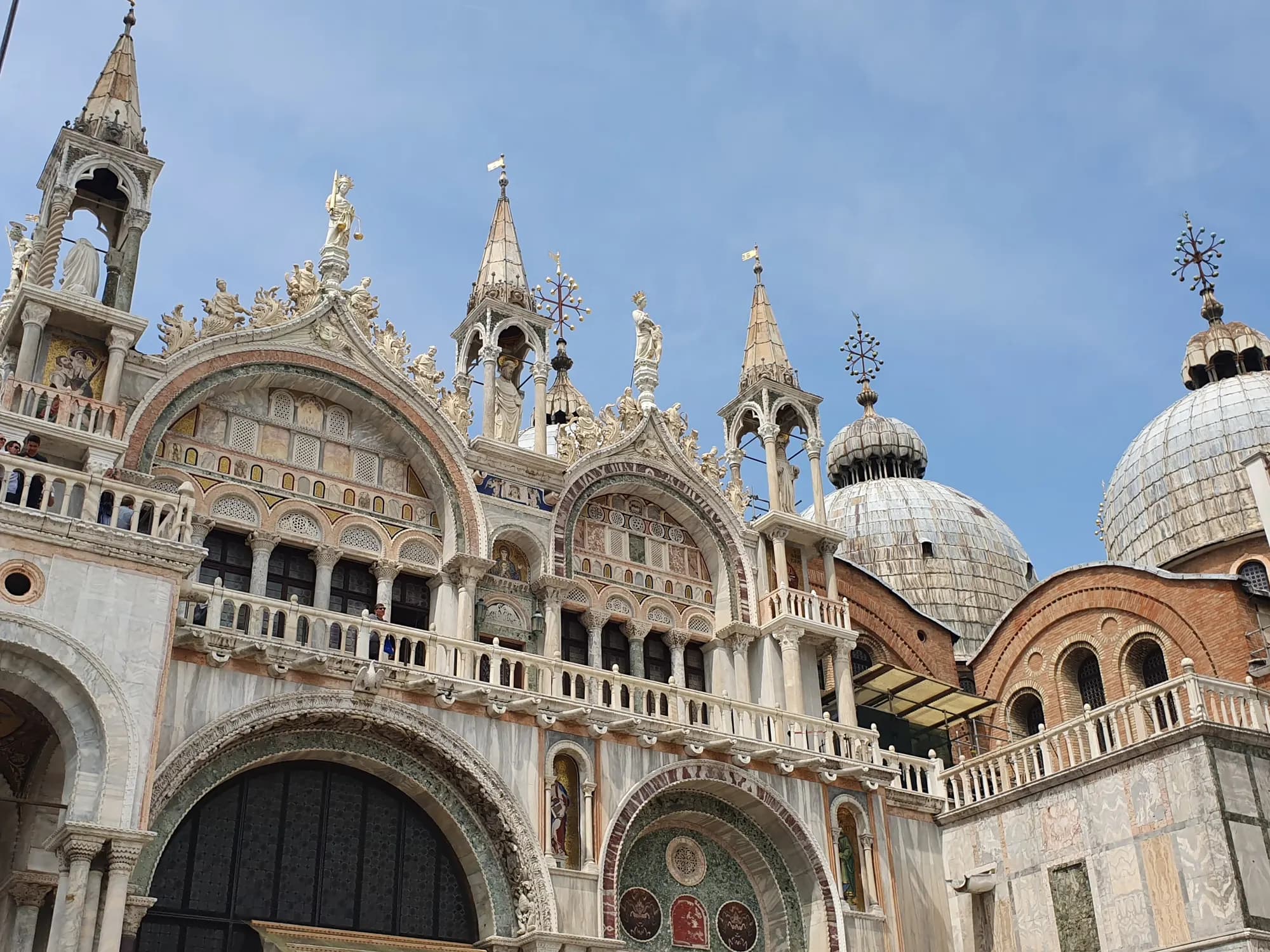
The great church of the republic, built to hold the relics of Saint Mark, glitters with gold mosaics covering more than eight thousand square metres of its domes and walls. Its treasures include the Pala d'Oro, a golden altarpiece set with precious stones, and the bronze horses brought back from Constantinople.
TipBook a time slot online to skip the long queue, and cover your shoulders and knees; large bags aren't allowed inside.
- 2
The Doge's Palace
Photo: Martin Falbisoner, CC BY-SA 4.0, via Wikimedia Commons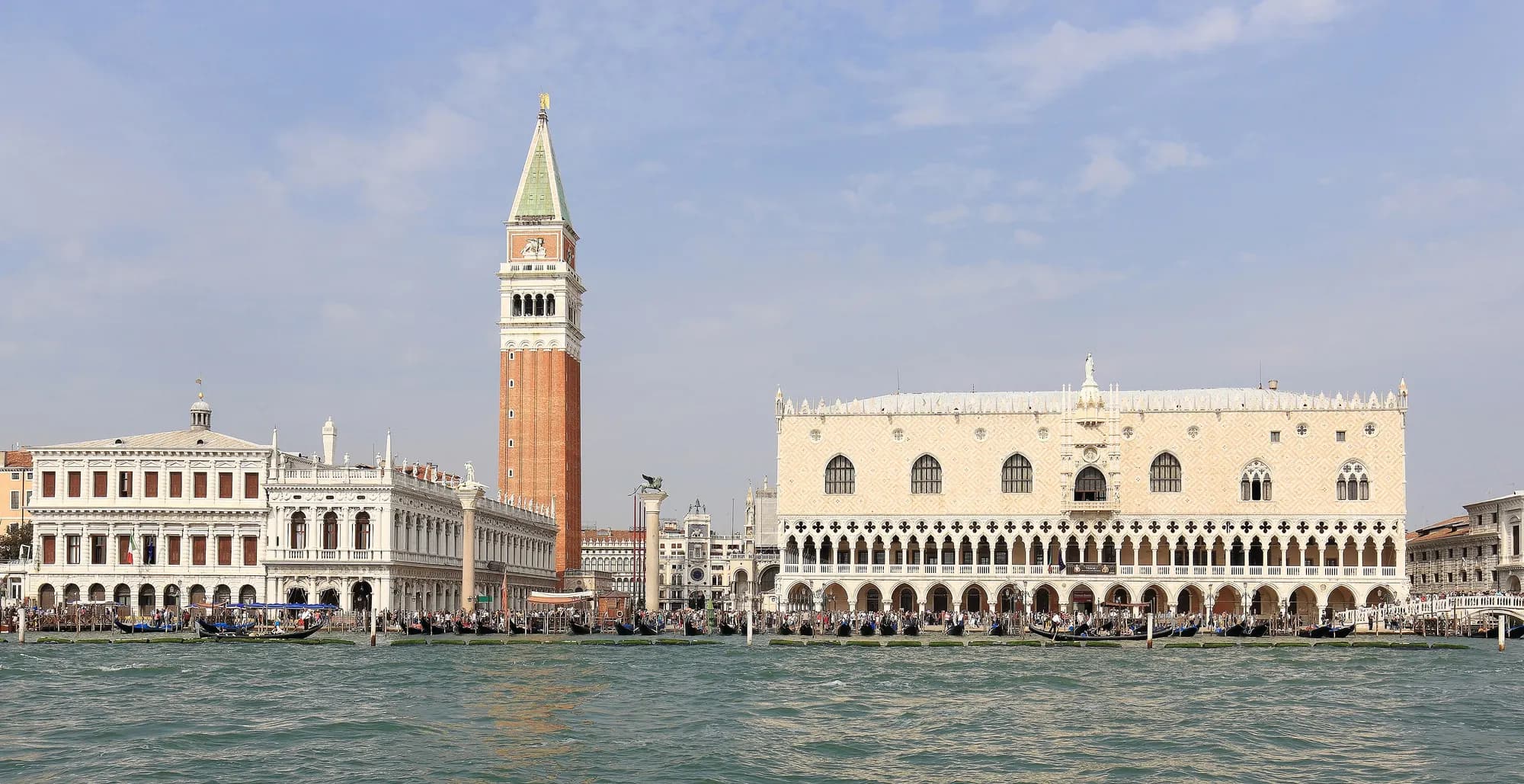
For centuries the seat of the Venetian government and home of its elected leader, the Doge, this Gothic palace has vast council chambers painted by Tintoretto and Veronese, and the Bridge of Sighs leading to the prisons. The Secret Itineraries tour reveals the hidden offices and the cell from which Casanova escaped.
- 3
The Grand Canal and the Rialto Bridge
Photo: kallerna, CC BY-SA 4.0, via Wikimedia Commons
Venice's main street is a sweeping S-shaped canal lined with palaces. The best way to see it is from the water bus, line 1, which stops at almost every landing. The stone Rialto Bridge, completed in 1591, crosses it at the city's old commercial heart, next to the fish and produce markets.
TipVisit the Rialto Market in the morning, when the fishmongers are at work.
- 4
Dorsoduro and the Accademia
Photo: kallerna, CC BY-SA 4.0, via Wikimedia Commons
A quieter district of canals, artists' studios and student bars, with two great museums: the Gallerie dell'Accademia, the finest collection of Venetian painting, from Bellini to Titian, and the Peggy Guggenheim Collection of modern art in a palazzo on the Grand Canal. The domed church of Santa Maria della Salute stands at its tip.
- 5
Cannaregio and the Ghetto
Photo: Didier Descouens, CC BY-SA 4.0, via Wikimedia Commons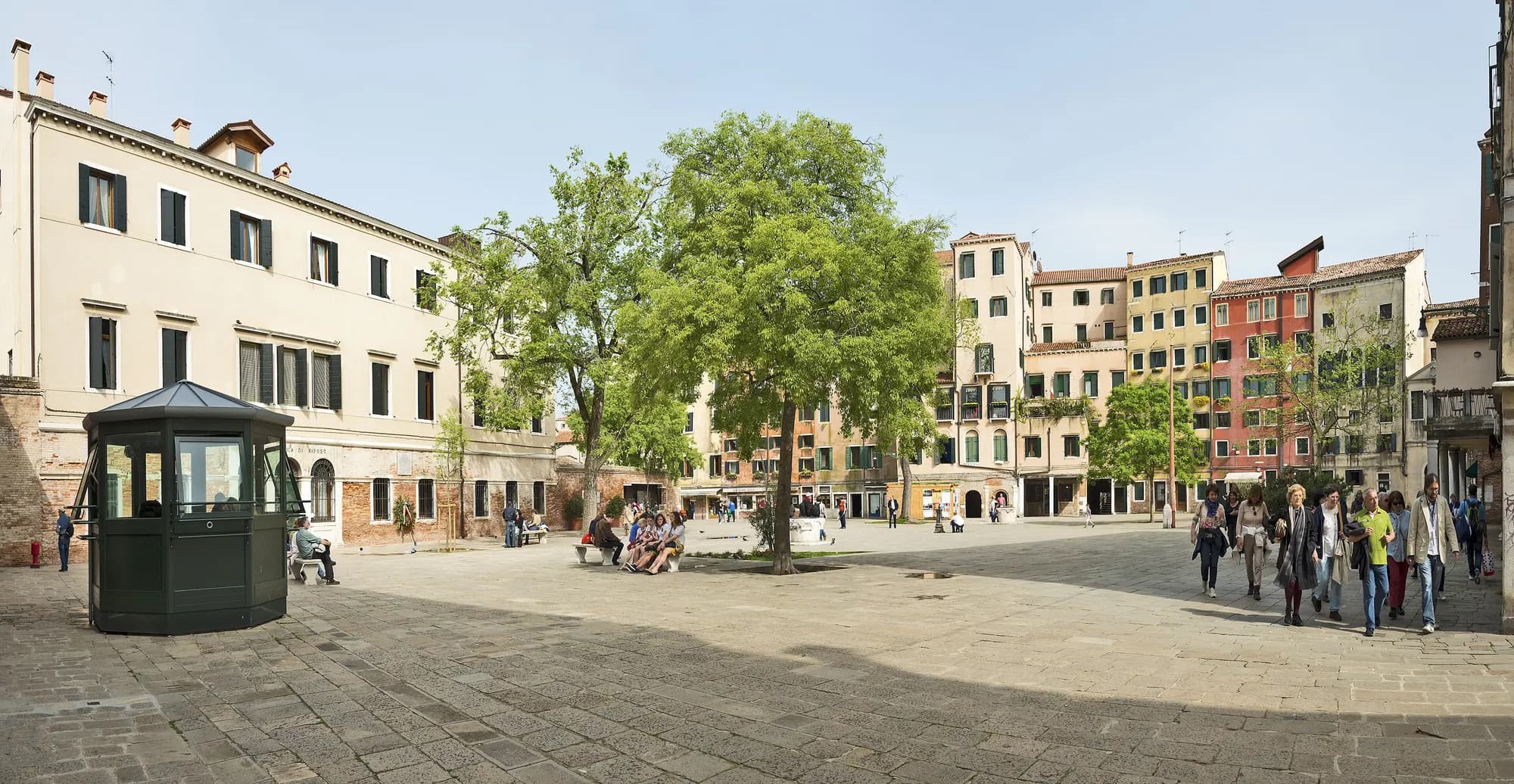
A residential district where many Venetians still live, with long canal-side walks and local bars. It is home to the Ghetto, where Venice's Jews were made to live from 1516; the word ghetto comes from here. Its synagogues can be visited on tours from the Jewish Museum.
- 6
San Giorgio Maggiore
Photo: Ввласенко, CC BY-SA 3.0, via Wikimedia Commons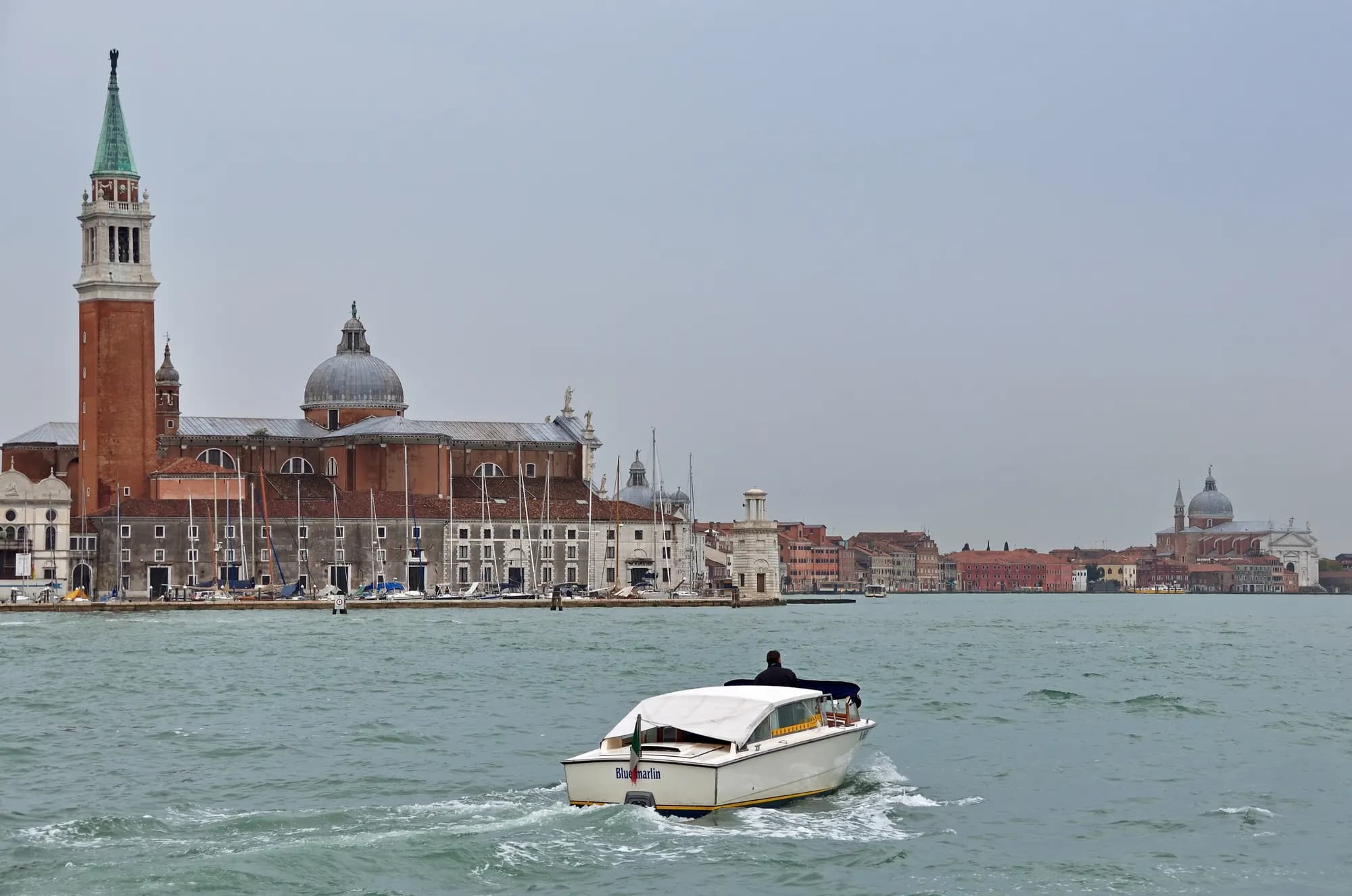
A small island facing St Mark's Square, crowned by a church designed by Palladio. Its bell tower has one of the best views in Venice, across the water to the Doge's Palace and the domes of the city, usually without the long queue of the campanile in St Mark's Square.
- 7
Murano and Burano
Photo: kallerna, CC BY-SA 4.0, via Wikimedia Commons
Two islands in the northern lagoon, reached by water bus. Murano has been the home of Venetian glassmaking since the thirteenth century, with furnaces and a glass museum. Burano, further out, is a fishing village of brightly painted houses, known for its lace.
TipContinue to the island of Torcello, the lagoon's first settlement, for its Byzantine mosaics and tranquillity.
When to go
Spring and autumn offer the best balance of weather and crowds. Summer is hot, humid and extremely busy. Winter is cold and misty but peaceful and atmospheric; Carnival, in the weeks before Lent, fills the city with masks and costumes, and the Venice Biennale, the international exhibition of art and architecture held in alternating years, fills the Arsenale shipyard and the gardens of Castello from spring to autumn. From autumn to spring, very high tides, called acqua alta, can flood low-lying areas, though the city's flood barriers now protect it from the worst.
On certain peak days, day visitors must pay an access fee to enter the historic centre; check the city's website before you go. Overnight visitors pay a tourist tax with their accommodation instead.
Getting around
Venice is a walking city, with narrow lanes (calli) and around four hundred bridges, so pack light: wheeling a suitcase over the steps is hard work. The vaporetti, the water buses run by ACTV, serve the Grand Canal, the outer islands and the Lido; travel cards for one or several days are good value. Traghetti, gondola ferries, cross the Grand Canal at a few points for a small fare.
From Marco Polo Airport, buses reach Piazzale Roma, the city's car and bus terminus, in about twenty minutes, and Alilaguna boats run across the lagoon. Trains arrive at Santa Lucia station, right on the Grand Canal.
Local tips
- Don't sit on bridges or church steps to eat, and never swim in the canals: both can lead to fines.
- Keep to the right in narrow lanes, and don't stop on bridges to block the way.
- Tour groups are limited in size, and loudspeakers are not allowed.
- Drink from the free public fountains, which provide excellent water.
- A gondola ride is expensive; prices are set by the city, so agree on the duration before you start.
- Get lost on purpose: the quietest corners are often just a few streets from the busiest ones.
Eat and drink
Venetians graze in bacari, small wine bars serving cicchetti, little snacks such as crostini with creamed salt cod, sardines in sweet-and-sour onions (sarde in saor) and fried seafood, with an ombra, a small glass of wine, or a spritz, which was born in the region. Try risotto with cuttlefish ink, and the pastries of the city's bakeries.