Rome
Three thousand years of history stacked in layers, with a fountain on every corner and a plate of pasta at the end of the day.
- Best time to go
- April to early June and late September to October, for warm days without the summer heat
- Local time
- –
- Currency
- Euro (EUR)
- Reading time
- 6 min
- Language
- Italian

No other city lets you walk through so much history in a single afternoon. In Rome, a Renaissance palace sits on the foundations of an ancient theatre, medieval churches hide Roman columns, and the Colosseum is a short walk from a neighbourhood bar where locals drink their espresso standing up. The centre is dense and walkable, and much of its pleasure comes free: the piazzas, the fountains and the light on ochre walls in the late afternoon.
Rome can be hot, crowded and chaotic, and the big sights need some planning. The reward for a little organisation is enormous. Book the Colosseum and the Vatican ahead, start early, and leave space in the day to wander, because the city's best moments are often the unplanned ones.
The top 12 in Rome
- 1
The Colosseum
Photo: Wilfredor, CC0, via Wikimedia Commons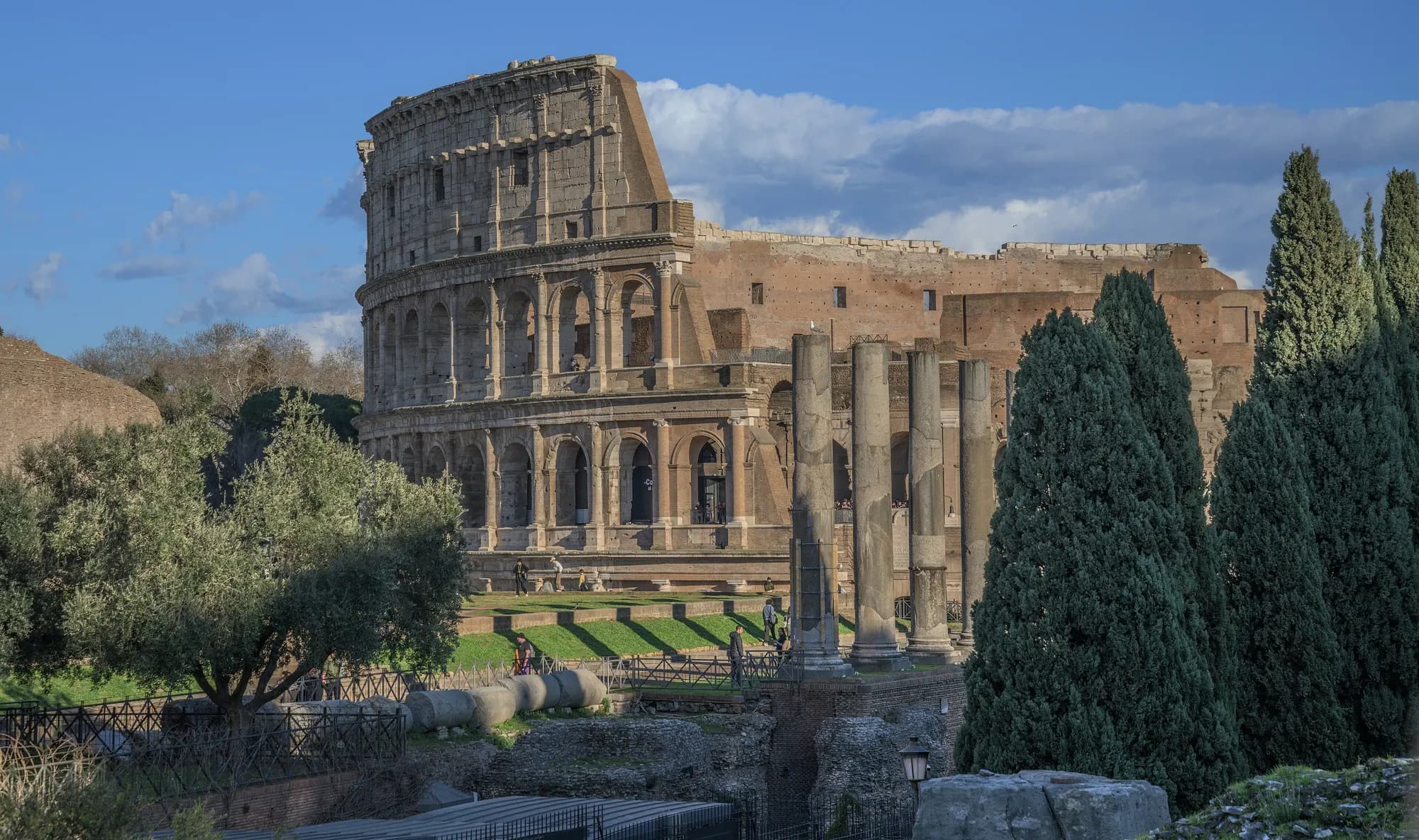
The largest amphitheatre ever built opened in AD 80 and held around fifty thousand spectators for gladiator fights and public spectacles. Walking its corridors and looking down into the maze of passages beneath the arena floor gives a real sense of its scale. Standard tickets cover the Colosseum, the Roman Forum and the Palatine Hill together.
TipBook timed tickets on the official site well ahead, and check what each ticket includes: access to the arena floor and the underground passages is sold separately and sells out first.
- 2
The Roman Forum and Palatine Hill
Photo: BeBo86, CC BY-SA 3.0, via Wikimedia Commons
The Forum was the heart of ancient Rome, a valley of temples, law courts and triumphal arches where the city's public life took place. Above it, the Palatine Hill is where emperors built their palaces, and where, according to legend, Rome was founded. The hill's gardens give one of the best views over the Forum.
TipThere is little shade, so visit in the morning or late afternoon, and bring water; you can refill it at the drinking fountains.
- 3
Trevi Fountain
Photo: Wilfredor, CC0, via Wikimedia Commons
The grandest of Rome's fountains, finished in 1762, fills a tiny square with marble horses, tritons and cascading water. Tradition says that throwing a coin over your shoulder into the water means you'll return to Rome; the coins are collected and given to charity.
TipCome early in the morning or late at night: in the middle of the day, the crowds make it hard even to see the water.
- 4
The Spanish Steps
Photo: Ank Kumar, CC BY-SA 4.0, via Wikimedia Commons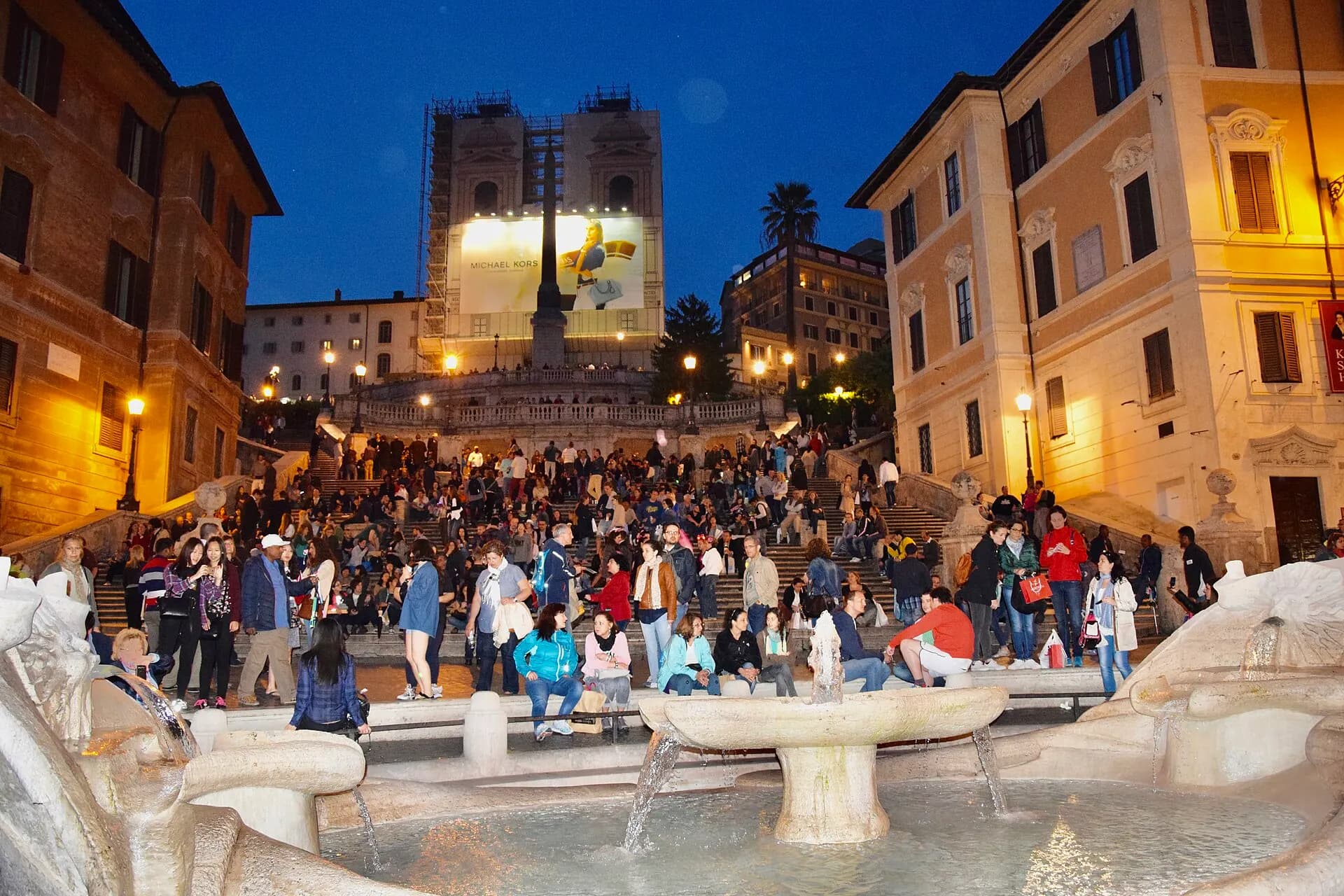
A sweeping baroque staircase of 135 steps, completed in 1725, climbs from Piazza di Spagna to the church of Trinità dei Monti. The streets below are lined with fashion houses, and the view from the top looks over the rooftops of the centre.
TipSitting on the steps is not allowed, and wardens can fine you; enjoy the view standing, or from the Pincio terrace nearby.
- 5
Galleria Borghese
Photo: Alessio Damato, CC BY-SA 3.0, via Wikimedia Commons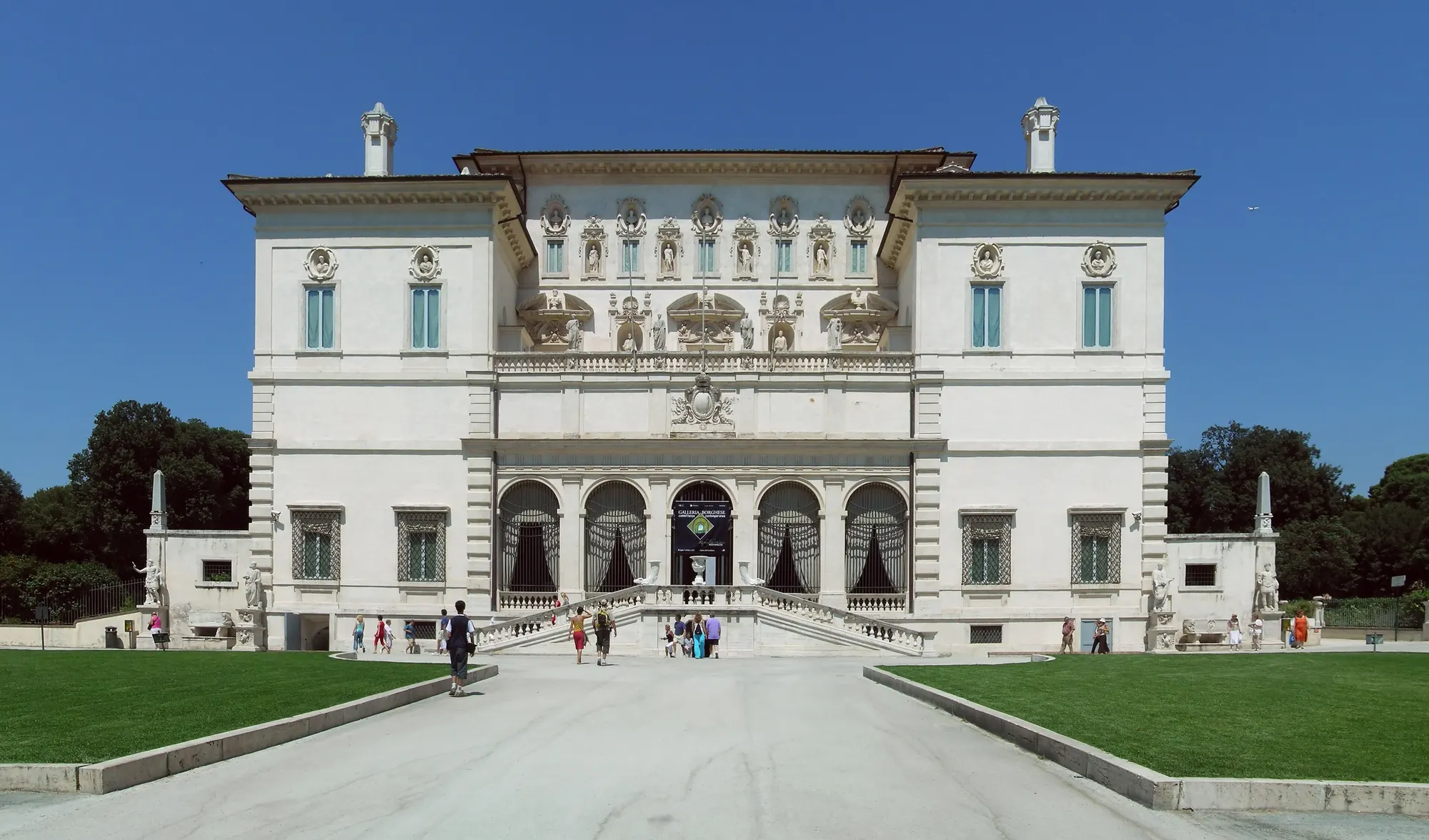
A villa in the Borghese gardens holding an extraordinary collection: Bernini's marble sculptures, which seem almost to move, and paintings by Caravaggio, Raphael and Titian. Visitor numbers are limited, which makes it one of the most enjoyable museums in Rome.
TipReservations are compulsory and slots sell out, so book well ahead.
- 6
The Pantheon
Photo: Krzysztof Golik, CC BY-SA 4.0, via Wikimedia Commons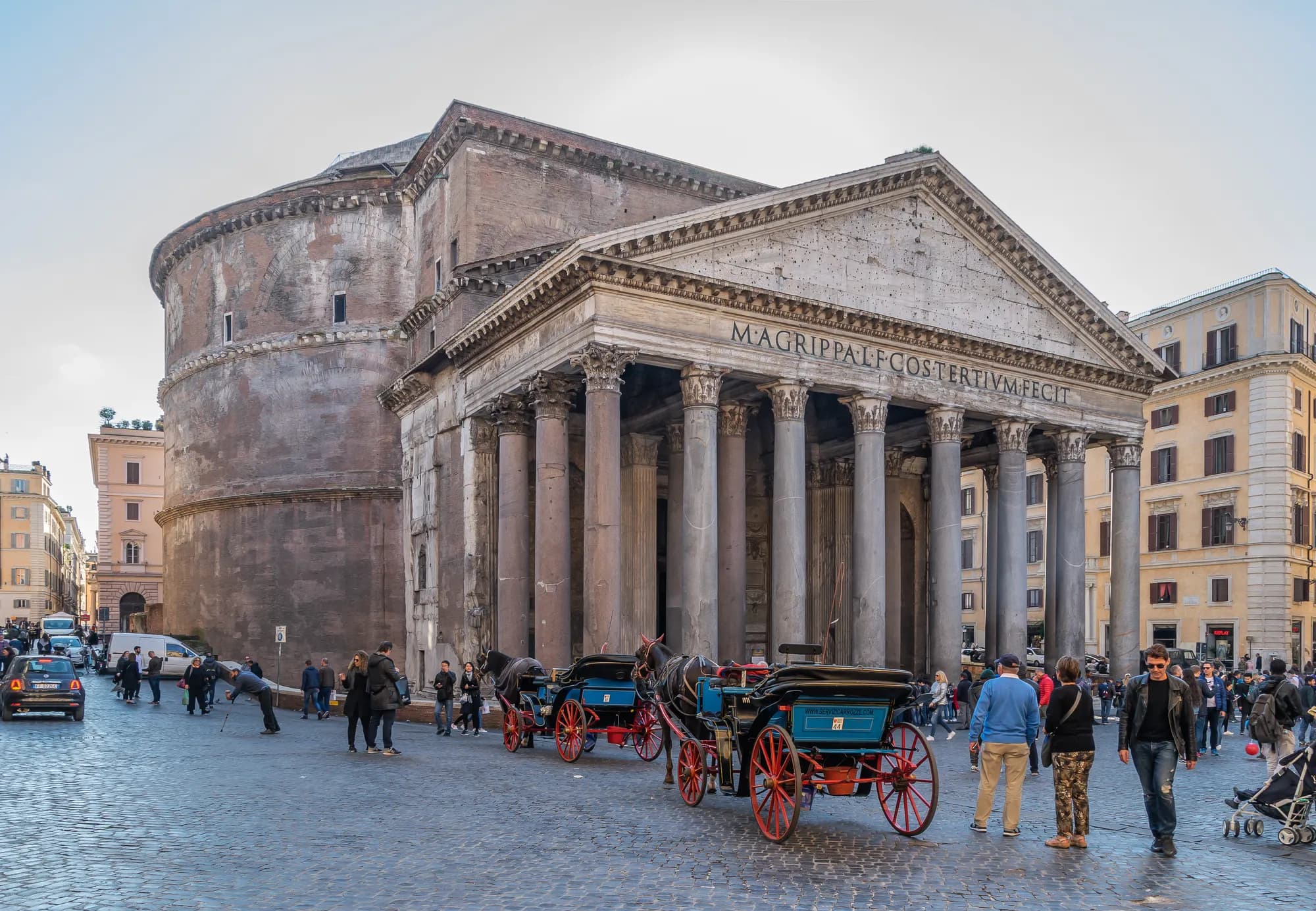
Built under the emperor Hadrian almost two thousand years ago, the Pantheon is the best-preserved building of ancient Rome, and its unreinforced concrete dome is still the largest of its kind in the world. Light falls through the open oculus at its centre, and the circle of sunlight moves across the walls during the day. The artist Raphael is buried here.
TipEntry now requires a small ticket; it is quickest to book online, or come at opening time.
- 7
Piazza Navona and the historic centre
Photo: Timothy A. Gonsalves, CC BY-SA 4.0, via Wikimedia Commons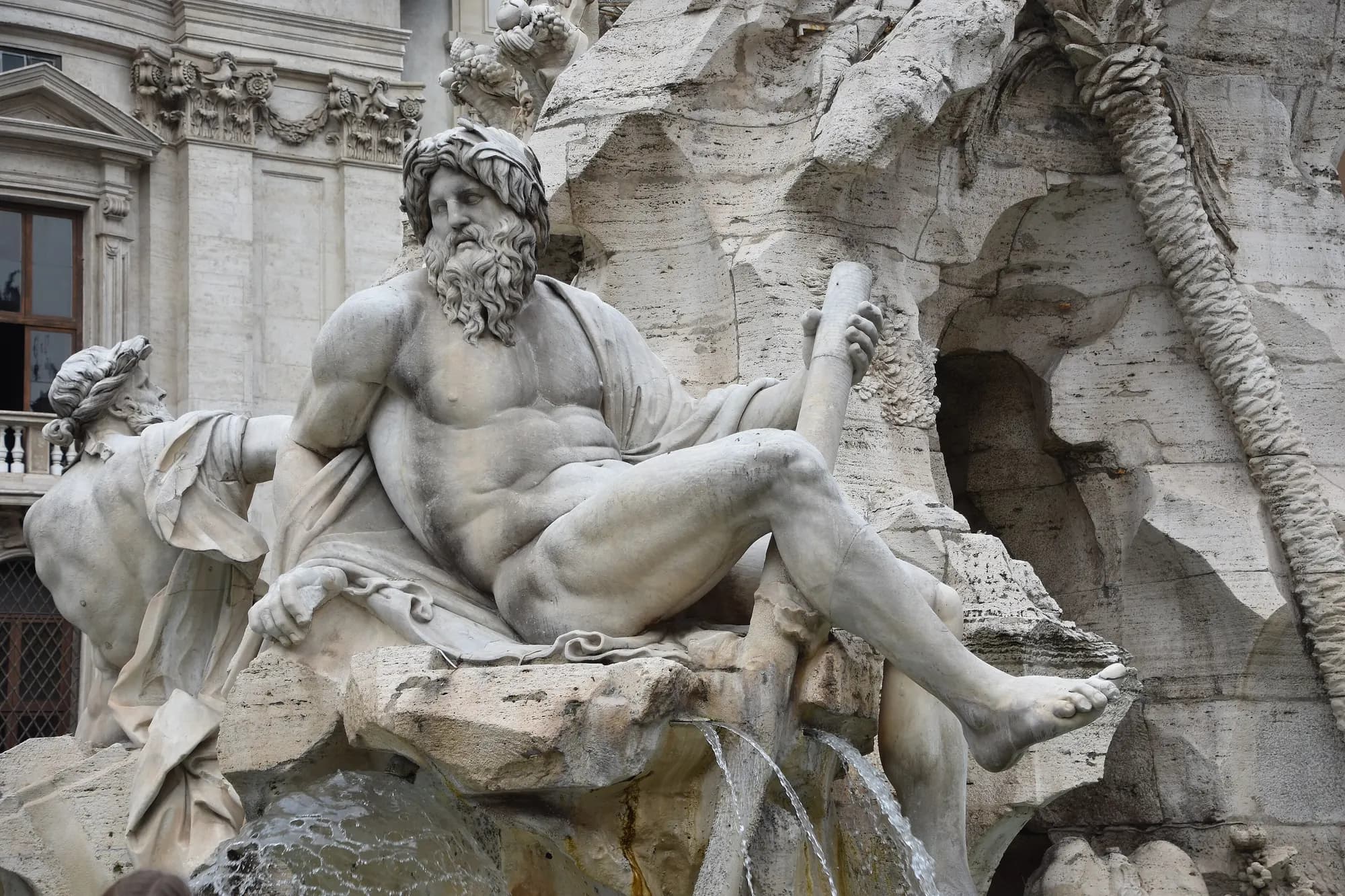
This long, oval square follows the shape of an ancient stadium and is lined with baroque churches and palaces, with Bernini's Fountain of the Four Rivers at its centre. The lanes around it, towards Campo de' Fiori and its morning market, are the most atmospheric in Rome.
- 8
Castel Sant'Angelo
Photo: Jebulon, CC0, via Wikimedia Commons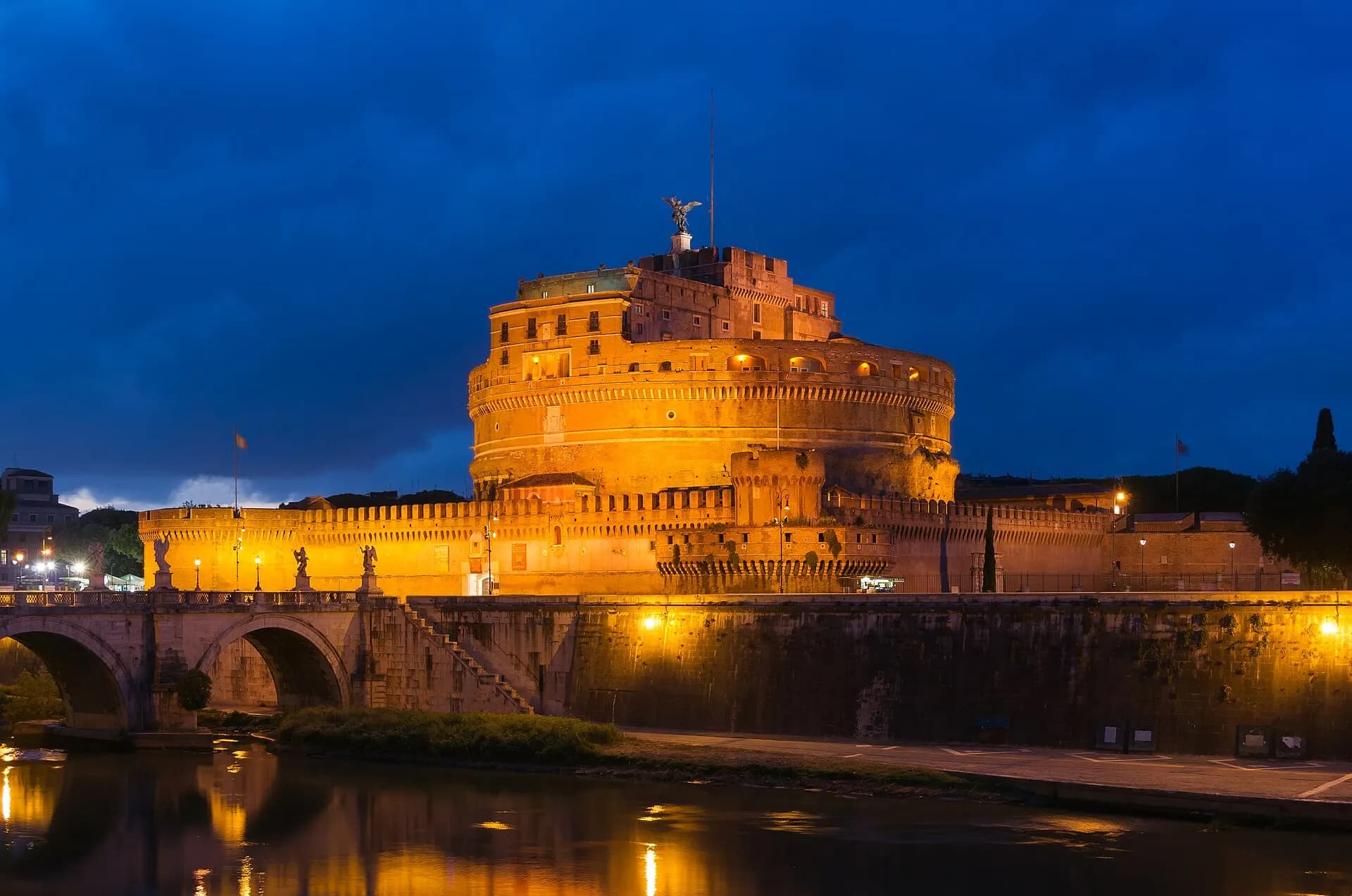
Built as the mausoleum of the emperor Hadrian, this cylindrical fortress later became a papal stronghold, linked to the Vatican by a fortified corridor. Inside, ramps and rooms climb through its history to a terrace with one of the finest views of St Peter's and the river, and the bridge in front is lined with Bernini's angels.
- 9
St Peter's Basilica
Photo: Alvesgaspar, CC BY-SA 4.0, via Wikimedia Commons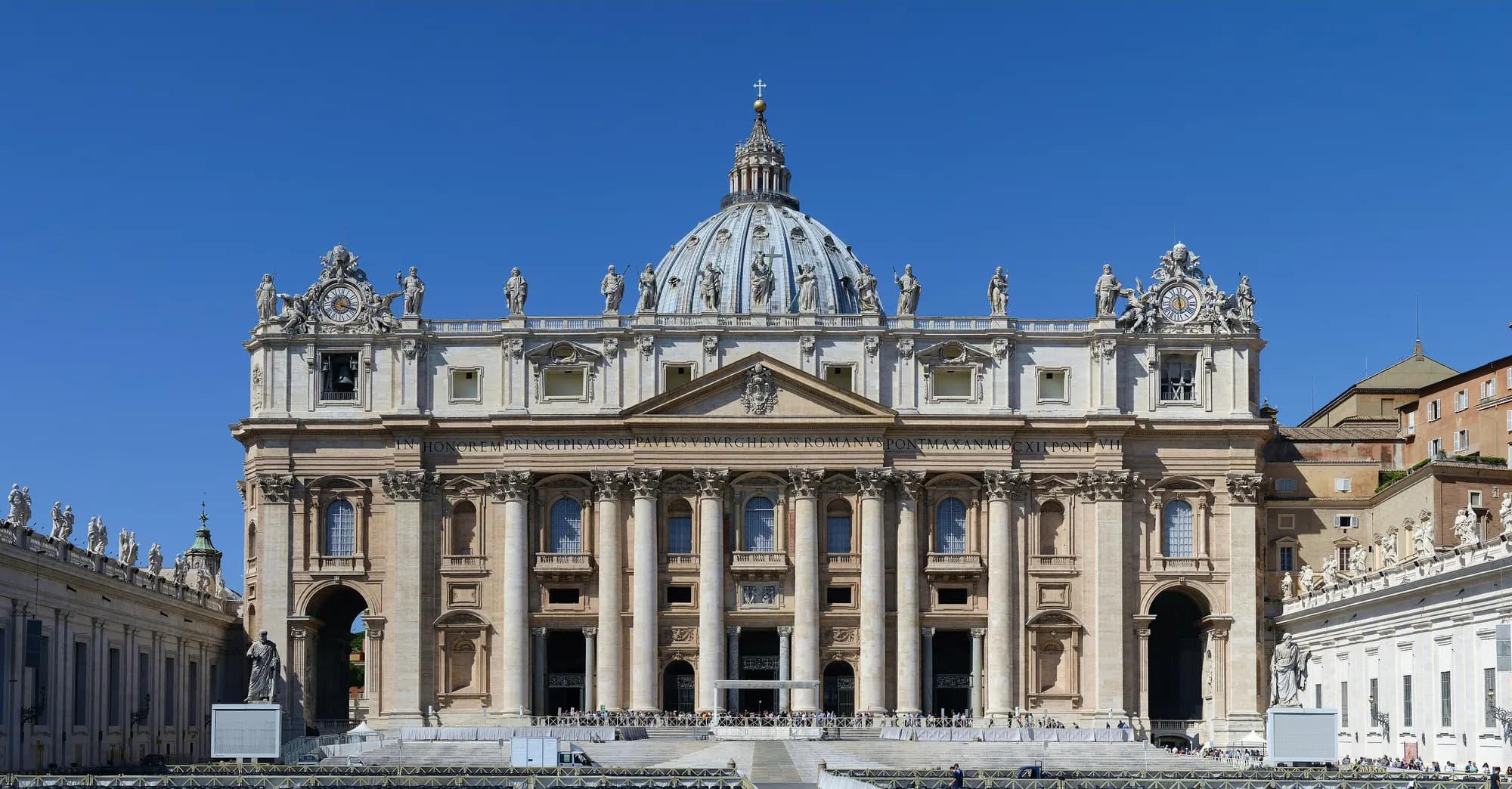
The largest church in Christendom stands over the tomb of Saint Peter, with Michelangelo's dome above and Bernini's sweeping colonnade embracing the square in front. Inside, look for Michelangelo's Pietà, near the entrance. Entry to the basilica is free, and you can climb the dome for a view across the city.
TipCover your shoulders and knees, or you'll be turned away at the security check.
- 10
The Vatican Museums and the Sistine Chapel
Photo: Wilfredor, CC0, via Wikimedia Commons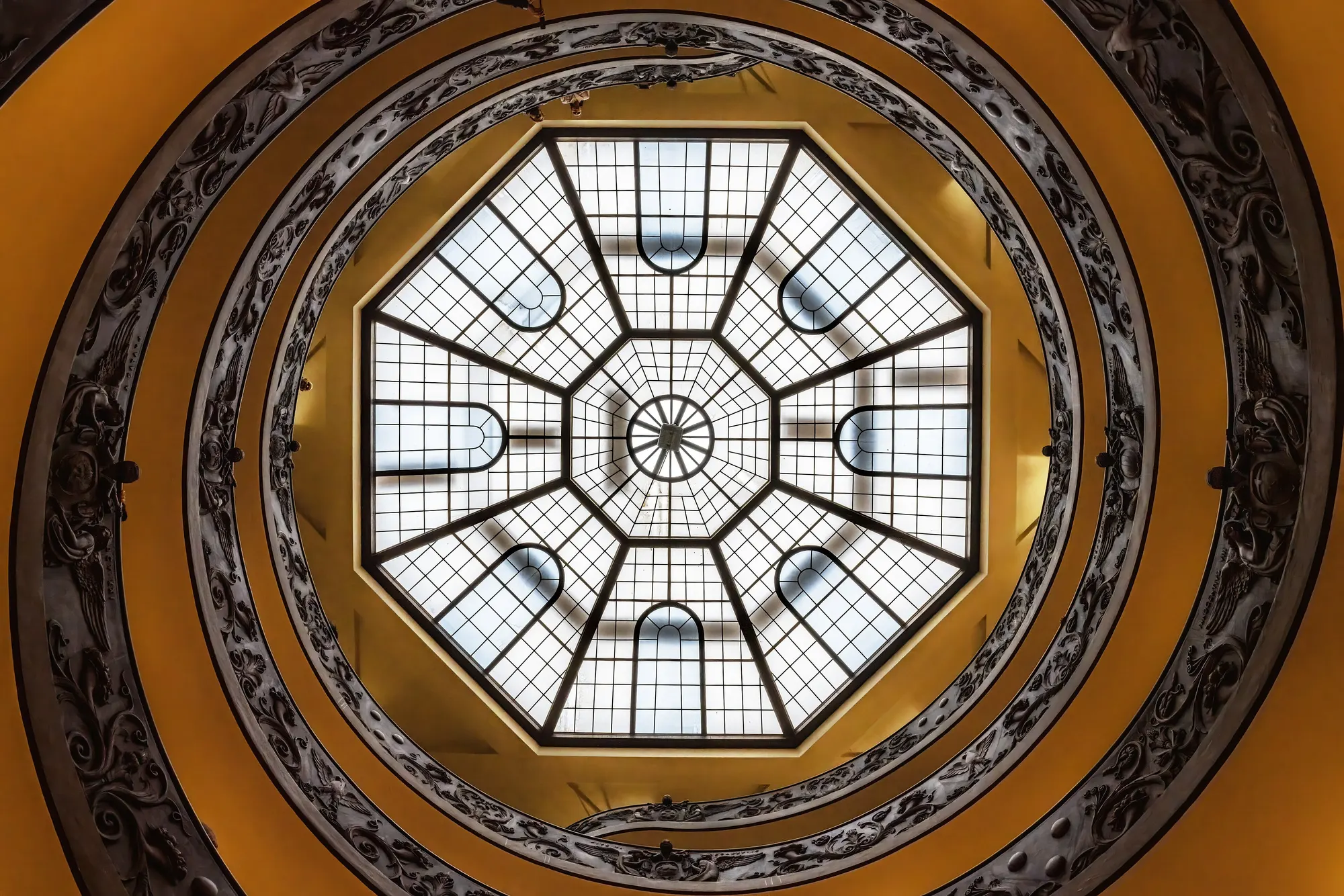
One of the world's great art collections, gathered by the popes over five centuries, with classical sculpture, the rooms painted by Raphael, and the Sistine Chapel, where Michelangelo painted the ceiling and the Last Judgement. Expect crowds: the route is long and the chapel itself is busy, so allow at least three hours.
TipBook an early slot online. The museums are closed on most Sundays, and photography is not allowed in the Sistine Chapel.
- 11
Trastevere
Photo: Krzysztof Golik, CC BY-SA 4.0, via Wikimedia Commons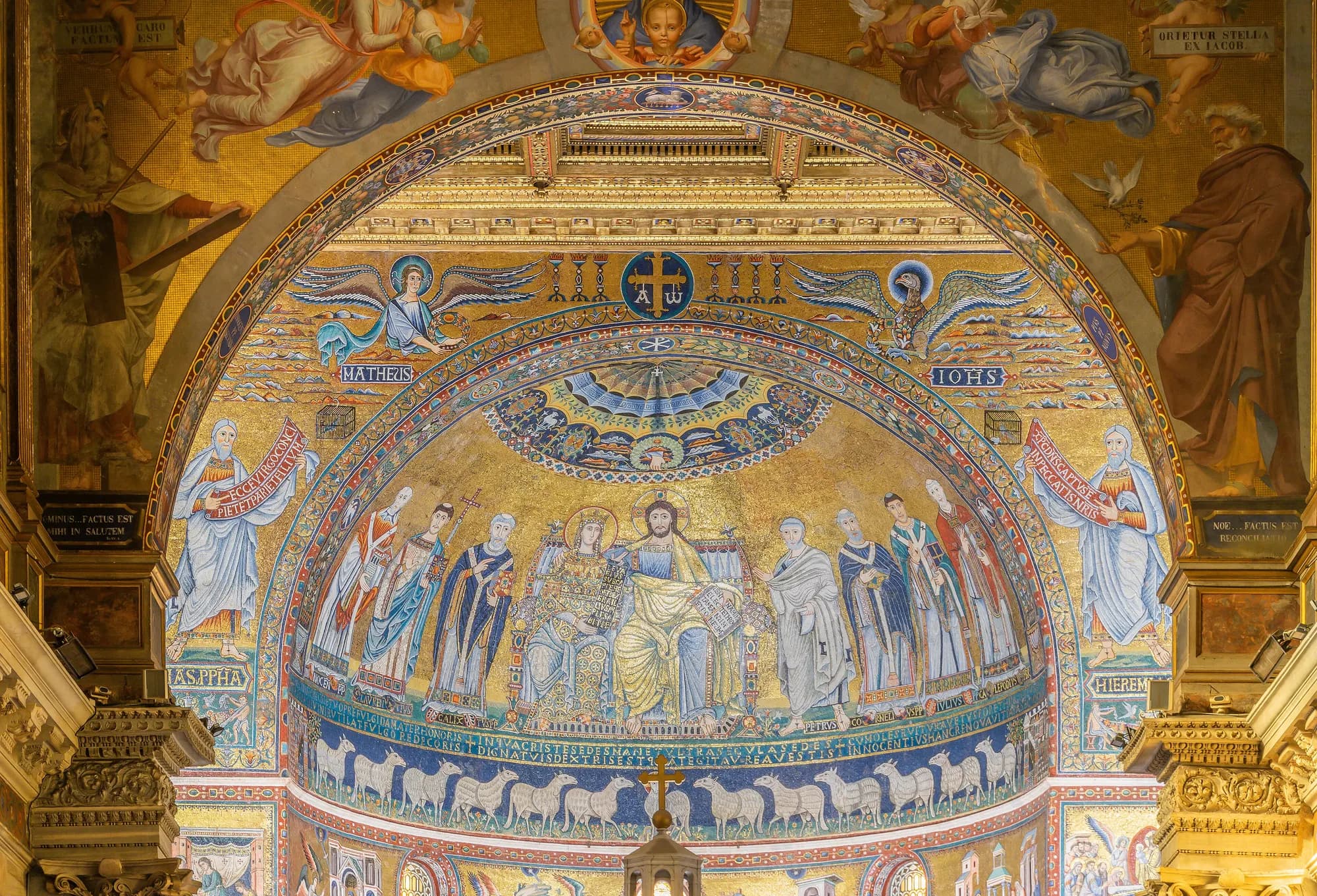
A neighbourhood of cobbled lanes, ivy-covered houses and small squares across the river from the centre, with some of the city's liveliest restaurants and bars. Visit the church of Santa Maria in Trastevere, with its golden twelfth-century mosaics, then climb the Gianicolo hill for a view over the domes and rooftops.
- 12
The Appian Way and the catacombs
Photo: Livioandronico2013, CC BY-SA 4.0, via Wikimedia Commons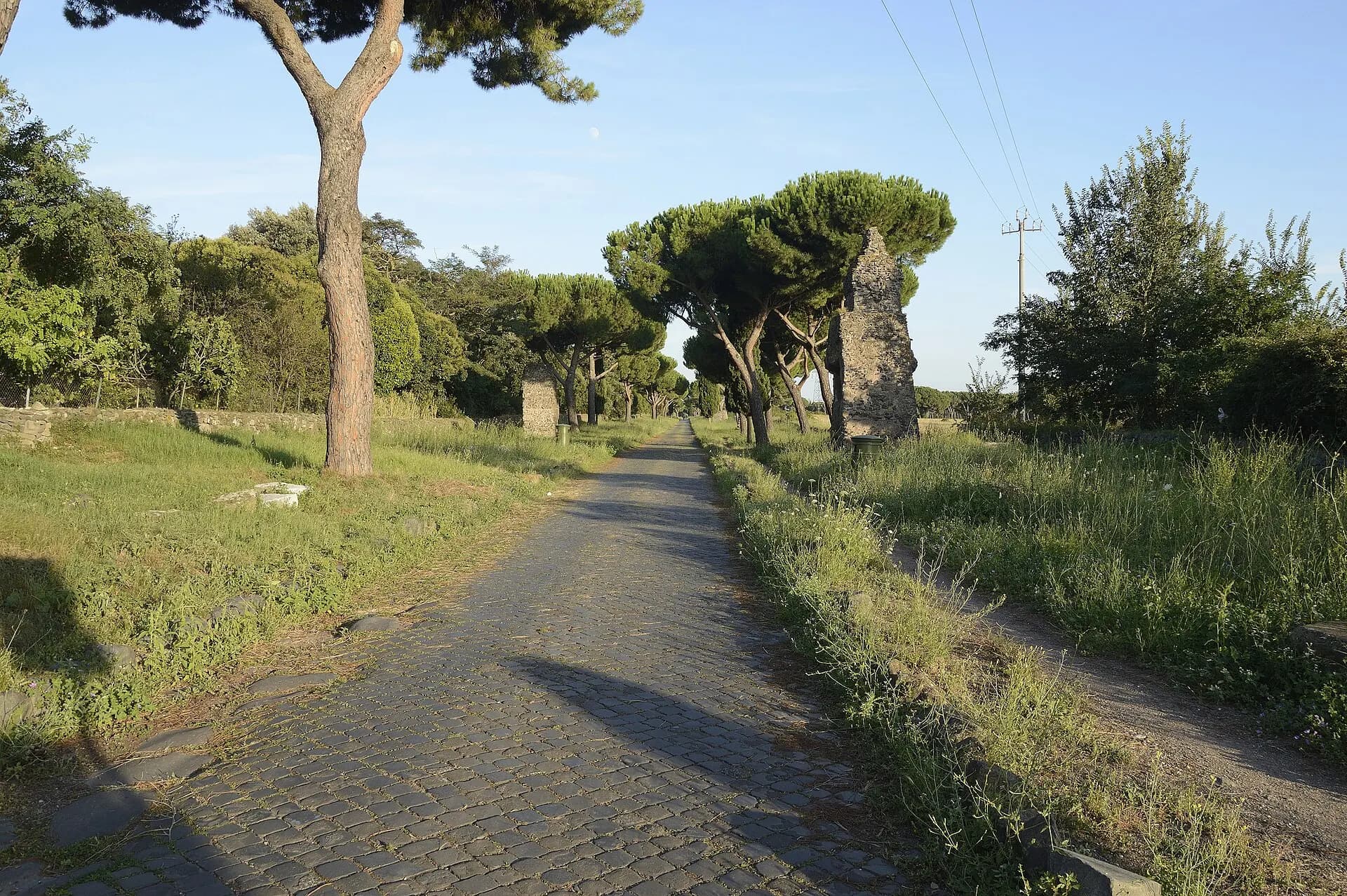
The Via Appia Antica, built from 312 BC, was the great road south from Rome, lined with tombs and villas. Its stretch outside the city walls is now a regional park of cypresses, ancient paving stones and ruins, best explored by bicycle. Beneath it lie the catacombs of San Callisto and San Sebastiano, where early Christians buried their dead in kilometres of underground galleries.
TipParts of the road are closed to traffic on Sundays, the best day to cycle it; the catacombs can only be visited on a guided tour.
When to go
Spring and autumn are the best seasons: warm enough to sit outside, with long light and comfortable walking weather. July and August are very hot, and many Romans leave the city in mid-August, when some restaurants close. Winter is mild and much quieter, with shorter queues, though some days are rainy. Easter and major church events draw large crowds to the Vatican.
Getting around
The historic centre is compact, and walking is the best way to see it. The metro has three lines, which are useful for the Colosseum, the Vatican area and the main station, Termini, but they don't reach the heart of the old centre, where buses and trams fill the gaps. Contactless bank cards work at metro gates, and tickets are also sold at stations and tobacconists.
From Fiumicino Airport, the Leonardo Express train reaches Termini in about half an hour; regional trains also run to Trastevere and other stations. Fast trains link Rome with Florence in about an hour and a half, and with Naples in about an hour and ten minutes.
Local tips
- Fill your bottle at the nasoni, the free drinking fountains found all over the city.
- Dress modestly for churches: shoulders and knees covered, for everyone.
- Many restaurants add a small cover charge ("coperto") per person; it's legal and should be on the menu.
- Avoid restaurants with touts outside and photo menus in many languages, especially next to the big sights.
- Watch out for pickpockets on crowded buses, particularly the routes to the Vatican.
- Validate paper tickets when you board a bus or tram, or you could be fined.
Eat and drink
Roman cooking is simple and robust. The four classic pastas are carbonara, cacio e pepe, amatriciana and gricia, and the city is famous for supplì (fried rice balls with mozzarella), artichokes cooked Roman or Jewish style, and pizza al taglio, sold by weight. Testaccio, the old working-class district, is a good place to try them all, especially at its covered market. Have coffee standing at the bar, as Romans do, and finish the evening with gelato.