Lake Como
A deep, Y-shaped Alpine lake ringed by villa gardens, steep wooded slopes and old villages linked by boat.
- Best time to go
- April to June and September to mid-October, when the gardens are open and the boats run often
- Local time
- –
- Currency
- Euro (EUR)
- Reading time
- 8 min
- Language
- Italian
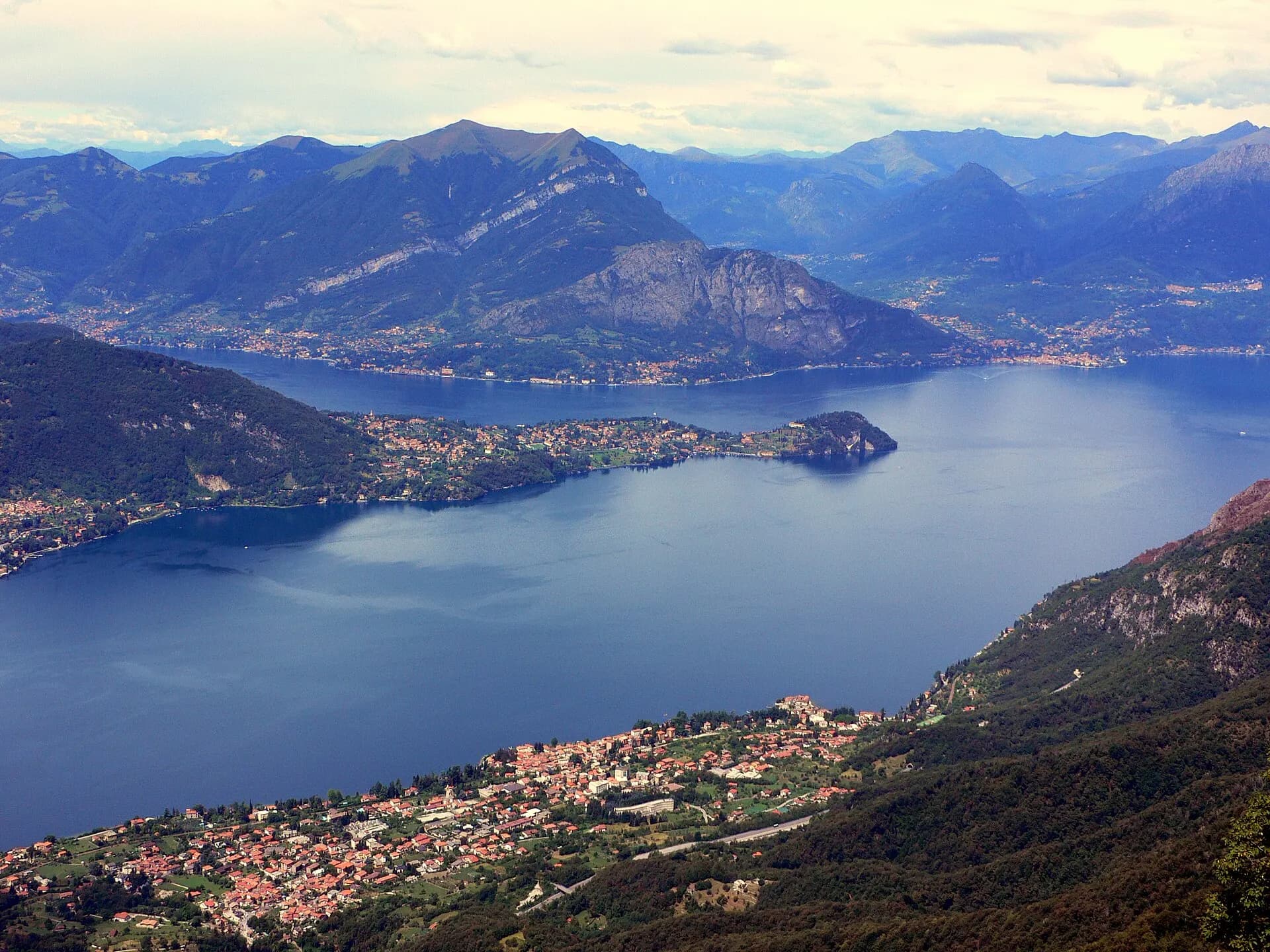
Lake Como fills a long, narrow glacial valley at the foot of the Alps, about an hour north of Milan. Its three arms meet at Bellagio in the shape of an upside-down Y, and the mountains rise so steeply from the water that many villages are little more than a strip of houses, a church and a ferry pier. Since Roman times, wealthy Milanese and later aristocrats from across Europe built summer villas here, and their terraced gardens of camellias, azaleas and old trees are still the main reason most people come.
The lake is best seen from the water. Ferries link the towns of the "central lake", Bellagio, Varenna, Menaggio and Tremezzo, while the city of Como at the southern tip has a fine cathedral, a lakefront promenade and fast trains to Milan. Roads are narrow and busy, so plan around the boats, travel early in the day, and give yourself at least two or three nights to enjoy it slowly.
The top 13 in Lake Como
- 1
Como Cathedral and the old town
Photo: Beaphoto, CC BY-SA 4.0, via Wikimedia Commons
The marble cathedral took more than three centuries to build, which is why it moves from Gothic at the front to Renaissance along the sides and a Baroque dome on top. Around it, the walled old town of Como is a compact grid of Roman origin, with arcaded squares, the striped Broletto beside the cathedral and quiet lanes that are pleasant to wander before you head to the lake.
TipWalk west along the lakefront to the Tempio Voltiano, a small museum to Alessandro Volta, and on to the public park of Villa Olmo.
- 2
Brunate funicular
Photo: Emanu37429, CC0, via Wikimedia Commons
A funicular railway has climbed from the Como lakefront to the village of Brunate since 1894, rising steeply through the woods in a few minutes. At the top, short paths lead to viewpoints over the city and the first arm of the lake, and on clear days to the Alps and the plain towards Milan. Walk on to the Faro Voltiano lighthouse for an even wider view.
- 3
Greenway del Lago di Como
Photo: Ray Swi-hymn from Sijhih-Taipei, Taiwan, CC BY-SA 2.0, via Wikimedia Commons
This walking route of about 10.5 kilometres follows old paths and quiet lanes along the western shore from Colonno to Griante, passing through Sala Comacina, Ossuccio, Lenno and Tremezzo. It's mostly easy, well signed and dotted with villas, churches and lake views, and because buses and boats serve every village you can walk as much or as little of it as you like.
- 4
Isola Comacina
Photo: LigaDue, CC BY-SA 4.0, via Wikimedia Commons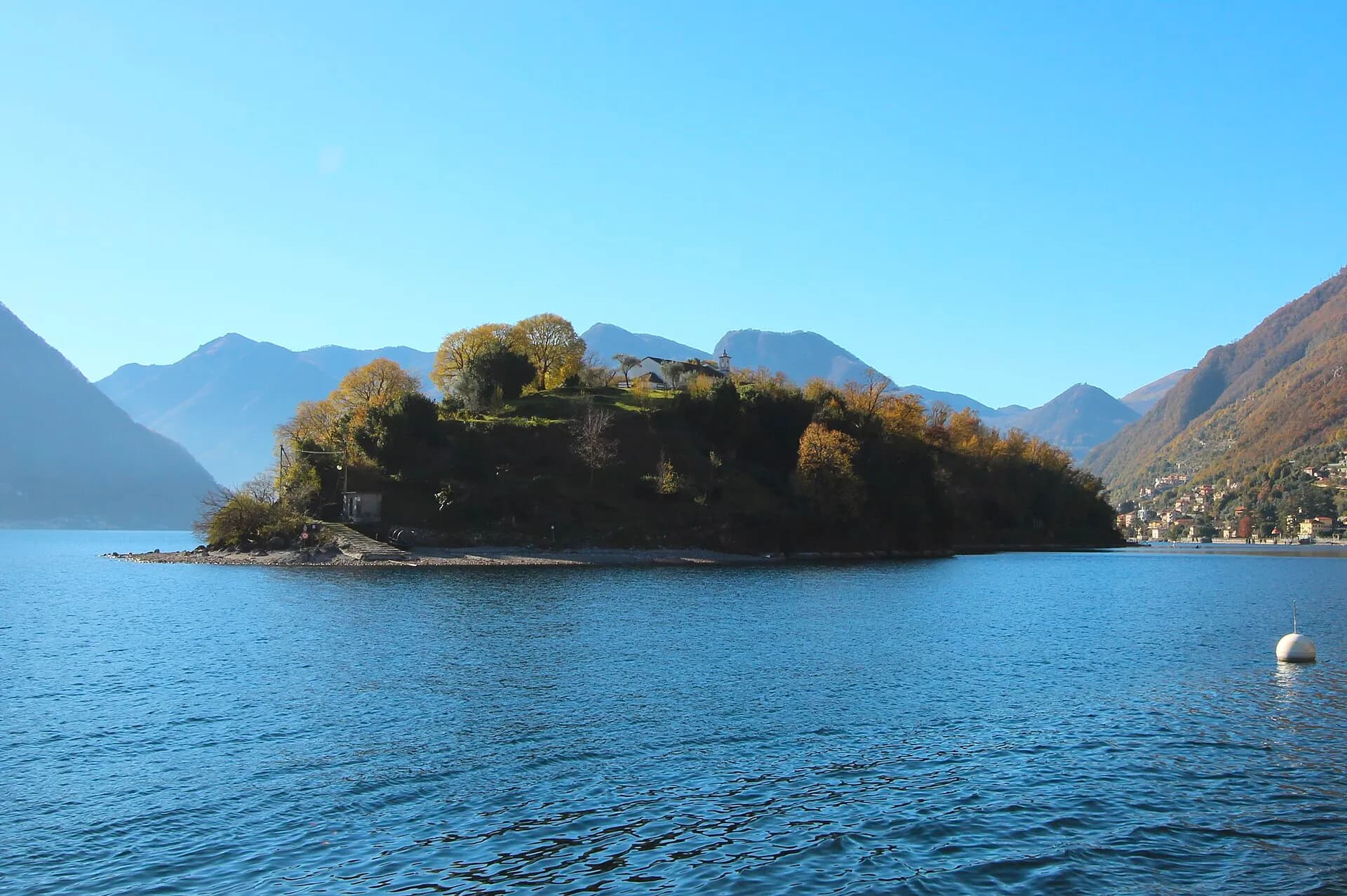
The lake's only island is a wooded ridge just off the western shore, once a fortified stronghold that was destroyed by the people of Como in 1169. Today you can walk among the overgrown ruins of its Romanesque churches and look back across the narrow strait to the villages. Small boats cross from Sala Comacina and Ossuccio in season.
- 5
Villa del Balbianello
Photo: Phyrexian, CC BY-SA 4.0, via Wikimedia Commons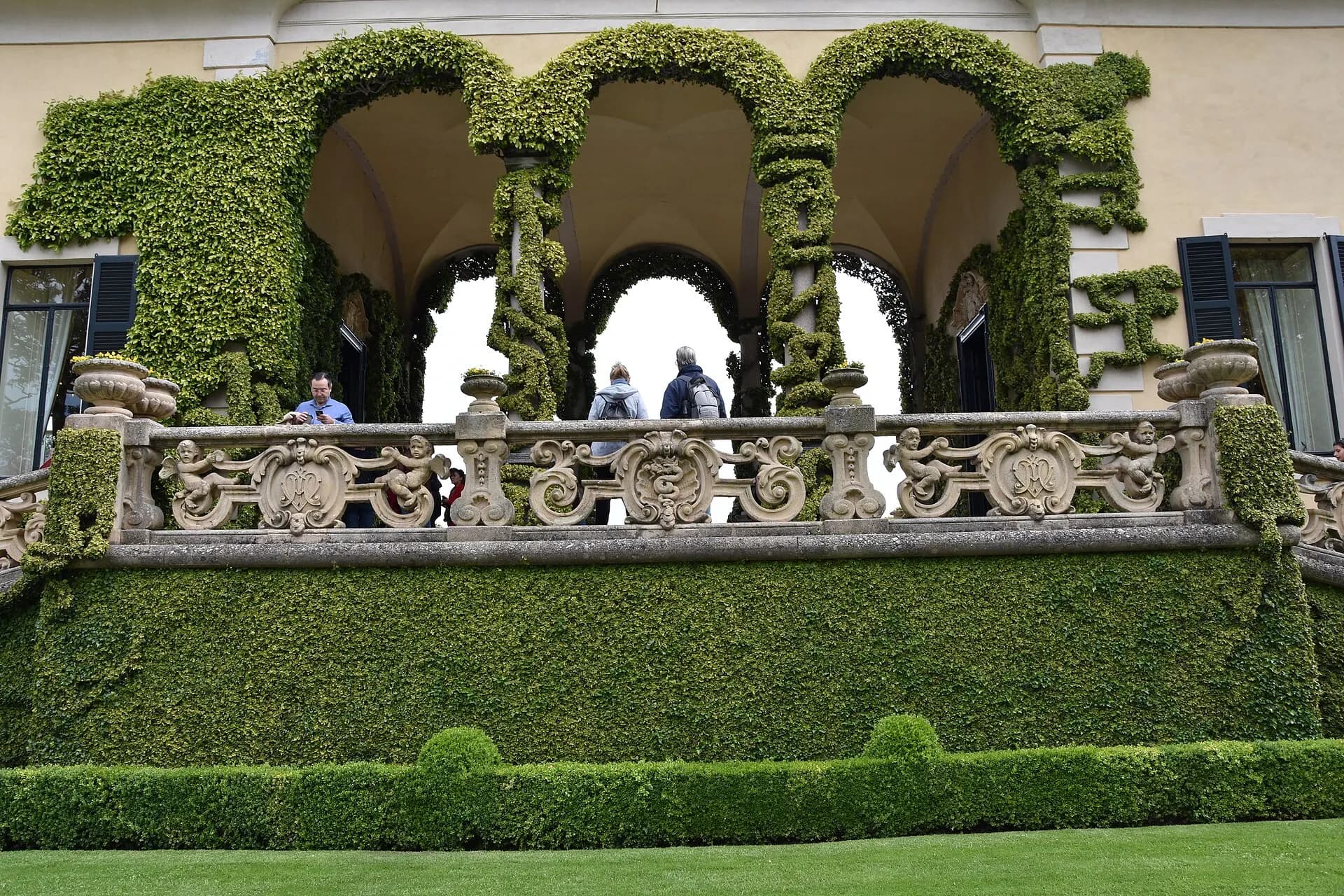
Set on the tip of a wooded promontory near Lenno, this eighteenth-century villa has terraced gardens, a loggia open to the lake on both sides and some of the most photographed views on Como. Its last owner, the explorer Guido Monzino, left it to the FAI, Italy's national heritage trust, with his collections from expeditions to the Arctic and Everest. Booking is required, it's closed on Mondays and Wednesdays, and outside the main season it opens only on set dates.
TipArrive on foot by the path from Lenno, about 1 kilometre uphill and partly on gravel, or book a taxi boat from Lido di Lenno. Wear proper shoes.
- 6
Villa Carlotta
Photo: Paebi, CC BY-SA 3.0, via Wikimedia Commons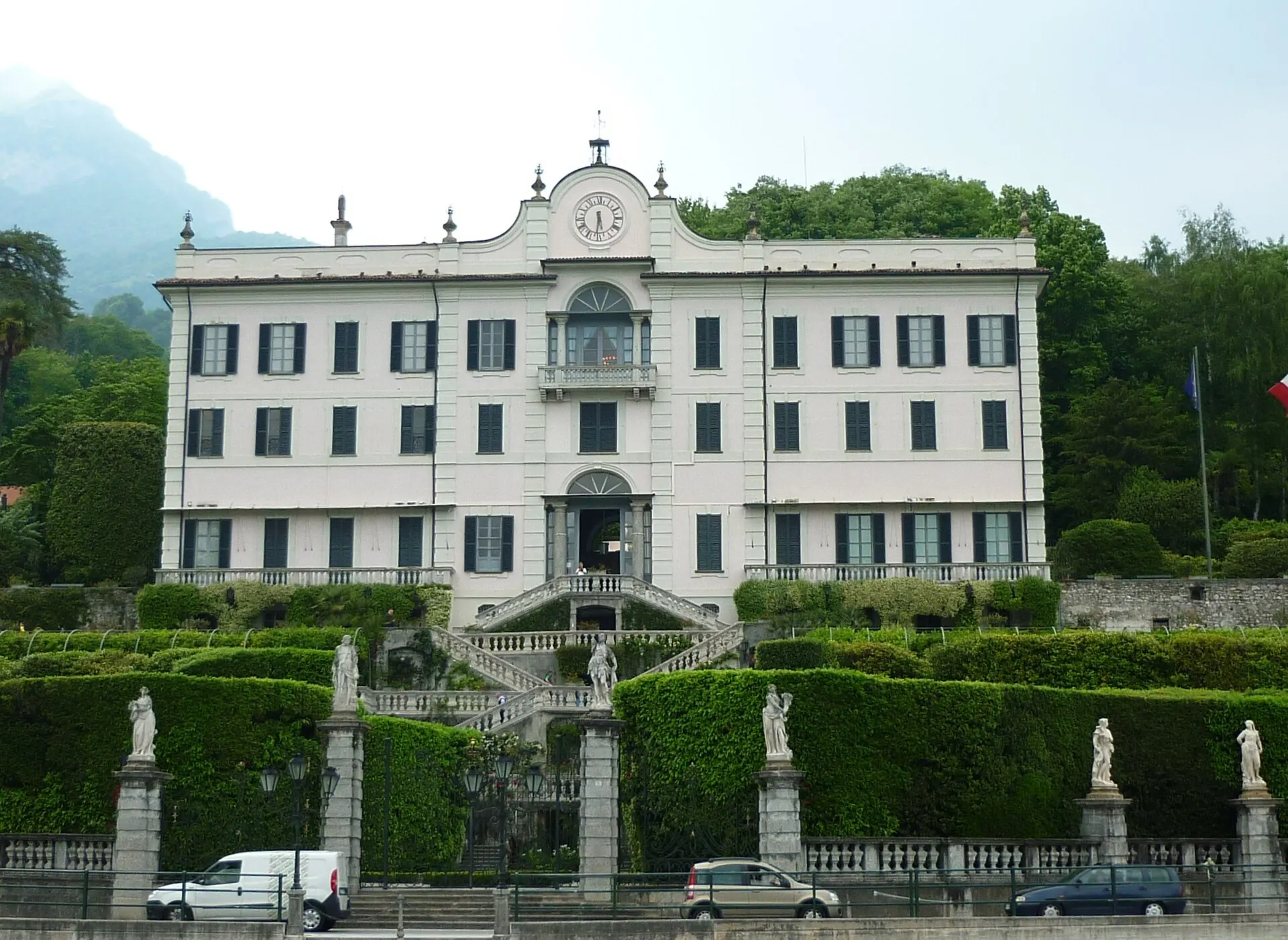
A grand villa above the shore at Tremezzo, with a museum of sculpture and painting, including works by Canova, Thorvaldsen and Hayez, and the furnished apartments of Princess Charlotte, Duchess of Saxe-Meiningen, after whom it is named. The botanical garden around it covers terraces, woods and a valley of ferns, and is at its most colourful when the azaleas and rhododendrons bloom in spring. Allow at least two hours.
- 7
Menaggio
Photo: Donald Judge, CC BY 2.0, via Wikimedia Commons
The liveliest town on the western shore, with a long lakefront promenade, a small old centre climbing up the hill, and a car ferry pier facing Bellagio and Varenna. It's a good, practical base, with buses towards Como and Lugano and paths into the mountains behind.
- 8
Bellagio
Photo: Ray Swi-hymn from Sijhih-Taipei, Taiwan, CC BY-SA 2.0, via Wikimedia Commons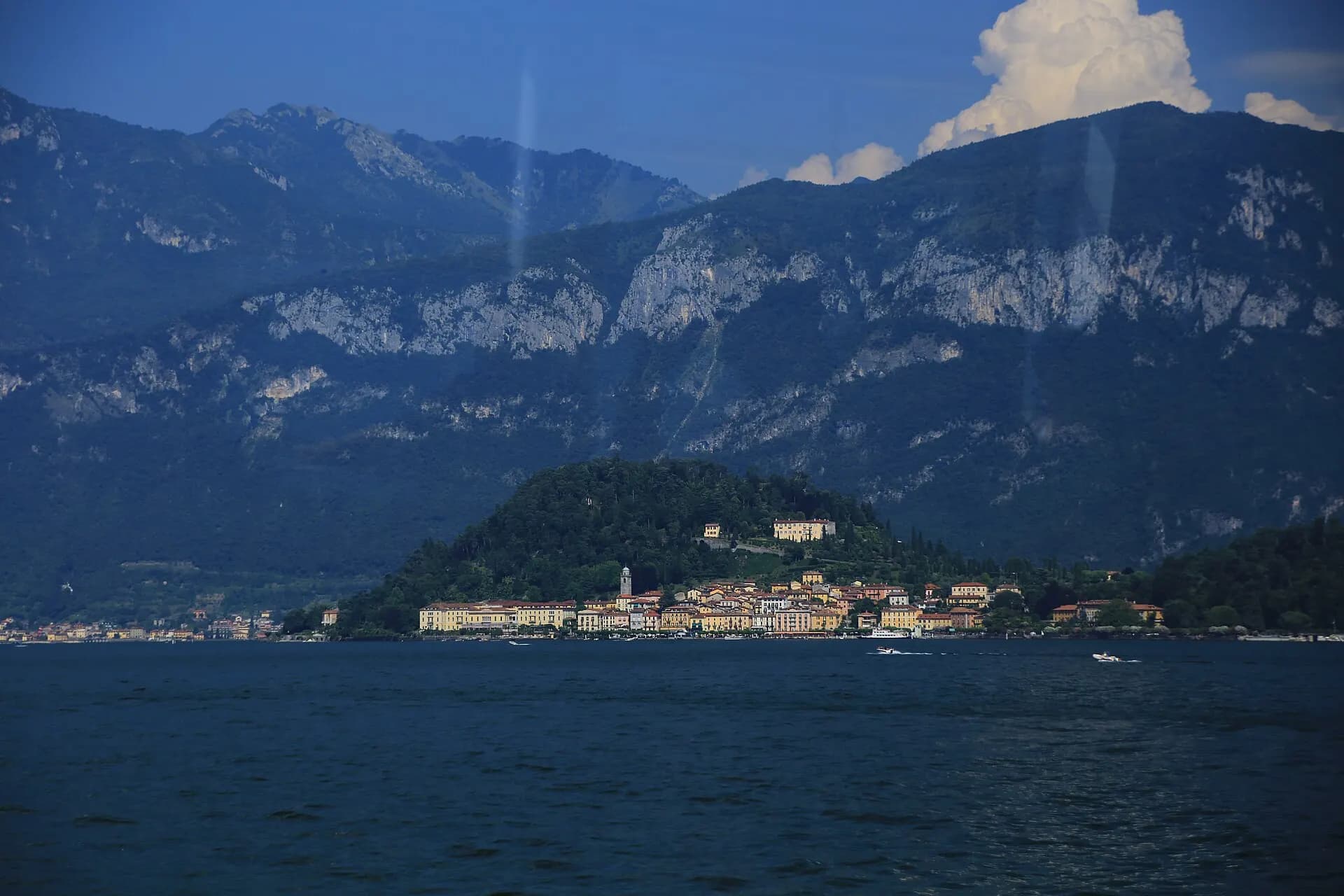
The village at the point where the lake divides is the most famous on Como, with stepped lanes of shops and cafés climbing from the harbour, an arcaded lakefront and views up all three arms. The hill above the town is covered by the park of Villa Serbelloni, which can only be visited on a guided walk in season.
TipWalk out to Punta Spartivento, the very tip of the headland, early in the morning before the day boats arrive.
- 9
Villa Melzi Gardens
Photo: Ray in Manila, CC BY 2.0, via Wikimedia Commons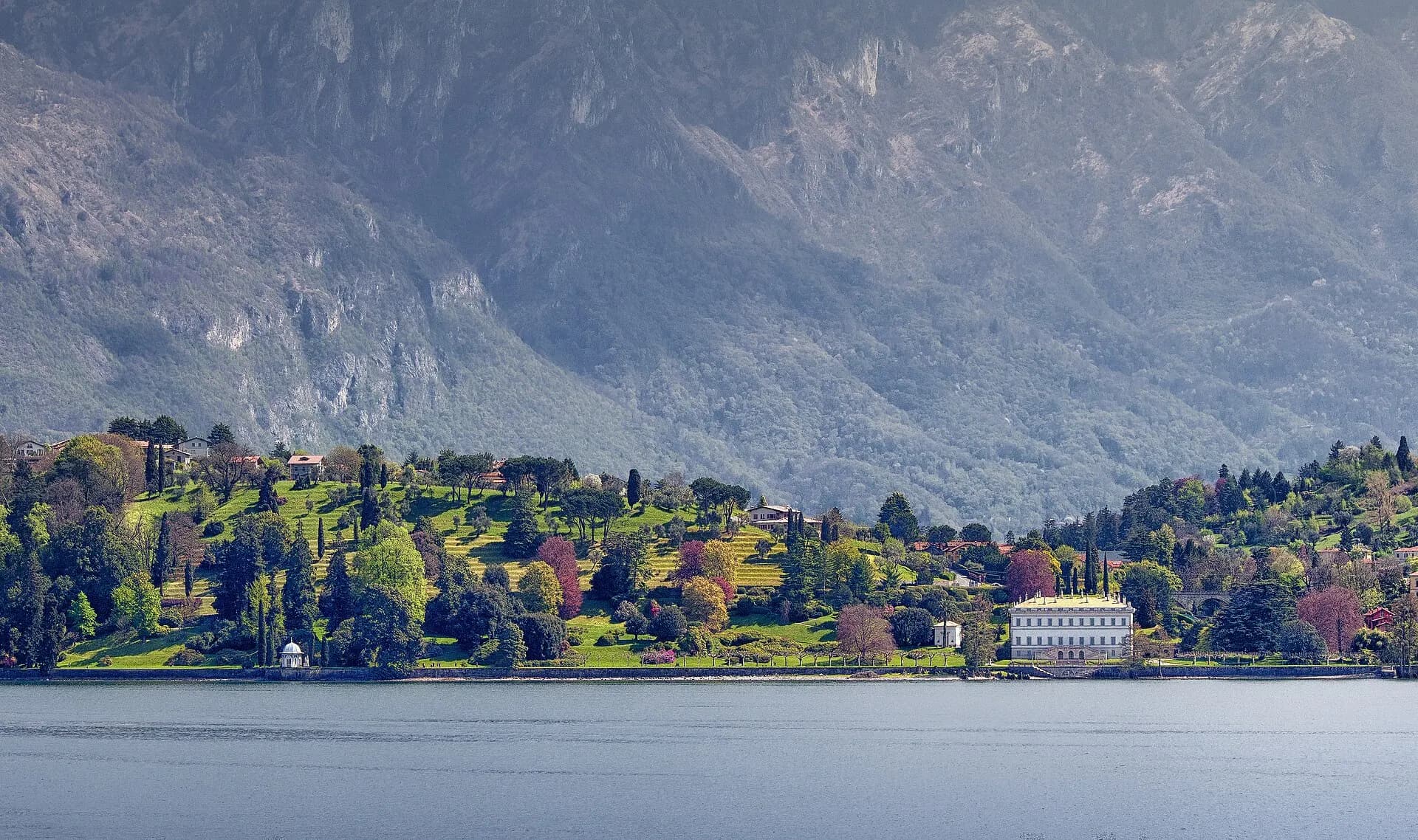
A short walk south of Bellagio along the shore, the English-style gardens of Villa Melzi spread along the water, with old trees, camellias, statues, a Japanese-style pond and a small museum. The neoclassical villa itself is private. The gardens are open from spring until early November.
- 10
Varenna
Photo: Diego Delso, CC BY-SA 4.0, via Wikimedia Commons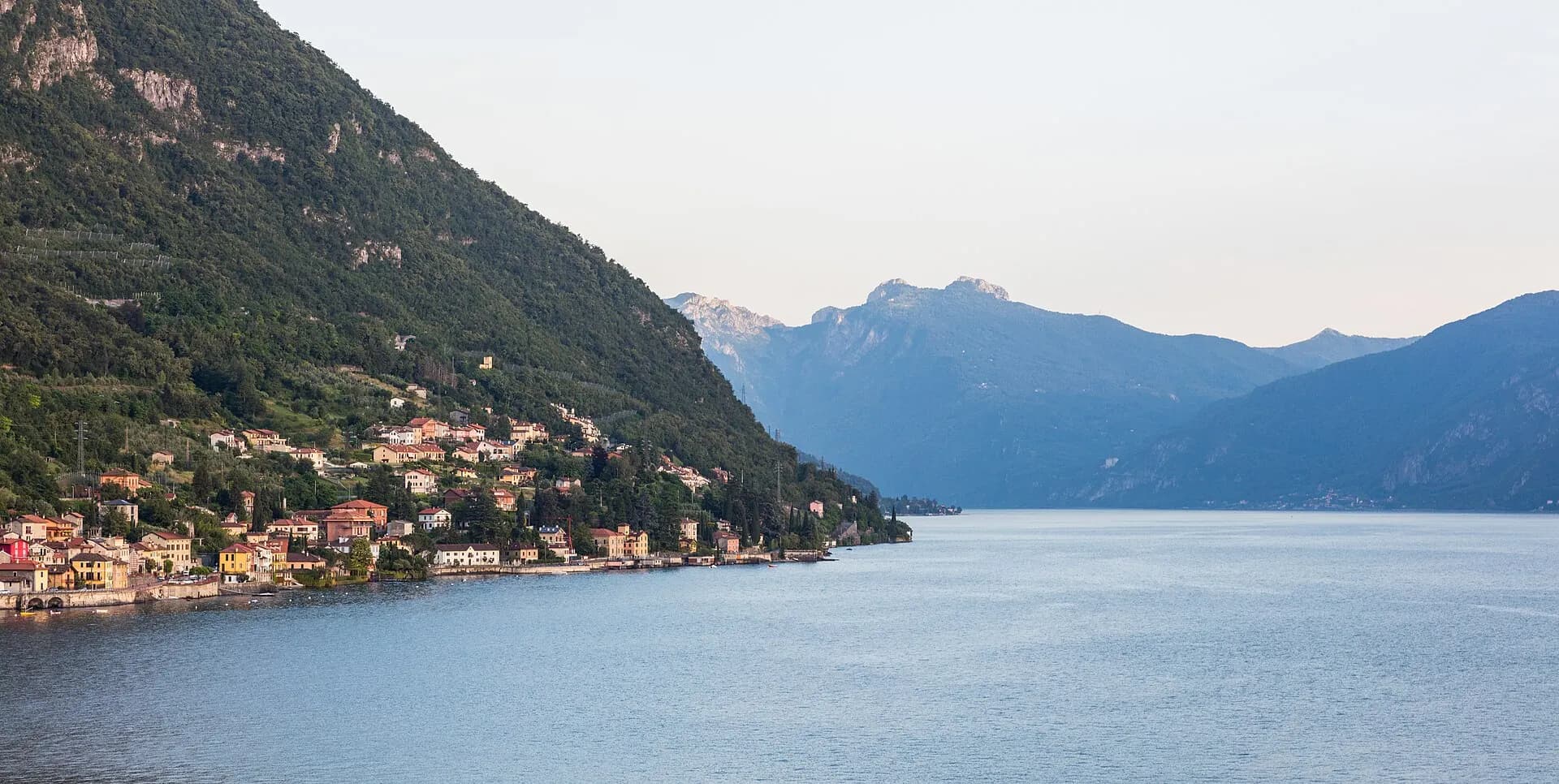
A small fishing village on the eastern shore, with pastel houses stacked above a tiny harbour and a lakeside walkway, the Passeggiata degli Innamorati, joining the ferry pier to the centre. It has a railway station, making it the easiest village to reach from Milan without a car, and it gets very busy at midday.
TipWalk south for about twenty minutes to Fiumelatte, one of Italy's shortest rivers, which gushes milky white down the hillside from spring to autumn.
- 11
Villa Monastero
Photo: Tremej, CC BY-SA 4.0, via Wikimedia Commons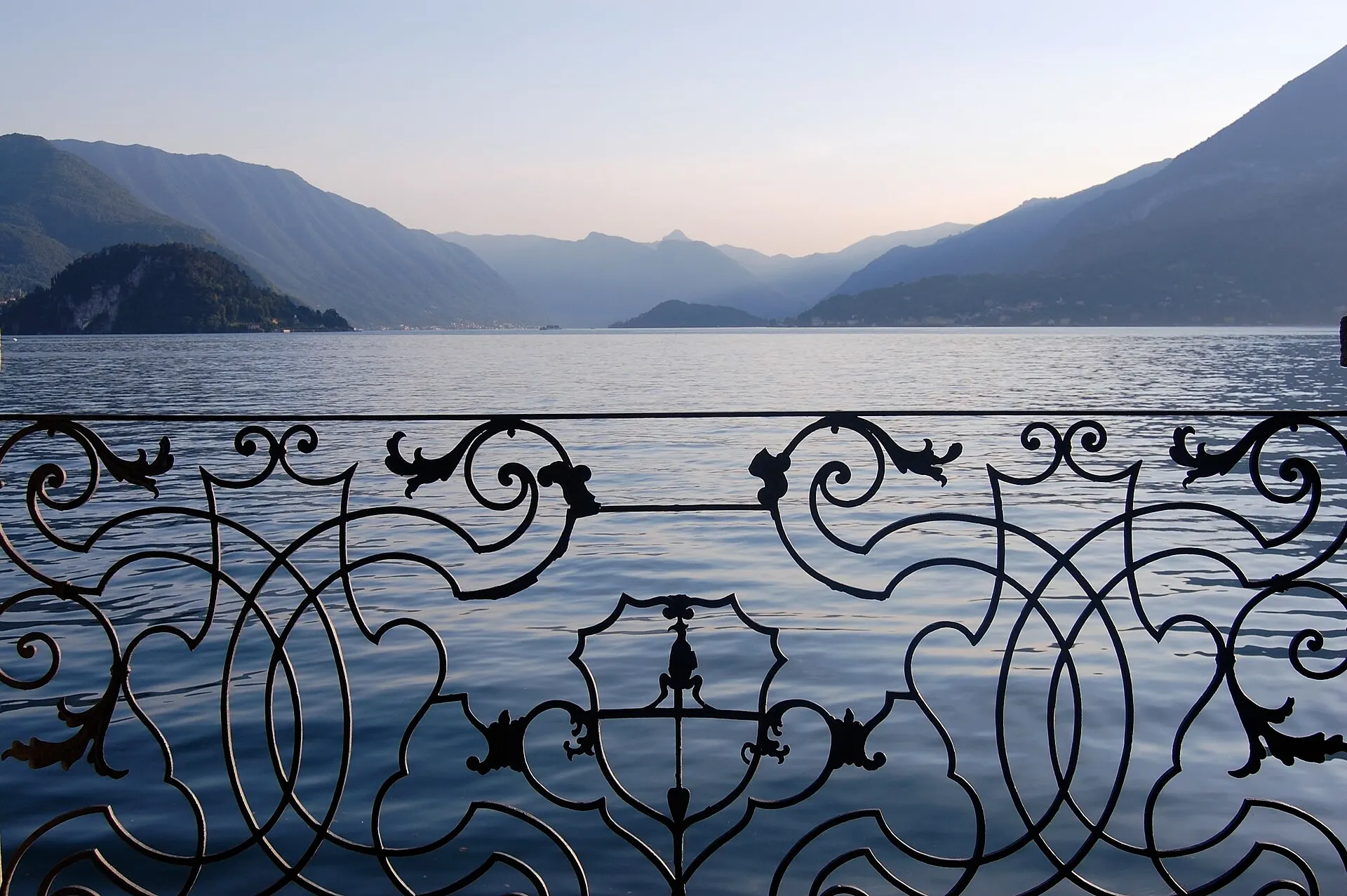
A former convent turned into a villa, with a house museum of furnished rooms and a botanical garden that runs for nearly 2 kilometres along the shore. Its palms, citrus and agaves give it a gentler, more southern feel than the grand gardens across the water.
- 12
Castello di Vezio
Photo: Diego Delso, CC BY-SA 4.0, via Wikimedia Commons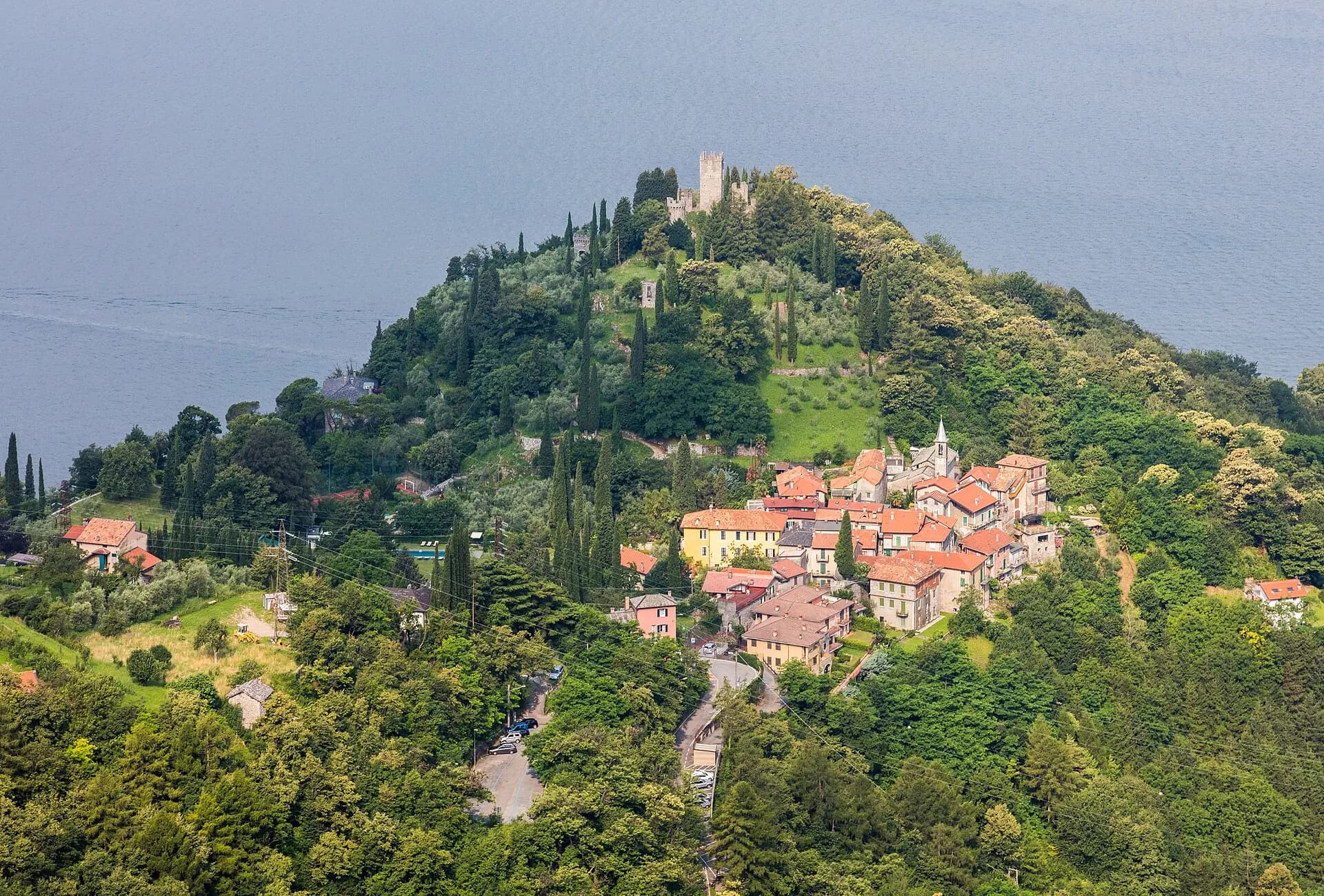
A medieval watchtower and walls on the hill above Varenna, reached by a steep mule track of about twenty minutes from the village. The views over the central lake are the reward, and the castle often has falconry displays.
- 13
Piona Abbey
Photo: Torsade de Pointes, CC0, via Wikimedia Commons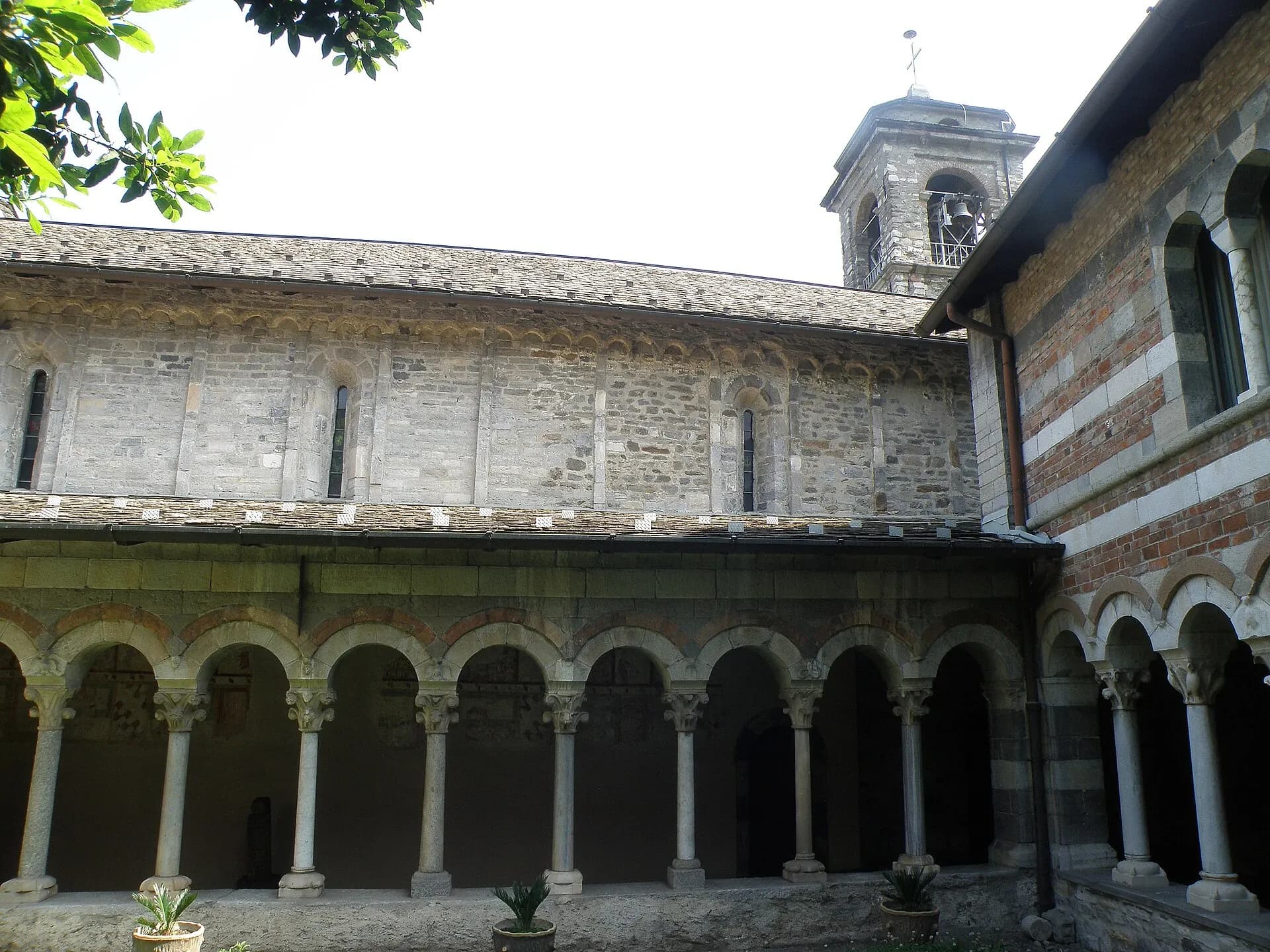
At the northern end of the lake, a Cistercian community lives in a medieval abbey on a quiet peninsula near Colico. The small Romanesque church and its cloister, with carved capitals, are peaceful after the busy central lake, and the monks sell herbal liqueurs and honey.
When to go
Spring is the classic season, with camellias from March and azaleas and rhododendrons in April and May. June and September are warm and good for swimming, with long ferry timetables. July and August are hot and very crowded, especially at weekends, when Bellagio, Varenna and the boats between them are packed. October is often lovely, though gardens shorten their hours and many close in early November. Winter is quiet and atmospheric, but many hotels, restaurants and villas close, and boats run less often.
Getting around
Navigazione Laghi runs the public boats: slow ships stop at almost every village, faster services link Como with the central lake and the north, and a car ferry crosses between Bellagio, Cadenabbia, Varenna and Menaggio. Tickets can be bought at the piers or on board where there is no office, but arrive early in summer, when queues at the ticket windows can be long. Services can be suspended in bad weather.
Trains run from Milan to Como in under an hour, from Milano Centrale and Porta Garibaldi to Como San Giovanni, and from Milano Cadorna to Como Nord Lago, right by the lakefront. For the central lake, trains from Milano Centrale towards Tirano stop at Varenna-Esino in about an hour, and from there the ferry crosses to Bellagio and Menaggio. Buses run along the western shore from Como.
Driving is difficult. The lakeside roads are narrow, winding and congested in summer, and parking in the villages is scarce and expensive. If you do drive, base yourself somewhere with hotel parking and use the boats for day trips.
Local tips
- Check the ferry timetable for the day you travel; services change between seasons and the last boats can be early.
- Book Villa del Balbianello in advance, and check its calendar outside summer.
- Varenna has brought in rules against walking around in swimwear or bare-chested away from the beaches and piers, and limits on large tour groups; follow local signs.
- Most towns charge a per-night tourist tax, added to your hotel bill; check the rate when you book.
- Wear good shoes: many lanes are steep stairways, and the paths to Vezio and Balbianello are rough.
- Visit the busiest places, Bellagio and Varenna, before 10am or after 5pm.
- Swim only at lidos and marked beaches; the water is deep and cold, and boat traffic is heavy.
- Carry some cash for small boats, cafés and taxis.
Eat and drink
Lake fish is the local speciality: try missoltino, shad dried and preserved in salt, perch fillets fried in butter and sage with risotto, and lavarello, a white fish often grilled. Polenta, game and cheeses from the valleys above the lake appear in cooler months. In summer, look for gelato on the lakefront and an aperitivo with a view at sunset. Restaurants in the central villages fill up in the evening, so book ahead in high season.
Where to stay
The central lake, Bellagio, Varenna, Menaggio and Tremezzo, puts you closest to the ferries and the best gardens, with everything from family-run guesthouses to grand lakefront hotels. Varenna is ideal if you arrive by train. Como town is cheaper, has more choice and the fastest links to Milan, but you'll spend time on the boats. Quieter villages on the northern lake and the Lecco branch offer better value and fewer crowds.
Villas and gardens
The villas of Lake Como were built to be seen from the water, and to look back at it. Many began as country retreats for Milanese noble families in the sixteenth and seventeenth centuries, and were remodelled in the nineteenth century, when English-style landscape gardens became fashionable and plants were brought from around the world. The mild climate, protected by the mountains, lets camellias, citrus and subtropical trees thrive at the foot of the Alps. Some villas are now museums or heritage properties, some are luxury hotels, such as the Villa d'Este at Cernobbio, whose grounds are only for guests, and many are still private. The best way to plan is to pick two or three gardens rather than rushing between them, and to check opening days, as several close one day a week and all keep shorter hours in autumn.
Walking above the lake
Behind the lakefront villages, mule tracks and old paths climb through chestnut woods to hamlets, chapels and summer pastures. The Greenway on the western shore is the gentlest introduction. Longer routes include the Sentiero del Viandante on the eastern shore, a historic path linking villages above Varenna, and the trails around Bellagio and Brunate. Paths can be steep and slippery after rain, so carry water and check the weather.
Responsible travel
Lake Como's villages are small, and many residents live with very heavy traffic and crowds in summer. Travelling by train and boat rather than by car helps a great deal, as does staying overnight instead of rushing through on a day trip. Keep noise down in narrow lanes, respect private property and villas, dress modestly away from the water, and take your rubbish with you on the trails.