Tenerife
Spain's highest volcano, laurel-forest ridges, old colonial towns and black-sand coves, on an island of many climates.
- Best time to go
- All year; spring and autumn are best for hiking, winter for warm escapes
- Local time
- –
- Currency
- Euro (EUR)
- Reading time
- 9 min
- Language
- Spanish and Basque
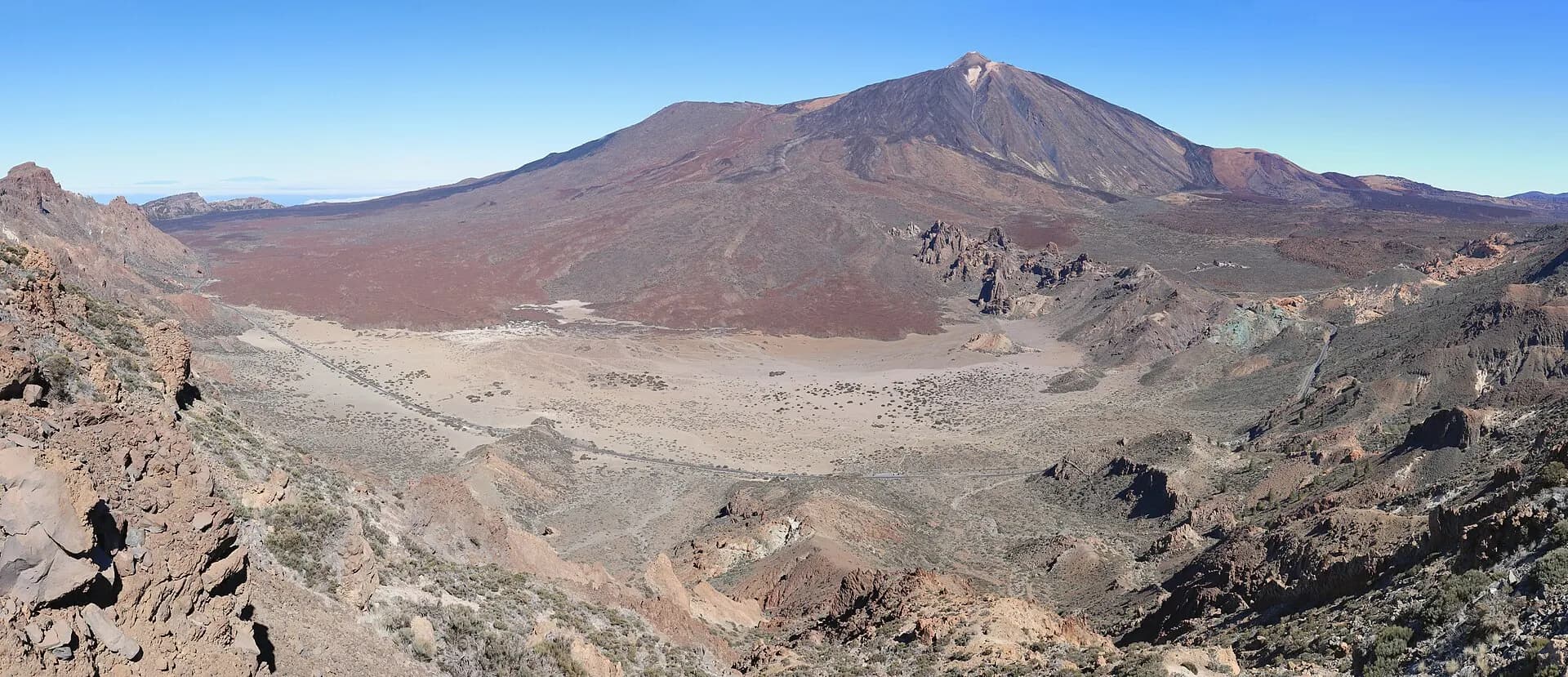
Tenerife is the largest of the Canary Islands, a volcanic island in the Atlantic off the coast of West Africa, crowned by Mount Teide, at 3,715 metres the highest peak in Spain. Within an hour's drive you can go from a lunar crater landscape above the clouds to misty laurel forest, terraced vineyards, banana plantations and black-sand beaches. The north is green and often cloudy, the south dry and sunny, and the island is known for its many microclimates.
Most visitors stay in the purpose-built resorts of the south-west, but the island has much more: the Renaissance grid of La Laguna, a World Heritage Site; the old towns of La Orotava and Garachico; and the wild Anaga and Teno massifs at either end. It's a year-round destination, easy to explore by car or bus, with access to its most popular trails now regulated by permits and fees.
The top 14 in Tenerife
- 1
Teide National Park
Photo: Flocci Nivis, CC BY-SA 4.0, via Wikimedia Commons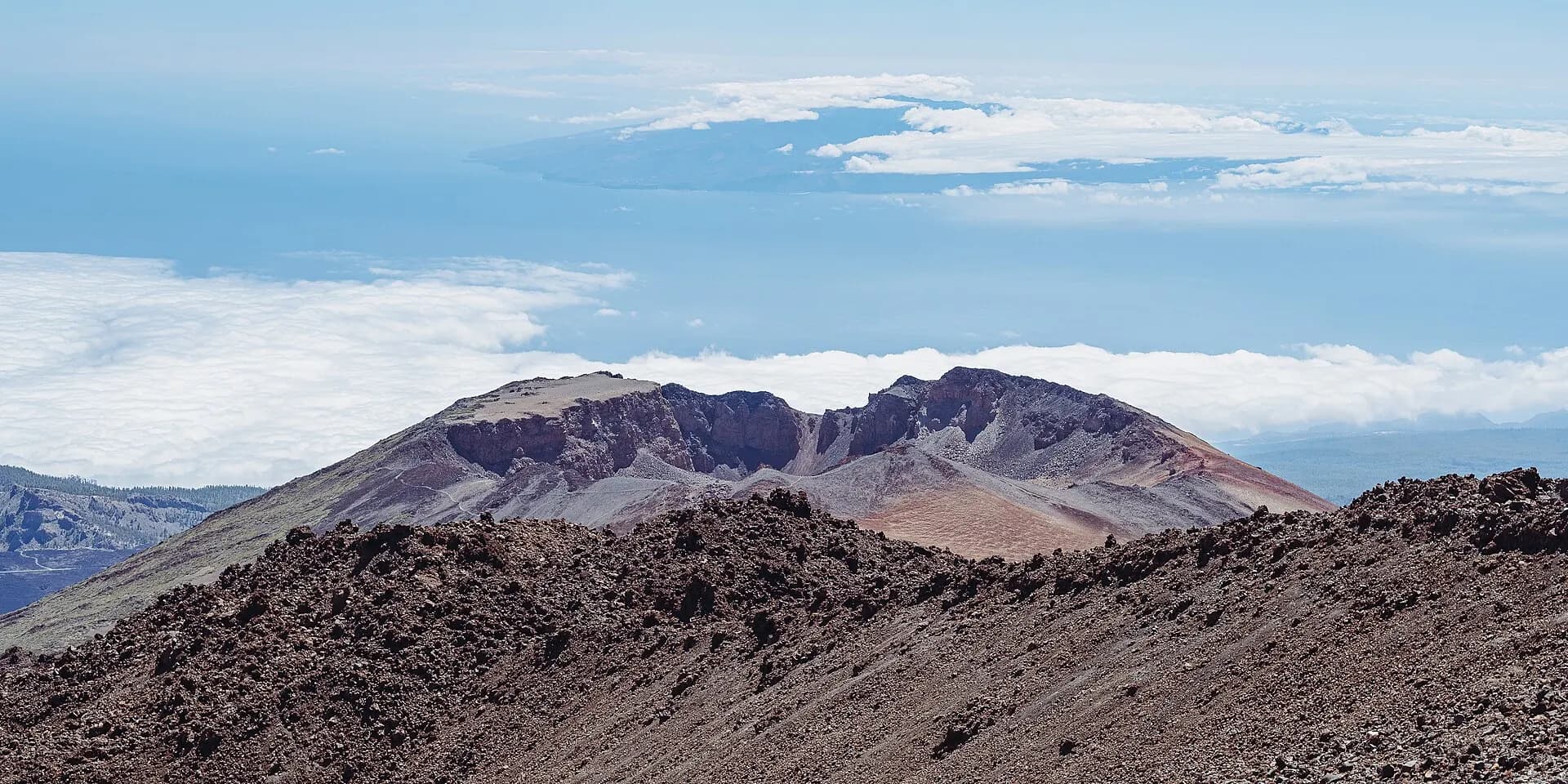
A World Heritage Site since 2007, the park surrounds the vast Las Cañadas caldera, with lava fields, the wind-carved Roques de García and the cone of Teide rising above. A cable car climbs from 2,356 metres to 3,555 metres in under eight minutes, with short trails to the La Fortaleza and Pico Viejo viewpoints. The final stretch to the summit, the Telesforo Bravo trail, needs a separate permit booked in advance through the Cabildo's Tenerife ON platform, and since January 2026 non-residents pay a fee for daytime slots on it and on the Montaña Blanca approach trail. Rules have changed several times; check Tenerife ON before you go.
TipSlots are released weeks ahead and go fast. A cable car ticket does not include summit access, and the cable car stops in high winds.
- 2
La Orotava
Photo: Axel Cotón Gutiérrez, CC BY-SA 4.0, via Wikimedia Commons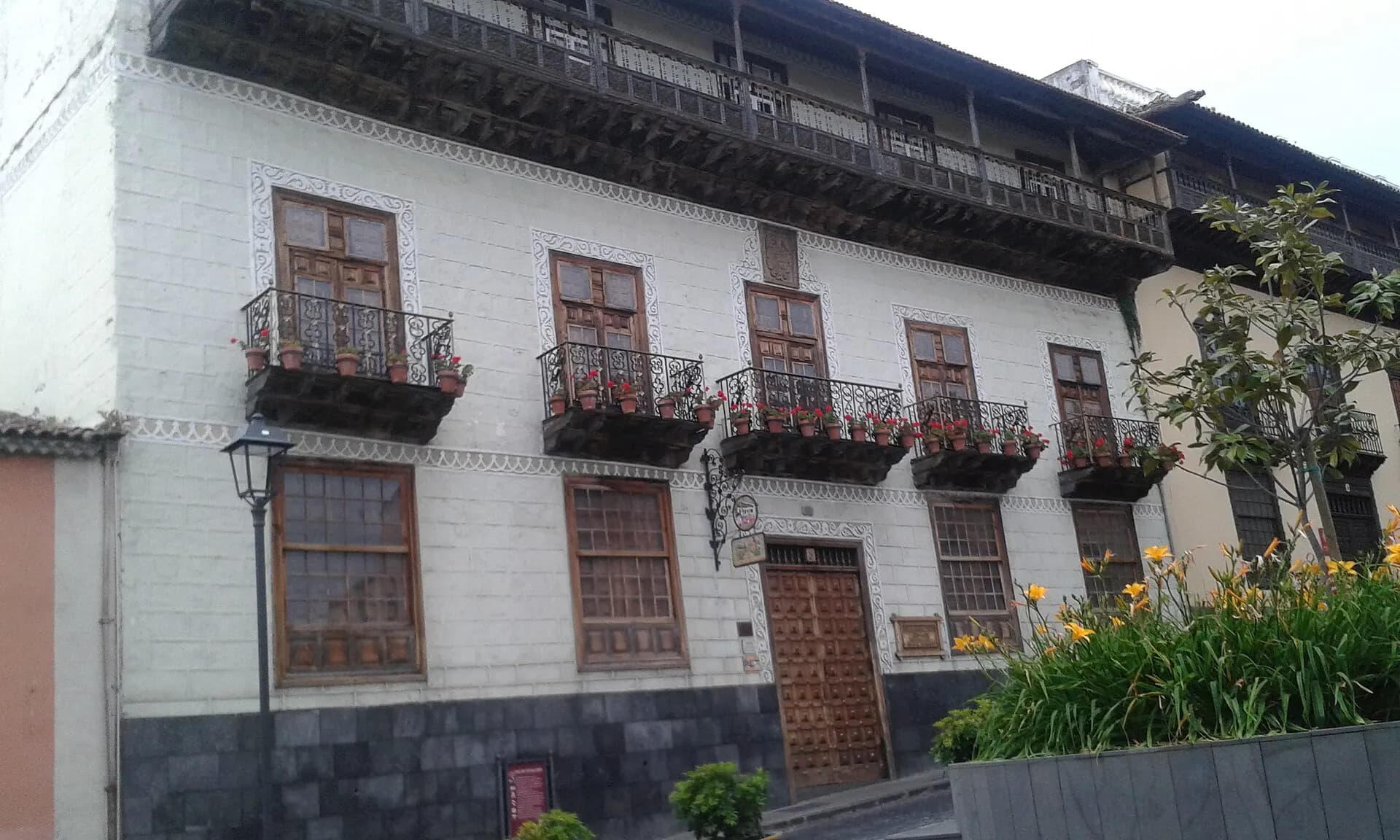
A handsome old town on the slopes above the Orotava Valley, with steep cobbled streets, churches and mansions with carved wooden balconies, such as the Casa de los Balcones. At Corpus Christi, its streets and the town hall square are covered in elaborate carpets of flowers and coloured volcanic sand.
- 3
Puerto de la Cruz
Photo: Quartl, CC BY-SA 3.0, via Wikimedia Commons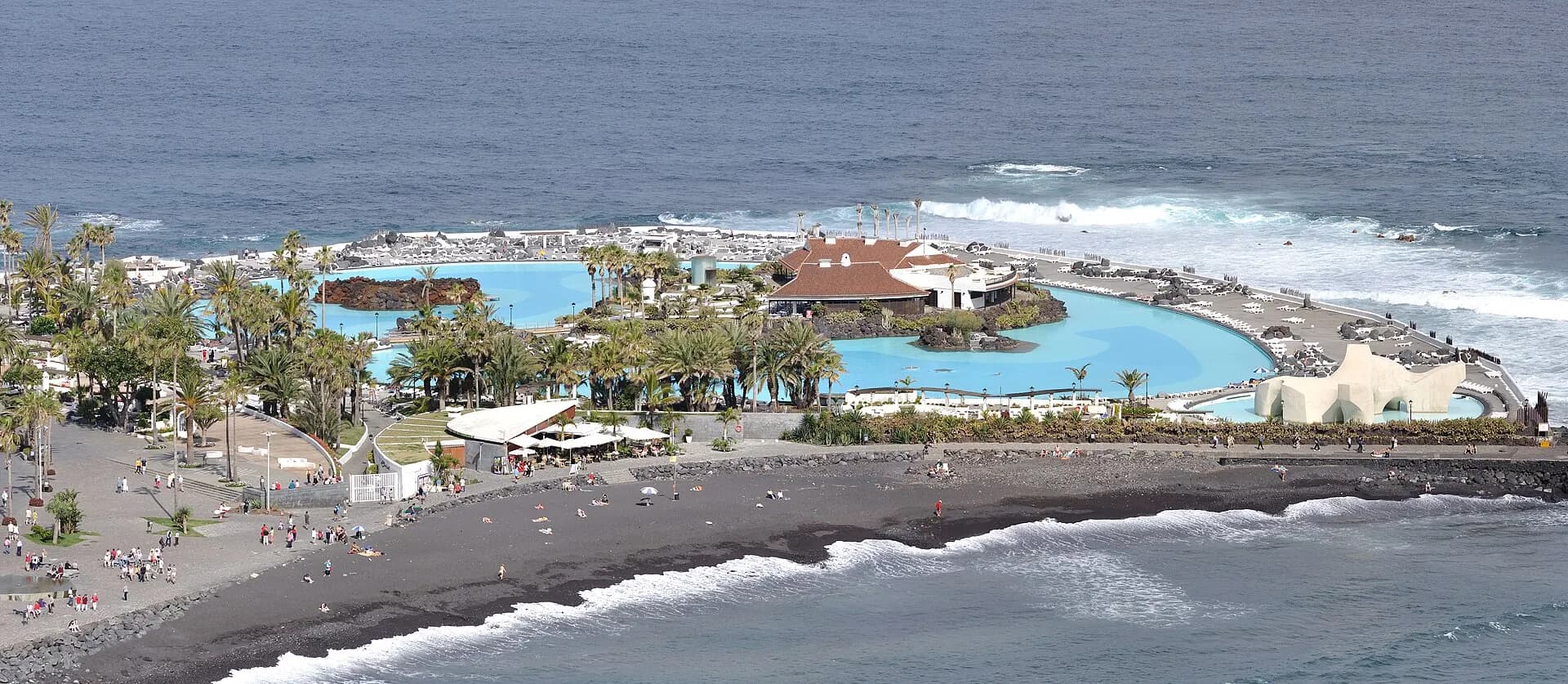
The north coast's original resort, with an old fishing harbour, plazas and a seafront promenade. Lago Martiánez, a complex of seawater pools designed by the Lanzarote artist César Manrique, is the best place to swim on this rough stretch of coast. Loro Parque, on the edge of town, is one of the island's most visited attractions; it keeps orcas and dolphins in captivity, which animal-welfare groups strongly criticise, so make your own decision.
- 4
Garachico
Photo: Diego Delso, CC BY-SA 3.0, via Wikimedia Commons
Once Tenerife's main port, Garachico was largely buried by lava in 1706, and the flows created El Caletón, a series of natural rock pools by the sea. The rebuilt town is one of the prettiest on the island, with a small castle, a convent and quiet squares.
TipThe pools are only safe to swim in when the sea is calm; obey the flags.
- 5
Masca and the Masca Gorge
Photo: Thomas Wolf, www.foto-tw.de, CC BY-SA 3.0 de, via Wikimedia Commons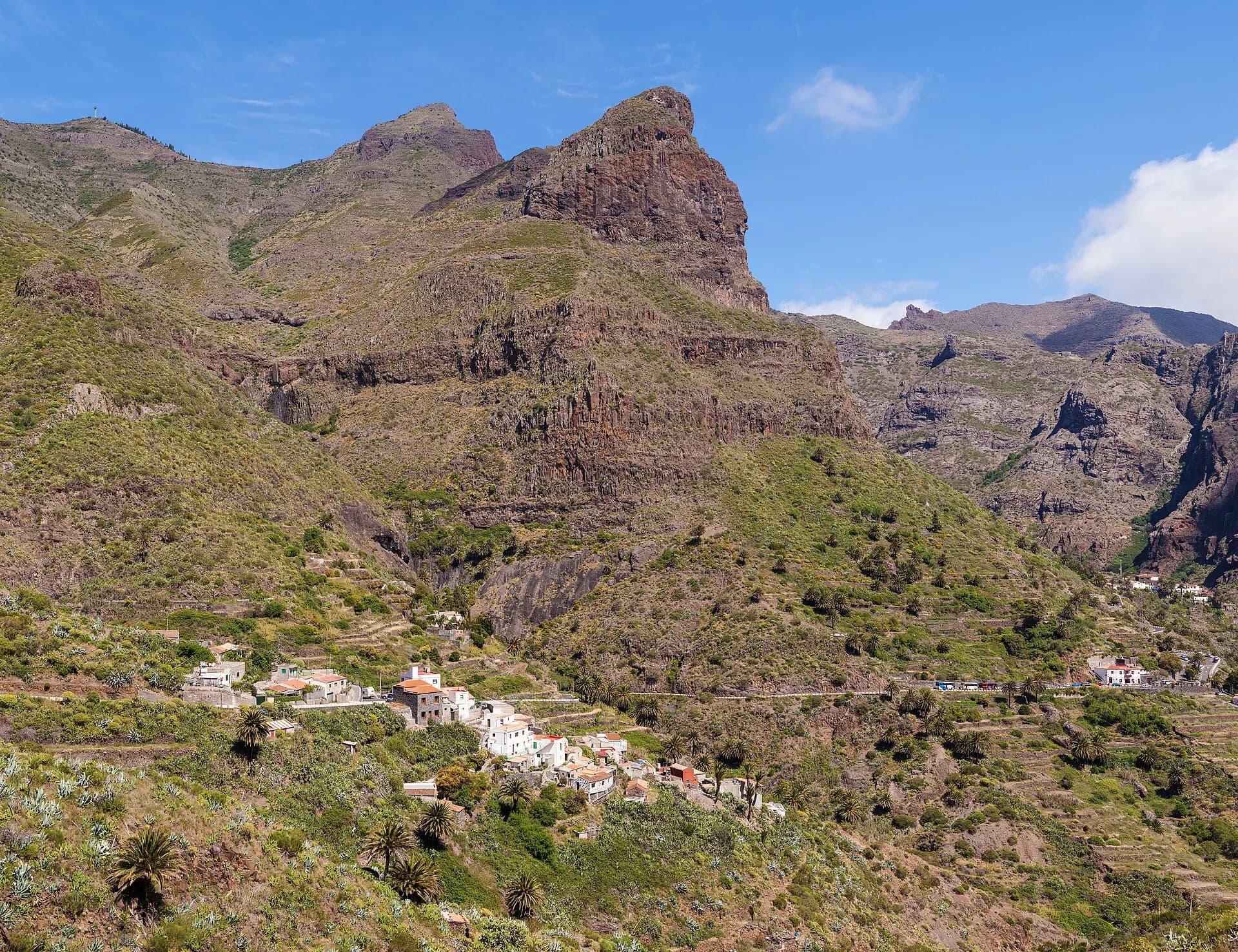
A hamlet of stone houses on a ridge in the Teno massif, reached by a famously narrow, winding road. The gorge below drops about 5 kilometres to a small bay. Hiking it is now regulated by the Cabildo: you must book a timed slot online, take the compulsory TITSA shuttle from Santiago del Teide, and buy a separate boat ticket back to Los Gigantes. During the current pilot phase, it's descent only, takes about four hours, and children under eight are not allowed.
TipBook the boat before you book the trail; you won't be let in without it.
- 6
Los Gigantes cliffs
Photo: Diego Delso, CC BY-SA 3.0, via Wikimedia Commons
Sheer cliffs rising several hundred metres straight out of the sea along the west coast, best seen from the water. The small resort at their foot has a marina where boats leave for the cliffs, Masca Bay and whale watching.
- 7
Whale and dolphin watching
Photo: Cayambe, CC BY-SA 3.0, via Wikimedia Commons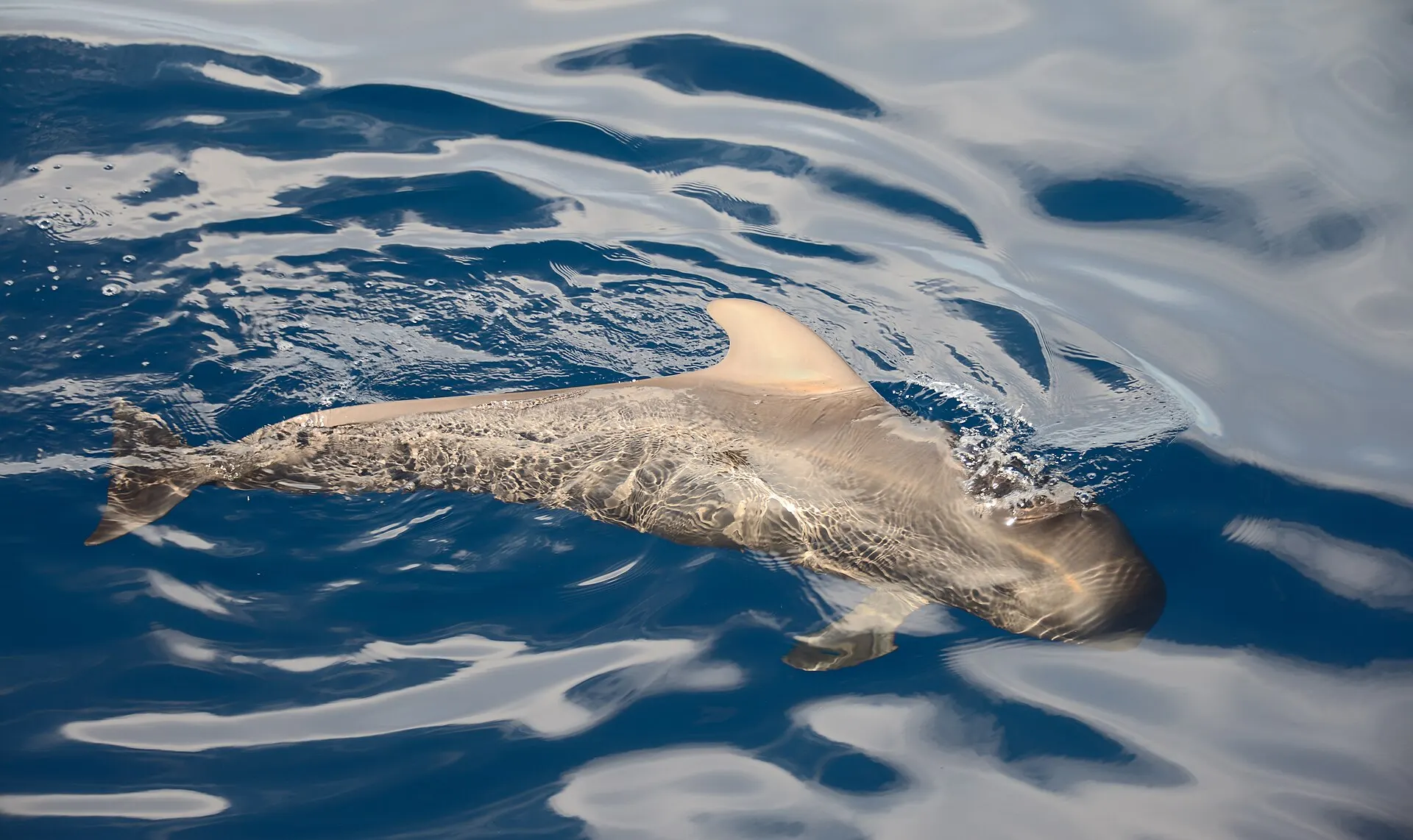
The strait between Tenerife and La Gomera is home to resident short-finned pilot whales and bottlenose dolphins, and around twenty other species pass through. Trips leave from Puerto Colón, Los Cristianos and Los Gigantes. Choose an authorised boat flying the yellow Barco Azul (Blue Boat) flag and ideally one that has signed Tenerife's whale-watching quality charter; rules require boats to keep at least 60 metres away and limit time with the animals to 30 minutes.
- 8
Costa Adeje and Los Cristianos
Photo: Photograph by Mike Peel (www.mikepeel.net)., CC BY-SA 4.0, via Wikimedia Commons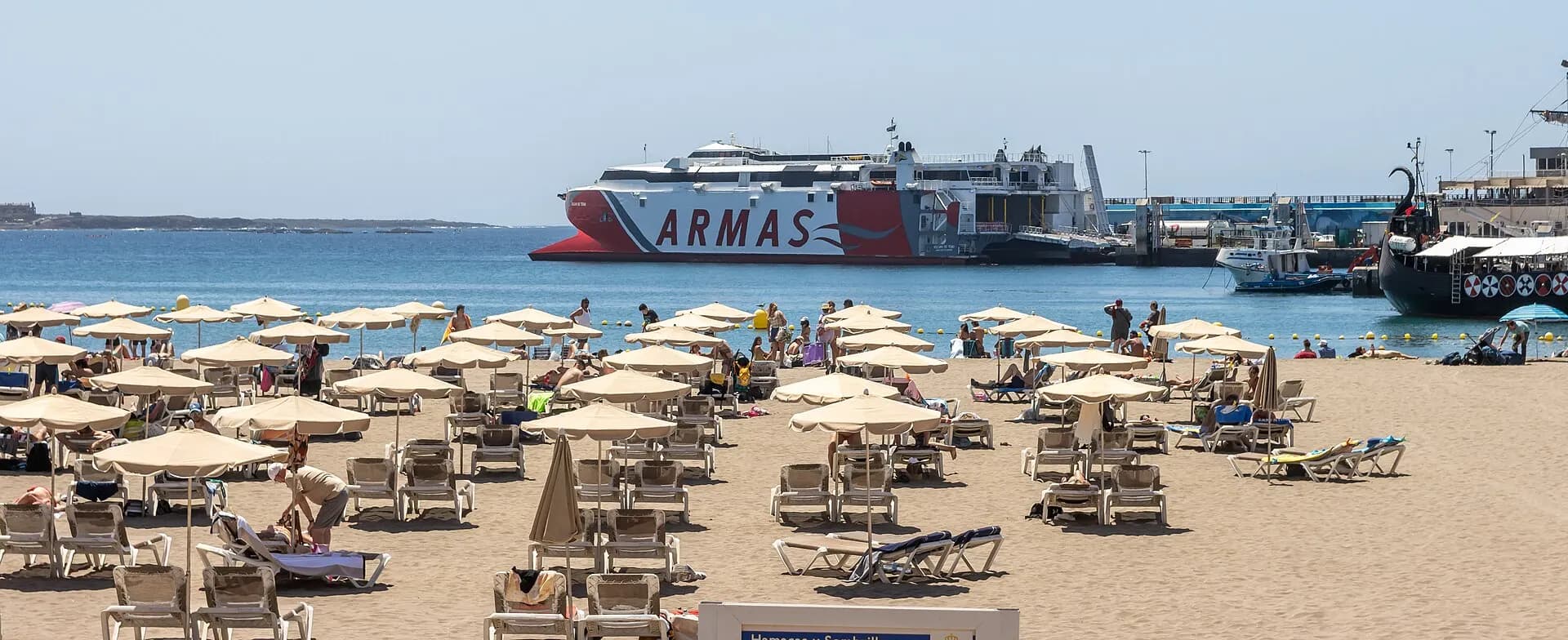
The sunniest corner of the island and its busiest, with a long chain of hotels, beaches and promenades from Los Cristianos to Costa Adeje, plus Playa de las Américas and its nightlife. It's convenient and reliably warm, but largely modern and built for tourism. Los Cristianos keeps a working harbour, with ferries to La Gomera, a good day trip.
- 9
Santa Cruz de Tenerife
Photo: Thomas Wolf, www.foto-tw.de, CC BY-SA 3.0 de, via Wikimedia Commons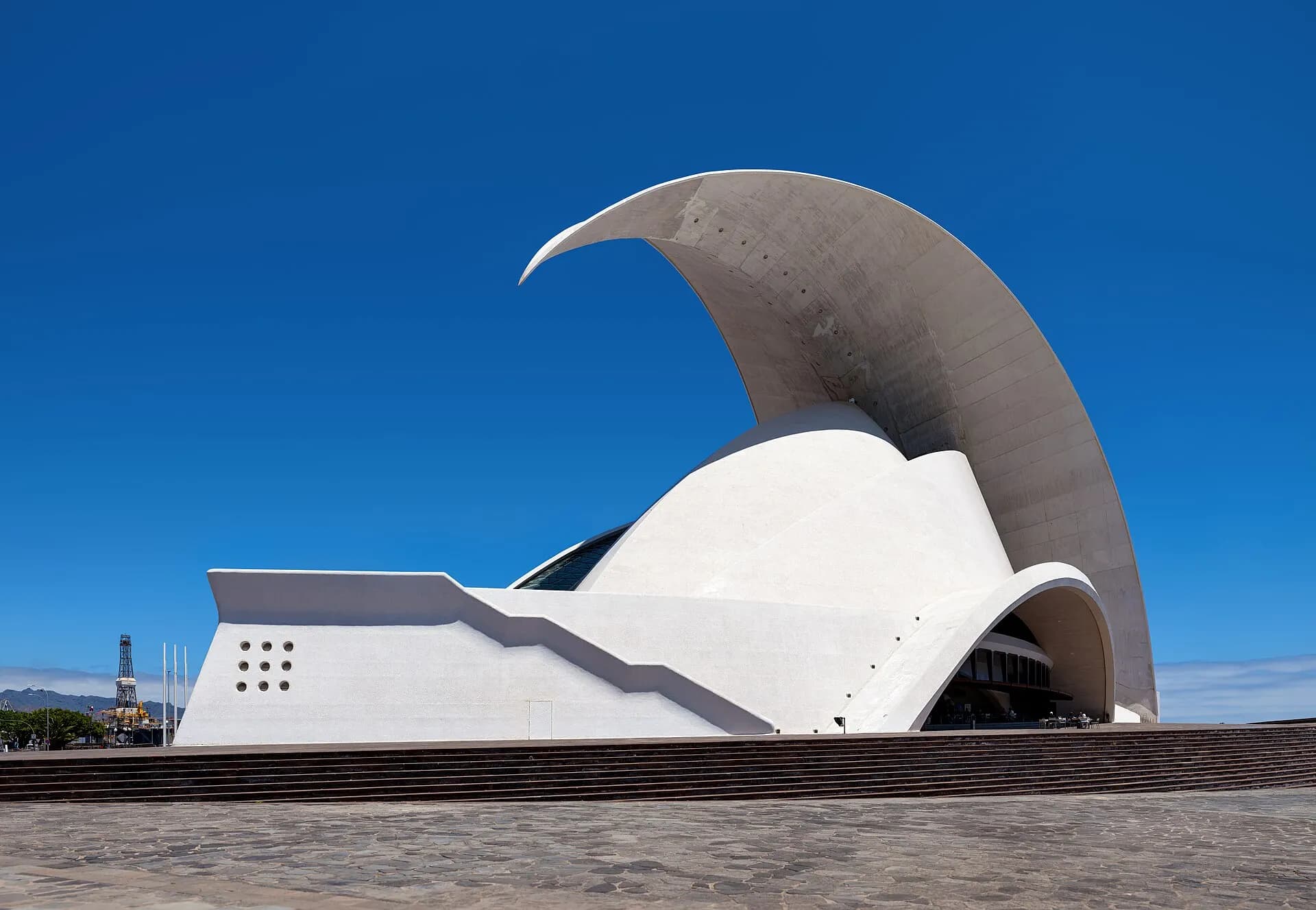
The island's capital is a lively port city with good shops, markets and parks. Its landmark is the Auditorio de Tenerife, a soaring white concert hall by Santiago Calatrava on the waterfront. In February, or early March in some years, the city hosts one of the world's largest carnivals, with weeks of parades, costumes and street parties.
- 10
Playa de las Teresitas
Photo: Zala, CC BY-SA 4.0, via Wikimedia Commons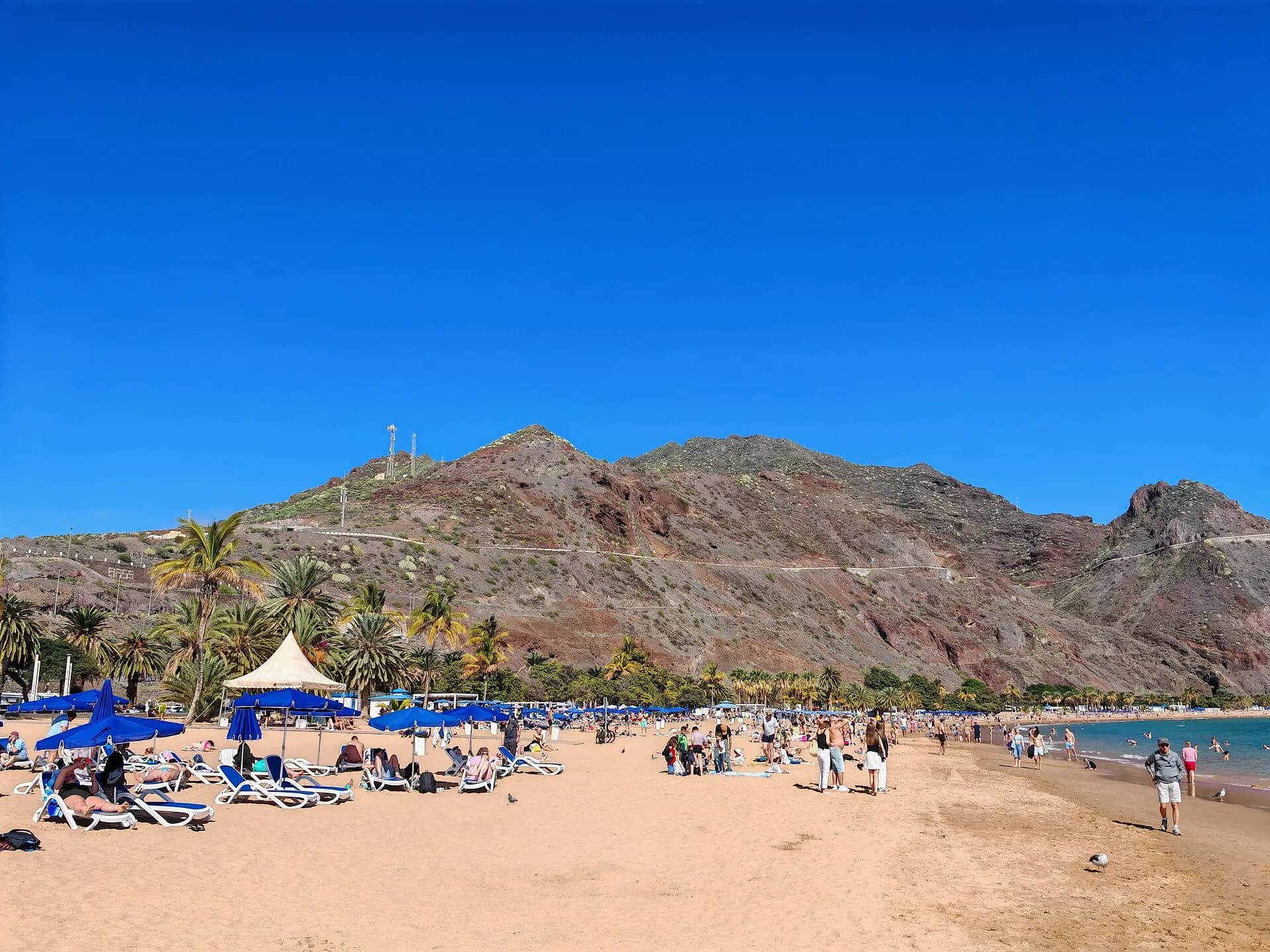
A long, calm beach of golden sand, brought from the Sahara in the 1970s and protected by a breakwater, just beyond the fishing village of San Andrés. It's the capital's favourite beach and gets busy at weekends.
- 11
Taganana and Playa de Benijo
Photo: David Perez Perez, CC BY-SA 4.0, via Wikimedia Commons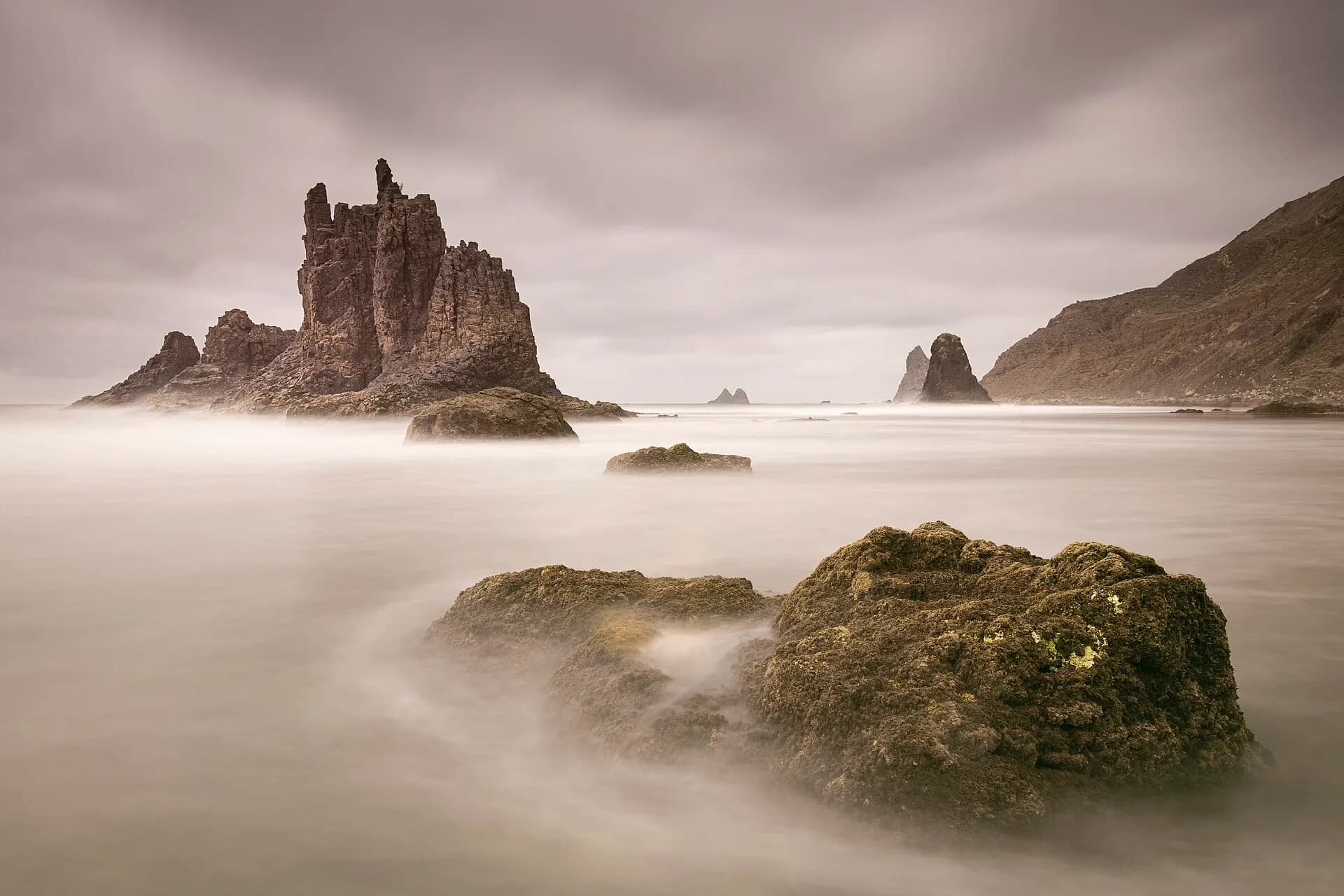
On the wild north side of Anaga, the old village of Taganana spills down a valley towards the sea, and a road continues past fish restaurants to Benijo, a black-sand beach facing sea stacks. Sunsets here are memorable.
TipThe surf and currents on this coast are strong; swim only when the sea is calm, and never alone.
- 12
Roque de Taborno
Photo: H. Zell, CC BY-SA 3.0, via Wikimedia Commons
A sharp volcanic pinnacle above the hamlet of Taborno, on a ridge of the Anaga massif. A circular trail from the village gives views of the peak, the ravines and the sea below, with steep drops in places.
- 13
Anaga Rural Park and Cruz del Carmen
The mountains at the island's north-east tip are a UNESCO Biosphere Reserve, with steep ridges, around two dozen small farming hamlets and some of the best laurel forest in the Canaries, a relic of the forests that covered southern Europe millions of years ago. The visitor centre at Cruz del Carmen has a viewpoint and the start of several short forest trails.
TipThe road through Anaga is narrow and slow; allow a full day.
- 14
San Cristóbal de La Laguna
Photo: Diego Delso, CC BY-SA 3.0, via Wikimedia Commons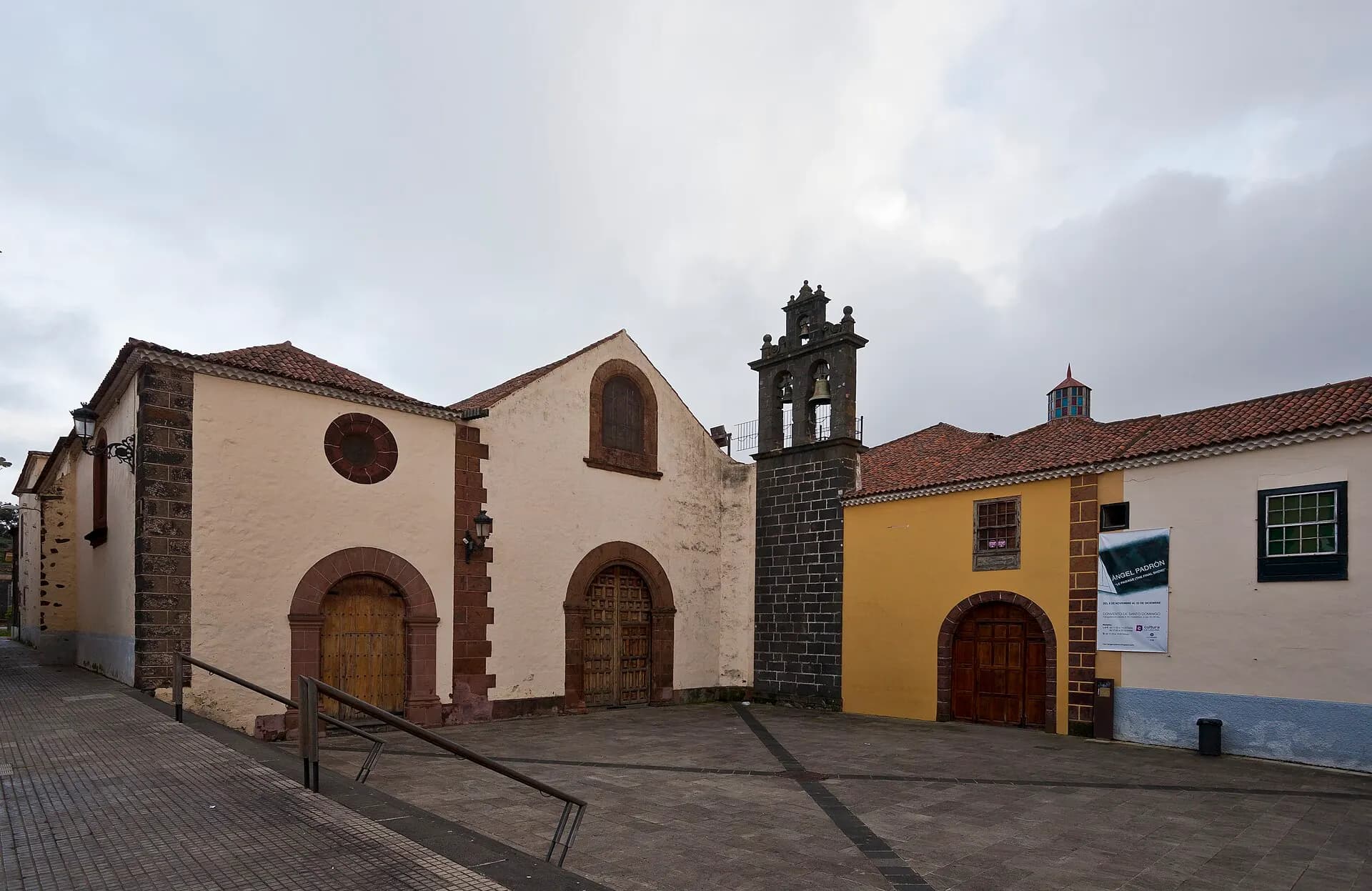
The island's former capital and university town, a World Heritage Site since 1999. Laid out at the end of the fifteenth century as an open city without walls, its grid of streets became a model for colonial towns in the Americas. Walk its pedestrian streets lined with colourful mansions, churches and courtyards, and browse the food market.
When to go
Tenerife is mild all year, with temperatures in the south usually in the low to mid-twenties Celsius, and it's a popular winter-sun destination from November to March. Spring and autumn are ideal for hiking. Summer is hot and busy, especially in August, though the north stays cooler. Teide is much colder than the coast, with frost and sometimes snow in winter, when the summit trails may close. Carnival in Santa Cruz brings huge crowds in February or March.
Getting around
Tenerife has two airports: Tenerife South, near the southern resorts, and Tenerife North, near La Laguna. A good network of TITSA buses, known locally as guaguas, links the airports, towns and resorts, and a tram runs between Santa Cruz and La Laguna. The ten+ card or ten+ móvil app gives cheaper fares than paying the driver. Limited bus services run up to Teide National Park; check timetables before relying on them. A hire car is the easiest way to reach the mountain villages, but roads in Anaga and Teno are narrow and winding. The Cabildo plans to control private car access to Teide in the coming years, so check the latest rules.
Local tips
- Check the weather for the area you're visiting, not just the island; the north may be cloudy while the south is sunny.
- Bring warm layers for Teide, even in summer; temperatures at the cable car's upper station can be close to freezing.
- Book Teide summit permits and Masca slots well ahead, and keep the confirmation and your ID with you.
- Watch for the flags on beaches; Atlantic swells and currents can be dangerous, especially on the north coast.
- Take care with altitude on Teide if you have heart or breathing problems.
- Learn a few words of Spanish; English is widely spoken in the south, less so in the villages.
- The ferries from Los Cristianos to La Gomera make an easy day trip.
Eat and drink
Try papas arrugadas, small potatoes boiled in salty water until their skins wrinkle, served with mojo, a red sauce of peppers and garlic or a green one of coriander and parsley. Look for grilled fresh fish, goat's cheese, rabbit in salmorejo sauce, and gofio, a toasted grain flour. In the north, guachinches, simple seasonal places in farmers' homes and garages, serve home-made wine and local dishes. Tenerife's volcanic vineyards produce good whites, and bienmesabe, an almond dessert, is a classic. Finish with a barraquito, a layered coffee with condensed milk and liqueur.
Where to stay
Costa Adeje, Los Cristianos and Playa de las Américas offer the widest choice, reliable sunshine and easy access to boat trips. Puerto de la Cruz is a more traditional base for the green north and Teide. La Laguna and Santa Cruz suit travellers who want a city with local life and good access to Anaga. Rural houses in the hills and the parador in Teide National Park give peace and dark skies.
Microclimates and the volcano
Tenerife's landscape is shaped by the trade winds. Moist air from the north-east hits the mountains and forms a sea of clouds, which feeds the forests and farms of the north while the south stays dry. Climb above it, to Las Cañadas, and the sky is usually clear, which is why the Teide Observatory stands on the ridge and why the island is one of the world's great places for stargazing. Teide is an active volcano: the Narices del Teide vents on the flank of Pico Viejo erupted in 1798, and the island's most recent eruption was at Chinyero, in the north-west, in 1909. Around it, the national park protects unique plants, such as the red tajinaste, which flowers in late spring.
Masca, Teno and the walking trails
Tenerife is a fine walking destination, with hundreds of kilometres of marked trails, from old paths between villages to high mountain routes. The Teno massif, at the island's north-west tip, is one of its oldest parts, with deep ravines, terraced fields and the lighthouse at Punta de Teno. Access to the most popular routes has been regulated after years of overcrowding and rescues: Masca, the summit of Teide and some other trails in the national park need reservations, and new trails were added to the reservation list in 2026. Check the official sites before you go, carry water and suitable clothing, and start early.
Tourism and the islands
Tenerife receives several million visitors a year, and tourism is the backbone of its economy. In 2024 and 2025, tens of thousands of residents joined marches under the slogan "Canarias tiene un límite" ("The Canaries have a limit"), calling for limits on new hotels and holiday lets, measures to address the cost of housing and protection of natural areas. The protests were aimed at policy rather than individual travellers, and the island authorities have since introduced fees and caps at Teide and Masca. Visitors are welcome; spending in locally owned businesses and travelling outside the busiest places helps.
Responsible travel
Stay on marked paths in the national and rural parks, don't take rocks or plants, and don't build stone piles. Use authorised Barco Azul boats for whale watching, keep your distance from the animals and never swim with them. Respect residents' privacy and property in small villages such as Masca and Taborno, and park only in designated areas. Water is scarce in the south; use it carefully, and consider staying in locally run accommodation in the towns and villages.