Seville
Orange trees, Moorish palaces, the world's largest Gothic cathedral and flamenco in the narrow lanes of the old town.
- Best time to go
- March to May and October to November, avoiding the extreme summer heat
- Local time
- –
- Currency
- Euro (EUR)
- Reading time
- 4 min
- Language
- Spanish and Basque
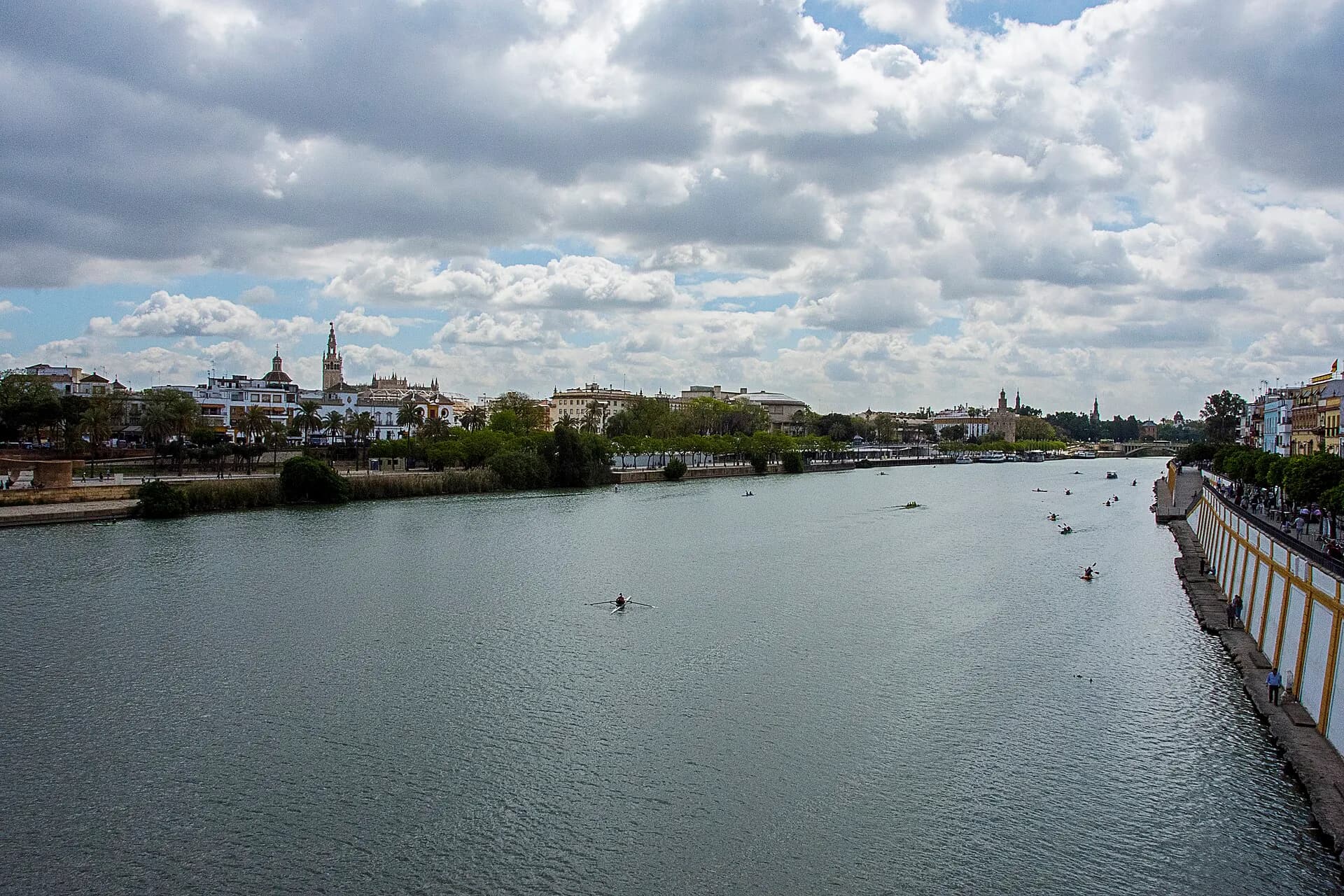
Seville is the capital of Andalusia and the soul of southern Spain. For five centuries it was part of Moorish al-Andalus, and later, as the port through which the wealth of the Americas flowed, it became one of the richest cities in Europe. The result is a city of extraordinary monuments: a Gothic cathedral built on the site of a mosque, a royal palace in the Mudéjar style, and baroque churches and mansions.
But Seville is also a city to experience: tapas bars spilling onto the street, orange trees perfuming the air in spring, flamenco in small venues, and the passion of its festivals. Visit outside the heat of summer, walk everywhere, and stay out late, as the sevillanos do.
The top 9 in Seville
- 1
The Real Alcázar
Photo: Jl FilpoC, CC BY-SA 4.0, via Wikimedia Commons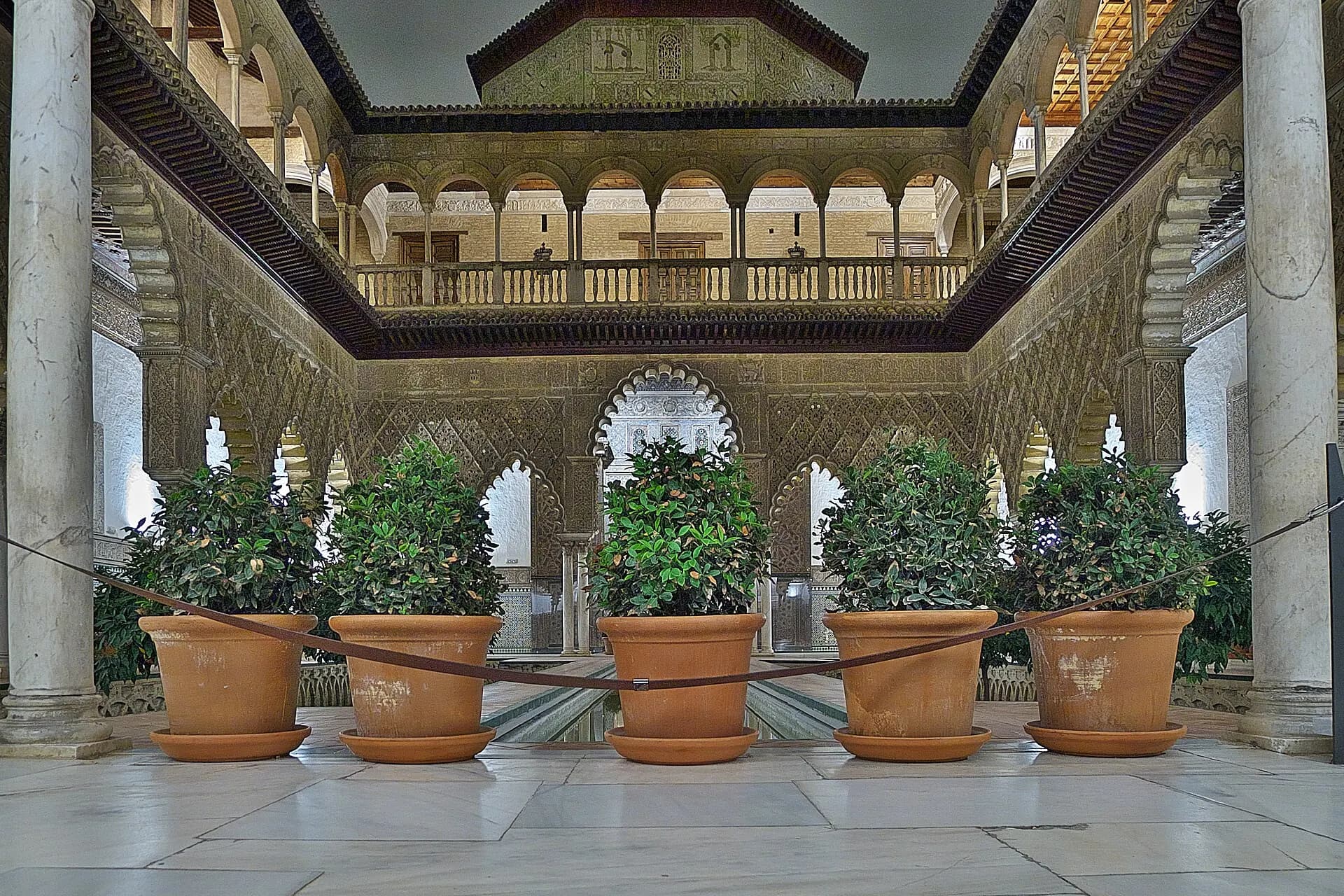
A royal palace still used by the Spanish royal family, built mostly in the fourteenth century by Christian kings in the Mudéjar style, by craftsmen trained in Moorish traditions. Its courtyards, such as the Patio de las Doncellas, are covered in intricate tiles, carved stucco and wooden ceilings, and its gardens are a paradise of fountains, palms and orange trees.
TipBook a timed ticket online, and go first thing in the morning or late in the day.
- 2
Seville Cathedral and the Giralda
Photo: Diliff, CC BY-SA 3.0, via Wikimedia Commons
The largest Gothic cathedral in the world, built on the site of the city's great mosque. Inside are a vast gilded altarpiece and the tomb of Christopher Columbus, carried by four figures. The Giralda, the former minaret, became its bell tower; climb its thirty-five ramps, built for horses, for views over the city.
- 3
Plaza de España
Photo: Carlos Delgado, CC BY-SA 4.0, via Wikimedia Commons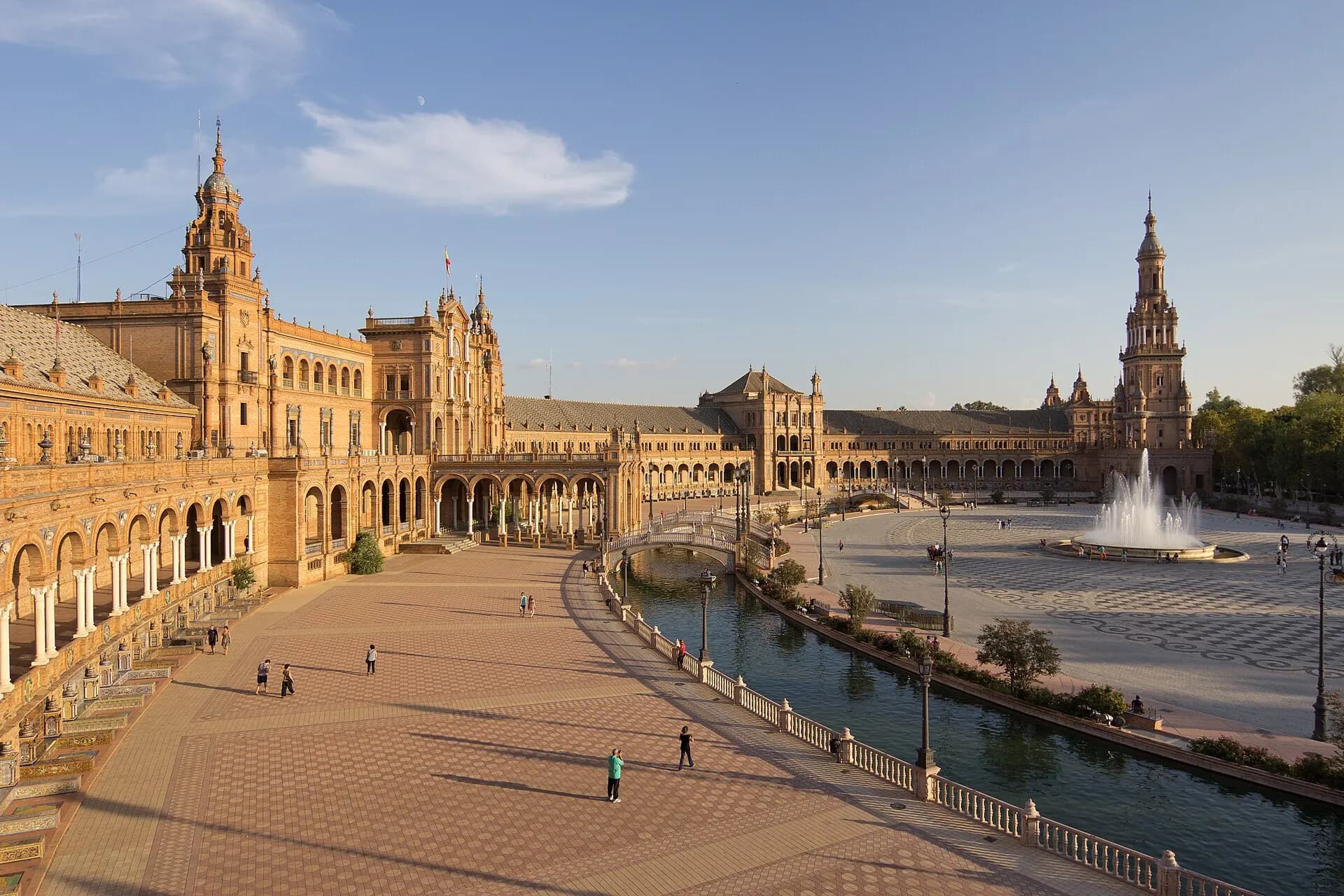
A sweeping semicircular building with towers, bridges and a canal, built for the Ibero-American Exposition of 1929. Along its walls, tiled alcoves represent each of Spain's provinces. It's surrounded by the María Luisa Park, with shady avenues, fountains and pavilions.
TipVisit in the late afternoon, when the light is warm, and rent a rowing boat on the canal.
- 4
Barrio Santa Cruz
Photo: Gpedro, CC BY-SA 3.0, via Wikimedia Commons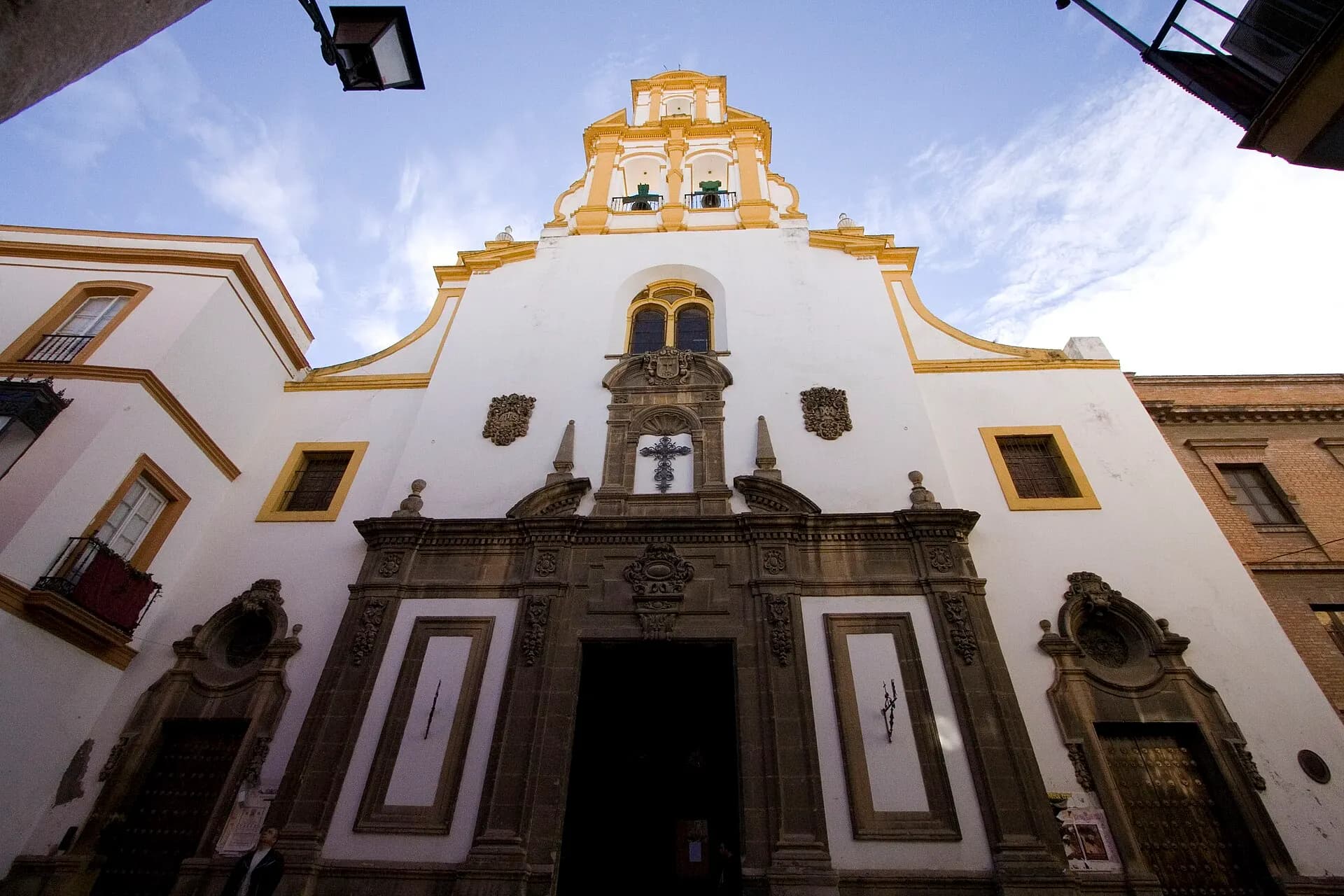
The old Jewish quarter, a maze of narrow whitewashed lanes, flower-filled patios and tiny squares shaded by orange trees, between the cathedral and the Alcázar gardens. It's one of the most romantic places in Spain to get lost.
- 5
Metropol Parasol (Las Setas)
Photo: Mariano Asensio, CC BY-SA 3.0, via Wikimedia Commons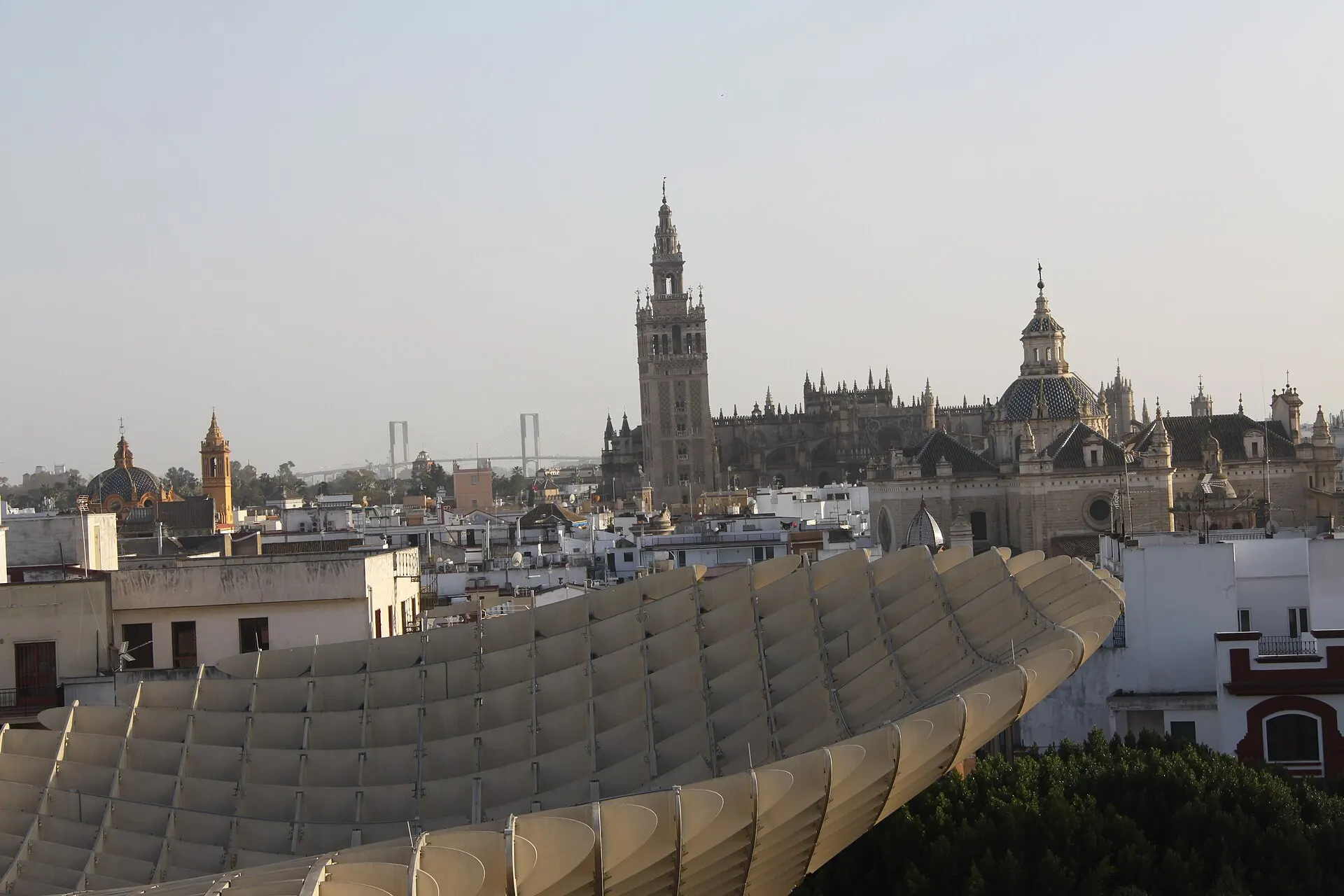
A giant modern wooden structure shaped like a canopy of mushrooms over the Plaza de la Encarnación, opened in 2011. A walkway on top offers panoramic views of the old town, especially at sunset, and Roman remains are displayed in the museum beneath it.
- 6
Triana
Photo: Diego Delso, CC BY-SA 4.0, via Wikimedia Commons
Across the Guadalquivir River, the traditional neighbourhood of sailors, potters and flamenco artists, reached by the Triana Bridge. Visit the Triana Market, the ceramic workshops and tile shops on Calle San Jorge, and the riverside bars of Calle Betis, with views back to the city.
- 7
The Torre del Oro and the riverbank
Photo: Benjamin Smith, CC BY-SA 4.0, via Wikimedia Commons
A thirteenth-century Almohad watchtower on the river, once part of the city walls, now a small maritime museum. The riverbank promenade leads past it to the bullring of the Real Maestranza.
- 8
Casa de Pilatos
Photo: Benjamin Smith, CC BY-SA 4.0, via Wikimedia Commons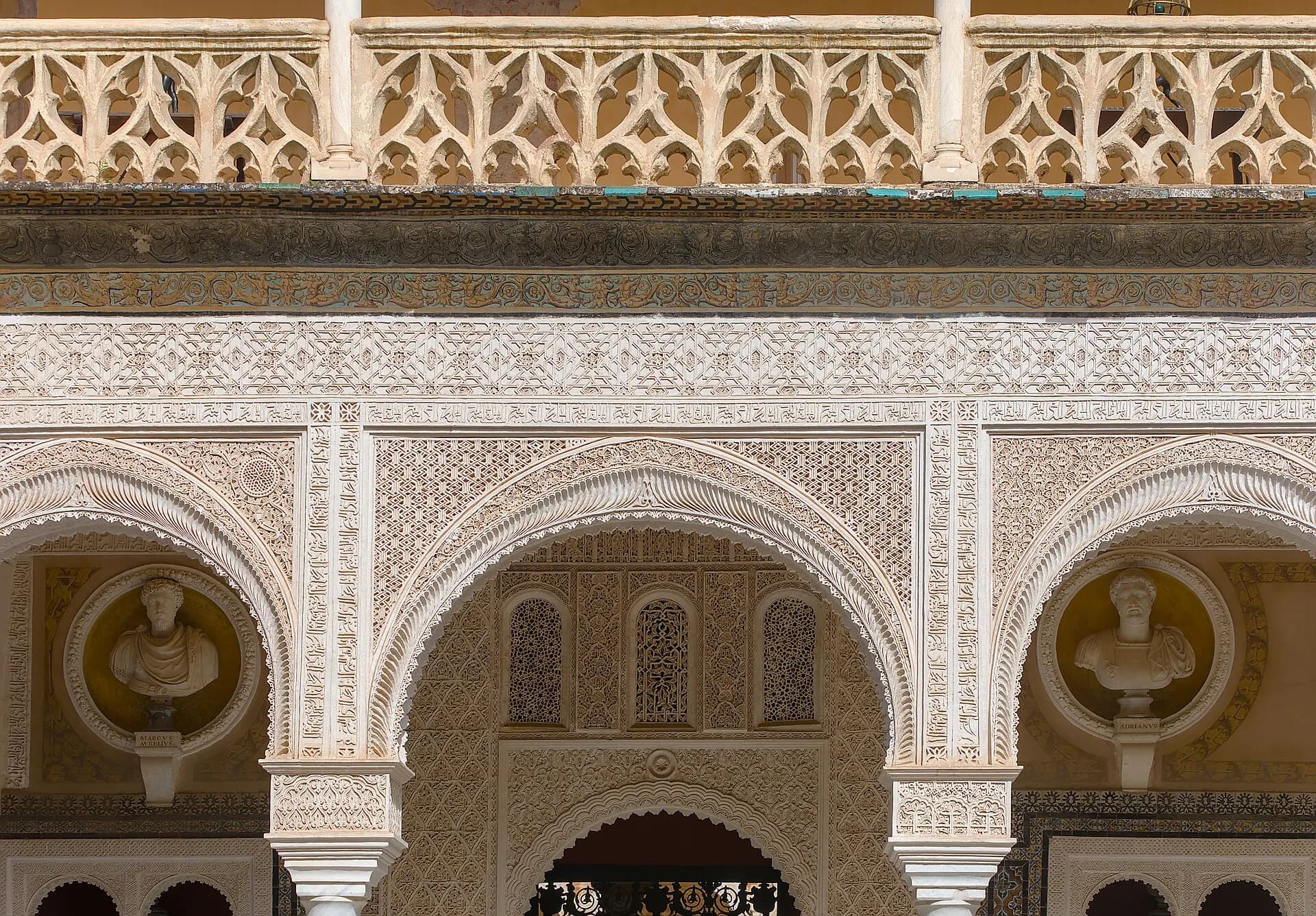
A sixteenth-century palace that mixes Mudéjar, Gothic and Renaissance styles, with tiled courtyards, gardens and classical sculptures. It's a quieter alternative to the Alcázar and still the home of a noble family.
- 9
A flamenco show
Photo: Holger Uwe Schmitt, CC BY-SA 4.0, via Wikimedia Commons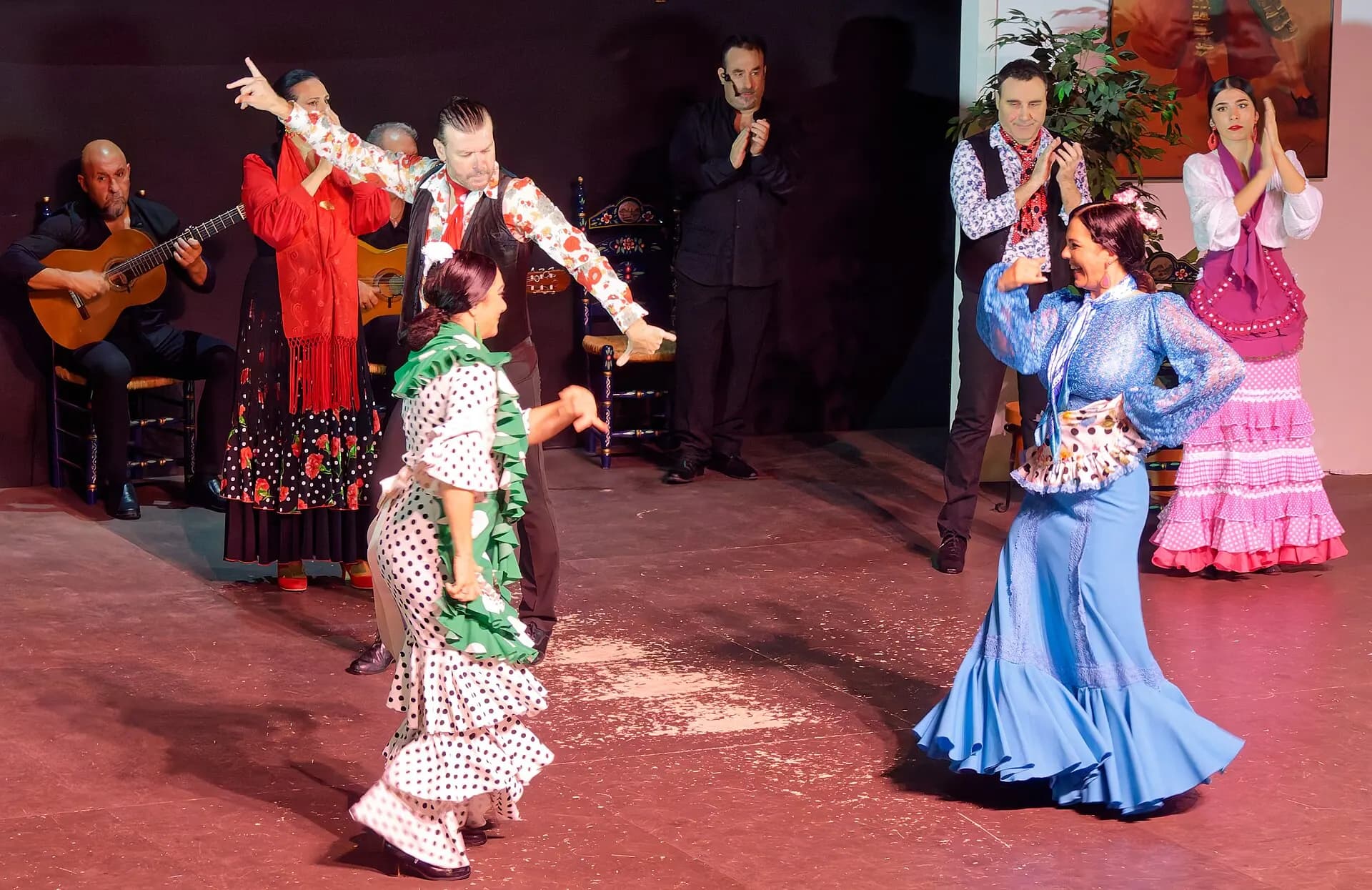
Seville is one of the heartlands of flamenco. Small venues, known as tablaos and peñas, offer intimate performances of song, guitar and dance; the Museo del Baile Flamenco also has nightly shows. Triana's bars sometimes host spontaneous performances.
When to go
Spring is the most beautiful time, with blossoming orange trees and two great festivals: Semana Santa (Holy Week), with solemn processions through the streets, and the Feria de Abril, a week of flamenco dresses, horses and dancing in decorated marquees. Autumn is also pleasant. July and August are extremely hot, often above 40 °C, and many locals leave the city. Winters are mild and sunny.
Getting around
The old centre is compact and best explored on foot, with many streets closed to traffic. A tram runs along the Avenida de la Constitución, and a metro line and buses cover the wider city. Seville has an extensive network of cycle lanes and a bike-share scheme.
Seville Airport is about twenty-five minutes from the centre by bus or taxi. High-speed trains from Santa Justa station reach Madrid in about two and a half hours and Córdoba in under an hour.
Local tips
- Book the Alcázar and the cathedral online to skip long queues.
- In summer, sightsee early and late, and rest during the hottest hours, as the locals do.
- Lunch is around two to four, dinner from nine; many restaurants close in between.
- Dress modestly for the cathedral and churches.
- Accommodation prices rise steeply during Holy Week and the Feria; book far ahead.
- Watch for women offering sprigs of rosemary near the cathedral: it's a lead-in to a request for money.
Eat and drink
Seville is the home of tapas, and bar-hopping, eating a small dish or two at each, is the local way to dine. Try salmorejo, a thick cold tomato soup; espinacas con garbanzos, spinach with chickpeas; pringá, a slow-cooked meat sandwich; fried fish; and jamón ibérico. Drink a cold fino or manzanilla sherry from nearby Jerez and Sanlúcar, or tinto de verano, red wine with lemon soda.
Day trips
Córdoba, less than an hour by high-speed train, is home to the Mezquita, the great mosque-cathedral with its forest of red-and-white arches. Granada and its Alhambra palace are about three hours away and best visited overnight. Closer to Seville, the Roman ruins of Itálica, birthplace of the emperors Trajan and Hadrian, have one of the largest amphitheatres of the Roman world, and the white town of Carmona sits on a ridge above the plains.