Córdoba
A forest of arches in the great mosque-cathedral, flower-filled patios, a Roman bridge and the ruins of a caliph's palace city.
- Best time to go
- March to early June, especially May, and October to November
- Local time
- –
- Currency
- Euro (EUR)
- Reading time
- 8 min
- Language
- Spanish and Basque
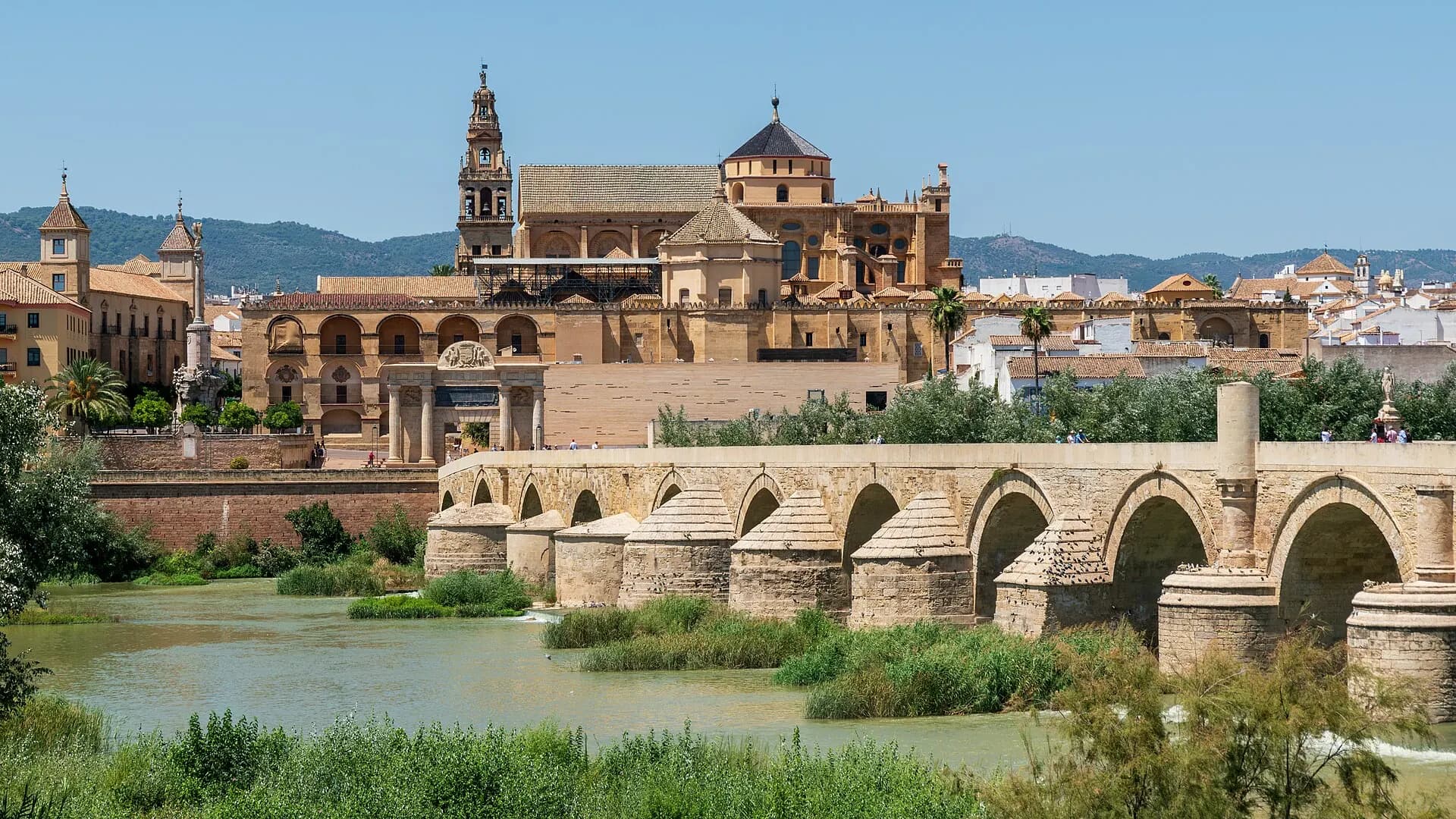
Córdoba sits on a bend of the Guadalquivir River, between Seville and Granada, and for a time in the tenth century it was one of the largest and most sophisticated cities in Europe. As the capital of the Umayyad caliphate of al-Andalus it had libraries, baths, paved streets and a great mosque that grew over two centuries into a forest of more than eight hundred columns. Earlier it had been a Roman provincial capital, the birthplace of the philosopher Seneca, and after the Christian conquest of 1236 it was reshaped with Gothic churches and a cathedral built right inside the mosque.
Today it's a smaller, quieter city than Seville, and much of its charm lies in the lanes of the old town, a World Heritage Site: whitewashed houses, wrought-iron grilles and courtyards filled with geraniums. Many visitors come for a single day on the train, but staying a night or two lets you see the Mezquita early, wander the Judería after the tour groups leave and reach Medina Azahara, the ruined palace city in the hills to the west.
The top 13 in Córdoba
- 1
The Mezquita-Catedral
Photo: Markanga, CC BY-SA 3.0 es, via Wikimedia Commons
Begun in the late eighth century and enlarged several times, the great mosque is famous for its double arches striped in red brick and white stone, stretching away in every direction. The mihrab, the prayer niche, glitters with gold mosaics made with the help of Byzantine craftsmen. In the sixteenth century a Renaissance cathedral was built into the centre of the prayer hall, and the building is still an active Catholic cathedral. The courtyard of orange trees, the Patio de los Naranjos, is open to walk through without a ticket. Above it, the bell tower wraps the old minaret in a Renaissance and baroque shell and gives the best view over the Mezquita's roofs and the old town. Climbs have their own ticket and run in timed slots through the day, so book online in advance; large backpacks and bulky bags aren't allowed on the stairs.
TipFrom Monday to Saturday, entry is free between 8:30 and 9:30 for individual visitors (no groups), with the last entry at 9:20, except on days of special celebrations. Opening hours are shorter on Sunday mornings because of mass, so check the official opening-times tool for your date.
- 2
Calleja de las Flores
Photo: jorcolma, CC BY 2.0, via Wikimedia Commons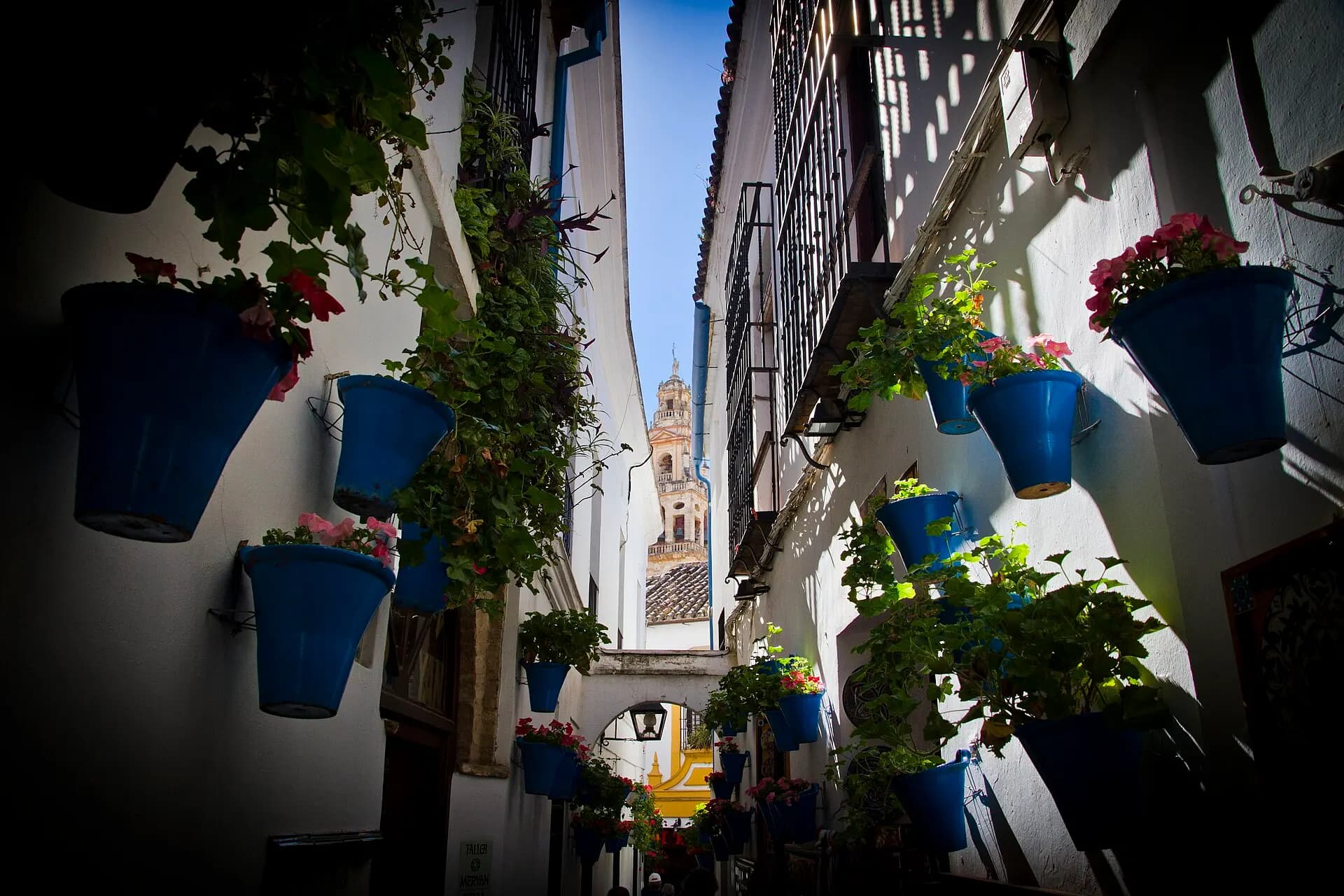
A tiny lane just north of the Mezquita, its white walls hung with flowerpots, ending in a small square where the bell tower is framed between the houses. It's the most photographed corner of the city, so it's best early in the morning.
- 3
The Judería and the Synagogue
Photo: JP Puerta, CC BY 2.0, via Wikimedia Commons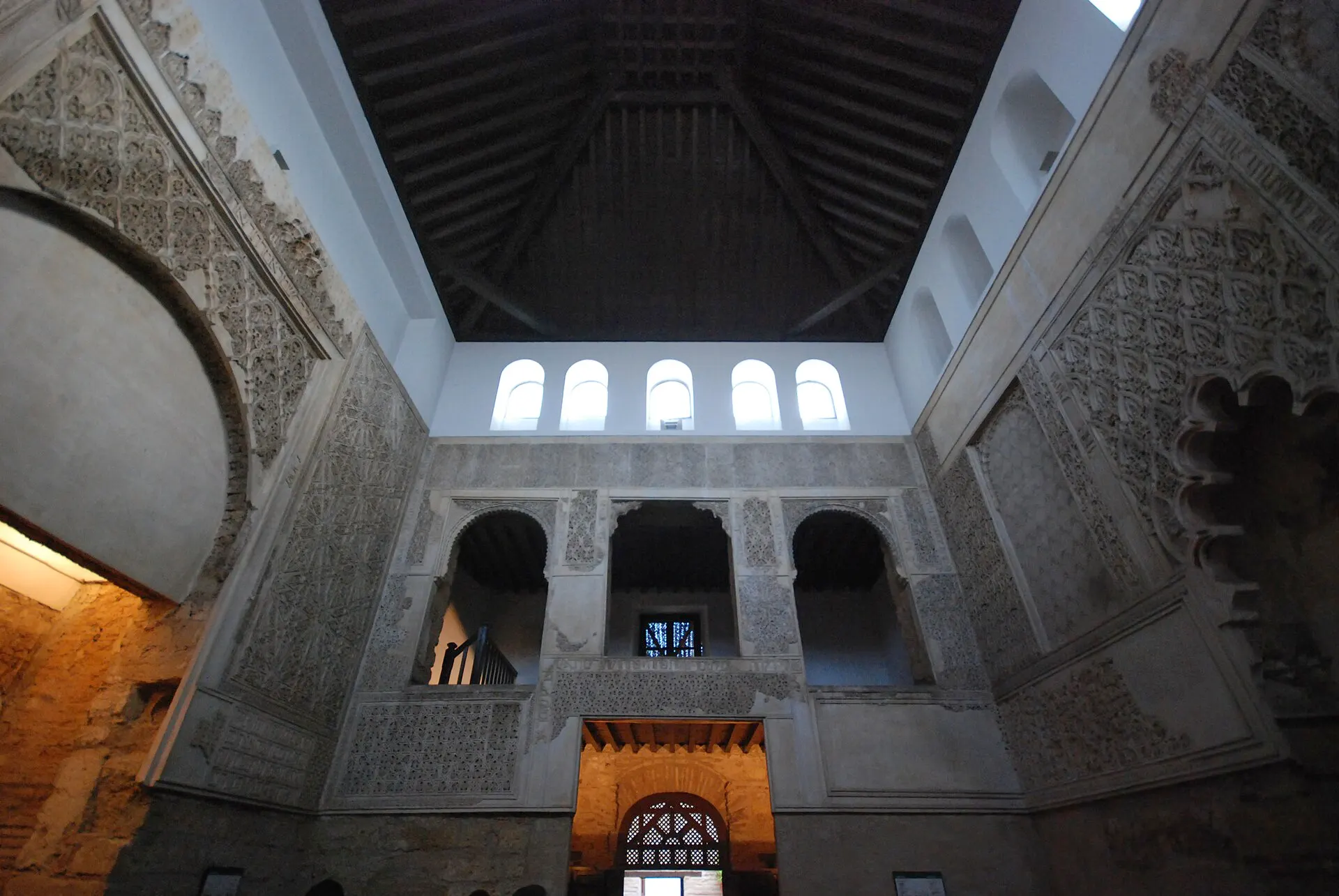
The old Jewish quarter is a maze of narrow streets west and north of the Mezquita, where the philosopher Maimonides was born in the twelfth century. On Calle Judíos, the Synagogue, built in 1314 and 1315, is the only medieval synagogue left in the city. Its small prayer hall is covered in Mudéjar plasterwork with Hebrew inscriptions from the Psalms. Entry is free; it's open Tuesday to Sunday from 9:00 to 15:00 and closed on most Mondays.
- 4
Alcázar de los Reyes Cristianos
Photo: Jebulon, Public domain, via Wikimedia Commons
A fortress-palace of the Christian kings, where Ferdinand and Isabella lived for years during their war against Granada and are said to have first received Columbus. Its terraced gardens, with long pools, fountains, orange trees and cypresses, are the highlight. The gardens reopened in June 2026 after conservation work, with morning-only hours; parts of the palace interior may still be closed, so check what's open before you go.
- 5
Baños del Alcázar Califal
Photo: Delegación de Cultura Ayuntamiento de Córdoba, CC BY 2.0, via Wikimedia Commons
The excavated remains of the bathhouse of the caliphs' palace, beside the Alcázar on the Campo Santo de los Mártires. Its vaulted rooms, lit by star-shaped skylights, show how the cold, warm and hot rooms of an Andalusi bath worked.
- 6
The Roman Bridge
Photo: kallerna, CC BY-SA 4.0, via Wikimedia Commons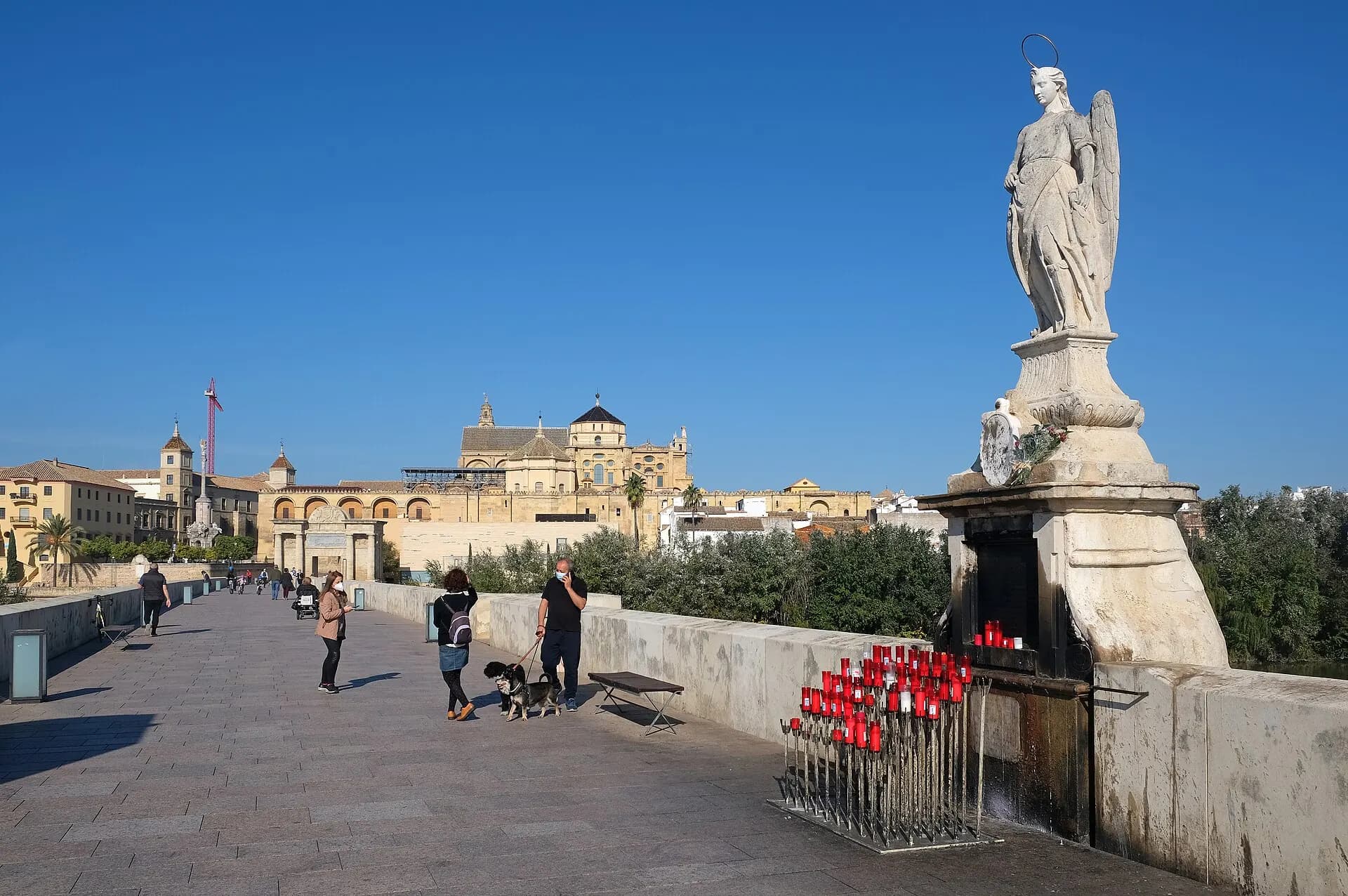
The bridge has crossed the Guadalquivir since Roman times, though most of what you see was rebuilt over the centuries. It's now a pedestrian walkway, linking the Puerta del Puente, a Renaissance gateway, with the south bank. The views back to the Mezquita are at their best at sunset.
- 7
Torre de la Calahorra
Photo: José Luiz, CC BY-SA 3.0, via Wikimedia Commons
A fortified gate tower guarding the southern end of the bridge, now home to a museum on the cultures of al-Andalus. Its rooftop is a good place to look back over the river and the old town.
- 8
Plaza del Potro
Photo: Benjamin Smith, CC BY-SA 4.0, via Wikimedia Commons
A small square named after the colt on its sixteenth-century fountain, with the old Posada del Potro inn, mentioned by Cervantes in Don Quixote. Facing it are the city's Fine Arts Museum and the museum of the painter Julio Romero de Torres.
- 9
Plaza de la Corredera
Photo: Benjamin Smith, CC BY-SA 4.0, via Wikimedia Commons
A large rectangular square enclosed by arcaded houses, rebuilt in the seventeenth century in the Castilian style and once used for bullfights and markets. Today its terraces fill with locals at lunchtime, and the covered market at one corner is a good place for a morning coffee.
- 10
The Roman Temple
Photo: kallerna, CC BY-SA 4.0, via Wikimedia Commons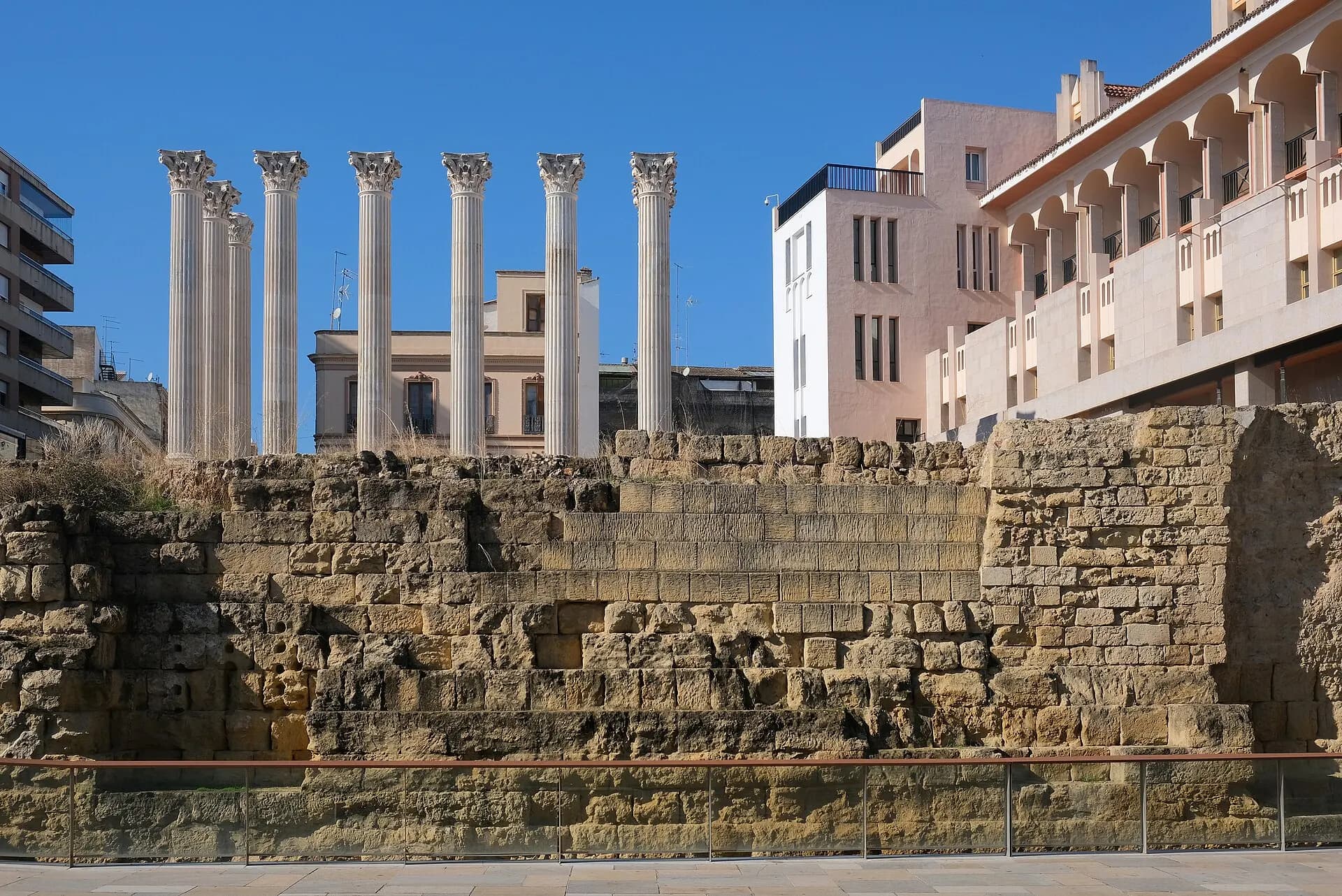
Tall fluted columns rise from the remains of a first-century temple beside the town hall on Calle Claudio Marcelo. You see it from the street, and it's a reminder that Córdoba, Corduba, was the capital of the Roman province of Baetica.
- 11
The Fernandine churches
Photo: Benjamin Smith, CC BY-SA 4.0, via Wikimedia Commons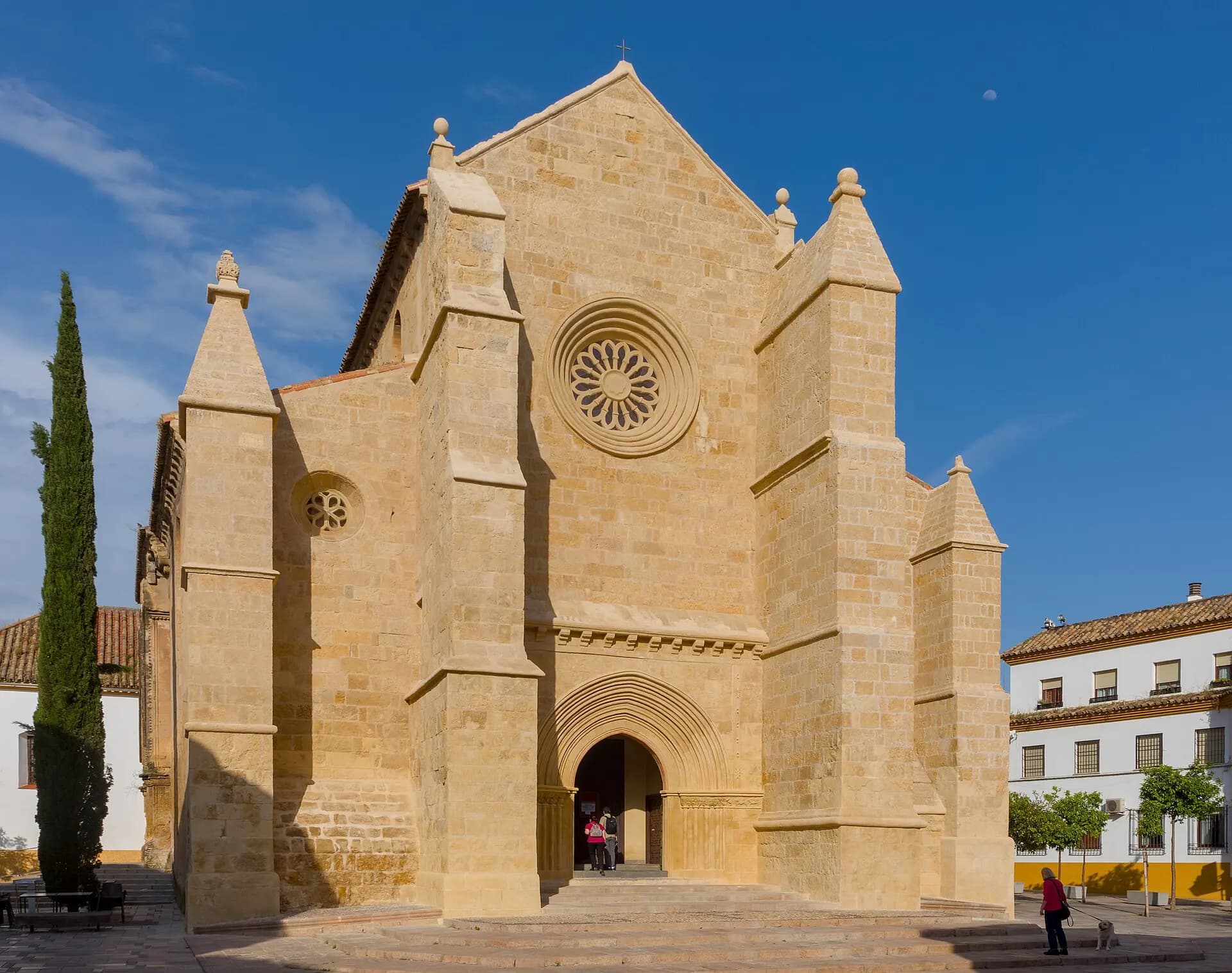
After Ferdinand III took Córdoba in 1236, a ring of parish churches was built in the new Christian districts, often on the sites of mosques. Known as the Fernandine churches, they mix sturdy Gothic stonework with Mudéjar details. Santa Marina, with its fortress-like façade, and San Lorenzo, with its rose window, are fine examples in the northern quarters, and San Pablo is close to the Corredera. Opening hours vary and some open only around services.
- 12
Palacio de Viana
Photo: Benjamin Smith, CC BY-SA 4.0, via Wikimedia Commons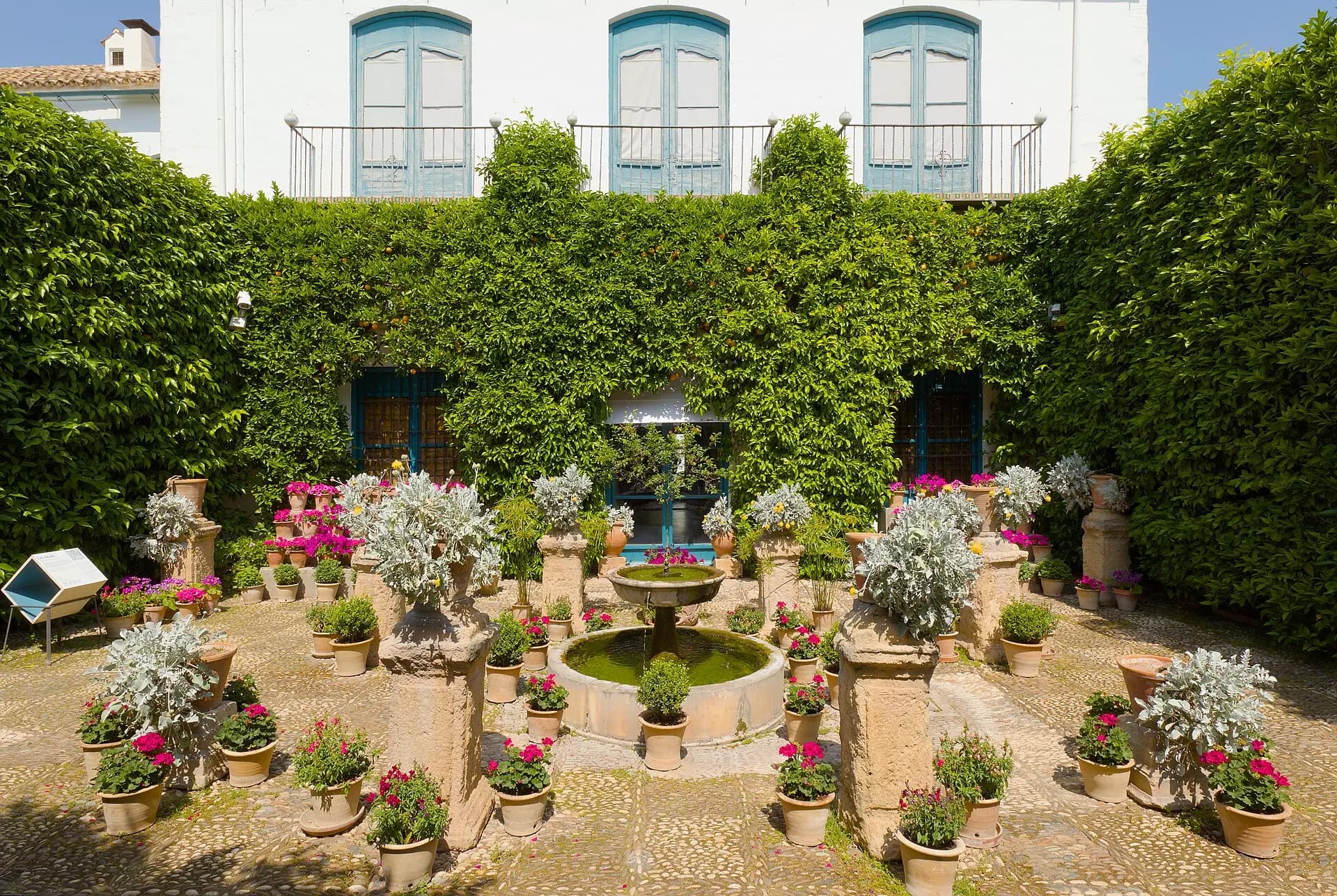
A noble mansion in the Santa Marina quarter with a dozen courtyards, each in a different style, from formal gardens with box hedges to a patio of orange trees. It's the best place to see the city's patio tradition at any time of year, and the furnished rooms can be visited on a guided tour.
- 13
Medina Azahara
Photo: Alvaro.vinuela.carnicero, CC BY-SA 4.0, via Wikimedia Commons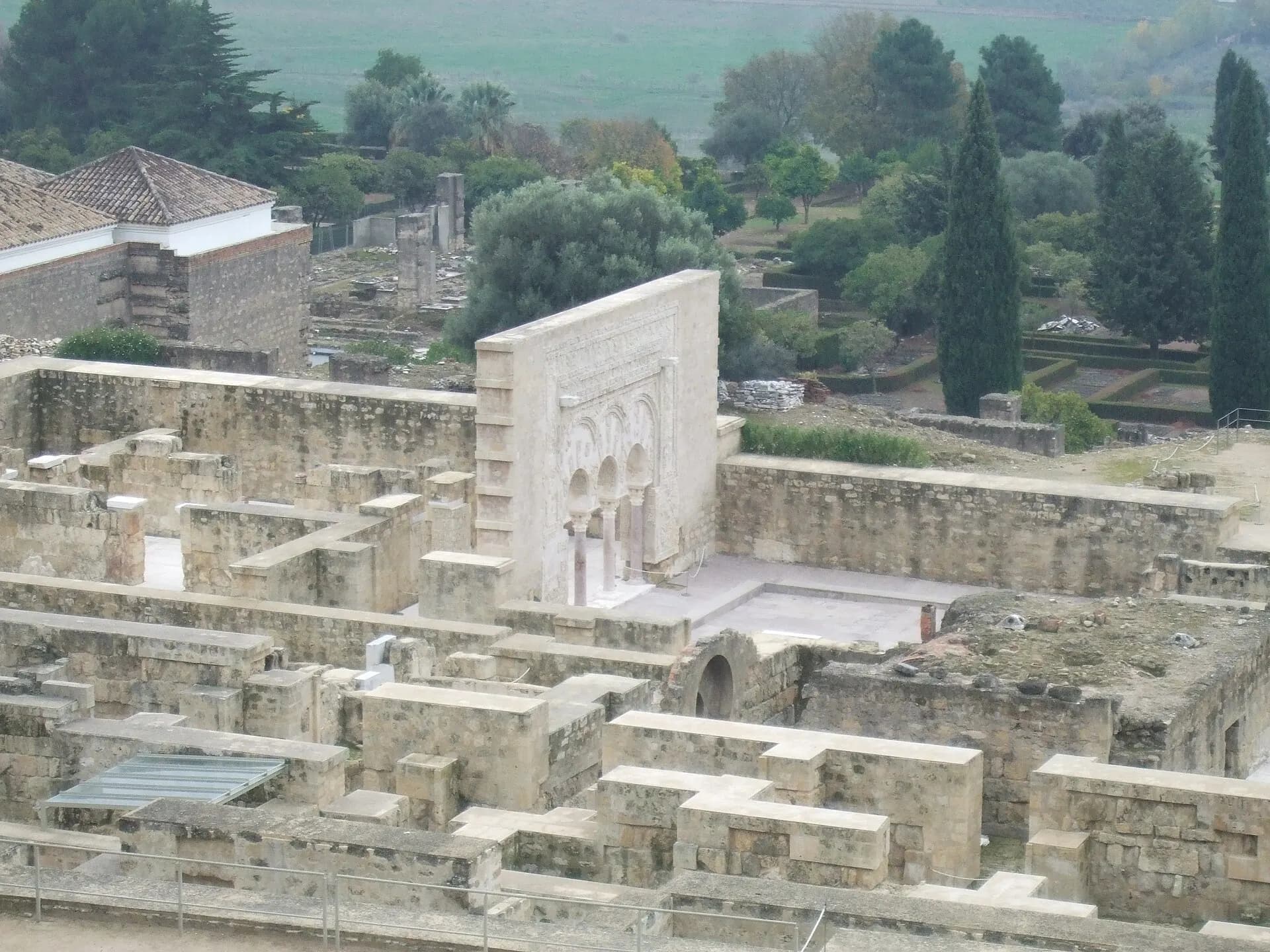
The ruins of Madinat al-Zahra, the palace city founded by the caliph Abd al-Rahman III in the tenth century and destroyed in civil war within a century, lie on a hillside about eight kilometres west of the centre. Terraces of palaces, gardens and a mosque have been excavated, and the site has been a UNESCO World Heritage Site since 2018. A modern museum at the entrance explains the history; from there a shuttle bus climbs to the ruins. Entry is free for EU citizens and inexpensive for others. It's closed on Mondays, except before public holidays.
TipFrom late June to late September, the site closes in the afternoon heat and reopens in the evening. A tourist bus runs from the city centre on most days except Monday; book it in advance, as private cars must park at the museum.
When to go
Spring is Córdoba's best season, and May is its month: the Cruces de Mayo, flower-decked crosses in the squares, open the month, followed by the Patios Festival, usually in the first half of May, and the Feria at the end. Accommodation is scarce and expensive then, so book early. October and November are warm and calmer. July and August are fierce: Córdoba is one of the hottest cities in Europe, with afternoon temperatures often above 40°C, and the city empties in the middle of the day. Winters are mild and sunny but chilly at night.
Getting around
The old town is compact, flat and best explored on foot, though its lanes are narrow and car access is restricted. City buses link the centre with the train station. Córdoba is on the high-speed line between Madrid and Seville, with trains to Seville in under an hour and to Madrid in under two hours; Málaga and Granada can also be reached by train. The nearest major airports are Seville and Málaga.
Local tips
- Visit the Mezquita in the first hour of the morning, when it's free and quieter, or late in the afternoon.
- Remove your hat in the Mezquita, dress respectfully, and stay quiet during services; photography of the liturgy and tripods are not allowed.
- In summer, sightsee before 1 pm and after 7 pm, carry water and walk on the shady side of the street.
- Many monuments close on Mondays or have short morning-only hours, so plan your days around them.
- During the Patios Festival, patios open at set hours, and queues build at the most popular ones; go early or late in the day.
- Patios are often private homes: keep your voice down and don't touch the plants.
Eat and drink
Córdoba has its own versions of Andalusian classics. Salmorejo, thicker than gazpacho and made with tomato, bread, olive oil and garlic, is topped with chopped egg and jamón. Flamenquín is a roll of pork loin wrapped around ham, breaded and fried. Try rabo de toro, oxtail stew; berenjenas con miel, fried aubergine with cane honey; and pastel cordobés, a pastry filled with pumpkin jam. Locals drink fino from the nearby Montilla-Moriles vineyards, a dry wine that goes well with tapas. Old taverns around San Miguel, the Corredera and Santa Marina are less touristy than those around the Mezquita.
Where to stay
The Judería and the streets around the Mezquita put you next to the main sights, with small hotels in converted houses with patios, but they're busy by day. The area around the Plaza del Potro and San Pedro is a little quieter and just as central. Santa Marina and San Lorenzo, in the north, are residential neighbourhoods with taverns and patios. Hotels near the station suit a short stay.
The caliphate of Córdoba
In 756 Abd al-Rahman I, a survivor of the Umayyad dynasty overthrown in Damascus, made Córdoba his capital, and in 929 his descendant Abd al-Rahman III declared himself caliph. Under the caliphate, the city became a centre of learning where Muslim, Jewish and Christian scholars worked with Greek philosophy, medicine and astronomy. The philosophers Averroes and Maimonides were both born here in the twelfth century. The caliphate collapsed into civil war in the early eleventh century and broke up into smaller kingdoms, and Córdoba never regained its former power. Its legacy is visible in the Mezquita, the ruins of Medina Azahara and the baths of the caliphal palace.
The patios of Córdoba
For centuries, houses in Córdoba have been built around an inner courtyard, shaded and cooled by a well or fountain and filled with plants in pots. Neighbours compete to make theirs the most beautiful, and the Patios Festival, held each May since the early twentieth century, opens dozens of private patios to visitors, free of charge. The festival is recognised by UNESCO as part of the intangible cultural heritage of humanity. Outside May, the Palacio de Viana and a few patio houses in the San Basilio and Santa Marina quarters can be visited, some with an entrance fee.
Responsible travel
The old town is a living neighbourhood, and holiday flats have pushed up rents for its residents. Choose licensed accommodation, keep noise down in the lanes at night, and respect the privacy of homes whose patios are open to view. In summer, the heat can be dangerous: avoid walking in the hottest hours, and look out for others. At Medina Azahara, stay on the marked paths, and don't climb on walls or touch the carved stone.