Barcelona
Gaudí's dreamlike buildings, medieval lanes and a city beach, with dinner at ten and the night only just beginning.
- Best time to go
- May to June and September to October, for warm weather and sea swimming without the August crowds
- Local time
- –
- Currency
- Euro (EUR)
- Reading time
- 5 min
- Language
- Spanish and Basque
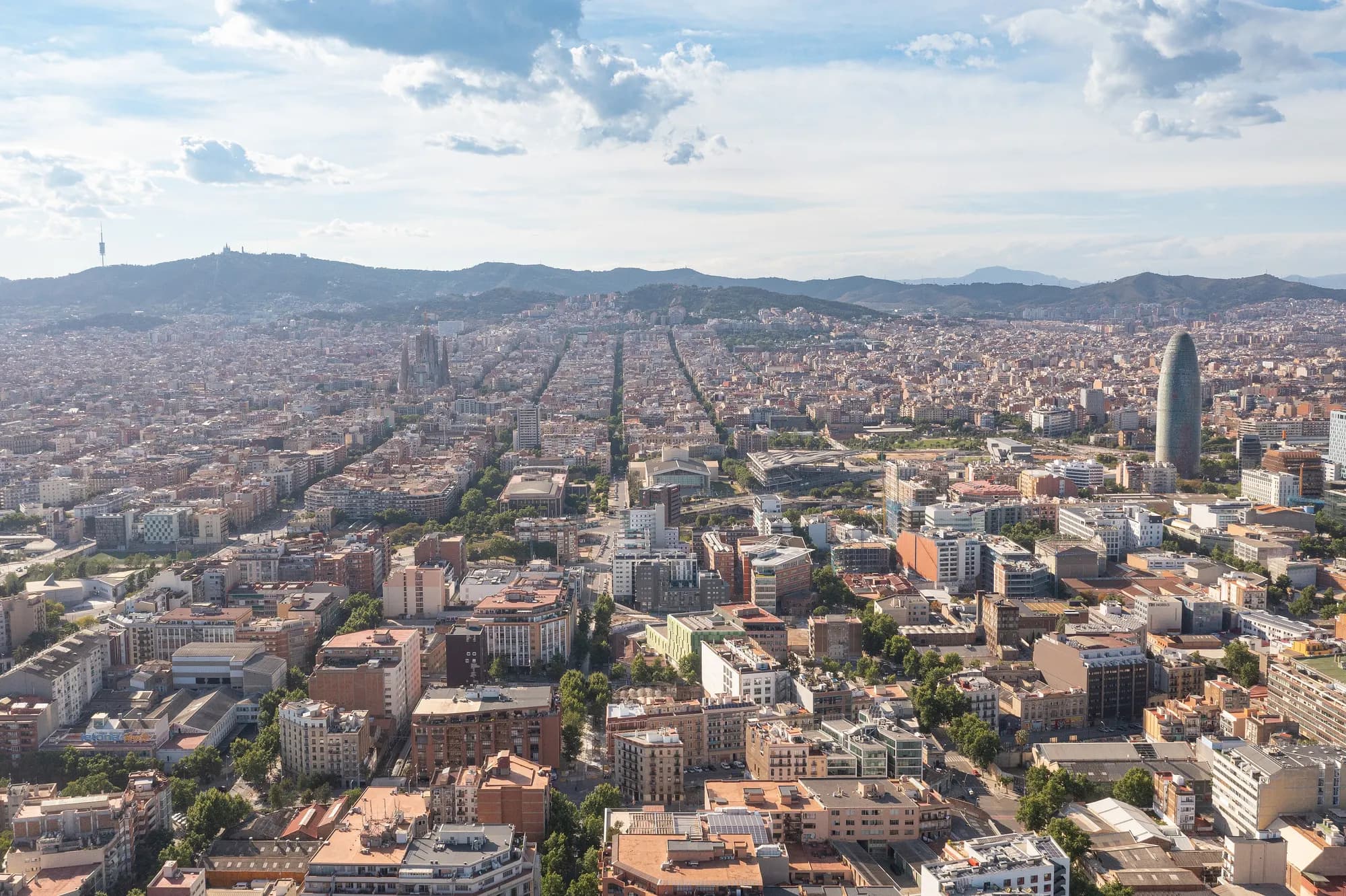
Barcelona packs a remarkable amount into a city you can cross on foot in an afternoon. There's a medieval Gothic Quarter, a grid of elegant nineteenth-century streets lined with the fantastical buildings of Antoni Gaudí and his contemporaries, a hill of museums and gardens, and several kilometres of beaches. It is the capital of Catalonia, with its own language, Catalan, its own festivals and a strong sense of identity.
Its popularity has a cost: the most famous sights are very busy, and the city has introduced measures to manage tourism. The best way to enjoy Barcelona is to book its headline buildings ahead, then spend the rest of your time in its neighbourhoods, markets and squares, at the city's own slow pace.
The top 10 in Barcelona
- 1
La Sagrada Família
Photo: Alvesgaspar, CC BY-SA 4.0, via Wikimedia Commons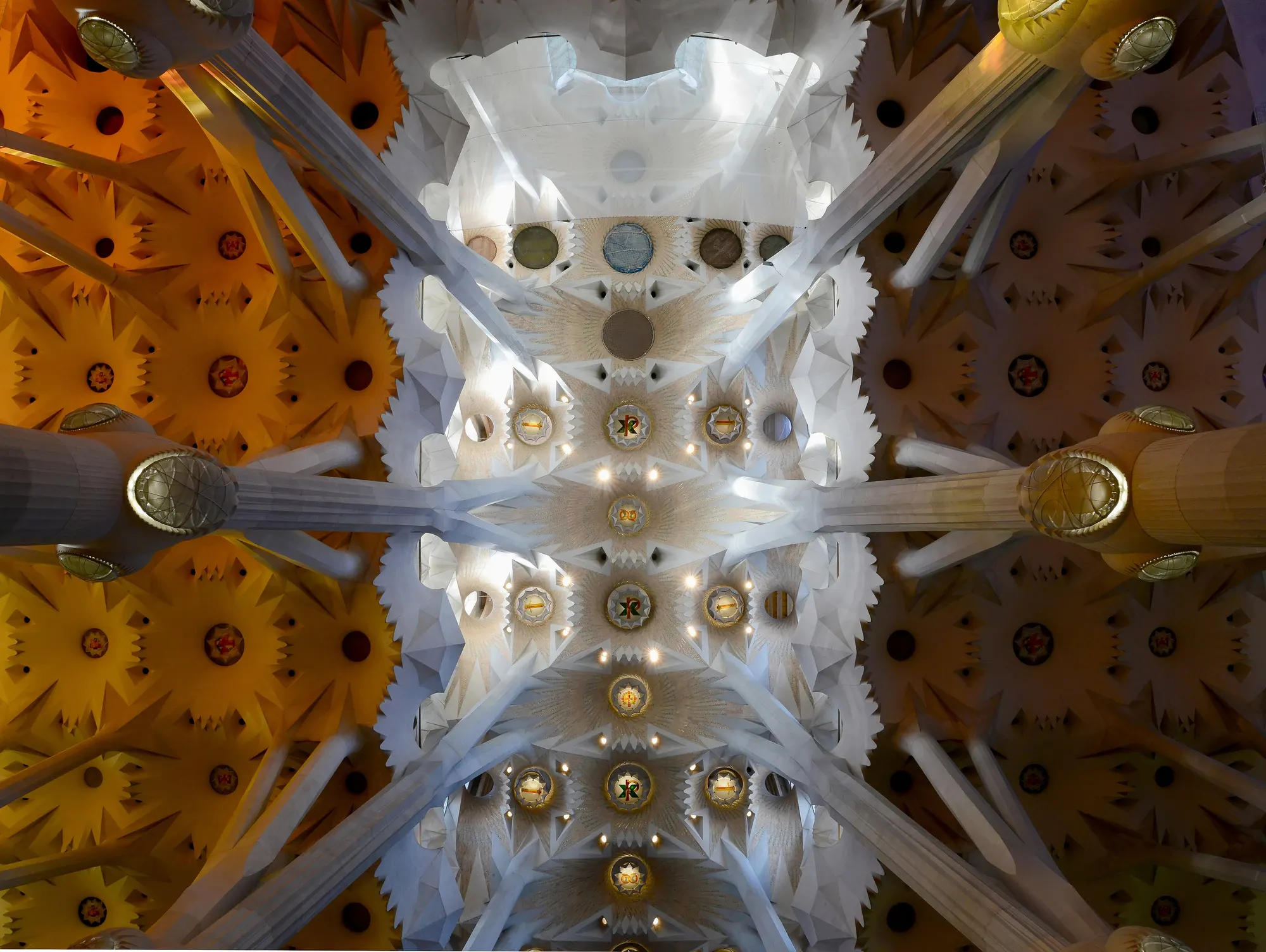
Gaudí's unfinished basilica has been under construction since 1882 and is still rising. The outside is extraordinary, its towers and facades covered in carved detail, but the real surprise is the interior, where columns branch like trees and the stained glass fills the nave with coloured light, warm on one side and cool on the other.
TipTickets must be booked online, often weeks ahead in summer. Choose a time in the late afternoon for the best light through the windows.
- 2
Sant Pau Recinte Modernista
Photo: Bernard Gagnon, CC BY-SA 3.0, via Wikimedia Commons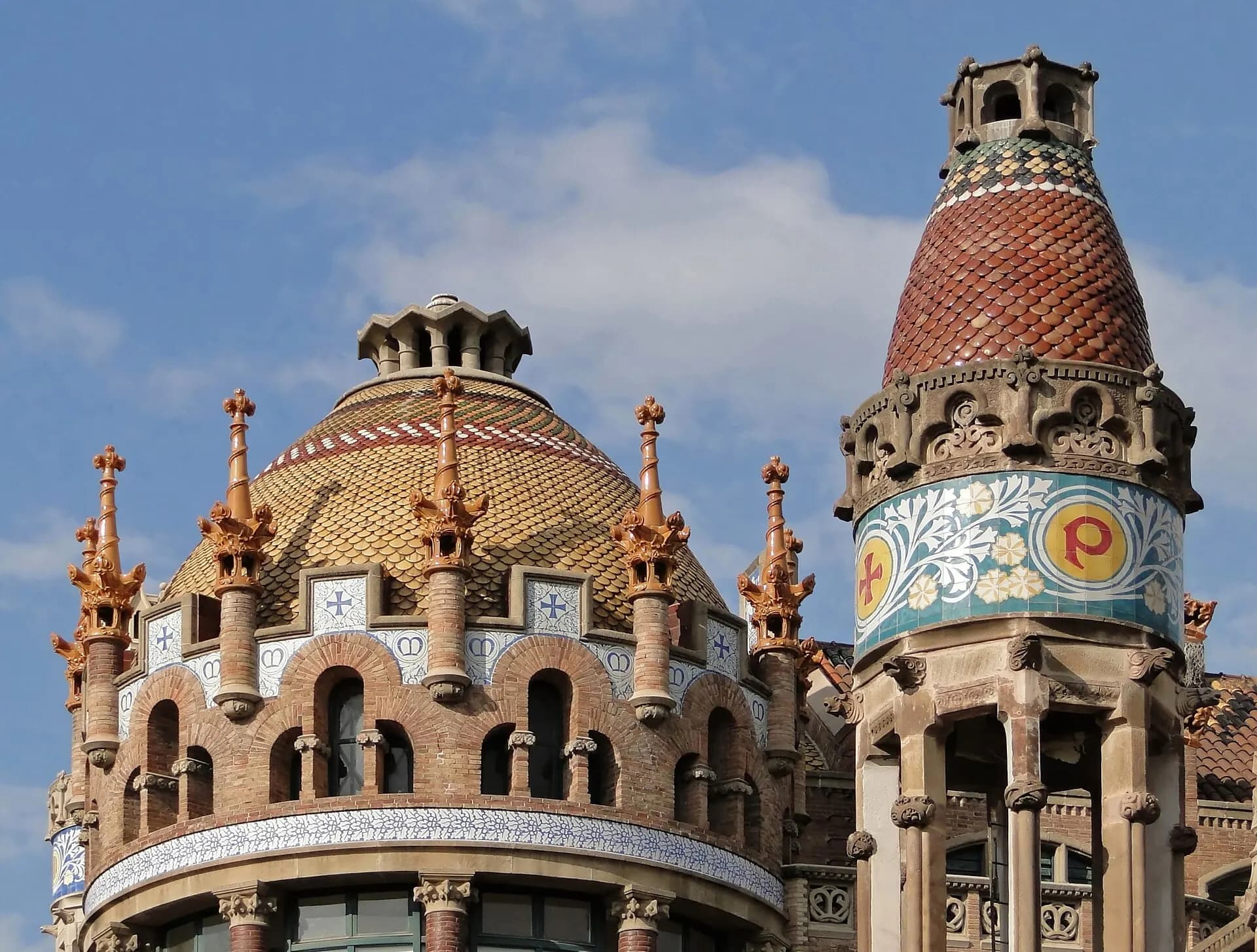
A former hospital complex designed by Lluís Domènech i Montaner, a short walk up the avenue from the Sagrada Família. Its pavilions, covered in mosaics, tiles and sculpture and linked by gardens, are a World Heritage Site and one of the most beautiful, and least crowded, Art Nouveau ensembles in Europe.
- 3
Park Güell
Photo: Bernard Gagnon, CC BY-SA 3.0, via Wikimedia Commons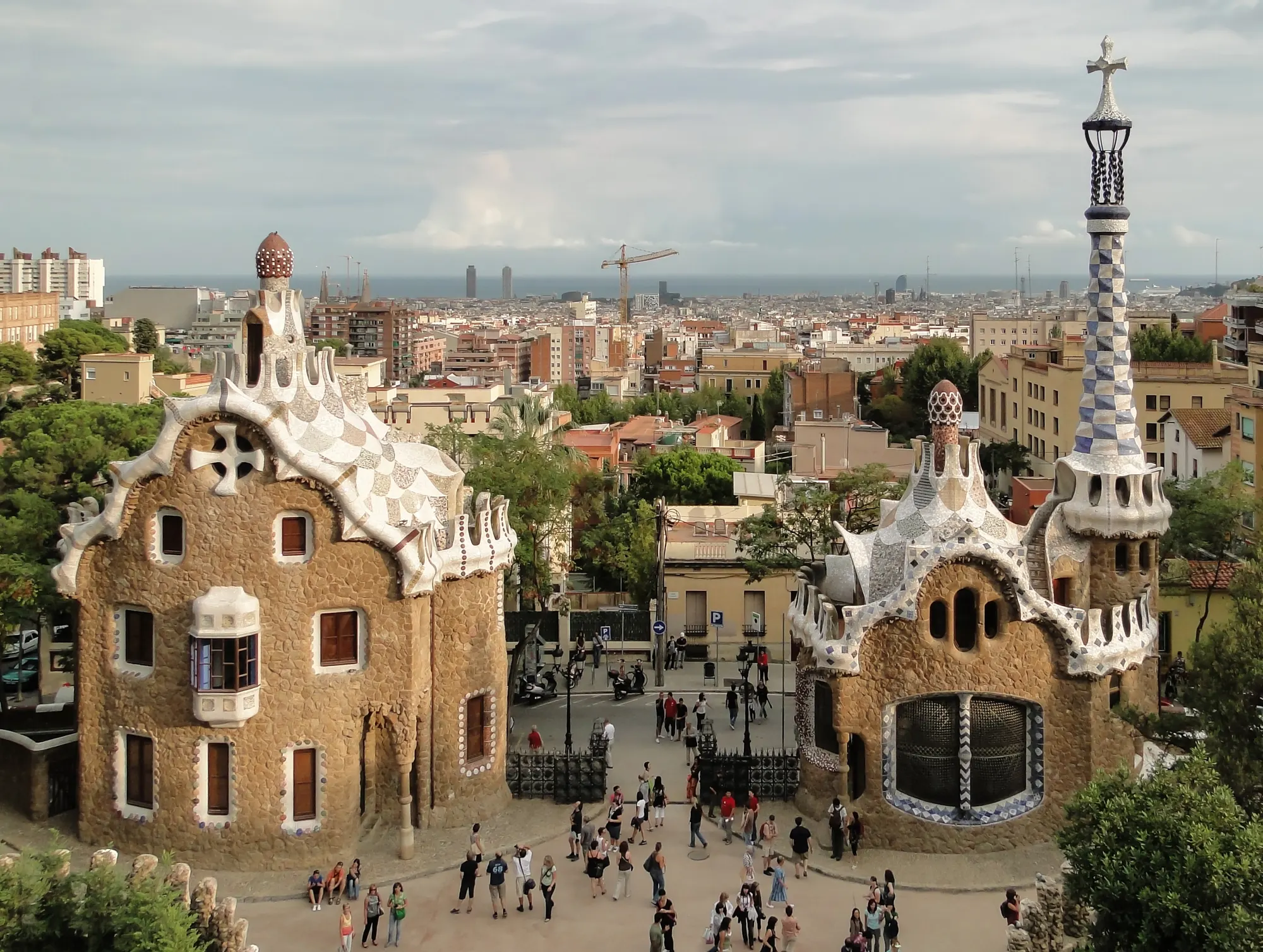
A hillside park Gaudí designed as a garden suburb, with a terrace bordered by a long, curving bench covered in broken tiles, gingerbread-like gatehouses and the famous mosaic dragon on the stairs. Much of the park is free to walk, but the monumental zone with Gaudí's best work needs a timed ticket.
TipWalk up the hill behind the monumental zone to the Turó de les Tres Creus for a wide view over the city to the sea.
- 4
The Gothic Quarter
Photo: Jordiferrer, CC BY-SA 4.0, via Wikimedia Commons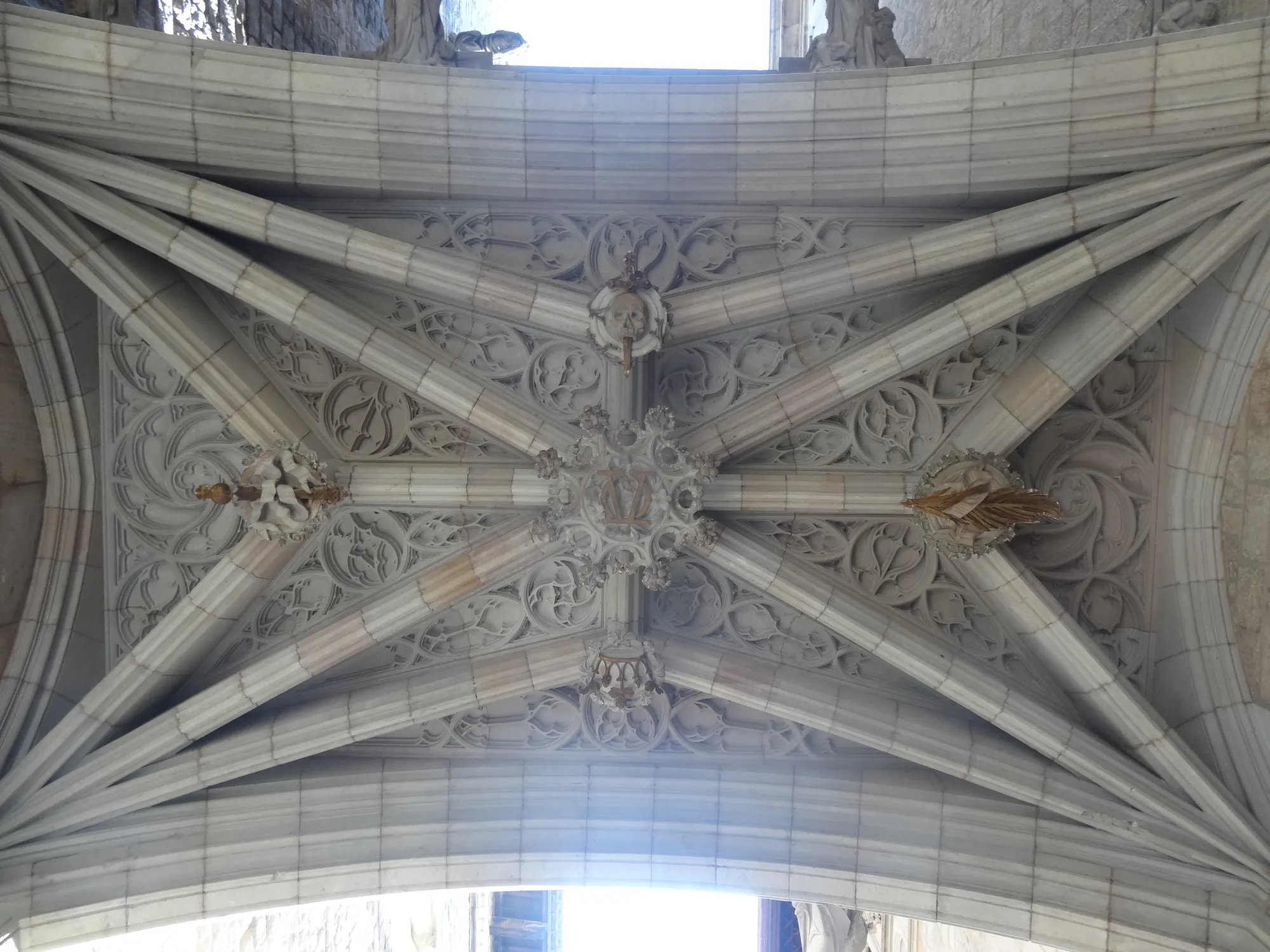
The oldest part of the city, built on the Roman town of Barcino, is a maze of narrow lanes, hidden squares and medieval buildings around the Gothic cathedral. Look for the Plaça del Rei, the remains of Roman temple columns in a courtyard on Carrer del Paradís, and the small Plaça de Sant Felip Neri.
- 5
Casa Batlló and La Pedrera
Photo: Bernard Gagnon, CC BY-SA 3.0, via Wikimedia Commons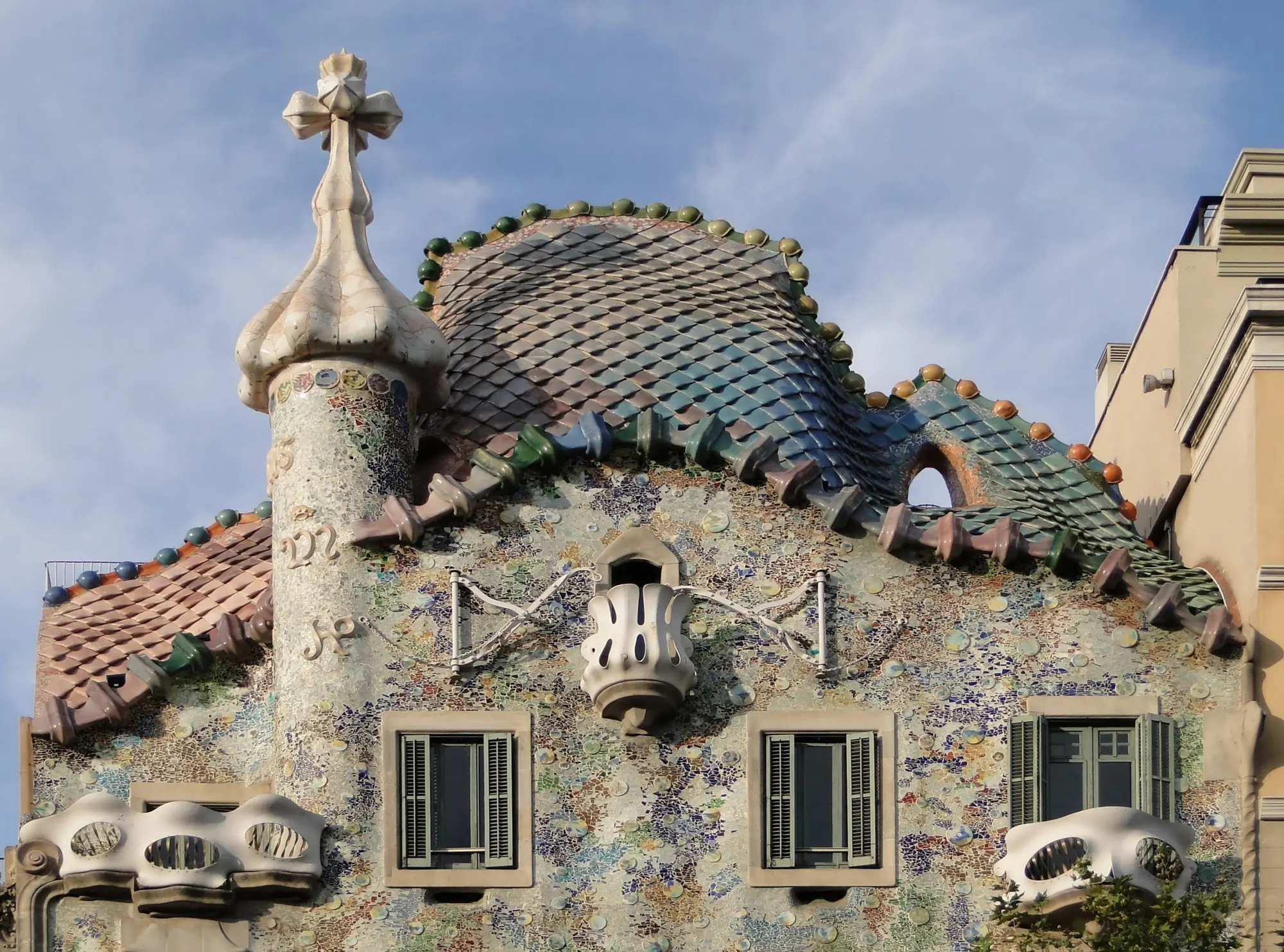
Two of Gaudí's apartment buildings stand on the Passeig de Gràcia, the city's grandest avenue. Casa Batlló, with its scaly roof and bone-like balconies, is the more playful; La Pedrera, also called Casa Milà, has a rippling stone facade and a rooftop of strange sculpted chimneys. Both can be visited inside, and both are worth it if you have time for only one more Gaudí building.
- 6
El Born and the Picasso Museum
Photo: Alvesgaspar, CC BY-SA 4.0, via Wikimedia Commons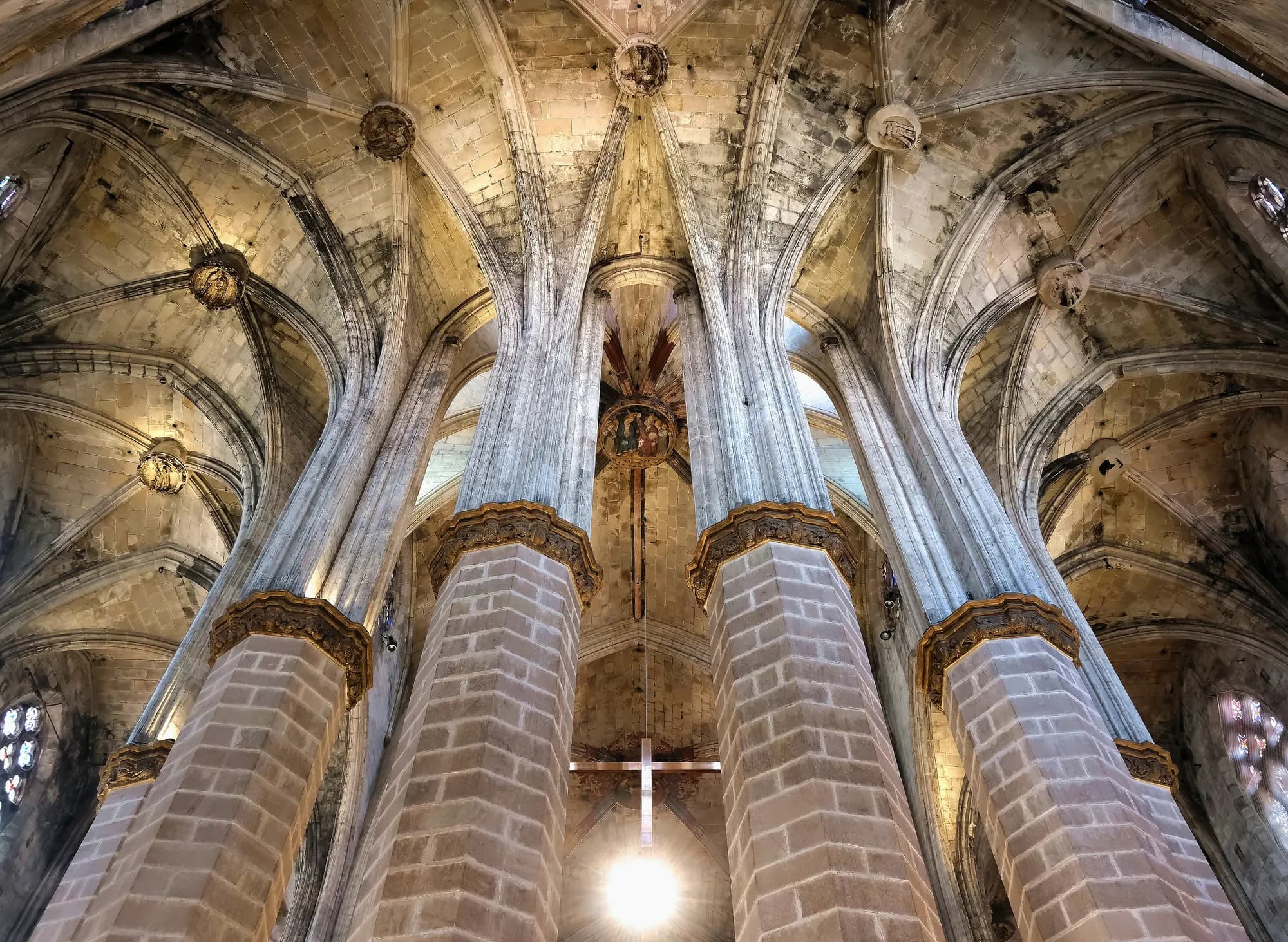
A lively neighbourhood of boutiques, bars and medieval mansions. Five of these now hold the Picasso Museum, which is especially strong on the artist's early years, when he lived in Barcelona. Nearby, the soaring Santa Maria del Mar is one of the finest Gothic churches in Spain.
- 7
La Boqueria and La Rambla
Photo: Bernard Gagnon, CC BY-SA 3.0, via Wikimedia Commons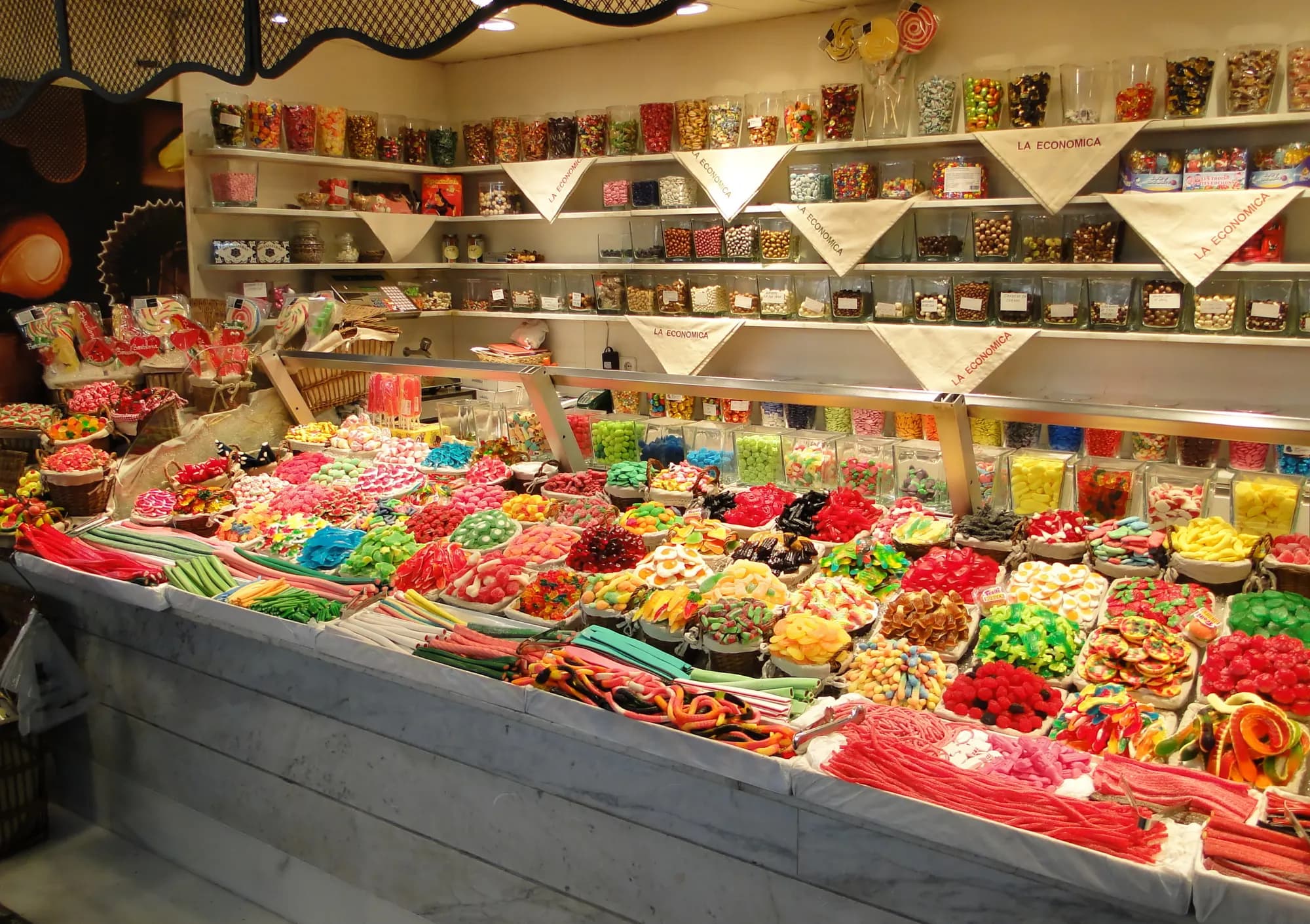
La Rambla, the city's famous promenade, is crowded and touristy, but the Boqueria market halfway along is a feast of fruit, cured ham, seafood and tiny counter bars. For a quieter market with more locals, try Santa Caterina in El Born.
TipGo to the Boqueria in the morning, when the locals do their shopping, and keep an eye on your bag along La Rambla.
- 8
Palau de la Música Catalana
Photo: Alvesgaspar, CC BY-SA 4.0, via Wikimedia Commons
A concert hall from 1908 that is a masterpiece of Catalan modernisme, with a stained-glass skylight like an upside-down dome and walls covered in sculpted muses and mosaic flowers. It can be seen on a guided tour, but a concert is the best way to experience it.
- 9
Montjuïc
Photo: Felix König, CC BY 3.0, via Wikimedia Commons
A hill above the port with gardens, the 1992 Olympic stadium, a castle, and two outstanding museums: the National Art Museum of Catalonia, with superb Romanesque church paintings, and the Fundació Joan Miró. A cable car climbs from the port and from the funicular station.
- 10
Barceloneta and the beaches
Photo: Matti Blume, CC BY-SA 4.0, via Wikimedia Commons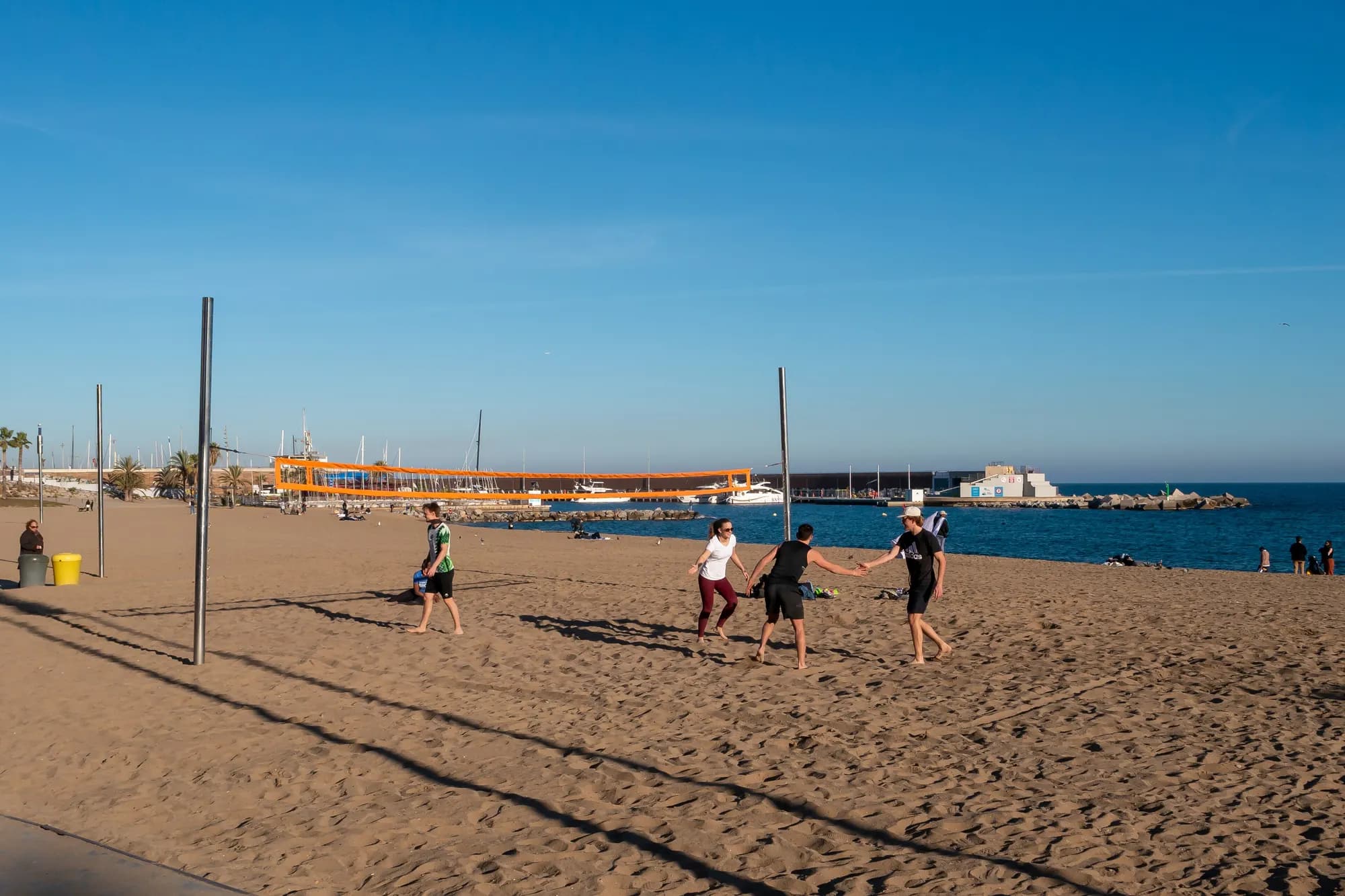
The old fishermen's quarter of Barceloneta leads to a string of city beaches stretching north for several kilometres. The beaches further from the centre, such as Bogatell, are usually calmer.
When to go
Late spring and early autumn are ideal: warm, sunny and good for the beach without the peak crowds. July and August are hot and very busy. In late September, the city's biggest festival, La Mercè, fills the streets with concerts, fireworks and human towers (castells). Winters are mild and often sunny, a good time for museums and Gaudí's buildings.
Getting around
The metro is fast, frequent and covers most of the city; a multi-journey card such as the T-casual, valid on metro, buses and local trains, is better value than single tickets. Walking is the best way to explore the old quarters, and the flat streets of the Eixample are good for cycling.
From the airport, the Aerobús express coach runs to Plaça de Catalunya, and the metro line L9 Sud and an R2 Nord train also link the airport with the city. High-speed trains reach Madrid in about two and a half hours, and France via the line to Perpignan.
Local tips
- Pickpocketing is the main risk for visitors: keep valuables zipped away, especially on the metro, La Rambla and the beaches.
- Eat later than you may be used to: lunch around two, dinner from nine.
- Catalan is the local language; a "bon dia" (good morning) and "gràcies" (thank you) are always appreciated.
- Don't wear swimwear away from the beach: it's frowned upon and can lead to a fine.
- Book the Sagrada Família, Park Güell and Casa Batlló online before you travel.
- Expect a tourist tax added to the price of your accommodation.
Eat and drink
Catalan cooking stars seafood, olive oil and seasonal vegetables. Try pa amb tomàquet (bread rubbed with tomato and olive oil), a seafood or black-ink rice, and crema catalana for dessert. Tapas bars and vermouth bars are everywhere, especially in Poble-sec and Gràcia, and the vermouth hour before Sunday lunch is a local institution. Cava, the region's sparkling wine, comes from vineyards just outside the city.