Ibiza
A walled old town above the harbour, pine-backed coves, salt pans, hippy markets, famous sunsets and a club scene like nowhere else.
- Best time to go
- May to June and September to early October, warm seas without the August crush
- Local time
- –
- Currency
- Euro (EUR)
- Reading time
- 8 min
- Language
- Spanish and Basque
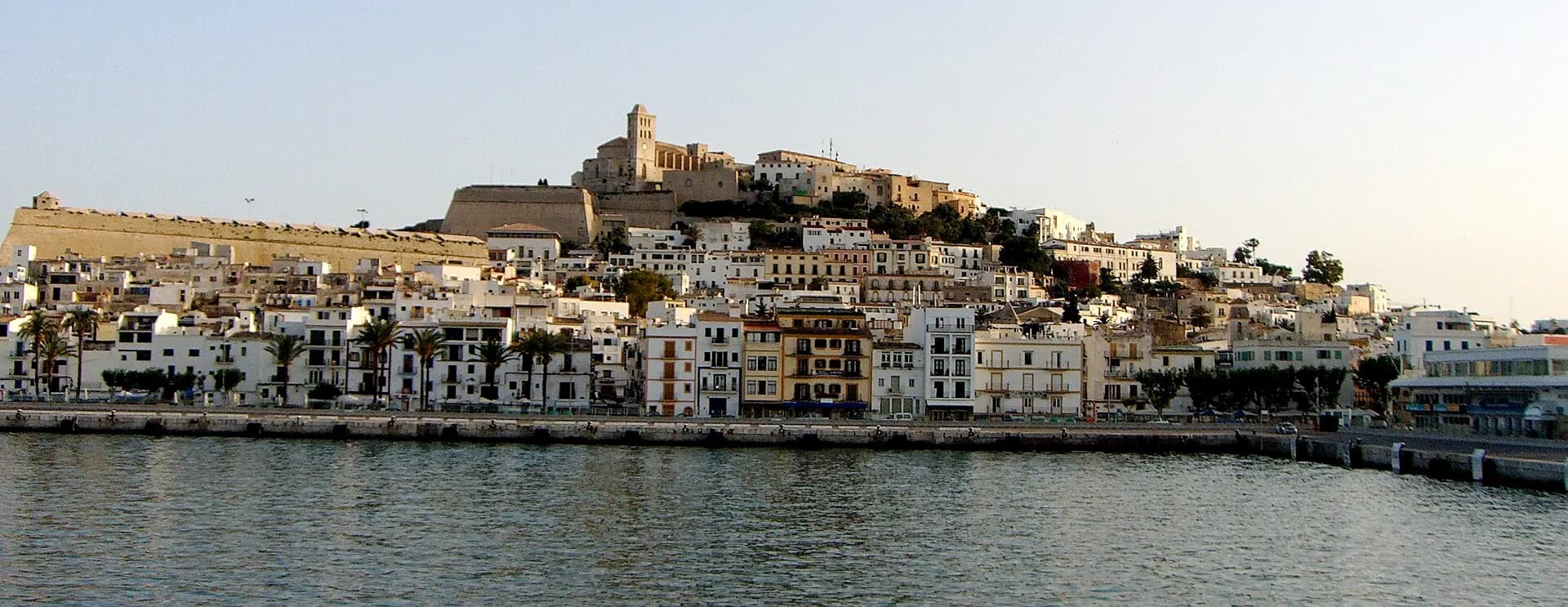
Ibiza, Eivissa in Catalan, is the third-largest of Spain's Balearic Islands, a hilly island of pine woods, almond and fig terraces, whitewashed farmhouses and more than fifty coves. Its name is known around the world for its nightclubs, but the island has a much longer story: Phoenician traders settled here nearly three thousand years ago, and the fortified old town of Ibiza Town, together with the Phoenician sites and the seagrass meadows offshore, forms the UNESCO World Heritage Site "Ibiza, Biodiversity and Culture", inscribed in 1999.
The island is small enough to cross in under an hour by car, and its character changes quickly. The south has the capital, the salt pans and the busiest beaches; the west has Sant Antoni and the sunset coast; the north and east are quieter, with farm villages, hippy markets and wooded coves. Formentera, the smallest inhabited Balearic island, is a short ferry ride away.
The top 15 in Ibiza
- 1
Dalt Vila
Photo: UnFUG-Fabi, CC BY-SA 4.0, via Wikimedia Commons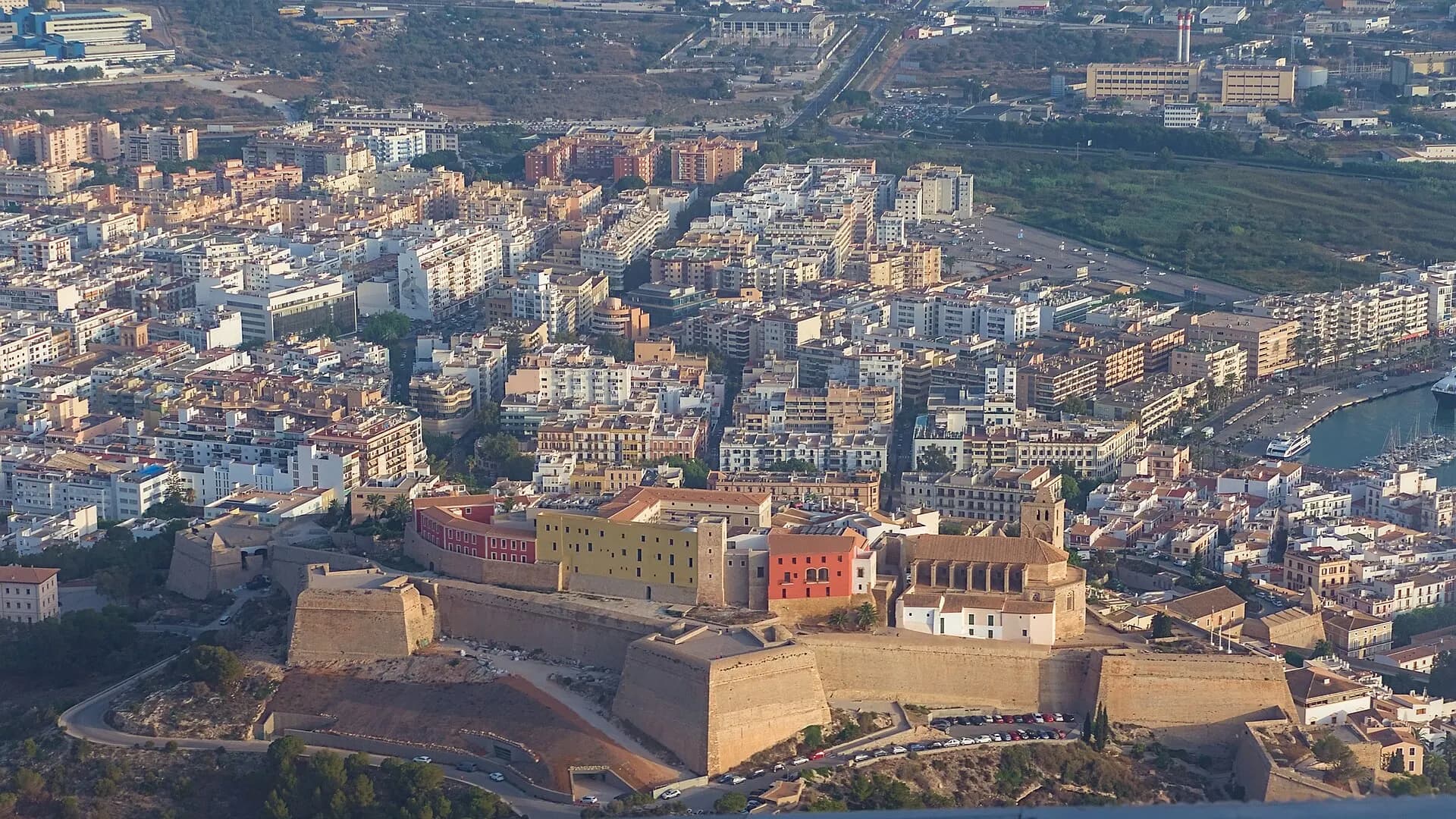
The walled upper town of Ibiza Town is the island's essential sight. Its Renaissance bastions were built in the sixteenth century to defend against Ottoman and Barbary raids, and you enter through the Portal de ses Taules, then climb steep lanes past mansions and small squares to the cathedral of Santa Maria de les Neus and the castle at the top, with views over the harbour and across to Formentera.
TipClimb in the early morning or after about 6pm in summer; the lanes are steep and there is little shade.
- 2
Puig des Molins
Photo: Joan Gené, CC0, via Wikimedia Commons
On the hill facing Dalt Vila lies one of the largest and best-preserved Phoenician and Punic cemeteries in the Mediterranean, with thousands of rock-cut tombs. The museum beside it displays finds such as terracotta figures and amulets, and a path leads through the burial ground among olive trees.
- 3
Ibiza Town port and La Marina
Below the walls, the old fishermen's quarter of La Marina and the port area are full of narrow streets, shops, bars and restaurants, busiest on summer evenings. Ferries leave from here for Formentera, and yachts line the quays.
- 4
Ses Salines Natural Park
Photo: Zavijavah, CC BY-SA 3.0, via Wikimedia Commons
The south tip of the island is a natural park of salt pans, dunes, juniper woods and lagoons where flamingos and other waterbirds gather. Salt has been harvested here since ancient times and still is. Its long beaches, Platja de ses Salines and Es Cavallet, are among the island's most popular.
TipArrive early in July and August, as car parks fill by late morning; buses run from Ibiza Town.
- 5
Sa Caleta
Photo: stavros1, CC BY 3.0, via Wikimedia Commons
The low remains of the first Phoenician settlement on Ibiza, founded more than 2,600 years ago on a small headland of red cliffs, part of the World Heritage Site. It was abandoned when its people moved to the site of today's Ibiza Town. Little survives above knee height, but the setting by the sea makes it worth a short stop.
- 6
Cala d'Hort and Es Vedrà
Photo: Gerda Arendt, CC0, via Wikimedia Commons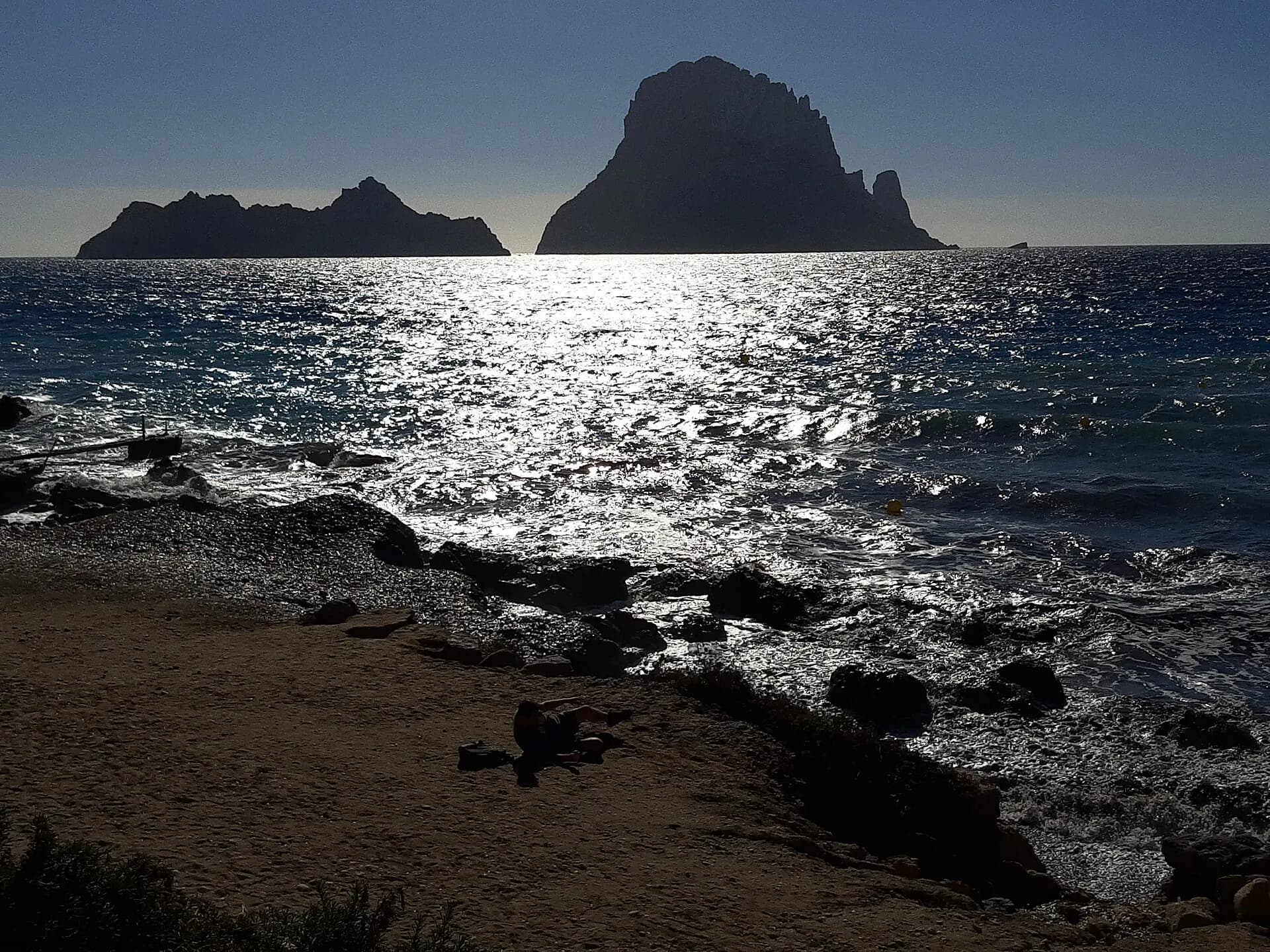
Es Vedrà, a dramatic limestone islet rising about 400 metres out of the sea off the southwest coast, is the subject of countless legends. The cove of Cala d'Hort faces it directly, and the clifftop viewpoints above give the classic view, especially at sunset. The islet is a nature reserve and cannot be visited.
- 7
Cala Comte
Photo: Gottfried Hoffmann -…, CC BY 3.0, via Wikimedia Commons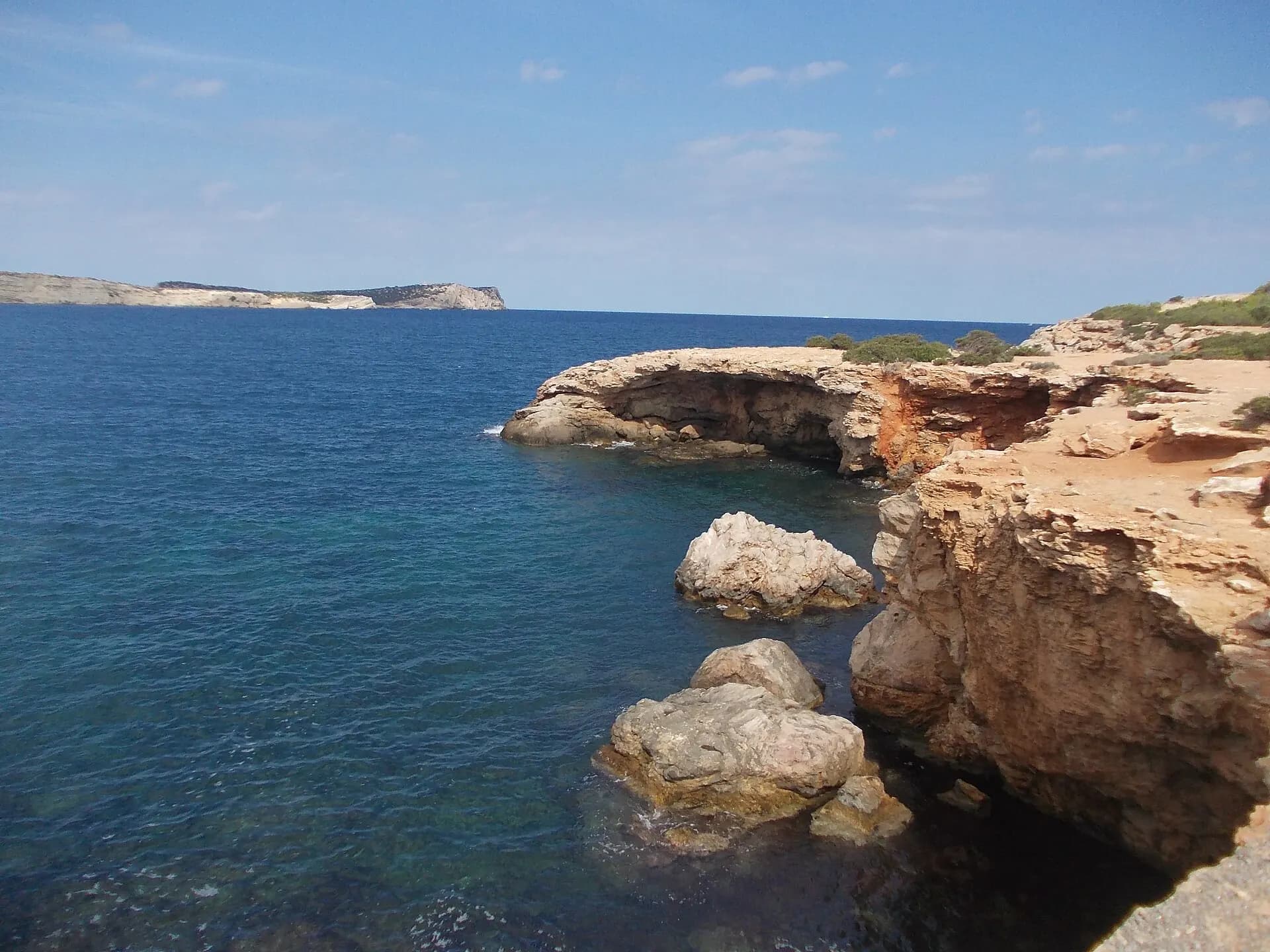
A string of small beaches and rocky platforms on the west coast with shallow, clear water and views of small islets offshore. It is one of the most popular places on the island to watch the sun set.
- 8
Sant Antoni sunset coast
Photo: Alex Kulikov, CC BY 3.0, via Wikimedia Commons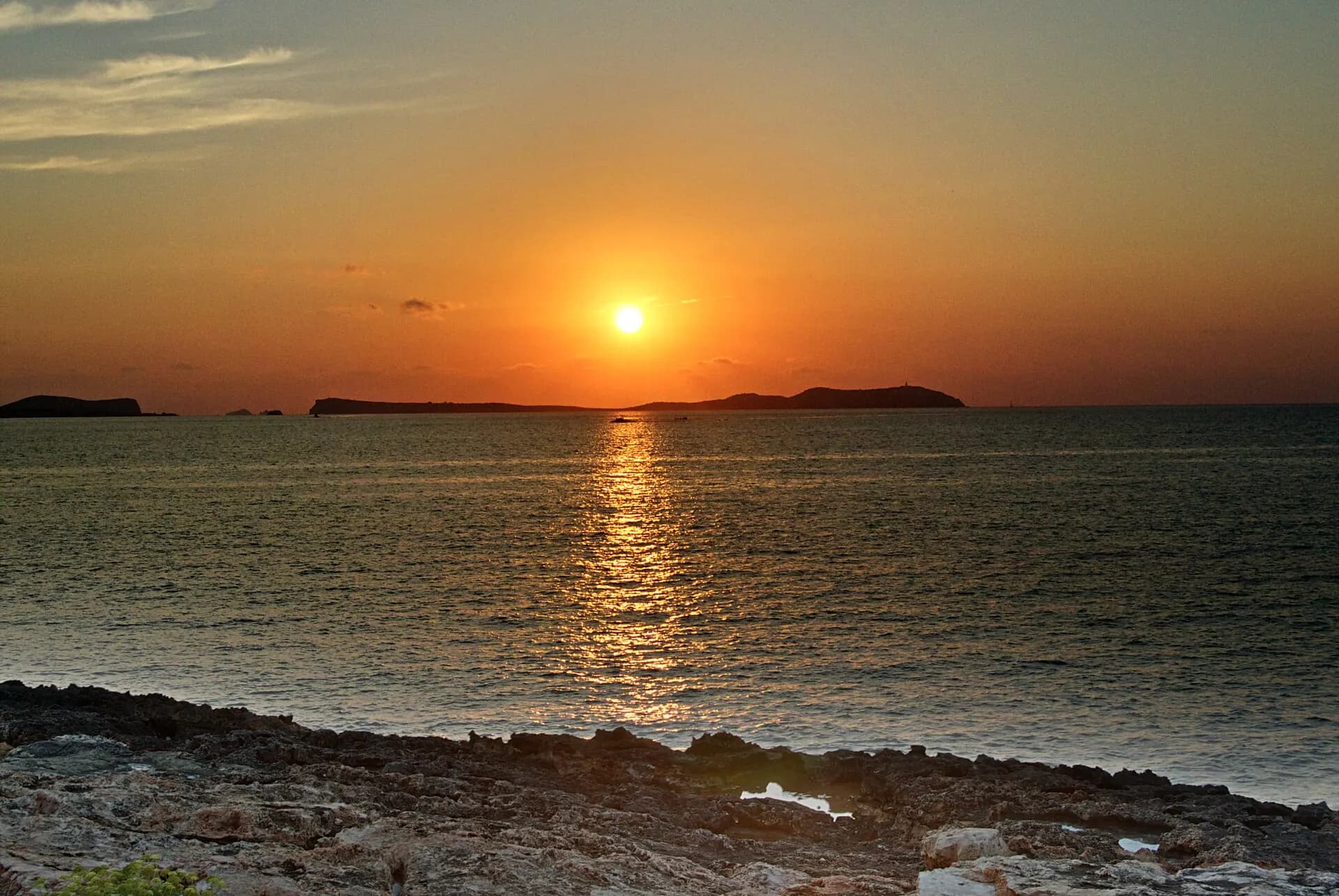
Sant Antoni de Portmany, the island's second town, is best known for its bay-front promenade and the sunset bars around Caló des Moro and the north shore. It has a lively, loud side in summer, but the bay itself is a lovely place at dusk.
- 9
Cala Salada
Photo: Enrique Ayesta Perojo, CC BY-SA 4.0, via Wikimedia Commons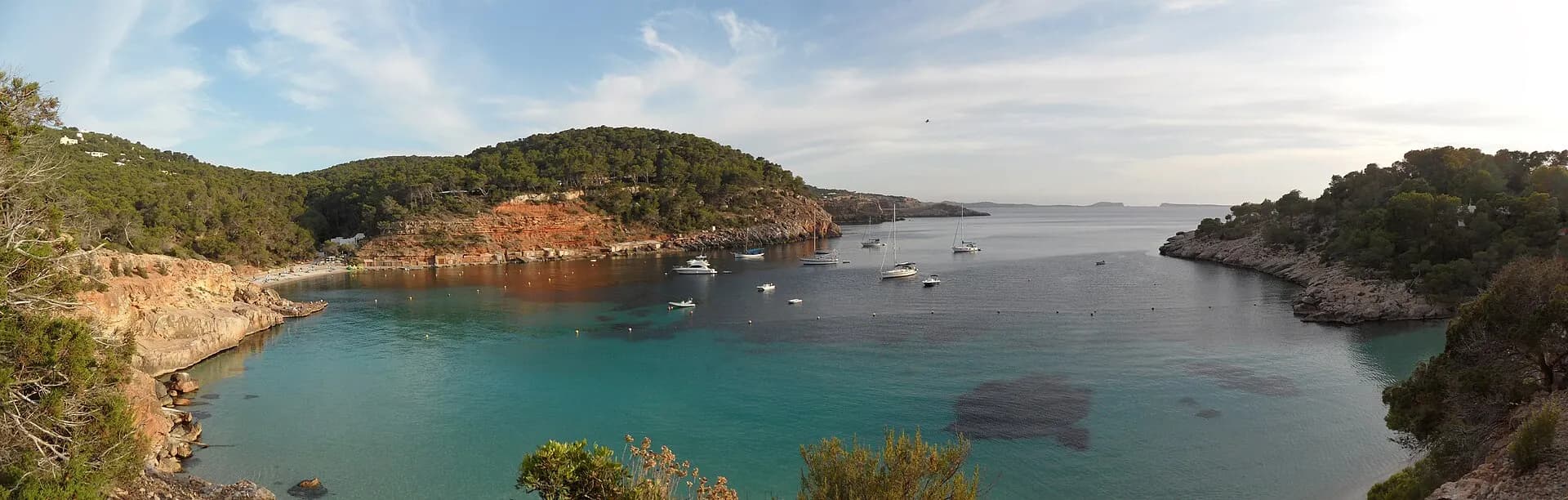
A cove of sand and very clear water backed by pines north of Sant Antoni, with the smaller Saladeta reached over the rocks. It is small and fills up quickly.
TipCar access is restricted in summer; check whether the shuttle bus from Sant Antoni is running, or walk down early.
- 10
Santa Gertrudis
Photo: Gerda Arendt, CC0, via Wikimedia Commons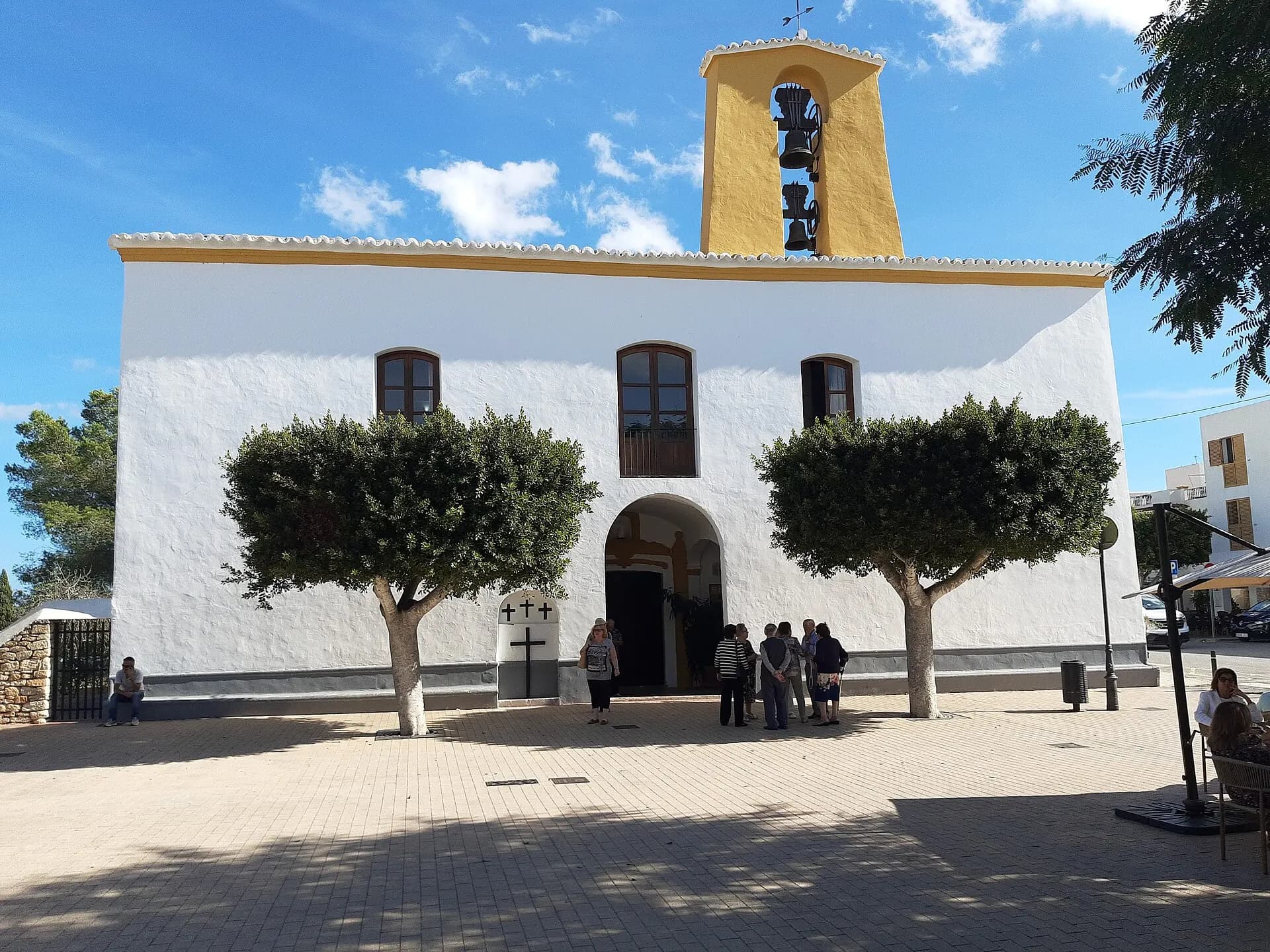
A village in the middle of the island, with a white church, a pedestrian square of cafés and restaurants, and art and craft shops. It is a good place for a slow lunch between beaches.
- 11
Cala Benirràs
Photo: stavros1, CC BY 3.0, via Wikimedia Commons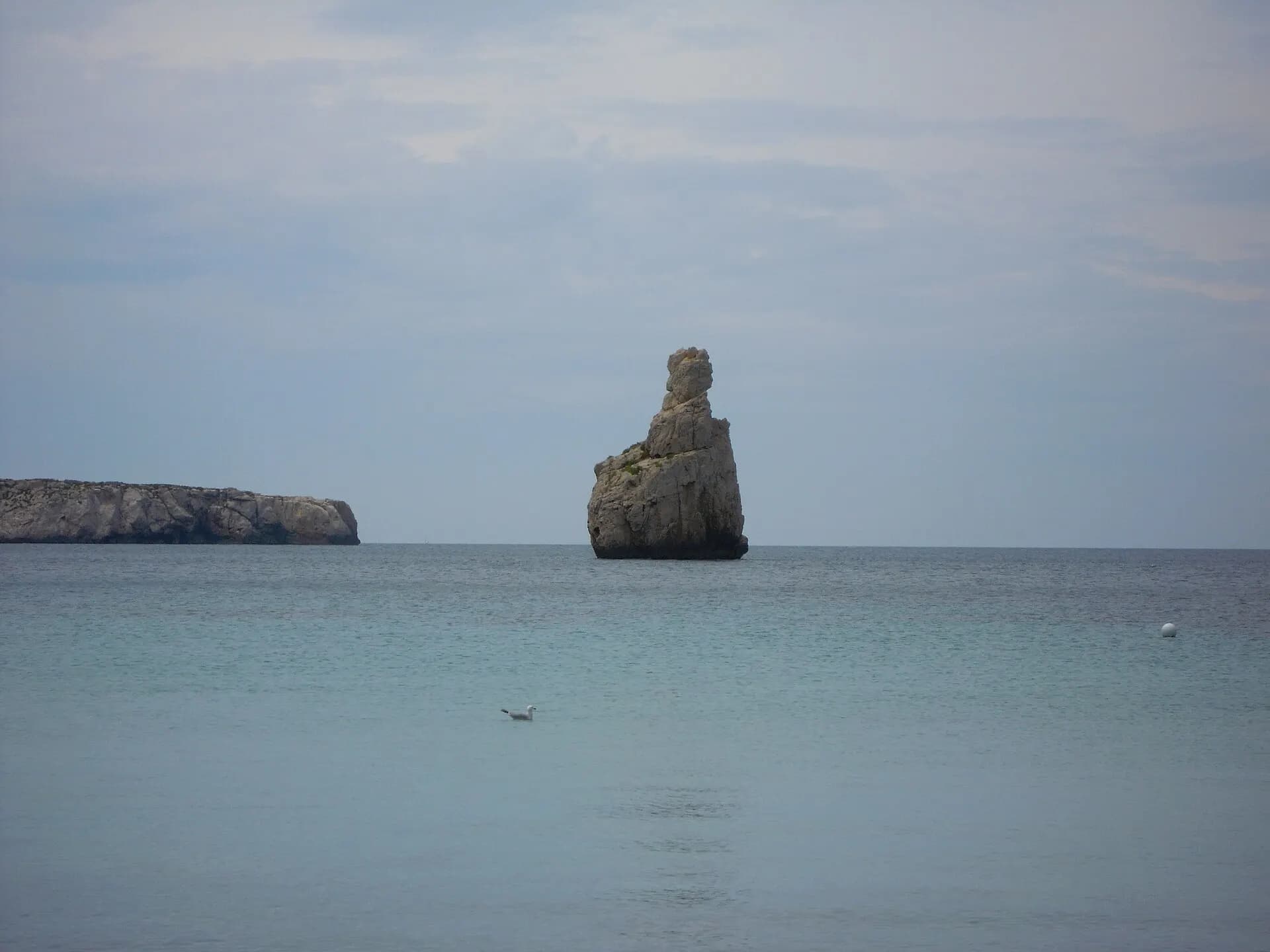
A cove on the north coast facing a pointed rock islet, Cap Bernat. Since the hippy era, people have gathered here on summer Sunday evenings to drum the sun down.
TipThe road down is narrow and parking fills fast on Sundays; come early or arrive by bus or taxi.
- 12
- 13
Las Dalias market
Photo: DetFerMai, CC BY-SA 4.0, via Wikimedia Commons
At Sant Carles, the Las Dalias hippy market began as a bar's garden market and now has around two hundred stalls of clothes, crafts and jewellery. The main market is on Saturdays all year, with night markets in summer; check the schedule before you go.
- 14
Punta Arabí market
The oldest hippy market on the island, held on Wednesdays from spring to autumn at Es Canar, near Santa Eulària. It is large and touristy, but fun, with crafts, food and live music.
- 15
Formentera
Photo: MrPepanos, CC BY 3.0, via Wikimedia Commons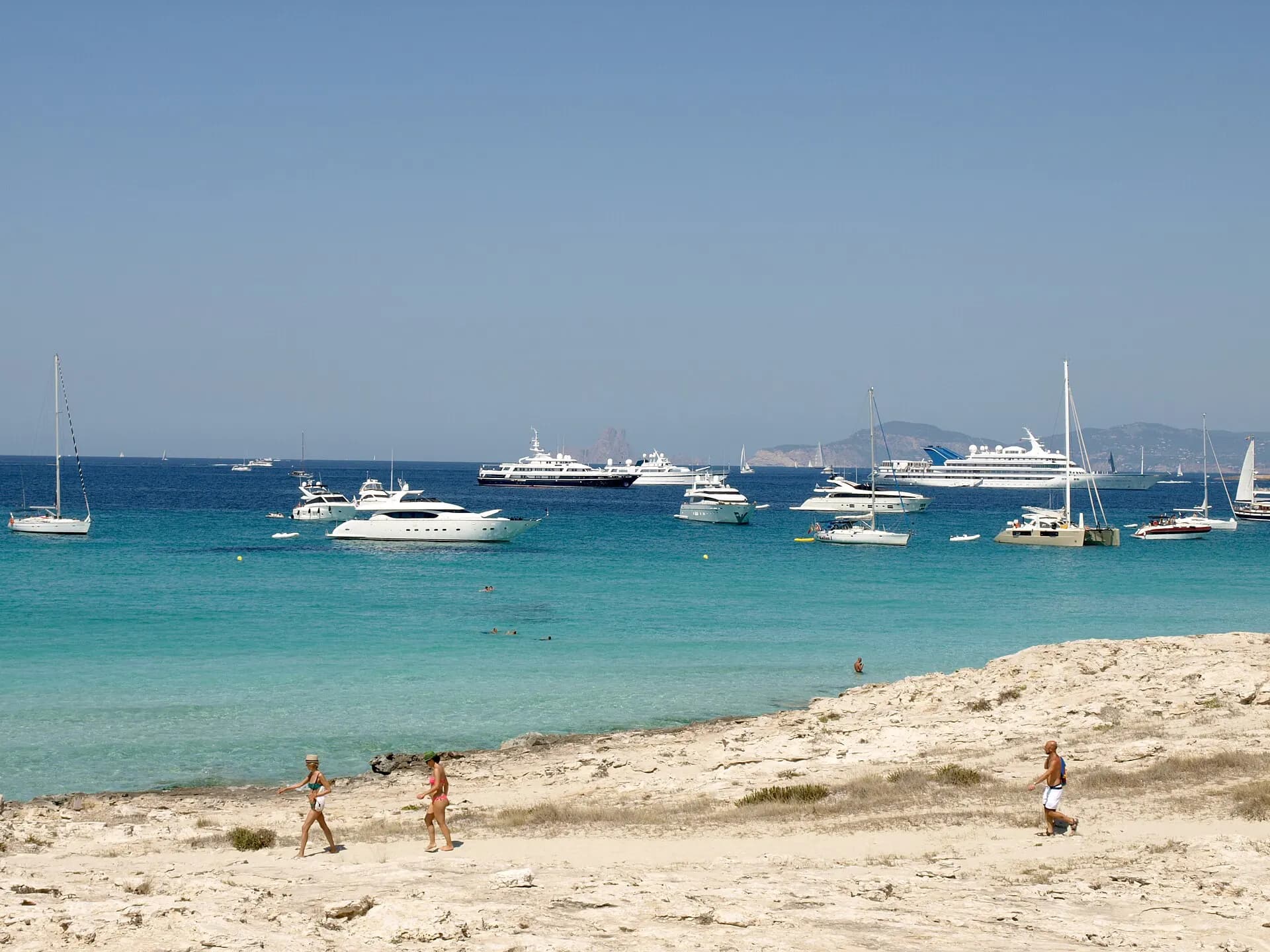
A flat, quiet island of white sand beaches and turquoise water, reached by fast ferry from Ibiza Town in about half an hour. The beach of Ses Illetes, on a narrow spit in the natural park, is the highlight; hire a bicycle, scooter or car at La Savina port to explore the island's lighthouses and villages.
TipGo on a weekday, take an early ferry, and check whether Formentera's summer vehicle permit applies if you plan to take a car across.

When to go
July and August are hot, crowded and expensive, with the club season in full swing. May, June, September and early October are the sweet spot: the sea is warm from June, beaches are calmer and prices lower. Many clubs open in late May or June and close in early October. In winter, from November to March, the island is quiet and green, many hotels and restaurants close, and it suits walking, cycling and village life rather than beaches.
Getting around
Ibiza Airport is a few kilometres south of Ibiza Town, with direct buses to the town, the port, Sant Antoni, Santa Eulària and the beaches. The island's bus network was renewed in 2026 under a new operator, with new line numbers, card payment and live tracking, so older timetables are out of date; check the official timetables before you travel. Buses reach most towns and the main beaches, with extra night and club buses in summer.
A hire car makes it far easier to reach coves and villages. If you bring your own car by ferry in summer, Ibiza limits the number of visiting vehicles from June to September and requires an authorisation (hire cars based on the island are exempt); check ibizacircular.es. Taxis can be scarce in peak season; use licensed taxis and transfer companies only. Ferries link Ibiza with Formentera, Palma and mainland ports such as Dénia, Valencia and Barcelona.
Local tips
- Catalan and Spanish are the official languages; place names usually appear in Catalan, so Ibiza Town is Eivissa and Sant Antoni is San Antonio.
- Book licensed accommodation only; illegal holiday lets are a serious problem on the island, and they are being closed down and fined.
- A tourist tax, the Balearic sustainable tourism tax, is charged per person per night at licensed accommodation, with rates varying by season and category; under-16s are exempt.
- Bring water, a hat and reef-safe sunscreen, and wear shoes you can scramble in; many coves have rocky paths down.
- Beach car parks fill early in summer; start the day early and have lunch while others arrive.
- Sunday at Benirràs, Wednesday at Punta Arabí and Saturday at Las Dalias are the busiest days in those places.
Eat and drink
Ibizan cooking is rustic and rooted in farm and sea. Try bullit de peix, a fish stew followed by rice cooked in its broth; sofrit pagès, a hearty meat and potato dish; frit de polp, fried octopus with potatoes and peppers; and flaó, a cheese and mint cake. Greixonera is a pudding made with ensaïmada pastries. Hierbas ibicencas, a herbal liqueur, is served after meals, and local wines come from the interior. Beach restaurants are often expensive; village restaurants inland offer better value.
Where to stay
Ibiza Town is the best all-round base, close to Dalt Vila, the port and the airport, with lively nights. Santa Eulària is calmer and good for families. Sant Antoni is cheaper and lively, with sunset bars. Playa d'en Bossa is close to the big clubs. For peace, the north and the interior have rural hotels and agroturismos in old farmhouses, ideal with a car.
Dalt Vila and the Phoenician island
The Phoenicians founded Ibosim on the bay of today's Ibiza Town in the seventh century BC, after first settling at Sa Caleta. Under Carthage, the city grew into a trading port linked with North Africa and southern Spain, and the island's red clay, salt and purple dye were traded across the western Mediterranean. Romans, Byzantines and Moors followed, until the Catalans conquered the island in 1235. The great walls of Dalt Vila, designed by Italian military engineers for Philip II, are among the best-preserved Renaissance fortifications in the Mediterranean, and the old town is still lived in.
Clubs and nightlife
From the 1970s, Ibiza drew hippies and artists, and by the late 1980s, the island had become a birthplace of modern dance music. Its biggest clubs, such as Pacha, Amnesia, Hï, Ushuaïa and DC10, draw world-famous DJs, with opening and closing parties at the start and end of each season. Tickets and drinks are expensive, so book ahead and check prices before you go.
The authorities have cracked down on the island's excesses. Party boats are banned from holding parties within the protected waters of Ses Salines Natural Park, and parts of Sant Antoni's West End are covered by a Balearic decree that bans drinking in the street and restricts alcohol sales and party boats. Unlicensed villa parties are illegal, with heavy fines for organisers, and police break them up; stick to licensed venues. Look out for friends, keep an eye on your drink, drink plenty of water in the heat, and never drive after drinking.
Responsible travel
Ibiza's seagrass meadows of Posidonia oceanica, a plant found only in the Mediterranean, are the reason the island's water is so clear: they filter the sea, shelter fish and protect the beaches from erosion, and they form part of the World Heritage Site. Anchoring on them is banned in Balearic waters, so if you hire a boat, use the buoys provided and check the anchoring maps. Don't remove the dried seagrass from beaches, which protects the sand. Stay on paths in the dunes of Ses Salines, take your rubbish home, save water, which is scarce on the island in summer, and support local farms and businesses.