Madrid
Three great art museums on one boulevard, a royal palace, old squares full of tapas bars and a city that dines at ten.
- Best time to go
- April to June and late September to October, warm and sunny without the fierce summer heat
- Local time
- –
- Currency
- Euro (EUR)
- Reading time
- 11 min
- Language
- Spanish and Basque

Madrid sits almost exactly at the centre of Spain, high on the plateau of the Meseta, and it became the capital in the sixteenth century largely because of that position. It has no great river or coastline, and its appeal is less about one famous view than about how the city lives: busy squares, crowded tapas bars, late lunches that turn into evenings, and streets that are still full at midnight. It also has one of the world's finest concentrations of art, with the Prado, the Reina Sofía and the Thyssen-Bornemisza a few minutes' walk apart along the Paseo del Prado.
The old centre, the area of the Habsburg and Bourbon kings, is compact and easy to explore on foot, from the Royal Palace through the Plaza Mayor and the Puerta del Sol to the museums and the Retiro park. Around it, distinct barrios each have their own character, from the literary lanes of Las Letras to the bars of Malasaña and Chueca. Fast trains also make Toledo and Segovia easy day trips.
The top 17 in Madrid
- 1
Templo de Debod
Photo: Diego Delso, CC BY-SA 4.0, via Wikimedia Commons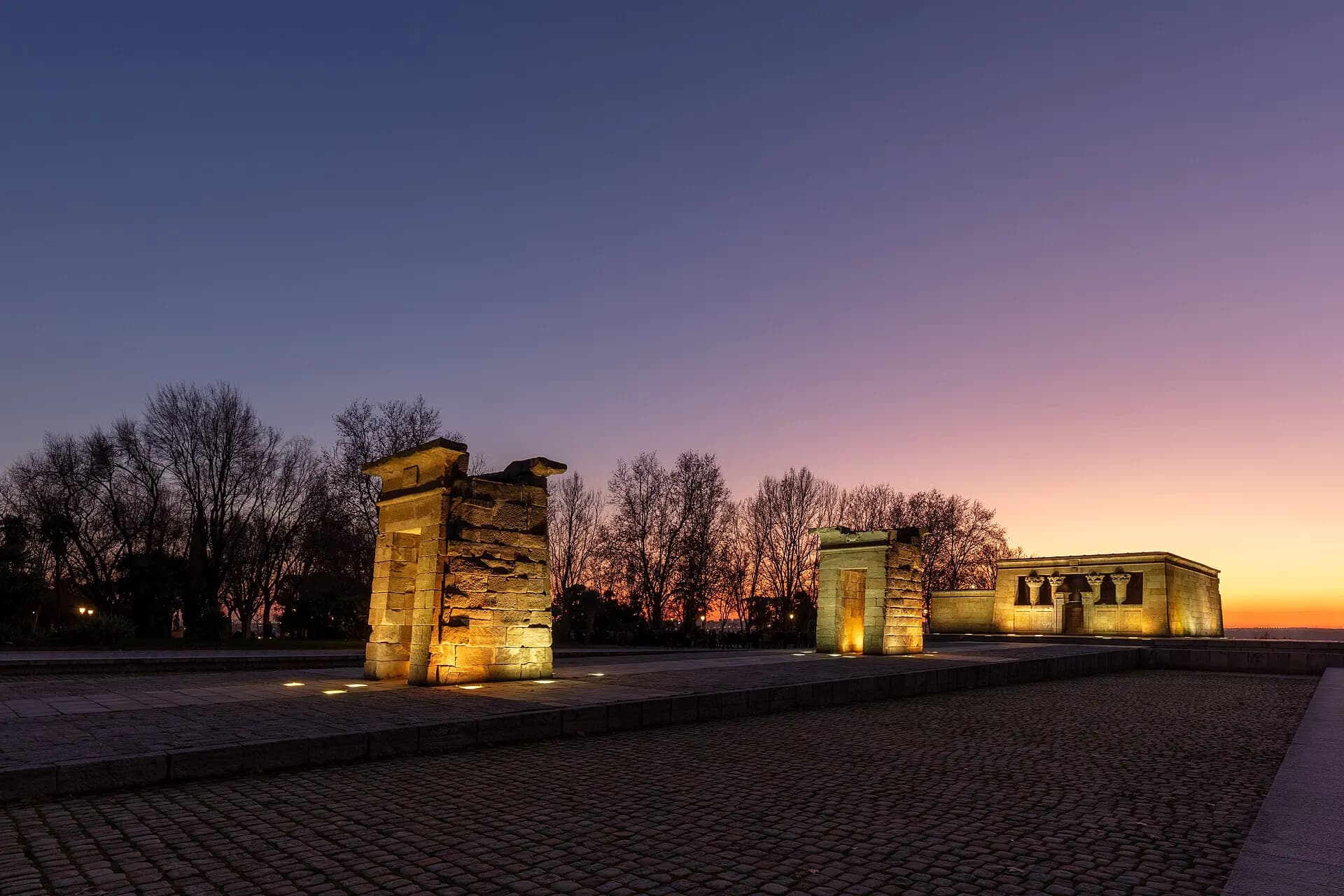
A genuine ancient Egyptian temple from the second century BC, given to Spain by Egypt in thanks for help saving monuments from the waters of the Aswan Dam, and rebuilt stone by stone in a park on a ridge west of the centre. The gardens around it face west over the Casa de Campo, and it's one of the city's favourite places to watch the sunset.
TipCome in the hour before sunset, then walk ten minutes south to the Royal Palace along the edge of the park.
- 2
The Royal Palace and Almudena Cathedral
Photo: Carlos Delgado, CC BY-SA 3.0, via Wikimedia Commons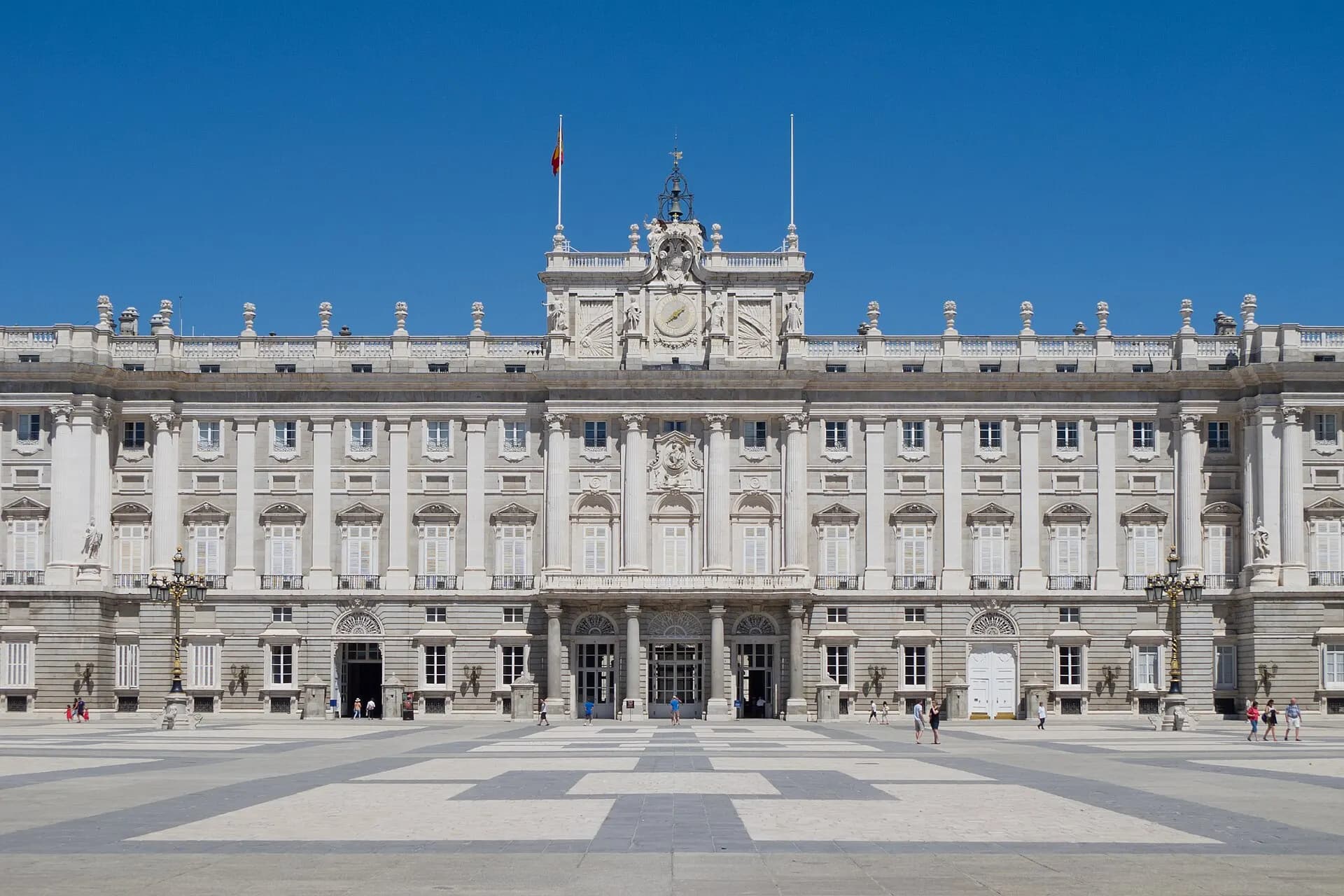
The official residence of the Spanish royal family, though used now only for state ceremonies, was built in the eighteenth century on the site of the old Moorish and royal alcázar after it burned down in 1734. Self-guided visits take in a long sequence of state rooms, including the Throne Room, the royal pharmacy and the armoury, one of the finest in Europe. Next door, the Almudena Cathedral was only completed and consecrated in 1993, with a neo-Gothic interior and a vivid modern ceiling.
TipEU citizens and residents, and Latin American citizens, can enter free from Monday to Thursday in the last two hours of the day (check the current times on the Patrimonio Nacional site). Expect a queue, and bring your ID.
- 3
Mercado de San Miguel
Photo: C messier, CC BY-SA 4.0, via Wikimedia Commons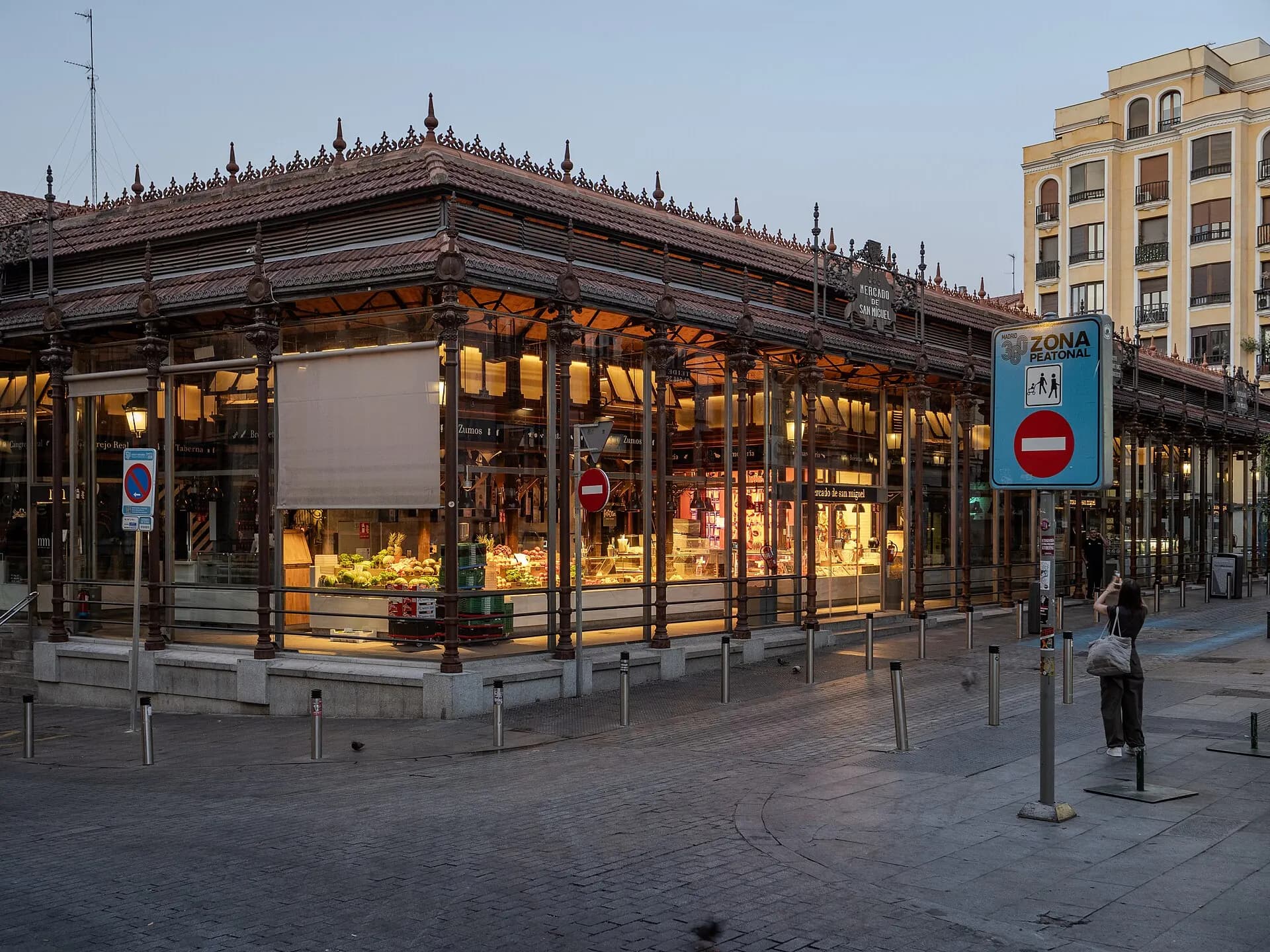
An early twentieth-century iron-and-glass market hall just west of the Plaza Mayor, now given over entirely to stalls selling tapas, oysters, croquetas, cured ham and vermouth. It's crowded and pricier than a neighbourhood bar, but a pleasant place to graze standing up and see the range of Spanish food in one room.
- 4
Plaza Mayor
Photo: Carlos Delgado, CC BY-SA 3.0, via Wikimedia Commons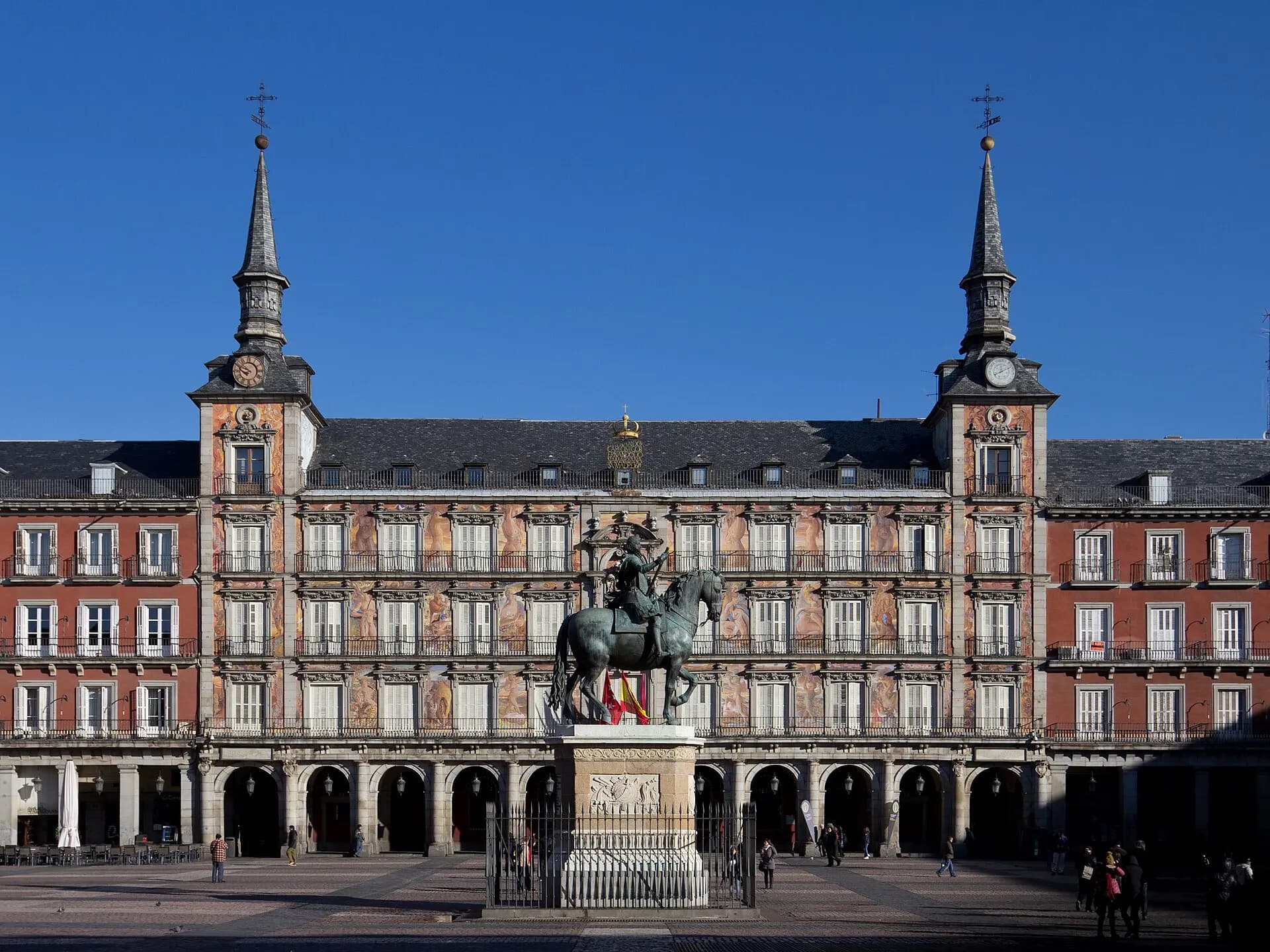
The grand arcaded square at the heart of Habsburg Madrid, completed in 1619 and rebuilt several times after fires, has hosted markets, bullfights, royal celebrations and executions. Today, it's ringed by café terraces and is home to a Christmas market in December. The streets around it are known for bars selling bocadillos de calamares, fried squid rings in a crusty roll.
TipThe café terraces on the square are expensive; have a drink in the lanes off it instead.
- 5
La Latina and El Rastro
Photo: Javier Perez Montes, CC BY-SA 4.0, via Wikimedia Commons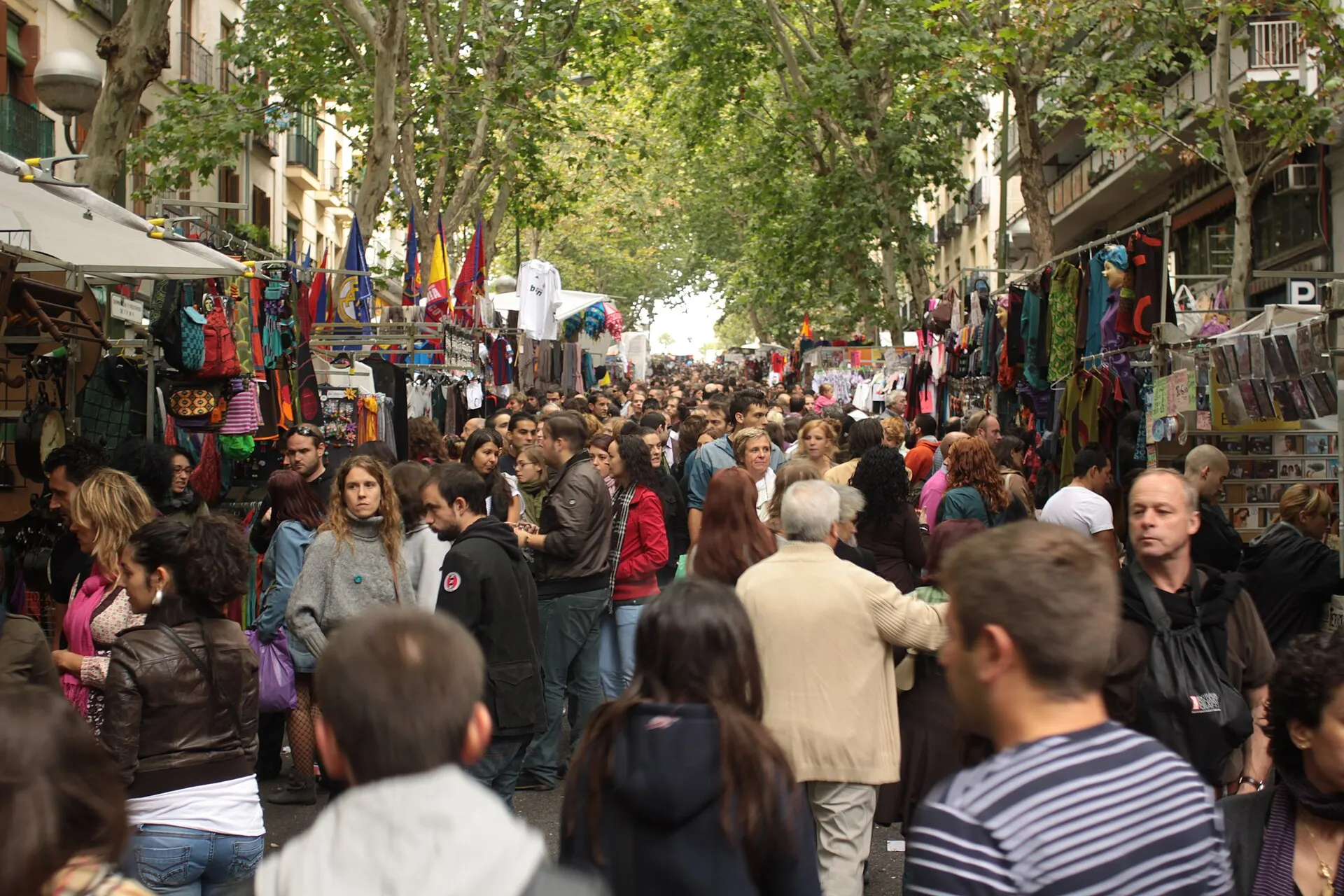
La Latina is one of Madrid's oldest quarters, with churches, small squares and the tapas bars of the Cava Baja, busy on weekend afternoons. On Sunday and public holiday mornings, El Rastro, the city's huge open-air flea market, fills the Plaza de Cascorro and the sloping Ribera de Curtidores with stalls selling everything from antiques to clothes. Afterwards, locals head into La Latina for vermouth and tapas.
TipThe Rastro gets very crowded by late morning; keep your phone and wallet secure.
- 6
Puerta del Sol
Photo: Enric, CC BY 4.0, via Wikimedia Commons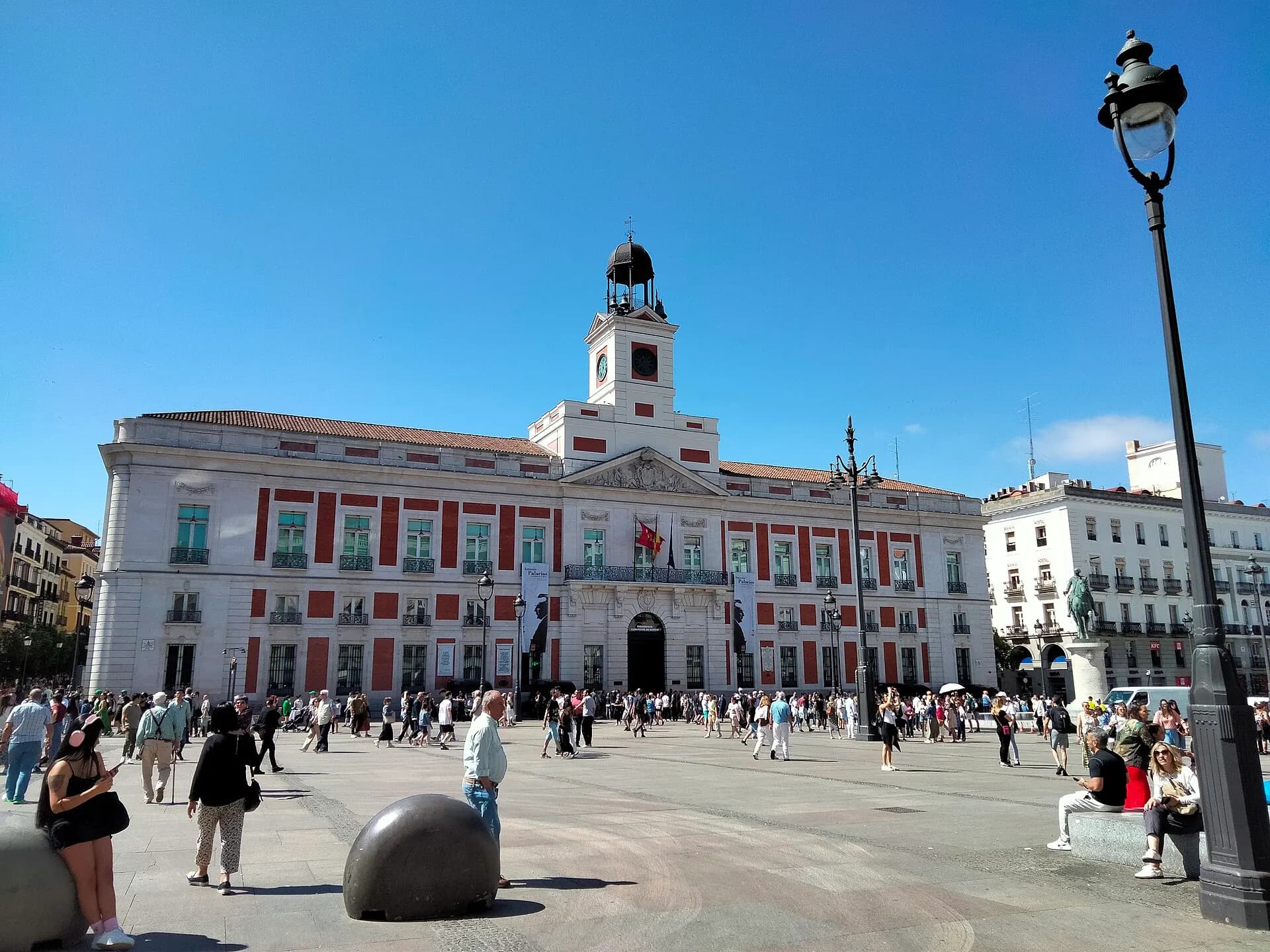
Madrid's busiest square and its symbolic centre, with the Kilometre Zero plaque from which Spain's radial roads are measured, and the statue of the bear and the strawberry tree, the emblem of the city. On New Year's Eve, crowds gather below the clock of the Real Casa de Correos to eat twelve grapes on the twelve chimes of midnight. Nearby, the Chocolatería San Ginés has served churros and thick hot chocolate since 1894.
- 7
Barrio de las Letras
Photo: Jorge Láscar, CC BY-SA 2.0, via Wikimedia Commons
The "literary quarter" between Sol and the Paseo del Prado, where Cervantes, Lope de Vega and Quevedo lived, with quotations from their works set in brass into the pavements. The Plaza de Santa Ana is lined with bars and terraces, and Lope de Vega's house can be visited.
- 8
Gran Vía
Photo: Diego Delso, CC BY-SA 4.0, via Wikimedia Commons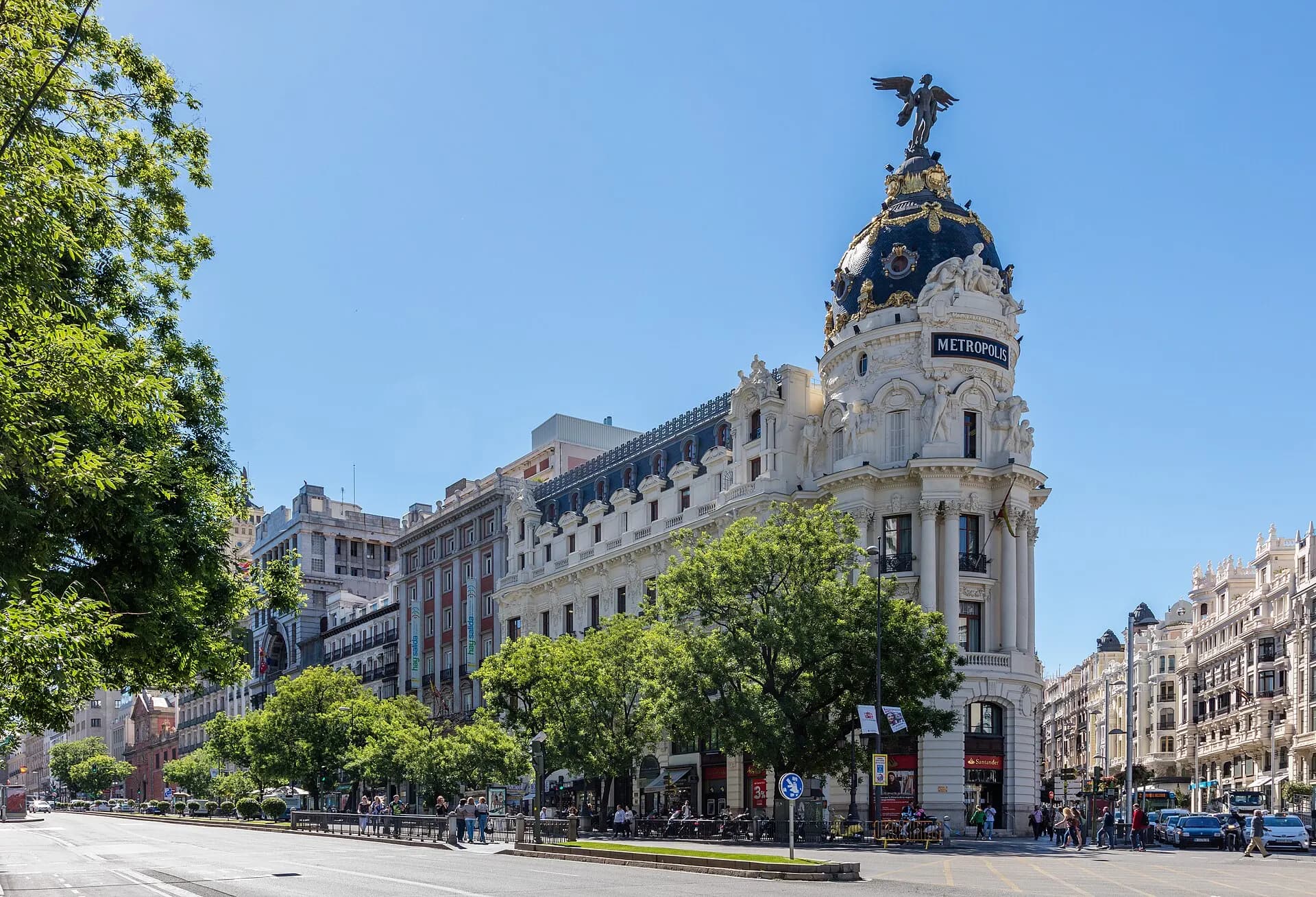
A grand boulevard cut through the old city in the early twentieth century, lined with ornate buildings, theatres, cinemas and shops. Look out for the domed Metrópolis building at its eastern end and the early skyscraper of the Telefónica building. Several rooftop bars along it and the nearby Círculo de Bellas Artes give views over the city.
- 9
Malasaña and Chueca
Photo: Nicolas Vigier from Paris, France, CC0, via Wikimedia Commons
Two neighbouring barrios north of Gran Vía. Malasaña, centred on the Plaza del Dos de Mayo, was the heart of the Movida, the cultural explosion that followed the end of the dictatorship, and is now full of vintage shops, cafés and bars. Chueca, to the east, is the centre of Madrid's LGBTQ+ life, with a lively mix of restaurants and the Mercado de San Antón, and hosts one of Europe's largest Pride celebrations in early July.
- 10
Museo Nacional Thyssen-Bornemisza
Photo: rene boulay, CC BY-SA 3.0, via Wikimedia Commons
A private collection assembled by the Thyssen-Bornemisza family and acquired by the Spanish state, it fills the gaps in the other two great museums, running from early Italian and Flemish painting through Dutch masters and Impressionism to Expressionism and American art of the twentieth century.
TipThe permanent collection is free on Mondays from 12:00 to 16:00 (the museum's shorter Monday hours).
- 11
Museo del Prado
Photo: losmininos, CC BY-SA 2.0, via Wikimedia Commons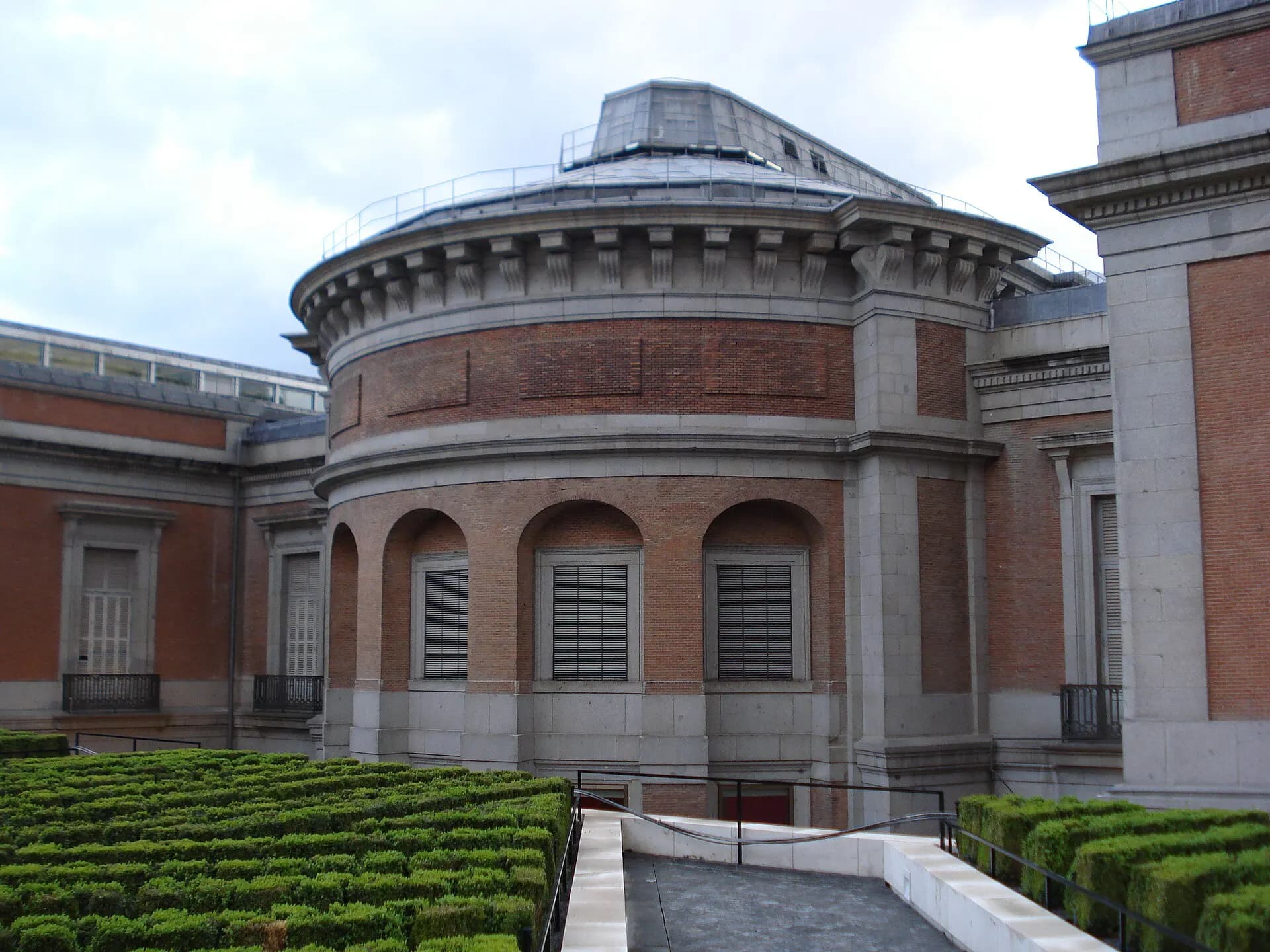
One of the great art museums of the world, built on the collections of the Spanish kings, with the finest collections of Velázquez and Goya anywhere, including Las Meninas and Goya's Black Paintings, as well as masterpieces by El Greco, Titian, Rubens and Hieronymus Bosch's The Garden of Earthly Delights. It's huge; pick a few rooms rather than trying to see everything.
TipEntry to the collection is free for the last two hours of the day: 18:00 to 20:00 Monday to Saturday and 17:00 to 19:00 on Sundays and holidays. Queues form early, so arrive before the free period starts.
- 12
Museo Reina Sofía
Photo: Joseolgon, CC BY 4.0, via Wikimedia Commons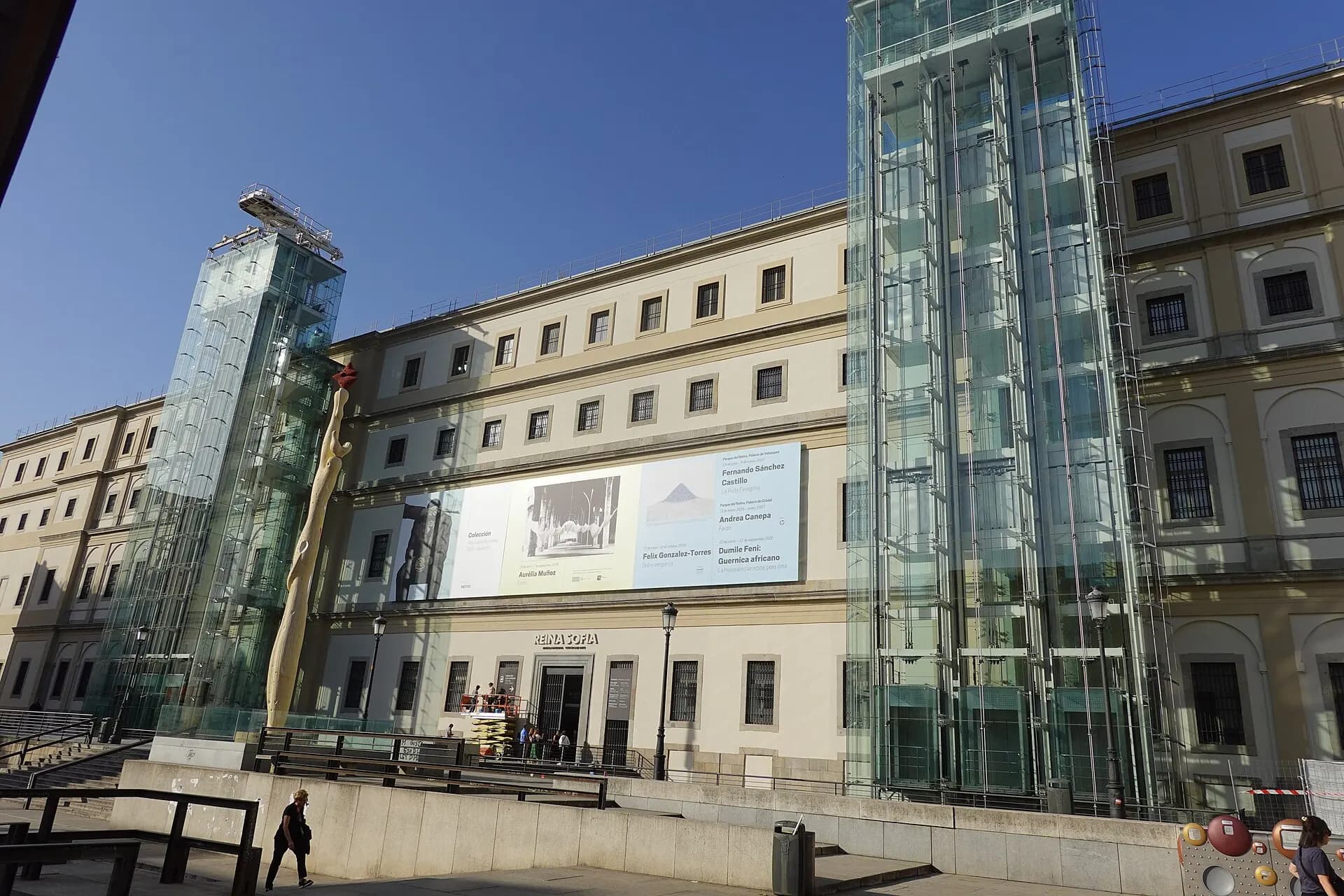
Spain's national museum of modern and contemporary art, in a former hospital beside Atocha station, with glass lifts on its façade and a newer red-roofed extension. Its most famous work is Picasso's Guernica, alongside major works by Dalí, Miró and Juan Gris. It's closed on Tuesdays.
TipEntry is free from 19:00 to 21:00 on Mondays and Wednesday to Saturday, but you still need a ticket, which you can book online.
- 13
Retiro Park
Photo: Carlos Delgado, CC BY-SA 3.0, via Wikimedia Commons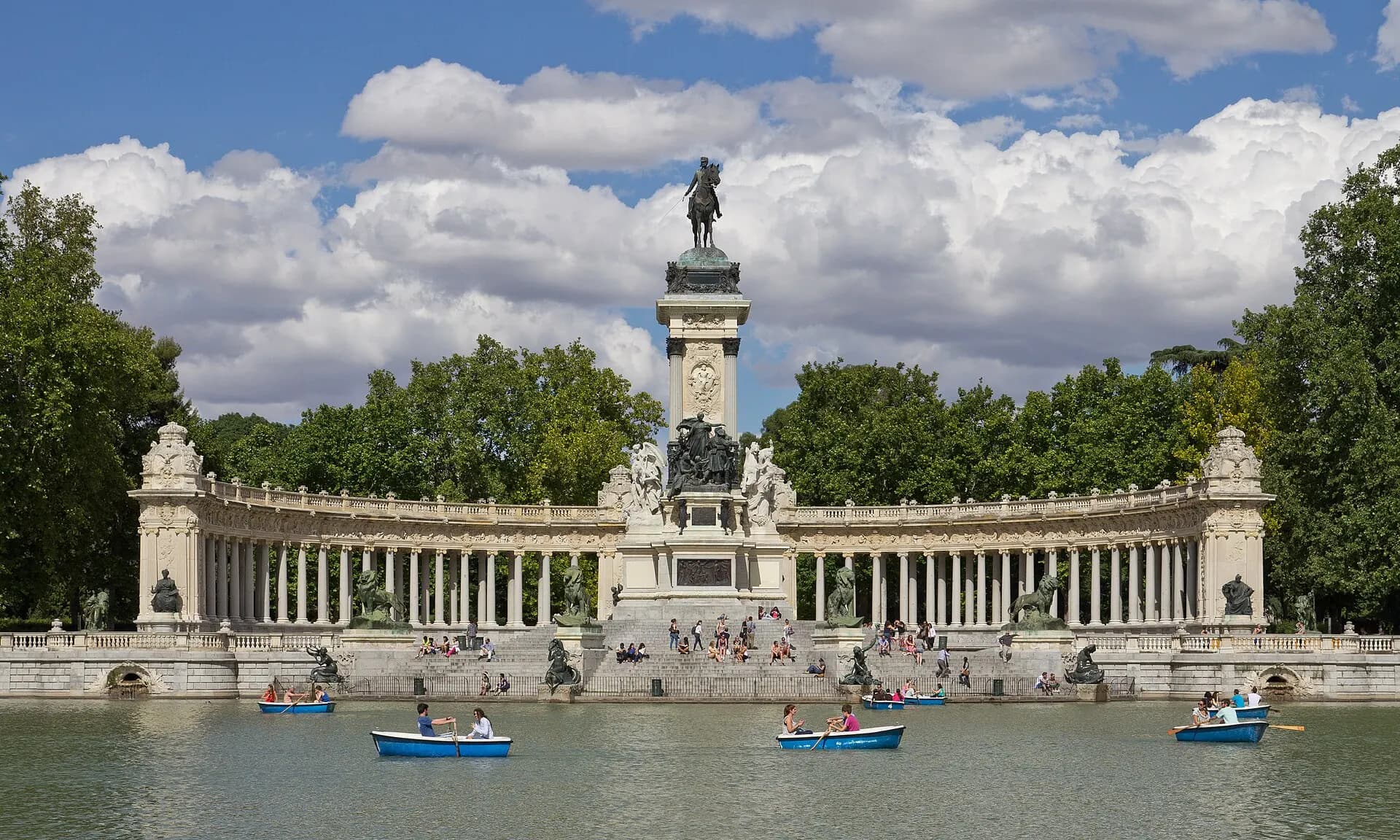
Once the royal gardens of the Buen Retiro palace, the Retiro is Madrid's great park, with a large boating lake overlooked by the colonnaded monument to Alfonso XII, a rose garden, shady avenues and the Palacio de Velázquez, used for exhibitions by the Reina Sofía. Together with the Paseo del Prado, it was declared a World Heritage Site in 2021. The glass Palacio de Cristal is currently closed for restoration work.
TipHire a rowing boat on the lake in the late afternoon, when the heat eases.
- 14
Santiago Bernabéu Stadium
Photo: لا روسا, CC BY-SA 3.0, via Wikimedia Commons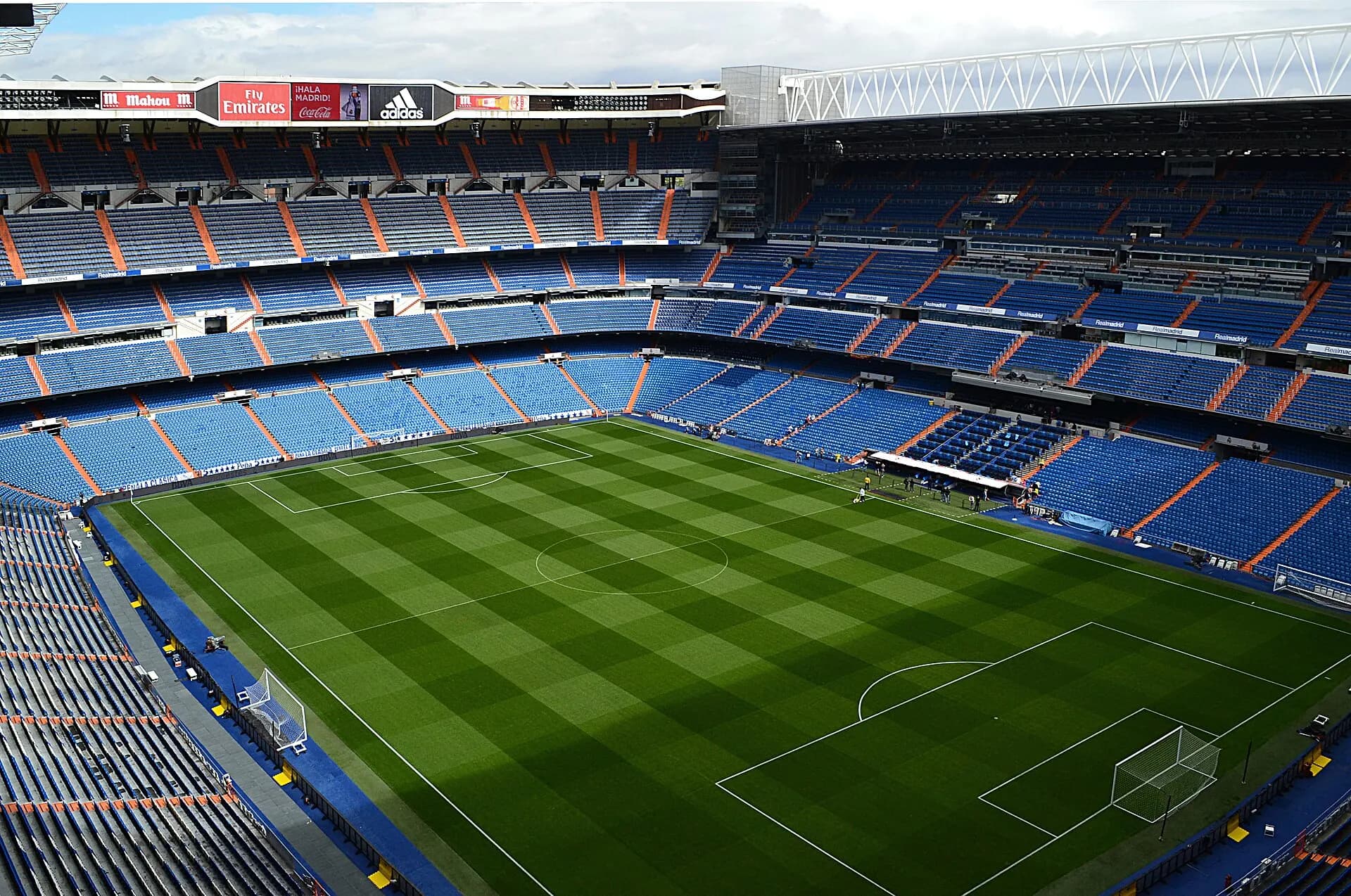
The home of Real Madrid, one of the most successful football clubs in the world, recently rebuilt with a retractable roof and a striking metal skin. The stadium tour takes in the trophy rooms, the panoramic views over the pitch and the dressing rooms. It's on the northern stretch of the Paseo de la Castellana, a short Metro ride from the centre.
TipTours can be limited or suspended on match days; check the club's site before going.
- 15
San Lorenzo de El Escorial
Photo: Diego Delso, CC BY-SA 4.0, via Wikimedia Commons
A vast granite monastery and palace built by Philip II in the late sixteenth century in the foothills of the Sierra de Guadarrama, about an hour by Cercanías train from the centre. It holds the royal pantheon where most Spanish kings are buried, a magnificent library and a fine collection of paintings. It's a World Heritage Site run by Patrimonio Nacional.
- 16
Segovia
Photo: David Corral Gadea, CC BY-SA 3.0 es, via Wikimedia Commons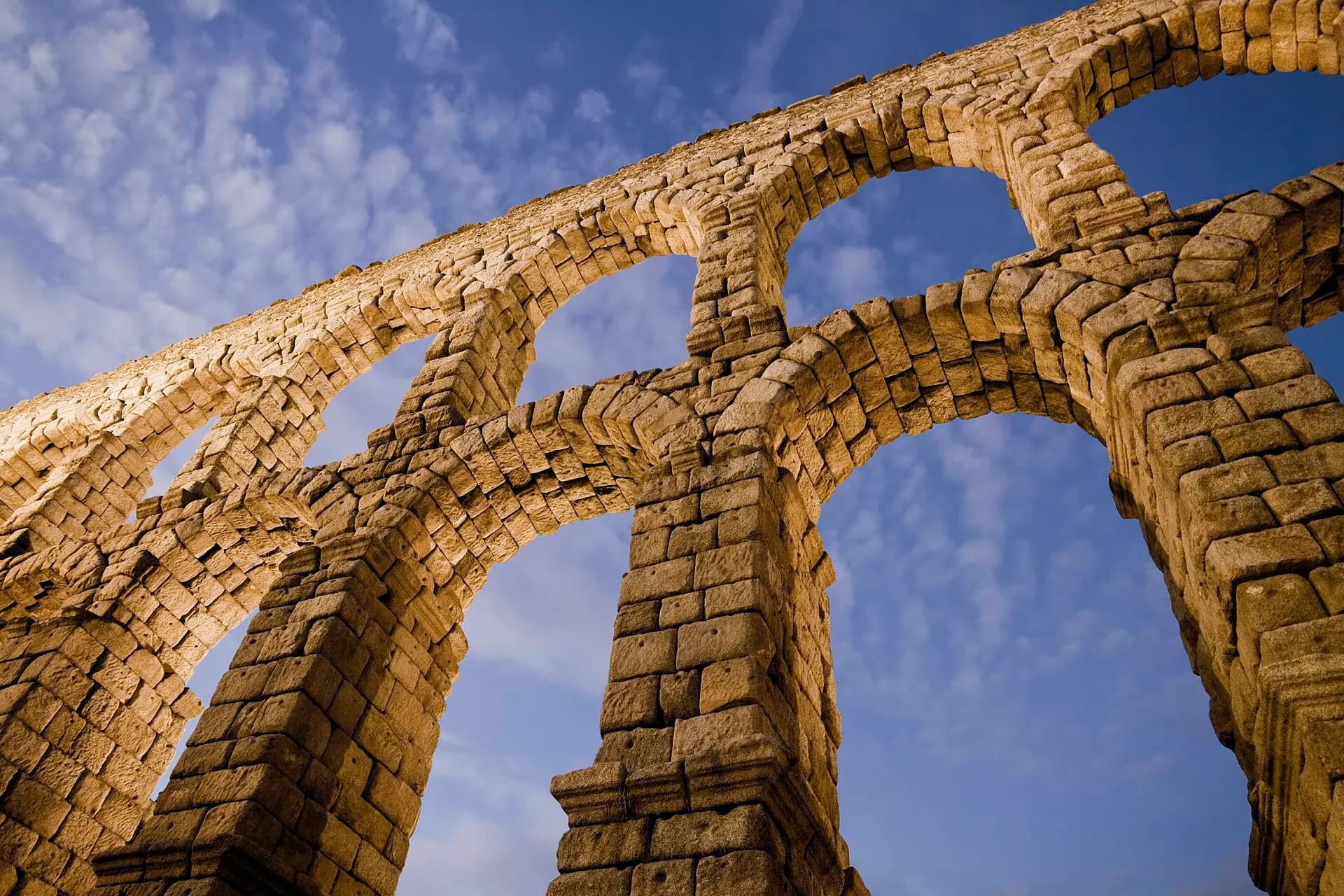
A hilltop city on the other side of the mountains, about half an hour from Madrid by high-speed train, famous for its Roman aqueduct, still standing across the main square, its late Gothic cathedral and the Alcázar, a turreted castle on a rocky spur. It's known for roast suckling pig, cochinillo.
TipThe high-speed station is outside town; take the connecting bus to the aqueduct.
- 17
Toledo
Photo: Mentxuwiki, CC BY-SA 4.0, via Wikimedia Commons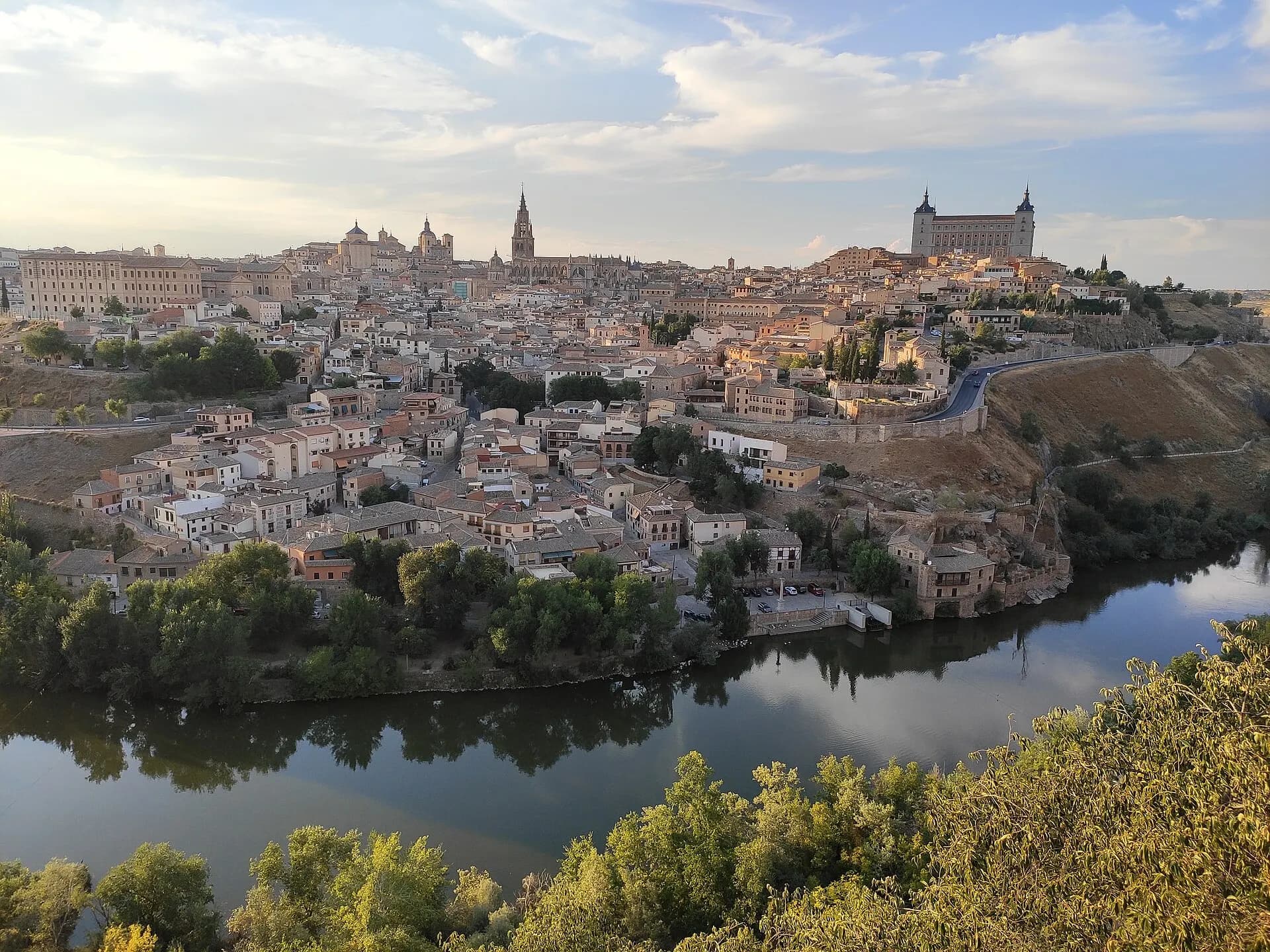
The old capital of Castile, on a rocky hill wrapped in a gorge of the River Tagus, about half an hour from Atocha by high-speed train. Its cathedral, synagogues, mosque and churches recall the centuries when Christians, Muslims and Jews lived side by side, and the town is closely linked with the painter El Greco. It's a steep, maze-like old town, best explored on foot.
When to go
Spring, from April to June, and autumn, from late September to October, bring warm, sunny days and pleasant evenings for sitting outside. Summer is hot and dry, with temperatures often above 35°C in July and August, and many locals leave the city in August, when some smaller restaurants close. Winters are cool and sunny, with cold nights and occasional frost, and the museums are quieter. The San Isidro festival, honouring the city's patron saint around 15 May, brings concerts and traditional dress, and Pride in early July is one of the biggest in Europe.
Getting around
The Metro is fast, frequent and covers the whole city, with more than 300 stations on its lines, and runs from early morning until about 1:30. A tourist travel pass gives unlimited travel on public transport for a set number of days. Madrid-Barajas Airport is about 12 km from the centre and is linked by Metro line 8 (which has an airport supplement), Cercanías trains and the Airport Express bus, which runs 24 hours; taxis to the centre charge a fixed fare. The centre is easily walkable, and much of it is a low-emission zone with restrictions on driving, so a car is a burden rather than a help. For day trips, high-speed trains leave from Atocha and Chamartín stations, and Cercanías trains run to El Escorial and Aranjuez.
Local tips
- Madrid eats late: lunch is around 14:00 to 16:00 and dinner from 21:00 to 23:00. Many restaurants don't open for dinner until 20:30.
- The menú del día, a set lunch of two courses with bread, drink and dessert, is the best-value meal in town on weekdays.
- Pickpockets work the Metro, the Puerta del Sol, Gran Vía and the Rastro; keep bags closed and phones out of back pockets.
- In summer, sightsee in the morning, rest in the afternoon and come back out in the evening, as locals do; carry water.
- Check museum free hours on the official sites before you go, as they change for holidays and exhibitions.
- Many museums are closed one day a week: the Prado is open daily, but the Reina Sofía closes on Tuesdays.
- Tapping a contactless card works in most bars and shops, but small bars may prefer cash for small amounts.
Eat and drink
Madrid's great tradition is the tapeo, moving from bar to bar for a drink and a small plate in each, especially around La Latina, Las Letras and the streets off the Plaza Mayor. Classic dishes include cocido madrileño, a hearty stew of chickpeas, meats and vegetables served in courses, mainly in winter; callos, slow-cooked tripe; huevos rotos, fried eggs broken over chips; and croquetas. The bocadillo de calamares is the city's famous snack, and churros with hot chocolate are a breakfast or a late-night treat. Vermouth on tap is a weekend ritual before lunch. Many bars still give a small free tapa with a drink. The city also has a growing number of acclaimed modern restaurants, and Botín, near the Plaza Mayor, is often cited as the oldest restaurant in the world still operating.
Where to stay
Sol, the Plaza Mayor area and Las Letras put you within walking distance of nearly everything, though some streets are noisy late at night. La Latina and the Palacio area are atmospheric and slightly calmer. Malasaña and Chueca suit travellers who want bars and nightlife on the doorstep, while Salamanca, the elegant nineteenth-century district east of the Castellana, is quieter, with upmarket hotels and shops. In summer, air conditioning is essential.
The Paseo del Arte
The "Art Walk" along the Paseo del Prado brings together three national museums within about a kilometre of each other, between them covering European art from the Middle Ages to the present. The Prado, opened in 1819, holds the royal collections of old masters; the Thyssen-Bornemisza fills in the schools the royal collectors missed; and the Reina Sofía continues the story through the twentieth century. Trying to see all three in one day is exhausting; spread them over several mornings, or use the free evening hours for a shorter focused visit. The Paseo del Prado itself, a tree-lined boulevard laid out in the eighteenth century with fountains of Cybele, Neptune and Apollo, and the Retiro beside it, form the World Heritage Site known as the Landscape of Light.
Habsburg and Bourbon Madrid
Madrid was a modest town when Philip II moved the royal court here in 1561. Under the Habsburgs, the city grew around the Plaza Mayor and the old alcázar, and the narrow lanes between them are still called the Madrid de los Austrias. The Bourbon kings, who came to the throne in the eighteenth century, gave the city a grander, more ordered face, with the Royal Palace, the Paseo del Prado and monumental gates such as the Puerta de Alcalá. Charles III, remembered as "the best mayor of Madrid", added street lighting, sewers and many of the city's great public buildings. In the twentieth century, Madrid endured a long siege in the Civil War, then grew rapidly under Franco, and after his death in 1975 became the energetic, open city of the Movida and of today.
Flamenco and the night
Although flamenco was born in Andalusia, Madrid has long been one of its great stages, with tablaos, intimate venues where dancers, singers and guitarists perform up close, across the centre. Shows usually take place in the evening, and booking ahead is wise. Madrid's nightlife in general starts late: bars fill from around 23:00 and clubs often don't get busy until well after midnight. The esMadrid site lists festivals, including the annual Suma Flamenca festival in autumn.
Responsible travel
Rising rents and tourist apartments have pushed residents out of parts of the centre, so consider a licensed hotel or guesthouse. Keep noise down in residential streets late at night, as people live above the bars. Use the Metro and trains rather than a car, carry a refillable water bottle in summer, and spread your visits beyond the busiest few streets, to neighbourhood markets and bars where your money supports local businesses.