Sa Pa
A misty mountain town above terraced valleys, with Hmong and Dao villages, long treks and the highest peak in Indochina.
- Best time to go
- September to November for golden terraces and clearer skies, and March to May
- Local time
- –
- Currency
- Vietnamese Dong (VND)
- Reading time
- 8 min
- Language
- Vietnamese
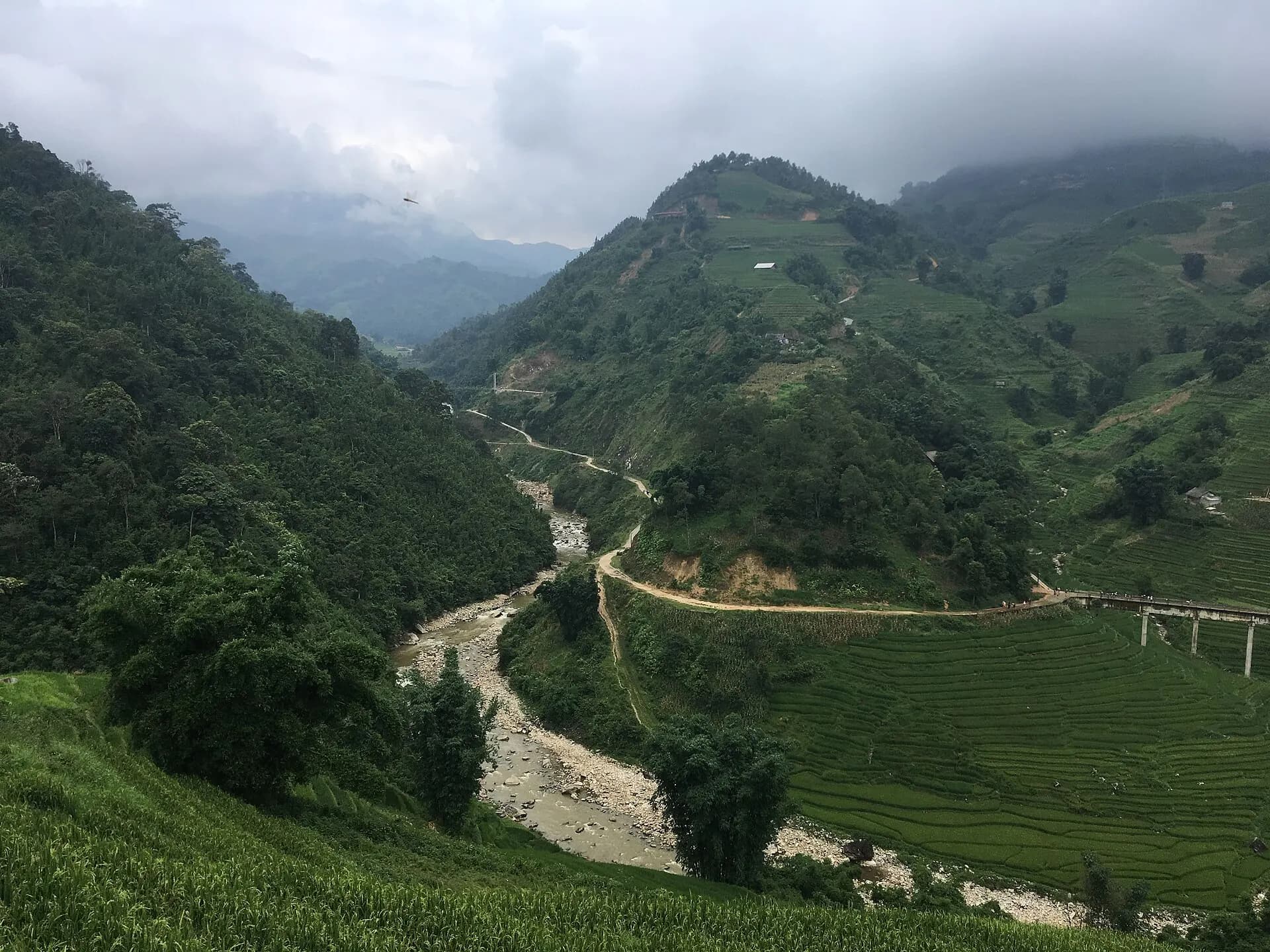
Sa Pa sits at around 1,500 metres in the Hoàng Liên Sơn mountains of far northern Vietnam, close to the Chinese border. The French built it as a hill station to escape the heat of the delta, and the town still has a stone church and a few colonial villas, but the real draw lies below it: deep valleys carved into staircases of rice terraces, and the villages of the Black Hmong, Red Dao, Giáy and other ethnic minority peoples who built them. Above the town rises Fansipan, at about 3,143 metres the highest mountain in Vietnam and in all of Indochina, now reachable by cable car as well as on foot.
The town itself has grown fast, with a crowded centre of hotels, cafés and construction, and it can be cool, damp and foggy for days at a time. Give it time anyway. Walk out of town with a local guide, sleep in a village homestay, and the mist lifting off the Mường Hoa Valley in the morning is one of the great sights of Southeast Asia. Since the 2025 reorganisation of Vietnam's provinces, Sa Pa is a ward of the enlarged Lào Cai province, which now also includes the terraces of Mù Cang Chải.
The top 10 in Sa Pa
- 1
Sa Pa town and the Stone Church
The grey stone Church of the Holy Rosary, built in the French colonial era, faces the main square at the heart of town, and is still used for Mass. Around it are the lake, the market and streets of shops selling Hmong and Dao textiles. In the evening, and especially at weekends, the square fills with families, food stalls and music.
- 2
Hàm Rồng Mountain
Photo: Zeugma fr (talk) (Antoine FLEURY-GOBERT), CC BY-SA 3.0, via Wikimedia Commons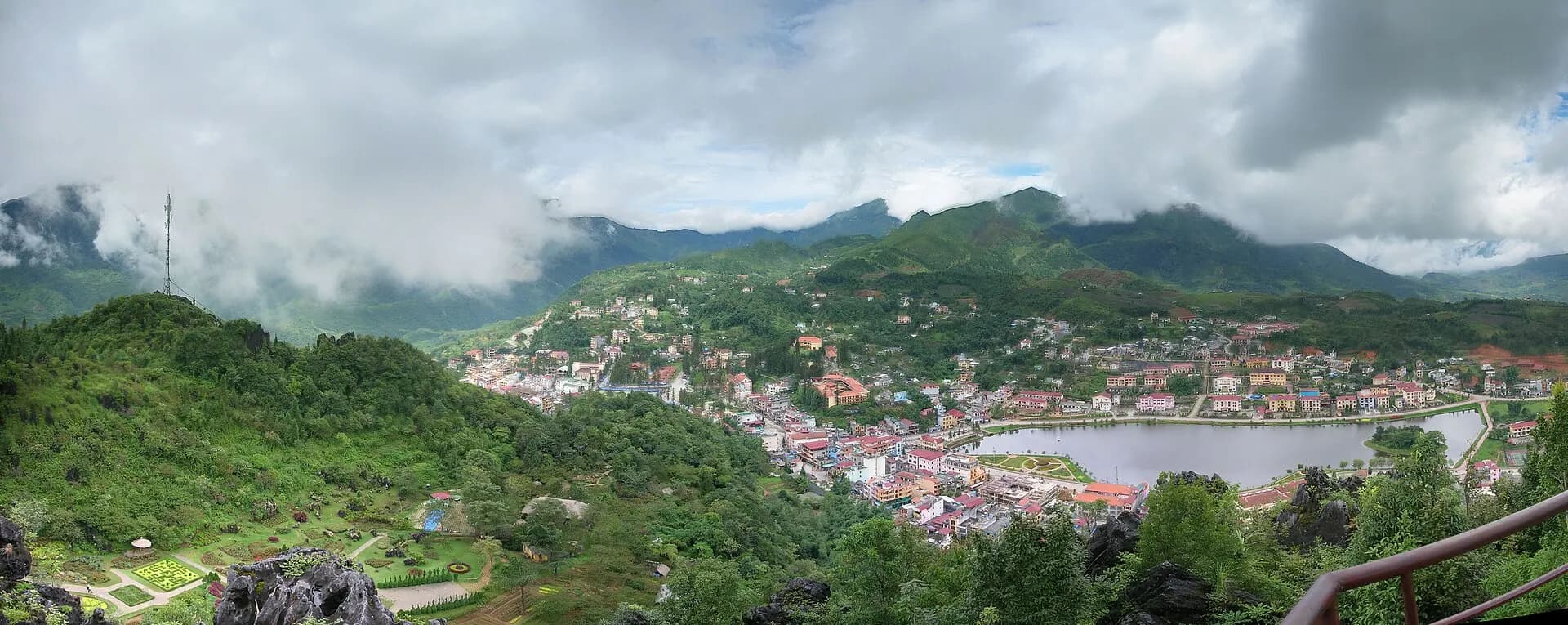
"Dragon's Jaw" mountain rises directly behind the church, with paths through flower gardens and rock formations to viewpoints over the town and, on clear days, across to Fansipan. It's an easy half-day walk and a good first outing while you get used to the altitude. Entry is ticketed.
TipGo early in the morning; the views are often gone by midday when cloud rolls in.
- 3
Cát Cát village
Photo: Jakub Hałun, CC BY 4.0, via Wikimedia Commons
A Black Hmong village a steep walk downhill from town, with a waterfall, a bridge over the stream and traditional houses. Be prepared: Cát Cát has been heavily developed for tourism, with an entrance fee, costume rental, souvenir stalls and photo spots, and it feels more like a park than a working village. It's convenient and pretty, but walk further afield for village life. Motorbike taxis wait at the bottom for the climb back.
- 4
Fansipan
Photo: MinhVN123, CC BY-SA 4.0, via Wikimedia Commons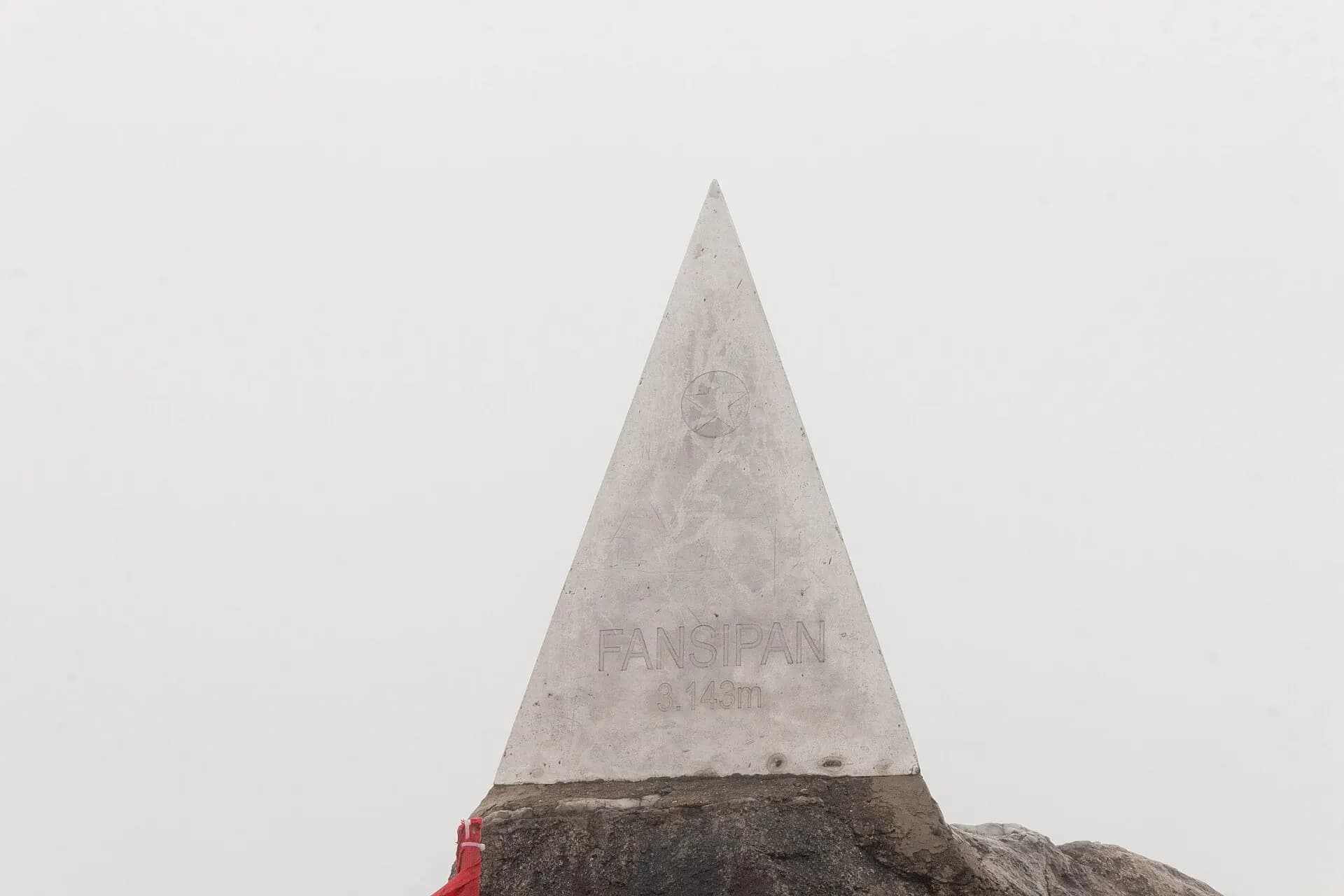
The "Roof of Indochina" is the highest peak in Vietnam, Laos and Cambodia. The Sun World Fansipan Legend cable car, which opened in 2016 and holds Guinness records for its length and height difference, climbs more than six kilometres over the forest to the top station in around fifteen to twenty minutes; the Mường Hoa funicular from the centre of town connects to it. From the top station, a short funicular or several hundred steps lead past a hillside complex of pagodas and statues to the summit marker. Climbing on foot through Hoàng Liên National Park is a serious trek of one to three days, on steep, often muddy trails with a camp at about 2,800 metres; you need a licensed guide and park permit.
TipCheck the forecast first, and bring warm layers: it can be close to freezing at the top when the town is mild. Opening hours change; check before you go.
- 5
Silver Waterfall
Photo: Lori_NY, CC BY-SA 2.0, via Wikimedia Commons
Thác Bạc tumbles down a cliff beside the road to the Ô Quy Hồ Pass, about twelve kilometres from town. A short stepped path climbs alongside it. It's at its fullest in the rainy summer months, and an easy stop on the way to the pass.
- 6
Ô Quy Hồ Pass
Photo: Dansapa, CC BY-SA 4.0, via Wikimedia Commons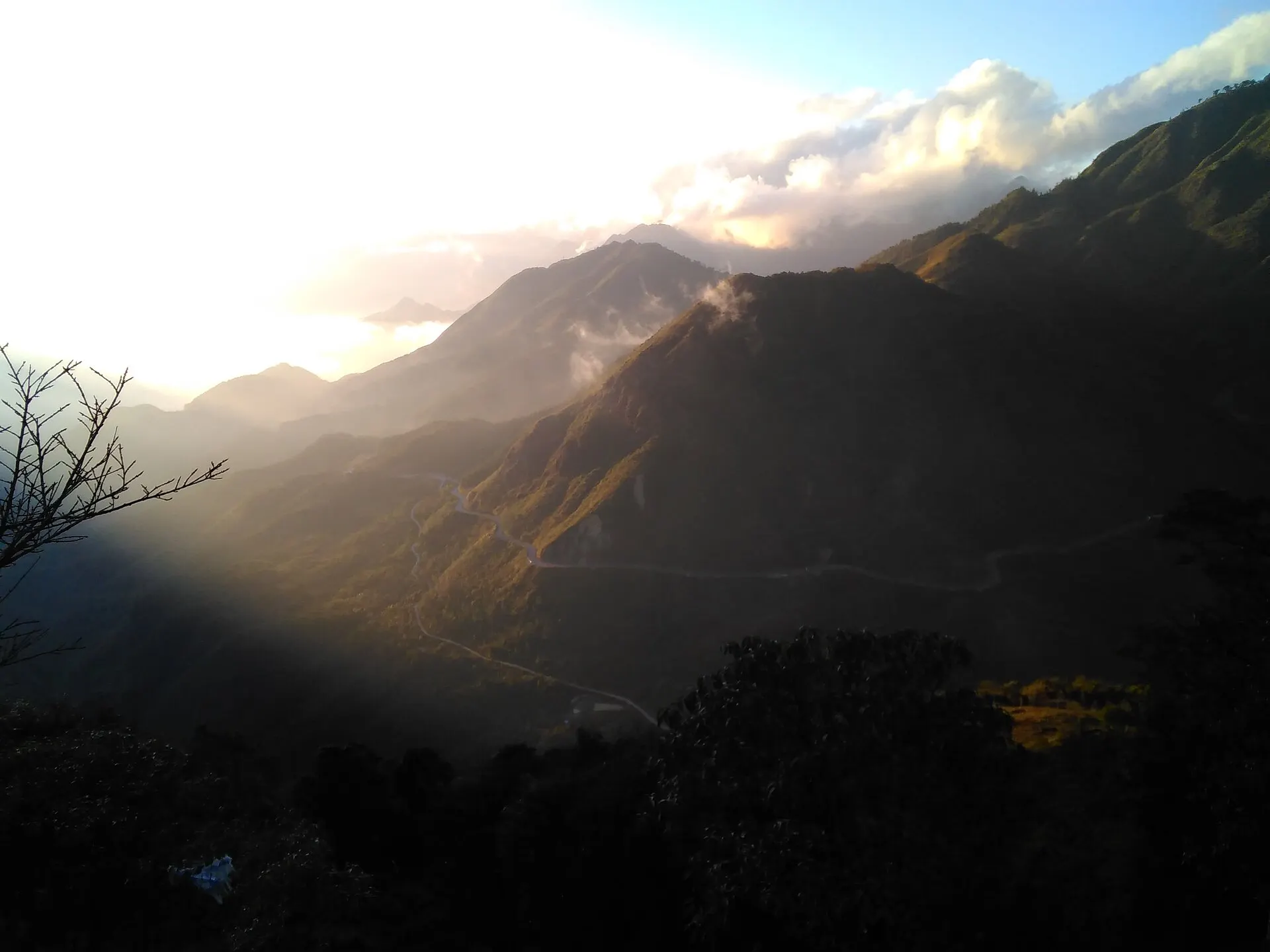
One of Vietnam's great mountain roads crosses the Hoàng Liên Sơn range at almost 2,000 metres on the border with Lai Châu province, where the Trạm Tôn ranger station marks the start of the shortest Fansipan trail. The road winds down in long switchbacks on the far side, and on clear evenings the sunset from the top is spectacular. Fog can close in quickly, so take care if you're riding.
- 7
Mường Hoa Valley: Lao Chải and Tả Van
Photo: Christophe95, CC BY-SA 4.0, via Wikimedia Commons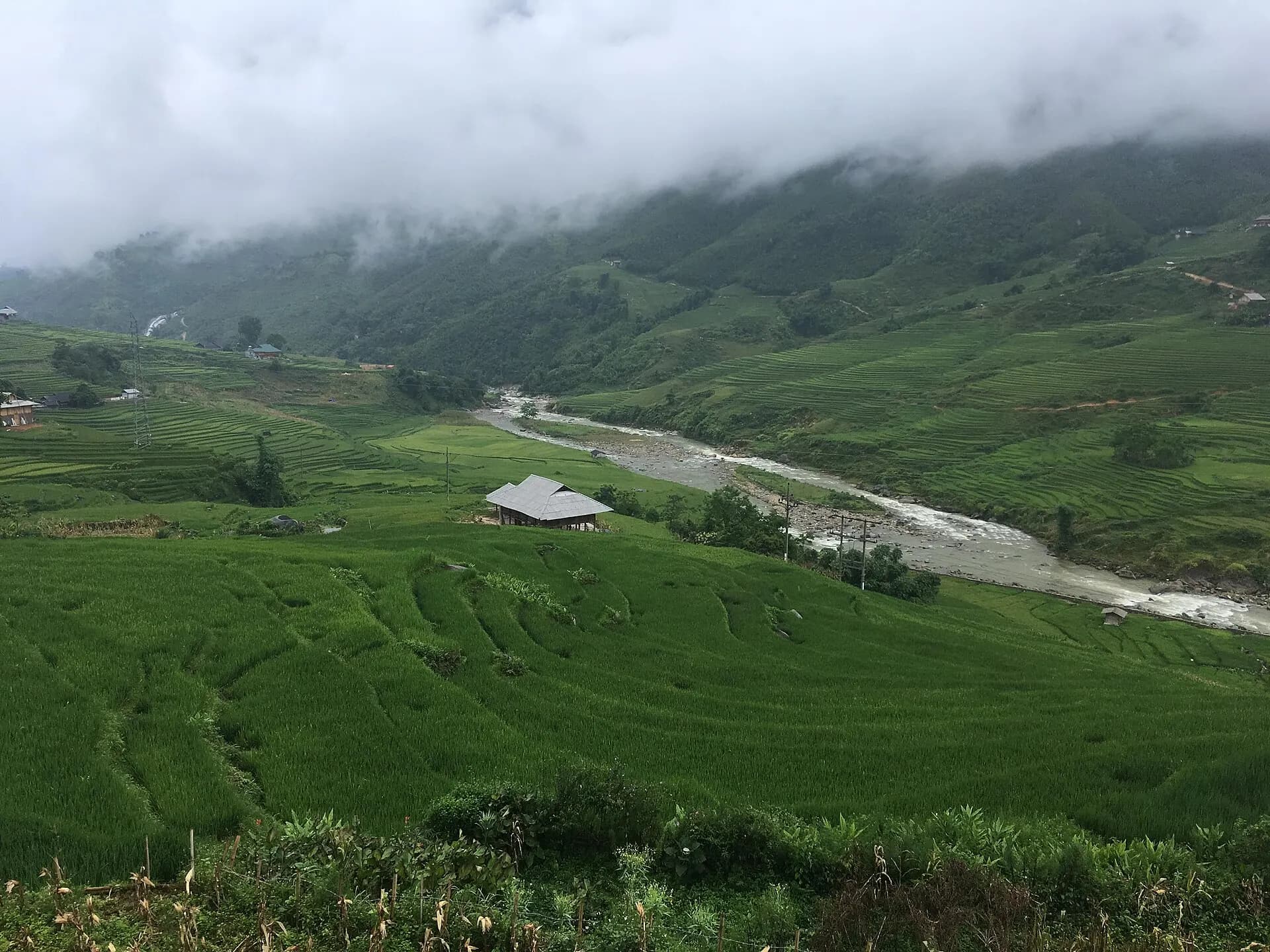
The classic Sa Pa trek follows the Mường Hoa stream south-east of town through terraces down to Lao Chải, a Black Hmong village, and on to Tả Van, home to Giáy and Hmong families, with Dao villages further along the valley. The walk takes most of a day, and many people stay overnight in a Tả Van homestay. Look out for the carved stones along the valley floor, decorated with ancient patterns whose meaning is still debated.
TipThe trails are slippery clay after rain. Wear proper shoes with grip, not trainers.
- 8
Tả Phìn
A Red Dao and Black Hmong area north-east of town, known for embroidery and for herbal baths made with medicinal plants gathered in the forest. On the way are the roofless stone ruins of a French monastery from the colonial era. It is quieter than the Mường Hoa Valley, and the national tourism authority notes it can be visited without a guide.
- 9
Bắc Hà Sunday market
Photo: Peter Olshevsky, CC BY-SA 4.0, via Wikimedia Commons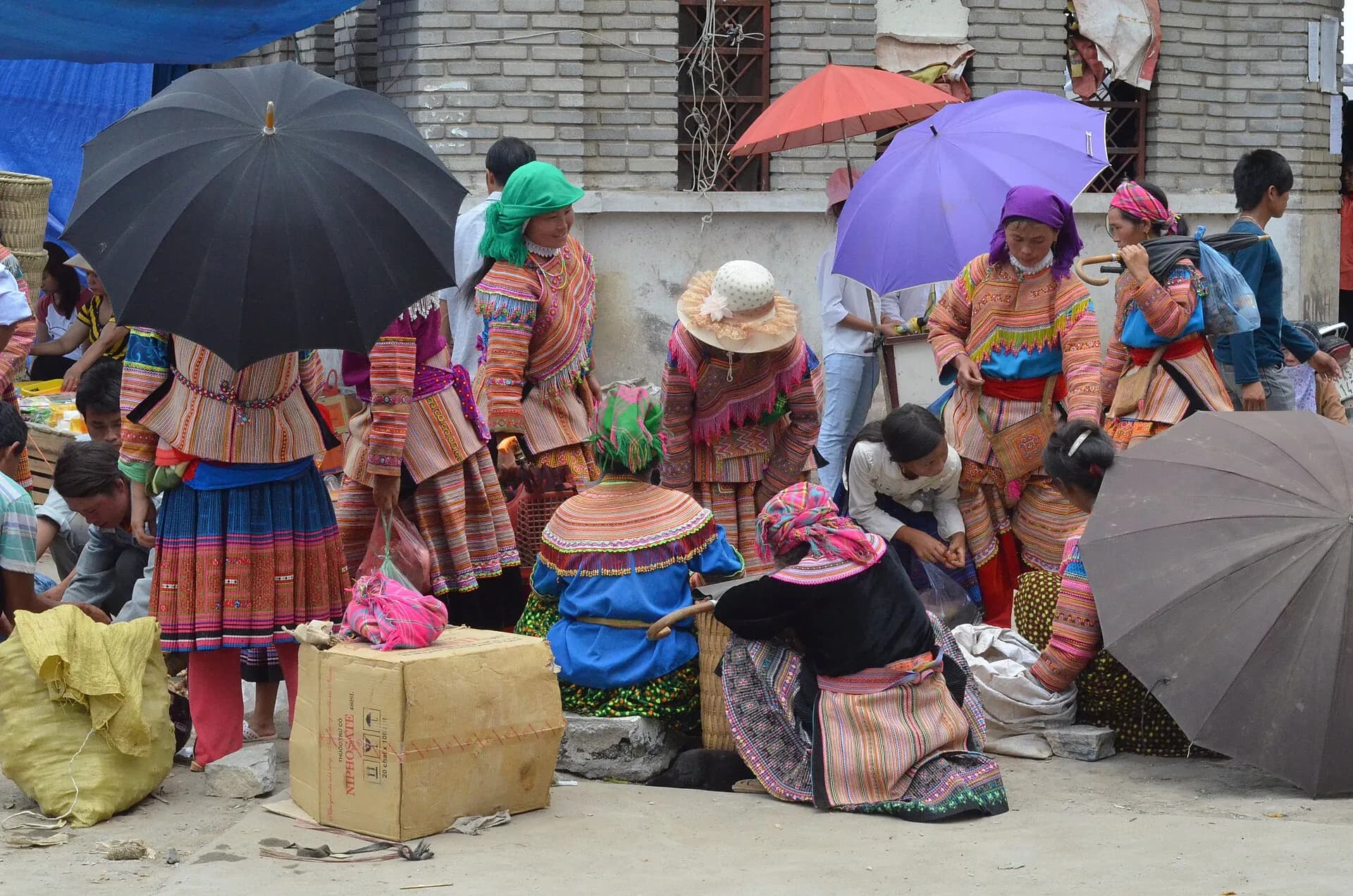
On Sunday mornings, Flower Hmong, Dao, Tày, Nùng and other communities come down from the hills to the town of Bắc Hà to trade buffalo, horses, pigs, farm tools, fabrics and food. The Flower Hmong women's clothing is some of the most colourful in Vietnam. Bắc Hà is two and a half to three hours by road from Sa Pa, so it's a long day trip, often combined with an overnight stay.
TipArrive early. The livestock trading winds down by late morning, just as the tour minibuses arrive.
- 10
Y Tý
A remote Hà Nhì and Hmong commune high above the Chinese border, with mud-walled houses, terraces and seas of cloud at dawn. It's a three- to four-hour drive from Sa Pa on mountain roads, so plan at least one night. Few foreign visitors make it, and facilities are simple.
When to go
Sa Pa is cool all year, and its weather changes by the hour. September to November is the favourite season: the terraces turn gold before the harvest, usually in September, and the skies are often clearer. March to May is mild, with fruit trees in blossom, and in May and June the terraces are flooded for planting and mirror the sky. Summer, from June to August, is warm, green and wet, with heavy afternoon rain, leeches on the trails and occasional landslides. Winter, from December to February, is cold and frequently foggy, with temperatures near or below freezing; in some years it snows on the town and Fansipan, which brings crowds of Vietnamese visitors. Hotels have heaters, but bring warm clothes. Weekends and Vietnamese holidays are much busier than weekdays.
Getting around
From Hanoi, the Nội Bài–Lào Cai expressway has cut the journey to Sa Pa to about five to six hours by road. Sleeper buses and limousine vans run from Hanoi, and from Nội Bài Airport, directly to Sa Pa. The overnight train runs from Hanoi to Lào Cai station in about eight hours, with private sleeper carriages operated by several companies; from Lào Cai, buses and shared minibuses climb the last 35 kilometres or so to Sa Pa in about an hour. Book train and bus seats in advance at weekends and holidays.
Sa Pa town is compact enough to walk, though it is hilly. Taxis, motorbike taxis and hired cars reach the waterfall, the pass and the villages; hiring a motorbike is possible, but mountain roads, fog, trucks and wet surfaces make it risky unless you're experienced.
Local tips
- Check visa requirements before you travel; many visitors can apply for an e-visa online.
- Carry cash in dong for homestays, villages and small shops; ATMs are in town but not in the villages.
- Bring layers, a rain jacket and good walking shoes in every season.
- Agree trekking routes, homestay arrangements and prices before you set off.
- The Vietnamese name is written Sa Pa; you'll also see "Sapa" on signs and tickets.
- Mobile coverage is good in most valleys, but download offline maps for treks.
- Expect to be followed by women selling textiles on popular trails; a polite, firm "no, thank you" is fine.
Eat and drink
Mountain specialities include grilled meat and vegetables on skewers from the street stalls around the square, hotpot with salmon or sturgeon raised in the cold streams, black chicken, and smoked buffalo or pork. Thắng cố, a stew of horse meat and offal, is a Hmong market dish for the adventurous. Try the local plum and corn wines with care. Cafés in town serve Vietnamese coffee, and many homestays cook generous family dinners.
Where to stay
The town has everything from backpacker hostels to large hotels and resorts, but some streets are noisy with construction, so look for places with views over the valley. Homestays in Tả Van, Lao Chải, Tả Phìn and other villages offer simple rooms or shared sleeping lofts in family houses, often with a home-cooked dinner. Lodges and eco-resorts in the valleys sit somewhere in between.
Trekking with local guides
The best way to understand the region is on foot, walking from village to village with a local guide. Many guides are Hmong or Dao women who grew up on these trails and can explain farming, weaving and family life. Book through your hotel, a licensed agency, or a community-run cooperative or homestay network, so that more of the money stays in the villages, and ask whether the guide holds a licence. Treks in Hoàng Liên National Park, including all routes up Fansipan, require a registered guide and a permit, and guides know which paths are safe after rain.
The people of the mountains
Vietnam has fifty-four recognised ethnic groups, and the province around Sa Pa is one of the most diverse; more than half the population of Lào Cai belongs to ethnic minorities. The Black Hmong wear indigo-dyed hemp and cotton, dyed in vats of fermented indigo that leave their hands blue. Red Dao women wear red headscarves and often shave their eyebrows and hairline. The Giáy, Tày and Xa Phó live here too, and each group has its own language, festivals and craft traditions. Tourism has brought income and new roads, but also pressure on land and traditions, and many families still depend on rice, corn and cardamom farming.
Hoàng Liên National Park
The national park covers the high ground of the Hoàng Liên Sơn range west and south of Sa Pa, rising from about 380 metres to the summit of Fansipan. It protects montane and cloud forest with rhododendrons, rare conifers and orchids, and is home to the western black crested gibbon and many Himalayan bird species found nowhere else in Vietnam. It is an ASEAN Heritage Park. Stay on trails, carry out your rubbish, and don't buy wild orchids, herbs or animal products sold by the roadside.
Responsible travel
Ask before photographing people, and accept a "no"; many villagers simply don't want to be treated as a sight. Don't photograph inside homes or during ceremonies without permission. Children selling bracelets and postcards are a common sight in town and on the trails. Child-protection organisations advise against buying from them or giving them money or sweets, because it keeps them out of school; buy from adults, or support local schools and community projects instead. Dress modestly in villages, stick to paths along the terrace walls so you don't damage crops, choose community-run homestays, and pay fairly for crafts that take weeks of work.