Hoi An
Yellow-walled merchant houses, silk lanterns glowing over the river, and some of Vietnam's best food in a small, walkable town.
- Best time to go
- February to April, for warm, dry days before the summer heat
- Local time
- –
- Currency
- Vietnamese Dong (VND)
- Reading time
- 4 min
- Language
- Vietnamese
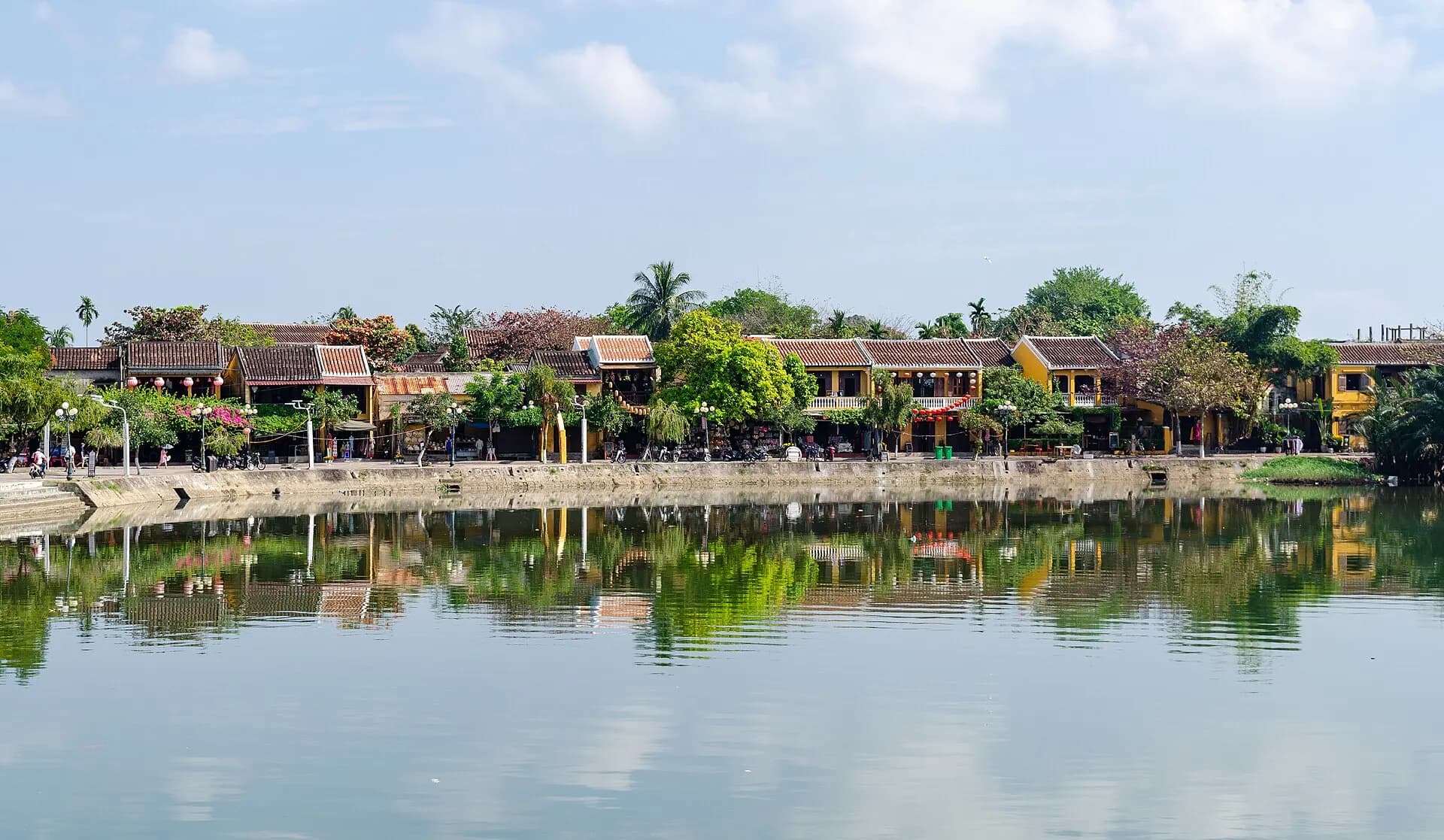
Hoi An was a thriving trading port from the fifteenth to the nineteenth century, where Japanese, Chinese, Vietnamese and European merchants settled, built houses and temples, and traded silk, ceramics and spices. When the river silted up and trade moved to Da Nang, Hoi An was left behind, and its old town survived almost untouched. It's now a World Heritage Site, with more than a thousand historic buildings.
Today, it's one of Vietnam's most charming places: its streets are closed to cars for much of the day, silk lanterns hang from every shopfront, and tailors can make clothes to measure in a day. It's very popular, so explore early in the morning, then retreat to the beaches, rice fields and villages around it.
The top 9 in Hoi An
- 1
The Ancient Town
Photo: Steffen Schmitz (more photos), CC BY-SA 4.0, via Wikimedia Commons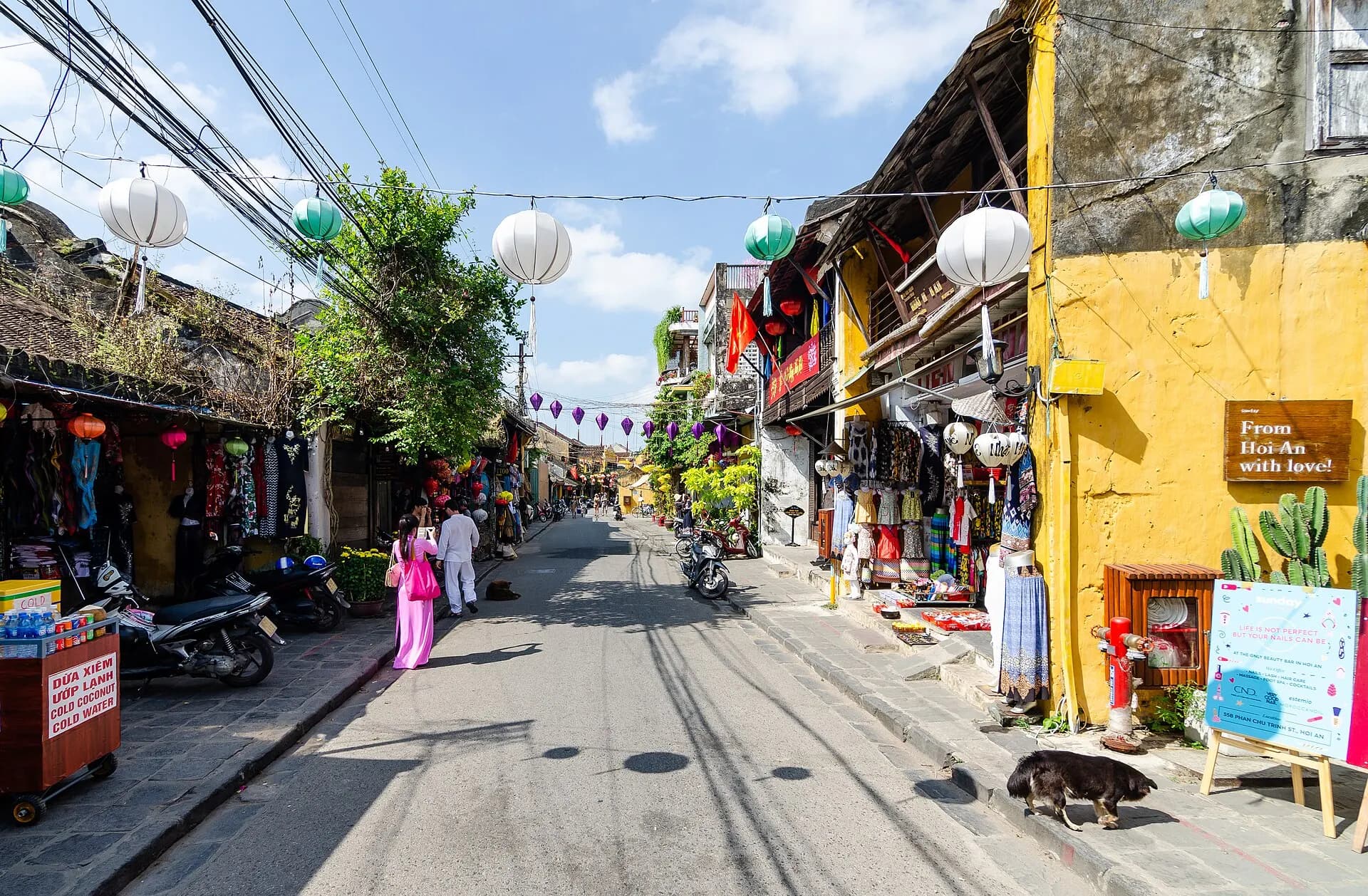
A compact grid of streets lined with yellow-painted shophouses, wooden merchant houses and temples, beside the Thu Bồn River. A ticket covers entry to the old town and gives access to a choice of historic buildings, including old houses, assembly halls and museums.
TipWalk the streets at dawn, when they're almost empty and the light is soft.
- 2
The Japanese Covered Bridge
Photo: Chainwit., CC BY 4.0, via Wikimedia Commons
The symbol of Hoi An, a small covered bridge with a temple attached, traditionally said to have been built by the Japanese community in the early seventeenth century to link with the Chinese quarter. It reopened in 2024 after a major restoration.
- 3
The assembly halls
Photo: Chainwit., CC BY 4.0, via Wikimedia Commons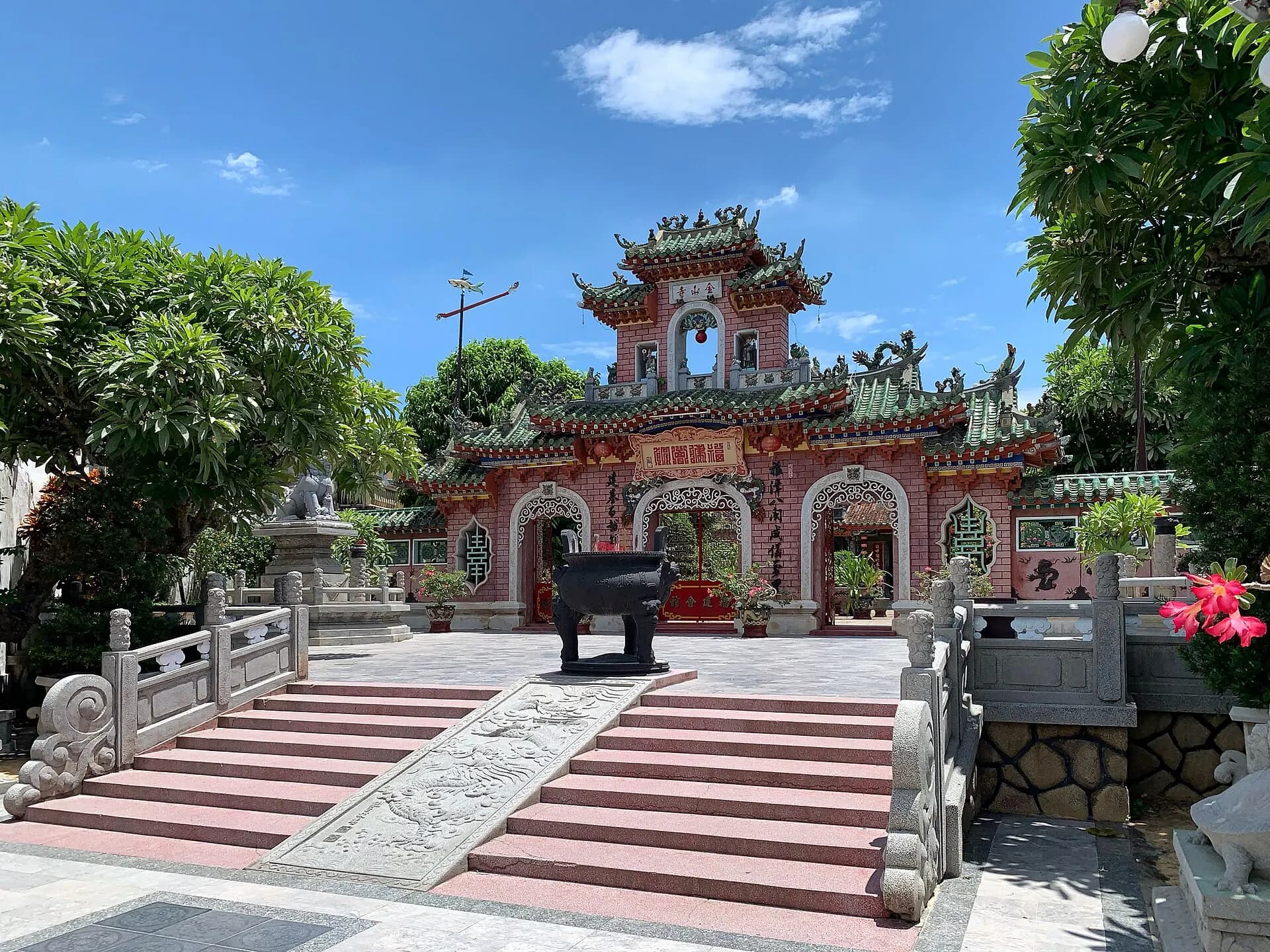
Chinese merchants from different regions built ornate assembly halls as meeting places and temples. The Phúc Kiến (Fujian) Assembly Hall, with its colourful gate, dragon fountain and incense coils hanging from the ceiling, is the grandest.
- 4
Tân Ký Old House
Photo: P. Hughes, CC BY 4.0, via Wikimedia Commons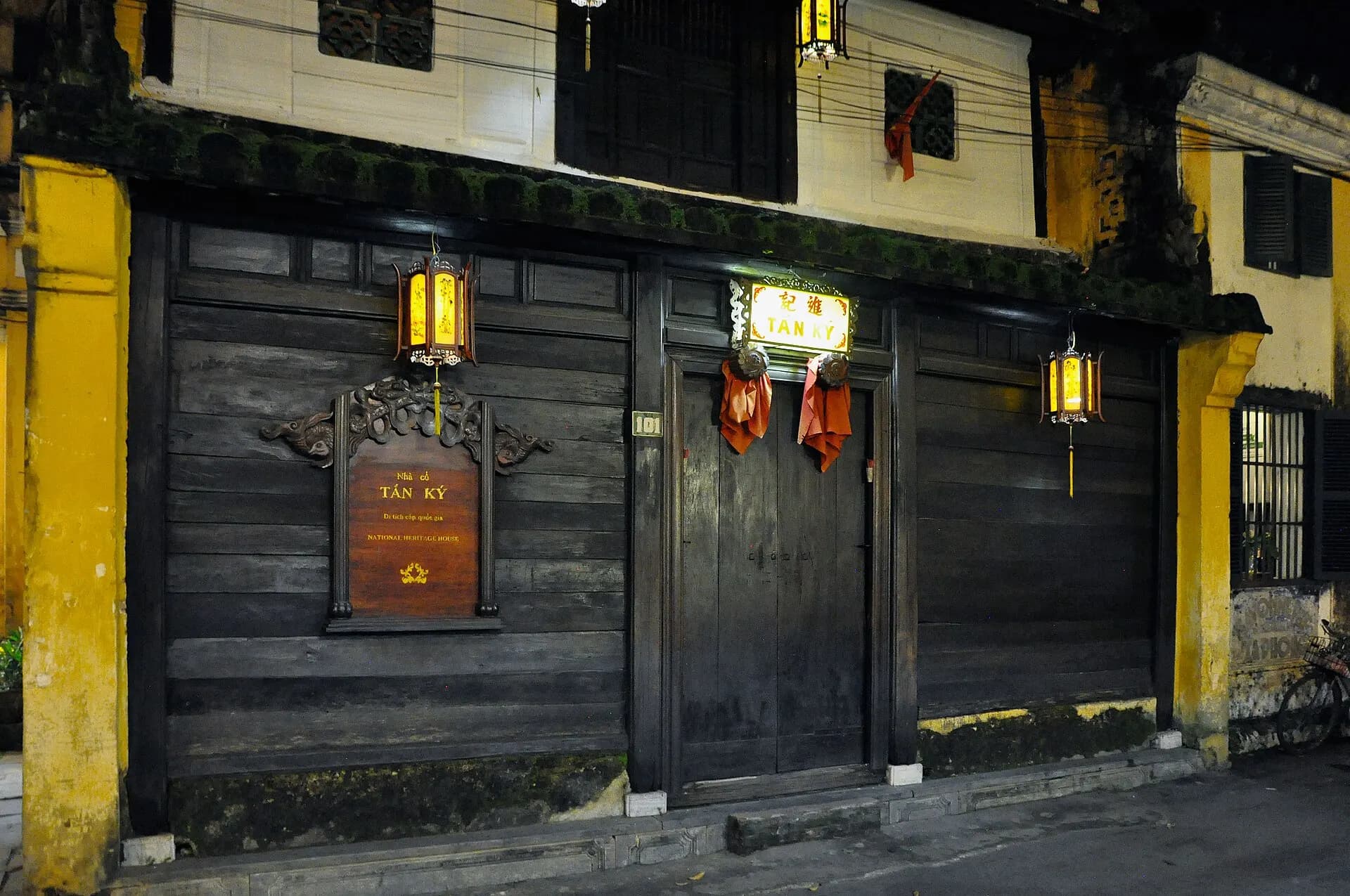
A merchant's house more than two hundred years old, still lived in by the same family, blending Vietnamese, Japanese and Chinese architecture, with dark wooden beams, mother-of-pearl inlay and marks showing how high the floods have reached over the years.
- 5
The lantern-lit riverside at night
Photo: lumoplank, CC0, via Wikimedia Commons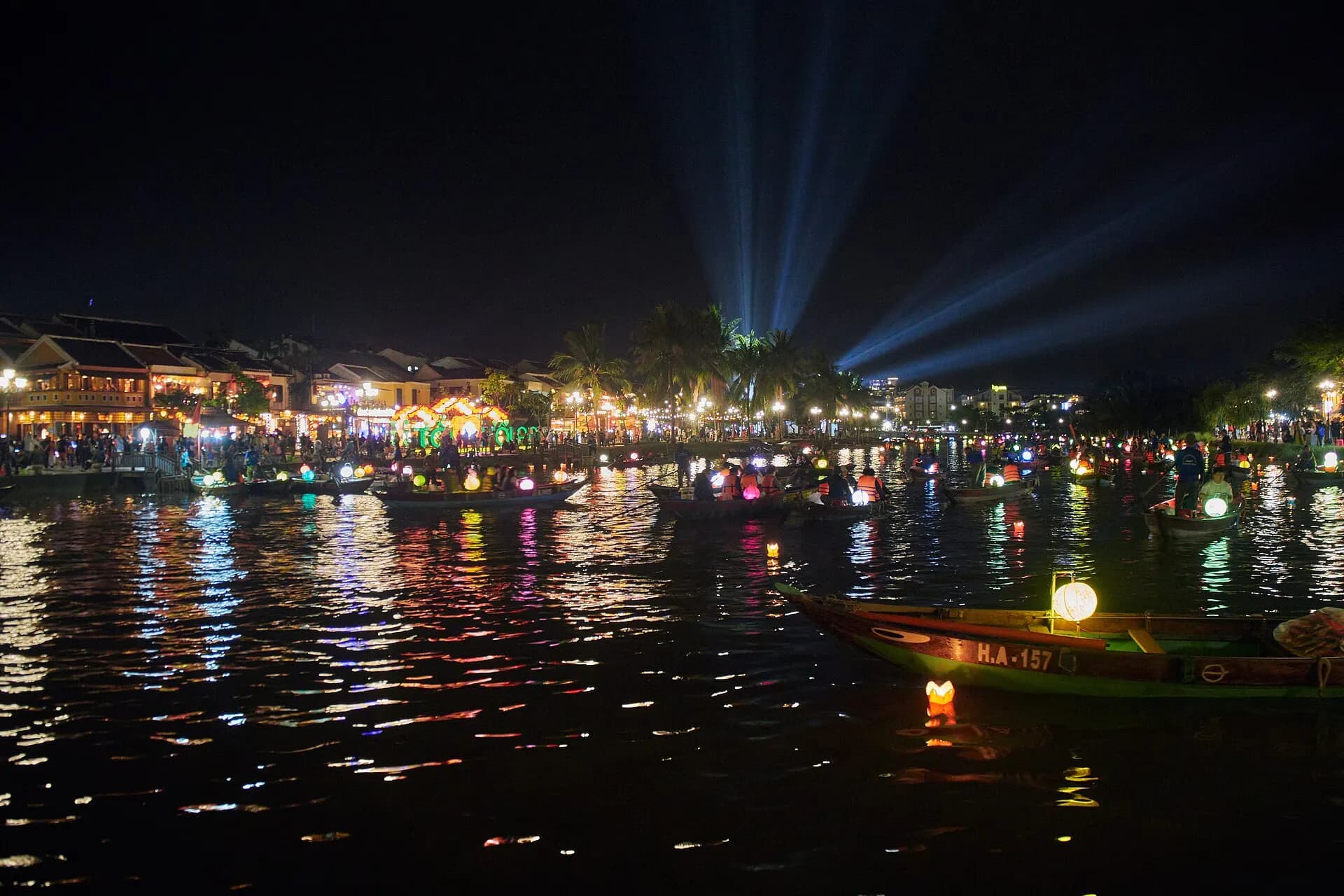
After dark, the riverside and old streets glow with hundreds of silk lanterns. Small boats take visitors onto the river to float paper lanterns with candles, and a night market sells food and crafts across the bridge on An Hội islet.
TipOn the full moon each month, the old town turns off its electric lights and the lanterns take over.
- 6
Trà Quế vegetable village
A farming village a few kilometres north, where herbs and vegetables are grown in neat beds fertilised with seaweed from the river. Cycle through the fields and join a farming or cooking class.
- 7
An Bàng Beach
Photo: Alexkom000, CC BY 4.0, via Wikimedia Commons
A sandy beach about four kilometres from the old town, with seafood restaurants, sunloungers and a relaxed atmosphere, easily reached by bicycle along country roads.
- 8
Cẩm Thanh coconut village
Photo: Chester Ho chesterho, CC0, via Wikimedia Commons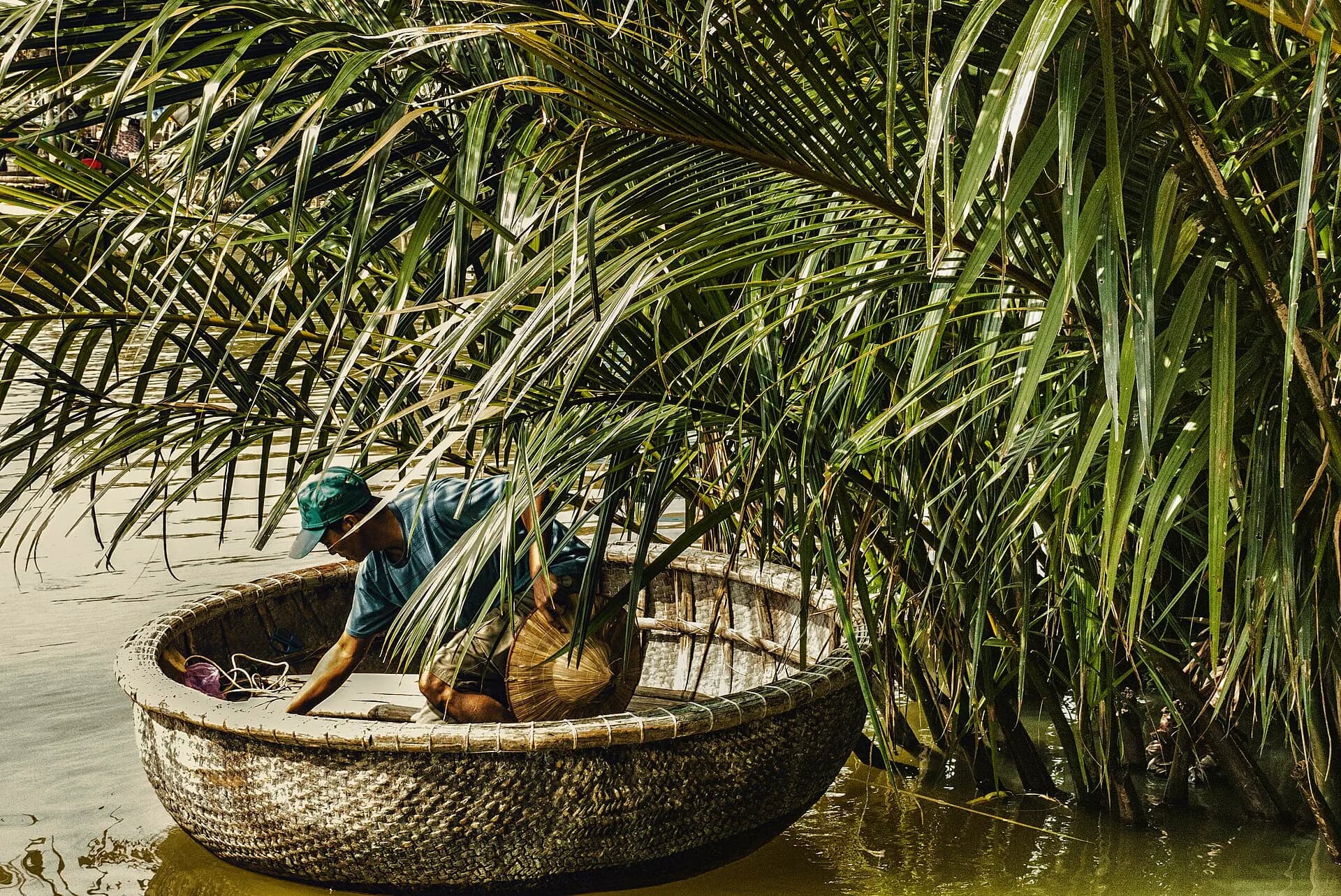
A water coconut palm forest east of town, where locals paddle round basket boats, thúng chai, through the channels, often with energetic spinning performances for visitors.
- 9
Mỹ Sơn
Photo: Chainwit., CC BY 4.0, via Wikimedia Commons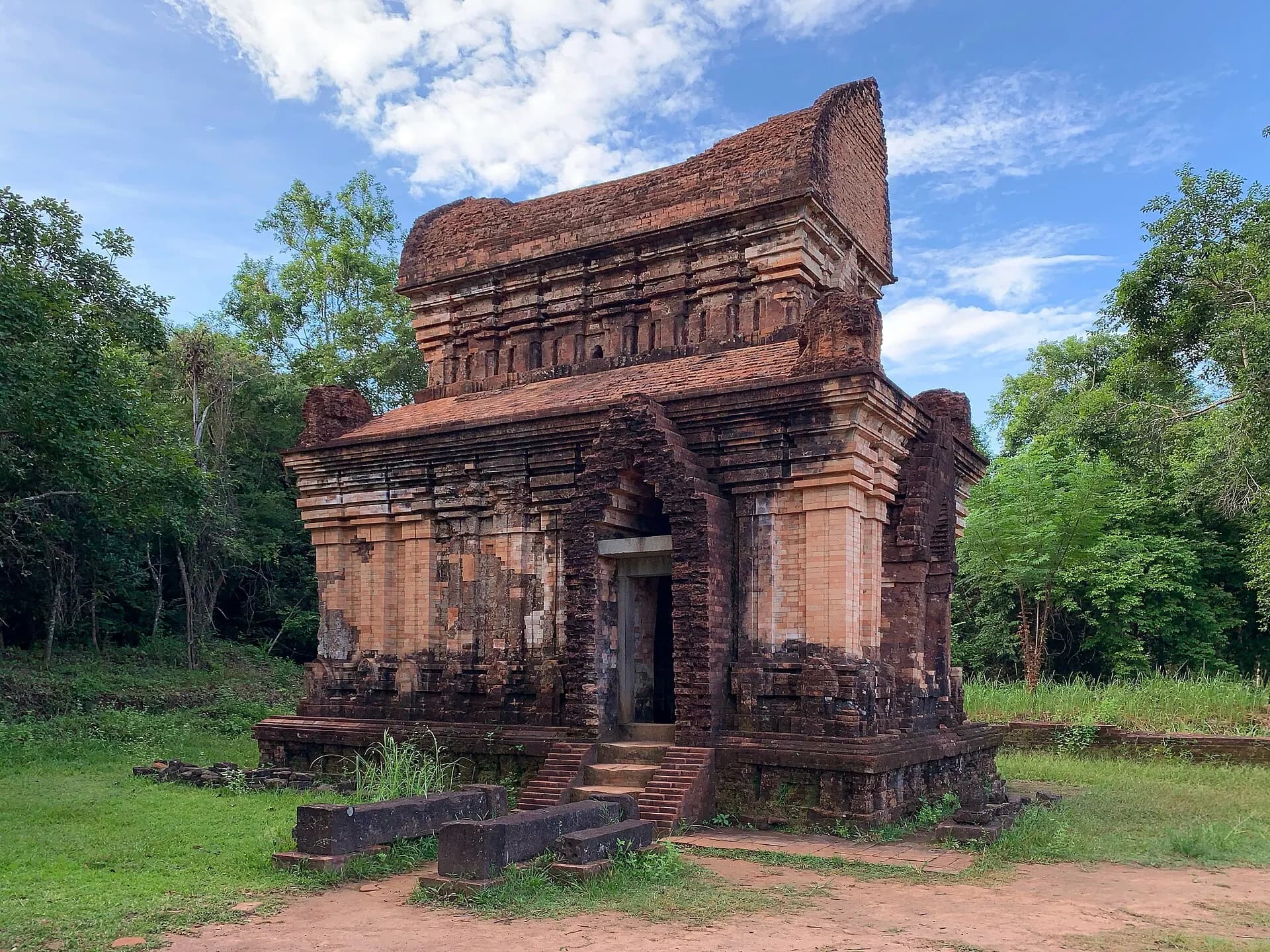
About an hour inland, a valley of ruined Hindu temples built by the Champa kingdom between the fourth and thirteenth centuries, a World Heritage Site set among jungle-covered hills. Many temples were damaged by bombing during the Vietnam War, but the remaining red-brick towers are still impressive.
TipGo early in the morning, before the heat and the tour groups.
When to go
The best time to visit is from February to April, when it's warm and dry. Summer, from May to August, is hot, often above 35 °C. The rainy season, from September to December, brings heavy rain and, especially in October and November, regular flooding of the old town's riverside streets, as well as typhoons. Tết, the Lunar New Year, is festive but busy.
Getting around
The old town is small and pedestrianised at certain hours, so walking and cycling are the best ways to get around; many hotels lend bicycles. Taxis and ride-hailing apps cover longer trips. Da Nang International Airport is about forty-five minutes north by road, with connections across Vietnam and Asia.
Local tips
- Check visa requirements; many visitors can apply for a Vietnamese e-visa online.
- Buy the old town ticket at the booths; it supports conservation.
- For tailoring, allow several days for fittings, and choose a shop with good reviews.
- Dress modestly at temples and assembly halls.
- Bargain politely at markets, but prices in shops are often fixed.
- Check flood warnings in the rainy season.
Eat and drink
Hoi An has some of Vietnam's best food. Try cao lầu, thick noodles with pork and greens, said to be made with water from a local well; bánh mì, the famous Vietnamese baguette, at the town's renowned stalls; mì Quảng, turmeric noodles with broth; and white rose dumplings. The Central Market has food stalls serving local dishes at low prices, and cooking classes are popular.
Beyond Hoi An
Da Nang, a modern city with long beaches, the Marble Mountains with their cave temples, and the Hải Vân Pass, a spectacular coastal road, is close by. Huế, the former imperial capital, with its citadel and royal tombs along the Perfume River, is a few hours north over the pass.
Where to stay
Staying in or next to the Ancient Town lets you enjoy it at dawn and after dark, when the day visitors have gone, though rooms there are small and pricier. Homestays and villas set among the rice fields between the town and the coast, around Cẩm Thanh and Trà Quế, are quieter, with bicycles to ride into town. The beach areas of An Bàng and Cửa Đại have resorts and guesthouses steps from the sand, about ten minutes from the old town by taxi or twenty by bike.