Ho Chi Minh City
Vietnam's buzzing southern metropolis: motorbikes, rooftop bars, French colonial landmarks and the best street food in the country.
- Best time to go
- December to April, the dry season
- Local time
- –
- Currency
- Vietnamese Dong (VND)
- Reading time
- 4 min
- Language
- Vietnamese

Still widely called Saigon, Ho Chi Minh City is Vietnam's largest city and its economic engine, a place of relentless energy where millions of motorbikes stream along boulevards lined with French colonial buildings, Buddhist pagodas and glass towers. It was the capital of French Cochinchina and later of South Vietnam, and its museums tell the story of the war that reshaped the country.
It's a city best experienced through its street life: cafés spilling onto the pavement, noodle stalls on every corner and rooftop bars at night. Base yourself in District 1, explore by foot and ride-hailing motorbike, and take day trips to the Mekong Delta and the Cu Chi tunnels.
The top 9 in Ho Chi Minh City
- 1
The War Remnants Museum
Photo: calflier001, CC BY-SA 2.0, via Wikimedia Commons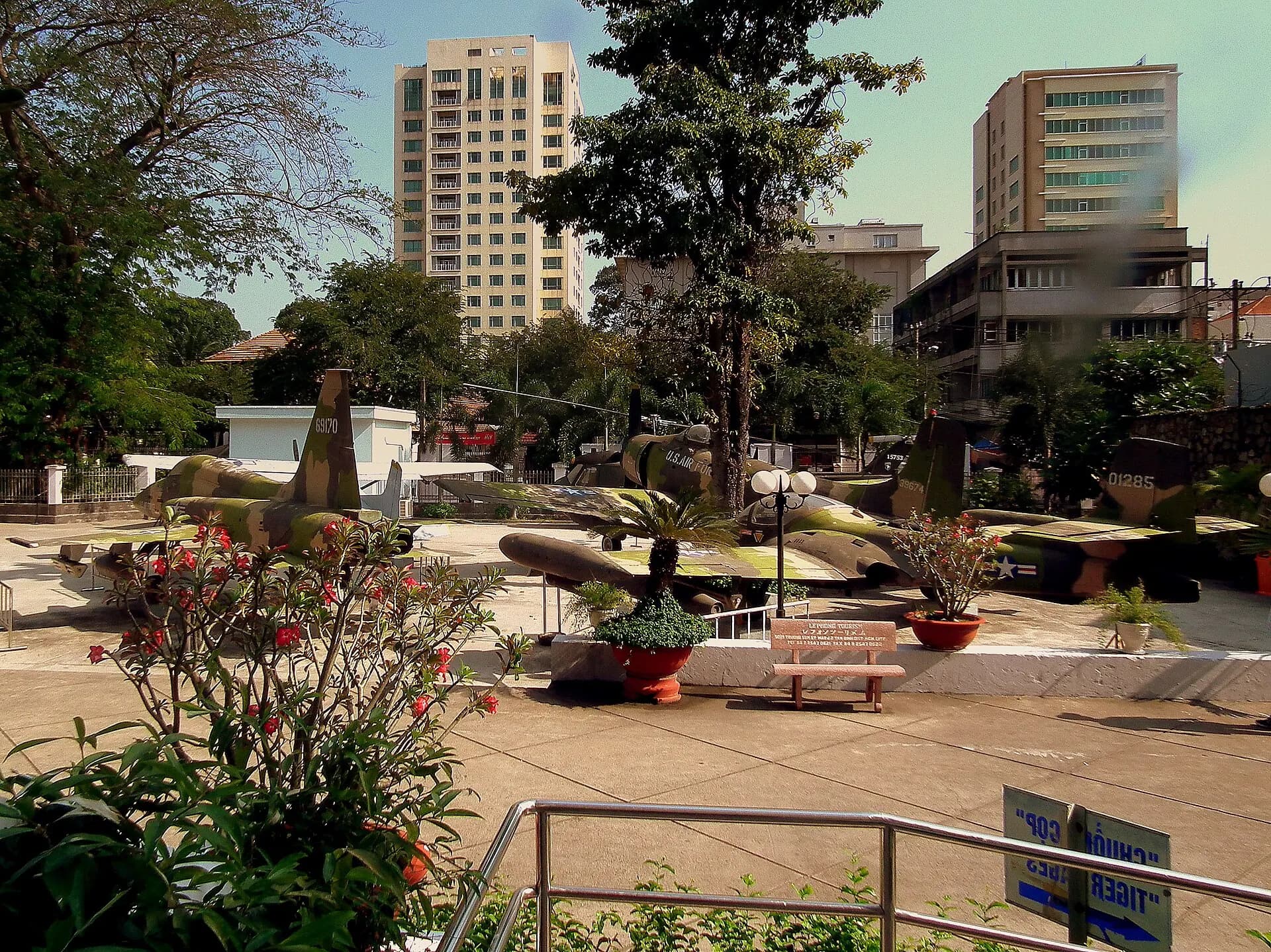
A powerful museum documenting the Vietnam War, known here as the American War, with photographs, weapons and exhibits on the effects of bombing and Agent Orange. Military aircraft and tanks stand in the courtyard. It's harrowing but essential.
- 2
The Reunification Palace
Photo: Matti Blume, CC BY-SA 4.0, via Wikimedia Commons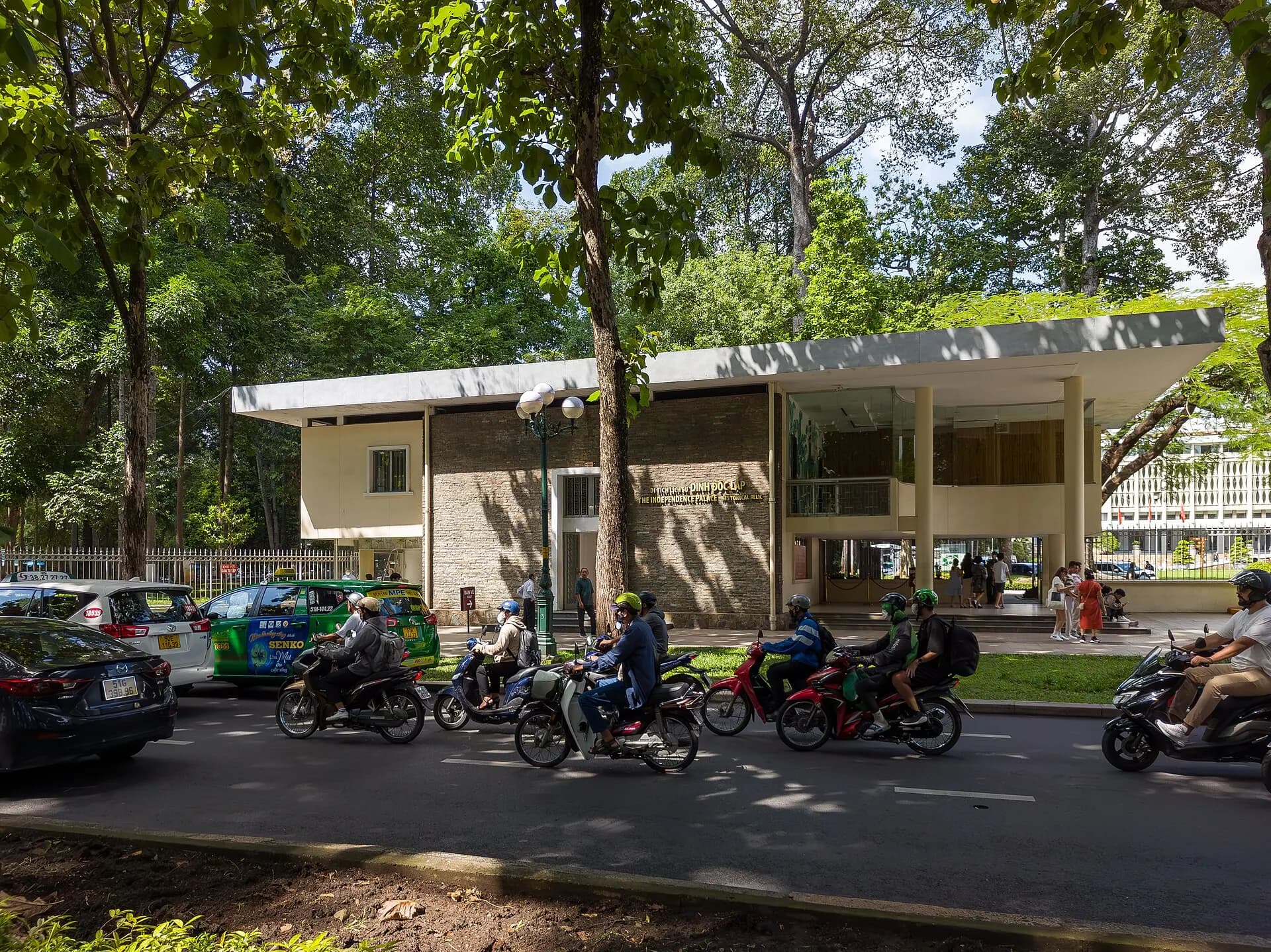
The former presidential palace of South Vietnam, a modernist building from 1966, preserved as it was when North Vietnamese tanks crashed through its gates on 30 April 1975, ending the war. Visit the meeting rooms, the war command bunker in the basement and the rooftop helipad.
- 3
Notre-Dame Cathedral and the Central Post Office
Photo: Prenn, CC BY-SA 3.0, via Wikimedia Commons
The red-brick cathedral, built with materials shipped from France in the 1870s and 1880s, has been under long restoration. Next door, the Central Post Office, completed in 1891, has a grand vaulted hall with old maps of Saigon and a portrait of Ho Chi Minh, and still works as a post office.
- 4
Bến Thành Market
Photo: Diego Delso, CC BY-SA 3.0, via Wikimedia Commons
The city's best-known market, under a landmark clock tower, with stalls selling clothes, souvenirs, coffee, fruit and street food. It's touristy and prices need bargaining; at night, food stalls set up in the surrounding streets.
- 5
Nguyễn Huệ Walking Street and the Opera House
Photo: Diego Delso, CC BY-SA 3.0, via Wikimedia Commons
A wide pedestrian boulevard leading to the riverfront, popular with families and street performers in the evening. Nearby, the elegant Opera House dates from 1900, and the old apartment building at 42 Nguyễn Huệ is packed with small cafés.
- 6
- 7
Chợ Lớn and Thiên Hậu Temple
Photo: Alexander Synaptic from Taipei, Taiwan, CC BY-SA 2.0, via Wikimedia Commons
The city's Chinatown, a busy district of markets, shophouses and temples. The Thiên Hậu Temple, dedicated to the goddess of the sea, has huge spirals of incense hanging from the roof, and the Bình Tây Market is a vast wholesale market.
- 8
The Cu Chi Tunnels
Photo: Balon Greyjoy, CC0, via Wikimedia Commons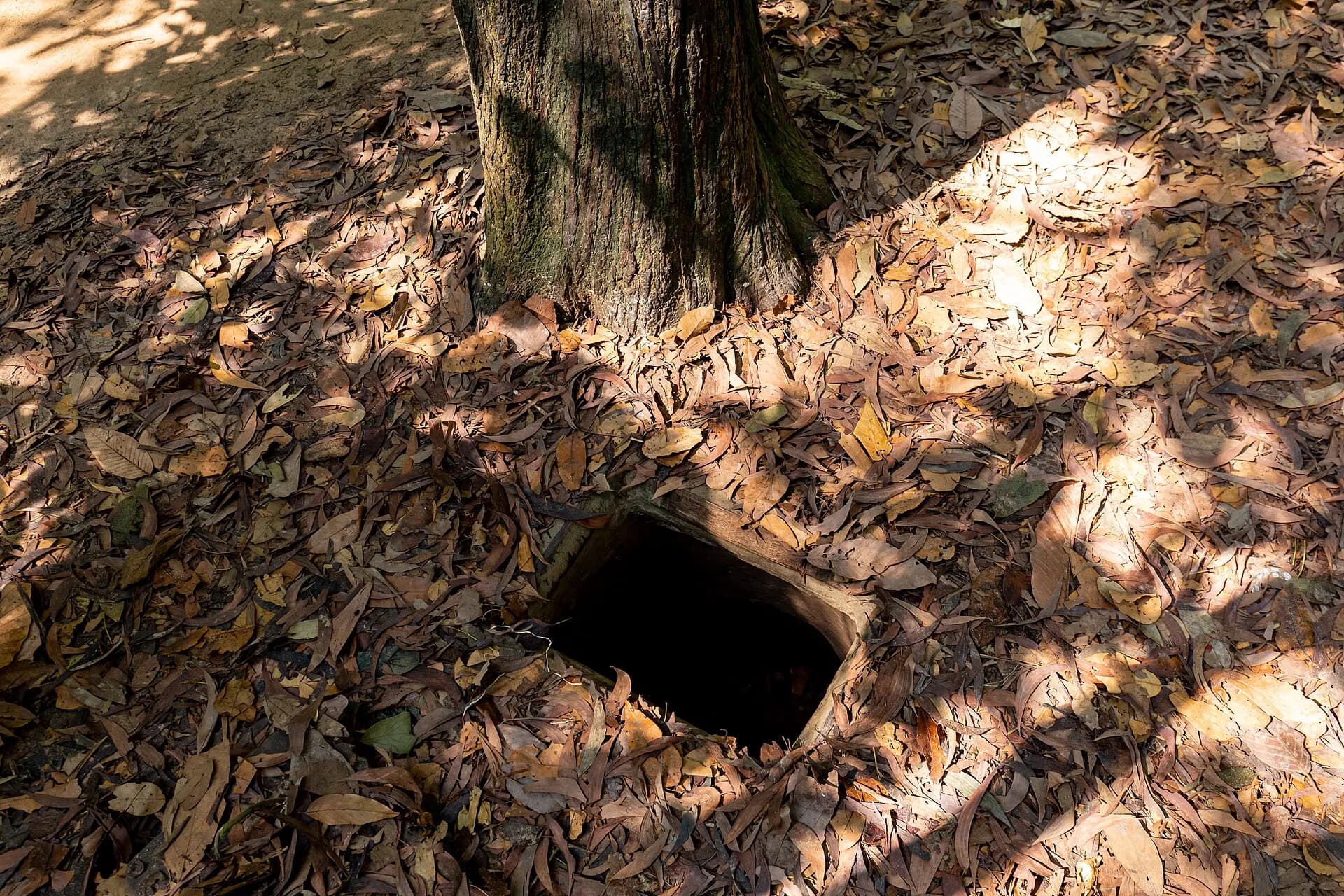
A network of tunnels dug by Viet Cong fighters about seventy kilometres north-west of the city, used as hiding places, supply routes and living quarters. Sections have been widened for visitors to crawl through.
TipBen Duoc is the more authentic site and less busy than Ben Dinh; go early and expect tight, hot spaces.
- 9
The Mekong Delta
Photo: Vyacheslav Argenberg, CC BY 4.0, via Wikimedia Commons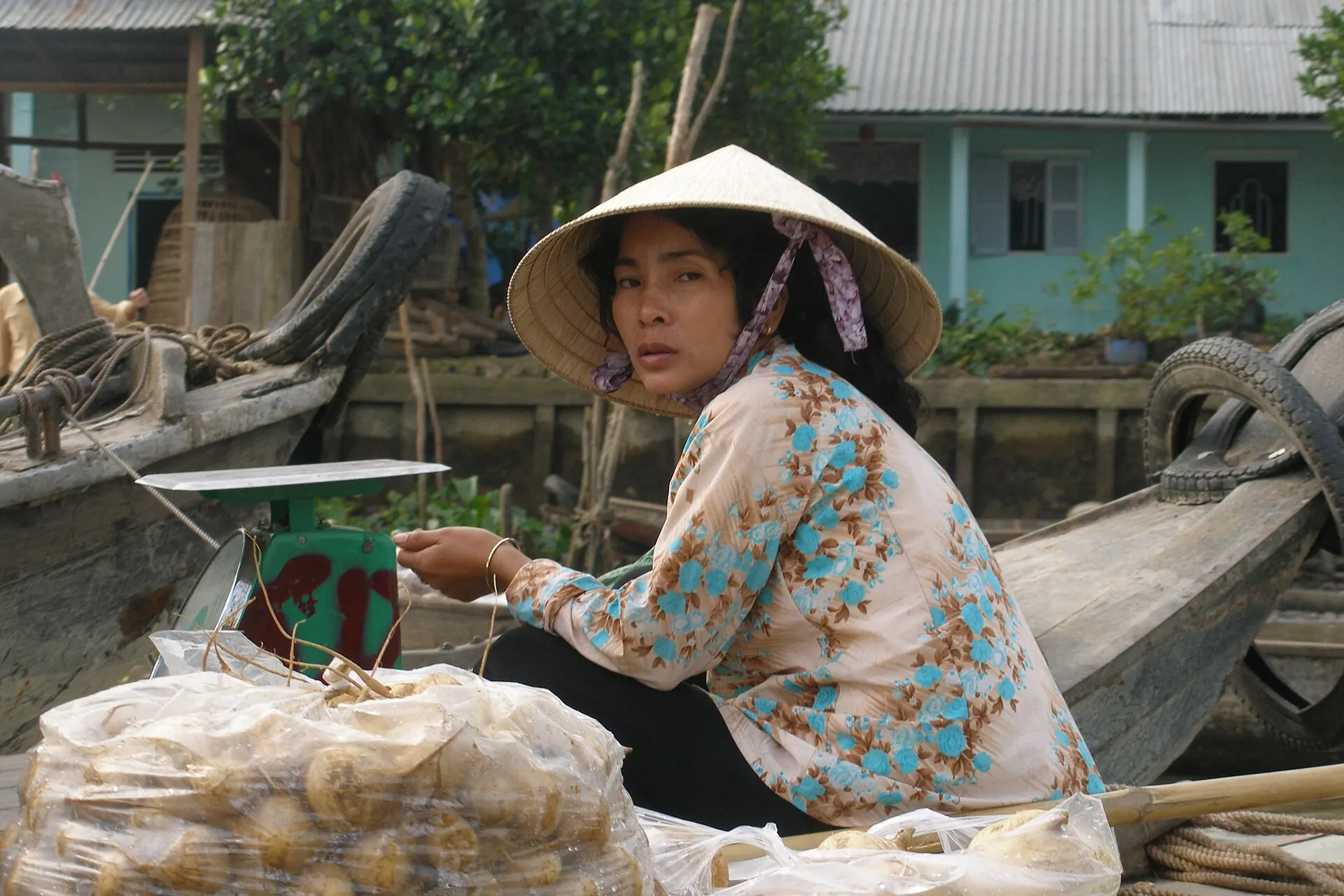
South of the city, the Mekong splits into channels winding through rice fields, fruit orchards and villages. Day trips by boat visit coconut-candy workshops and canals, and overnight trips reach the floating markets of Cái Răng near Cần Thơ, best seen at dawn.

When to go
The dry season, from December to April, brings sunny days, with March and April the hottest months. The rainy season, from May to November, brings short, heavy afternoon downpours, but mornings are often clear and the city is green. Tết, the Lunar New Year, in January or February, sees Nguyễn Huệ transformed into a flower street, though many businesses close for several days.
Getting around
Ride-hailing apps offer cars and motorbike taxis at fixed prices, the easiest way to get around. The city's first metro line opened in late 2024, linking Bến Thành with the east of the city. District 1 is walkable, but traffic is intense: cross the road slowly and steadily, and let the motorbikes flow around you.
Tân Sơn Nhất International Airport is close to the city centre, about thirty minutes away depending on traffic.
Local tips
- Check visa requirements; many visitors can apply for an e-visa online.
- Keep phones and bags away from the roadside; snatch thefts by passing motorbikes happen.
- Use ride-hailing apps rather than unmetered taxis.
- Dress modestly in pagodas and temples.
- Carry small notes in dong for street food.
- Drink bottled or filtered water, and enjoy the iced coffee.
Eat and drink
Saigon's street food is legendary. Try phở and bún bò Huế for breakfast, bánh mì, the French-Vietnamese baguette sandwich, cơm tấm, broken rice with grilled pork, and bánh xèo, crispy rice-flour pancakes wrapped in herbs. Drink cà phê sữa đá, strong iced coffee with condensed milk, at a pavement café, and end the evening on a rooftop bar overlooking the city lights.
Where to stay
District 1 is the most convenient base, with the colonial landmarks, Bến Thành Market, Nguyễn Huệ and the riverfront within walking distance; the Bùi Viện "backpacker street" area is lively but loud late at night. District 3, next door, is quieter and leafier, with good local restaurants and cafés in old villas. Thảo Điền, in Thủ Đức across the river, is a relaxed expat neighbourhood with riverside cafés and boutiques.
Nightlife and rooftops
The city comes alive after dark. Rooftop bars on the hotels and towers of District 1 offer views over the river and the skyline, while the craft-beer bars and cocktail lounges of District 1 and Thảo Điền are some of the best in Southeast Asia. For something more local, join the crowds on tiny plastic stools at pavement beer stalls, or take an evening food tour by motorbike through the backstreets.