Hanoi
A thousand-year-old capital of lakes and temples, where scooters swarm the Old Quarter and the best meals cost very little.
- Best time to go
- October to December and March to April, for mild, mostly dry weather
- Local time
- –
- Currency
- Vietnamese Dong (VND)
- Reading time
- 4 min
- Language
- Vietnamese
Hanoi celebrated its thousandth anniversary as a capital in 2010, and it wears its history in layers: ancient temples and pagodas, French colonial boulevards and villas, Soviet-era monuments and the bustling streets of the Old Quarter, where each lane was once home to a different craft guild. Its many lakes, lined with trees, give the city a sense of calm in the middle of the traffic.
It is a city to explore on foot and through its food. Sit on a tiny plastic stool for a bowl of pho, sip coffee on a balcony above the roar of scooters, and walk around Hoàn Kiếm Lake in the early morning, when locals gather for tai chi.
The top 8 in Hanoi
- 1
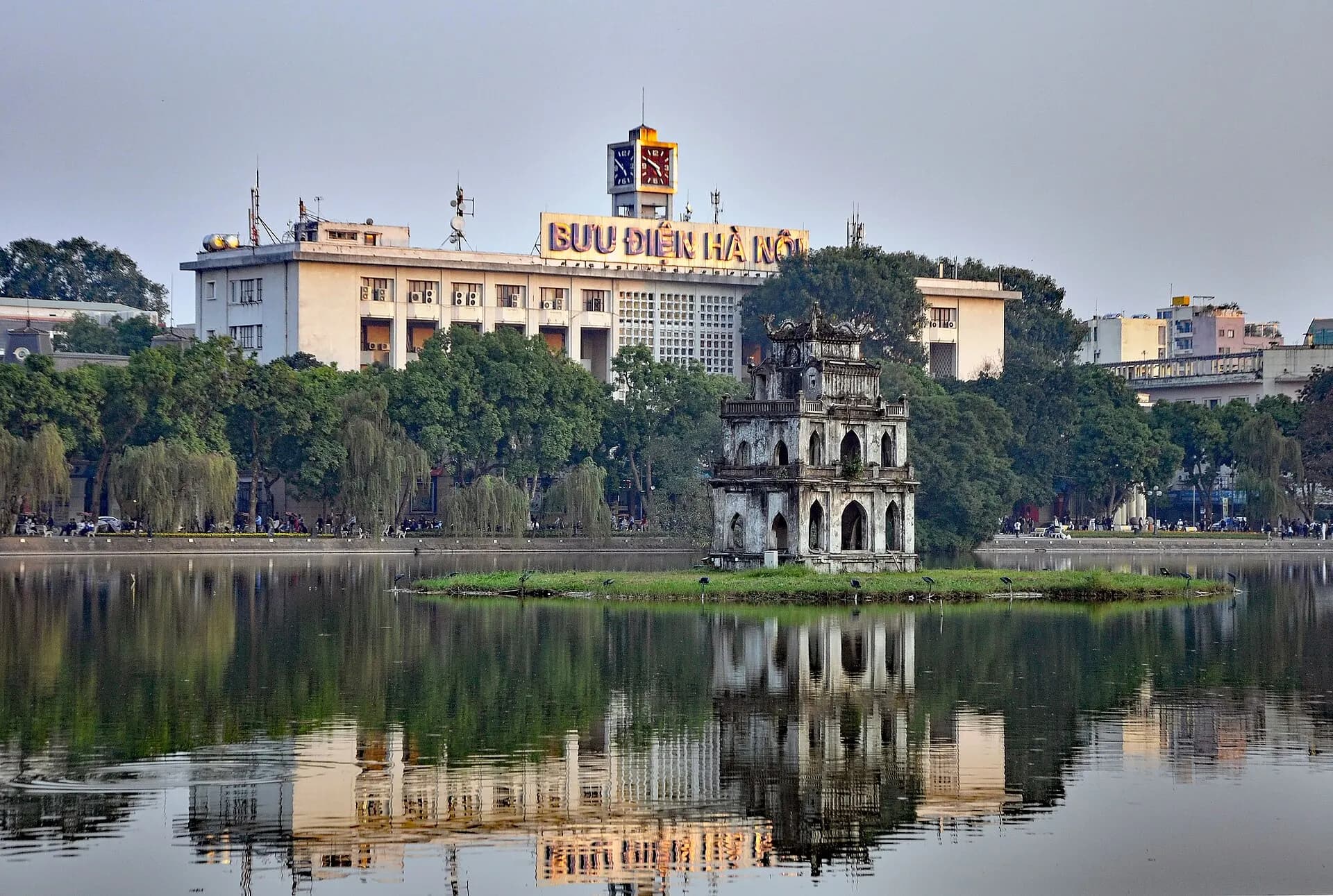
Hoàn Kiếm Lake and Ngọc Sơn Temple
Photo: Gary Todd from Xinzheng, China, CC0, via Wikimedia Commons
The lake at the heart of the city, where legend says a golden turtle took back a magic sword from a king. The red Huc Bridge leads to Ngọc Sơn Temple on a small island. At weekends, the streets around the lake are closed to traffic in the evening and fill with families and street performers.
TipCome at dawn to see Hanoians exercising, dancing and practising tai chi around the shore.
- 2
The Old Quarter
Photo: Jakub Hałun, CC BY 4.0, via Wikimedia Commons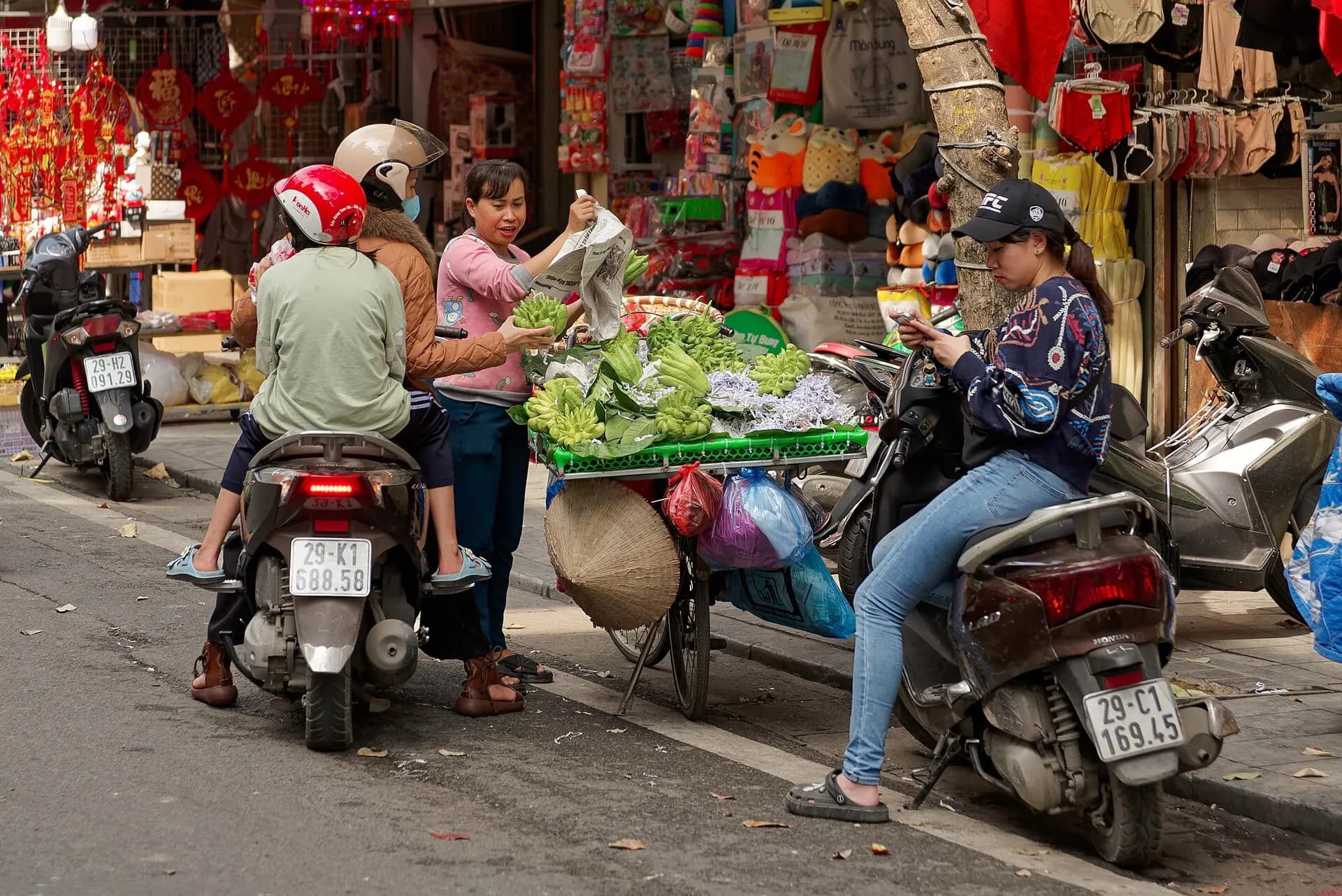
A dense maze of narrow streets north of the lake, many still named after the goods once sold there, such as silk, silver and paper. Tube houses, temples, street-food stalls and shops crowd together, and the area is busiest and most atmospheric in the evening.
- 3
The Temple of Literature
Photo: Jakub Hałun, CC BY 4.0, via Wikimedia Commons
Founded in 1070 to honour Confucius, the temple became Vietnam's first university. Its series of tranquil courtyards holds stone stelae carried on the backs of tortoises, recording the names of successful scholars.
- 4
The Ho Chi Minh Mausoleum and Ba Đình Square
Photo: Vyacheslav Argenberg, CC BY 4.0, via Wikimedia Commons
The embalmed body of the revolutionary leader lies in a grand granite mausoleum overlooking the square where he declared independence in 1945. Nearby are his simple stilt house and the One Pillar Pagoda.
TipOpening hours are limited and the mausoleum closes for several weeks each year; dress respectfully and follow the guards' instructions.
- 5
Hỏa Lò Prison
Photo: cloud.shepherd, CC BY 2.0, via Wikimedia Commons
Built by the French to hold Vietnamese political prisoners and later used to hold American pilots during the Vietnam War, when it was nicknamed the "Hanoi Hilton". The remaining section is a museum.
- 6
West Lake and Trấn Quốc Pagoda
Photo: Jakub Hałun, CC BY 4.0, via Wikimedia Commons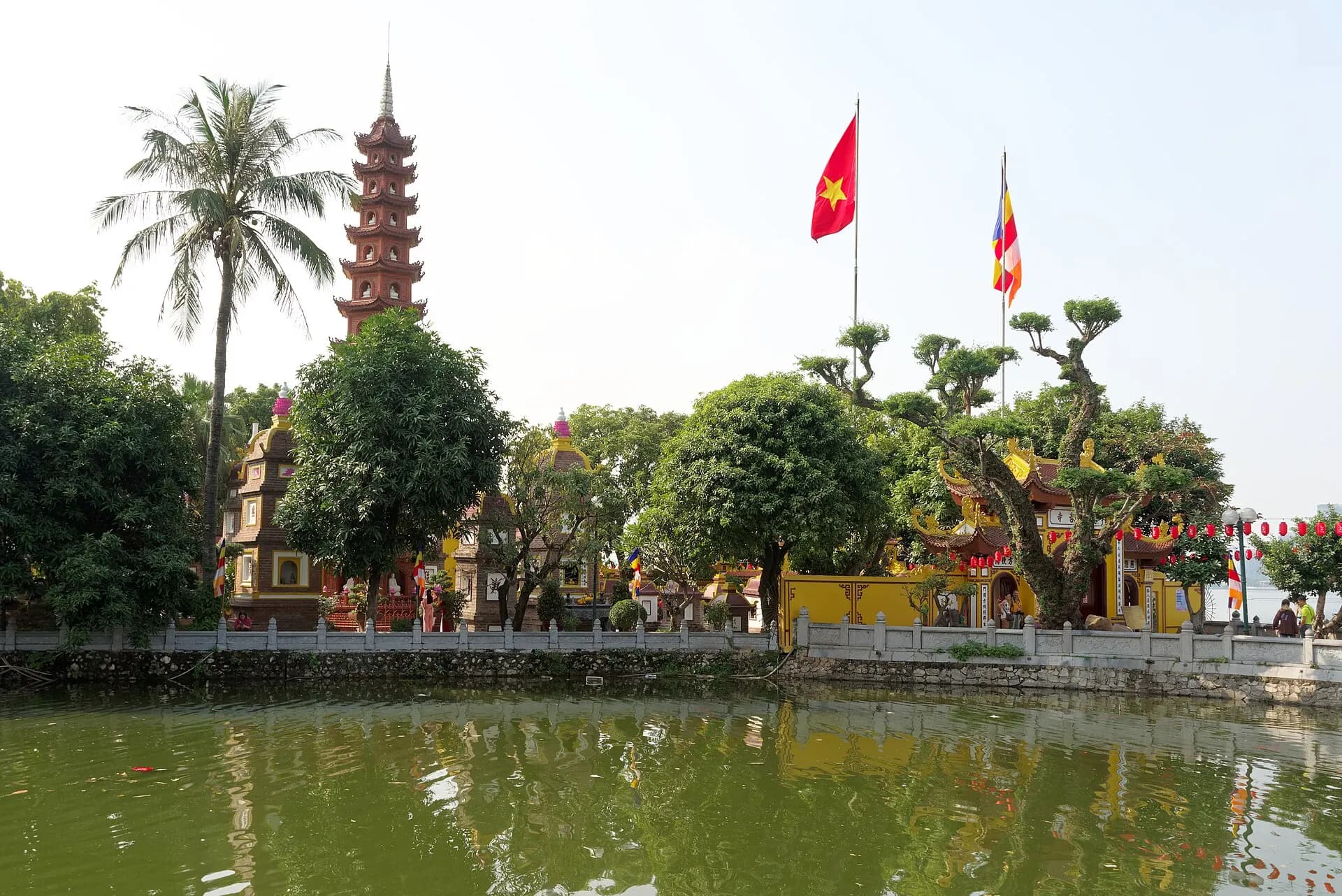
Hanoi's largest lake is ringed by a path that is popular for cycling, with cafés and restaurants along its shore. Trấn Quốc Pagoda, on a small peninsula, is one of the oldest Buddhist temples in Vietnam.
- 7
- 8
Ha Long Bay
Photo: Jakub Hałun, CC BY 4.0, via Wikimedia Commons
Thousands of limestone islands and pillars rise from the emerald water of this bay, a World Heritage Site about two and a half to three hours east of Hanoi. Overnight cruises explore its caves and floating villages; nearby Lan Ha Bay is quieter.
TipChoose a reputable cruise operator and an overnight trip if you can; day trips spend much of the time on the road.

When to go
Hanoi has four seasons. Autumn, from October to December, is the most pleasant time, with mild, dry weather. Spring, from March to April, is warm, with flowers in bloom. Summer, from May to September, is hot, humid and rainy, with occasional typhoons. Winter, from January to February, can be cool and damp. During Tết, the Lunar New Year, many businesses close for several days, but the city is beautifully decorated.
Getting around
Walking is the best way to see the Old Quarter. To cross the street, walk slowly and steadily, without stopping or running, and the scooters will flow around you. Ride-hailing apps offer cheap cars and motorbike taxis. The city's metro and buses are expanding. Cyclos, bicycle rickshaws, offer short tours; agree the price first.
Nội Bài International Airport is about forty-five minutes from the centre by car, and an airport bus runs to the Old Quarter.
Local tips
- Check visa requirements; many visitors can apply for an e-visa online.
- Carry cash for street food and markets; the local currency is the dong.
- Dress modestly to visit temples and pagodas.
- Use ride-hailing apps rather than negotiating with drivers on the street.
- Drink bottled or filtered water, and avoid ice in very basic places if you're unsure.
- "Train Street", where trains pass between houses, has had access restrictions for safety; follow local rules.
Eat and drink
Hanoi is the birthplace of pho, the noodle soup with beef or chicken, best eaten for breakfast. Try bún chả, grilled pork with noodles and herbs; bánh cuốn, steamed rice rolls; and chả cá, turmeric fish fried with dill. The city's coffee culture is legendary: try egg coffee, whipped egg yolk and sugar over strong coffee, or a coconut coffee. In the evening, try bia hơi, a light, fresh beer sold cheaply on street corners.
Day trips
Ninh Bình, about two hours south, is a landscape of limestone peaks rising from rice fields and rivers, often called "Ha Long Bay on land". At Tràng An and Tam Cốc, women row small boats through caves and along the rivers, and the ancient capital of Hoa Lư has temples to the early kings. Closer to the city, the Perfume Pagoda is a complex of Buddhist shrines in caves and on mountainsides, reached by boat, and a major pilgrimage site in the weeks after Tết. Bát Tràng, just across the Red River, has made ceramics for centuries. Further north, the mountain town of Sa Pa, with terraced rice fields and villages of ethnic minorities, is best visited overnight.