Madeira
A steep green island in the Atlantic, where waymarked paths follow centuries-old irrigation channels through laurel forest to peaks above the clouds.
- Best time to go
- April to June and September to October for walking; mild all year, with warm seas from July to October
- Local time
- –
- Currency
- Euro (EUR)
- Reading time
- 15 min
- Language
- Portuguese
Madeira rises almost sheer out of the Atlantic about 900 kilometres south-west of Lisbon and some 500 kilometres off the coast of Morocco, the summit of a volcano whose base lies thousands of metres below the waves. Portuguese sailors claimed it in the early fifteenth century, found it cloaked in trees, and named it simply "wood". In the centuries since, islanders have carved terraces into impossible slopes for sugar cane, vines and bananas, and dug more than two thousand kilometres of levadas, narrow channels that carry water from the rainy north and the mountains to the drier south. The paths built alongside them to maintain the channels are now some of the most rewarding walks in Europe.
The island is small, roughly 57 kilometres long and 22 wide, but its mountains make it feel far bigger, and a week to ten days is a good amount of time. The stops below start in Funchal, the capital, then run west along the south coast, across the high plateau to the north-west, east along the north coast and over the central peaks, finishing at the island's eastern tip and the sandy neighbouring island of Porto Santo. For the mainland, see our Lisbon and Algarve guides; Madeira's subtropical sister in the Canaries is covered in our Tenerife guide.
The top 17 in Madeira
- 1
Funchal Cathedral
Photo: Dietmar Rabich, CC BY-SA 4.0, via Wikimedia Commons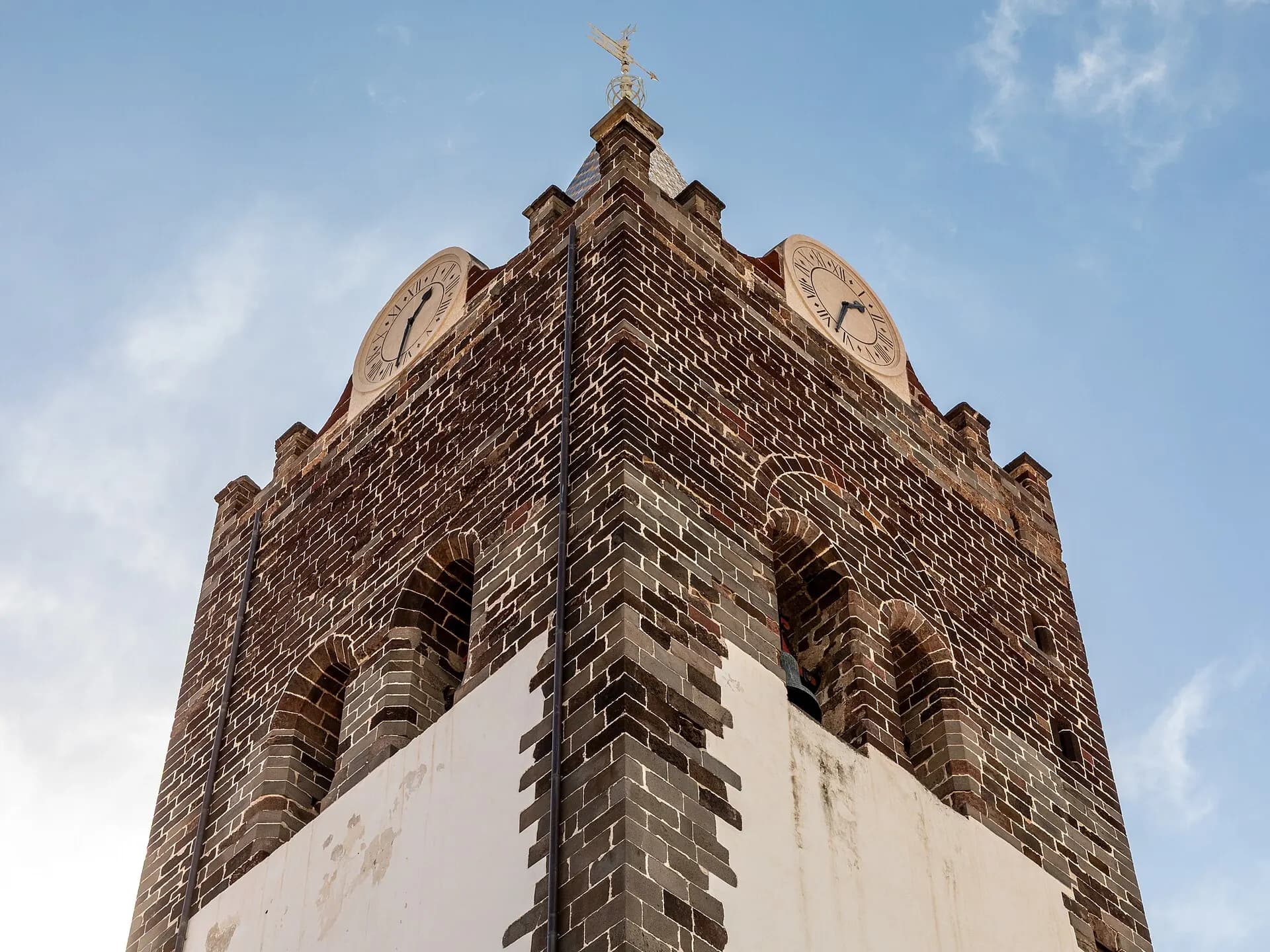
Funchal's cathedral, the Sé, was completed in the early sixteenth century, when sugar had made the island rich, and it remains the clearest reminder of that golden age. Its plain whitewashed front, trimmed in dark volcanic stone, hides a remarkable ceiling of carved cedar inlaid with ivory, one of the finest of its kind in Portugal, and a gilded Flemish-influenced altarpiece. The streets around it, with their black-and-white mosaic pavements, form the heart of the old commercial city, and the waterfront promenade and marina are a few steps away.
TipLook up from the nave at the ceiling, then walk round to the side to see the tiled spire.
- 2
Mercado dos Lavradores
Photo: H. Zell, CC BY-SA 3.0, via Wikimedia Commons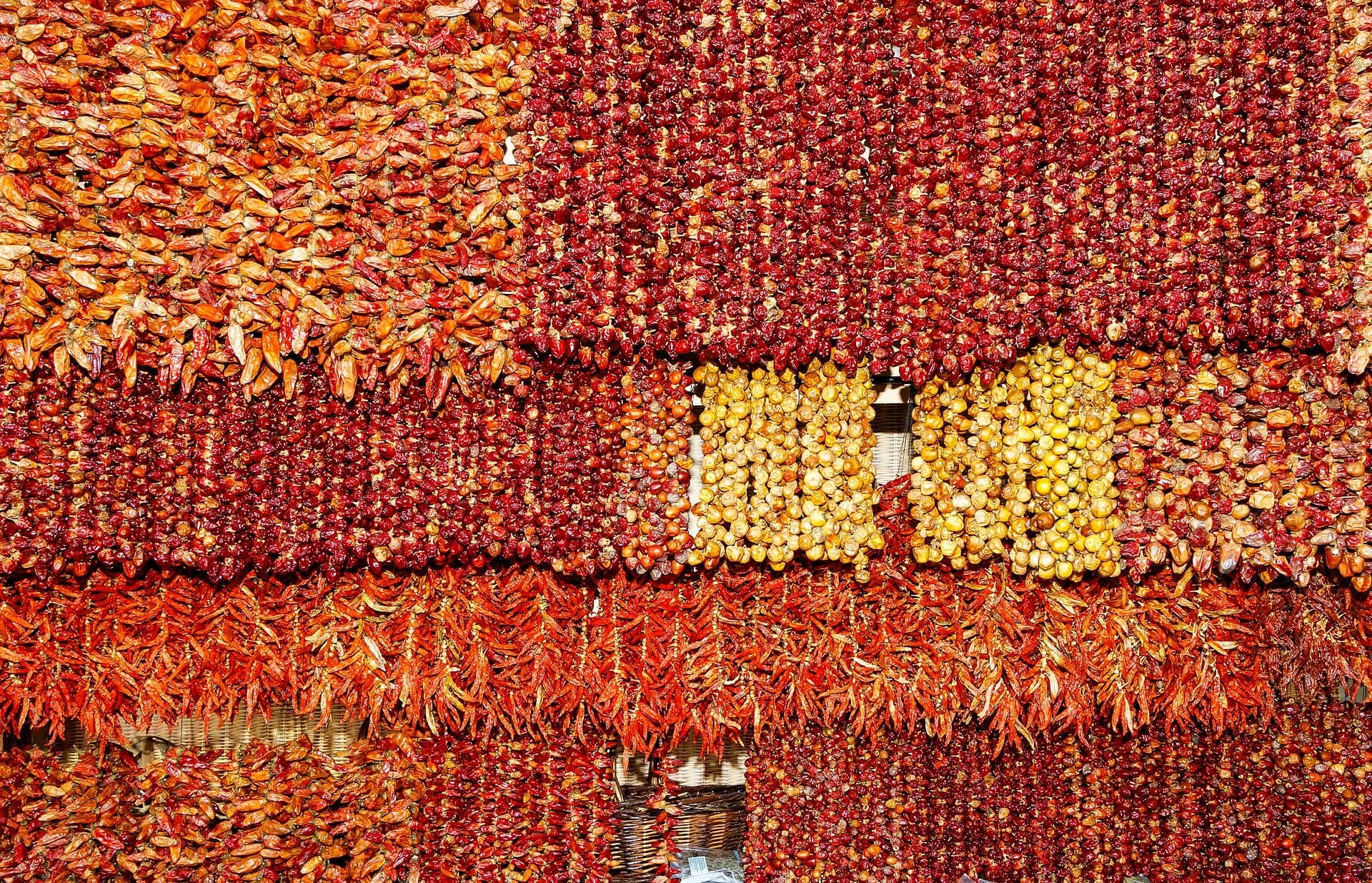
The farmers' market, opened in 1940 in an Art Deco hall, is a showcase for the island's produce. Flower sellers, some in traditional dress, stand by the entrance under tiled panels, while upstairs the galleries are piled with passion fruit in several varieties, custard apples, tamarillos, bananas and vegetables from the terraces. Downstairs, in the fish hall, the catch is laid out on marble slabs, including the long, black, sharp-toothed espada, or black scabbardfish, which lives in deep water and is a Madeiran speciality.
TipStallholders often offer tasting slices of exotic fruit; ask the price per kilo before you buy, as market fruit for visitors can be expensive. Friday and Saturday mornings are the liveliest.
- 3
Funchal Old Town
Photo: Dietmar Rabich, CC BY-SA 4.0, via Wikimedia Commons
East of the market, the Zona Velha is the oldest part of the city, a grid of narrow streets that was once a district of fishermen and is now full of restaurants and bars. Its main lane, Rua de Santa Maria, became known for its painted doors, decorated by artists as part of a project to revive the area, so a walk along it is a kind of open-air gallery. At the far end, the yellow Fortress of São Tiago, built in the seventeenth century to guard against pirates, looks over a small pebble beach, and the lower station of the cable car to Monte is just behind the seafront.
TipThe Old Town is at its most atmospheric in the evening, when the restaurant terraces fill up; book ahead on weekends.
- 4
Monte
Photo: Gerda Arendt, CC0, via Wikimedia Commons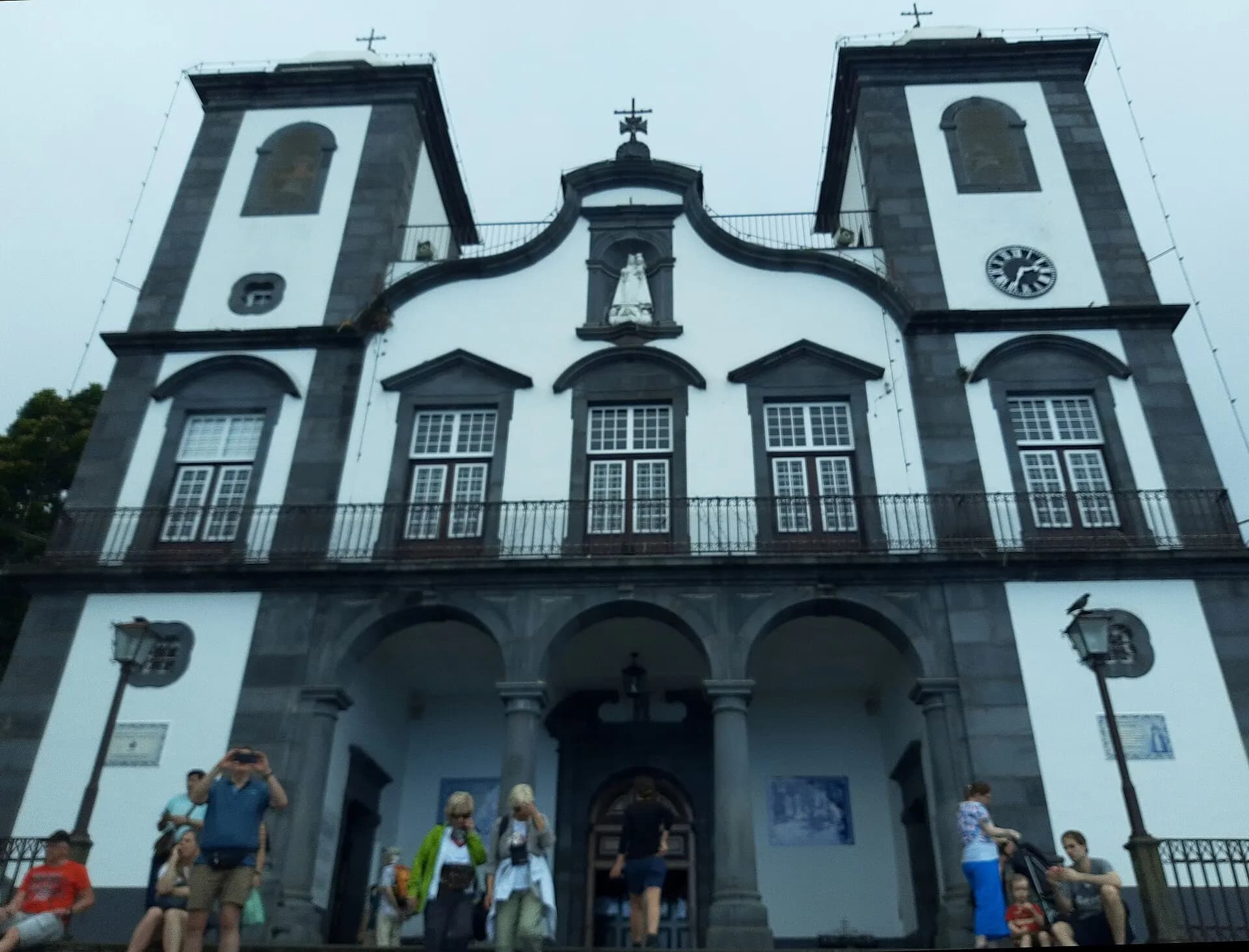
High above Funchal, the hill village of Monte was a cool summer retreat for wealthy families in the nineteenth century, and is still greener and fresher than the city below. The cable car climbs from the seafront in around a quarter of an hour, gliding over terraces and red roofs with the bay opening up behind. At the top, a broad stairway leads up to the white church of Nossa Senhora do Monte, the island's patron, where the last Austro-Hungarian emperor, Charles I, who died in exile on Madeira in 1922, is buried.
From just below the church, Monte's famous toboggans set off: wicker sledges on wooden runners, steered downhill along a steep road by two carreiros in white clothes and straw boaters, who use the rubber soles of their boots as brakes. The ride covers about two kilometres to Livramento, and it began in the nineteenth century as a quick way for residents to get down to town. It's touristy but genuinely fun.
TipThe toboggan ends partway down the hill, not in central Funchal, so plan on a taxi or bus from there. A second cable car links Monte with the Botanical Garden.
- 5
Monte Palace Tropical Garden
Photo: H. Zell, CC BY-SA 3.0, via Wikimedia Commons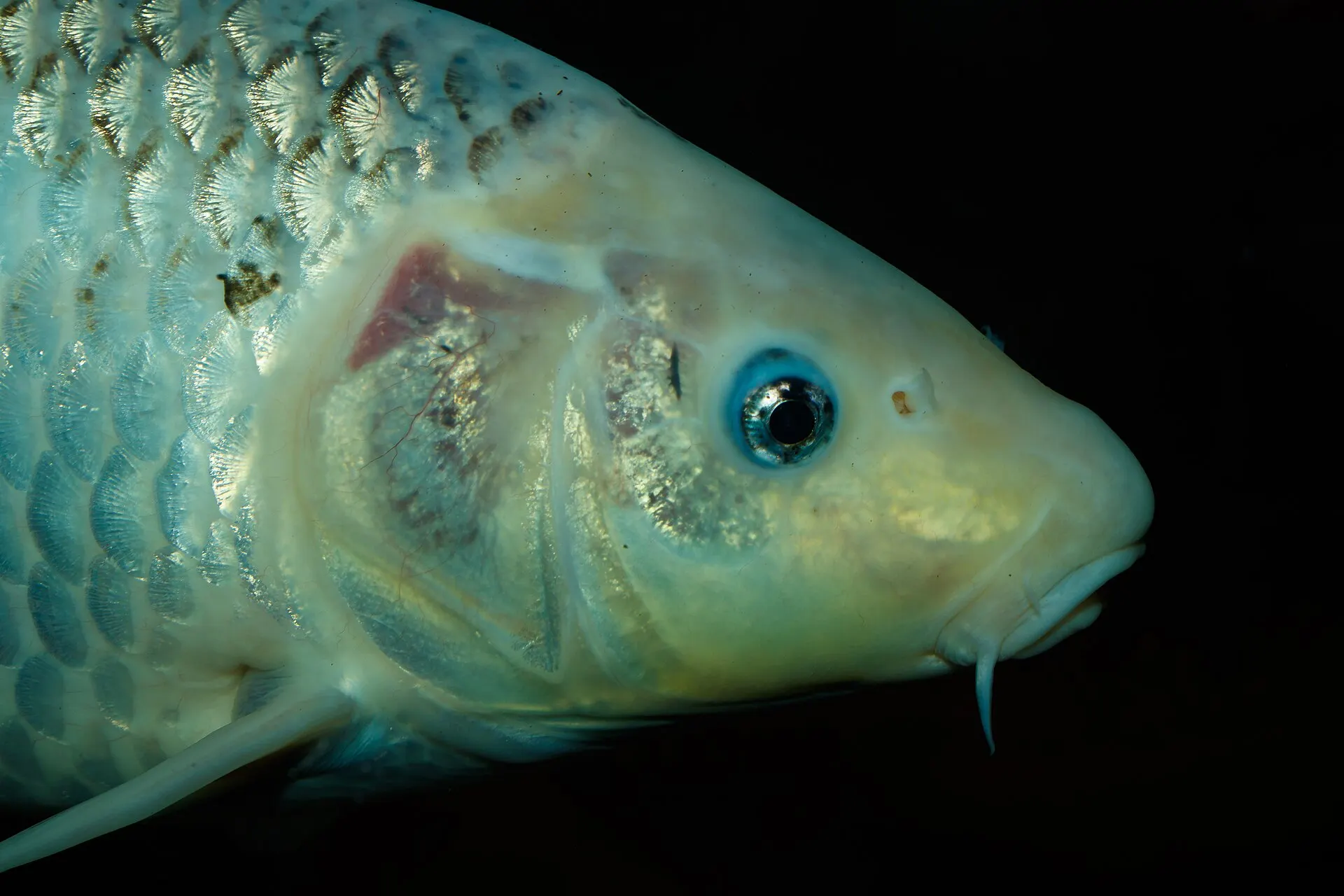
Next to the church, the grounds of an old hotel have been transformed into a steep, lush garden of tree ferns, cycads, camellias and native laurel forest plants, laced with paths, ponds and waterfalls. There are oriental gardens with pagodas, koi and stone lanterns, and walls of historic Portuguese azulejo tiles telling stories from the country's history. A small museum in the grounds displays modern African sculpture and a collection of minerals.
TipAllow at least two hours, and wear shoes with grip: paths are steep and can be slippery after rain.
- 6
Madeira Botanical Garden
Photo: Dietmar Rabich, CC BY-SA 4.0, via Wikimedia Commons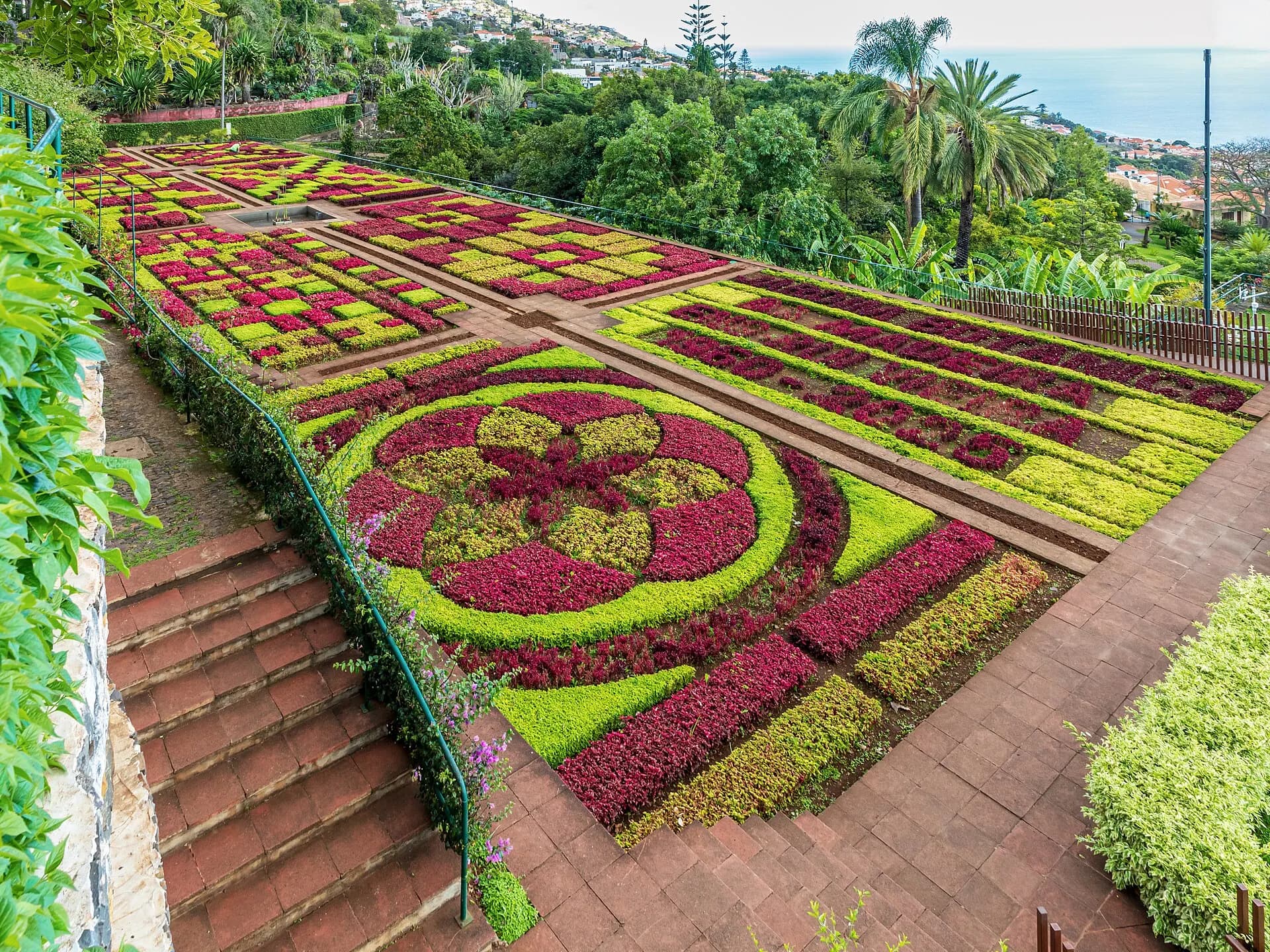
On a hillside east of Monte, the Botanical Garden has been open to the public since 1960 in the grounds of a former estate. Its formal beds of succulents and colourful patterned plantings frame a sweeping view over Funchal's bay, and its sections include native and endemic Madeiran plants, cacti, tropical trees and economically useful crops such as sugar cane and coffee. It makes a calmer counterpart to Monte, and the two can be joined by cable car.
- 7
Câmara de Lobos
Photo: Dietmar Rabich, CC BY-SA 4.0, via Wikimedia Commons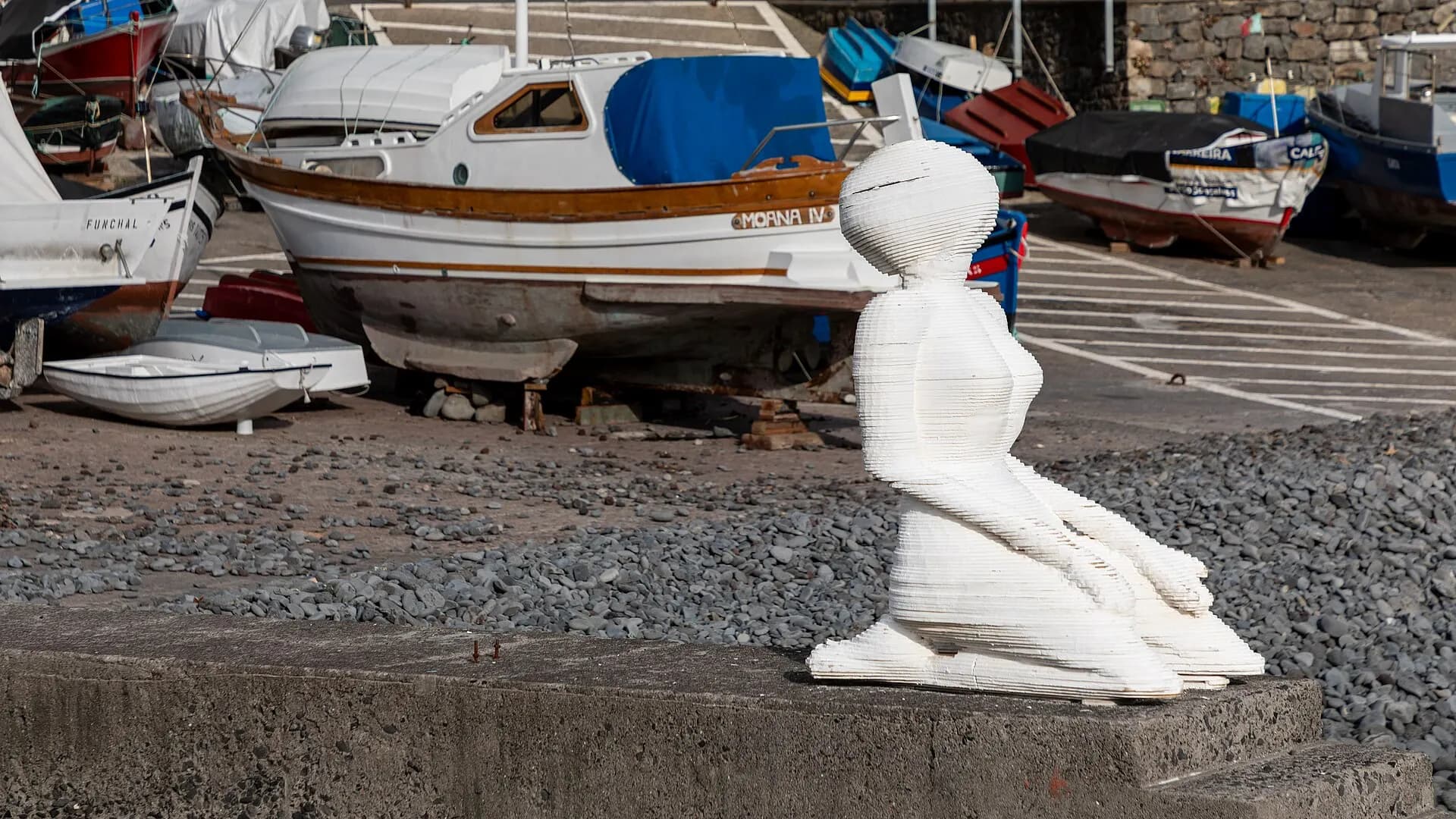
A short ride west of Funchal, this fishing town crowds round a little harbour of brightly painted boats drawn up on the shingle, with a rocky headland behind. Its name recalls the monk seals, or "sea wolves", that the first settlers found here. Winston Churchill came in 1950 and set up his easel overlooking the bay, and the spot is marked. Today the town is the home of poncha, the island's punch of aguardente, honey and lemon, served in small bars around the harbour.
TipWalk up to the viewpoint above the harbour for the classic view of the boats and the bay.
- 8
Cabo Girão
Photo: H. Zell, CC BY-SA 3.0, via Wikimedia Commons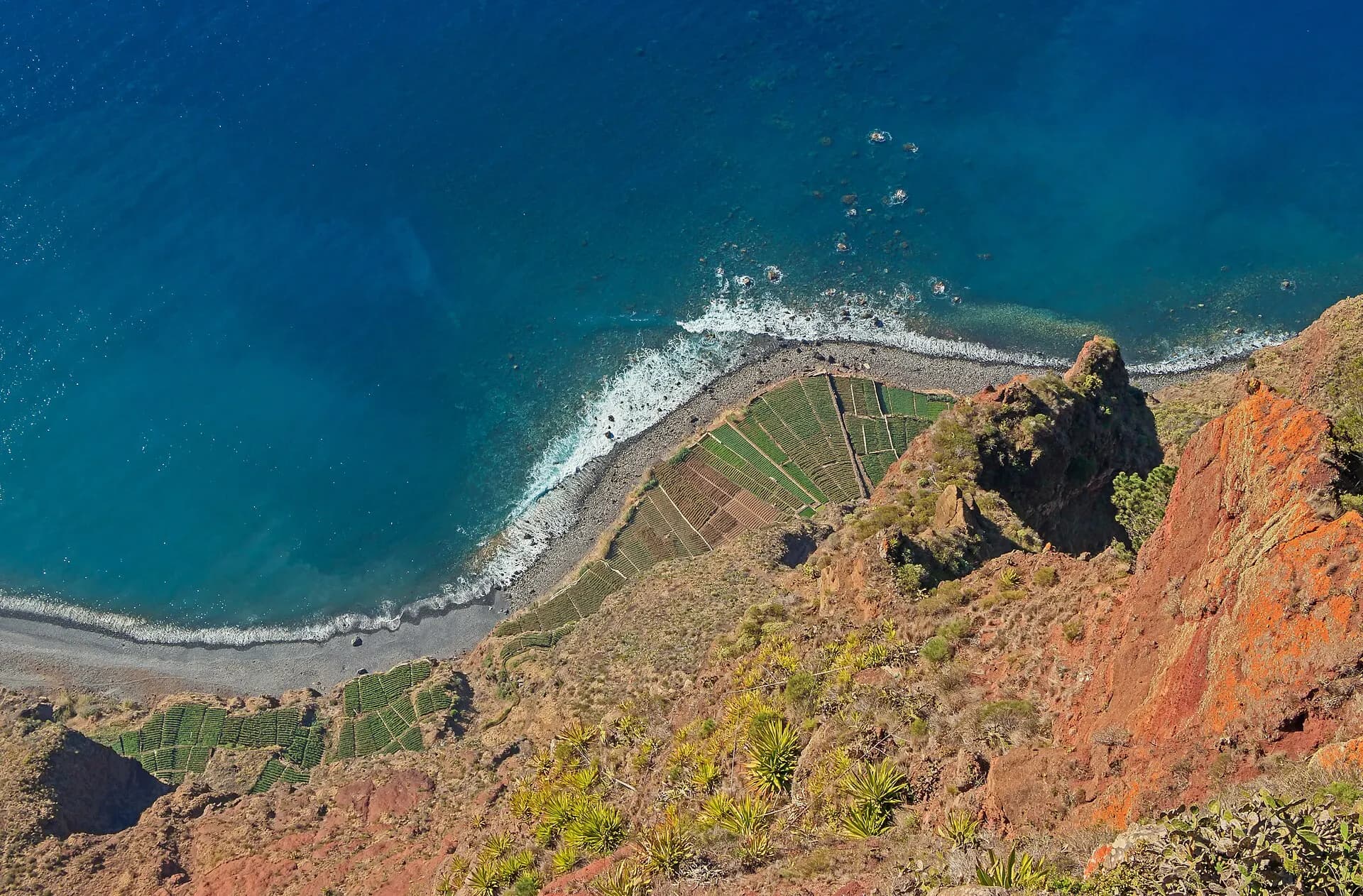
Just beyond Câmara de Lobos, the coast ends in one of the highest sea cliffs in Europe, falling around 580 metres to a narrow strip of terraced fields at the foot. A glass-floored platform juts out from the edge, so you can look straight down past your shoes to the waves. On a clear day the view runs east to Funchal and west along the coast. A cable car descends to the fields at the bottom, the Fajãs do Cabo Girão, which are still farmed.
TipThere is an entry fee for the skywalk. Arrive early in the morning or late in the day to avoid tour coaches, and check the sky: in cloud you may see nothing at all.
- 9
Rabaçal and Levada das 25 Fontes
Photo: Bjørn Christian Tørrissen, CC BY-SA 3.0, via Wikimedia Commons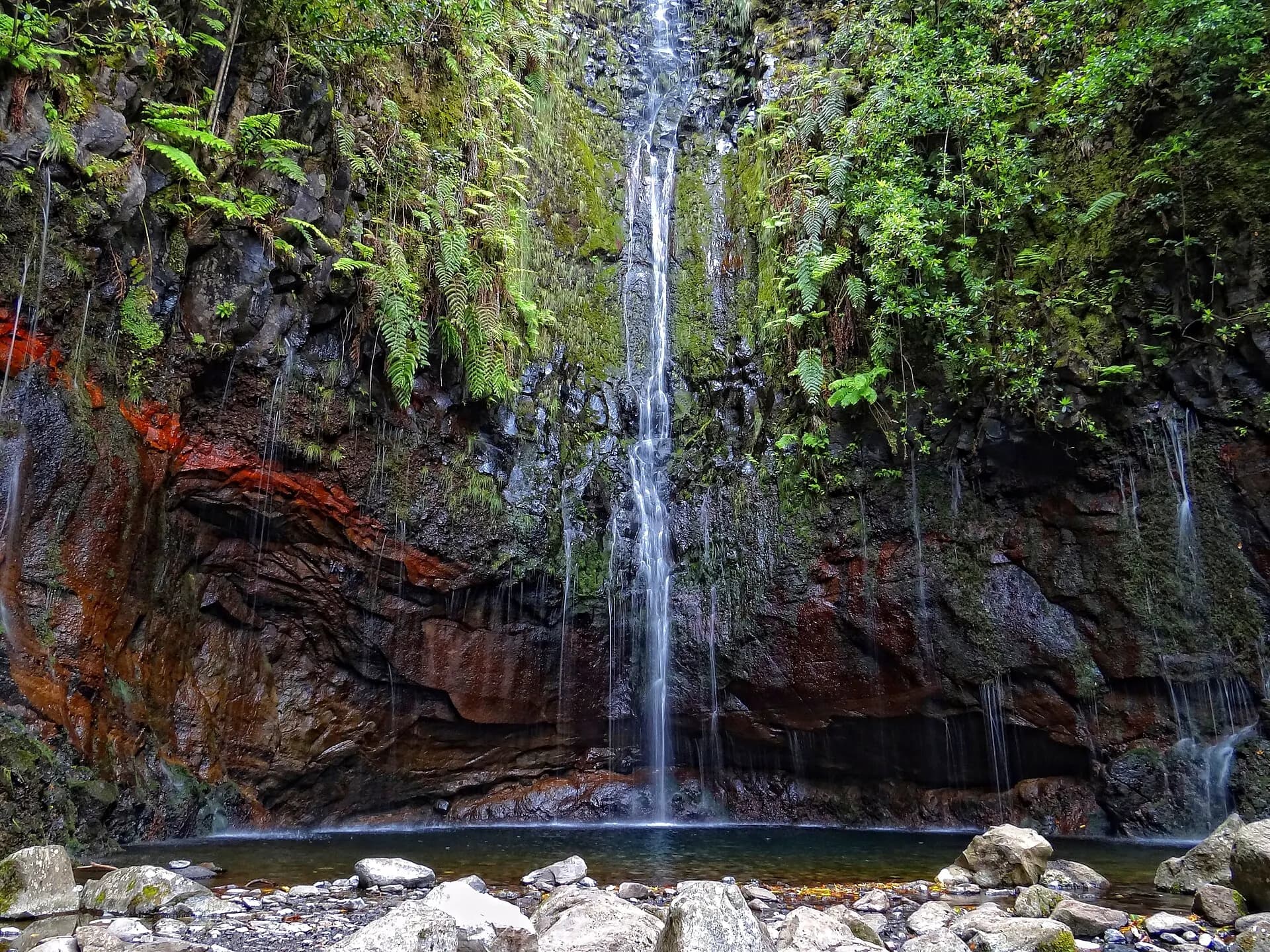
High on the western side of the island, below the plateau of Paul da Serra, the valley of Rabaçal holds two of Madeira's most popular levada walks. The PR6 follows the Levada das 25 Fontes through laurel forest to a pool in a green bowl of rock where water trickles down from many springs; the PR6.1 branches off to the Risco waterfall, which drops a hundred metres down a cliff. Both paths are fairly level once you've walked down the access road from the car park, though narrow and rocky in places.
The forest here is part of the Laurisilva of Madeira, a World Heritage Site since 1999: the largest surviving stretch of the laurel forest that covered much of southern Europe millions of years ago, now confined to a few Atlantic islands.
TipThese are among the busiest walks on the island. Book an early slot on SIMplifica and arrive before the tour groups; a shuttle runs down the access road if you'd rather save your legs.
- 10
Fanal
Photo: Dietmar Rabich, CC BY-SA 4.0, via Wikimedia Commons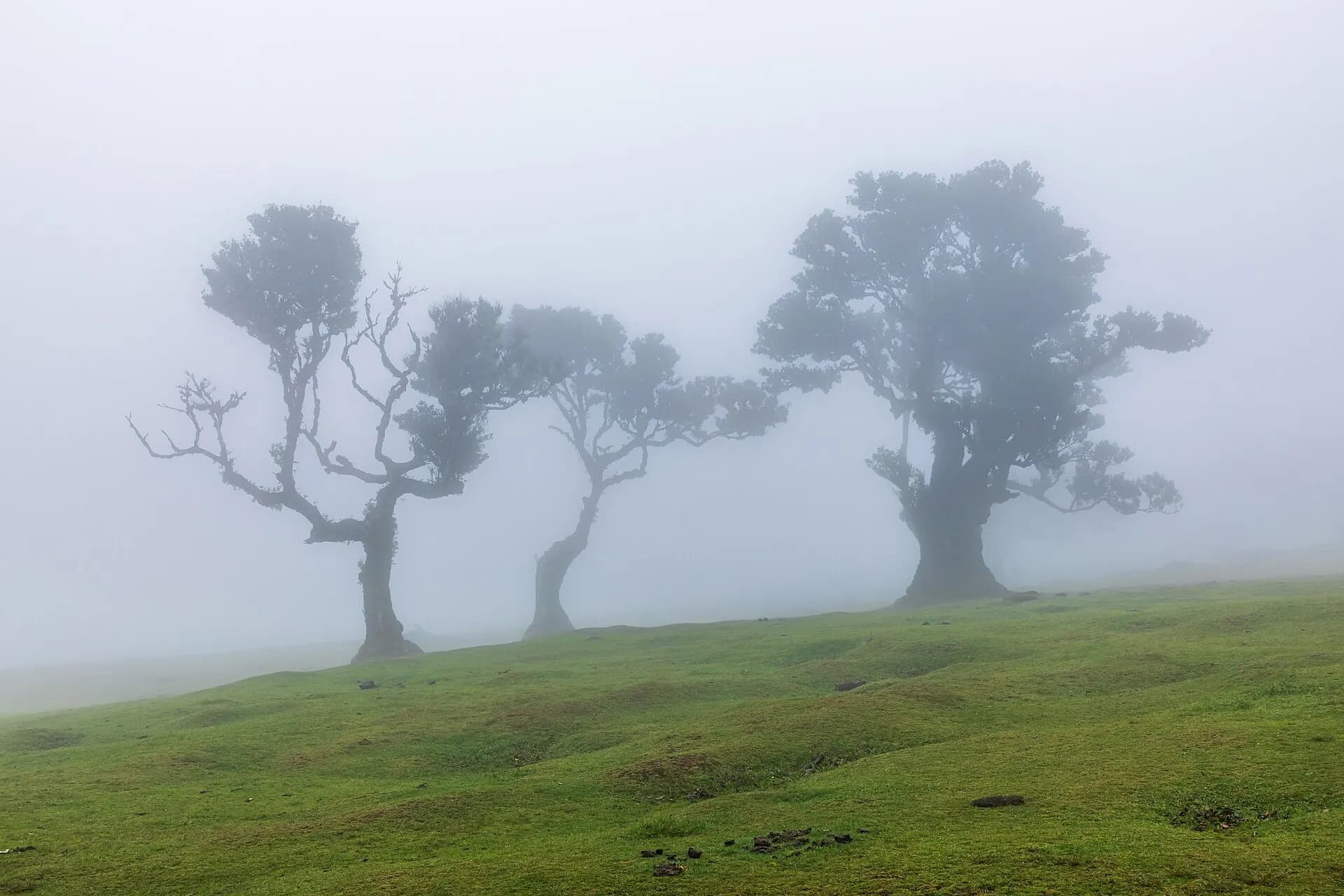
On the north-western edge of Paul da Serra, at about 1,100 metres, a meadow is scattered with ancient til trees, a laurel species, their twisted trunks and branches draped in moss and lichen, with cattle grazing between them. On a sunny day it's a peaceful place for a picnic; when the fog rolls in, as it often does, the trees loom out of the mist, and photographers come specifically for those conditions.
TipFog can arrive in minutes up here. Stay on the paths, keep the road in sight and don't disturb the grazing cattle.
- 11
Porto Moniz natural pools
Photo: Dietmar Rabich, CC BY-SA 4.0, via Wikimedia Commons
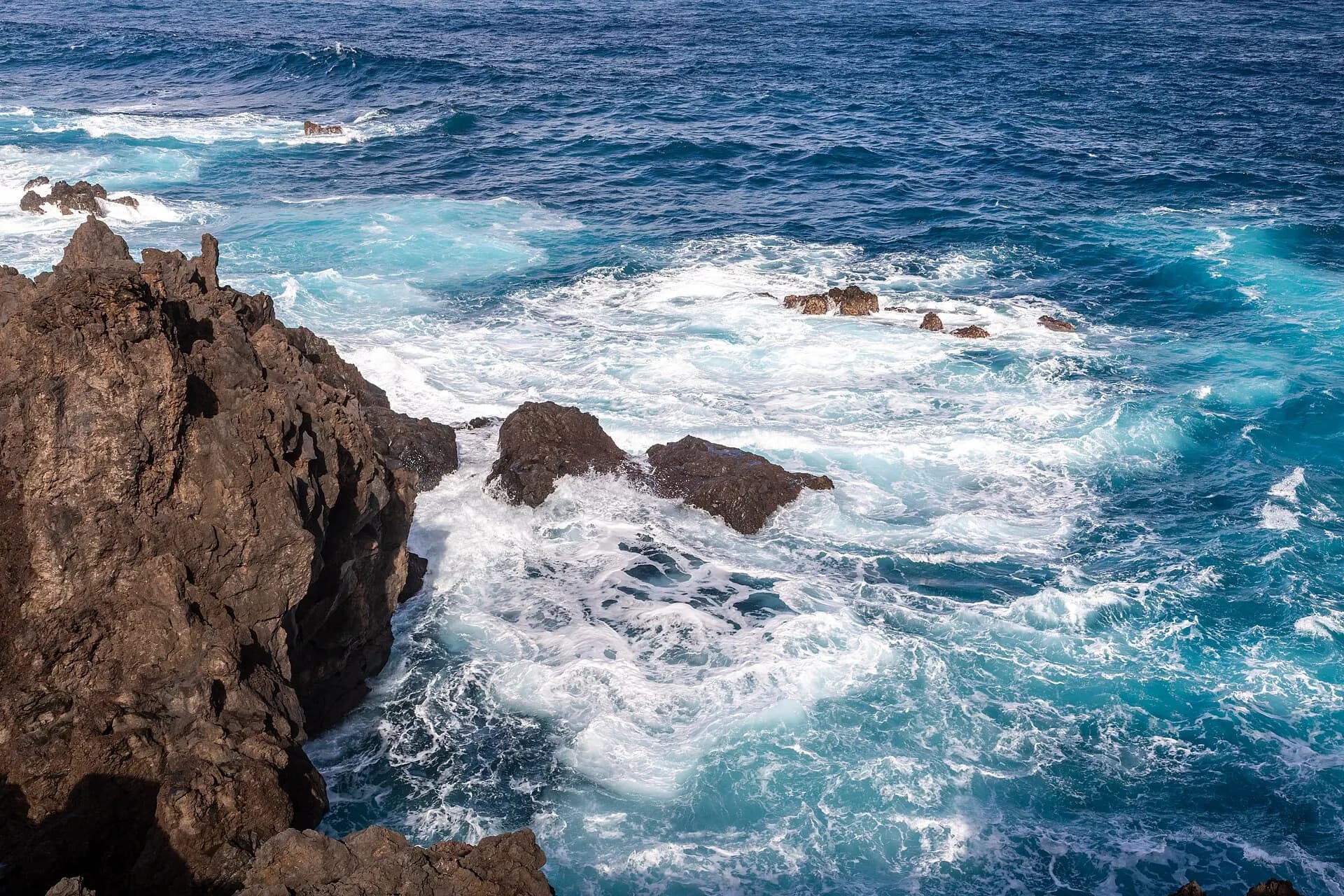
At the north-western tip of the island, Atlantic waves crash against black lava rocks that have been shaped into natural swimming pools, filled and refreshed by the sea. The main pools have changing rooms, lifeguards in season and a small entry fee, and swimming in calm, clear water while the ocean booms against the outer rocks is a memorable experience. The town has a small aquarium and good fish restaurants along the seafront.
TipPools can close in big swells. The road along the north coast from here offers a dramatic drive past waterfalls and cliffs.
- 12
Seixal
Photo: Vitor Oliveira from Torres Vedras, PORTUGAL, CC BY-SA 2.0, via Wikimedia Commons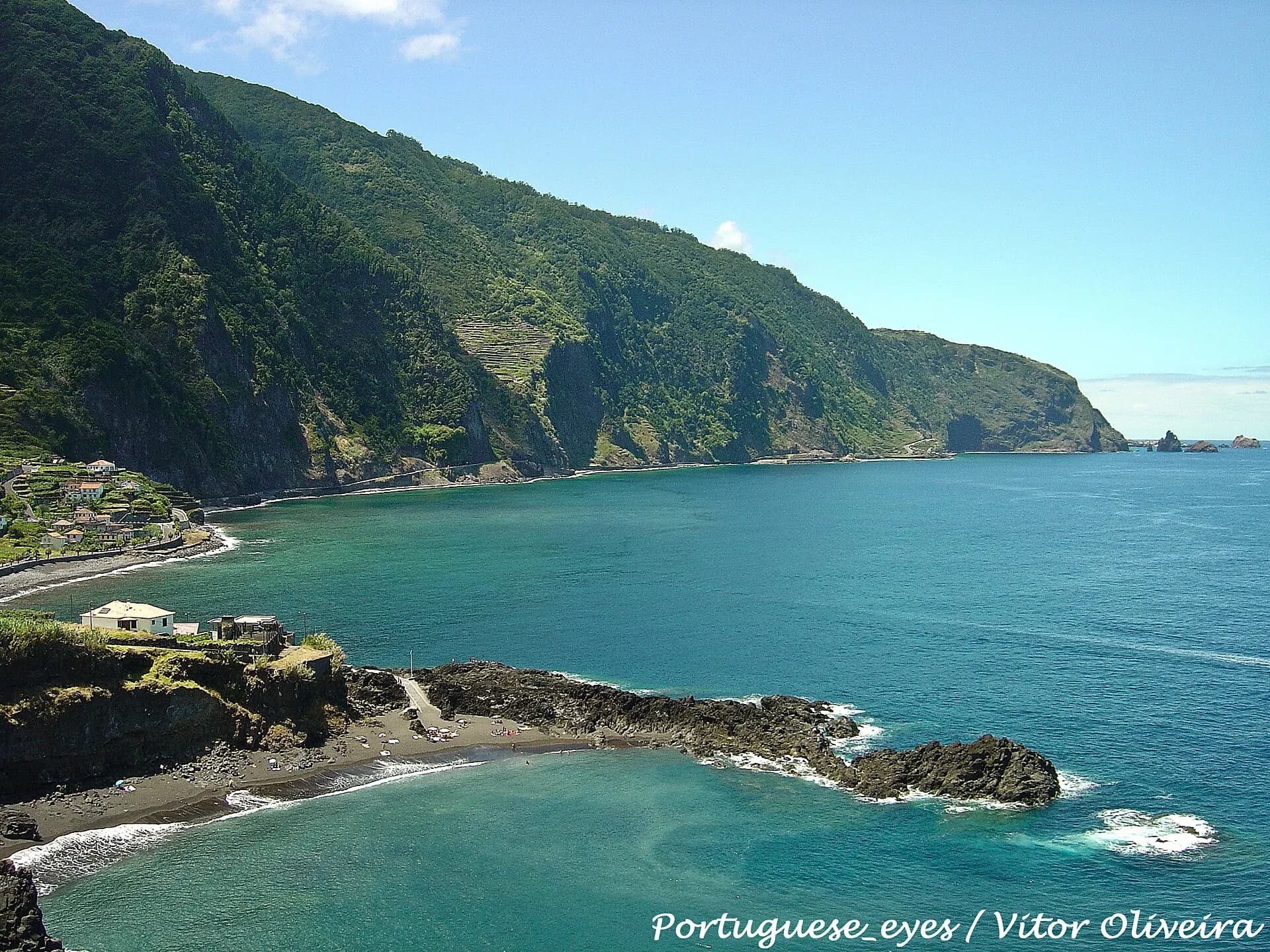
East of Porto Moniz, the small village of Seixal clings to a headland backed by sheer green mountains and vineyards planted on tiny cliff terraces. It has some of the island's most beautiful bathing spots: a beach of fine black volcanic sand beneath the cliffs, and its own natural rock pools by the harbour. Just along the coast, the Véu da Noiva, or Bride's Veil, waterfall drops straight from the cliffs towards the sea, visible from a roadside viewpoint.
TipThe Atlantic on the north coast is rougher and cooler than in the south; swim only in calm conditions.
- 13
Santana houses
Photo: H. Zell, CC BY-SA 3.0, via Wikimedia Commons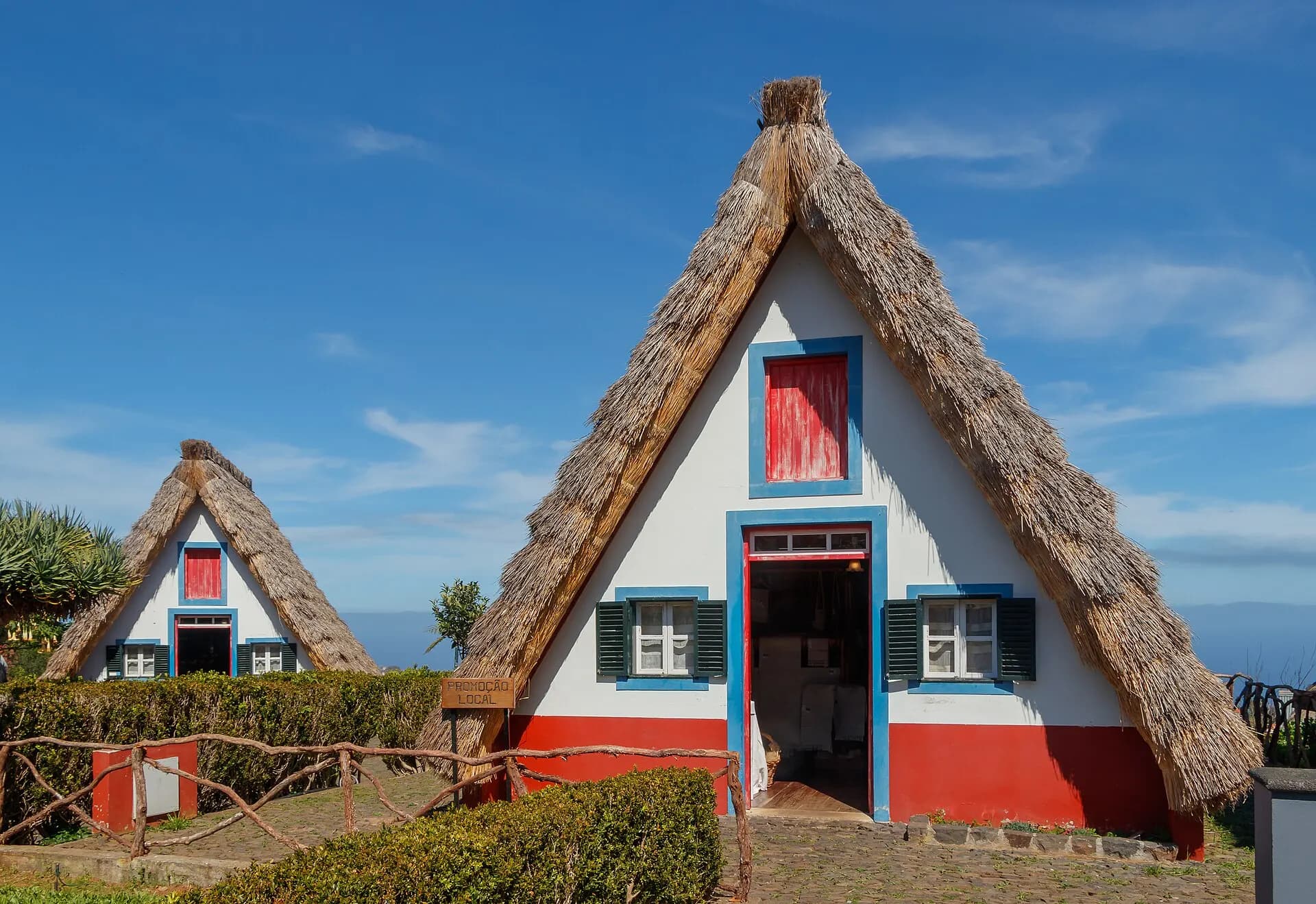
Santana, on the north-east coast, is known for its little triangular houses, steep A-frames thatched almost to the ground, with whitewashed walls and red and blue doors and window frames. Once homes for farming families, a few are kept as a showcase in the centre of town, one open to visitors and others selling crafts. The surrounding countryside of terraced fields and orchards is lovely, and there's a cable car down to the coast at Rocha do Navio nearby.
- 14
Levada do Caldeirão Verde
Photo: Patrice78500, CC BY-SA 4.0, via Wikimedia Commons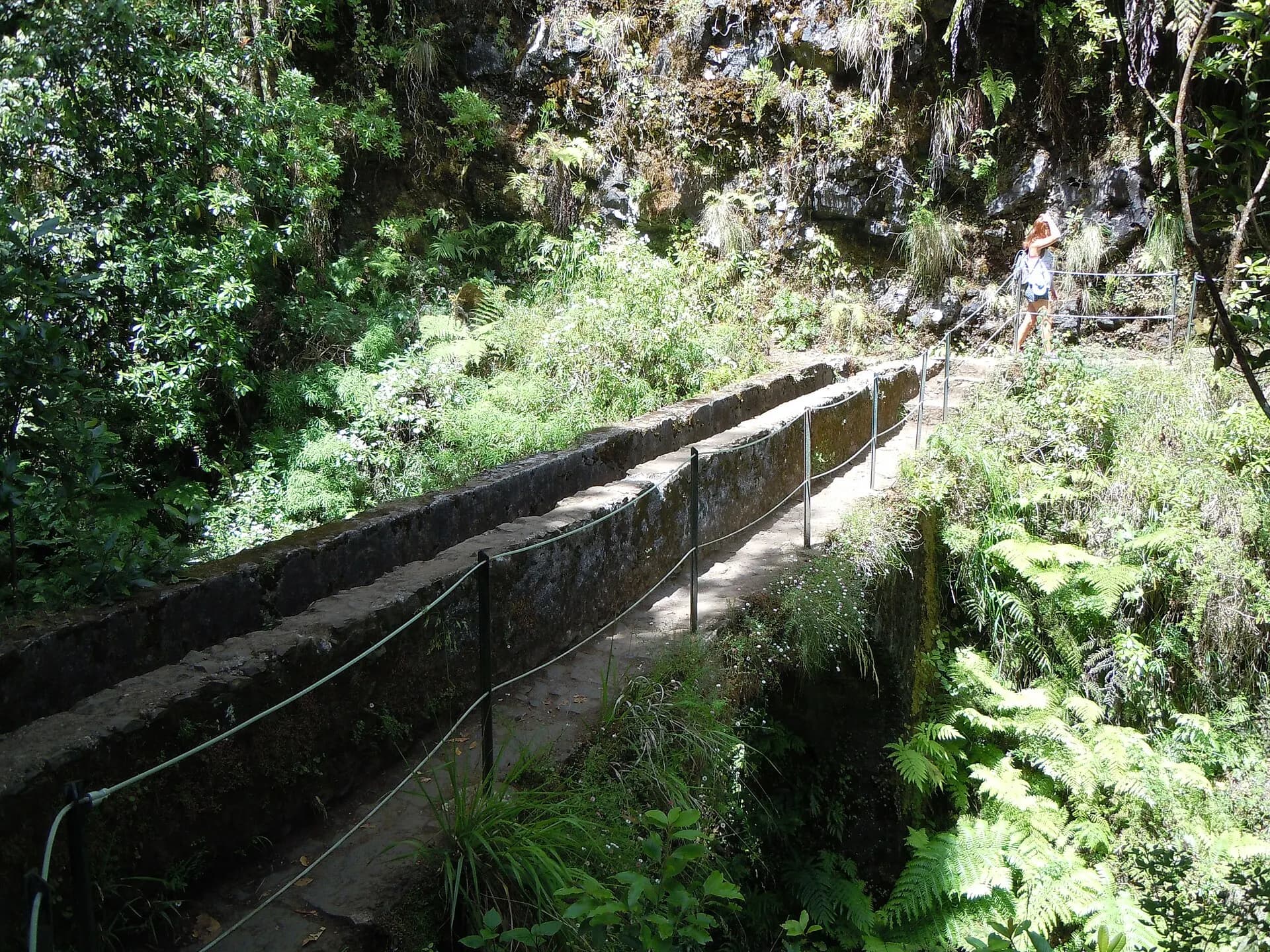
From the forest park of Queimadas, above Santana, the PR9 follows a levada deep into the laurel forest to the Caldeirão Verde, the "green cauldron", where a waterfall drops into a pool at the bottom of a sheer, moss-covered amphitheatre of rock. Along the way, the path is cut into cliffs above deep valleys and passes through several short tunnels. It's about 6.5 kilometres each way and mostly level, but narrow and exposed in places.
The trail is periodically closed after storms and landslides; it reopened in May 2026 after repair work. Check its status with the IFCN before you go.
TipBring a torch or headlamp for the tunnels, a waterproof layer, and expect wet feet.
- 15
Pico do Arieiro to Pico Ruivo (PR1)
Photo: Bjørn Christian Tørrissen, CC BY-SA 3.0, via Wikimedia Commons
The island's most famous walk links its third-highest peak, Pico do Arieiro at 1,818 metres, with the highest, Pico Ruivo at 1,862 metres, along a jagged volcanic ridge. Steps cut into the rock, tunnels and stretches of path fenced along knife-edge crests lead through a landscape of red and black basalt pinnacles, often above a sea of cloud. You can drive almost to the summit of Pico do Arieiro, and sunrise from the viewpoint there is a popular early start.
The PR1 Vereda do Areeiro was closed for long periods after the wildfires of August 2024 and later rockfalls, and reopened in 2026 with new rules. The full route is now one-way only, from Pico do Arieiro towards Pico Ruivo, so you'll need to arrange a pick-up at the other end, typically at Achada do Teixeira, about 2.8 kilometres down from Pico Ruivo, or join a tour with transport. The first 1.2 kilometres, to the Pedra Rija viewpoint, can still be walked both ways. Count on five to six hours for the full route including the descent to Achada do Teixeira.
TipA reservation is required. In 2026 the full Arieiro–Ruivo route costs €10.50 per person and the short section to Pedra Rija €4.50, booked through SIMplifica. Check the IFCN for closures before you set out: works on the trail continued through 2026.
- 16
Ponta de São Lourenço
Photo: Richard Bartz, CC BY-SA 3.0, via Wikimedia Commons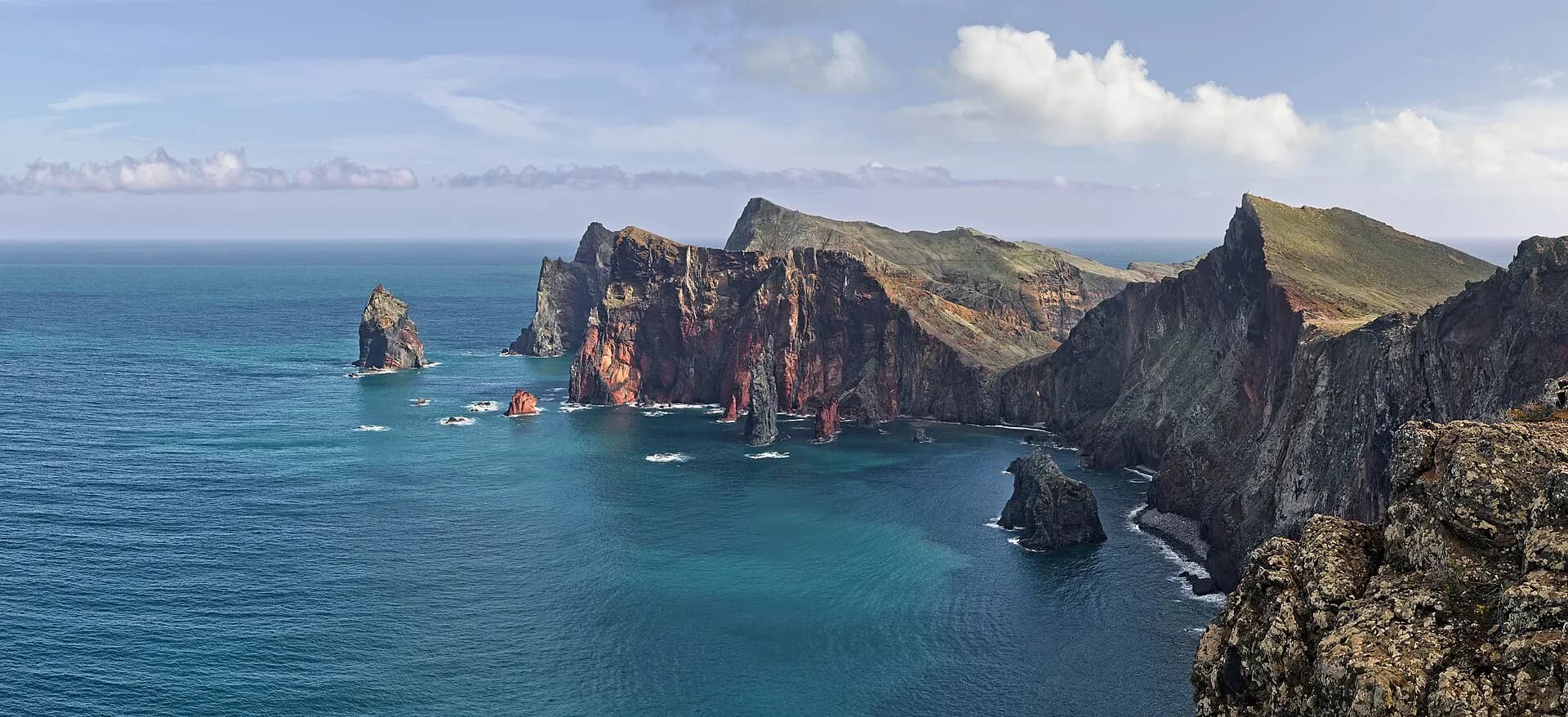
Madeira's eastern tip is a world apart from the green interior: a long, narrow, almost treeless peninsula of wind-scoured volcanic rock in shades of red, ochre and black, with cliffs dropping on both sides to a startlingly blue sea. The PR8 trail runs out from the car park at Baía d'Abra, about four kilometres each way, to a small visitor centre and café at Casa do Sardinha, with an optional steep climb up Pico do Furado for a view of the islets and the lighthouse beyond. It's a protected nature reserve, home to seabirds and rare plants.
TipThere's no shade at all; carry plenty of water, sun protection and a windproof layer, and go early. The trail requires a reservation.
- 17
Porto Santo
Madeira's small neighbour, about 50 kilometres to the north-east, is everything the main island is not: low, dry and golden, with a beach of soft sand around nine kilometres long running along its southern shore. Its sand is fine and warm, and some visitors swear by its therapeutic properties. The little capital, Vila Baleira, has a whitewashed church, palm-lined square and a house where, according to local tradition, Christopher Columbus lived after marrying the daughter of the island's first captain. Short hikes climb the volcanic peaks of Pico do Castelo and Pico do Facho for views over the island.
TipThe Lobo Marinho ferry from Funchal takes around two and a half hours; there are also short flights. In July and August it's busy with Madeirans on holiday, so book in advance.
When to go
Madeira's mild climate earned it the nickname "island of eternal spring": temperatures on the coast rarely drop below the mid-teens or climb far above the mid-twenties. Spring, from April to June, is the best season for walking, with flowers everywhere and the Flower Festival in Funchal, usually in May. September and October are just as good, with the sea at its warmest. July and August are drier and the busiest months, but rarely too hot. Winter brings more rain, particularly on the north side and in the mountains, and some trails close after storms, but it's still pleasant on the south coast, and Funchal puts on one of the world's largest New Year's Eve fireworks displays.
The island has many microclimates. The south coast is sunnier and drier than the north, and it's often cloudy in the mountains while Funchal basks in sunshine, or the opposite: cloud may sit below the peaks while the summits are clear. Check the webcams and forecasts for each area before choosing a walk.
Getting around
Madeira's international airport, named after Cristiano Ronaldo, is near Santa Cruz, about twenty minutes' drive east of Funchal, and is known for its runway extension built on columns over the sea. Strong winds sometimes cause diversions and delays.
Renting a car gives the most freedom. A network of tunnels and expressways, the VR1 along the south coast and fast roads to the north, has made the island much quicker to cross, but the older roads are steep, narrow and winding; choose a car with enough power for the hills and a little practice with hill starts. Parking at popular trailheads such as Pico do Arieiro, Rabaçal and Ponta de São Lourenço fills early.
Buses are cheap and useful along the main coastal routes. In Funchal, the yellow buses of Horários do Funchal cover the city and nearby areas, including Monte, while other companies serve the east and the west of the island. Services to remote trailheads are sparse, so many hikers use taxis, minibus tours or guided walks with transport. For one-way walks, including the PR1, arrange a pick-up in advance. The ferry to Porto Santo leaves from Funchal harbour.
Local tips
- Book walks on SIMplifica before you set out. Since January 2026, all classified PR trails need a timed reservation, and non-residents pay a fee: €4.50 per trail (€10.50 for the full PR1), with combined passes for several trails, and you must start within your 30-minute slot. Carry your confirmation, as it may be checked.
- Only walk trails that are officially open. Closures after storms, rockfalls and fires are common, and entering a closed trail can bring a fine.
- Start early. The light is best, car parks still have space and the cloud often builds over the mountains by late morning.
- Dress in layers. It can be warm in Funchal and cold, windy and wet at 1,800 metres on the same day.
- Shops and restaurants accept cards, but carry some cash for small bars, market stalls and village cafés.
- Tap water is safe to drink, so carry a refillable bottle.
Eat and drink
Madeira's signature dish is espetada: chunks of beef rubbed with garlic, salt and bay leaf, grilled on skewers traditionally cut from bay-tree branches, and hung from a hook over the table. It comes with bolo do caco, a flat, round bread cooked on a basalt stone and served hot with garlic butter, and milho frito, cubes of fried polenta. Espada, the black scabbardfish, is usually served filleted and fried, often with banana and sometimes passion fruit sauce. Limpets, lapas, are grilled in their shells with garlic butter and lemon, and tuna steaks are excellent.
Madeira wine is the island's most famous product, a fortified wine aged in warm conditions that give it its rich, nutty character and extraordinary longevity; a few wine lodges in Funchal offer tastings. Look for the four classic grape styles, from dry Sercial and Verdelho to the sweeter Boal and Malmsey. For something stronger, try poncha, and for dessert, bolo de mel, a dark, spiced honey cake made with sugar cane molasses, traditionally prepared for Christmas.
Where to stay
Funchal makes the most practical base, with the widest choice of hotels and restaurants and the best bus connections; the Lido area west of the centre has many seafront hotels with pools, while the Old Town is livelier. A night or two on the north coast, in Porto Moniz, Seixal or near Santana, puts you closer to the forest walks and gives a different, wilder view of the island. Calheta, in the south-west, has a sheltered artificial sandy beach and is handy for Rabaçal, and Machico, near the airport, is a quieter alternative close to Ponta de São Lourenço. Porto Santo deserves at least one night if you go.
Levadas and laurel forest
The levadas are the island's great feat of engineering. From the fifteenth century onwards, slaves and labourers cut channels along mountainsides and through rock to move water from the wet north to the sugar plantations and terraces of the south, often hanging from ropes over cliffs to dig them. Many still carry water today, maintained by levadeiros who walk the paths alongside, and these are now the heart of Madeira's walking network. Most follow contours, so they are fairly level, but some are narrow, with long drops and few railings, and tunnels can be wet and dark.
The Laurisilva forest that the levadas pass through covers around a fifth of the island and is one of the reasons Madeira has so many unique plants and birds. It also captures moisture from the clouds, feeding the springs that fill the levadas. Stay on the path, take nothing, and never feed or chase the wildlife.
Responsible travel
Madeira's popularity has put pressure on its trails, which is why the region introduced reservations and fees, used to maintain the paths. Respect closures and keep to marked routes, as cutting corners causes erosion on steep slopes. Wildfires have caused severe damage in recent years, most recently in August 2024 in the central mountains, so never light fires or drop cigarettes. Don't fly drones over trails or crowded viewpoints without checking the rules, pack out all your rubbish, and consider less famous trails and quieter seasons to spread visitor numbers more evenly. Shopping at the market, eating in family-run restaurants and buying local crafts such as Madeira embroidery and wicker work supports the island's traditional economy.