Porto
A hilly city of tiled facades and iron bridges above the Douro River, home of port wine and the francesinha.
- Best time to go
- April to June and September to October, for warm days and grape-harvest season
- Local time
- –
- Currency
- Euro (EUR)
- Reading time
- 4 min
- Language
- Portuguese
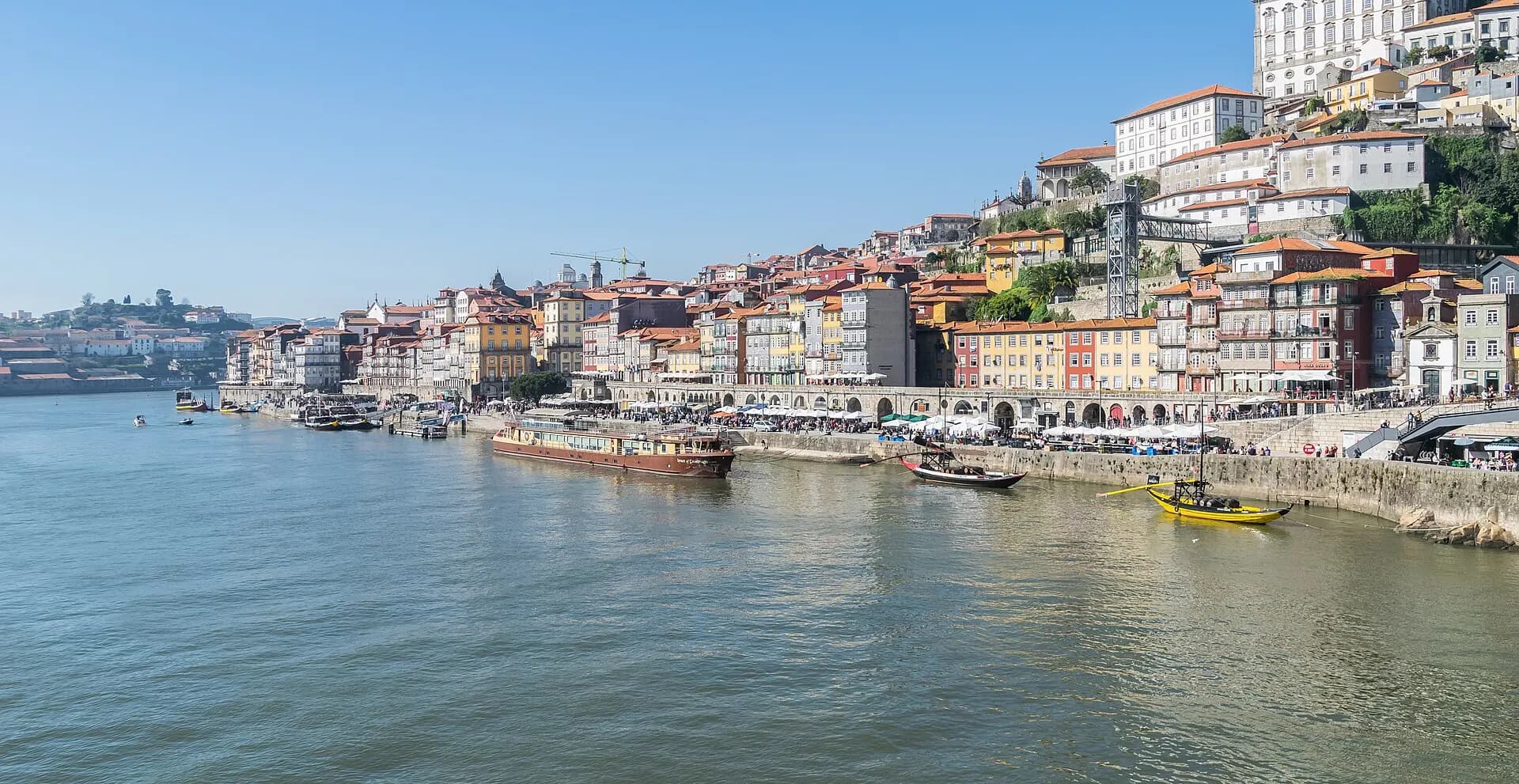
Porto, Portugal's second city, climbs steeply up the northern bank of the Douro River near its mouth on the Atlantic. Its historic centre, a World Heritage Site, is a tumble of granite churches, houses faced with blue-and-white azulejo tiles, narrow lanes and stairways leading down to the riverside quarter of Ribeira. Across the river, in Vila Nova de Gaia, the cellars of the great port wine houses line the waterfront.
It's a hard-working, unpretentious city with a big heart, excellent food and some of the best value in Western Europe. Walk its hills, cross its bridges, taste port in the cellars, and take a day or two to explore the terraced vineyards of the Douro Valley upstream.
The top 10 in Porto
- 1
Ribeira
Photo: Jakub Hałun, CC BY 4.0, via Wikimedia Commons
The riverside quarter at the foot of the old town, with colourful tall houses, arcades, restaurants and bars along the quay, and traditional rabelo boats, which once carried barrels of wine down the Douro, moored on the water.
TipEat a little away from the quayside for better value, in the lanes just behind it.
- 2
The Dom Luís I Bridge
Photo: Diego Delso, CC BY-SA 3.0, via Wikimedia Commons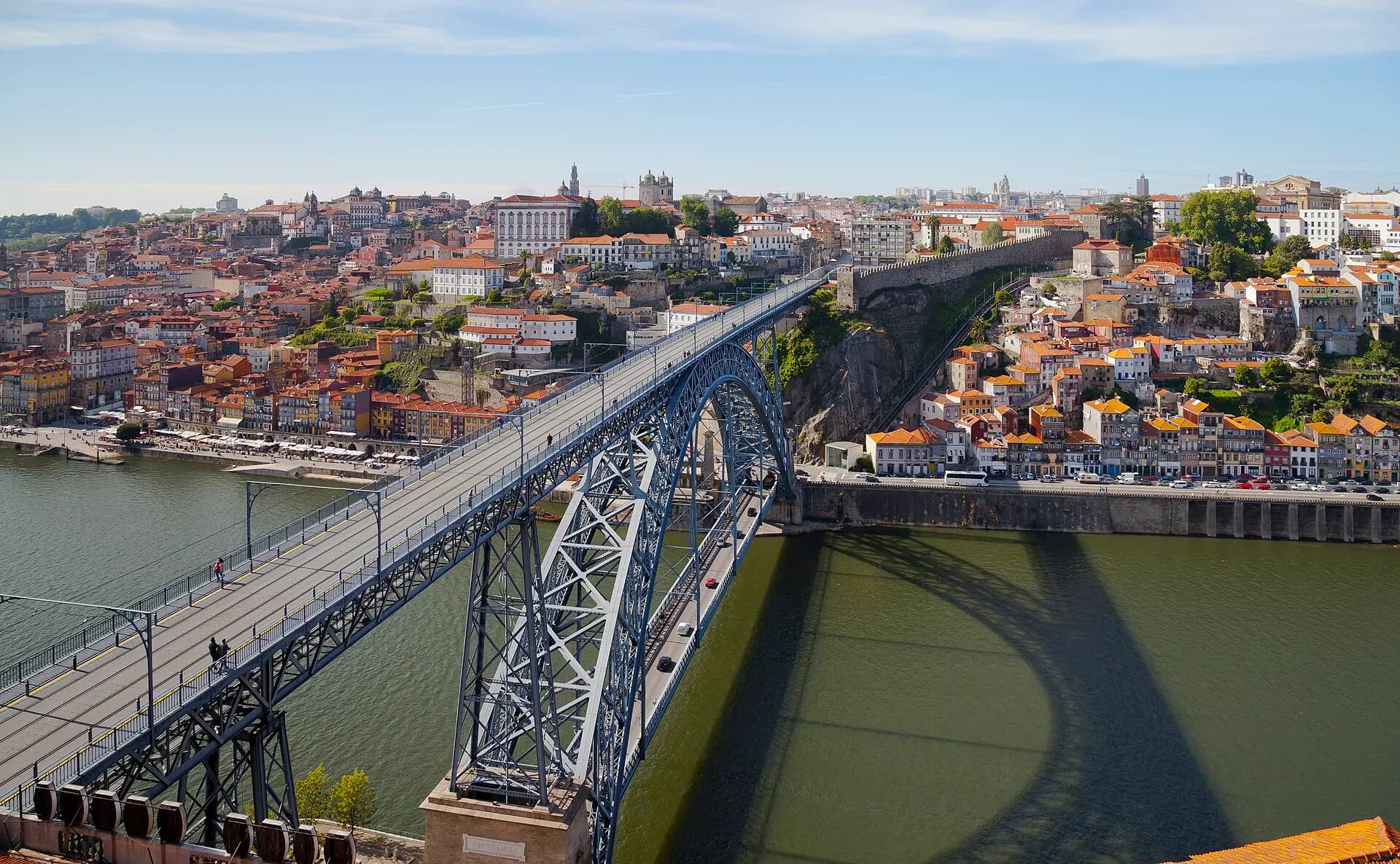
A two-level iron arch bridge opened in 1886, designed by Théophile Seyrig, a former partner of Gustave Eiffel. Walk across the upper deck, shared with the metro, for spectacular views over Ribeira and the river, and the lower deck to reach the port cellars.
- 3
The port wine cellars of Vila Nova de Gaia
Photo: Diego Delso, CC BY-SA 3.0, via Wikimedia Commons
The lodges of the port houses, where the wine has been aged in barrels for centuries, line the southern bank. Most offer tours explaining how port is made, followed by tastings.
TipBook a tour in advance, and compare a few different houses and styles, from ruby and tawny to vintage.
- 4
São Bento Station
Photo: Diego Delso, CC BY-SA 4.0, via Wikimedia Commons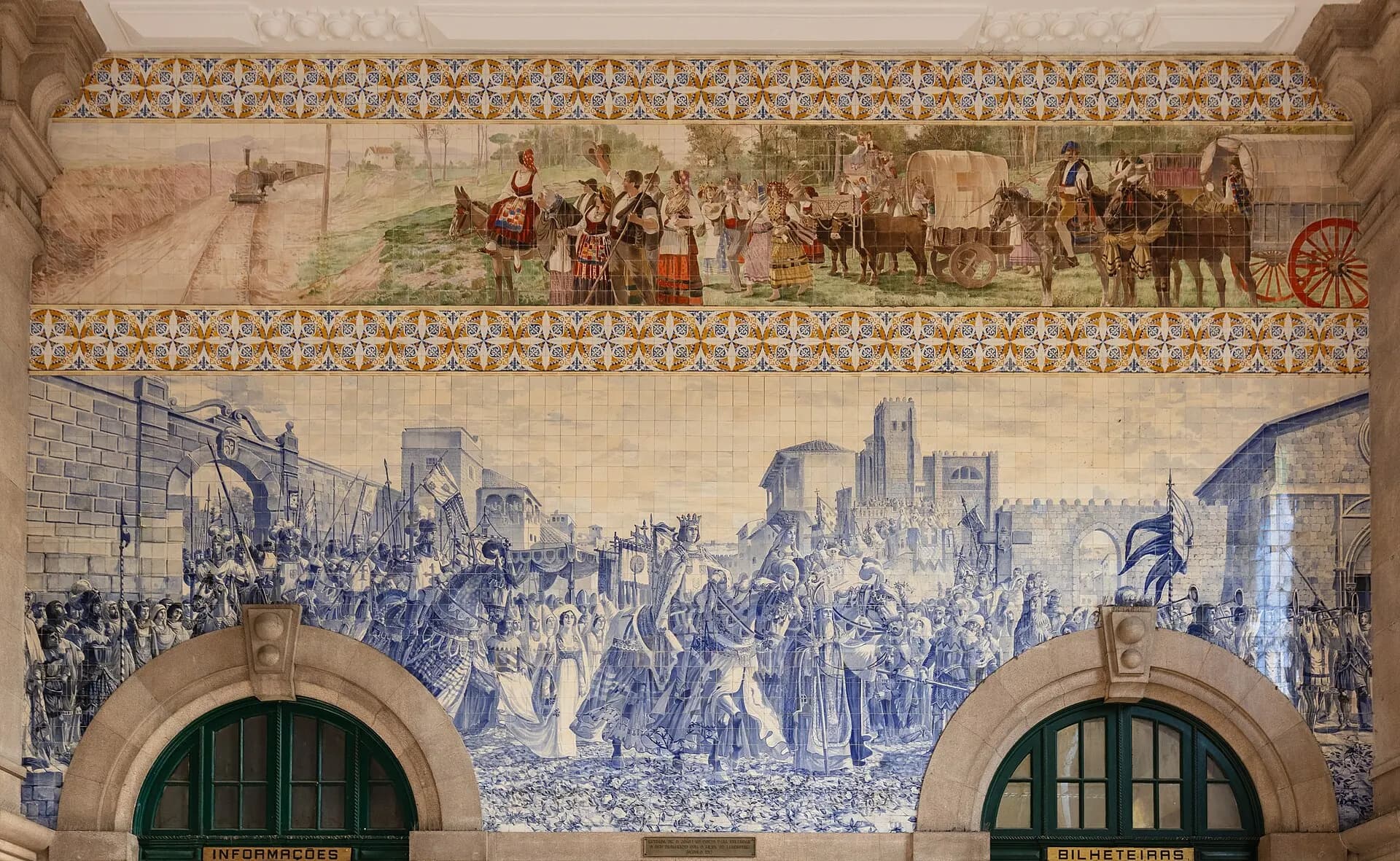
A railway station from the early twentieth century, whose entrance hall is covered with around twenty thousand azulejo tiles depicting scenes from Portuguese history and rural life.
- 5
The Clérigos Tower
Photo: Jakub Hałun, CC BY 4.0, via Wikimedia Commons
The baroque bell tower of the Clérigos church, built in the eighteenth century, was long the tallest building in Portugal. Climb its 225 steps for a panoramic view over the rooftops.
- 6
Livraria Lello
Photo: John Samuel, CC BY-SA 4.0, via Wikimedia Commons
A bookshop opened in 1906, with a neo-Gothic façade, a carved wooden interior and a curving red staircase, often described as one of the most beautiful bookshops in the world. Entry is by ticket, which can be put towards a book.
TipBook a time slot online and go early; queues can be long.
- 7
Porto Cathedral and the Palácio da Bolsa
Photo: José Luiz, CC BY-SA 3.0, via Wikimedia Commons
The fortress-like Romanesque cathedral, the Sé, stands on the highest point of the old town, with a cloister lined with azulejos and views from its terrace. Down the hill, the nineteenth-century stock exchange, the Palácio da Bolsa, has a lavish Arab Room decorated in Moorish style, visited on guided tours.
- 8
- 9
Foz do Douro
Photo: Pveverdingen, CC BY-SA 4.0, via Wikimedia Commons
The neighbourhood where the Douro meets the Atlantic, with a seafront promenade, beaches, lighthouses and cafés. The historic tram line 1 runs along the river from the centre.
- 10
The Douro Valley
Photo: Rosino, CC BY-SA 2.0, via Wikimedia Commons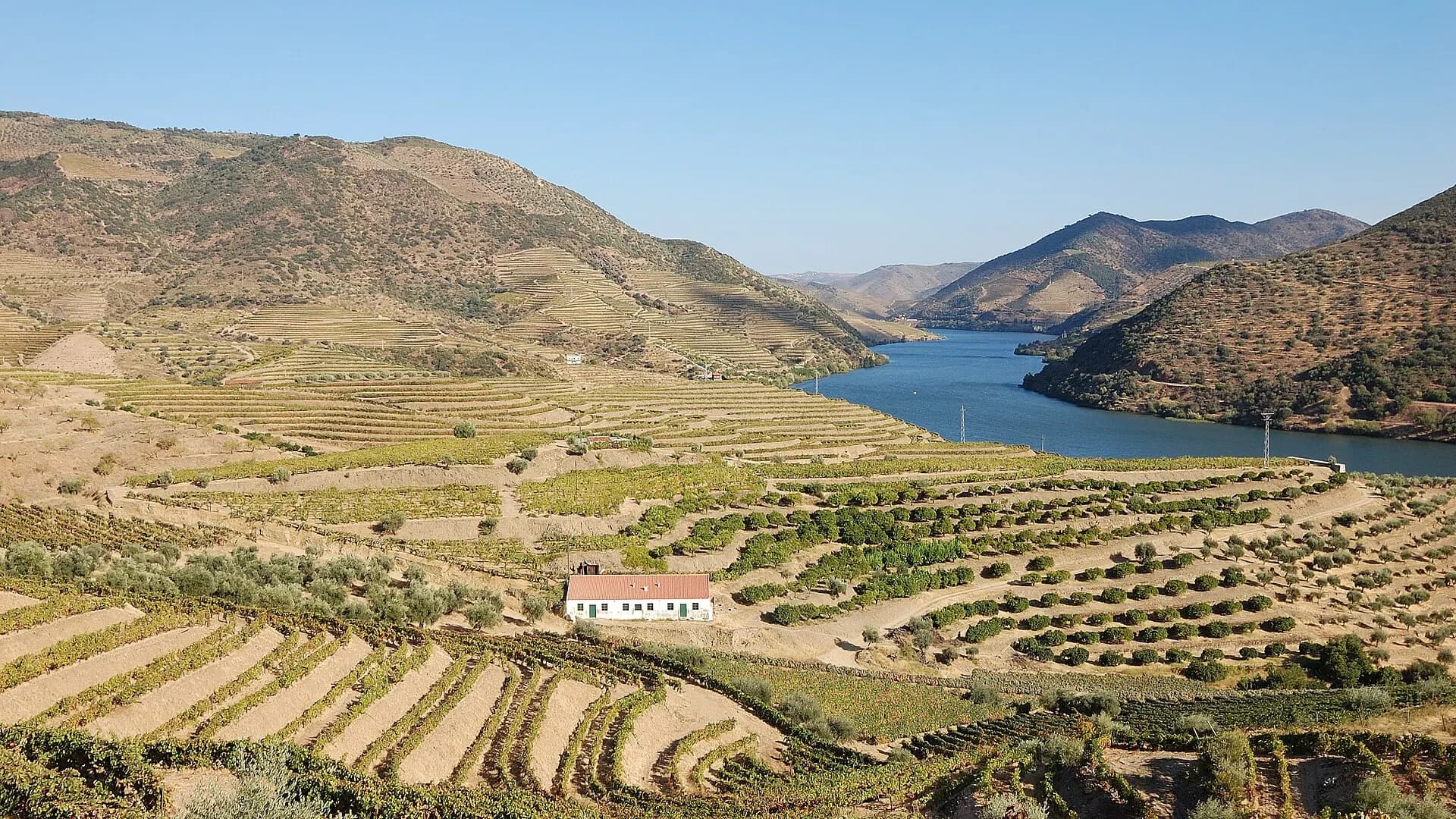
The terraced vineyards of the Douro Valley, a World Heritage Site where port and fine wines are made, line the river upstream of Porto. Visit wine estates (quintas), take a river cruise, or ride the scenic railway to Pinhão.

When to go
Spring and early autumn are the best times, with warm, sunny weather; September and October are the harvest season in the Douro. Summer is warm but rarely too hot, cooled by the Atlantic, and busy. Winters are mild but wet. The São João festival, on the night of 23–24 June, is the city's biggest party, with street celebrations, grilled sardines and fireworks over the river.
Getting around
Porto is hilly and best explored on foot, with comfortable shoes. The metro, buses and historic trams cover the city; use a rechargeable Andante card. The Guindais funicular links Ribeira with the upper town. Francisco Sá Carneiro Airport is about thirty minutes from the centre by metro. Trains run to Lisbon in about three hours and along the Douro Valley.
Local tips
- Wear shoes with good grip: streets are steep and the cobbles slippery.
- Lunch is the best-value meal, with set menus at local restaurants.
- Bread and starters brought to the table are charged if you eat them.
- Book Livraria Lello and port cellar tours ahead in summer.
- Many museums close on Mondays.
- Tipping is appreciated but modest.
Eat and drink
Porto's signature dish is the francesinha, a sandwich layered with meats, covered in melted cheese and a spicy beer sauce, served with chips. Try tripas à moda do Porto, tripe and bean stew that gives locals their nickname, tripeiros; bacalhau, salt cod; and grilled sardines in summer. Drink port in the cellars, and the crisp vinho verde from the north.
Where to stay
Ribeira and the old town put you among the sights, though streets are steep and can be noisy. Baixa, around Avenida dos Aliados, is central and well connected. Cedofeita and Bonfim are lively neighbourhoods with independent shops and good restaurants, and Foz do Douro offers seaside calm.
The six bridges
Porto is linked to Vila Nova de Gaia by six bridges, and a boat cruise beneath them is a classic introduction to the city. Besides the Dom Luís I, look for the Maria Pia railway bridge, an iron arch designed by Gustave Eiffel's company and opened in 1877, and the modern concrete Arrábida Bridge, which you can climb on a guided tour.