Algarve
Golden sea cliffs, hidden coves and whitewashed towns along Europe's sunniest coast, from the wild Atlantic cape to the quiet lagoons of the east.
- Best time to go
- April to June and September to October, for warm sea, long days and fewer crowds than midsummer
- Local time
- –
- Currency
- Euro (EUR)
- Reading time
- 13 min
- Language
- Portuguese
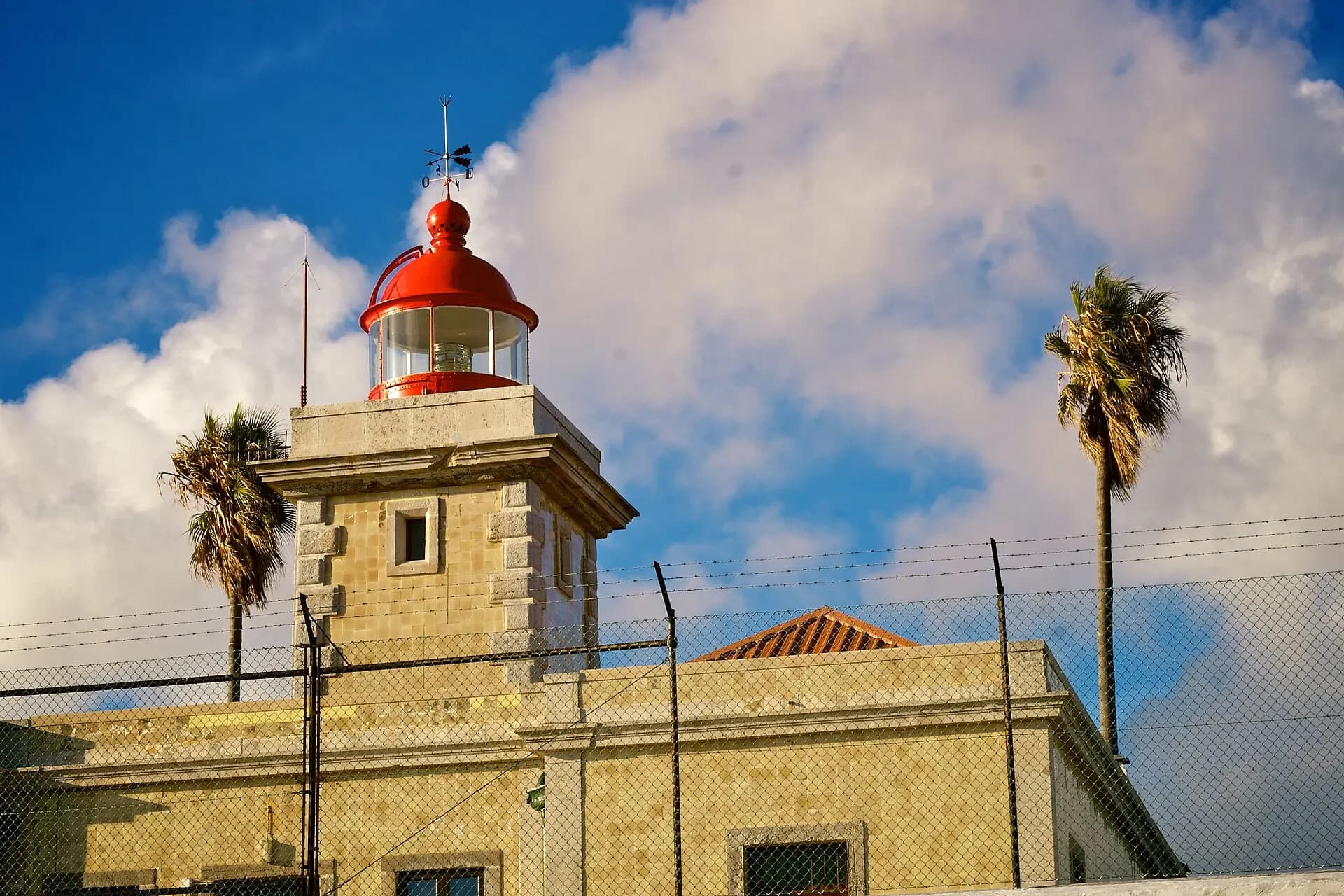
The Algarve is Portugal's southern edge: a strip of coast around 150 kilometres long, sheltered from the north by low mountains and facing Africa across the Atlantic. Its western half, the Barlavento, is the postcard Algarve, where ochre limestone cliffs have been carved by the sea into arches, sea stacks, grottoes and tiny coves. Its eastern half, the Sotavento, is flatter and gentler, with long sandy islands, salt pans and the tidal lagoons of the Ria Formosa. Round the corner at Cape St Vincent, the west coast turns wild, windswept and much emptier.
For centuries this was al-Gharb, "the west", the far edge of the Moorish world in Iberia, and the region still carries that inheritance in its name, its castles, its chimneys and its almond and orange groves. Beyond the resorts there are fishing harbours, hill villages, cork-oak hills and a slower pace of life. Rent a car or ride the coastal railway, walk the clifftop trails early in the day, and give the quieter east and west at least as much time as the busy middle.
The top 14 in Algarve
- 1
Aljezur and the west coast
Photo: Txo, CC BY-SA 4.0, via Wikimedia Commons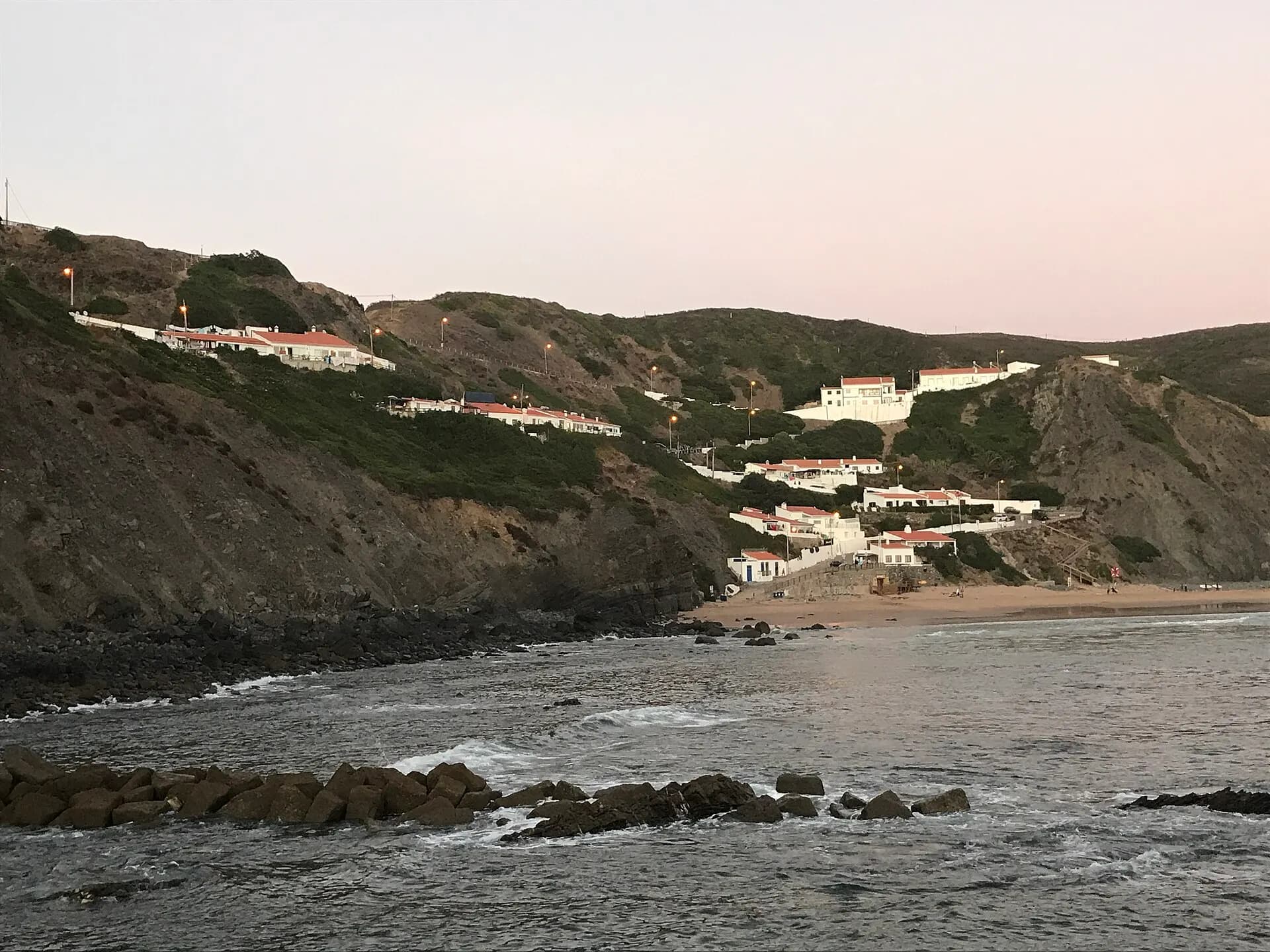
The Algarve's Atlantic coast feels like a different country from the south: high dark cliffs, huge surf beaches and scarcely a high-rise in sight, all protected within the Southwest Alentejo and Vicentine Coast Natural Park. The small town of Aljezur sits below the ruins of a Moorish castle with views over the river valley, and nearby beaches such as Arrifana, Monte Clérigo, Amoreira and Bordeira draw surfers year round. Further north, Odeceixe has a lovely beach where a river meets the sea, right on the border with the Alentejo.
This is also the heart of the Rota Vicentina, a network of long-distance and circular walking routes. The Fishermen's Trail follows sandy clifftop paths used by local anglers, while the Historical Way runs inland through villages and farmland; both are split into day stages, so you can walk a single section rather than the whole thing.
TipThe Atlantic here is colder and rougher than on the south coast. Swim only at lifeguarded beaches, and check the flag before going in.
- 2
Cabo de São Vicente
Photo: Matthias Süßen, CC BY-SA 4.0, via Wikimedia Commons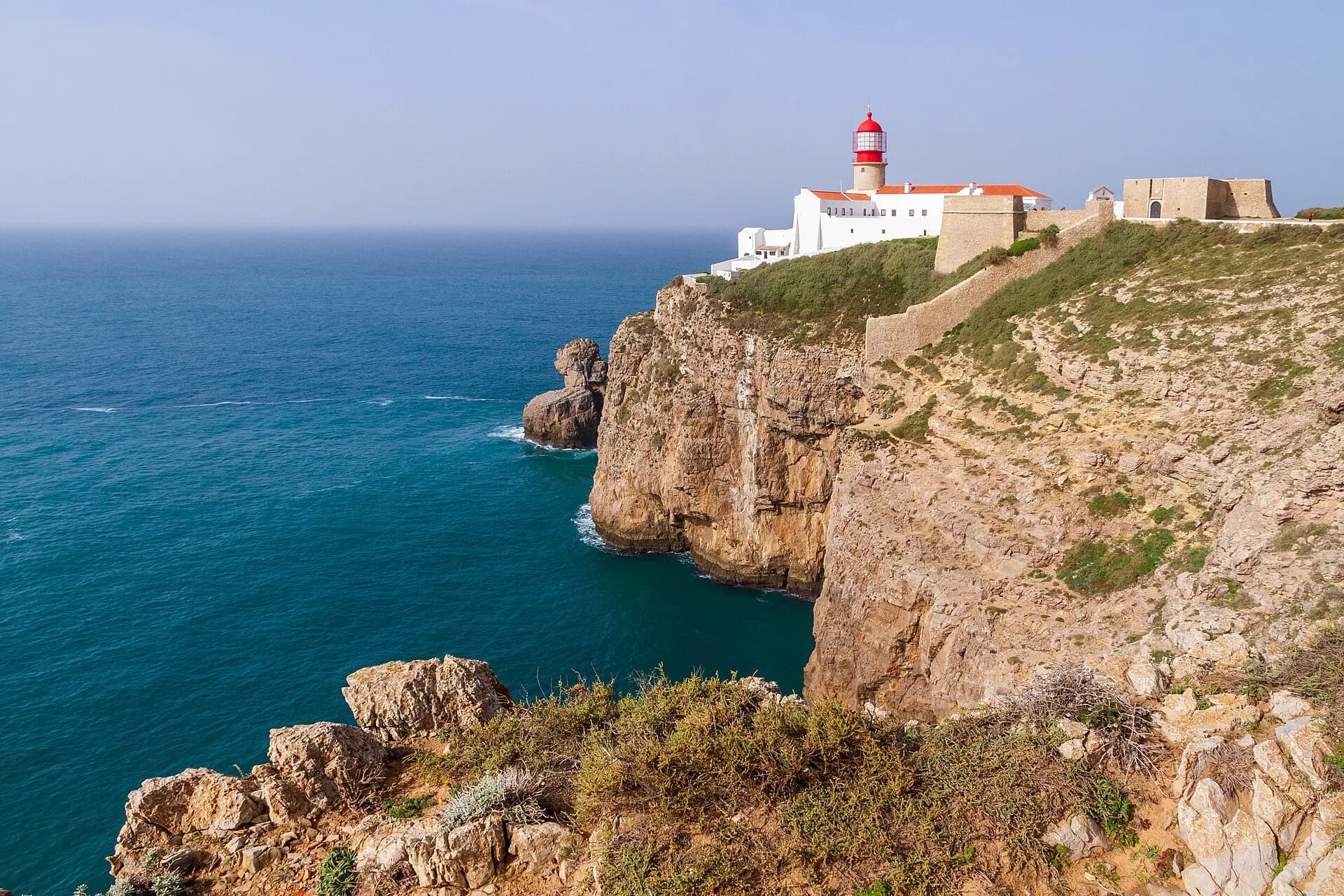
The south-western tip of mainland Europe, where cliffs around 75 metres high drop straight into the ocean and the coast bends sharply north. Ancient peoples thought it a sacred place at the end of the world, and a lighthouse, one of the most powerful in Europe, still guides ships around the cape. A small museum in the lighthouse complex tells the story of the coast and its navigators.
TipSunset here is famous and very crowded in summer, and the wind can be fierce even on hot days, so bring a layer.
- 3
Sagres
Photo: High Contrast, CC BY 3.0 de, via Wikimedia Commons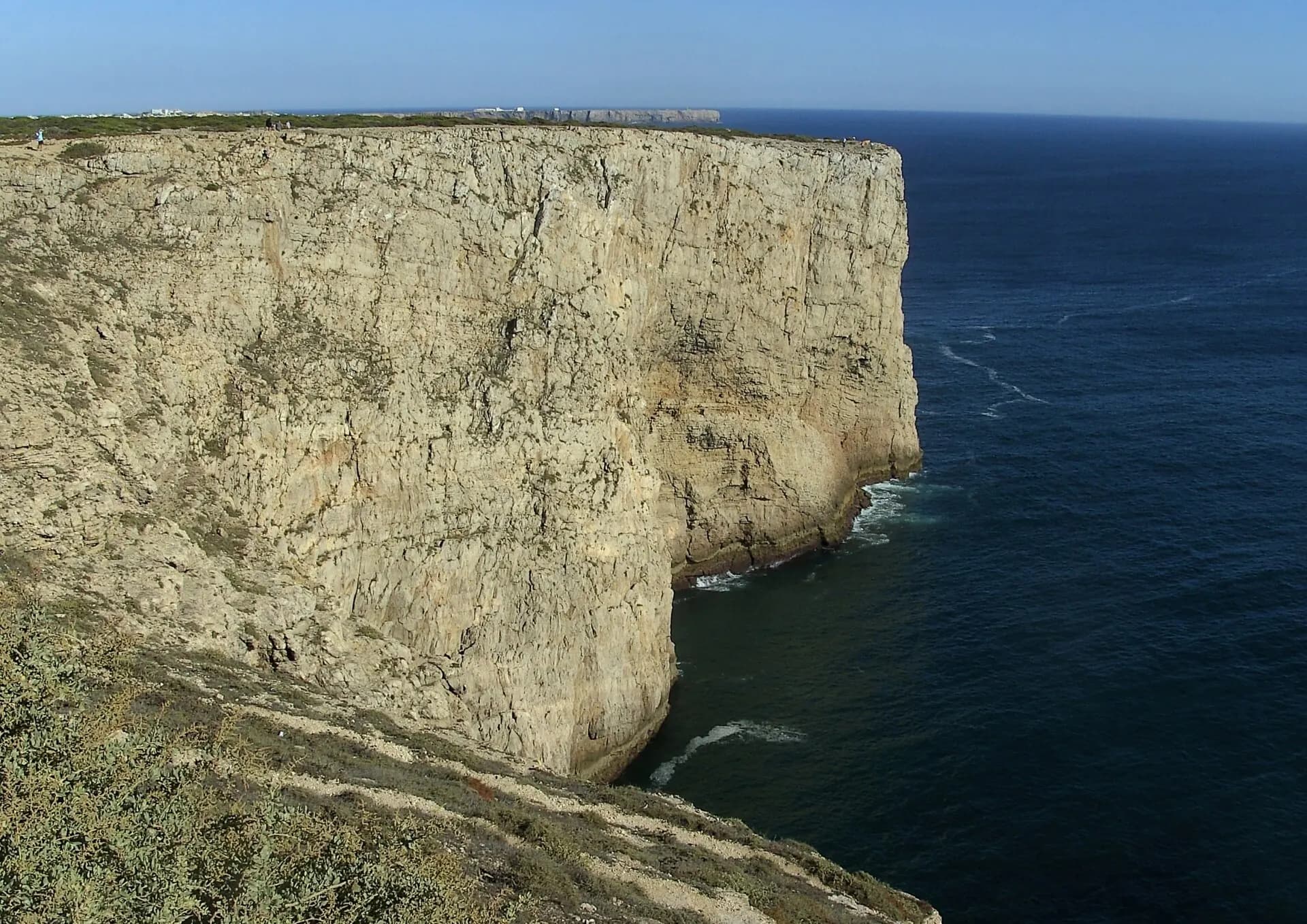
A laid-back surfing village on a windswept headland, long associated with Prince Henry the Navigator and Portugal's early voyages of discovery. The Fortaleza de Sagres occupies a vast, flat promontory with a walking circuit around its cliff edge, a simple chapel and a huge stone wind rose whose origins are still debated. Below the village, beaches such as Martinhal, Mareta, Tonel and Beliche face different directions, so one is usually sheltered whatever the wind.
- 4
Lagos
Photo: Andrew Milligan sumo, CC BY 2.0, via Wikimedia Commons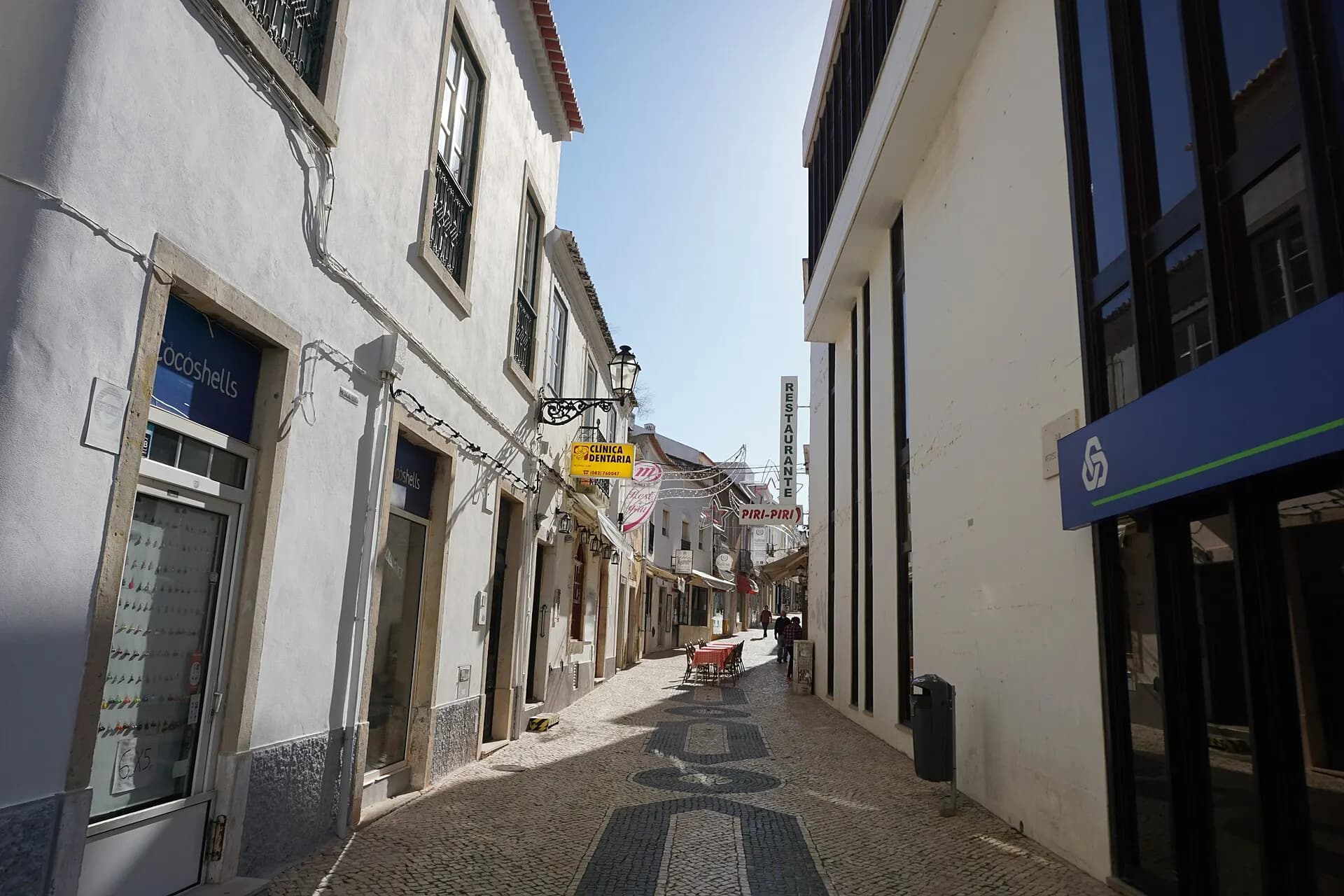
Lagos is one of the most appealing towns on the coast, with a walled old town of cobbled lanes, tiled churches and lively squares above a busy marina. Its history is complicated: ships sailed from here on the early voyages along the African coast, and a small museum on the site of the old slave market records that Lagos was where the first enslaved Africans were sold in Europe in the fifteenth century. The baroque Igreja de Santo António, lined with gilded carving, is the town's other must-see.
East of town, the long sweep of Meia Praia offers kilometres of sand, while the town's coves to the south are smaller and more dramatic.
- 5
Ponta da Piedade
Photo: Jose A., CC BY 2.0, via Wikimedia Commons
A headland just south of Lagos where the cliffs break up into a labyrinth of golden sea stacks, arches and grottoes, with a lighthouse on top. Footpaths and wooden boardwalks link viewpoints along the cliff edge, and a long staircase leads down to Praia do Camilo, a small, much-photographed cove. The best way to see the formations is from the water, on a small boat or guided kayak trip from Lagos marina, which slips through arches you cannot see from above.
TipCome at sunrise or in the evening for the warmest light and the fewest people; the cliff edges are unfenced in places, so keep well back.
- 6
Fóia and Monchique
Photo: Bli, CC BY-SA 3.0, via Wikimedia Commons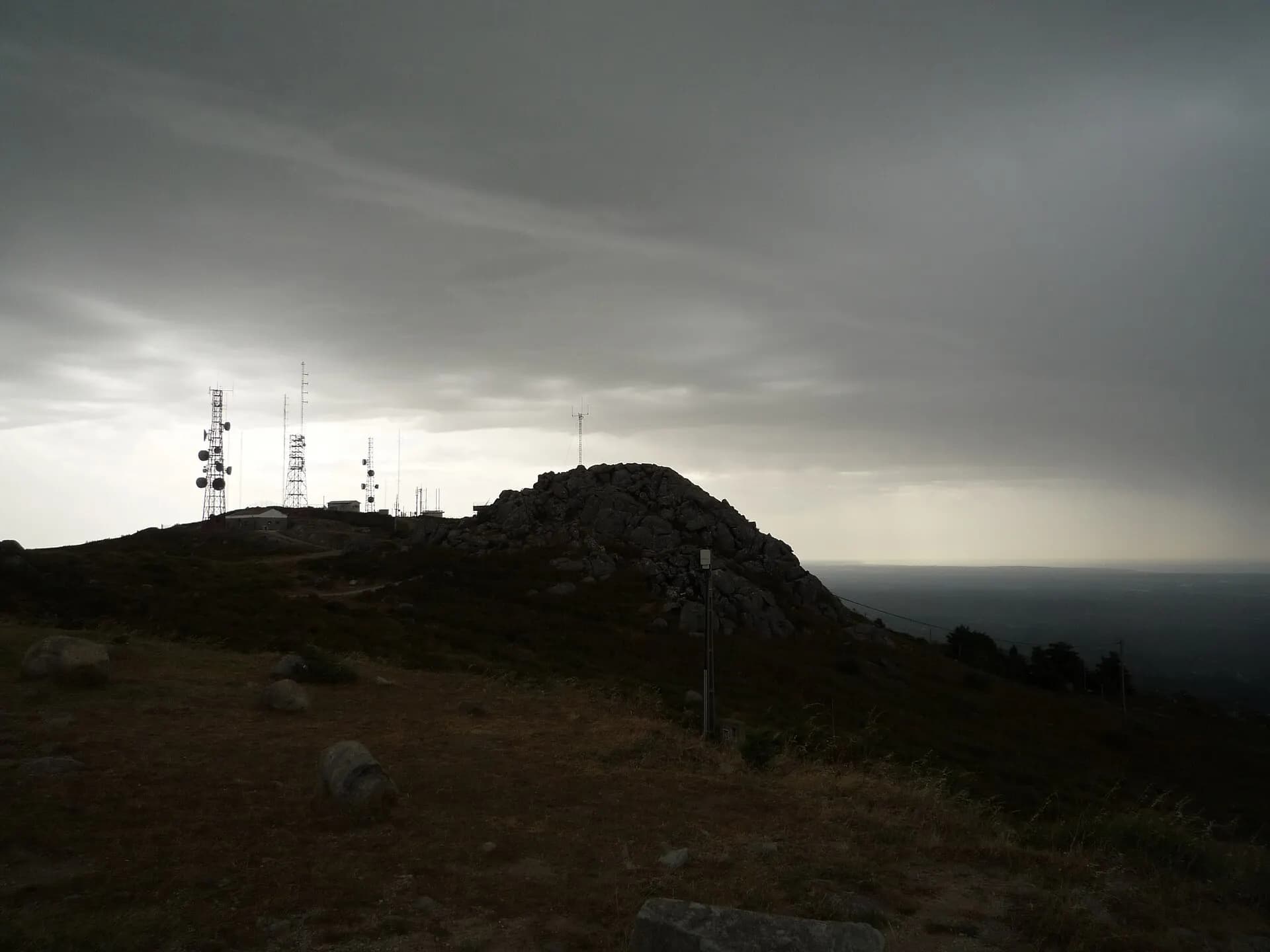
Inland, the Serra de Monchique rises to Fóia, at just over 900 metres the highest point in the Algarve. On a clear day the summit looks out over the whole western coast, from Portimão to Cape St Vincent. The hill town of Monchique below has steep lanes and craft shops, and the old spa of Caldas de Monchique, in a wooded valley, has been visited for its waters since Roman times. The hills are cooler and greener than the coast, with cork oaks, chestnuts and eucalyptus, and good walking.
TipTry medronho, the local spirit distilled from the fruit of the strawberry tree, but in small measures.
- 7
Silves Castle
Photo: Norbert Nagel, CC BY-SA 4.0, via Wikimedia Commons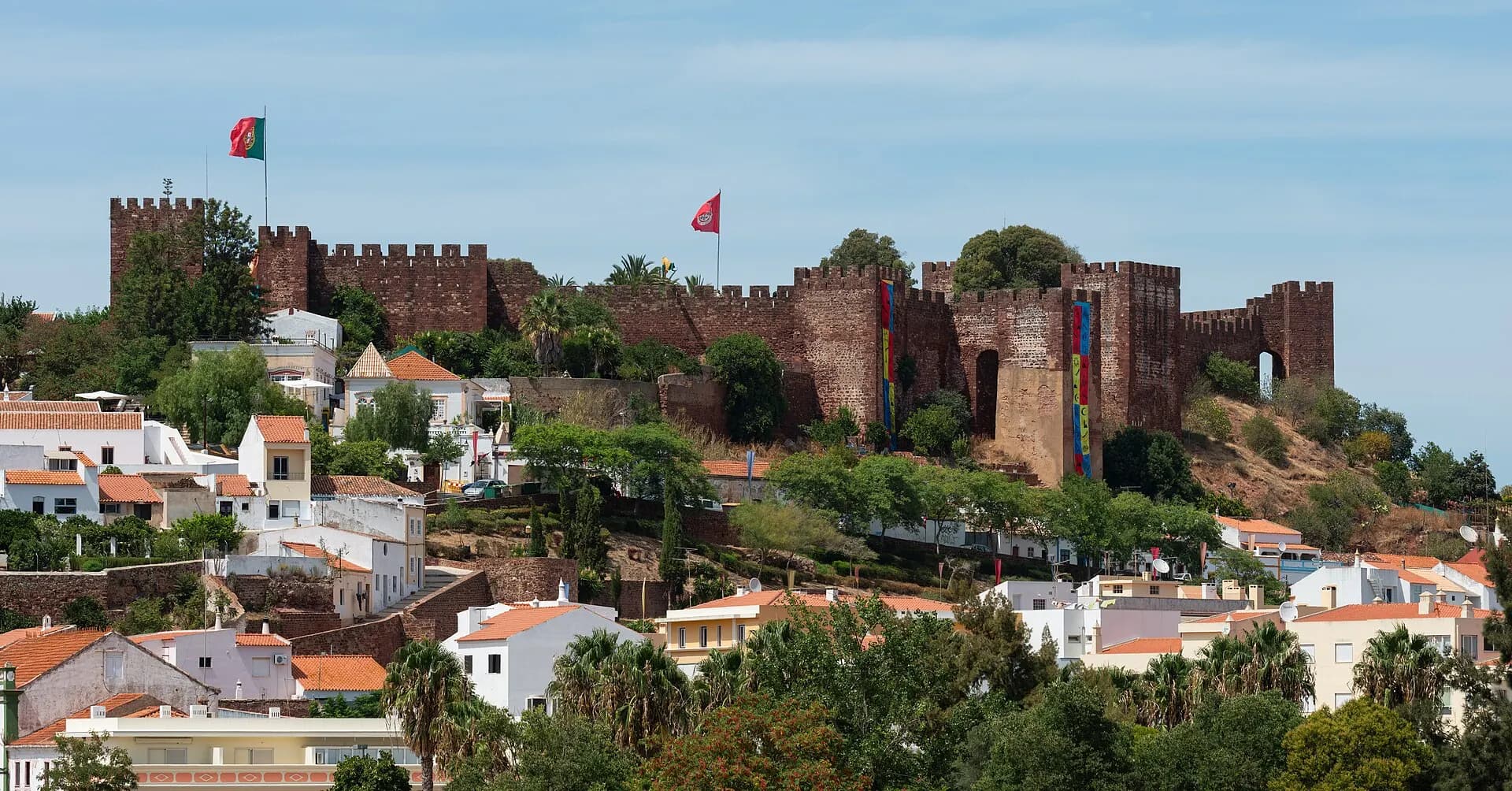
Silves was once the capital of al-Gharb and one of the richest cities of Moorish Iberia, famed for its poets and gardens. Today it is a quiet country town, but its red sandstone castle, the best preserved in the Algarve, still crowns the hill, with walkable ramparts, the remains of houses and huge cisterns. Just below stands the Gothic cathedral, the former seat of the Algarve's bishops, and the town's archaeology museum explains its Islamic past.
TipSilves railway station is a couple of kilometres from the centre, so allow for a taxi or local bus.
- 8
Carvoeiro and Algar Seco
Photo: Jules Verne Times Two, CC BY-SA 4.0, via Wikimedia Commons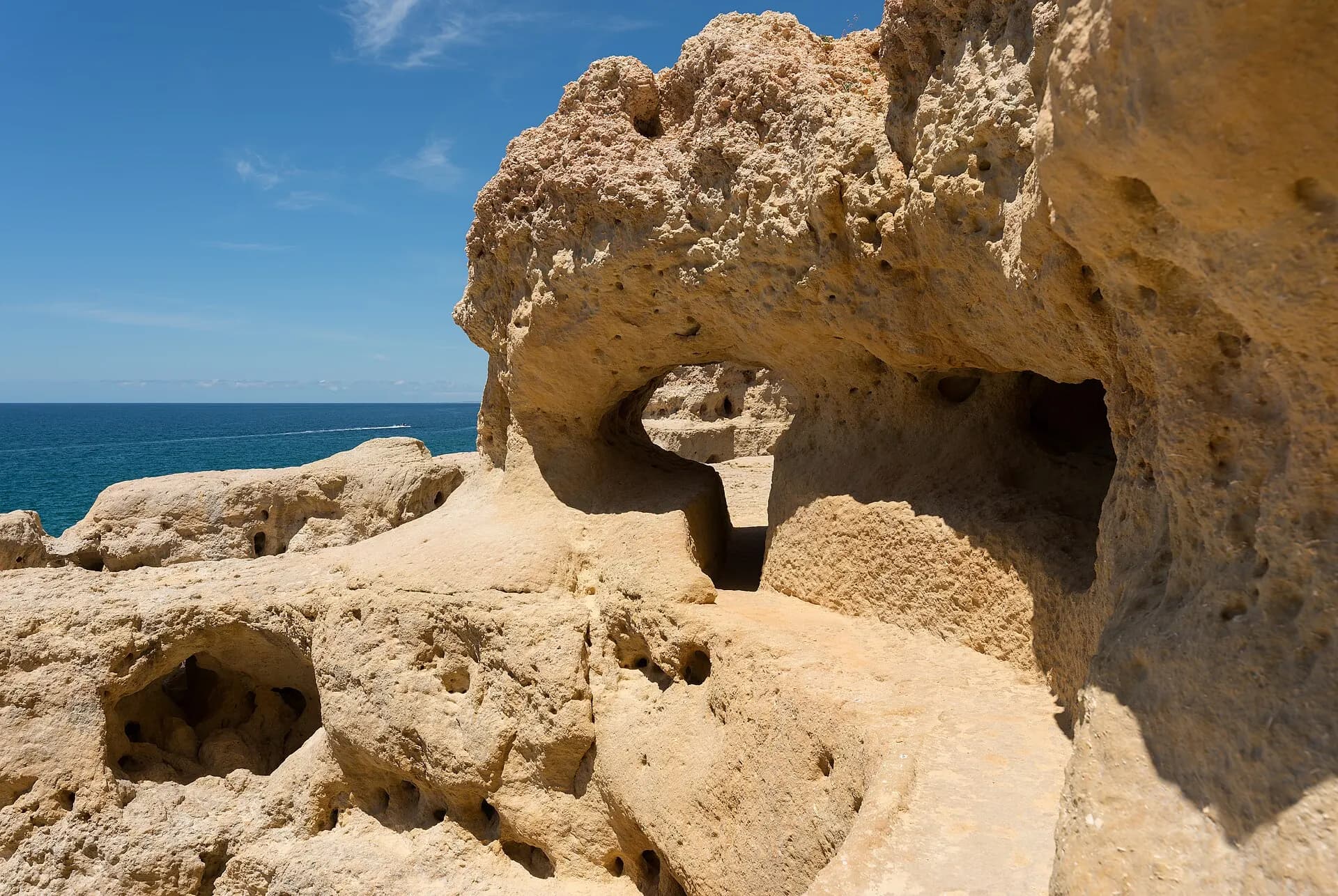
Carvoeiro is a former fishing village whose white houses climb the slopes around a small beach. A short walk east, a wooden boardwalk follows the cliff top to Algar Seco, a maze of eroded rock with natural windows, pools and terraces just above the sea. The boardwalk continues towards the cove of Vale Centeanes, where the Seven Hanging Valleys trail ends.
- 9
Benagil Cave and the Seven Hanging Valleys trail
Photo: David Ceballos, CC BY 2.0, via Wikimedia Commons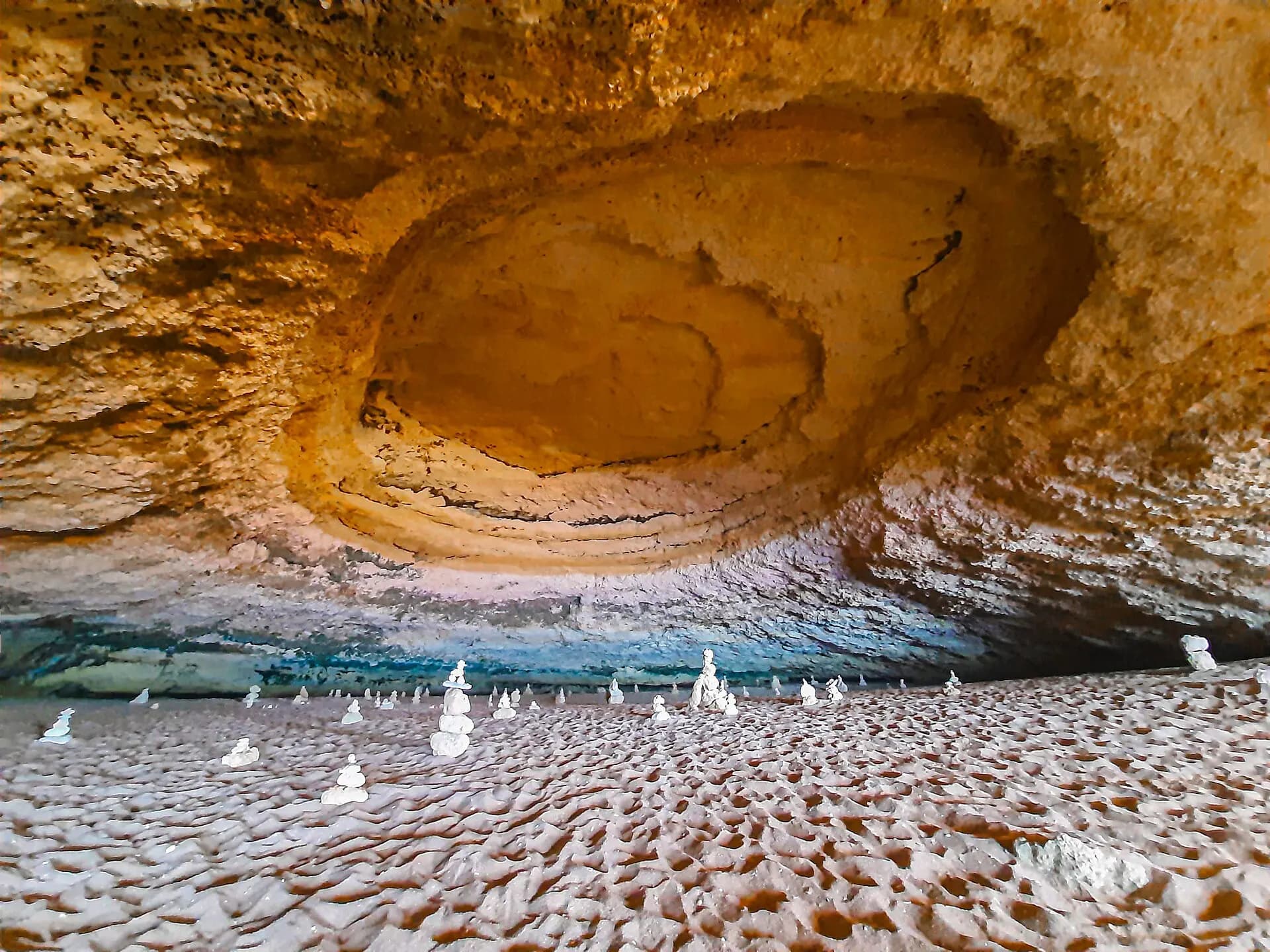
The Algar de Benagil is the Algarve's most famous sight: a vast sea cave with a hole in its domed roof that drops a column of light onto a hidden beach. Its popularity led to dangerous overcrowding, and since August 2024 navigation rules issued by the Portimão harbour master have applied. Landing on the cave's beach is banned for both individuals and tour companies, as is reaching the cave by swimming or with any floating device, and swimming is prohibited in the busy stretch of sea around the caves. Visits are now by licensed boat or guided kayak tours only, which view the cave from the water under limits on numbers and time inside. Rules can change from season to season, so check with your operator.
You can also look down through the skylight from the cliff top, a short walk from Benagil village. Better still, walk the Percurso dos Sete Vales Suspensos, the Seven Hanging Valleys trail, which runs for about six kilometres each way along the cliff tops between Praia da Marinha and Vale Centeanes, passing Benagil, natural arches and dry valleys that end abruptly in mid-air above the sea.
TipWalk early in the morning in summer, as there is little shade, and wear proper shoes; parking at both ends fills by mid-morning.
- 10
Praia da Marinha
Photo: Tobi 87, CC BY-SA 3.0, via Wikimedia Commons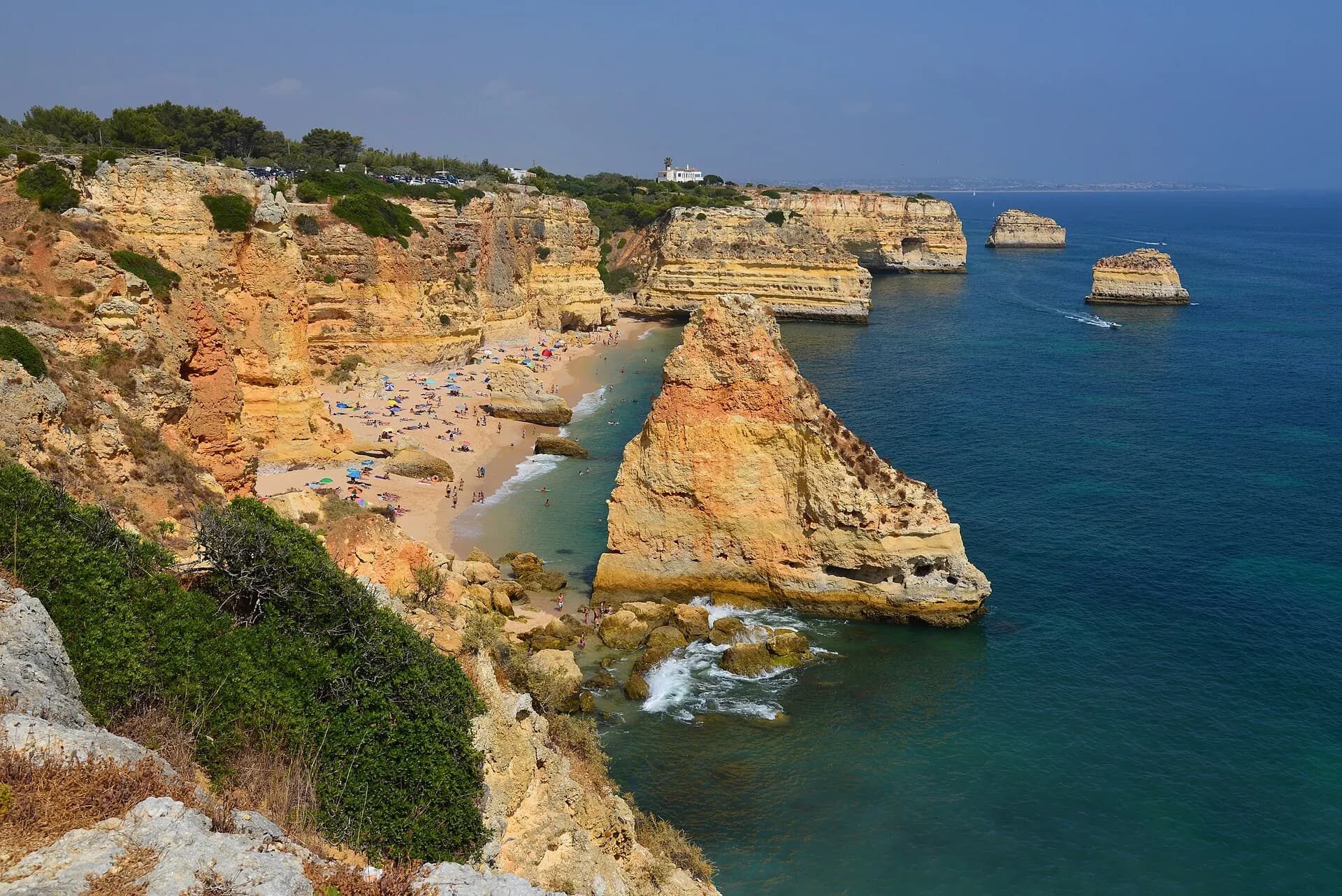
Often named among the finest beaches in Europe, Praia da Marinha is a cove of golden sand beneath honey-coloured cliffs, with clear water and sea stacks just offshore, including the well-known double arch seen from the cliff path. Steps lead down from a small car park, and the trail west towards Benagil starts here. There are few facilities, which is part of the charm.
TipSnorkel around the rocks on a calm day at low tide, and leave the beach as you found it.
- 11
Faro old town
Photo: Husond, CC BY-SA 3.0, via Wikimedia Commons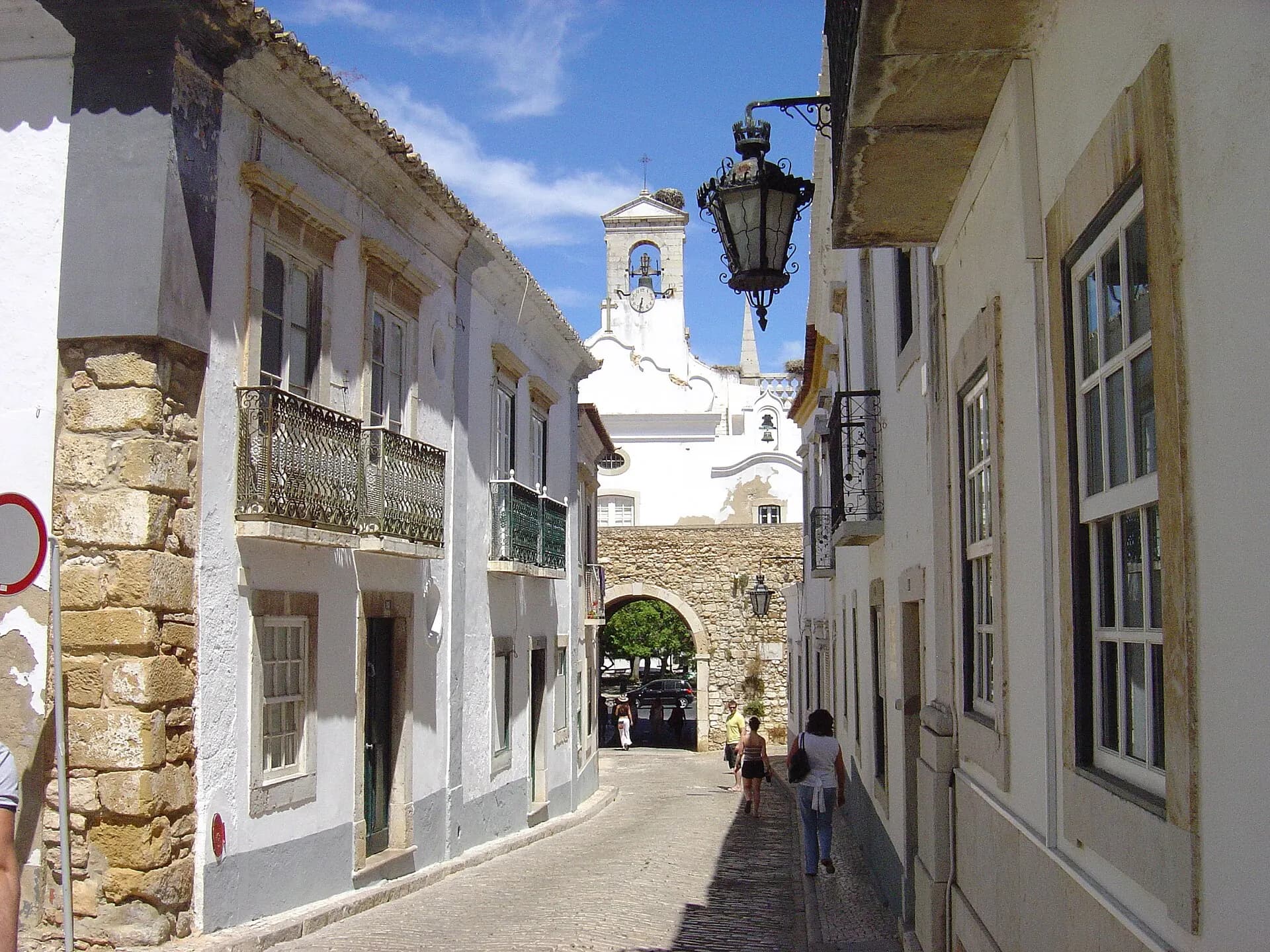
Most visitors only pass through Faro's airport, which is a shame. The Algarve's capital has a compact walled old town, the Cidade Velha, entered through the neoclassical Arco da Vila gate, with orange trees, cobbled squares and storks nesting on the bell towers. The cathedral's tower offers a fine view over the rooftops and the lagoon, and the Igreja do Carmo has a chapel lined with the bones of former friars. Faro is also a real working city, with good-value restaurants and a lively student population.
- 12
Ria Formosa: Ilha Deserta and Culatra
Photo: Kritzolina, CC BY-SA 4.0, via Wikimedia Commons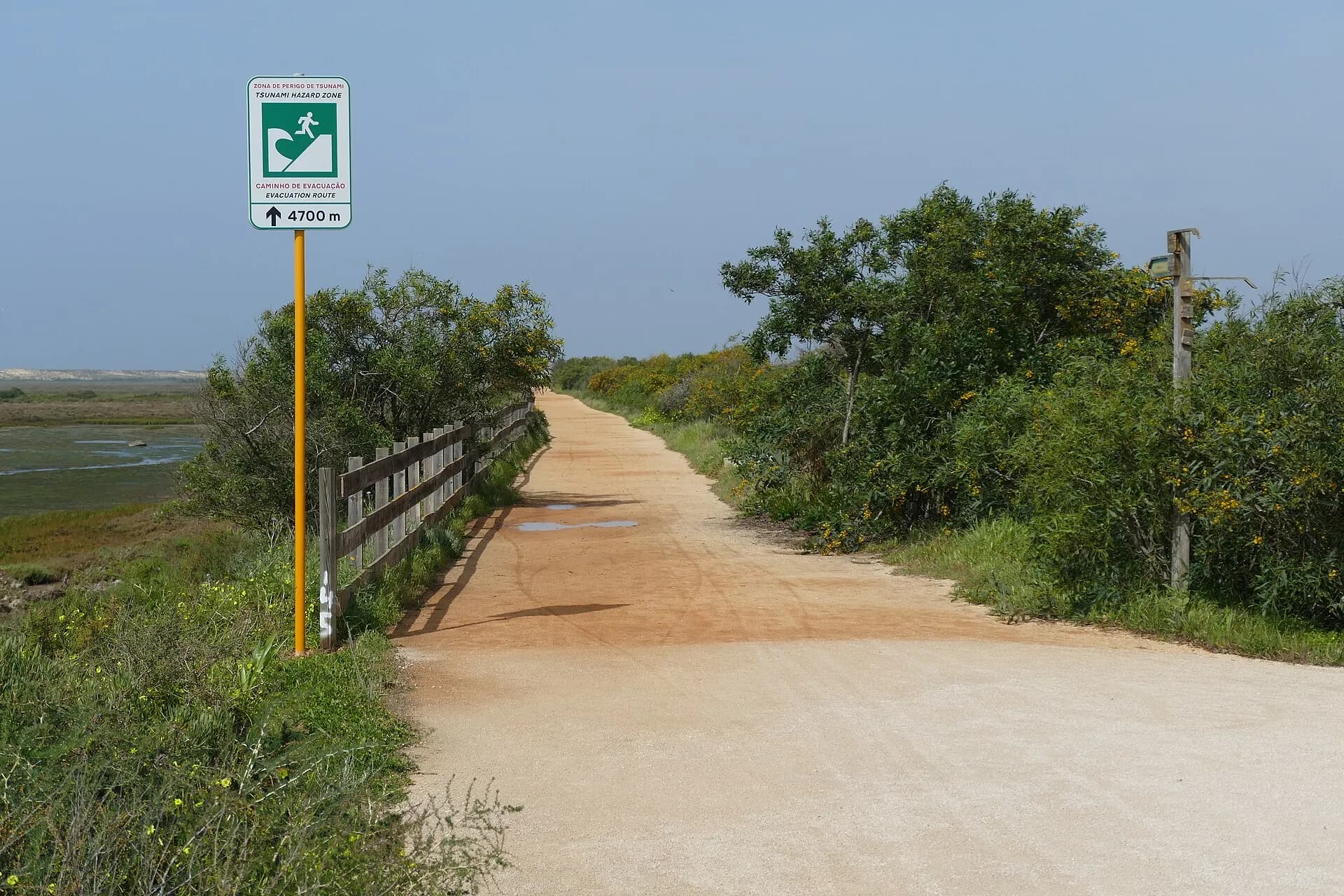
The Ria Formosa Natural Park protects some 60 kilometres of coast where a chain of barrier islands and sandbanks shelters a maze of tidal channels, salt marshes and salt pans. It is one of the most important wetlands in Portugal, home to flamingos, spoonbills, the rare purple swamphen and seahorses, and the source of much of the country's clams and oysters.
Boats from Faro carry visitors to Ilha Deserta, officially Ilha da Barreta, an undeveloped island with long empty beaches, a boardwalk and a single restaurant. From Olhão, regular ferries serve Culatra, an island of fishing families with sandy lanes and no cars, and the holiday island of Armona.
TipChoose small, licensed operators that respect the park's rules, and stay on the boardwalks across the dunes.
- 13
Tavira
Photo: Dmitry Tonkonog, CC BY-SA 3.0, via Wikimedia Commons
Tavira is often called the prettiest town in the Algarve, built on both banks of the River Gilão and linked by an old arched bridge. Whitewashed houses with distinctive hipped roofs, dozens of churches and the remains of a Moorish castle with a small garden give it a gracious, unhurried air. From the edge of town, boats cross to Ilha de Tavira, and at nearby Praia do Barril a little train runs to a beach known for its "cemetery" of old tuna-fishing anchors.
- 14
Cacela Velha
Photo: Xabier Cañas, CC BY-SA 4.0, via Wikimedia Commons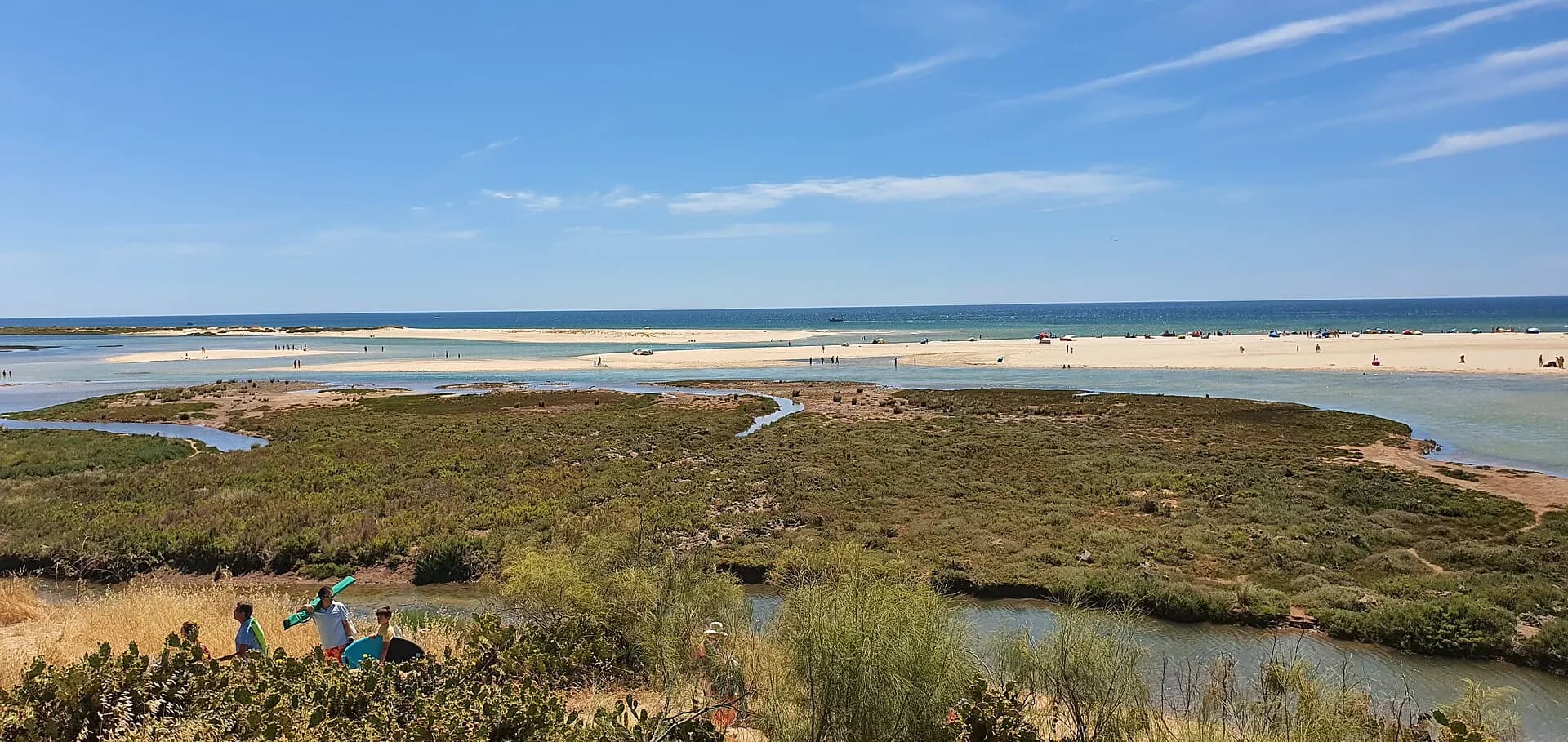
A tiny whitewashed village with a church and a small fort on a bluff above the eastern end of the Ria Formosa, looking over the lagoon to a sand bar and the open sea. At low tide you can wade across to the beach; at high tide, fishermen ferry people over. It is a peaceful place to end a journey along the coast, a few kilometres short of the Spanish border.
When to go
The Algarve has one of the sunniest climates in Europe, with hot, dry summers and mild winters. April to June is ideal, with wild flowers on the cliffs, long days and comfortable walking temperatures, although the sea is still cool. September and October are perhaps the best months of all: the sea is at its warmest, the crowds thin out after the school holidays and the light softens.
July and August are hot and very busy, with crowded beaches, full car parks and higher prices; the west coast and the east stay a little calmer. From November to March many resort hotels and restaurants close, but the towns stay lively, the almond trees blossom in late January and February, and it is an excellent season for walking, birdwatching in the Ria Formosa and cheaper stays. Rain falls mostly in winter, in short spells.
Getting around
A car gives the most freedom, especially for the west coast, the hills and the smaller beaches. The A22 motorway runs the length of the region and uses electronic tolls only, with no booths: rental companies usually provide a transponder or a way to pay, so ask when collecting the car. The older N125 is free but slow and busy.
Without a car, the Linha do Algarve, the regional railway run by CP, runs along the coast between Lagos and Vila Real de Santo António on the Spanish border, stopping at towns including Portimão, Silves, Albufeira, Loulé, Faro, Olhão and Tavira. It is cheap and scenic, but trains are not very frequent and some stations, including Albufeira, Loulé and Silves, are well outside the towns they serve. Intercity and Alfa Pendular trains link Faro with Lisbon in roughly three to three and a half hours, with some continuing to Porto; there are also frequent long-distance coaches.
Regional buses fill the gaps between towns, and boats run from Faro, Olhão and Tavira to the Ria Formosa islands. Faro airport, the region's gateway, has no rail link; buses and taxis connect it to the city centre and the railway station in a few minutes.
Local tips
- Several municipalities charge a tourist tax on overnight stays. In 2026 these include Faro (€1.50 a night all year), Albufeira and Portimão (€2 from April to October, €1 in winter), plus Lagoa, Loulé, Olhão and Vila Real de Santo António; it is usually capped at a set number of nights, with children exempt. Check your booking for the exact amount.
- Bread, olives and other starters placed on the table are charged if you eat them; send them back if you do not want them.
- Car parks at popular beaches fill early in summer. Arrive before 10am or go late in the afternoon.
- The sun is strong even in spring and autumn; carry water, a hat and sunscreen on clifftop walks.
- Many smaller restaurants close one day a week and some shut entirely in winter.
- Lunch is the best-value meal, often with a set menu of the day.
- Do not park or picnic right at the cliff edge: cliffs here collapse without warning.
Beaches and sea safety
The Algarve has more than a hundred beaches, from tiny coves reached by steps to sandy islands stretching for kilometres. Lifeguards patrol designated beaches during the bathing season, usually from late spring to late September or October. Learn the flags: green means swimming is allowed, yellow means you may paddle but not swim, and red means no entering the water at all. A chequered flag shows a beach is temporarily without a lifeguard.
The biggest hazard is the cliffs themselves. The soft limestone erodes constantly and rockfalls are common, especially after rain, so never sit or sunbathe directly beneath a cliff face or walk near the edge on top; many beaches mark danger zones with signs and tape. On the west coast, waves and rip currents are powerful, and even strong swimmers should stay between the flags. At Benagil and similar caves, follow the rules above: they exist because boats, kayaks and swimmers crowded into the same small spaces.
A short Moorish history
The Moors arrived in 711 and ruled what they called al-Gharb al-Andalus for more than five centuries. Silves, then known as Xelb, became a wealthy capital with a busy river port, and towns such as Faro, Tavira, Loulé and Aljezur grew behind walls whose remains still stand. The Moors introduced irrigation systems, citrus fruits and almonds, and left their mark on the place names, on the flat-roofed white houses and possibly on the region's ornate pierced chimneys.
The Christian reconquest of the Algarve was completed by 1249, earlier than in neighbouring Andalusia, and the region was later ruled as a separate "kingdom" under the Portuguese crown. In the fifteenth century the coast around Lagos and Sagres became the launching point for Portugal's voyages along the coast of Africa. The great earthquake of 1755 devastated much of the region, which is why so many churches and town centres date from the decades that followed.
Eat and drink
Seafood is the heart of Algarve cooking. The signature dish is the cataplana, named after the hinged copper pan in which it is cooked: clams, fish, prawns or pork are steamed with tomatoes, peppers, onion and wine, and the pan is opened at the table. Grilled sardines are the taste of summer, and Portimão is particularly known for them. Look out too for octopus, especially in Santa Luzia near Tavira, which calls itself the octopus capital; clams from the Ria Formosa; and chicken piri-piri, a speciality of the inland village of Guia.
Sweets draw on the Moorish legacy of almonds, figs and carob: try the little marzipan shapes called doces finos and the almond cake known as Dom Rodrigo. The Algarve also makes wine, increasingly good, around Lagoa and Silves, and the strong local spirits medronho and amarguinha, an almond liqueur. The covered markets in Olhão, Loulé and Lagos are excellent places to see the morning's catch and pick up fruit, cheese and nuts.
Where to stay
For a mix of history, nightlife and beaches, Lagos makes a good western base, with easy access to Ponta da Piedade, Sagres and the west coast. Carvoeiro and Ferragudo are smaller and well placed for Benagil, Praia da Marinha and Silves. Albufeira and Vilamoura are the big resort centres, convenient but busy. In the east, Tavira is the most charming base, with Faro and Olhão handy for the Ria Formosa islands and the railway.
For something quieter, look at rural guesthouses in the hills near Monchique or the farmstays and surf houses near Aljezur and along the Rota Vicentina. In July and August, book well ahead everywhere.
Responsible travel
Much of the Algarve's coast is protected, from the natural parks of the west coast and the Ria Formosa to the marine park off the cliffs near Benagil. Stick to marked paths on clifftops and dunes, where vegetation holds the fragile sand in place, and never take shells, sand or stones. Choose licensed boat and kayak operators that keep within numbers and distance limits around caves and wildlife, including the dolphins sometimes seen offshore.
Water is scarce in the Algarve, which has faced repeated droughts, so take short showers and reuse towels. Spreading your visit beyond the busiest weeks and places, into the hills, the west coast, the east and the low season, eases pressure on the hotspots and supports the villages that see fewer visitors.