Lisbon
Seven hills, yellow trams, tiled facades and river light. Europe's sunniest capital is made for slow wandering and long lunches.
- Best time to go
- March to June and September to October, for warm, sunny days without the peak heat
- Local time
- –
- Currency
- Euro (EUR)
- Reading time
- 4 min
- Language
- Portuguese
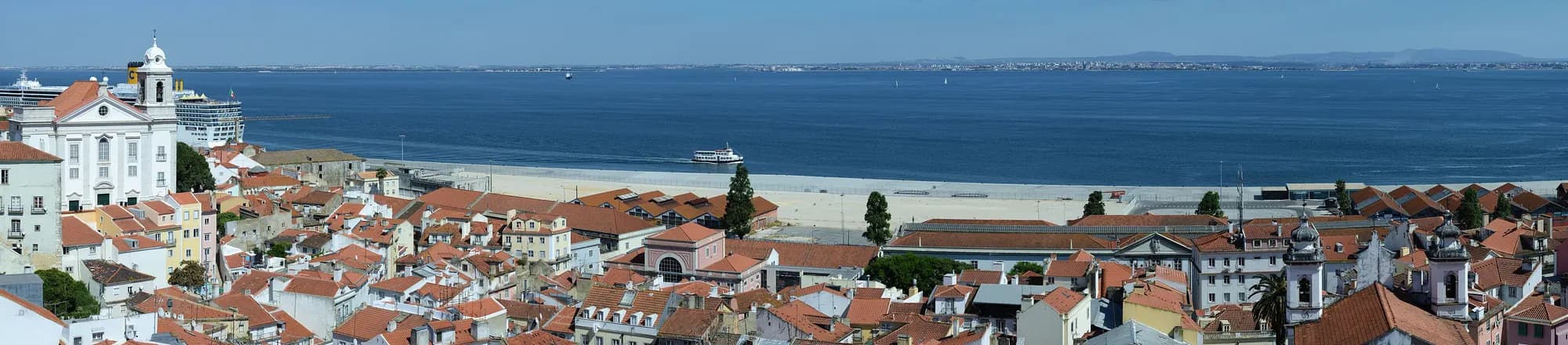
Lisbon spills down a series of steep hills to the wide estuary of the River Tagus, and its charm lies in the climb: cobbled lanes, tiled houses, washing hung from balconies, and around each corner a miradouro, a viewpoint over terracotta roofs to the water. Much of the lower city was rebuilt after a catastrophic earthquake in 1755, while the oldest districts, Alfama and Mouraria, kept their tangled medieval streets.
It is a relaxed, sociable city, with excellent food, a thriving café culture and some of the best value in Western Europe. Bring comfortable shoes, take the trams and funiculars when your legs give out, and make time for the river and the coast beyond.
The top 9 in Lisbon
- 1
Alfama
Photo: Matti Blume, CC BY-SA 4.0, via Wikimedia Commons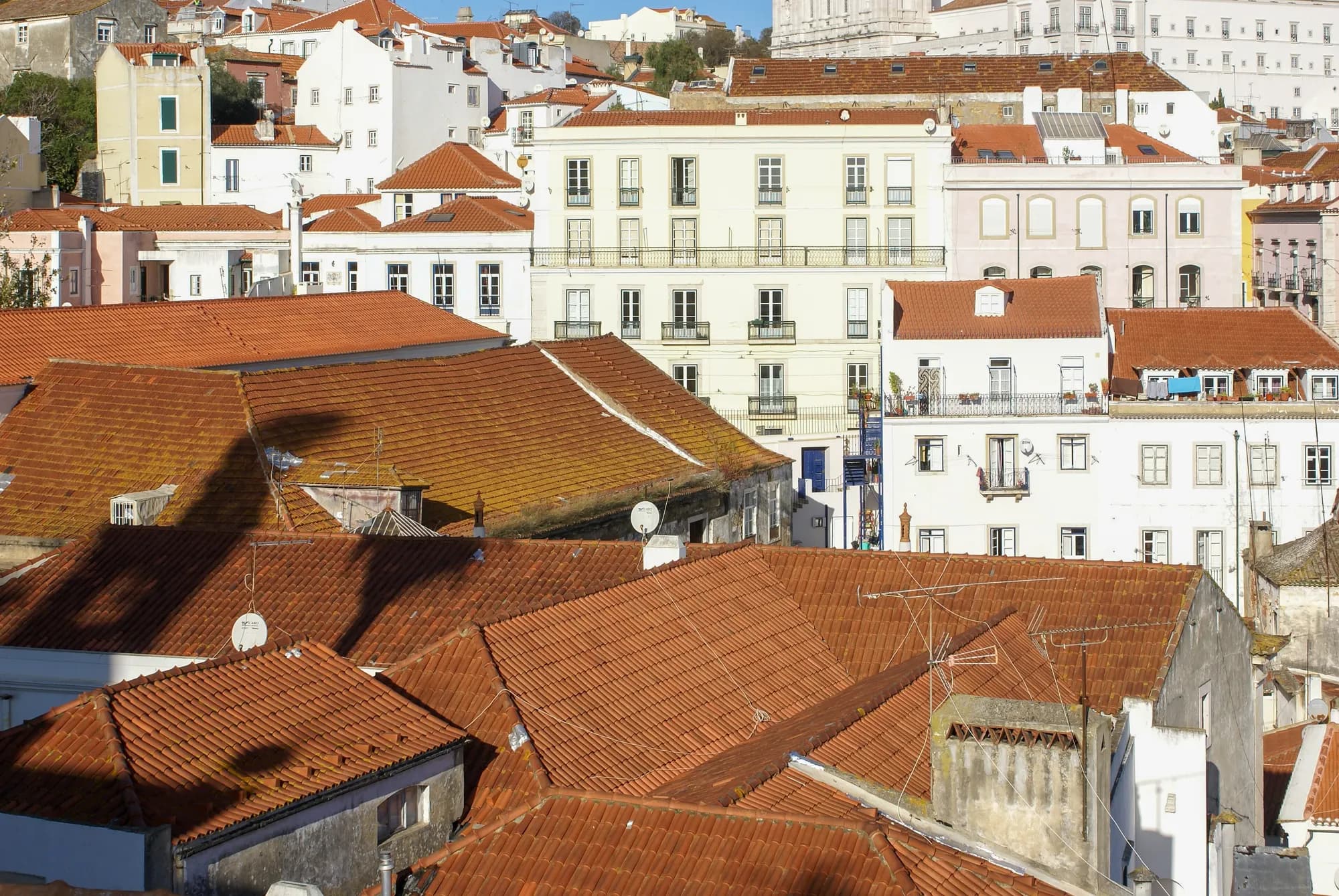
The oldest neighbourhood in Lisbon, a maze of alleys and stairways tumbling from the castle to the river, survived the great earthquake largely intact. It is the home of fado, Portugal's soulful song tradition, and in June its streets fill with grilled sardines and parties for the city's festival of Saint Anthony.
TipPut the map away and get lost here; you can always head downhill to find the river again.
- 2
São Jorge Castle
Photo: Jakub Hałun, CC BY 4.0, via Wikimedia Commons
A Moorish castle on the highest hill of the old city, with walls and towers you can walk, shady gardens with peacocks, and the widest views over Lisbon. The ruins of the old royal palace and an archaeological site show the hill's long history.
TipGo in the late afternoon and stay on the ramparts for sunset.
- 3
Baixa and Praça do Comércio
Photo: Diego Delso, CC BY-SA 3.0, via Wikimedia Commons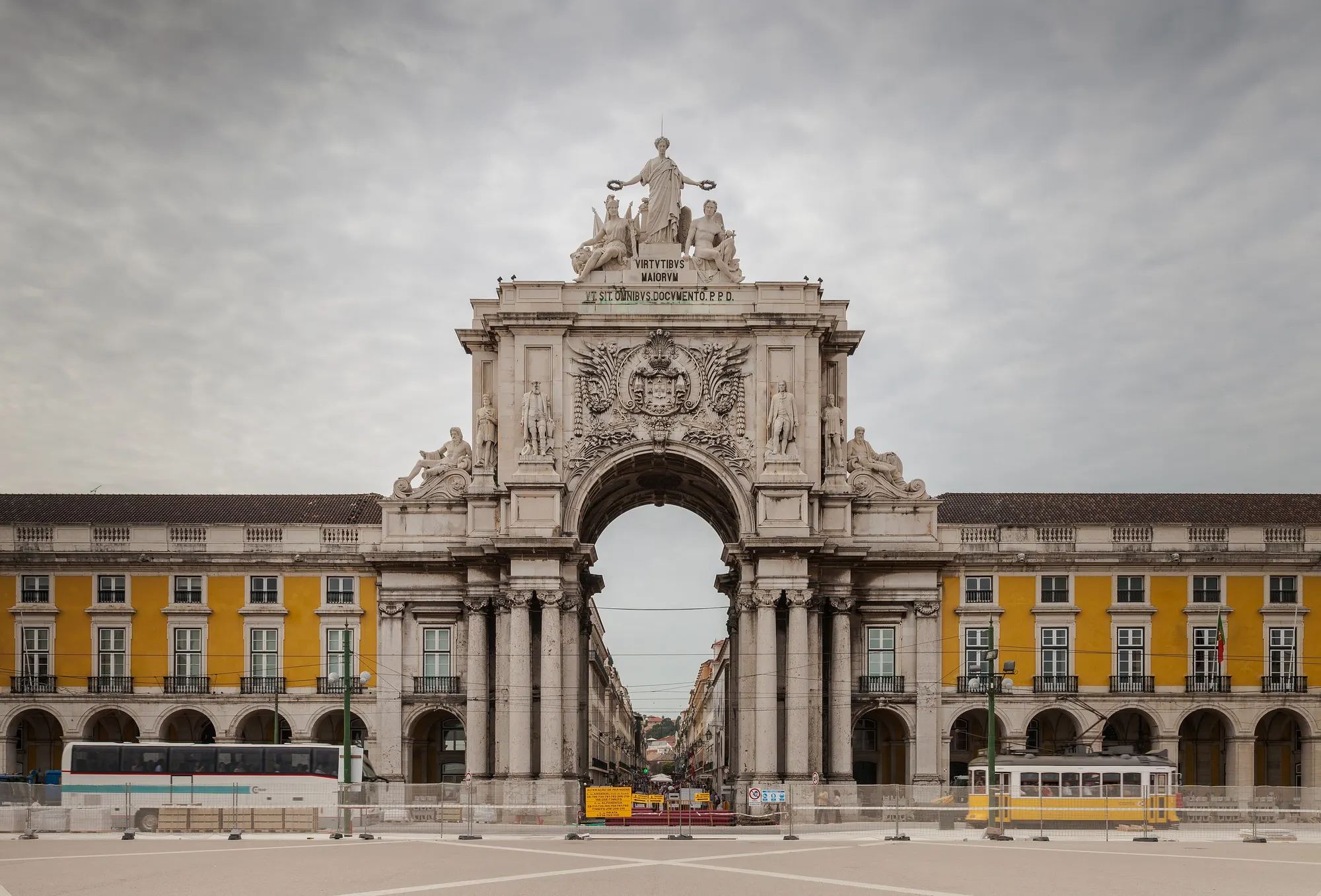
The grid of the lower town was rebuilt after 1755 as one of the first planned city centres in Europe, with straight streets of shops leading down to the Praça do Comércio, a vast arcaded square opening onto the river through a triumphal arch.
- 4
Belém
Photo: Jakub Hałun, CC BY 4.0, via Wikimedia Commons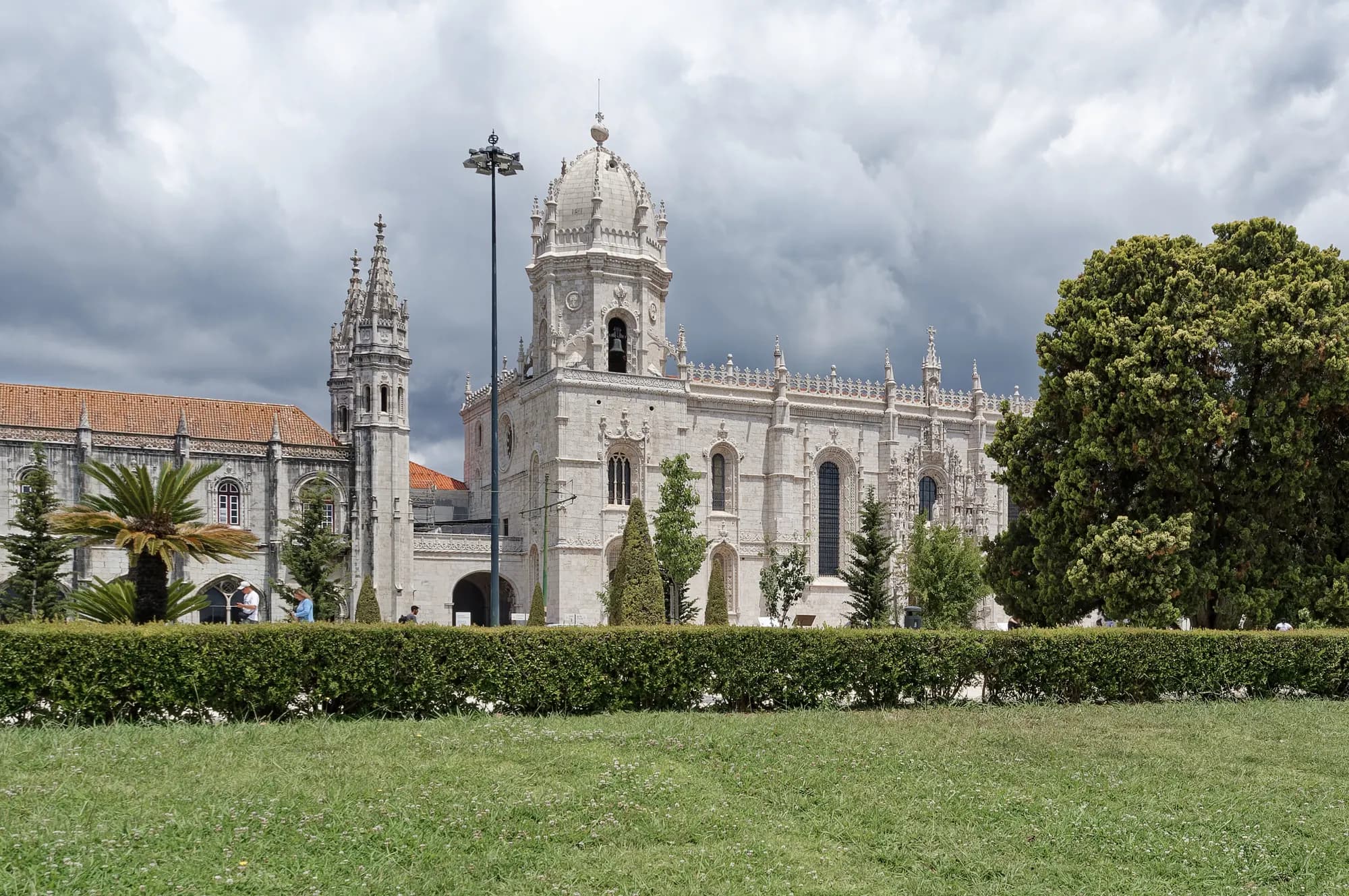
The riverside district from which Portugal's explorers sailed in the Age of Discovery. Its highlights are the Jerónimos Monastery, a masterpiece of the ornate Manueline style, with a cloister carved like lace; the Belém Tower, a fortress standing in the river; and the Monument to the Discoveries. It's also the home of the original pastéis de Belém, the custard tarts sold here since 1837.
TipBook the monastery online and arrive early; it is closed on Mondays.
- 5
Tram 28
Photo: Ввласенко, CC BY-SA 4.0, via Wikimedia Commons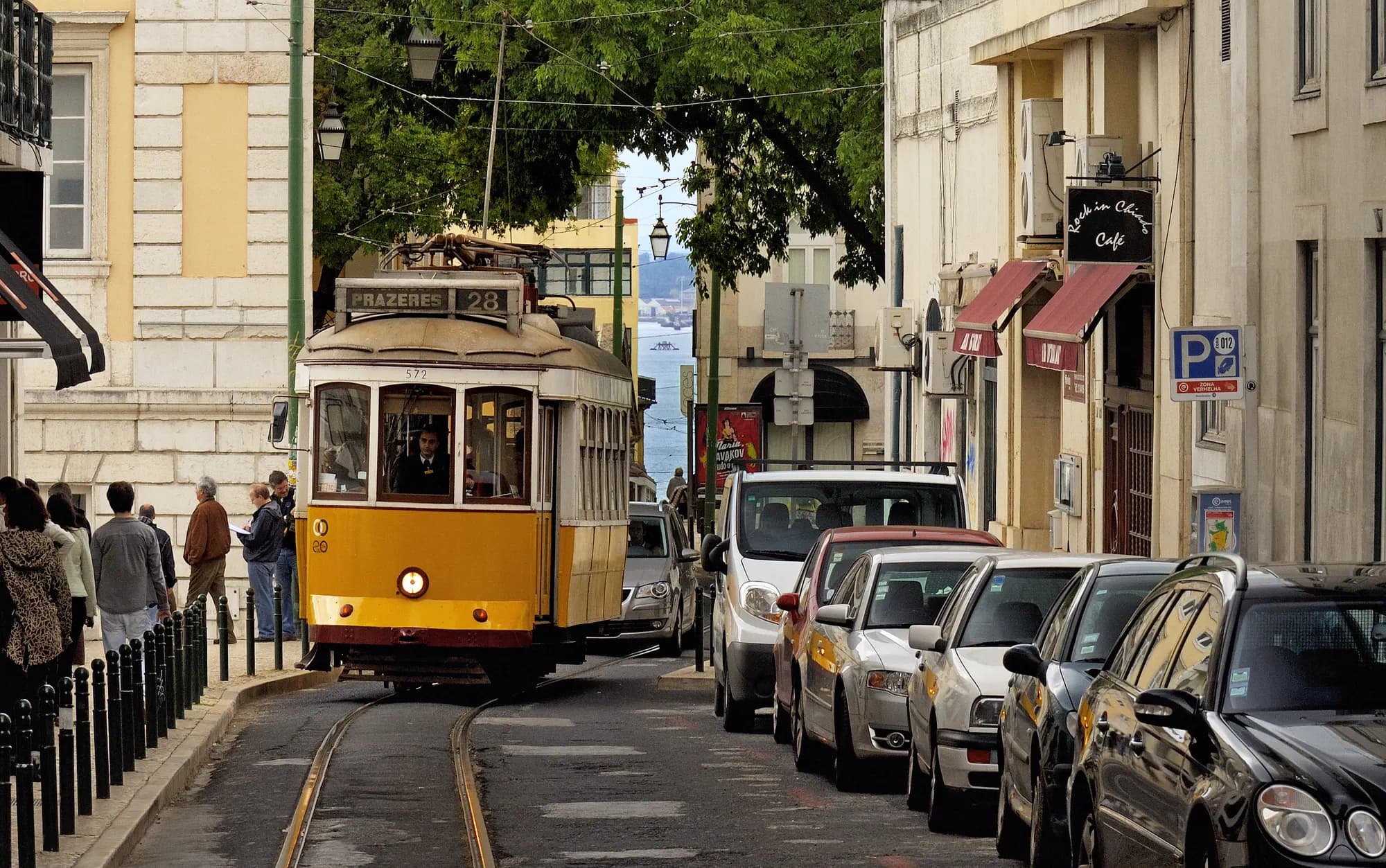
The yellow trams have run through Lisbon's narrow streets for more than a century, and the route of tram 28 climbs through Graça, Alfama, Baixa and Estrela, squeezing past houses with centimetres to spare. It's a ride as much as a means of transport.
TipBoard at the terminus at Martim Moniz early in the morning to get a seat, and watch your pockets on crowded trams.
- 6
Bairro Alto and Chiado
Photo: Filipe Fortes from United States, CC BY-SA 2.0, via Wikimedia Commons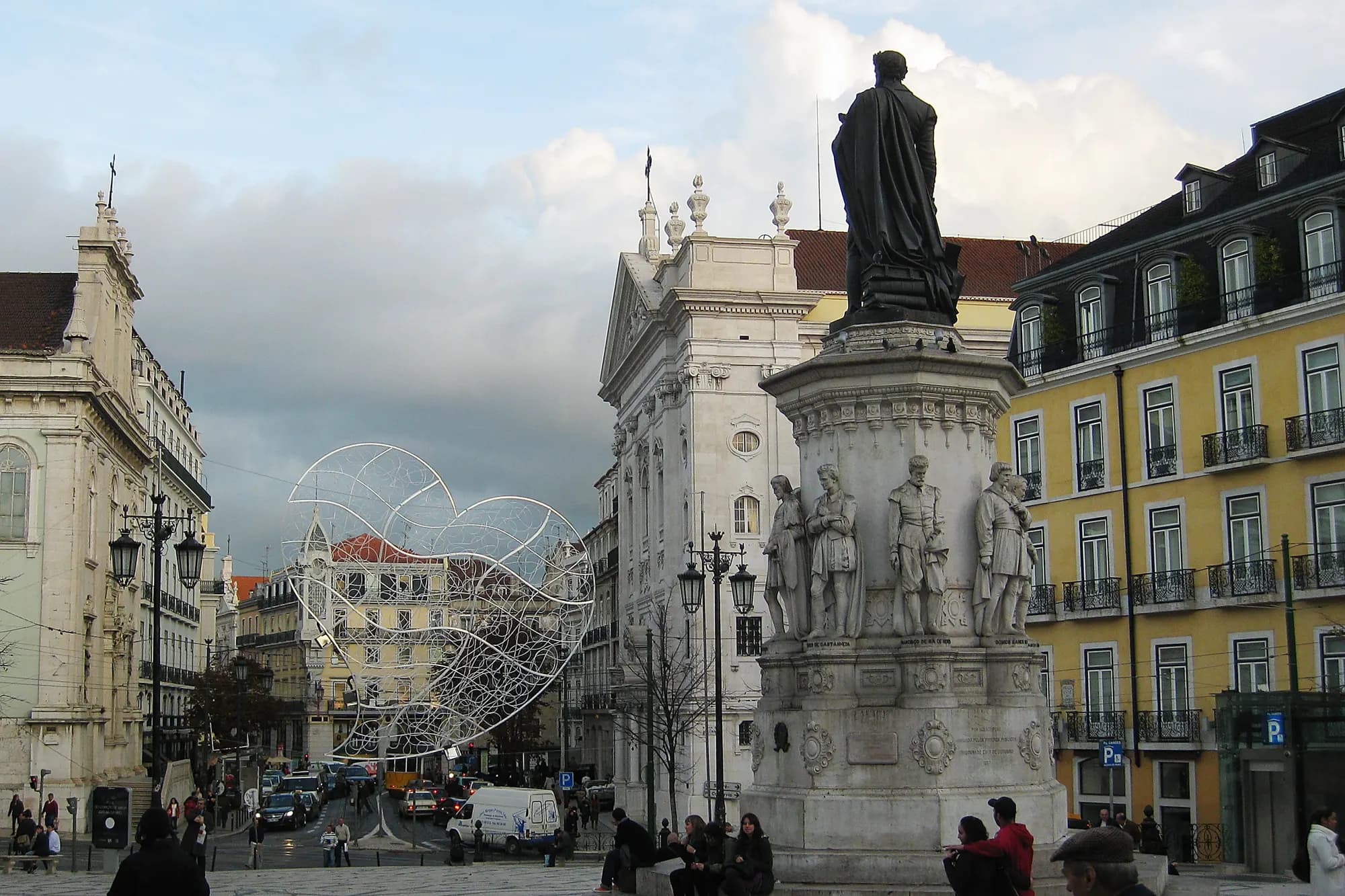
Chiado is the elegant quarter of old cafés, theatres and bookshops, including what is often described as the world's oldest operating bookshop, Bertrand. Next door, Bairro Alto is quiet by day and transforms after dark into the city's liveliest nightlife district, with drinkers spilling from tiny bars into the streets.
- 7
Miradouro da Senhora do Monte
Photo: Holger Uwe Schmitt, CC BY-SA 4.0, via Wikimedia Commons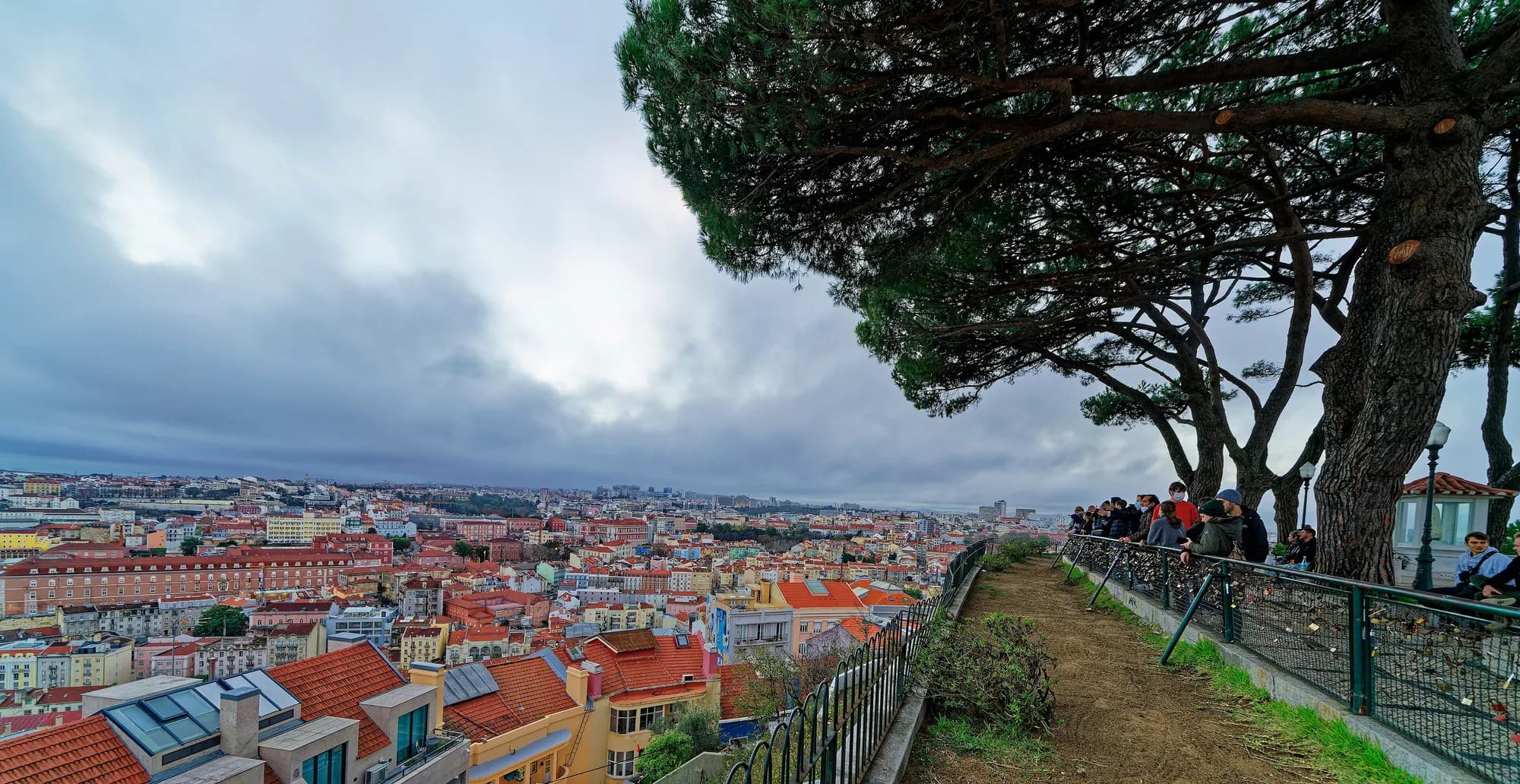
The highest of Lisbon's viewpoints, above the neighbourhood of Graça, with a panorama over the castle, the river and the city centre. Nearby, the Miradouro da Graça has a café terrace under the pines.
- 8
Parque das Nações and the Oceanarium
Photo: Jan Helebrant, CC0, via Wikimedia Commons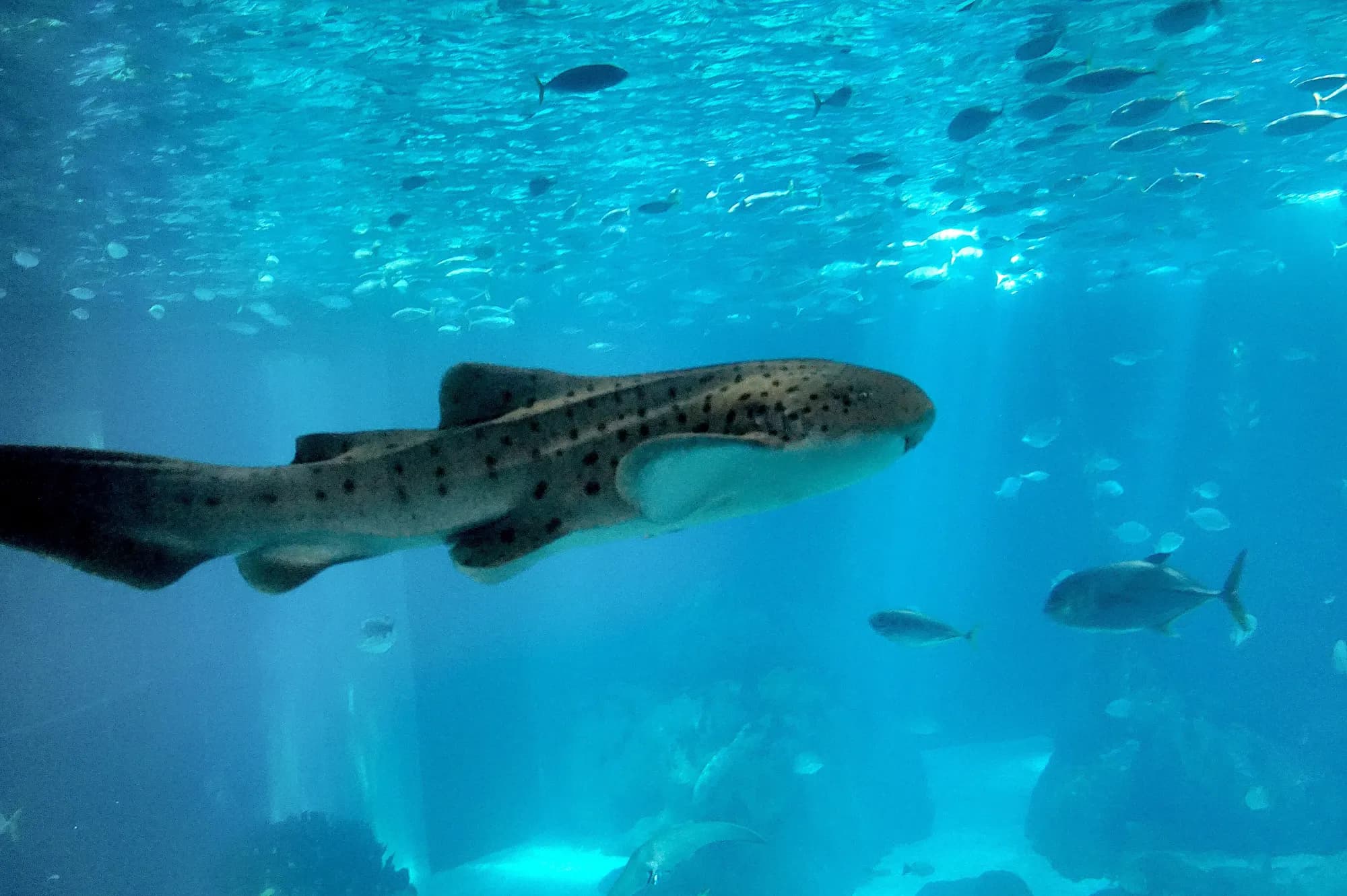
The site of the 1998 World Expo is now a modern riverside district with walkways, gardens and a cable car. Its big draw is the Oceanário de Lisboa, one of Europe's largest aquariums, built around a huge central tank.
- 9
Sintra
Photo: CEphoto, Uwe Aranas, CC BY-SA 3.0, via Wikimedia Commons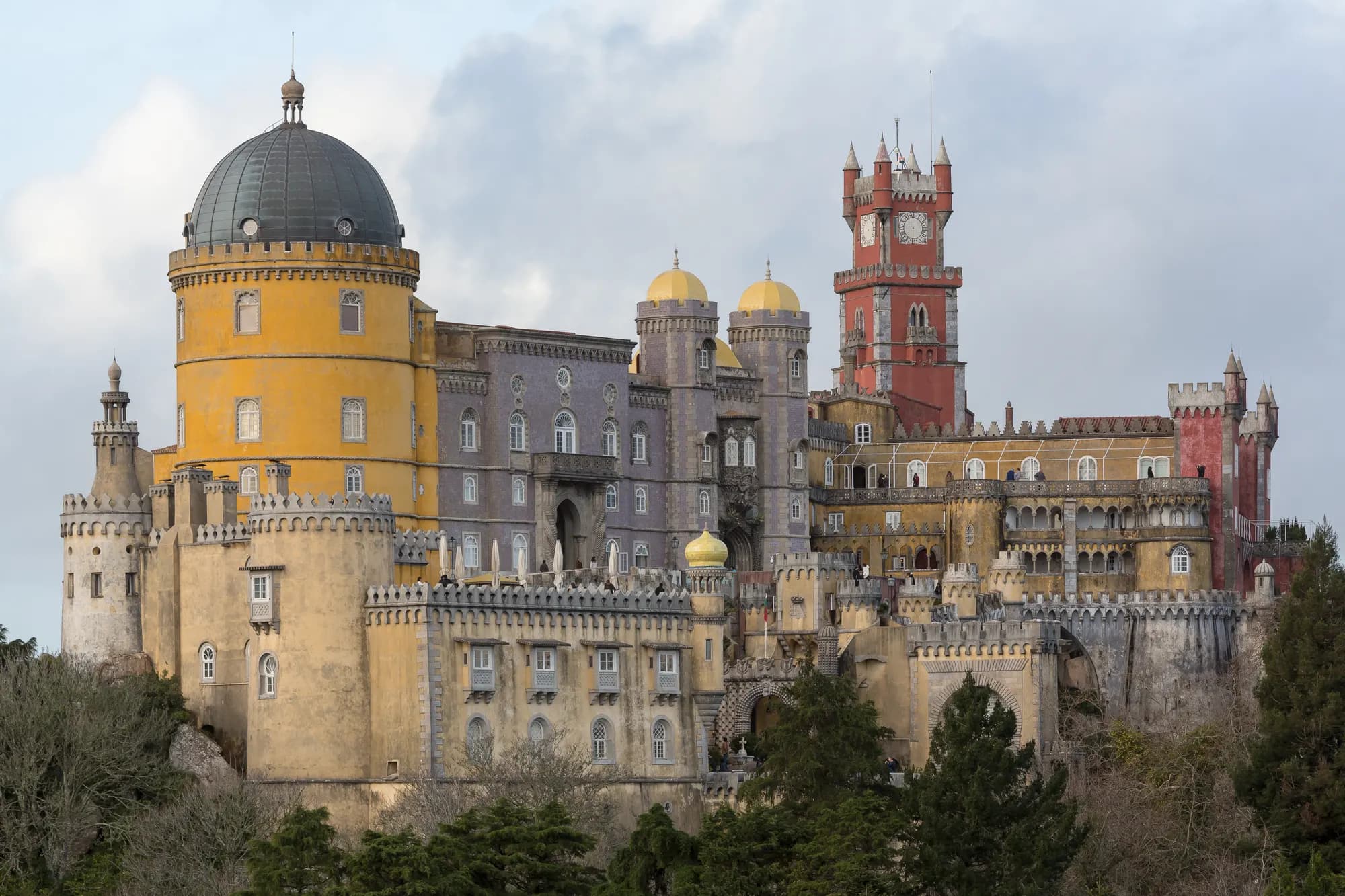
A romantic town of palaces and gardens in the forested hills west of Lisbon, and a World Heritage Site. Highlights include the colourful Pena Palace, the Moorish Castle on its ridge, and the mysterious Quinta da Regaleira, with its initiation well spiralling into the earth.
TipTrains from Rossio station take about forty minutes. Go on a weekday, book palace tickets ahead and use the local buses rather than walking the steep roads.
When to go
Lisbon has mild winters and hot, dry summers. Spring and autumn are ideal: warm, bright and good for walking. June is festival month, when the city celebrates its popular saints with street parties, especially on the night of 12 June. July and August are hot and busy. Winter is quiet and often sunny between rainy spells, a good time for museums and lower prices.
Getting around
Walking is the best way to explore, but the hills are steep. The metro is quick for longer distances, and the trams, buses, funiculars and the Santa Justa lift are run by Carris. A rechargeable Viva Viagem card works on all of them and on the ferries and suburban trains; contactless bank cards are increasingly accepted too. Ferries cross the river to Cacilhas for views of the city.
The airport is close to the centre and is linked by the metro's red line. Trains run from Cais do Sodré along the coast to Cascais, and from Rossio to Sintra. Fast trains reach Porto in about three hours.
Local tips
- Wear shoes with good grip: the polished limestone pavements are slippery, especially when wet.
- Bread, olives and cheese brought to your table at a restaurant are not free; send them back if you don't want them.
- Choose fado houses where the music is the focus, and expect a minimum charge.
- Lunch is often the best-value meal, with set menus at local restaurants.
- The sun is strong even in spring: carry water and sunscreen on the hills.
- Many museums are closed on Mondays.
Eat and drink
Portuguese cooking is built on seafood and simple, excellent ingredients. Try grilled sardines in summer, salt cod (bacalhau) in its many forms, bifanas (pork sandwiches), and of course pastéis de nata, the custard tarts. The Time Out Market in Cais do Sodré gathers many local cooks under one roof. Taste ginjinha, a sour-cherry liqueur served in tiny bars around Rossio, and the wines of the Douro, Alentejo and the green wine of the north.