Osaka
Japan's kitchen: neon canals, street food sizzling on every corner, and a famously friendly, fun-loving spirit.
- Best time to go
- March to May and October to November, for mild weather, blossom and autumn leaves
- Local time
- –
- Currency
- Japanese Yen (JPY)
- Reading time
- 4 min
- Language
- Japanese

Osaka has been a merchant city for centuries, a port and trading hub where commerce, not court life, set the tone. That heritage shows in its down-to-earth character: Osakans are known across Japan for their humour, their directness and their love of food, summed up in the local saying kuidaore, "eat until you drop".
It's Japan's third-largest city and a great base for the Kansai region, with Kyoto, Nara and Kobe all within an hour by train. Spend the days exploring its castle, temples and neighbourhoods, and the evenings grazing on street food beneath the neon lights of Dōtonbori.
The top 9 in Osaka
- 1
Dōtonbori
Photo: Tokumeigakarinoaoshima, CC0, via Wikimedia Commons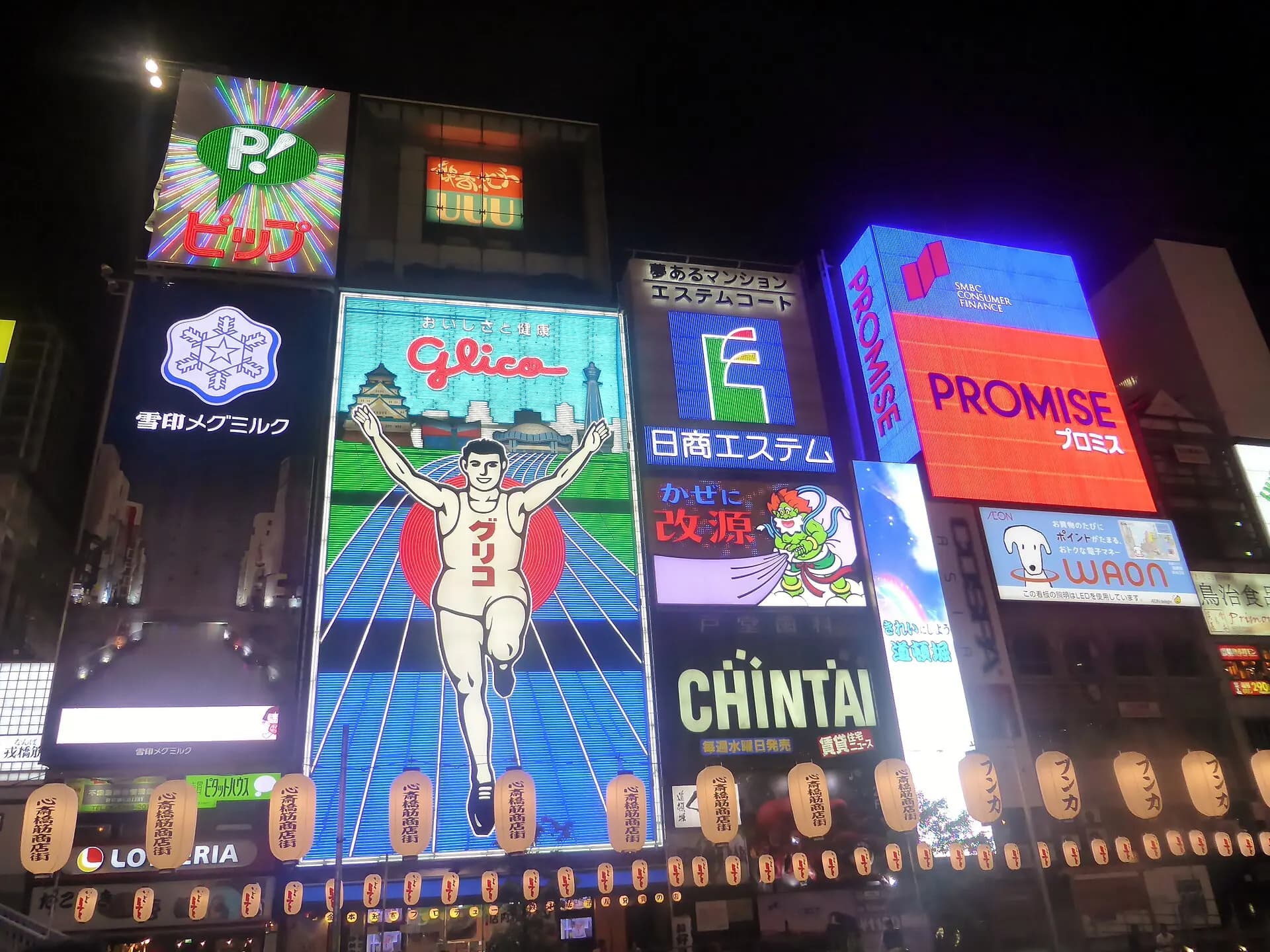
The city's entertainment heart, a canal lined with giant animated signs, including the famous Glico running man, and restaurants advertised by enormous mechanical crabs and pufferfish. It's the place to try takoyaki and okonomiyaki from street stalls, and it's at its best after dark.
TipTake a short boat cruise along the canal for a different view of the lights.
- 2
Osaka Castle
Photo: Martin Falbisoner, CC BY-SA 4.0, via Wikimedia Commons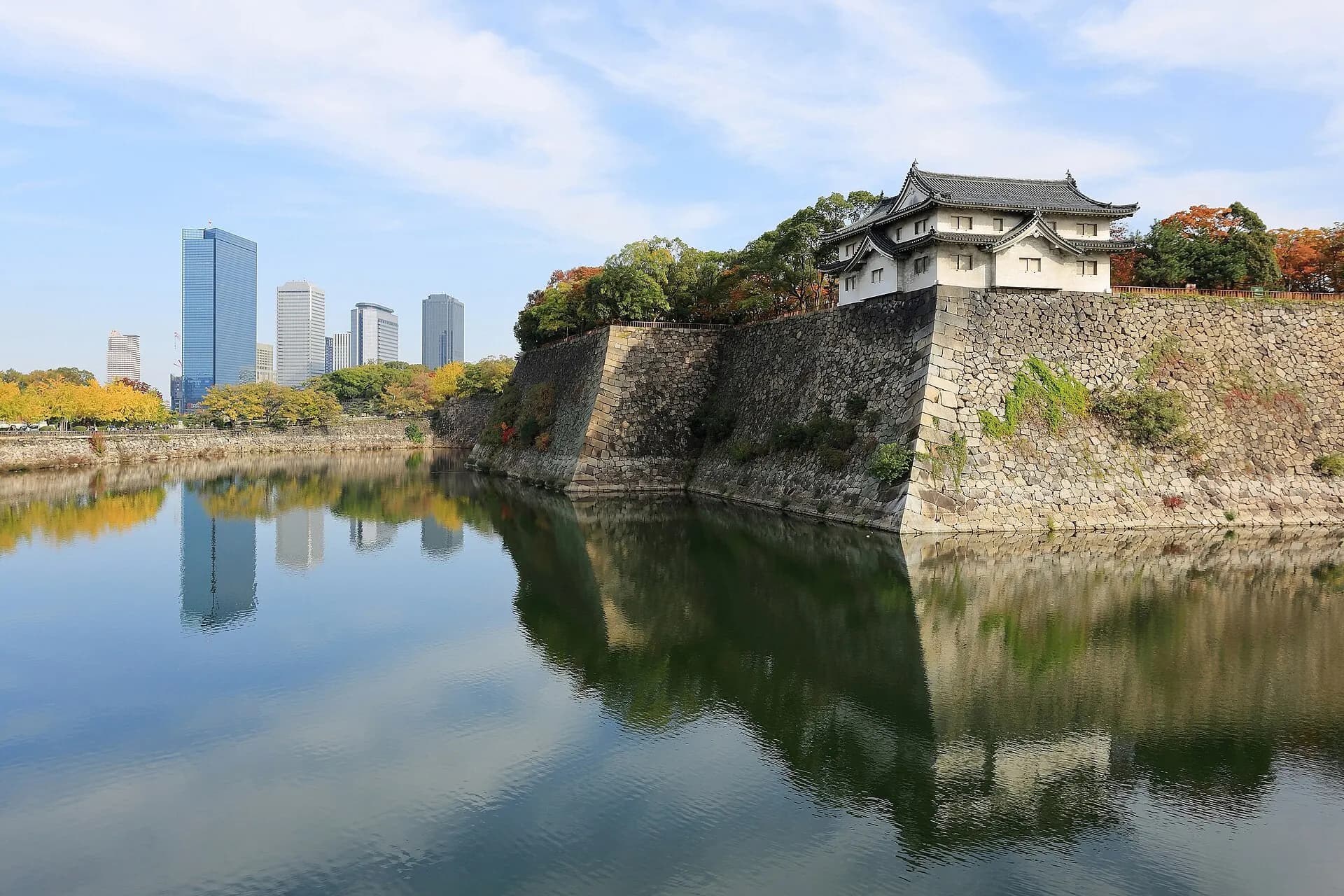
Built by the warlord Toyotomi Hideyoshi in the sixteenth century to unify Japan, the castle was destroyed and rebuilt several times; the current main tower, a reconstruction from 1931, houses a museum about its history, with views from the top. The surrounding park, with its massive stone walls and moats, is one of the city's best cherry blossom spots.
- 3
Kuromon Market
Photo: Dimitri Ségard, CC BY 3.0, via Wikimedia Commons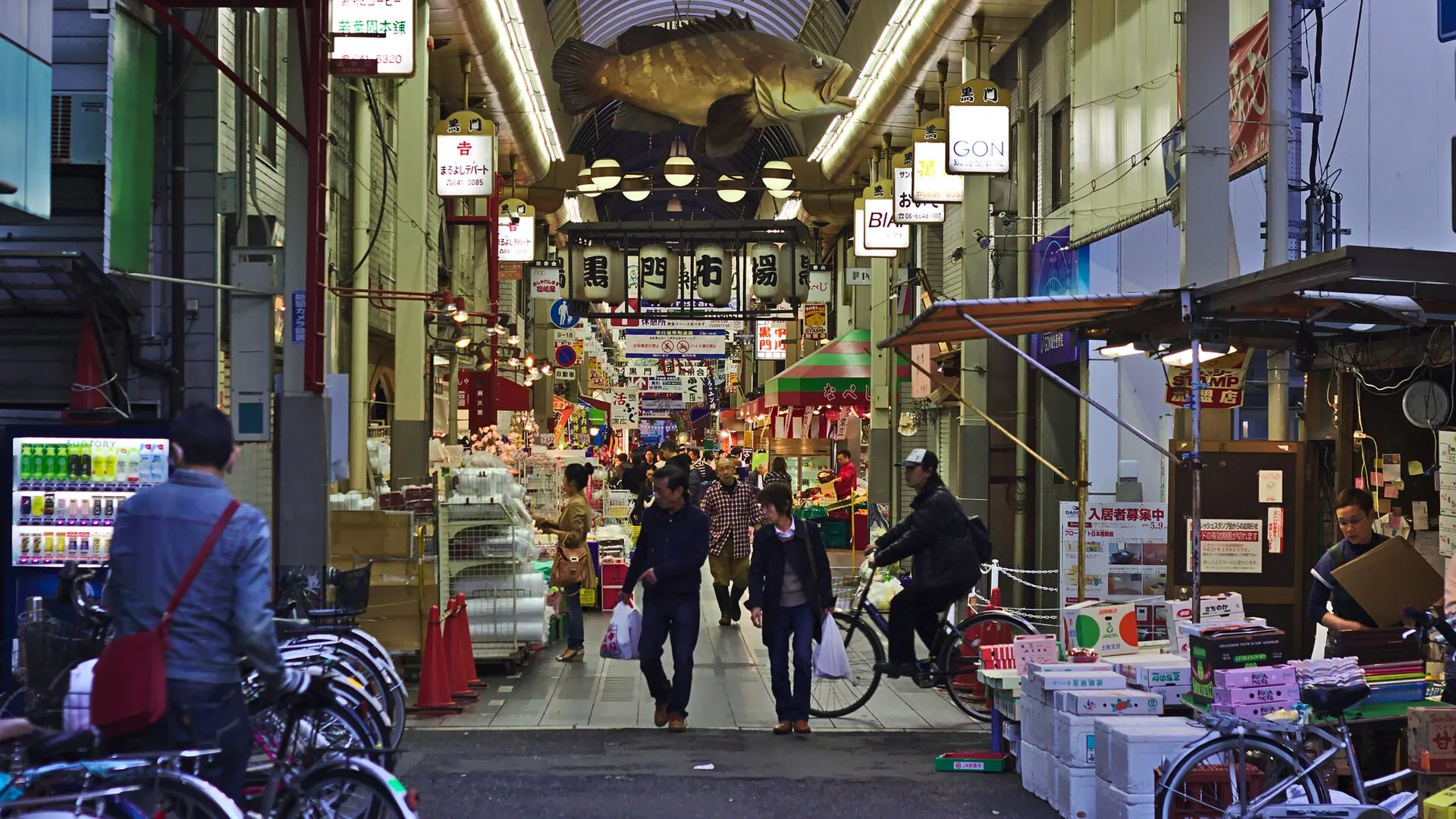
A covered market street, known as "Osaka's kitchen", with stalls selling fresh seafood, wagyu beef, fruit and pickles, many cooked to order on the spot. It's busy with visitors, so go in the morning.
- 4
Shinsekai and Tsutenkaku Tower
Photo: Sakai Yayoi, CC0, via Wikimedia Commons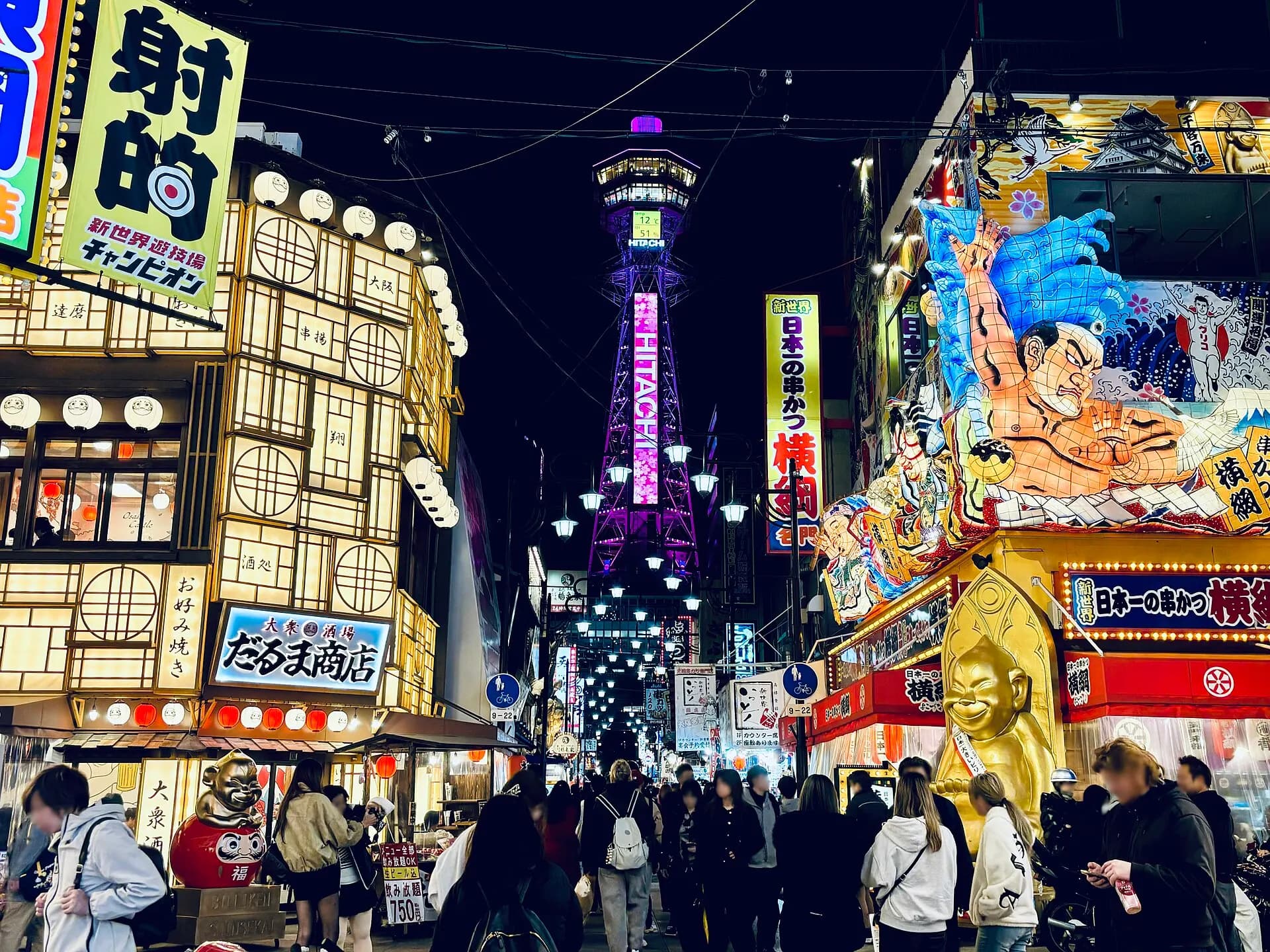
A retro neighbourhood built in the early twentieth century, around the Tsutenkaku Tower, with neon signs, old-fashioned arcades and restaurants serving kushikatsu, skewers of meat and vegetables deep-fried in breadcrumbs.
TipWhen eating kushikatsu, dip each skewer only once in the shared sauce pot; double-dipping is banned.
- 5
Shitennō-ji
Photo: Laitche, CC BY-SA 4.0, via Wikimedia Commons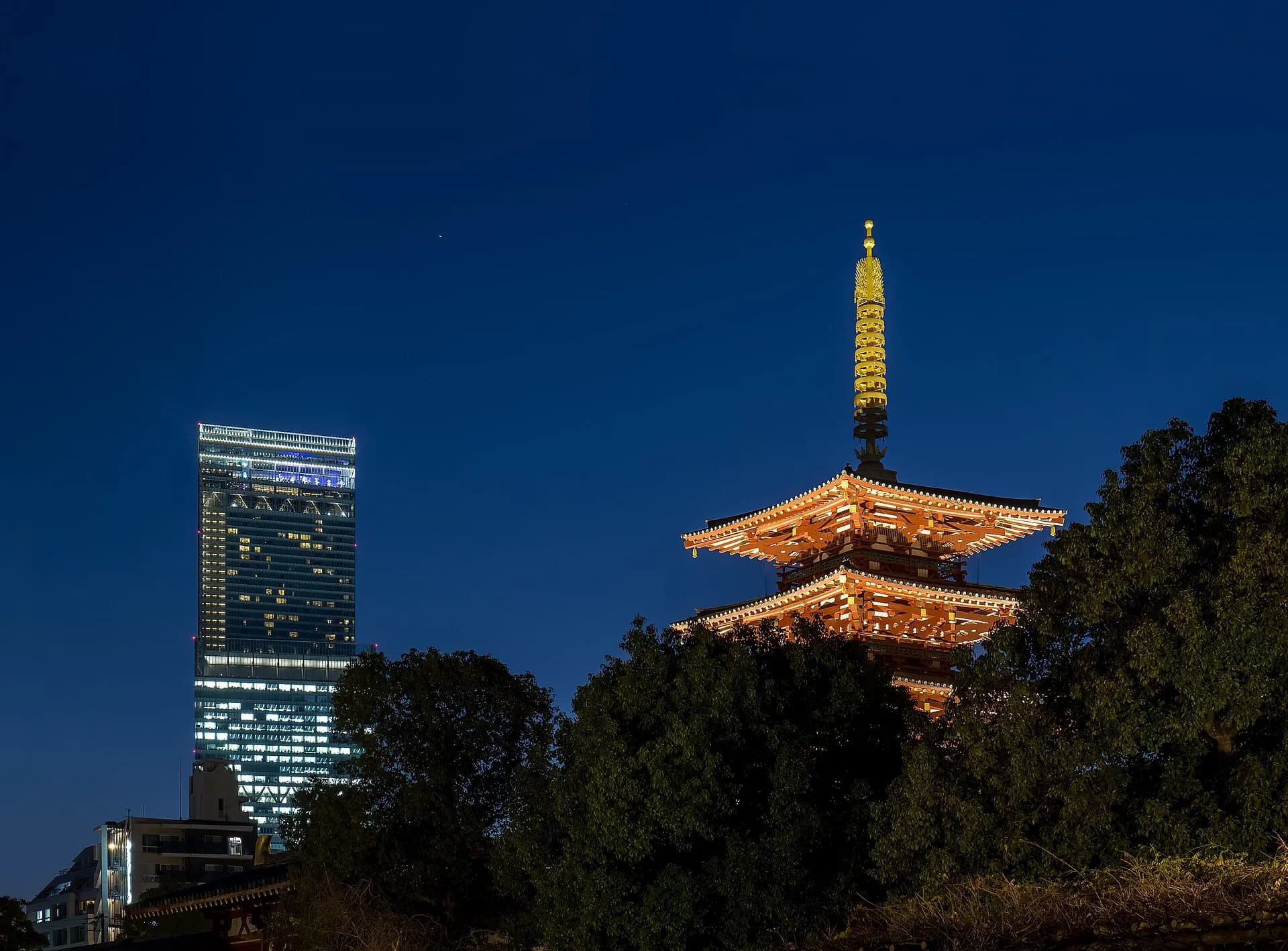
One of the oldest Buddhist temples in Japan, founded in 593 by Prince Shōtoku, with a five-storey pagoda and halls rebuilt in the original style. A large flea market fills its grounds on the 21st and 22nd of each month.
- 6
Umeda Sky Building
Photo: Los Paseos from Earth, CC BY-SA 2.0, via Wikimedia Commons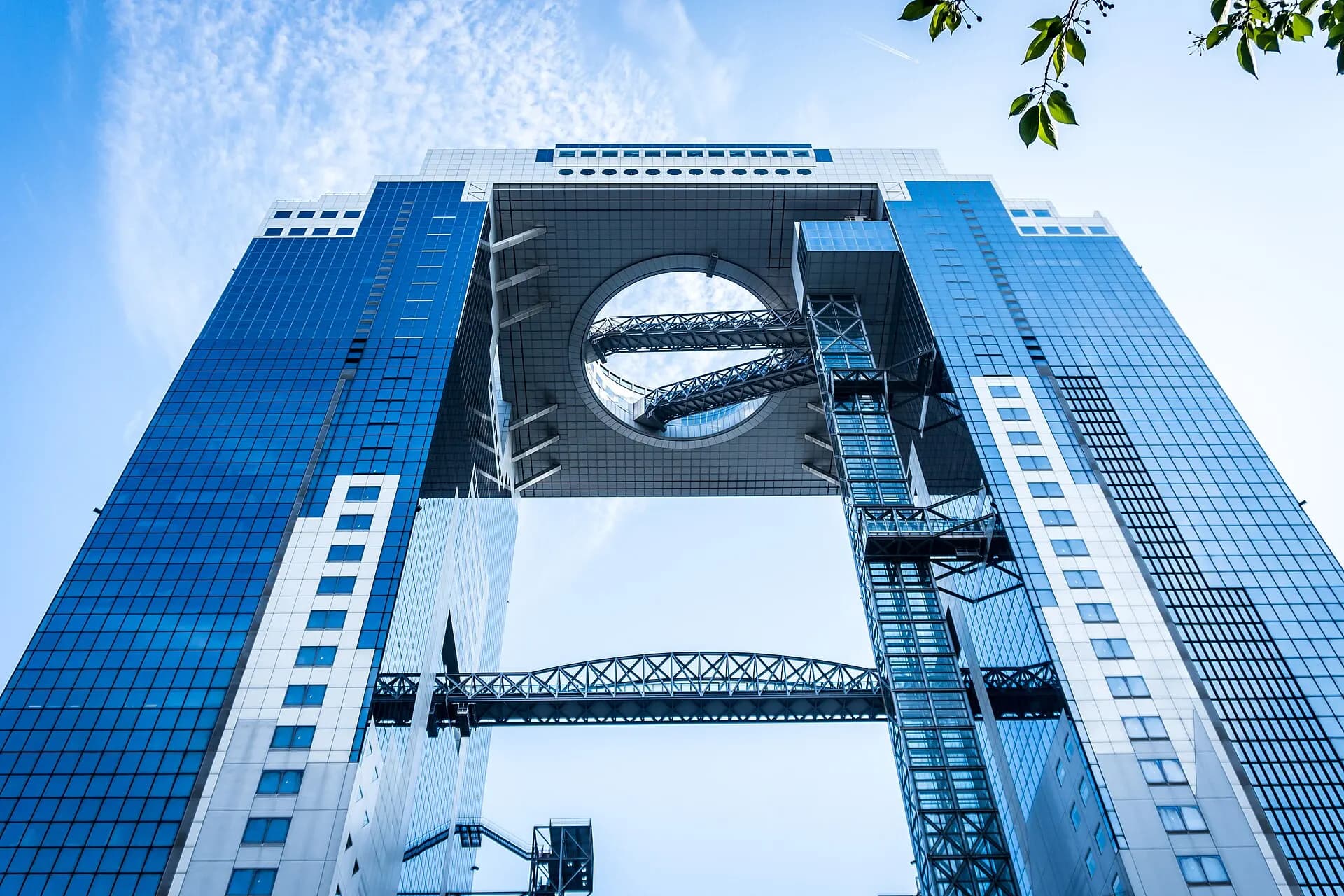
Two towers joined at the top by a ring-shaped "Floating Garden Observatory" open to the sky, with sweeping views over the city, especially at sunset.
- 7
Sumiyoshi Taisha
Photo: Immanuelle, CC BY 4.0, via Wikimedia Commons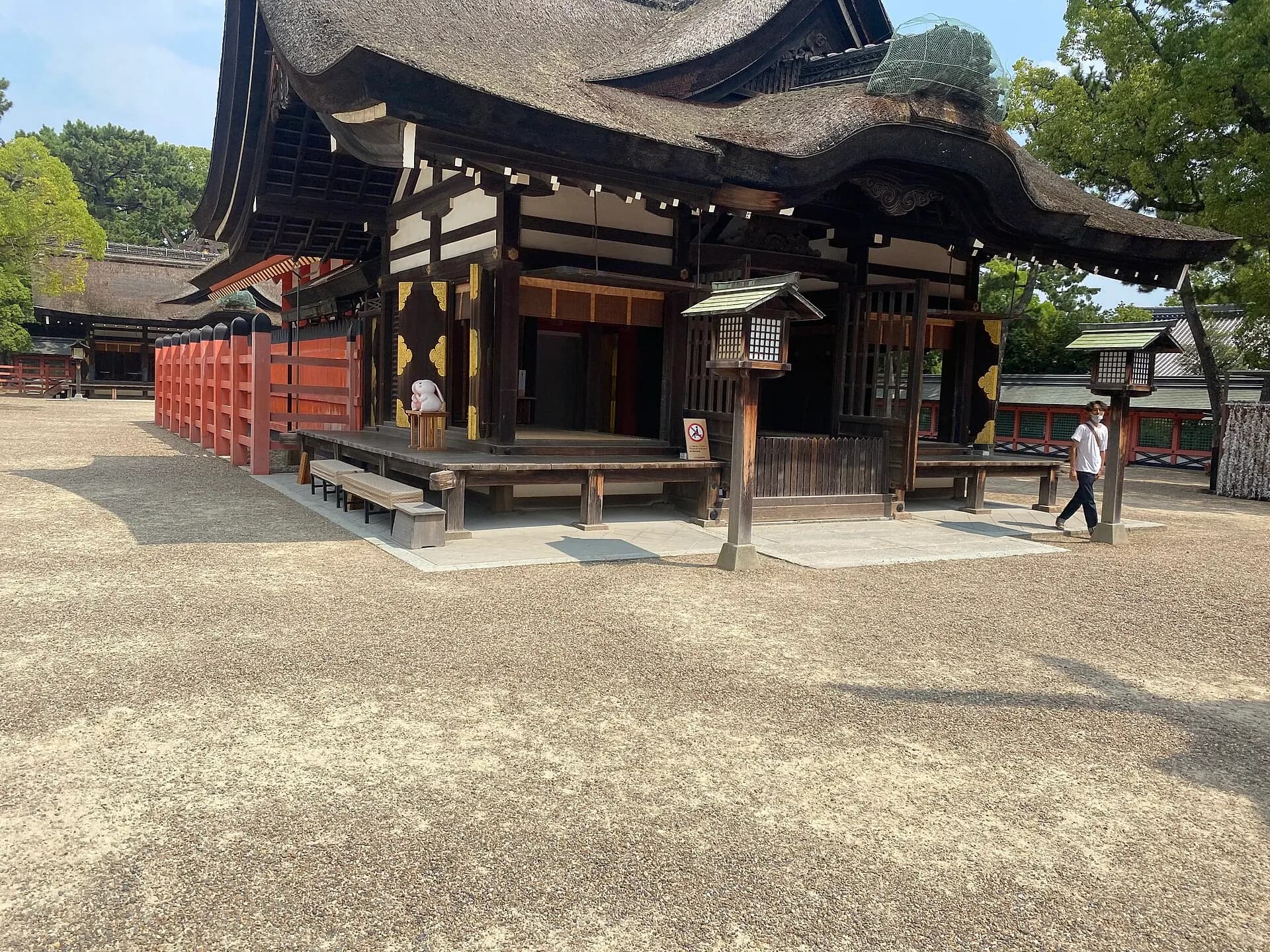
One of Japan's oldest shrines, dedicated to the gods of the sea and sailors, with a distinctive architectural style predating Buddhist influence and an arched red bridge over a pond.
- 8
Universal Studios Japan
A theme park on the waterfront with rides and areas based on films and games, including a Super Nintendo World. It's very popular with Japanese visitors, so weekdays outside school holidays are best.
- 9
Nara
Photo: Martin Falbisoner, CC BY-SA 4.0, via Wikimedia Commons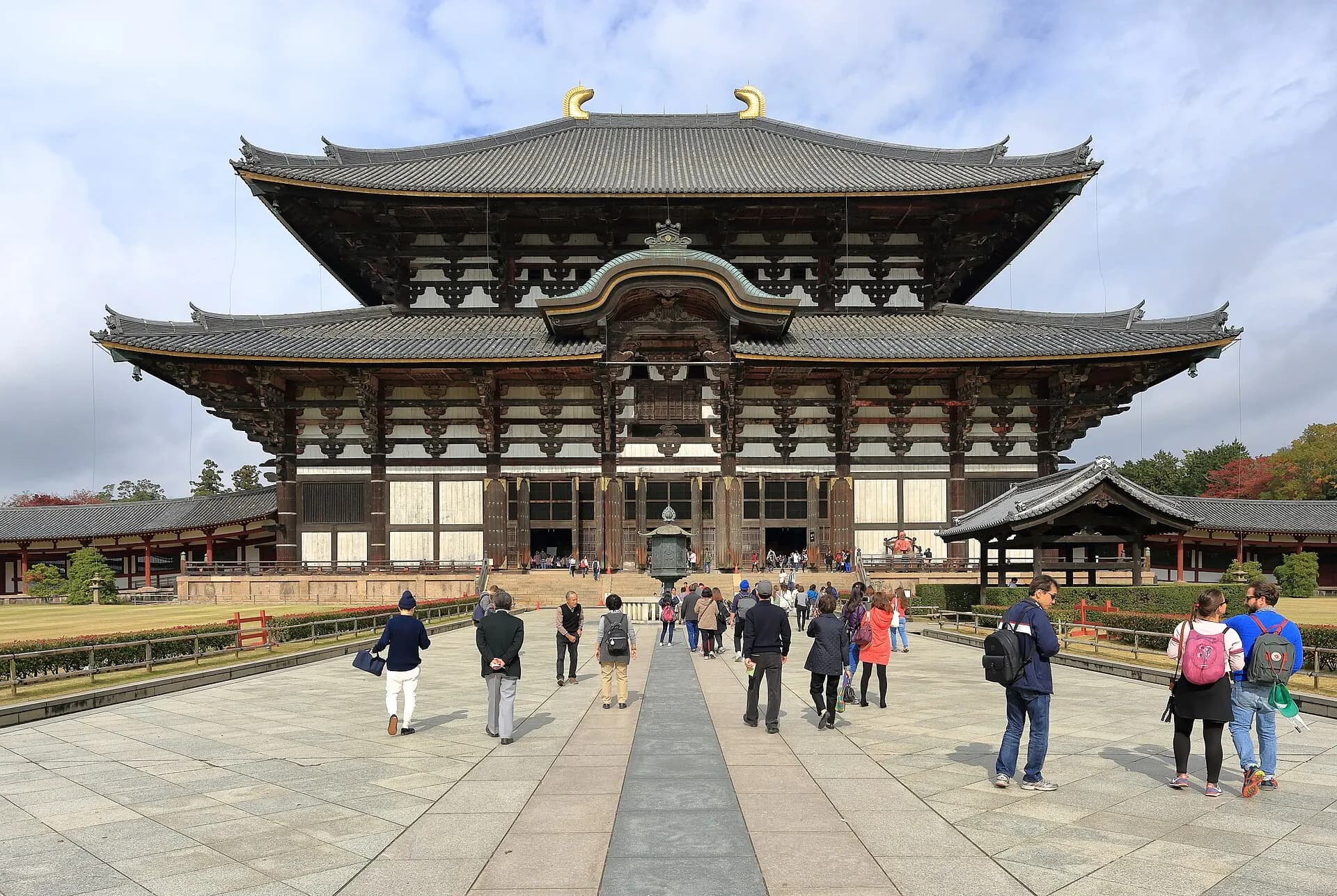
Japan's first permanent capital, about forty minutes by train, with the great Tōdai-ji temple, whose wooden hall houses a giant bronze Buddha, and a park where more than a thousand sacred deer roam freely and bow for crackers.
TipDeer crackers are sold in the park; deer can be pushy, so hold the crackers out of reach until you're ready.
When to go
Spring, with cherry blossom in late March and early April, and autumn, with clear skies and colourful leaves in November, are the best times. Summer is hot and humid, but the Tenjin Matsuri in late July is one of Japan's great festivals, with boat processions and fireworks on the river. Winter is mild and often sunny. Avoid Golden Week, around early May, and the New Year holidays if possible.
Getting around
The Osaka Metro, JR lines and private railways cover the city efficiently; a rechargeable IC card such as ICOCA, or a phone wallet, works on all of them. The Midōsuji subway line runs north–south through the main districts, from Umeda to Namba and Tennōji. Day passes can be good value for sightseeing.
Kansai International Airport, on an island in Osaka Bay, is linked to the city by the Nankai and JR express trains in about forty minutes to an hour. Itami Airport handles domestic flights. Shinkansen trains from Shin-Osaka reach Tokyo in around two and a half hours and Hiroshima in about an hour and a half.
Local tips
- In Osaka, people stand on the right on escalators, unlike in Tokyo.
- Carry some cash for small restaurants and street stalls.
- Tipping isn't expected.
- Don't eat while walking along busy streets; stand by the stall to finish your food.
- The Osaka Amazing Pass covers transport and entry to many attractions for a day or two.
- Book Universal Studios tickets, and any timed passes, online in advance.
Eat and drink
Osaka is one of the great food cities of the world. Try takoyaki, balls of batter filled with octopus, cooked in special pans; okonomiyaki, a savoury pancake of cabbage and batter with toppings, griddled at your table; kushikatsu; and kitsune udon, noodles with sweet fried tofu, said to have been invented in Osaka. Izakayas, standing bars and food courts in department store basements are all excellent places to eat.
Where to stay
Namba and Shinsaibashi, in the south of the city, are the liveliest areas, with Dōtonbori, shopping streets and nightlife on the doorstep. Umeda, around Osaka Station in the north, is the main transport hub, with department stores and good connections to Kyoto and Kobe. Tennōji, near Shinsekai, is convenient for the airport and Nara and often better value.
Day trips
Kyoto is about fifteen minutes away by shinkansen or half an hour by local train, and Nara about forty minutes. Kobe, famous for its beef and harbourfront, is around twenty minutes by train, and Himeji Castle, Japan's finest original castle, is about an hour away. Mount Kōya, the mountaintop centre of Shingon Buddhism, with temple lodgings and a vast forest cemetery, is a memorable overnight trip.