Hiroshima
A city reborn from the first atomic bombing, with a moving peace park, leafy rivers and a sacred island on its doorstep.
- Best time to go
- March to May and October to November, for mild weather and seasonal colour
- Local time
- –
- Currency
- Japanese Yen (JPY)
- Reading time
- 4 min
- Language
- Japanese

On 6 August 1945, Hiroshima became the first city in the world to be destroyed by an atomic bomb. Tens of thousands of people were killed instantly, and many more died in the months and years that followed. Today it's a lively, green and welcoming city, rebuilt along its six rivers, and a global symbol of peace, where visitors come to learn and remember.
A visit to Hiroshima is moving, but the city is also a joy to explore, with a reconstructed castle, a beautiful landscape garden, excellent food and the island of Miyajima, one of Japan's most famous sights, just a short trip away.
The top 8 in Hiroshima
- 1
The Atomic Bomb Dome
Photo: Jakub Hałun, CC BY 4.0, via Wikimedia Commons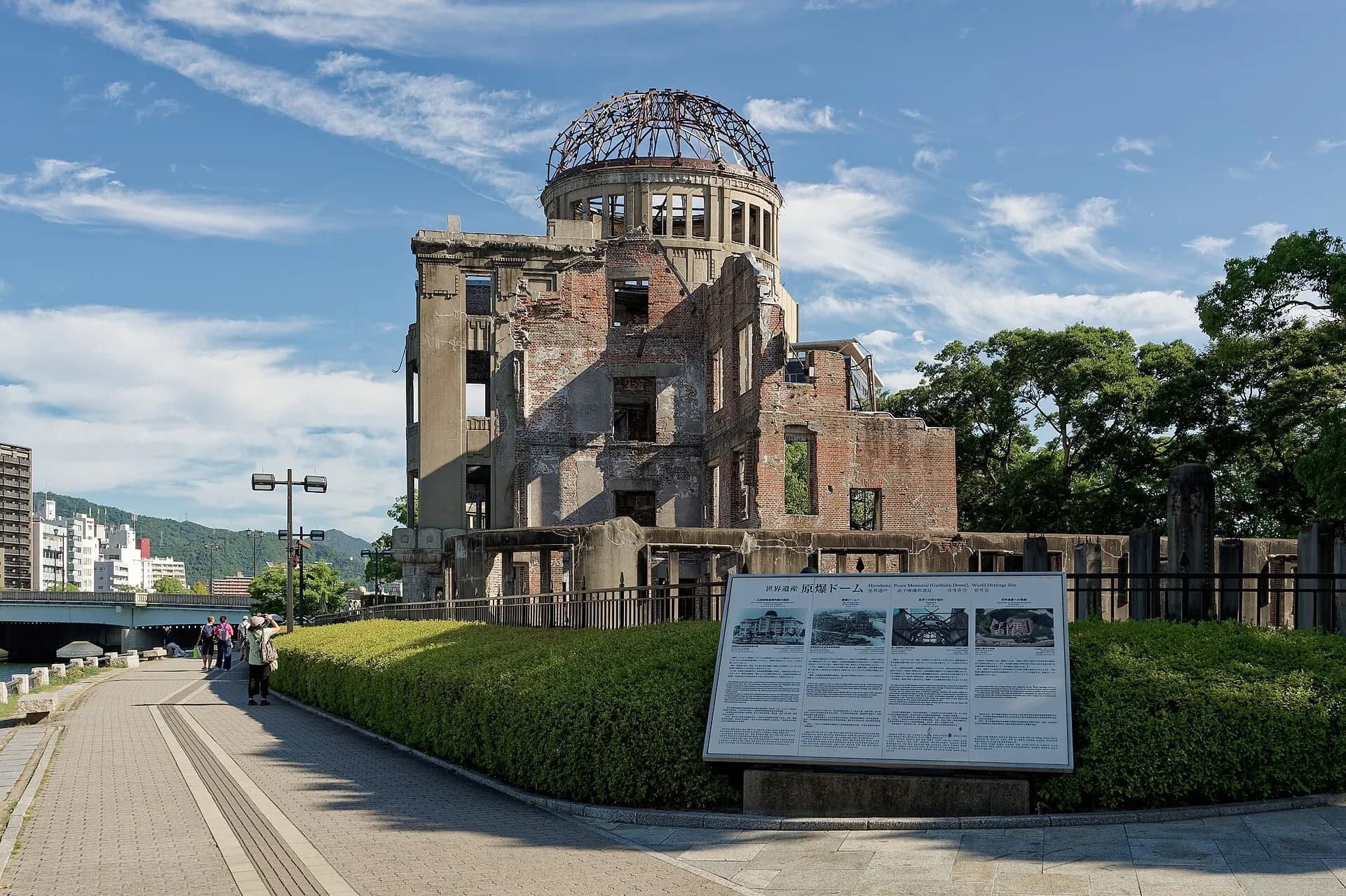
The skeletal ruin of the former Industrial Promotion Hall, one of the few buildings near the hypocentre that remained partly standing, has been preserved exactly as it was after the bombing. It's a World Heritage Site and a powerful reminder of the destruction of nuclear weapons.
- 2
The Peace Memorial Park
Photo: DXR, CC BY-SA 4.0, via Wikimedia Commons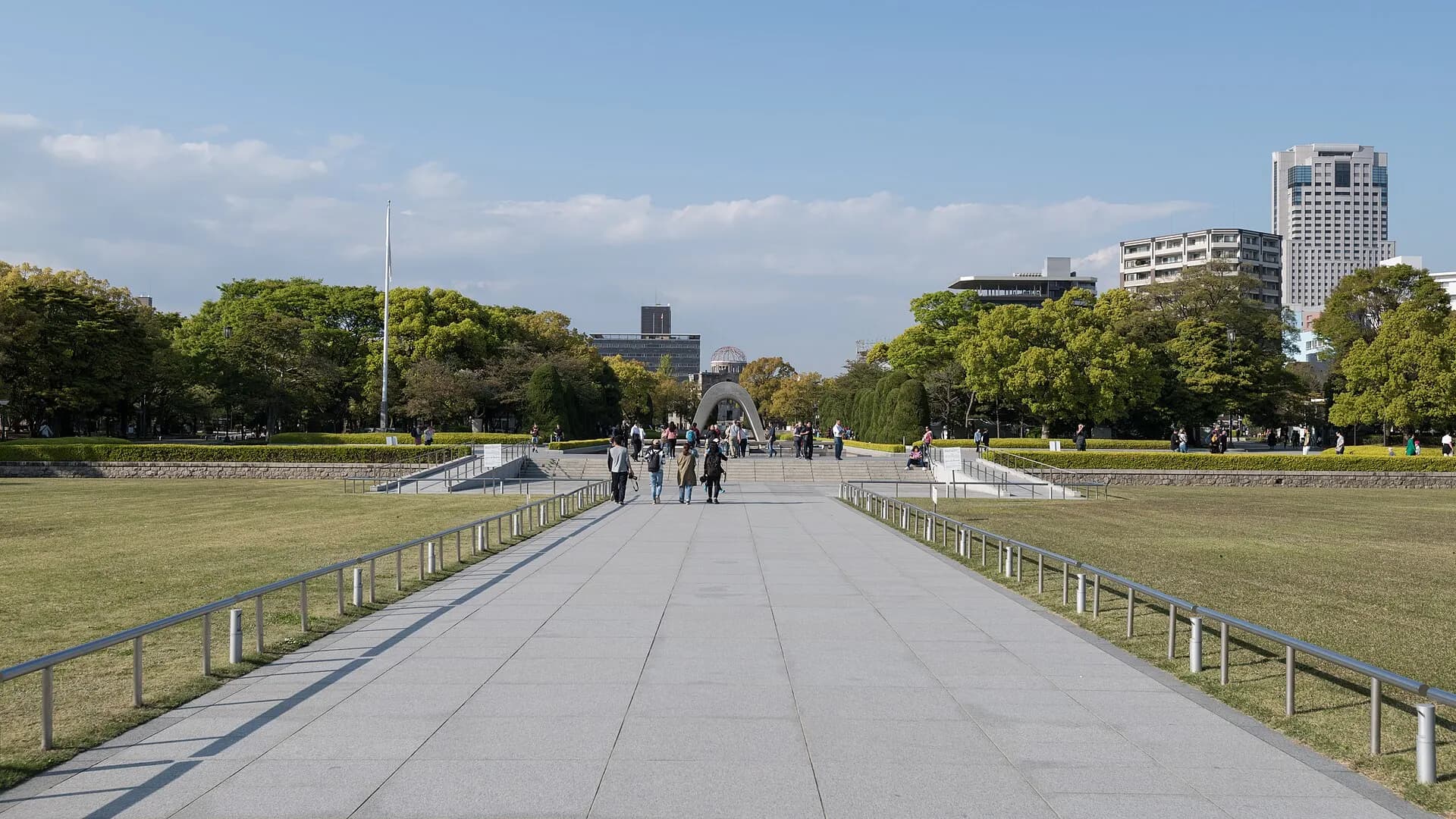
A large park on the delta between two rivers, at the centre of the area destroyed by the bomb, with the arched Memorial Cenotaph, framing the Flame of Peace and the Atomic Bomb Dome, and the Children's Peace Monument, decorated with thousands of colourful paper cranes sent from around the world.
TipVisit early in the morning or in the evening, when the park is quiet.
- 3
The Peace Memorial Museum
Photo: Taisyo, CC BY-SA 3.0, via Wikimedia Commons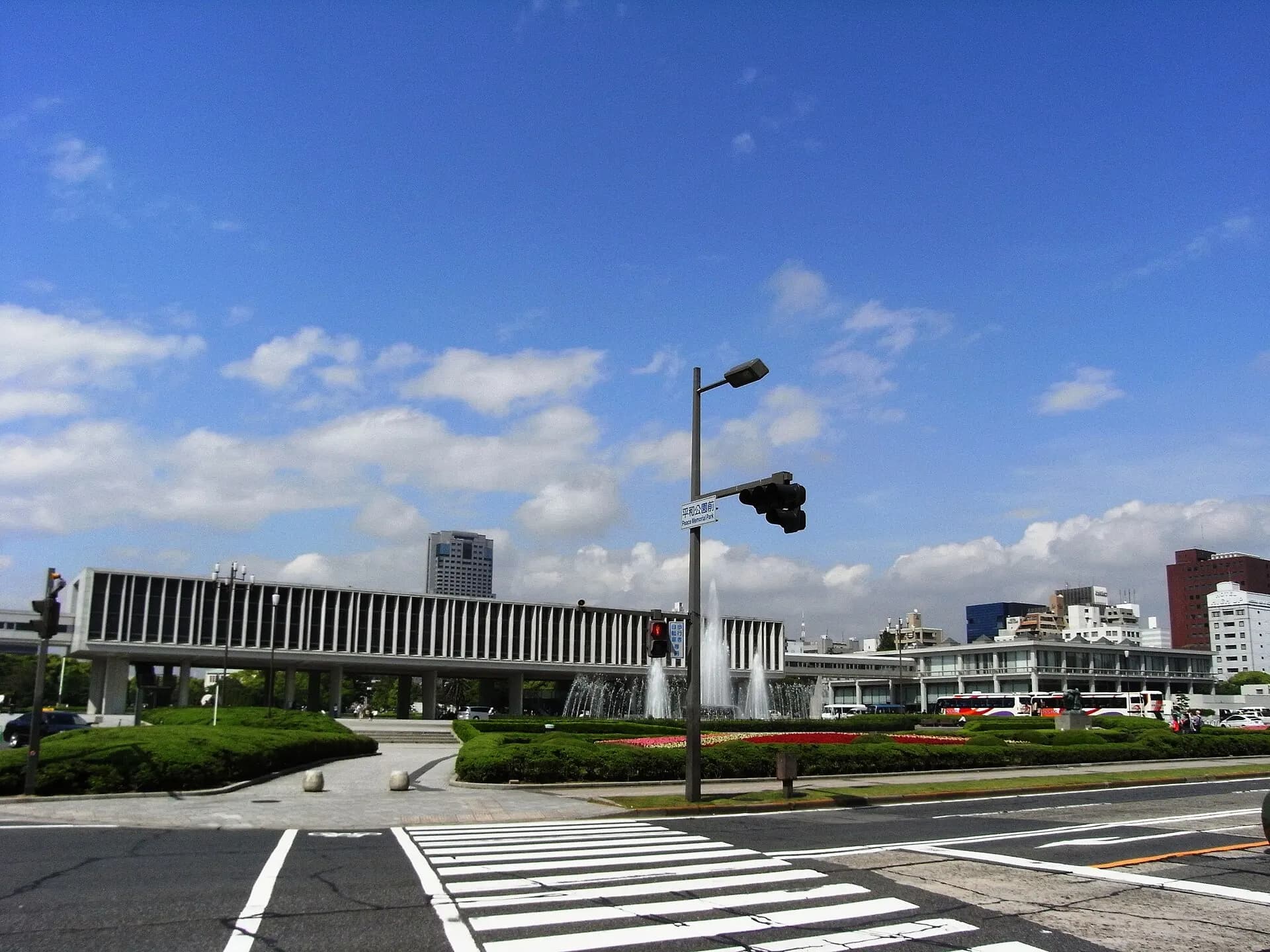
The museum tells the story of the bombing and its aftermath through personal belongings, photographs and testimonies of survivors, the hibakusha, as well as the history of the city and the nuclear age. It's deeply affecting.
TipAllow at least two hours, and consider the audio guide; it can be crowded, so arrive at opening time.
- 4
Hiroshima Castle
Photo: Jakub Hałun, CC BY 4.0, via Wikimedia Commons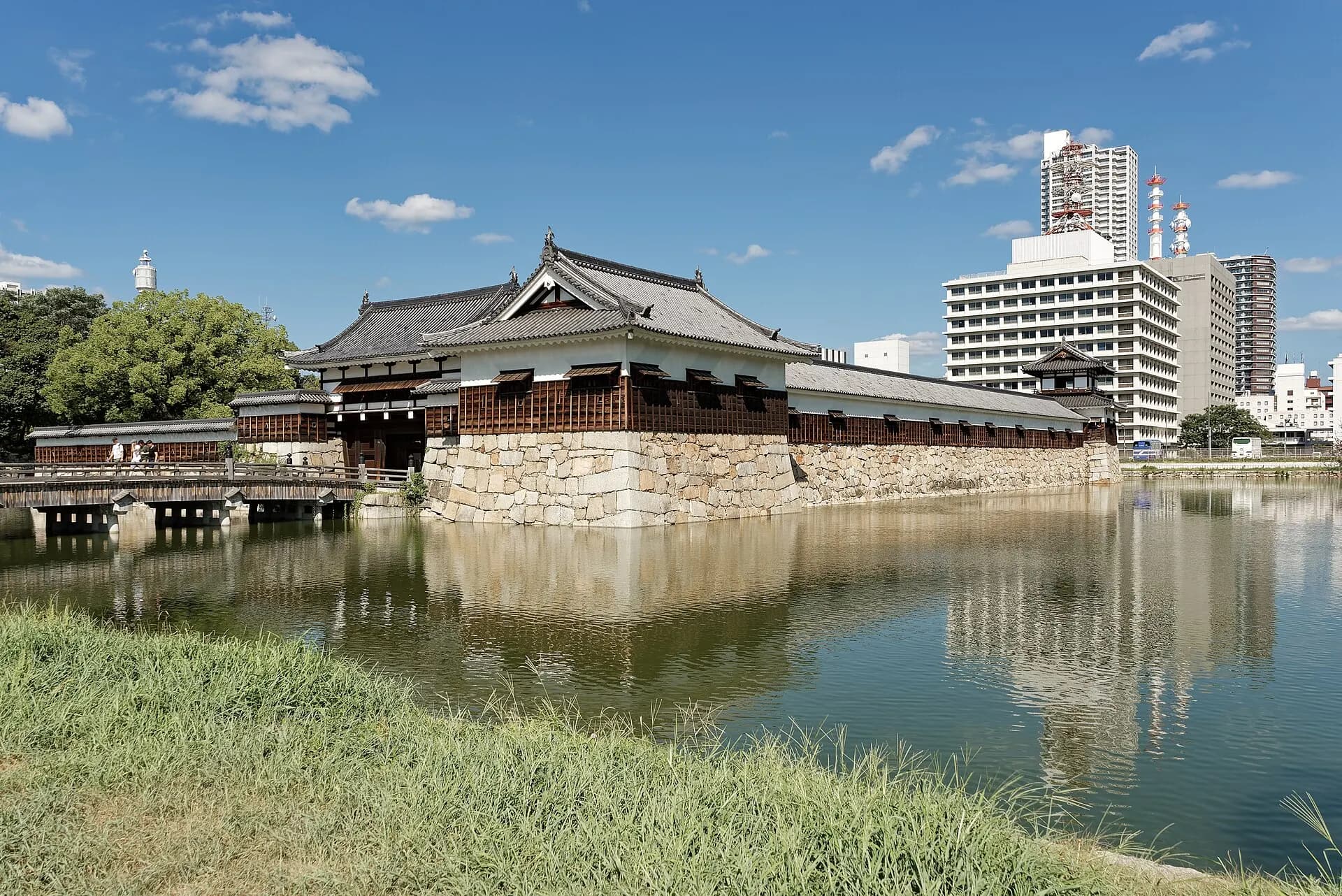
A five-storey castle keep, originally built in the late sixteenth century and destroyed in the bombing, rebuilt in 1958, surrounded by a moat. It houses a museum about the city's samurai history, with views from the top.
- 5
Shukkeien Garden
Photo: Jakub Hałun, CC BY-SA 4.0, via Wikimedia Commons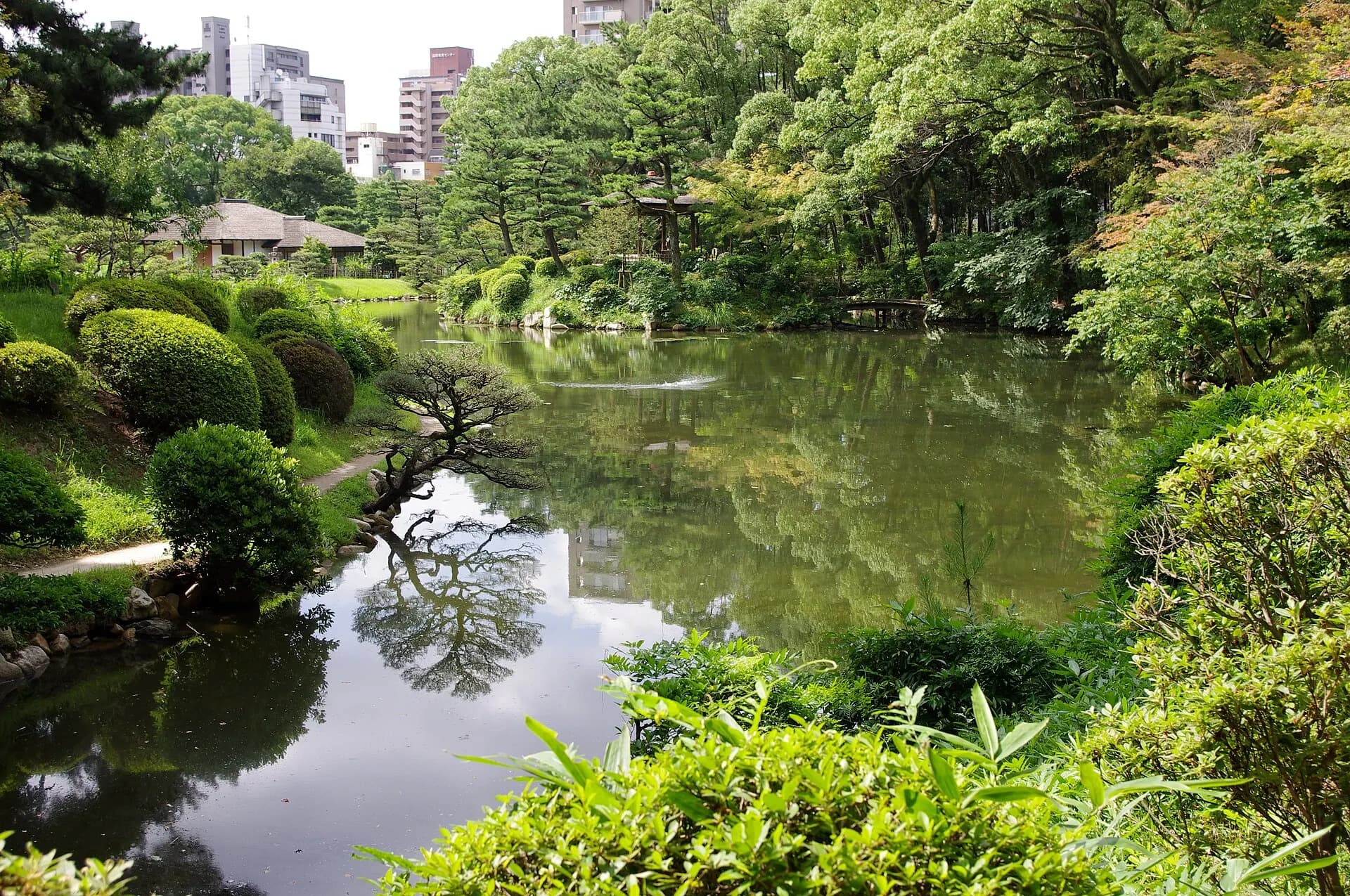
A landscape garden built in 1620 for the local lord, laid out around a central pond with islands, bridges and teahouses that recreate famous scenery in miniature. It was badly damaged in 1945 and carefully restored.
- 6
Miyajima and Itsukushima Shrine
Photo: Jakub Hałun, CC BY 4.0, via Wikimedia Commons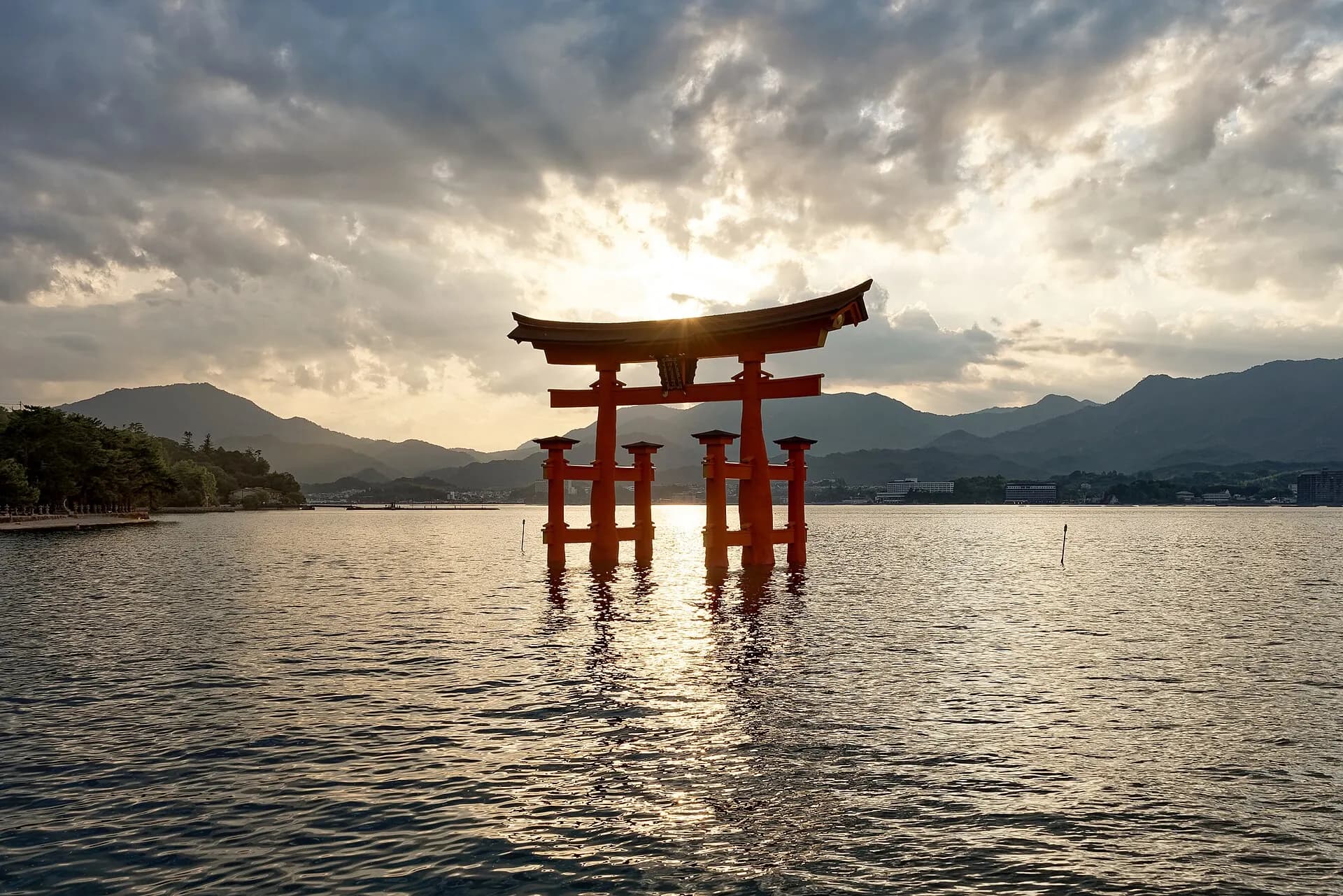
A sacred island in the bay, about an hour from the city, with the vermilion Itsukushima Shrine built over the water and its great torii gate, which appears to float at high tide. Deer roam freely, and a ropeway climbs Mount Misen for views over the Inland Sea.
TipCheck tide tables: at high tide the shrine seems to float, and at low tide you can walk out to the gate. A small visitor tax is charged on arrival.
- 7
Mount Misen
Photo: Josep M. Gracia, CC BY-SA 4.0, via Wikimedia Commons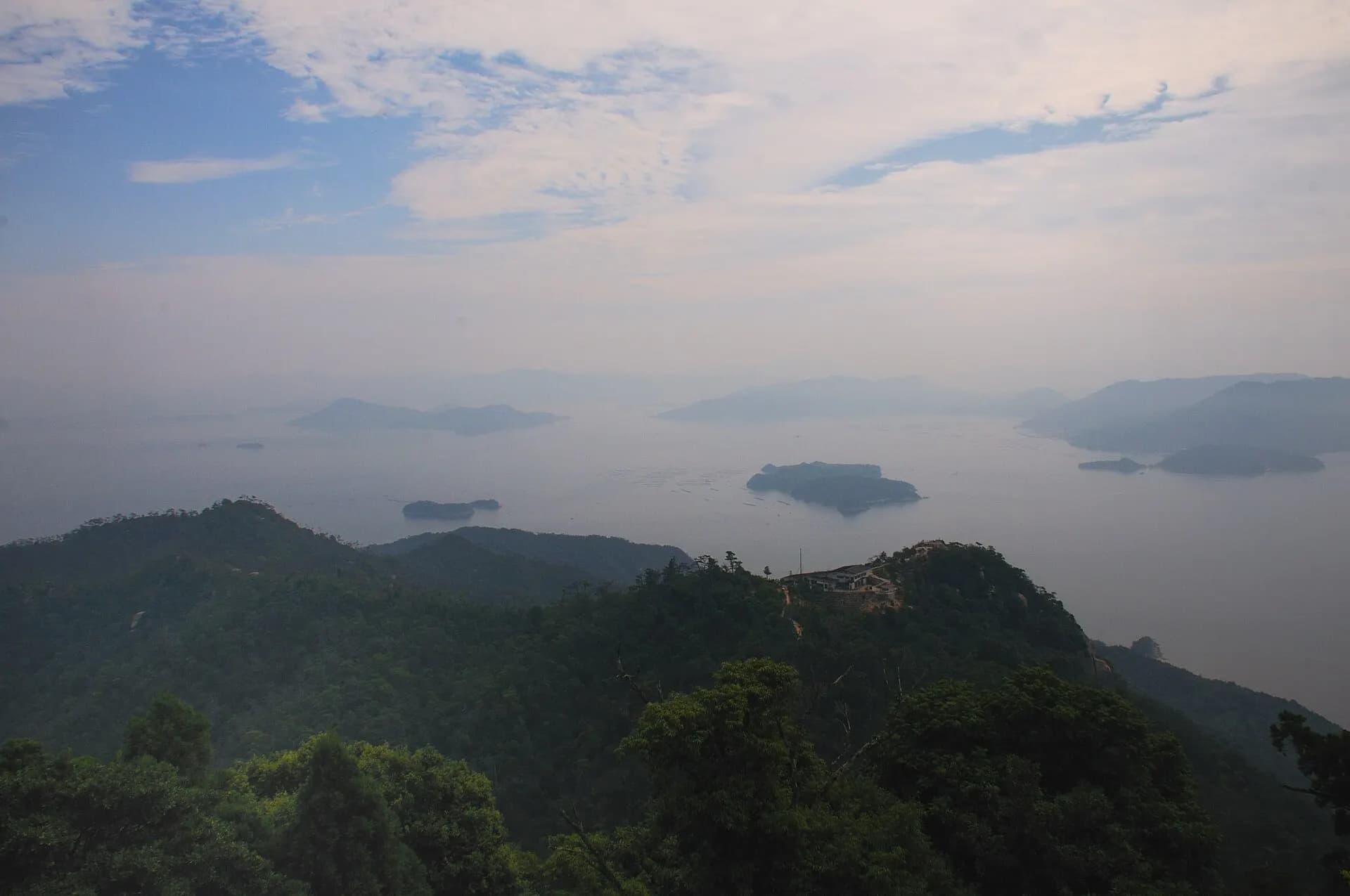
The sacred peak of Miyajima, reached by ropeway and a short hike or by trails through the forest from the town, with temples near the summit, including one with a flame said to have burned for more than 1,200 years, and panoramic views of the islands.
- 8
Okonomimura
Photo: そらみみ, CC BY-SA 4.0, via Wikimedia Commons
A building near the Hondōri shopping street with floors of small counters serving Hiroshima-style okonomiyaki, griddled in front of you. It's the best place to try the city's signature dish.
When to go
Spring and autumn are the most pleasant seasons, with cherry blossom in early April and red maple leaves on Miyajima in November. Summer is hot and humid, with a rainy season in June and July. Every year on 6 August, the Peace Memorial Ceremony is held in the park, and in the evening thousands of paper lanterns are floated on the river in memory of the victims. Winter is mild and quiet.
Getting around
Hiroshima's streetcars, including some historic carriages, are a convenient and charming way to get around; pay with an IC card. The central sights are walkable. To reach Miyajima, take the JR train or the streetcar to Miyajimaguchi, then a short ferry; high-speed boats also run directly from the Peace Park in season.
Hiroshima Airport is about forty-five minutes away by bus. Shinkansen trains reach Osaka in about an hour and a half and Tokyo in about four hours.
Local tips
- Behave respectfully in the Peace Memorial Park and museum, which are memorials to the dead.
- Paper cranes are a symbol of peace; you can fold your own and leave them at the Children's Peace Monument.
- Carry some cash for small restaurants and shops.
- The Japan Rail Pass covers the JR ferry to Miyajima.
- Stay overnight on Miyajima to see the shrine quietly after the day visitors leave.
- Tipping isn't expected.
Eat and drink
Hiroshima-style okonomiyaki differs from Osaka's: the ingredients are layered rather than mixed, with noodles, cabbage, egg and pork. Hiroshima is also famous for oysters from the bay, served grilled, fried or raw, and on Miyajima for momiji manjū, maple-leaf-shaped cakes with sweet fillings, and anago-meshi, grilled conger eel over rice.
Where to stay
Staying near the Peace Memorial Park or along the streetcar lines of Hondōri and Hatchōbori puts the main sights and restaurants within walking distance. Hotels around Hiroshima Station are convenient for the shinkansen and day trips. For a special experience, spend a night in a ryokan on Miyajima.
Day trips
Iwakuni, about forty minutes away, has the elegant five-arched Kintai Bridge over a river, beneath a hilltop castle. Onomichi, an old port town of temples and slopes, is the starting point for the Shimanami Kaidō, a cycling route across bridges and islands to Shikoku. Okunoshima, a small island in the Inland Sea, is famous for its hundreds of wild rabbits, and also has a museum about the poison gas factory once hidden there.