Santorini
White villages on a volcanic cliff, black-sand beaches and some of the most famous sunsets on earth.
- Best time to go
- May to early June and late September to October, for warm weather and fewer crowds
- Local time
- –
- Currency
- Euro (EUR)
- Reading time
- 4 min
- Language
- Greek

Santorini is the remains of a volcano. Around 1600 BC, a colossal eruption blew out the centre of the island and left a flooded caldera ringed by cliffs, and today its white villages perch on the rim, looking across the water to the volcanic islets in the middle. It is one of the most photographed places in the world, and for good reason.
It is also one of the busiest. The island's popularity, and the cruise ships that call in summer, mean the cliff-top villages can be crowded, so the art of visiting Santorini is to time things well: the villages early or late, the beaches and wineries in the middle of the day.
The top 7 in Santorini
- 1
Oia
Photo: Norbert Nagel, CC BY-SA 3.0, via Wikimedia Commons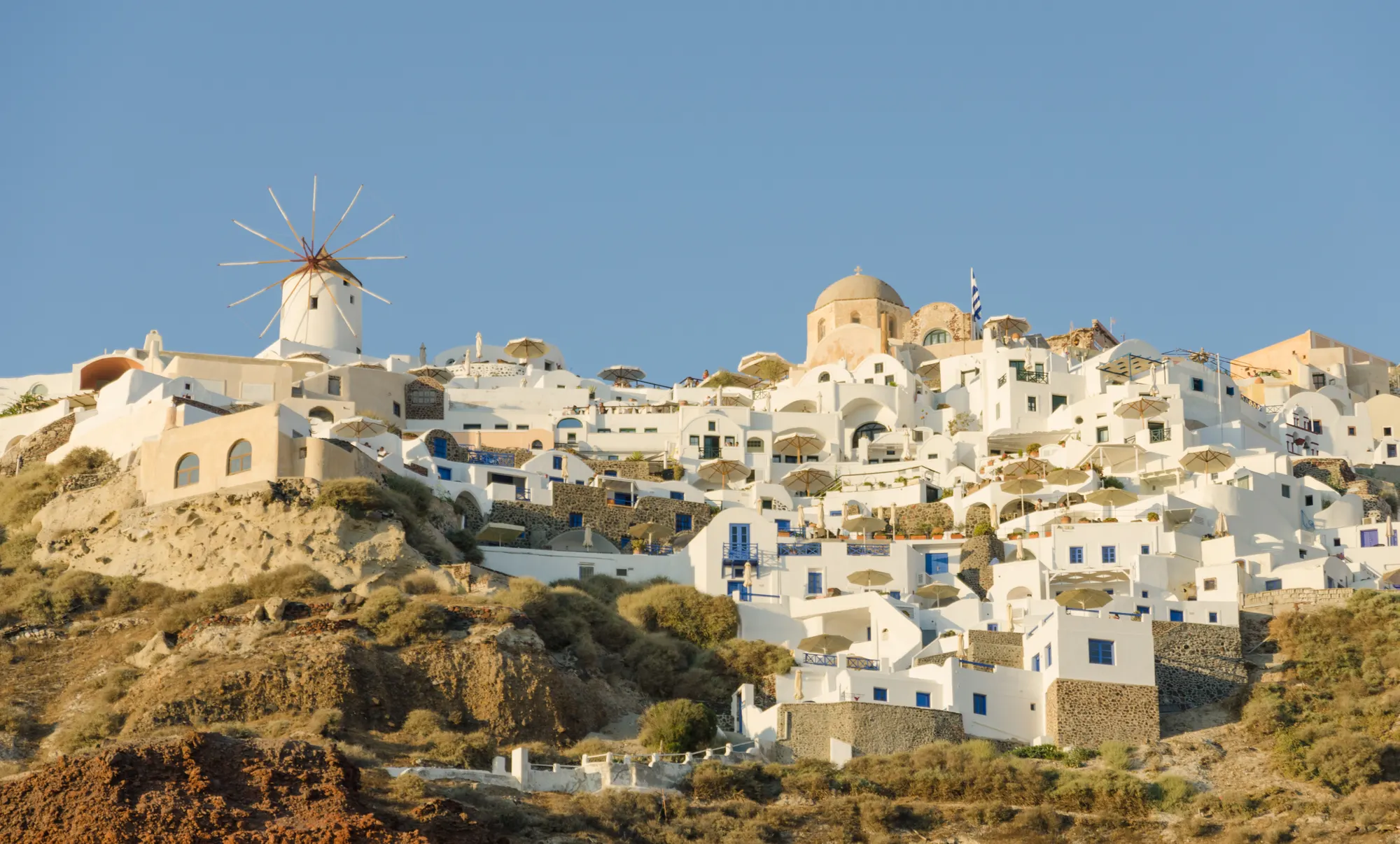
The village at the northern tip of the island is the postcard image of Santorini: blue domes, white houses and windmills tumbling down the cliff. It is famous for its sunsets, when crowds gather along the castle ruins to watch the sun drop into the sea.
TipFor the sunset without the crush, find a spot along the caldera path south of the village, or watch from a boat.
- 2
Fira
Photo: Norbert Nagel, CC BY-SA 3.0, via Wikimedia Commons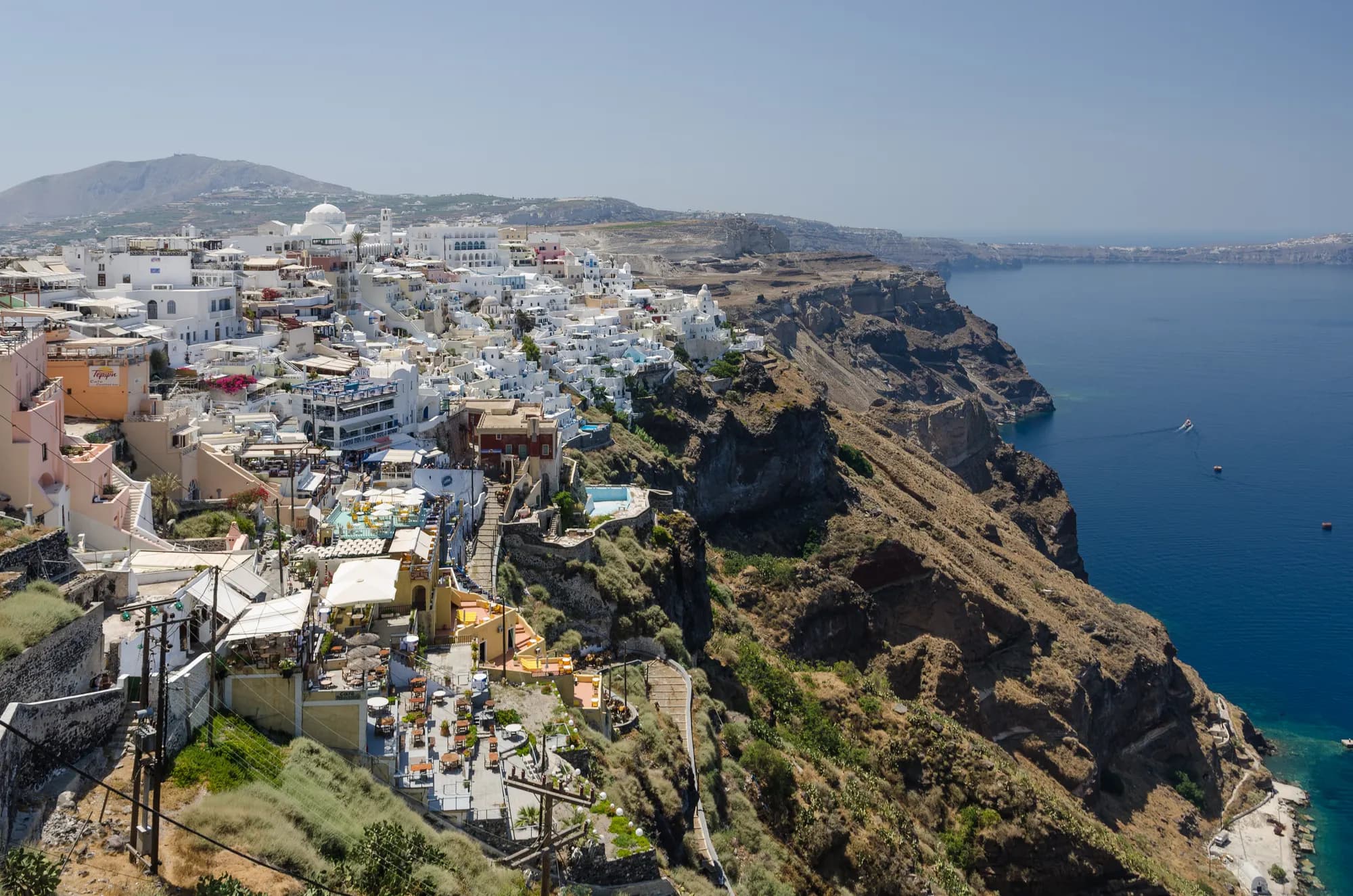
The island's capital and busiest town, perched on the caldera edge, with shops, bars and restaurants, and the museum of prehistoric Thera, which displays finds from Akrotiri. A cable car and a long staircase link it to the old port below.
- 3
The caldera walk from Fira to Oia
Photo: Norbert Nagel, CC BY-SA 3.0, via Wikimedia Commons
A path along the rim of the caldera links Fira with Oia, passing through the quieter villages of Firostefani and Imerovigli. The full walk is about 10 kilometres and takes three to four hours, with views all the way.
TipStart early in the morning and walk north, so the sun is behind you; take water, as there's little shade.
- 4
Akrotiri
Photo: Norbert Nagel, CC BY-SA 3.0, via Wikimedia Commons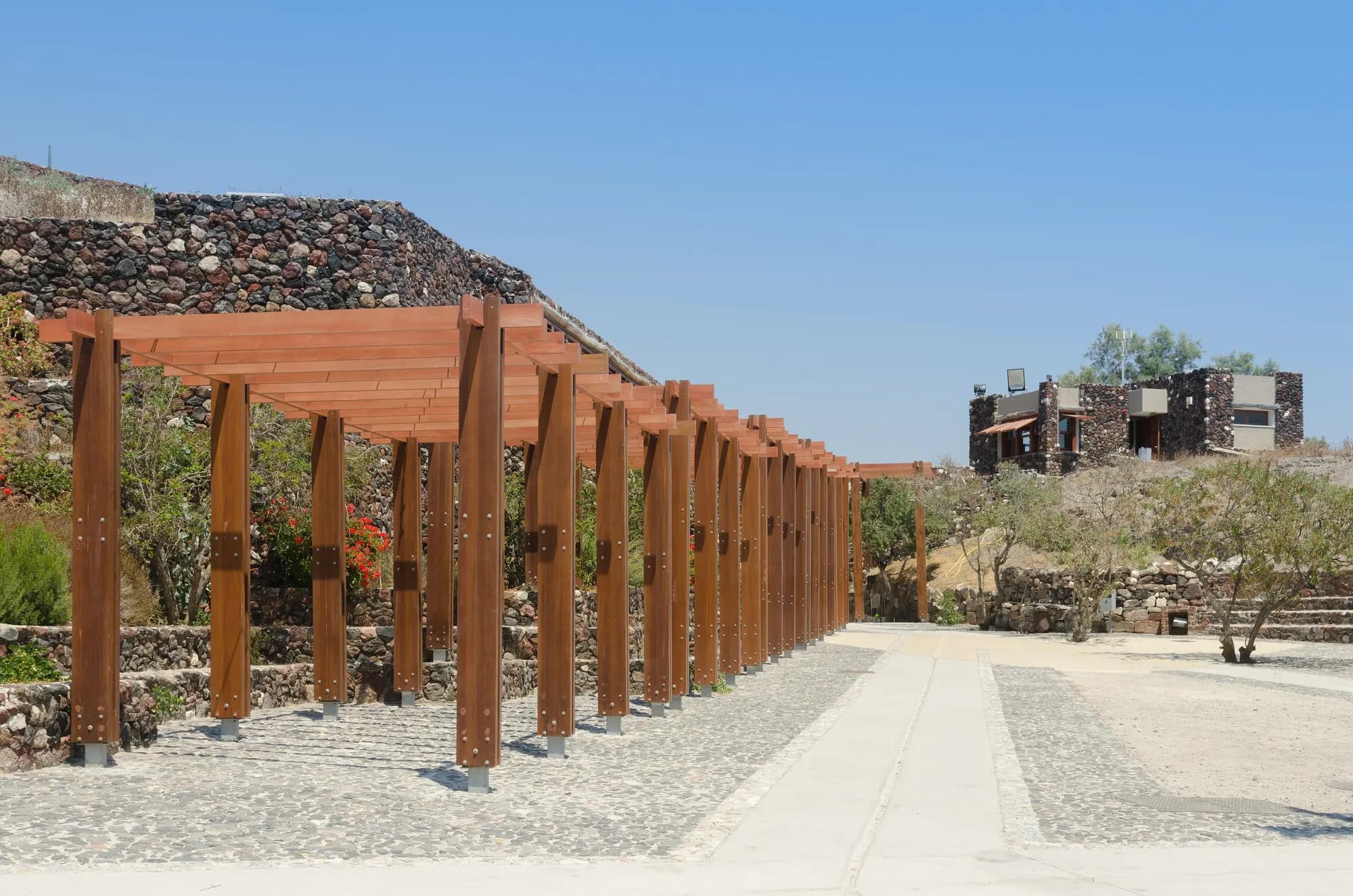
A Bronze Age town buried by the eruption, sometimes called the "Pompeii of the Aegean". Under a protective roof you can walk among multi-storey buildings preserved in the ash, with streets, staircases and storage jars still in place. Its famous wall paintings are in museums in Athens and Fira. Nearby, the small Red Beach lies beneath striking red volcanic cliffs, though rockfalls have closed access at times, so check the signs before going down.
- 5
Perissa and Kamari
Photo: Sidvics, CC BY-SA 4.0, via Wikimedia Commons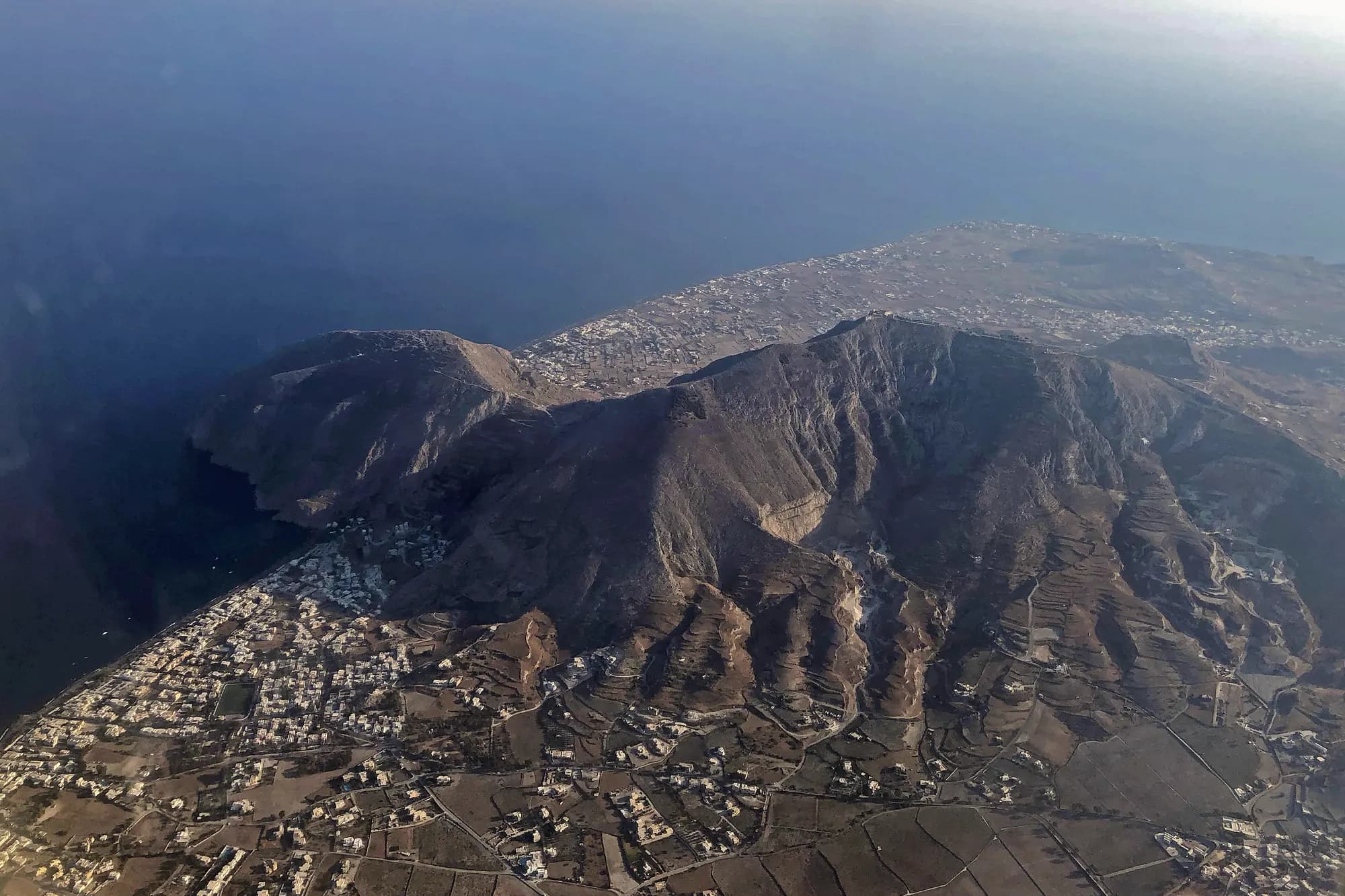
The island's long black-sand beaches, on the east and south coasts, with sunbeds, tavernas and calm water. The volcanic sand gets very hot in summer, so bring sandals.
- 6
Pyrgos
Photo: C messier, CC BY-SA 4.0, via Wikimedia Commons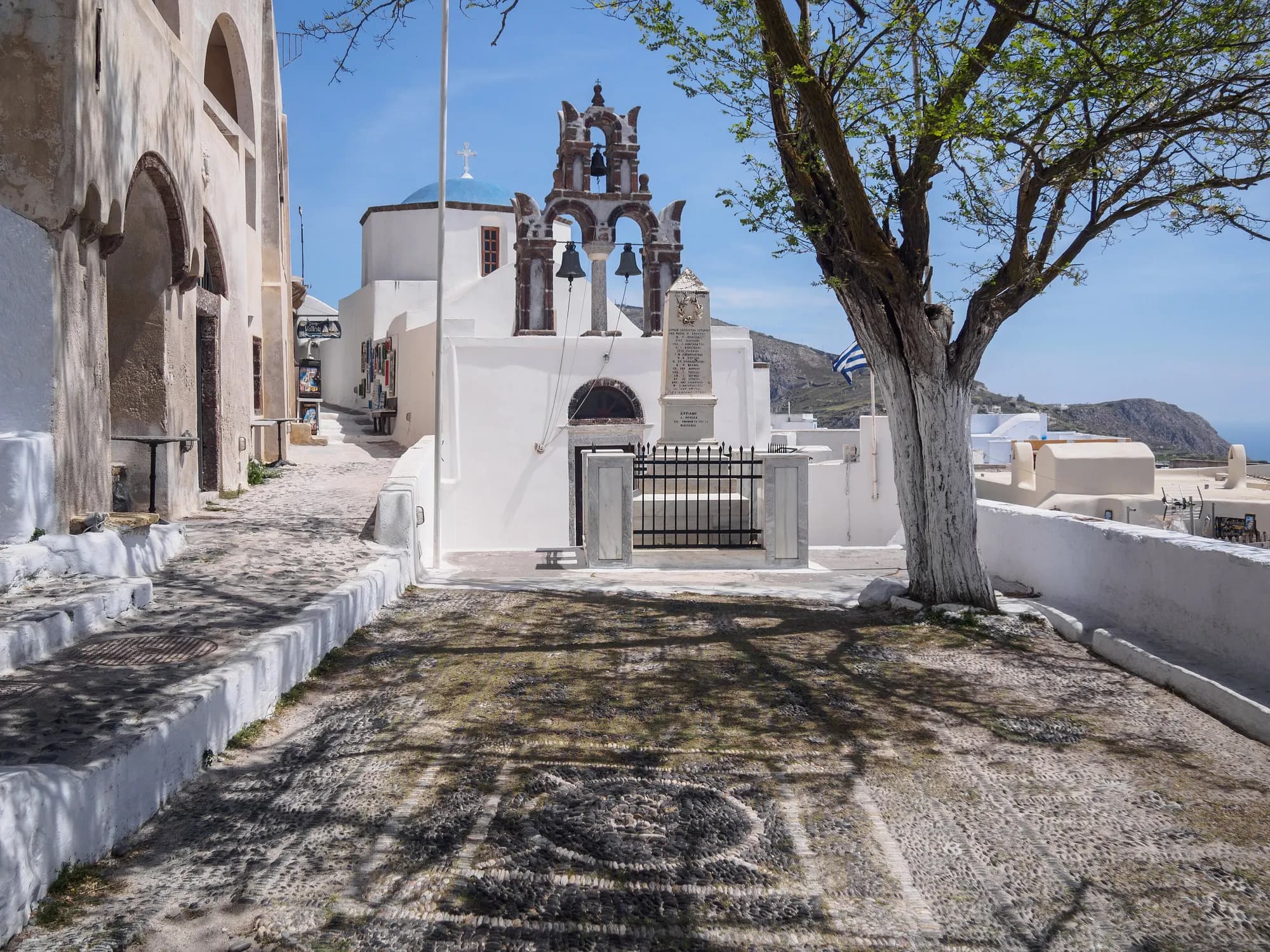
A hilltop village in the centre of the island, with a maze of lanes winding up to a ruined Venetian castle and wide views over the island. It's much quieter than the caldera villages and has good tavernas.
- 7
A boat trip to the volcano
Photo: Norbert Nagel, CC BY-SA 3.0, via Wikimedia Commons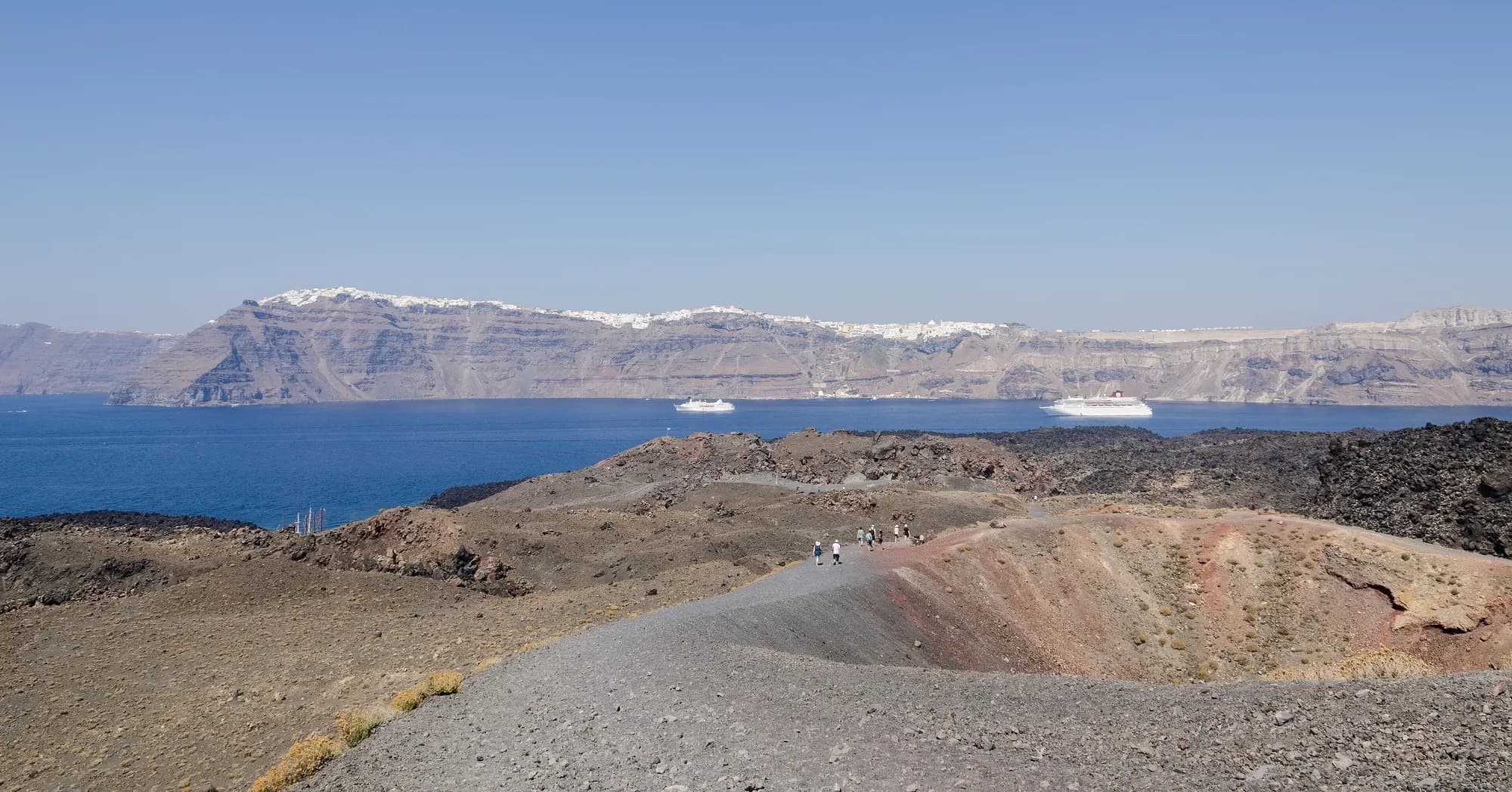
Boat trips cross the caldera to the volcanic islet of Nea Kameni, where you can hike to the crater, then swim in the warm, sulphurous springs of Palea Kameni. It's a different perspective on the island, especially at sunset.
When to go
The best months are May, early June, late September and October, when the weather is warm, the sea is swimmable and the crowds are thinner. July and August are hot, crowded and expensive, especially on days when several cruise ships are in port. Many hotels and restaurants close from November to March, though the island is quiet and atmospheric in winter.
Getting around
Santorini is small, about 18 kilometres from end to end. The island's buses, run by the KTEL bus company, link Fira with the villages and beaches; they're cheap but crowded in summer. Renting a car, a scooter or an all-terrain vehicle gives more freedom, though parking in the villages is difficult. Taxis are few, so book them ahead.
The airport, with flights from Athens and, in summer, much of Europe, is a short drive from Fira. Ferries from Piraeus, the port of Athens, take five to eight hours, and fast ferries link Santorini with other Cyclades islands.
Local tips
- Visit Oia and Fira early in the morning, before the day-trippers arrive.
- Check cruise ship schedules: on days with several ships in port, the villages are much busier.
- Wear good shoes: the villages are full of steep, uneven steps.
- Don't ride the donkeys up from the old port: animal welfare groups have long criticised their treatment.
- Tap water isn't drinkable on the island; buy bottled water.
- Book accommodation with a caldera view well ahead for the summer.
Eat and drink
Santorini's volcanic soil grows distinctive produce: small, sweet cherry tomatoes, often made into fritters (tomatokeftedes); fava, a yellow split-pea purée; and white aubergines. Its wines, especially the dry white Assyrtiko and the sweet Vinsanto, are excellent: visit one of the wineries, where the vines are woven into baskets close to the ground to protect them from the wind. For seafood, head down to Ammoudi Bay below Oia or the fishing harbour at Vlychada, where tavernas grill the day's catch by the water.
Where to stay
Where you stay shapes your trip. The caldera villages, Oia, Imerovigli, Firostefani and Fira, have the famous views, often from cave houses carved into the cliff, many with small plunge pools; they are the most expensive and involve plenty of steps. Imerovigli and Firostefani are quieter than Oia and Fira, with the same view.
For a beach holiday at lower prices, stay in Kamari or Perissa on the east coast, with long beaches, family-friendly hotels and easy buses to Fira. Inland villages such as Pyrgos and Megalochori are calm, traditional and well placed for the wineries, with the caldera a short drive away.