Athens
The Parthenon above a sprawling modern city, ancient ruins around every corner, and long dinners under the stars.
- Best time to go
- April to June and September to October, for warm days without the summer heat
- Local time
- –
- Currency
- Euro (EUR)
- Reading time
- 4 min
- Language
- Greek

Athens is the birthplace of democracy, philosophy and theatre, and the Acropolis, rising above the city, is one of the most famous sights on earth. Around it lie the ruins of the ancient agora, temples and theatres, scattered through a busy, sprawling modern capital of nearly four million people.
The city has been reinvented in recent decades, with excellent museums, a lively food and bar scene, street art and rooftop terraces with views of the Parthenon. Start early to see the ancient sites before the heat and crowds, then do as the Athenians do: linger over long, late meals outdoors.
The top 10 in Athens
- 1
The Acropolis and the Parthenon
Photo: Jebulon, CC0, via Wikimedia Commons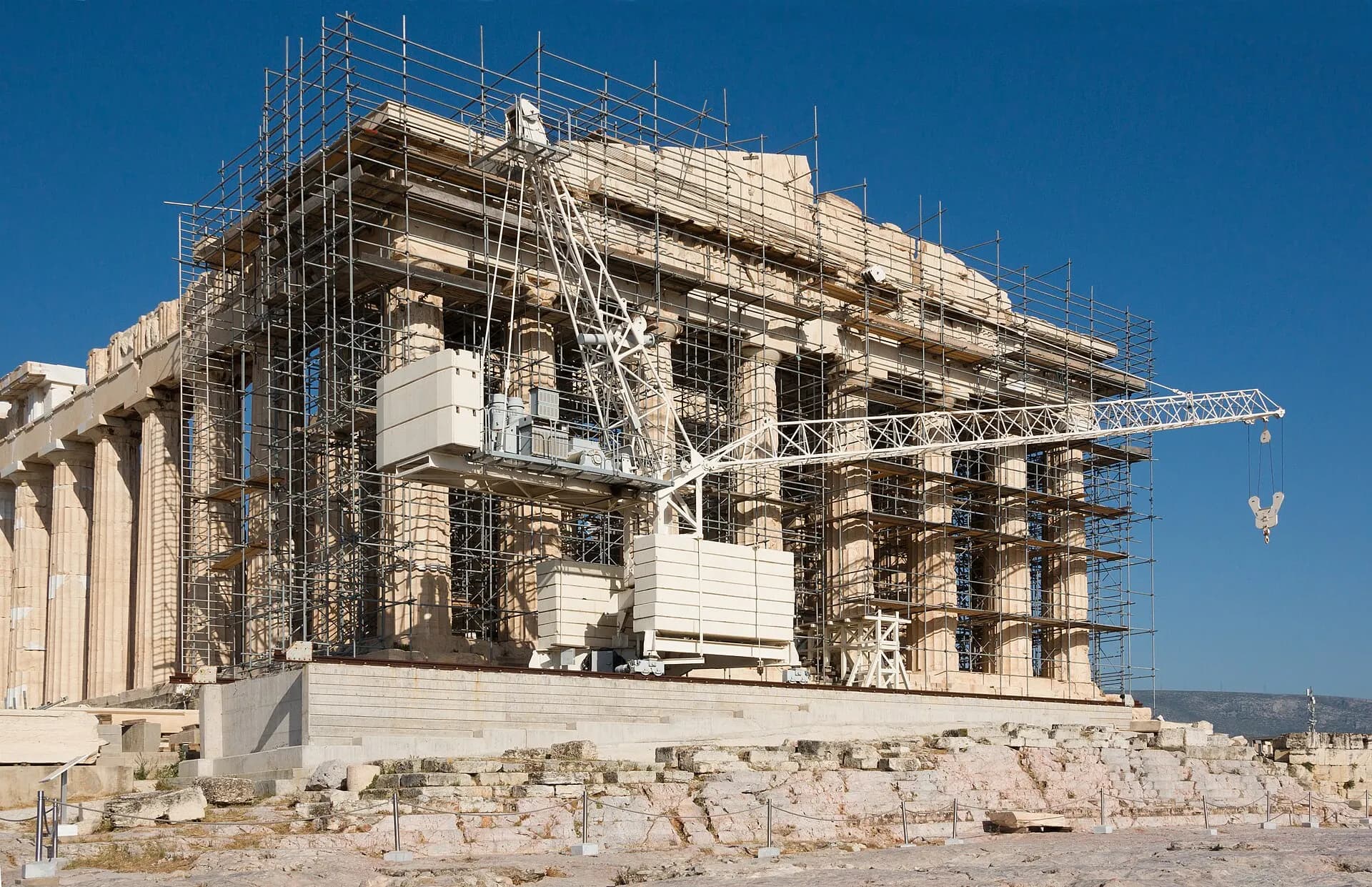
The rocky hill above the city holds the masterpieces of fifth-century BC Athens: the Parthenon, the temple of Athena; the Erechtheion with its porch of maidens, the Caryatids; the Propylaia gateway; and the small temple of Athena Nike. Even under restoration scaffolding, the Parthenon is breathtaking.
TipBook a timed ticket online and go at opening time, or in the last two hours before closing; there's no shade, so bring water and a hat.
- 2
The Acropolis Museum
Photo: Yair-haklai, CC BY-SA 4.0, via Wikimedia Commons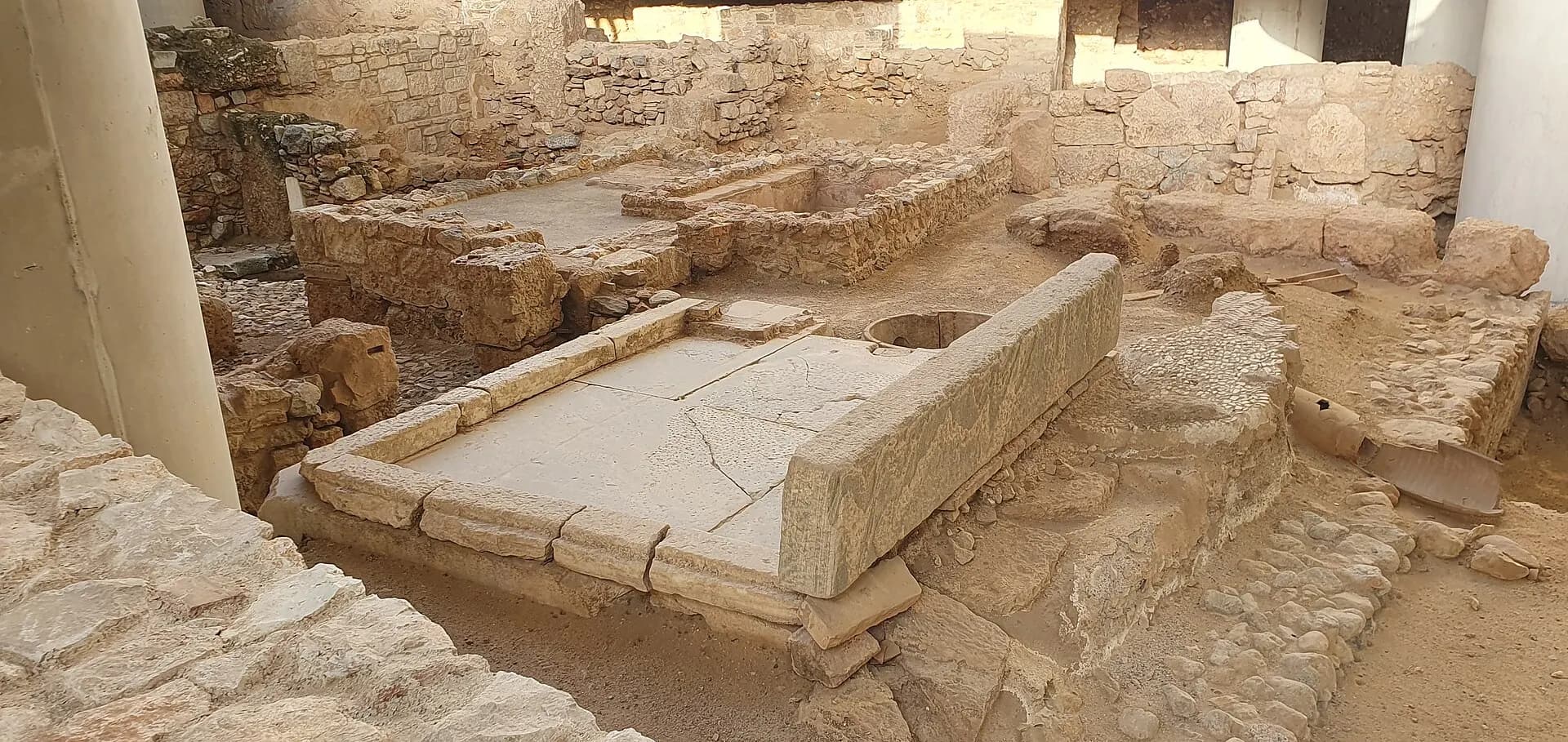
A modern museum at the foot of the hill, built over excavated ancient streets you can see through its glass floors. It holds the original Caryatids and sculptures from the Acropolis, and its top-floor gallery displays the Parthenon frieze at the same orientation as the temple, visible through the windows.
- 3
The Ancient Agora
Photo: Jakub Hałun, CC BY 4.0, via Wikimedia Commons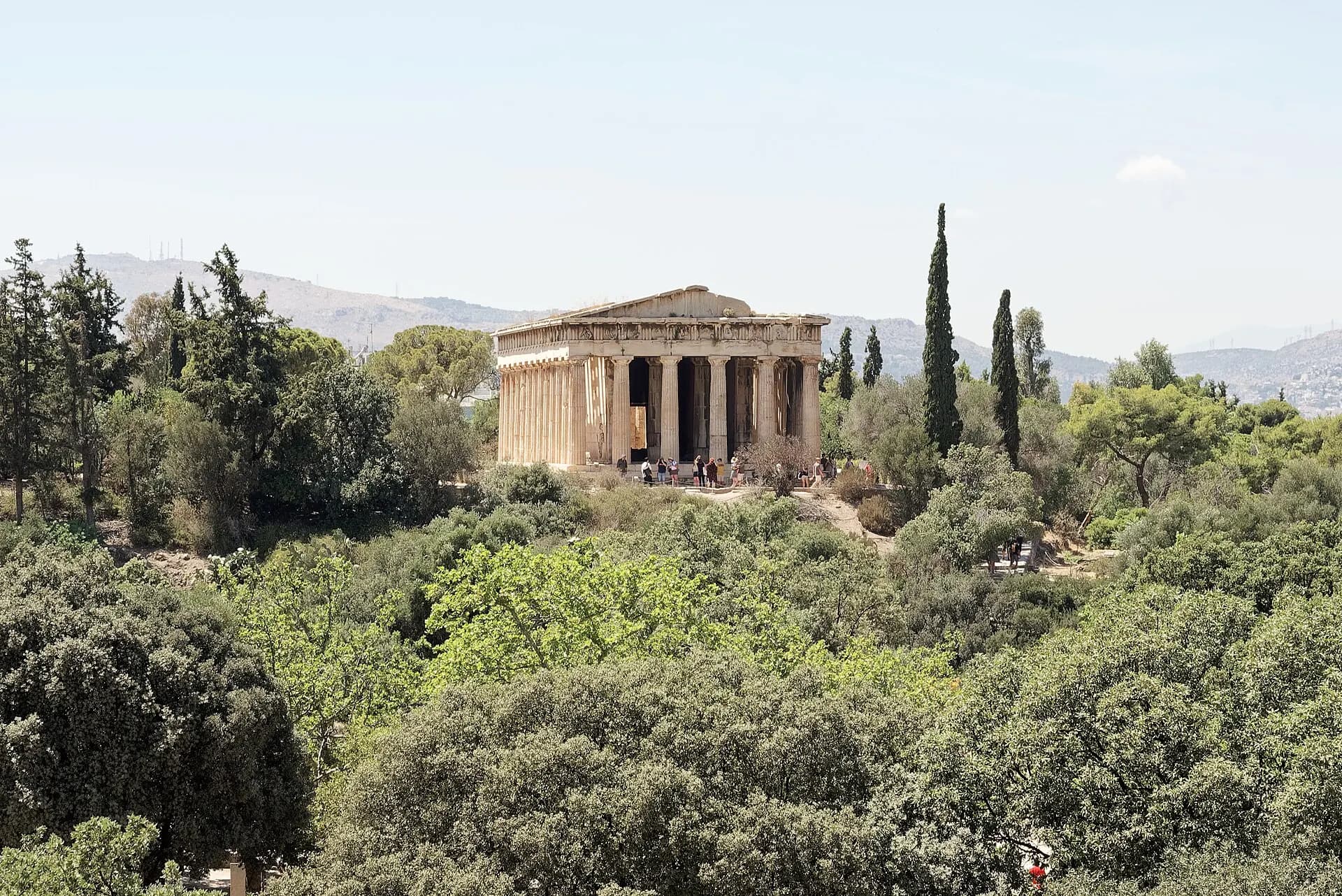
The marketplace and civic centre of ancient Athens, where Socrates taught. The Temple of Hephaestus, one of the best-preserved Greek temples anywhere, stands above it, and the reconstructed Stoa of Attalos houses a museum.
- 4
Plaka and Anafiotika
Photo: Jakub Hałun, CC BY 4.0, via Wikimedia Commons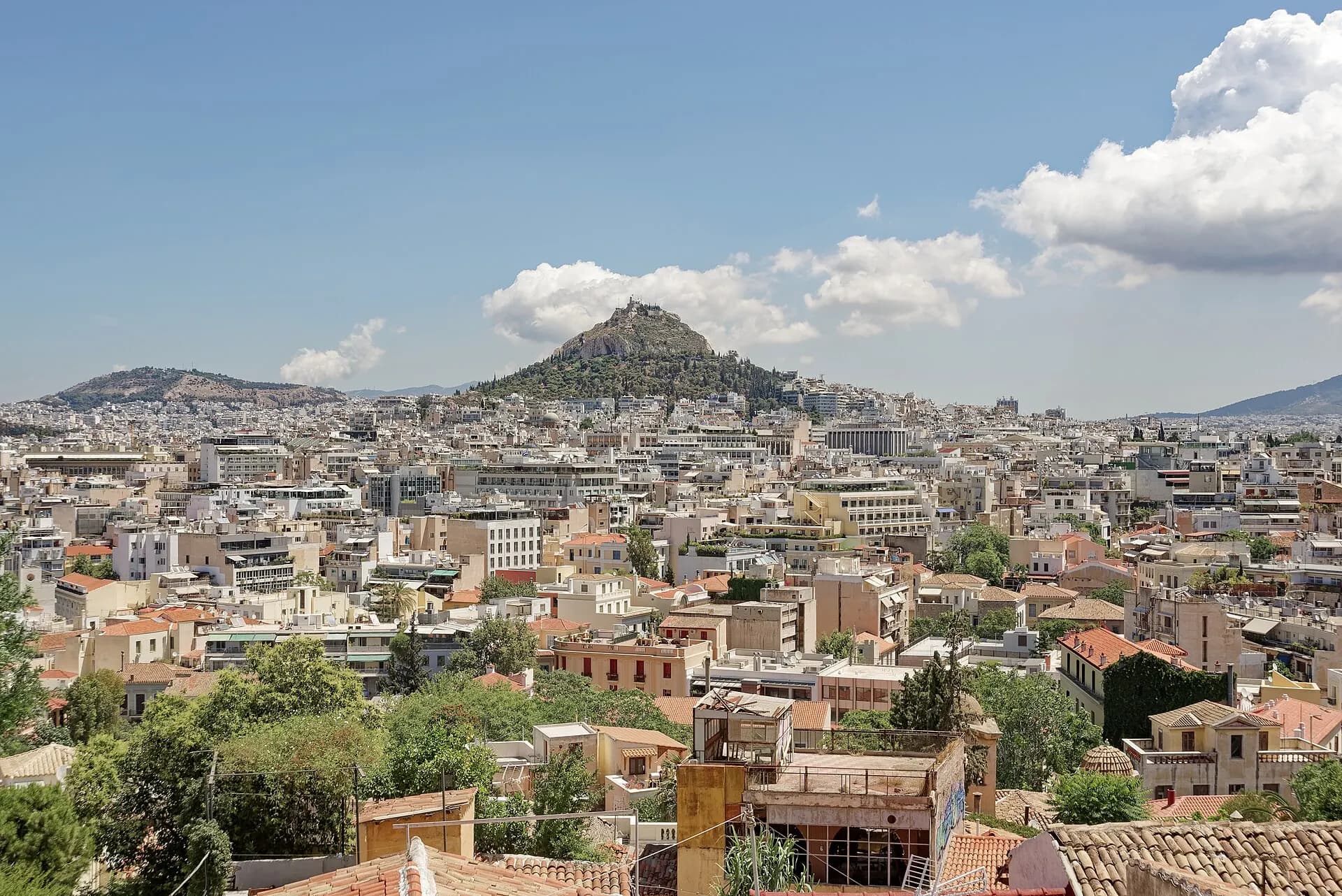
The old neighbourhood below the Acropolis, with narrow streets, neoclassical houses, tavernas and shops. Above it, the tiny quarter of Anafiotika, built by stonemasons from the island of Anafi, feels like a Cycladic village, with whitewashed houses and flowers.
- 5
The Temple of Olympian Zeus and Hadrian's Arch
Photo: Peulle, CC BY-SA 4.0, via Wikimedia Commons
The remains of what was once the largest temple in Greece, completed under the emperor Hadrian in the second century AD; fifteen of its 104 giant Corinthian columns still stand. Hadrian's Arch, nearby, marked the boundary between the old city and the new Roman one.
- 6
The National Archaeological Museum
Photo: Thomas Wolf, www.foto-tw.de, CC BY-SA 3.0 de, via Wikimedia Commons
One of the world's great museums of ancient Greek art, with the golden Mask of Agamemnon from Mycenae, the bronze statue of Zeus or Poseidon from Artemision, and the Antikythera mechanism, an ancient astronomical calculator.
- 7
The Panathenaic Stadium
Photo: Jakub Hałun, CC BY 4.0, via Wikimedia Commons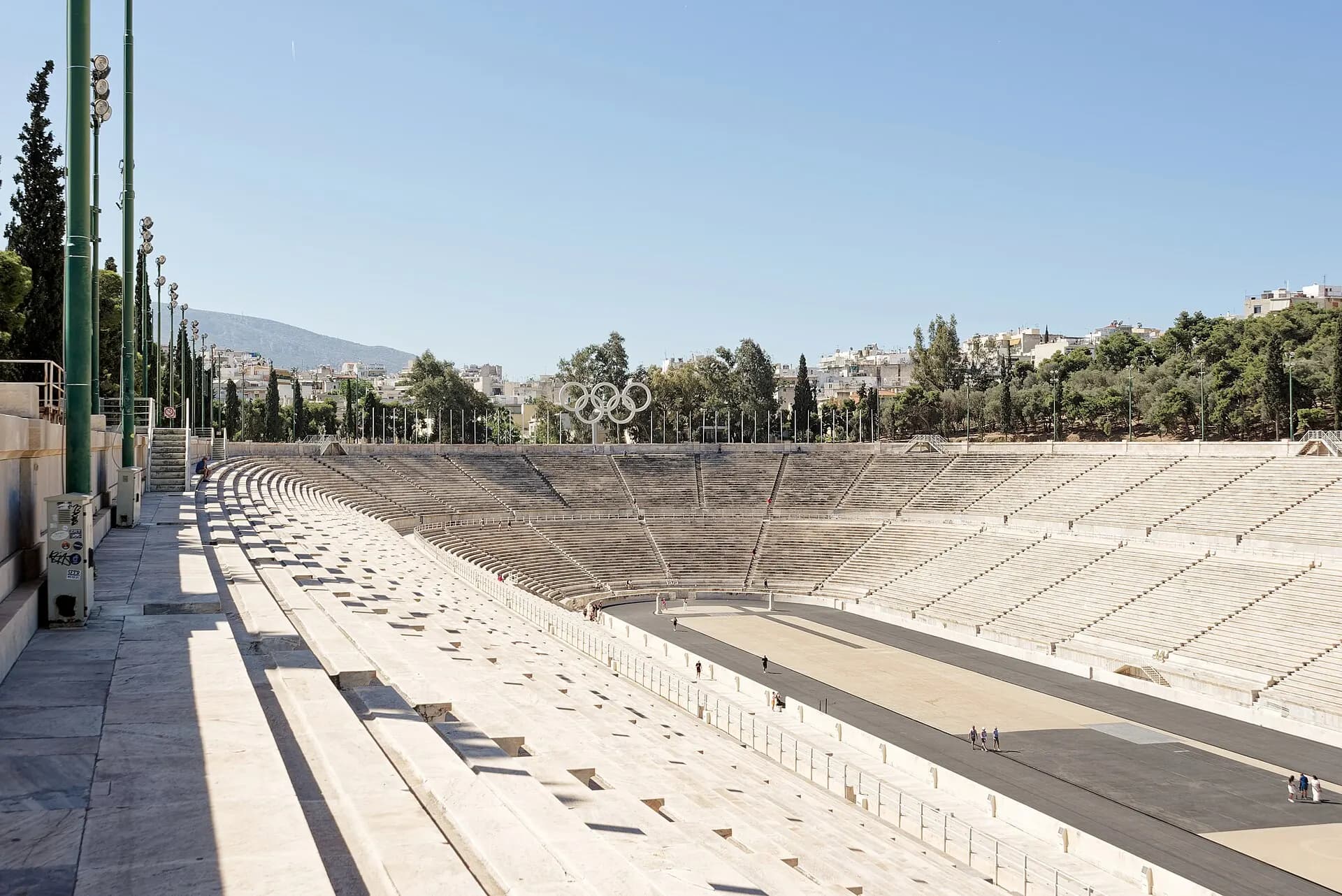
A stadium built entirely of marble, restored for the first modern Olympic Games in 1896 on the site of an ancient stadium. You can walk on the track and climb the stands.
- 8
Lycabettus Hill
Photo: Jakub Hałun, CC BY 4.0, via Wikimedia Commons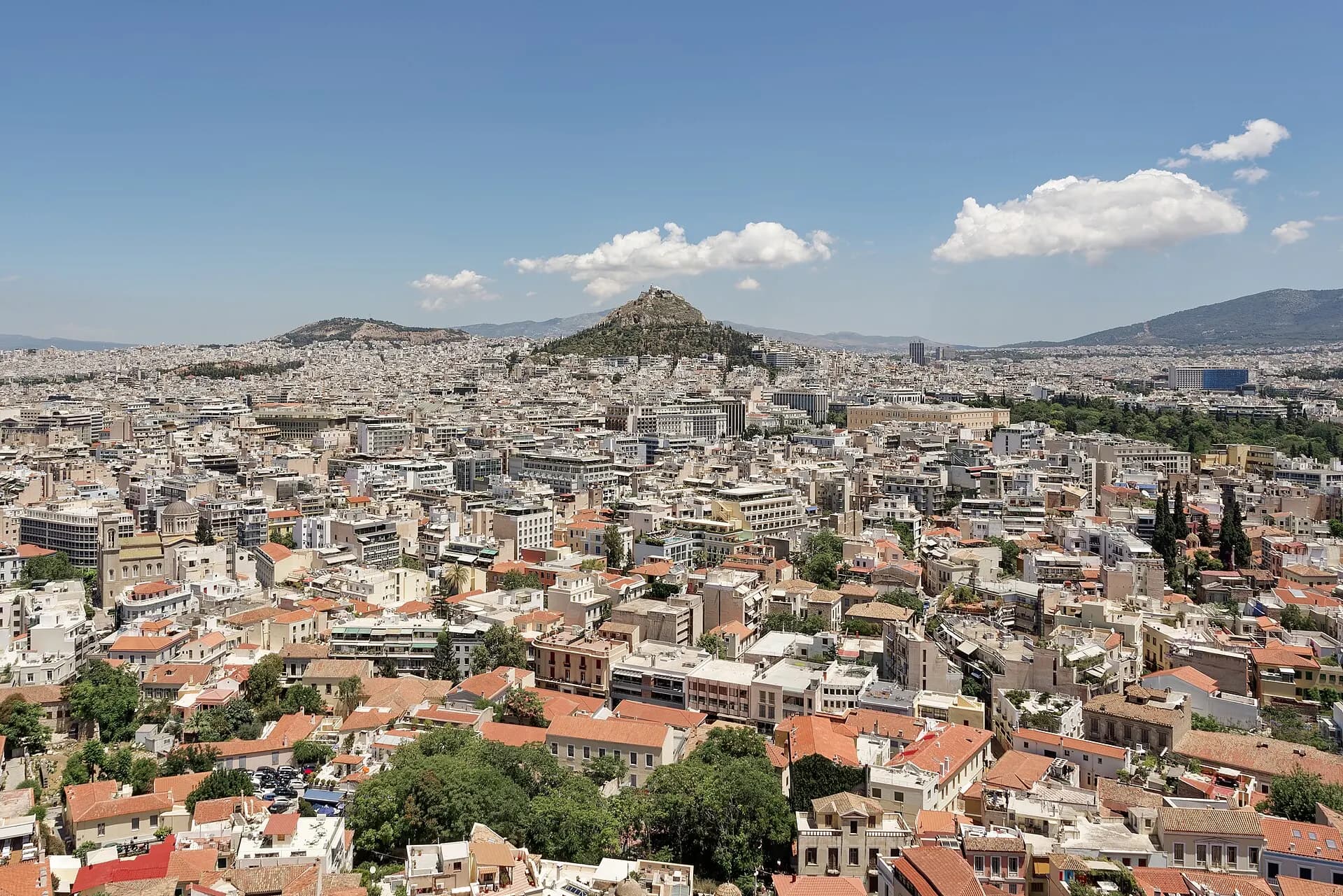
The highest point in central Athens, reached by a steep path or a funicular from Kolonaki, with a small chapel on top and the best view over the city to the Acropolis and the sea. It's spectacular at sunset.
- 9
Monastiraki and Psyrri
Photo: Jean Housen, CC BY-SA 4.0, via Wikimedia Commons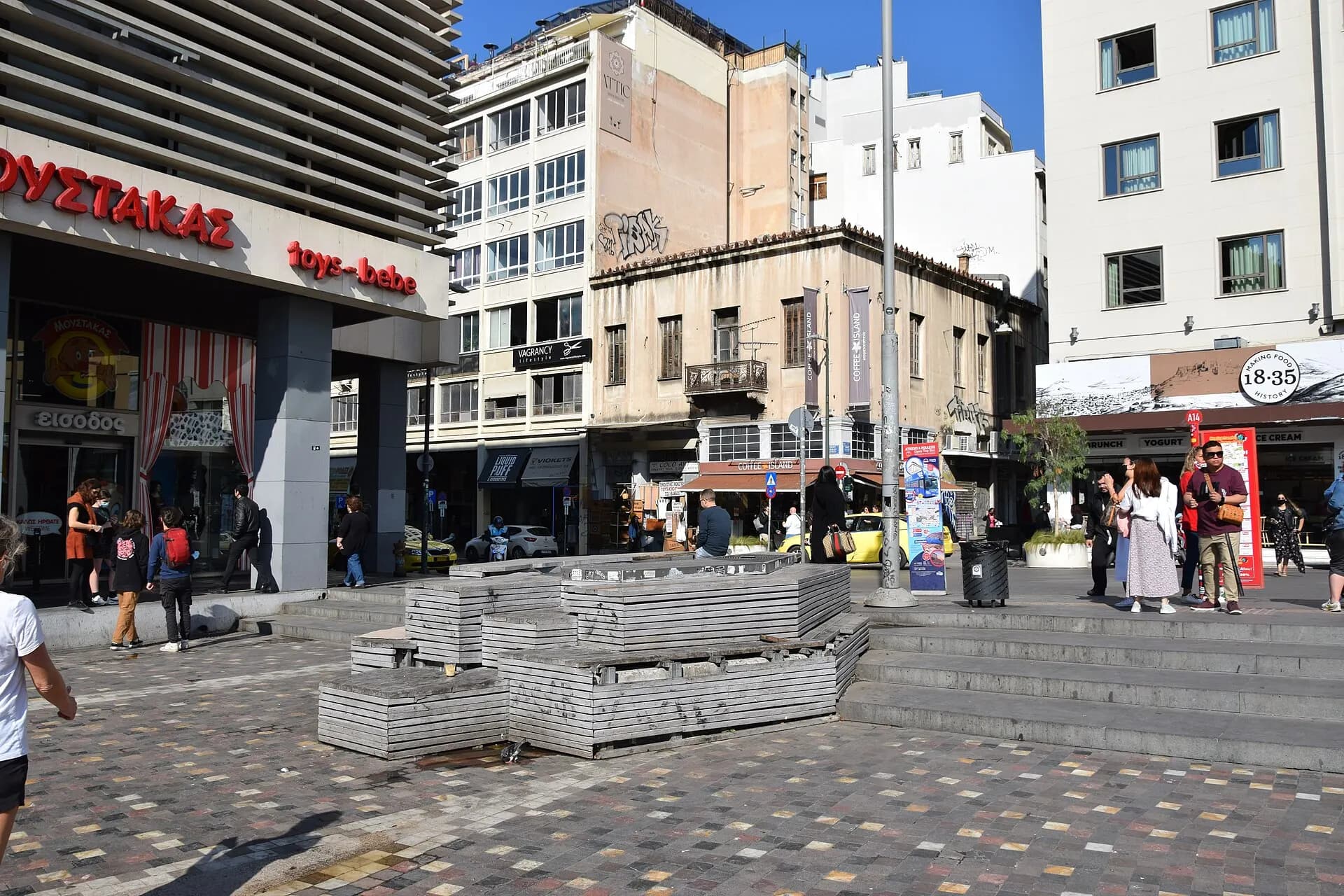
Monastiraki is a busy square and flea market below the Acropolis, with rooftop bars facing the Parthenon. Neighbouring Psyrri is full of street art, tavernas and bars, and one of the liveliest places for an evening out.
- 10
Cape Sounion
Photo: Sjaak Kempe from Groningen, The Netherlands, CC BY 2.0, via Wikimedia Commons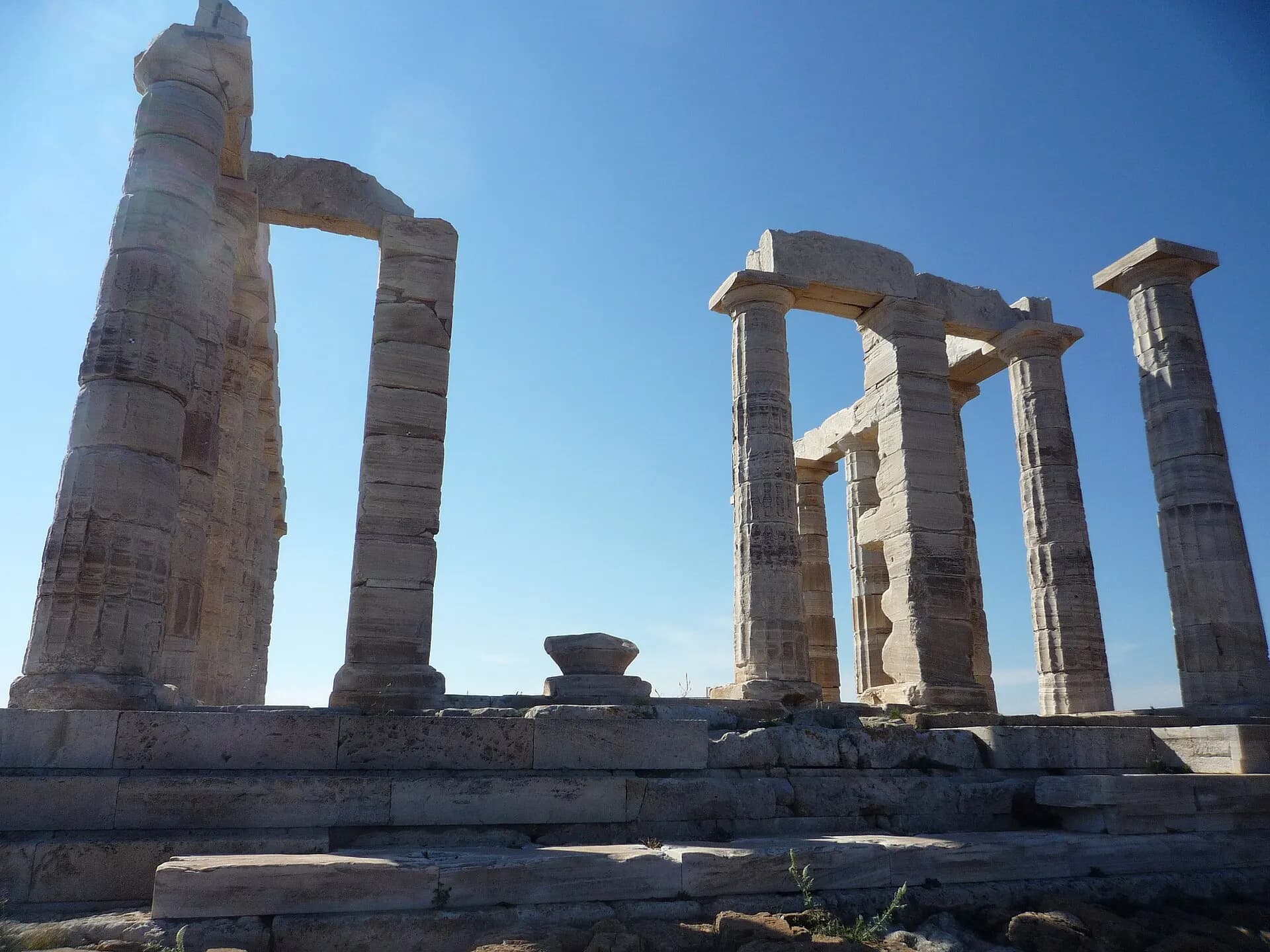
About an hour and a half south along the coast, the Temple of Poseidon stands on a clifftop above the Aegean, a famous place to watch the sunset. The poet Byron carved his name on one of its columns.
When to go
Spring and autumn are the best times, warm and sunny, with fewer crowds. July and August are very hot, often above 35 °C and occasionally much hotter; the Acropolis may close in the middle of the day during heatwaves. Winter is mild but can be rainy, and the sites are quiet. Easter, the most important Greek festival, brings candlelit processions.
Getting around
The historic centre is walkable, and the metro is clean, efficient and links the airport, the port of Piraeus and the main sights; many stations display ancient finds uncovered during construction. Taxis are inexpensive and ride-hailing apps work well. The coastal tram runs to the beaches of the Athens Riviera.
Athens International Airport is about forty minutes from the centre by metro. Ferries to the islands leave from Piraeus, Rafina and Lavrio.
Local tips
- Buy a combined ticket covering the Acropolis and other ancient sites, or book online.
- Many sites are free on certain days in winter; check the Ministry of Culture's site.
- Don't flush toilet paper; use the bin provided, as old pipes are narrow.
- Dinner is late, from nine or ten in the evening.
- Watch for pickpockets on the metro and in crowded areas.
- Tipping isn't obligatory, but rounding up or leaving five to ten per cent is appreciated.
Eat and drink
Greek food is built on olive oil, vegetables, herbs and grilled meat and fish. Try souvlaki and gyros, moussaka, horiatiki (Greek salad), grilled octopus and meze shared with friends at a taverna. Start the day with a koulouri, a sesame bread ring, or bougatsa, a custard pie. Drink ouzo or tsipouro with meze, and try Greek wines, which have improved enormously.
Day trips
Delphi, about two and a half hours north-west, was the sanctuary of Apollo and home of the ancient oracle, set on the slopes of Mount Parnassus above a valley of olive groves. To the south-west, across the Corinth Canal, lie the theatre of Epidaurus, famous for its acoustics, the citadel of Mycenae with its Lion Gate, and the elegant harbour town of Nafplio. The nearest islands, Aegina, Poros and Hydra, are an hour or two by ferry from Piraeus; Hydra has no cars, only donkeys and boats.
Where to stay
Plaka and Makrygianni, below the Acropolis, are the most convenient areas for the ancient sites, and quiet at night. Koukaki, just south of the Acropolis Museum, is a residential neighbourhood with good cafés and value. Monastiraki and Psyrri are lively and central but noisier, while Kolonaki, on the slopes of Lycabettus, is upmarket, with boutiques and smart cafés.