Rhodes
A walled city of the Knights, a white village under an ancient acropolis, long beaches and wild southern capes on the sunniest corner of the Aegean.
- Best time to go
- May to June and September to October, warm and swimmable without the midsummer heat
- Local time
- –
- Currency
- Euro (EUR)
- Reading time
- 9 min
- Language
- Greek

Rhodes is the largest of the Dodecanese islands and the fourth-largest in Greece, lying far out in the south-eastern Aegean, closer to the Turkish coast than to Athens. Its capital holds one of the finest medieval towns in Europe: the walled city built by the Knights of St John, who ruled the island from 1309 to 1522, and which has been a UNESCO World Heritage Site since 1988. Around it, the island mixes ancient cities, Byzantine chapels, Ottoman mosques and Italian-era buildings from the decades when Italy held the Dodecanese.
Beyond town, the sheltered east coast is lined with sandy and pebbly bays and resorts, with Lindos and its clifftop acropolis as the highlight. The west coast is windier and greener, with pine forests, mountain villages and castles, and the far south ends at Prasonisi, where two seas meet. Rhodes is big enough to need a car or a well-planned bus day for most sights, and it rewards an early start: the heat and the day-trip crowds build quickly from mid-morning.
The top 17 in Rhodes
- 1
Old Town lanes and Hippocrates Square
Photo: dronepicr, CC BY 2.0, via Wikimedia Commons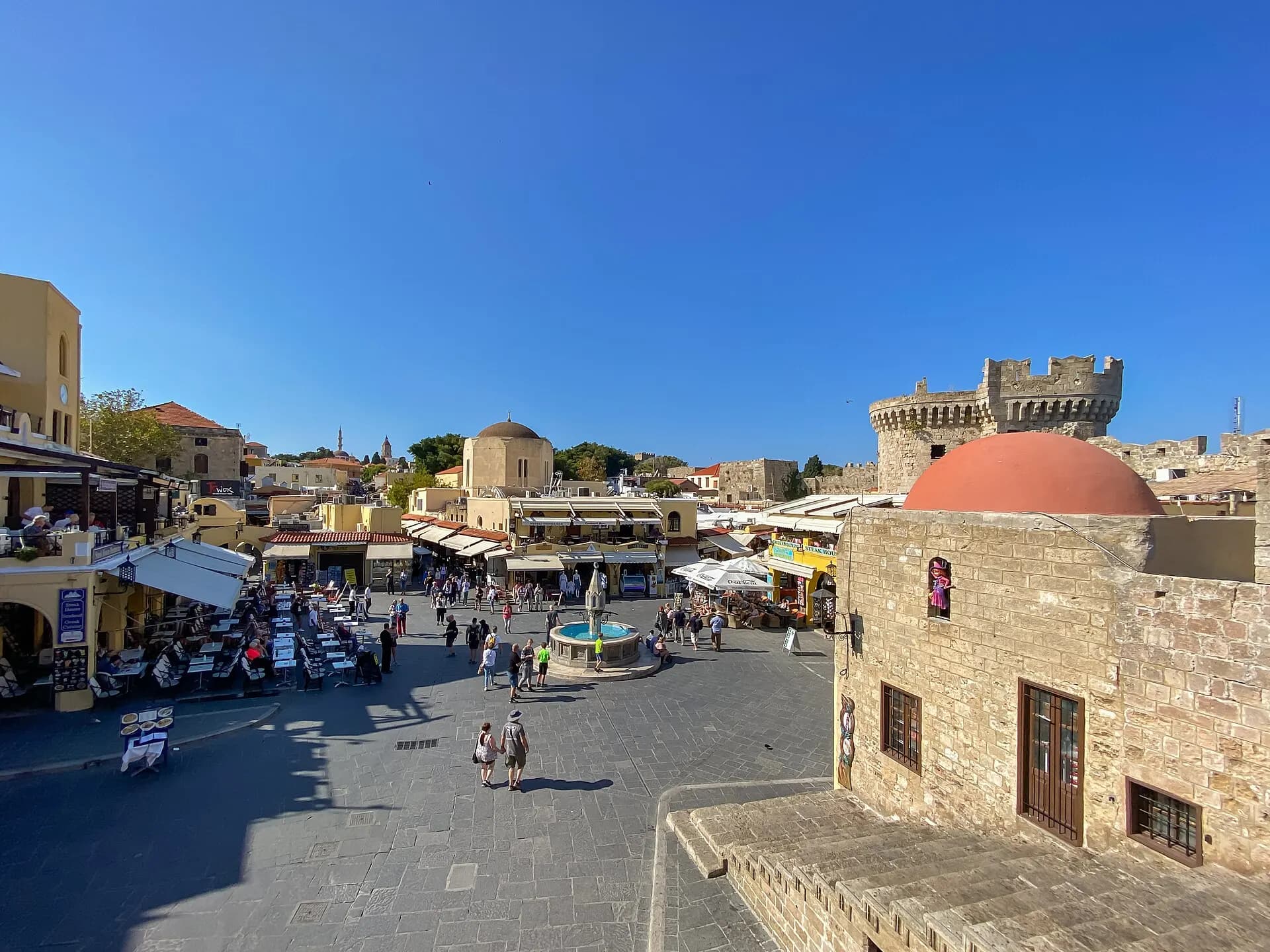
Inside the walls, the lower town is a maze of cobbled lanes, arches buttressing the houses, small mosques and courtyards. Sokratous Street is the busy shopping spine; quieter lanes lead off it to the Suleiman Mosque, the Ottoman baths and the old Jewish Quarter, where the Kahal Shalom synagogue, the oldest in Greece, has a small museum.
TipWander in the early morning or after the cruise passengers leave in the late afternoon.
- 2
Street of the Knights
Photo: Julian Lupyan, CC0, via Wikimedia Commons
A straight, sloping medieval street of stone façades leading up to the palace. It was lined with the inns of the different "tongues", the national groups of the Order, each carved with coats of arms. Restored in the early twentieth century, it's the most complete street of its kind from the age of the Crusades.
- 3
Palace of the Grand Master
Photo: Julian Lupyan, CC0, via Wikimedia Commons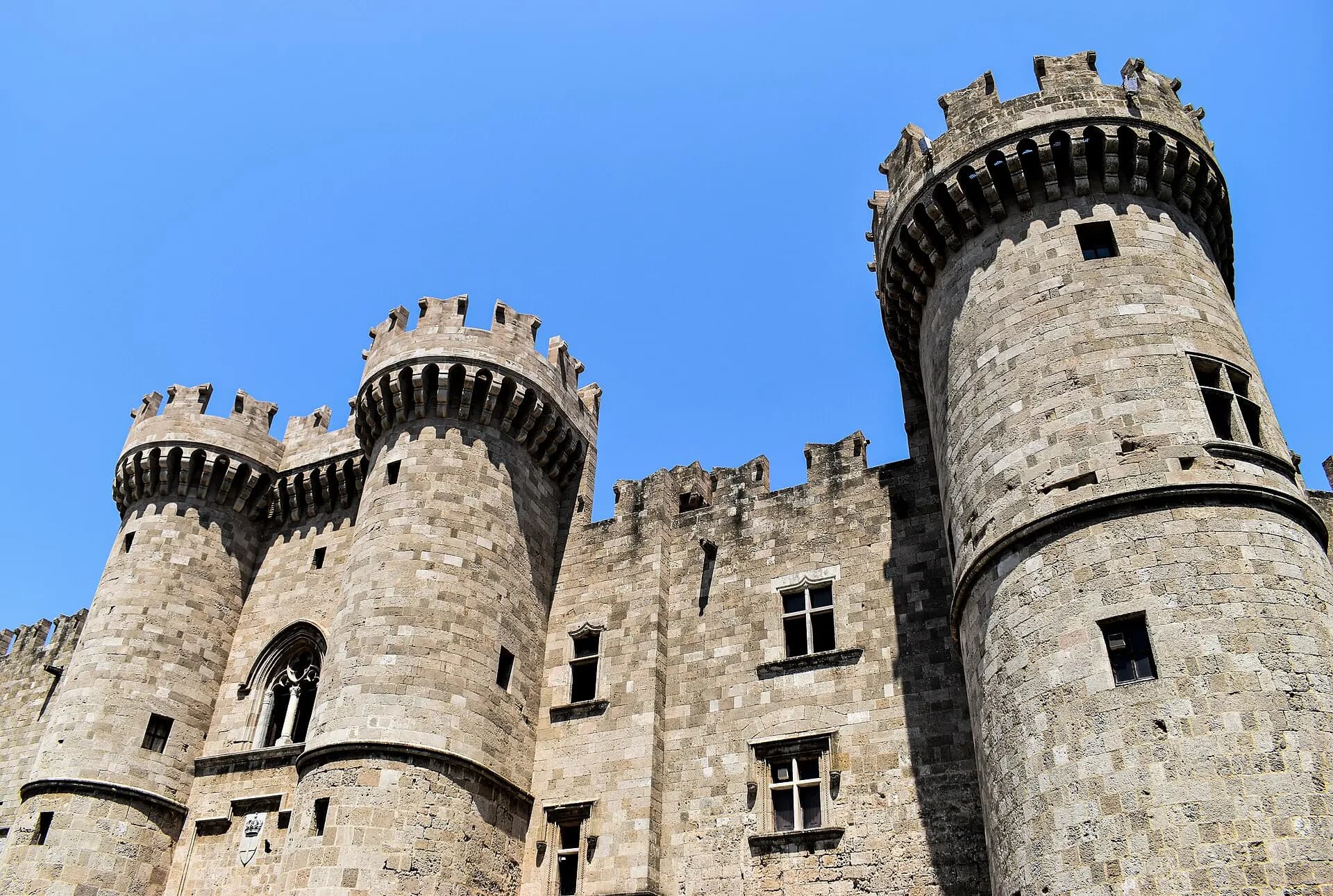
The castle-like seat of the Knights stands at the top of the Old Town. An explosion in 1856 left it largely in ruins, and what you see today is a lavish Italian reconstruction of the 1930s, with grand halls, Hellenistic and early Christian mosaic floors brought from Kos, and exhibitions on ancient and medieval Rhodes.
TipThe 2026 official listing gives summer hours (April to October) of 08:00 to 20:00 and shorter winter hours with Tuesdays closed; check before you go.
- 4
The walls walk
Photo: Jebulon, CC0, via Wikimedia Commons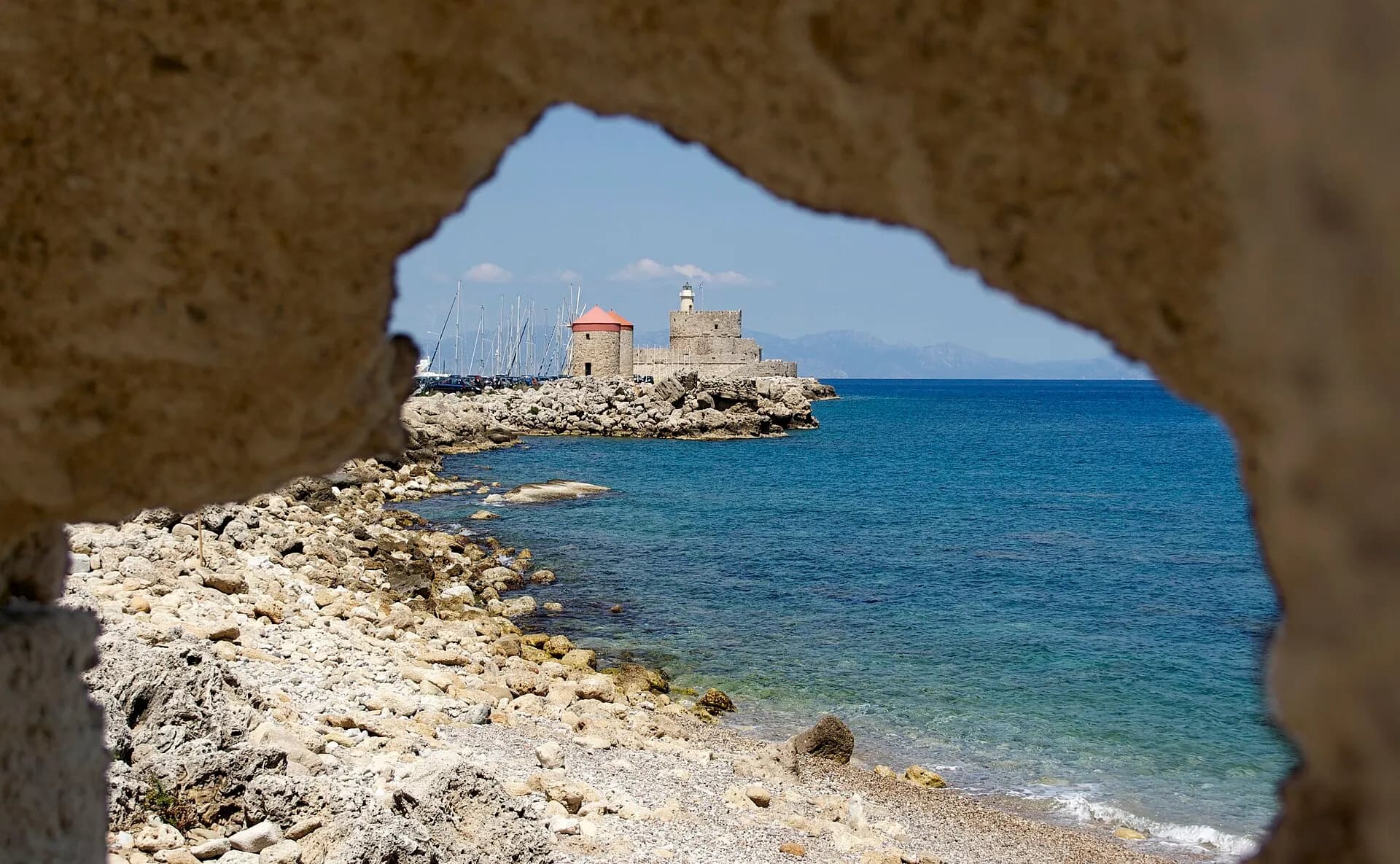
The Old Town is encircled by around four kilometres of massive walls, moat and bastions, rebuilt by the Knights to withstand Ottoman artillery. A section of the walkway along the top is open with a separate ticket, but only for limited hours: the 2026 official listing shows it open Monday to Friday, 12:00 to 15:00, in summer, and closed in winter. You can also walk the dry moat below, which is free and green.
- 5
Archaeological Museum of Rhodes
Photo: George Chernilevsky, CC BY 4.0, via Wikimedia Commons
Housed in the Hospital of the Knights, a fifteenth-century Gothic building around an arcaded courtyard, the museum holds finds from Ialysos and Kamiros, Classical and Hellenistic sculpture including the Bathing Aphrodite statuette, a huge head of the sun god Helios, and the Knights' carved tombstones upstairs.
- 6
Mandraki harbour
The old harbour just outside the walls, guarded by bronze statues of a stag and a doe on columns at its mouth, where legend wrongly places the Colossus. Along the mole stand three medieval windmills and the Fort of St Nicholas, and the waterfront is lined with Italian-era buildings, the round New Market and excursion boats.
- 7
Acropolis of Rhodes (Monte Smith)
Photo: Bernard Gagnon, CC BY-SA 3.0, via Wikimedia Commons
On a hill west of the modern town lie the remains of the ancient city's acropolis: the re-erected columns of the Temple of Pythian Apollo, a restored marble odeon and a long Hellenistic stadium. Entry is free, and it's a popular place for sunset over the sea.
- 8
Kallithea Springs
Photo: Julie Mac, CC BY 2.0, via Wikimedia Commons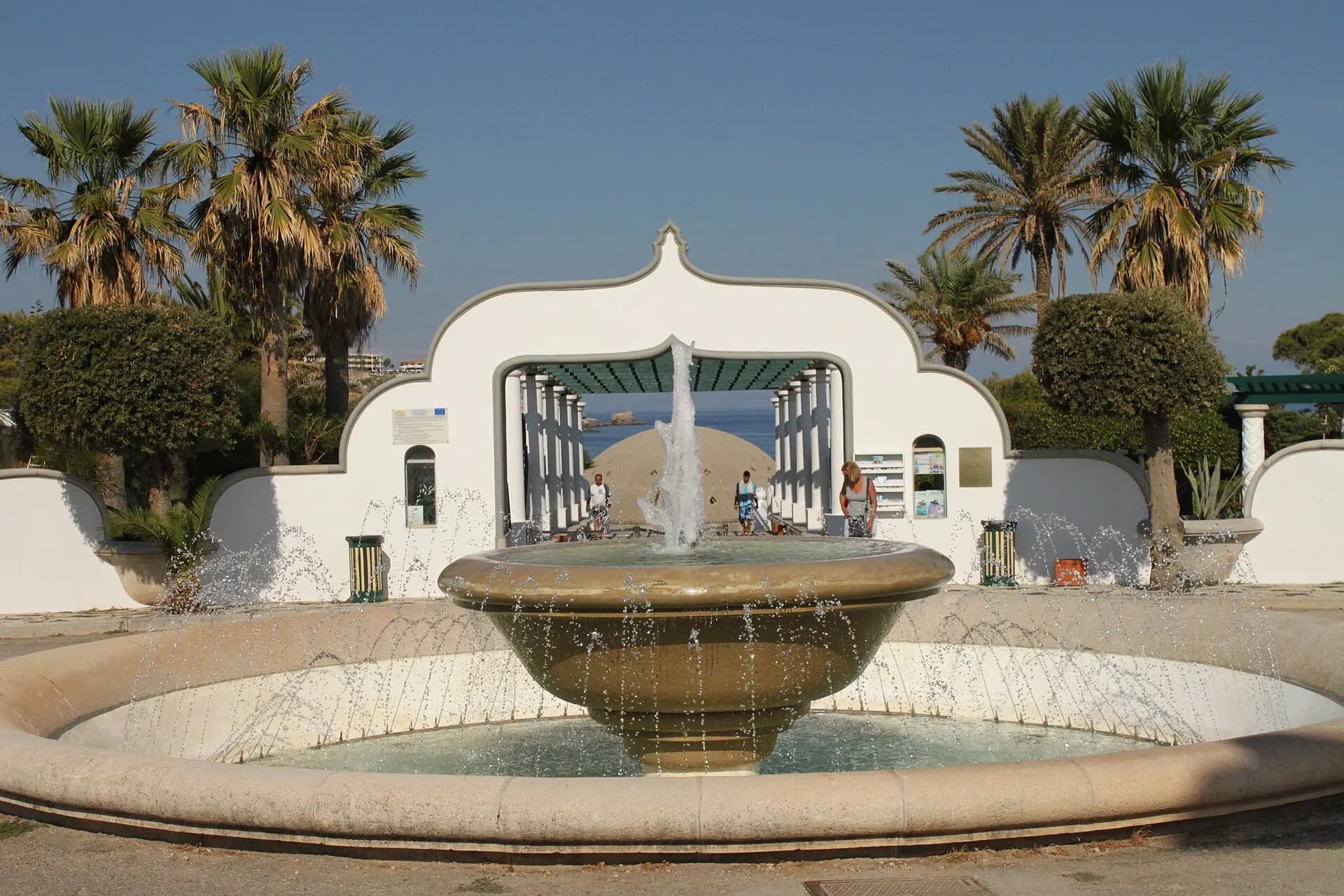
A spa built in the 1920s by the Italian architect Florestano di Fausto, with domes, colonnades and pebble mosaics in a mix of Art Deco and Byzantine-revival styles, set above a rocky cove for swimming. It's about ten kilometres south of town and charges an entrance fee.
- 9
Anthony Quinn Bay
Photo: Pjotr Mahhonin, CC BY-SA 4.0, via Wikimedia Commons
A small, deep cove of emerald water between pine-covered cliffs near Faliraki, named after the actor, who filmed The Guns of Navarone on Rhodes. It's beautiful for snorkelling, but tiny, so come early in summer.
- 10
Acropolis of Lindos
Photo: Manfred Werner (Tsui), CC BY-SA 4.0, via Wikimedia Commons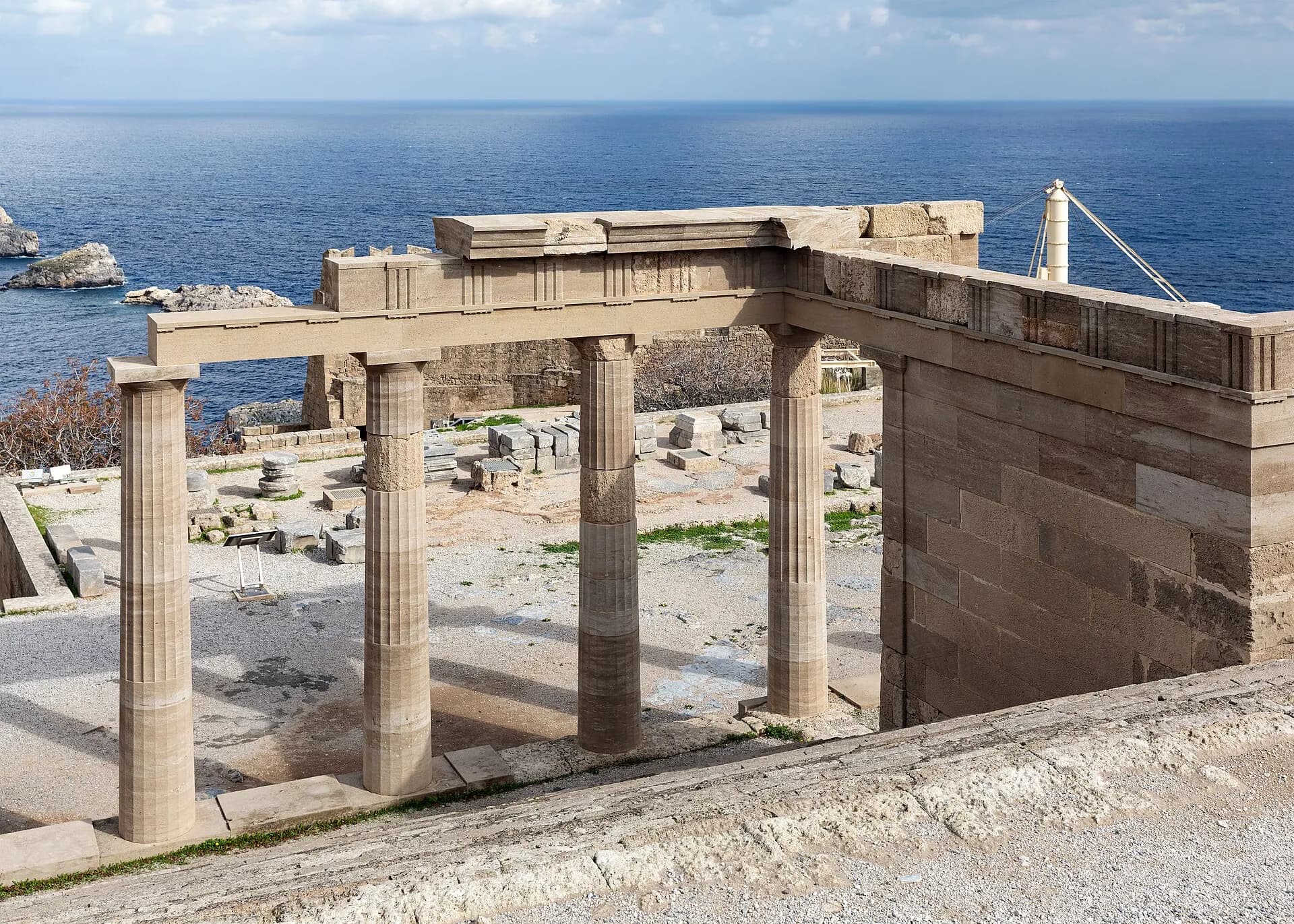
High on a rock above the white village of Lindos, the acropolis combines the fourth-century BC Doric Temple of Athena Lindia, a monumental stairway and propylaea, a 42-column Hellenistic stoa and a ship carved into the rock, all wrapped in the walls of a Knights' castle. The views down over the two bays are superb.
TipBe at the gate at 08:00, before the coach tours and the heat; the climb from the village is steep and has little shade.
- 11
St Paul's Bay
Photo: Ввласенко, CC BY-SA 3.0, via Wikimedia Commons
A near-circular lagoon below the southern side of the Lindos acropolis, almost enclosed by rocks, with calm, clear water and a little white chapel. Tradition says the Apostle Paul landed here in a storm.
- 12
Prasonisi
Photo: Ввласенко, CC BY-SA 3.0, via Wikimedia Commons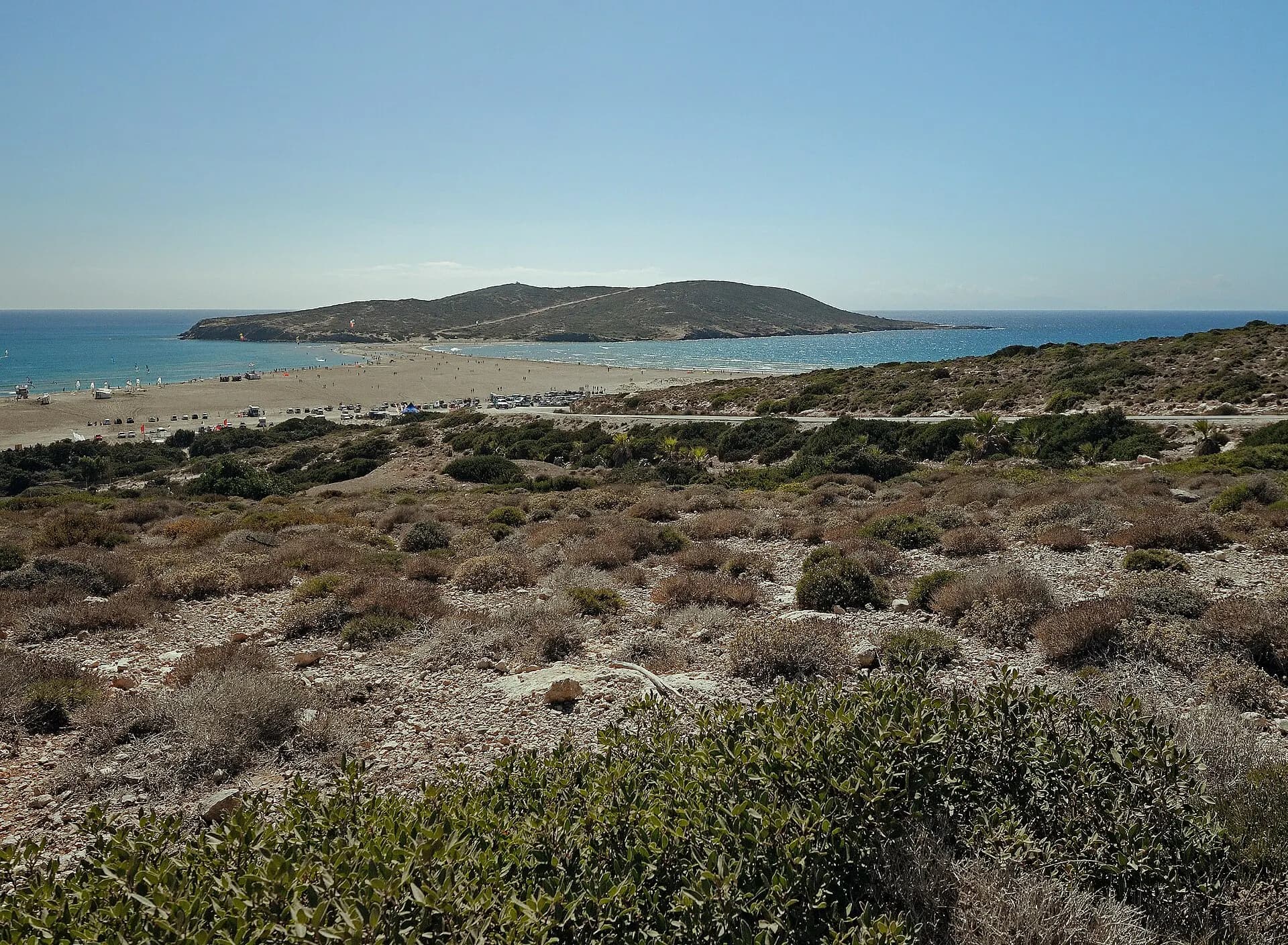
At the southern tip of the island, a sandy isthmus joins Rhodes to a rocky islet, with the Aegean on one side and the Mediterranean on the other. The steady wind makes it one of Europe's best-known windsurfing and kitesurfing spots, with schools and rentals in season; in winter, the isthmus can be covered by water.
- 13
Monolithos castle
Photo: Marc Ryckaert (MJJR), CC BY 3.0, via Wikimedia Commons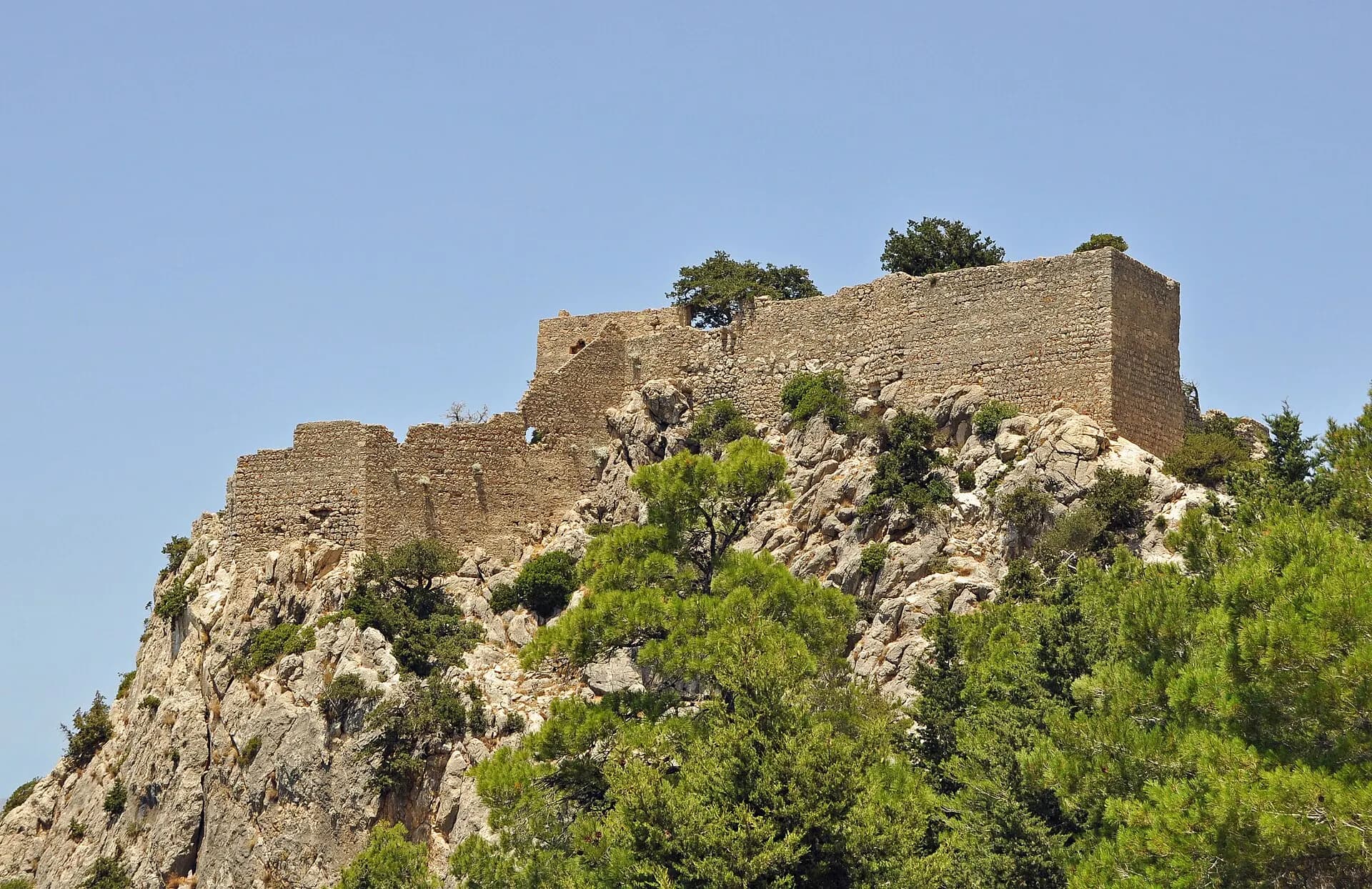
A Knights' castle of 1480 perched on a sheer rock pinnacle above the west coast, with a whitewashed chapel inside its walls and views across to the islets off the coast. The steps up are short, and the beach at Fourni lies below.
- 14
Ancient Kamiros
One of the three ancient cities of Rhodes, along with Lindos and Ialysos, Kamiros spreads down a hillside above the west coast: streets, houses, a Doric temple, an agora and a large cistern from the Archaic period. Lost under earth after earthquakes, it was rediscovered in the nineteenth century and is quieter than Lindos.
- 15
Valley of the Butterflies
Photo: INDALOMANIA, CC BY-SA 3.0, via Wikimedia Commons
A shady wooded gorge of streams, pools and small wooden bridges inland from the west coast. From about June to August, thousands of Jersey tiger moths, a local subspecies, rest on the trunks of the oriental sweetgum trees, whose resin attracts them. Outside summer, it's still a pleasant green walk, but without the moths.
TipWalk quietly and never clap or shake branches to make the moths fly; disturbing them uses up the energy they need to breed.
- 16
Filerimos
Photo: Pjotr Mahhonin, CC BY-SA 4.0, via Wikimedia Commons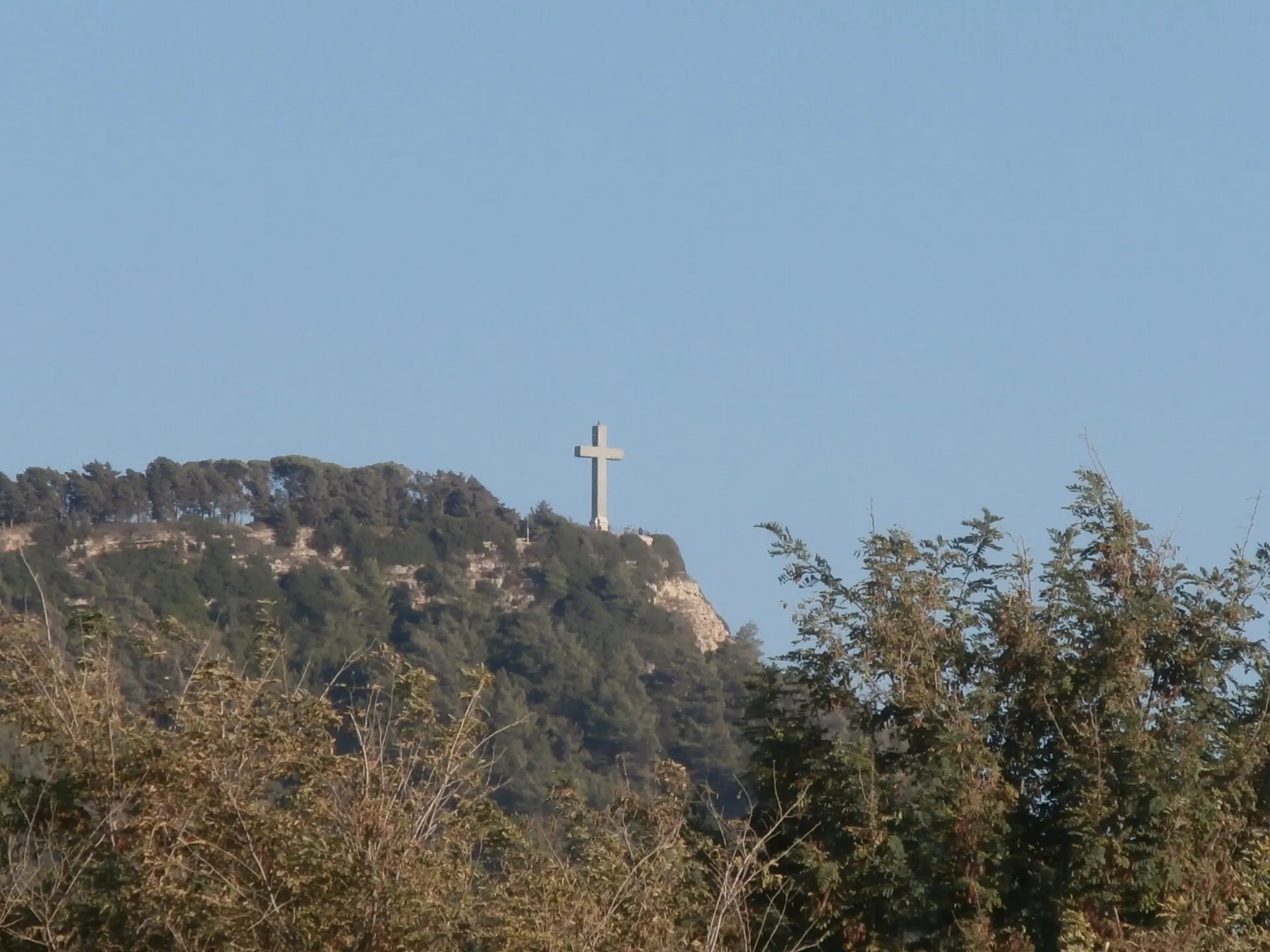
The hill above Ialysos was the acropolis of another ancient city. Today it has the foundations of the temple of Athena Polias and Zeus Polieus, a restored monastery of Our Lady used by the Knights, and the "Way of Golgotha", a path lined with Stations of the Cross ending at a sixteen-metre cross with wide views over the north of the island.
- 17
Symi
Photo: Jebulon, CC0, via Wikimedia Commons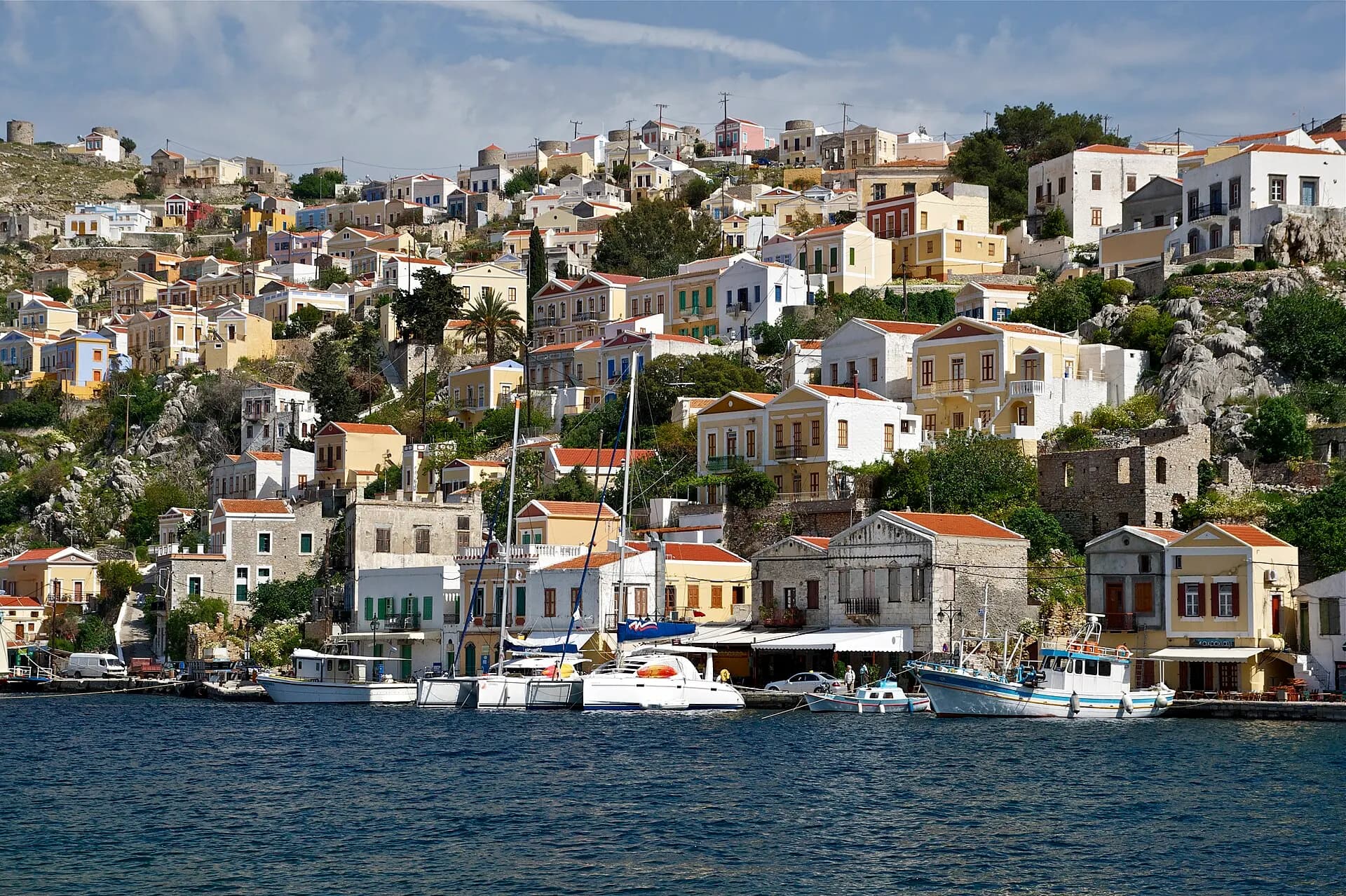
The small island of Symi, north-west of Rhodes, makes a popular day trip by boat from Rhodes town. Its harbour, Gialos, is ringed by colourful neoclassical captains' houses climbing the hillsides, and many excursions stop at the large Panormitis monastery on the south of the island.
TipFast boats are quicker; cheaper excursion boats take longer and include Panormitis. Check return times, and stay overnight if you can, once the day boats have left.
When to go
May, June, September and October are the best months: warm sea, long sunny days, and every site and boat running. July and August are hot, often well over 30°C in the afternoon, with the strongest crowds and prices; the west coast is windier, and the east coast is more sheltered. The season winds down in late October, and many resort hotels close from November to March, though Rhodes town stays lively all year with a mild winter. Archaeological sites switch to shorter winter hours from 1 November, with Tuesdays closed at the major ones.
Getting around
Rhodes International Airport "Diagoras" is about fourteen kilometres south-west of the city, with flights from Athens of around an hour and many seasonal international flights. Ferries from Piraeus are long, often overnight, and connect with other Dodecanese islands such as Symi, Kos and Patmos; domestic ferries use Akandia port, and day boats to Symi and the east coast leave from Mandraki. KTEL buses run from the station near the New Market along the east coast to Lindos and beyond, and along the west coast; check timetables at the station, as services thin out in the evening and outside summer. Hiring a car is the easiest way to reach Monolithos, Prasonisi and the inland villages. The Old Town is closed to most traffic, so park outside the walls.
Local tips
- Visit Lindos, the Palace of the Grand Master and the museum early or late; the middle of the day is hot and crowded.
- Major archaeological sites can close at short notice in severe weather or extreme heat; check official announcements on the day.
- Bring a hat, water and sturdy shoes: the Old Town cobbles are slippery and the Lindos climb is steep.
- Greece charges a climate resilience fee per room per night, set by accommodation type and season, usually paid at the hotel on top of the booking price.
- Rhodes is a busy cruise port; on days with several ships, the Old Town fills from mid-morning.
- Free entry days at the state sites include the first and third Sunday of each month from November to March.
- Drive carefully on the winding mountain roads, and watch for goats.
Eat and drink
Look for pitaroudia, fried chickpea or tomato fritters; matsi, a local handmade pasta; and melekouni, a bar of sesame and honey traditionally given at weddings. Rhodes has a long wine tradition, especially around Embonas on the slopes of Mount Attavyros, and a grape spirit called souma. Fish tavernas in Kamiros Skala and the villages tend to be better value than the busiest squares of the Old Town; the New Town has more local cafés and bakeries.
Where to stay
The Old Town has small hotels in restored medieval houses, atmospheric but sometimes noisy and hard to reach with luggage. The New Town has more choice and the town beach, Elli. Lindos suits couples who want the village after the day-trippers leave, while Faliraki, Kolymbia and the east-coast resorts have big beach hotels. The west coast and south are quieter, with fewer places to stay; Prasonisi has simple lodgings for windsurfers.
The Knights and the walled city
The Knights Hospitaller, a military religious order founded in Jerusalem to care for pilgrims, took Rhodes in 1309 and turned it into a fortress on the frontier of Christian Europe. They survived an Ottoman siege in 1480, but in 1522, Sultan Suleiman the Magnificent besieged the city for six months and the Knights negotiated their departure, later settling in Malta. Under the Ottomans, the Greek population moved outside the walls, while mosques, baths and fountains were added inside. Italy ruled the Dodecanese from 1912 to 1943 and restored the medieval city heavily, sometimes freely; the islands joined Greece in 1947. In 1944, the island's Jewish community, around 1,700 people, was deported to Auschwitz, and very few survived; a memorial stands in the Square of the Jewish Martyrs.
Ancient Rhodes and the Colossus
In 408 BC, the three cities of Lindos, Ialysos and Kamiros joined to found a new capital at the northern tip of the island, laid out on a grid plan. Rhodes grew into one of the great maritime powers of the Hellenistic world. After the city survived a siege by Demetrios Poliorketes in 305–304 BC, it built the Colossus, a huge bronze statue of the sun god Helios, one of the Seven Wonders of the ancient world. It stood for barely half a century before an earthquake brought it down around 226 BC. Nobody knows exactly where it stood, but it almost certainly didn't straddle the harbour entrance, as later pictures show.
Fire, heat and the countryside
In July 2023, wildfires burned large areas of forest in the centre and south-east of Rhodes, and around 19,000 people, many of them holidaymakers, were evacuated from villages and resorts in what was then the largest fire evacuation in Greek history. The resorts reopened, and the burned hillsides are slowly recovering, but summer fire risk remains high. Never light fires or barbecues outdoors, don't throw cigarettes from cars, and follow any instructions to leave an area; Greece sends emergency alerts by text message via the 112 service.
Responsible travel
Lindos still offers donkey rides up to the acropolis. Greek law limits the weight they carry and sets working hours, but welfare groups have reported long days in the heat and riders who exceed the limits; the walk takes ten to fifteen minutes, so the kindest choice is to go on foot. In the Valley of the Butterflies, stay on the paths and keep quiet. Don't climb on ruins or take stones, cover shoulders and knees in churches and monasteries, save water in summer, and choose local tavernas and producers to spread your spending beyond the big resorts.