Mykonos
A whitewashed harbour town, windmills above the sea, beaches for every mood and the sacred island of Delos a short boat ride away.
- Best time to go
- May to June and September to early October, for warm seas, calmer prices and fewer crowds
- Local time
- –
- Currency
- Euro (EUR)
- Reading time
- 8 min
- Language
- Greek
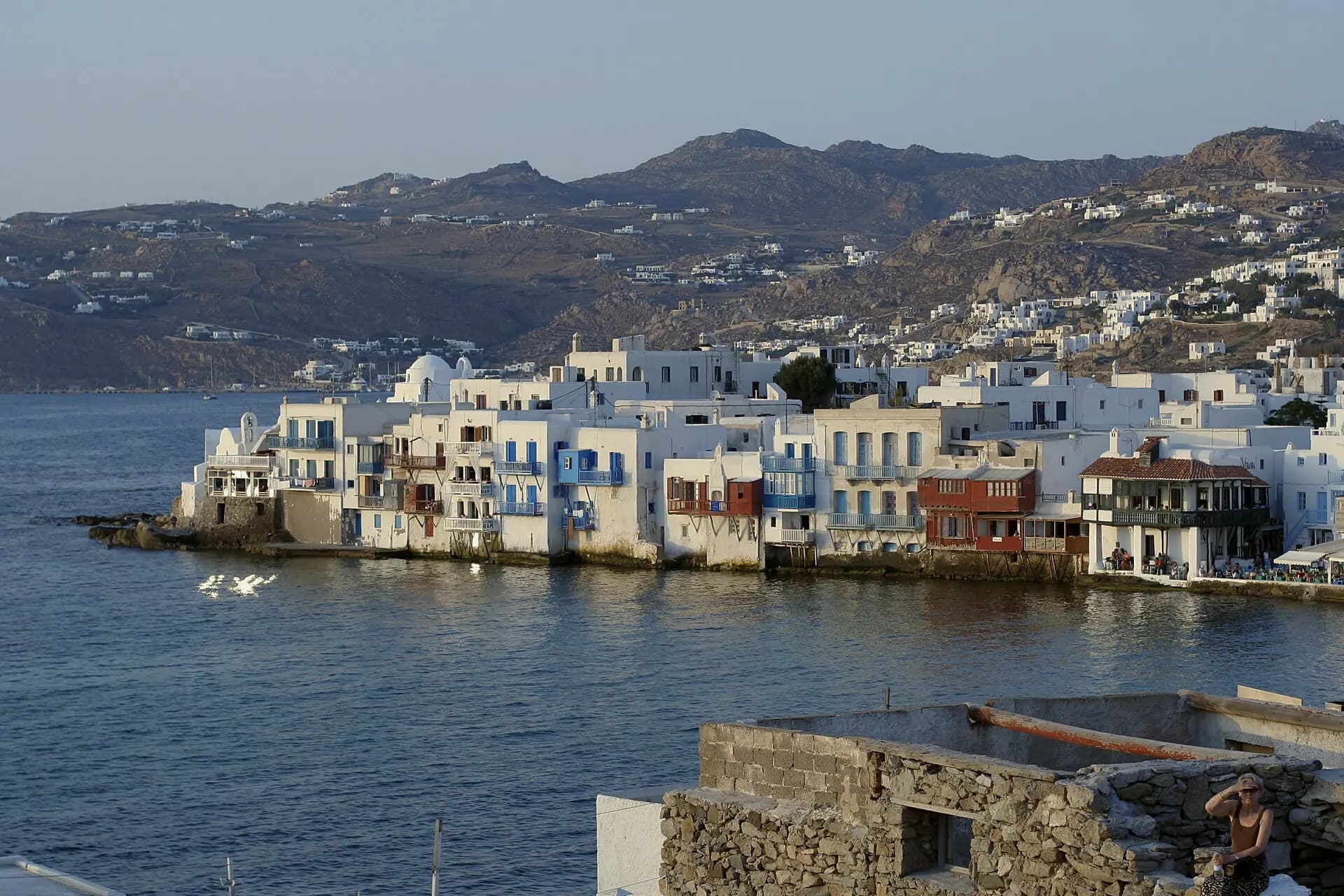
Mykonos is a small, dry, granite island in the middle of the Cyclades, known in Greece as the island of the winds. Its main town, Chora, is one of the most beautiful in the Aegean: a tangle of whitewashed lanes, blue doors, bougainvillea and tiny chapels wrapped around a harbour, with a row of windmills on the ridge above. Beyond town, the south coast is lined with sandy bays, from glamorous beach clubs to quiet coves, and the bare north is wilder and windier.
Mykonos is also one of the most expensive and crowded islands in Greece in high summer, famous for its nightlife and its luxury hotels. It rewards a little planning: come outside July and August if you can, explore Chora early in the morning, pick your beach to suit your mood, and keep a day free for Delos, the sacred island of Apollo, which lies just across the strait.
The top 16 in Mykonos
- 1
Archaeological Museum of Mykonos
Photo: Zde, CC BY-SA 4.0, via Wikimedia Commons
Founded in 1902 near the old harbour, the museum holds finds from the "purification trench" on neighbouring Rheneia, where the Athenians moved the graves from Delos in 426 BC. Its star piece is a tall seventh-century BC storage jar decorated with one of the earliest known images of the Trojan Horse.
TipThe 2026 listing shows the museum closed on Tuesdays; check hours before you go.
- 2
Chora's lanes
Photo: Bernard Gagnon, CC BY-SA 3.0, via Wikimedia Commons
The old town is a deliberate maze, traditionally said to have been laid out to confuse pirates. Wander Matoyianni, the main shopping street, then lose yourself in the side lanes, where whitewashed steps, painted outlines and little family chapels appear at every turn.
TipWalk it before ten in the morning, when the lanes are cool and empty and the shops are still shuttered.
- 3
Panagia Paraportiani
Photo: Bernard Gagnon, CC BY-SA 3.0, via Wikimedia Commons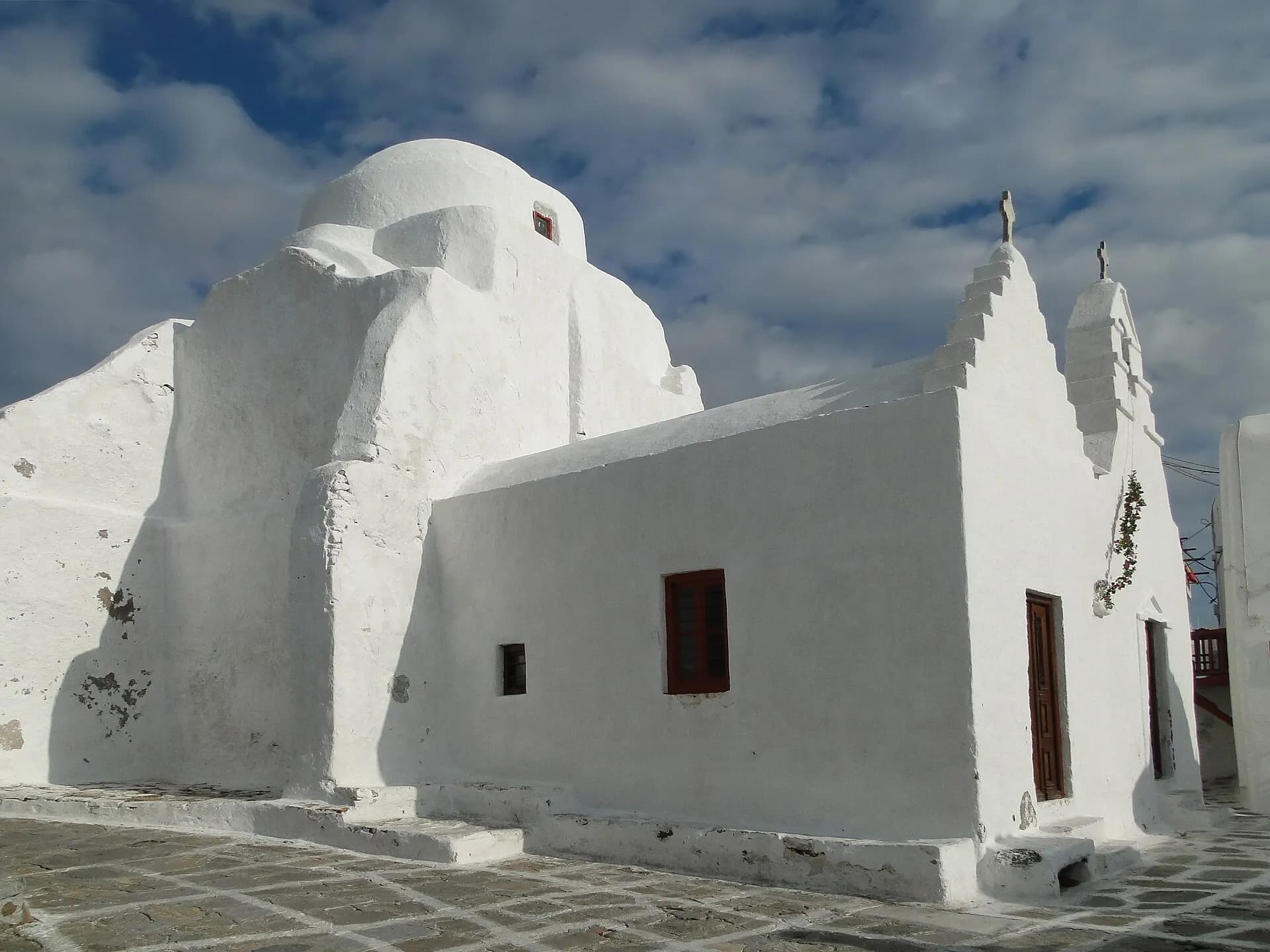
The island's most photographed church is really five chapels fused into one lumpy, sculptural white mass, built between the fifteenth and seventeenth centuries beside what was once the side gate of the town's medieval castle.
- 4
Folklore Museum
Photo: Zde, CC BY-SA 4.0, via Wikimedia Commons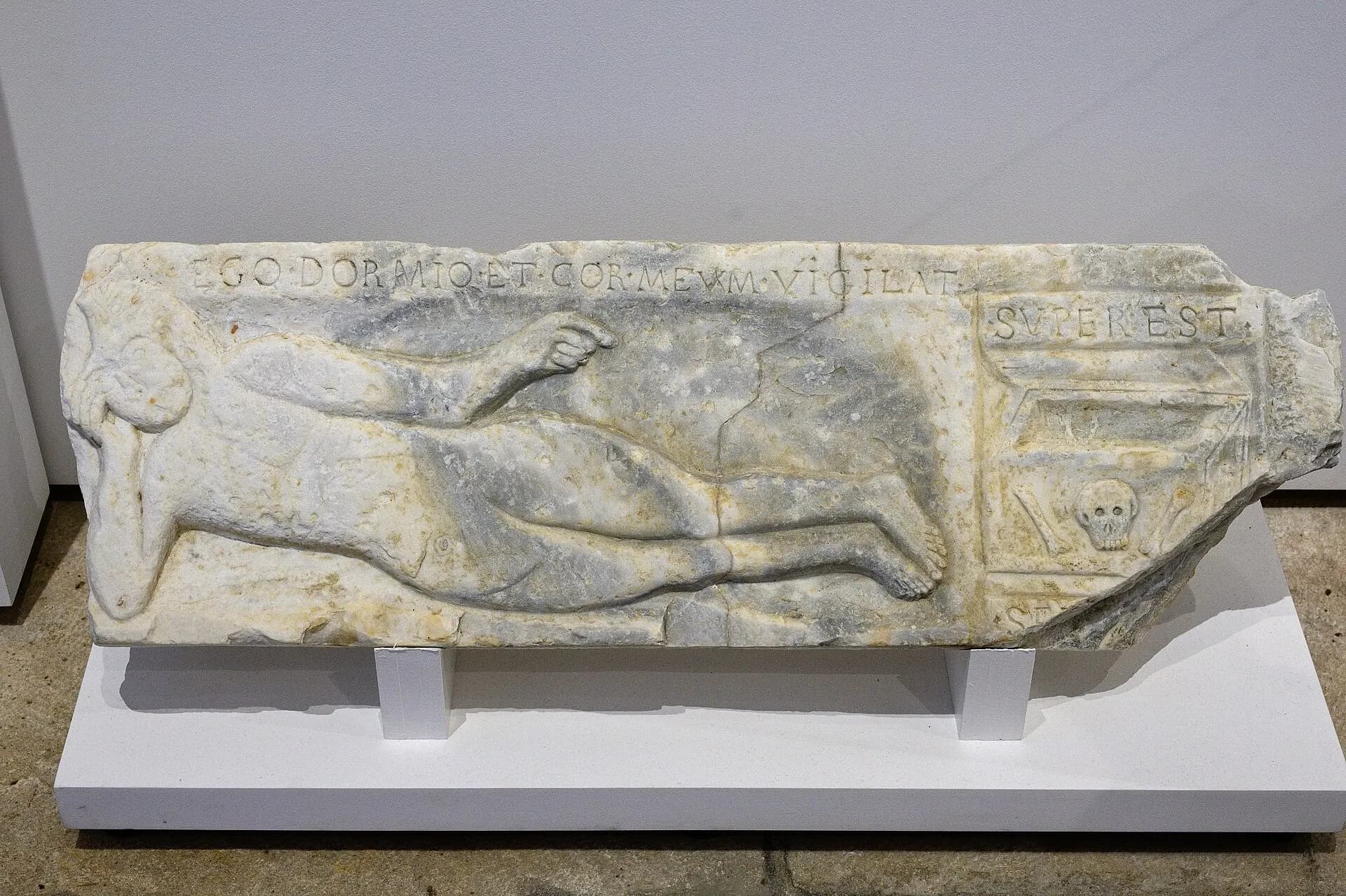
Housed in an eighteenth-century sea captain's house next to Paraportiani, this small museum shows furniture, textiles, tools and maritime objects from island life before tourism. Lena's House, a preserved nineteenth-century middle-class home nearby, belongs to the same museum.
- 5
Little Venice
Photo: Roberto Faccenda, CC BY-SA 2.0, via Wikimedia Commons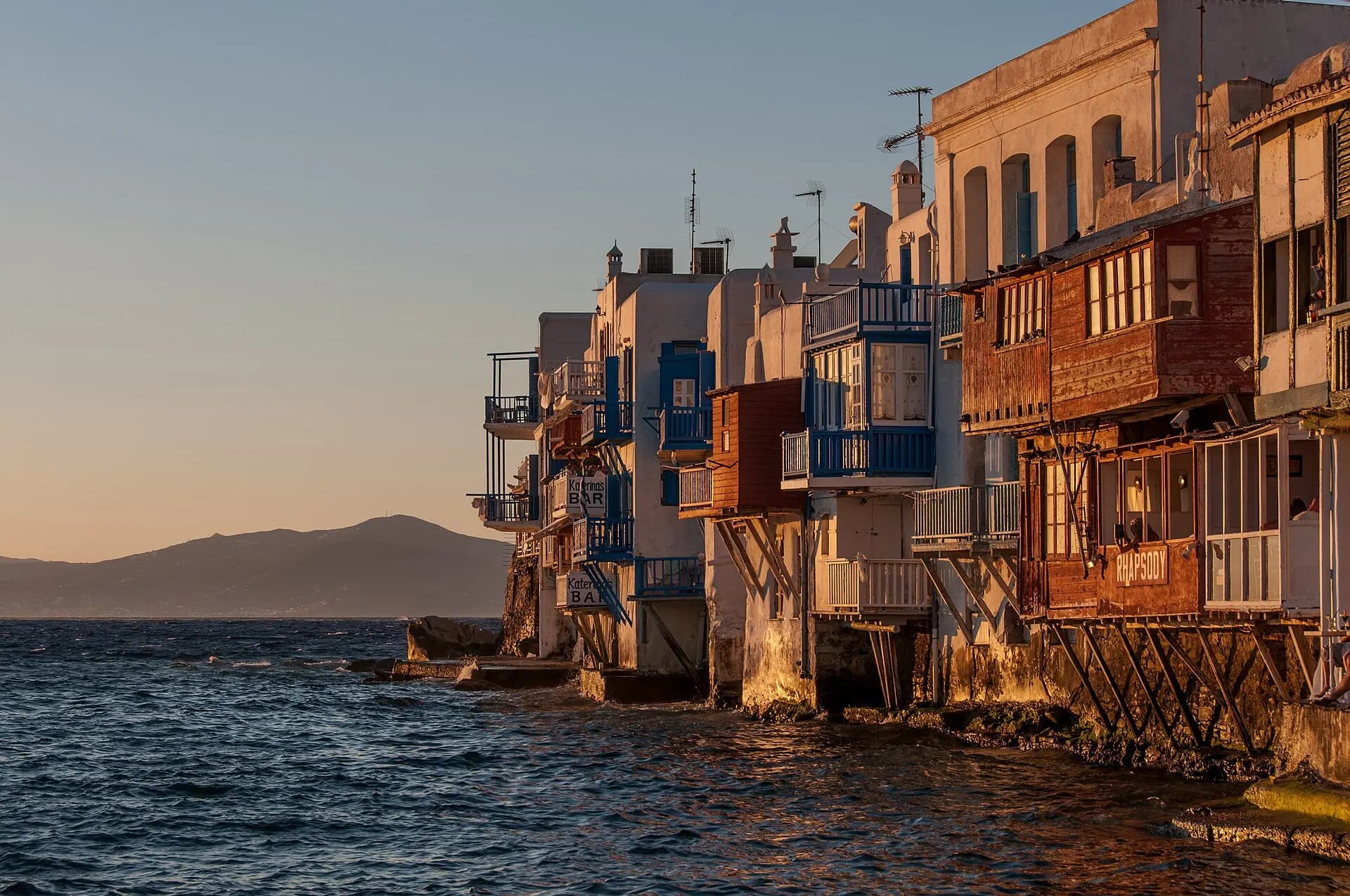
A row of old captains' houses built right on the water, their painted wooden balconies hanging over the waves. It's the classic place for a sunset drink, so bars fill early; on windy days, the spray reaches the tables.
- 6
Kato Mili windmills
Photo: Joe deSousa, CC0, via Wikimedia Commons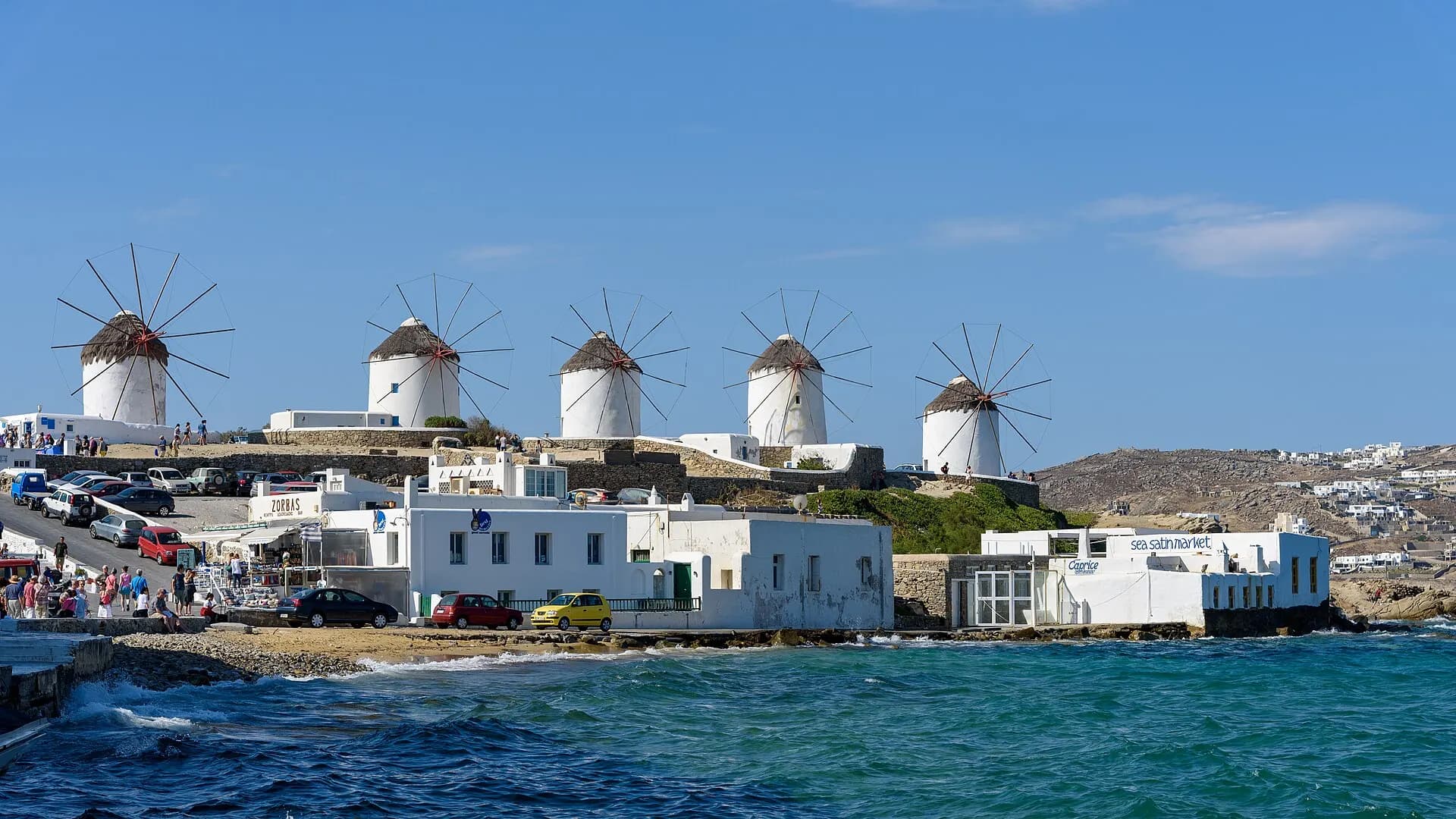
The row of thatched-roof windmills on the low hill south of Little Venice is the symbol of the island. Mykonos once milled grain for passing ships, and the windmills, most of them built from the sixteenth century onwards, turned with the island's steady north wind.
TipCome at sunrise for the light and the silence; at sunset the hill is packed.
- 7
Armenistis lighthouse
Photo: Pimi 69110, CC BY-SA 4.0, via Wikimedia Commons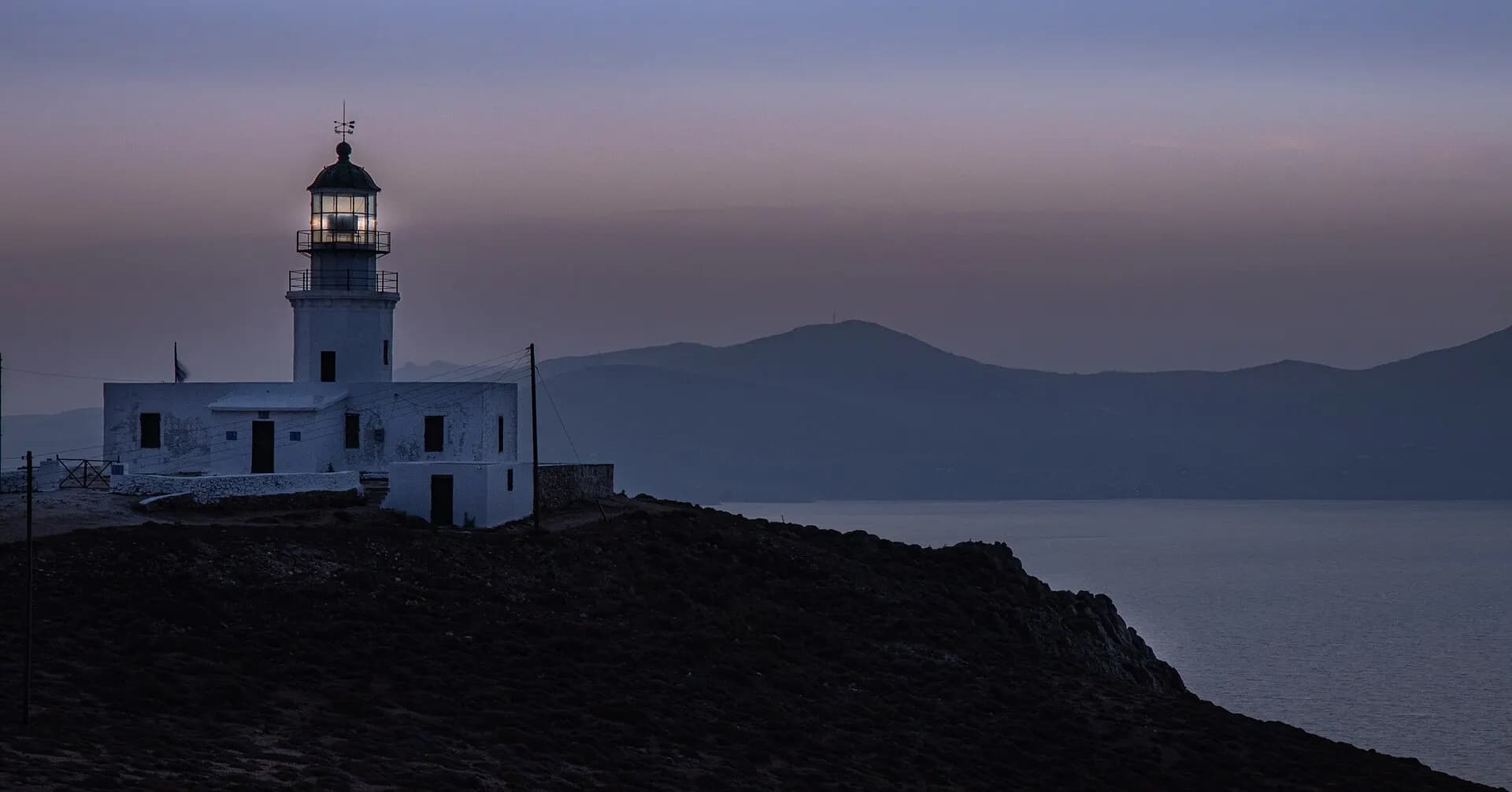
A stone lighthouse from 1891 on the north-western tip of the island, about twenty minutes' drive from town, with views across to Tinos and a quieter sunset than Little Venice.
- 8
Agios Sostis
Photo: Jules Verne Times Two, CC BY-SA 4.0, via Wikimedia Commons
A sandy bay on the north coast with no sunbeds or beach bars, just a tiny chapel on the hill and a tavern. It's one of the most natural beaches on the island, but it faces the meltemi, so the sea can be rough in midsummer.
- 9
Fokos
A remote, undeveloped beach in the north-east, reached by a dirt road, with a single tavern and plenty of space. Like Agios Sostis, it's exposed on windy days.
- 10
Panagia Tourliani, Ano Mera
Photo: Bernard Gagnon, CC BY-SA 3.0, via Wikimedia Commons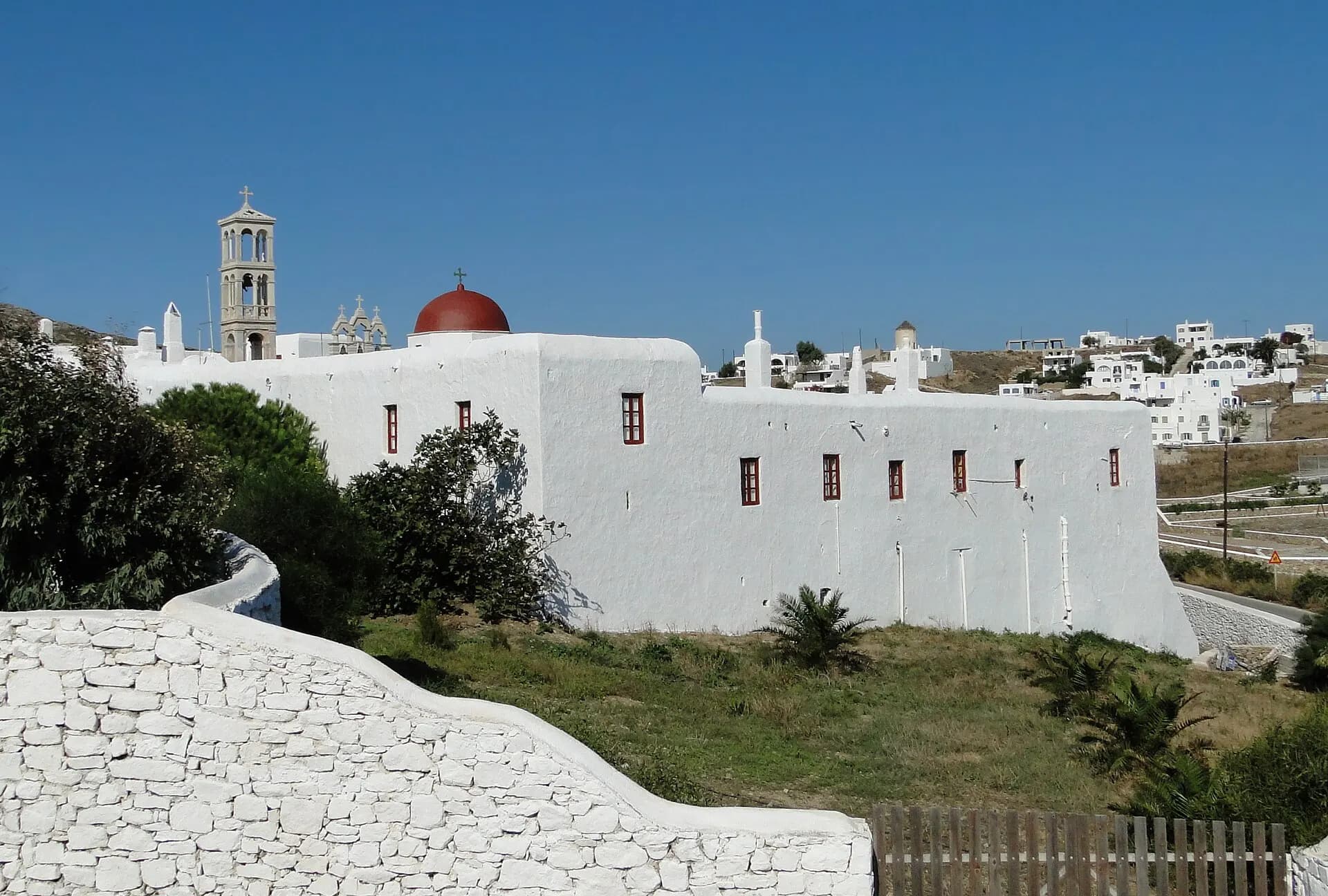
Ano Mera, the island's only inland village, is built around the monastery of Panagia Tourliani, founded in the sixteenth century and rebuilt in the eighteenth, with a carved marble bell tower and an ornate wooden iconostasis. The square around it has simple tavernas and a slower pace than Chora.
TipDress modestly to visit: shoulders and knees covered.
- 11
Elia
Photo: Squirmy2000 at English Wikipedia, Public domain, via Wikimedia Commons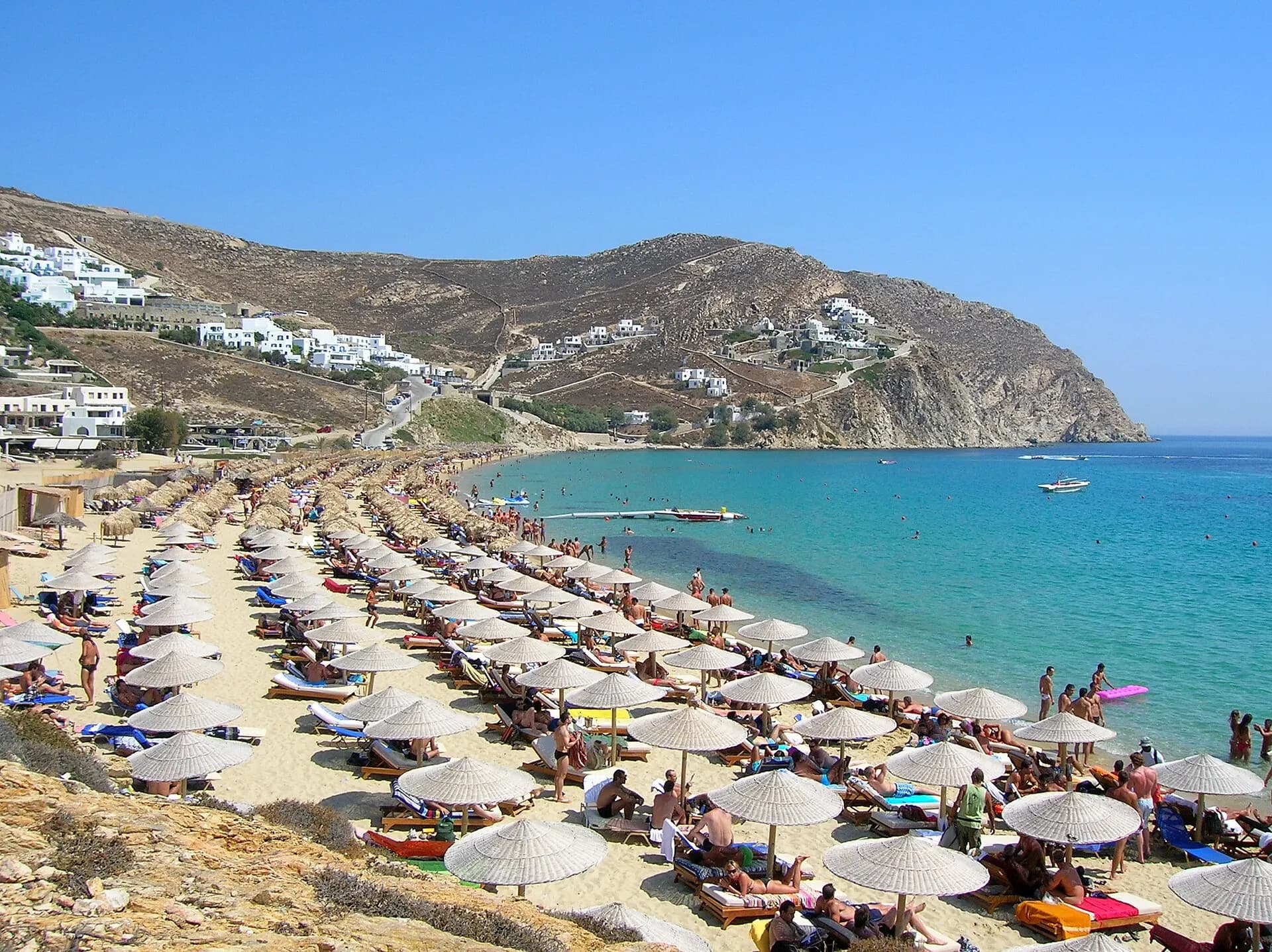
One of the longest beaches on the south coast, with sunbeds and restaurants at one end and more space at the other. It's relaxed rather than rowdy, and its far end has long been popular with gay and naturist visitors.
- 12
Super Paradise
A steep-sided cove with clear water and a big beach club. It's a party beach in high season, with music from the afternoon; come earlier in the day or out of season for a calmer swim.
- 13
Paradise
The island's best-known party beach, with clubs that go on into the night in July and August. Swimming is good and it's easy to reach by bus, but don't come here looking for peace in summer.
- 14
- 15
- 16
Delos
Photo: Bernard Gagnon, CC BY-SA 3.0, via Wikimedia Commons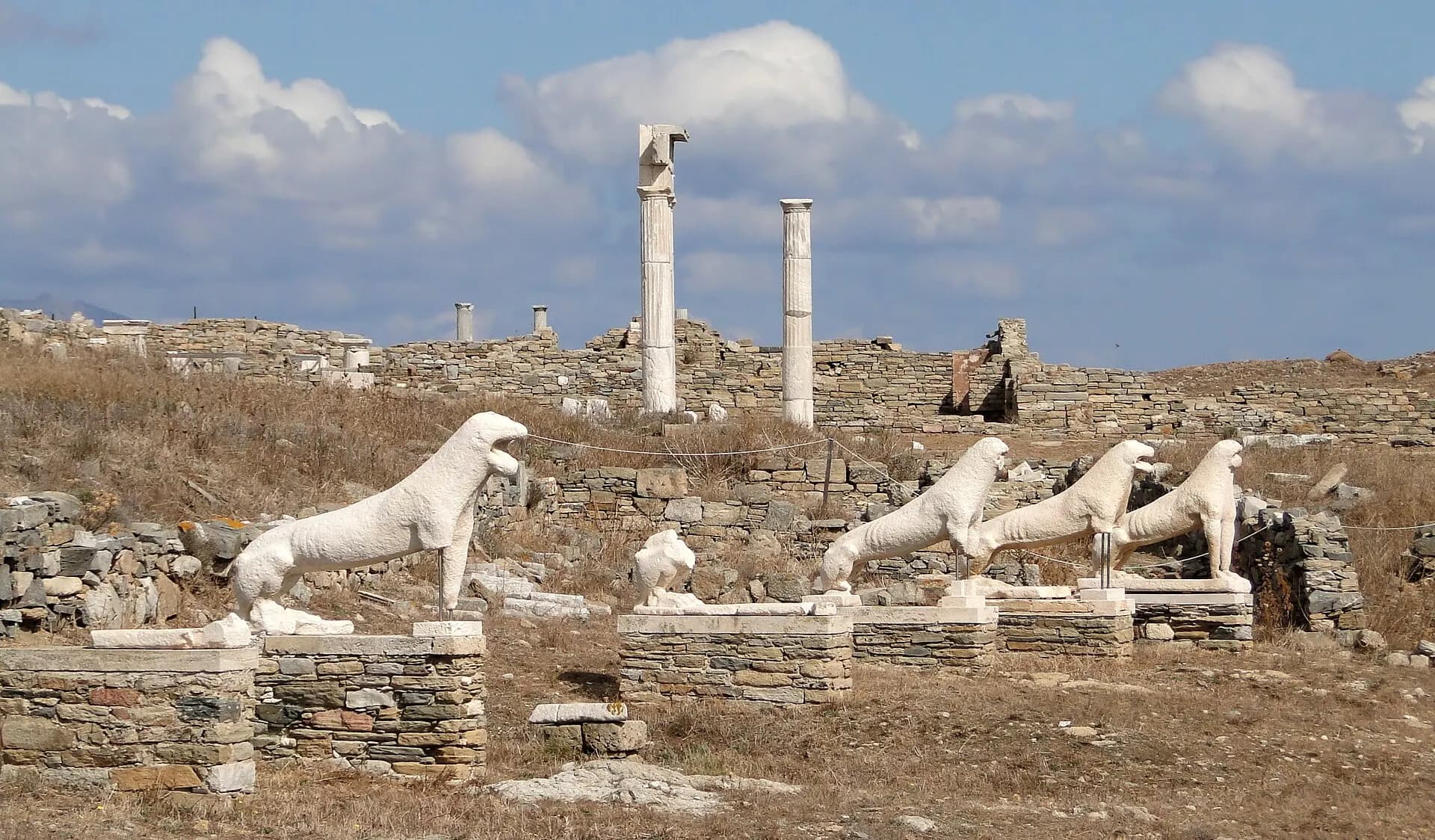
In myth, Apollo and Artemis were born on this tiny island, and for centuries it was one of the holiest places in Greece and later a busy free port. The whole island is an archaeological site, a UNESCO World Heritage Site since 1990, with the Sacred Way, the Terrace of the Lions, mosaic-floored houses, a theatre and the climb up Mount Kynthos.
TipTake the first boat from Chora's old harbour, bring water, a hat and good shoes, and allow at least three hours on the island.

When to go
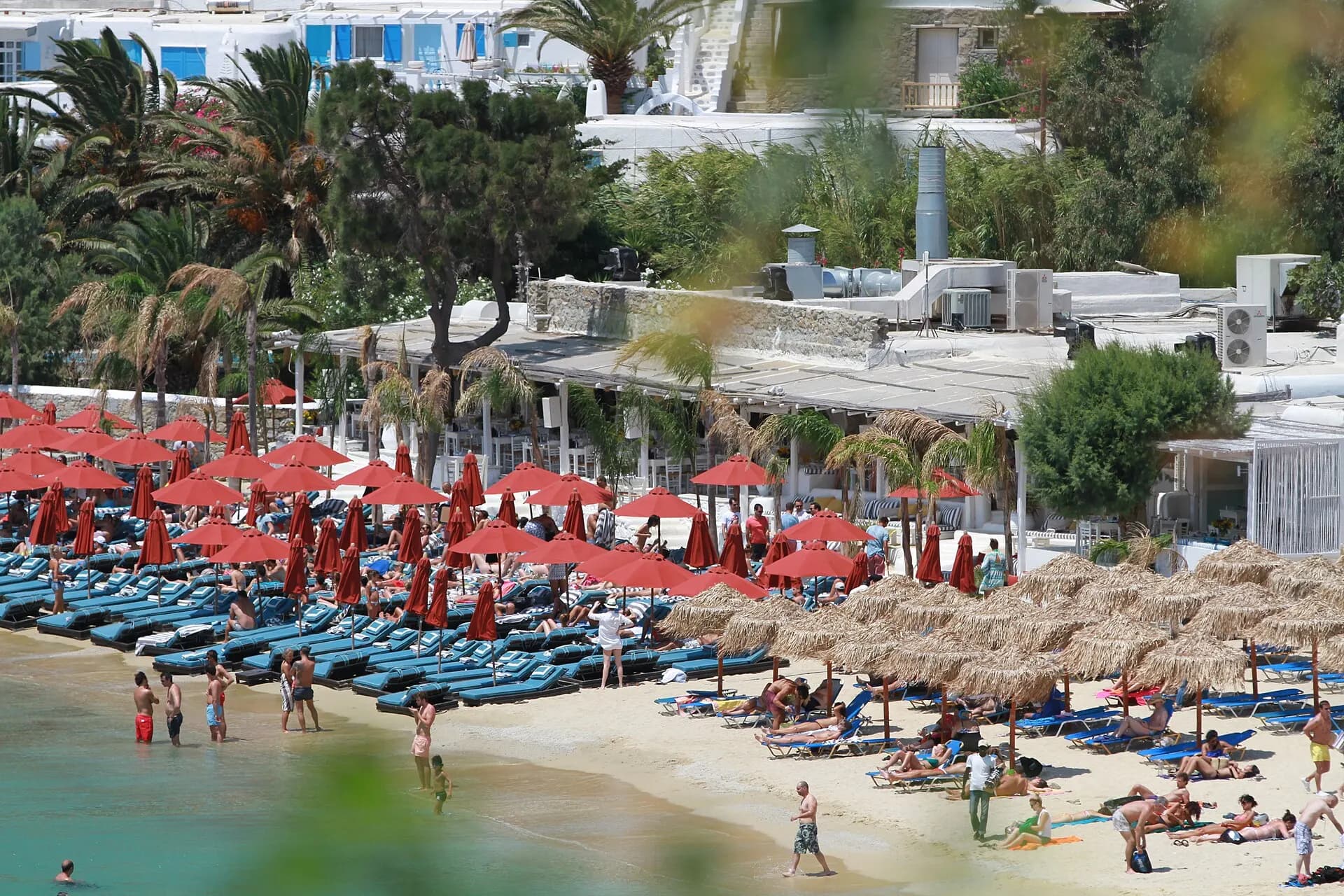
The best months are May, June, September and early October, when the sea is warm enough to swim, the island is open, and prices and crowds are lower. July and August are the peak, with the highest prices, full beaches and the strongest meltemi, the dry north wind that can blow hard for days, keeping the north coast rough and sometimes cancelling boats. Many hotels, restaurants and beach clubs close from late October to April; winter is quiet, with some services in Chora and Ano Mera.
Getting around
Mykonos Airport, just outside Chora, has flights from Athens of around forty-five minutes, plus seasonal international flights. Ferries and fast boats from Piraeus and Rafina, and from other Cyclades such as Tinos, Naxos and Santorini, use the New Port at Tourlos, about two kilometres north of town; a sea bus and local buses link it with Chora. Public buses run from Chora to the main beaches and Ano Mera, and small boats from Platis Gialos and Chora serve the southern beaches in summer. Taxis are few and can be hard to find at peak times, so book transfers ahead. Car and scooter hire are widely available, but roads are narrow and winding; take care with quad bikes, which are involved in many accidents.
Local tips
- Check cruise schedules: on days with several ships, Chora's lanes are packed from mid-morning until late afternoon.
- Pick your beach by the wind: when the meltemi blows, the southern beaches are sheltered and the north coast is rough.
- Prices in high season can be very high, especially for sunbeds and drinks at beach clubs; ask before you sit down.
- Wear comfortable shoes; the lanes are paved with uneven stones.
- Water is scarce on the island; drink bottled or filtered water and use it sparingly.
- Petros the pelican, the island's mascot, can often be seen around the harbour; admire him from a distance.
Eat and drink
Mykonos has its own specialities: kopanisti, a soft, peppery fermented cheese; louza, cured pork with spices; and amygdalota, almond sweets. Fresh fish and seafood are good at tavernas in Ano Mera and on quieter beaches, and the island's bakeries sell cheese and onion pies. Chora has everything from simple gyros to fine dining, but prices in Little Venice and at beach clubs are among the highest in Greece.
Where to stay
Chora is the most convenient base, with small hotels and rooms within walking distance of the sights, restaurants and buses, though it can be noisy at night. Ornos, Platis Gialos and Psarou on the south coast have beach hotels for families and couples, and the hillsides above town have boutique and luxury hotels with sea views. Book months ahead for July and August.
Delos, the sacred island
Delos lies about two kilometres off Mykonos, and in antiquity it mattered far more than its larger neighbour. Its sanctuary of Apollo drew pilgrims from across Greece, and after it became a free port in 167 BC, it grew into one of the great trading centres of the eastern Mediterranean, with merchants from Italy, Egypt and Syria. By law, no one could be born or die on the sacred island, which is why the Athenians moved its graves to Rheneia. Today, nobody may stay overnight.
Boats leave Chora's old harbour every morning in season, taking about half an hour; check return times, as the last boat leaves well before the site closes. The 2026 official listing gives summer hours of 08:00 to 19:30 with no weekly closing day, and a full ticket of €20, separate from the boat fare. Hours are shorter from late October, and boats don't sail in strong winds, so check the day before. The Terrace of the Lions you see outside are copies; the marble originals are in the site museum. There is very little shade, and summer heat on Delos is intense.
The meltemi and the island's character
The meltemi blows from the north from about June to September, often strongest in July and August. It keeps the island from becoming unbearably hot, but it can make ferries late or cancel small boats, kick up sand on the northern beaches and send waves over Little Venice. It also shaped Mykonos: the windmills, the sheltered harbour town and the low, whitewashed houses built against it. Build a spare day into your plans if you have a ferry or flight to catch.
Cruise ship days
Mykonos is one of the busiest cruise ports in the Mediterranean, with ships calling almost daily in summer. Large ships use the New Port or anchor offshore and send passengers ashore by tender, and thousands of visitors can arrive in Chora at once. Greece charges cruise passengers a per-person fee, highest for Mykonos and Santorini from June to September; check with your cruise line for the current amount. If you're staying on the island, explore Chora early or in the evening after the ships have left, and spend the middle of the day on the beach or in Ano Mera.
Responsible travel
Mykonos receives far more visitors than its small population and limited water can easily support. Visit outside the peak months if you can, save water, and avoid single-use plastic. Stay on paths on Delos, don't climb on the ruins or take stones, and keep to the marked areas. Respect churches and monasteries, covering up when you go inside, and keep noise down in residential lanes late at night. Drive carefully on the narrow roads, and never ride a quad bike after drinking.