Crete
Greece's largest island, with Minoan palaces, Venetian harbours, a famous gorge and beaches of pink sand and palm trees.
- Best time to go
- May to June and September to October, warm but not scorching
- Local time
- –
- Currency
- Euro (EUR)
- Reading time
- 9 min
- Language
- Greek

Crete is the largest island in Greece and the southern edge of Europe, a long, mountainous island more than 250 kilometres from end to end. Its White Mountains, Mount Ida (Psiloritis) and the Dikti range are cut by deep gorges, and its coast swings from busy resort strips on the north to quiet coves and fishing villages on the Libyan Sea to the south. Around four thousand years ago it was the heart of the Minoan civilisation, and in 2025 six of its Minoan palace sites, including Knossos and Phaistos, were added to the UNESCO World Heritage List together.
Later rulers left their mark too: Venetian harbours and fortresses in Chania, Rethymno and Heraklion, Ottoman fountains and minarets, and monasteries that became symbols of the island's long struggle for union with Greece. Cretans are proud of their own dialect, music and food, and hospitality here is generous. Give the island time: it's too big to see in a week, so many travellers pick the west or the east, or base themselves in two places.
The top 15 in Crete
- 1
Chania old town and Venetian harbour
Photo: Dietmar Rabich, CC BY-SA 4.0, via Wikimedia Commons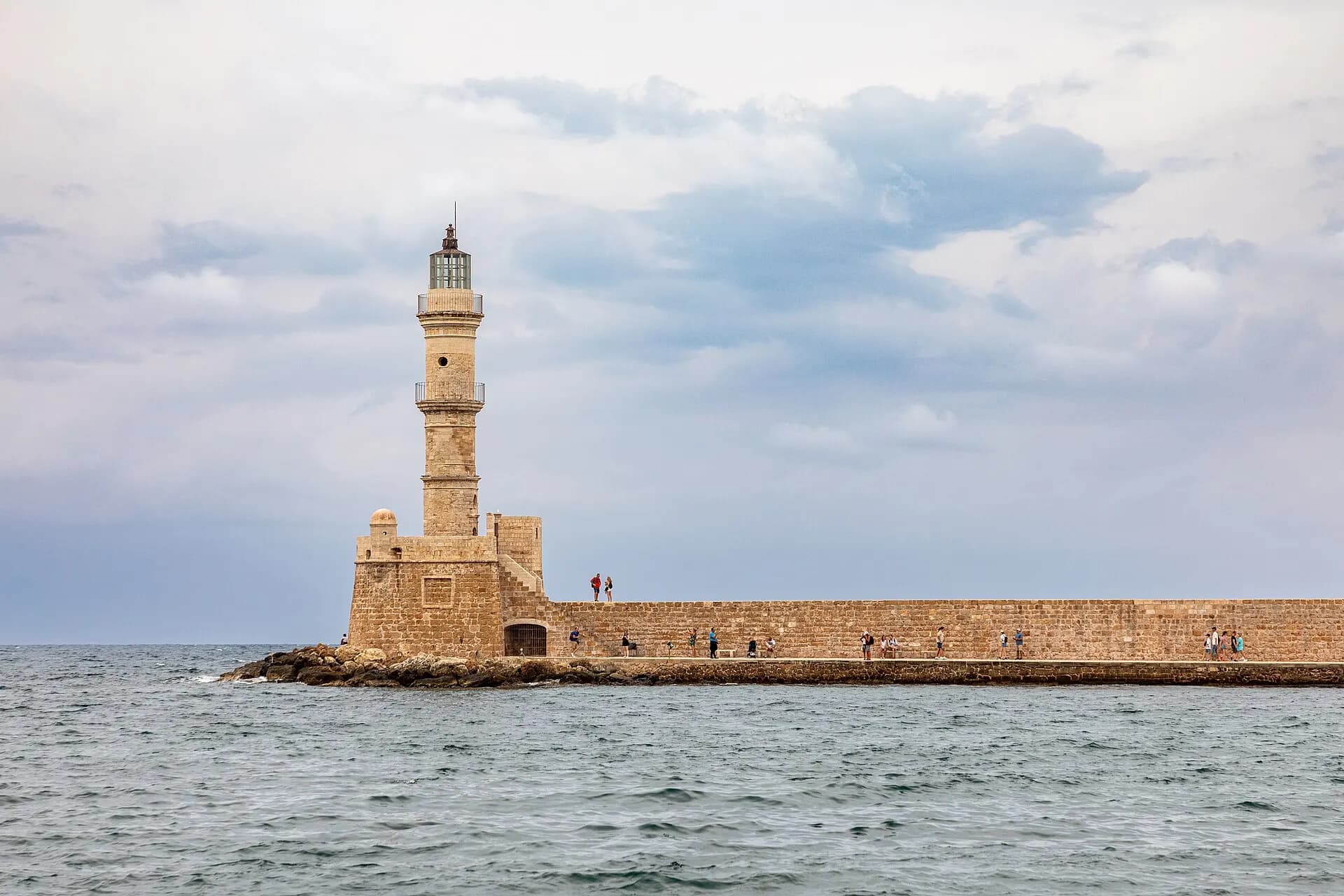
The most beautiful town on the island, with a crescent harbour lined with pastel houses, the Egyptian-style lighthouse at the end of a long breakwater, the domed Küçük Hasan Mosque, and Venetian arsenals. Behind the waterfront lie the narrow lanes of the old Jewish quarter and Splantzia, with small squares, craft shops and tavernas.
TipWalk out along the breakwater to the lighthouse at sunset, then eat a street or two back from the harbour, where prices drop.
- 2
Balos lagoon and Gramvousa
Photo: dronepicr, CC BY 2.0, via Wikimedia Commons
At the tip of the Gramvousa peninsula in the far north-west, a shallow lagoon of white sand and turquoise water sits between the mainland and Cape Tigani. Boats from Kissamos port stop first at the island of Imeri Gramvousa, where a steep path climbs to a ruined Venetian fortress, then at Balos. You can also drive the rough dirt road to a car park and walk down, a steep climb back up in the heat. The area is a protected Natura 2000 site.
TipThe view from the path above the lagoon is the classic photograph; go early or late to avoid the boat crowds.
- 3
Elafonisi
Photo: Josep M. Gracia, CC BY-SA 4.0, via Wikimedia Commons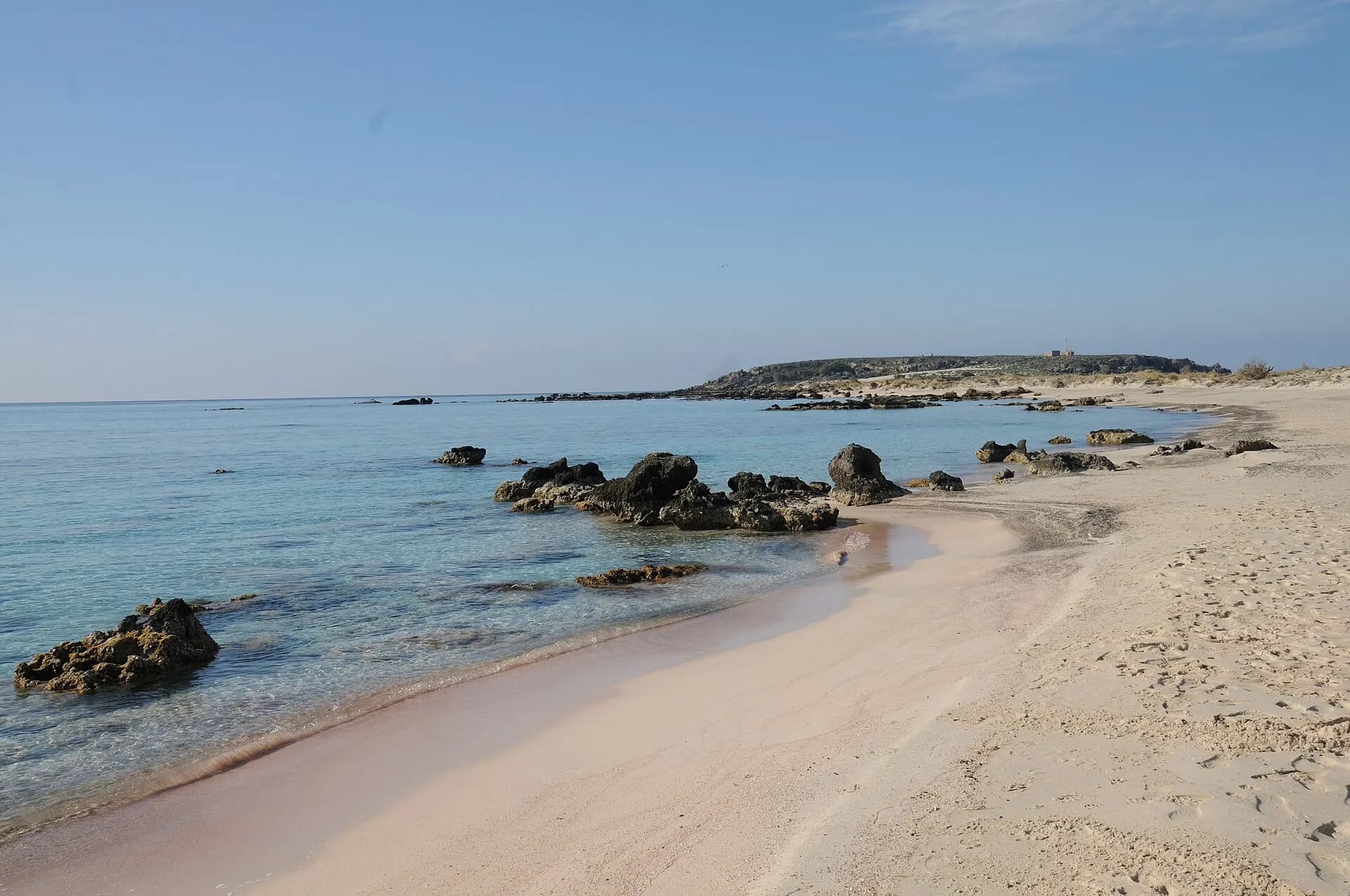
A beach and islet in the south-west, joined by a sandbar you can wade across in shallow, warm water. The sand is tinted pink by crushed shells. Elafonisi is a protected nature reserve with fragile dunes and rare plants: keep off the dunes, take nothing away, not even sand or shells, and use the areas set aside for umbrellas and sunbeds.
- 4
Samaria Gorge
Photo: Robert Linsdell from St. Andrews, Canada, CC BY 2.0, via Wikimedia Commons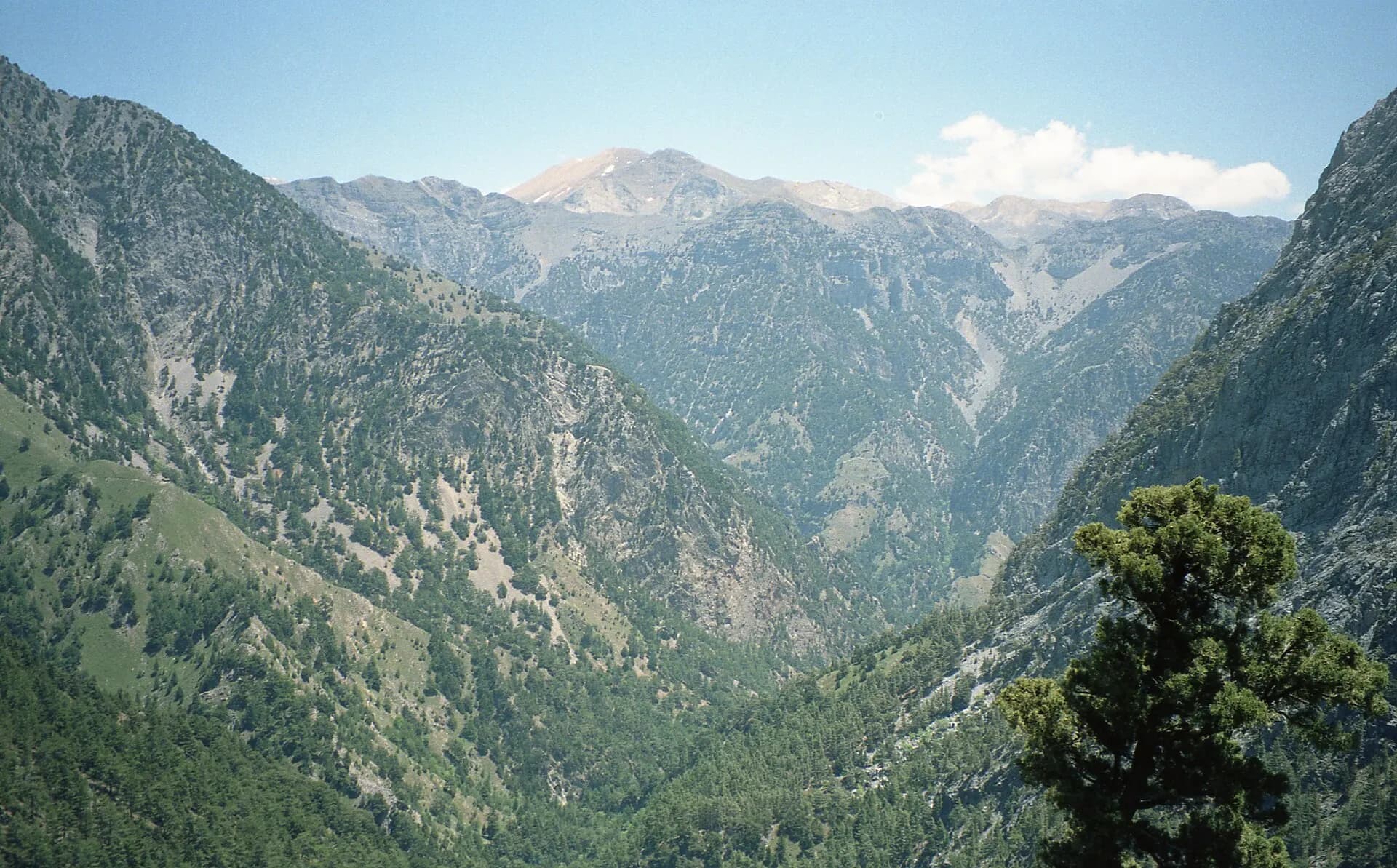
One of Europe's best-known gorge walks, inside a national park in the White Mountains. The trail starts at Xyloskalo on the Omalos plateau and descends about 16 kilometres to Agia Roumeli on the south coast, passing the abandoned village of Samaria and the Sideroportes, the "iron gates", where the walls close in to only a few metres apart. There's no road out of Agia Roumeli, so walkers take a ferry to Sfakia or Sougia to meet buses back north. Allow five to seven hours.
TipThe gorge usually opens from about May to late October; the exact opening date is set each year after safety inspections, and the park closes it on days of rain, high wind or fire risk. Buy tickets on the official NECCA e-ticket site and check its notices on the morning you go.
- 5
Rethymno
Photo: JopkeB, CC BY-SA 4.0, via Wikimedia Commons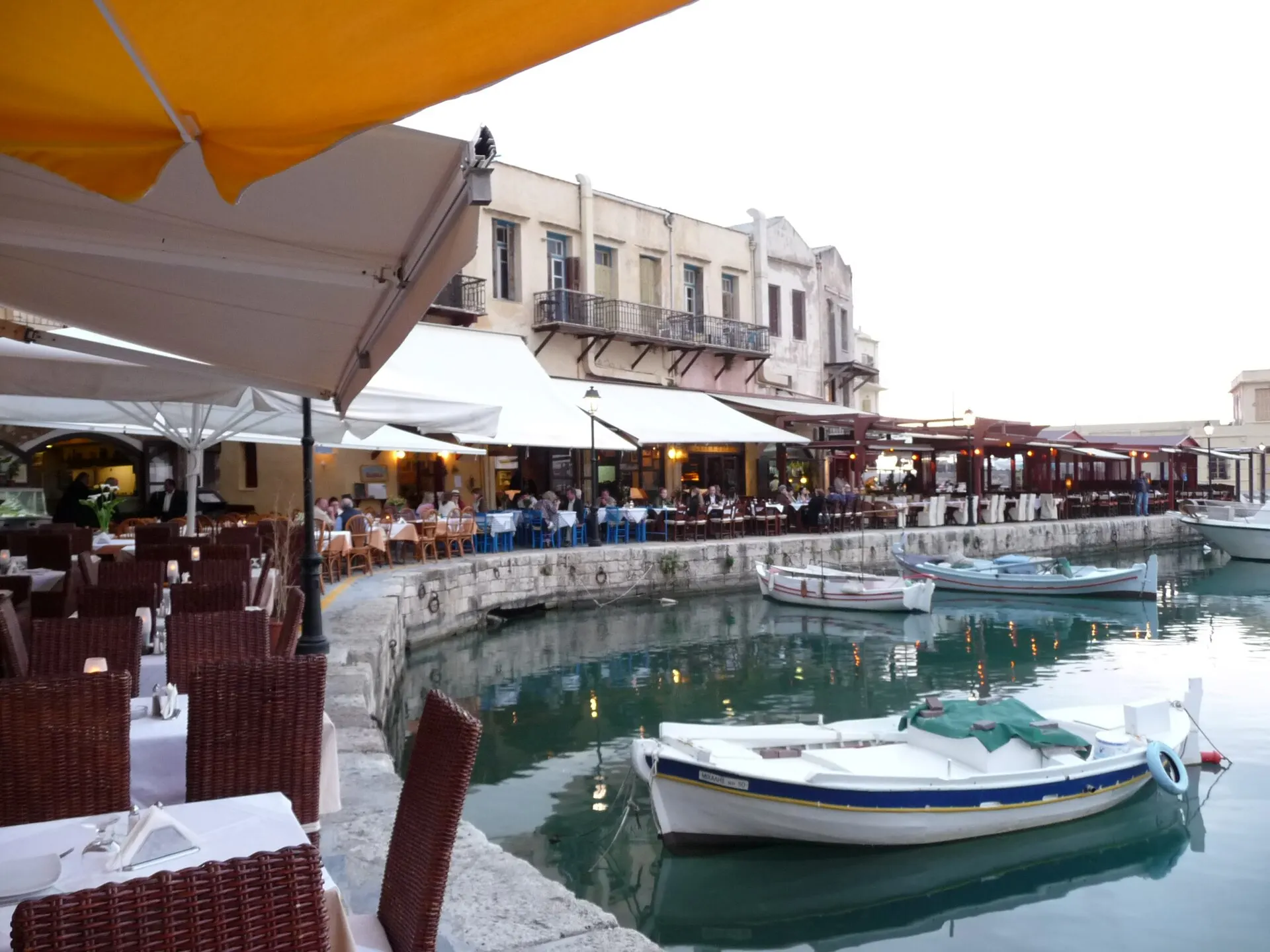
A lively university town with a well-preserved Venetian and Ottoman old town, the Rimondi Fountain, minarets, wooden balconies and a tiny lighthouse harbour. Above it all stands the Fortezza, a huge sixteenth-century Venetian fortress with views along the coast.
- 6
Arkadi Monastery
Photo: Dietmar Rabich, CC BY-SA 4.0, via Wikimedia Commons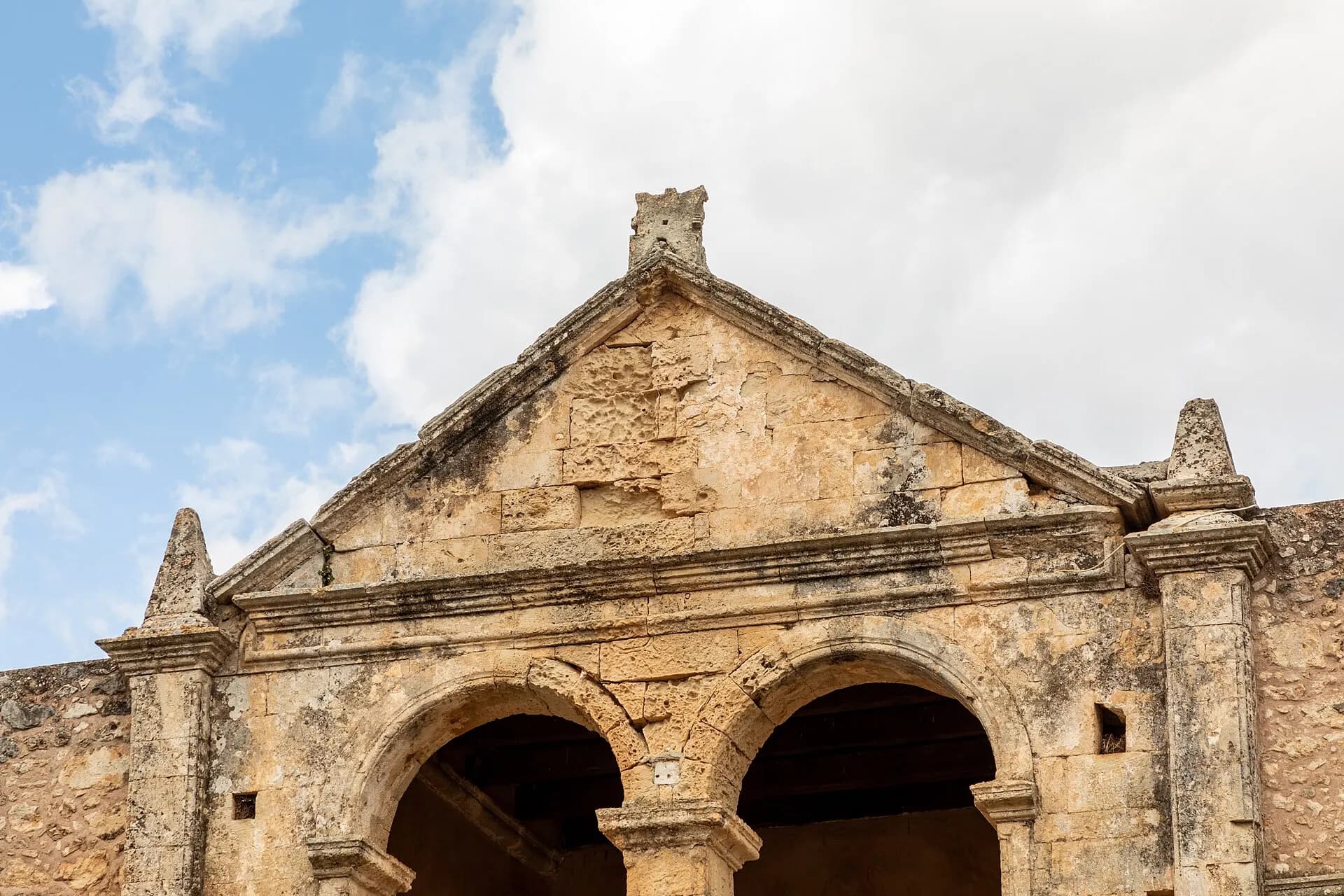
A fortified monastery in the hills south-east of Rethymno with a richly carved Venetian Renaissance church front. In 1866, during a revolt against Ottoman rule, hundreds of Cretans besieged here chose to blow up the powder store rather than surrender, and Arkadi became a national symbol. The old powder magazine and an ossuary are part of the visit.
- 7
Preveli
Photo: Uoaei1, CC BY-SA 4.0, via Wikimedia Commons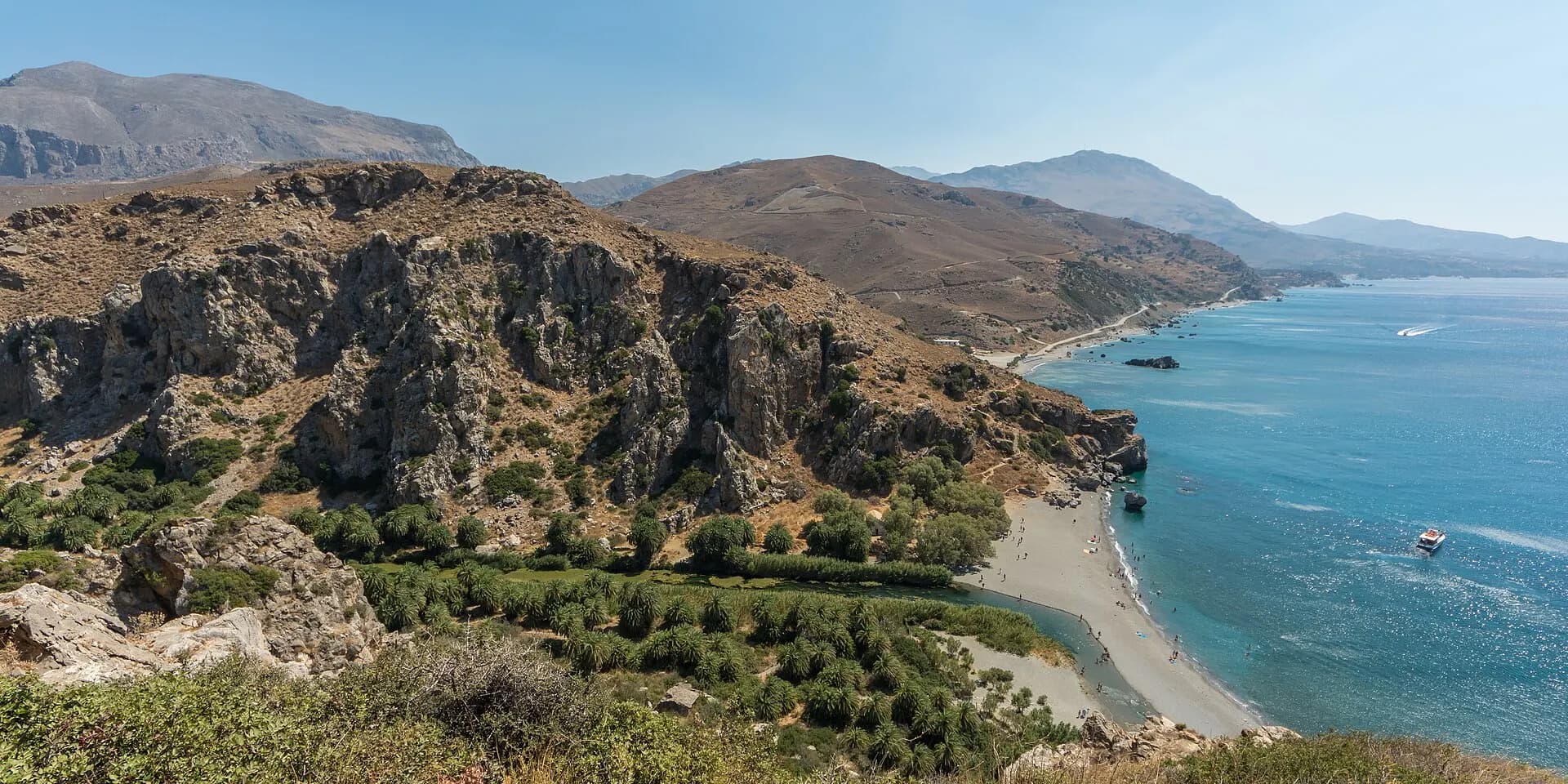
On the south coast, the Kourtaliotis river runs through a ravine lined with palm trees and out onto a beach, forming a freshwater lagoon. Steps lead down from a car park above, or boats come from Plakias and Agia Galini. The nearby monastery helped hide Allied soldiers during the Second World War.
- 8
Phaistos
Photo: Jebulon, CC0, via Wikimedia Commons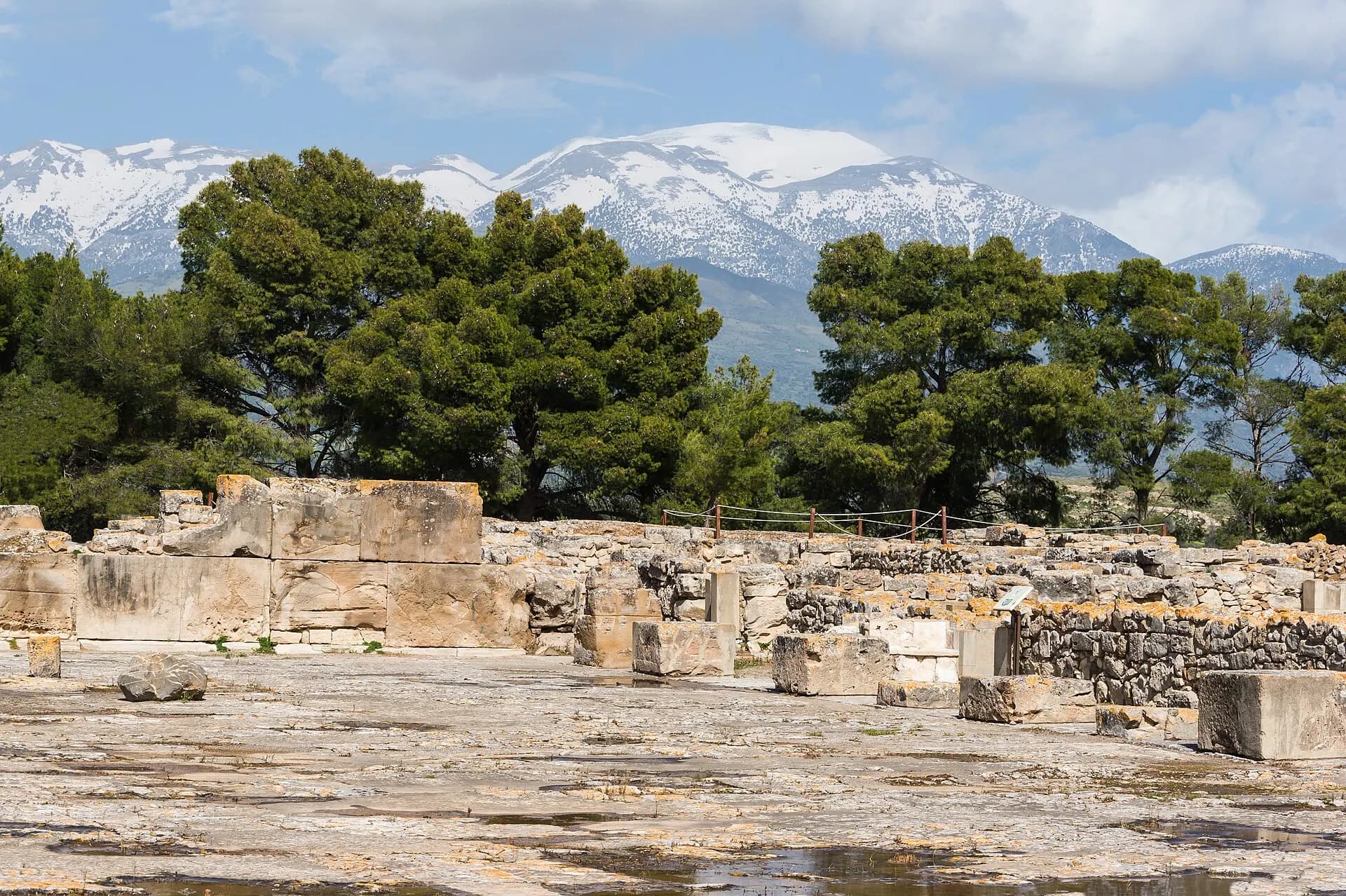
The second great Minoan palace, on a ridge above the Messara plain with Mount Ida behind. Its ruins are left largely unreconstructed, with grand staircases and courtyards, and it was here that the mysterious Phaistos Disc was found. The Roman city of Gortyn, with its great inscribed law code, lies a short drive east.
- 9
Matala
Photo: Jebulon, CC0, via Wikimedia Commons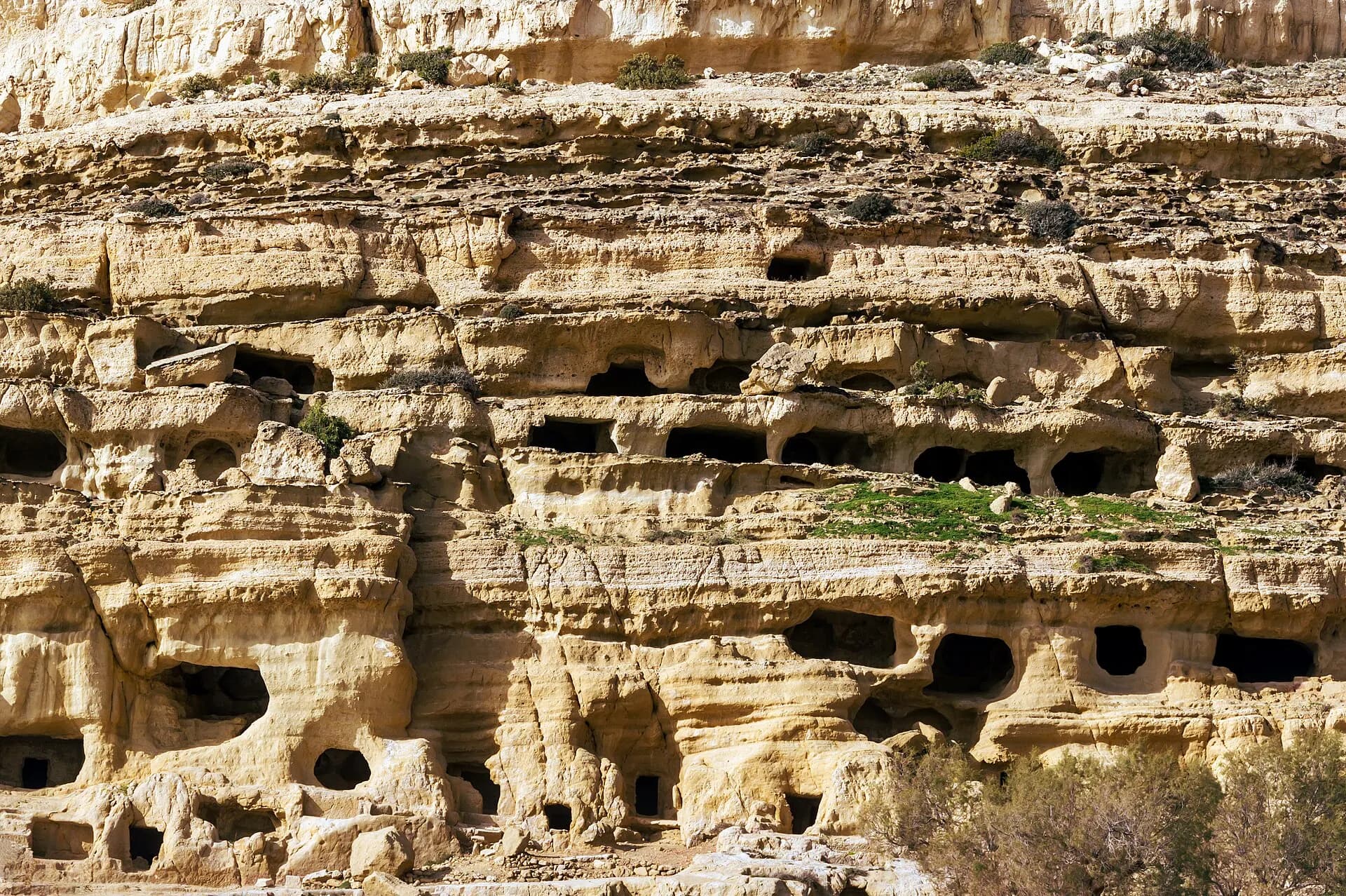
A small bay on the south coast whose sandstone cliffs are honeycombed with man-made caves, used as tombs in Roman times and famously lived in by hippies in the 1960s. The caves are fenced and can be visited during the day; the beach below is good for swimming and the sunsets are memorable.
- 10
Heraklion and the Archaeological Museum
Photo: Jebulon, CC0, via Wikimedia Commons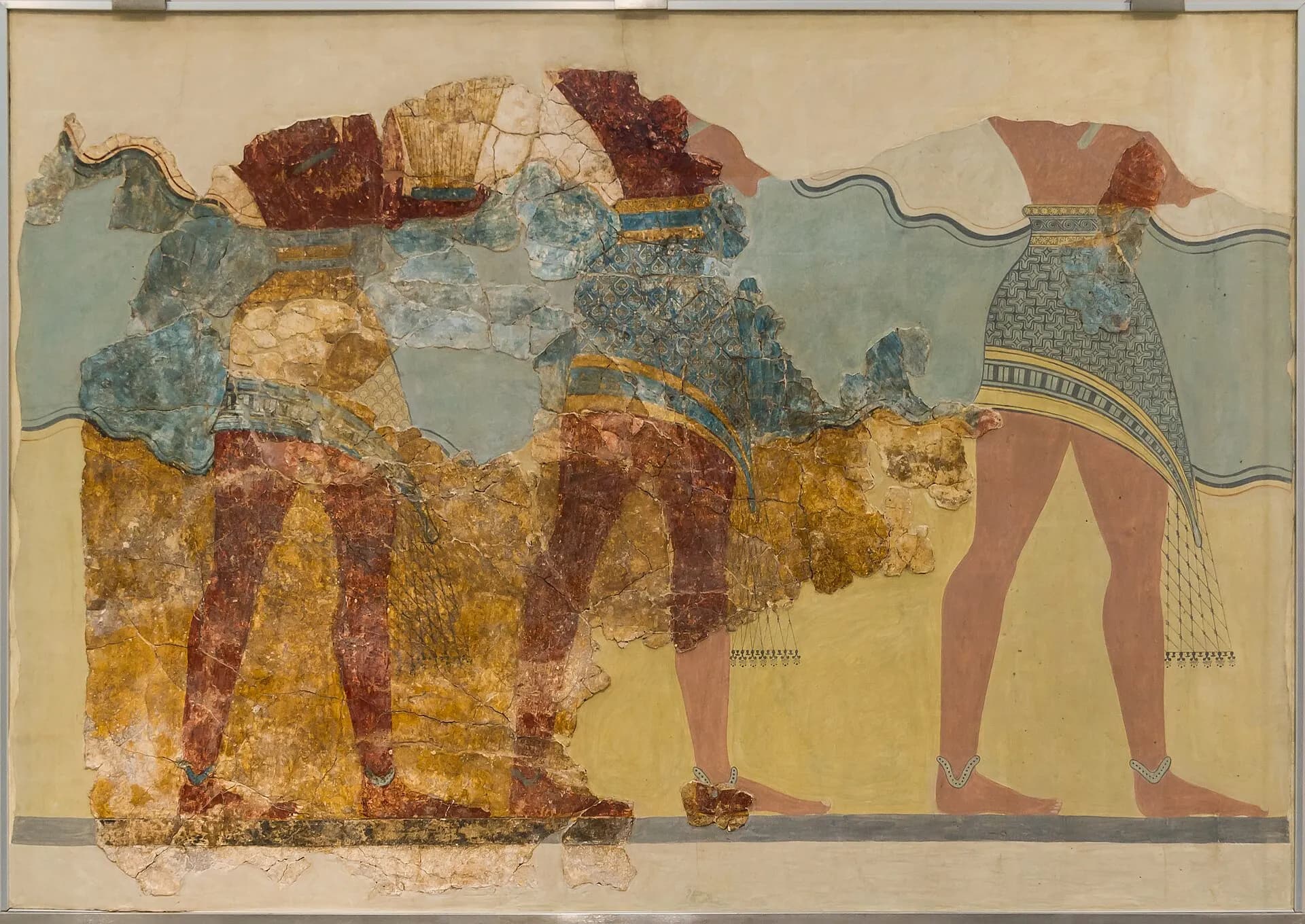
Crete's capital and main port is busy and not especially pretty, but its Archaeological Museum holds the world's finest collection of Minoan art: the Phaistos Disc, the snake goddesses, the bull's-head rhyton, gold jewellery and the frescoes of Knossos, including the bull-leapers. Afterwards walk the Venetian walls, the Koules fortress at the harbour and the Morosini Fountain.
TipVisit the museum before Knossos; it makes far more sense of the ruins.
- 11
Knossos
Photo: Jebulon, CC0, via Wikimedia Commons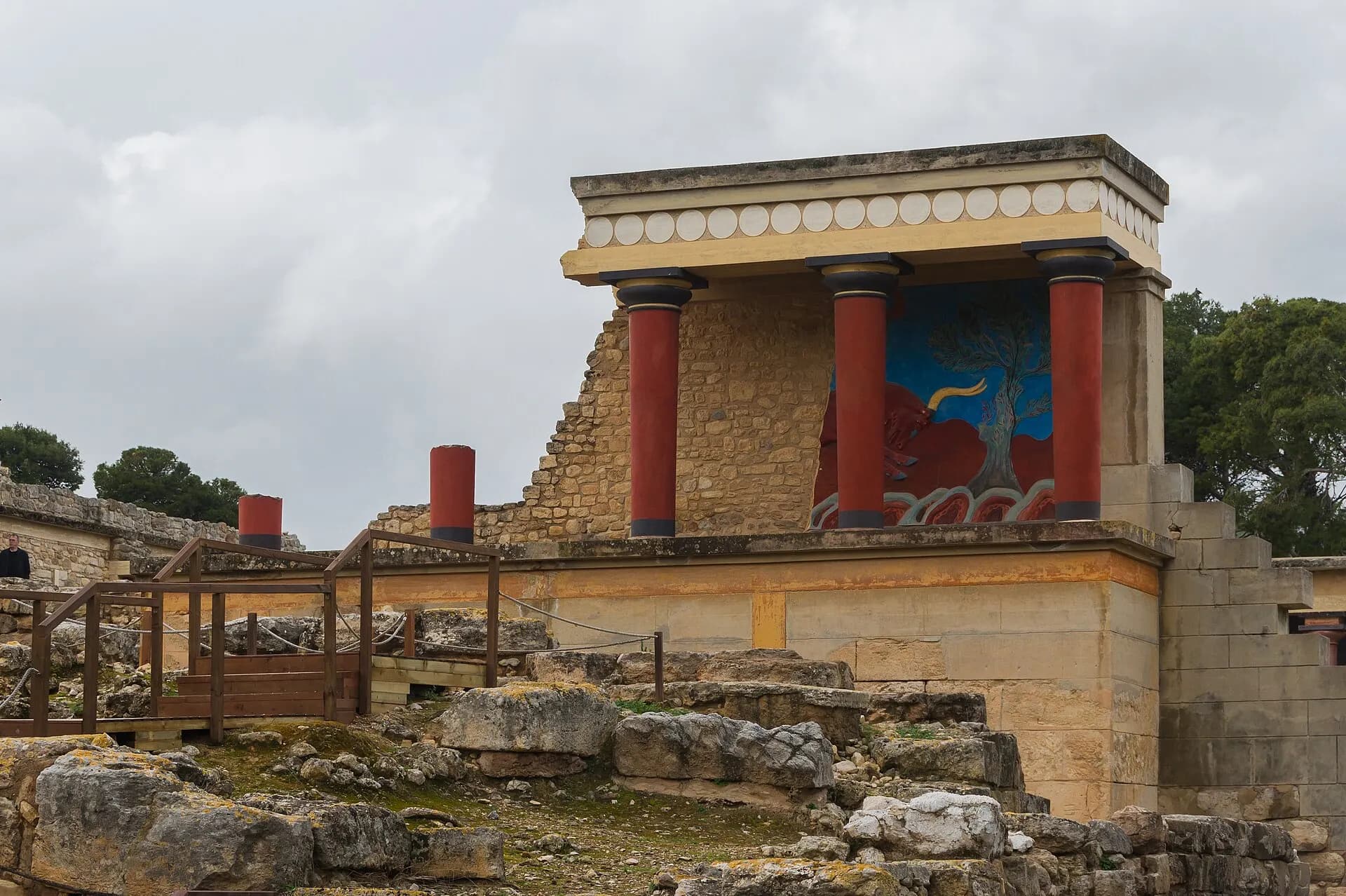
The largest Minoan palace, a maze of courtyards, storerooms and staircases a short bus ride south of Heraklion, linked in legend with King Minos and the Minotaur. Arthur Evans excavated it from 1900 and rebuilt parts in concrete, with copies of the frescoes, which helps you picture it but remains controversial. Entry is by timed ticket booked on the Ministry of Culture's official e-ticket system.
TipBook the first entry slot of the day; by late morning the site fills with tour groups and there's little shade.
- 12
Lasithi Plateau and the Dikteon Cave
Photo: Andloukakis, CC BY-SA 4.0, via Wikimedia Commons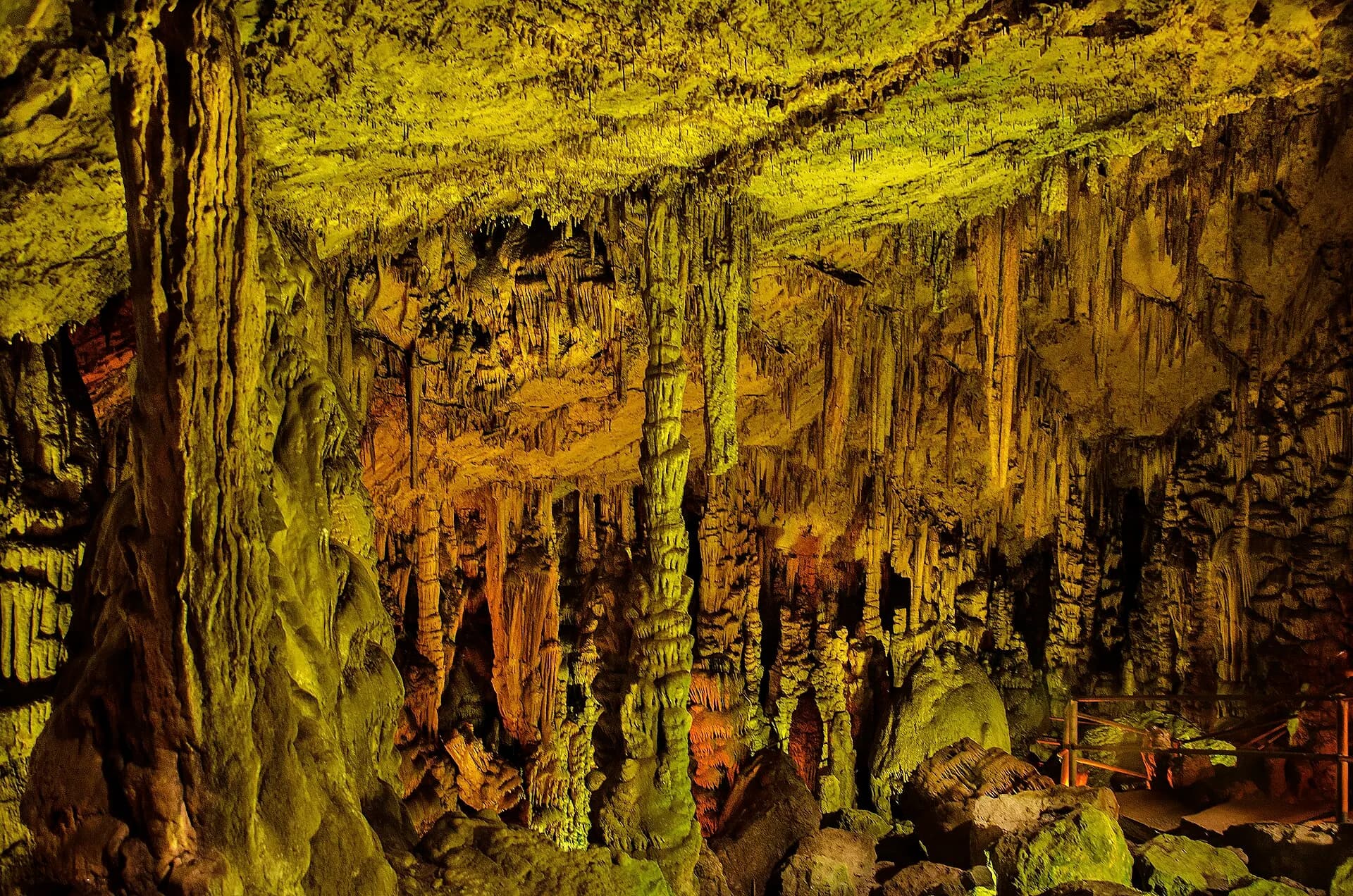
A high, fertile plain ringed by the Dikti mountains, once famous for thousands of white-sailed windmills used to pump water. A few survive alongside quiet farming villages. Above Psychro, a steep path climbs to the Dikteon Cave, where in myth Zeus was born, with stalactites and a lake in the depths.
- 13
Agios Nikolaos and Elounda
Photo: Cayambe, CC BY-SA 4.0, via Wikimedia Commons
Agios Nikolaos is a cheerful harbour town on the Gulf of Mirabello, built around Lake Voulismeni, a small deep lake joined to the sea by a channel. To the north, Elounda is a quieter bay of luxury hotels, fishing boats and a sunken ancient city at Olous.
- 14
Spinalonga
Photo: Cayambe, CC BY-SA 4.0, via Wikimedia Commons
A small island fortress built by the Venetians in the late sixteenth century at the mouth of Elounda bay, which held out long after the rest of Crete fell to the Ottomans. From 1903 to 1957 it was a leper colony, and walking its single street of houses, the church and the tunnel entrance is moving. Boats run from Plaka, a few minutes away, and from Elounda and Agios Nikolaos.
- 15
Vai
Photo: Marc Ryckaert (MJJR), CC BY 3.0, via Wikimedia Commons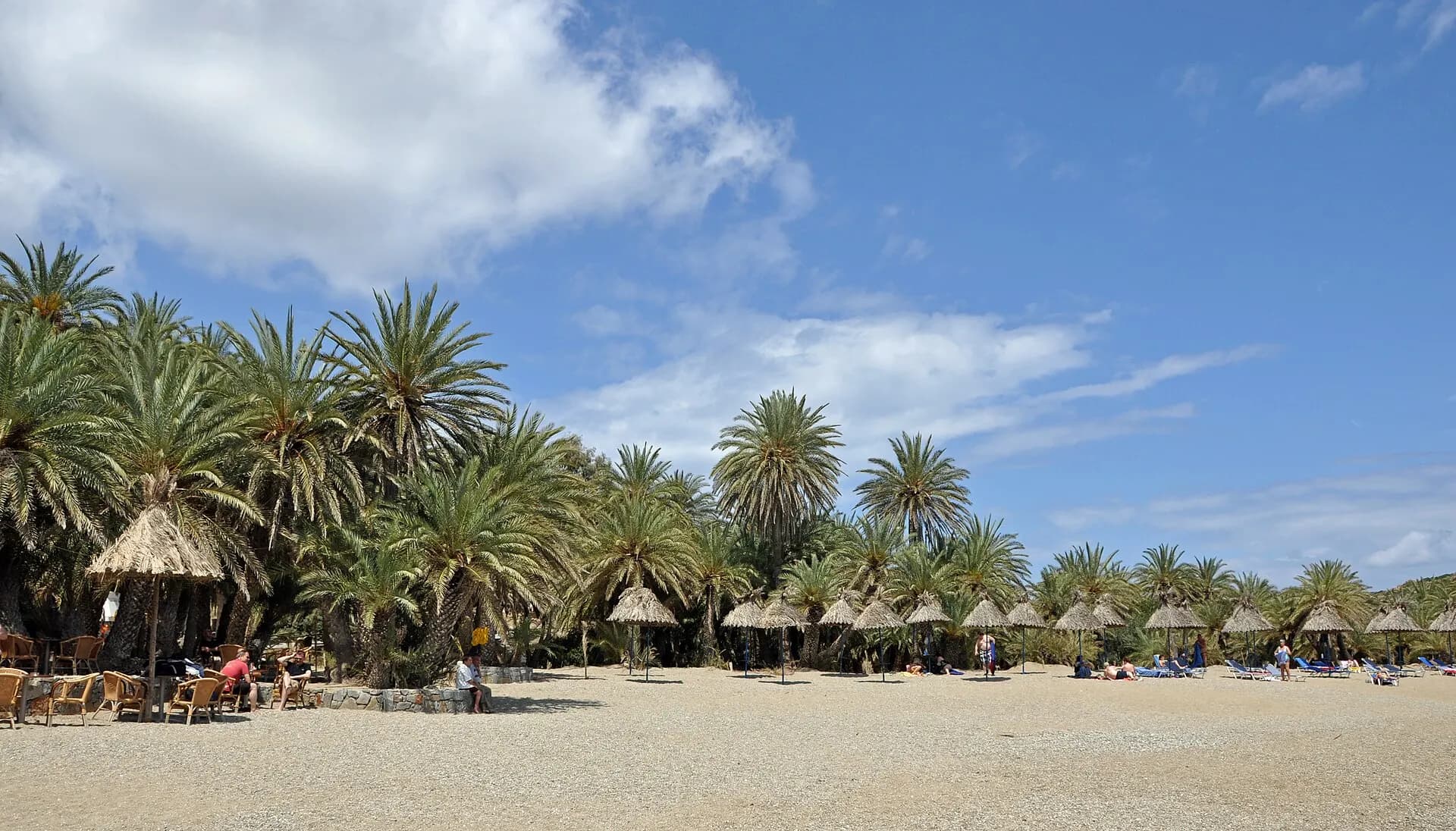
At the far eastern end of the island, a sandy beach is backed by Europe's largest natural forest of the Cretan date palm. The grove is protected and fenced, so enjoy it from the beach and paths. The Toplou Monastery and the Minoan palace of Zakros are within reach.
When to go
May, June, September and October are the best months: the sea is warm from June, the countryside is green in spring, and the heat is bearable for walking. July and August are hot and crowded, with temperatures that can top 35°C inland. They are also the months of the meltemi, a strong northerly wind that can whip up waves on the north coast and cancel boat trips to Balos and Spinalonga. Winter is mild on the coast, though the mountains get snow, and many resort hotels and tavernas close from November to April. Cities like Chania and Heraklion stay lively year-round.
Getting around
Crete has two main airports, Heraklion and Chania, with many direct flights from Europe in summer, and a smaller one at Sitia. Overnight and daytime ferries link Piraeus, the port of Athens, with Heraklion and Souda, the port for Chania. Distances are long: driving from Chania to Heraklion along the north coast road takes about two and a half hours, and to the far east considerably longer.
KTEL buses are reliable and cheap. One company covers Chania and Rethymno, another Heraklion and Lasithi, with frequent services along the north coast and, in summer, routes to places such as Omalos for the Samaria Gorge, Elafonisi, Kissamos and the south coast. To explore villages, beaches and monasteries, though, a hire car gives you far more freedom. On the south coast, ferries link villages such as Sougia, Agia Roumeli, Loutro and Hora Sfakion, which have no road between them.
Local tips
- On the north coast highway, slower drivers move onto the hard shoulder to let others pass; the road has a poor safety record, so take it steadily.
- Mountain roads are narrow and winding, with goats on the tarmac; allow more time than the map suggests.
- Check whether your car hire insurance covers dirt roads such as the one to Balos; many policies don't.
- After a meal, you'll often be brought a small carafe of raki (tsikoudia) and fruit on the house.
- Cover shoulders and knees in monasteries and churches; wraps are sometimes provided.
- Carry water, a hat and proper shoes for gorges and archaeological sites, which have little shade.
- Strong currents can build on exposed beaches when the wind blows; respect red flags.
Eat and drink
Cretan food is built on olive oil, wild greens, cheese and slow-cooked meat. Try dakos, barley rusk topped with grated tomato, crumbly mizithra cheese and oil; kalitsounia, small cheese pies; gamopilafo, the rich wedding pilaf; staka, a buttery cream-cheese; apaki, smoked pork; and snails fried with rosemary. Graviera is the island's best-known hard cheese. Village tavernas often cook what's in season, and mountain herbs such as dittany and malotira are made into tea. Tsikoudia, the clear grape spirit also called raki, is the drink of welcome, and Crete has a growing number of good wineries.
Where to stay
In the west, Chania's old town has characterful hotels in Venetian houses, with beach resorts west of town. Rethymno is a good central base, with an old town and a long sandy beach. Heraklion suits a night or two near the museum and Knossos. In the east, Agios Nikolaos and Elounda have everything from simple rooms to luxury resorts. On the south coast, small villages such as Plakias, Paleochora, Loutro and Matala offer quieter, simpler stays.
The Minoans
From around 3000 to 1100 BCE, the Minoans built a sophisticated Bronze Age civilisation on Crete, with great palace complexes at Knossos, Phaistos, Malia and Zakros, sea trade across the Mediterranean, an early script, Linear A, that is still not deciphered, and a vivid art of frescoes, pottery and jewellery showing bull-leaping, lilies, dolphins and processions. The palaces were centres of religion, storage and administration rather than simple royal homes. Their story ended amid earthquakes, possibly the eruption of Thera (Santorini), and the arrival of Mycenaean Greeks. In 2025, Knossos, Phaistos, Malia, Zakros, Zominthos and Kydonia were inscribed together on the UNESCO World Heritage List as the Minoan Palatial Centres.
Walking the gorges
Crete has dozens of gorges besides Samaria, and many are open year-round with no ticket. Imbros, near Hora Sfakion, is a shorter, easier walk; Aradena has a dramatic bridge; Agia Irini runs down towards Sougia; and in the east, Richtis ends at a waterfall and the Gorge of the Dead at Zakros passes ancient burial caves. The long-distance E4 path crosses the whole island. Start early, carry plenty of water, tell someone your route, and don't enter a gorge after heavy rain, when flash floods and rockfall are a real danger.
Fire season and the heat
Summers on Crete are long, dry and windy, and wildfires are a serious risk, mainly from June to September. Lighting fires in the countryside, including barbecues, is banned during the fire season, and discarded cigarettes can start a blaze. The civil protection authorities publish a daily fire-risk map, and on very high-risk days some forest areas and trails may be closed. Make sure your phone can receive emergency alerts from the European 112 number, follow any instruction to leave an area immediately, and call 112 if you see smoke or flames.
Responsible travel
Crete's most famous beaches, Balos, Elafonisi, Preveli and Vai, are fragile protected areas under heavy pressure in summer. Stay on paths, keep off dunes, take nothing home, and carry your rubbish out. Visit popular places early or out of season, and spread your time and spending into villages and family-run tavernas away from the resort strips. Water is scarce in summer, so use it carefully, and never light a fire or leave litter in the countryside.