Iguazú Falls
Hundreds of waterfalls thundering through subtropical jungle on the border of Argentina and Brazil.
- Best time to go
- March to May and August to November, for good water levels and milder heat
- Local time
- –
- Currency
- Argentine Peso (ARS)
- Reading time
- 4 min
- Language
- Spanish and Guarani
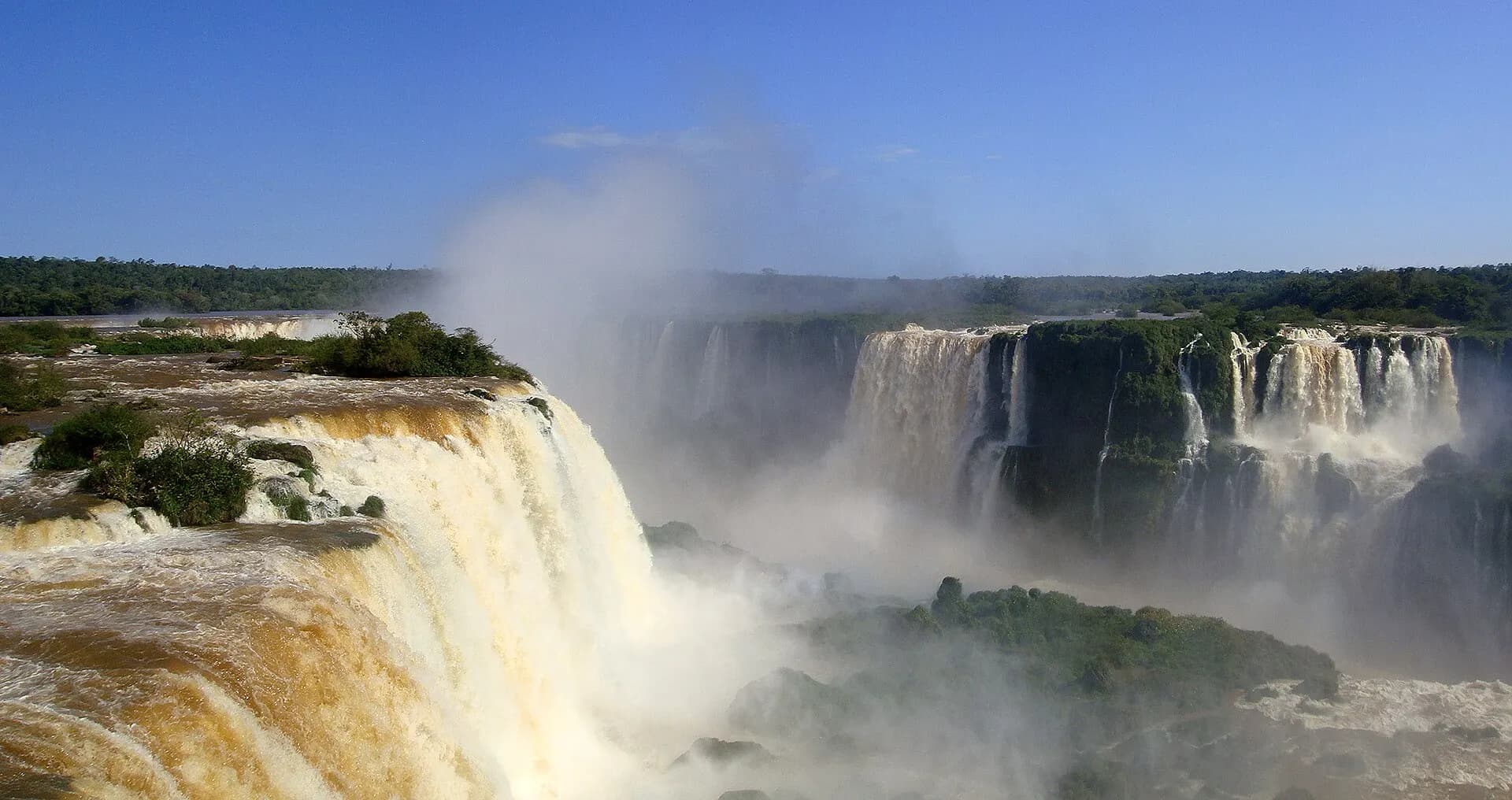
On the border between Argentina and Brazil, the Iguazú River tumbles over the edge of a volcanic plateau in a horseshoe of around 275 separate falls spread across nearly three kilometres, one of the most spectacular natural sights on earth. The falls are surrounded by subtropical rainforest, protected in national parks on both sides of the border, each a World Heritage Site.
The Argentine side has more of the falls and lets you walk right above and among them; the Brazilian side has the best panoramic views. Allow at least two days to see both. The towns of Puerto Iguazú in Argentina and Foz do Iguaçu in Brazil are the bases.
The top 8 in Iguazú Falls
- 1
The Devil's Throat (Garganta del Diablo)
Photo: P. Hughes, CC BY 4.0, via Wikimedia Commons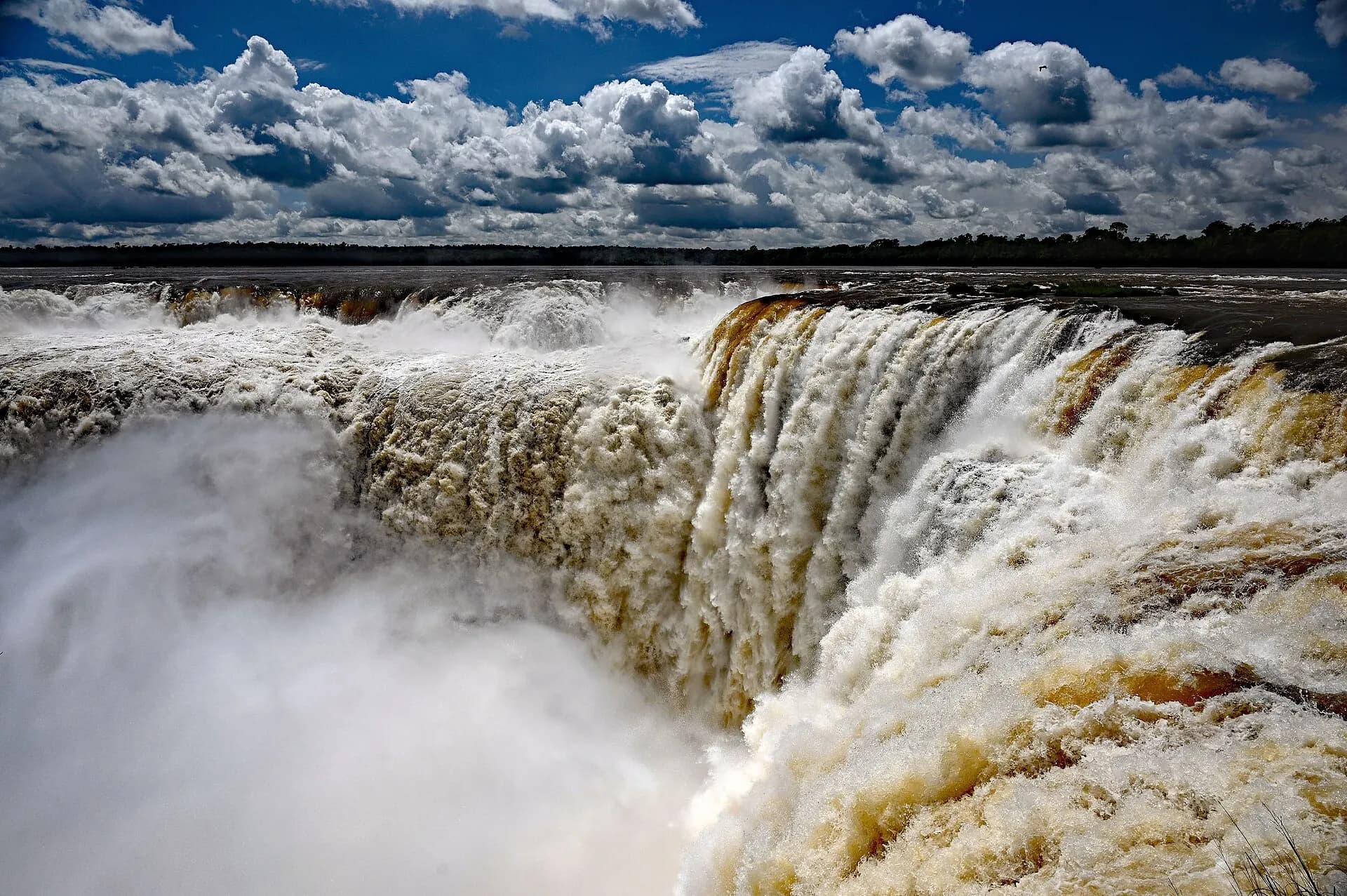
The largest and most powerful of the falls, a U-shaped chasm where much of the river plunges about eighty metres into a cloud of spray. On the Argentine side, a long walkway crosses the river to a platform on the very edge of the drop.
TipTake the first ecological train of the day to reach the Devil's Throat before the crowds, and bring a waterproof layer.
- 2
The Upper Circuit (Argentina)
Photo: Steve Rothwell, CC BY-SA 3.0, via Wikimedia Commons
An easy trail of walkways along the top of the falls, with views straight down into the cascades of the Argentine side and across to Brazil.
- 3
The Lower Circuit (Argentina)
Photo: Horacio Cambeiro, CC BY 4.0, via Wikimedia Commons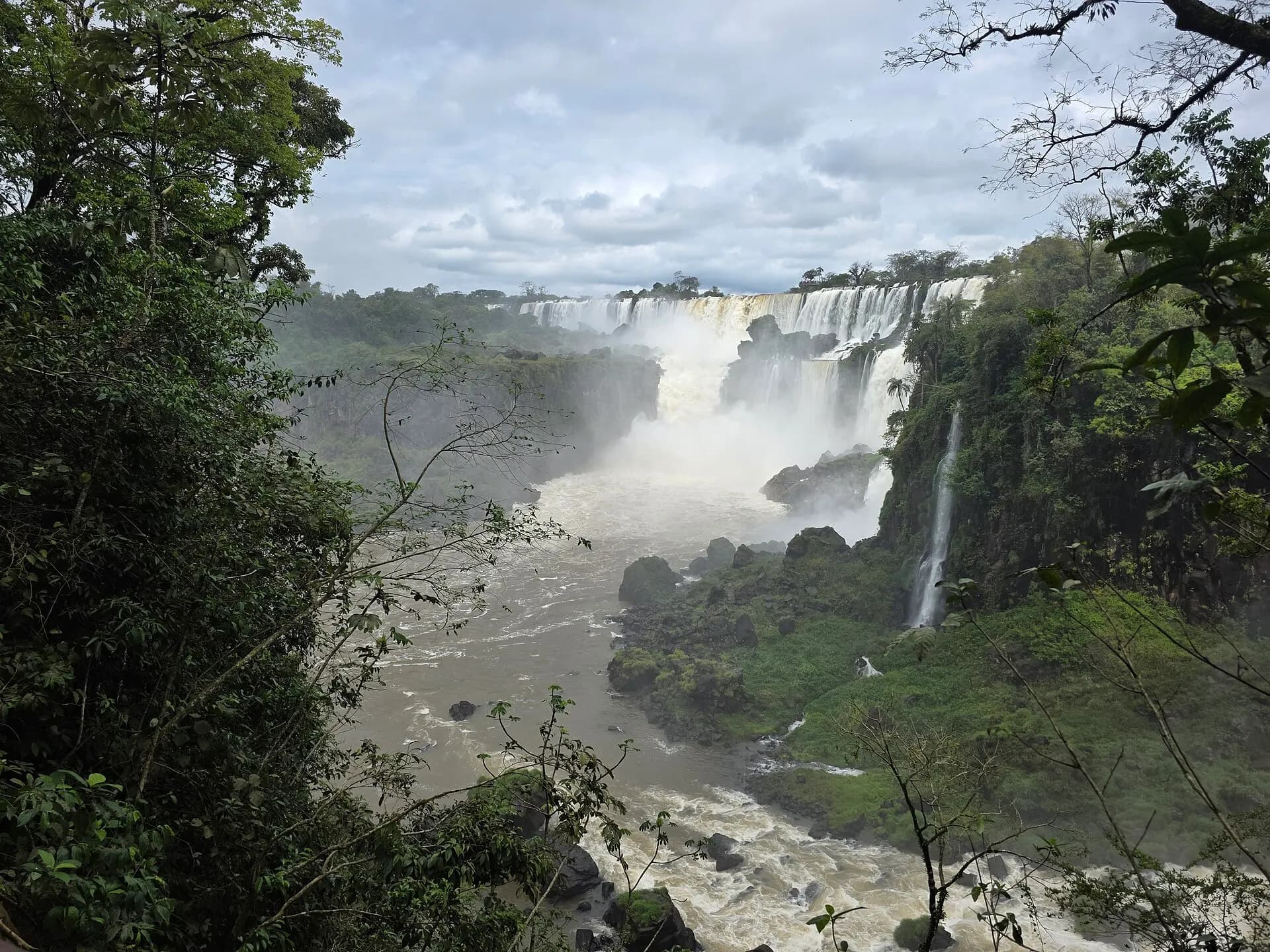
A trail with stairs that winds through the forest beneath the falls, bringing you close enough to feel the spray, with views of the cascades towering above.
- 4
Isla San Martín
Photo: Falk2, CC BY-SA 4.0, via Wikimedia Commons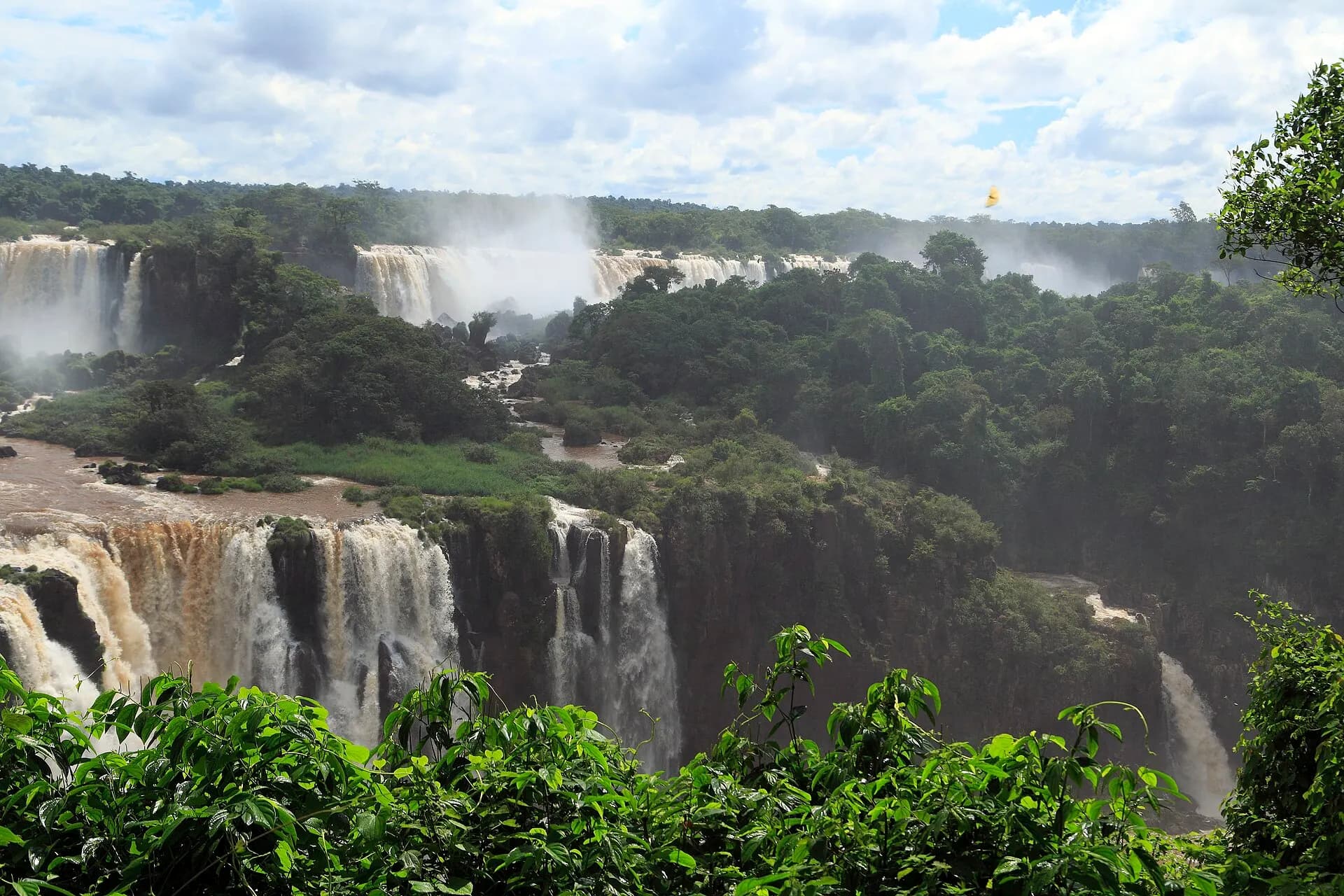
An island in the river below the falls, reached by a free boat when water levels allow, with steep stairs to viewpoints facing the falls. Access depends on the river's height.
- 5
The Brazilian side
Photo: Dennis G. Jarvis, CC BY-SA 2.0, via Wikimedia Commons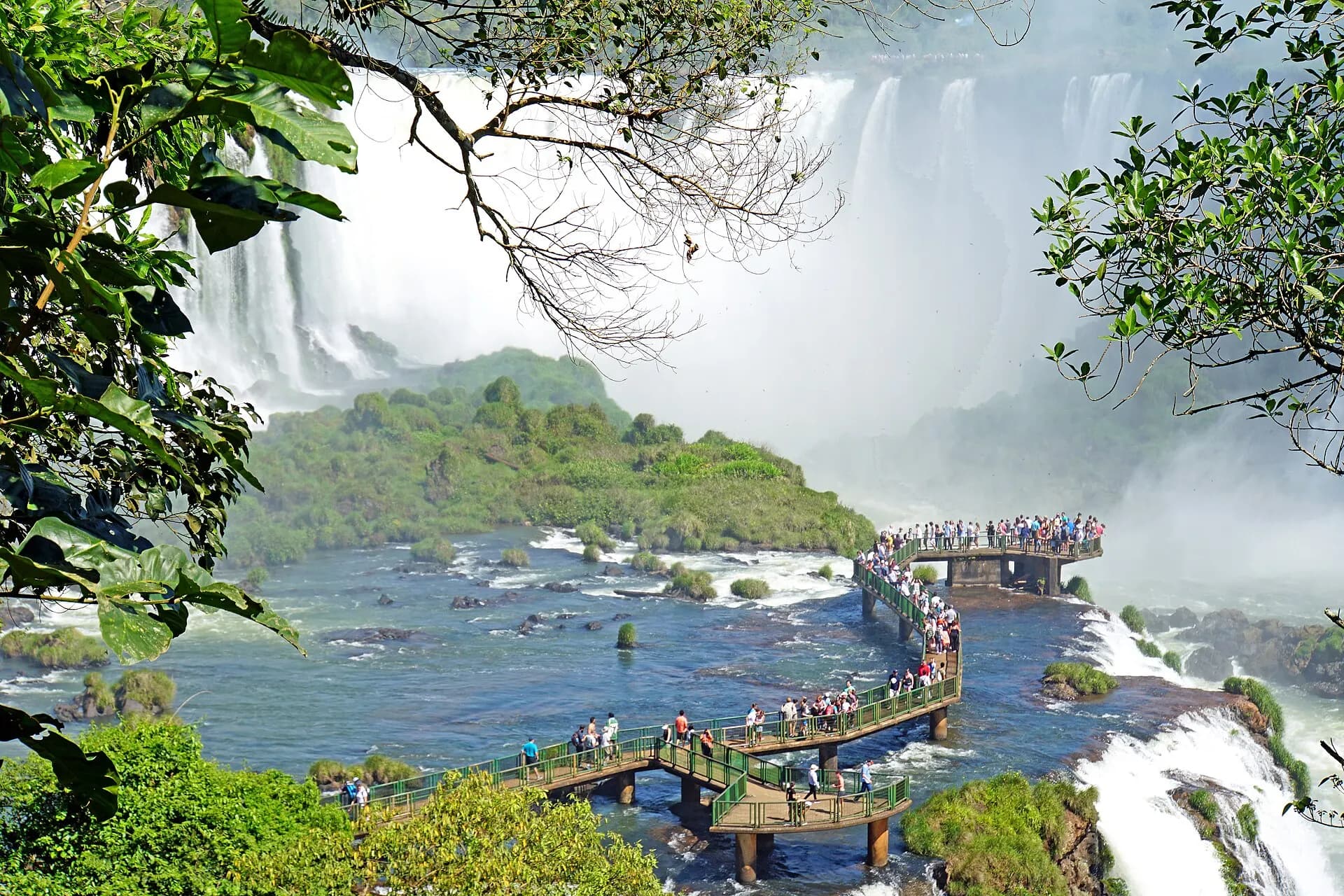
A trail runs along the Brazilian bank, facing the falls, with a panoramic view of the whole horseshoe and a walkway that extends out over the water towards the Devil's Throat, drenching visitors in spray.
TipVisit the Brazilian side in the morning, when the sun lights the falls from behind you.
- 6
Boat trips under the falls
Speedboat rides on both sides of the border head upriver through rapids and right into the spray of the falls; you will get completely soaked.
- 7
Parque das Aves
Photo: Jorge Andrade from Rio de Janeiro, Brazil, CC BY 2.0, via Wikimedia Commons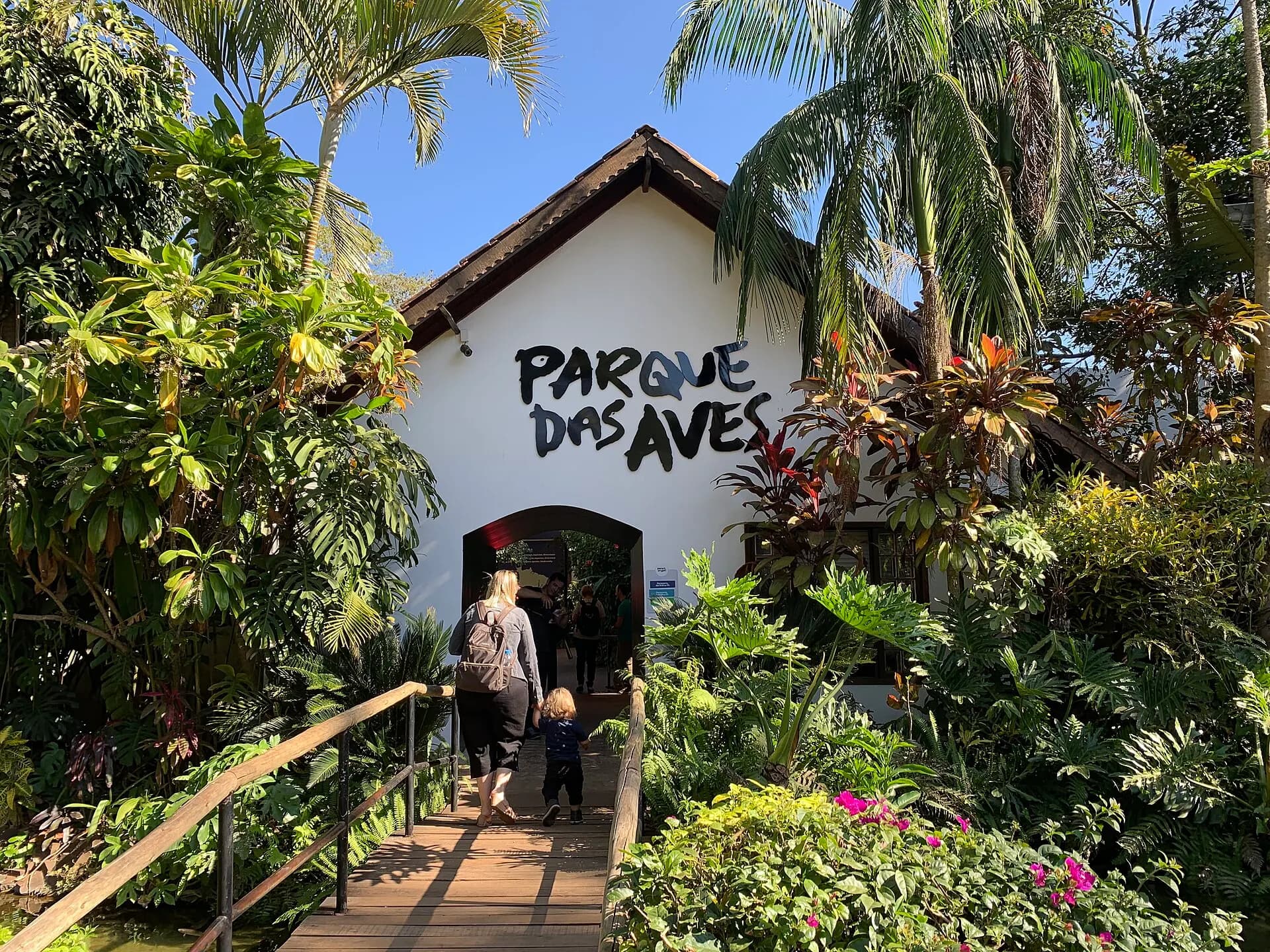
A bird park on the Brazilian side, near the national park entrance, with walk-through aviaries of toucans, macaws and other Atlantic Forest birds, many of them rescued.
- 8
The Itaipu Dam
Photo: Cmasi, CC BY-SA 4.0, via Wikimedia Commons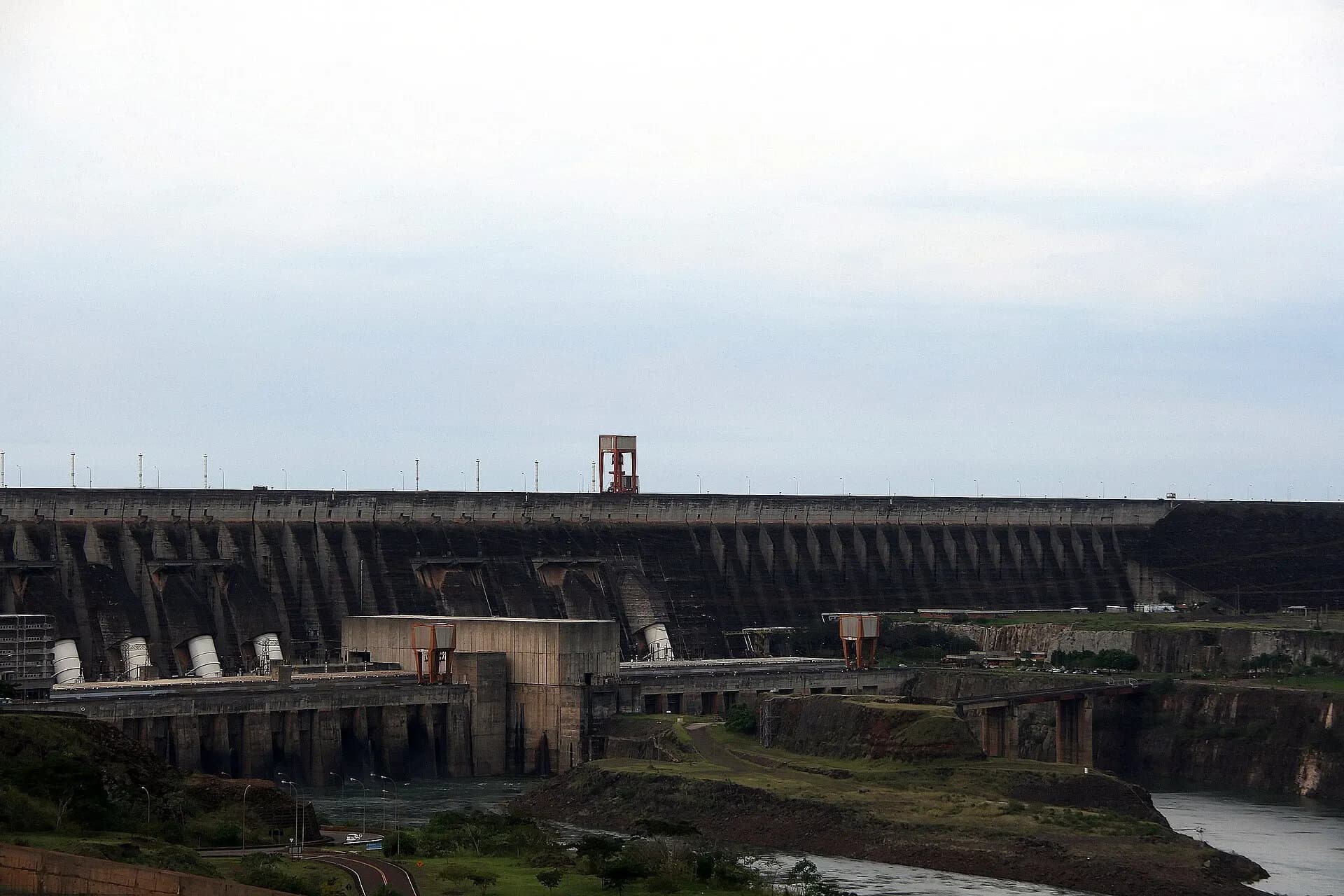
One of the largest hydroelectric dams in the world, on the Paraná River between Brazil and Paraguay, about half an hour from Foz do Iguaçu, with tours of its vast structure.
When to go
The falls are impressive all year. Water levels are usually highest in the rainy months, roughly December to February and sometimes into spring, though the summer is hot, humid and busy. Autumn and spring offer comfortable temperatures. Occasionally, after heavy rain or during droughts, water levels are extreme and some walkways close, so check before you go. Full-moon walks to the Devil's Throat are offered on the Argentine side on certain nights.
Getting around
On the Argentine side, a small ecological train links the visitor centre with the trails and the Devil's Throat station. On the Brazilian side, park buses take visitors along the road to the trails. Buses and taxis link the parks with Puerto Iguazú and Foz do Iguaçu, and crossing the border between the two towns takes around half an hour plus border formalities.
Both countries have airports near the falls, with flights to Buenos Aires, Rio de Janeiro and São Paulo.
Local tips
- Bring your passport for the border crossing, and check visa requirements for both countries.
- Buy park tickets online in advance where possible.
- Wear quick-drying clothes and shoes with good grip, and use a dry bag for electronics.
- Don't feed the coatis: they look cute but bite and steal food.
- Use insect repellent and sunscreen.
- Carry some cash in pesos and reais for small purchases.
Eat and drink
On the Argentine side, enjoy Argentine steak, empanadas and Malbec in Puerto Iguazú; on the Brazilian side, try a churrascaria, where waiters bring skewers of grilled meat to your table, and a caipirinha. Try chipa, a cheese bread from the region, and maté, the herbal tea grown in the province of Misiones.
Where to stay
Puerto Iguazú, in Argentina, is a small, relaxed town with hotels and lodges in the forest nearby. Foz do Iguaçu, in Brazil, is a larger city with more options and nightlife. A hotel inside each national park lets you walk to the falls after the day visitors have gone, a memorable but expensive treat.
The Triple Frontier
At the meeting of the Iguazú and Paraná rivers, Argentina, Brazil and Paraguay meet at a point known as the Triple Frontier, marked by obelisks painted in each country's colours on the riverbanks. Viewpoints in Puerto Iguazú and Foz do Iguaçu look across the water to the other two countries.
Wildlife of the forest
The national parks protect one of the last large remnants of the Atlantic Forest, home to more than 400 species of birds and abundant butterflies. Toucans, great dusky swifts nesting behind the curtains of water, capuchin monkeys and coatis are commonly seen, and the forest also shelters elusive jaguars, ocelots and tapirs. The Macuco Trail, on the Argentine side, is a quieter forest walk to a small waterfall and a good place to spot wildlife.
Planning your visit
Spend a full day on the Argentine side, starting with the Devil's Throat, then the Upper and Lower Circuits, and half a day on the Brazilian side for the panorama, ideally in the morning. Add a boat trip if you don't mind getting soaked. Arrive early on both sides, as tour groups fill the walkways from mid-morning.