The Outer Hebrides
A chain of windswept Atlantic islands with white-sand beaches, ancient standing stones and a living Gaelic culture.
- Best time to go
- May to September for long days and calmer weather
- Local time
- –
- Currency
- British Pound (GBP)
- Reading time
- 4 min
- Language
- English
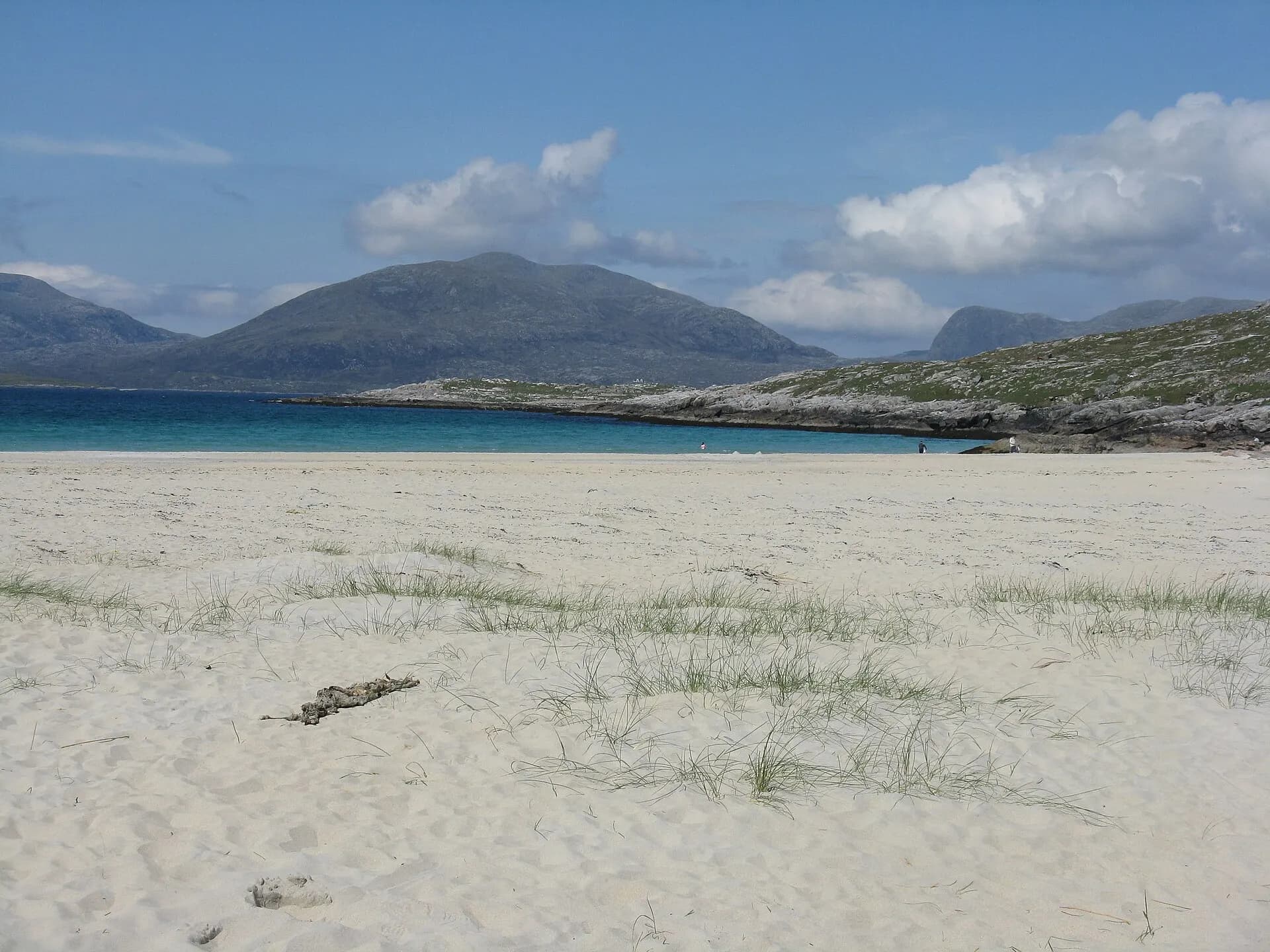
The Outer Hebrides, also known as the Western Isles or Na h-Eileanan Siar, are a chain of islands stretching about 210 kilometres off the north-west coast of Scotland. They're among the oldest landscapes in Europe, of rock billions of years old, with mountains, peat moorland, countless lochs and some of the most beautiful beaches anywhere, their white shell sand and turquoise water looking almost tropical under the right sky.
The islands are the heartland of the Gaelic language, which is spoken in everyday life, and of traditions such as Harris Tweed weaving, Gaelic psalm singing and crofting. Life moves slowly, the weather is changeable, and the light and space are unforgettable.
The top 9 in The Outer Hebrides
- 1
Luskentyre Beach
Photo: Neil Aitkenhead, CC BY-SA 3.0, via Wikimedia Commons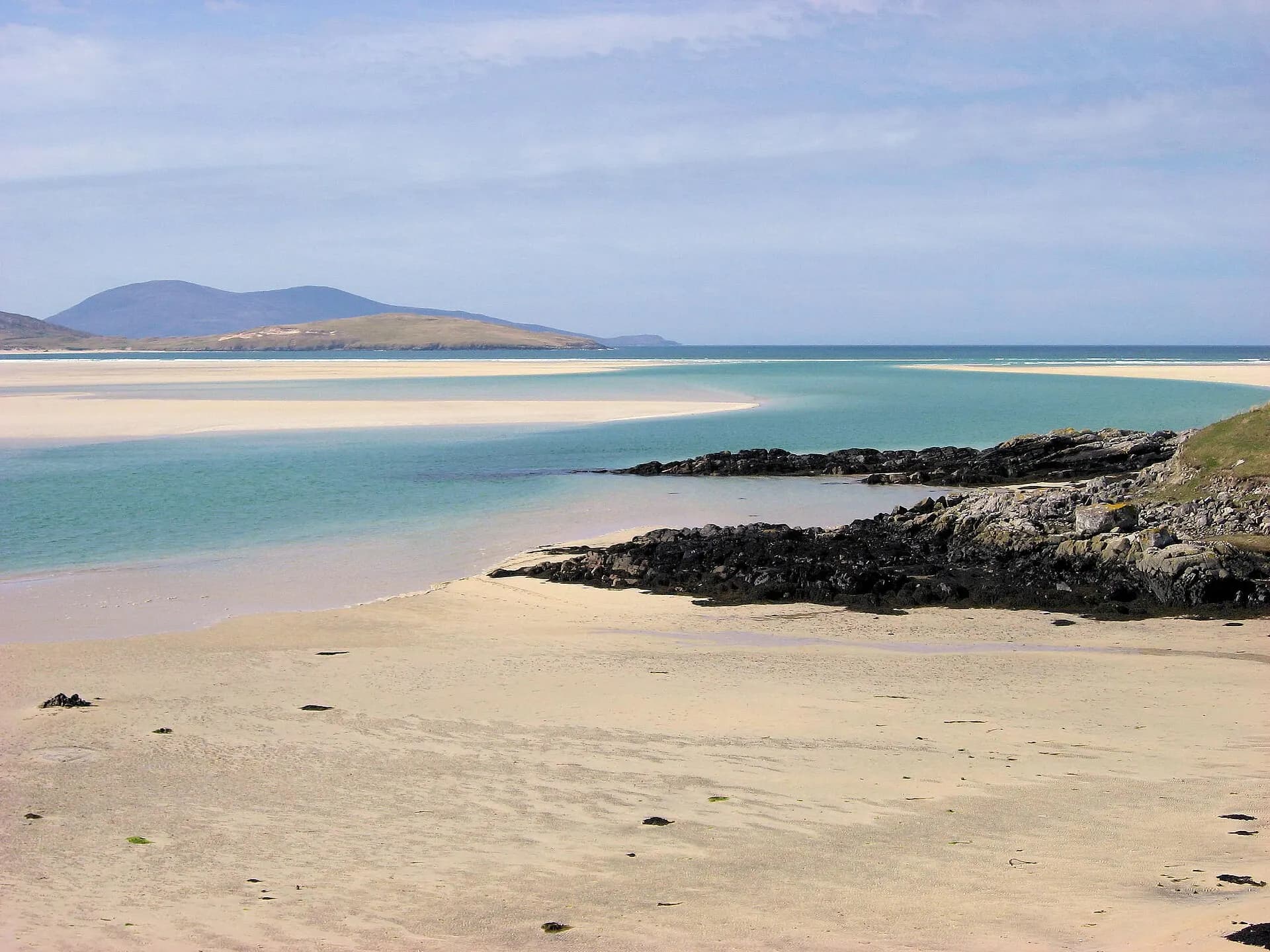
A vast beach of white sand and shallow turquoise water on the west coast of Harris, facing the island of Taransay, often named among the most beautiful beaches in Britain.
- 2
The Calanais Standing Stones
Photo: LornaMCampbell, CC BY-SA 4.0, via Wikimedia Commons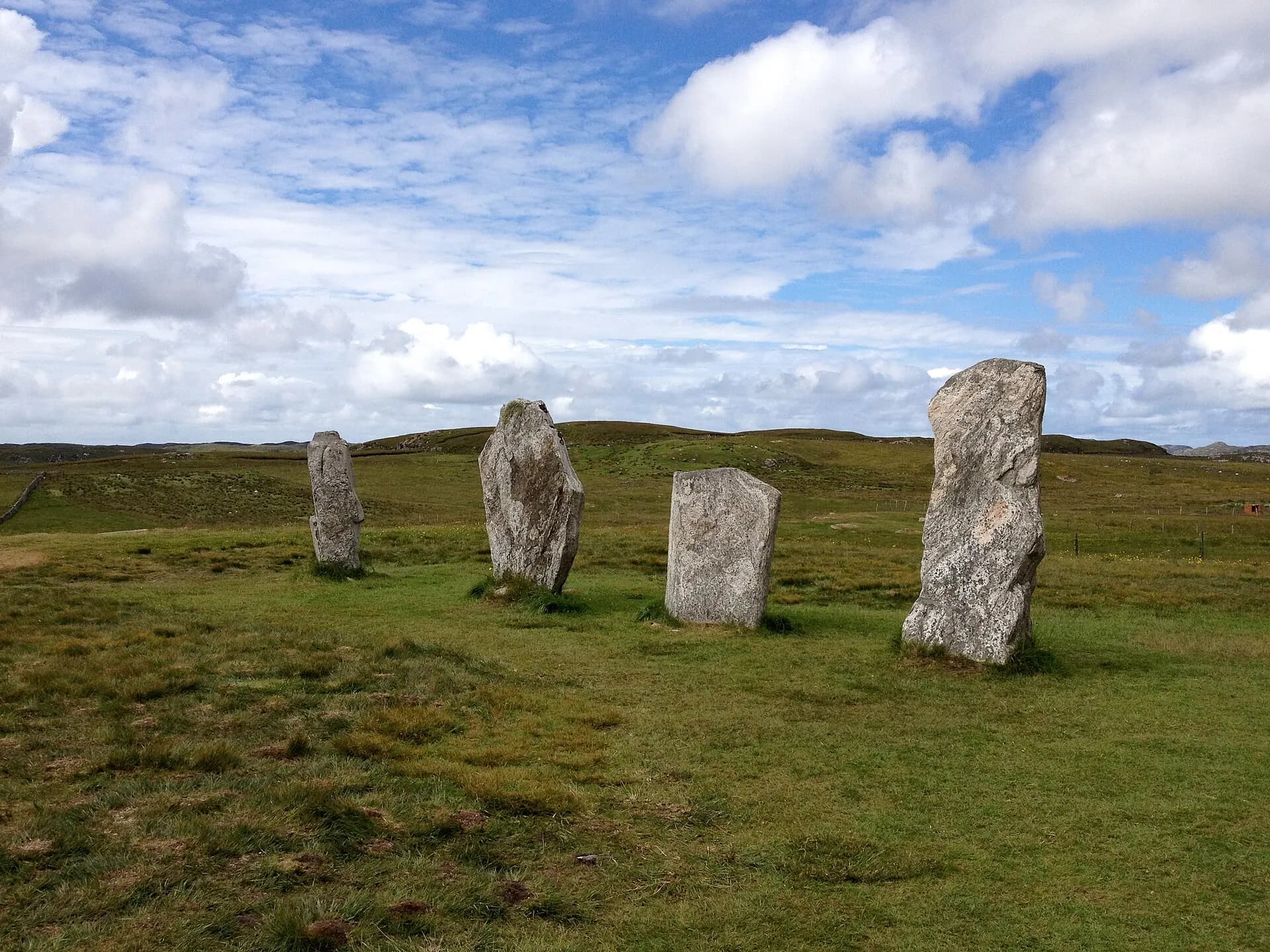
A cross-shaped arrangement of tall standing stones on Lewis, erected around five thousand years ago, older than Stonehenge's great stone circle, with a central stone circle and a chambered tomb. A visitor centre explains the site.
- 3
Gearrannan Blackhouse Village
Photo: Andrew Gray, CC BY-SA 4.0, via Wikimedia Commons
A restored village of traditional blackhouses, stone cottages with thatched roofs, on the west coast of Lewis, with a museum, café and holiday cottages.
- 4
Harris and the Golden Road
Photo: Zenit, CC BY-SA 3.0, via Wikimedia Commons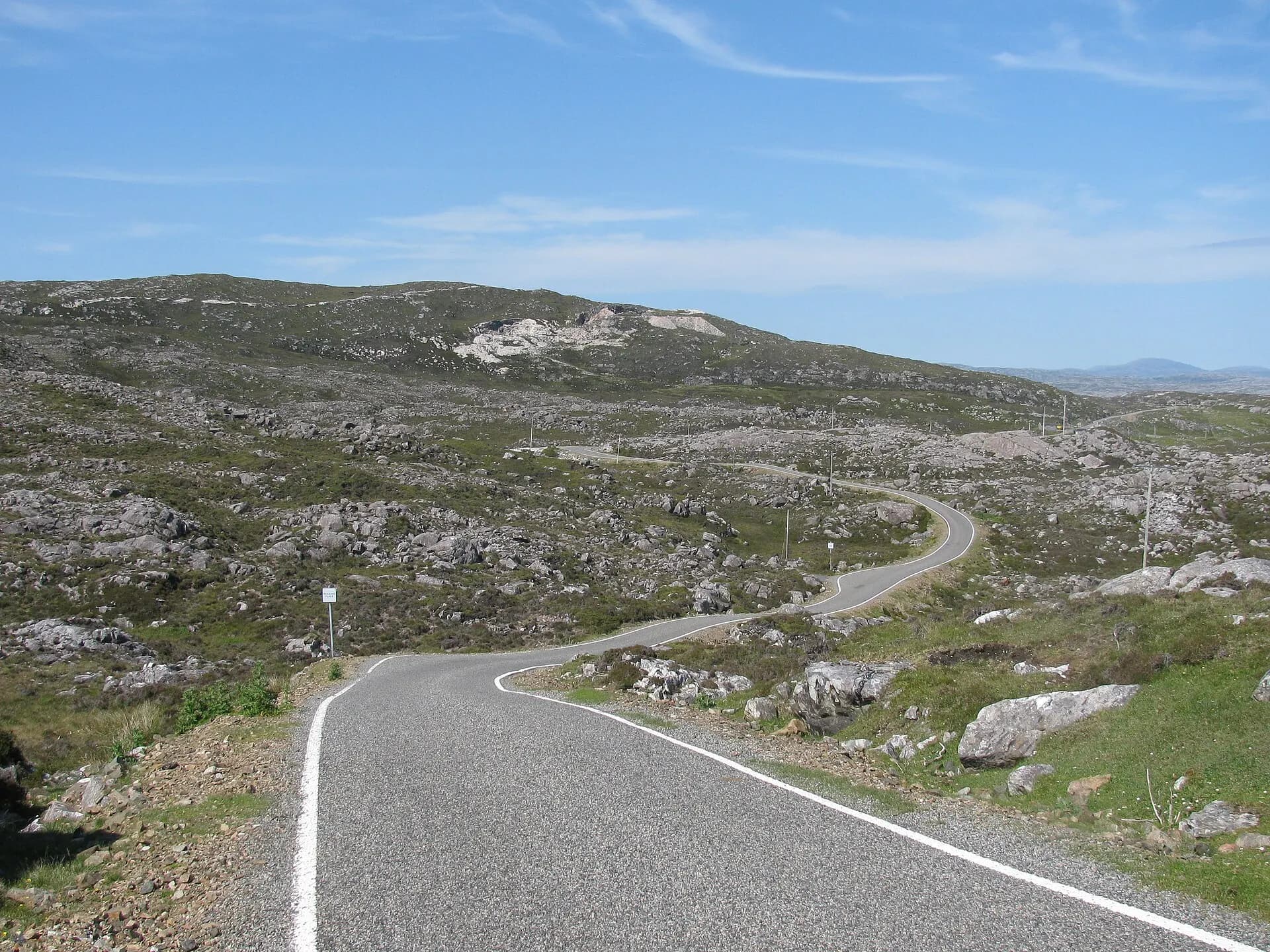
The east coast of South Harris is a moonscape of bare rock and small lochs, crossed by a winding single-track road nicknamed the Golden Road, past tiny settlements and weaving sheds.
- 5
St Clement's Church, Rodel
A sixteenth-century church at the southern tip of Harris, with a remarkable carved tomb of the chief of the MacLeods of Harris.
- 6
Stornoway
Photo: Virtual-Pano, CC BY-SA 4.0, via Wikimedia Commons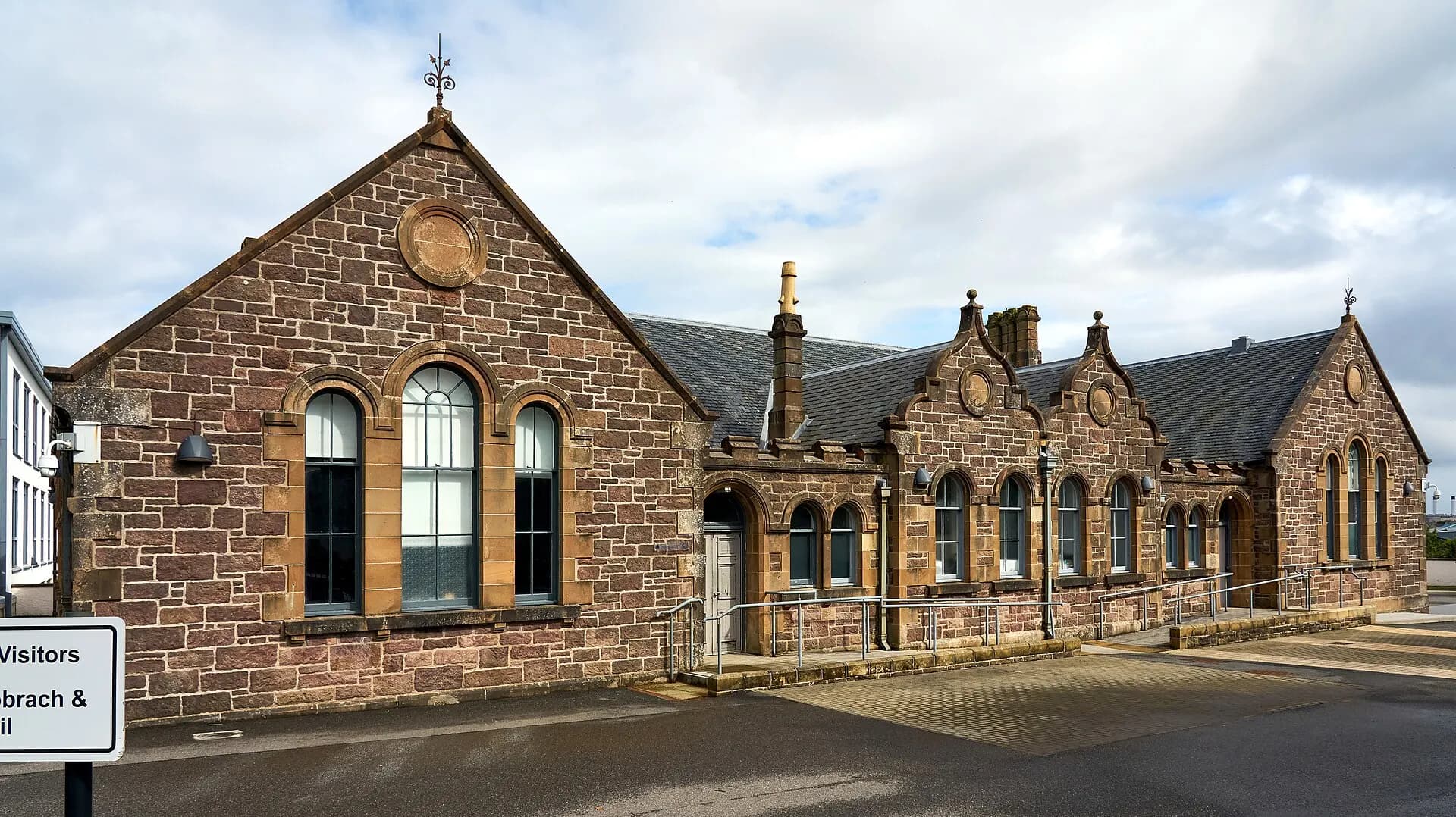
The islands' main town, on Lewis, with a harbour, Lews Castle, which houses a museum including some of the Lewis Chessmen, and shops and restaurants.
- 7
Dun Carloway Broch
Photo: Colin Smith, CC BY-SA 2.0, via Wikimedia Commons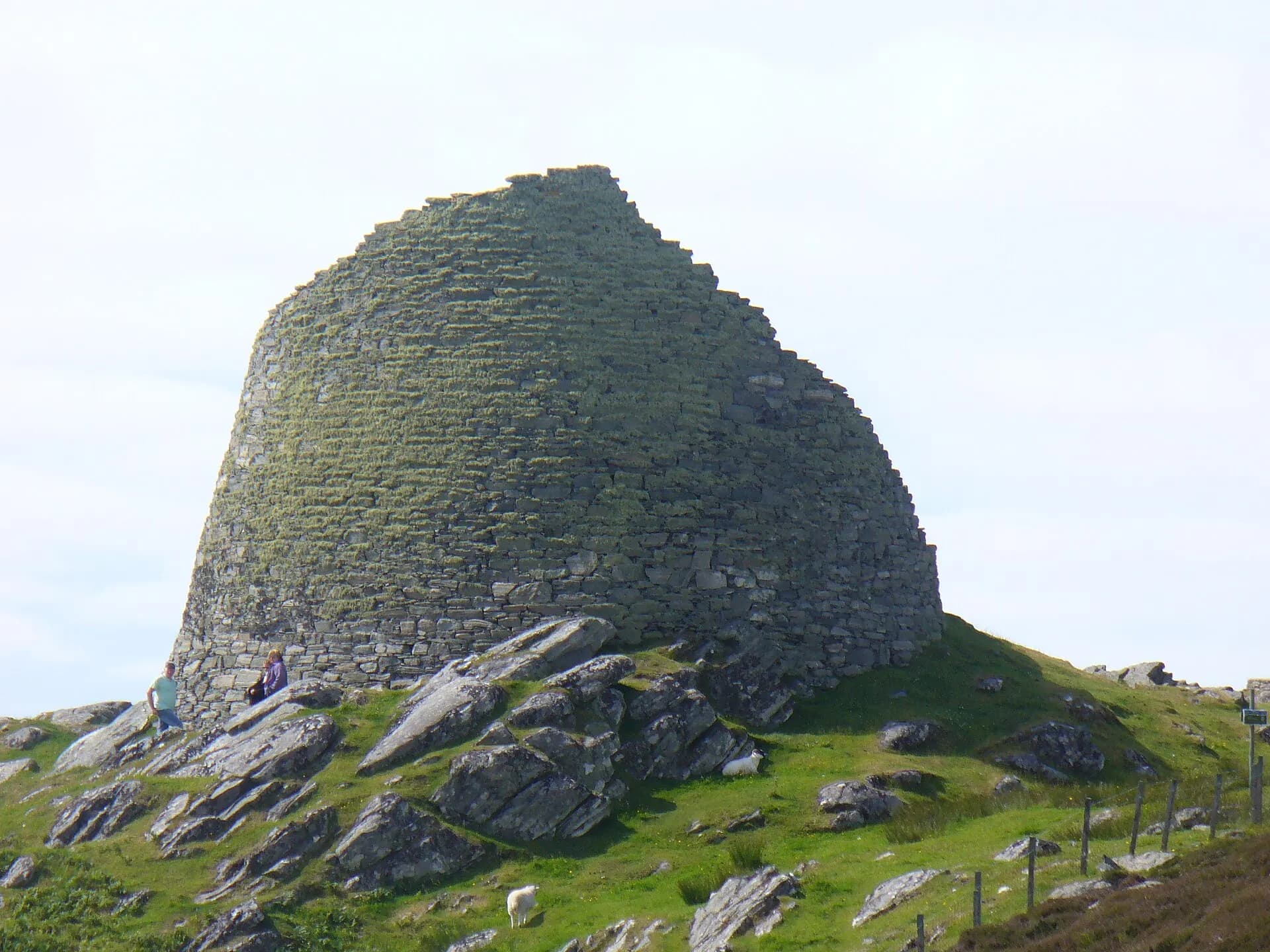
One of the best-preserved Iron Age brochs, a tall dry-stone tower, standing on a hillside above Loch Roag on Lewis.
- 8
The Uists and Benbecula
Photo: Tim Niblett, CC BY 2.0, via Wikimedia Commons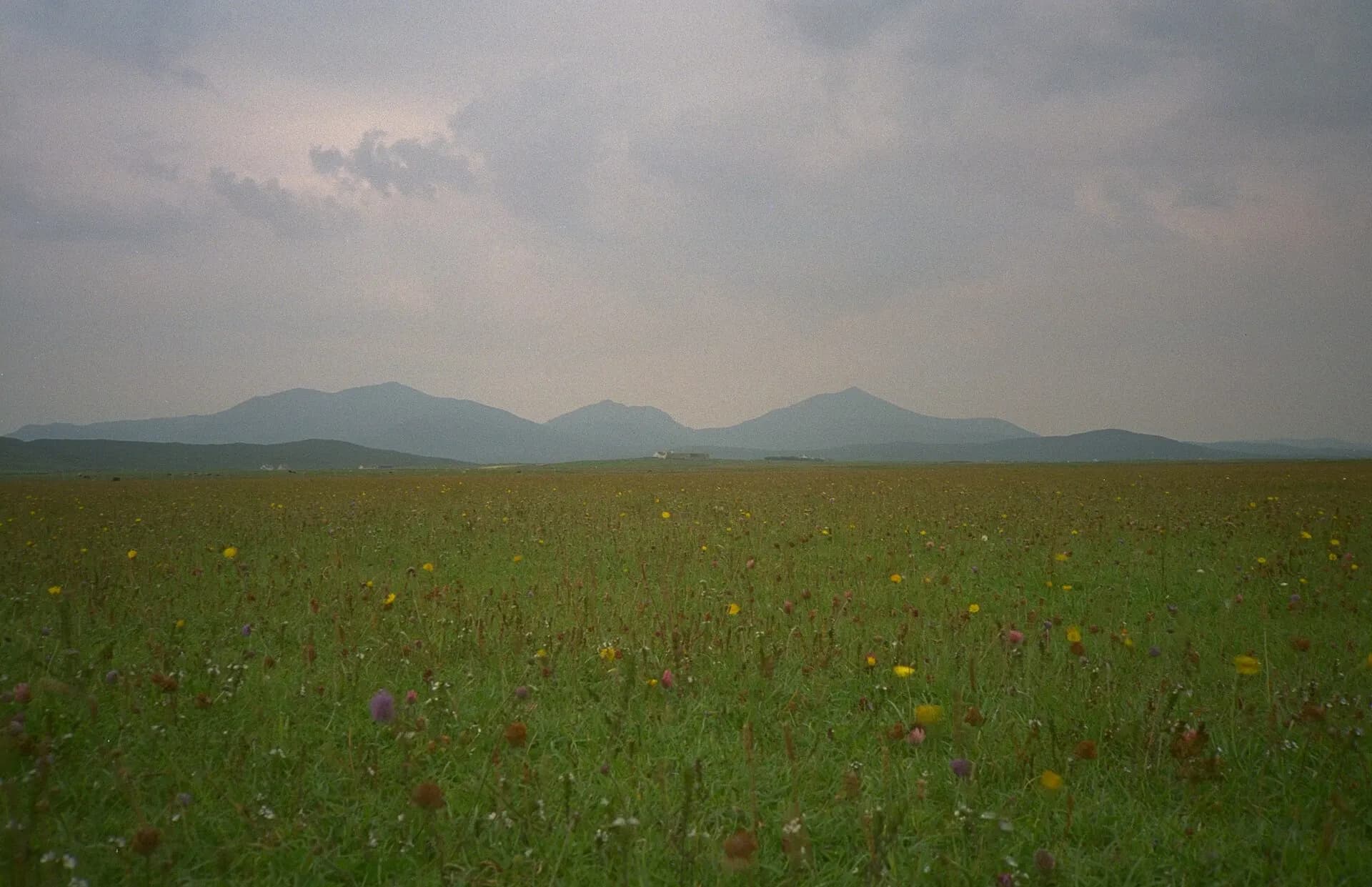
Low-lying islands to the south, linked by causeways, with long Atlantic beaches backed by machair, flower-rich grassland that blooms in summer, and rich birdlife, including corncrakes.
- 9
Barra
Photo: KaiBorgeest, CC BY-SA 4.0, via Wikimedia Commons
The southern island, with Kisimul Castle in the bay of Castlebay and the only airport in the world where scheduled flights land on a beach, timed with the tides.
When to go
Late spring and summer bring long days, wildflowers on the machair and calmer seas, though the weather is changeable year-round. The Hebridean Celtic Festival in Stornoway takes place in July. Winter is wild and dark, with storms, but the northern lights are sometimes visible on clear nights.
Getting around
CalMac ferries link the islands with the mainland at Ullapool, Uig on Skye and Oban, and between the islands themselves; book vehicle space well ahead in summer. Flights reach Stornoway, Benbecula and Barra from Glasgow and other Scottish airports. A car is the easiest way to explore, on mostly single-track roads.
Local tips
- Sunday is still observed as a day of rest in many communities, especially on Lewis and Harris; many shops, petrol stations and services close.
- Book ferries and accommodation early in summer.
- Use passing places on single-track roads to let others pass.
- Pack waterproofs and layers in every season.
- Midges can be a nuisance on calm summer evenings.
- Learn a few Gaelic words; road signs are often in Gaelic first.
Eat and drink
The islands are known for their seafood, including scallops, langoustines and lobster, and for Stornoway black pudding, which has protected status. Isle of Harris Distillery in Tarbert makes a gin infused with sugar kelp seaweed, as well as whisky. Small cafés serve home baking with views of the sea.
Where to stay
Stornoway has the widest choice of hotels and guesthouses. Across the islands, self-catering cottages, bed and breakfasts, restored blackhouses and campsites offer stays close to the beaches and hills.
Harris Tweed
Harris Tweed is a cloth that, by law, must be handwoven by islanders in their own homes in the Outer Hebrides from pure virgin wool dyed and spun in the islands. Visitors can see weavers at work in small sheds and buy directly from them, and the orb trademark on every length guarantees its authenticity.
Gaelic culture
The Outer Hebrides are the only place in Scotland where Gaelic is the everyday language of most communities. You'll hear it in shops, on local radio and in church, where some congregations still sing unaccompanied Gaelic psalms, with a precentor leading each line and the congregation following in a haunting, slow chorus. Ceilidhs, evenings of music, song and dance, take place in village halls, especially in summer, and fiddle and accordion music is part of island life. Place names on maps and road signs are given in Gaelic, often with the English below.
Walking and wildlife
The islands offer superb walking, from easy strolls along the beaches and machair to hill walks on Clisham, the highest peak in the Outer Hebrides, in North Harris. The Hebridean Way, a walking and cycling route, runs the length of the islands from Vatersay in the south to the Butt of Lewis in the north, using causeways and ferries. Look for golden and white-tailed eagles over the hills of Harris, otters along the shores, seals in the bays, and, in summer, the rasping call of the rare corncrake in the fields of the Uists.
St Kilda
Far out in the Atlantic, about sixty kilometres west of Harris, the archipelago of St Kilda was inhabited for thousands of years until its last residents were evacuated in 1930. Its towering sea cliffs hold one of the largest seabird colonies in Europe, and it's one of the few places in the world listed as a World Heritage Site for both nature and culture. Day trips by boat run from Harris in summer, weather permitting.