Pamukkale
Snow-white terraces of thermal water spilling down a hillside, crowned by the ruins of a Roman spa city.
- Best time to go
- April to June and September to October, early morning or late afternoon
- Local time
- –
- Currency
- Turkish Lira (TRY)
- Reading time
- 7 min
- Language
- Turkish
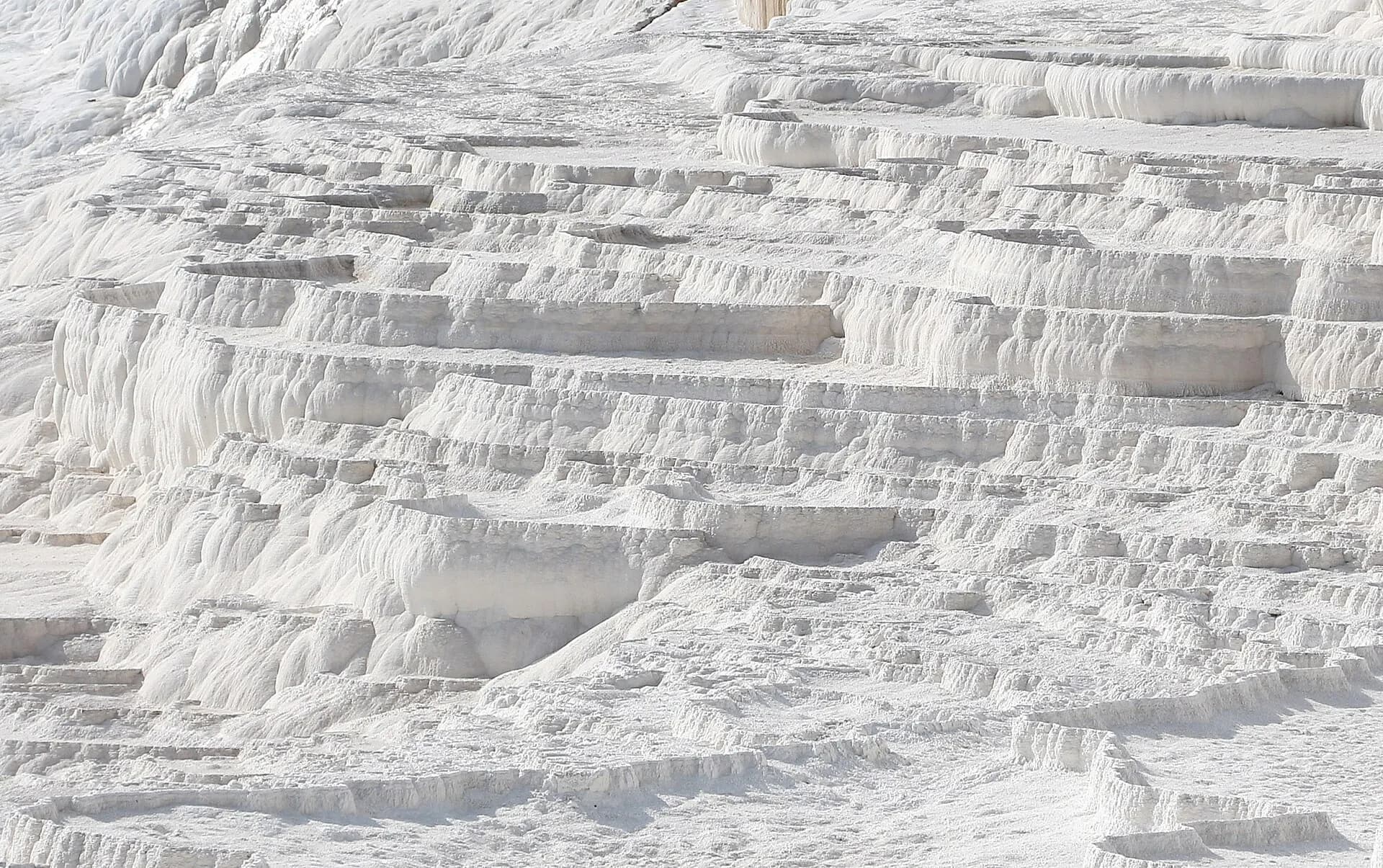
Pamukkale, "cotton castle" in Turkish, is a hillside in the Lycus valley of southwest Turkey where warm, mineral-rich spring water has spent thousands of years laying down calcium carbonate. The result is a cliff of white travertine terraces, frozen-looking cascades and shallow pools about 2.7 kilometres long, visible from Denizli some 20 kilometres away. On the plateau above sit the ruins of Hierapolis, a Hellenistic and Roman spa city that people visited for the same waters. The two together form the Hierapolis-Pamukkale World Heritage Site, listed by UNESCO in 1988.
It's a small destination with a big reputation. Most visitors arrive on a day tour, walk the terraces barefoot and leave by lunchtime, but the ruins are large and rewarding, and the evening light on the white rock is the best of the day. Staying a night in Pamukkale village, at the foot of the terraces, lets you see it at its quietest and add Laodicea or Aphrodisias without rushing.
The top 9 in Pamukkale
- 1
The travertine terraces
Photo: Pvasiliadis, CC BY-SA 3.0, via Wikimedia Commons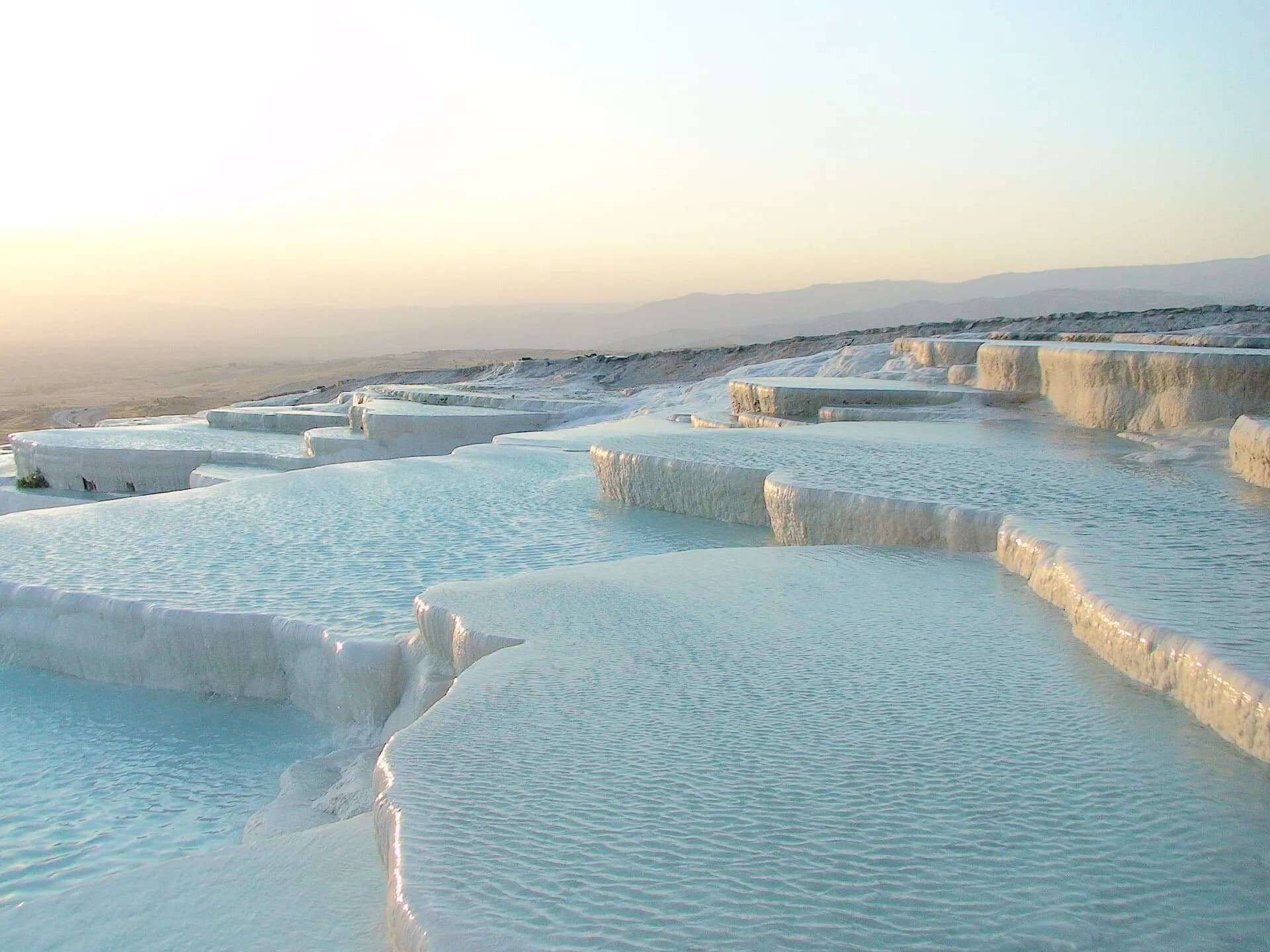
The famous white slope, with water channelled across it in rotation so different sections stay bright and the rest can rest. A marked path runs up the face from the town gate to the plateau. Shoes must come off on the travertine path, and you can paddle in the pools beside it; the natural terraces beyond the path are fenced off for protection.
TipThe surface is rough in places and slippery where water flows; walk slowly, and carry your shoes in a bag.
- 2
The Antique Pool
Photo: shankar s. from Dubai, united arab emirates, CC BY 2.0, via Wikimedia Commons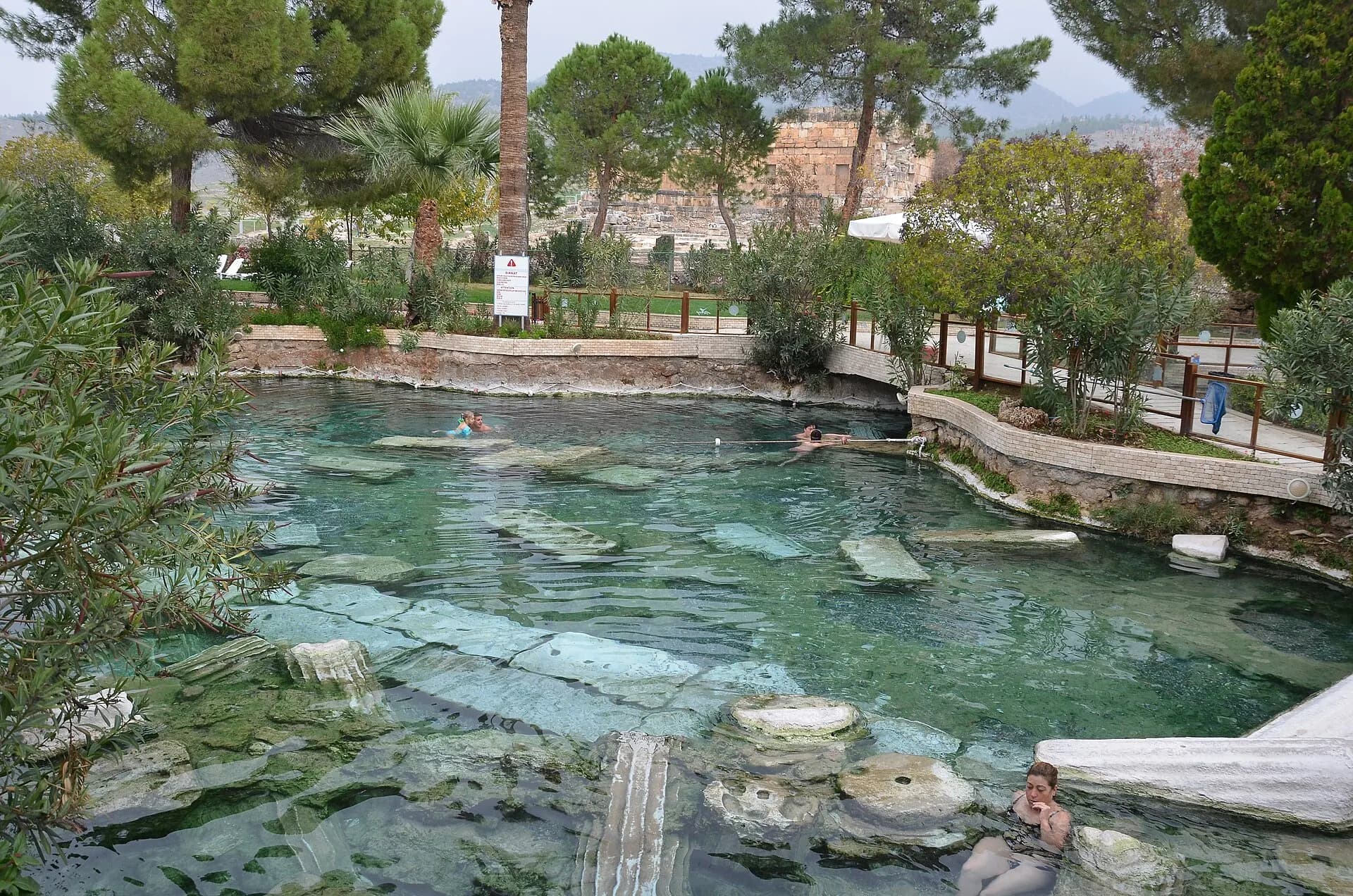
A thermal pool among the ruins, fed by water at a steady 36°C, where you swim over fallen marble columns toppled by ancient earthquakes. It's often sold as "Cleopatra's Pool", though there is no evidence she ever came here. It charges its own fee on top of the site ticket, and museum passes don't cover it.
TipCome early or late in the day; by late morning it fills with tour groups.
- 3
Hierapolis Archaeology Museum
Photo: Interfase, CC BY-SA 4.0, via Wikimedia Commons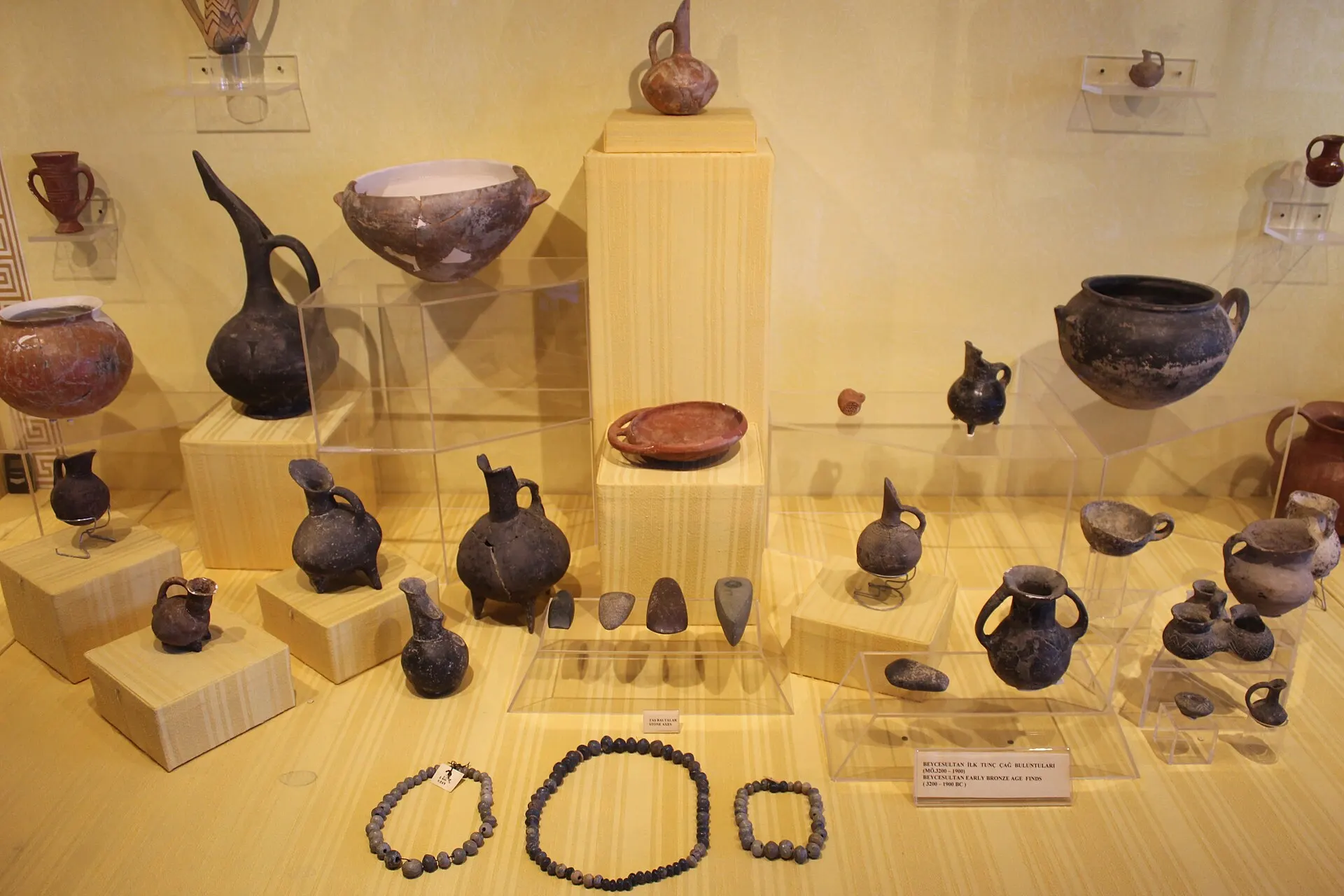
Set inside the second-century Roman baths, the museum displays sarcophagi, statues and the carved reliefs from the theatre's stage building, along with finds from nearby ancient cities. It's small enough for an hour and gives the ruins outside much more meaning.
- 4
The theatre of Hierapolis
Photo: Bernard Gagnon, CC BY-SA 3.0, via Wikimedia Commons
A Roman theatre cut into the hillside above the town, built in the time of Hadrian and rebuilt under Septimius Severus, with seating for around 15,000. Its stage building has been partly restored, and the climb up is rewarded with views across the valley. On the way, you pass the Temple of Apollo and the Plutonion, a cave once believed to be an entrance to the underworld because of the toxic gas seeping from it.
- 5
The Martyrium of St Philip
Photo: Dosseman, CC BY-SA 4.0, via Wikimedia Commons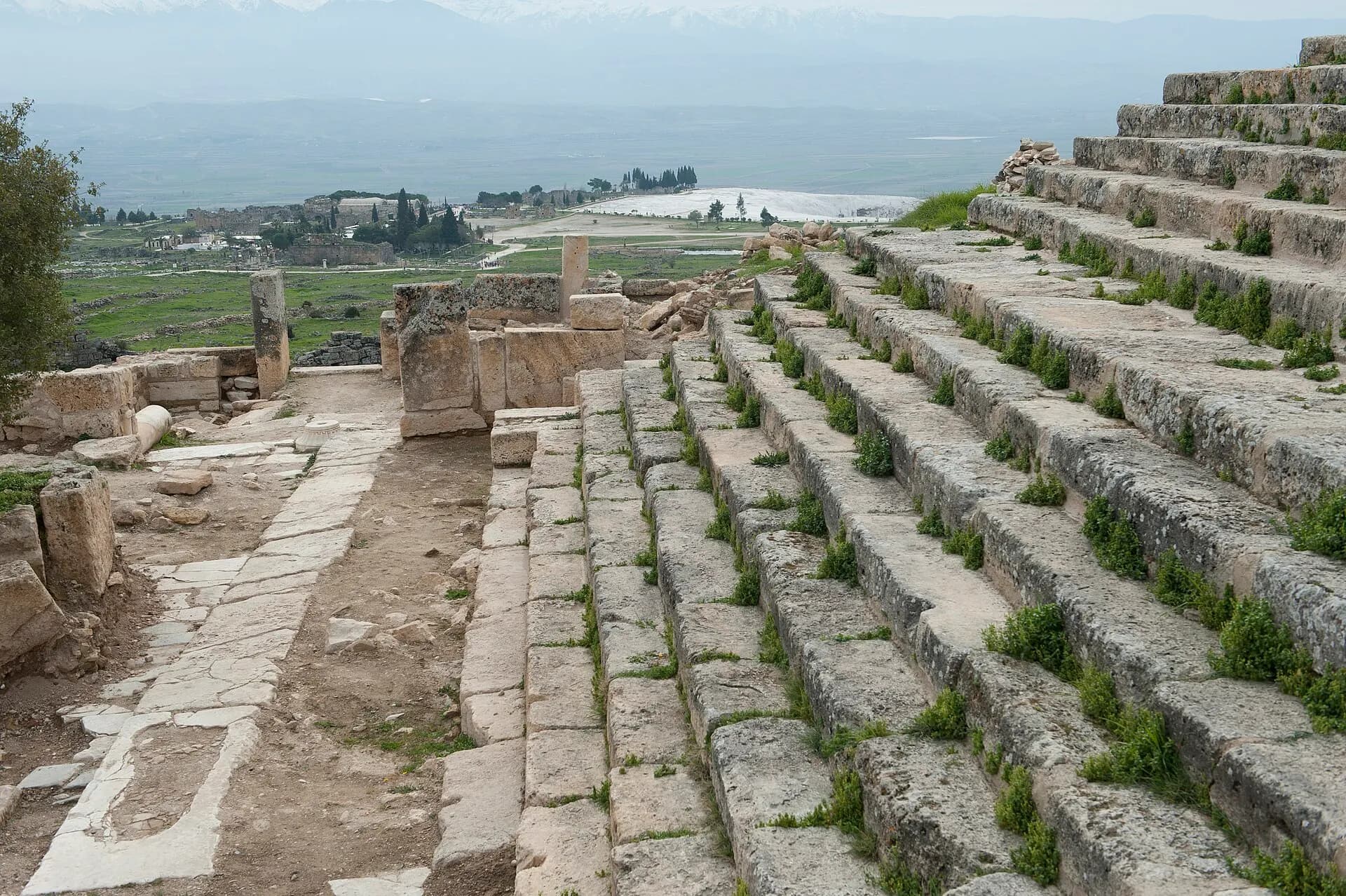
An octagonal fifth-century shrine on the hill above the theatre, built where the apostle Philip was believed to have been martyred. Archaeologists announced in 2011 that a tomb found in a church nearby may be his. It's a steep but short walk, and usually far quieter than the terraces.
- 6
Frontinus Street and the Northern Necropolis
Photo: Bernard Gagnon, CC BY-SA 3.0, via Wikimedia Commons
A colonnaded main street runs north to the Frontinus Gate, a triple-arched Roman gateway with round towers, built around AD 85. Beyond it lies one of the largest ancient cemeteries in Anatolia, stretching more than two kilometres with around 1,200 tombs, from simple graves and sarcophagi to house-like mausoleums and round tumuli.
- 7
Karahayıt red springs
Photo: Calistemon, CC BY-SA 4.0, via Wikimedia Commons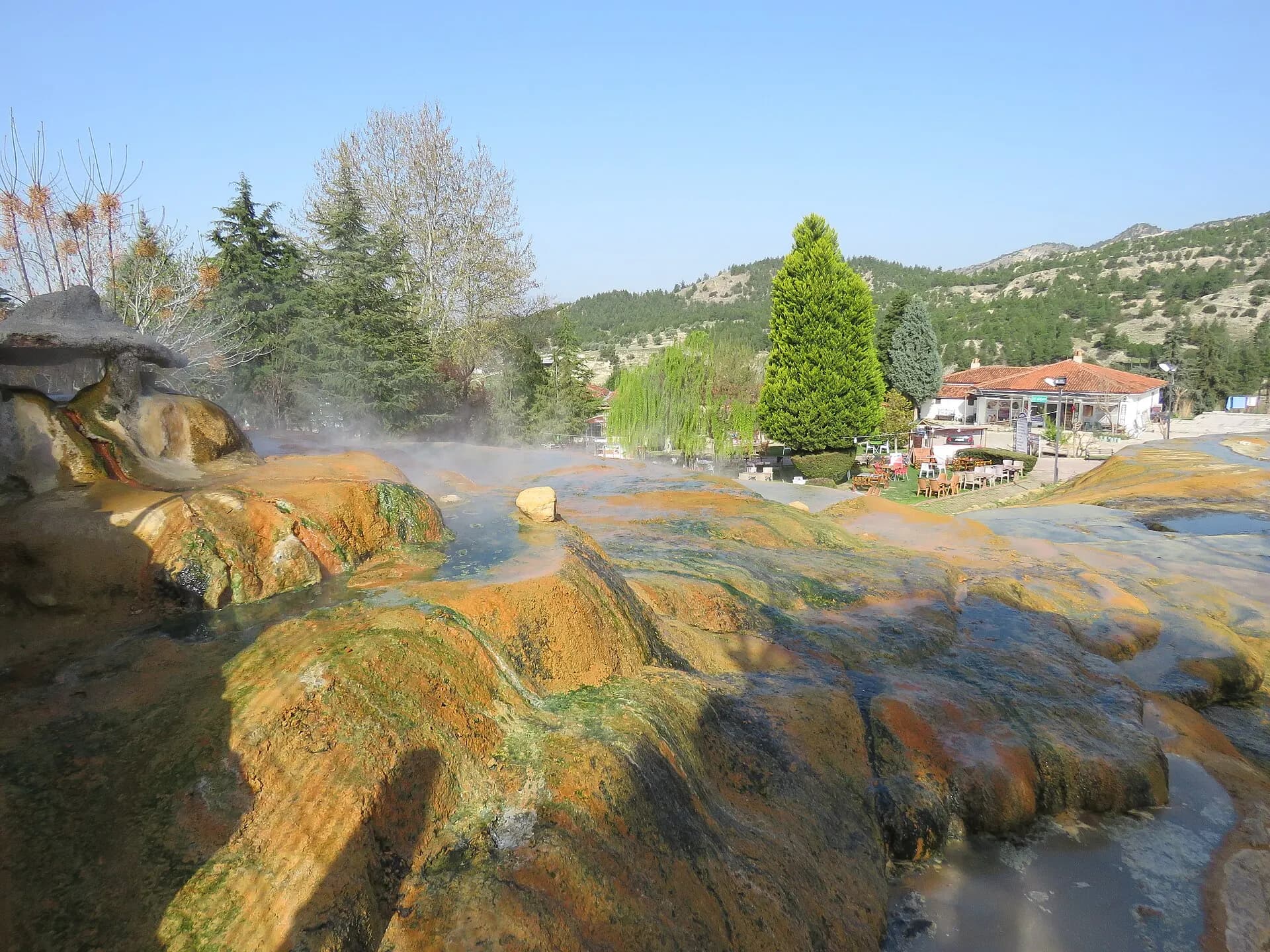
A spa village about five kilometres north of the ruins, where hotter, iron-rich spring water stains the rock in shades of red, orange and green. It's a short detour rather than a sight in its own right, and the place to stay if you want a hotel with thermal pools.
- 8
Laodicea
Photo: Carole Raddato from FRANKFURT, Germany, CC BY-SA 2.0, via Wikimedia Commons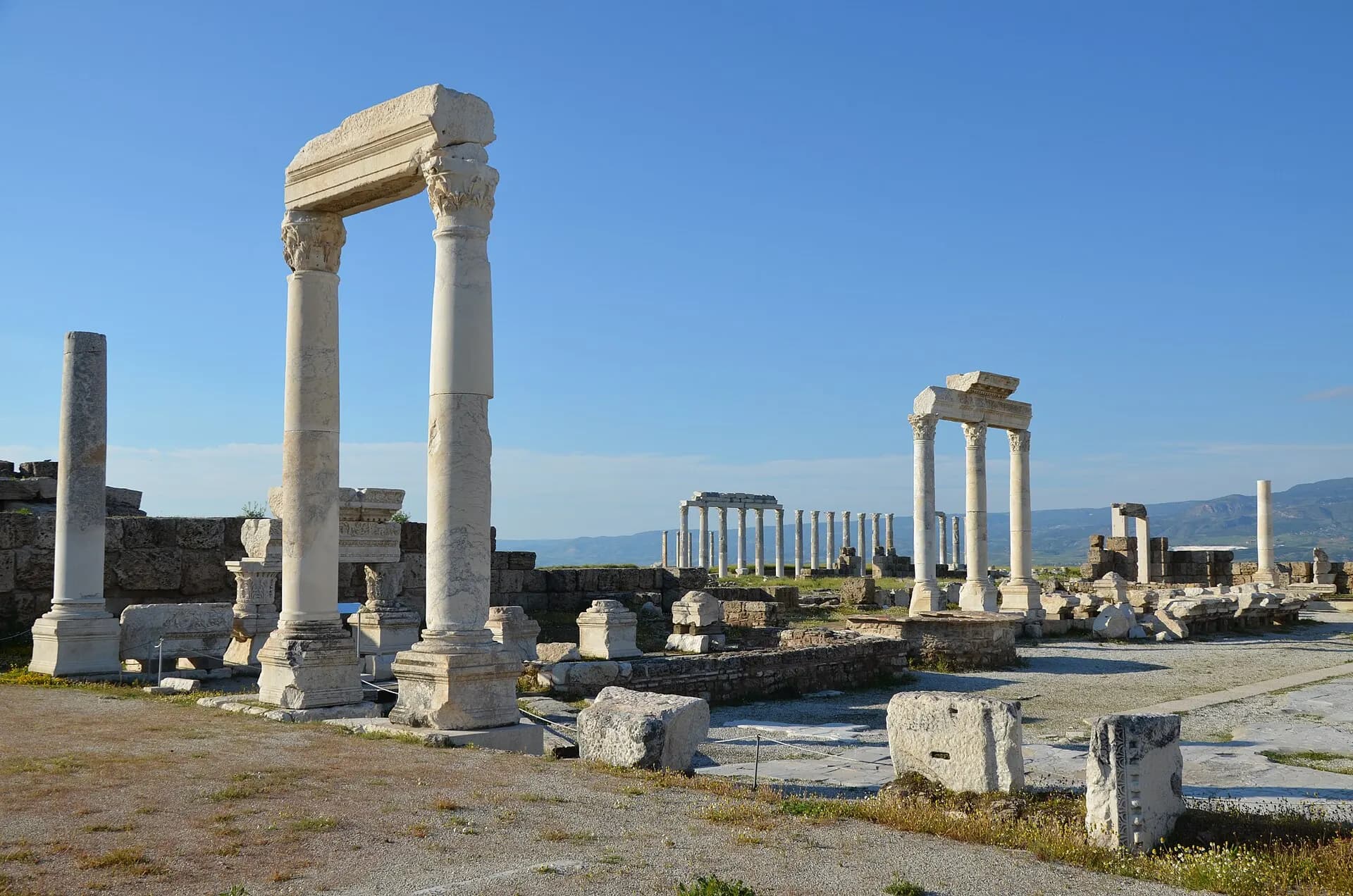
A large Roman city on a low hill just north of Denizli, with two theatres, a stadium, colonnaded streets and early churches, still being excavated and partly rebuilt. It was one of the Seven Churches of Asia in the Book of Revelation and is far less crowded than Hierapolis.
- 9
Aphrodisias
Photo: Bernard Gagnon, CC BY-SA 3.0, via Wikimedia Commons
A city of sculptors dedicated to Aphrodite, about an hour and a half's drive west, with one of the best-preserved stadiums of the ancient world, the Tetrapylon gateway, the Temple of Aphrodite and a museum of superb marble statues and reliefs from the Sebasteion. A World Heritage Site since 2017, it makes a rewarding half day.
TipCombine it with Pamukkale by car or private tour; public transport is awkward.
When to go
Spring, from April to June, and autumn, from September to October, bring warm days that are comfortable for walking. July and August are very hot, often above 35°C, with almost no shade on the terraces or in the ruins and a strong glare off the white rock. Winter is cool and can be wet, but quiet, and the pools are still warm. Weekends and Turkish public holidays bring huge crowds, so visit on a weekday if you can.
The best light is in the late afternoon and at sunset, when the west-facing terraces turn gold and pink. The first hour after opening is the quietest time of day. In summer, the site has offered evening openings in recent years; check the Ministry of Culture and Tourism's site for current hours.
Getting around
Denizli is the gateway, about 20 kilometres south. Denizli Çardak Airport, about an hour's drive east, has flights from Istanbul and Ankara, and airport shuttles run into the city. Long-distance buses connect Denizli's bus station with İzmir, Selçuk (for Ephesus), Antalya, Ankara and Istanbul, and frequent minibuses (dolmuş) run from the station to Pamukkale village. Regional trains also link Denizli with İzmir and Selçuk.
There are three entrances. The town gate, at the foot of the terraces in Pamukkale village, is the one to use if you want to walk up the travertines. The south gate, on the plateau, is closest to the top of the terraces, the Antique Pool and the museum, and is where most tour buses drop off. The north gate, near Karahayıt, brings you in through the necropolis and the Frontinus Gate. The site is long, so allow time to walk between the gates.
Local tips
- Bring a bag for your shoes, a towel, sunglasses and plenty of water; there is little shade.
- Wear a swimsuit under your clothes if you plan to swim in the Antique Pool.
- Arrive at opening time or after 4pm to miss the tour groups.
- Museum Pass Türkiye (15 days) and Museum Pass The Aegean (7 days), sold by the ministry, cover the site, but not the Antique Pool or night openings.
- Each pass allows one entry per site, so don't leave and re-enter if you're using one.
- Check current ticket prices and hours on the ministry's site before you go; they change often.
- Don't walk on fenced terraces or step off the path for photos.
Eat and drink
Food on the plateau is limited to a few cafés, so bring snacks. In Pamukkale village, family-run restaurants serve gözleme (stuffed flatbread), pide, grilled meat and simple home cooking, and Denizli is known for its tandır kebab, slow-cooked lamb. Try local yoghurt and seasonal fruit, and in Denizli, look for a pastry shop for baklava.
Where to stay
Pamukkale village, at the foot of the terraces, has guesthouses and small family hotels within walking distance of the town gate, many with pools and views of the white slope. Karahayıt has larger spa hotels with thermal pools. Denizli, the provincial city, has business hotels and is the main transport hub, but you'll need a minibus to reach the site.
Hierapolis, the holy city
Hierapolis was founded in the Hellenistic period, around the third or second century BC, at a sacred spot associated with the mother goddess Cybele and the underworld. It came under the kingdom of Pergamon and then, from 133 BC, the Roman province of Asia. After a severe earthquake in AD 60, it was rebuilt in grand Roman style, and its hot springs drew visitors seeking cures, many of whom were buried in the great necropolis. Later, it became an important Christian centre linked to the apostle Philip. Earthquakes and decline left it abandoned, and Italian archaeologists have excavated and restored it for decades.
Combining Pamukkale with Ephesus and Cappadocia
Pamukkale is an easy part of a southwest Turkey loop. Ephesus, near Selçuk, is roughly three hours west by road, and many people pair the two with a night in each, perhaps stopping at Aphrodisias on the way. Antalya and the Mediterranean coast are around three and a half to four hours south by bus or car. Cappadocia is much further, a long day or overnight bus ride east via Konya, so most travellers fly via Istanbul or break the journey. Day trips from Antalya or the coastal resorts are possible but mean many hours on a coach for a short visit, so stay overnight if you can.
Balloons and paragliding
Hot-air balloon flights take off at dawn over the terraces and ruins, and tandem paragliding flights launch from the hills behind Hierapolis, with landings near the village. Both depend on the weather and are run by private operators, so book with a licensed company, and expect cancellations in strong winds.
Responsible travel
The travertines are fragile: shoes, sunscreen and even crowds of feet can stain and wear down the surface, and the water supply has been carefully managed since hotels on the plateau were removed after the site was listed. Keep to the marked path, walk barefoot as required, don't climb on fenced terraces, and take your rubbish with you. In the ruins, don't climb on walls or remove stones.