Antalya and the Turquoise Coast
A walled harbour city, Roman theatres and Lycian tombs, pine-clad mountains and a coast of coves, ruins and clear blue water.
- Best time to go
- April to June and September to October
- Local time
- –
- Currency
- Turkish Lira (TRY)
- Reading time
- 9 min
- Language
- Turkish
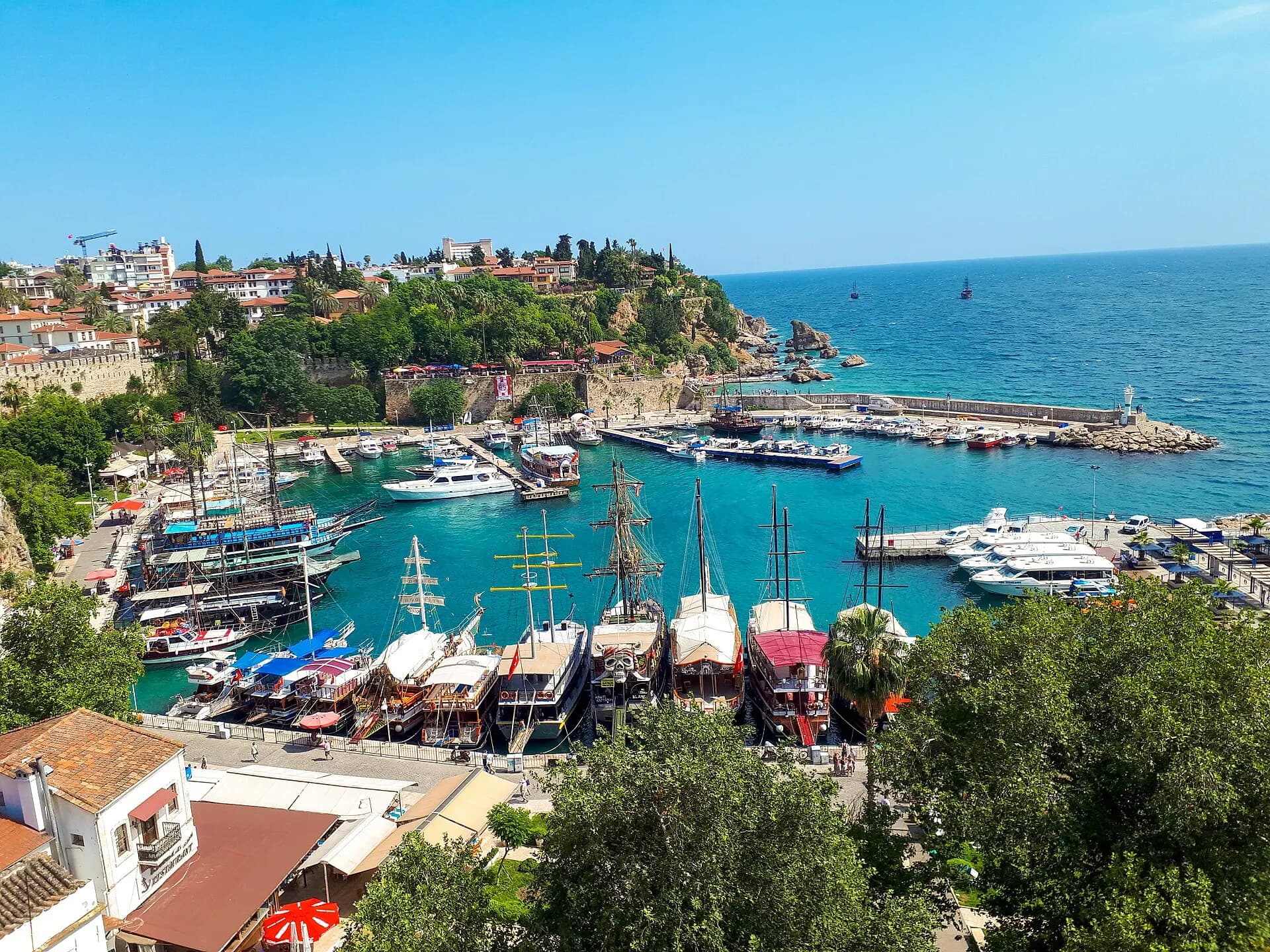
Antalya is Türkiye's busiest holiday region, and the numbers can be off-putting: millions of visitors a year, a ribbon of large resorts east and west of the city, and an airport that handles flights from half of Europe. Look past the hotel strips, though, and the province holds one of the richest stretches of coast in the Mediterranean. The Taurus Mountains rise straight from the sea, and between them and the water lie the cities of ancient Pamphylia and Lycia: Roman theatres still used for concerts, rock-cut tombs above village rooftops, harbours half swallowed by the sea.
Antalya city makes a good first base, with its walled old town, Kaleiçi, above a Roman harbour, and Perge, Aspendos and Termessos within an hour's drive. East along the coast lies Side, a resort built inside an ancient city. West and south, the road winds along the Lycian coast, with Phaselis, Olympos and the eternal flames of the Chimaera, Demre and the church of St Nicholas, and finally the boat trips to Kekova and the small harbour town of Kaş, about four hours from the city.
The top 17 in Antalya and the Turquoise Coast
- 1
Kaleiçi and Hadrian's Gate
Photo: Dosseman, CC BY-SA 4.0, via Wikimedia Commons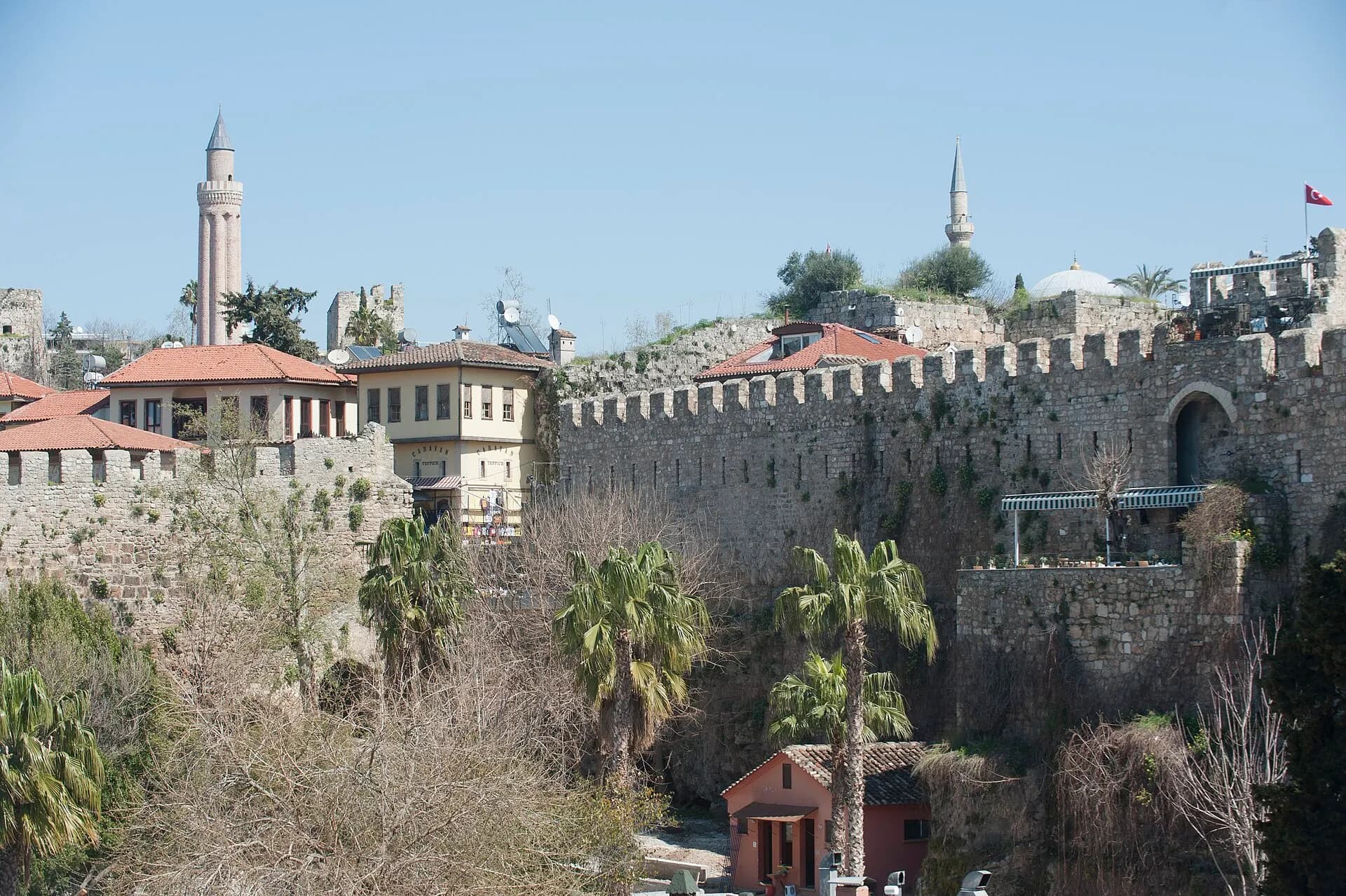
Antalya's old town is a horseshoe of lanes inside walls built and rebuilt from Hellenistic to Ottoman times, falling down to a small harbour now full of excursion boats. Many of the Ottoman houses, with wooden bay windows and courtyards, have become guesthouses and cafés. Enter through Hadrian's Gate, a triple-arched marble gateway built for the emperor's visit in AD 130, then look for the fluted Yivli Minaret, the city's Seljuk-era landmark, and the Hıdırlık Tower at the corner of the walls, best at sunset.
TipThe lanes are steep and slippery in places; wear proper shoes and take the lift down from the clifftop near the Republic Square if you'd rather not walk back up.
- 2
Konyaaltı Beach
Photo: Sharon Hahn Darlin, CC BY 2.0, via Wikimedia Commons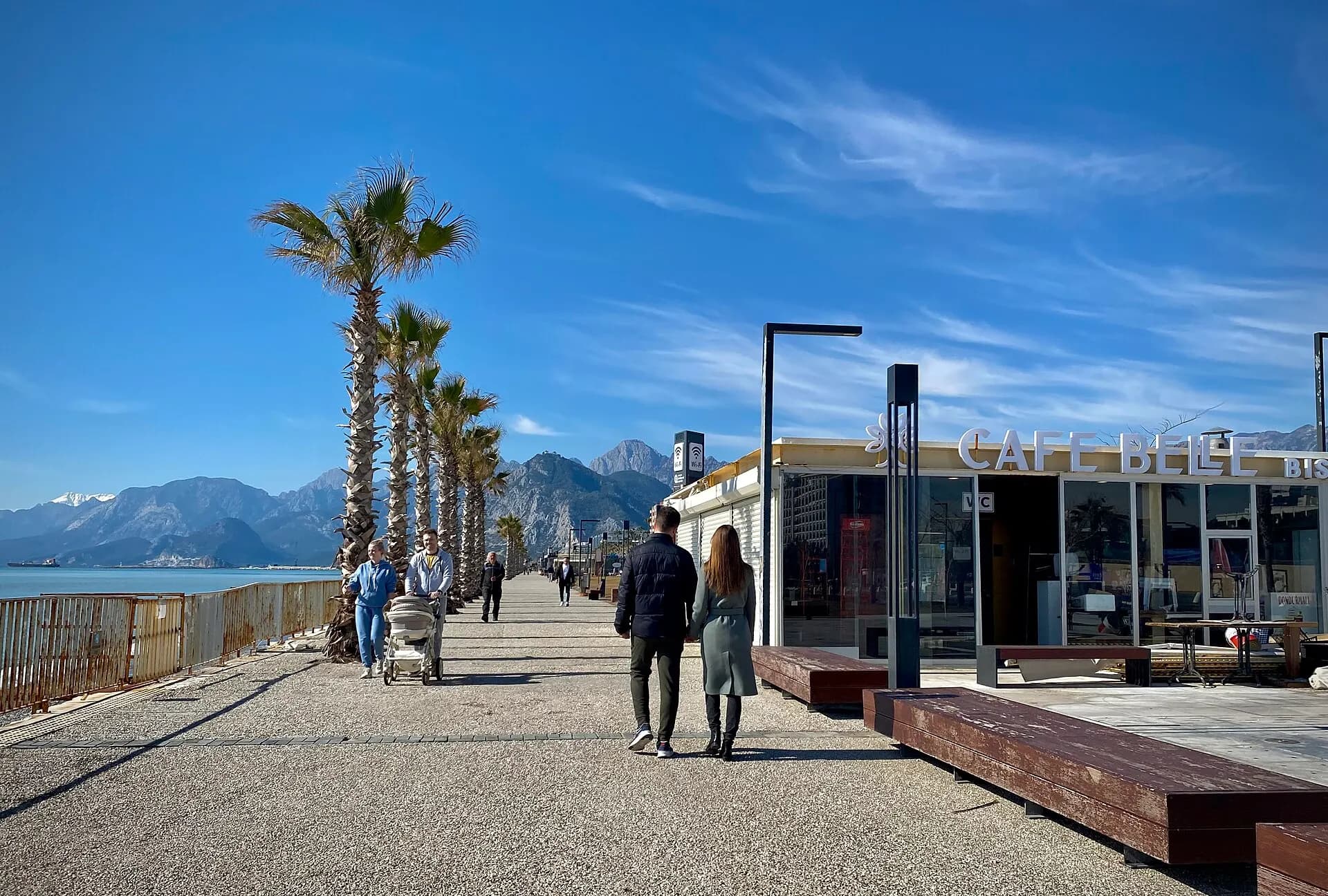
A long pebble beach running west from below the city cliffs, with the Beydağları mountains as a backdrop and a seafront park behind it. It's the city's everyday beach, with public sections and paid sunbed areas, and easy to reach by bus or taxi from the centre.
- 3
Termessos
Photo: Ingo Mehling, CC BY-SA 4.0, via Wikimedia Commons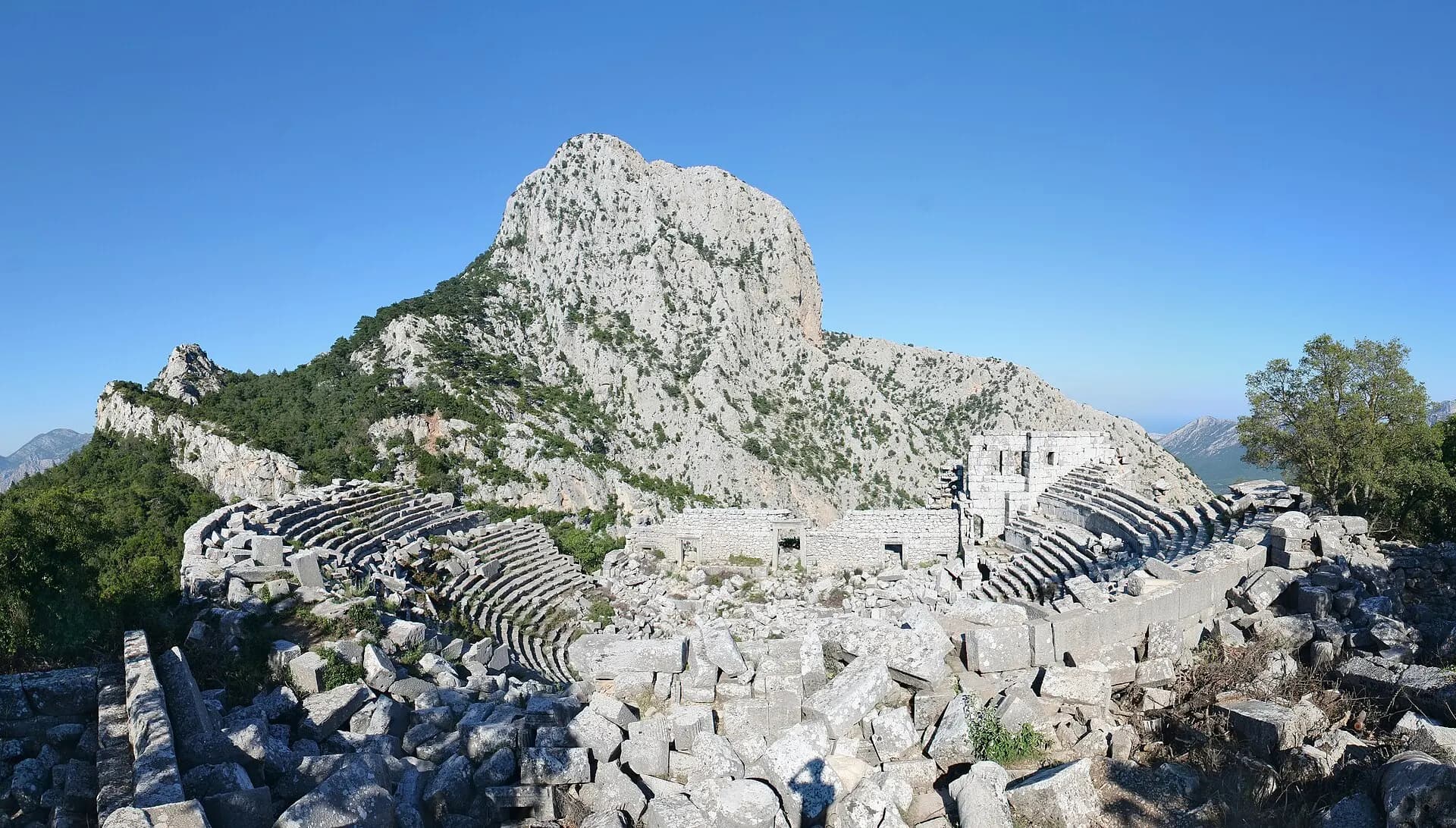
A city of the Pisidians set high on a mountainside inside the Güllük Dağı national park, about 30 kilometres northwest of Antalya. Alexander the Great looked at its position and chose not to besiege it. The climb from the car park is steep and stony, past tombs and fallen walls in pine forest, up to a theatre with one of the most dramatic views in Türkiye.
TipThe ticket office closes earlier than at other sites (5pm in summer, 3:30pm in winter, according to the provincial directorate). Allow at least two hours and carry water.
- 4
Upper Düden Falls
Photo: StevenL, CC BY-SA 3.0, via Wikimedia Commons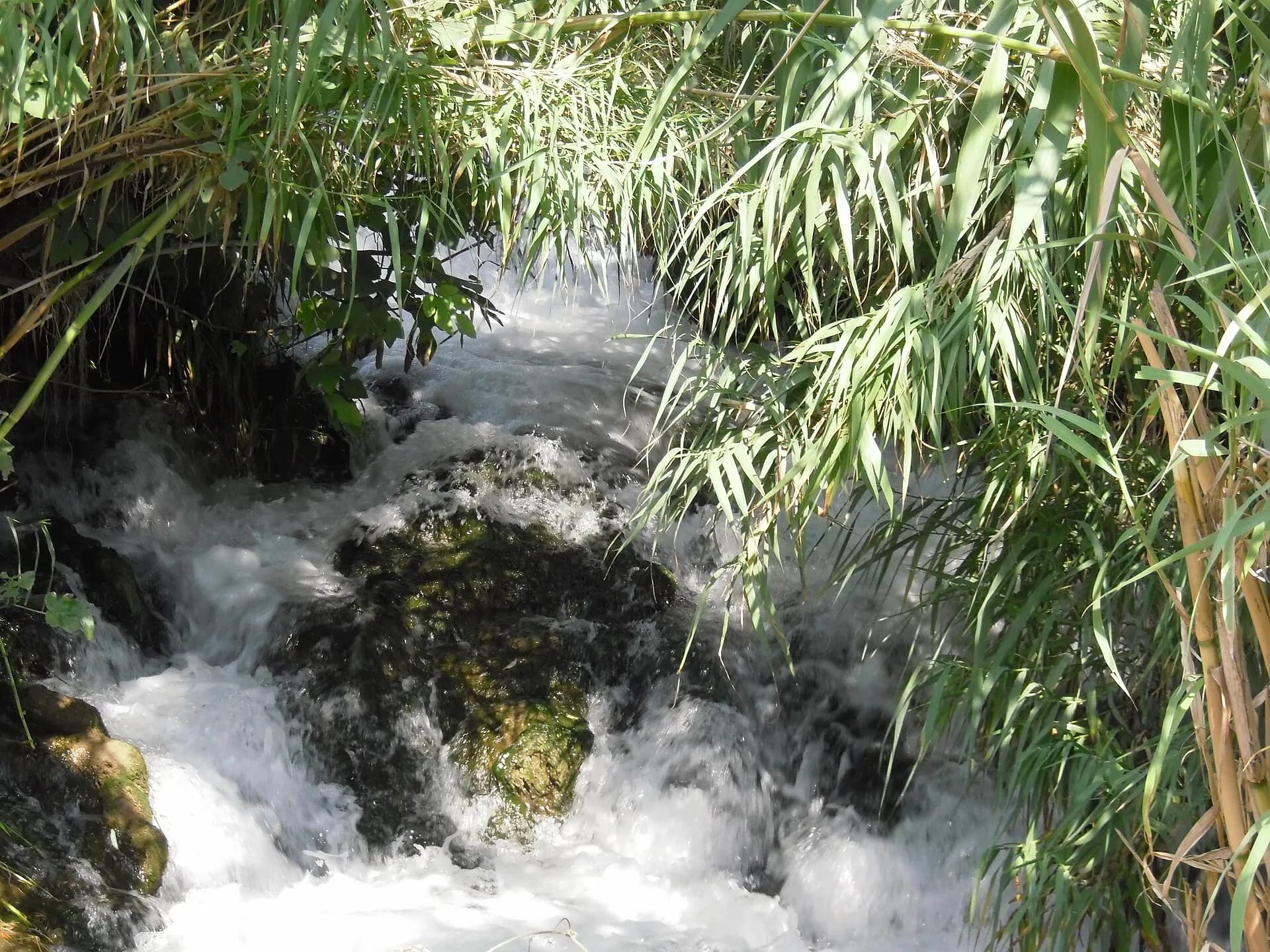
In a shady park on the northern edge of the city, the Düden river tumbles over a limestone ledge, and a path leads into a cave behind the curtain of water. It's popular with local families at weekends and a cool escape on a hot afternoon.
- 5
Lower Düden Falls and Lara Beach
Photo: Sharon Hahn Darlin, CC BY 2.0, via Wikimedia Commons
Further downstream, the same river plunges off the coastal cliffs straight into the sea. You can look down from the clifftop park, but the best view is from the water, on one of the boat trips that leave from the old harbour. East of the falls, Lara is a long sandy beach backed by large resort hotels.
- 6
Kurşunlu Falls
Photo: Burak Küçükarslan, CC BY-SA 4.0, via Wikimedia Commons
A nature park northeast of the city where a stream falls into a green pool surrounded by woods, with a short loop path through the gorge. It's small, but pretty and calm on weekdays.
- 7
Perge
Photo: Bernard Gagnon, CC BY-SA 3.0, via Wikimedia Commons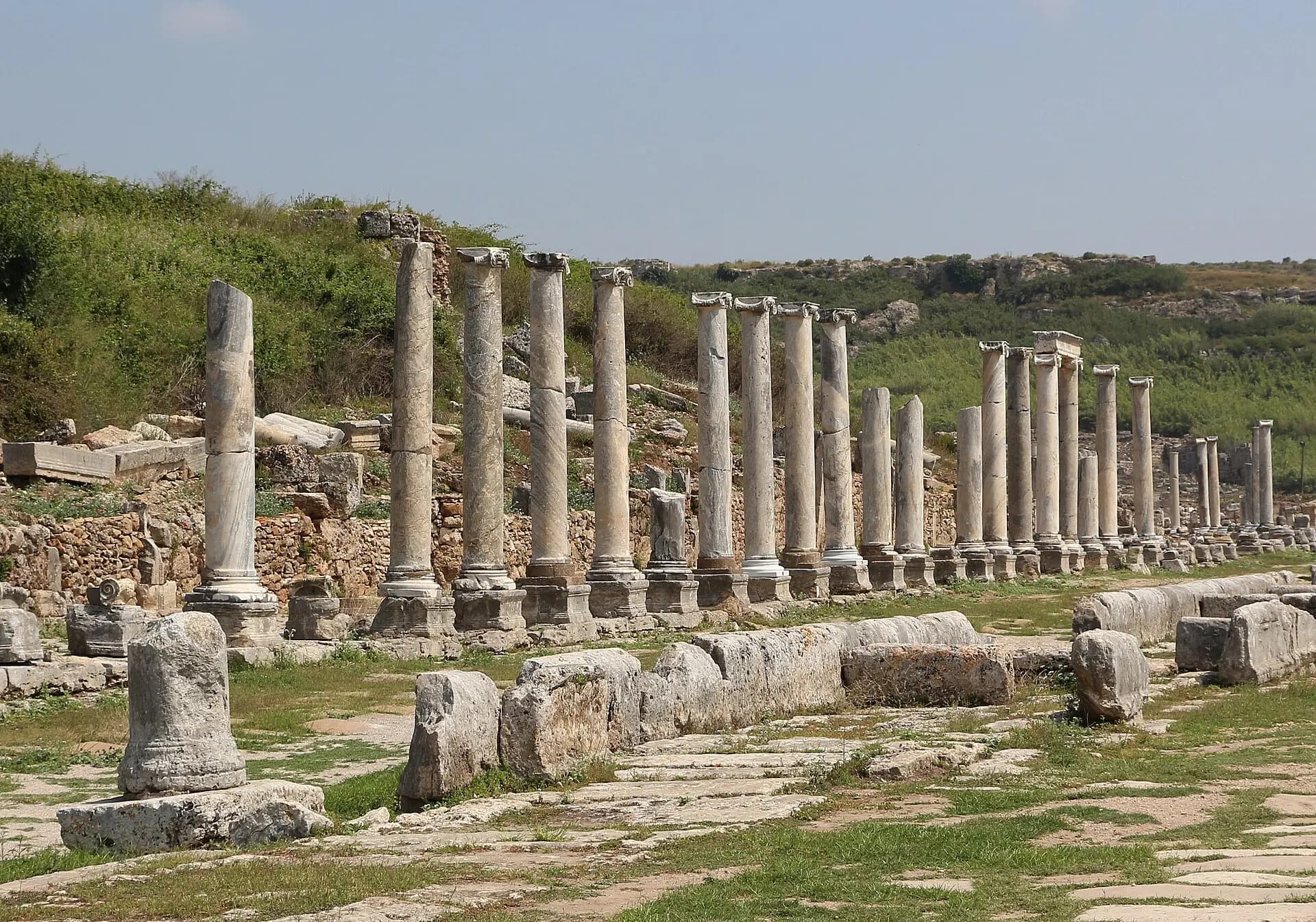
One of the great cities of Pamphylia, with a Hellenistic gate flanked by round towers, a long colonnaded street with a water channel running down its centre, baths, an agora and a large stadium. Many of the statues that made Perge famous were moved to the Antalya Museum. The ministry notes that the theatre is closed until restoration work is complete.
- 8
Aspendos
Photo: Saffron Blaze, CC BY-SA 3.0, via Wikimedia Commons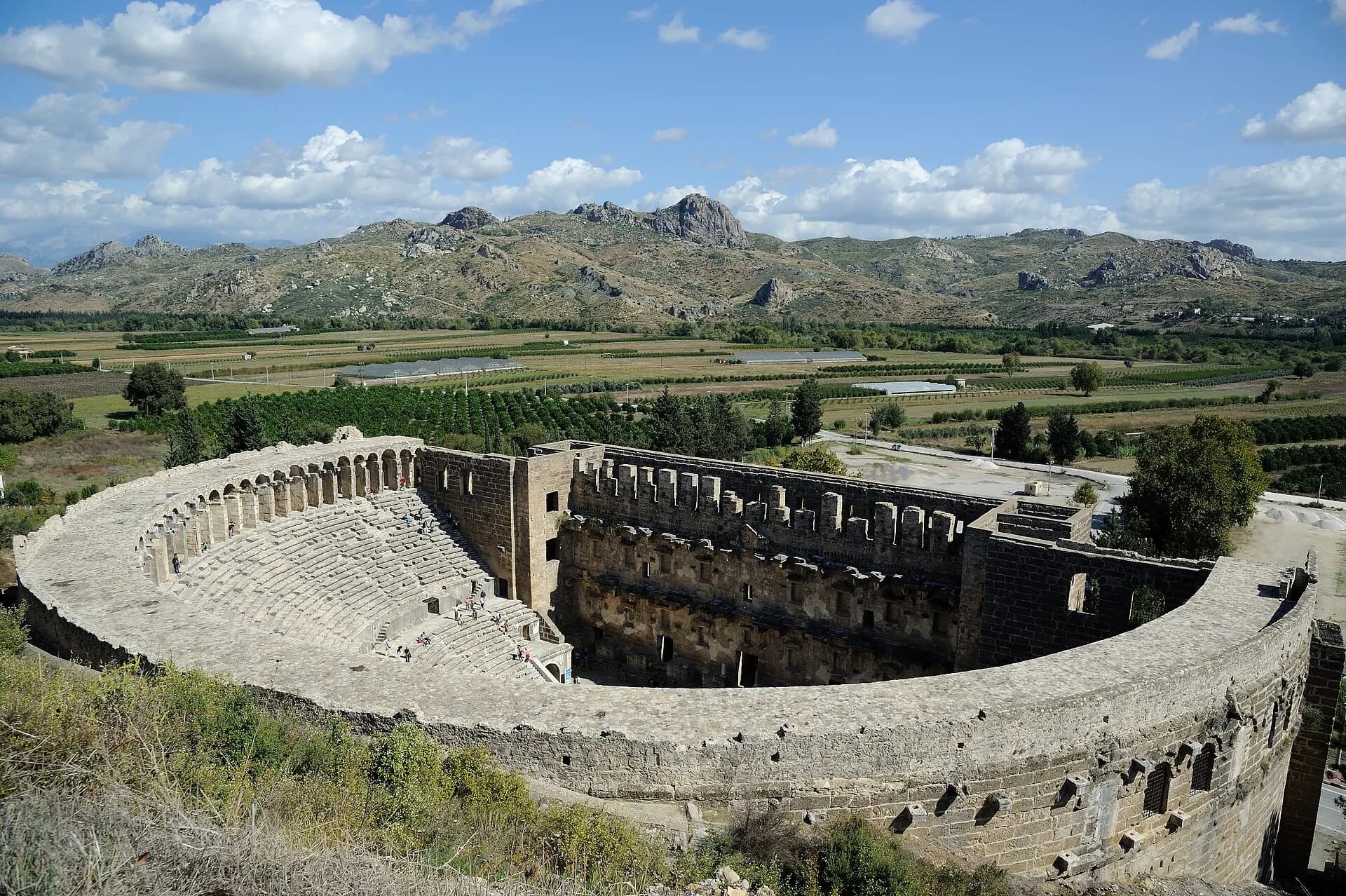
The best-preserved Roman theatre in Türkiye, built in the second century AD by the architect Zenon and kept intact partly because the Seljuks used it as a palace. It seats around 15,000 people and still hosts the Aspendos Opera and Ballet Festival in summer. Walk up to the acropolis behind it and look for the arches of the aqueduct crossing the plain to the north.
- 9
Köprülü Canyon
Photo: Volker Höhfeld, CC BY-SA 4.0, via Wikimedia Commons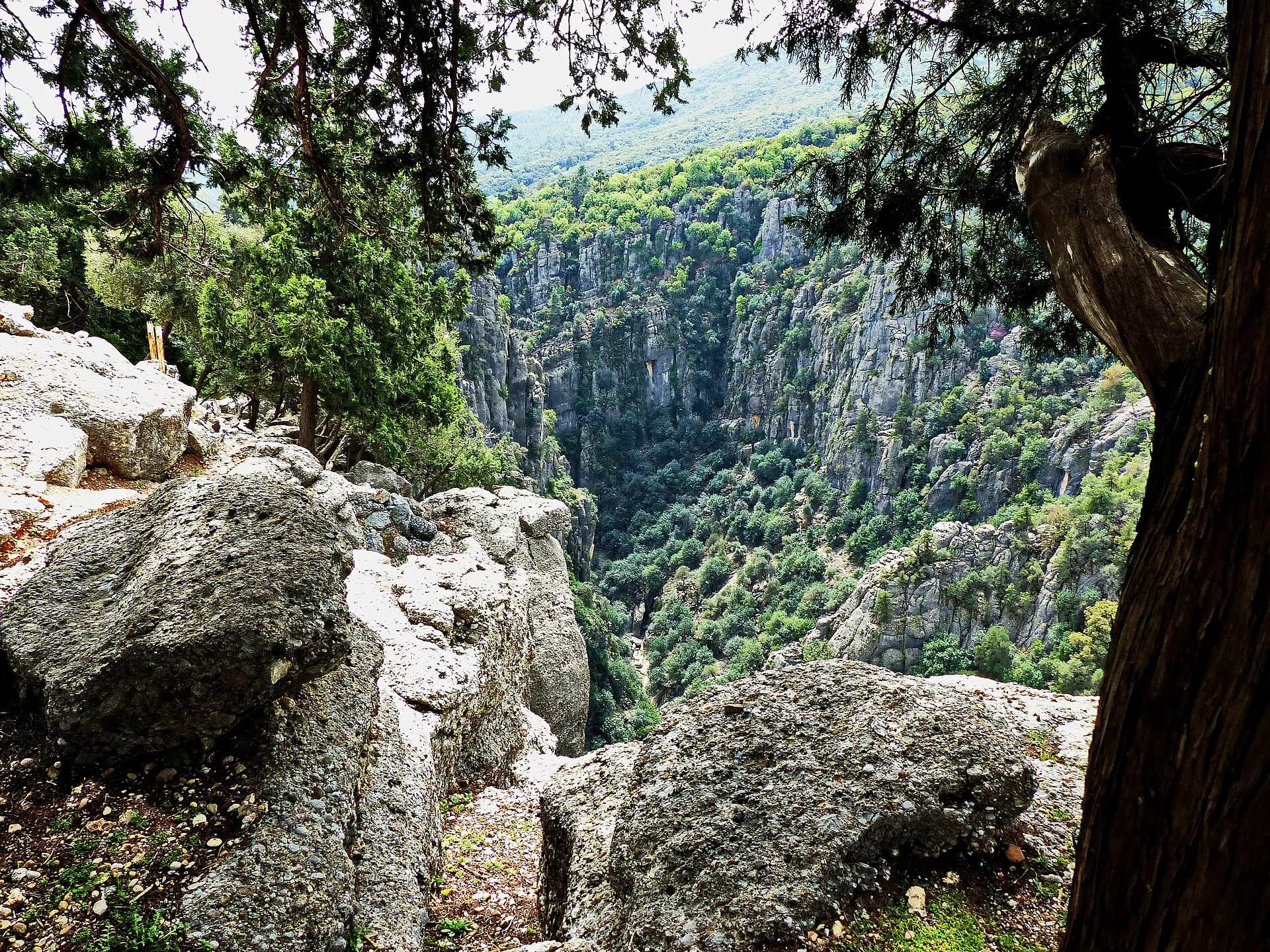
A national park in the Taurus foothills where the Köprüçay river cuts a deep gorge, crossed by a single-arched Roman bridge. It's the region's centre for rafting, with gentle, family-friendly runs, and a winding road continues up to the ancient city of Selge.
- 10
Side and the Temple of Apollo
Photo: Saffron Blaze, CC BY-SA 3.0, via Wikimedia Commons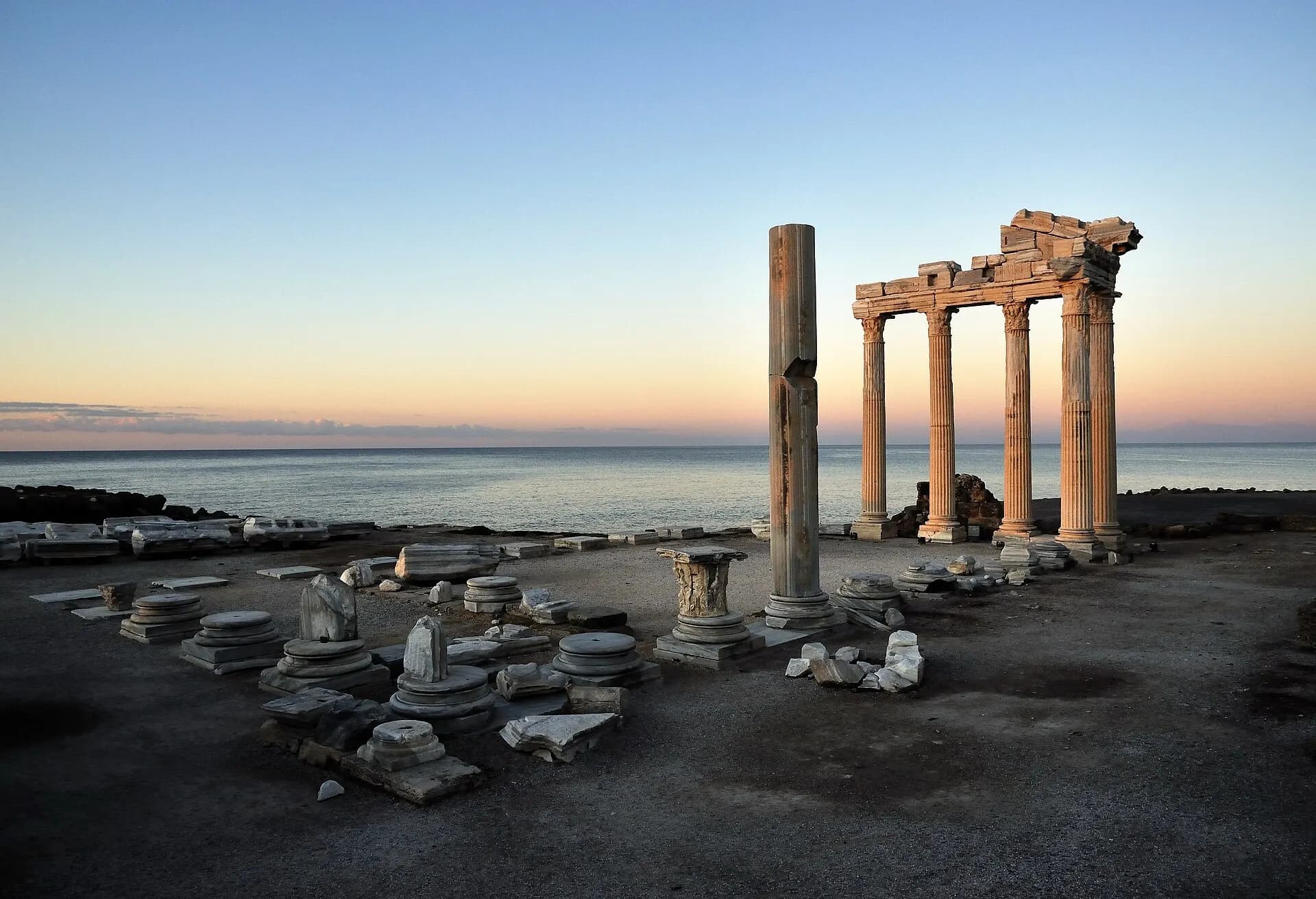
Side was the leading port of Pamphylia, and the modern resort sits right on top of it, so you walk past colonnades and gates on the way to dinner. The theatre is the highlight, a rare free-standing Roman theatre built on vaults, and the Side Museum fills an old Roman bath. At the tip of the peninsula, the re-erected columns of the Temple of Apollo stand by the sea; come at sunset or after dark, when they are lit.
- 11
Phaselis
Photo: Лобачев Владимир, CC BY-SA 4.0, via Wikimedia Commons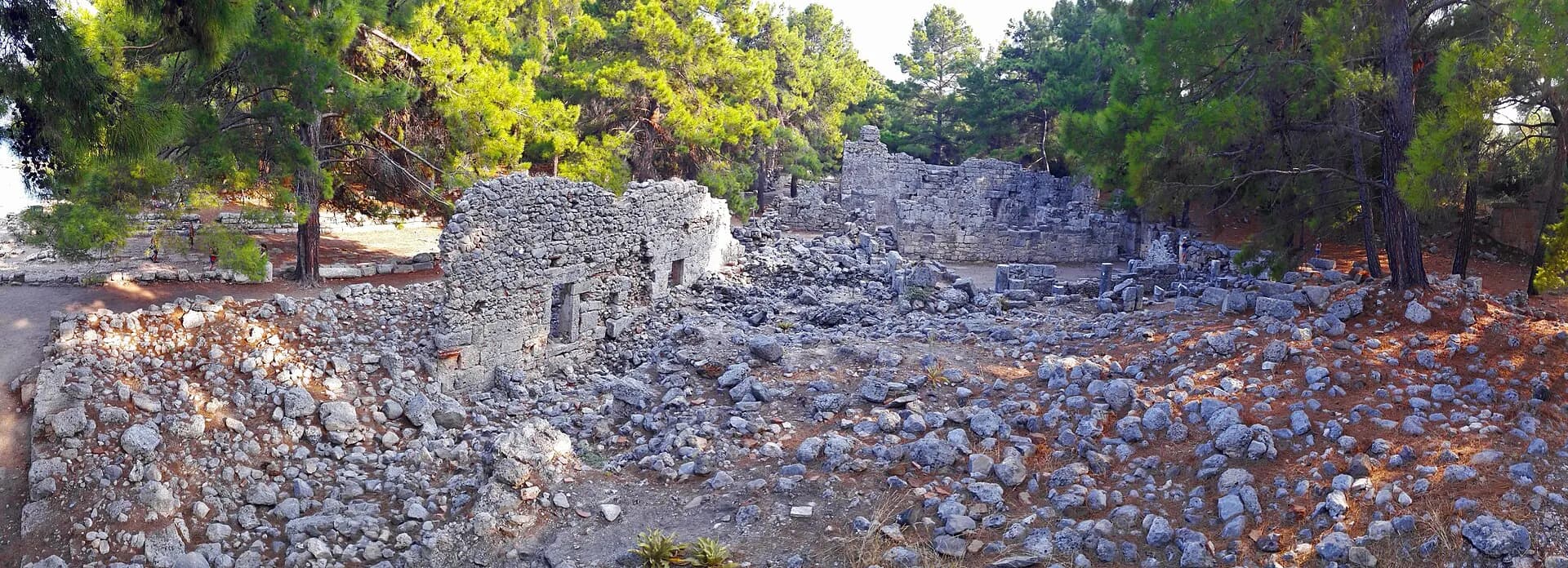
A port city on a small wooded peninsula south of Kemer, with three ancient harbours, a paved main street running between them, a small theatre and an aqueduct. Bring a swimsuit: the harbours have clear water and shady pines.
- 12
Olympos and Çıralı
Photo: Capyusuf, CC BY-SA 4.0, via Wikimedia Commons
The ruins of Olympos, once a pirates' refuge, lie scattered along a stream in a wooded gorge that opens onto a pebble beach. Next door, Çıralı is a low-rise village of orchards and family pensions behind a long beach where loggerhead turtles nest.
- 13
The Chimaera flames
Photo: Oystercard, CC BY-SA 4.0, via Wikimedia Commons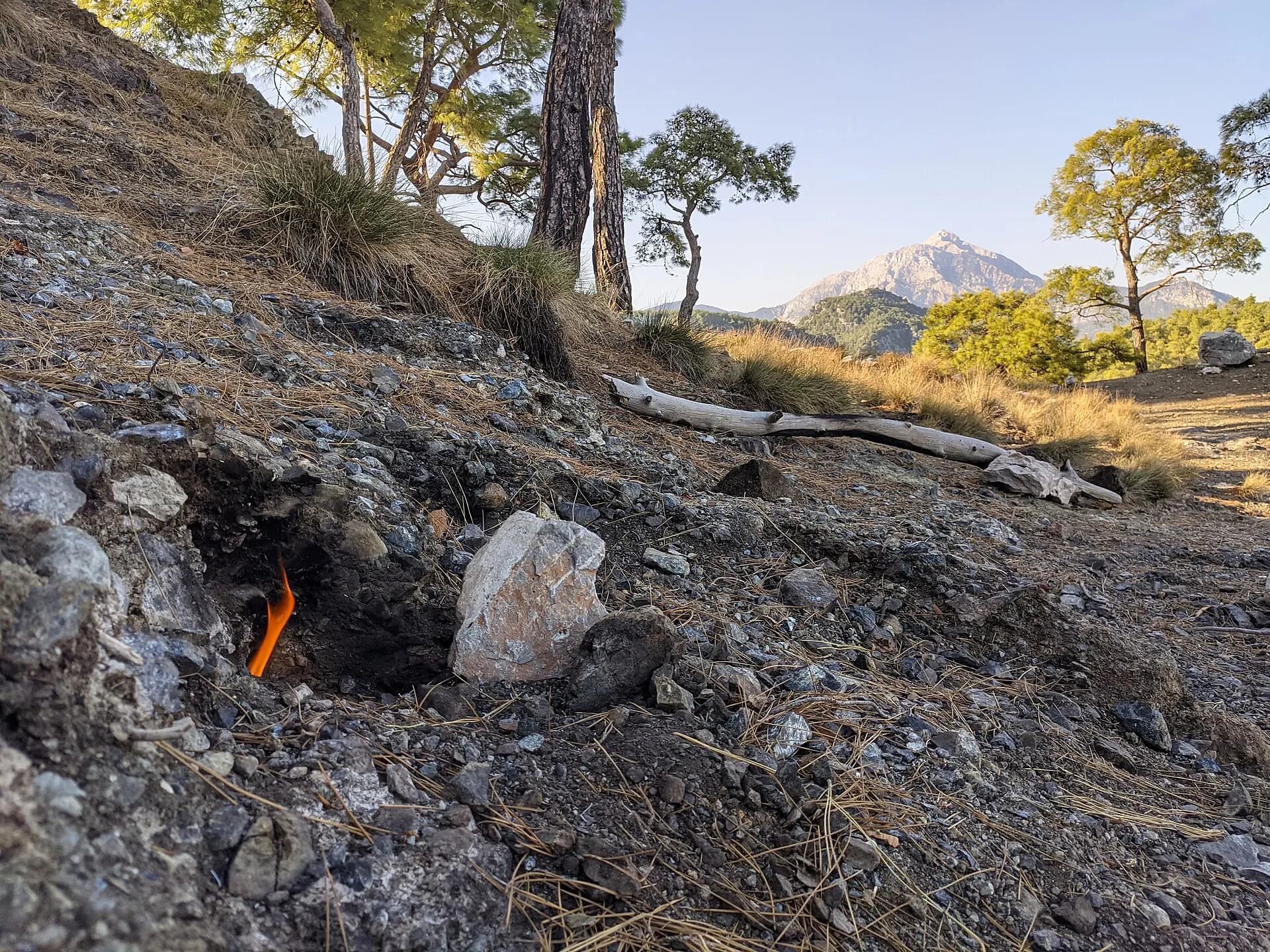
Above Çıralı, gas seeping from the rocks has burned for thousands of years in small, steady flames, linked in myth with the fire-breathing Chimaera. The walk up is about half an hour on a stepped path.
TipGo at dusk and bring a torch for the way down.
- 14
Myra
Photo: Saffron Blaze, CC BY-SA 3.0, via Wikimedia Commons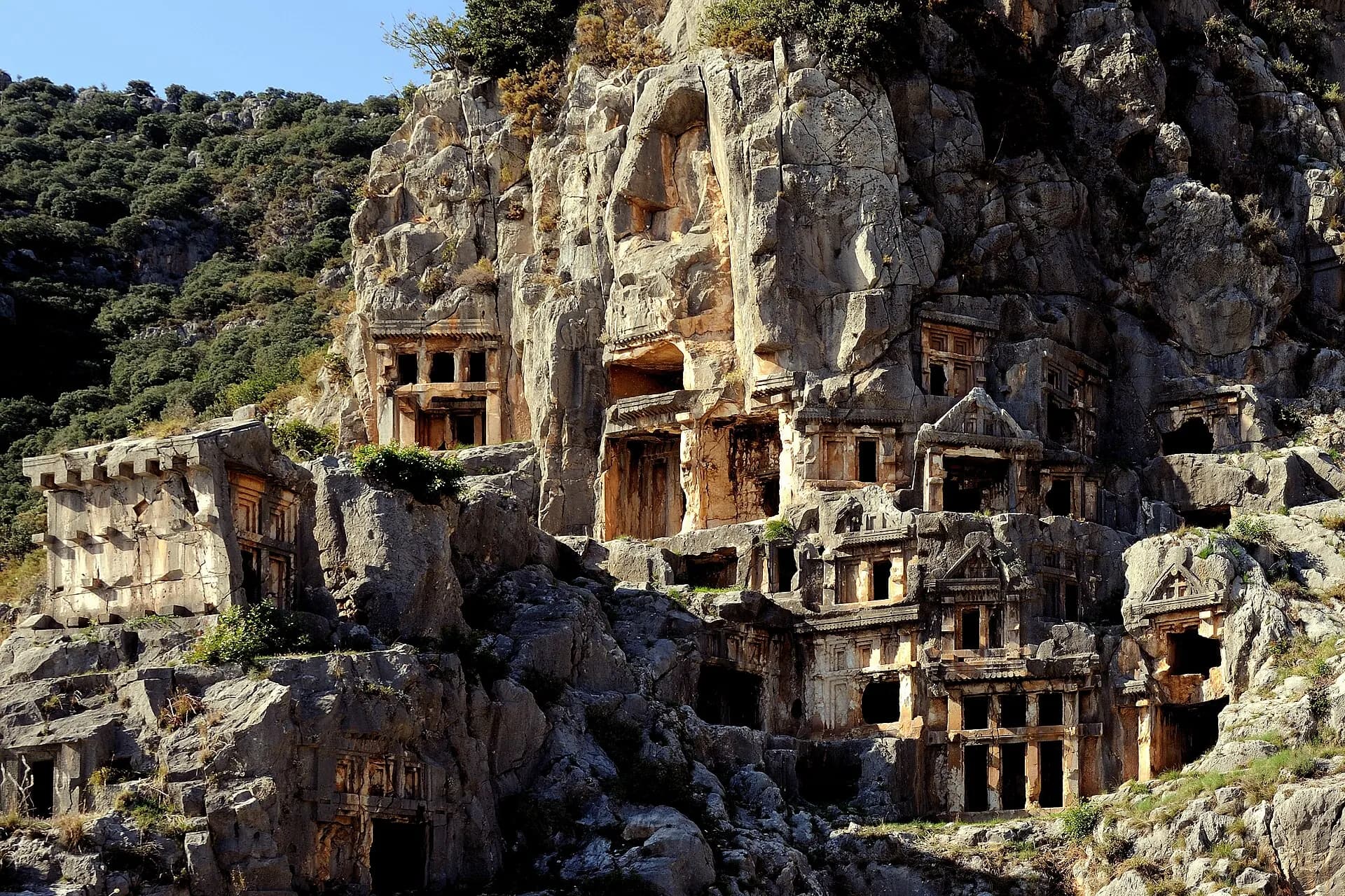
A cliff of Lycian rock-cut tombs, carved to look like wooden houses, rises above a Roman theatre on the edge of Demre. Myra was one of the leading cities of the Lycian League, and the coast road passes close by.
- 15
St Nicholas Church, Demre
Photo: Dosseman, CC BY-SA 4.0, via Wikimedia Commons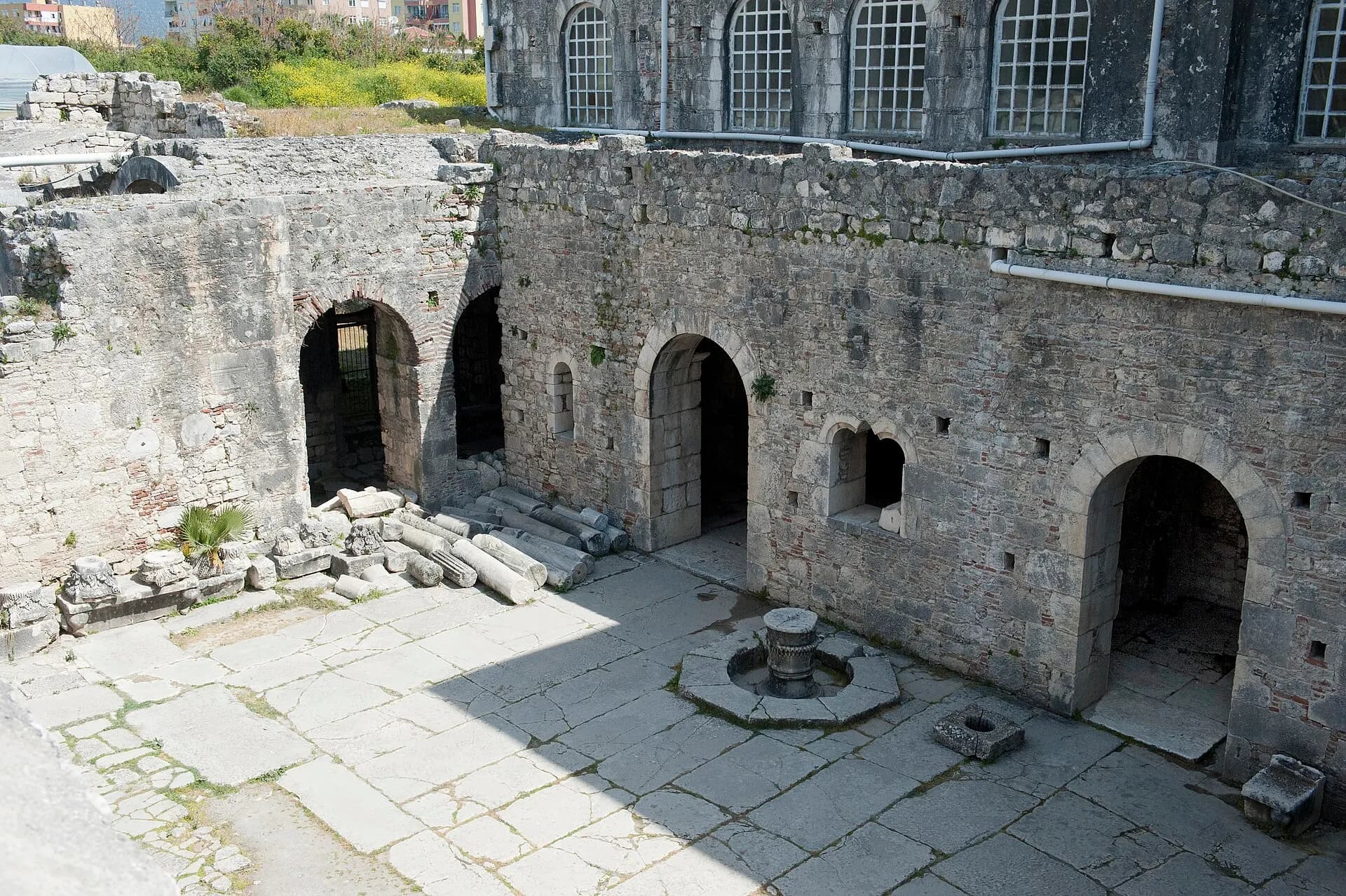
Nicholas, bishop of Myra in the fourth century, became the saint behind Santa Claus. The church that grew up over his tomb, rebuilt in Byzantine times, keeps faded frescoes, mosaic floors and the sarcophagus long said to be his. Merchants from Bari carried most of his relics to Italy in 1087.
- 16
Kekova and Simena
Photo: JamesDavidShoots, CC BY-SA 4.0, via Wikimedia Commons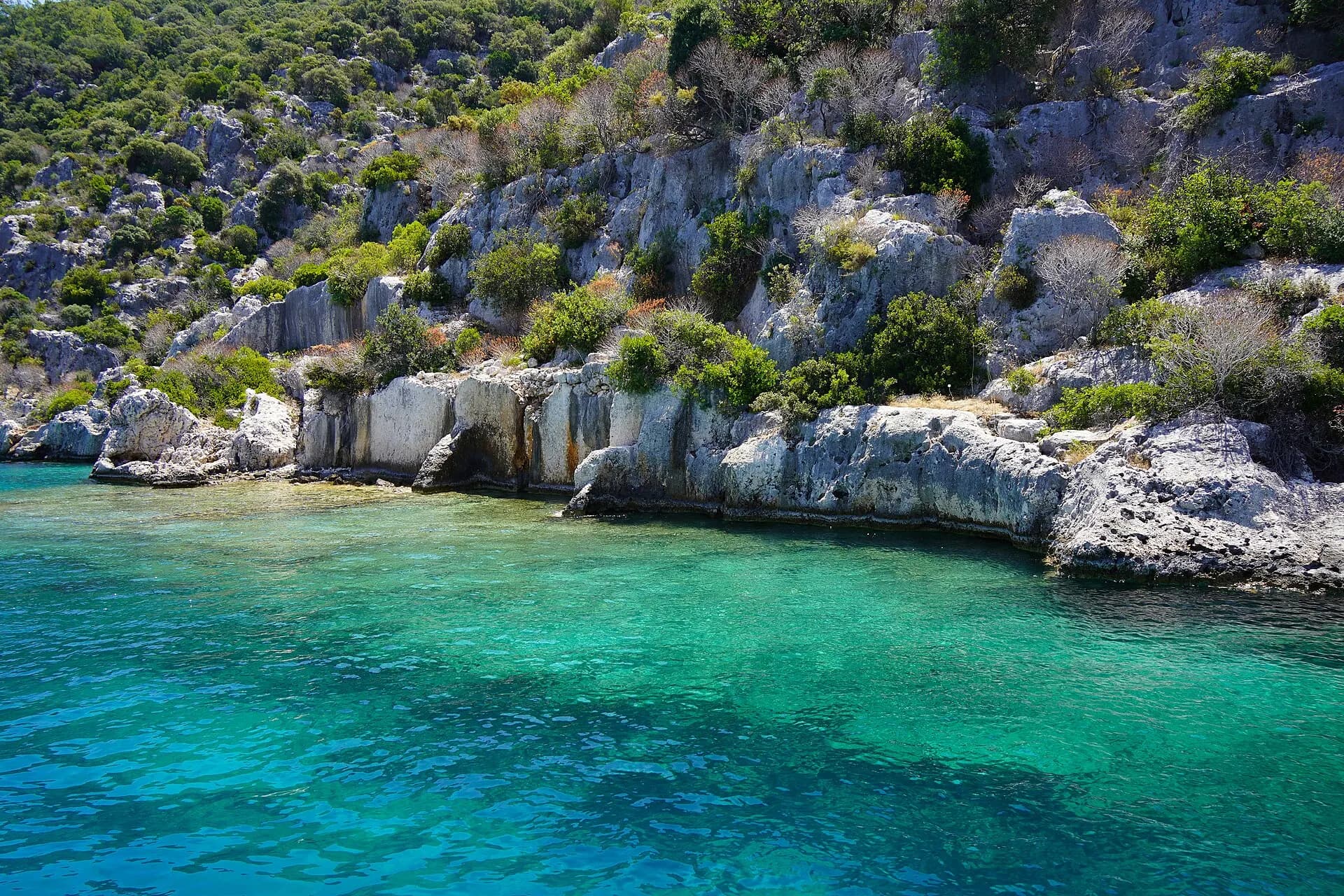
Along the north shore of Kekova island, an earthquake left the walls, steps and quays of an ancient town lying in the shallows. Boats from Üçağız and Kaş glide over them; swimming over the ruins isn't allowed. Opposite, the village of Kaleköy, ancient Simena, is reached only by boat or on foot, with a castle above and a Lycian sarcophagus standing in the sea.
TipKayak tours from Üçağız let you get closer to the sunken ruins quietly.
- 17
Kaş
Photo: Esginmurat, CC BY-SA 4.0, via Wikimedia Commons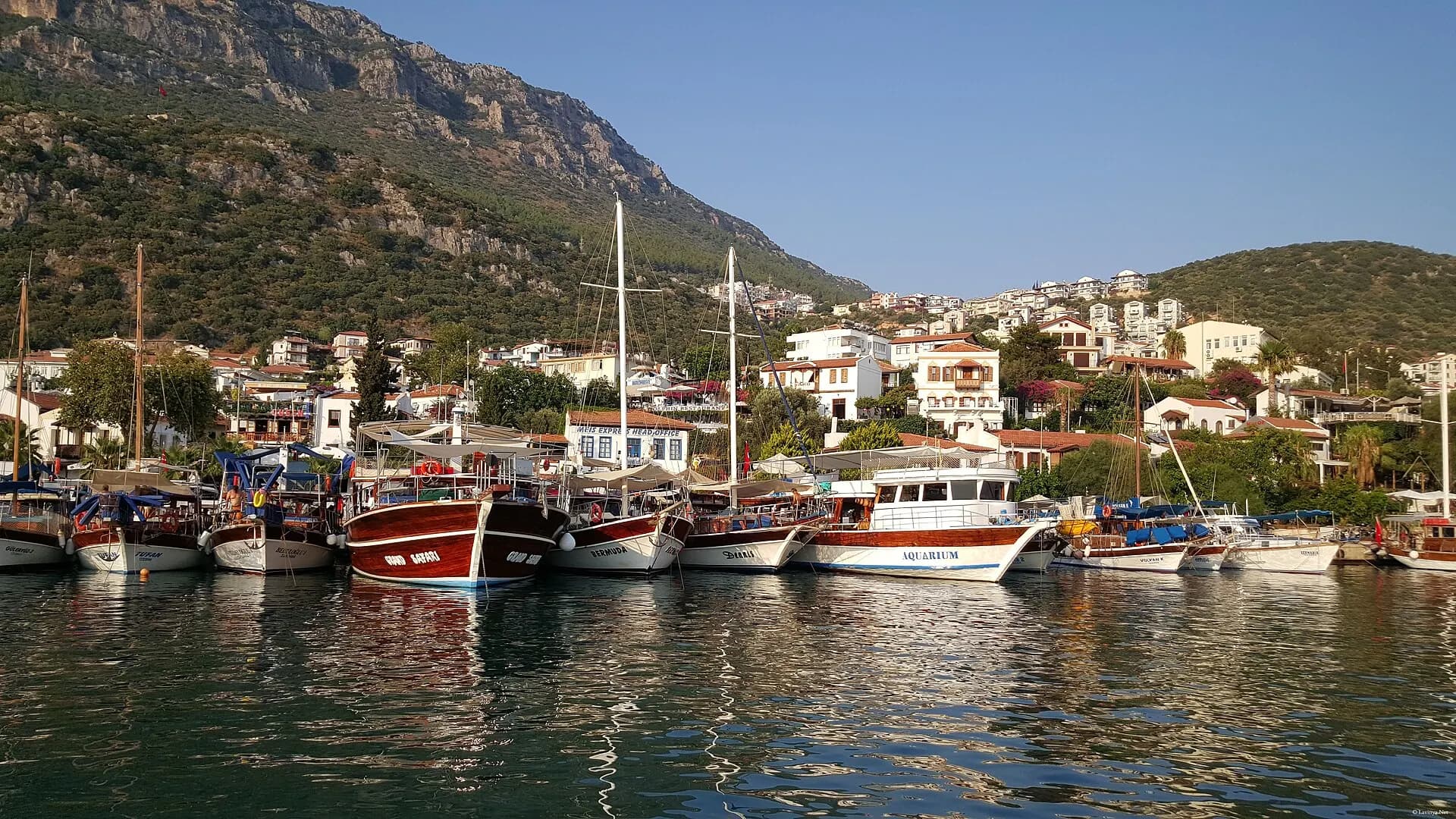
A small harbour town of whitewashed houses and bougainvillea, with a Hellenistic theatre facing the sea and Lycian tombs in the streets. It is one of Türkiye's best diving centres, and a good base for Kekova boat trips, sea kayaking and walks on the Lycian Way.
When to go
April to June and September to October are best for sightseeing and walking, with warm days and a sea that stays warm into November. July and August are very hot and humid, often above 35°C on the coast and hotter inland at Perge and Aspendos, so visit sites at opening time and save the afternoons for the sea. Winter is mild and quiet, with rain, snow on the mountains and many resort hotels closed.
The provincial culture directorate lists most archaeological sites as open daily, 8am to 7pm until 31 October 2026, then 8am to 5pm from 1 November until spring, with ticket sales ending half an hour before closing. Check before you go.
Getting around
Antalya Airport is one of the busiest in the country, a short drive from the city. Long-distance buses leave from the city's main bus station for Side (via Manavgat), Kemer, Olympos, Demre and Kaş, and local dolmuş minibuses link villages to the main road. Within the city, trams and buses use the rechargeable AntalyaKart. For Termessos, Köprülü Canyon and the Lycian coast at your own pace, a hire car is the easiest option; the coast road west of Kemer is beautiful but twisting and slow. Kaş can also be reached from Dalaman Airport, and ferries cross from Kaş to the Greek island of Kastellorizo.
Local tips
- Many nationalities can enter Türkiye visa-free; others must apply online for an e-Visa. Use only the official government site, evisa.gov.tr, and check the rules for your passport before you travel.
- Müzekart is valid only for Turkish citizens. Visitors can buy MuseumPass The Mediterranean (valid 7 days from first use) or MuseumPass Türkiye (15 days); each pass allows one entry per site and is not valid for night openings.
- The Antalya Museum, once the finest archaeological museum on the coast, is closed: its old building was demolished for a new museum on the same site. Don't plan around it until the ministry lists it as open again.
- Carry water, a hat and sunscreen to every site; there is little shade at Perge, Aspendos or Myra.
- Boat trips from Kaleiçi harbour are touted hard; compare a few and agree what's included before you board.
- Dress modestly in mosques, and cover shoulders and knees at St Nicholas Church.
- On rafting and diving trips, pick licensed operators that supply helmets and lifejackets or properly maintained gear.
Eat and drink
Antalya's signature dish is piyaz, a salad of white beans dressed with tahini, lemon and garlic, served with grilled şiş köfte. Look also for hibeş, a spicy tahini spread, and fresh-squeezed orange and pomegranate juice from the region's orchards. On the coast, grilled fish and meze come with a view; in Çıralı and the Lycian villages, try gözleme, honey and home-made breakfasts. Kaleiçi has the widest choice of restaurants in the city, while Kaş has an excellent string of small meze places around the harbour.
Where to stay
Be honest with yourself about what you want. The all-inclusive resorts of Lara, Belek, Kemer and Side are comfortable, good value for families and hard to leave, which is the problem: you can spend a week and see nothing but the pool. For exploring, stay in a guesthouse in Kaleiçi, a pension in Side's old town, a family-run place in Çıralı or a small hotel in Kaş. Mixing a few nights in the city with a few on the Lycian coast works well.
The Lycian Way
The Lycian Way was Türkiye's first long-distance walking route, waymarked by Kate Clow in 1999 along old Roman roads, mule paths and coastal trails from Ölüdeniz, near Fethiye, to Geyikbayırı above Antalya. The Culture Routes Society now gives its full length as around 760 kilometres. Few people walk it all; most choose a section of a day or a few days, such as the stretch around Kaş, the coast between Üçağız and Kaleköy, or the path from Çıralı towards Olympos and the mountains. The trail is often rough, stony and steep, with long dry stretches. Spring and autumn are the seasons for it; summer is too hot for serious walking. Carry plenty of water, a map or GPS track, and tell someone your plans.
Pamphylia and Lycia
The coast divides into two ancient regions. East of Antalya, on the flat, fertile plain, lay Pamphylia, with rich trading cities such as Perge, Aspendos and Side that flourished under Rome and filled their streets with marble statues. West of Antalya, in the mountains, was Lycia, a federation of cities with its own language and its own way with the dead, building tombs cut into cliffs or raised on pillars. The Lycian League, a council of cities with votes weighted by size, is sometimes cited as an early model of representative government. Seeing both, in the space of a few days, is one of the pleasures of the region.
Diving and the sea
Kaş is the main diving centre on the coast, with clear water, steep walls, caves, amphorae and wrecks, including an old aircraft sunk on purpose for divers. Courses and guided dives run for beginners as well as experienced divers. Kekova, Kaş and the waters around them are protected areas, so don't take anything from the seabed. Elsewhere, boat trips, sea kayaking and swimming in coves are the easiest way to enjoy the Turquoise Coast.
Responsible travel
Loggerhead turtles nest on beaches including Çıralı from about May to September. During the season, protected beaches are closed to the public overnight, and fires, camping and vehicles on the sand are banned; follow the posted hours, keep lights off the beach and never disturb nests or hatchlings. Don't climb on fenced walls or theatre seats, and never take stones or pottery from ruins or the sea. Choosing locally run pensions, restaurants and guides outside the resort zones spreads your spending further, and water is precious in summer: use it carefully.