Istanbul
A city on two continents, where Byzantine domes and Ottoman minarets rise over the Bosphorus and the best seat in town is on a ferry.
- Best time to go
- April to May and September to October, for mild weather and clear views over the water
- Local time
- –
- Currency
- Turkish Lira (TRY)
- Reading time
- 5 min
- Language
- Turkish
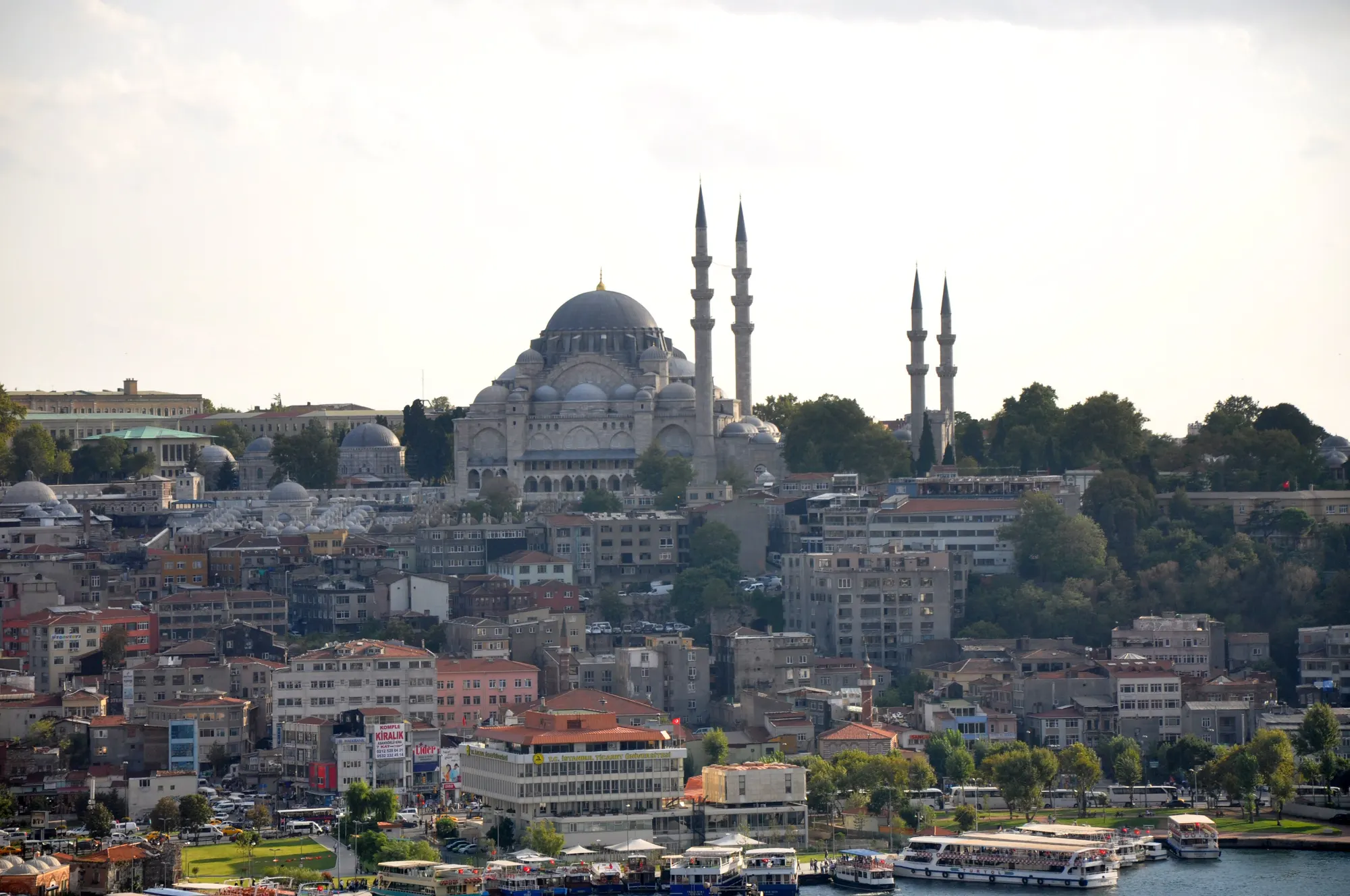
Istanbul has been a capital for more than fifteen hundred years, first of the Byzantine Empire as Constantinople, then of the Ottoman Empire, and it shows. The skyline of its old peninsula is a procession of domes and minarets, the Grand Bazaar has been trading for more than five centuries, and the Bosphorus, the strait dividing Europe from Asia, runs right through the middle of the city.
It is also a modern, energetic metropolis of more than fifteen million people, with lively neighbourhoods, a strong café culture and one of the world's great food scenes. Most visitors spend their first days in the historic district of Sultanahmet, but the city really opens up when you cross the water.
The top 11 in Istanbul
- 1
Hagia Sophia
Photo: Arild Vågen, CC BY-SA 3.0, via Wikimedia Commons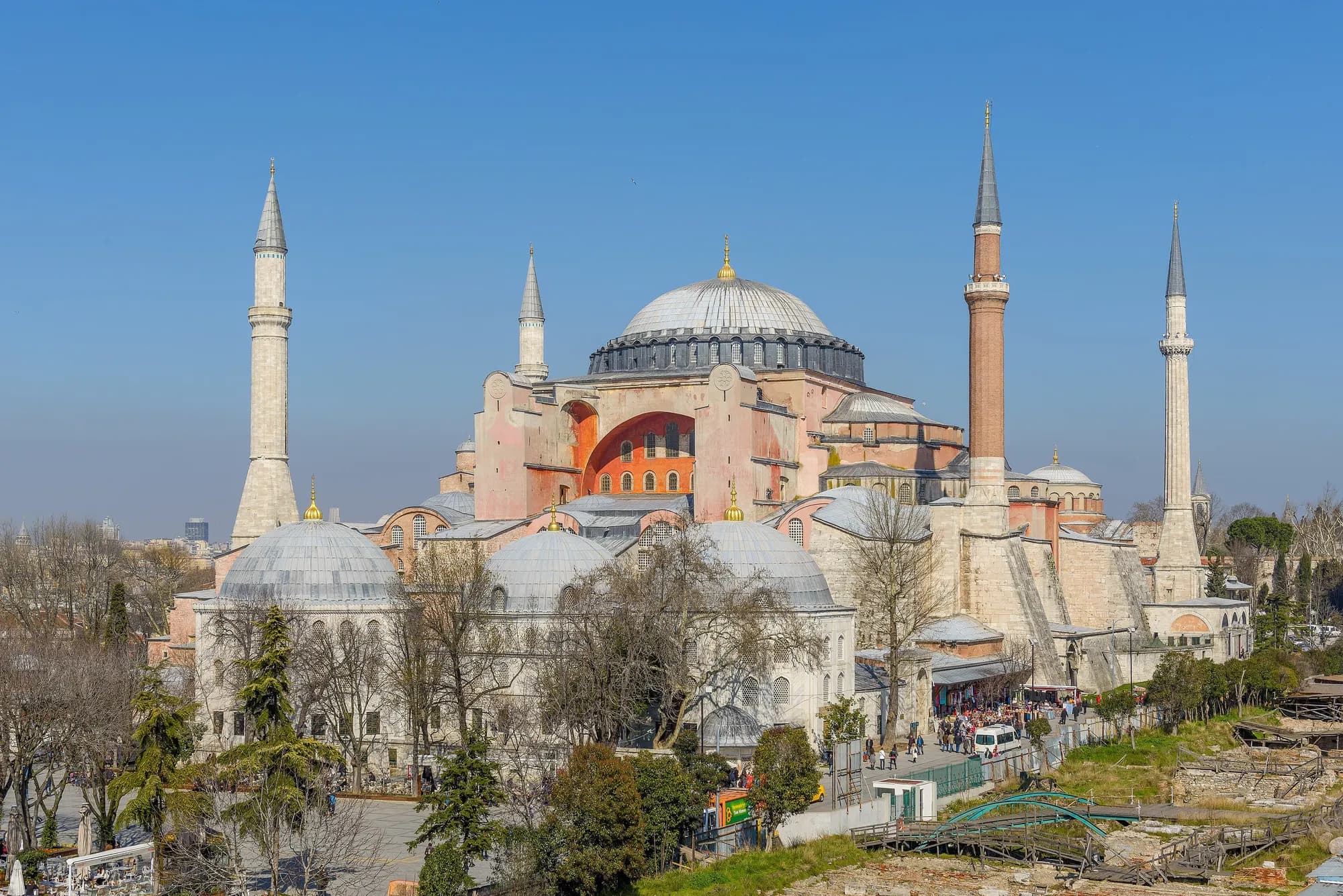
Built as a cathedral in the sixth century under the emperor Justinian, Hagia Sophia was for nearly a thousand years the largest church in the world. It became a mosque after the Ottoman conquest in 1453, a museum in 1934, and a mosque again in 2020. Foreign visitors now enter a separate route to the upper gallery, from where you can see the vast dome and some of the surviving Byzantine mosaics.
TipVisitors' entry pauses during prayer times, particularly at midday on Fridays; check the times before you go.
- 2
The Blue Mosque
Photo: Moonik, CC BY-SA 3.0, via Wikimedia Commons
The Sultan Ahmed Mosque, completed in 1617, is known as the Blue Mosque for the thousands of blue Iznik tiles lining its interior. It faces Hagia Sophia across a park, and its six minarets make it one of the city's most recognisable buildings. It is a working mosque, free to visit outside prayer times.
TipWomen should cover their hair, and everyone should cover shoulders and knees; scarves are usually available at the entrance.
- 3
Topkapı Palace
Photo: Moonik, CC BY-SA 3.0, via Wikimedia Commons
For almost four hundred years, this was the home and seat of government of the Ottoman sultans. Its series of courtyards leads to pavilions with views over the Bosphorus, the treasury, holding jewelled daggers and huge diamonds, and the harem, the private quarters of the sultan's family, which requires an extra ticket and is well worth it.
TipAllow at least half a day, arrive at opening time, and check the closing day before you go.
- 4
The Basilica Cistern
Photo: Kirua, CC BY-SA 3.0, via Wikimedia Commons
A vast underground reservoir from the sixth century, its roof held up by a forest of 336 marble columns rising from the water. Walkways lead through the dim, atmospheric space to two columns resting on carved Medusa heads.
- 5
The Grand Bazaar
Photo: Jorge Franganillo, CC BY 4.0, via Wikimedia Commons
One of the world's oldest and largest covered markets, with dozens of vaulted streets and thousands of shops selling carpets, lamps, jewellery, ceramics and leather. Get lost on purpose, and look for the old caravanserai courtyards, called hans, hidden around its edges. It is closed on Sundays.
TipBargaining is expected for most goods; take your time, and never feel pressured to buy.
- 6
Süleymaniye Mosque
Photo: Diego Delso, CC BY-SA 4.0, via Wikimedia Commons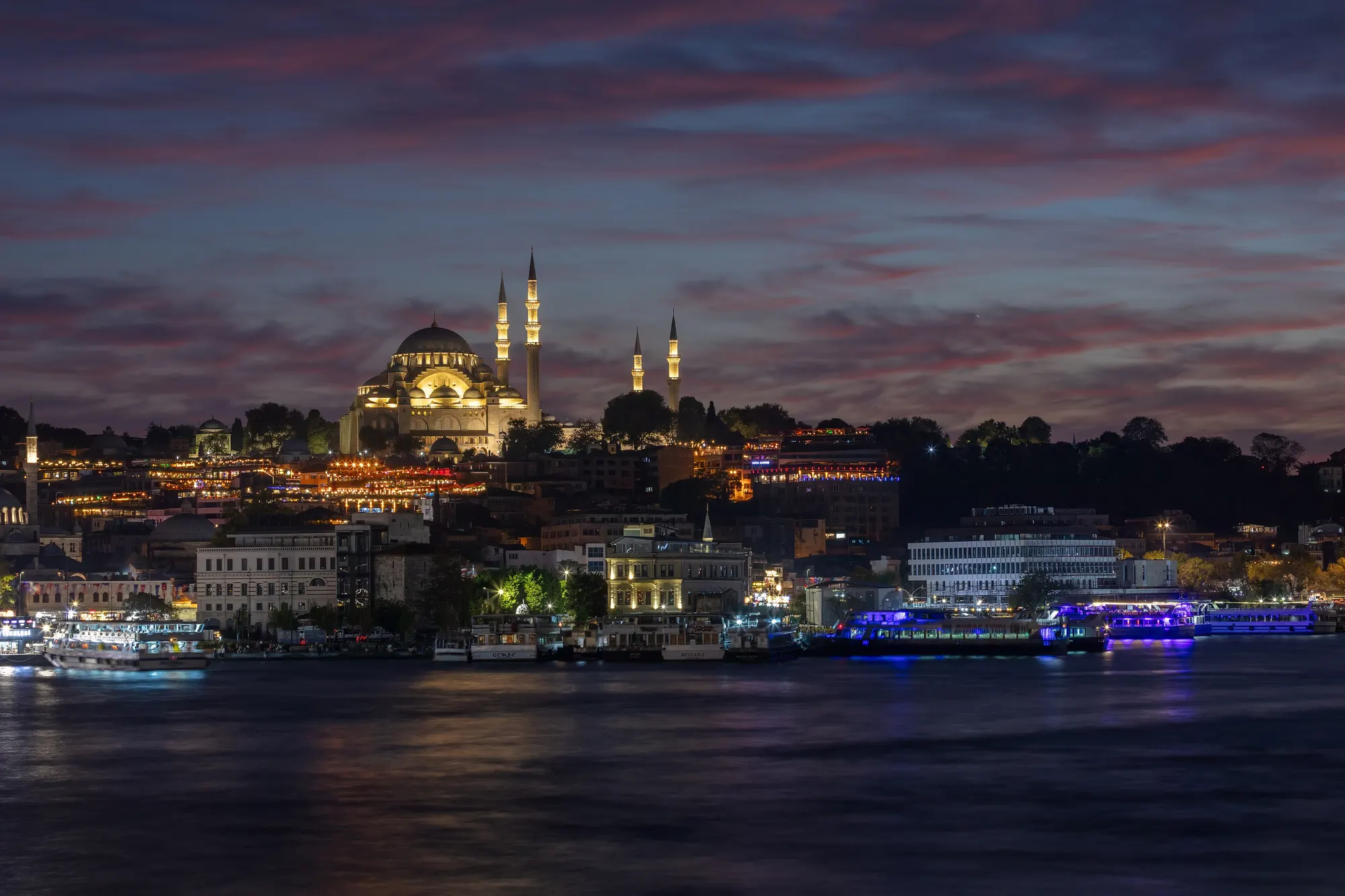
The masterpiece of the great Ottoman architect Mimar Sinan, built for Suleiman the Magnificent in the 1550s on one of the city's hills. It is calmer than the mosques of Sultanahmet, and its gardens have a superb view over the Golden Horn and the Bosphorus.
- 7
The Chora Mosque
Photo: Ywpark2003 Prof. Yong Woo Park, CC0, via Wikimedia Commons
The former Church of the Holy Saviour in Chora, near the old city walls, holds some of the finest Byzantine mosaics and frescoes in the world, from the early fourteenth century, depicting the lives of Christ and the Virgin. Now a mosque again, it reopened to visitors in 2024, with the mosaics in the outer halls on view.
- 8
A Bosphorus ferry
Photo: Matti Blume, CC BY-SA 4.0, via Wikimedia Commons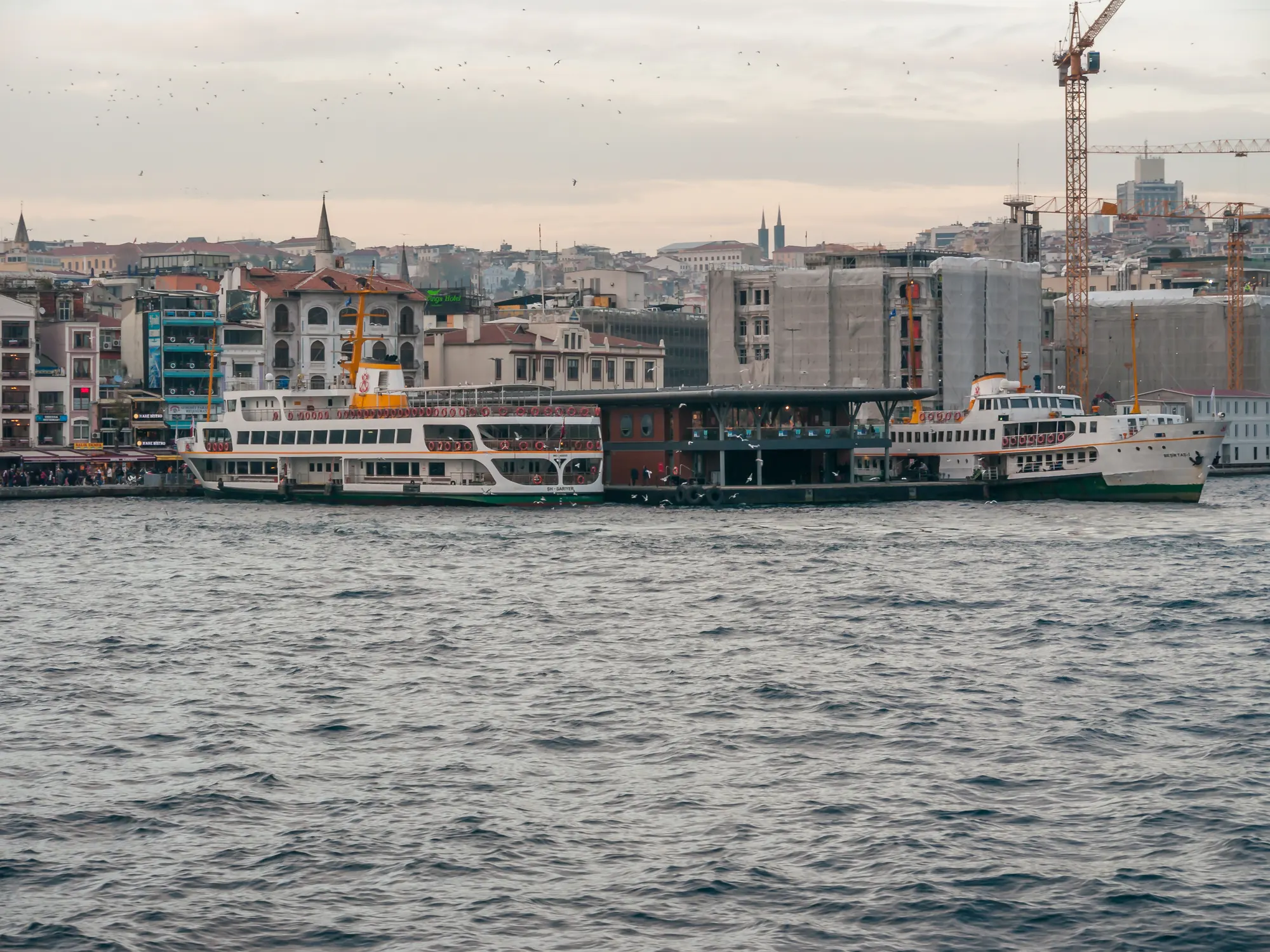
The public ferries are the best and cheapest way to see the city. Short hops from Eminönü or Karaköy across to the Asian side give wonderful views of the old city's skyline, and longer cruises run up the Bosphorus past palaces, wooden mansions and fortresses towards the Black Sea.
TipBuy a simit, a sesame bread ring, and a glass of tea on board, and sit on the open deck.
- 9
Galata and Karaköy
Photo: Diego Delso, CC BY-SA 4.0, via Wikimedia Commons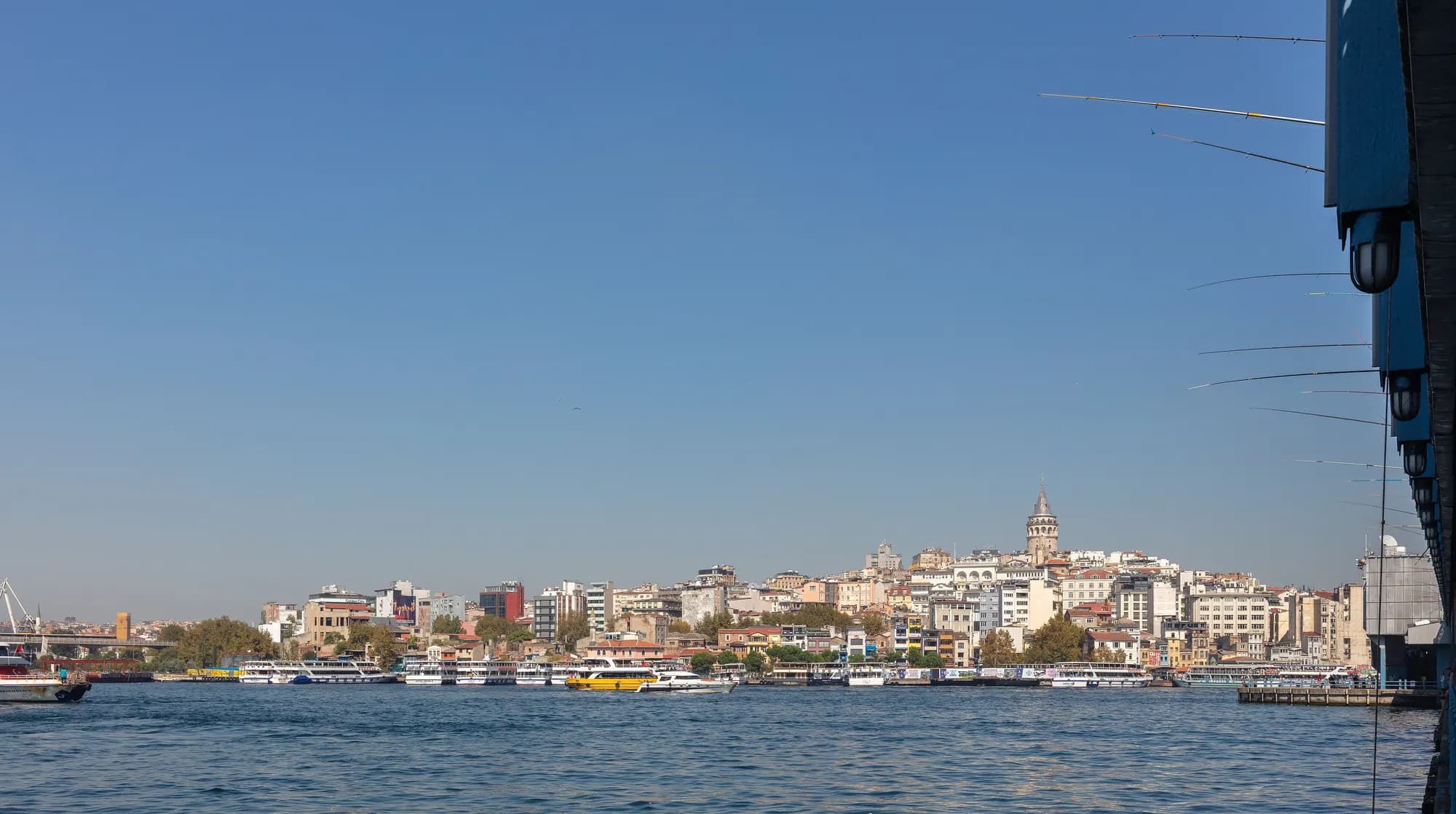
Across the Golden Horn from the old city, the medieval Galata Tower rises over steep lanes of cafés, design shops and music stores. Below it, the old port district of Karaköy has some of the city's best breakfast spots, galleries and bars, and Istiklal Avenue leads up towards Taksim Square.
- 10
Dolmabahçe Palace
Photo: Julian Lupyan, CC0, via Wikimedia Commons
The vast nineteenth-century palace on the European shore of the Bosphorus, built when the Ottoman sultans moved from Topkapı, mixes European styles with Ottoman tradition, with crystal chandeliers, a ceremonial hall under a huge dome and a crystal staircase. Atatürk, the founder of modern Turkey, died here in 1938.
TipVisits are by guided route; arrive early, and note that it's closed on Mondays.
- 11

When to go
Spring and autumn bring mild temperatures and clear skies, ideal for walking and ferry rides; in April, the city's parks fill with tulips. Summers are hot and humid, and the old city is at its busiest. Winters are cool and often wet, with occasional snow, but the sights are quieter. During Ramadan, life continues, but many people fast during the day and the evenings are festive.
Getting around
The T1 tram runs through the old city, past Sultanahmet and the Grand Bazaar, to the ferry docks at Eminönü and Kabataş. The metro, funiculars, buses and ferries all accept the Istanbulkart, a rechargeable card sold at machines in stations. Traffic is heavy, so the metro, trams and ferries are usually faster than taxis.
Istanbul Airport, on the European side, is linked to the city by the M11 metro line and by Havaist airport buses. Sabiha Gökçen Airport, on the Asian side, is served by its own metro line and buses.
Local tips
- Mosques close to visitors during the five daily prayers; plan visits around them.
- Take your shoes off before entering a mosque, and keep your voice down.
- Use the Istanbulkart rather than single tickets: one card can be shared by several people.
- Use licensed taxis or taxi apps, and make sure the meter is running.
- Carry some cash for small purchases, though cards are widely accepted.
- Be wary of friendly strangers inviting you for a drink at a particular bar: it's a known scam.
Eat and drink
Istanbul's food alone justifies a visit. Start the day with a Turkish breakfast spread of cheeses, olives, eggs, honey and bread. Try fish sandwiches by the water at Eminönü, kebabs and mezes, lahmacun and pide, and the street-side mussels stuffed with spiced rice. Turkish tea is served everywhere in tulip-shaped glasses, and sweets range from baklava to Turkish delight and milk puddings.