Ephesus and Selçuk
The marble streets of a great Roman port city, with a Seljuk-era market town, a Wonder of the World and a hill village beside it.
- Best time to go
- April to June and September to October, at opening time or late afternoon
- Local time
- –
- Currency
- Turkish Lira (TRY)
- Reading time
- 11 min
- Language
- Turkish
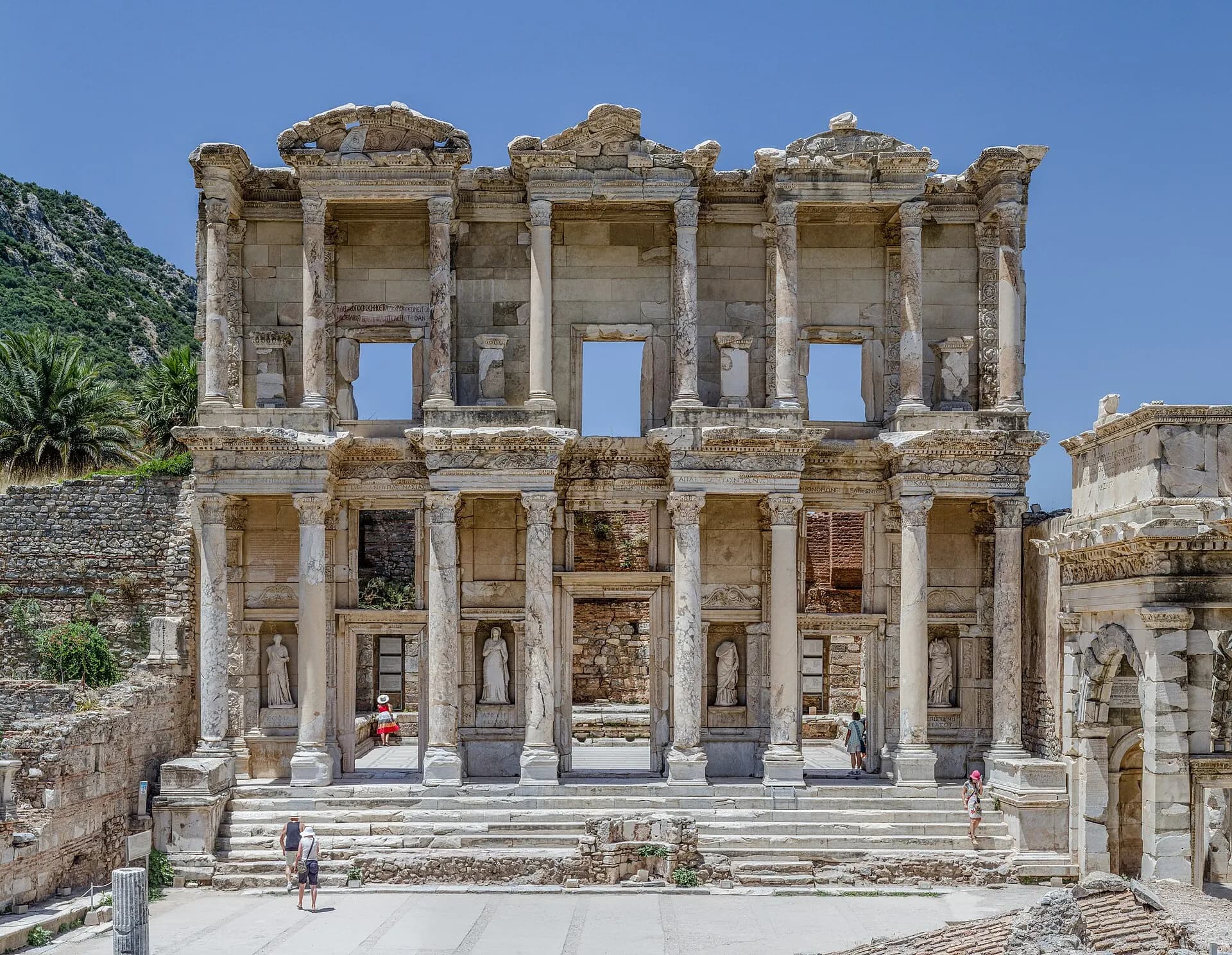
Ephesus was one of the great cities of the Roman world: capital of the province of Asia, a busy Aegean port and, for a time, home to the apostles Paul and John. Its harbour silted up long ago, and the sea now lies several kilometres away, but the city it left behind is among the most complete in the Mediterranean, with a marble main street running downhill past temples, fountains and grand houses to the façade of the Library of Celsus and a vast theatre. The area has been lived in for around 9,000 years, and UNESCO lists it as a World Heritage Site in four parts: the ancient city, the prehistoric mound of Çukuriçi, Ayasuluk Hill in Selçuk and the House of the Virgin Mary.
Selçuk, the small market town three kilometres away, is the best base. It holds the scattered remains of later Ephesus: the site of the Temple of Artemis, one of the Seven Wonders of the ancient world, the Basilica of St John, a fourteenth-century mosque and a hilltop fortress. Most visitors arrive by coach from Kuşadası or İzmir, see the ruins in a morning and leave. Staying a night or two lets you walk the site at opening time, add the museum and the hill village of Şirince, and take a day out to the Ionian cities of Priene, Miletus and Didyma.
The top 16 in Ephesus and Selçuk
- 1
House of the Virgin Mary
Photo: No machine-readable author provided. Mfryc assumed (based on copyright claims)., CC BY-SA 2.5, via Wikimedia Commons
A small stone chapel in the woods on Bülbül Dağı, the mountain above the ancient city, venerated as the place where Mary spent her last years after John brought her to Ephesus. It was identified in 1891 by Lazarist missionaries following the visions of a German nun, and popes have visited since 1967. Christians and Muslims, who also revere Mary, come to pray, leave notes on the wishing wall and take water from the spring. A mass is held every year on 15 August.
TipIt charges its own entrance fee and is not covered by museum passes. Combine it with a taxi to the upper gate of Ephesus, about seven kilometres back down the road.
- 2
The upper gate and the State Agora
Photo: Daniel VILLAFRUELA., CC BY-SA 3.0, via Wikimedia Commons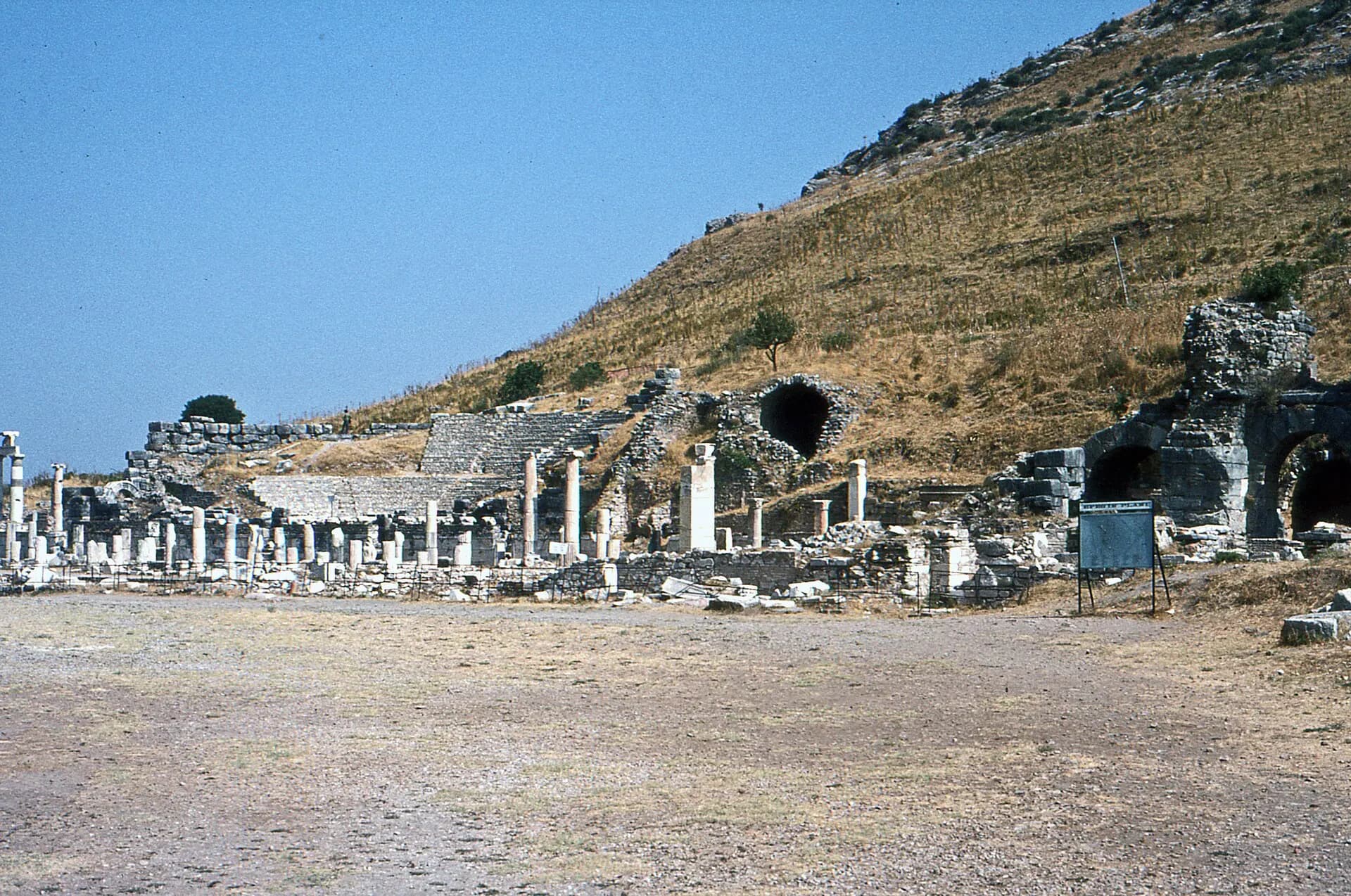
Entering at the upper (south) gate lets you walk the city downhill. The first area is the civic centre: the State Agora, the small Odeon where the city council met, the Prytaneion with its sacred flame, and the Memmius monument. It's quieter than the lower city, and a good place to get your bearings.
- 3
Curetes Street
Photo: Dosseman, CC BY-SA 4.0, via Wikimedia Commons
The marble street that slopes down through the heart of the city, lined with statue bases, shop fronts and monuments. Look for the Fountain of Trajan, the elegant arch of the Temple of Hadrian, the Scholastica Baths and the public latrines, a row of marble seats where Ephesians sat side by side and talked business.
- 4
The Terrace Houses
Photo: Bernard Gagnon, CC BY-SA 3.0, via Wikimedia Commons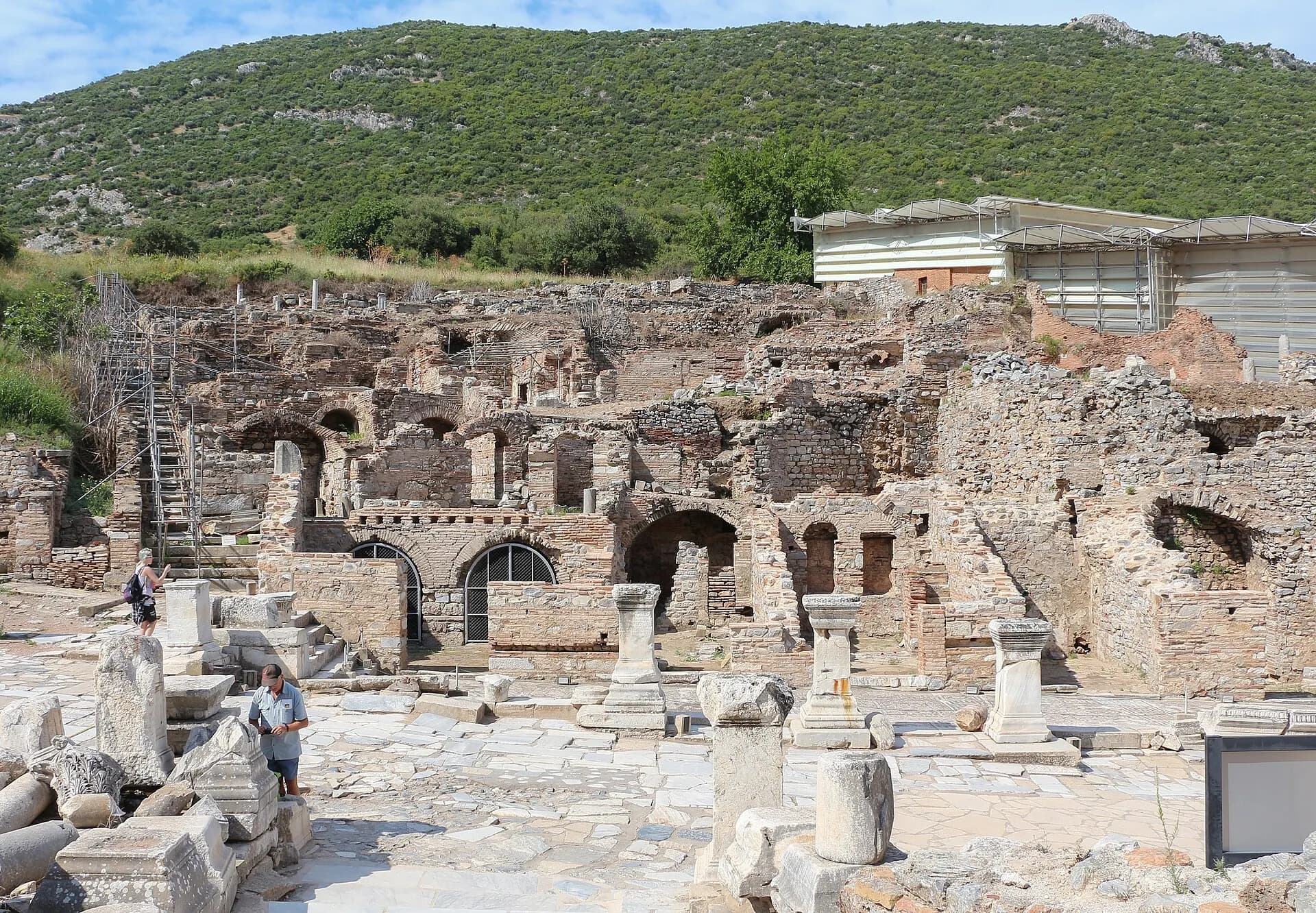
On the slope beside Curetes Street, under a large protective roof, stand the homes of wealthy Ephesians, built in the first century AD around open courtyards and lived in for several centuries. Glass walkways take you over and through rooms with mosaic floors, frescoes of mythological scenes, marble-clad walls and underfloor heating, while restorers piece together marble panels in front of you. For many visitors it's the highlight of Ephesus.
TipIt needs a separate ticket, bought at the entrance by the houses, on top of the main site ticket. The houses open later and close earlier than the rest of the site.
- 5
The Library of Celsus
Photo: Roy Egloff, CC BY-SA 4.0, via Wikimedia Commons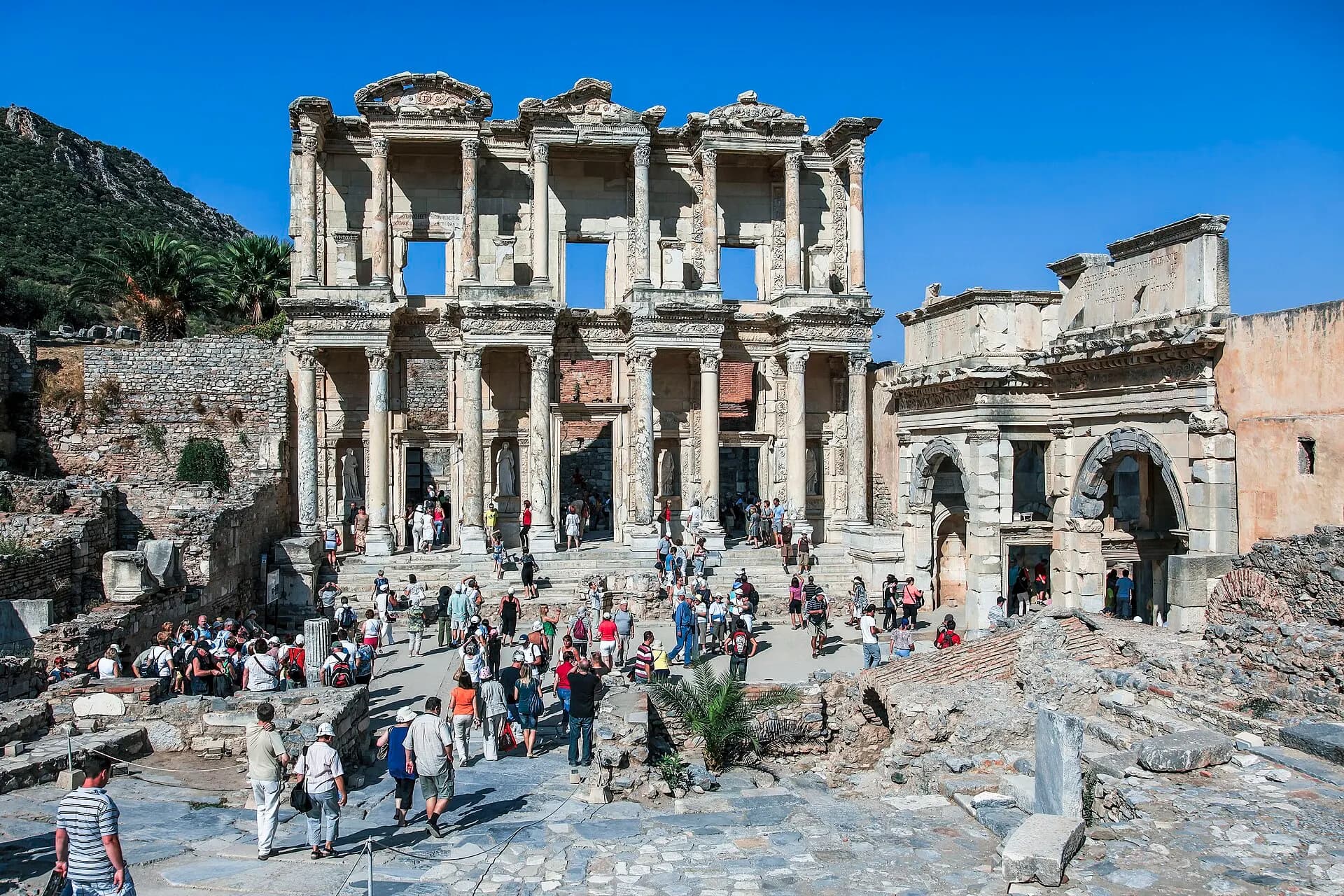
The two-storey façade at the foot of Curetes Street is the symbol of Ephesus. It was built in the early second century AD as a library and a tomb for Tiberius Julius Celsus Polemaeanus, a governor of Asia, by his son, and once held thousands of scrolls. Austrian archaeologists re-erected the façade in the 1970s, with statues representing Wisdom, Knowledge, Intelligence and Virtue in its niches (the originals are in Vienna). The Mazaeus and Mithridates Gate beside it leads into the Commercial Agora.
TipThe square in front fills up from mid-morning; be here early, or in the last hour before closing.
- 6
The Great Theatre and the Harbour Street
Photo: Bernard Gagnon, CC BY-SA 3.0, via Wikimedia Commons
Cut into the slope of Mount Panayır, the theatre seated around 24,000 people and is one of the largest of the ancient world. The Book of Acts tells of a riot here, when the silversmiths who made souvenirs of Artemis turned on Paul for preaching against her. From the top rows, the Arcadian Way, once lit and colonnaded, runs straight towards the lost harbour. Across the street, the Ephesus Experience Museum uses film and projections to bring the ancient city to life.
- 7
The Temple of Artemis
Photo: Roy Egloff, CC BY-SA 4.0, via Wikimedia Commons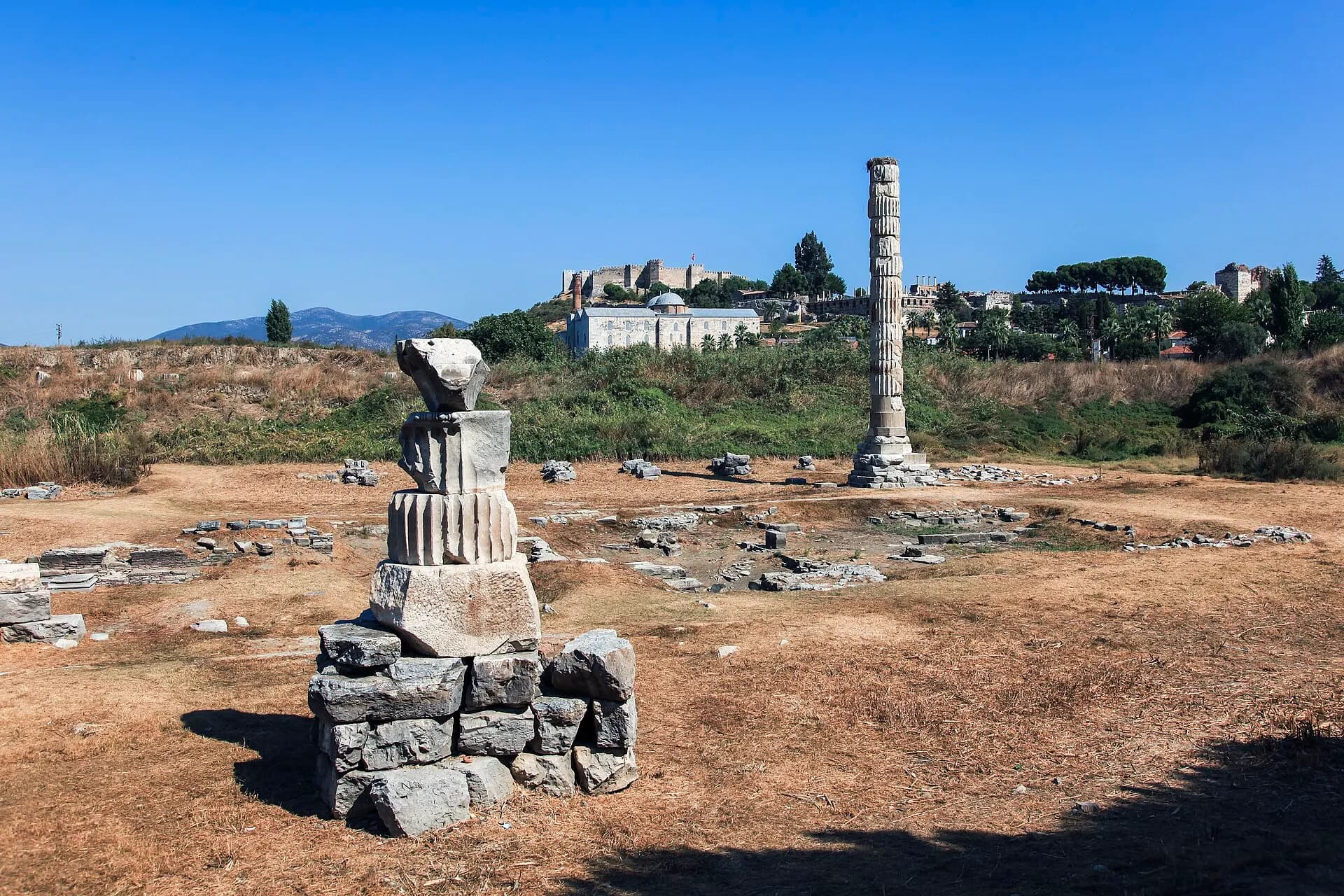
Of the great temple to Artemis, larger than the Parthenon and counted among the Seven Wonders of the World, only a single reassembled column and scattered marble blocks remain, often standing in a marshy pond with storks nesting on top. The sight is modest, but the setting, with the Basilica of St John and the İsa Bey Mosque on the hill behind, sums up the layers of history here.
- 8
The Ephesus Museum
Photo: Adam Jones from Kelowna, BC, Canada, CC BY-SA 2.0, via Wikimedia Commons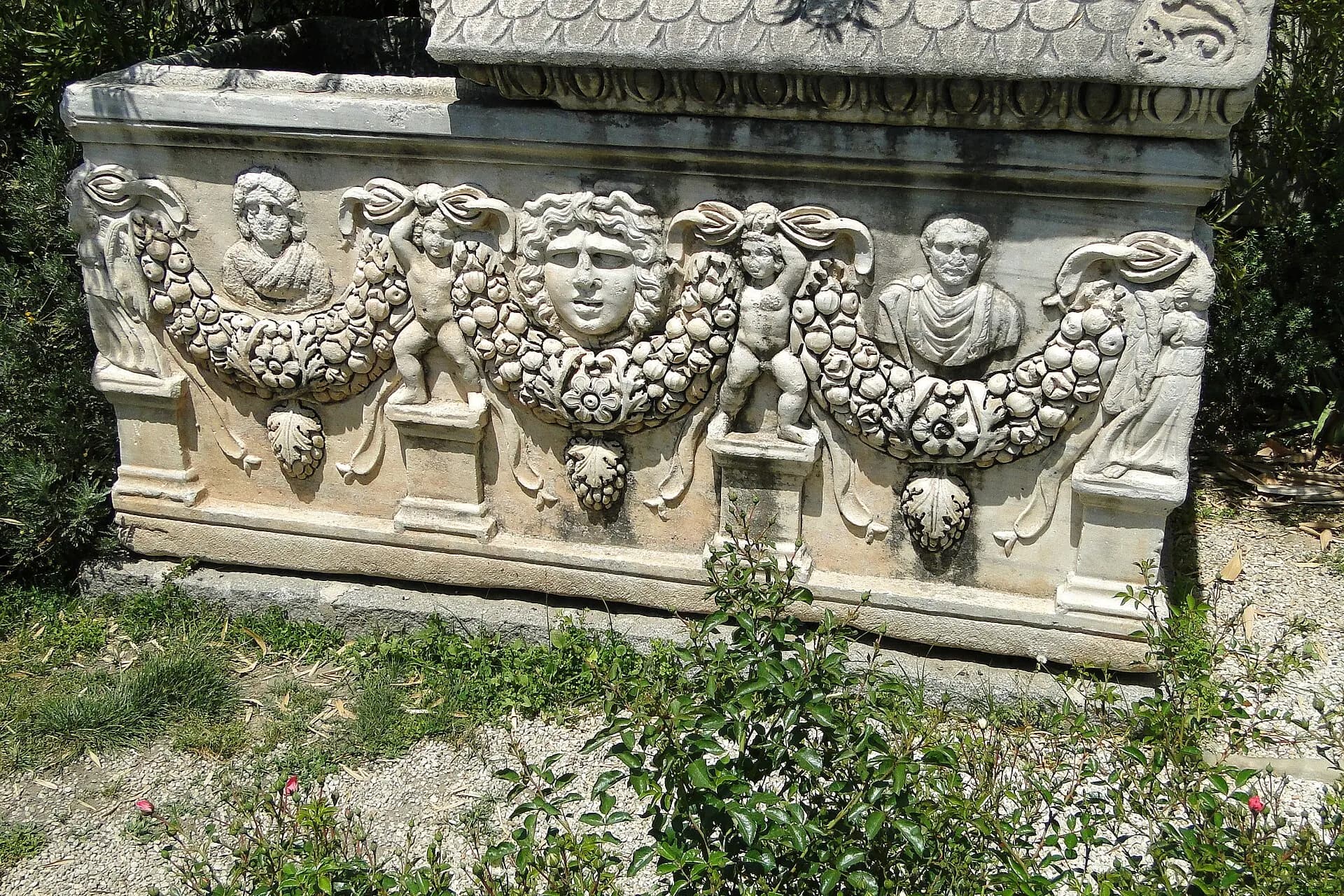
The museum in the centre of Selçuk holds many of the finest finds from the site: two famous statues of the many-breasted Artemis of Ephesus, a reclining warrior from the Pollio fountain, portraits of emperors, and the household objects, frescoes and furniture of the Terrace Houses. An hour here gives the ruins far more meaning, ideally the afternoon after your visit.
- 9
İsa Bey Mosque
Photo: Carlos Delgado, CC BY-SA 3.0, via Wikimedia Commons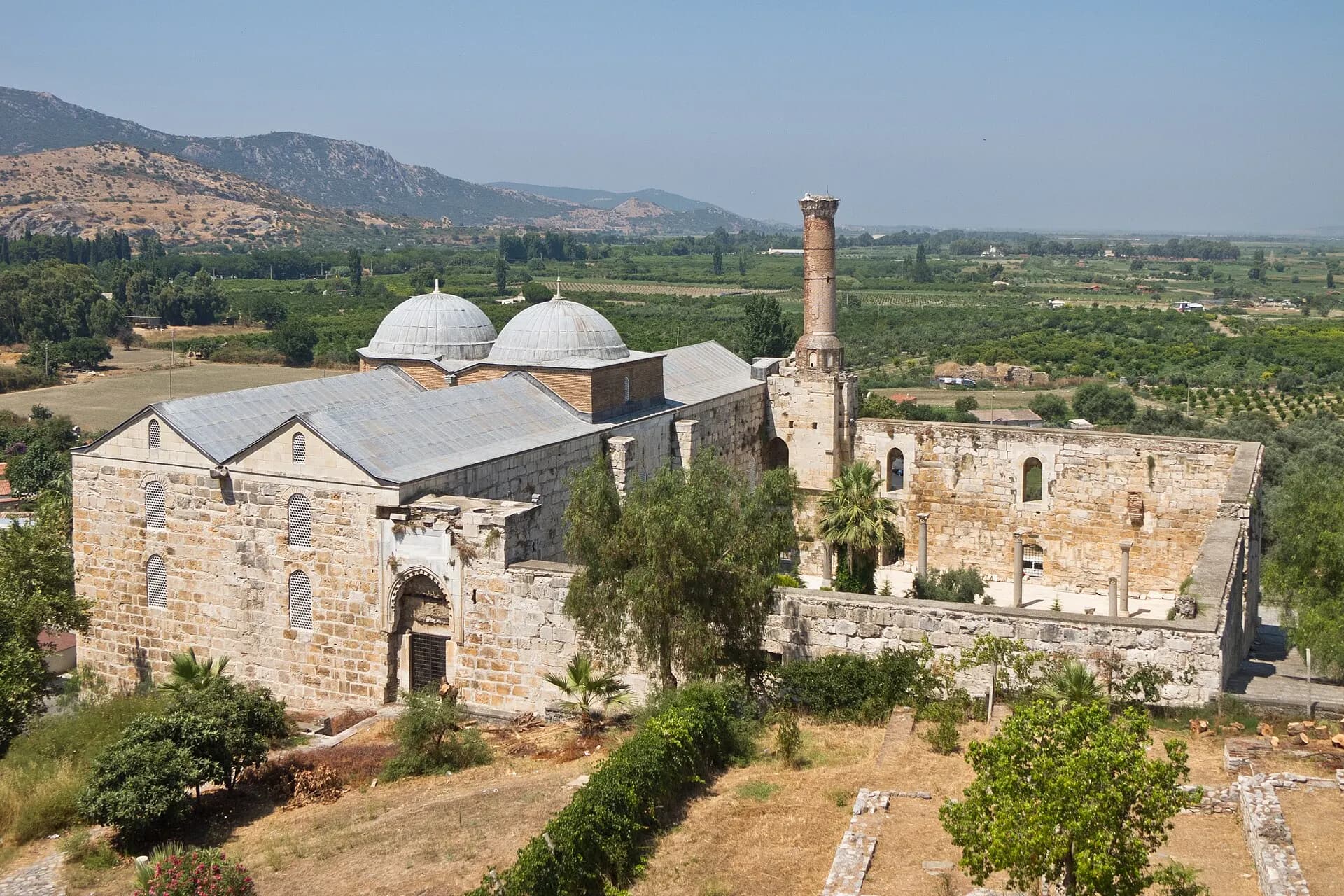
Built in 1375 for İsa Bey of the Aydınoğulları dynasty, this is one of the oldest Turkish mosques in Anatolia, and an early step towards the Ottoman style. Its marble façade, courtyard and columns reuse stone from ancient Ephesus. It's a working mosque, so visit outside prayer times and dress modestly; women should bring a scarf.
- 10
The Basilica of St John and Ayasuluk Fortress
Photo: Bernard Gagnon, CC BY-SA 3.0, via Wikimedia Commons
On Ayasuluk Hill, above the town, the emperor Justinian built a vast domed basilica in the sixth century over the grave believed to be that of John the Apostle. Partly rebuilt columns and arches now trace its plan, with the tomb at the centre and a baptistery beside it. The same ticket covers the walls and towers of the fortress at the top of the hill, mostly Byzantine and Turkish, with views over Selçuk and the plain to the sea.
- 11
Şirince
Photo: Helen Owl, CC BY-SA 4.0, via Wikimedia Commons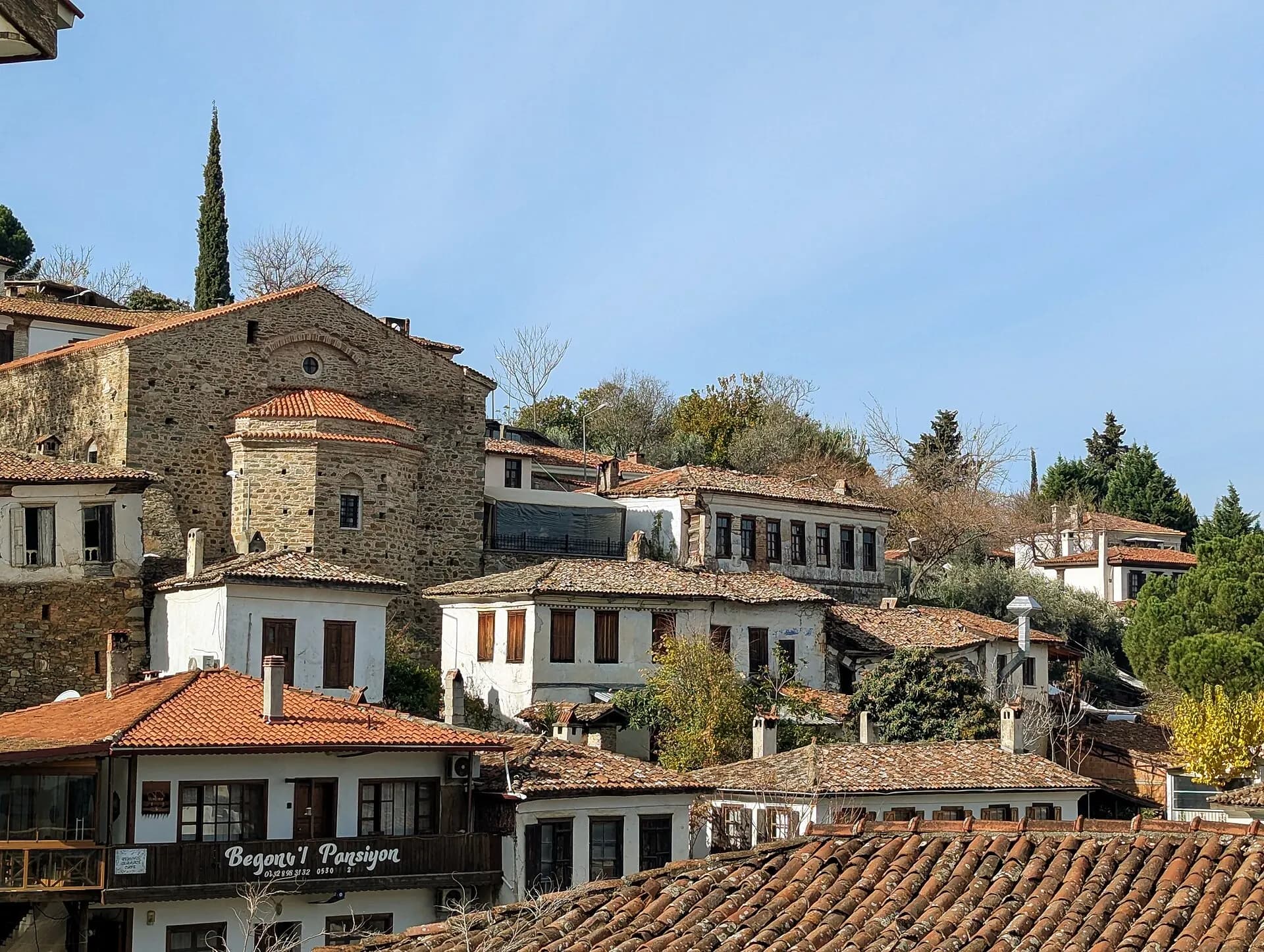
A hillside village eight kilometres east of Selçuk, with whitewashed stone houses, two old churches and terraced olive groves and vineyards. It was a Greek village until the population exchange of 1923, when Turkish families from Greece settled here, and it is known for its fruit wines, olive oil and village breakfasts. Day-trippers fill its lanes at midday and on weekends; it's much calmer in the evening if you stay over.
- 12
Pamucak beach
The nearest beach to Selçuk is a long, open stretch of sand about ten kilometres west, at the mouth of the Little Meander river. It is wilder and less built up than the beaches around Kuşadası, with a few large resorts at one end, and makes a good place to cool off after a morning in the ruins. Swim with care when the wind is up.
- 13
Kuşadası
Photo: Finnfrog99, CC BY-SA 4.0, via Wikimedia Commons
A resort town 20 kilometres south of Selçuk and one of Turkey's busiest cruise ports, with a sixteenth-century Ottoman caravanserai near the harbour, a lively old quarter and Güvercinada (Pigeon Island), a small fortified islet linked to the shore by a causeway. It has the most hotels and nightlife in the area, and ferries cross to the Greek island of Samos in season.
- 14
Priene
Photo: Rigorius, CC BY-SA 4.0, via Wikimedia Commons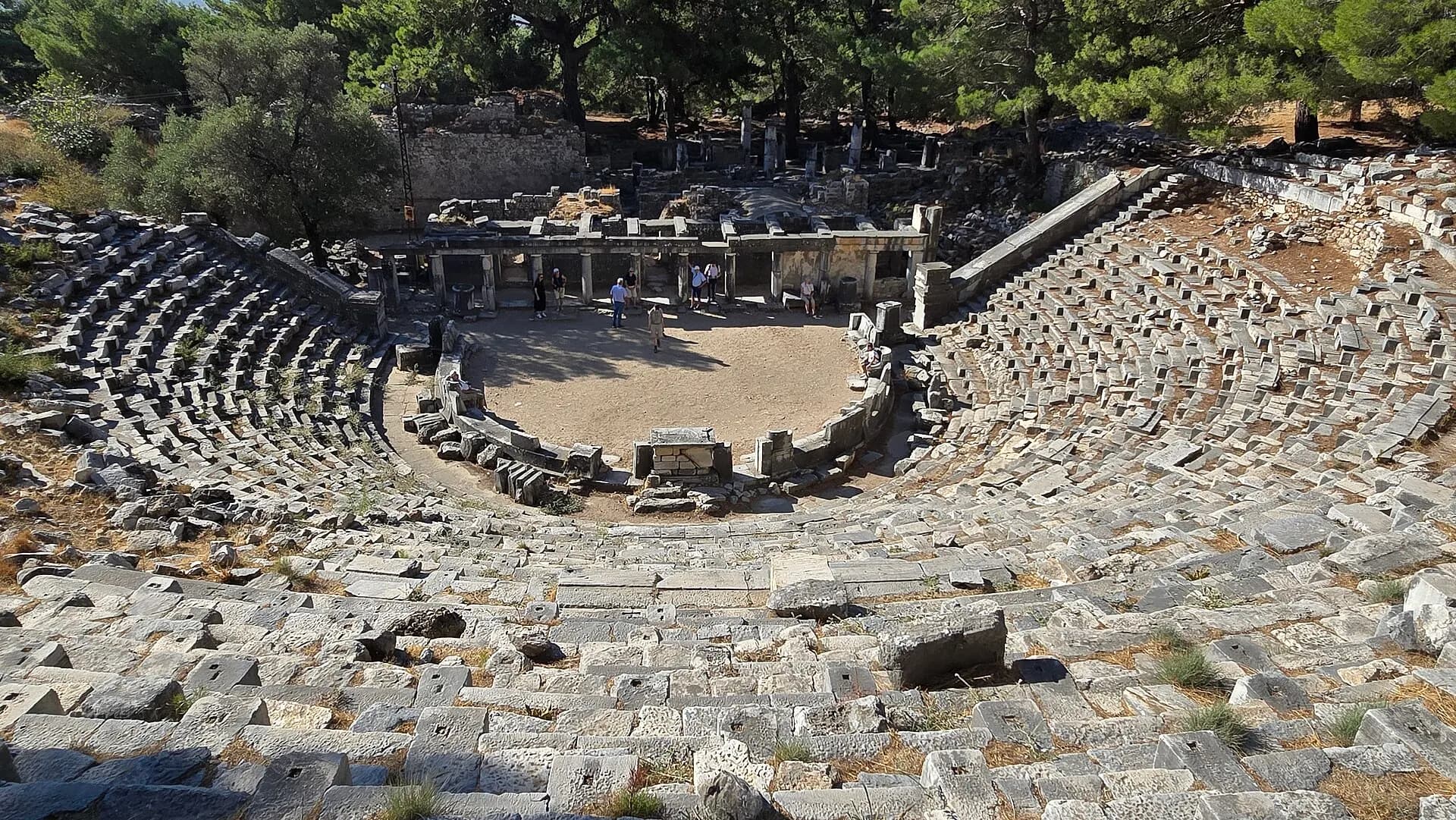
A small Hellenistic city on a terrace below a towering cliff, laid out on a neat grid, with the columns of the Temple of Athena, a well-preserved little theatre and a council house with its stone benches intact. It is the most atmospheric of the three Ionian sites, set among pines and usually quiet.
- 15
Miletus
Photo: Bernard Gagnon, CC BY-SA 3.0, via Wikimedia Commons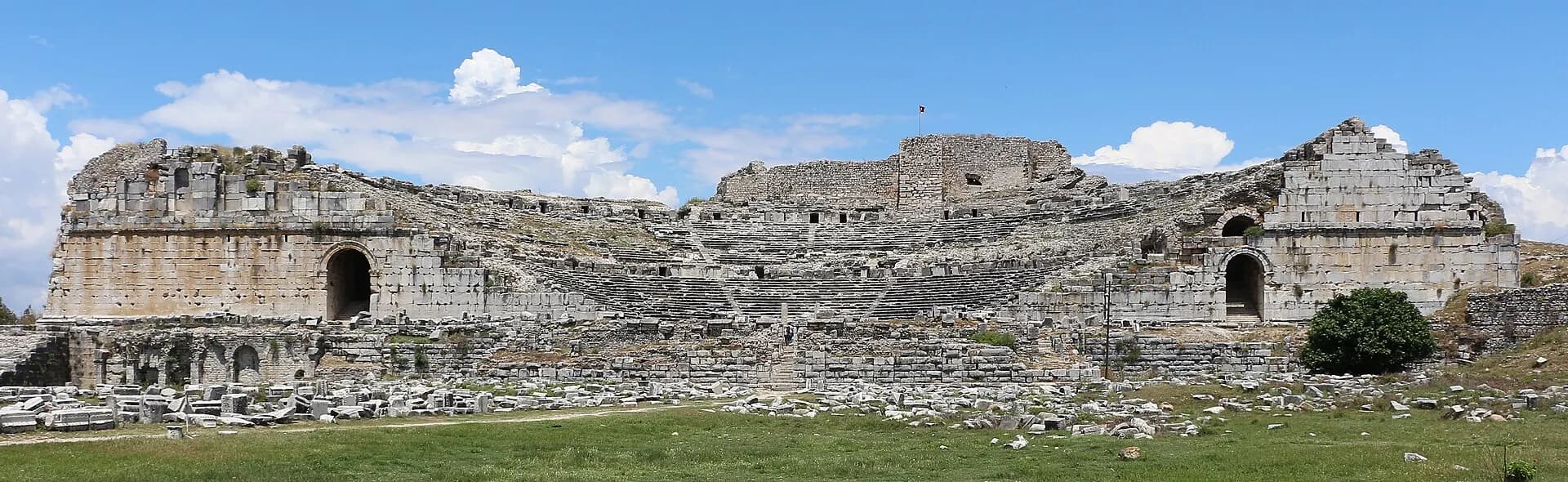
Once one of the great cities of Greece and the birthplace of philosophers such as Thales, Miletus now sits stranded inland on the flat Meander plain. Its huge theatre still dominates the site, and nearby are the Baths of Faustina, the harbour monument and the İlyas Bey Mosque of 1404. The same ticket includes the small Miletus Museum.
- 16
Didyma
Photo: Bernard Gagnon, CC BY-SA 3.0, via Wikimedia Commons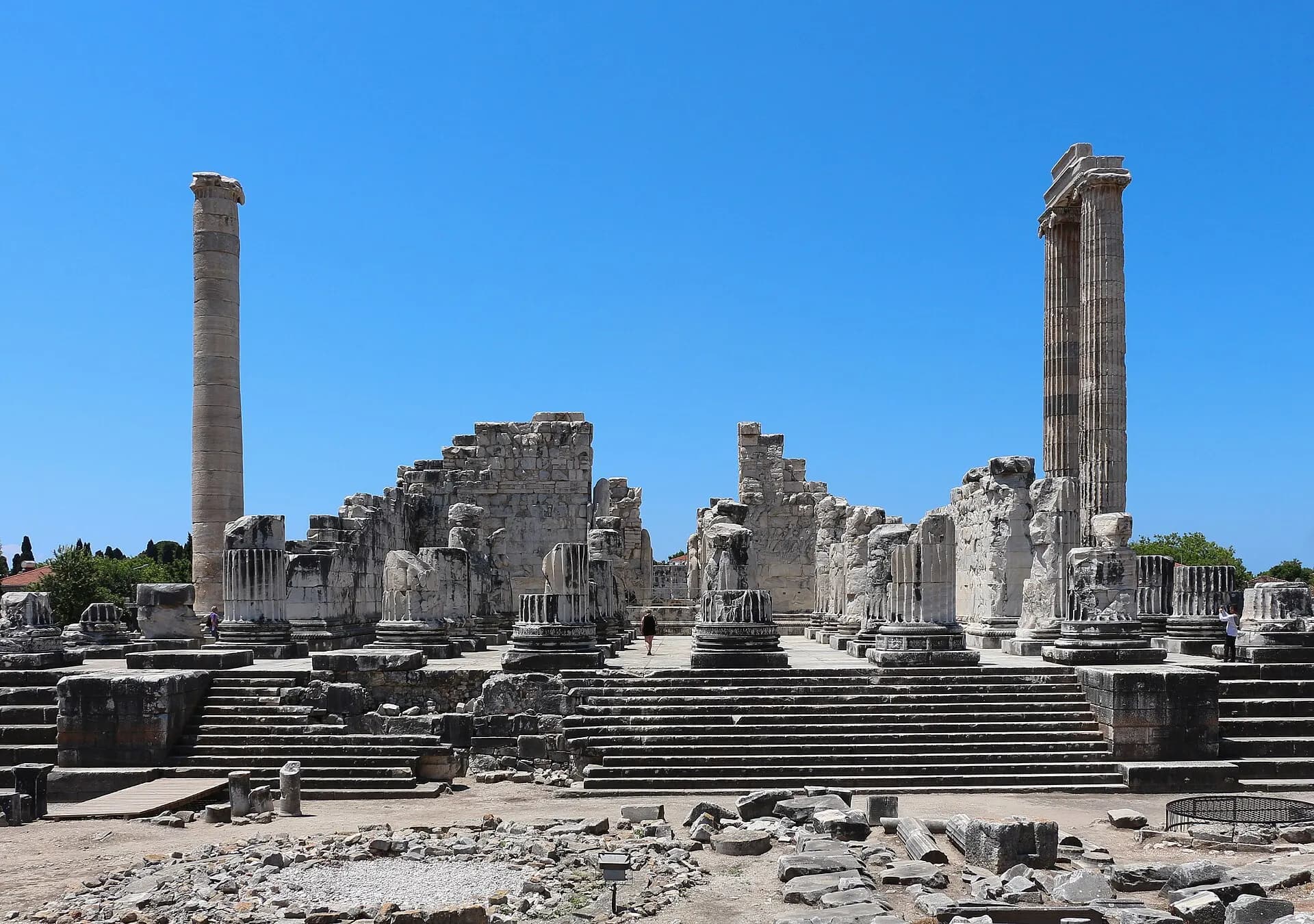
The Temple of Apollo at Didyma was one of the most important oracles of the ancient world, linked to Miletus by a sacred way. Though never finished, it is one of the best-preserved temples in Turkey, with towering columns, a sunken inner courtyard and a carved Medusa head beside the entrance. The site sits in a village just inland from the resort of Didim.
TipPriene, Miletus and Didyma make a full-day loop south from Selçuk or Kuşadası by car or tour, with lunch on the way.
When to go
April to June and September to October bring warm days that are good for walking. July and August are very hot, often well above 35°C, and the ruins are exposed marble and stone with almost no shade. Winter is mild and quiet, with some rain, and a fine time to see the site without crowds. Easter and the Christian feasts bring extra pilgrims to the House of the Virgin Mary, especially around 15 August.
The ancient city is open every day. The ministry currently lists its hours as 8am to 6pm, with ticket sales ending half an hour before; hours can change with the season and the Terrace Houses keep shorter hours, so check before you go. In summer, the ministry has also run evening openings on several nights a week as part of its night museum programme. Ephesus is Turkey's most visited site for night visits, and the cooler air makes them worth considering in July and August. Museum passes are not valid for night openings.
Cruise ships dock in Kuşadası on most days in season, and their tours reach Ephesus from about 9am to early afternoon. The quietest times are the first hour after opening and the last two hours of the day.
Getting around
İzmir Adnan Menderes Airport is about an hour north of Selçuk by road. Regional trains between İzmir and Denizli stop at the airport and at Selçuk, and İZBAN commuter trains also run to Selçuk; the town is a stop for buses to Pamukkale, Bodrum and beyond. Minibuses (dolmuş) run frequently from Selçuk to Kuşadası and up the hill to Şirince.
Ephesus has two entrances, the upper (south) gate and the lower (north) gate, about 3 kilometres from the centre of Selçuk. The lower gate has the main car park and most facilities and is an easy taxi, bicycle or walk from town. A popular plan is to take a taxi to the House of the Virgin Mary, then on to the upper gate, walk downhill through the city and leave from the lower gate. The site is walked on foot; allow at least three hours, or four with the Terrace Houses.
Priene, Miletus and Didyma are spread over about 90 kilometres to the south and are best done by car or on a tour; public transport via Söke is possible but slow.
Local tips
- Foreign visitors pay a single ticket for the ancient city, currently listed by the ministry at €40, which includes the Ephesus Experience Museum. The Terrace Houses cost extra.
- Müzekart, the ministry's museum card, is valid only for Turkish citizens. Visitors can use MuseumPass The Aegean (7 days) or MuseumPass Türkiye (15 days); check the official list of valid sites, and note that each pass allows one entry per site.
- Buy tickets online at the ministry's e-ticket site or at the gate; prices change often, so check before you go.
- Wear sturdy shoes: the marble paving is uneven and polished slippery by centuries of feet.
- Bring a hat, sunscreen and plenty of water. There are cafés only at the gates.
- Licensed guides wait at the gates; a good one brings the ruins to life, but agree a price and length in advance.
- The House of the Virgin Mary and the İsa Bey Mosque are places of worship: cover shoulders and knees and keep your voice down.
- Avoid the shops and "factory visits" that some tours build in, unless you want them.
Eat and drink
Selçuk's restaurants are simple and good value, serving köfte (grilled meatballs), pide, grilled fish from the coast and a spread of meze, with tables under the aqueduct arches in the town centre. Çöp şiş, small skewers of lamb, is a speciality of the area. Saturday's market in Selçuk is one of the best in the region, with figs, olives, cheese and seasonal fruit. In Şirince, try village breakfasts, gözleme and the local fruit wines, made from blackberries, peaches and other fruit; taste before you buy.
Where to stay
Selçuk has family-run guesthouses and small hotels, many with roof terraces looking at the castle and aqueduct, within walking distance of the station and museum. Şirince has boutique stays in restored village houses, quiet after the day visitors leave. Kuşadası and Pamucak have large beach resorts and the most choice, but mean a drive or minibus to the ruins.
A city that kept moving
Ephesus moved several times in its long history, which is why its remains are scattered. The early Greek city grew up around the sanctuary of Artemis near Ayasuluk Hill, beside a harbour that has long since vanished. Around 300 BC, Lysimachus, one of Alexander the Great's generals, refounded it in the valley between two hills, where the ruins now stand. Under Rome, it grew to be one of the largest cities in the empire, and most of what you see dates from then. As the river silted the harbour and the city declined, people moved back up to Ayasuluk Hill in the Byzantine period, around the Basilica of St John. That settlement became the Turkish town of Ayasuluk, later renamed Selçuk. Austrian archaeologists have excavated here since 1895, and work is still going on.
Early Christian Ephesus
Ephesus is important in the history of Christianity. Paul lived here for around two years, and his letter to the Ephesians is part of the New Testament; the city was one of the Seven Churches of Asia in the Book of Revelation. Tradition holds that John wrote his gospel here and was buried on Ayasuluk Hill. In 431, the Council of Ephesus met in the Church of Mary, whose ruins lie near the lower gate, and declared Mary the Mother of God. Pilgrims visit the basilica, the church and the House of the Virgin Mary, and the Cave of the Seven Sleepers, a tomb complex linked to a legend shared by Christians and Muslims, lies on the slope of Mount Panayır, a short way from the lower gate.
Responsible travel
Ephesus receives millions of visitors a year, and the marble is fragile. Keep to the paths, don't climb on walls, columns or the seats of the theatre where they are fenced off, and never take stones or pieces of marble. Touching the frescoes and mosaics in the Terrace Houses damages them. Staying overnight in Selçuk or Şirince, rather than visiting on a whirlwind coach tour, spreads your spending among local families, and visiting early or late eases pressure on the site at its busiest hours.