Seoul
Joseon palaces beneath granite mountains, sizzling street food, and neighbourhoods that never seem to sleep.
- Best time to go
- April to May and September to November, for mild weather, blossom and autumn colour
- Local time
- –
- Currency
- South Korean Won (KRW)
- Reading time
- 4 min
- Language
- Korean
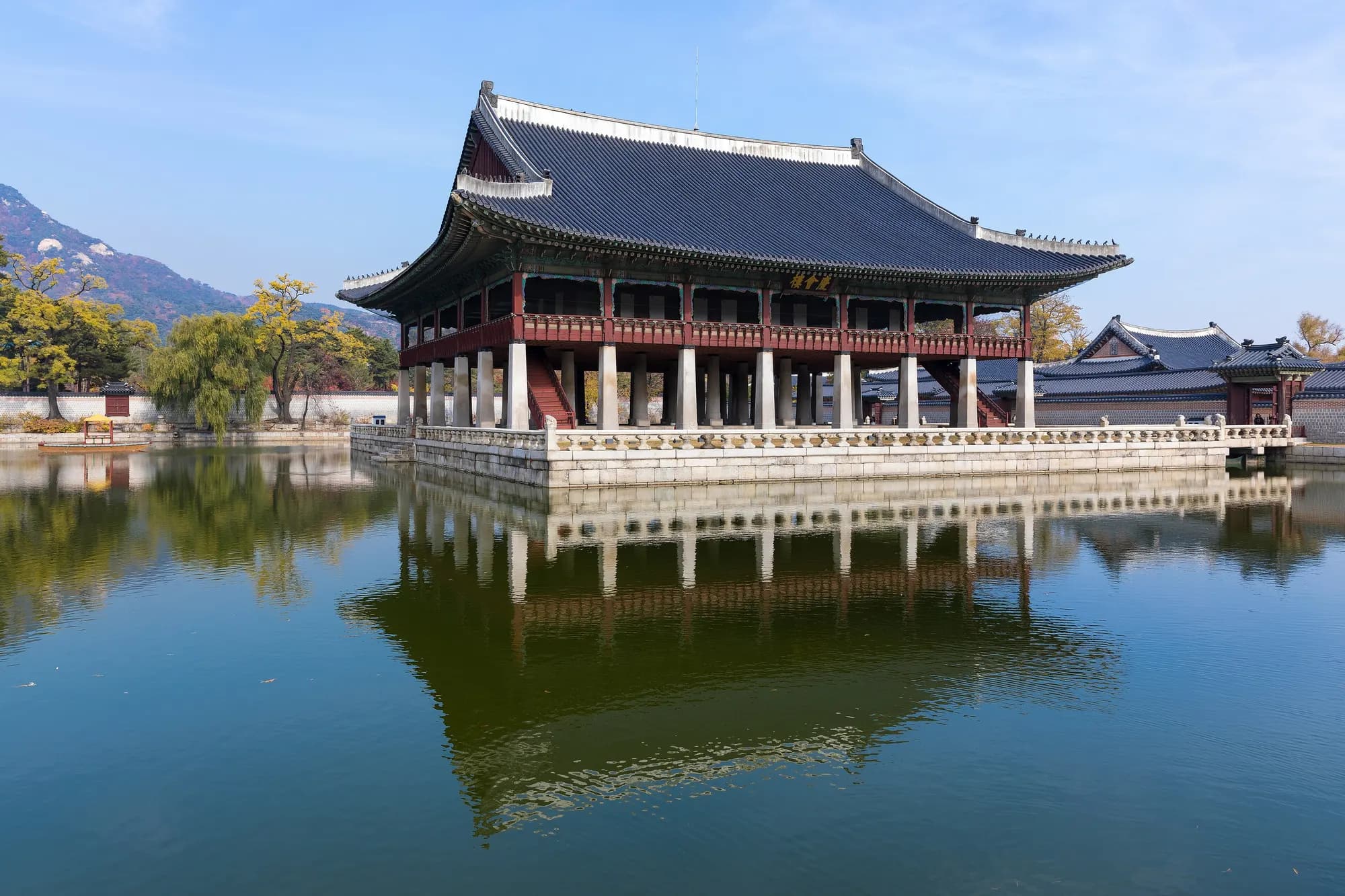
Seoul has been the capital of Korea for more than six hundred years, since the Joseon dynasty built its palaces at the foot of the mountains in 1394. Today it is a vast, high-tech metropolis of ten million people, but those palaces still stand in the middle of the city, and mountains rise behind them, close enough to hike after breakfast.
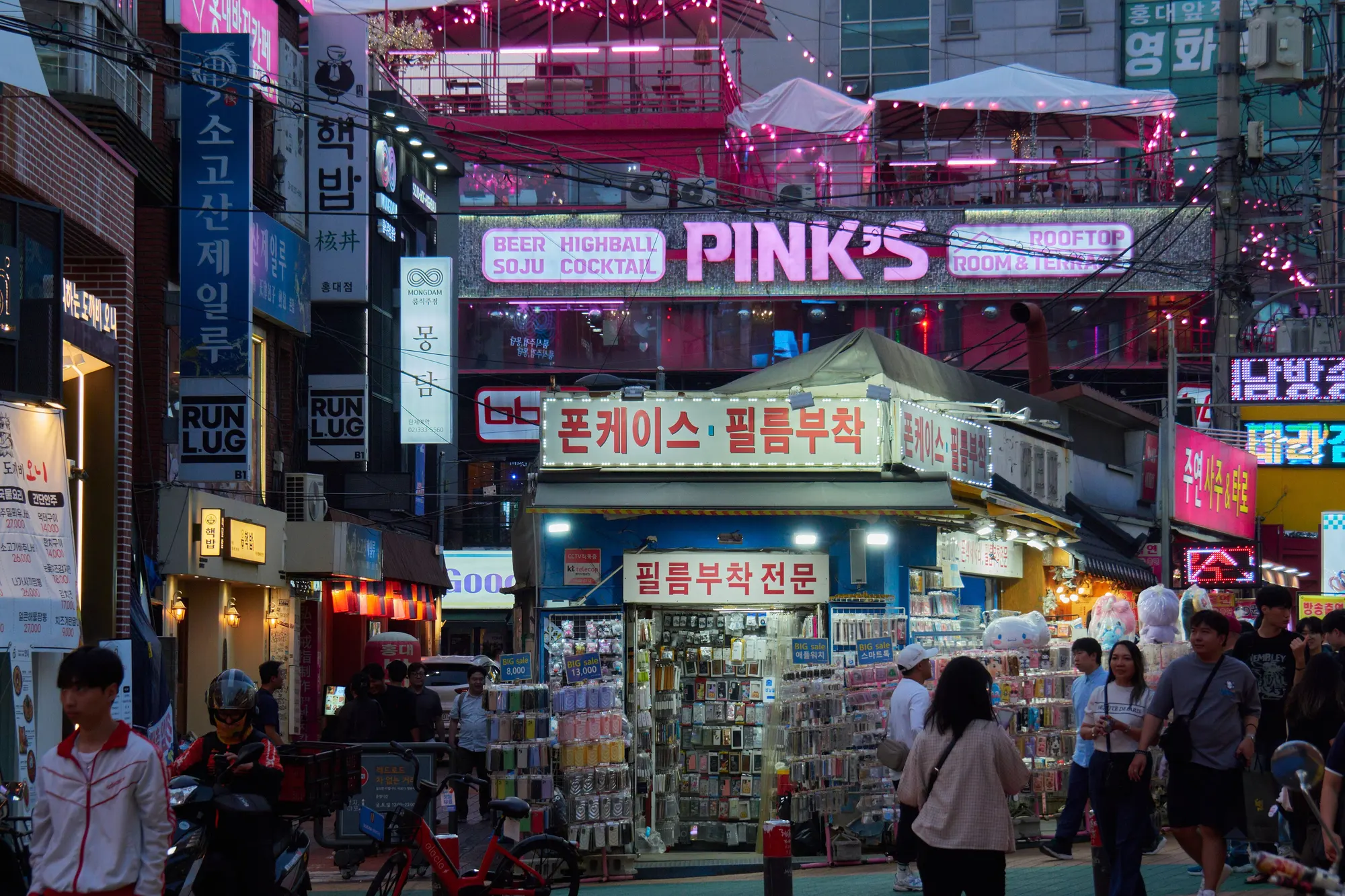
It is a city of contrasts that sit happily side by side: hanok houses with tiled roofs and glass towers, Buddhist temples and K-pop billboards, centuries-old markets and design-led cafés. It's safe, efficient and easy to get around, and its food alone is worth the trip.
The top 9 in Seoul
- 1
Gyeongbokgung Palace
Photo: Basile Morin, CC BY-SA 4.0, via Wikimedia Commons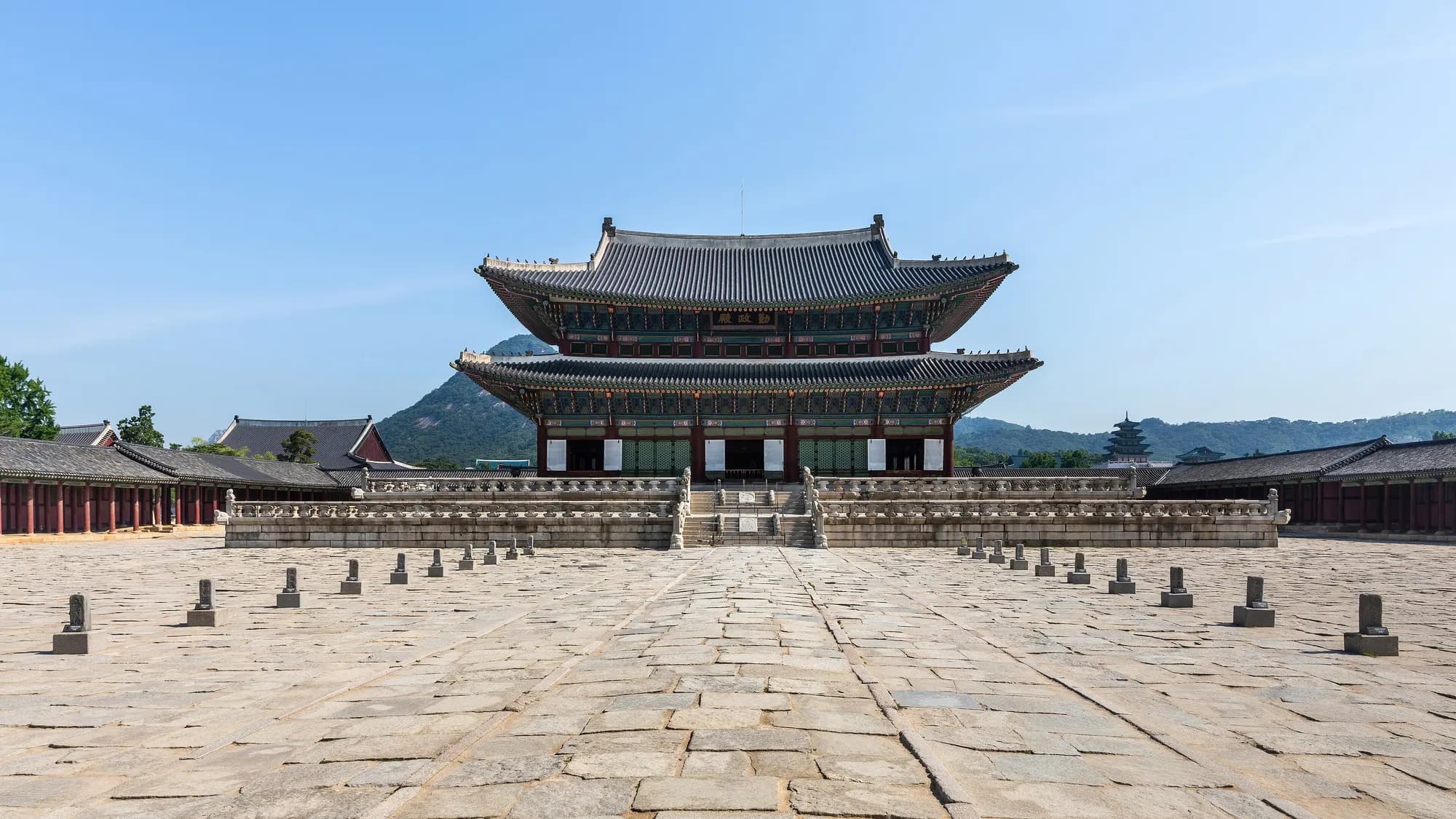
The largest of Seoul's five grand palaces, built in 1395 as the main royal residence of the Joseon dynasty. Destroyed and rebuilt over the centuries, its throne hall, pavilions and lotus ponds stand against the backdrop of Bugaksan mountain. The changing of the royal guard takes place at the main gate several times a day.
TipVisitors wearing hanbok, traditional Korean dress, enter free; rental shops nearby hire them by the hour. The palace is closed on Tuesdays.
- 2
Changdeokgung and the Secret Garden
Photo: Basile Morin, CC BY-SA 4.0, via Wikimedia Commons
A palace designed to blend with the hills around it, and a World Heritage Site. Behind it lies the Huwon, or Secret Garden, a beautiful landscape of pavilions and ponds once reserved for the royal family, visited on a guided tour.
TipBook the Secret Garden tour in advance, especially in spring and autumn.
- 3
Bukchon Hanok Village
Photo: Basile Morin, CC BY-SA 4.0, via Wikimedia Commons
A hillside neighbourhood of traditional houses with tiled roofs between the two palaces. It is a residential area, and to protect residents, tourist visits to the core streets are now limited to daytime hours.
TipKeep your voice down, respect the visiting hours, and explore the quieter lanes of nearby Samcheong-dong for cafés and galleries.
- 4
Insadong
Photo: S h y numis, CC BY-SA 4.0, via Wikimedia Commons
A street of tea houses, galleries and shops selling traditional crafts, calligraphy brushes, ceramics and hanji paper. Ssamziegil, a spiralling courtyard of small shops, is at its heart.
- 5
- 6
N Seoul Tower and Namsan
Photo: kallerna, CC BY-SA 4.0, via Wikimedia Commons
A tower on the summit of Namsan mountain in the centre of the city, reached by cable car or by walking trails through the woods. From the top, the city spreads out in every direction, especially beautiful at night.
- 7
Cheonggyecheon Stream
Photo: Basile Morin, CC BY-SA 4.0, via Wikimedia Commons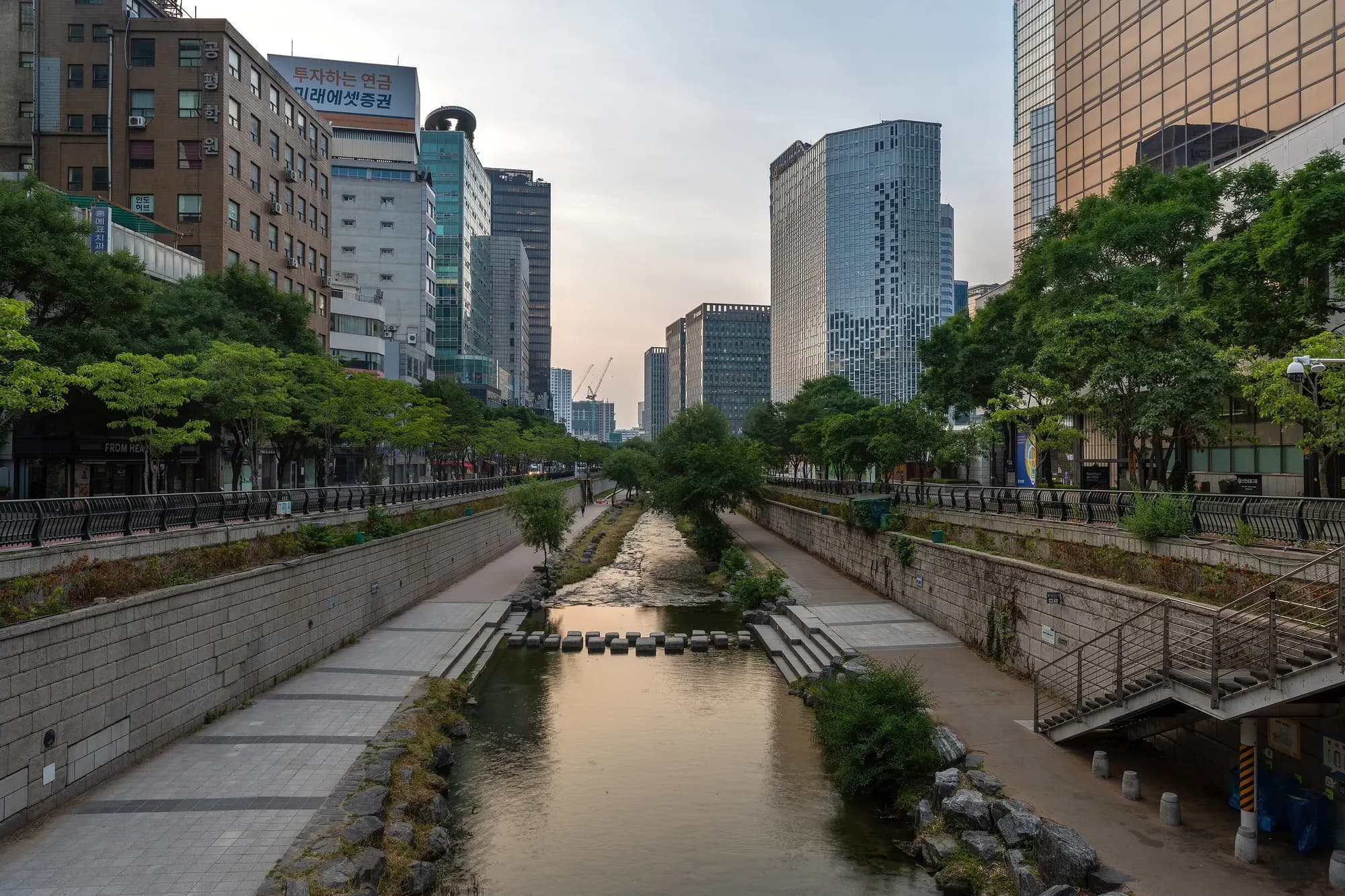
A stream that runs for nearly eleven kilometres through downtown Seoul, restored in 2005 after decades buried under a road. Its walkways below street level are a cool, calm place to walk, especially in the evening, when the bridges are lit up.
- 8
Dongdaemun Design Plaza
Photo: Eugene Lim, CC BY 2.0, via Wikimedia Commons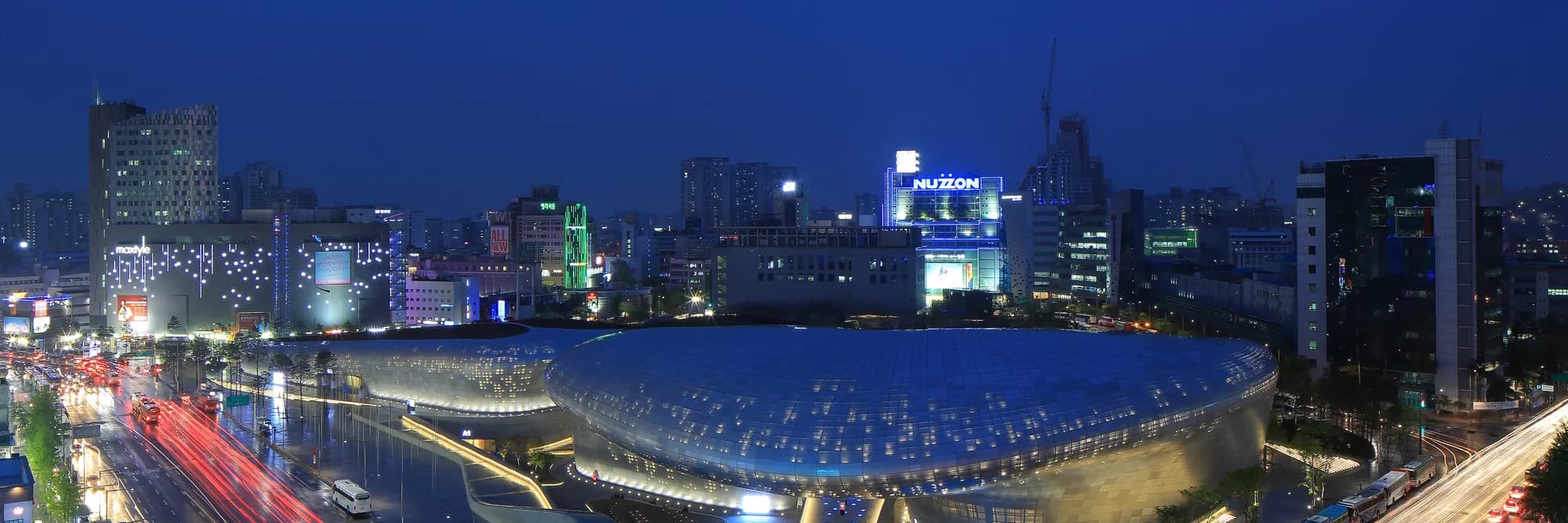
A flowing, futuristic building designed by Zaha Hadid, used for exhibitions and fashion shows, in a district of wholesale markets that stay open late into the night.
- 9
When to go
Spring, with cherry blossom in early April, and autumn, with clear skies and brilliant leaves in late October and November, are the best seasons. Summer is hot and humid, with a monsoon season from late June to July. Winter is cold and dry, often well below freezing, but clear and sunny, and the city's skating rinks and markets are lively.
Avoid the major holidays of Seollal (Lunar New Year) and Chuseok (the harvest festival) if you can, as many shops close and transport is busy.
Getting around
The subway is excellent, with more than twenty lines, signs in English and announcements in several languages. A rechargeable T-money card works on subways, buses and taxis, and in convenience stores. Buses are useful but harder to navigate for visitors; local map apps are more reliable than international ones in Korea.
From Incheon International Airport, the AREX express train reaches Seoul Station in about three-quarters of an hour, and the all-stop train is cheaper. Gimpo Airport, for domestic and some regional flights, is on the subway network. High-speed KTX trains reach Busan in under three hours.
Local tips
- Check whether you need a K-ETA (electronic travel authorisation) before you travel.
- Download a Korean map app for directions; international map apps have limited walking and driving directions in Korea.
- Tipping is not expected.
- Don't sit in the seats reserved for elderly, pregnant and disabled passengers on the subway, even if they're empty.
- Many restaurants serve dishes for a minimum of two people, especially barbecue.
- Tax refunds are available on purchases over a minimum amount at participating shops.
Eat and drink
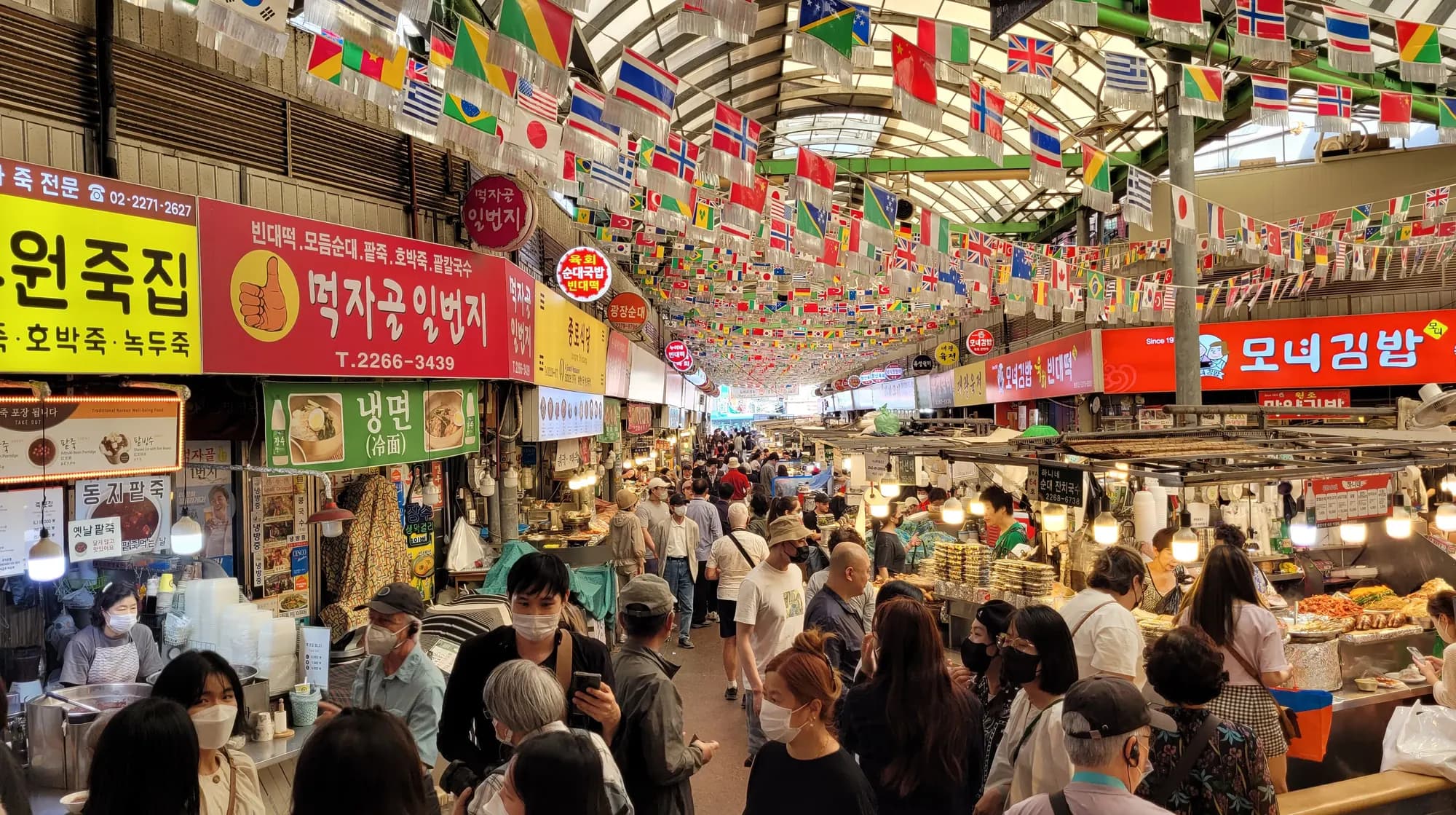
Korean food is bold and communal. Try Korean barbecue, grilled at your table; bibimbap, rice with vegetables and chilli paste; and fried chicken with beer, known as chimaek. Every meal comes with banchan, small side dishes, including kimchi. Street food includes tteokbokki (spicy rice cakes) and hotteok (sweet filled pancakes). In the evening, try soju, Korea's most popular spirit, or makgeolli, a cloudy rice wine.
Day trips
The Demilitarized Zone (DMZ) separating North and South Korea can be visited on organised tours from Seoul, usually including an observation post and an infiltration tunnel; bring your passport. Suwon, an hour south, is home to the Hwaseong Fortress, an eighteenth-century wall circling the old city, a World Heritage Site. Bukhansan National Park, on Seoul's northern edge, offers granite peaks and temples within reach of the subway.