Jeju Island
Korea's volcanic holiday island of craters, lava caves, black-stone walls, waterfalls and tangerine orchards.
- Best time to go
- April to June and September to November, for mild weather and colourful landscapes
- Local time
- –
- Currency
- South Korean Won (KRW)
- Reading time
- 4 min
- Language
- Korean
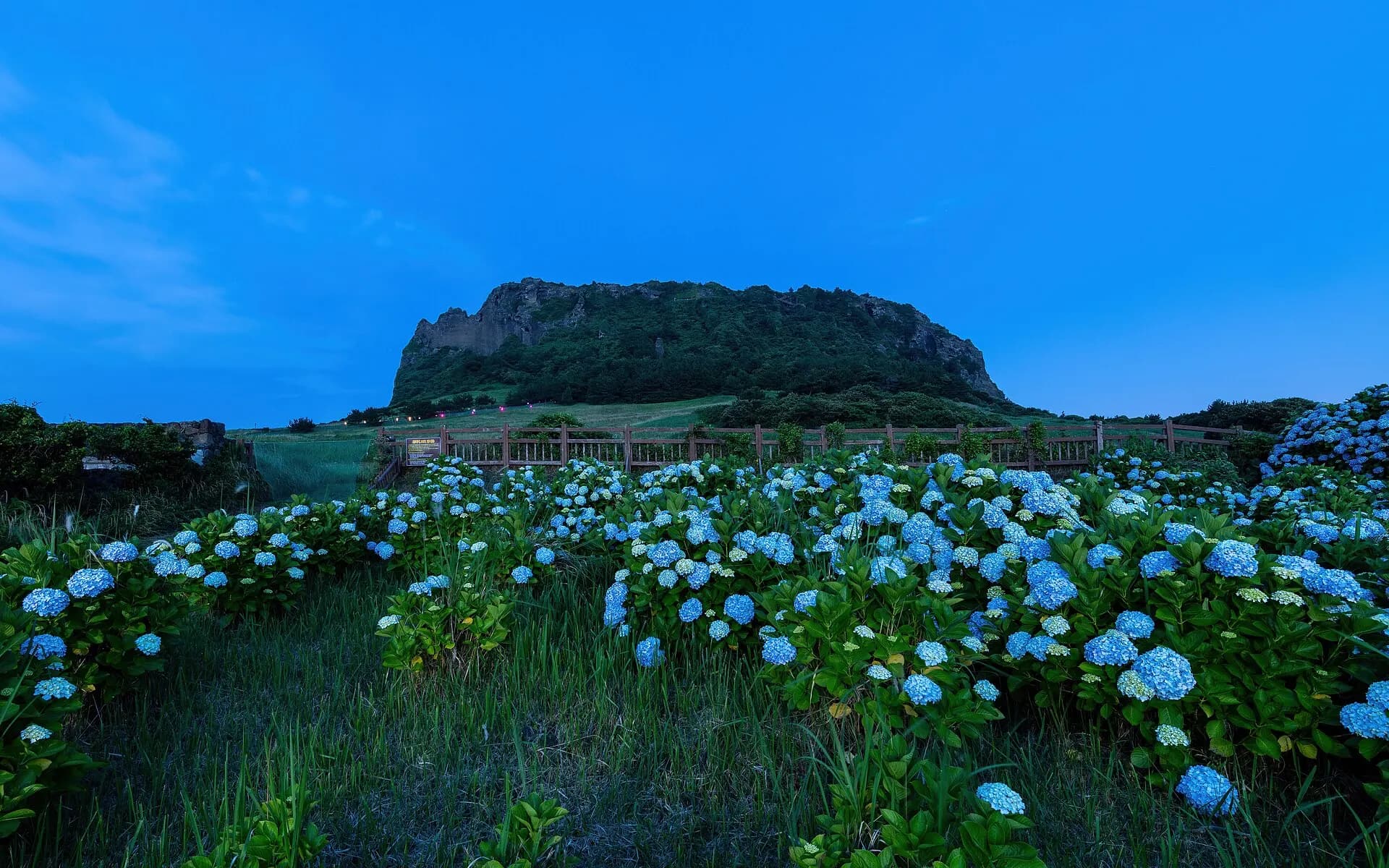
Jeju, an island off the southern tip of the Korean peninsula, was formed by volcanic eruptions and is dominated by Hallasan, South Korea's highest mountain. Its landscape of craters, lava tubes, cliffs of columnar basalt, waterfalls and beaches has earned it World Heritage status, and its distinctive culture includes walls of black volcanic stone, grandfather statues called dol hareubang, and the haenyeo, women divers who harvest seafood without breathing equipment, a tradition recognised by UNESCO.
It's Korea's favourite holiday island, with a mild climate, tangerine orchards and a coastline made for walking and cycling. A car makes it easy to explore its varied corners in a few days.
The top 9 in Jeju Island
- 1
Hallasan National Park
Photo: Yoo Chung, CC BY-SA 2.5, via Wikimedia Commons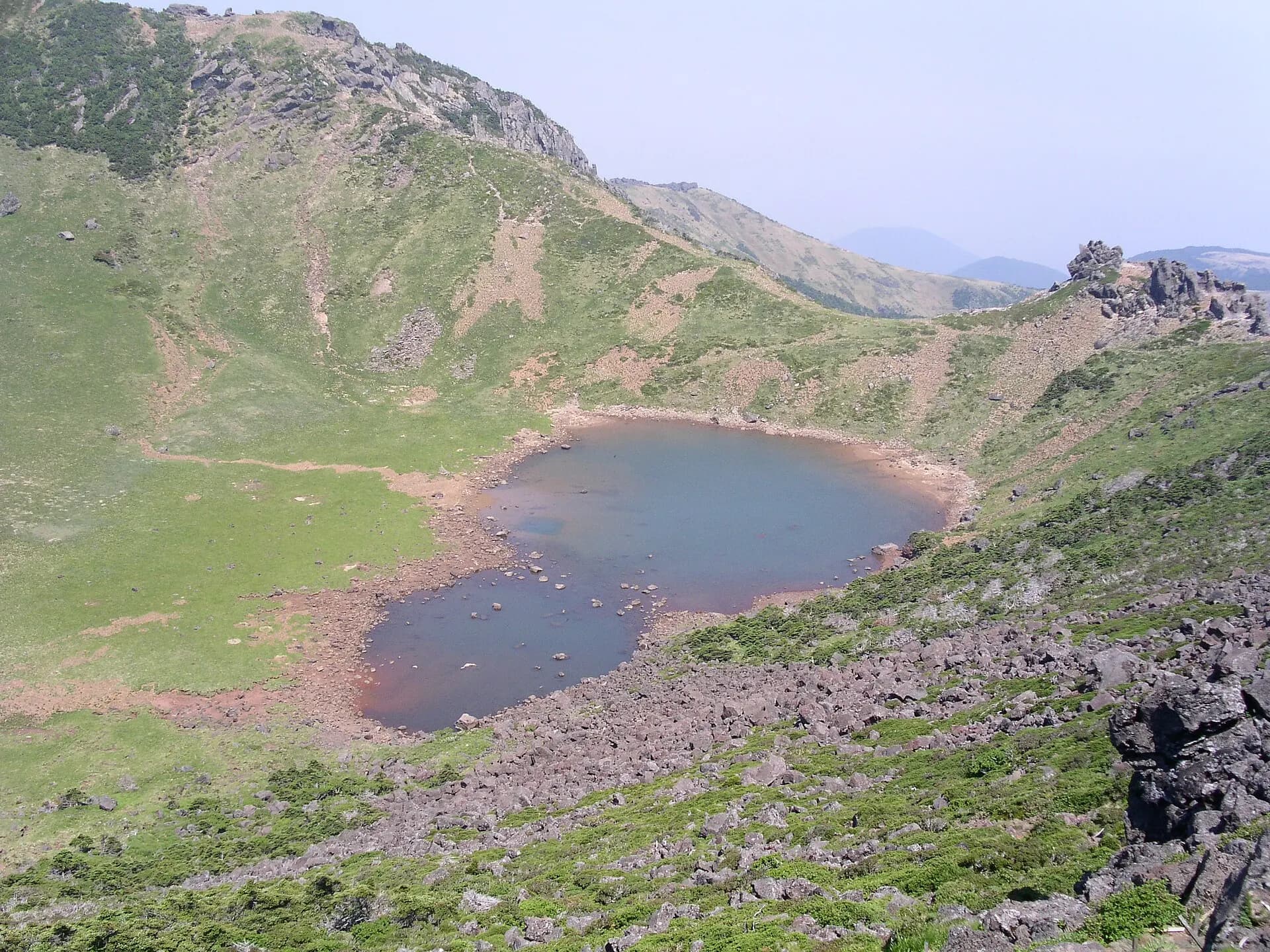
Hallasan, an extinct volcano rising to 1,947 metres, has a crater lake, Baengnokdam, at its summit. Several trails climb through forest and alpine meadows; the summit routes take a full day and require advance reservation.
TipStart early: there are cut-off times at checkpoints, after which you can't continue to the summit.
- 2
Seongsan Ilchulbong
Photo: Basile Morin, CC BY-SA 4.0, via Wikimedia Commons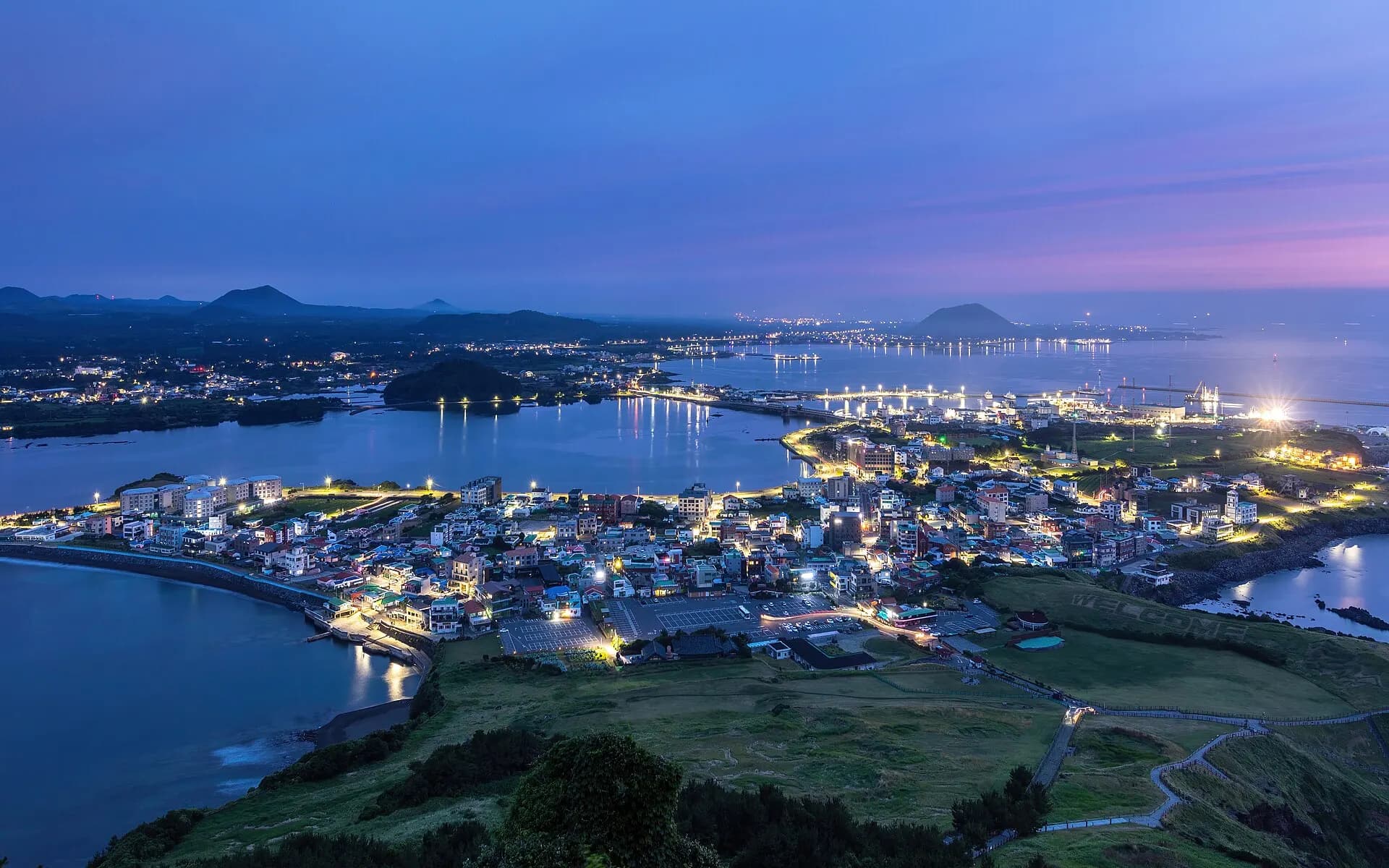
"Sunrise Peak", a tuff cone rising from the sea on the eastern tip of the island, formed by an underwater eruption. A twenty-minute climb leads to the rim of its vast grassy crater, a famous place to watch the sunrise. Haenyeo divers sometimes give demonstrations at the beach below.
- 3
Manjanggul Lava Tube
Photo: AhmadElq, CC BY-SA 4.0, via Wikimedia Commons
One of the longest lava tubes in the world, a tunnel formed by flowing lava, of which about a kilometre is open to visitors, ending at a lava column seven metres high.
TipIt's cool and damp inside year-round; bring a jacket and good shoes.
- 4
Jusangjeolli Cliffs
Photo: Bernard Gagnon, CC0, via Wikimedia Commons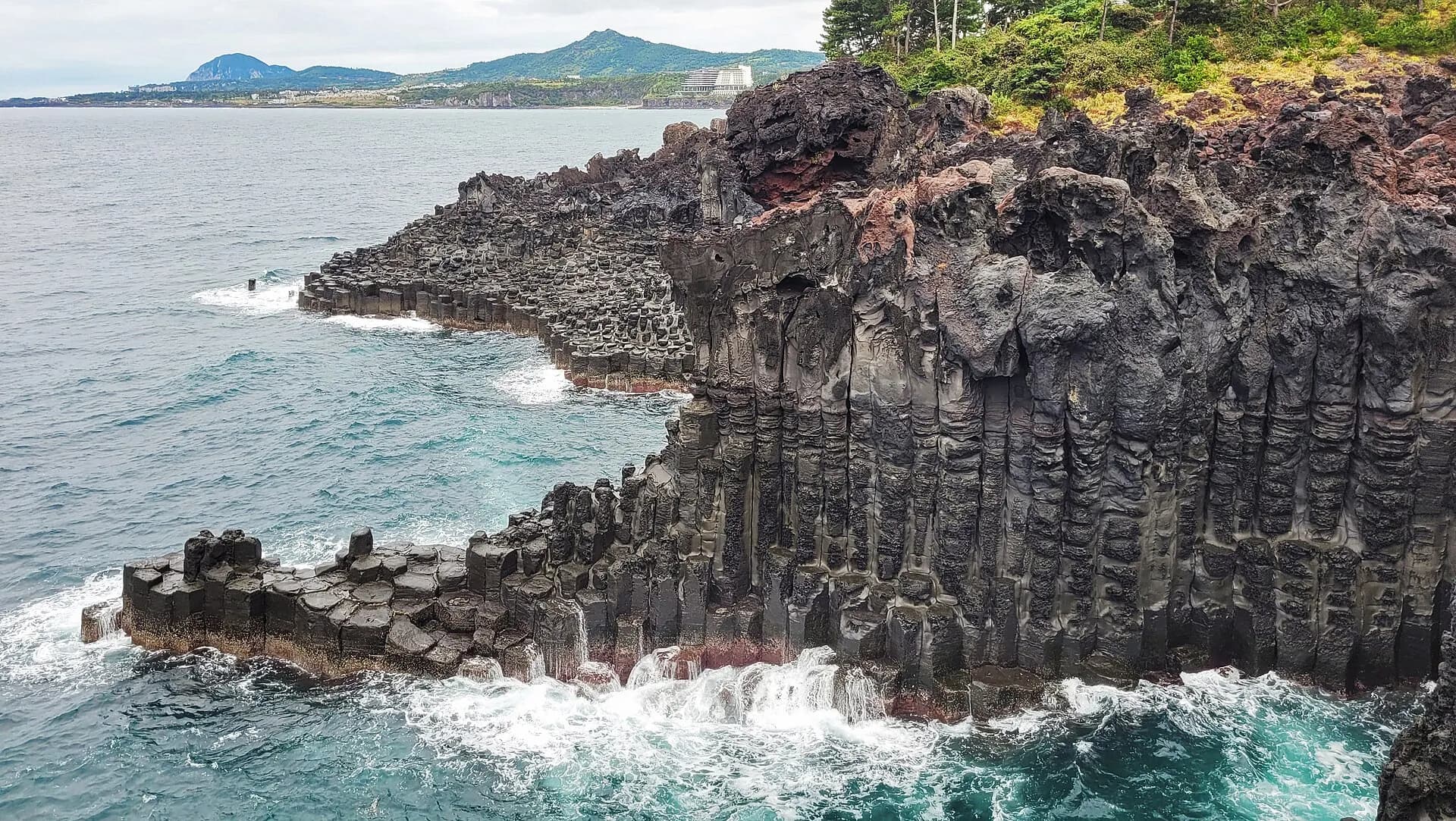
Columns of hexagonal basalt along the south coast, formed when lava cooled quickly in the sea, with waves crashing against them.
- 5
Cheonjiyeon and Jeongbang waterfalls
Waterfalls near Seogwipo on the south coast: Cheonjiyeon falls into a pool in a lush valley, beautifully lit at night, and Jeongbang plunges directly into the sea, one of the few waterfalls in Asia to do so.
- 6
Udo Island
A small island off the east coast, a short ferry ride away, with beaches of white coral sand, farms, cliffs and peanut ice cream, best explored by bike or scooter.
- 7
Hyeopjae Beach
Photo: Naturehead, CC BY-SA 3.0, via Wikimedia Commons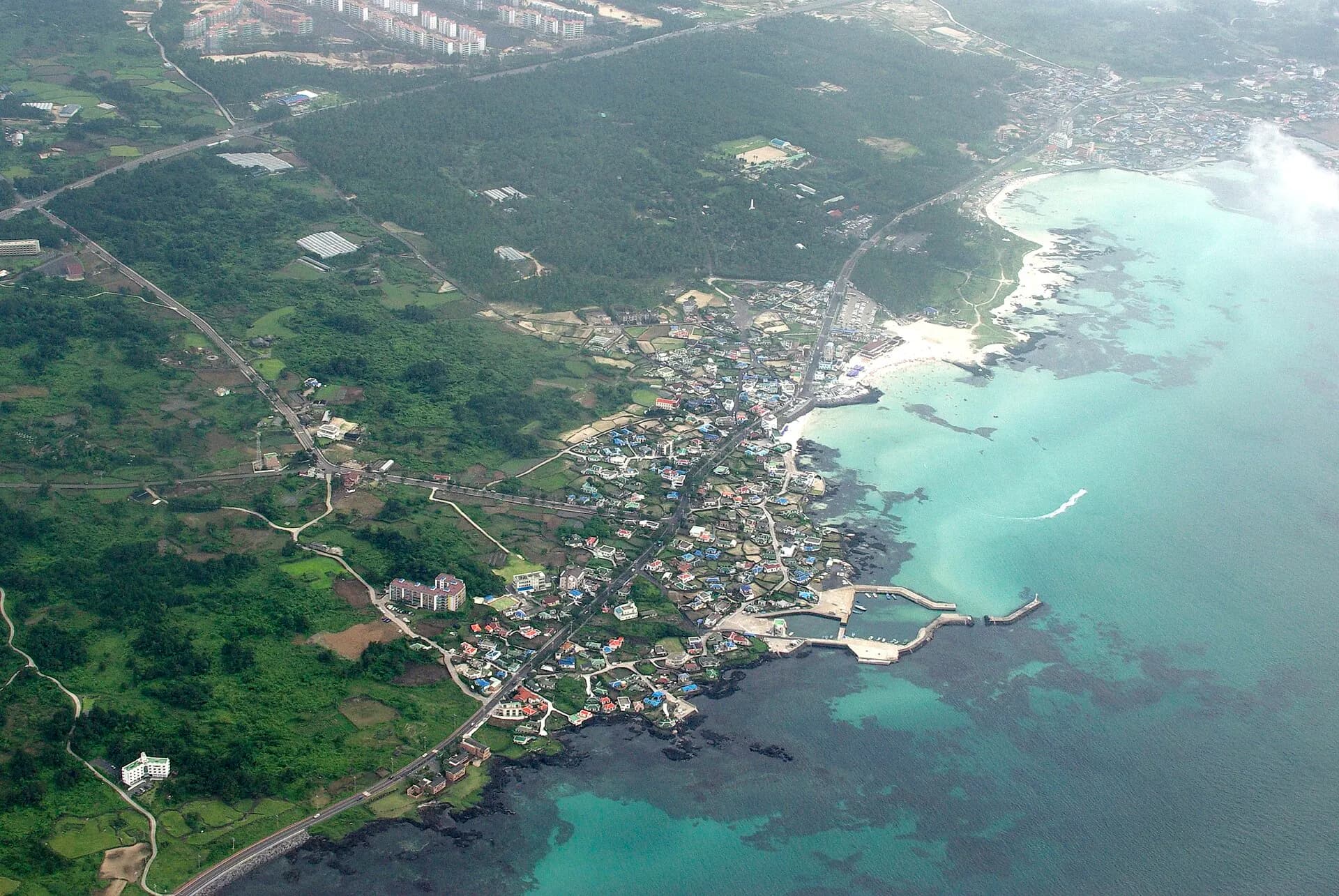
A beach of white sand and turquoise water on the west coast, facing the small island of Biyangdo.
- 8
Jeju Olle Trail
Photo: Republic of Korea from Seoul, Republic of Korea, CC BY-SA 2.0, via Wikimedia Commons
A network of walking trails, more than four hundred kilometres long, circling the island along coastlines, villages, oreum (small volcanic cones) and farms, divided into around 27 routes of a day or less.
- 9
Oreum
Jeju has more than 360 small volcanic cones, called oreum, scattered across the island. Saebyeol Oreum, Darangshi Oreum and Yongnuni Oreum offer short climbs with sweeping views, especially in autumn when they're covered in silver grass.
When to go
Spring brings cherry blossoms and yellow rapeseed flowers in March and April. Autumn is clear and comfortable, with silver grass on the oreum and tangerine harvests. Summer is hot and humid with a rainy season and occasional typhoons, but the beaches are at their best. Winter is mild for Korea but windy, with snow on Hallasan.
Getting around
Renting a car is the easiest way to explore; drive carefully and watch for speed cameras. Buses cover the island but are slow between distant sights. Taxis can be hired for the day. Jeju International Airport, in Jeju City, has flights from Seoul in about an hour, one of the busiest air routes in the world, and from other Asian cities.
Local tips
- Many nationalities can visit Jeju visa-free under a special scheme; check the current rules.
- Book Hallasan summit trails online in advance.
- Bring layers for the mountain and wind on the coast.
- Use a Korean map app for driving and transport directions.
- Respect the haenyeo's fishing areas; don't enter them to collect seafood.
- Tipping isn't expected.
- Wind can be strong on the coast; secure hats and drones.
- Book rental cars ahead in peak season and holidays.
- Many cafés and restaurants close one day a week; check before driving out.
Eat and drink
Jeju is famous for black pork, grilled at the table; fresh seafood caught by the haenyeo, such as abalone, sea urchin and conch, often served in rice porridge; and galchi, hairtail fish. Hallabong, a large, sweet citrus fruit, appears in juices, chocolates and desserts, and green tea is grown on the island's plantations, such as O'sulloc.
Where to stay
Jeju City, in the north, is convenient for the airport and has the most restaurants. Seogwipo, on the south coast, is closer to the waterfalls and Jungmun resort area, with big hotels. Smaller guesthouses and stone cottages in villages around the coast offer a quieter stay.
The haenyeo
For centuries, Jeju's women divers, the haenyeo, have dived into cold seas without oxygen tanks to gather abalone, sea urchins, conch and seaweed, holding their breath for a minute or more and calling out with a distinctive whistle when they surface. Many are now in their sixties, seventies and older, and their numbers are falling. The Haenyeo Museum, in Gujwa on the north-east coast, tells their story, and seafood restaurants run by haenyeo cooperatives serve their catch.
Culture and folklore
Jeju was once a separate kingdom, Tamna, and it has its own dialect, shamanic traditions and folklore. Look for the dol hareubang, the "stone grandfathers", carved from volcanic basalt and once guarding village gates; the Jeju Folk Village and Seongeup Folk Village preserve thatched houses with black-stone walls. The Jeju April 3 Peace Park commemorates the tragic events of 1948, when thousands of islanders were killed during a violent crackdown.