Busan
Korea's sunny port city of beaches, seaside temples, colourful hillside villages and the freshest seafood in the country.
- Best time to go
- May to June and September to October, for warm, clear days; July to August for the beaches
- Local time
- –
- Currency
- South Korean Won (KRW)
- Reading time
- 4 min
- Language
- Korean

Busan, on the south-eastern tip of the Korean peninsula, is the country's second city and largest port, squeezed between mountains and the sea. During the Korean War it was a refuge for millions fleeing the fighting, and its steep hillside neighbourhoods still reflect that history. Today it's a lively, laid-back city of long beaches, seafood markets, Buddhist temples and modern skyscrapers.
Busan is easy to reach from Seoul by high-speed train, and its metro makes getting around simple. Split your time between the beaches of Haeundae and Gwangalli, the old port districts around Nampo, and the temples and cliffs along the coast.
The top 9 in Busan
- 1
Haeundae Beach
Photo: StephNurnberg, CC BY 2.0, via Wikimedia Commons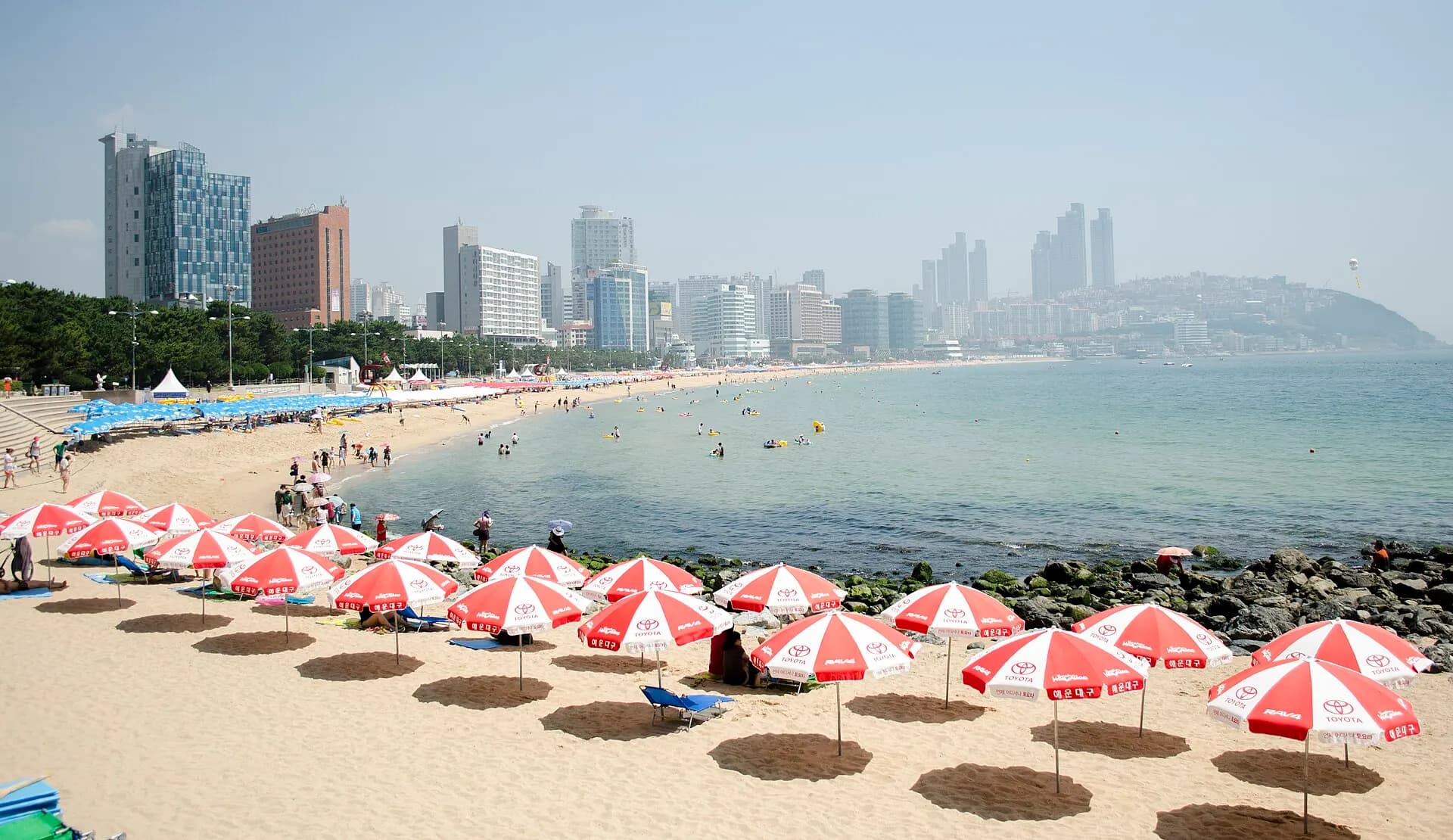
Korea's most famous beach, a long crescent of sand backed by luxury hotels and skyscrapers, crowded with swimmers in summer and the venue for festivals throughout the year. The coastal walk to Dongbaekseom Island and the Haeundae Blueline Park, with its seaside sky capsules and beach train, are nearby.
- 2
Haedong Yonggungsa
Photo: Christian Bolz, CC BY-SA 4.0, via Wikimedia Commons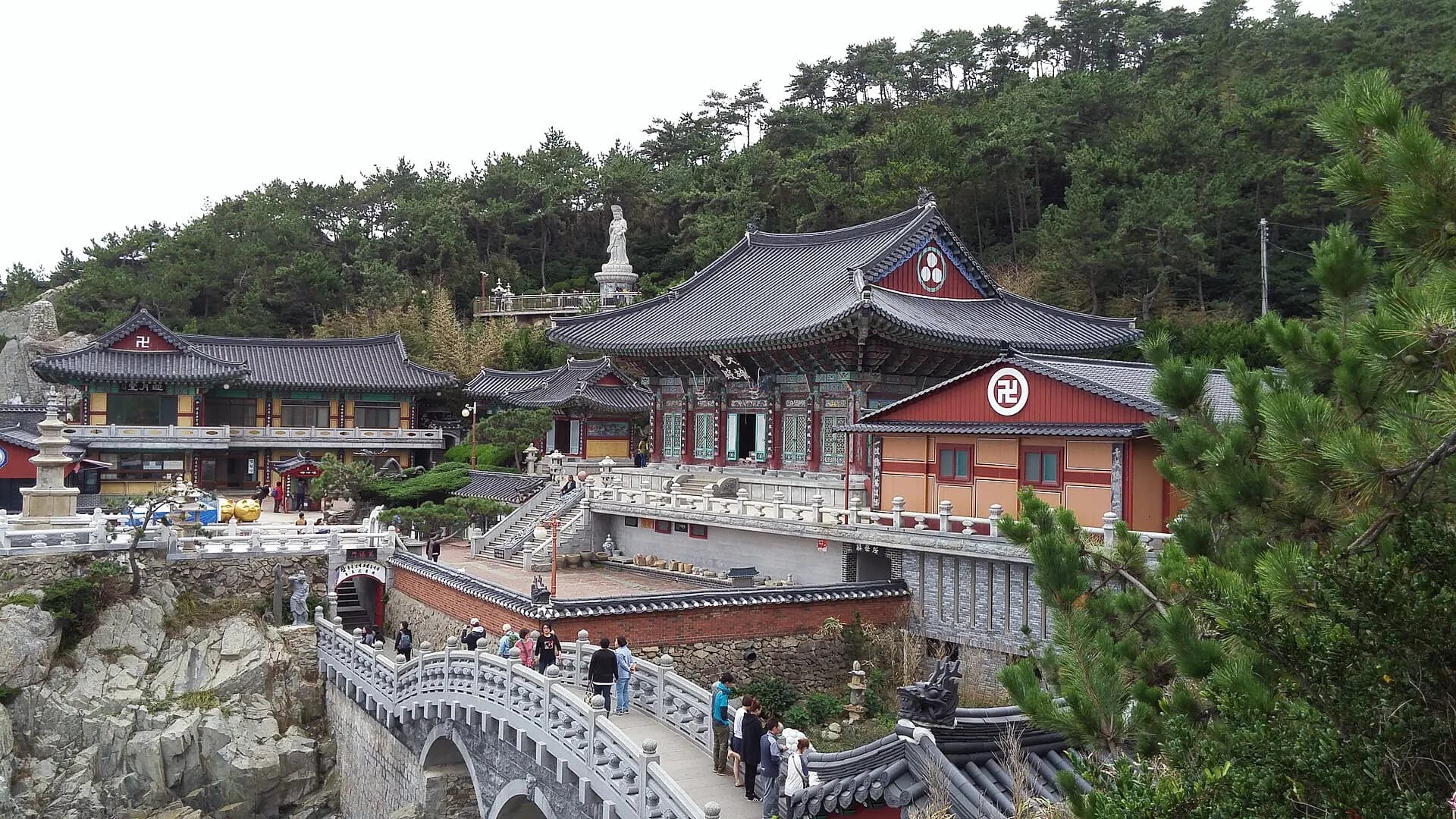
A Buddhist temple founded in the fourteenth century, unusually set on rocks right by the sea rather than in the mountains, with colourful halls, a stone pagoda and waves crashing below.
TipArrive early in the morning, before the crowds, or come for sunrise over the sea.
- 3
Gamcheon Culture Village
Photo: Basile Morin, CC BY-SA 4.0, via Wikimedia Commons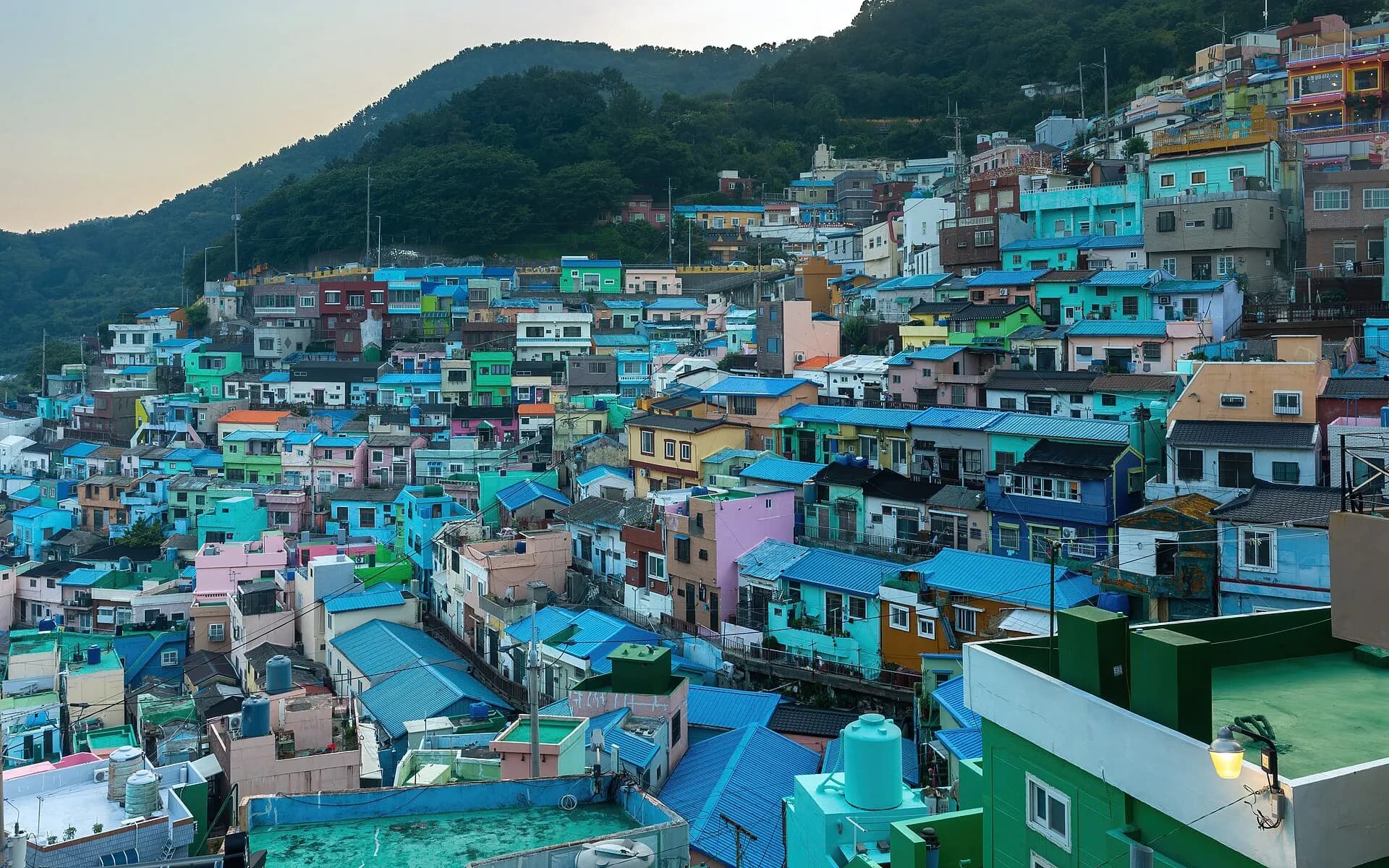
A hillside neighbourhood of brightly painted houses stacked up the slopes, first built by refugees during the Korean War, now decorated with murals, art installations and small galleries. Residents still live here, so visit quietly.
- 4
Jagalchi Fish Market
Photo: Bernard Gagnon, CC0, via Wikimedia Commons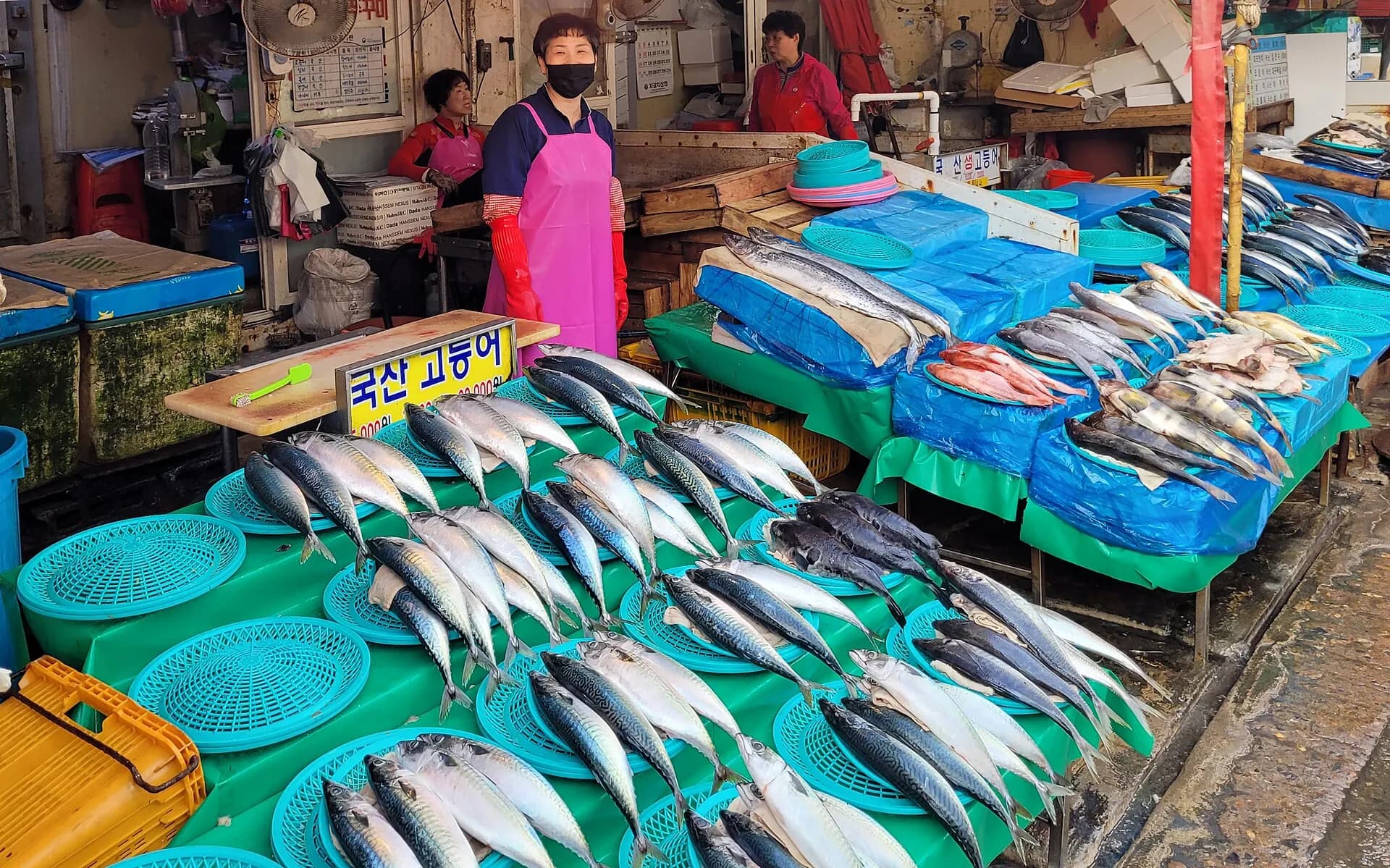
Korea's largest fish market, on the waterfront in Nampo, where vendors sell live fish, octopus, crabs and shellfish. Choose your seafood downstairs and have it prepared in one of the restaurants upstairs.
- 5
Gwangalli Beach and Gwangan Bridge
Photo: Masterhatch, CC BY-SA 4.0, via Wikimedia Commons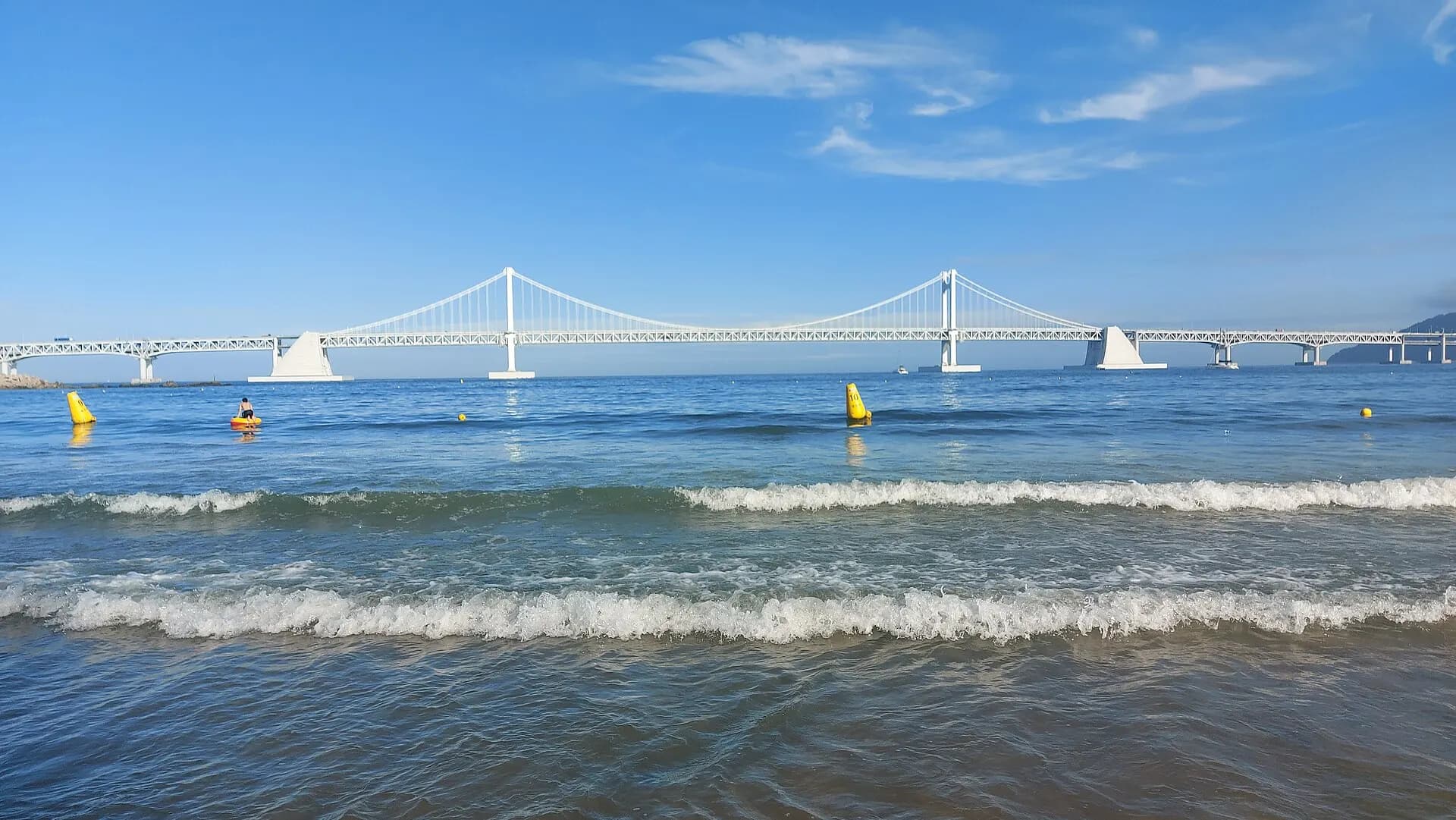
A beach with a row of cafés and bars facing the Gwangan Bridge, a long suspension bridge lit with colourful lights after dark. The view at night is one of the city's highlights.
- 6
Taejongdae
A park of cliffs, pine forest and rocky shores at the southern tip of Yeongdo Island, with a lighthouse, an observatory and views out to sea; on clear days, you can see as far as Japan's Tsushima Island.
- 7
Beomeosa Temple
Photo: Basile Morin, CC BY-SA 4.0, via Wikimedia Commons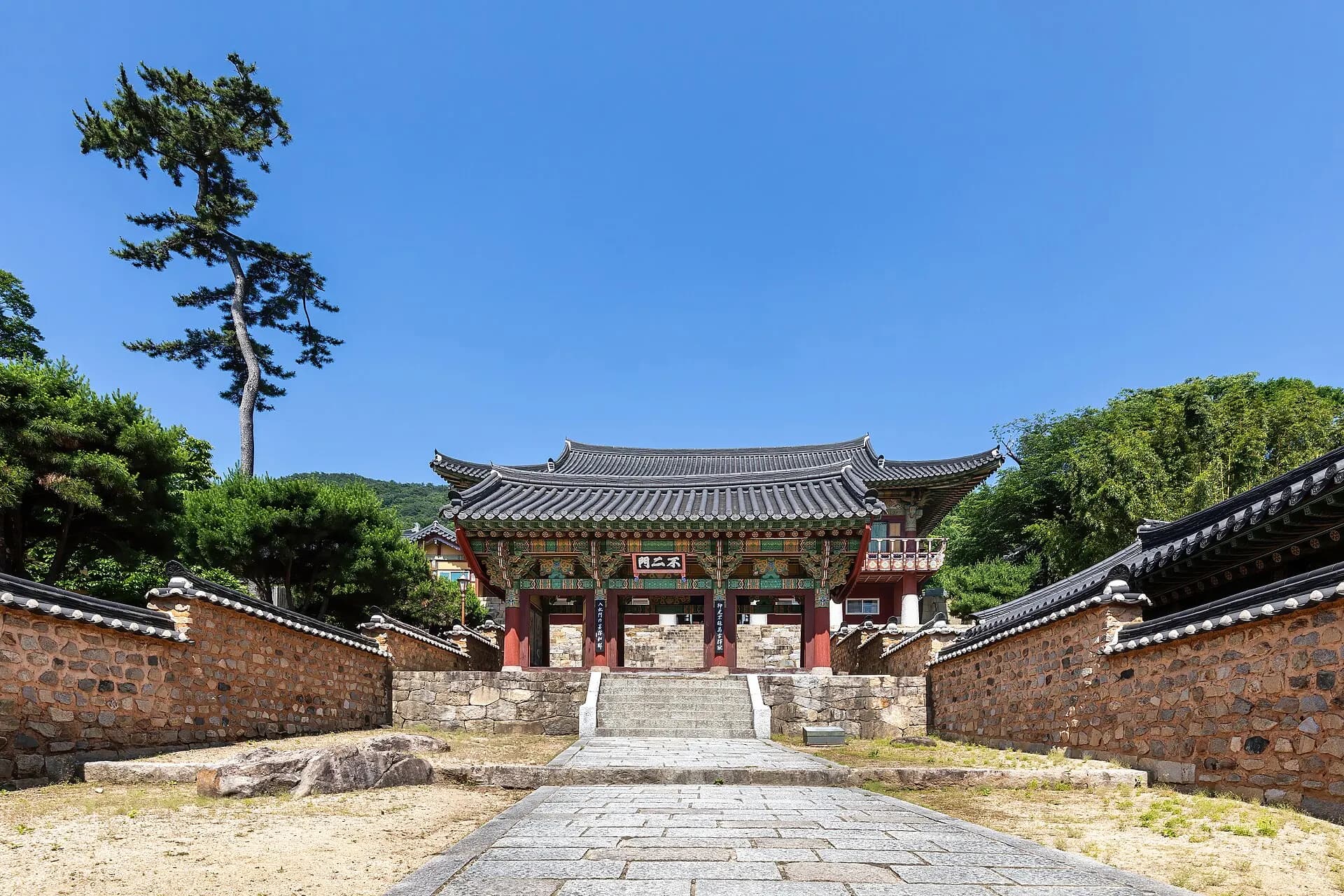
A temple founded in 678, in the forested mountains north of the city, one of the most important in Korea, with old halls, a gate of heavenly kings and walking trails up Geumjeongsan mountain.
- 8
The UN Memorial Cemetery
Photo: Bernard Gagnon, CC0, via Wikimedia Commons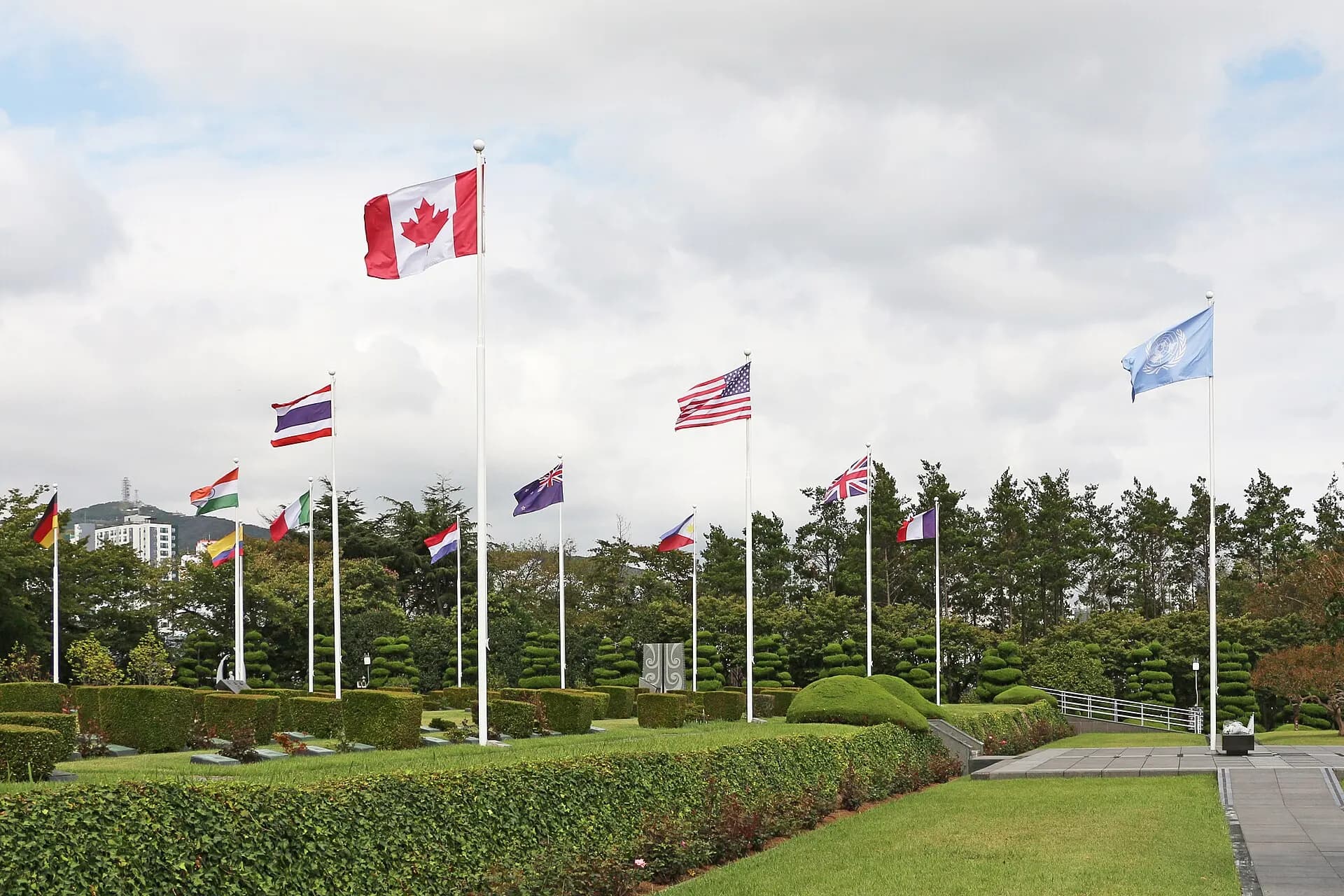
The only United Nations cemetery in the world, where soldiers from many countries who died in the Korean War are buried, set in quiet gardens.
- 9
BIFF Square and Gukje Market
A lively area in Nampo, with handprints of film stars from the Busan International Film Festival, street-food stalls selling hotteok, sweet filled pancakes, and the vast Gukje Market nearby.
When to go
Spring and autumn are the most pleasant seasons, with warm days and clear skies. Summer is hot and humid, the peak beach season, with a monsoon in July. The Busan International Film Festival, one of Asia's biggest, takes place in October, and the Busan Fireworks Festival lights up Gwangalli in autumn. Winters are milder than in Seoul.
Getting around
Busan's metro covers most sights, with buses filling the gaps; use a T-money card. Taxis are reasonably priced. KTX high-speed trains reach Seoul in about two and a half hours. Gimhae International Airport, with flights across Asia, is linked to the city by light rail, and ferries sail to Japan.
Local tips
- Check whether you need a K-ETA before travelling.
- Use a Korean map app for directions.
- Many restaurants serve some dishes only for two or more people.
- Respect residents in Gamcheon: keep noise down and don't enter private homes.
- Beaches have lifeguards and designated swimming hours in summer.
- Tipping isn't expected.
- Beaches get very crowded on summer weekends; go early.
- The Visit Busan Pass covers many attractions and some transport.
- Typhoons can affect the coast in late summer; check forecasts.
- Buy a T-money card at any convenience store.
Eat and drink
Busan is famous for its seafood: try raw fish (hoe) at Jagalchi, grilled eel, and fishcakes (eomuk), a local speciality sold everywhere. Other Busan classics include dwaeji gukbap, a hearty pork and rice soup, and milmyeon, cold wheat noodles created by refugees during the war. In the evening, sip soju with seafood in the tents by the sea.
Where to stay
Haeundae has beachfront hotels and resorts; Gwangalli is livelier at night with views of the bridge; Seomyeon is the central shopping and nightlife district with good transport links; and Nampo is convenient for the markets and old port.
Hiking and coastal walks
Busan is surrounded by mountains and coast, and walking is one of the best ways to enjoy it. The Igidae Coastal Walk, between Gwangalli and Oryukdo, follows rocky cliffs with views of the Gwangan Bridge and the Haeundae skyline. The Oryukdo Skywalk, a glass-floored walkway over the sea, sits at the end of it. Geumjeongsan, near Beomeosa, has trails along the walls of Korea's largest mountain fortress, and Jangsan, above Haeundae, offers panoramic views over the city and the sea.
Hot springs and spas
Busan has several hot-spring areas, including Haeundae and Dongnae, where people have bathed for centuries. Spa Land in the Shinsegae Centum City department store, one of the world's largest, offers mineral baths and saunas in a modern jjimjilbang, a Korean bathhouse where you can relax for hours.
Day trips
Gyeongju, the ancient capital of the Silla kingdom, about half an hour away by KTX, is an open-air museum of royal tombs, temples and pagodas, including the World Heritage sites of Bulguksa Temple and the Seokguram Grotto.