Oaxaca
A colonial city of green stone churches, legendary markets and the best mole in Mexico, surrounded by ancient ruins and mezcal villages.
- Best time to go
- October to April, the dry season; late October to early November for Día de Muertos
- Local time
- –
- Currency
- Mexican Peso (MXN)
- Reading time
- 4 min
- Language
- Spanish
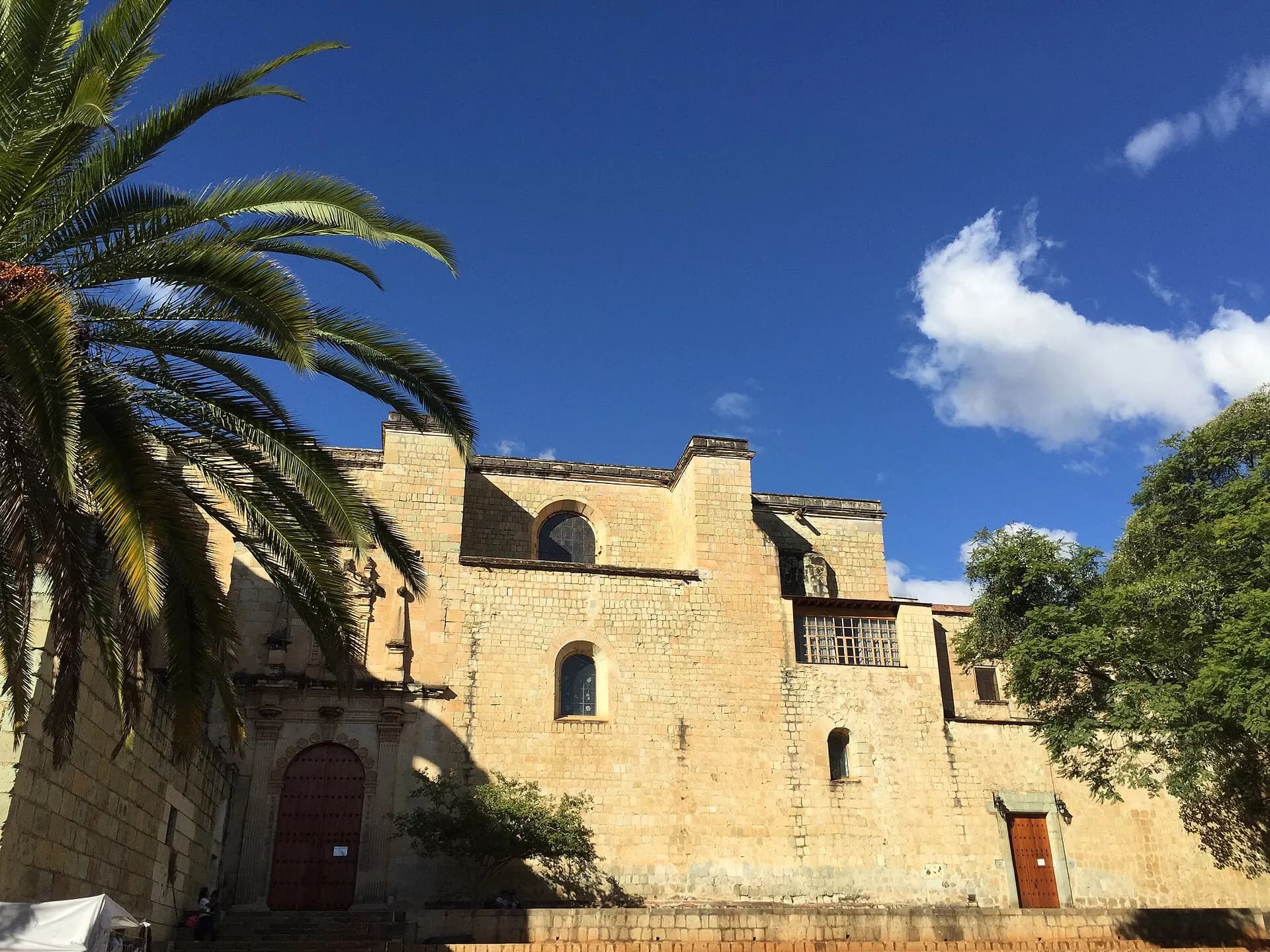
Oaxaca de Juárez, the capital of the southern Mexican state of Oaxaca, is a city of colonial churches and houses built from green-tinged volcanic stone, set in a valley surrounded by mountains. The state is home to many Indigenous peoples, including the Zapotec and Mixtec, whose languages, crafts, festivals and food make Oaxaca one of the most culturally rich places in Mexico. The historic centre and the nearby ruins of Monte Albán form a World Heritage Site.
It's above all a city for the senses: markets piled with chillies, chocolate and grasshoppers, kitchens famous for their moles, villages where craftspeople weave rugs and carve wooden animals, and fields of agave distilled into mezcal.
The top 9 in Oaxaca
- 1
Santo Domingo de Guzmán
Photo: Adam Jones from Kelowna, BC, Canada, CC BY-SA 2.0, via Wikimedia Commons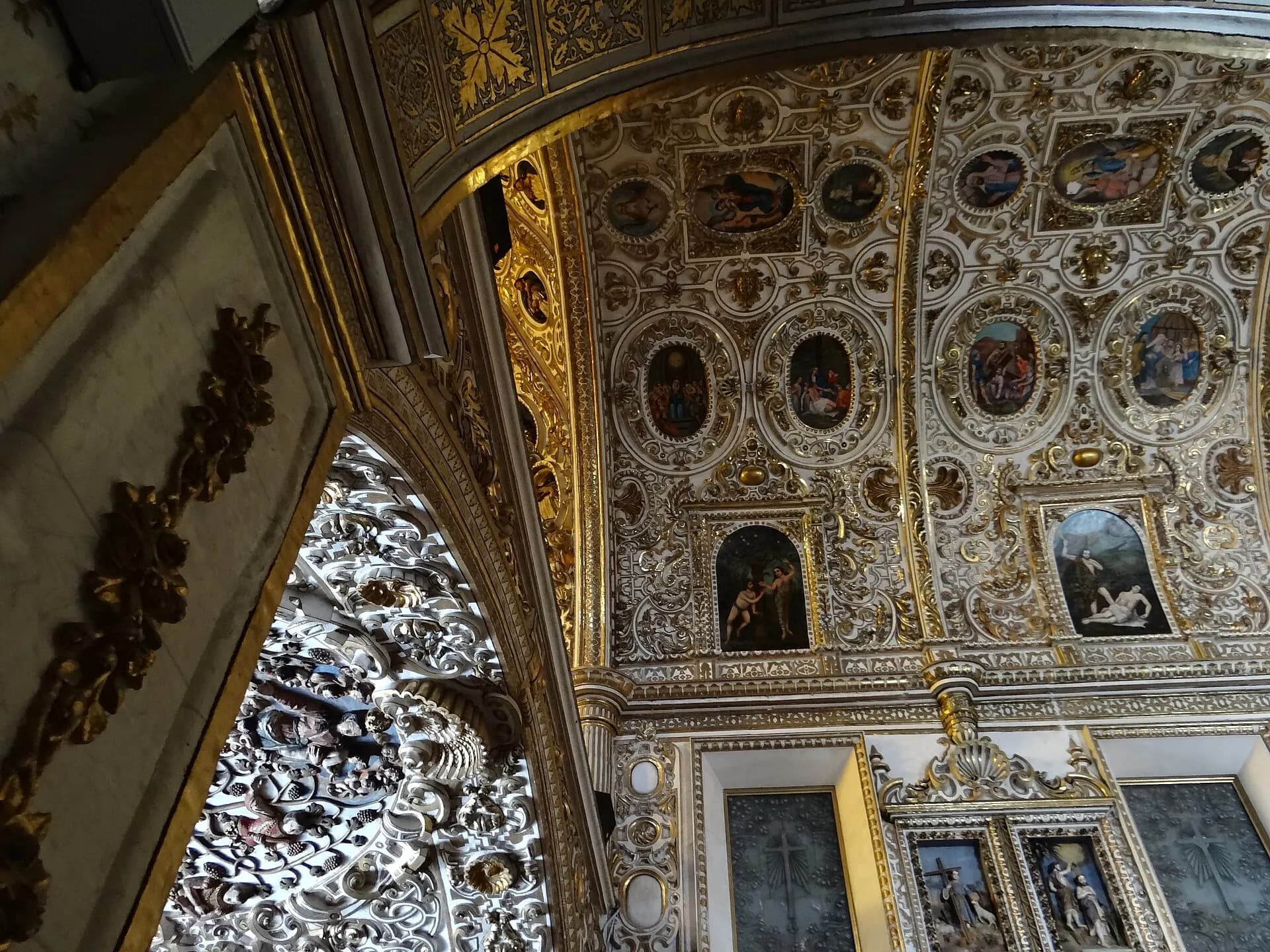
A baroque church and former monastery whose interior is covered in gilded stucco, including a famous genealogical tree on the ceiling. The adjoining convent houses the Museum of the Cultures of Oaxaca, with treasures from Monte Albán's Tomb 7, and an ethnobotanical garden of native plants.
- 2
The Zócalo
Photo: LBM1948, CC BY-SA 4.0, via Wikimedia Commons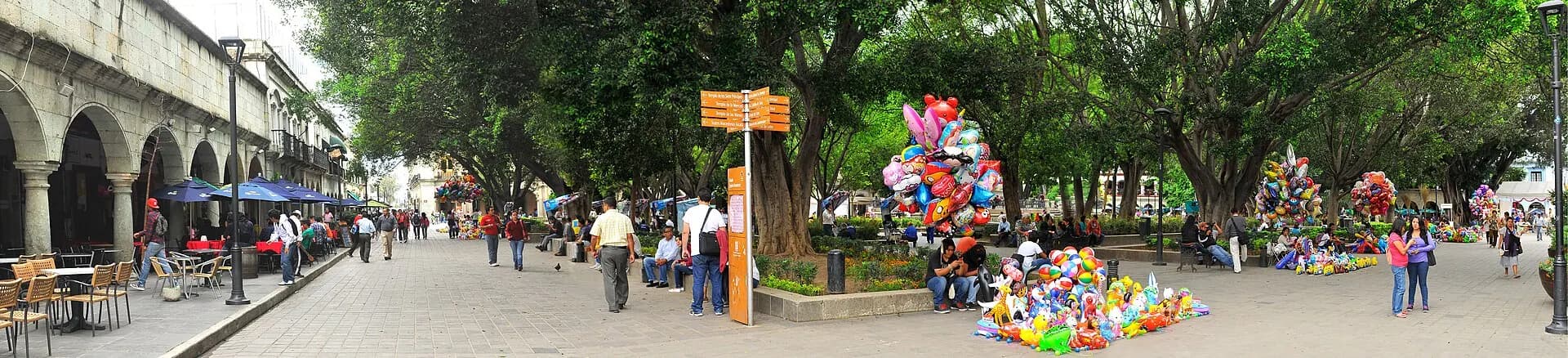
The city's main square, shaded by trees, with café terraces, the cathedral and street life from morning until late at night, especially during festivals.
- 3
The Benito Juárez and 20 de Noviembre markets
Photo: pastorcesards, CC BY-SA 3.0, via Wikimedia Commons
Lively markets south of the Zócalo, piled with fruit, chillies, cheeses, chocolate, bread and chapulines (toasted grasshoppers). In the 20 de Noviembre market, the smoky "Pasillo de Humo" is lined with grills where you choose meat to be cooked for you.
- 4
Monte Albán
Photo: MAHC-oaxaca, CC BY 4.0, via Wikimedia Commons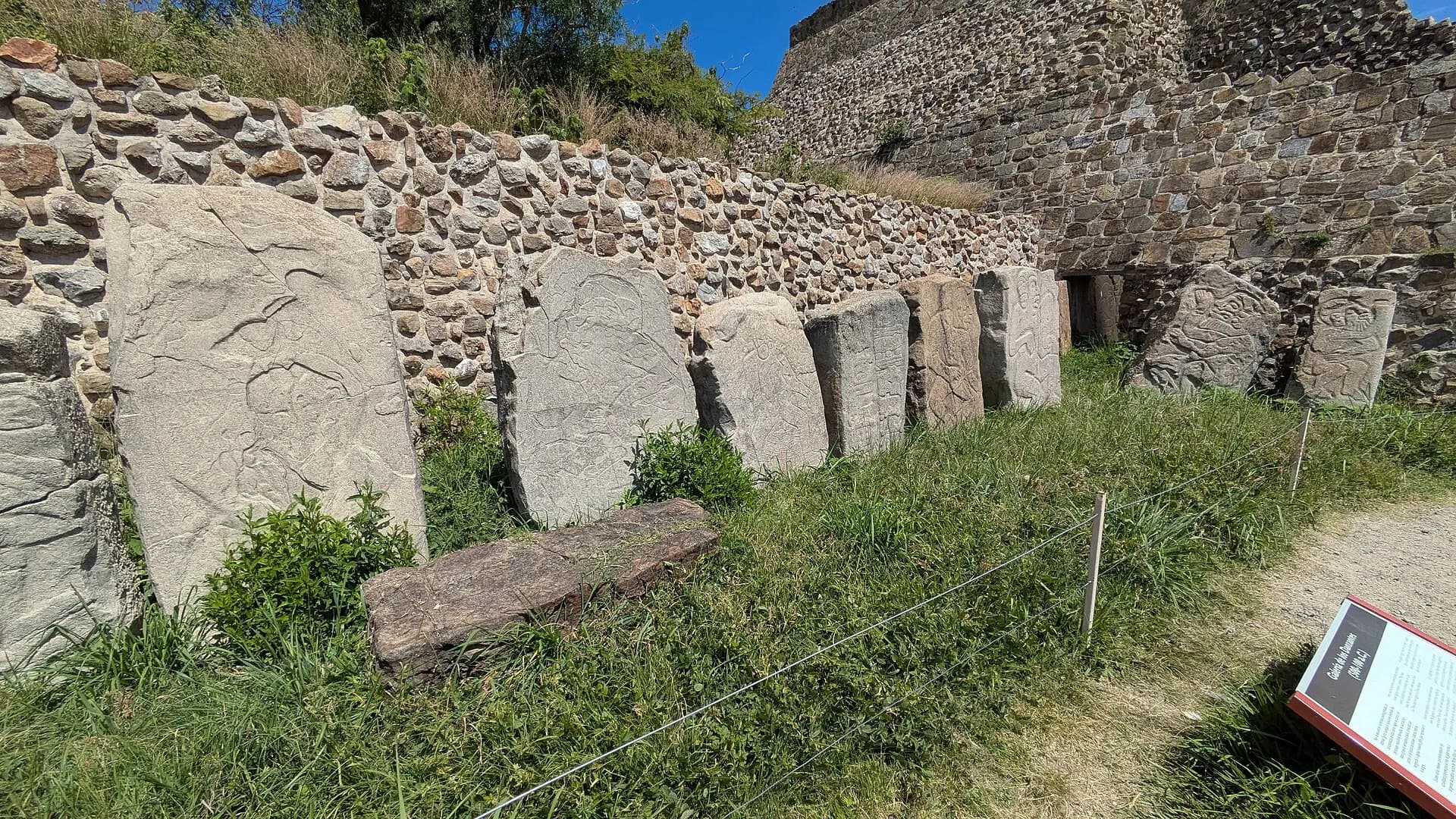
The ancient Zapotec capital, founded around 500 BC on a flattened mountaintop above the valley, with a vast plaza, pyramids, a ball court and carved stones depicting figures known as the danzantes. The views over the valleys are spectacular.
TipGo early to avoid the midday sun; there's little shade.
- 5
Mitla
Photo: Lsalgador82, CC BY-SA 3.0, via Wikimedia Commons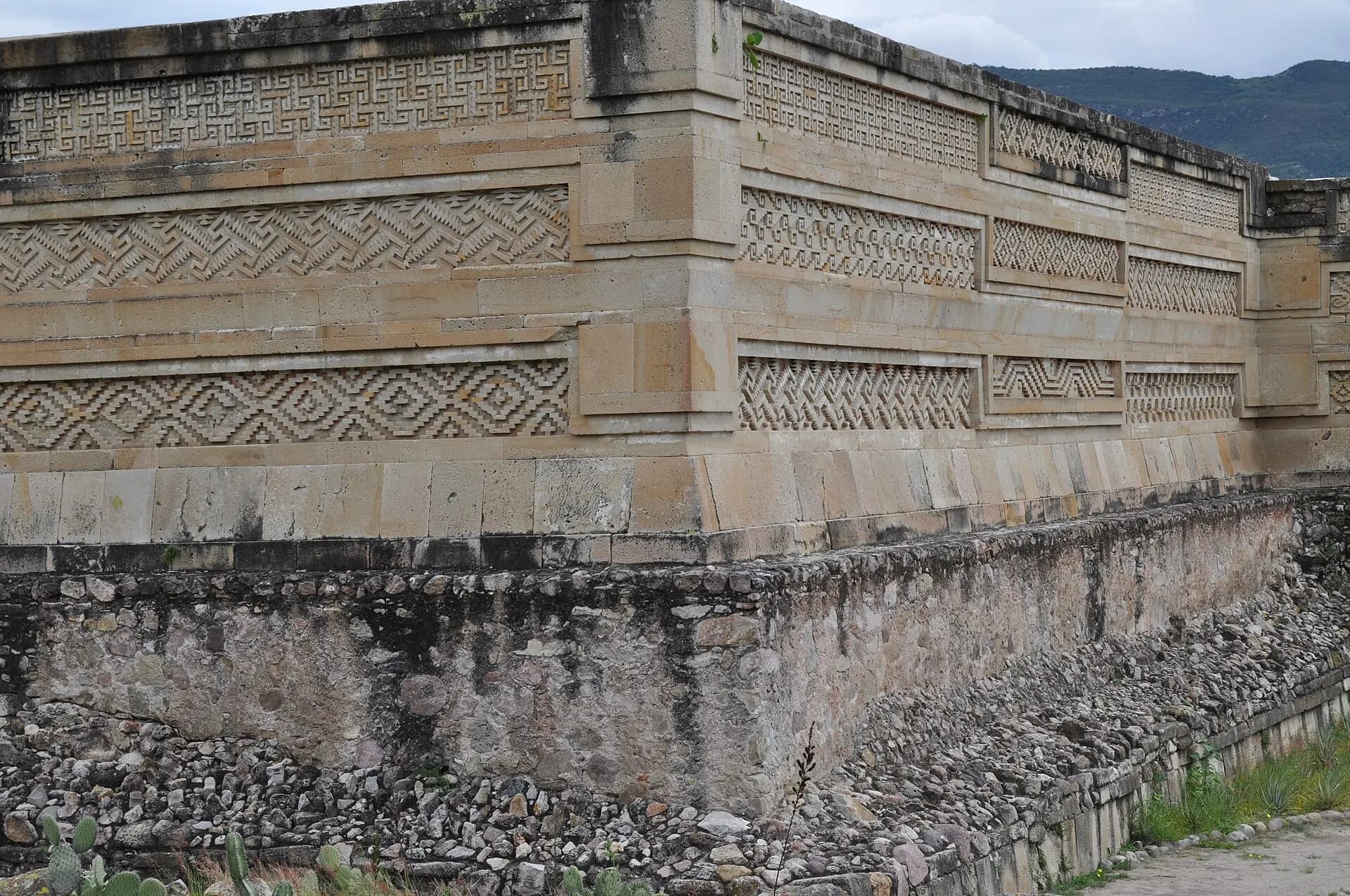
A Zapotec religious centre about an hour east, famous for its walls covered in intricate geometric stone mosaics, unique in Mesoamerica.
- 6
Hierve el Agua
Photo: Fvaldezrom, CC BY-SA 4.0, via Wikimedia Commons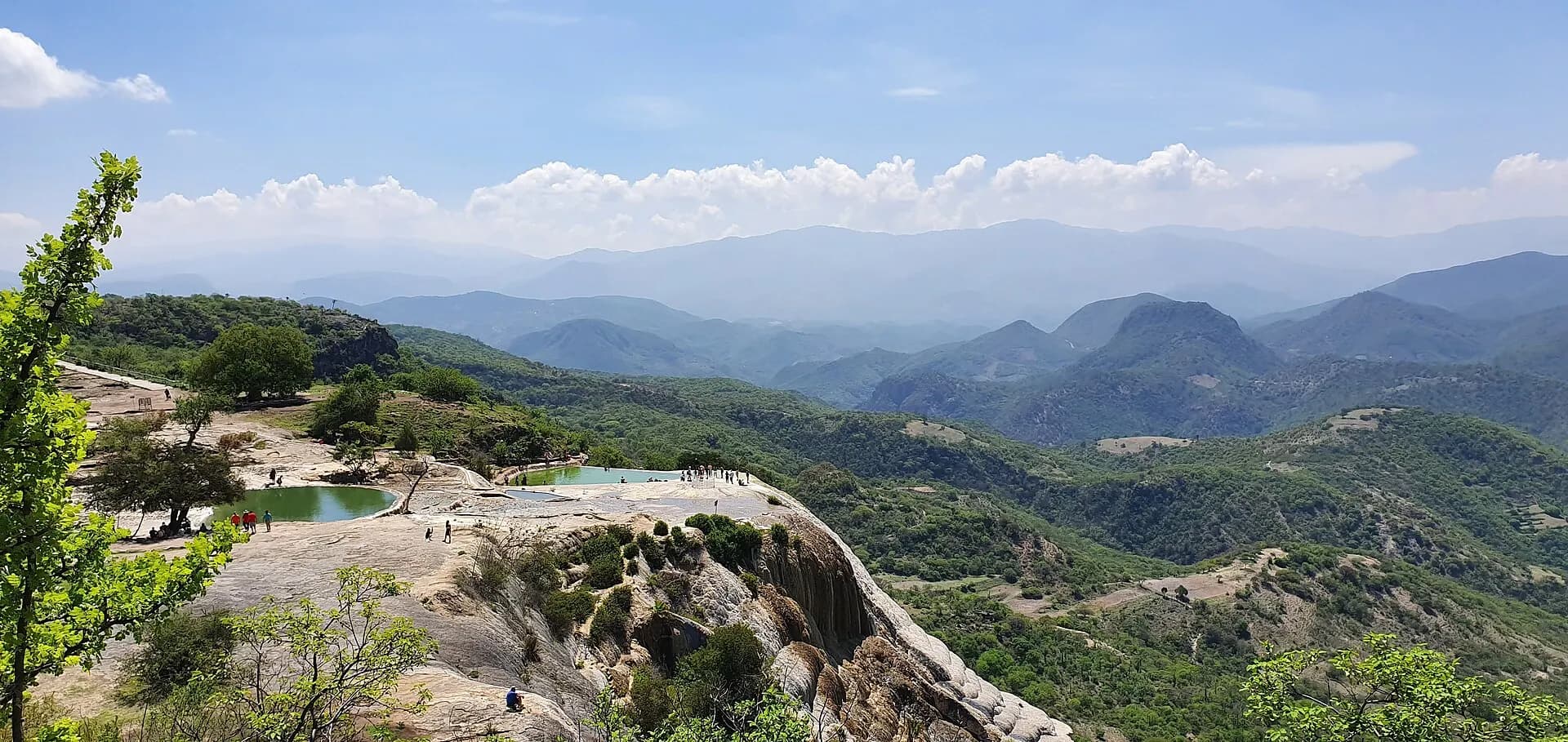
Mineral springs on a cliff edge in the mountains, where calcium-rich water has formed what look like petrified waterfalls, with natural pools to swim in and wide views.
- 7
The craft villages
Photo: User:Gengiskanhg, CC BY-SA 3.0, via Wikimedia Commons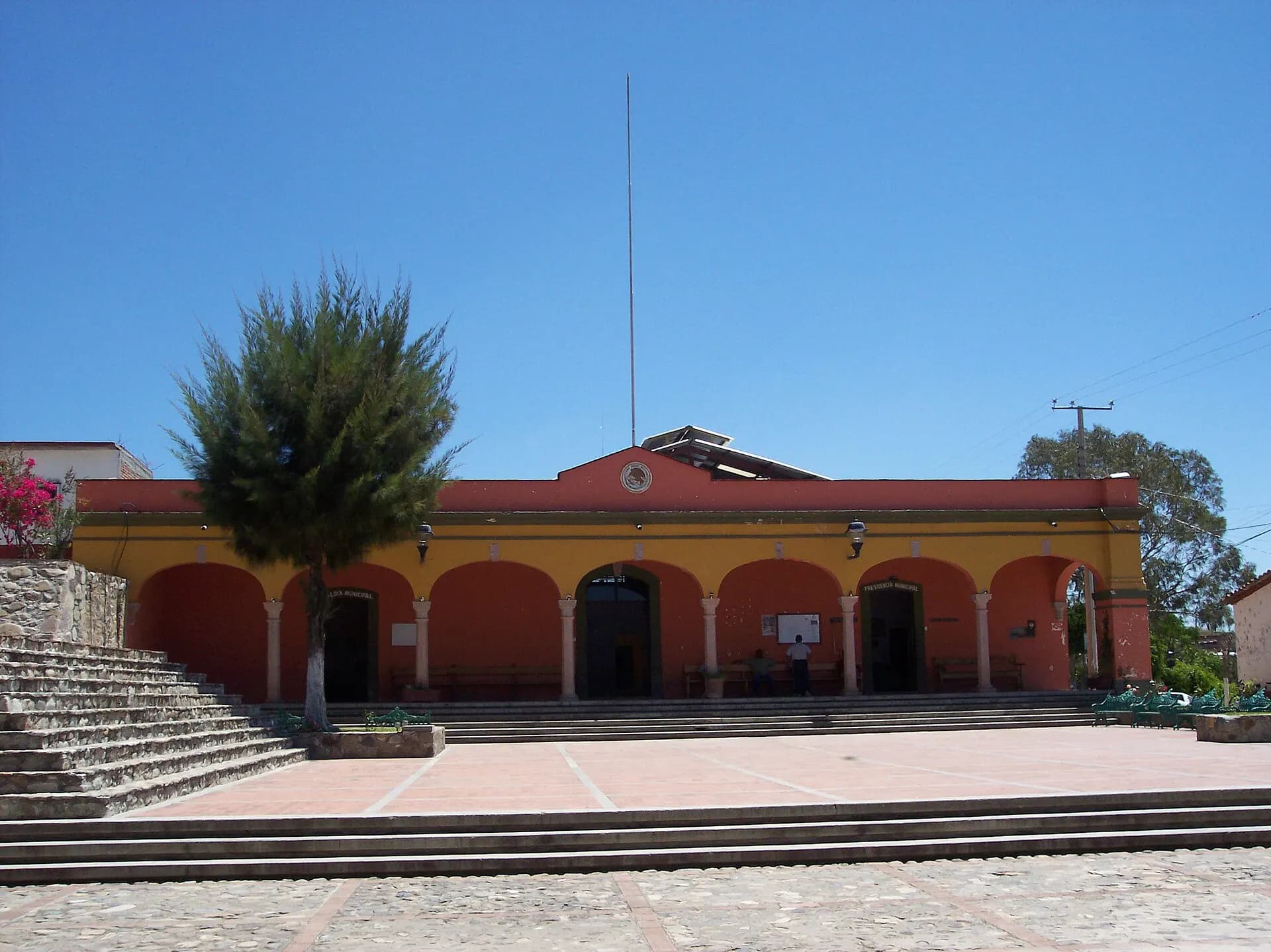
Around the city, villages specialise in traditional crafts: Teotitlán del Valle for wool rugs woven on looms and coloured with natural dyes; San Bartolo Coyotepec for black pottery; and San Martín Tilcajete and San Antonio Arrazola for alebrijes, carved and painted wooden creatures.
- 8
The mezcal route
In villages such as Santiago Matatlán, small distilleries called palenques roast agave in earth pits and distil it into mezcal. Many offer tastings and explain the traditional process.
- 9
Árbol del Tule
Photo: User:Gengiskanhg, CC BY-SA 3.0, via Wikimedia Commons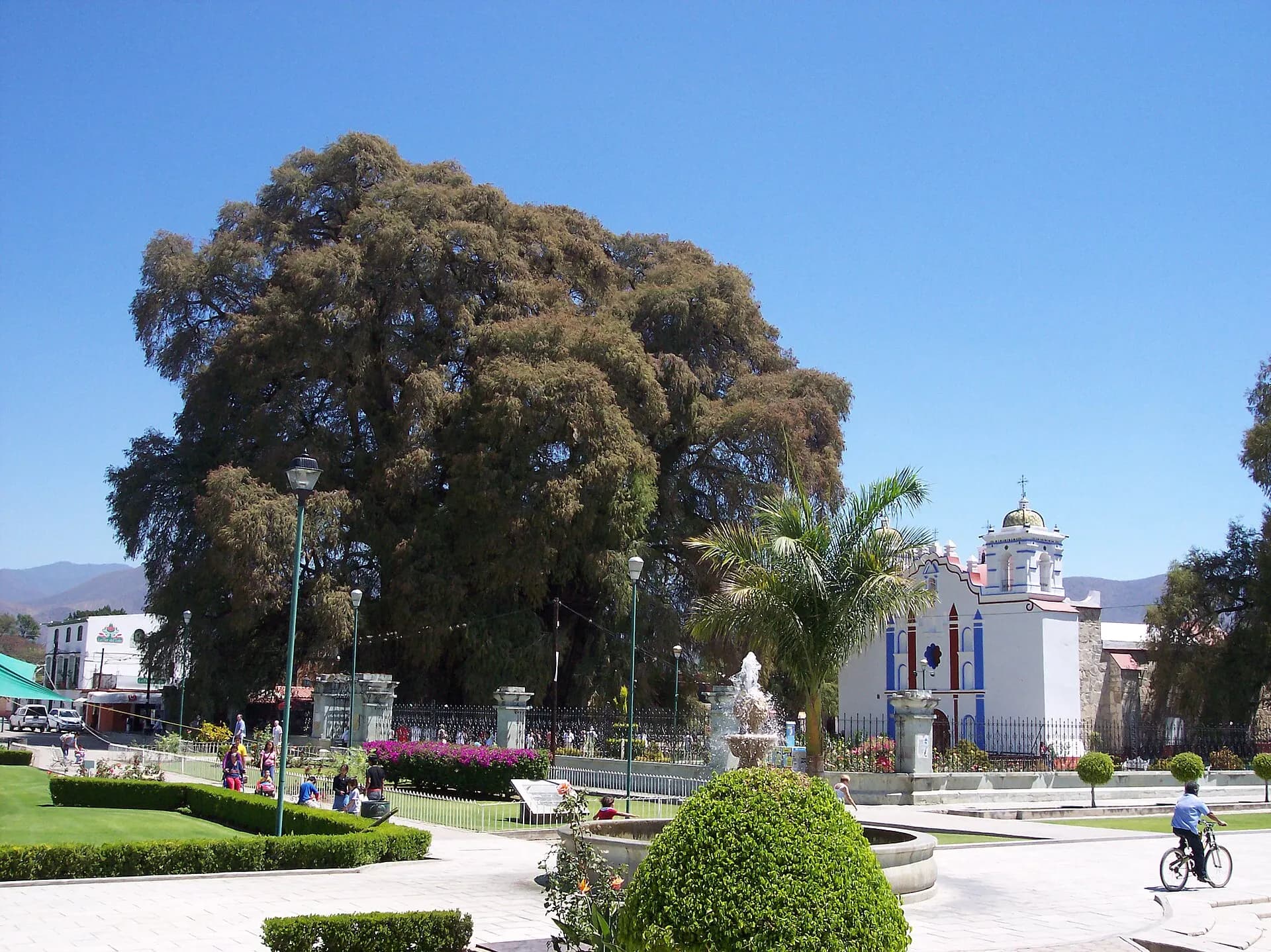
A Montezuma cypress in the churchyard of Santa María del Tule, with one of the stoutest trunks of any tree in the world, estimated to be well over a thousand years old.
When to go
The dry season, from October to April, has warm, sunny days and cool nights. Día de Muertos, the Day of the Dead, around 31 October to 2 November, is spectacular, with altars, marigolds and candlelit cemeteries. The Guelaguetza, a festival of dance from the regions of Oaxaca, takes place in July. The rainy season, from June to September, brings afternoon showers and green landscapes.
Getting around
The historic centre is compact and walkable. Taxis are inexpensive; agree the fare or use registered taxis. Colectivos, shared taxis, and buses run to the villages, and tours combine several sights in a day. Oaxaca International Airport is about twenty minutes from the centre.
Local tips
- Drink bottled or filtered water.
- Book accommodation far ahead for Día de Muertos and the Guelaguetza.
- Buy crafts directly from artisans in the villages where possible.
- Respect cemeteries and family altars during Día de Muertos; ask before photographing.
- Carry cash for markets and villages.
- Dress in layers: mornings and nights can be cool.
- The city sits at about 1,550 metres; take it easy on your first day.
- Many shops close for a long lunch in the afternoon.
- Book cooking classes and mezcal tours ahead in peak season.
- Street parades, or calendas, can appear at any time; join in with respect.
Eat and drink
Oaxaca is famous for its seven moles, complex sauces of chillies, spices and sometimes chocolate, the best known being the dark mole negro. Try tlayudas, large crispy tortillas topped with beans, cheese and meat; quesillo, the stringy local cheese; tamales in banana leaves; and hot chocolate made with water or milk. Mezcal is the local spirit, sipped slowly with orange slices and worm salt. Coffee from the mountains of the Sierra Sur and the Mixteca is excellent, and the city's cafés roast it locally.
Where to stay
The historic centre and the Jalatlaco neighbourhood, with its colourful streets and murals, have boutique hotels in colonial houses with courtyards. Staying near Santo Domingo puts you close to the best restaurants and bars.
Beyond the valley
The Pacific coast of Oaxaca, a long drive or short flight south, has relaxed beach towns: Puerto Escondido, known for its surfing and lagoon of bioluminescent plankton; Mazunte, with its turtle centre; and the bays of Huatulco, a protected national park. In the Sierra Norte, community-run villages such as Benito Juárez and Cuajimoloyas offer cabins, hiking and mountain biking through pine forests, managed by the local communities themselves.
Cooking classes and food tours
Oaxaca is one of the best places in Mexico to learn to cook. Many classes begin with a visit to a market to buy ingredients, then teach how to grind chillies, make tortillas by hand and prepare a mole, often in a family kitchen. Street-food tours introduce local snacks such as memelas, tejate, a pre-Hispanic maize and cacao drink, and nieves, ice creams in flavours like burnt milk and prickly pear.