Cancún
A long white sandbar between lagoon and Caribbean, with a real Mexican city behind it and the Maya world a day trip away.
- Best time to go
- December to April, the dry season
- Local time
- –
- Currency
- Mexican Peso (MXN)
- Reading time
- 11 min
- Language
- Spanish

Cancún sits at the north-eastern tip of Mexico's Yucatán Peninsula, and most visitors know it by its Hotel Zone: a thin, 7-shaped sandbar of resorts running for more than twenty kilometres between the Nichupté Lagoon and the open Caribbean. The sand is fine and pale, made of ground coral, and stays cool underfoot even at midday. Every beach in Mexico is public, so you can walk onto any stretch of it, whether or not you are staying at the hotel behind.
There is more here than resorts. Downtown, on the mainland, is a working city of markets, taquerías and evening plazas. Small Maya ruins stand right in the Hotel Zone, Isla Mujeres is a short ferry ride away, and the reef begins just offshore. Cancún is also the easiest base for the great inland sites of the Yucatán, Chichén Itzá, Ek Balam and colonial Valladolid, all within a long day by road or the Tren Maya.
The top 16 in Cancún
- 1
Parque de las Palapas
The main square of downtown Cancún and the best place to see the city as locals live it. In the evening, families gather around the bandstand, children play and food stalls sell marquesitas, crisp rolled crêpes filled with cheese and sweet fillings, along with elotes and tacos.
TipCome after sunset, when it's cooler and the square is at its liveliest, especially at weekends.
- 2
Mercado 28
Photo: Kirt Edblom, CC BY-SA 2.0, via Wikimedia Commons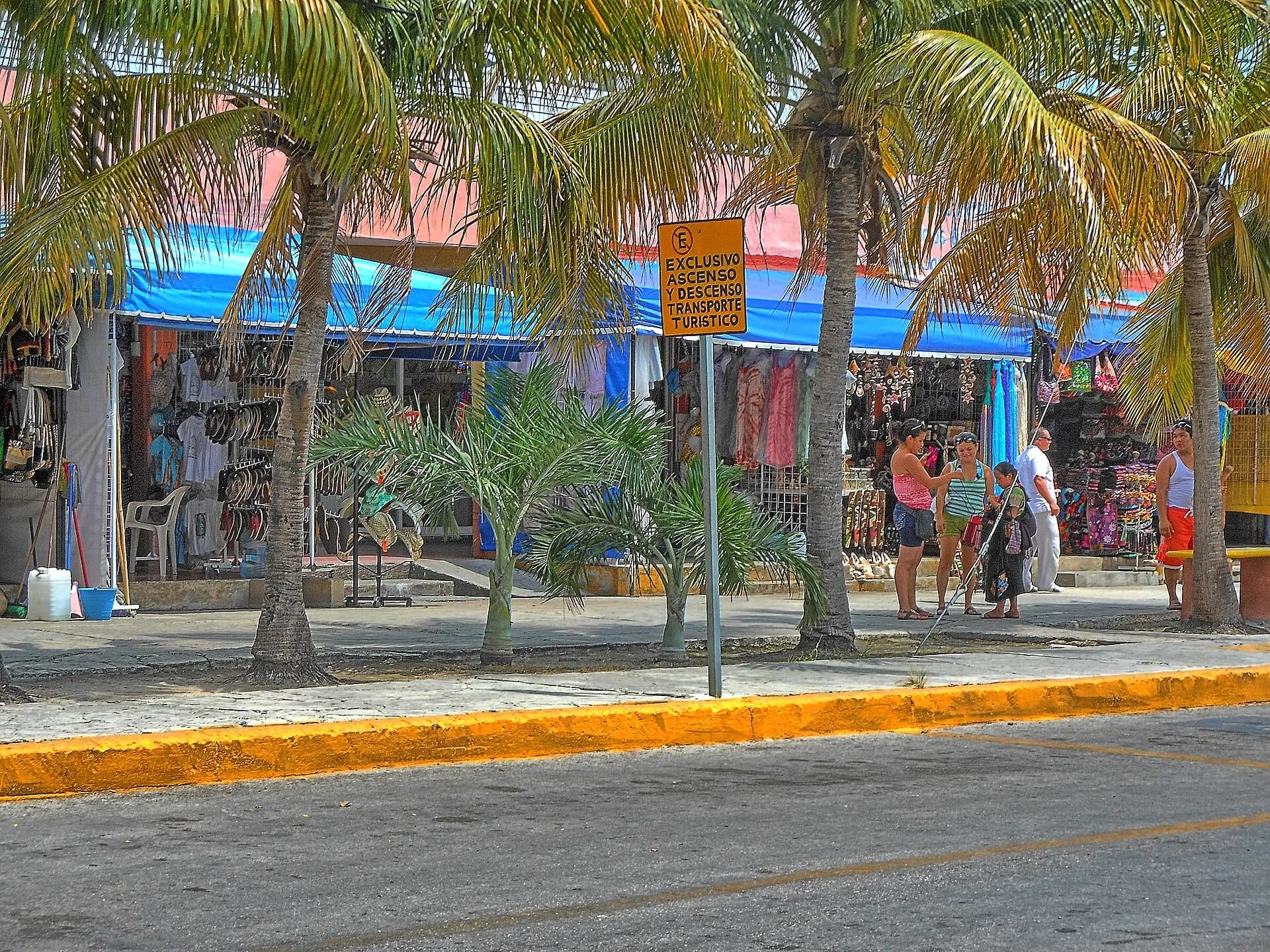
A sprawling market of souvenir stalls selling hammocks, embroidered blouses, silver and ceramics, with a courtyard of inexpensive restaurants serving Yucatecan food at its heart. Prices are lower than in the Hotel Zone, and bargaining is expected, politely.
- 3
Playa Tortugas
Photo: Rodney Damián, CC BY-SA 3.0, via Wikimedia Commons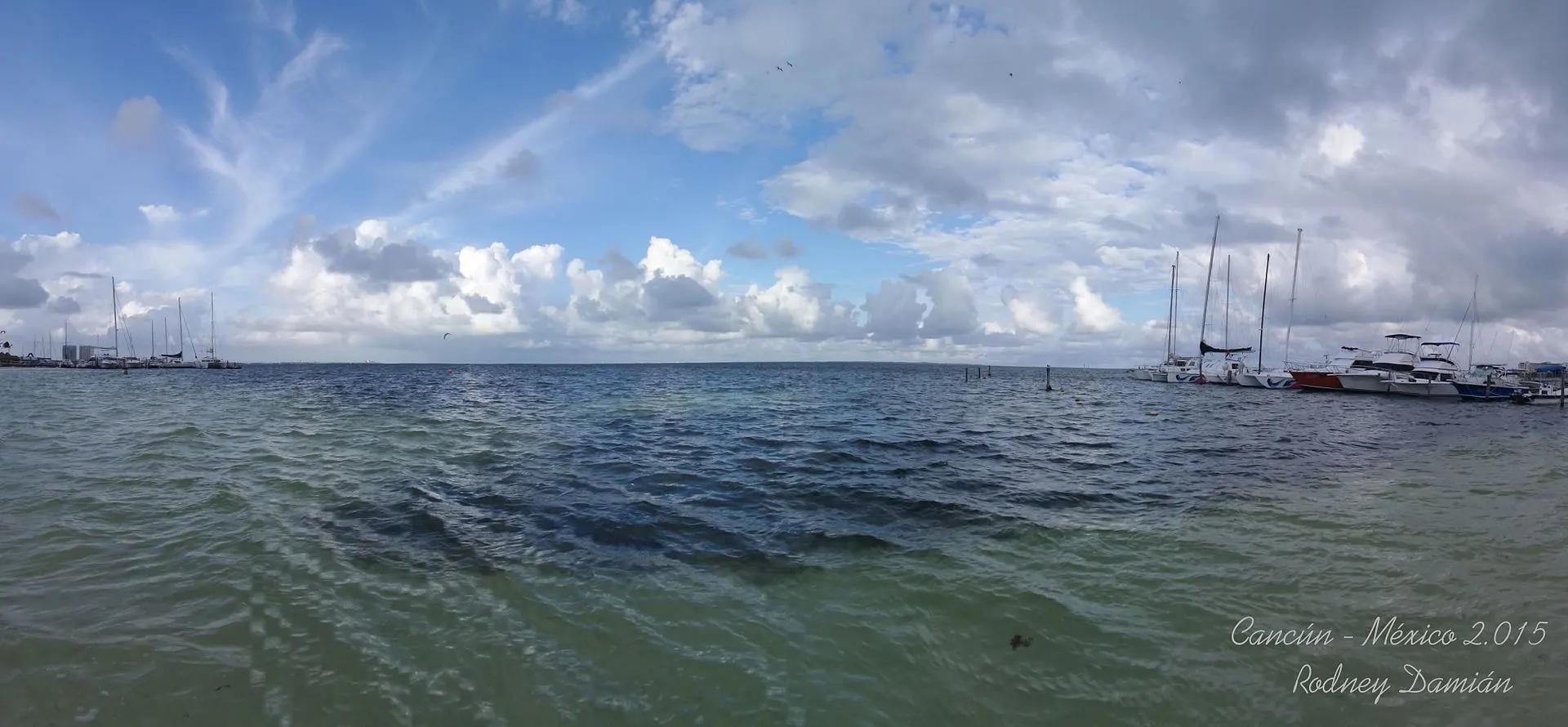
On the calm, bay-facing northern arm of the Hotel Zone, Playa Tortugas has gentle water, a lively local feel at weekends and a pier where ferries leave for Isla Mujeres. It's a good choice for families and swimmers who prefer flat water to waves.
- 4
Maya Museum of Cancún and San Miguelito
Photo: Oleg Yunakov, CC BY-SA 4.0, via Wikimedia Commons
Run by INAH, Mexico's national institute of anthropology and history, this modern museum displays finds from sites across Quintana Roo and the wider Maya world, from carved stone to jade, ceramics and ancient human remains found in flooded caves. The ticket includes the San Miguelito archaeological site in its grounds, a set of small structures linked by shaded jungle paths.
TipCheck opening days before you go; INAH museums usually close one day a week.
- 5
El Rey
Photo: Olea, CC BY 4.0, via Wikimedia Commons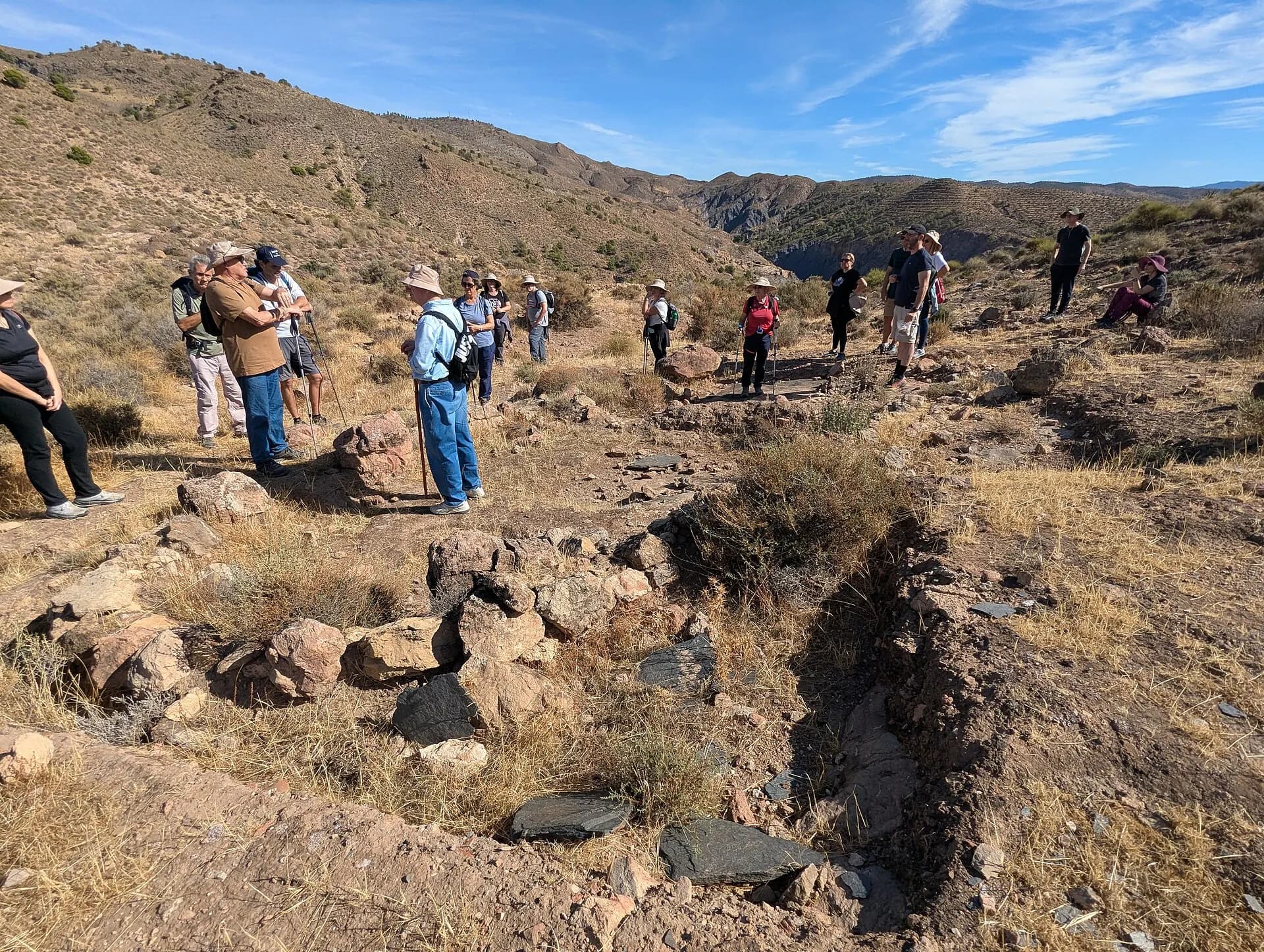
Across the road from the beach near the southern end of the Hotel Zone, this compact Maya site was part of a coastal settlement that flourished in the centuries before the Spanish arrived. Low platforms, a small pyramid and the remains of a street are watched over by dozens of iguanas sunning themselves on the stones.
- 6
Playa Delfines
Photo: Capmo, CC BY-SA 4.0, via Wikimedia Commons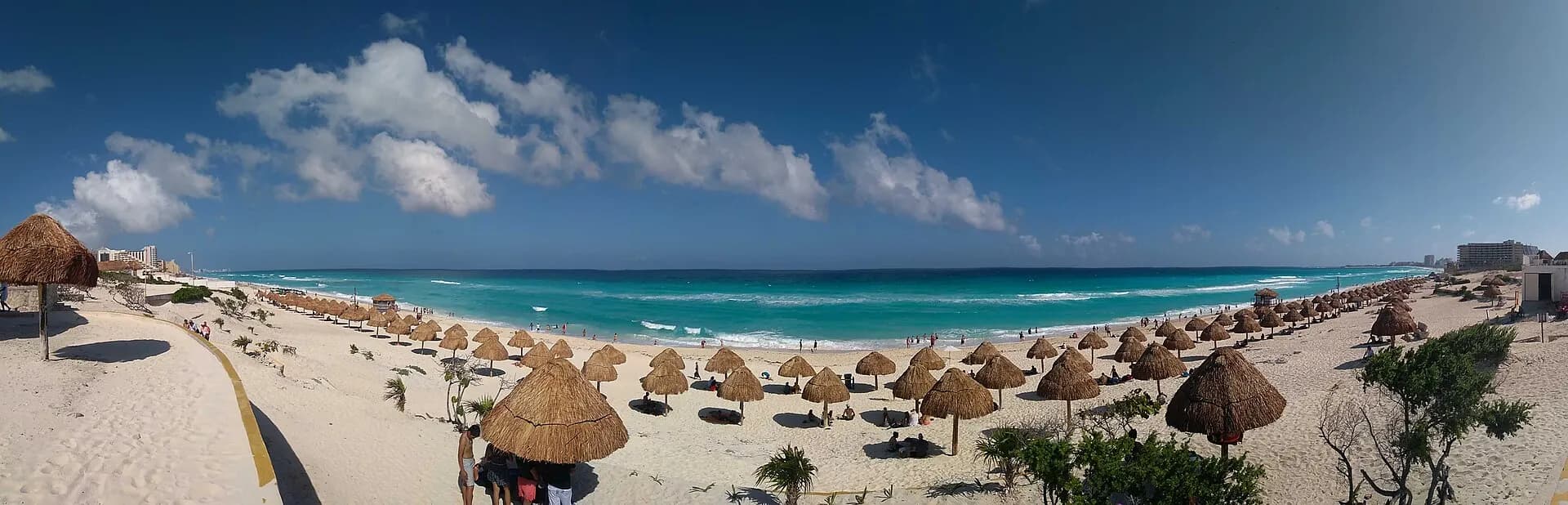
One of the few stretches of the Hotel Zone with no hotel behind it, Playa Delfines is a wide, open beach with a lookout and the colourful Cancún sign. It faces the open sea, so the colours are dazzling but the waves and currents can be strong.
TipRespect the flag system; red or black flags mean no swimming.
- 7
MUSA, the Underwater Museum of Art
Photo: Diego Delso, CC BY-SA 4.0, via Wikimedia Commons
Hundreds of life-size sculptures lie on the seabed in the waters between Cancún and Isla Mujeres, designed to draw divers and snorkellers away from fragile natural reef and to become new reef themselves as coral and sponges grow over them. The shallow gallery off Punta Nizuc suits snorkellers; the deeper Manchones gallery, near Isla Mujeres, is best seen by diving. Visits are by boat tour only.
- 8
Puerto Morelos Reef
Photo: ProtoplasmaKid, CC BY-SA 4.0, via Wikimedia Commons
Half an hour south of Cancún, the fishing town of Puerto Morelos sits behind a stretch of the Mesoamerican Reef protected as a national park, close enough to shore for short boat trips. Snorkelling here means coral heads, fish, rays and sometimes turtles in shallow water, and the town itself is a quieter, lower-rise alternative to Cancún.
TipSnorkel only with a licensed local guide; boats pay a park fee and stick to set areas.
- 9
Playa Norte, Isla Mujeres
Photo: Bernard DUPONT, CC BY-SA 2.0, via Wikimedia Commons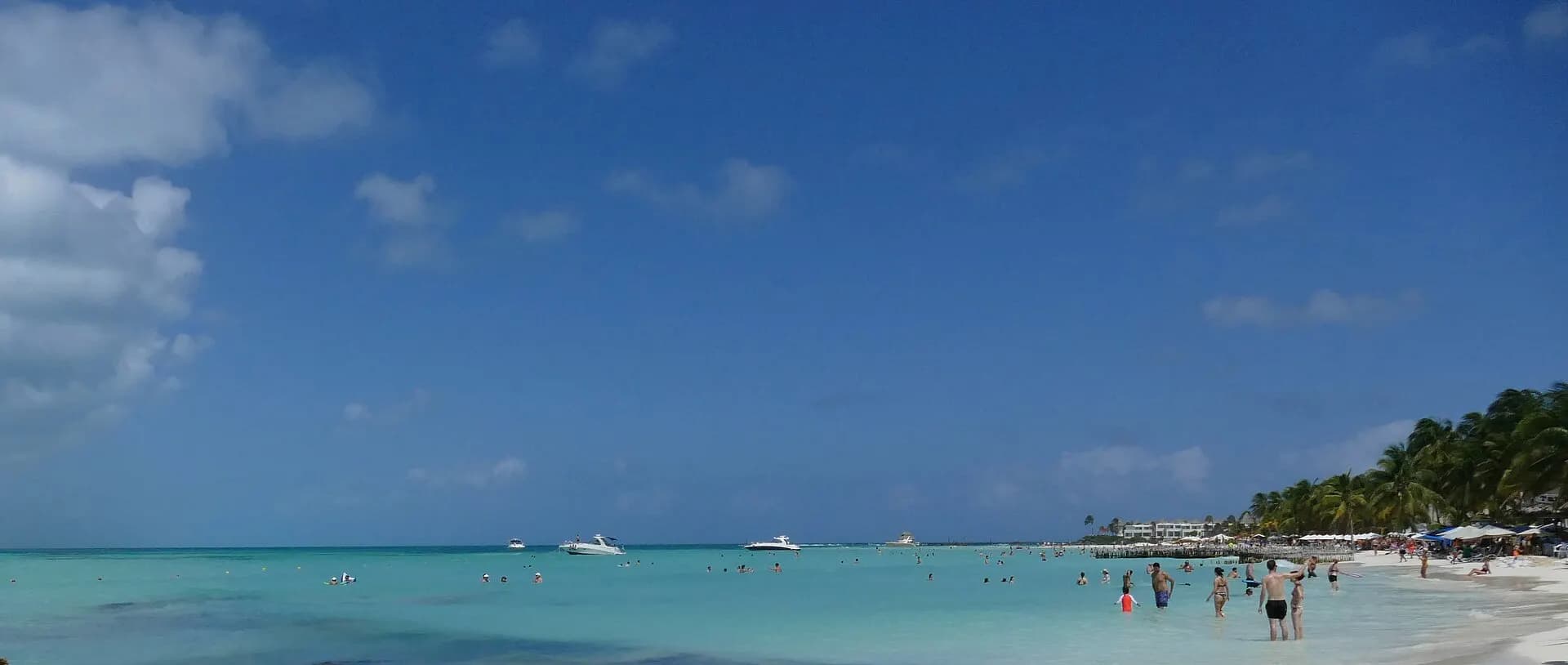
At the northern tip of Isla Mujeres, a short ferry ride from Cancún, Playa Norte has soft sand and shallow, calm, turquoise water that stays waist-deep a long way out. It faces west, which makes it one of the best places in the area to watch the sun set over the sea.
- 10
Punta Sur, Isla Mujeres
Photo: Suwanosejima, CC BY-SA 4.0, via Wikimedia Commons
The island's rugged southern tip, the easternmost point of Mexico, has a clifftop path, a sculpture garden and the ruins of a small Maya temple associated with Ixchel, goddess of the moon and fertility. Golf carts, scooters and taxis make the run down the island easy.
- 11
Isla Contoy
Photo: Bernard DUPONT, CC BY-SA 2.0, via Wikimedia Commons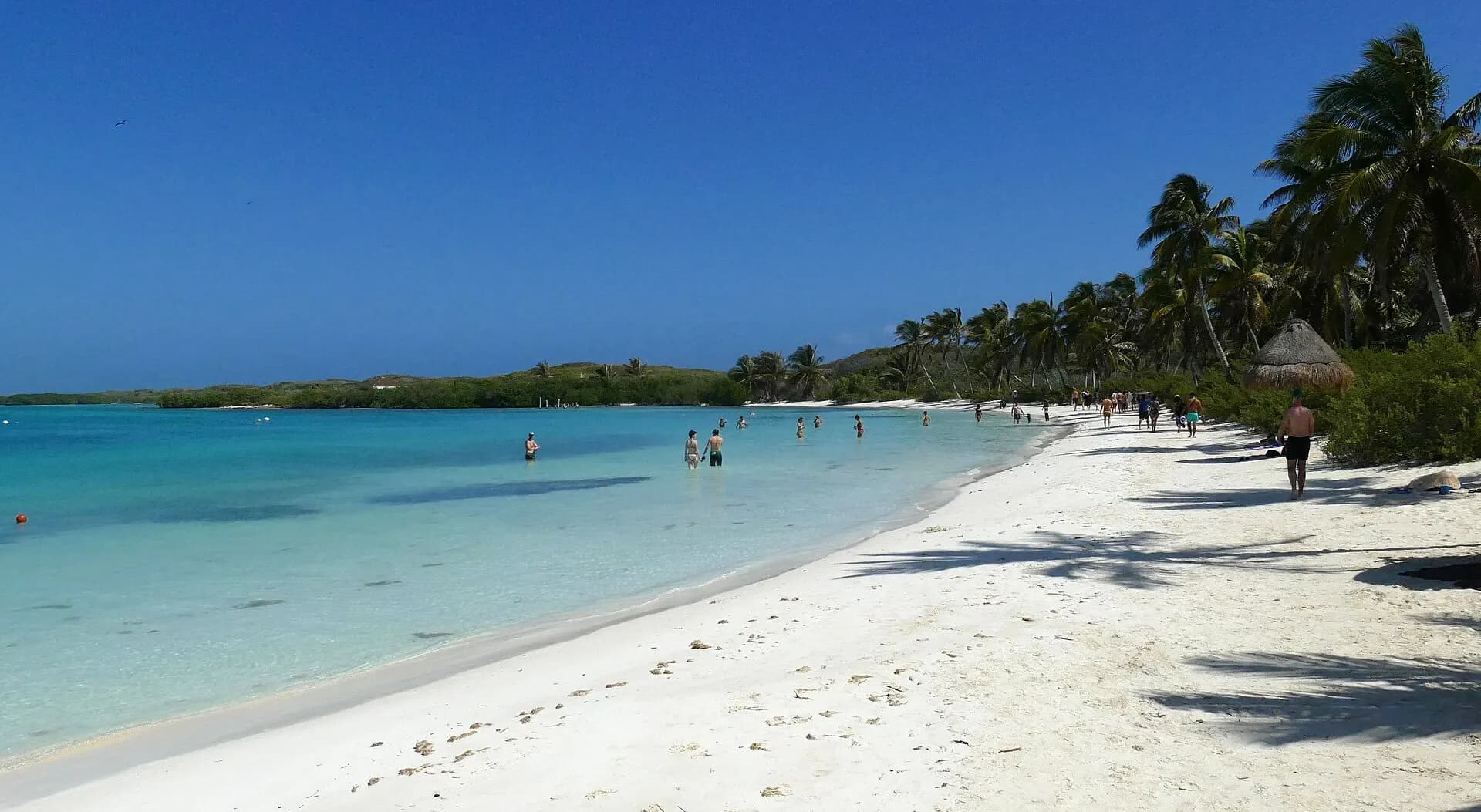
A narrow island north of Isla Mujeres protected as a national park, Isla Contoy is a nesting ground for thousands of seabirds, including frigatebirds, brown pelicans and cormorants. Visitor numbers are capped each day and access is only on authorised tours, which usually combine a nature trail, a small museum, a beach stop and snorkelling on the way.
TipBook well ahead in high season, and confirm the operator holds a park permit.
- 12
Holbox
Photo: Bruno Rijsman, CC BY-SA 2.0, via Wikimedia Commons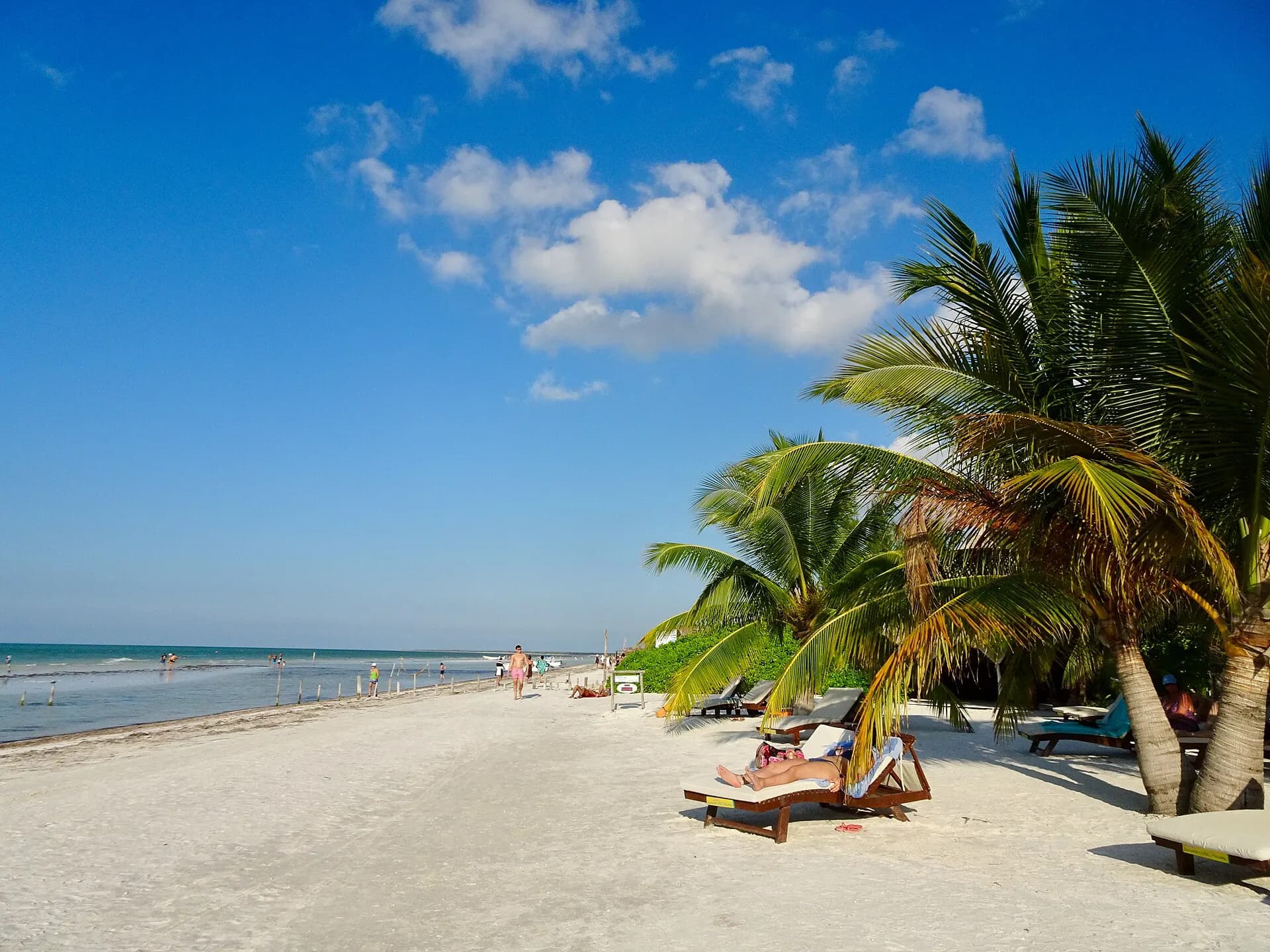
A long, sandy, mostly car-free island off the north coast, reached by ferry from Chiquilá, about two to three hours' drive from Cancún. Sandy streets, golf carts, shallow water and flamingos in the lagoons give it a slower pace, and it's a main base for whale shark trips in summer. It's part of the Yum Balam protected area. Stay a night or two rather than rushing it as a day trip.
- 13
Ek Balam
Photo: Luis Miguel Bugallo Sánchez, CC BY-SA 3.0, via Wikimedia Commons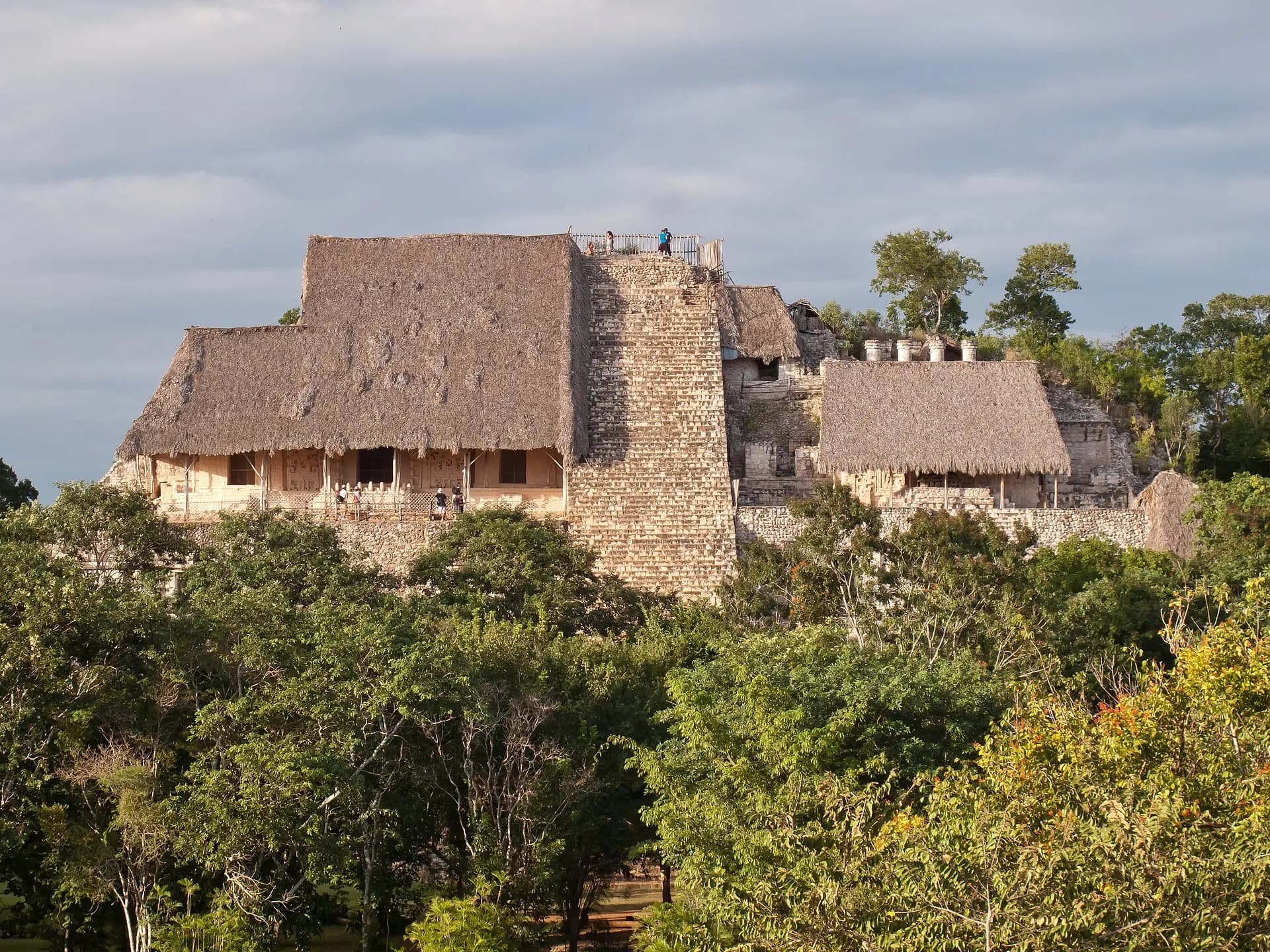
A Maya city north of Valladolid whose great Acropolis holds some of the best-preserved stucco in the Maya world, including winged figures and a huge open-mouthed monster doorway. It's far less crowded than Chichén Itzá and pairs well with a cenote swim nearby.
- 14
Valladolid and Cenote Suytun
Photo: Shinya Suzuki, CC BY 2.0, via Wikimedia Commons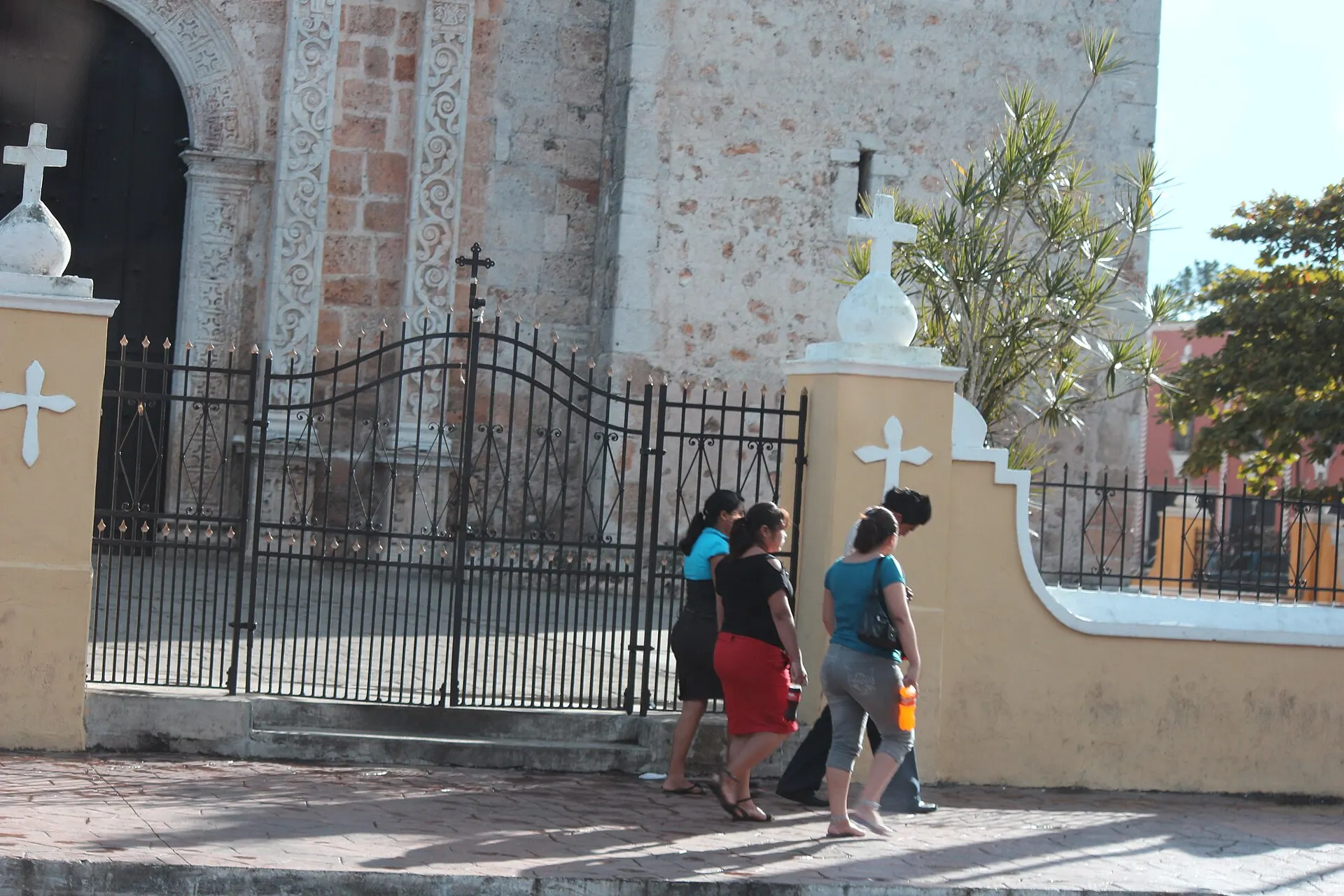
Valladolid is a colonial town of pastel houses, a shady main square and the San Bernardino convent, and a pleasant place to spend a night between Cancún and Chichén Itzá. Just outside town, Cenote Suytun is a cavern with a stone walkway leading to a round platform in the water, lit by a shaft of light through a hole in the roof.
TipThe light beam at Suytun is strongest around midday; arrive early or late to avoid queues for photos.
- 15
Chichén Itzá
Photo: Daniel Schwen, CC BY-SA 4.0, via Wikimedia Commons
One of the largest Maya cities and a UNESCO World Heritage Site, Chichén Itzá is dominated by El Castillo, the pyramid of Kukulcán, whose stairways cast a serpent of light and shadow at the equinoxes. Around it are the Great Ball Court, the Temple of the Warriors with its rows of columns, the observatory known as El Caracol and the Sacred Cenote. Climbing the monuments is not allowed.
TipArrive at opening time, before tour coaches from Cancún reach the site, and bring water and a hat; there is little shade.
- 16
Cenote Ik Kil
Photo: Shinya Suzuki, CC BY 2.0, via Wikimedia Commons
A deep, round, open cenote a few kilometres from Chichén Itzá, with hanging vines and roots trailing down to the water from the rim far above. It's a popular swim stop after the ruins, so it can be busy around lunchtime.
When to go
The dry season, from December to April, brings sunshine, lower humidity and calmer seas, along with the highest prices and the biggest crowds, especially at Christmas, New Year, spring break and Easter. November is a good shoulder month. From May to October it's hot and humid, with short, heavy afternoon storms. The Atlantic hurricane season runs from June to November, with the greatest risk from August to October; storms are rare in any given week, but take out travel insurance and follow local alerts if one is forecast.
Sargassum, a floating brown seaweed, can pile up on Caribbean beaches, generally from about April to September, though the timing and amount vary a great deal from year to year. The open-sea beaches of the Hotel Zone's long eastern side tend to be hit harder than the bay beaches around Playa Tortugas and Playa Norte on Isla Mujeres. Check the state's sargassum reports shortly before you travel, and choose a hotel near calmer, more sheltered water if it's bad.
Getting around
Cancún International Airport is about twenty minutes from the Hotel Zone and a little more from downtown, with ADO airport coaches, shuttles, taxis and car hire. Local buses run frequently and cheaply along Boulevard Kukulcán through the Hotel Zone and into downtown, day and night. Taxis don't use meters; agree the fare before you get in.
ADO's long-distance buses leave from the downtown terminal for Puerto Morelos, Playa del Carmen, Tulum, Valladolid, Chichén Itzá and Mérida, and are comfortable and reliable. The Tren Maya has two stations in Cancún, one at the airport and one west of the city, with services towards Valladolid, Chichén Itzá, Mérida and south along the coast to Playa del Carmen and Tulum; check timetables, as services are still being expanded. Ferries to Isla Mujeres run from Puerto Juárez, north of downtown, about twenty minutes, and less frequently from piers in the Hotel Zone.
Local tips
- Quintana Roo charges foreign visitors a state tax, VISITAX, which can be paid online before you leave; check the current rules before travelling.
- Carry some cash in pesos for buses, markets, cenotes and tips; you'll usually get a better rate paying in pesos than in dollars.
- On the open-sea beaches, watch the flags and don't swim alone; rip currents are common.
- Use reef-safe, mineral sunscreen, or better, a rash vest, and shower before swimming in cenotes.
- Book whale shark, Isla Contoy and MUSA tours with licensed operators, and be wary of very cheap offers.
- For tours to Chichén Itzá, compare what's included; many leave early and return late, and some fill the day with shopping stops.
Eat and drink
Look beyond the resorts for Yucatecan cooking: cochinita pibil, pork slow-cooked in achiote and bitter orange; sopa de lima, a chicken and lime soup; panuchos and salbutes, small fried tortillas with toppings; and poc chuc, grilled marinated pork. Downtown, the market eateries at Mercado 28 and Mercado 23 and the taquerías along the side streets are far cheaper than the Hotel Zone. On the coast, try ceviche and fish tikin xic, grilled with achiote in a banana leaf, and on Isla Mujeres and Holbox, fresh seafood by the water. Drink bottled or filtered water.
Where to stay
The Hotel Zone is where most visitors stay, with large resorts, many all-inclusive, directly on the sand. The northern arm, on the bay, has calmer water; the long eastern side has the classic open-sea views and bigger waves. Downtown is far cheaper, with small hotels and guesthouses, more local restaurants and easy bus links to the beach. For a quieter stay, consider Puerto Morelos to the south or a night or two on Isla Mujeres or Holbox.
Isla Mujeres
Only a few kilometres off the coast, Isla Mujeres is a narrow island about seven kilometres long, with a small, walkable town of brightly painted streets at its northern end. Spanish explorers are said to have named it after the female figures, offerings to Ixchel, that they found there. The island makes an easy day trip, but staying overnight lets you enjoy it once the day visitors leave. Hire a golf cart or bicycle to explore the coast road to Punta Sur, stopping at quiet beaches along the way, and snorkel on the reef or visit MUSA's Manchones gallery by boat. The eastern, open-sea side is rocky and often rough; swim on the western side.
Whale sharks
Every summer, whale sharks, the largest fish in the sea, gather off the north coast of Quintana Roo to feed on plankton. The official season usually runs from mid-May to mid-September, with the most reliable sightings in July and August. Boats leave from Cancún, Isla Mujeres and Holbox, and visitors snorkel alongside the sharks in small groups with a guide.
The whale shark is a protected, endangered species, and the season is regulated by CONANP, which authorises boats and sets rules for how close they can get. Choose an operator that holds a permit, keeps group sizes small and gives a proper briefing. Don't touch the sharks or block their path, keep the required distance, don't use flash, and wear a life jacket if asked. Scuba diving with the sharks is not allowed.
Chichén Itzá and the Maya interior
Chichén Itzá was one of the most powerful cities of the Maya world, at its height from about the ninth to the twelfth century, and its blend of Maya and central Mexican styles has fascinated scholars for generations. It's about two and a half to three hours' drive from Cancún, so a day trip is long. You can reach it by ADO bus, the Tren Maya, a hire car or an organised tour; staying a night in Valladolid allows an early start, when the site is quieter and cooler.
Entry is in Yucatán state and is made up of two parts: a federal fee for INAH and a larger state fee. Since March 2026, both have been paid together at a single ticket window rather than in two queues. Foreign visitors pay more than Mexican residents, and fees change, so check current prices before you go, and bring a card and some cash. Licensed guides are available at the entrance.
Ek Balam, Valladolid and the many cenotes in between make it worth spending at least one night inland rather than seeing only Chichén Itzá. On a two-day trip, you can combine Ek Balam and a cenote on one day and Chichén Itzá on the other.
Safety
Most visits to Cancún pass without trouble, and the Hotel Zone, downtown during the day and the main tourist areas are busy and well policed. Violence linked to organised crime does occur in Quintana Roo, mostly away from visitors, but stay informed: read your government's current advice, for example from the US State Department or the UK Foreign, Commonwealth and Development Office, before you go. Use registered taxis or ride from your hotel, avoid flashing valuables, keep an eye on drinks in bars and clubs, and don't buy drugs. Drive in daylight on the main highways if you hire a car.
Responsible travel
Cancún's growth has come at a cost to mangroves, dunes, the reef and the underground water that feeds the cenotes. Choose operators that keep group sizes small and follow park rules, don't touch or stand on coral, and never feed or chase wildlife. Avoid single-use plastic and dolphin shows or swim-with-dolphin attractions. In the Hotel Zone, respect turtle nesting areas on the beach between May and October, keep lights low at night, and keep your distance from any nests or hatchlings. Spend some of your money in the local economy, in downtown markets, family-run restaurants and community-run cenotes.