Quebec City
The only walled city north of Mexico, a French-speaking jewel of cobbled lanes, stone houses and a castle-like hotel above the St Lawrence.
- Best time to go
- June to October for warm days and autumn colour; February for the Winter Carnival
- Local time
- –
- Currency
- Canadian Dollar (CAD)
- Reading time
- 4 min
- Language
- English and French
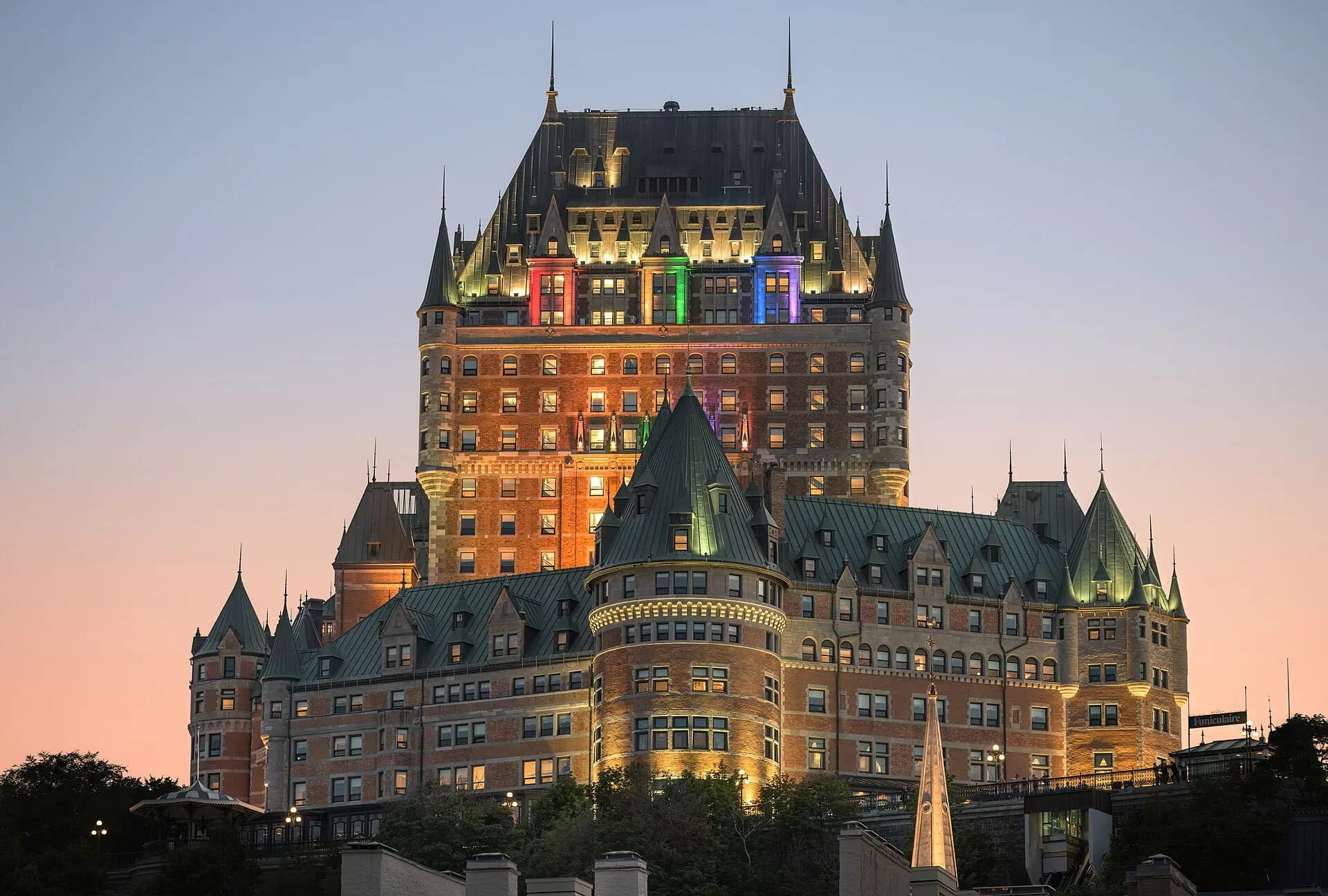
Founded by Samuel de Champlain in 1608, Quebec City is one of the oldest cities in North America and the capital of the province of Quebec. Its old town, Vieux-Québec, perched on a cliff above the St Lawrence River and still surrounded by fortified walls, is a World Heritage Site, with cobbled streets, stone houses, churches and squares that feel more European than North American.
It's a French-speaking city, proud of its culture and history, with a lively food scene and festivals in every season. In summer, café terraces fill the old streets; in winter, the city turns into a snow-covered fairytale, with one of the world's biggest winter carnivals.
The top 8 in Quebec City
- 1
The Château Frontenac and Terrasse Dufferin
Photo: Wilfredor, CC BY-SA 4.0, via Wikimedia Commons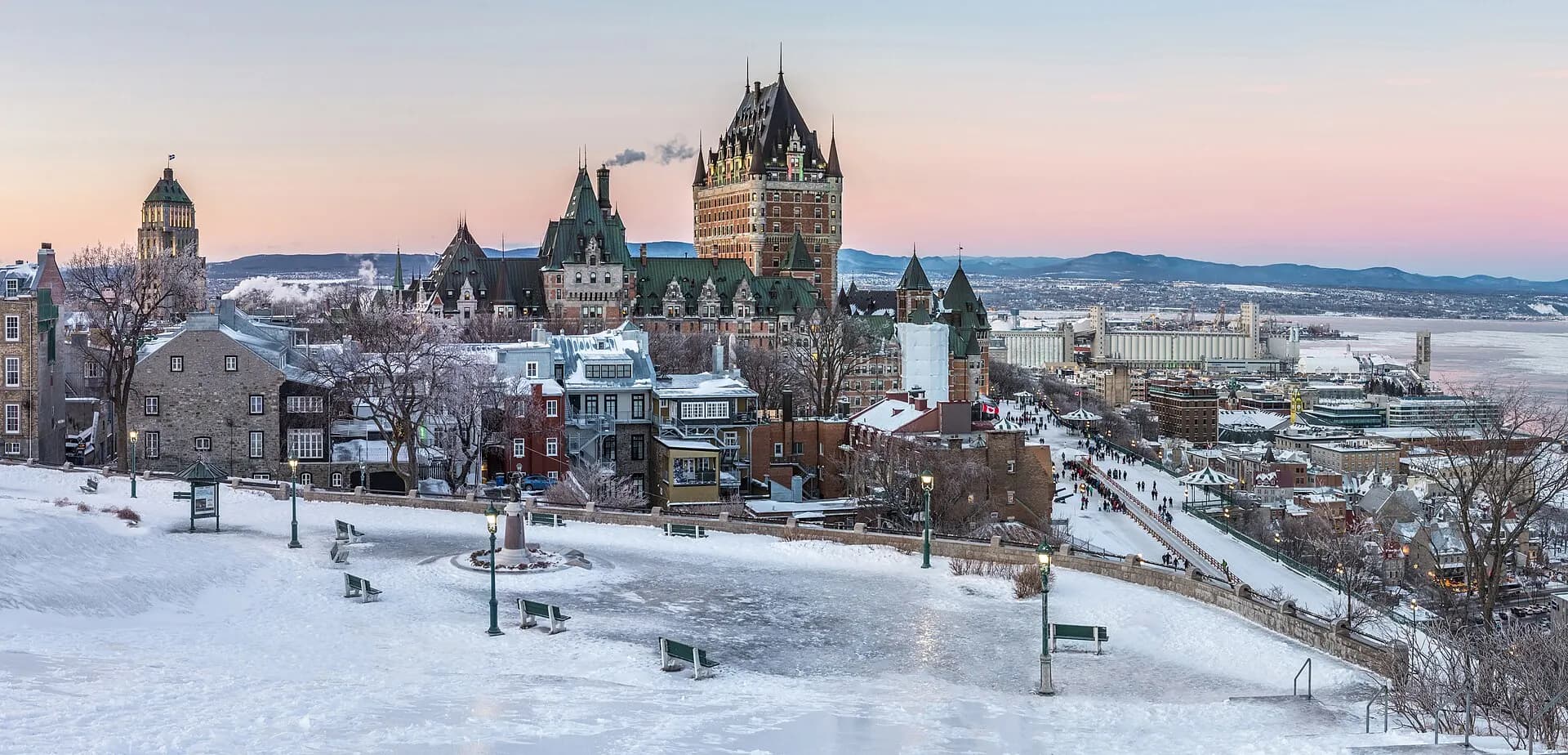
The grand hotel with its copper roofs and turrets, opened in 1893, dominates the skyline of Old Quebec. In front of it, the Dufferin Terrace, a wide wooden boardwalk along the cliff edge, has sweeping views over the river; in winter, a toboggan slide runs down it.
TipGuided tours of the hotel tell the story of its history and famous guests.
- 2
Petit-Champlain and Place Royale
Photo: Wilfredor, CC BY-SA 4.0, via Wikimedia Commons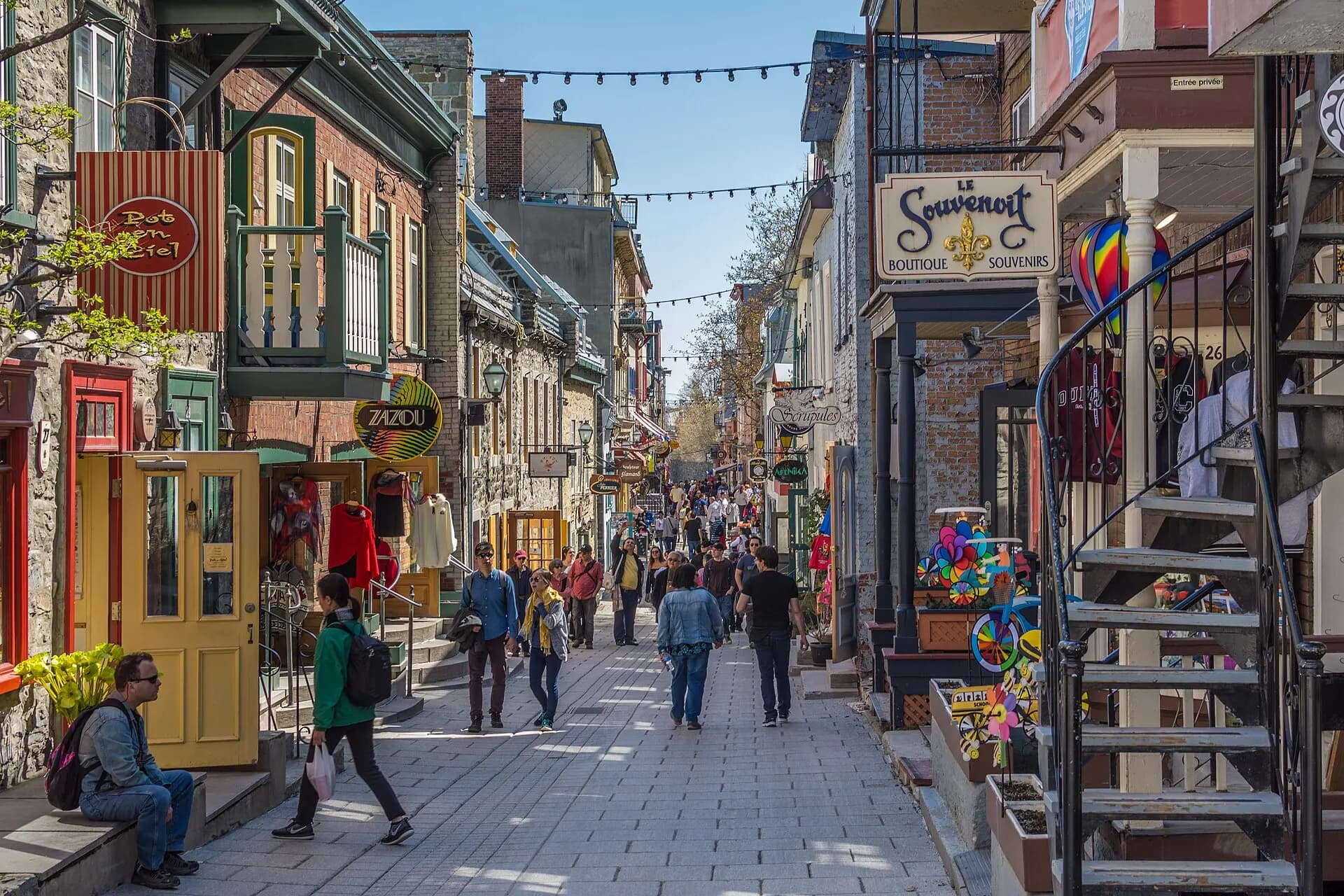
Below the cliff, the Lower Town is the oldest part of the city, where Champlain built his first settlement. Rue du Petit-Champlain, one of the oldest commercial streets in North America, is lined with boutiques and cafés, and Place Royale, with its stone church, Notre-Dame-des-Victoires, is where the city began. A funicular and the steep "Breakneck Stairs" link it with the Upper Town.
- 3
The city walls and the Citadelle
Photo: Wilfredor, CC BY-SA 4.0, via Wikimedia Commons
The fortifications of Quebec stretch for nearly five kilometres around the old town, and you can walk along much of them. The star-shaped Citadelle, still an active military base, is home to the Royal 22e Régiment; visit its museum and watch the changing of the guard in summer.
- 4
The Plains of Abraham
Photo: Wilfredor, CC0, via Wikimedia Commons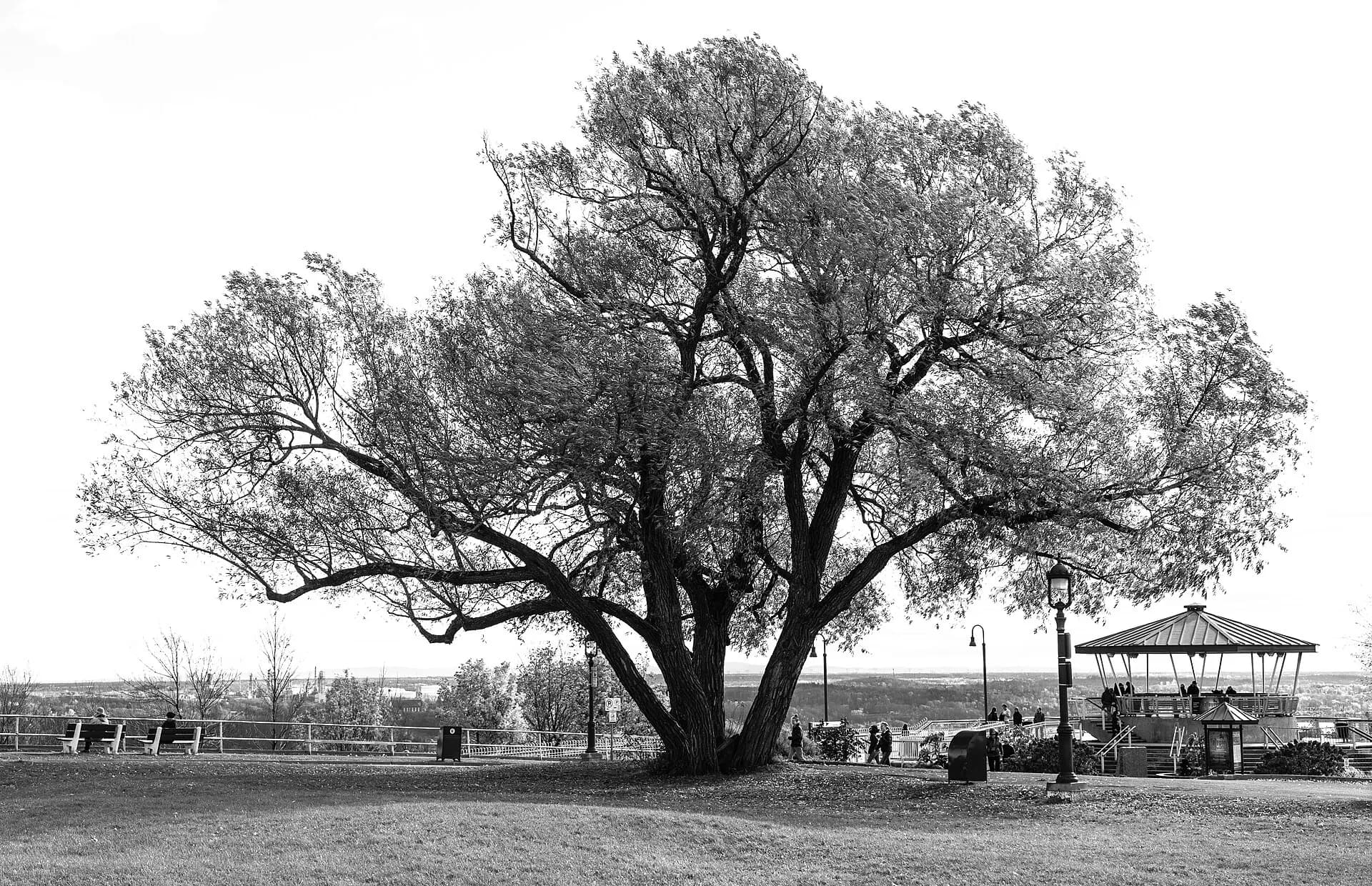
A large park, the Battlefields Park, on the clifftop beside the Citadelle, where British forces defeated the French in 1759, a turning point in the history of North America. Today it's the city's favourite place for picnics, concerts and cross-country skiing.
- 5
The Musée de la civilisation
Photo: Wladyslaw (talk), CC BY-SA 3.0, via Wikimedia Commons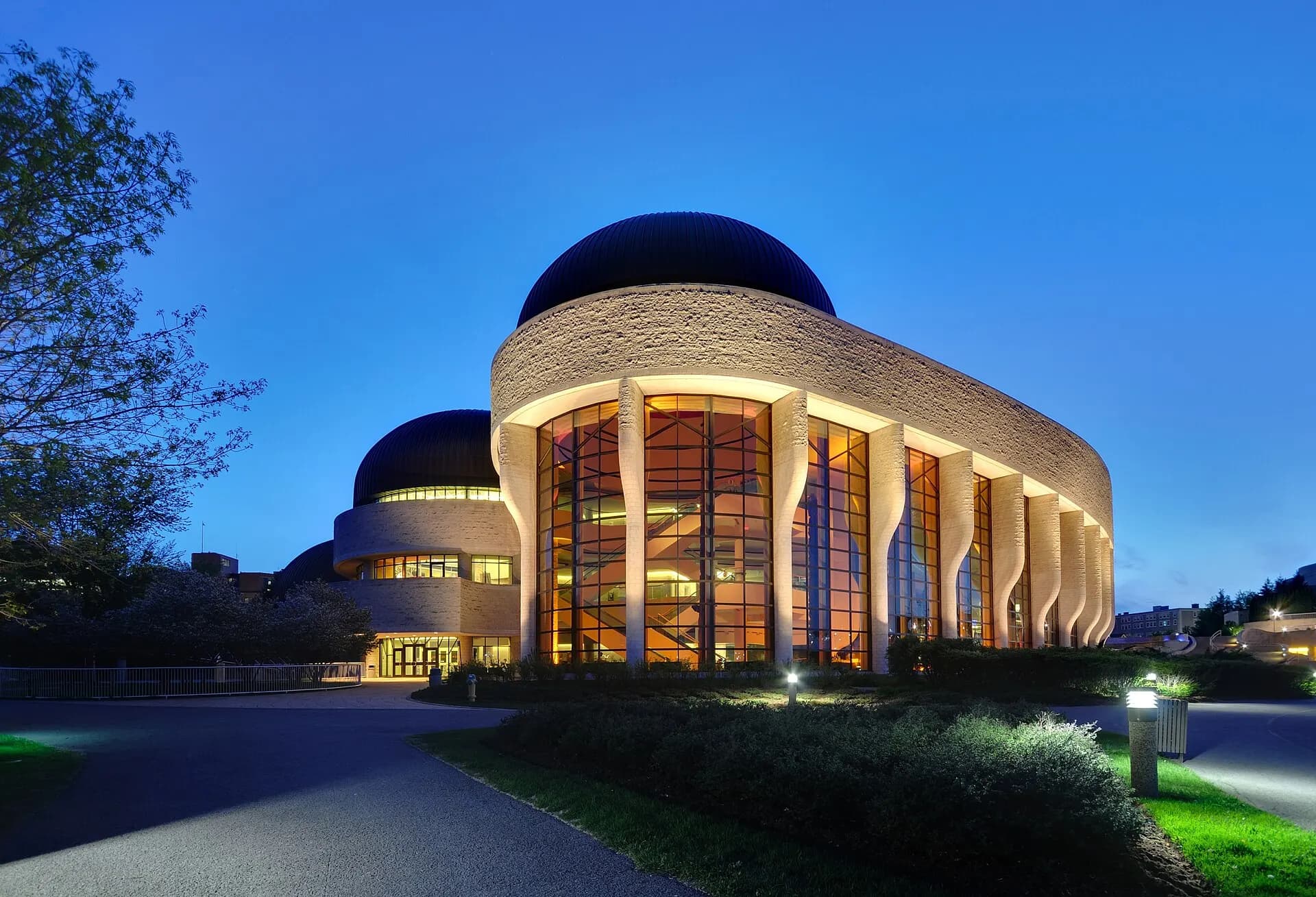
A museum in the Lower Town exploring the history and cultures of Quebec, including the First Nations and Inuit, with lively, interactive exhibitions.
- 6
Montmorency Falls
Photo: Wilfredor, CC0, via Wikimedia Commons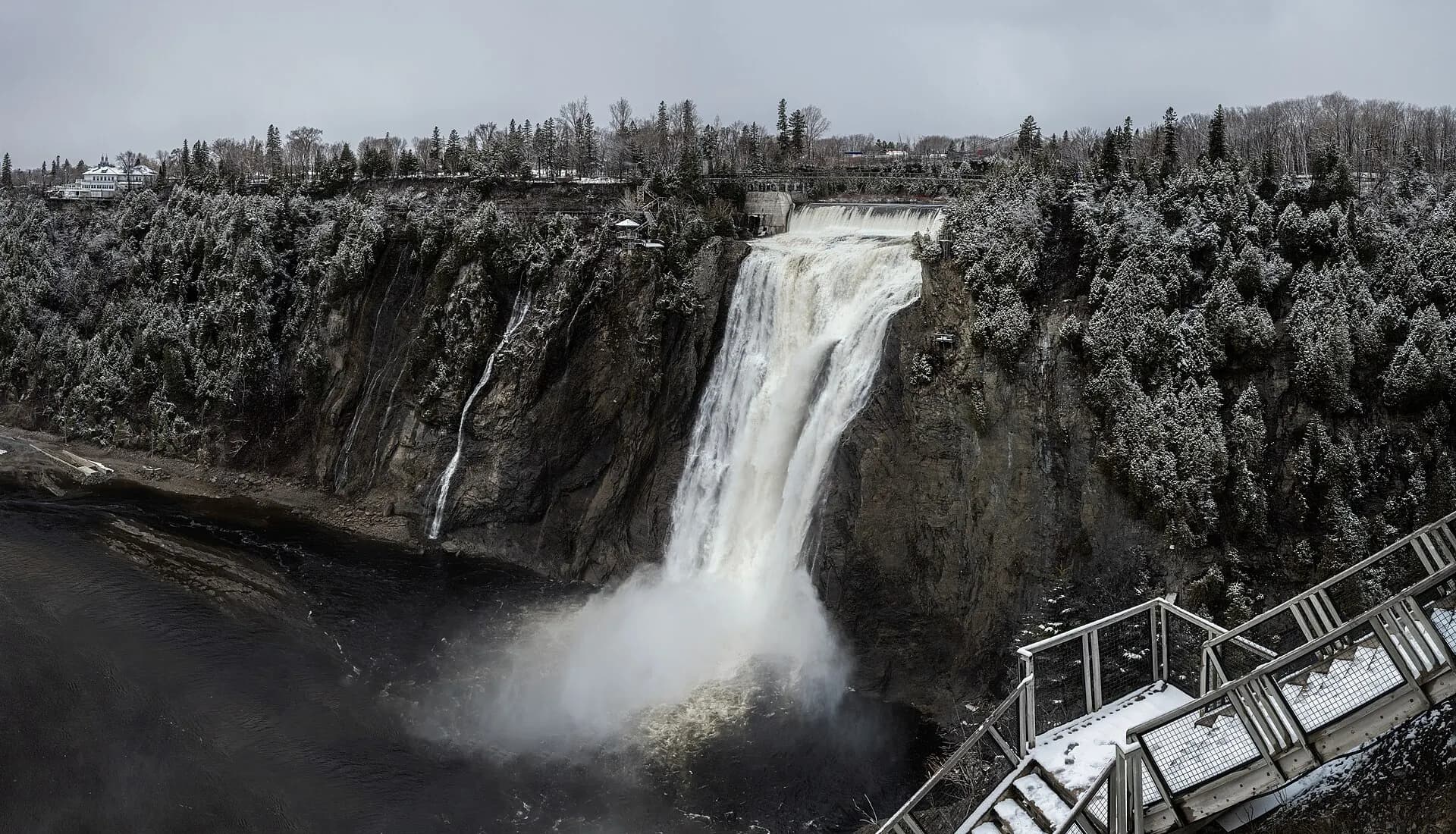
A waterfall about fifteen minutes from the city, which plunges eighty-three metres into the St Lawrence, higher than Niagara Falls. A cable car, a suspension bridge across the top and stairs down the cliff give different views, and in winter the spray forms a huge cone of ice.
- 7
Île d'Orléans
Photo: Thomas1313, CC BY-SA 4.0, via Wikimedia Commons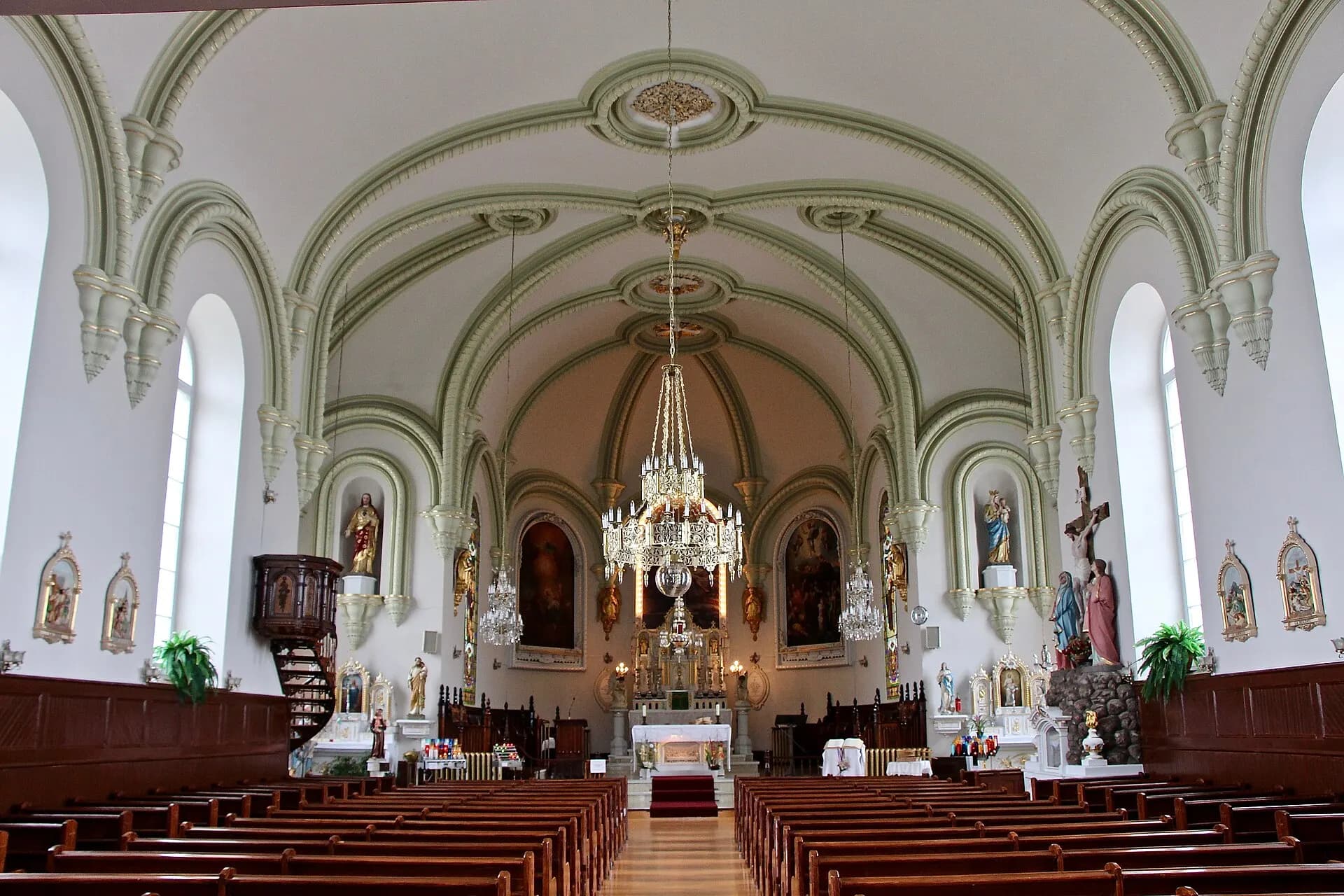
An island in the St Lawrence, just across a bridge from the falls, with farms, orchards, vineyards, old stone churches and roadside stalls selling strawberries, apples, cider, maple products and cheese.
- 8
Rue Saint-Jean and Saint-Roch
Photo: DXR, CC BY-SA 4.0, via Wikimedia Commons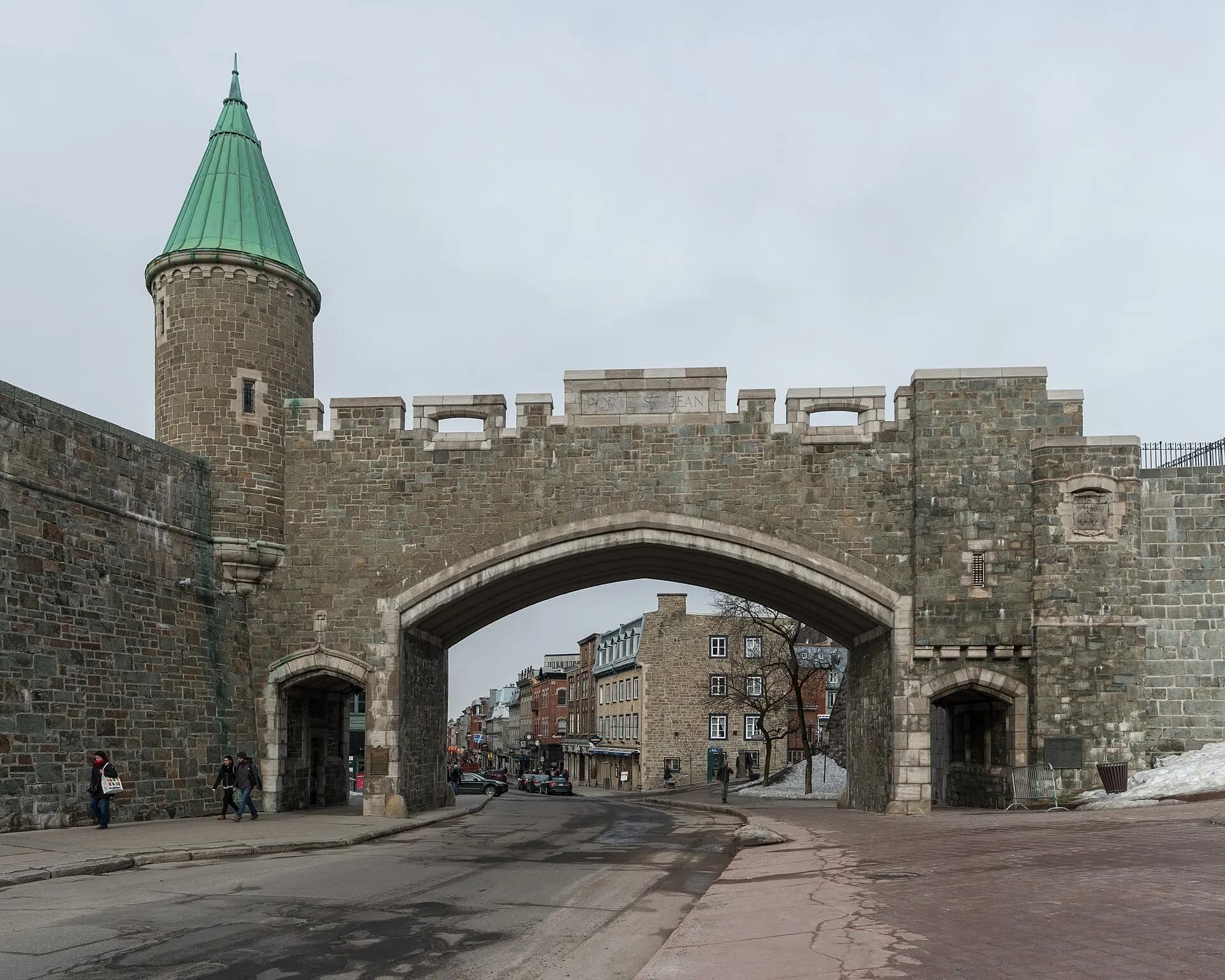
Rue Saint-Jean runs from the old town through the gate into the Saint-Jean-Baptiste district, with shops, bakeries and bars. Below the cliff, Saint-Roch is the city's trendy neighbourhood for restaurants and microbreweries.
When to go
Summer, from June to August, is warm and lively, with the Festival d'été, a major music festival, in July. Autumn, from September to October, brings spectacular colours. Winter is long and very cold, often well below freezing, but the Quebec Winter Carnival, in late January and February, with its ice palace, parades and night-time festivities, and the snowy streets make it magical. Spring brings the maple syrup season, when sugar shacks open their doors.
Getting around
Old Quebec is compact and best explored on foot, though steep. City buses link the old town with other neighbourhoods. The funicular saves a climb between the Upper and Lower Towns. A ferry crossing to Lévis, on the opposite bank, gives a superb view of the city from the river.
Jean Lesage International Airport is about twenty minutes from the old town. Trains link the city with Montreal in about three hours.
Local tips
- French is the main language; a "bonjour" and "merci" are appreciated, though many people speak English.
- Most visitors flying to Canada need an eTA or a visa.
- Wear shoes with good grip, especially in winter, when streets can be icy.
- Tip 15 to 20% in restaurants; taxes are added at the till.
- Dress in serious winter layers if visiting between December and March.
- Book hotels well ahead for the Winter Carnival and summer festival.
- The old town is hilly; the funicular and city buses help on tired legs.
Eat and drink
Try poutine, fries with cheese curds and gravy, a Quebec classic; tourtière, a spiced meat pie; and pea soup. Maple syrup is everywhere, from pancakes to maple taffy rolled on snow. The city's bistros serve excellent French-inspired cooking with local produce, and ice cider, made from frozen apples, is a local speciality.
Where to stay
Staying inside the walls of Old Quebec puts you among the historic streets, in boutique hotels and inns in old stone houses, or at the Château Frontenac itself. Saint-Roch and Montcalm, just outside the walls, are lively and slightly cheaper, with good restaurants nearby.
Day trips
The Côte-de-Beaupré, east of the city along the river, leads past Montmorency Falls to the vast basilica of Sainte-Anne-de-Beaupré, a major pilgrimage site, and the Canyon Sainte-Anne, with suspension bridges over a waterfall gorge. The Jacques-Cartier National Park, about forty minutes north, has a glacial valley for hiking and canoeing. Further along the river, the Charlevoix region, about ninety minutes away, is known for its villages, gourmet food and whale watching at Tadoussac, where belugas and other whales feed at the mouth of the Saguenay Fjord between late spring and autumn.