Banff
Turquoise glacier lakes, jagged peaks and elk on the roadside: the heart of the Canadian Rockies.
- Best time to go
- June to September for hiking and the lakes; December to March for skiing
- Local time
- –
- Currency
- Canadian Dollar (CAD)
- Reading time
- 4 min
- Language
- English and French

Banff, created in 1885, was Canada's first national park, and it remains its most famous. Its peaks of the Canadian Rockies rise above forests, rivers and glacier-fed lakes coloured an extraordinary turquoise by fine rock flour ground by the ice. Together with neighbouring parks, it forms the Canadian Rocky Mountain Parks World Heritage Site.
The town of Banff, inside the park, is a lively resort with shops, restaurants and hot springs, and a base for hiking, paddling, wildlife watching and skiing. The park is very popular, especially in summer, so plan ahead: book shuttles to the famous lakes, start early, and venture onto the trails to find quieter corners.
The top 8 in Banff
- 1
Moraine Lake
Photo: Florian Fuchs, CC BY 3.0, via Wikimedia Commons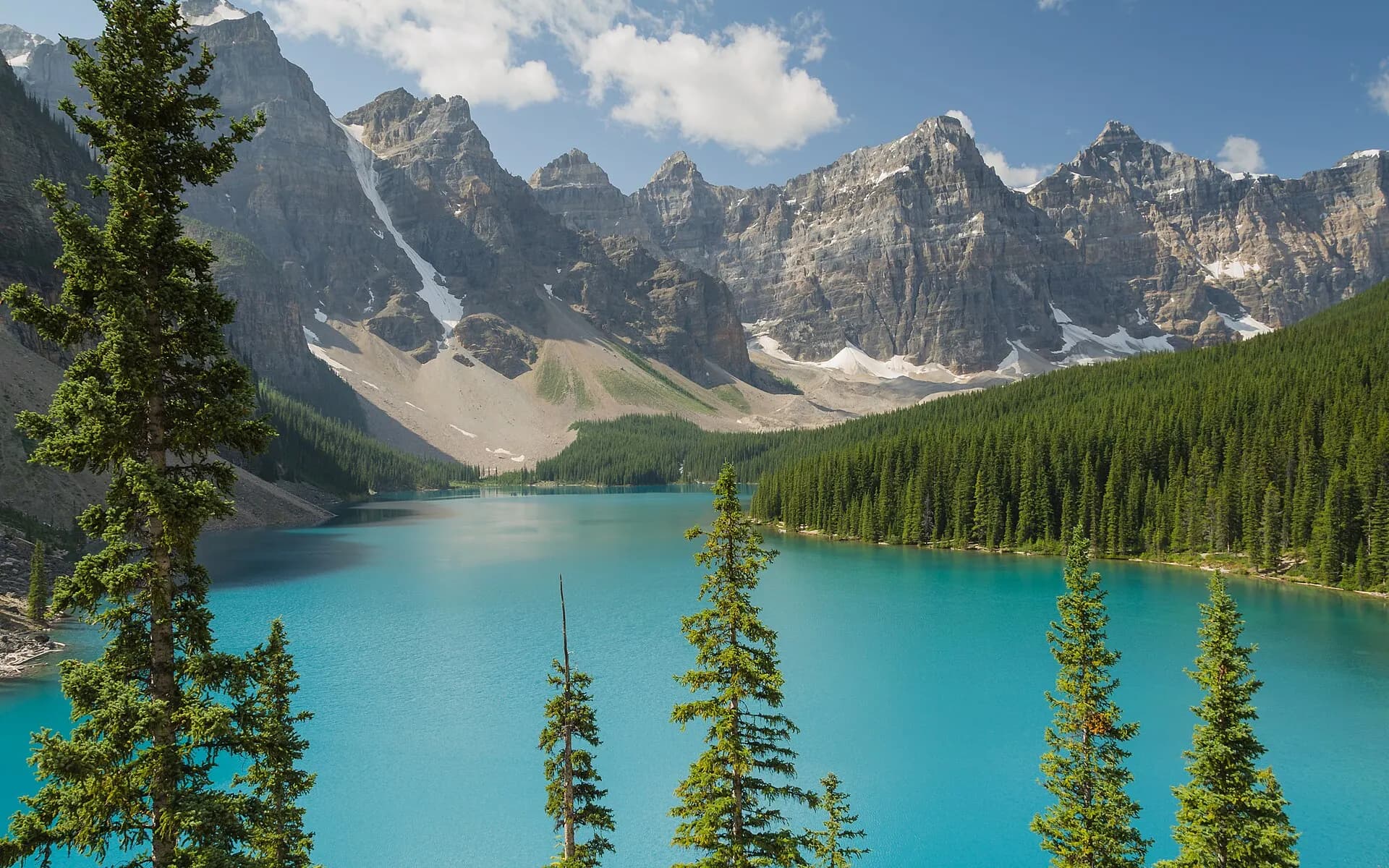
A glacial lake of vivid blue beneath the Valley of the Ten Peaks, one of the most photographed views in Canada. Climb the short Rockpile Trail for the classic view, or paddle a canoe on the lake.
TipPersonal vehicles are no longer allowed on the Moraine Lake road; reserve a Parks Canada shuttle or book a commercial tour well ahead. The road is closed in winter.
- 2
Lake Louise
Photo: Ethan Sahagun, CC BY 4.0, via Wikimedia Commons
A turquoise lake beneath the Victoria Glacier, with the grand Fairmont Château Lake Louise on its shore. Trails lead to the Lake Agnes and Plain of Six Glaciers teahouses, which serve tea and cake high in the mountains.
TipParking fills up very early; use the Parks Canada shuttle, and hike to the teahouses in the morning.
- 3
The Icefields Parkway
Photo: Tobias Alt, Tobi 87, CC BY-SA 4.0, via Wikimedia Commons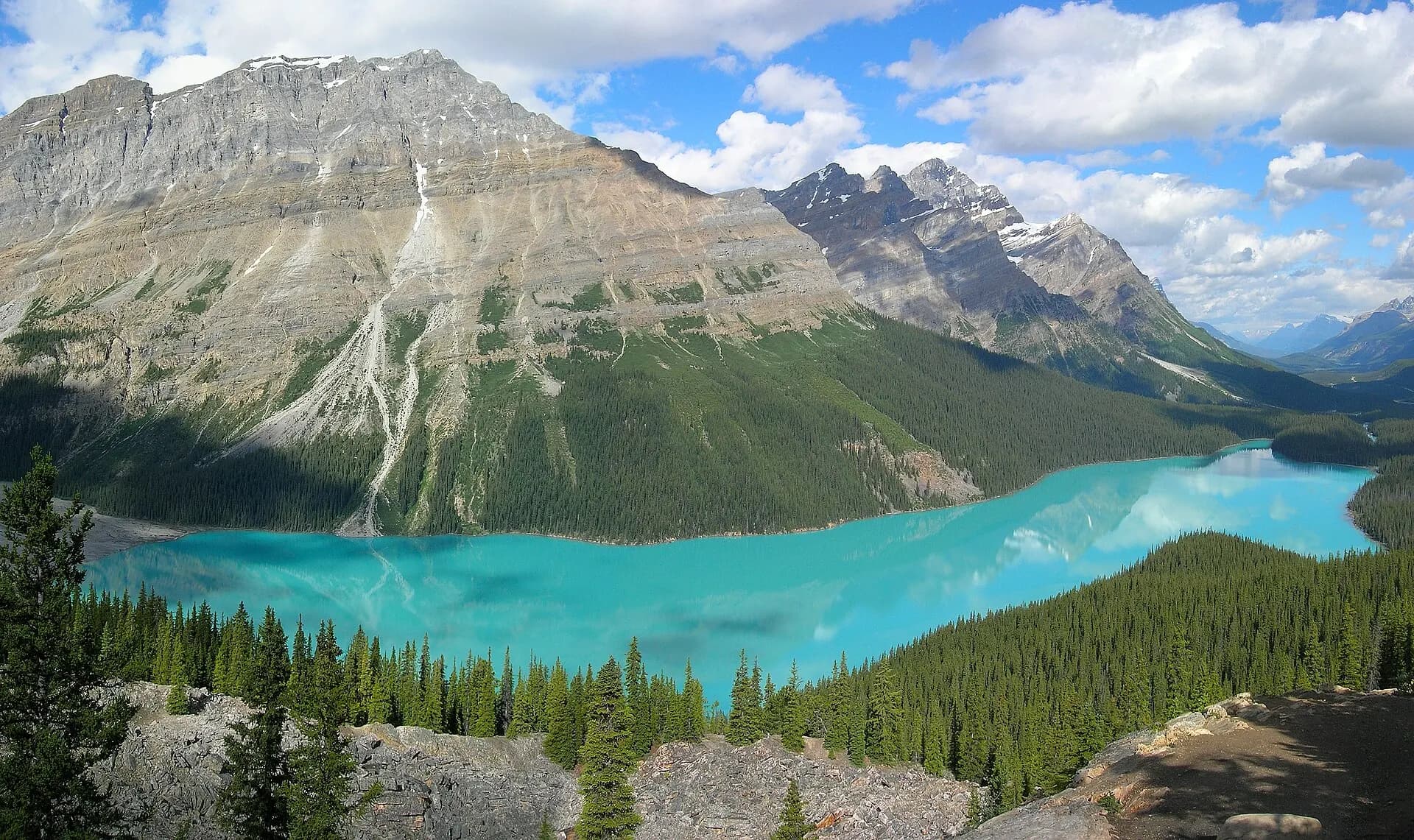
One of the world's great drives, the 230-kilometre road from Lake Louise to Jasper runs past glaciers, waterfalls and lakes. Highlights in Banff include Bow Lake and the wolf-head-shaped Peyto Lake, seen from a viewpoint a short walk from the road.
TipFill up with fuel before setting off; there are few services and no mobile signal for long stretches.
- 4
Banff town and Banff Avenue
Photo: Kevin Saff from (optional), CC BY-SA 2.0, via Wikimedia Commons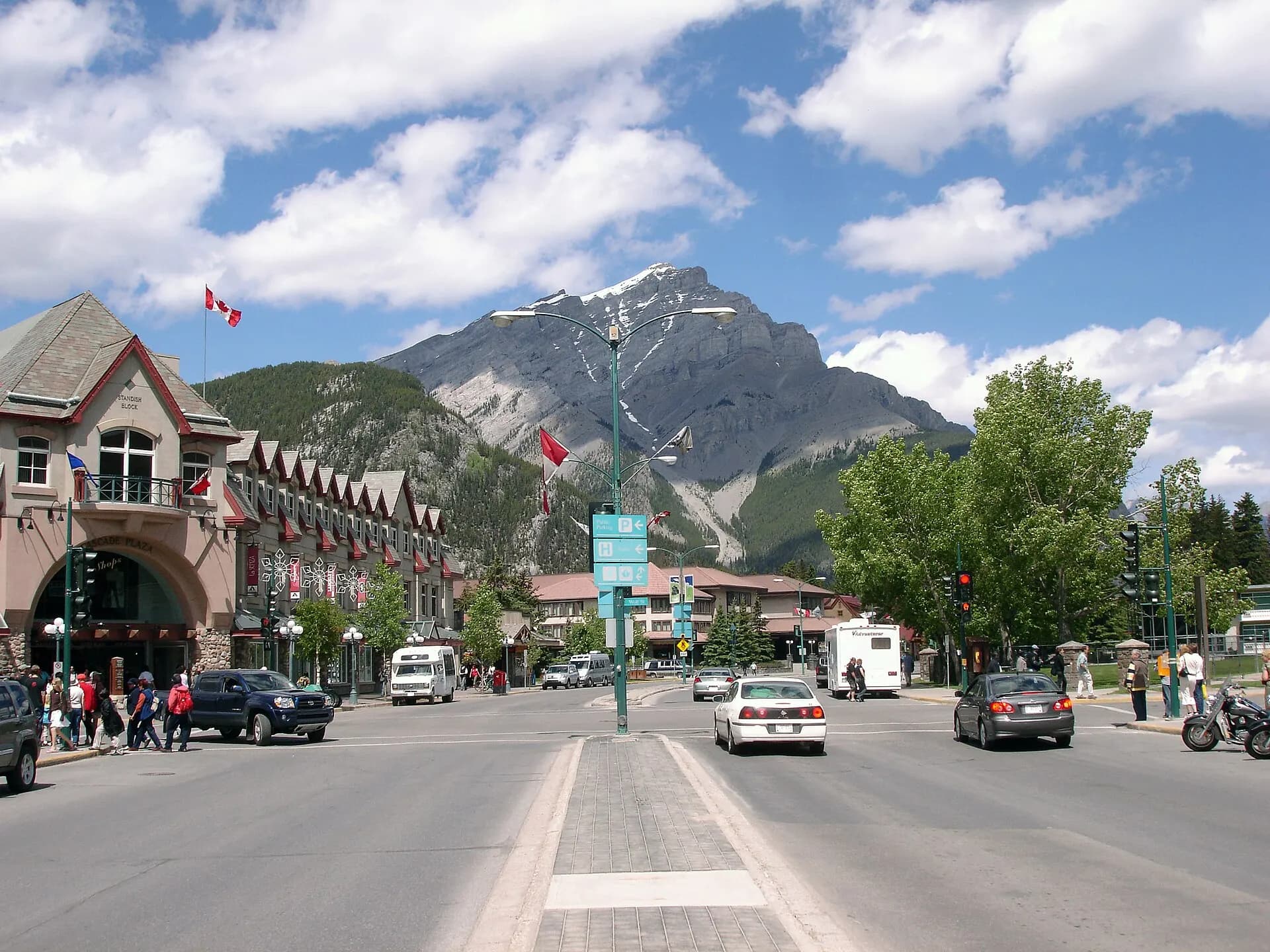
The town's main street runs towards Cascade Mountain, lined with shops, restaurants and outdoor outfitters. The Whyte Museum tells the story of the Rockies' people, and the Bow Falls are a short walk away.
- 5
The Banff Gondola and Sulphur Mountain
Photo: Deror_avi, CC BY-SA 4.0, via Wikimedia Commons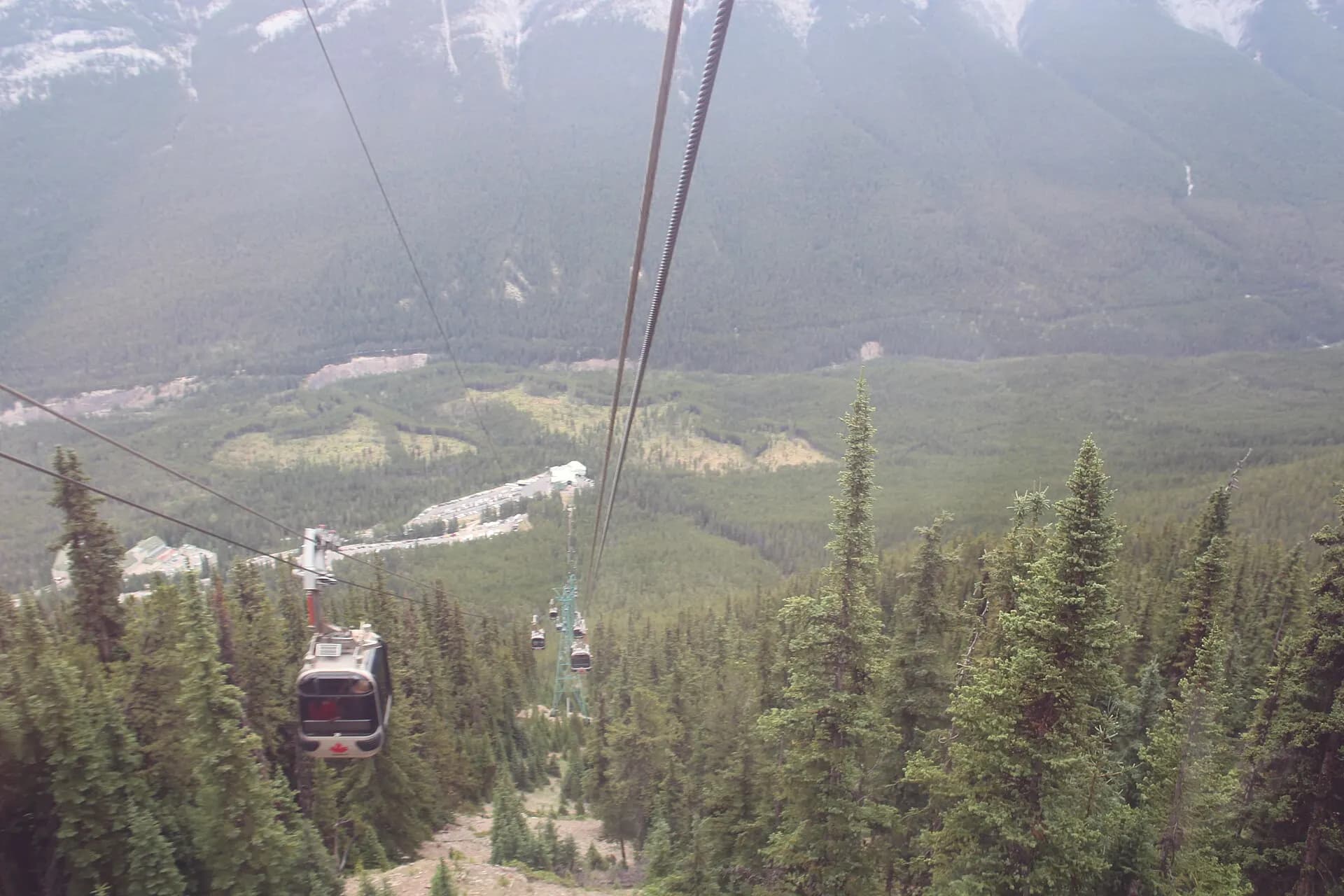
A gondola climbs to the summit of Sulphur Mountain in about eight minutes, where a boardwalk leads along the ridge to an old weather observatory, with views over six mountain ranges and the town below.
- 6
Banff Upper Hot Springs
Photo: Odysseus1479, CC BY-SA 3.0, via Wikimedia Commons
Hot mineral pools on the slopes of Sulphur Mountain, with mountain views as you soak. Banff began here: the discovery of the hot springs at the nearby Cave and Basin in 1883 led to the creation of the park, and the Cave and Basin National Historic Site tells the story.
- 7
Johnston Canyon
Photo: Florian Fuchs, CC BY 3.0, via Wikimedia Commons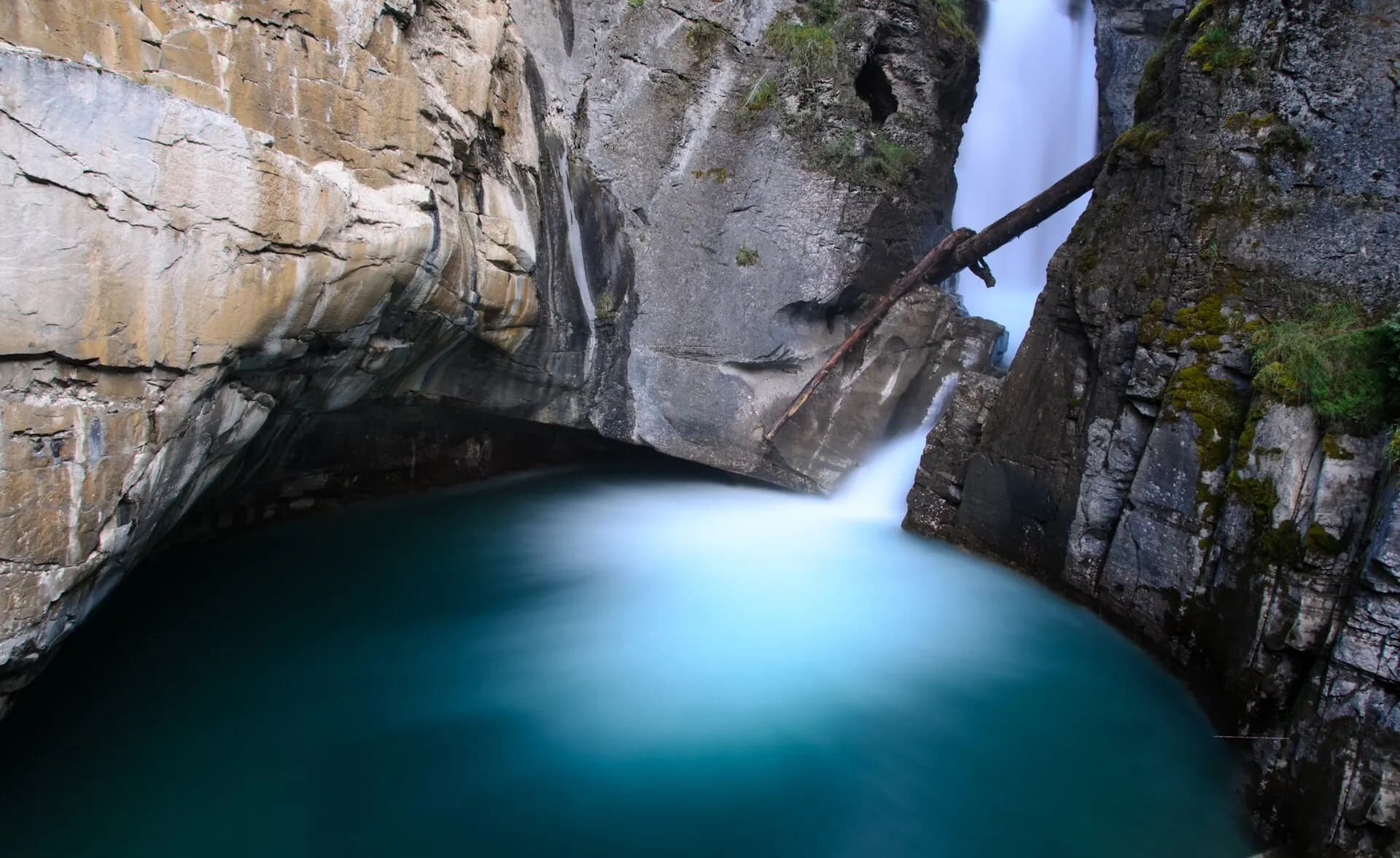
A narrow limestone canyon on the Bow Valley Parkway, where walkways bolted to the canyon walls lead past waterfalls to the Lower and Upper Falls. Continue to the Ink Pots, blue-green mineral springs in a meadow.
TipGo early or late in the day; it's one of the park's busiest trails.
- 8
Lake Minnewanka
Photo: Dietmar Rabich, CC BY-SA 4.0, via Wikimedia Commons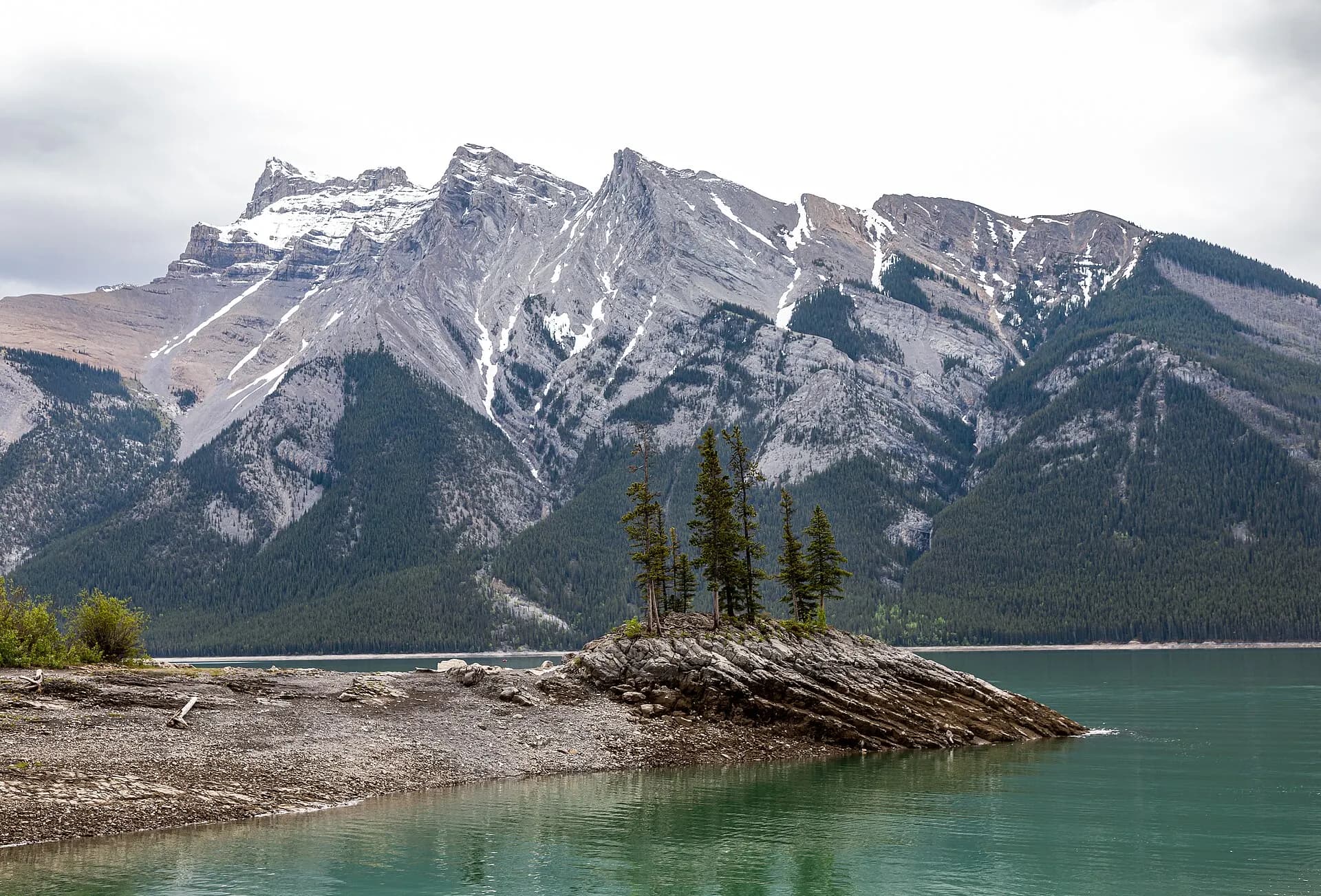
The largest lake in the park, a short drive from town, with boat cruises, a lakeshore trail and frequent sightings of bighorn sheep on the road nearby.
When to go
Summer, from June to September, is the main season for hiking, with the lakes thawed and turquoise from late June. July and August are busy. September brings autumn colour, fewer people, and golden larches in late September. Winter, from December to March, is ski season at Sunshine Village, Lake Louise and Mt Norquay, with frozen waterfalls and skating on lakes. Late spring has snow on the trails and many lakes still frozen.
Getting around
A car gives the most freedom, but parking at popular sites is limited and fills early. Parks Canada shuttles serve Lake Louise and Moraine Lake, and the Roam Transit buses link the town of Banff with Lake Louise, Canmore and nearby sights. A Parks Canada pass is required for all visitors in the park.
Calgary International Airport is about an hour and a half east by road, with shuttle buses to Banff and Lake Louise.
Local tips
- Buy a Parks Canada pass online before you arrive, and display it in your vehicle.
- Carry bear spray on trails, make noise, and never approach or feed wildlife; elk, bears and sheep are common.
- Some trails have group-size restrictions in bear season; check trail reports.
- Weather in the mountains changes fast: bring layers and rain gear.
- Book accommodation, shuttles and tours months ahead for summer.
- Most visitors flying to Canada need an eTA or visa.
Eat and drink
Banff has a lively dining scene for a small town, with steakhouses serving Alberta beef, bison burgers and game, as well as craft breweries, cosy pubs and bakeries. The mountain teahouses above Lake Louise serve homemade soups and cakes, carried up by hand or horse. Try poutine, fries with cheese curds and gravy, after a cold day on the slopes.
Beyond Banff
Canmore, just outside the park, is a quieter mountain town with excellent hiking and dining. Yoho National Park, across the border in British Columbia, has the emerald waters of Emerald Lake and the towering Takakkaw Falls. North along the Icefields Parkway, Jasper National Park has the Athabasca Glacier, where you can walk onto the ice with a guide, and Maligne Lake.
Hiking in Banff
The park has more than 1,600 kilometres of trails. Good options for a first visit include Tunnel Mountain, a short climb right above the town with views of the Bow Valley; the Plain of Six Glaciers above Lake Louise; and Sentinel Pass and Larch Valley from Moraine Lake, glowing gold in late September. For a full day in the alpine, the Sunshine Meadows, reached by gondola and bus in summer, are carpeted with wildflowers in July and August. Always check Parks Canada trail reports for closures and bear warnings before you set out.