Uluru
A vast red monolith in the heart of Australia, sacred to its Anangu owners, glowing at sunrise and sunset.
- Best time to go
- May to September, the cooler months
- Local time
- –
- Currency
- Australian Dollar (AUD)
- Reading time
- 4 min
- Language
- English

Uluru rises more than three hundred and forty metres above the red desert plains of central Australia, a huge sandstone monolith whose colour changes from deep red to orange and purple as the sun moves. For the Anangu, the Aboriginal traditional owners, it is a sacred place full of stories of ancestral beings, and it's the heart of Uluṟu-Kata Tjuṯa National Park, a World Heritage Site for both its natural and cultural values, jointly managed by Anangu and Parks Australia.
Climbing Uluru has been prohibited since 2019, at the request of its traditional owners. Instead, visitors walk around its base, learn about Anangu culture and watch the rock glow at sunrise and sunset. Nearby, the domes of Kata Tjuta and the walls of Kings Canyon are equally spectacular.
The top 7 in Uluru
- 1
The Uluru Base Walk
Photo: Dietmar Rabich, CC BY-SA 4.0, via Wikimedia Commons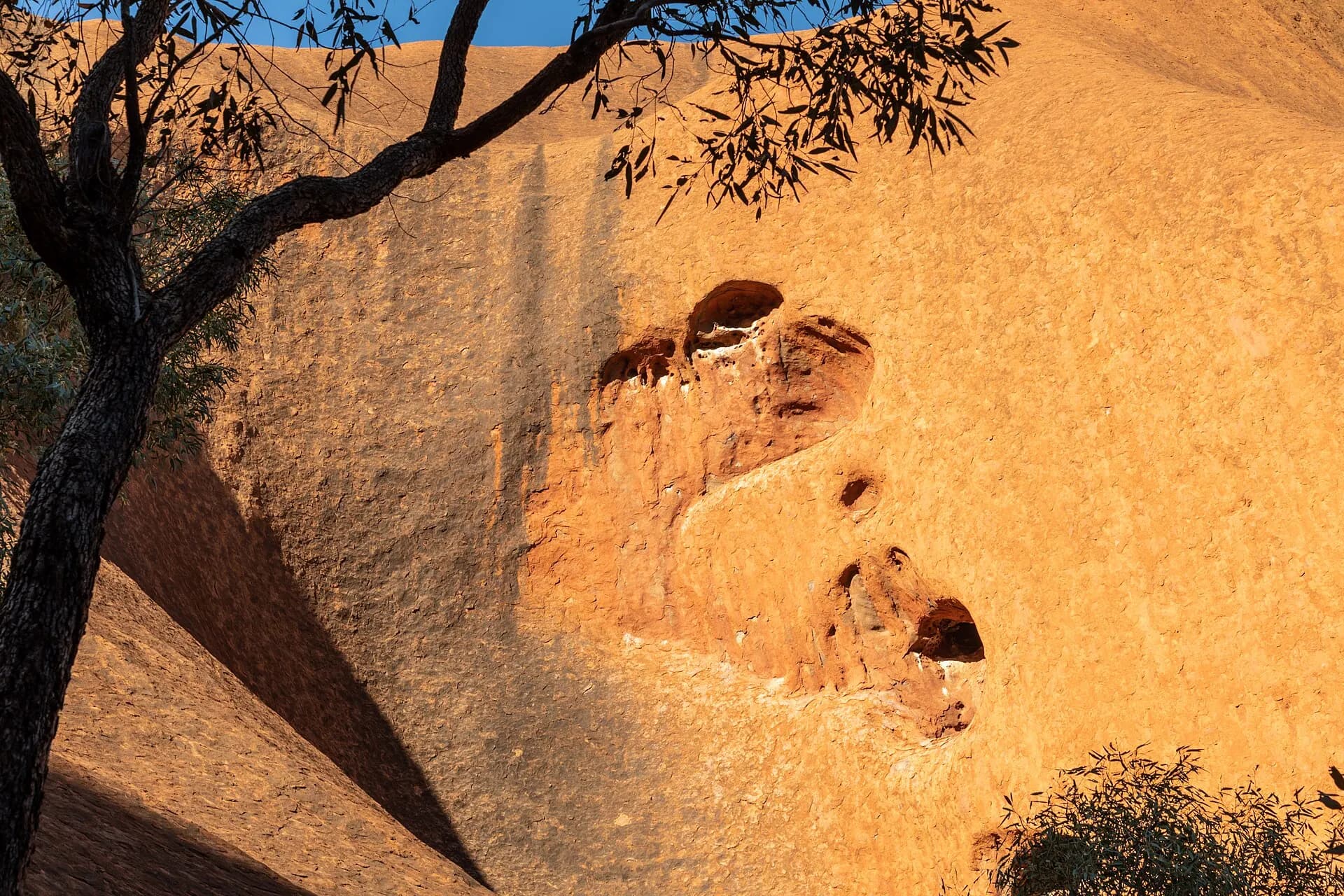
A walk of about ten kilometres around the base of Uluru, past waterholes, caves with rock art, and sacred sites, revealing the rock's many textures and folds, impossible to appreciate from afar.
TipStart early in the morning to avoid the heat, and carry plenty of water. Some sacred sections are signposted as no-photography areas; please respect them.
- 2
The Mala Walk and Kuniya Walk
Photo: Annette Teng, CC BY 3.0, via Wikimedia Commons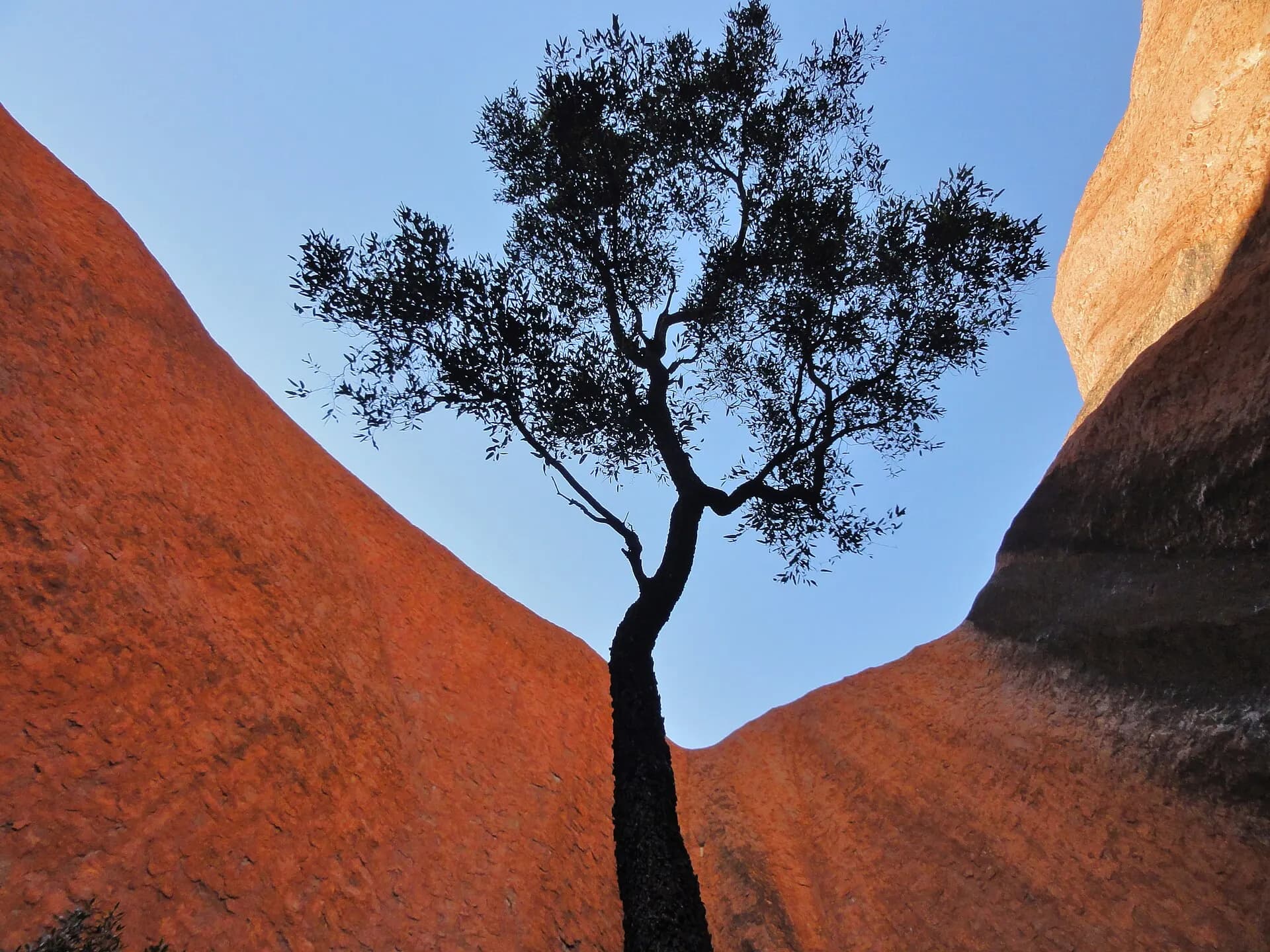
Shorter walks to Kantju Gorge and the Mutitjulu Waterhole, with rock art and stories of the ancestral beings. Free ranger-guided walks explain Anangu culture and the landscape.
- 3
Sunrise and sunset viewing areas
Photo: Dietmar Rabich, CC BY-SA 4.0, via Wikimedia Commons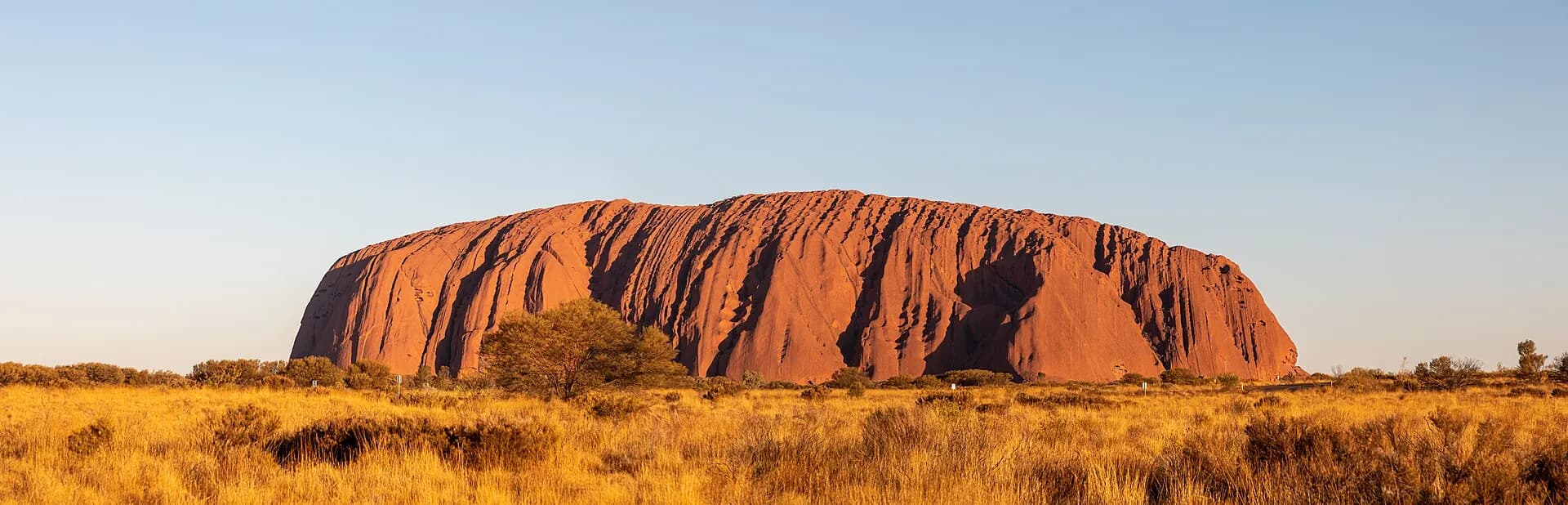
Dedicated viewing areas give the best views of Uluru as it changes colour at sunrise and sunset, with Kata Tjuta on the horizon.
- 4
The Uluṟu-Kata Tjuṯa Cultural Centre
A building shaped like two ancestral snakes, near the base of Uluru, with exhibits about Anangu culture, law and the land, and Aboriginal art galleries.
- 5
Kata Tjuta
Photo: Tununda, CC BY-SA 4.0, via Wikimedia Commons
A group of thirty-six steep-sided domes of conglomerate rock, about fifty kilometres west of Uluru, its tallest dome higher than Uluru itself. The Valley of the Winds walk winds between the domes to spectacular lookouts, and the Walpa Gorge walk follows a narrow gorge between two domes.
TipParts of the Valley of the Winds walk close when temperatures are very high; check before you go.
- 6
Field of Light
Photo: Dietmar Rabich, CC BY-SA 4.0, via Wikimedia Commons
An art installation by Bruce Munro of tens of thousands of solar-powered lights spread across the desert near Uluru, glowing in changing colours after dark; it's a ticketed experience.
- 7
Kings Canyon (Watarrka National Park)
Photo: Teckez, CC BY-SA 4.0, via Wikimedia Commons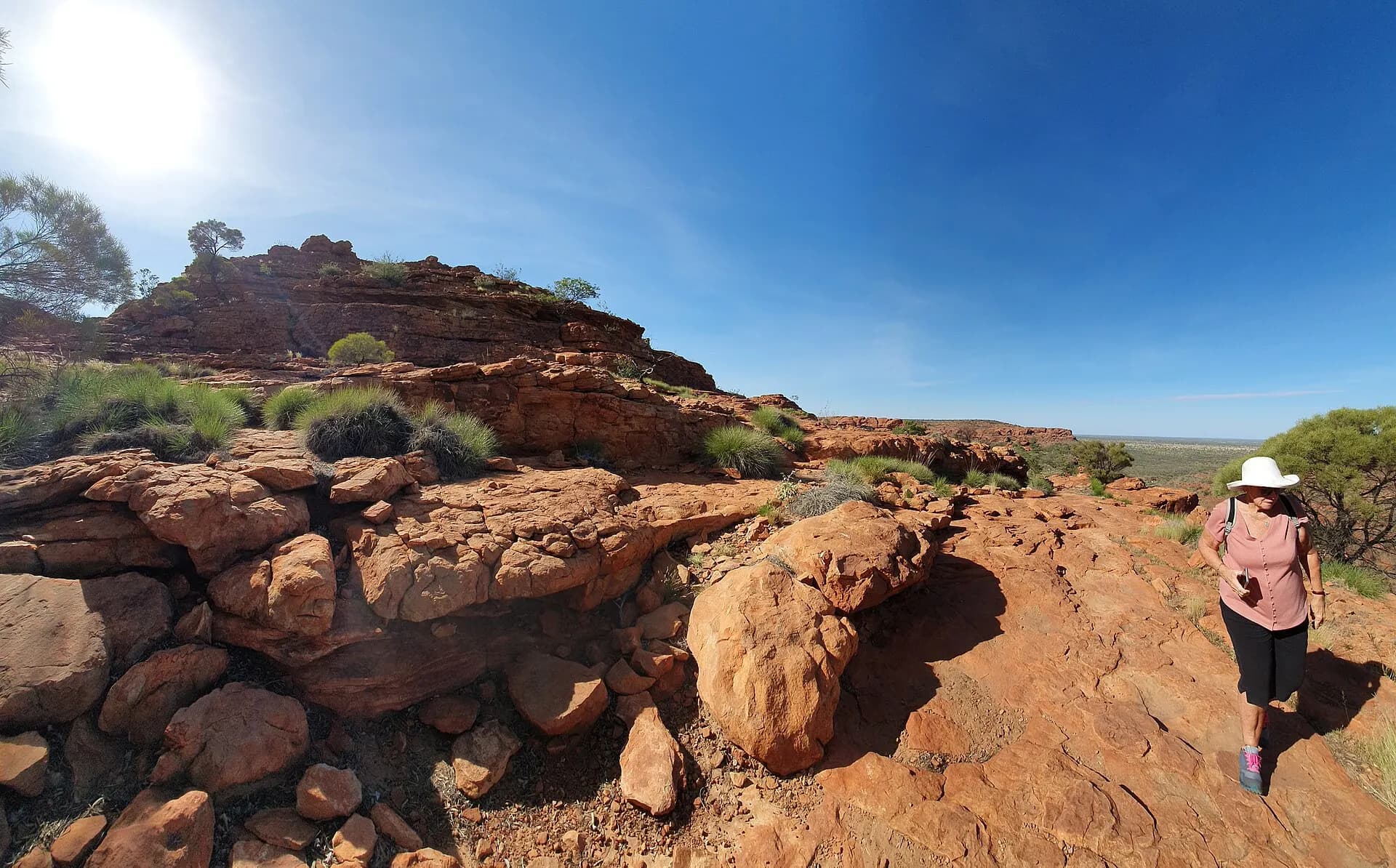
About three and a half hours' drive north-east, a canyon with sheer red sandstone walls. The Rim Walk, about six kilometres, climbs to the top and circles the canyon past domed rock formations and the Garden of Eden, a lush waterhole.
When to go
The cooler months, from May to September, are the most comfortable, with warm days and cold nights, sometimes below freezing. Summer, from December to February, is extremely hot, often above 40 °C, and some walks close in the heat. Rain is rare but spectacular, when waterfalls cascade down the rock.
Getting around
Ayers Rock Airport, near the resort town of Yulara, has flights from Sydney, Melbourne and other cities. A car gives freedom to explore the park and Kings Canyon; shuttle buses and tours are also available. Alice Springs is about five hours' drive away.
Local tips
- Buy a national park pass online or at the park entrance.
- Don't climb Uluru; the climb is permanently closed.
- Respect signposted sacred sites and photography restrictions.
- Carry at least a litre of water per hour of walking in warm weather.
- Bring a fly net for your face; flies can be relentless in warm months.
- Most visitors need a visa or electronic travel authority to enter Australia.
- Fuel and supplies are limited outside Yulara; plan long drives carefully.
- Book sunrise and sunset tours, and the Field of Light, ahead in peak season.
- Wear sturdy shoes, a hat and sunscreen; the sun is fierce year-round.
- Mobile coverage is limited outside the resort.
Eat and drink
Food is available at the restaurants of Ayers Rock Resort in Yulara, from casual cafés to dinners under the stars with views of Uluru. Some menus feature native ingredients, known as bush tucker, such as kangaroo, wattleseed, quandong and finger lime. Supermarket and barbecue facilities in Yulara make self-catering easy, and a picnic at the sunset viewing area is a memorable way to end the day.
Where to stay
All accommodation near Uluru is at Ayers Rock Resort in Yulara, from campgrounds to luxury hotels. Longitude 131°, a luxury camp with views of Uluru, is the most exclusive. Kings Canyon has a resort and campground nearby.
Anangu culture
The Anangu have lived in this region for tens of thousands of years. Their law and knowledge, called Tjukurpa, explain the creation of the land and guide how people should live. Visitors can learn about it through ranger walks, Aboriginal-guided tours, dot-painting workshops and the Cultural Centre, and by respecting the places that are sacred.
The night sky
With no city lights for hundreds of kilometres, the desert sky over Uluru is one of the darkest in the world. Astronomy tours at Yulara use telescopes to show planets, star clusters and the Southern Cross, and explain how Anangu read the stars as stories and seasonal markers. In winter, the Milky Way arches overhead in astonishing detail.
Wildlife and plants
The desert around Uluru is surprisingly full of life. Look for red kangaroos and dingoes at dawn and dusk, thorny devils and goannas, and birds such as zebra finches and budgerigars around waterholes. After rain, wildflowers cover the red sand. The park's desert oaks, spinifex grasses and mulga trees are adapted to extreme heat and drought.