Tasmania
Australia's wild island state of mountains, empty beaches, convict history and some of the country's best food and wine.
- Best time to go
- December to March for warm days and hiking; autumn for colour
- Local time
- –
- Currency
- Australian Dollar (AUD)
- Reading time
- 4 min
- Language
- English
Tasmania, an island about 240 kilometres south of mainland Australia across Bass Strait, is wilder, greener and cooler than the rest of the country. Almost half of it is protected in national parks and reserves, and the Tasmanian Wilderness World Heritage Area covers a fifth of the island, with ancient rainforest, glacial lakes and jagged mountains. Its coastline ranges from the white sands of the east to the storm-lashed cliffs of the south and west.
It's also the land of the palawa, Tasmania's Aboriginal people, and of a dark convict history: Britain sent tens of thousands of convicts here in the nineteenth century. Today, Tasmania is celebrated for its food, cool-climate wines, whisky and arts, especially the provocative MONA museum in Hobart. It's compact enough to explore on a road trip, but you'll want at least a week or two.
The top 9 in Tasmania
- 1
Hobart and Salamanca Place
Photo: Owen Allen, CC BY 2.0, via Wikimedia Commons
Australia's second-oldest capital, on the Derwent River beneath kunanyi/Mount Wellington. Salamanca Place, a row of sandstone warehouses by the harbour, holds a famous Saturday market of local produce, crafts and food. Battery Point, above it, has the city's oldest cottages.
- 2
MONA
The Museum of Old and New Art, carved into a riverside cliff north of Hobart, is one of the world's most original museums, with ancient artefacts displayed alongside provocative contemporary art. Arrive by the museum's ferry from the city.
TipBook ahead, and allow at least half a day; the winery and restaurant on site are excellent.
- 3
kunanyi/Mount Wellington
Photo: Thennicke, CC BY-SA 4.0, via Wikimedia Commons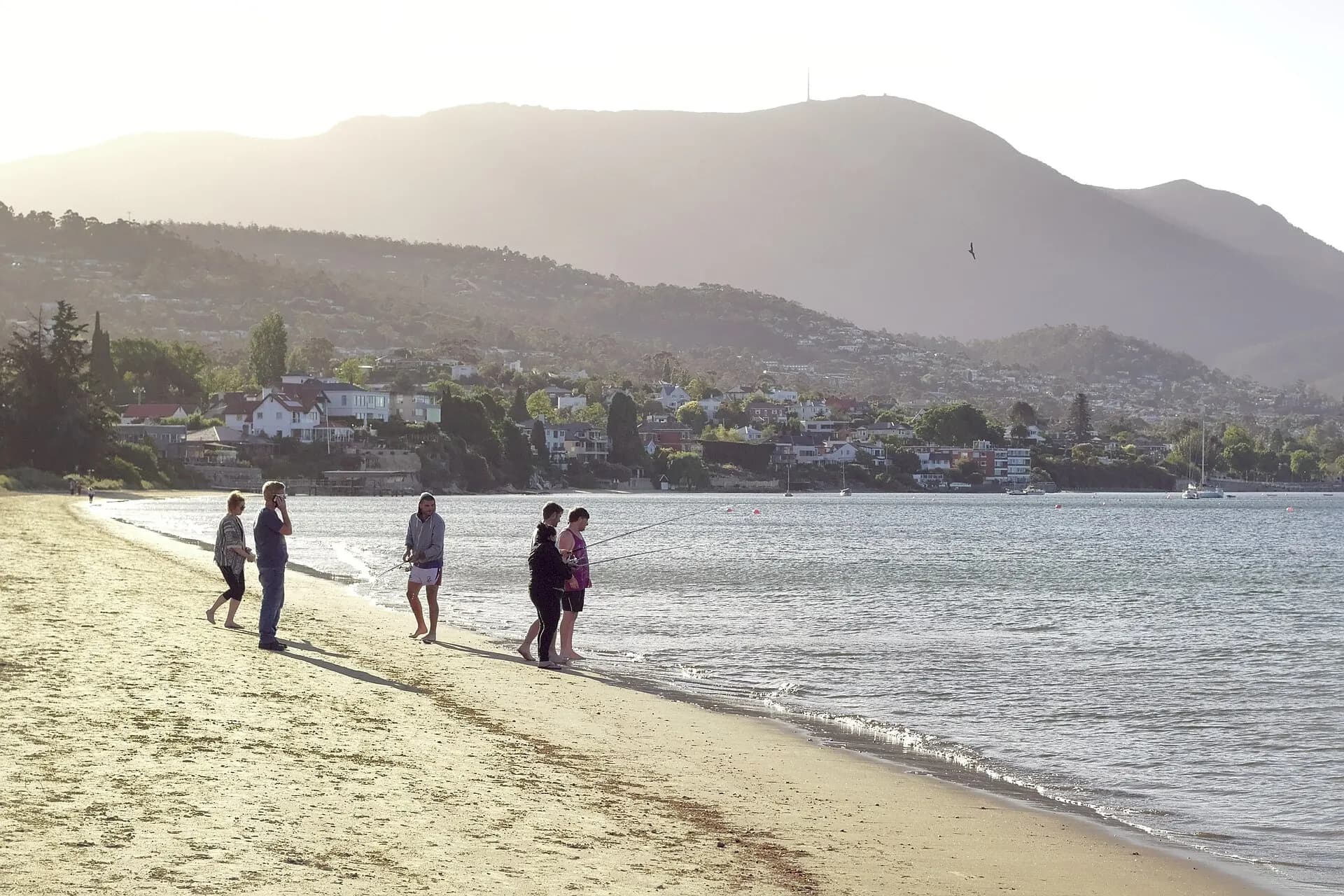
The mountain above Hobart, rising to 1,271 metres, with a road to a summit lookout over the city, the river and much of southern Tasmania. Walking and biking trails wind through its forests and boulder fields.
TipIt can be snowing on the summit when the city is warm; bring a jacket.
- 4
Port Arthur Historic Site
Photo: Pacificwizard, CC0, via Wikimedia Commons
A former convict settlement on the Tasman Peninsula, part of the Australian Convict Sites World Heritage listing, with the ruins of the penitentiary, a church, the separate prison and gardens, about ninety minutes from Hobart. Entry includes a walking tour and harbour cruise, and evening ghost tours are popular.
- 5
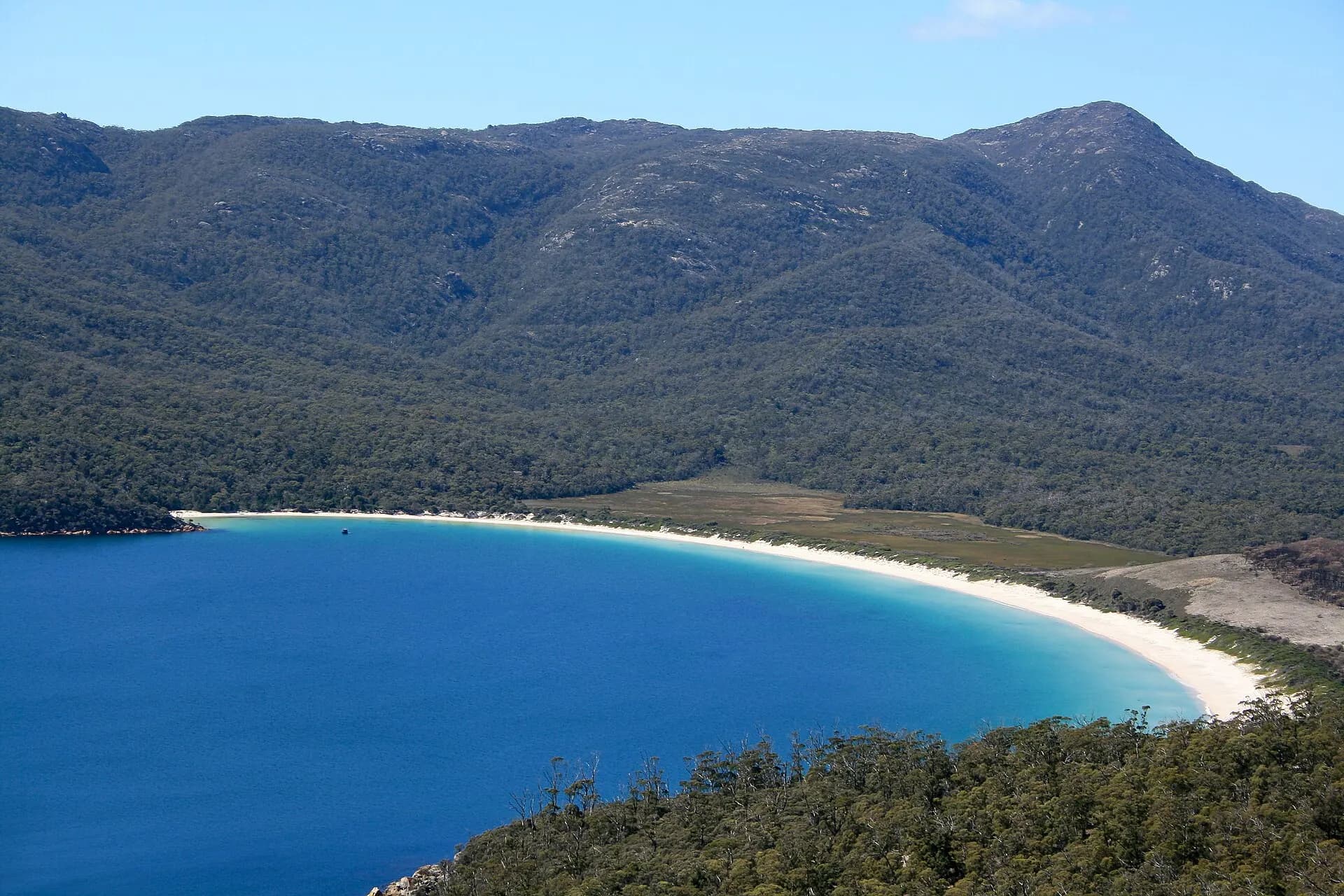
Freycinet National Park and Wineglass Bay
Photo: JJ Harrison (https://www.jjharrison.com.au/), CC BY-SA 3.0, via Wikimedia Commons
A peninsula of pink granite mountains, the Hazards, on the east coast, sheltering Wineglass Bay, a perfect curve of white sand and turquoise water. A climb of about an hour leads to the lookout above the bay, and you can continue down to the beach.
- 6
Cradle Mountain–Lake St Clair National Park
Photo: Thennicke, CC BY-SA 4.0, via Wikimedia Commons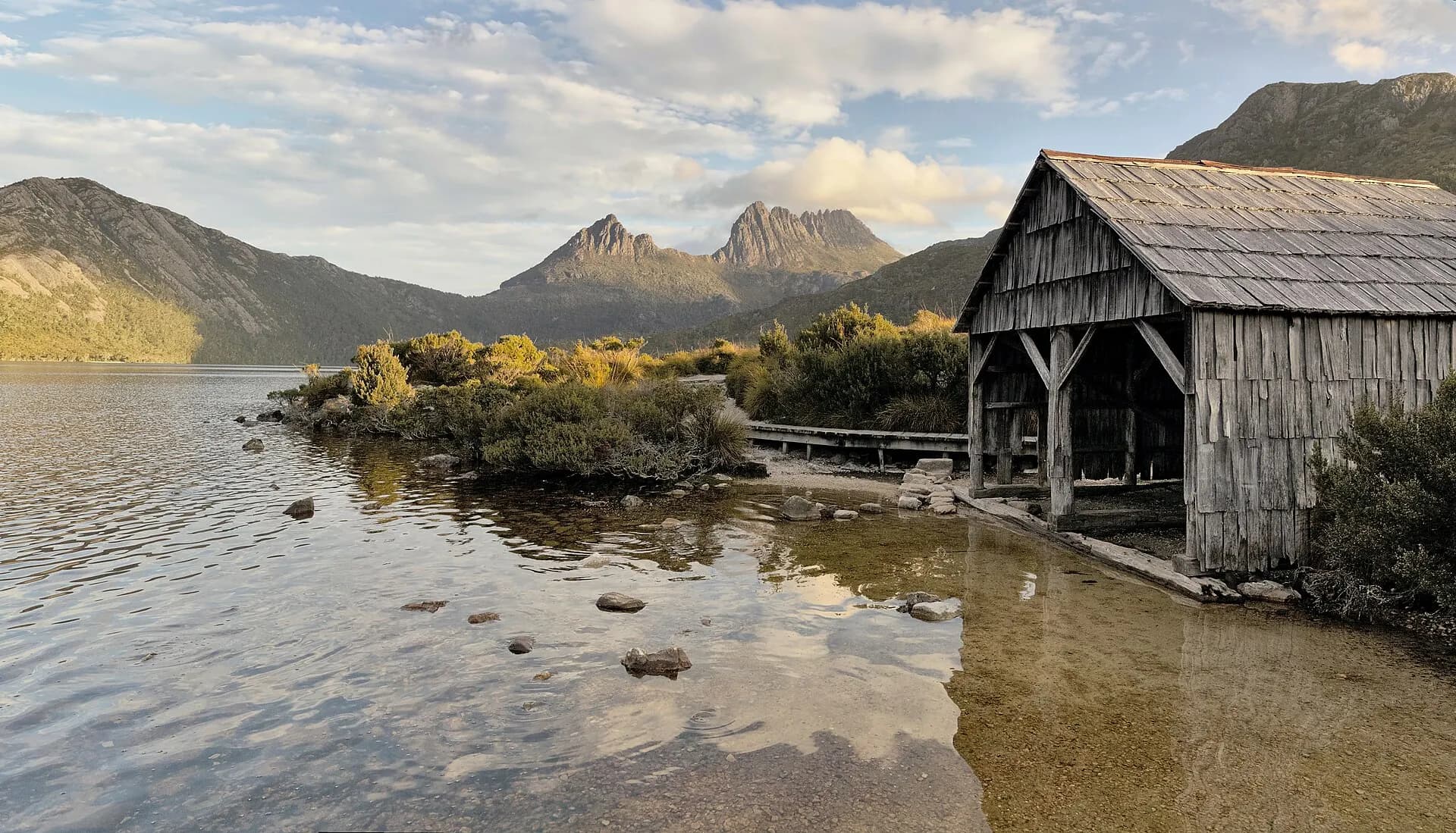
The jagged peaks of Cradle Mountain rise above Dove Lake in the north of the World Heritage Area. The Dove Lake circuit, about two hours, is one of Australia's finest short walks, and wombats graze near the visitor centre. The park is the start of the Overland Track, a famous six-day hike to Lake St Clair.
- 7
Bruny Island
Photo: Charles J. Sharp, CC BY-SA 4.0, via Wikimedia Commons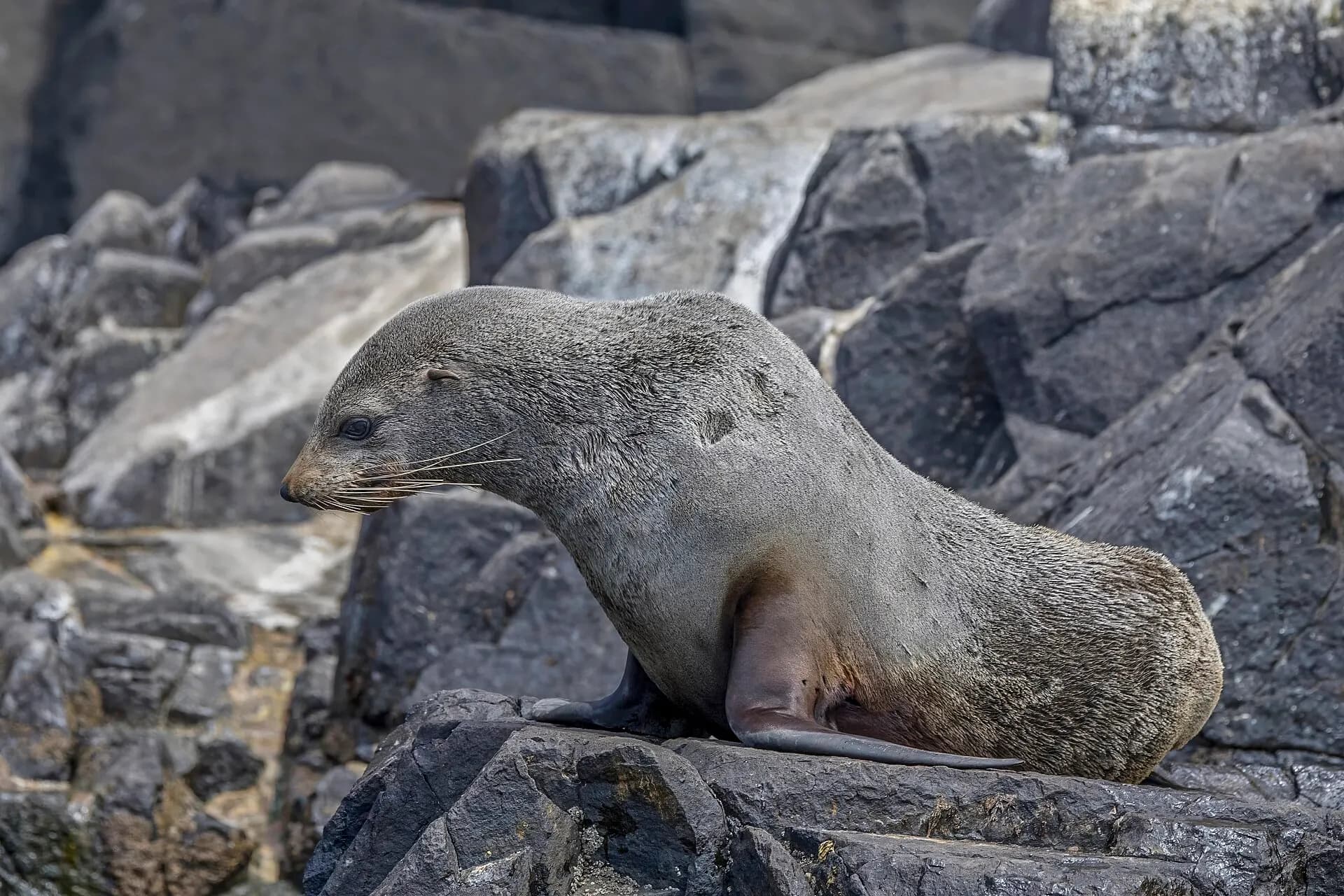
An island south of Hobart, reached by a short car ferry, with a narrow isthmus called the Neck, rugged sea cliffs, a lighthouse, and food producers of cheese, oysters, berries and whisky. Boat tours explore the cliffs, seals and seabirds.
- 8
Bay of Fires
Photo: Diego Delso, CC BY-SA 3.0, via Wikimedia Commons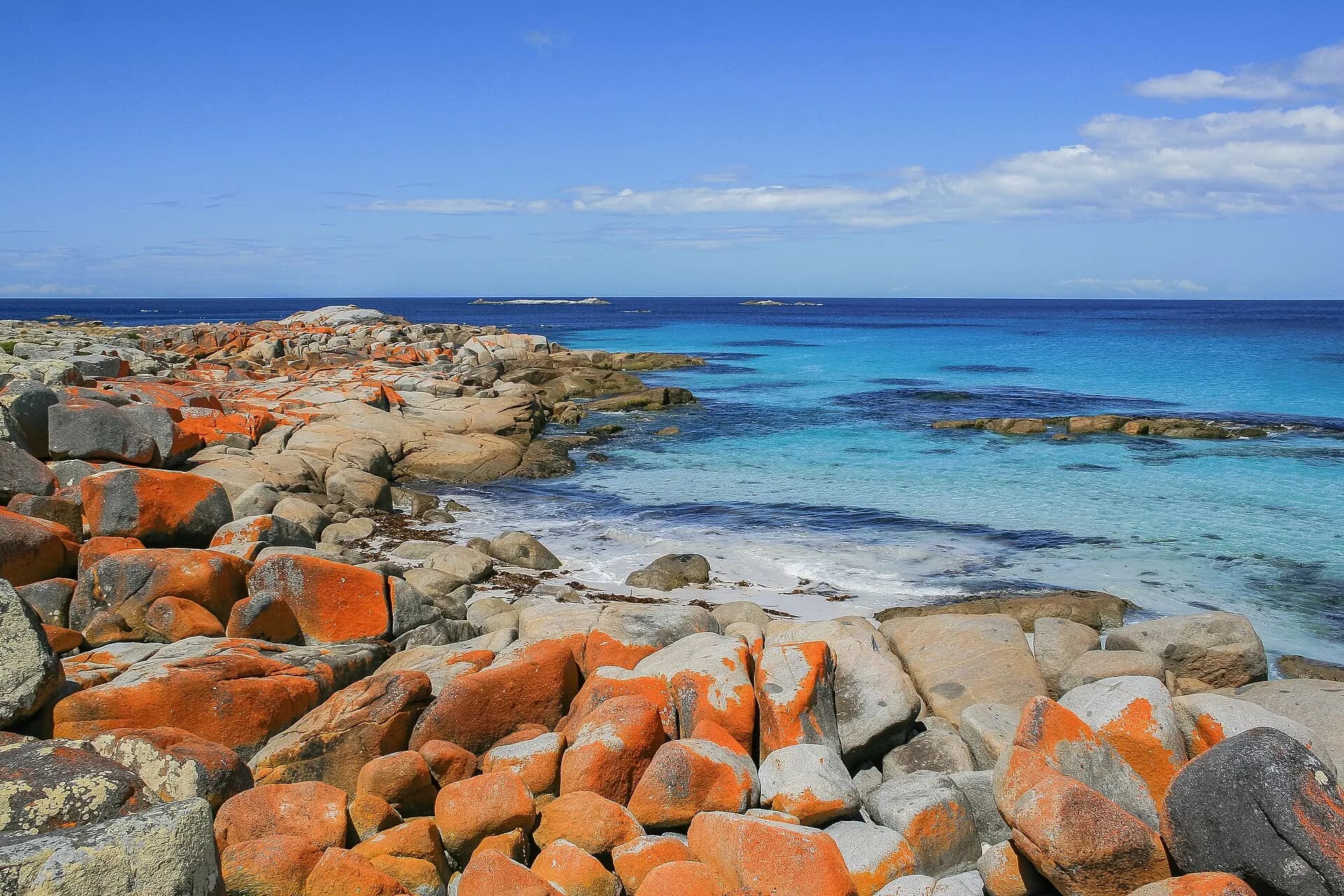
A stretch of the north-east coast where white beaches and turquoise water meet granite boulders covered in bright orange lichen.
- 9
The Tarkine and Stanley
Photo: Taspictures, CC0, via Wikimedia Commons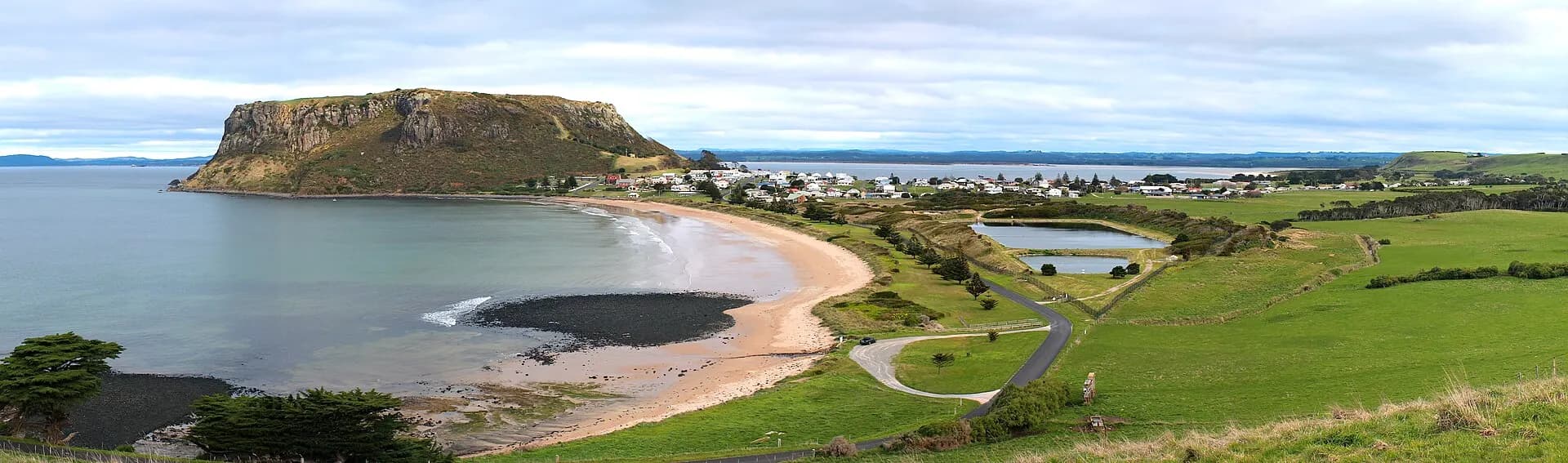
In the north-west, the Tarkine (takayna) holds one of the largest temperate rainforests in the world. The village of Stanley sits beneath The Nut, a volcanic plug you can climb or ride up by chairlift.
When to go
Summer, from December to March, brings long, mild days and the best conditions for hiking and beaches, as well as festivals such as the Taste of Summer in Hobart. Autumn, from March to May, is clear and settled, with the golden fagus, Australia's only native deciduous tree, turning colour in late April. Winter is cold and wet, with snow on the mountains, but Hobart's Dark Mofo festival in June is a highlight. The weather can change quickly in any season.
Getting around
A car is the best way to explore. Distances are short on the map, but roads are winding, so allow time. Buses link the main towns but don't reach many parks. Hobart and Launceston have airports with flights from the mainland, and the Spirit of Tasmania ferry carries cars overnight from Melbourne (Geelong) to Devonport.
Local tips
- Buy a parks pass for national parks; a holiday pass covers multiple parks for up to two months.
- Avoid driving at dusk and at night: wildlife is everywhere on the roads.
- Pack layers, rain gear and warm clothes in every season.
- Book the Overland Track and Cradle Mountain accommodation well ahead in summer.
- Fruit and some plants can't be brought into Tasmania from the mainland, to protect its agriculture.
- Most visitors need a visa or electronic travel authority to enter Australia.
Eat and drink
Tasmania is a food lover's island: try oysters and scallops, salmon, abalone, cheese from Bruny Island and the north, berries, apples (it's nicknamed the Apple Isle) and leatherwood honey. Its cool climate produces excellent Pinot Noir and sparkling wine, and the island's whisky distilleries have won international awards. Farmers' markets, cellar doors and roadside honesty boxes are part of the experience.
Where to stay
Hobart makes a good base for the south, Launceston for the north and the Tamar Valley wineries. Freycinet, Cradle Mountain and Strahan, on the wild west coast, have lodges, cabins and campgrounds near the parks. Book ahead in summer.
Wildlife
Tasmania has some of Australia's most accessible wildlife. Wombats, wallabies, pademelons and echidnas are common in the parks, particularly at Cradle Mountain and on Maria Island, a car-free island off the east coast. The Tasmanian devil, found in the wild only here, can be seen at sanctuaries working to protect it from a facial tumour disease. Little penguins return to their burrows at dusk at several beaches, such as Bicheno, on guided tours.